Logo

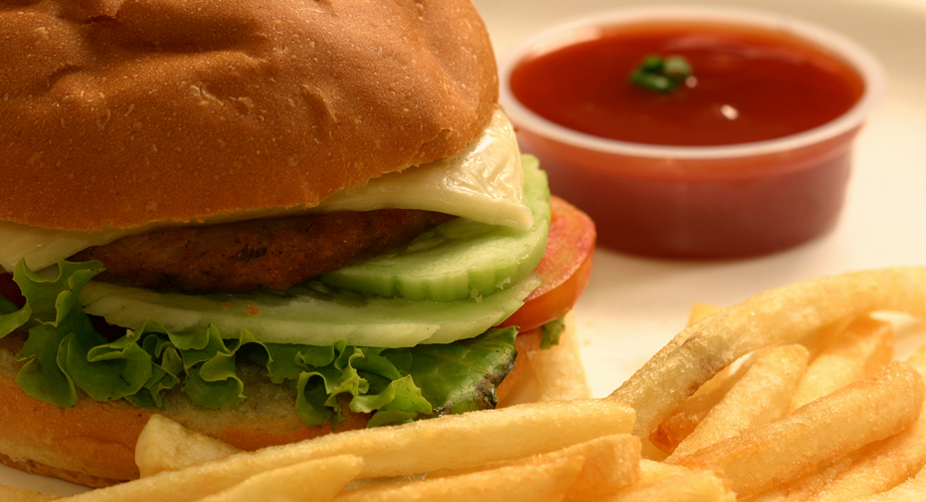
Weekend Special: Big Booster Burger

Deepa Gupta | New Delhi |

The days flew by and weekend is here again and so is the weekend treat. This time, make your weekend special with home made vegetarian treat–big booster burger that will reboot your energy and spirit. Here’s a quick to prepare recipe.
Serves: 4 – 5
Preparation time: 20 minutes; Cooking time: 15 minutes
Ingredients:
Boiled potatoes – 4 (medium)
Beans – 4 – 5
Carrot – ¼
Peas – 8 – 10 (boiled)
Capsicum – 1 (roasted and peeled)
Mayonnaise – 5 tsp
Cheese spread – 5 tsp
Tomato ketchup – 4 tsp
Cucumber – ½
Tomato – 1
Onion – 1
Lettuce – 5 leaves
Bread crumbs – 2 pieces
Black pepper powder – 1/2 tsp
Red chilli flakes – 1 tsp
Oregano -1 tsp
Salt – 1 tsp
Maida – 1 tbsp
Corn flour – 1 tbsp
Water – 2 tbsp
Burger buns – 5
Method –
·        Mash potatoes and mix beans, carrot, peas, maida and spices together.
·        Make round balls and flatten them.
·        Mix water and corn flour together and make a thick paste.
·        Dip the round patties in the paste and coat with bread crumbs.
·        Heat the oil in a pan and deep fry the patties.
·        Drain them on kitchen towel.
·        Mix cheese spread, mayonnaise, roasted capsicum and ketchup together.
·        Take a burger bun. Cut it in two halves horizontally. Spread the above paste on the base of the burger. Place cucumber, onion, tomato slice and lettuce on it. Keep veg patty over the salad and close the burger with other half.
·        Heat a non-stick pan. Spread little butter on both the sides of burger bun. Warm it on the pan for a minute from both the sides.
·        Serve hot with tomato ketchup.
French fries work as a perfect accompaniment to the burger meal. You can add vegetables of your choice in the salad stuffing. You can add a cheese slice to the stuffing. Those with children can involve their kids in making this fun snack and keep their hunger at bay.

Beijing to intervene in Hong Kong lawmaker oath dispute

The move follows a provocative display of anti-China sentiment by the two lawmakers, Sixtus Leung and Yau Wai-ching, at their swearing-in ceremony last month.

PTI |

Beijing plans to intervene in a Hong Kong political dispute over two young, newly elected separatist lawmakers in a rare move that is stoking fears the Chinese-ruled city's considerable autonomy and independent judiciary are under threat.
Hong Kong's government said on Friday that it was informed by China's central government that members of the country's top legislative panel, the Standing Committee of the National People's Congress, will discuss interpreting an article in Hong Kong's constitution covering oaths taken by lawmakers.
The move follows a provocative display of anti-China sentiment by the two lawmakers, Sixtus Leung and Yau Wai-ching, at their swearing-in ceremony last month.
Beijing's heavy-handed response could lead to the democratically elected Leung and Yau being disqualified from taking office.
Such an outcome would be favorable to China's Communist leaders, who are alarmed by the former British colony's burgeoning independence movement, but is also likely to plunge their troubled relationship into fresh turmoil.
Beijing has stepped in with its interpretation of the Basic Law the city's constitution on only four occasions, most recently in 2005.
The National People's Congress did not immediately respond to a faxed request for comment.
China's official Xinhua News Agency said senior lawmakers Friday heard a report on a draft “explanation” of the article on oath-taking and indicated it would be tabled for review during the current session that ends Monday.
Hong Kong's leader Chief Executive Leung Chun-ying told reporters he wouldn't comment until Beijing issued its ruling.
Leung and Yau of the radical Youngspiration party altered their oaths to insert a disparaging Japanese term for China.
Displaying a flag reading “Hong Kong is not China,” they vowed to defend the “Hong Kong nation.” Leung crossed his fingers while Yau used the F-word in her pledge.
Their oaths were ruled invalid but attempts at a do-over have resulted in mayhem in the legislature's weekly sessions, as the duo and fellow pro-democracy lawmakers sparred verbally with pro-Beijing rivals and brawled with security guards trying to keep them out of the chamber.

US confirms Al Qaeda leader’s death in Afghanistan

IANS |

The Pentagon has confirmed that Al Qaeda’s top leader in Afghanistan, Faruq al-Qatani, was killed in a US strike.
The airstrike was carried out on October 23 in Kunar province, located 230 km east of Kabul and along the border with Pakistan, the Pentagon announced on Friday.
“This successful strike is another example of US operations to degrade international terrorist networks and target terrorist leaders who seek to attack the US homeland, our interests and our allies abroad,” the US Department of Defence said .
According to the Pentagon, Qatani was Al Qaeda’s leader for northeastern Afghanistan and was tasked with re-establishing Al Qaeda safe havens in that mountainous part of the country.
However, Afghanistan’s intelligence agency, the National Directorate of Security, which had already announced Qatani’s death a few days ago, identified him as the leader of Al Qaeda in the country.
In addition to Qatani, the US also targeted Bilal al-Utabi, another senior Al Qaeda leader and whose death is yet to be confirmed by the Pentagon.
Meanwhile, the NDS has already announced the killing of Utabi, who it identified as Qatani’s second-in-command. 

Murray one win from top spot as Djokovic crashes

AFP |

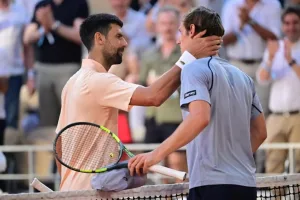
Andy Murray closed to within one victory of becoming the world’s top-ranked player for the first time after defeating Tomas Berdych in the Paris Masters quarter-finals.
Marin Cilic had earlier dumped out a struggling Novak Djokovic to pave the way for Murray to supplant the Serb at the top.
But Murray was forced to save seven set points in an extraordinary opening tie-break before clinching a 7-6 (11/9), 7-5 win in just under two hours.
The Briton will meet Milos Raonic in semi-finals knowing that a victory will move him above Djokovic, who has been on top of the world rankings for 122 weeks.
“Before the match there were a few more nerves maybe than there was earlier in the week. But once I got out there, I didn’t feel any different to any other match,” said Murray.
“If it happens this week, great. But if not, I’m not putting any extra pressure on myself this week because I still think I have an opportunity to do it in the future.
“But obviously I’d love to do it tomorrow if I can.”
Neither Murray nor Berdych showed any signs of fragility as the first set went on serve, but the wheels fell off in spectacular fashion for the Czech after he raced 6-1 ahead in the tie-break.
Murray chalked up six straight points to earn a set point of his own, with Berdych then squandering two more before the second seed finally edged ahead. He broke Berdych to start the second set and looked on course to wrap things up, but a lapse at 5-4 saw him require a second chance.
Berdych, who needed to reach the last four to stay in the race for the Tour Finals in London, handed him that opportunity by again losing his serve, with Murray sealing it on his fourth match point.
Cilic had lost all 14 previous meetings with Djokovic but snapped that miserable run with a 6-4, 7-6 (7/2) victory.
Djokovic, the record four-time champion, arrived in Paris needing to reach the final to ensure he remained ahead of a rapidly approaching Murray.
But the Serb’s bid to register a fourth straight title in the French capital ended abruptly as an improbable escape act fizzled out against an in-form Cilic.
“Credit to Marin and congratulations. He definitely played better today, and he deserved to win,” said 29-year-old Djokovic.
“I wasn’t on the level that I could have been on.
Obviously, there are things I could have done better. And just in important moments I wasn’t able to deliver.”
Ninth seed Cilic, who on Thursday became the seventh London qualifier, broke immediately to signal his intent against a player who had totally dominated him in his career.
In typical fashion Djokovic then hit back straight away to level, but Cilic’s confidence was undimmed and the Croat capitalised on a shaky service game from his opponent at 5-4 to grab the opening set.
Former US Open champion Cilic threatened again early in the second, but Djokovic landed a crucial breakthrough at 4-all to serve for the set.
The top seed uncharacteristically gifted the break back, though, after a pair of costly double faults, and Cilic had him on the ropes as two match points passed by at 6-5 on a faltering Djokovic serve.
There was to be no remarkable recovery either for Djokovic, as Cilic took charge in the tie-break and closed out a famous win at the fourth attempt.
“It’s good for me, I played great tennis. He had beat me 14 times but we had close matches and that helped me play better,” said Cilic. 

Government finalises GST rates

SNS |

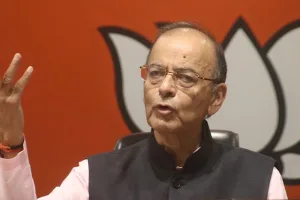
The common man is set to get a relief in the new Goods and  Services Tax (GST) rates finalized by the GST Council on Thursday.

Finance Minister Arun Jaitley, who heads the powerful GST Council, announced a four-slab tax structure of 5, 12, 18 and 28 per cent with lower tax for essential items and highest for luxury and de-merit goods like aerated drinks and tobacco.

The GST, targeted to be rolled out from April 2017, is a comprehensive indirect tax that will be levied on manufacture, sale and consumption of goods and services. It will subsume a host of central and state taxes like excise duty, service tax and value-added tax (VAT).

Under the new slab, food and other essential items will be taxed at zero rate to keep inflation under control, while luxury cars will attract the highest rate of 28 per cent. Along with luxury cars, aerated drinks and tobacco products like pan masala will also attract an additional cess.

Although the cess has not yet been quantified, the finance minister indicated the tax on luxury cars will be under 40 per cent. The FM also announced the rate for all passenger rates will be fixed at 28 per cent. With this, the prices of luxury cars as well as small cars are likely to come down marginally or may remain at current levels. At present, the luxury cars are taxed about 48-54 per cent and small cars are taxed at 30-32 per cent.

According to the finance minister, the highest slab will be applicable to the items currently taxed at 30-31 per cent.  “The tax collections from additional cess on some items and the cess from clean energy  would be used to create a revenue pool meant for compensating states for any loss of revenue during the first five years of implementation of GST. The cess would be lapsable after five years,” he said.

The decision was reached on the first day of the two-day GST Council meeting held here today.

Jaitley said about Rs.50,000 crore would be needed to compensate states for loss of revenue from the GST rollout in the first year.

Tax rate has been one of the most contentious issues. Parliament can now go ahead with the GST legislations in the winter session beginning November 16 and pave the way for rollout of the new indirect tax regime from April 1 next year.

Stirring Up The Lake Of Blood

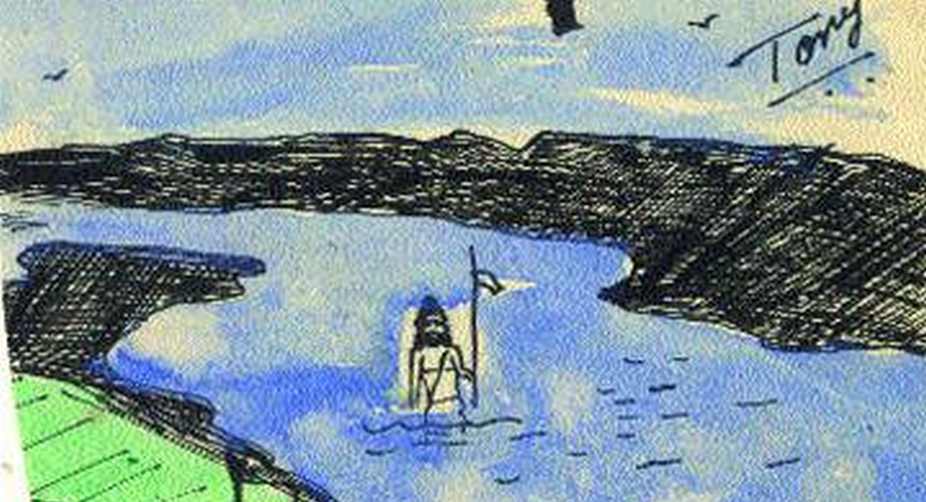
The Khooni Jheel (Bloody Lake) got its name in 1857, when several Indian sepoys and British soldiers, women and children died there.

SNS |

A strange story one heard from the shikari Cyril Thomas is worth narrating. During the World War II years his cousin Lt George had come on leave from Dehradun (where he guarded Italian prisoners in the concentration camp) and went hunting and fishing near the Khooni Jheel on the northern ridge in Delhi but couldn't find much game, except for some rabbits and ducks, which he thought would come in handy for making Christmas roast. The fish somehow were not biting the bait because of shallow water. But just then he saw a deer coming into view. This was surprising as antelopes did not frequent the jheel area. He aimed his army rifle and fired a shot, which definitely hit the deer but still it bounded away, with the hunter in hot pursuit. It was getting close to twilight but George was intent on not letting his quarry get away. He entered a thicket by following the trail of blood left behind by animal – and there at last it was. As soon as George approached close, with his gun ready for another shot, the deer took the form of a Firangi women and asked him to stop which, he of course did, more out of fear than anything else.
A speaking deer was the last thing poor George had imagined. He stood rooted to the spot, with his hand too paralyzed to use the rifle. “Don't come here for a shoot ever again,” said the deer-woman. “Because if you do you won't return alive. I am the guardian of the place ever since my death at the hands of the rebel sepoys of 1857 whom I, an unmarried girl was trying to escape after my parents were shot. They killed me too but before leaving a bearded Maulvi among them tied an amulet to my arm, saying, 'After dying you will live on as a deer for some hours every week and take care of whatever animals roam about the jheel.' He left after sprinkling some water on me.” Then the deer-woman cursed George, “You have wounded me and the pain is intense and I don't know how long it will last but since it is my dual existence I cannot die again. Instead you will suffer for this misdeed well beyond X'mas that you were hoping to celebrate. And another thing: Don't ever marry or you will not live long after it.” She then took on the shape of the wounded deer again and limped away into the jheel, the sound of splashing water confirming to George the passage the wounded deer-women had taken.
When George returned home he was burning with high fever despite the cold. Cyril was surprised at the state in which he was in and asked him how he had become so ill suddenly. It was then that George told his story, at which Cyril laughed at first, saying he must have got drunk on the shoot. But his cousin's deteriorating condition and the game he had bagged made him think that probably there was some truth in the yarn.
George was bed-ridden till 6 January, the day Christmas ends, and most of the time in a delirium, in which he mumbled that the deer-woman was taunting him and warning him to keep away from the jheel and never try to enter wedlock but remain single like him. After his recovery George was a changed man, who did not go to the jheel again and was greatful that he had recovered in time to resume Army duty. Cyril Thomas died in 1992 and George two years earlier as a retired Major noted for many an affair, but whether it was because of the fear of the deer-woman or his own disinclination to wed, he remained a bachelor all his life. And one more thing: Whenever he went hunting or fishing he made sure that he had a companion with him – just in case the deer-woman accosted him again. With this sort of weird reputation no wonder Khooni Jheel is given the wide berth after sunset by people in the know.
Talking of the deer-woman incident, one is reminded of another shikari, Cecil Tilfari, who while fishing in the lake caught a big fish. As soon as he landed it, the fish turned into a beautiful woman who asked him to marry her. He sought time and returned home, vowing never to go to the lake again. Meanwhile, he married a girl of Padritole but died six months later. Some said it was TB that killed him while others recalled his meeting with the fish-woman. They thought it was her vengeance that was responsible for his untimely death.
Capt Alexander of the Jaipur State Army had a different experience while hunting. A Rajasthani woman, dressed like a bride, accosted him on a moonlit night. She told him that henceforth he was to regard her as his wife. The captain gave a vague reply and returned home. He fell sick after that but recovered to marry the girl of his choice and lived happily ever after. But he never went to the haunted part of the forest again.
Coming back to Delhi, the Khooni Jheel, now named after Sanjay Gandhi, is brimming with water because of the recent rains, but hidden deep in it are still many mysteries. As one walks towards it through wood, a veritable jungle, one sees a signboard warning visitors not to venture there after sunset. Many believe the jheel is a haunted stretch of water, though the commonsense explanation may be that it is the haunt of anti-social elements -murderers, thieves, drug-addicts and rapists.
Dr Khaliq Anjum, the Urdu scholar, writer and journalist, recalls that in the 1930s and '40s his father and uncles used to go for duck shoots and fishing to the jheel during the winter season, when a lot of migratory birds also flocked there. They went in the morning and came back in the evening with their bags bulging with game. Those were days of peace and tranquility, when except for the occasional forays of the freedom fighters into the streets of Delhi, there was not much else to disturb the even flow of life. To shoot ducks on a cold December afternoon could be an adventure, for if the birds fell into the jheel the hunters had to wade in it, sometimes waist-deep, to retrieve them. But when they fell in deeper water, they had to be left to their fate, for then it was not possible to reach them. Once a boy trying to earn a few paisas, dived into the water to retrieve two ducks and was fortunate enough not to get drowned as he was pulled out by some anglers just in the nick of time.
The Khooni Jheel (Bloody Lake) got its name in 1857, when several Indian sepoys and British soldiers, women and children died there. First the British trying to escape from Delhi were killed and later sepoys fleeing from the avenging firangis met their end in those surroundings. Besides the bodies of people, the carcasses of horses and mules were also dumped in the jheel. The water remained bloody for many days and the stink was enough to drive away anybody who approached it.
Would you believe it if you were told that dead men, women and children sometimes mysteriously cast their shadow on the lake? A girl, wearing a tattered frock, keeps waiting in the moonlight, while running after her mother, trying to escape from the clutches of a would-be rapist. An old man in army uniform emerges from the water, riding a horse without a head and a skeleton, armed with a long, rusty sword tries to thrust it in the back of the weird horseman.
Whatever the reality, fancy too can spin deadly yarns to scare the wits out of even rationalists. Blame it on the tragedies in the jheel or on the tales of the “Mutiny” time, Highlanders, who could hear the cries of their dead countrywomen, like those of Lord Ullen's daughter drowning along with her lover, the chief of Ulva's Isle, while being pursued by her ruthless (later repentant) father.
By RV Smith

Not to miss in November

The onset of winter brings with it the promise of an amazing reading list.

SNS |

The onset of winter brings with it the promise of an amazing reading list – titles ranging from Taslima Nasrin's latest memoir or Shashi Tharoor's take on the British Raj to Jane De Suza's Happily Never After or Estelle Maskame's Did I Mention I Miss You? Readers are in for a book bucket this November.
If you haven't already bought yourself a copy of Taslima Nasrin's latest memoir, Exile, hurry! It is a moving and shocking chronicle of Taslima Nasrin's struggles in India over a period of seven months. Dark, provocative and at times surreal, this memoir will resonate powerfully with readers in the present socio-political scenario. Published by Penguin India, the title is wonderfully packaged in a splendid cover.
For a change, we finally have Jane De Suza's Happily Never After from HarperCollins. Tina Raja's average day involves a houseful of kids, animals, fleas, leaking pipes and sundry relatives. Is this the marriage she signed up for? And anyway, with an absentee husband, can she be certain she's still married? Loneliness and bad plumbing aside, her 10-year-old daughter is writing a super-secret diary of her own and her sister is being a dolt as usual. There just might be one silver lining, though: a kissable dentist. Can an often invisible lover trump an always absent husband? This book is the laugh-out-loud chronicle of Tina's quest for love, lust and understanding and you are not going to have a bad experience reading this offering.
For those with interest in mythology, Devdutt Pattanaik's most ambitious and anticipated book, Olympus: An Indian Retelling of the Greek Myths, is also round the corner. It is for the first time an Indian mythologist is reversing the gaze. Devdutt in this book decodes the Greek mythology. Is there is a connection between Greek and Hindu mythology. Does it have something to do with a common Indo-European root? In this book, Devdutt Pattanaik turns his attention to ancient Greek tales, and explores a new world of stories. Long have Europeans and Americans retold Indic mythologies. It is time for Indians to reverse the gaze.
Another title that may interest some for a quick read is 13 Steps to Bloody Good Wealth. In this second book in the 13 Steps series, bestselling author Ashwin Sanghi and co-author Sunil Dalal explore how one can become wealthy even if one is not blessed with the proverbial silver spoon. Taking a radically fresh view of wealth, they show that the journey to becoming wealthy is difficult, but not impossible. With some thought and work, wealth is well within anyone's reach. The steps presented in 13 Steps to Bloody Good Wealth are easily implemented and do not require anything more than your attention and belief.
Moving on, Estelle Maskame's Did I Mention I Miss You is already creating a stir in bookstores. It's been a year since Eden last spoke to Tyler. After his sudden departure, she left for Chicago for college and found a new boyfriend, who hopefully won't run when things get tough – like Tyler did. But as school breaks up for the summer, she heads back to Los Angeles. And she's not the only one with that idea. Despite their break-up, Tyler is determined to rekindle what they once had. He has restarted his life and wants her in it. Eden is not sure about forgiving him. But when a tragedy draws them together, can Eden search her heart and decide if Tyler is worth the risk once and for all? Read “Did I Mention I Miss You?” to know the interesting tale.
Penguin recently released the translation of Moti Nandi's Shiva by Bhaskar Chattopadhyay. Seventeen-year-old Shiva is young and penniless, eking out a living at a small tea stall in north Kolkata. When a boxing trainer notices him and takes him under his wing, Shiva believes that his luck has finally turned. Steadfast and hard-working, he punches his way up through local matches, finding prestige and money for the first time in his life. However, when adversity unexpectedly robs Shiva of his new-found fame, he finds himself broken and destitute, vowing never to throw a punch again. But when an unmissable opportunity presents itself, will he stay away from his true calling for long? From the grittiness of life on Devdas Pathak Road to the euphoria of being in the boxing ring, Shiva is a heart-warming tale of hope, resilience and a hero determined to triumph against all odds.
At the same time, Aleph Book Company has just released Living with Tigers by Valmik Thapar. Thapar first went to Ranthambhore, in 1976, at the age of twenty-three. He was a city boy, unsure of what lay ahead. When he entered the forest, which would go on to become one of the last strongholds of wild tigers, it had a profound effect on him, changing his life forever.
For the next forty years, he studied nearly 200 Ranthambhore tigers, spending every waking moment in close proximity to these magnificent animals. Of the various tigers he observed a handful became extra special and it is these which come to glorious life in this book. This book will surely become some sort of a Gospel for animal lovers.
After his speech at an Oxford Union debate went viral, writer and politician Shashi Tharoor was asked by his publisher to write a book on the British Raj in India and it resulted in this offering called An Era of Darkness. Written with extensive research and a blow-by-blow account of the self-motivated interests of the Raj, Era of Darkness will serve to correct many misconceptions about one of the most contested periods in Indian history.
By Saket Suman

Investigating the investigated

The visitors witnessed posters and photographs containing profiles of eminent investigative journalists such as Julian Assange, Bob Woodward, Carl Bernstein.

SNS |

The students of Vivekananda School of Journalism and Mass Communication (VSJMC) department at Vivekananda Institute of Professional Studies (VIPS), a certified institution affiliated to Guru Gobind Singh Indraprastha University, recently presented the 4th edition of NEWSEUM, an annual three-day media exhibition.
Held in the CIA Hall, A Block of the college from 25-27 October, the exhibition engulfed within it some of the landmark cases of investigative journalism like Watergate Scandal, Bofors Scam, Swiss Leaks, Nira Radia Tapes among others. The visitors witnessed posters and photographs containing profiles of eminent investigative journalists such as Julian Assange, Bob Woodward, Carl Bernstein, N Ram, P Sainath, Chitra Subramaniam, Gabriel Garcia Marquez, Arun Shourie and Ritu Sarin among others. Apart from their experiences recognition and awards they have won are also presented.
With an aim of going inside the world of hidden realities, uncovered by journalists and media organisations, the exhibition attempts to give an insight into the amount of courage it takes to go into the depths of the complex scheme of things and what amount of risk is involved in revealing big names. A special place has been given to the recent “Panama Papers Leaks”, making it the centre of attraction.
Started in the year 2012, NEWSEUM has come a long way and holds its own niche as a major event. With the earlier editions based upon the topics Pulitzer Awards, Press History and Editorial Cartoons, the exhibition is turning out to be quite informative, especially for the students of journalism.
The students of VSJMC department under the able guidance of their faculty have been truly “investigating the investigators”. Charulata Singh, Dean, VSJMC expressed satisfaction over the hard work put in by the students. Speaking on the occasion, she said, “It is the students who organise the festival, generate funds and execute it.”
By Bhavya Bareja

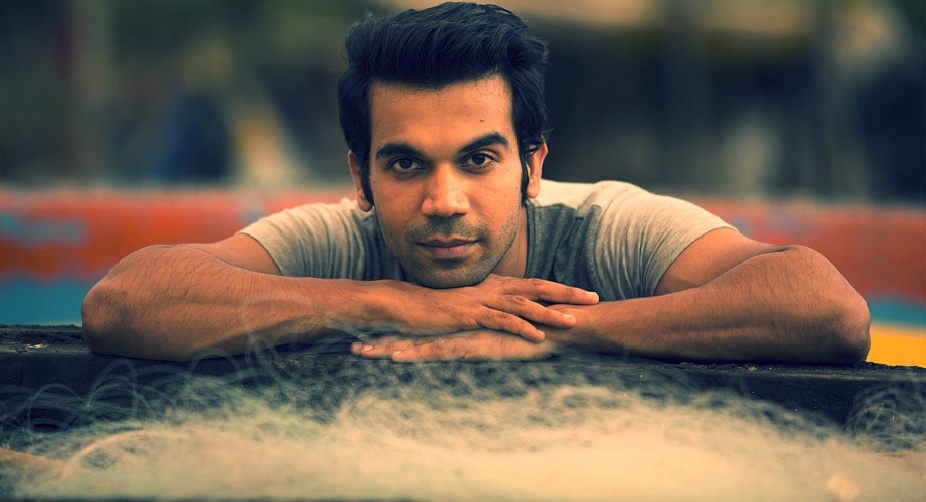
Trapped: Rajkummar Rao goes on special diet

To appear weak for a certain potion of the film, he was on just one carrot and a coffee diet for about 20-22 days.

SNS |

Soon to be seen in Trapped, Rajkummar Rao underwent a rigorous diet for the forthcoming film directed by Vikramaditya Motwane.

To appear weak for a certain potion of the film, he was on just one carrot and a coffee diet for about 20-22 days.

The actor lost almost seven kg in a span of 20 days! 

Shedding light on his diet plan, Rajkummar said, “It was a part of my process to prepare for Trapped. My character Shaurya is trapped inside a house for almost three weeks without any food or water. It is a survival drama. I wanted to feel the hunger and desperation that one goes through, if put in such extreme conditions.”

He further added, “I started losing weight while we were filming. It was a constant struggle to fight hunger. I've realized that we always take everything in our life for granted. What if there are situations in one’s life when there is no food or water for days? How will one survive? It was quite a struggle to be on such a strict diet. One gets bad mood swings. The energy level really goes down but, I guess that is the fun of being an actor. You get to do things that you can't do otherwise.”

Denying any repercussions on his health, he said, “Luckily, there were not many hazardous effects apart from a couple of black outs and body cramps. I was having a cup of black coffee and two carrots a day in order to survive.”

It seems his hard work paid off when the film was screened at a film festival. The actor was rewarded with immense accolade for his sheer brilliant performance in the film. 

Vikramaditya and Rajkumar have had a great time shooting the film! “I'm totally thrilled for the kind of response Trapped has received. The response was overwhelming for all of us,” the actor said.


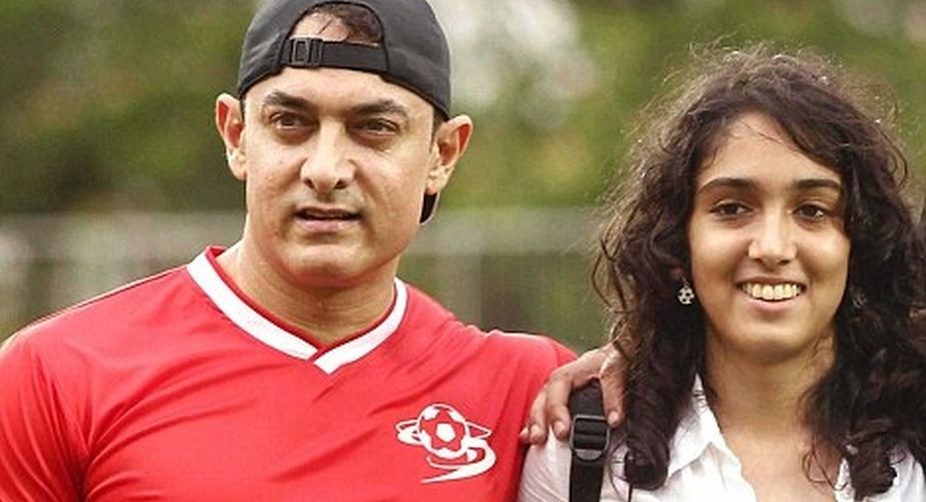
Aamir Khan: Daughter Ira proud of daddy

Leaving no stone unturned, the actor has gone under some rigorous preparations and training to essay the role of the wrestler Mahavir Phogat! 

SNS |

Aamir Khan might have blown audience’s minds with the trailer of Dangal, but it seems to have impressed his daughter Ira the most.

https://ssl.gstatic.com/ui/v1/icons/mail/images/cleardot.gifIf sources are anything to go by, Aamir’s doting daughter is beaming with pride and joy to see her dad play a father of four girls onscreen. 
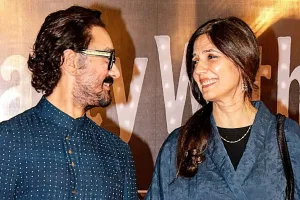
The actor has played a father in his earlier films such as Raja Hindustani, Fanaa and Talaash, but he always portrayed the father of a son. 

 Dangal is the first film that brings the actor in the role of a father to girls. 

 “It’s for the first time that Aamir will be playing a father figure of four girls, the curiosity and the anxiety of the audiences to witness the same is increasing,” a spokesperson close to the actor said.

 Aamir's transformation has been phenomenal. Leaving no stone unturned, the actor has gone under some rigorous preparations and training to essay the role of the wrestler Mahavir Phogat! 

 Presented by Disney, and produced by Aamir Khan, Kiran Rao and Siddharth Roy Kapur, the Nitesh Tiwari directorial is slated to release on December 23.

Tradition meets talent

SNS |

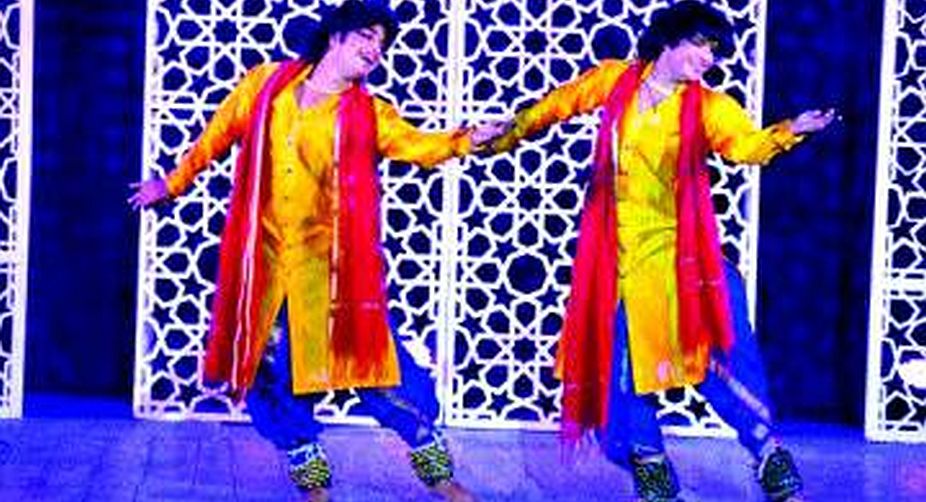
Kalahetu, founded by Kalpana Verma, a senior disciple of Pt Birju Maharaj, presented their annual event Sabrang-2016, at the Meghdoot open-air theatre of the Sangeet Natak Akademi on 1 November.  With Benaras, as its theme, it showcased two scintillating performances of Kathak from Benaras Gharana, featuring young talents like Vishal Krishna in a solo and the Mishra Brothers Saurabh and Gaurav Mishra in a duet performance.
The gifted grandson of the legendary Sitara Devi and nephew of the dancing cine-star late Gopi Krishna, Vishal, who reminded dance lovers of the vibrancy of both the Kathak stars of yesteryears; took the Sabrang-2016 evening to its climax. Accompanied by Kaushal Krishna on Tabla, Vishal opened his Kathak performance with Devi Stuti, composed by Sitara Devi in raga Marwa set to Drut Ek-Tala, interspersed with Kavitts of her Guru and father Pt Sukhdev Maharaj.
This was followed by the traditional repertoire of Natwari Kathak, the speciality of Benaras Gharana set to Teentala. The umpteen variety of just the opening Bol “Ta Thei” paved the path of his rich repertoire, before he proceeded to the Amad and Paran-Jodi-Amad with “Dhatak Thunga” in Tistra Jati. Then there were the Dupalli and Tipalli Parans, comprising the Bols (mnemonics) of Pakhawaj and Tabla so typical of this Gharana of Kathak. There were also nuanced “Ladi” of the “Traam” Bol, created and composed by Sukhdev Maharaj and the typical “Badhaiya Paran” of Sitara Devi.
For the Abhinaya segment Vishal chose an Ashtapadi from the Geet Govind of , the 12th century Sanskrit poet Jayadeva, where Krishna is depicted as the Dheer-Lalit Nayak pining for His beloved Radha. This immortal song of Jayadeva was choreographed and taught to Vishal  by the renowned Odissi danseuse Guru Madhavi Mudgal, who had also been a Kathak exponent originally. The mesmerising Abhinaya and the amazing virtuosity of this charming youngster left the audience spellbound.
Sabrang-2016 had opened with the Kathak duet by the Mishra Bandhu Rs Saurabh and Gaurav, after Pt Birju Maharaj lit the auspicious lamp and showered his blessings on the young performers of the evening. Accompanied by Shubh Maharaj and Rajnish on Tabla, Pt Ravishankar Mishra on Bol-Padhant, Pt Dharm Nath Mishra on Vocal and Neeraj Mishra on Sitar; the duo opened with Shiva-Stuti.
Their traditional repertoire had Amad, Chhoot ki Uthan, the Pakhawaj Bol-Bandish, and a variety of Tode, Tukde, Paran and Chakkardar Tihai, but the Khand Jati footwork was really special where they fitted the 5 beats and its multiples in the 16 beats of Teentala, altering the stress point to different Matras, with flawless finish. The quick-witted youngsters could improvise promptly whatever Shubh Maharaj challenged them on Tabla, to the extent that he had to stop playing Tabla to applaud their brilliance in this regard. They also showcased a couple of delicate nuances of Ghoonghat ki Gat. The only minus point was their exceeding the time limit, which left not enough time for the other performers.
Kalahetu also launched the debut Hindustani vocal recital of Mehboob Hasan of Dilli Gharana in between the two Kathak performances, who presented raga Puriya Dhanashri. He was ably accompanied by Zakir Dhaulpuri on Harmonium and Shahbaz Shakeel on Tabla.
By Manjari Sinha

Photo

  • img
  • img
  • img
  • img
  • img

Snapshots from Colombia

Snapshots from Colombia

MORE Photo STORIES

Indian scientists detect crack in Earth’s magnetic shield

The world’s largest and most sensitive cosmic ray monitor, located in India, has recorded a burst of galactic cosmic rays.

PTI |

The world’s largest and most sensitive cosmic ray monitor, located in India, has recorded a burst of galactic cosmic rays that indicates a crack in the Earth’s magnetic shield, according to scientists.
The burst occurred when a giant cloud of plasma ejected from the solar corona struck Earth at a very high speed causing massive compression of the Earth’s magnetosphere and triggering a severe geomagnetic storm.
The GRAPES-3 muon telescope located at Tata Institute of Fundamental Research’s Cosmic Ray Laboratory in Ooty in Tamil Nadu recorded a burst of galactic cosmic rays of about 20 GeV last year lasting for two hours.
The burst occurred when a giant cloud of plasma ejected from the solar corona, and moving with a speed of about 2.5 million kilometres per hour struck our planet, causing a severe compression of Earth’s magnetosphere from 11 to 4 times the radius of Earth.
It triggered a severe geomagnetic storm that generated aurora borealis and radio signal blackouts in many high latitude countries, according to the study published in the journal Physical Review Letters this week.
Earth’s magnetosphere extends over a radius of a million kilometres, which acts as the first line of defence, shielding us from the continuous flow of solar and galactic cosmic rays, thus protecting life on our planet from these high intensity energetic radiations.
Numerical simulations performed by the GRAPES-3 researchers, including Pravata K Mohanty, indicate that the Earth’s magnetic shield temporarily cracked due to the occurrence of magnetic reconnection, allowing the lower energy galactic cosmic ray particles to enter our atmosphere.
Earth’s magnetic field bent these particles about 180 degree, from the day-side to the night-side of the Earth where it was detected as a burst by the GRAPES-3 muon telescope around midnight on 22 June 2015.
The data was analysed and interpreted through extensive simulation over several weeks by using the 1280-core computing farm that was built in-house by the GRAPES-3 team of physicists and engineers at the Cosmic Ray Laboratory in Ooty.
Solar storms can cause major disruption to human civilisation by crippling large electrical power grids, global positioning systems (GPS), satellite operations and communications.

Ryan Reynolds confirms his second child is a girl

IANS |

Actor Ryan Reynolds has confirmed that his second child with actress and wife Blake Lively is a girl.

He appeared on Conan O'Brien's show and shared the news, reports eonline.com.

“Two (kids) under two is tough,” he told the comedian before adding: “Yeah, a lot of estrogen. It's like an American Girl doll took a s–t on my life.”

The couple recently welcomed their second child into the world but have remained private about any details surrounding the new arrival.

In January 2015, they became parents for the first time after the “Gossip Girl” star gave birth to daughter James.

Bar must work with Bench

Pakistan’s bar must join hands with the bench to ensure that challenges to the judiciary are met effectively.

SNS |

New CJ introduces reforms on first day in office’ was the headline on 29 June 2016, when Mansoor Ali Shah, chief justice of the Lahore High Court, took his seat at the helm of judicial affairs in Punjab. With 30 judicial officers sent on ‘special duty’ right from the beginning due to a “question mark on them”, the ambience in the legal profession echoed Chief Justice Shah’s resolve to ensure “merciless accountability” in the judiciary itself, as he pledged strict action against errant members. Very few can doubt the integrity of the Punjab chief justice as he challenges the status quo within the legal profession.

However, the recent episode of a courtroom soap opera (where a lawyer disrespected an additional sessions judge), highlighted the challenges faced by the judiciary on a regular basis. This strain between the bar and bench, if left unchecked, is bound to prophesy bad tidings for the independence of one of the most important pillars of the state.

There are stories of some lawyers adopting threatening attitudes towards judges up and down the country. Why do some lawyers stoop to such an approach? It appears that such tactics ensure that the requested relief is granted to a client of a relatively powerful lawyer from a relatively weaker judge. On the other hand, sheer reliance on one’s intellectual abilities or case preparation may not have the desired outcomes.
We must appreciate that until very recently a serious question mark hung over the independence of the judiciary in Pakistan. Due credit must be given to the 2007 lawyers’ movement; the independence of the judiciary was earned in a country where the executive branch manipulated most of the powers.
As far as the working of an effective justice system is concerned, the bar and bench must ensure that there is no compromise on the independence of the bench. The first principle of the United Nations’ Basic Principles on the Independence of the Judiciary clearly states that “the independence of the judiciary shall be guaranteed by the state and enshrined in the constitution or the law of the country. It is the duty of all governmental and other institutions to respect and observe the independence of the judiciary”.
The bar needs to promote and inculcate in the minds of its members the idea that any attack on or abuse of a judge is an attack on one of the most important cornerstones of democracy in the independence and impartiality of judges.
The independence of the judiciary, in its true sense, means not only that the judges are protected and free “from improper pressure by the executive or the legislature, by individual litigants, particular pressure groups, the media and self-interest” but also from negative pressure exerted by “other judges, in particular more senior judges”. While senior judges may have administrative powers over the junior judges, this must not impact the functions of the judiciary and the decisions of judges on a case-to-case basis.
Thus junior judges cannot be directed to decide certain cases in a particular way or pass certain types of punishment for certain types of offences. Any case tried in front of any judge, regardless of his seniority, is at the sole discretion of that judge alone.
The Beijing Statement of Principles of the Independence of the Judiciary in the LAWASIA region signed in 1995 by the then Pakistan chief justice Sajjad Ali Shah states that “the judiciary shall decide matters before it in accordance with its impartial assessment of the facts and its understanding of the law without imp­roper influences, direct or indirect, from any source”.
The bar in its role as standard bearer of the independence of the judiciary must make sure that ‘any source’ does not involve lawyers and that any such involvement should see the strictest disciplinary measures being meted out to the offenders.
In Pakistan, we are mired in a state of affairs where there are literally no effective policies by governments to ensure the vibrancy and strength of state institutions. Stability of institutions must come from the institutions themselves including the judiciary. It must be supported by the bar.
At the same time, to avoid criticism, the judiciary needs to make sure that there is a little room for complaints against the appointments and competence of judges. The judiciary’s conduct must be exemplary at all levels. This must be evident in the approach of judges coming to hear the cases; they must be fully prepared to deal with any situation with dignity, professionalism and in a composed manner.
At the end of the day the public needs an effective ‘justice system’ and not ‘just a system’ which seems to have been in place for the past seven decades.
By Tufail Hussain Malik
(The writer is a lawyer. Dawn/ANN)

Ventilator: Priyanka Chopra records emotional Marathi track ‘Baba’

Priyanka has dedicated the song, titled Baba, to her late father Ashok Chopra.

IANS |

Actress Priyanka Chopra, who is busy shooting for the second season of Quantico, has recorded a promotional track in Marathi for her debut Marathi production venture Ventilator. She has dedicated the song, titled Baba, to her late father Ashok Chopra.

The actress says the song is “powerful and moving”.

Ventilator is Priyanka's first Marathi venture under her production house Purple Pebble Pictures. The film is written and directed by Rajesh Mapuskar and presented by Zee Studios.

“From the minute, I heard the song ‘Baba', I loved it. It's so powerful and moving…capturing the relationship between a father and his son,” Priyanka said in a statement. 

The actress will also feature in the promotional track which was shot here. Mapuskar along with the team of the family entertainer flew to New York to shoot the video, conceptualised and directed by Maheep Dhillon with an American crew.

She said: “When the music directors suggested that I sing a female version of this, I was apprehensive and torn between my love for the song and nervousness of singing it in Marathi. But I'm so glad I did finally sing it because it was a fun, enriching, terrifying, and amazing experience for me and I can't wait to do it all over again.

“I hope I've been able to do justice to this beautiful song. Forgive me if there are any mistakes. I sang it with all my heart.”

Priyanka also shared her excitement about the song on Twitter.

She posted: “#Baba..My first Marathi song.. Forgive me if there are any mistakes…this one is all heart.” 

The film revolves around an ailing senior member of a family who is being put on the ventilator just days before the Ganapati festival, leading to varied degrees of speculation and panic among the large clan he belongs to.

Mapuskar said: “When music composers Rohan Rohan came to me with a very simple, warm composition 'Baba' I never thought it would travel across continents to get completed. It's recorded in the ultimate city of the US, New York. Thank you Priyanka for your initiative to make the Baba song sound so wonderful.” 

Ventilator will release on Friday.

Mila Kunis lashes out at Hollywood sexism: I felt objectified

PTI |

Launching an attack on sexism in Hollywood, actress Mila Kunis has opened up about her experience with gender bias she has faced throughout her career.

In a open letter published on A Plus, a media site co-founded by her husband Ashton Kutcher, the 33-year-old actress has penned down the bad experiences she faced in the entertainment industry during the initial stage of her career, reported Variety.

Kunis recalls being told by a producer that she would “never work in this town again” after she refused to pose in a revealing outfit on the cover of a men's magazine to promote a movie.

“I was livid, I felt objectified, and for the first time in my career I said 'no' And guess what? The world didn't end.

The film made a lot of money and I did work in this town again, and again, and again. What this producer may never realize is that he spoke aloud the exact fear every woman feels when confronted with gender bias in the workplace,” Kunis wrote.

She goes on to say that she has endured years of being “insulted, sidelined, paid less, creatively ignored, and otherwise diminished based on my gender” while trying to “give people the benefit of the doubt” and “play by the rules.” 

“I'm done compromising; even more so, I'm done with being compromised. So from this point forward, when I am confronted with one of these comments, subtle or overt, I will address them head on; I will stop in the moment and do my best to educate.

“I cannot guarantee that my objections will be taken to heart, but at least now I am part of creating an environment where there is the opportunity for growth. And if my comments fall on deaf ears, I will choose to walk away,” she added.

Kunis is the latest Hollywood celebrity to speak out against gender inequality in the workplace, joining the likes of Kristen Bell, Patricia Arquette, Jennifer Lawrence, Ava DuVernay, Bradley Cooper, Ethan Hawke, and more.