Logo

Busy day for Delhi Police exchange of notes turns chaotic

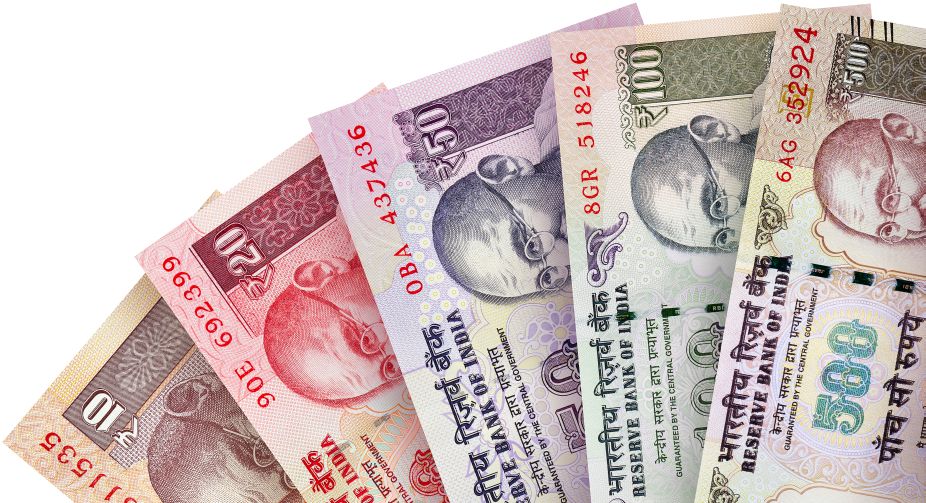
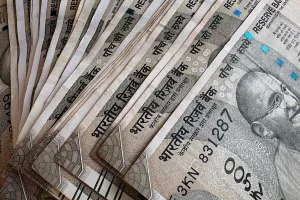
Police attended to around 3,000 calls from anxious people who stood in queues to withdraw money from ATMs with Rs 500 and Rs 1,000 notes no longer considered legal tender.

PTI | New Delhi |

It was a busy day on Friday for the Delhi Police which attended
to around 3,000 calls from anxious people who stood in queues to withdraw money
from ATMs with Rs.500 and Rs.1,000 notes no longer considered legal tender.

“Yesterday, we received close to 750 calls from anxious
people who complained their notes were not exchanged or banks ran out of cash.
Today, we attended to more than three times the number of calls,” Special
Commissioner of Police (Operations) Sanjay Beniwal said.

“Many of the complaints were regarding ATMs running out
of cash or remaining offline today. There were calls about long queues or
violence. When we reached the spot, we found that the caller or the bank
staffer had panicked and made the call.

There were no reports of any untoward incident from
anywhere,” the official said.

The entire process of exchanging notes turned chaotic and
confusing as facilities like banks and post offices wilted under pressure. Many
ATMs ran out of cash within hours of opening due to heavy rush to withdraw
lower denomination currency.

An original note

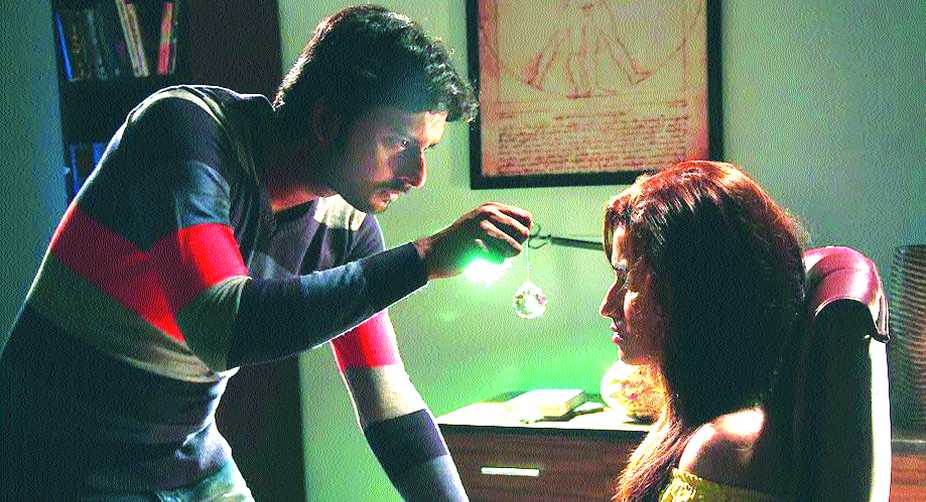
Kuheli — the first Indian film that deals with a scourge called porphyria.

Statesman News Service |

CONTEMPORARY Bengali cinema has not been generous with
psychological diseases in its plotline, especially the lesser known ones. Films
like Deep Jele Jai, Hrad and Hrad Harano Sur are no longer around. In an
ambience where films are either experimental remakes of famous literary works
ranging from Saradindu Bandopadhyay to William Shakespeare, or copyrighted
remakes of Southern hits, Debarati Gupta’s Kuheli strikes an original note. It
is a psychological thriller with several layers backed by thorough research.

Kuheli tackles a little known psychological ailment called
porphyria through a story that blends the thriller-horror genres, yet not
really allowing the psychological element to dominate the narrative but with
the characters yet making a point. This is an ailment that has never been
tackled in Indian cinema till date. “My producers were keen on tackling an
original subject for my film which should throw light on something not
attempted before and yet would draw in an audience,” says Gupta, who has
directed two films earlier. The first was Hoi Choi (2013) that dealt with a
street theatre group trying vainly to grow into a movement, while Kalkiyug
(2015) was, again, a psychological thriller that went awry because eminent
actors decided to overwhelm the storyline.

But Kuheli is truly different. It is about a very young
couple, Sayak (Indrashish Roy) and Amrita (Pujarini Ghosh) who suddenly migrate
from Helsinki to Kolkata to settle down in a posh rental flat. Amrita, we
learn, is a patient of porphyria. What is porphyria? Put simply, it is a group
of diseases in which substances called porphyrins build up within one’s system,
affecting the skin and/or the nervous system of the afflicted. It is also known
to be an inherited disease, passed from parents to children. In Kuheli, Amrita
is a patient of acute porphyria and cannot tolerate sunlight. So, she remains
at home during the day and keeps away from socialising. Sayak is one of the
most loving husbands one has witnessed on the Indian screen. He takes extremely
good care of her and keeps her away from company and from sunlight. He cooks
breakfast, fetches her a glass of red juice from the vendor every morning,
wakes her and insists she takes her pills alongside breakfast. However, what
remains a mystery is how they manage to fund an expensive style since Sayak is
a professional blogger. Amrita’s illness is also closely linked to attacks of
selective amnesia when she forgets where she is, where she came from, which
college she went to and so on.

Debarati Gupta elaborates, “While I have worked on thrillers
before, for the first time I am bringing in a scary undertone to the thriller genre.
The film is unique in its presentation. Assuming that the film is mainly
addressed at a young audience, we have stuck to a young casting.” She laments,
however, that when she approached some familiar and noted actresses with the
offer to play Amrita, they refused on the grounds that they did not wish to be
part of a horror film.

But Kuheli is not a horror film. It is a psychological
thriller with the thriller element running right through it, like a thread
breaks strands often to venture into other areas such as past killings, the
investigation done by two intelligent police officers, an inquisitive neighbour
who has intrigue written all over her tarot readings and so on.

How the young couple copes with the issues of porphyria,
selective amnesia and panic for light forms the plot of the film. Add to this a
series of serial killings that begin soon after the couple arrives in the city.
The murders seem to be a repeat of similar killings that happened way back in
the early 1970s. But the modus operandi was the same — kidnapping the victim,
tying his/her hands behind the back, slashing the throat and draining the
entire blood from his/her system. This takes one back to vampire killings since
vampires are known to suck the blood out of their victims.

“Kaushik Sen and Anindya Pulak play investigative officers
of the Kolkata Police Department. Their characters are fleshed out so that
distinguishes them from the other characters and also from the clichéd
policemen of celluloid. Chandreyee Ghosh as the misunderstood inquisitive
neighbour has played an off-mainstream character very well. And yet we have not
steered away much from reality,” Gupta sums up.

The film touches upon the medication needed for such
patients but Sayak or even Amrita do not take any steps towards a complete
cure. One wonders why. Three lapses that stand out are – one, too many tight
close-ups of the couple in the first half that loses out on the perspective of
these frames; two, Amrita is always dressed in shorts, which makes her look very
attractive indeed but distracts the audience and attracts the male gaze much
more than the film demands; and, three, the less than average performance by
Pujarini and Sayak.

One wishes the director had ckled the illness a bit more in
depth, such as facts that the illness may be triggered by alcohol, smoking,
stress or certain medications. Amrita neither smokes nor drinks and her skin is
so smooth and peach-coloured that blisters and itching, regular symptoms for an
over-sensitive skin, are conspicuous by their absence.

“Kuheli is an entire package. It has so many layers at
different levels that it is unique, because it is not just a thriller or a
scary film, but a beautifully woven love story as well. I am extremely happy
the way the script and casting has been done. Debarati and my vision on the
film are in sync and we hope the audience will also be in sync,” says producer
Avishek Ghosh of AVMA Media LLA.

Research reveals that the mental illness of George III was
tackled in Alan Bennett’s play, The Madness of King George (1991. A British
film adapted from the play was made in 1991. The closing credits of the film
comments that the illness suffered by King George had been attributed to
porphyria and that it is hereditary. Among other descendants of George III,
theorised by the authors of Purple Secret to have suffered from porphyria, were
his great-great-granddaughter Princess Charlotte of Prussia and her daughter
Princess Feodora of Saxe-Meiningen. They uncovered better evidence that George
III’s great-great-great-grandson, Prince William of Gloucester, was reliably
diagnosed with variegate porphyria. It has been suggested that Vincent van Gogh
may have suffered from acute intermittent porphyria.

Take a bow, Debarati and Avishek, for taking courage in your
hands and dealing with a little-known subject that Indian cinema has never
witnessed. It could have been a winner had the lead artists not let you down
with their dismal performance, but for us it has been a learning experience.

By Shoma A Chatterji 

Odisha hopes to attract investment during ‘Make in Odisha’

Odisha hopes to attract massive investment in several sectors including smart city.

Statesman News Service | Bhubaneswar |

Odisha hopes to attract massive investment in several sectors including smart city, MSME, food processing and manufacturing as several industrialists including major corporate like Videocon, Hinduja and Adani Group are to participate in the “Make in Odisha” conclave scheduled here from 30 November to 2 December.

The “Make in Odisha” conclave is being organised by the state government in collaboration with the department of industrial policy & promotion (DIPP),Government of India and the confederation of Indian industry (CII). A preparatory meeting was heldon Friday under the chairmanship of chief secretary AP Padhi. The Union finance minister Arun Jaitley will be the chief guest at the valedictory session on 2 December.

The industry secretary Sanjeev Chopra claimed that the conclave has received a good response. The state government had already organised road shows at Kolkata and Hyderabad and soon another road show will be held at Delhi to attract the investors. The government, will organise a seminar for young entrepreneurs to launch Start-ups.

‘Shivaay chose me’

Statesman News Service |

As Ajay Devgn’s Shivaay hit the screen last week, Sayyeshaa
Saigal shared her thoughts. Already stealing the hearts of many, Saigal is an
Indian film actress who appears in Hindi and Telugu films. After starring in a
fantasy-thriller Akhil, she made her Bollywood debut with Ajay Devgn. The thing
that strikes one about her is her enthusiasm towards life. Excerpts from an
interview:

Q Who gave you the best compliment for Shivaay?

Ajay Devgn. And he said that I have been very natural and
that’s the best compliment.

Q What made you choose this film?

Shivaay chose me. I signed the film about two years ago.
Ajay sir saw some of my pictures and he said that he is making a film called
Shivaay and he is directing it. That direction word clicked with me because it
doesn’t really happen too often. I did a screen test and he liked me, so that’s
how I bagged the movie.

Q Who is your favourite actor in Bollywood?

I like Deepika Padukone and Priyanka Chopra. Both are very
good at their jobs and I feel they are very hard working. They are my
favourites.

Q How was it working with Erika Kaar?

Erika is a very sweet girl. Being Polish, she shared a lot
about her country as I have never been there.

Q So there was no catfight?

No not at all. I think I am very sober, also if you see her,
she is a very soft spoken person. And she and I both have a very nice role so
why would we fight?

Q Which of the two would you like to work with — Ranbir
Kapoor or Ranveer Singh?

Ranveer Singh. He was fabulous in Bajirao Mastani.

Q Who according to you is the more intense actor — Shah
Rukh Khan or Ajay Devgn?

Ajay Devgn — his eyes are very intense. I love Shah Rukh
sir’s romance; no one can beat him in that.

Q Which Khan you want to work with?

Salman Khan is my favourite.

Q Who is the sexiest actor?

Hrithik Roshan.

Q Friends, hook up, marry– Varun Dhawan, Ranbir Kapoor,
Ranveer Singh?

Friends with Varun Dhawan, I think he will make a very good
friend. I will marry Ranbir and hook up with Ranveer Singh.

By Manisha Mandal

As Dhaka warms up to Beijing

Statesman News Service |

How much of a game-changing impact will Chinese President Xi Jinping’s recent visit to Bangladesh, 30 years after the last such visit, have on politics of this region and beyond?

What will be the impact on the ground of the signing of Memorandum of Understanding (MoUs) for 34 projects amounting to an impressive $24.45 billion and a commitment of another $13.6 billion?

This is by far the strongest Chinese expression of confidence in this rising South Asian country.

Unquestionably, the visit by Xi marks a watershed in Bangladesh-China bilateral relations signaling a remarkable transition of ties that started from very shaky grounds in 1971, when China sided with Pakistan.

China formally recognised our independence only years later after Pakistan and Saudi Arabia did the same, after the assassination of the founder of the state Sheikh Mujibur Rahman, in August 1975.

The fact that his daughter and the country’s current Prime Minister Sheikh Hasina deliberately overlooks these facts of history is a testimony to the rising importance that Bangladesh attaches to its relations with China, and her personal commitment to it.

So how much of a game changer is this new relationship between Bangladesh and China?

Internally, it marks a significant shift in Bangladesh politics.

Traditionally it used to be the main opposition group, the Bangladesh Nationalist Party (BNP) that was known to work for closer relations with China, primarily to counter Indian influence.

On the contrary, the present ruling party, the Awami League, clearly preferred India for its closest ties which was rooted in the latter’s all out assistance in the freedom struggle resulting in 4,000 Indian soldiers laying down their lives for Bangladesh’s freedom.

All that appears to be a distant past now.

After her return to power in 2009, Sheikh Hasina has consistently shown a keen interest in developing close relations with China even as she made vigorous efforts to win India’s confidence.

On security, India biggest concern, Bangladesh has been very cooperative in removing all terrorist camps of Indian separatists groups that previously existed along the border.

Connectivity through the Asian Highway and the Trans-Asian railway projects are now the priority visions of both countries. The Asian Highway projects involves 32 member countries and the network extends from Tokyo in the east to Kapikule, Turkey in the west and from Torpynovka , Russian Federation, in the north, to Denpasar, Indonesia in the south. The Trans-Asian railway initiative, on the other hand, involving 28 countries, seeks to improve rail connectivity within Asia and between Europe and Asia.

Some trade issues still remain to be resolved.

Alongside issues relating to the sharing of water of more than 50 rivers that flow between our two countries still remain largely unsolved, with a proposed barrage on Teesta River being the most urgent.

Simply put, given the troubled past of Bangladesh-India relations, the present is qualitatively different.

And it is at this crucial moment of Bangladesh-India relations that Bangladesh’s relations with China are reaching unprecedented levels of cooperation and trust.

Nothing would suit Bangladesh better than to be able to continue as presently conceived.

But the crucial question is how will India, given its troubled past, take Bangladesh’s warming relationship with China that the visiting President termed as a “strategic partnership” ?

To Bangladesh’s great relief, and diplomatic success, India has not reacted negatively, at least in public. However, it will be naive to expect that India will not have any reservations about it. Internally, Sheikh Hasina’s government is in no position to upset India too much on account of China. But the distance she has already covered in coming closer to China has surprised most of her critics and the  international observers of South Asian politics.

To move further in this direction Sheikh Hasina will need all her diplomatic skills and persuasive powers.

India’s sudden, yet not too unexpected, deterioration of relations with Pakistan, and China’s reassertion of its historic close relations with Pakistan may alter everything. The continuing cross border terrorism, which is destabilising Kashmir, makes for a tinderbox like situation in South Asia, with the possibilities of war at any time.

China’s new scheme of rebuilding the historic Silk Route under ‘One Belt, One Road’ (OBOR) project has not been fully welcomed in India though Pakistan, Sri Lanka and Maldives have already signed up and Bangladesh welcomed it during Xi Jinping’s visit.

Some Indian think-tanks have termed the ‘OBOR’ as China’s project to increase its sphere of influence and bring India’s neighbours under its fold. However, it has to be noted that bilateral trade between these two Asian giants have grown over the years and reached nearly $100 billion.

What role will the United States play in this new equation? Given the rising tension over conflicting claims in the South China Sea, America’s increasingly negative view of rising Chinese maritime strength and Japan’s demands for tougher action against Chinese stance on the issue, the pressure on Bangladesh could mount to be less enthusiastic about getting close to China.

So the all important question is how will the rising friendship between Bangladesh and China work out, given that Dhaka’s closeness with New Delhi is at an all-time high?

Bangladesh needs all the assistance it can get and India can never match China in terms of the funds that Bangladesh needs.

Bangladesh’s one and only goal is development and it needs both India and China.

We have successfully stayed out of big power politics and regional power rivalry. We cannot and should not get even remotely involved with the bilateral problems of any other country.

Bangladesh must pursue her own agenda for development and peaceful and cooperative relations with all, especially the two Asian giants, on whose development successes Dhaka must traverse.

The writer is Editor and Publisher, The Daily Star, Dhaka. The This is a series of columns on global affairs written by top editors from members of the Asia News Network and published in newspapers across the region.

-By Mahfuz Anam/ANN 

Lebanon’s progress

Statesman News Service |

Amidst the turmoil in Aleppo and Mosul, the presidential election in Lebanon has been a relatively less noticed development. The election of the former General, Michel Aroun, ends more than two years of political gridlock in the country.

The stalemate has been of a piece with the political limbo in different parts of the Arab world. In the event, Lebanese MPs have elected a staunch ally of Iran as President, and this ends the 29-month power vacuum that is rooted in the rivalry between Tehran and Saudi Arabia. His election has undercut the possible influence of the desert kingdom on the pivotal affairs of Lebanon. Geopolitics and the regional balance of power have had an impact on the election of Lebanon’s Head of State.

Markedly, Aoun had gained the support of the former Lebanese Prime Minister, Saad al-Hariri, whom Saudi Arabia had at one stage preferred. The latest development in a volatile part of the Arab world has politically legitimised Hezbollah as a nationalist group with cross-sectarian support. It is a measure of the importance of Lebanon’s presidential election that rallies in support of Aoun have been organised from the Hezbollah-dominated areas around Beirut to beleaguered Damascus, where Bashar al-Assad’s regime has lent its support to the new President. At his swearing-in ceremony, Aoun has advanced an emotive plea that must resonate across the region.

Lebanon, he said, must be protected from what he called “regional fires” — a reference to the conflict in neighbouring Syria where Hezbollah is fighting in support of Assad. Though he stopped short of spelling out a position on the conflict, he has made it clear that “It remains a priority to prevent any sparks from reaching Lebanon.”

The conflict in Syria has been raging for close to six years, and as the new President with a military background, Aoun cannot but be unaware that there could be a spillover in peripheral Lebanon, as it has across the Turkish border. Saudi Arabia had been vehemently opposed to Aoun’s nomination, fearing that he will consolidate Iran’s influence in Lebanon, which has remained vulnerable since the end of its civil war 25 years ago.

As it turns out, the legislature was determined to end the stalemate. Mr Aoun, an 81-year-old Christian nicknamed “The General”, won the surprise support of two of his oldest and most bitter rivals as Beirut’s politicians sought an end to the vacuum in governance which has prevented legislation from being passed for more than two years.

There appears to have been a surprising shift in allegiances across the country’s deeply divided political parties. Even Prime Minister Hariri’s surprise endorsement seemed necessary, as he says, to “protect Lebanon, protect the [political] system, protect the state and protect the Lebanese people”. Hopefully, Aoun’s assumption of authority does not symbolise a patchwork quilt, however protective.

-Editorial 

Cashless pipe-dream

Statesman News Service |

Among the “collateral gains” of the demonetisation of
high-value currency notes is a reiteration of the reality that political
sycophancy did not end when protests by the masses forced the lifting of the
Emergency in 1977.

Recent events have proved that apart from “opposition for
opposition’s sake”, there is no dearth of people keen to establish their
credentials as chamchas of Narendra Modi. Not surprisingly they have
exhibited their penchant for hyperbole when hailing the move which the Prime
Minister took upon himself to personally announce to the nation. A glance at
the paeans of praise now being sung would create an impression that in a single
stroke a host of economic evils have been eliminated.

There can be no two opinions that the move to curb black
money and dismantling the parallel economy merits much appreciation, but it is
not the wonder-drug as projected by those backers of the ruling party who have
never spoken on economic issues in the past  —  they
are bending over backwards to extol the virtues of junking the Rs 1,000 and Rs
500 notes, pointing to benefits that even financial experts never perceived.
Fortunately, thus far anyway, critics of demonisation have not been slammed as
“anti-national” or terrorist-supporters. Who knows, even that may happen given
the signs of the times.

Although definitely not in that dubious category is the
somewhat fanciful suggestion of the finance minister and allied officials that
the dawn of a cashless India is not far away  —  a
glance at the serpentine queues at banks ought to serve as a reality check.
Ministers and officials appear so obsessed with “western” indices of economic
growth that they are blind to the fact that it is the small trader  —  often
dubbed the base of the BJP —  who keeps
the wheels of commerce moving.

Have the bankers and finance ministry officials cared to
assess how many grocers accept “plastic”, not to mention more sophisticated
means of electronic transactions? The kirana merchant, vegetable vendor,
rickshaw puller, and auto-driver play a major part in daily life, they know
only “cash on delivery”: indeed is there an alternative to paying the delivery
man in cash when he brings a loaf of bread or packet of milk to the door? The mention
of a cashless economy found massive endorsement from those promoting electronic
systems of payment, their full-page advertisements in the newspapers ought to
have been a source of embarrassment.

For they added a ring of authenticity to the charge that the
present government favoured “big business”, notwithstanding the admission of a
leading chain of supermarkets that 80 per cent of customers paid in cash  —  were
all of them flush with black money?

— Editorial

Discharge responsibilities without fear: President tells IPS trainees

PTI | New Delhi |

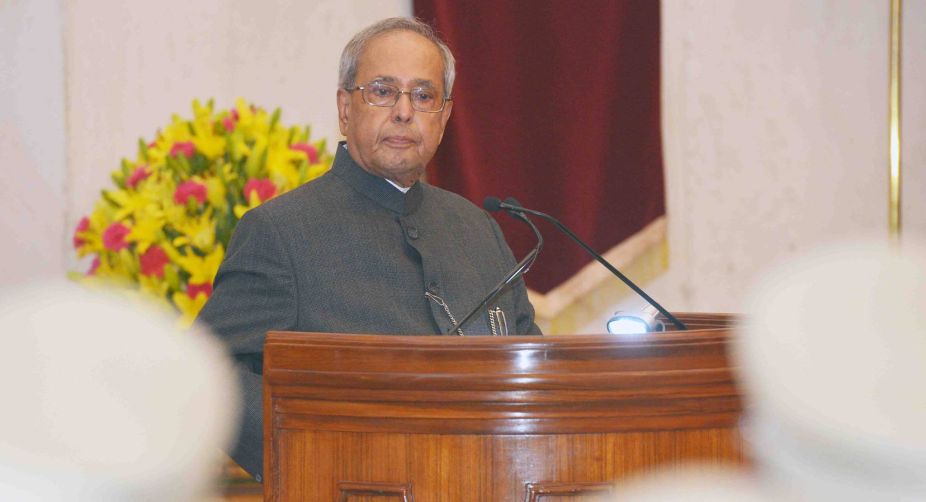
With the emergence of the concept of welfare state, the role
of a police personnel has changed, President Pranab Mukherjee on Friday said as he
asked Indian Police Service trainees to discharge their responsibilities
without fear or favour.

“Gone are the days when the job of a police officer was
to maintain law and order. Today, with the emergence of the concept of welfare
state, the role of a police personnel has changed,” Mukherjee told IPS
trainees who called on him today at Rashtrapati Bhavan.

Mukherjee told them that more elements have been added to
their core function of maintaining law and order.

“He said they should train themselves to handle cyber
crime, black money, kidnapping etc. There are two other important challenges —
insurgency and terrorism which are closely linked to internal and external
security,” a statement from Venu Rajamony, Press Secretary to the
President, said.

He told them that learning is a life-long process and they
should discharge their responsibilities without fear or favour. This required
nerves of steel along with a smiling face, the statement said.

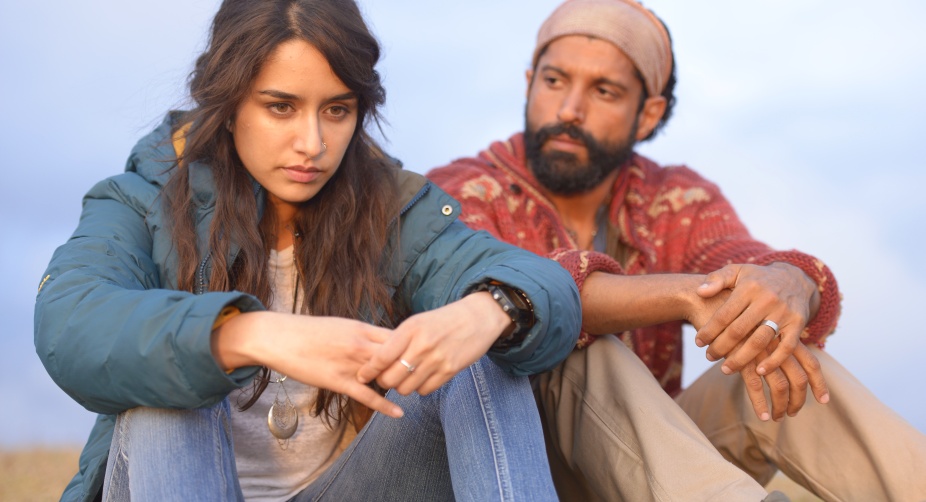
‘Rock On!! 2’ movie review: Not rocking enough

The story credited to Abhishek Kapoor and Pubali Chaudhari is interesting, but the plot is staid and formulaic with each scene packed with conflict.

IANS | Mumbai |

Film: Rock On!! 2

Director: Shujaat Saudagar

Cast: Farhan Akhtar, Arjun Rampal, Purab Kohli, Shraddha Kapoor, Prachi Desai, Shashank Arora, Kumud Mishra

A sequel to the 2008 film, Rock On!!, which was about the coming together of a band called Magic, this one is more than the reinforcement of the band. 

The narrative begins with the band being dismantled once again not because of differences between the team members, but because each one of them has their own demons to deal with.

Aditya (Farhan Akthar) hounded by the guilt of a suicide case, settles in Meghalaya with his solitude and the villagers, helping them have a better life.

Joe Mascarenhas (Arjun Rampal), concerned about who is going to pay his bills, becomes a club manager and a reality show judge. Kedar Zaveri or KD (Purab Kohli) is still trying to find a balance between his friends and himself.

The trio and their families reunite in Meghalaya for Aditya\’s birthday and they decide to reassemble their once famous band.

Meanwhile, as deus ex machina, Aditya\’s path crosses with Jiah Sharma, a music enthusiast recording local talent in Meghalaya. And in Mumbai, Uday, Jiah\’s friend sends her CD to the trio.

It is only when the five of them assemble at Joe\’s office, that there is an instant acceptance, but not without their own hurdles.

Meanwhile, disaster strikes in the form of a forest fire and destroys the village Aditya had adopted. So, he goes back to Meghalaya to salvage the villagers from their miseries. And what better way to raise funds than a rock concert.

The story credited to Abhishek Kapoor and Pubali Chaudhari is interesting, but the plot is staid and formulaic with each scene packed with conflict, making the entire tale seem dramatic and forced. Also, the blatant plot holes due to the cinematic liberties taken make viewing a dreary fare.

With no memorable lines and the use of staid imagery, the dialogues written by Farhan are lame and run-of-the-mill.

The characters too don\’t grow organically and thus there is a dissent with the viewers.

Farhan with his weak coarse voice as the lead singer is not imposing. Though he strives to put his heart into the character, he fails miserably while internalising his pain and his forlorn, unkempt look further accentuates his clumsiness.

Purab, though suave, is perfunctory and so is Arjun.

Prachi Desai as Sakshi, Aditya\’s wife, with her blunt haircut and sedate outfits looks like she has just emerged from the Hollywood films of the 1960s.

Shraddha Kapoor as Jiah Sharma, and the talented Shashank Arora as Uday, who we had witnessed in the noir film Titli are good, but limited.

In supporting roles, topping the list is Kumud Mishra in a restrained performance as Pandit Vibhuti, Jiah\’s father. He is unfaltering when he sermonises, \’Kya, yeh sangeet hai?\’, (Is this music?) to his son Rahul or when he is silent when Jiah argues with him in a tele conversation.

The others who have their moments of onscreen glory are the characters who play Rahul Sharma, Jiah\’s brother and Manjot – a reality show contestant. They both show promise.

Mounted with excellent production values, the film is visually glossy and vibrant. The locales and the massive sets are beautifully exploited by cinematographer Marc Koninckx\’s camera work.

The snappy edits by Anand Subaya keep in tune to the genre of the film.

Music by Shankar-Eshaan-Loy is well integrated into the narrative, but they do not propel the narrative. The title track that plays often is effectively used to pump adrenaline. The choreography in some songs is clumsy though.

Unfortunately, unlike the prequel, this film is not made with a passion for music. Instead, it is made with the intent of exploiting the franchise and it fails miserably.

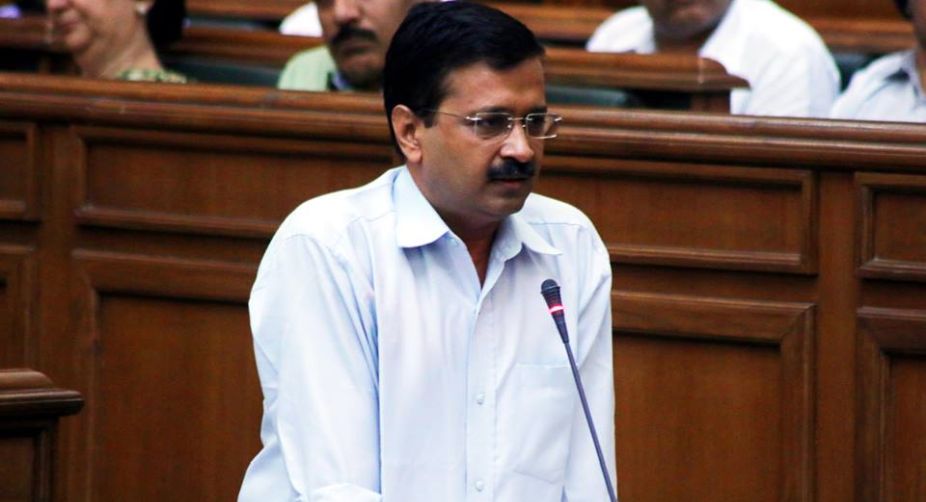
No raids by Delhi VAT department: Kejriwal

The clarification followed reports that teams of Value Added Tax (VAT) department raided several markets in old Delhi.

IANS | New Delhi |

Delhi Chief Minister Arvind
Kejriwal on Friday denied reports that his government’s VAT department was
raiding shops and urged traders to ask for IDs of those conducting raids.

“Rumour that Delhi VAT department doing raids. (It is) completely false.
No raids by VAT. If anyone claims to be from VAT (department), ask for his ID
and report to police,” Kejriwal tweeted.

The clarification followed reports that teams of Value Added Tax (VAT)
department raided several markets in old Delhi, including Sadar Bazar and
Chandni Chowk, on Thursday and Friday.

The raids have been reportedly linked to the demonetization of 500 and 1,000
rupee notes.

New test to protect vision

IANS | New York |

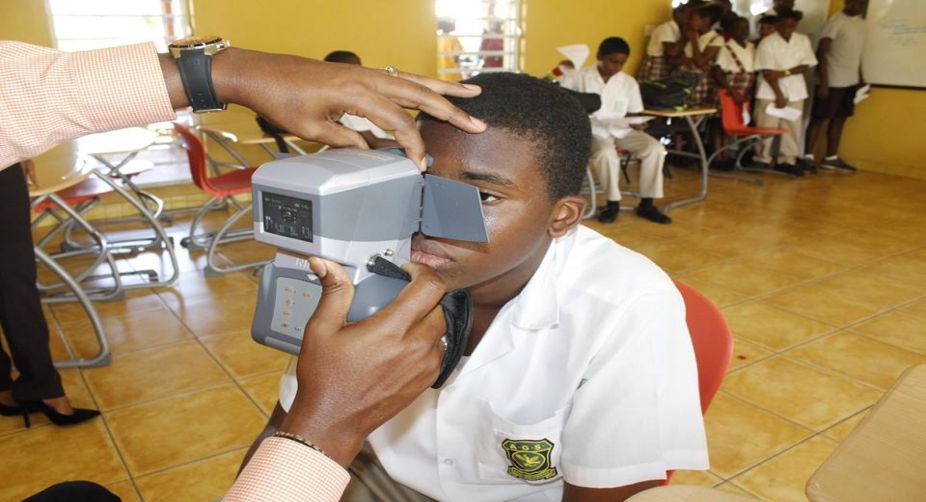
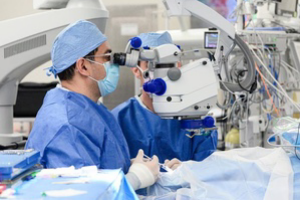
Researchers from the University of Missouri School of Medicine has come out with a new test to check eye pressure to prevent possible vision loss.

The most common complication from cataract surgery is high eye pressure, which can cause swelling and other issues that can lead to vision loss or even blindness.

“The current standard of care following cataract surgery is to refill the eye with a saline solution and tap on the eye with a Q-tip to observe if it is too firm, too soft or just right,” said John Jarstad, Associate Professor at the University of Missouri School of Medicine in a statement.

“This Goldilocks-style guesstimate often is inaccurate, and patients might actually have higher eye fluid pressure than the surgeon believes. We use a device known as a tonometer to accurately gauge eye pressure,” Jarstad added.

An electronic eye pressure monitoring device known as a tonometer often is used in a clinical setting to determine eye pressure, but the device rarely is used in a surgical setting. 

The researchers studied 170 patients who had eye pressure adjusted after cataract surgery with a tonometer and found that patients were 2.5 to 4 times less likely to develop cystoid macular edema — cyst-like pockets of fluid in the macula of the eye.

According to the researchers, normal eye pressure should be between 16 and 21 mmHg, or millimeters of mercury.

In most cases, a high eye pressure will resolve itself in a matter of days without issue, but in cases in which the pressure is significantly high, a person can experience symptoms of nausea and pain above the eyebrow.

In these cases, it's important that the pressure be adjusted to prevent permanent damage to the eye, the study suggested.

“I recommend eye surgeons adopt this practice for the good of their patients. There is no additional cost to patients, and if it saves just one patient from going blind, it would be well worth every doctor using it in his or her surgical practice,” the researcher said.

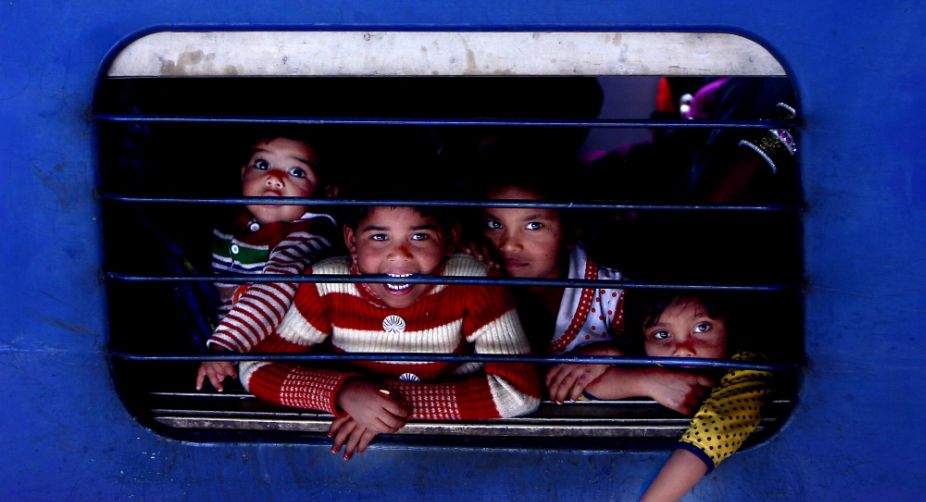
No cash refund on cancelled rail tickets

SNS | New Delhi |

Indian Railways on Friday issued a circular that there would be no refund in cash for cancelled tickets.  
“While for smaller amounts ticket deposit receipts will be issued, for amounts touching Rs 10,000 and more, the money will be directly sent to the bank accounts of customers. Thus anybody wishing to cancel a ticket is required to furnish their bank account details,” Indian Railways stated.

Sushant Singh Rajput: Shiamak Davar tells tales from his dancer days

SNS | New Delhi |

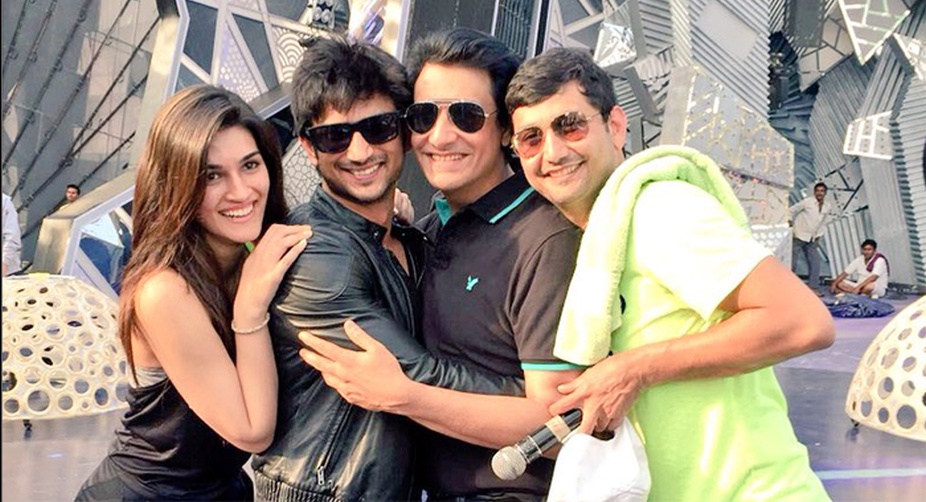
Did you know Sushant Singh Rajput, who recently impressed with his role as Captain Cool, was a background dancer once?
Not everyone knows that but the actor was in choreographer Shiamak Davar’s troop before he became an actor.
The 30-year-old was a part of Shiamak’s dance company just like Shahid Kapoor, Varun Dhawan and a few others in the industry.
He also performed with Aishwarya Rai, Preity Zinta.
From being an engineering student to a background dancer, and now the star in many films – he has come a long way.
The choreographer is very proud of his protégé.
Expressing his pride, Shiamak says, “I felt there was something special about him back then. When Sushant wanted to take up engineering, I asked him why he hadn’t opted for acting. I told him, ‘You’re fun; you have a good understanding of the craft.’”
“He said, ‘I don’t know… education is important for me. I said, Just try, if you fail it’s okay but at least try.’ He listened to me and then he got a television role in Pavitra Rishta and then he went on to doing films.
“In Kai Po Che, he was outstanding and in MS Dhoni, he was fabulous beyond words. He is a very natural actor and that’s what I like about him. I knew somewhere that this boy had something. And he is a good dancer and it’s so important in the industry nowadays. I am so proud of where he has reached,” Shiamak said.
The choreographer added, “I am proud of him as he hasn’t forgotten the faith I had in him. He has always, in every way, always spoken about me as a teacher. It shows the kind of person he is.”

After criticism, SC gives notice to Katju

IANS | New Delhi |

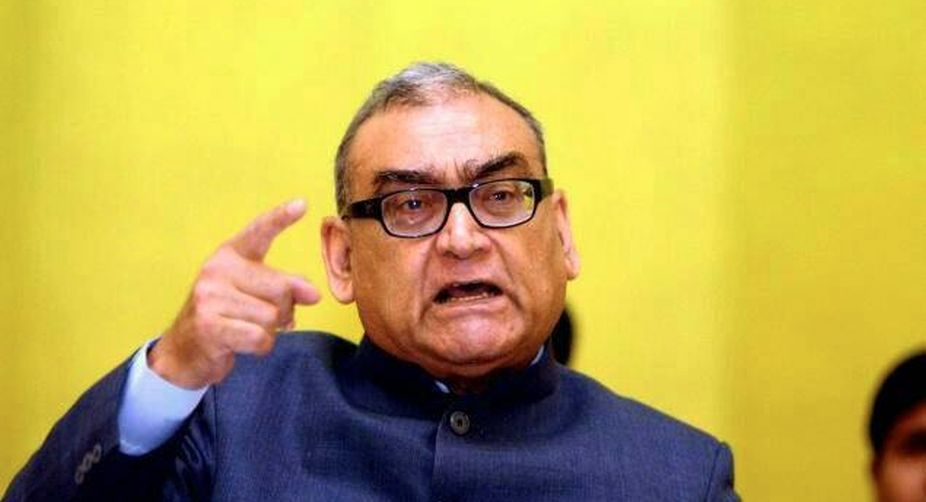
The Supreme Court on Friday issued notice to its former judge Justice Markandey Katju on why contempt proceedings cannot be initiated against him for casting aspersion against judges in a blog.
The apex court bench of Justice Ranjan Gogoi, Justice Prafulla C. Pant and Justice Uday Umesh Lalit issued the notice to Justice Katju, who was present in the court.
They showed him a copy of the blog to Attirneuyy General Mukul Rohatgi, who said the highlighted paragraphs of the blog were “intemperate” but would not amount to contempt.
Giving Justice Katju eight weeks to reply, the bench said that in the blog he had criticized the judges and not the judgment.

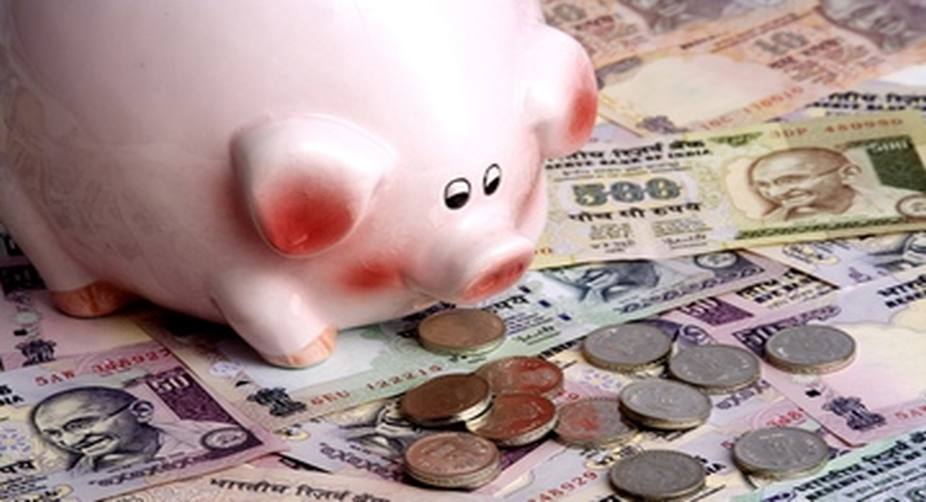
Demonetisation: Notes in circulation may go down by Rs.2 lakh cr

SNS | New Delhi |

The surprise demonetisation of high value denomination
currency may lead to likely destruction of bank notes worth over Rs.3,35,000
crore while new notes worth Rs.1,34,000 crore may be added to the banking
system, a leading think tank said on Friday.

“This step by the government is a death blow to the
cash component of black money in India,” Imagindia Institute President
Robinder Sachdev said.

“Over $50 billion (Rs.3,35,000 crore) of illegitimate
cash will be destroyed, and over $20 billion (Rs.1,34,000 crore) of legitimate
cash will enter banking channels to become legal,” Sachdev said.

The move comes in the wake of the voluntary Income
Disclosure Scheme (IDS) that ended on September 30 and reportedly netted $19
billion (Rs.1,27,490 crore), according to the Washington Post.

It means that India’s war on domestic black money will bring
in approximately $40 billion (Rs.2,68,400 crore) into the formal banking system
of the country by December 31, think tank Imagindia Institute said.

According to Reserve Bank of India (RBI), the total value of
the outstanding currency in circulation in the Indian economy as on October 28
stood at Rs.17.77 lakh crore, or about $265 billion.

RBI data also shows that as on March 31, currency notes of
Rs.500 and Rs.1,000 comprised 86 per cent of the total currency value in
circulation.

“Not all currency notes in circulation are illegally
acquired cash. Our model to assess the impact of this step by the Indian
government accounts for 70 per cent of cash in currency notes of Rs.500 and Rs.1,000 as legitimate, and 30 per cent as illegitimate cash stowed away in bags
and hiding places,” it said.

This strike on the black economy will, at the same time,
eliminate fake currency and cripple terror financing, significantly
strengthening India’s financial and banking infrastructure, as well as bring
almost all of India into the formal banking system.

However, Imagindia also added that the current cash in
circulation or hide-outs is a minor proportion of the black money that has been
generated in India.

“It can easily be agreed that 20 per cent of India’s
GDP is unreported, and in the black economy… In the past ten years, from 2006
to 2015, India’s accumulated GDP was $20,134 billion,” according to World
Bank data.

“At 20 per cent of illegal money, it means that $4,027
billion have been created as black money in India in past ten years,”
Sachdev said.

Majority of black money generated in past ten years was
converted into legal bank deposits, land and property, gold, diamonds, silver,
art, and other such items.

In addition, portions of it were sent abroad to safe havens
and investments, or circled back as legal investments in Indian companies, he
added.

“Through this war on cash economy, the government will
be able to destroy only $50 billion out of the $4,027 billion that was
generated.

“However, this is the maximum that can be done at this
stage… nevertheless, it is a body-blow to the future of black money in
India,” he said.

(With inputs from IANS)

Raghunath to lead India in Four-Nations hockey tournament

Hockey India left out injured seniors P R Sreejesh, S V Sunil and Ramandeep Singh from the squad.

IANS | Bengaluru |

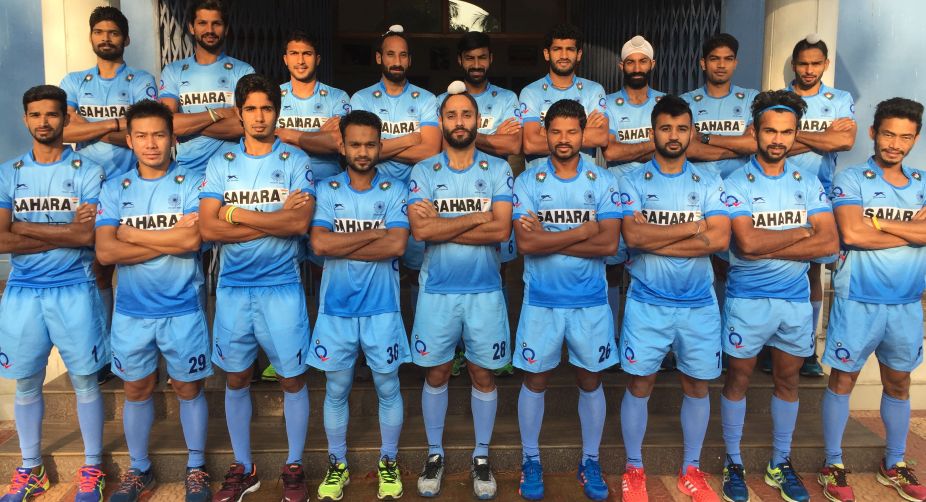
Seasoned drag flicker V R Raghunath will lead the men’s team in the Four-Nation tournament in Australia, starting November 23 as Hockey India (HI) on Friday left out injured seniors P R Sreejesh, S V Sunil and Ramandeep Singh from the squad.
Promising drag flicker Rupinder Pal Singh, who was adjudged top scorer at the recently-concluded Asian Champions Trophy, has been named Raghunath’s deputy while veteran Sardar Singh and Nikkin Thimmaiah have been named as replacements for Sunil and Ramandeep.
Akash Chikte and Abhinav Kumar Pandey will be India’s custodians in Sreejesh’s absence. Chitke came up with an outstanding performance in the final of Asian Champions Trophy after Sreejesh sustained an injury during the penalty shootout against South Korea in the semi-final of the tournament. The second goalkeeper will be Abhinav from Uttar Pradesh. 
“Abhinav has been in and out of the camps. He has had a knee injury for a while but has made a strong comeback and we are pleased with his performance in this camp,” chief coach Roelant Oltmans said in a statement.
Ace forward Sunil is yet to fully recover from the wrist injury he sustained at the Rio Olympics. Ramandeep, who replaced Sunil in the Asian Champions Trophy, will also miss out due to injury.
“Both Sreejesh and Sunil will remain in SAI for rehabilitation. Also Sreejesh has willingly stepped up to spend some time with the junior team goalkeepers. He has already starting working with them and will assist Dave Staniforth who is joining us next week” Oltmans said.
“This is great for the young boys and sharing his experience with them will be valuable ahead of the Junior World Cup,” stated Oltmans, who will work with the junior team while strategic coach Roger Van Gent will accompany the senior team to Australia.
Stand-in skipper Raghunath said that the team is upbeat and eager to face the challenge Down Under. 
“The Asian Champions Trophy win has boosted the morale of the players and the team’s spirit is high. However, playing in Australia is a different challenge and we are up for it. We have beaten Australia in their home earlier in 2014 Test series and look to repeat the performance this time too,” he said.
Besides hosts Australia, India will play against Malaysia and New Zealand in the series before playing Australia in a Test series.
Goalkeepers: Abhinav Kumar Pandey, Akash Chikte
Defenders: Rupinder Pal Singh (Vice Captain), Pardeep Mor, V R Raghunath (Captain), Birendra Lakra, Kothajit Singh, Surender Kumar
Midfielders: Chinglensana Singh Kangujam, Manpreet Singh, Sardar Singh, S K Uthappa
Forwards: Talwinder Singh, Nikkin Thimmaiah, Affan Yousuf, Mohammad Amir Khan, Satbir Singh, Akashdeep Singh

Raghunath to lead India in Four-Nations hockey tournament

Hockey India left out injured seniors P R Sreejesh, S V Sunil and Ramandeep Singh from the squad.

IANS | Bengaluru |

Seasoned drag flicker V R Raghunath will lead the men’s team in the Four-Nation tournament in Australia, starting November 23 as Hockey India (HI) on Friday left out injured seniors P R Sreejesh, S V Sunil and Ramandeep Singh from the squad.
Promising drag flicker Rupinder Pal Singh, who was adjudged top scorer at the recently-concluded Asian Champions Trophy, has been named Raghunath’s deputy while veteran Sardar Singh and Nikkin Thimmaiah have been named as replacements for Sunil and Ramandeep.
Akash Chikte and Abhinav Kumar Pandey will be India’s custodians in Sreejesh’s absence. Chitke came up with an outstanding performance in the final of Asian Champions Trophy after Sreejesh sustained an injury during the penalty shootout against South Korea in the semi-final of the tournament. The second goalkeeper will be Abhinav from Uttar Pradesh. 
“Abhinav has been in and out of the camps. He has had a knee injury for a while but has made a strong comeback and we are pleased with his performance in this camp,” chief coach Roelant Oltmans said in a statement.
Ace forward Sunil is yet to fully recover from the wrist injury he sustained at the Rio Olympics. Ramandeep, who replaced Sunil in the Asian Champions Trophy, will also miss out due to injury.
“Both Sreejesh and Sunil will remain in SAI for rehabilitation. Also Sreejesh has willingly stepped up to spend some time with the junior team goalkeepers. He has already starting working with them and will assist Dave Staniforth who is joining us next week” Oltmans said.
“This is great for the young boys and sharing his experience with them will be valuable ahead of the Junior World Cup,” stated Oltmans, who will work with the junior team while strategic coach Roger Van Gent will accompany the senior team to Australia.
Stand-in skipper Raghunath said that the team is upbeat and eager to face the challenge Down Under. 
“The Asian Champions Trophy win has boosted the morale of the players and the team’s spirit is high. However, playing in Australia is a different challenge and we are up for it. We have beaten Australia in their home earlier in 2014 Test series and look to repeat the performance this time too,” he said.
Besides hosts Australia, India will play against Malaysia and New Zealand in the series before playing Australia in a Test series.
Goalkeepers: Abhinav Kumar Pandey, Akash Chikte
Defenders: Rupinder Pal Singh (Vice Captain), Pardeep Mor, V R Raghunath (Captain), Birendra Lakra, Kothajit Singh, Surender Kumar
Midfielders: Chinglensana Singh Kangujam, Manpreet Singh, Sardar Singh, S K Uthappa
Forwards: Talwinder Singh, Nikkin Thimmaiah, Affan Yousuf, Mohammad Amir Khan, Satbir Singh, Akashdeep Singh