Logo

Jewellers shut shops for 12th day after I-T survey

PTI | New Delhi |

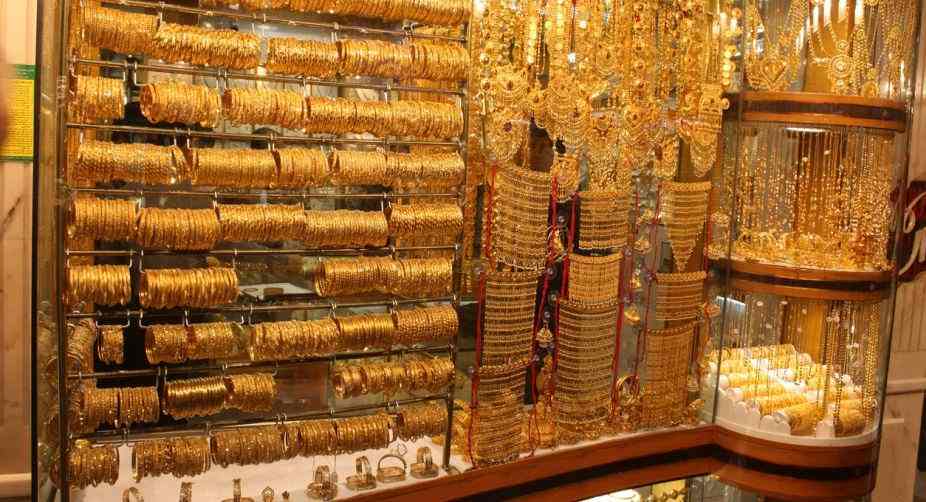
Gold and jewellery establishments in the national capital remained closed for the 12th day on Tuesday after the Income Tax Department conducted surveys following reports of alleged profiteering and tax evasion by traders and other operators in reported conversion of demonetised notes.
The survey operations were carried out on November 10 in at least four locations in Delhi-NCR region, including Dariba Kalan, Chandni Chowk and Karol Bagh.
The government on November 8 announced the demonetisation of 500 and 1,000 rupee notes to flush out black money.
Most of the jewellery houses have been closed since November 11 in the national capital.
According to the sources, the officials of Directorate General of Central Excise Intelligence (DGCEI), an arm under the Finance Ministry, has sent notices to these jewellers seeking details of the gold sales.

Battling terror on the city streets and its costs

IANS |

Title: Soldier Spy 
Author: Tom Marcus 
Publisher: Michael Joseph/Penguin Random House UK 
Pages: 326 
Price: Rs 699 
In today’s world of uncertain and unexpected violence, an implacable enemy, with thoughts of spectacular mass murder on their minds, may be next to us without we even suspecting their presence or intentions — and our very homes, public spaces and transport are the new battlegrounds. Who can we depend upon to protect us? 
Just a handful of men — and women — whose original remit of unmasking traitors and preventing enemy agents from stealing national secrets, has expanded to supplement police’s efforts to track and foil terrorists planning to unleash mayhem on the streets. Though less glamorous than their counterparts working overseas, the secret security services are an equally vital part of espionage and national security and their work no less exacting or lethal. 
And how exactly they work, with long and uncomfortable stakeouts interspersed with high-speed car chases — and ceaseless observation in the shadows of ever-present personal danger from targets as well as other threats — is told in this high-octane, engrossing but visceral account by a former operative of Britain’s MI5. 
And Tom Marcus cites that old yardstick of terrorism, where the security service have to be lucky every time while the terrorist has to be lucky just once. 
The MI5 describes its employees as “ordinary people, who do extraordinary things”, with “a very strong ethos of public service” despite knowing “their work often goes unnoticed in the public domain”; as people “intensely committed to keeping the country safe”, and who are “tirelessly professional and ethical in the way they conduct their work”. Marcus met the parameters — some more than his colleagues — and a little too well. 
“Some people join the service out of a sense of duty, some out of wanting to do some good by removing the evil. I did it because it’s all I knew. I’m a hunter of people and I’m damn good at it,” he says. 
And this he seeks to prove, as right at the onset, he recounts one key operation, in which he, dressed in urine-smelling rags, tries to keep vigil on an Islamic radical planning mass murder at a local school. He also uses this episode to underline how his service is different from the police, both in methods and objectives. 
For the first, he tells us that “the people we hunt never know we’re there, and even when they end up in court they still don’t know how they got caught”. Their aims diverge, for “police like to arrest quickly, to remove the threat to the public as soon as possible” while his service knows that this “doesn’t defeat the problem, it merely takes away one of the foot soldiers” and they want to roll up the whole network not only take “this one attack out of the equation” but use it to “identify, and stop, ten others”. 
And Marcus shows what kind of demands it makes on the operatives, with one incident where he, out shopping, is on the verge of killing a man behaving suspiciously before he realises that the crime he observed is not the one he was trained to curb. 
In this account, which has been cleared by his agency and thus liable not to reveal to much operational secrets, Marcus not only provides us with a ringside view of their missions, mixing their pursuit of Islamist terrorists — on which he provides an apt perspective — with those of the various Irish splinter groups and Russian and Chinese spies, but also the perils and the moral ambiguities in their work where they only know a bit of the picture and some orders may seem puzzling (the ISI pops up here). 
He is also candid in showing how keenness and dedication lead him to some rash actions, over-aggression, unflagging commitment that eventually led to nightmares and a condition where he could no longer go on. 
An incisive view of some of the leading security challenges before democratic states, Marcus’ account — and especially his fate — is also an unvarnished and uncomfortable look at the means used to counter them and the costs they take on the combatants. It is also a captivating account that leaves any espionage fiction far behind.

Congress leader performs rituals at ATM

Former legislator Sudheer Reddy and his supporters performed various rituals at a non-functioning ATM of Andhra Bank at Kothapet in Hyderabad.

IANS | Hyderabad |

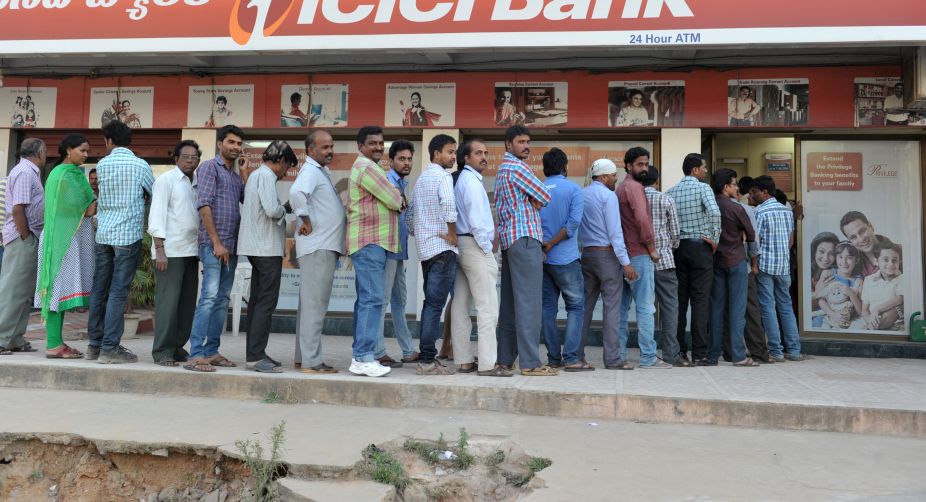
A Congress leader on Tuesday performed a ‘puja’ at an ATM in a novel protest over the problems faced by people in the wake of demonetisation of high value currency notes.
Former legislator Sudheer Reddy and his supporters performed various rituals at a non-functioning ATM of Andhra Bank at Kothapet in Hyderabad.
Reddy broke a coconut, lighted a lamp and garlanded the ATM, which had ‘Out of Cash’ board hanging around it.
Sudheer Reddy said the central government took a hasty decision to demonetize Rs 1,000 and Rs 500 notes.
The Congress leader said the government’s move to spike the high value notes without making alternate arrangements had caused severe inconvenience to people.
Stating that Rs 2,000 note was of no use to people, he demanded that the government scrap it and immediately make Rs 500 notes available.

Countdown begins for Pakistan’s new army chief

The ball is now in Prime Minister Nawaz Sharif’s court to choose his successor among the top four generals.

IANS | Islamabad |

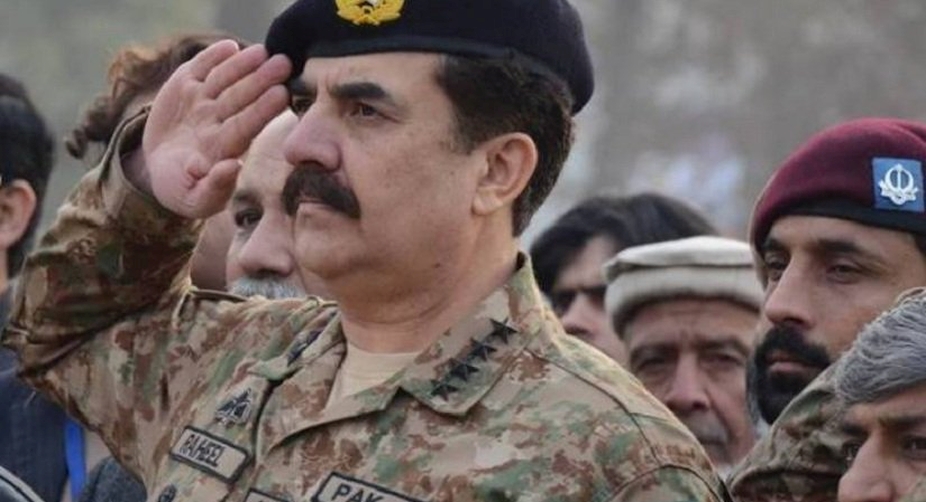
The countdown has begun in Pakistan to appoint the next Army Chief with Gen Raheel Sharif set to step down on November 29. The ball is now in Prime Minister Nawaz Sharif’s court to choose his successor among the top four generals.
If sources are to be believed Prime Minister Sharif has already made up his mind over who will succeed Gen Sharif, but has so far kept his cards close to his chest.
The word in political circles is that Lt. Gen Ishfaq Nadeem Ahmed, who is currently serving as Multan corps commander, will be named the next army chief. 
Lt Gen Zubair Mehmood is likely to be appointed chairman of the joint chiefs of staff committee, according to reports.
Others in contention for the top military post include Bahawalpur Corps Commander Lt Gen Javed Iqbal Ramday and Inspector General Training and Evaluation Lt Gen Qamar Bajwa.
All four generals are from the Pakistan Military Academy’s 62nd Long Course, but have had different career trajectories.
Defence Minister Khawaja Asif has said that completion of ongoing counter-terrorism operations would be the responsibility of the new army chief.
The war against terrorism, the situation along the border with India, and alleged “Indian aggression in Pakistan through Afghanistan” will be among the major responsibilities the new army chief will have to focus on, Asif said.
Nawaz Sharif’s choice will be important in the context that the new army chief would have to oversee the transition of the army from counter-terrorism assignments to its conventional role of defending the borders.
The formal process for nomination starts with the General Headquarters in Rawalpindi sending a list of the senior-most generals to the Prime Minister via the defence ministry, but without making any formal recommendations.
The Prime Minister then will hold informal consultations with the outgoing Army Chief before announcing his decision.
Gen Sharif initiated his farewell meetings at the Lahore Garrison on Monday, where he told a gathering of officers and men from the army and Rangers that he was leaving the country “more secure and stable”, with a “sense of greater hope and direction” and ready to thwart all challenges.

Demonetisation has badly hit terror funding: Rijiju

IANS | New Delhi |

Terror funding has been badly hit by demonetisation of Rs 500 and 1,000 notes as their counterfeit supply from Pakistan was affected, Parliament was informed on Tuesday.
The minister also said that incidents of stone pelting in the Kashmir valley had reduced due to this move.
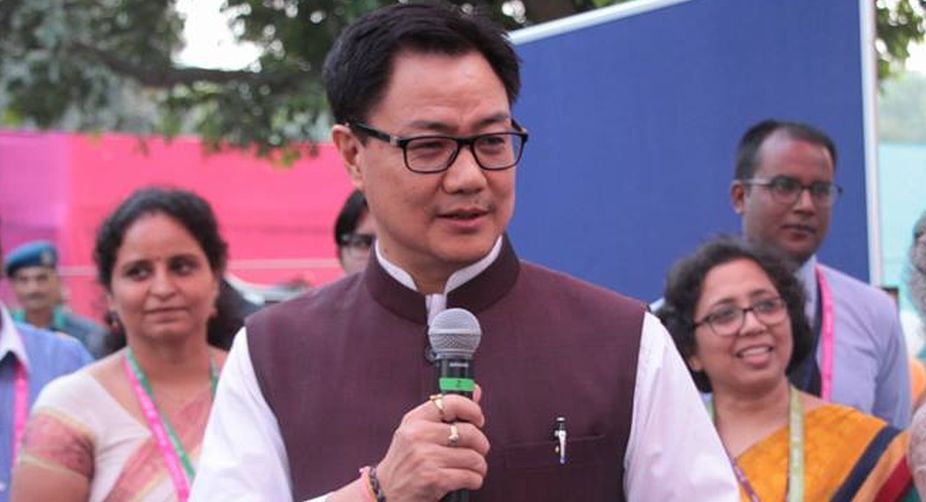
“The biggest impact of demonetization is that it has led to a decline in stone pelting incidents in Jammu and Kashmir. Apart from it, the decision, has badly hit terror funding,” Minister of State for Home Affairs Kiren Rijiju said in the Lok Sabha during Question Hour.
He was responding to a query raised by BJP MP Rama Devi.
She sought to know from the minister whether the decline in stone pelting incidents prove that separatists were paying stone pelters and other anti- national elements the currency notes of Rs 500 and Rs 1,000.
The minister said that the Centre and the Jammu and Kashmir governments were working together to bring normalcy in the Kashmir Valley.

Soon, your smartphone may be charged in seconds!

PTI | Washington |

You could soon charge your smartphones within seconds, thanks to scientists, including one of Indian origin, who have developed new flexible supercapacitors that can be recharged more than 30,000 times without degrading.
After 18 months or so, smartphones hold charge for less and less time as the battery begins to degrade.
Scientists from the University of Central Florida (UCF) in the US developed a new process for creating the novel supercapacitors.
The novel method could eventually revolutionise technology as varied as mobile phones and electric vehicles.
“If we were to replace the batteries with these supercapacitors, you could charge your mobile phone in a few seconds and you wouldn’t need to charge it again for over a week,” said Nitin Choudhary, a postdoctoral associate at UCF.
Researchers experimented with applying newly discovered 2D materials only a few atoms thick to supercapacitors.
Other researchers have also tried formulations with graphene and other 2D materials, but with limited success.
“There have been problems in the way people incorporate these two-dimensional materials into the existing systems – that’s been a bottleneck in the field,” said Yeonwoong Jung, an assistant professor at UCF.
“We developed a simple chemical synthesis approach so we can very nicely integrate the existing materials with the two-dimensional materials,” said Jung.
Researchers developed supercapacitors composed of millions of nanometer-thick wires coated with shells of 2D materials.
A highly conductive core facilitates fast electron transfer for fast charging and discharging. Uniformly coated shells of 2D materials yield high energy and power densities.
Scientists already knew 2D materials held great promise for energy storage applications. However, until the UCF-developed process for integrating those materials, there was no way to realise that potential, Jung said.
“For small electronic devices, our materials are surpassing the conventional ones worldwide in terms of energy density, power density and cyclic stability,” Choudhary said.
Cyclic stability defines how many times it can be charged, drained and recharged before beginning to degrade.
For example, a lithium-ion battery can be recharged fewer than 1,500 times without significant failure.
Recent formulations of supercapacitors with 2D materials can be recharged a few thousand times.
By comparison, the new process yields a supercapacitor that does not degrade even after it has been recharged 30,000 times.
Supercapacitors that use the new materials could be used in phones and other electronic gadgets, and electric vehicles that could benefit from sudden bursts of power and speed.
Since they are flexible, it could also mean a significant advancement in wearable technologies, researchers said.
The study was published in the journal ACS Nano.

Water exists deeper in Earth than thought

PTI | Washington |

Water exists far deeper in the Earth – about 400 to 600 kilometres into the mantle – than previously believed, researchers including one of Indian origin have found.
A mineral far below the surface of the Earth may hold the key to how much water is stored in our planet, researchers said.
Mainak Mookherjee, Assistant Professor at Florida State University in the US and Andreas Hermann from the University of Edinburgh in the UK estimate that in the deep Earth – roughly 400 to 600 kilometres into the mantle – water is stored and transported through a high-pressure polymorph of the mineral brucite.
Previously, scientists thought brucite was not thermodynamically stable that deep in the Earth.
“This opens up a Pandora's Box for us. We did not think water could be stored by hydrous minerals such as brucite. But now that we know it is there, we need to figure out how much water could be effectively stored inside it,” Mookherjee said.
Based on high-pressure experimental studies, scientists knew minerals that transported water – such as brucite – had limited stability and that these minerals decomposed in the deep Earth.
As they decomposed, they released the water, which is recycled back to surface via volcanic activity.
However, this discovery of a new high-pressure phase of brucite indicates that water could be efficiently transported to far deeper realms without decomposition.
“We had to do quantum-mechanical calculations on thousands of potential structures until we found the one we now reported,” Hermann said.
“It really is remarkable that such a well-studied mineral as brucite has something so surprising to offer,” he said.
Water plays a critical role in sustaining geological activity below the Earth's surface. Scientists have been working for years to quantify the oceans' worth of water that lay hidden in the crust and mantle.
“For the activity of the planet, deep Earth water is equally important to water on the surface,” Mookherjee said.
“My goal is to understand how much water is stored in the deep Earth. If the planet becomes dry on the inside, the planet dies because geodynamic activity within the planet ceases,” he said.
The research was published in the journal PNAS.

South Korea signs military intelligence pact with Japan

Yoo Il-ho chaired the meeting that approved the pact to directly exchange military intelligence on the Democratic People’s Republic of Korea (DPRK)’s nuclear and missile programs.

IANS | Seoul |

The South Korean cabinet on Tuesday endorsed a bilateral military intelligence pact with Japan amid public and parliamentary opposition.
Deputy Prime Minister for Economic Affairs, Yoo Il-ho, chaired the meeting that approved the pact to directly exchange military intelligence on the Democratic People’s Republic of Korea (DPRK)’s nuclear and missile programs. 
The signing ceremony of the pact — the General Security of the Military Information Agreement (GSOMIA), is scheduled to be held in Seoul on Wednesday, Xinhua news reported.
With the presidential ratification expected later Tuesday, South Korean Defense Minister Han Min-koo and Japanese Ambassador to South Korea Yasumasa Nagamine would formally seal the pact.
GSOMIA will go into effect immediately after the signing. 
If realized, the two countries would reach an agreement less than a month after resuming talks on the pact.
South Korea has hurriedly pushed the accord as part of efforts to find a breakthrough by regaining support from conservative voters sensitive to security issues.
Seoul and Tokyo held the first working-level dialogue earlier in November.
It was initially supposed to be presided over by President Park Geun-hye, but the president did not appear at the meeting due to growing public fury over the scandal involving Park and her long-time confidante, Choi Soon-sil.
Prosecutors had identified Park as a criminal accomplice to Choi in many of criminal acts.
Public objections to the pact were also strong. At least 59 per cent opposed the deal.
Japan has reportedly remained unrepentant of its brutalities during World War II. The Korean Peninsula was colonised by Japan from 1910 to 1945.

Fruits – natural moisturiser for your skin

Load your diet with fruits of all kinds and keep your skin supple and glowing this winter.

Deepa Gupta | New Delhi |

It’s getting cold and the air dry. Your skin needs extra moisturizing, especially in winter season. Although markets are flooded with big brand skin moisturising products to combat dryness, they can never beat the benefits of eating fruits, which acts as a natural moisturiser.

What you eat builds your body and your skin. Hence, load your diet with fruits of all kinds and keep your skin supple and glowing this winter. Here is a list of top ten fruits you should add to your daily diet for beautiful, glowing skin.

Apple has skin-friendly nutrients such as copper, potassium and vitamin C. It also helps to retain essential nutrients in your skin. So keep your skin nourished all the time by eating an apple a day.

Orange, which is rich in vitamin C and calcium, adds shine to your skin. It contains fruit acids which makes the skin brighter and glow.

Banana restores moisture and repairs the damaged, dull and dry skin as it contains a lot of moisture, potassium, vitamin A, B6, C and E. All these nutrients promote clear glowing skin. A large amount of antioxidants and manganese present in banana help hydrate your skin and prevent it from drying and peeling.

Pineapple is packed with vitamin C, amino acids and other skin-friendly nutrients. Having it regularly will help nourish and moisturize your skin.

Avocado contains monounsaturated fatty acids which maintain moisture in the inner layer of your skin, helping to make it baby soft and hydrated.

Pear contains natural humectants, which help balance the normal water content of the skin and retains its natural moisture.

Grapes are great exfoliating agents that can make your skin smooth and soft. Rich in vitamin E, it locks the moisture in the skin. Include them in your diet rather than applying readymade moisturising products.

Pomegranate helps moisturise your skin from deep inside. It also promotes skin cells regeneration in the inner layers and aids in tissue repair.

Kiwi has high content of omega-3 fatty acids. Its oil hydrates the skin leaving it soft and glowing. Loaded with dietary fibre and antioxidants, it boosts and rejuvenates the skin health.

Papaya is a proven remedy for those having dry skin. Due to high vitamin A content, papaya promotes the production of sebum (our body’s natural oil) and it keeps the skin moisturised.

These ten fruits are power packed with nutrients to replenish the skin, promote collagen production and protect your skin’s moisture in cold and dry weather. So add them to your daily diet.

Novel paint lets walls produce electricity

PTI | Seoul |

The walls of your home could soon produce electricity, thanks to a new thermoelectric paint which captures the waste heat from hot surfaces and converts it into electrical energy, scientists say.
Conventional thermoelectric materials are fabricated as flat, rigid chips. These devices are then attached to irregular-shaped objects that emit waste heat, such as engines, power plants and refrigerators.
However, the incomplete contact between curved surfaces and the flat thermoelectric generators results in heat loss and decrease the overall efficiency.
Scientists from Korea Institute of Science and Technology (KIST), and the Korea Electrotechnology Research Institute, showed that the thermoelectric paint easily adheres to the surface of any shape.
“I expect that the thermoelectric painting technique can be applied to waste heat recovery from large-scale heat source surfaces, such as buildings, cars, and ship vessels,” Jae Sung Son, researcher at the Ulsan National Institute of Science and Technology (UNIST) in South Korea told ‘Phys.org’.
“For example, the temperature of a building’s roof and walls increases to more than 50 degree Celsius in the summer,” Son said.
“If we apply thermoelectric paint on the walls, we can convert huge amounts of waste heat into electrical energy,” he said.
The study was published in the journal Nature Communications.

Flight operation remains suspended at Srinagar airport

Morning visibility was said to be only 600 metres at the airport.

IANS | Srinagar |

Flight operations to and from Srinagar international airport were adversely affected for the third consecutive day on Tuesday due to foggy weather.
“Two morning flights and six afternoon flights have been cancelled today (Tuesday), a few Srinagar bound flights those have already landed at Jammu airport have, however, been asked to wait for clearance to take off for Srinagar depending on improvement in visibility,” an airport official told IANS. 
Morning visibility was said to be only 600 metres at the airport.
Flight operations at the Srinagar airport were first impacted on last Thursday. Air traffic has since remained more or less suspended, with the exception of two flights landing and then taking off on Saturday.
The airport has instrument landing system (ILS), but sources said the same needs up gradation to ensure flight operations during poor visibility.

By-election: Counting begins in Madhya Pradesh

The counting of votes in Madhya Pradesh’s Shahdol parliamentary constituency and Nepanagar assembly constituency began amid tight security.

IANS | Bhopal |

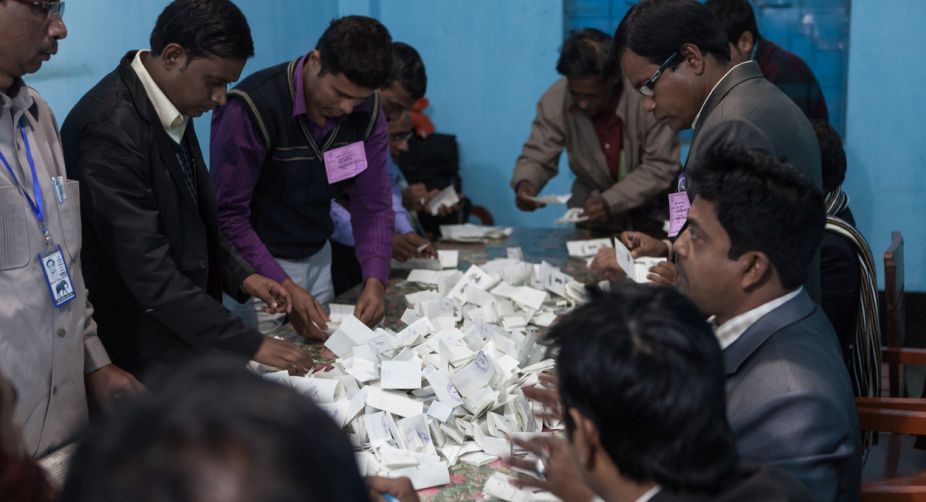
The counting of votes in Madhya Pradesh’s Shahdol parliamentary constituency and Nepanagar assembly constituency began amid tight security on Tuesday morning, an official said.
Polls here were held on November 19.
Initially the postal ballots were being counted which would be followed by the votes recorded in the EVMs, said an official from the Chief Election Commissioner’s office. 
The counting for the Shahdol seat was being carried out at four district headquarters, while the Nepanagar counting was at Burhanpur district headquarter. 
For the Shahdol seat Congress’ Himadri Singh and BJP’s Gyan Singh were putting up a close fight. There are 17 candidates vying for this seat that fell vacant when BJP MP Dalpat Singh Paraste passed away in June.
Even the Nepanagar seat is being fought between BJP’s Manju Dadu and Congress’ Antar Singh. There are only four candidates from this seat.

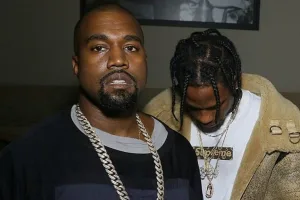
Kanye West hospitalized after abruptly canceling concert

PTI | Los Angeles |

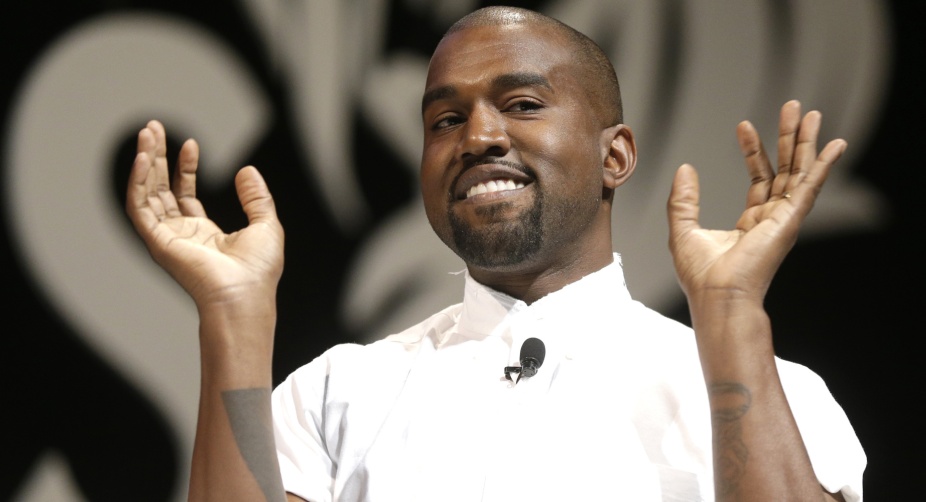
Rapper Kanye West was reportedly hospitalized after suddenly canceling his gig which was part of his Saint Pablo tour.
The Los Angeles Police Department responded to a call of a 'disturbance' at about 1:20 pm PST on Monday and upon arrival, authorities discovered a medical emergency and West was taken to the hospital by paramedics, reported Variety.
On Sunday, the rapper canceled his Los Angeles concert only hours before it was set to begin, and then axed the remaining 21 dates of his Saint Pablo tour.
West, 39, did not provide a reason for the last-minute cancellations.
The hospitalization comes after West made headlines by announcing at a San Jose concert that if he did vote in the election, he would have voted for President-elect Donald Trump.
On last Saturday, the “Famous” singer arrived at his concert 90 minutes late and performed only two songs before slamming Beyonce, Jay Z, Mark Zuckerberg, and others.

Mutual benefits propel India-Israel ties

Harsha Kakar |

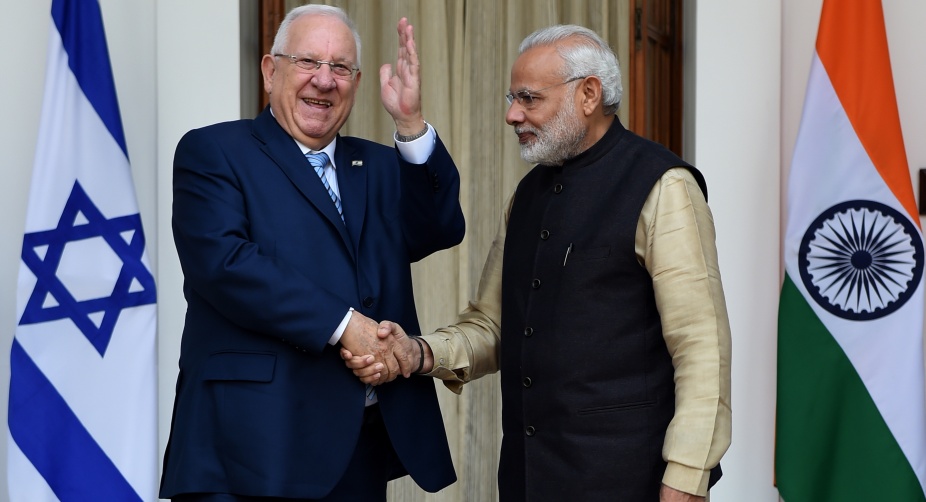
The recent visit of the Israel President to India and the expected visit of our Prime Minister there early next year, to celebrate 25 years of formal diplomatic ties, has raised the bar of the relationship. India had always maintained relations with Israel, since recognising it in 1950, but for a long time kept its proximity under wraps, mainly due to our support for the Palestine movement. We supported the Palestinians vocally and voted against Israel on many occasions, mainly due to fear of curtailment in oil supplies emanating from the Middle East, countries which were sworn enemies of Israel, as also our involvement with the non-aligned movement. Another factor which played an important role in maintaining official distance was our large Muslim population, which preferred support to Palestine rather than Israel. With passage of time, as our relationships changed and the non-aligned movement moved into hibernation, the relationship came out of the bag. In fact, it was Israel-manufactured 130 mm ammunition which the Indian artillery extensively fired during the successful 1971 war. Both the nations face common threats from fundamentalist terror groups and hence are natural allies.
Israeli citizens have been targets of terror strikes in India. Soon after the commencement of militancy in J&K, six Israeli tourists were kidnapped from a houseboat in Dal lake in June 1991. One died while the others managed to overpower their kidnappers and escape. They were later rescued. During the Mumbai attacks, Nariman house (now renamed Chabad house), a residence occupied by visiting Jews, was specifically targeted. It resulted in the loss of six lives, including four Jews. This site was also visited by the Israeli President.
Israel has faced terrorism from its inception as a nation state. In fact, while India attained freedom following a non-violent struggle, Israel attained it through a violent one, suppressing the Palestinians and engaging in wars against its neighbours. It has hence learnt to battle militants supported by its enemies, while it simultaneously continues to develop. Its remarkable advancements in agricultural reforms and water conservation as also its willingness to share its knowledge with India has benefitted us economically.
Israel proved its military and intelligence capability to the world by launching the famous Entebbe airport raid in Uganda and rescuing its nationals. It also retaliated against the Munich massacre of its athletes and eliminated everyone responsible, even though it took time. Militarily, our two nations have always been close. Indian special forces prefer Israel manufactured small arms as weapons of choice. Our special force personnel have been attending specialised training courses in Israel for years. India currently employs Israel-manufactured Heron and Searcher Unmanned Aerial Vehicles (UAVs). It is also likely to induct the missile-armed Heron TP UAVs. These would give a major boost to our cross-border strike capabilities. We also use Israeli technical equipment in various branches of the army.
The air force has Israeli radars mounted on Russian IL 76 aircraft as Airborne Warning and Control Systems (AWACS). A major success has been the jointly developed Barak Missile system. It is a missile designed to defend against any form of aerial threat including air, helicopters, anti-ship missiles and UAVs. Barak 8, post-successful testing from on-board INS Kolkata, is now being inducted into the Indian Navy. India is Israel’s largest defence procurer. The nations also share terror intelligence data, which is of immense benefit as both nations are on the terrorist radar. 
Israel, facing terror from all directions, has secured its borders, employing a mix of walls, fencing and electronic surveillance means. It has been internationally claimed that Israel has the most modern border security network, with reliance on electronic rather than the human eye. It has announced its willingness to share its technology with India. While we have begun copying the Israeli model, we need to interact and replicate it, especially in riverine terrain on both our western and eastern fronts, where visual means and fencing have limited value. 
For Israel, relations with India are of primary importance. Other than India being the largest purchaser of its defence equipment, its trade ties with India enables it to balance restrictions imposed by the EU on import of goods manufactured in occupied territories. Trade with Israel is presently around $5 billion and has been growing steadily over the years. Further, India has never persecuted Jews. The two Prime Ministers also share a close bond.
Similarities between the two nations have given rise to a myth. Many in India believe that we should replicate the Israeli methodology of massive retaliation against terror strikes. India and Israel face two varying force levels. The Palestinians are generally unarmed and possess limited military resources, and can be economically choked. Further, the Palestinians are compressed in small areas, thus if attacked by air or artillery, destruction is immense. Pakistan, which sponsors terrorism on Indian soil, is a nuclear nation, with a sizeable military. Hence any action against them would need deliberate planning and implementation. The level and manner of retaliation can therefore never be the same.
The major difficulty for India is attempting to balance its multitude of relationships. Iran and Israel are sworn enemies. India is developing Chabahar port in Iran as also constructing the link to Afghanistan and Central Asia. India appears to have become a master in the art of balancing. It has managed to juggle between the US and Russia, Iran and Saudi Arabia and would now do so between Israel and Iran. Logically, we need to tap into the strengths of Israel in military technology and border security, as also terror monitoring in addition to our traditional cooperation in water and agricultural sectors. Cooperation between like-minded nations enhances the abilities of both and permits mutual development. Israel for us is such a nation and hence a natural ally.
The writer is a retired Major-General of the Indian Army

‘Force 2’ box office: Mints Rs.20 cr in first weekend

IANS | Mumbai |

John Abraham and Sonakshi Sinha starrer Force 2 has collected Rs.20.05 crore in the first weekend of its release despite the demonetisation.
Force 2 raked in a total of Rs 20.05 crore with Rs 6.05 crore on the first day of its release on Friday. On Saturday, it made Rs 6.50 crore and on Sunday the film collected Rs.7.50 crore at the domestic box office, read a statement from the film’s publicist.
Force 2, which is the second instalment of the Force franchise, also stars Tahir Raj Bhasin. 
The Abhinay Deo directorial is based on the intention of one man who wants to kill agents of India’s intelligence agency – the Research and Analysis Wing (RAW). 

Fitting tribute to an educator

Aditi Chatterji |

Relatively little is known about the life and work of Gopal Krishna Gokhale compared to other popular Indian patriots. He was born in the village of Kothluk, Ratnagiri, Bombay Presidency on 9 May 1866 and was one of the first Indians to receive an English education, graduating from Elphinston College in 1884. 
In the early years of the 20th century, the Viceroy used to hold Council meetings during the winter in Calcutta, which was the capital of British India. Members of the Council were nominated from all the provinces of India and Gokhale represented Bombay. 
Although he was one of the youngest Council members, his speeches and discussions were widely admired, by both the Indian and British members. According to the Calcutta newspapers, his first Budget speech deeply impressed even the Finance Member, Sir William Jones. He was a leading moderate member of the Indian National Congress, deeply critical of the British Raj while admiring English social and political thought.
Among his admirers was a Bengali Brahmo lady named Sarala Ray better known as Mrs PK Ray. She was introduced to Gokhale at a tea party and he became a regular invitee at her Friday afternoon meetings at Ballygunge in Calcutta, where the two of them debated issues such as political reform versus social reform. 
After a few years, he said, “Mrs Ray you are right — we cannot have political reform without social reform. They go together like the hand and foot of the whole man.” 
When Sarala Ray met Gokhale, she was secretary to the Brahmo Girls’ School. In 1943, she wrote the following extract, “He always encouraged me and told me that there was a great field for work before every woman to uplift her sisters in India. In connection with this school work, I used to often ask him to correct and criticise my letters”. 
Once she went to a very rich friend’s house to beg for a subscription of Rs.2, which was refused. She returned home to find Gokhale in her drawing room. He asked why she was looking so upset and, upon hearing the matter, proceeded to recount the tale of how he and other friends of the Deccan Education Society had vowed to work for only Rs.75 per month to build Fergusson College in Poona. 
Gokhale was a multi-faceted personality with special attributes — he was an educator and taught English and mathematics at Fergusson College for 18 years, a politician of renown but with moderate views. He loved Bengal and is well known for saying that Bengal thinks first and the rest of India follows.
Gokhale died in Bombay on 19 February 1915. Tributes poured in. Ray wrote in her letter of 1943, “You children must be anxious to know why we called this school Gokhale Memorial. After Gokhale’s death almost all the provinces of India raised money to erect a memorial in his name. Bengal also collected some money, which lay idle in the bank for years. In 1920 when we were determined to start a girl’s school of a special type, I said to Sir R N Mookherjee, Sir BC Mitter, Lord Sinha and others that we women from the Mahila Samiti would like to open the school as a Memorial of Gokhale who used to think of Bengal as his “Second Home” and was a great advocate of schools for girls. They all agreed to this proposal and hence this name. As a memorial to Gopal Krishna Gokhale — the great patriot of India, we are serving the cause of education for our girls in the country.”
If comparatively little is elaborated on Gokhale, even less is known about Ray. What was she like, and what were her contributions to education? 
According to Renuka Ray, “Sarala Ray was a dynamic woman with a magnetic personality who was able to sweep aside every obstacle and every impediment that stood in the way of her objective. Her ideas on education were well ahead of her times and being a perfectionist, she was determined not to make do with second best. She wanted to have land for the school premises in an area which the then government reserved for its own projects and certainly did not envisage allotting any of it for a school for Indian children. But to the amazement of many eminent men who helped over her project whom she had gathered together, she was able with the help of then director of public instruction, Mr Hornell to secure land in the vicinity of Victoria Memorial. She had already drawn up a very ambitious building plan.”
Renuka Ray proceeded to write, “But it was not only a question of brick and mortar and a beautiful building in the best surroundings… The technique and content of education and the teaching standards for the pupils was of the greatest importance. In her own words she wanted the girls to be good citizens, capable householders and ideal mothers. They must have an upbringing, which gives them the opportunity to show how worthwhile women of India could be. She selected the teachers for her school with a great deal of care and then set about a reorientation of their teaching methods.” 
She was against educational practices such as learning by rote. Sarala Ray introduced subjects like domestic science, comparative religion and ethics while students learnt English, Hindi and Bengali, history, geography and the sciences. Music, drawing, sports and games were also considered important. 
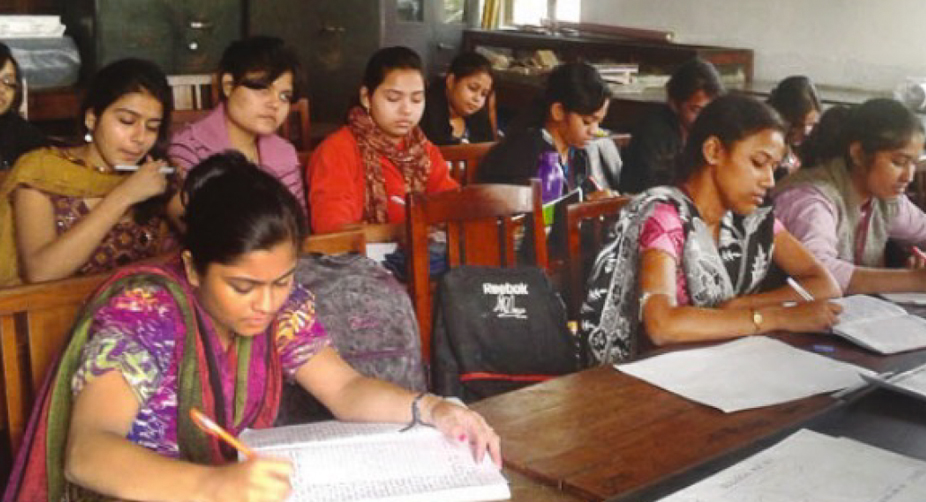
After her death in 1946, messages and tributes poured in from people like Sarojini Naidu, Sir Hassan Suhrawardy and Shyama Prasad Mukherjee. Gokale was born in 1866 and 2016 is his 150th birth anniversary. In contemporary times, the Gokhale Memorial Girls’ School that Sarala Ray founded as a memorial to a family friend is a leading educational institution in Kolkata and will celebrate its centenary in 2020. 26 November is observed as the school’s founder’s day to mark the birth anniversary of Sarala Ray. 
This year a number of old girls from the school have formed a Gokhale Memorial Girls’ School Alumnae Association and plan several events including a reunion and cultural programmes leading up to the centenary. 

Apple confirms flaw in iPhone 6 Plus, agrees to repair

IANS | New Delhi |

Apple has confirmed that there is a flaw in its iPhone 6 Plus that makes the display unresponsive and has launched a new repair programme.
The hardware malfunction called “touch disease” exhibits display flickering or multi-touch issues in iPhone 6 Plus after being dropped multiple times on a hard surface and then incurring further stress on the device.
“If your iPhone 6 Plus is exhibiting the symptoms noted above, is in working order, and the screen is not cracked or broken, Apple or an Apple authorised service provider will repair your device for a manufacturer’s suggested service price of Rs 9,900,” Apple said in a statement. 
Pricing offered by Apple authorised service providers may vary.

Apple will contact customers who may have paid for a service repair related to this issue either through Apple or an Apple authorised service provider to arrange reimbursement.
“In case you are facing multi-touch issue, bring your iPhone 6 Plus to a participating Apple authorised service provider. Your iPhone will be examined prior to any service to verify that it is eligible for this programme and in working order. This programme only applies to iPhone 6 Plus,” the company added.