Logo

Defence relationship with India on excellent path: Pentagon

PTI | Washington |

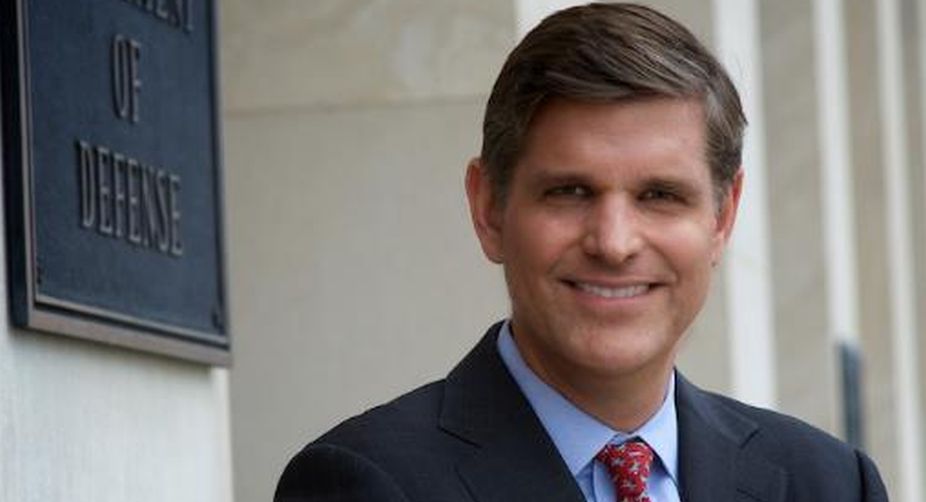
The Indo-US defence relationship is on an excellent path and will continue to be so in the next administration and beyond, the Pentagon on Tuesday said, days ahead of President-elect Donald Trump's inauguration.

"The (Defence) secretary's (Ashton Carter's) commitment to this (India-US) is clear. We think the defence relationship with India is on an excellent path and will continue to be so in the next administration and beyond," Pentagon Press Secretary Peter Cook told reporters at a news conference.

Known as a friend of India and strong believer in a robust India-US defence relationship, Carter is the only American defence secretary to have so many trips to India and included New Delhi in his farewell overseas trip as well.

In his previous capacity, Carter was instrumental in the path-breaking India US Defence Technology and Transfer Initiative (DTTI), under which the two countries have started several joining development and co-production projects.

"Our relationship with India, you've seen the commitment made by this department and this Secretary of Defence and this administration to improving our defence relationship with India," Cook said.

Responding to a question on restrictions on technology transfer to India due to the outdated arms control act of the US, Cook said obviously there are several aspects to it.

"There are limits on what we can do in terms of technology — the export of technology to India or any other country," he said.

"And we'll continue to abide by the law and to work with India in places where we can, where it's appropriate for that kind of — for specific technology to be exported. Again, not just to India but to any country, but we're gonna follow the law," Cook said.

Message in a starry bottle

Andrew Griffin |

A major programme to try and speak to aliens has been launched — despite warnings that it could lead to the destruction of humanity.

Meti stands for Messaging Extra-terrestrial Intelligence and is a new project that will look to send out signals into space so that extra-terrestrials can pick them up. It will start doing that from 2018 — allowing humanity to get in touch with aliens, rather than waiting for them to talk to us.

But scientists have long warned that sending out such messages could be dangerous, and that alerting aliens to our existence might lead to our complete destruction. That has included Stephen Hawking, who has warned that sending out signals could put us in danger.

Earlier this year he said that we should be “wary” of responding to any messages from aliens. Doing so would probably be like when the Native Americans first met Christo-pher Columbus, he said in Septe-mber, and in that case things “didn’t turn out so well” for the people being visited.

And Professor Hawking has suggested that any civilisation we did make contact with is likely to see us as no more developed than bact-eria. As a consequence it might not actively look to kill us — but wipe us out just because it doesn’t care about us.

There are no regulations gover-ning whether or not messages can be sent out into space, or what those messages should say. That means that Meti and other groups can send out their signals despite any objections.

But those behind Meti say that it will instead be used as a way to “learn and share information”, if it is successful. The team will now look to work out how best to do that, and put together a message that could be understood by other living things in the distant universe that we might be able to make contact with. The initial message is likely to use basic mathematical and scientific concepts.

The group hopes to raise $1 million to start that work. Some of that money will go towards building or borrowing a powerful transmitter that can send a message out into the universe.

Scientists have tried in the past to send out messages into space. Those have included Nasa’s pioneer 10 and 11 spacecraft that carried messages written onto plaques and a record, as well as radio messages that have been sent out into the universe. It isn’t clear whether any of those have ever been received.

Some have suggested that we might have received similar mes-sages ourselves, but most scientists believe that we have so far failed to hear or talk to any alien life.

The Independent

Chromosome numbers

Tapan Kumar Mitra |

Since gametes are haploid, they cannot be produced from diploid cells by mitosis because mitosis creates daughter cells that are genetically identical to the original parent cell. In other words, if gametes were formed by mitotic division of diploid cells, both sperm and egg would have a diploid chromosome number, just like the parent diploid cells. The hypothetical zygote created by the fusion of such diploid gametes would be tetraploid (possess four homologous sets of chromosomes). Moreover, the chromosome number would continue to double for each succeeding generation – an impossible scenario. Thus, for the chromosome number to remain constant from generation to generation, a different type of cell division must occur during the formation of gametes. That special type of division, called meiosis, reduces the chromosome number from diploid to haploid.

Meiosis involves one round of chromosomal DNA replication followed by two successive nuclear divisions. This results in the formation of four daughter nuclei (usually in separate daughter cells) containing one haploid set of chromosomes per nucleus. The principle of meiosis starts with a diploid cell containing four chromosomeass. A single round of DNA replication is followed by two cell divisions, meiosis I and meiosis II, leading to the formation of four haploid cells.

Meiosis and fertilisation are indispensable components of the life cycle of every sexually reproducing organism, because the doubling of chromosome number that takes place at fertilisation is balanced by the halving that occurs during meiosis. As a result, the life cycle of sexually reproducing organisms is divided into two phases — a diploid (2n) phase and a haploid (1n) phase. The diploid phase begins at fertilisation and extends until meiosis, whereas the haploid phase is initiated at meiosis and ends with fertilisation.

Organisms vary greatly in the relative prominence of the haploid and diploid phases of their life cycles. Fungi are examples of sexually reproducing organisms whose life cycles are primarily haploid but include a brief diploid phase that begins with gamete fusion (the fungal equivalent of fertilisation) and ends with meiosis. Meiosis usually takes place almost immediately after gamete fusion, so the diploid phase is very short, and, accordingly, only a very small fraction of fungal nuclei are diploid at any one time. Fungal gametes develop, without meiosis, from cells that are already haploid.

Mosses and ferns are probably the best examples of organisms in which both the haploid and diploid phases are prominent features of the life cycle. Every species of these plants has two alternative, morphologically distinct, multi-cellular forms — one haploid and the other diploid. For mosses, the haploid form of the organism is larger and more prominent, and the diploid form is smaller and more short-lived. For ferns, it is the other way around. In both cases, gametes develop from pre-existing haploid cells.

Organisms that alternate between haploid and diploid multi-cellular forms in this way are said to display an alternation of generations in their life cycles. In addition to mosses and ferns, eukaryotic algae and other plants exhibit an alternation of diploid and haploid generations. In all such organisms, the products of meiosis are haploid spores, which, after germination, give rise by mitotic cell division to the haploid form of the plant or alga. The haploid form in turn produces the gametes by specialisation of cells that are already haploid.

On the other hand, the best examples of life cycles dominated by the diploid phase are found in animals. In such organisms, including humans, meiosis gives rise not to spores but to gametes directly, so the haploid phase of the life cycle is represented only by the gametes. Meiosis in such species is called gametic meiosis to distinguish it from the sporic meiosis observed in spore-producing organisms exhibiting an alternation of generations. Meiosis is thus gametic in animals and sporic in plants.

The writer is Associate Professor, Head, Department of Botany, Anand Mohan College, Kolkata and also a Fellow, Botanical Society of Bengal.

Machines that ape brain cells

S Ananthanarayanan |

Knowing the biochemistry of the body is one way of designing therapy to deal with medical conditions. Most known drugs or herbal remedies, however, were not discovered in this way but after centuries of trial and error. Modern medicine has analysed traditional cures to arrive at the functional chemicals, which has helped drug synthesis and also to understand physiology. Such wisdom, however, does not help the development of new drug remedies, which must rely on intense and largely, blind assays of the great variety of preparations or substances and their effects on pathogens or body processes.

A way to accelerate the process has been the use of machine learning and computer-based artificial intelligence, which can find patterns in the features of known effective substances and screen out the less promising lines of inquiry. An improvement in this strategy, which was used to scan 72 million compounds and create a tractable list of promising candidates for anti-cancer application, has been reported by researchers Artur Kadurin, Alexander Aliper, Andrey Kazennov, Polina Mamoshina, Quentin Vanhaelen, Kuzma Khrabrov and Alex Zhavoronkov, from Moscow, Tatarstan, St Petersburg and Dolgoprudny in Russia, Truro, in Cornwall, the University of Oxford and John Hopkins University.

Their paper in the journal, Oncotarget, begins with the words, “despite the many advances in biomedical sciences, the productivity of research and development programmes in the pharmaceutical industry is on the decline.” It explains that nearly 90 per cent of clinical trials for all disease categories end in failure, and almost 95 per cent fail in the case of cancer. The main reason, the paper says, is that trials have to start without a hint of where to look and the huge effort needed leads to high prices of cancer drugs.

The methods of machine learning have been strikingly successful in trend analysis, based on just some known examples. Areas of application include analyses of customer trends, improving availability of products and services, traffic control, health administration and automated diagnosis. Machine learning is now capable of voice and image recognition, even surpassing human ability, and has been successful in running driverless motor vehicles in a busy street.

The basic method used is to make rapid calculations with a set of known data to find a mathematical formula that fits their distribution. The formula is then tested on some more known examples and if it qualifies, then it is likely to make correct predictions with unknown data too. An elementary example, from a popular course on machine learning that is offered online by Stanford University, is to consider the prices of apartments as a function of the covered area, the number of rooms, bathrooms, windows, location, et al. Computer-aided analysis could discover a relationship among many of these, which could predict the price of apartments, given its features, to help sellers or buyers.

Another application would be to connect the tumour size, age of the patient and some other features, in the case of cancer, with malignancy. The formula, as developed from known cases, could be regulated to predict malignancy either in most malignant cases, or rarely to make a mistake, depending on the priority.

While predictions like this were first made purely by varying and refining the formulae used — a process which is possible with large data and the help of computers — it was soon realised that the animal brain seems to perform a lot better through a different angle of attack. In playing a game of chess, for instance, one way a computer could go about it is by working out all possible moves and counter-moves, by both players, from a given board position, and then choosing what move to make. It was seen however, that human players were able to do better than even powerful computers that planned several moves ahead.

It was then realised that the human brain did not follow the brute force method of the computer, but seemed to take in some features of the chess board position, which may seem to be unrelated, and use these, and experience, to play in a more effective way. And the mechanism by which the brain did this was by charting the manner in which arrays of brain cells reacted to the different inputs of features of the chess board. Given a set of responses by brain cells, the same responses were either strengthened or weakened, depending on their outcome. Over a series of actual instances, the brain adapts to making more effective responses and continues to learn with experience. This is the mechanism that leads not only to good chess playing but also how a child internalises the nuances of a language faster than years of study by scholars.

Computers were now programmed to simulate this architecture by creating virtual neurons, or software that behaved like brain cells. In a simple instance of recognising a single feature, the feature could be presented to a single virtual neuron. The neuron responds at random, from a pair of choices. If the answer is correct, there is feedback that adds to the probability of that response, and if the answer is wrong, the feedback lowers the probability. We can see that this device would soon learn, through a random process, to consistently make the correct response.

We can also see that the same process could deal with a choice of more than only two responses and we could also have a brace of artificial neurons that would send their responses to another set of neurons, and so on. By creating this kind of network, and sending feedback from layer to layer, it is possible to develop a computer system that can identify an image as being that of a car or a pedestrian, for instance, and then if the pedestrian was a man or a woman.

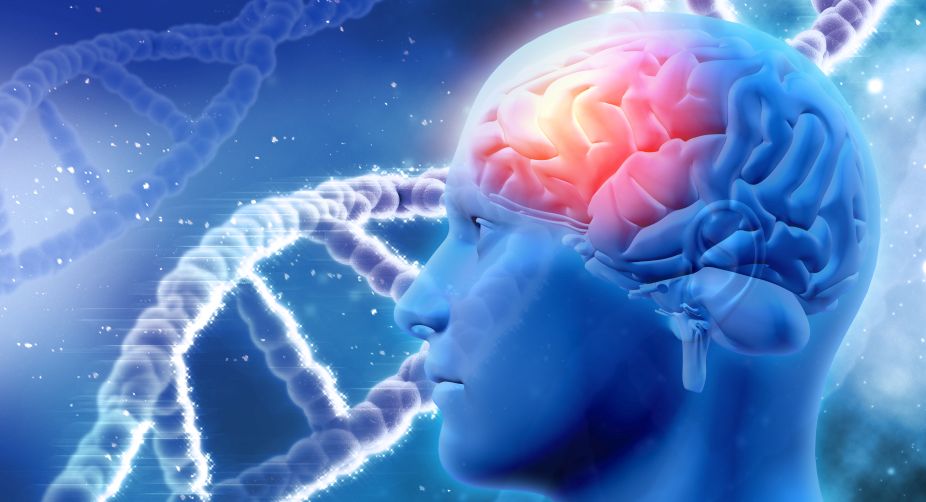
In applying this process to drug design, a large number of features of many candidate substances, whose therapeutic value is known, is presented to neural networks, to generate responses of whether the substances are useful in cancer therapy or not. The feedback of whether the responses were correct is the process by which the network “learns” the importance of different combinations of features. Large computer facilities are able to simulate extensive neural networks and train the system with a range of features, to filter out substances of doubtful potential and reduce the load at the final stages of drug research.

While these applications of machine learning deal with classification, even discovering classes, or discrimination, other applications are of generating instances that should lie within a given or discovered class. These applications are useful in image generation, synthesising a texture or cleaning signals of noise. An application in drug research would be to go from characteristics of known curative agents to the specifications for new drugs.

The authors of the Oncotarget paper made use of available databases of drug characteristics and an advanced machine learning technique where one part of the programme tries to generate new instances that cannot be distinguished from a base set while another part (as an “adversary”) works to uncover these generated instances. The result is an optimum of similarity with novelty, or new and effective drug templates.

The paper describes a trial where the system was trained with the features of 6,252 compounds that were effective against MCF-7, a recognised line of breast cancer cells. The system was then used to screen 72 million compounds from a freely accessible database of compounds and small molecules. The properties of the resulting set of 69 compounds, culled out of the 72 million, were then assessed with the help of another database of compounds that had anti-cancer capability. It was found that several of the 69 compounds were known as anti-cancer agents and most were related to a group of highly effective cancer drugs.

This is a significant achievement, that a computer trial has isolated a biologically relevant subset out or a very large collection, an exercise that would not have been possible through laboratory methods. While nature, after centuries of evolution, provides us with a nearly infinite variety of substances, we now have a machine learning procedure that helps us sift through the mass to find those that serve specific purposes.


Kiran a good singer, says Aamir

IANS | Mumbai |

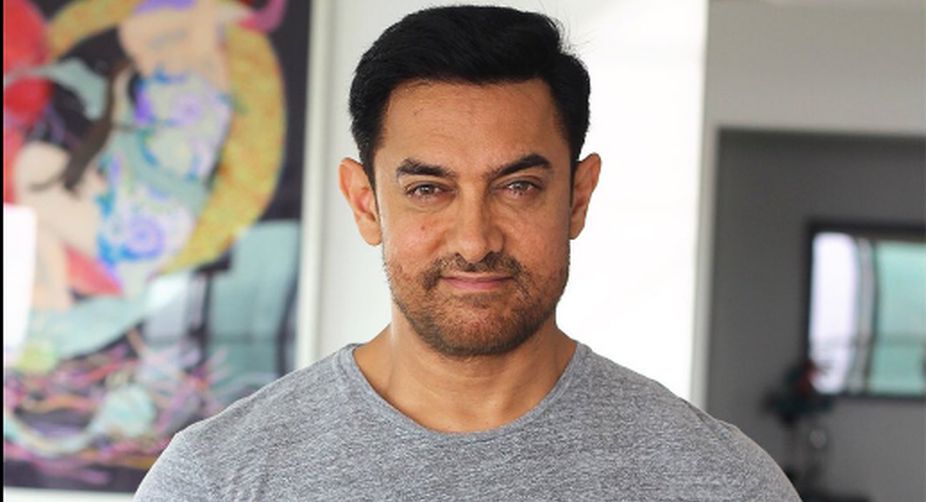
Bollywood actor Aamir Khan on Tuesday praised his wife and filmmaker Kiran Rao's singing ability, who has made her singing debut in a music video.

"At home, Kiran often sings for me. She is a very good singer, so I thought she should do the playback," he said at the launch of a special music video of Satyameva Jayate Watercup.

"The song is composed by Ajay-Atul and is directed by Nagraj Manjule of 'Sairat' fame. A new singer has been introduced. Kiran has made her debut in singing with this song," said the PK star.

About her singing debut, Kiran said: "Aamir forced me to sing. I was very nervous at the studio, but Ajay-Atul supported me a lot."

About the Watercup campaign, the Dangal actor said: "We wanted to make it a 'people's movement'. We started this campaign in three districts and now 30 districts have been included." 

"I am very much nervous, much more than the time when my film releases. I feel happy that my film 'Dangal' has been well received. But I feel I will be happier when this campaign will succeed in the second round. That will be more satisfying for all of us," he added.

Besides Kiran Rao and Aamir Khan, Maharashtra Chief Minister Devendra Fadnavis, filmmaker Nagraj Manjule, composer Ajay Atul, lyricist Guru Thakur, and actors Atul Kulkarni and Sonali Kulkarni, among others were present at the event.

Alleged medical negligence snatches away precious life

Smriti Sharma Vasudeva | New Delhi |

For 81-year-old Dinesh Kumar Mehra, the world fell apart on November 28 when his wife Kamla Mehra died after fighting a battle in a well-known hospital for a little over two months, owing to alleged medical negligence.

It was September 24. Little did the retired engineer thought that his wife was stepping out of their house in Greater Kailash to get admitted to Max Hospital, Saket ,for one last time.

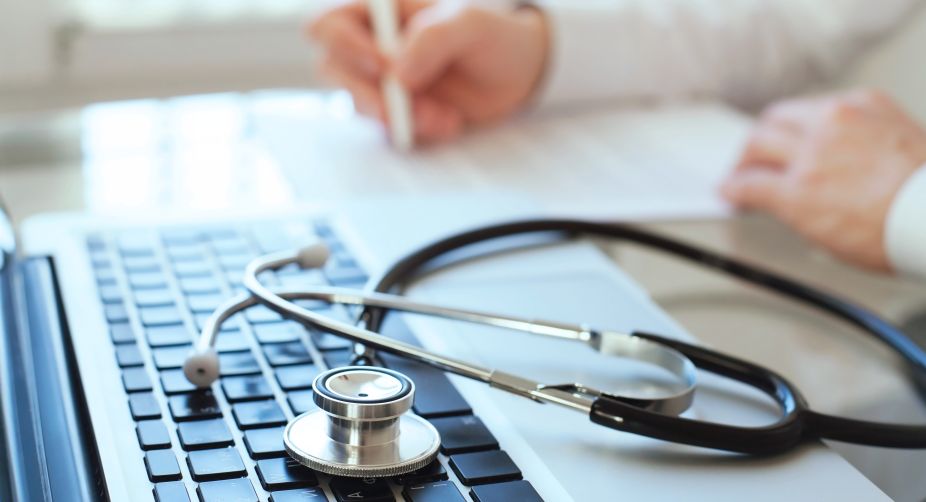
Terming the tragic loss of his wife a "gruesome murder", Mehra narrating the sequence of events, said, "My wife Kamla was admitted to Max Hospital, Saket after she showed symptoms of Chikungunya. At the hospital, she was referred from one doctor to the other for treatment and was subjected to various tedious tests. However, one particular test- Trans Esophageal Echo (TEE) that uses a long, thin, tube (endoscope) to guide the ultrasound transducer down the esophagus, ruptured her food pipe and proved to be her nemesis. Post the rupture, she underwent a surgery which rendered her speechless".

"We noticed the change in the attitude of the doctors after the surgery when suddenly they became indifferent towards us as if they knew that Kamla would not survive post this botched up treatment", said Dinesh Kumar Mehra, while speaking with The Statesman.

"The doctors even stopped checking on her during their routine patient rounds post this and Kamla kept lying in a vegetative state, unable to eat or drink or even speak", he said, holding back tears.

Notwithstanding this treatment, the family still wrote to the CEO of the Hospital Rajit Mehta, seeking his intervention in the matter but all in vain. Finally, she breathed her last on November 28.Incidentally, the death certificate issued by the hospital lists "Esophageal Injury " as the first cause of death besides mediastinitis, prolonged sepsis, multi-organ dysfunction and cardio respiratory arrest and the family also insists that she died due to wrongly conducted test.

However, categorically denying any allegations of negligence in the care provided to the patient, Max Healthcare Authorities, in an email statement said, "Kamla Mehra, a 77 years old female had approached Max Hospital, Saket with complaints of joint pain, chills and other dengue/chikungunya like symptoms on September 24, 2016. During her stay in the hospital, it was found that she was also suffering from recurring and persistent bouts of severe breathlessness. She was advised to undergo a TEE, an invasive diagnostic procedure for diagnosing severe valvular heart disease. The patient and her relatives were fully informed of the risks involved and they gave an informed consent for TEE. Unfortunately, while recovering from this procedure she developed some life-threatening complications, which are known to happen in some of the patients. She subsequently underwent surgical procedures to help save her life. Unfortunately, in-spite of our best efforts she suffered a cardiac arrest and passed away," the statement read.

Despite being heartbroken and having lost faith in the hospital, Dinesh Mehra who lives alone with a domestic help, wants to take this fight to a logical conclusion, seeking help from Medical Council of India and the Delhi Government. Determined, he says, "I want these big hospitals to stop running like money making machines and provide real medical care and attention to the patients so that no one loses a family member to such callousness".

Railways to make special bogies for ‘divyangs’

PTI | Nagpur |

The Railways will make 3,000 special bogies for "divyangs" (persons with disabilities) by 2018 to make their travel comfortable and hassle-free, an official said today.

These bogies will have various facilities to ensure the differently abled passengers or "divyangs" have smooth train travel, said Kamlesh Pandey, Chief Commissioner for Persons with Disabilities (CCPD) in Union Ministry of Social Justice & Empowerment.

Addressing a press conference here, he said the special bogies will be interlinked, will have more seats, space and signage to locate them.

Pandey is here for a review meeting of welfare schemes launched for "divyangs" in Nagpur district.

This initiative has been taken to make rail travel more convenient for divyangs, he added.

Pandey informed that around 180 Government buildings in Mumbai, Pune, Nashik and Nagpur will be made accessible to divyangs with various facilities like ramps, lifts and disable -friendly sound system.

The project has been sent to the Central Government for approval, he said.

"Earlier, there were seven categories of persons with disabilities in the Disability Act, 1995. Now 21 more categories have been included in the Act. These include mental illness, thalassemia, dwarfness and acid burn," Pandey said.

"Similarly, reservation in these categories have been increased from 3 per cent to 4 per cent," he added.


New UN chief has big goals but says he’s ‘no miracle maker’

PTI | United Nations |

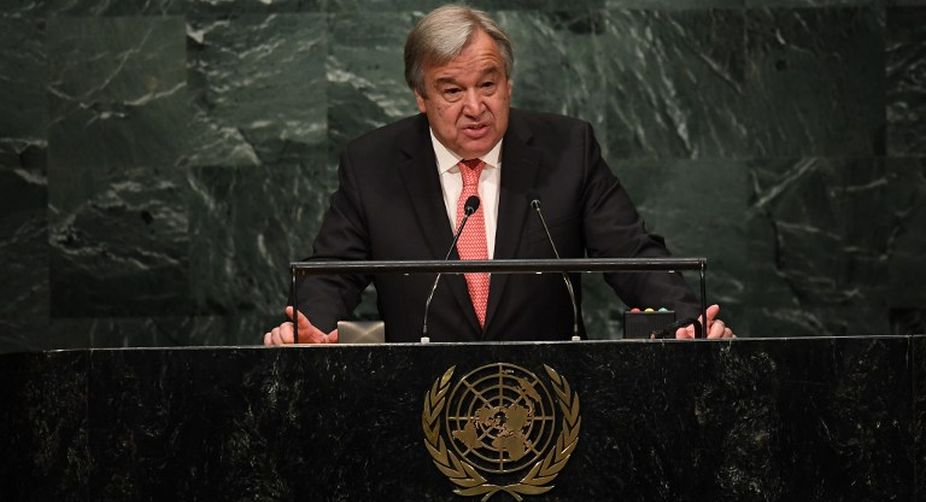
The new UN secretary-general says he's "no miracle maker" but Antonio Guterres has big ambitions: He wants to shake up the global body and get all 193 member nations to come together to solve the "terrible problems" the world is facing.

Speaking on his first day at UN headquarters after taking the organization's reins from Ban Ki-moon, Guterres said on Tuesday that conflicts are multiplying and interlinked and have triggered "global terrorism." 

He said there are also massive human rights violations and growing inequalities that spark revolt, anger and instability.

The former Portuguese prime minister and UN refugee chief said "only global solutions can address global problems, and the UN is the cornerstone of that multilateral approach." But Guterres said this belief isn't shared by many people around the world. 


US to become world’s greatest magnet for job creation: Trump

PTI | Washington |

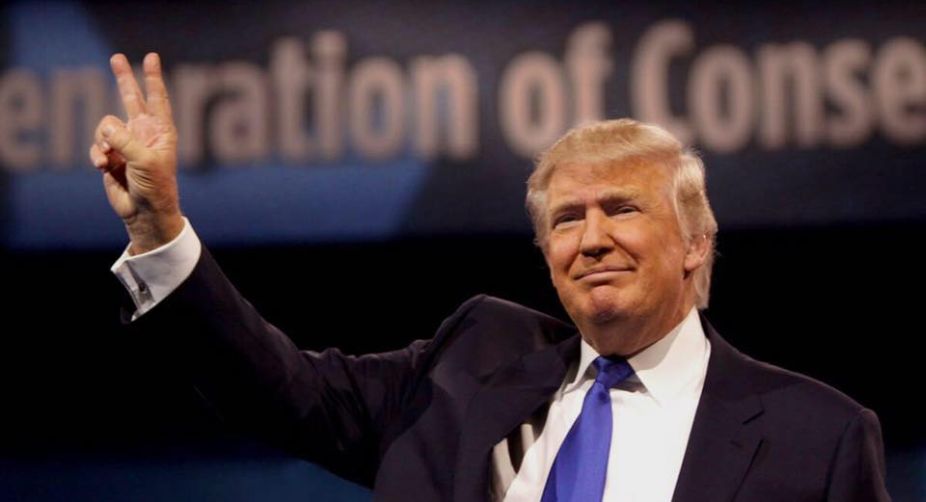
 The US is set to become the world's greatest magnet for innovation and job creation, President-elect Donald Trump said on Tuesday.

"Instead of driving jobs and wealth away, America will become the world's great magnet for innovation and job creation," Trump said in a tweet.

Trump's tweet came as Ford announced that it has decided to scrap its $1.6 billion manufacturing plant in Mexico and instead invest $700 million in Michigan.

Making the announcement, Ford CEO Mark Fields said that the new policies of the incoming administration drove the decision.

After winning the November general elections, the President-elect has been instrumental in several domestic and foreign companies making investments in the US and creating thousands of jobs.


TMC has no moral right to speak against black money: Buddhadeb

PTI | Kolkata |

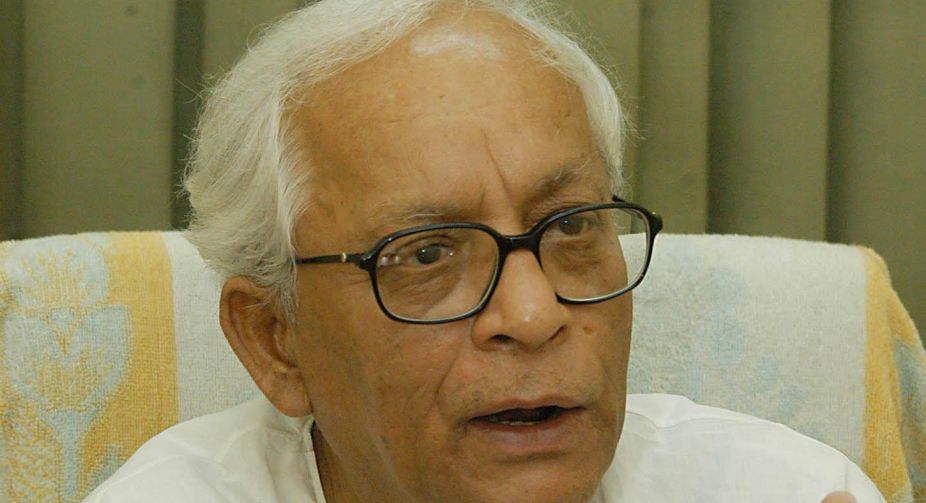
 In his first public appearance since the humiliating defeat of the CPI-M in Assembly polls last year, senior party leader and former Chief Minister Buddhadeb Bhattacharjee on Tuesday said the Trinamool Congress has no moral right to speak against black money when its MPs were arrested in Rose Valley Chit fund scam.

Bhattacharjee alleged that the Mamata Banerjee government was full of "anti-social elements" and the entire Trinamool Congress was "corrupt".

"The Mamata Banerjee government is full of anti-social elements and one of them was arrested today," he said referring to the arrest of Trinamool Congress leader Sudip Bandopadhyay by CBI in the Rose Valley ponzi scam case.

"From top to bottom, the entire party is corrupt. This government does not have the moral right to speak against black money. Instead of searching elsewhere, they should search their own houses for black money," Bhattacharjee said.

He was speaking on the occasion of 50 years of CPI-M's mouthpiece 'Ganashakti'.

CPI-M state secretary Surjyakanta Mishra asked the CBI to arrest the "big fishes" allegedly involved in the scam.

"We all know that Chief Minister Mamata Banerjee was present in the meeting with Rose Valley chairman Gautam Kundu in Delo bungalow in Kalimpong. There is no need to raise a hue and cry over the arrest of two MPs. The CBI needs to arrest the big fishes instead of arresting the small fries," Mishra said.

He also dared Banerjee to arrest CPI-M leaders who she named earlier in the day claiming to be involved in the Rose Valley scam if she found concrete evidence against them.

"She has named a few of our leaders today. However, there was no need to take names as none of our leaders are involved in the scam and they are not in the list of probables who are likely to be questioned," he said.

The CPI-M's Kolkata District Committee has organised a rally on Wednesday to demand the arrest of "big fishes" in the Rose Valley scam.


Uphold judiciary’s independence, says outgoing Chief Justice

IANS | New Delhi |

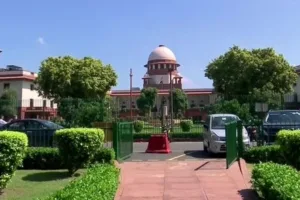
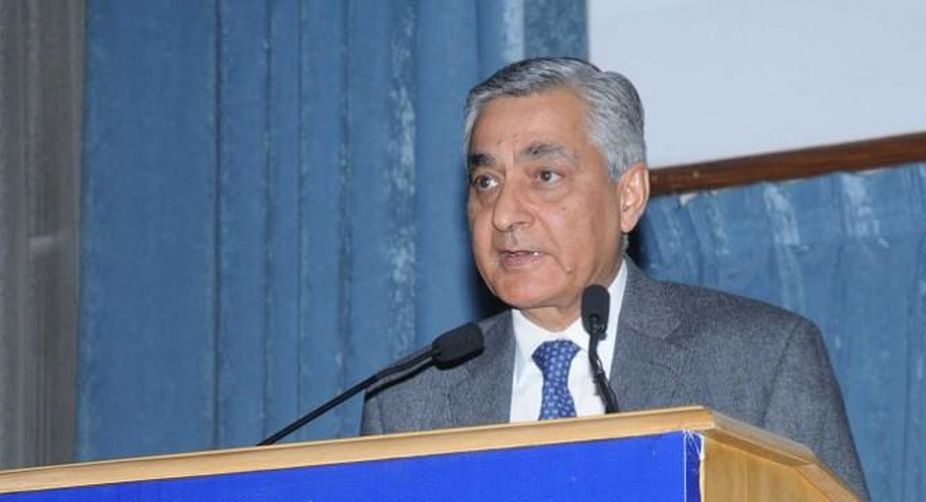
Outgoing Chief Justice TS Thakur on Tuesday said it was incumbent on the legal fraternity to uphold the independence of judiciary as he pointed to pendency of three crore cases, poor judge-population ratio and problems of infrastructure.

Chief Justice Thakur, who had a long battle with the Modi government on the appointment of judges, said: "This country can't progress unless judiciary prepares itself to handle challenges it would face in cases relating to cyber laws and medico legal cases." 

Supreme Court Bar Association Vice President Ajit Sinha assured the outgoing Chief Justice: "We will not allow any unjustified entry into judiciary. We as a bar will take a first blow." 

Addressing an overwhelming gathering of lawyers, sitting and retired judges, the Chief Justice, who had his last working day in the top court on Tuesday, said: "I will continue to work for upholding the prestige of the sanctum santorum of the Supreme Court." 

Chief Justice Thakur, who appeared emotional, said that in his retirement he would be a "spectator, observer and contributor to pay back what the institution has given to him". 

Thanking God, his parents, teachers, colleagues and everybody in what he could become in his life, Chief Justice Thakur urged the lawyers to desist from being in the race to be a judge or designated as senior lawyer. 

Telling the legal eagles to let these recognitions – becoming a judge or designated as senior counsel – "come uninvited", he said every case was a new challenge for the lawyers and they had to live up to the expectations of their clients. 

"Why should a lawyer want to be a judge when he is saturated with work?" he asked. "You have to raise yourself to a level where destiny itself beacons you." 

He told young lawyers that by taking every case as a challenge and preparing it well would earn them the respect of the bench (judges) and even their opponents. 

The farewell organised by the Supreme Court Bar Association saw everyone — Chief Justice Thakur, Chief Justice designate Justice Jagdish Singh Khehar, Attorney General Mukul Rohatgi, SCBA president R.S. Suri, its Vice President Ajit Sinha and Secretary Gaurav Bhati — reciting couplets from Urdu poets. 

However, it were legendry Urdu poets Allama Iqbal and Mirza Ghalib that dominated the proceedings, with everyone reciting a couplet in praise of the outgoing Chief Justice. 

Another line of single engine aircraft to be made in India: Parrikar

IANS | New Delhi |

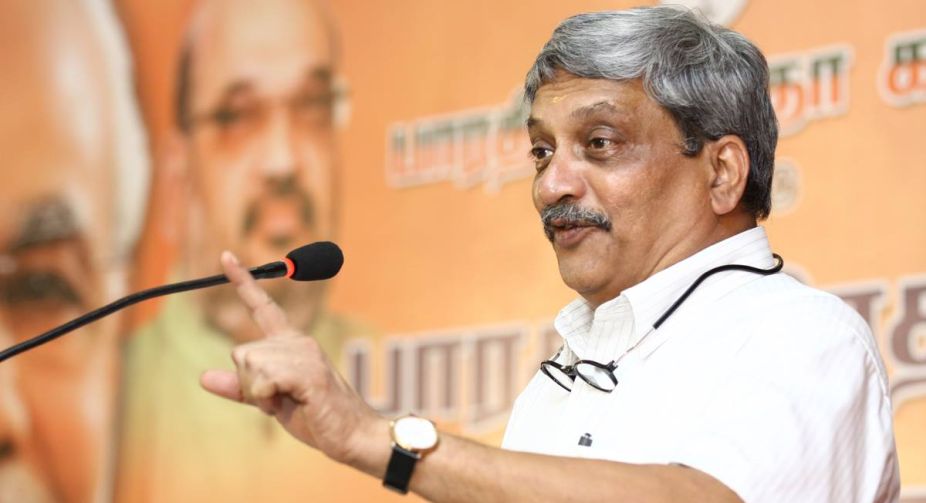
Defence Minister Manohar Parrikar on Tuesday said a new line of production for single engine fighter jets will be started in India under the Strategic Partnership model.

The minister told the media that the discussions on Strategic Partnership were in the final stage and are likely to be concluded by the end of January.

Speaking on the second line of the single engine fighter aircraft, Parrikar said: "The second line of single engine (fighter plane) is also required for which we are looking at the strategic partner route and very soon once the strategic partner chapter is finalised we should start moving in that direction. During the current year the decision.. should be tentatively over. May be few of them will come in ready made status but the rest will be made in India."

Referring to the ongoing production of the indigenously developed Light Combat Aircraft 'Tejas', he said: "Tejas has already been inducted and one line (production) or eight aircraft manufacturing per year is already operational in HAL."

The minister on being asked about the Strategic Partnership said: "It is in final stage. There are few issues that need to properly recorded. We have done a good job and the strategic partner is likely to be done by the end of this month."

Parrikar meanwhile dismissed reports of India thinking of buying more Rafale fighter jets apart from the 36 fighter aircraft that India bought from France under a government to government deal.

This comes shortly after former Air Force Chief Air Chief Marshal Arup Raha said the 36 Rafale jets bought by India were not enough and more aircraft were needed in the medium weight category.

Raha also said that India needs at least 200 more fighter aircraft in the next ten years.

Talking about the indigenous Light Combat Aircraft Tejas, Parrikar said "In fact HAL is gearing up to increase it to 12. Recently, we have taken up a final stage approval for enhancing production capacity to 16 is also in final stage."

On One Rank One Pension, Parrikar said: "So far we have already paid the benefits to more than 19,70,000 pensioners. Around 68,000 pension cases were in scrutiny in the month of December. The targeted time schedule was end of December. 13,000 cases are sent to pension dispersing authority."

"With that I think almost 99 per cent of the eligible cases will be settled probably by January. One per cent is not being able to trace them, probably dead," the Minister said.

OROP for retired Armed forces personnel was announced on September 5, 2015. The scheme took 2013 as the base year to calculate pensions and the date of implementation was July i, 2014. The period for review was kept at five years.
 

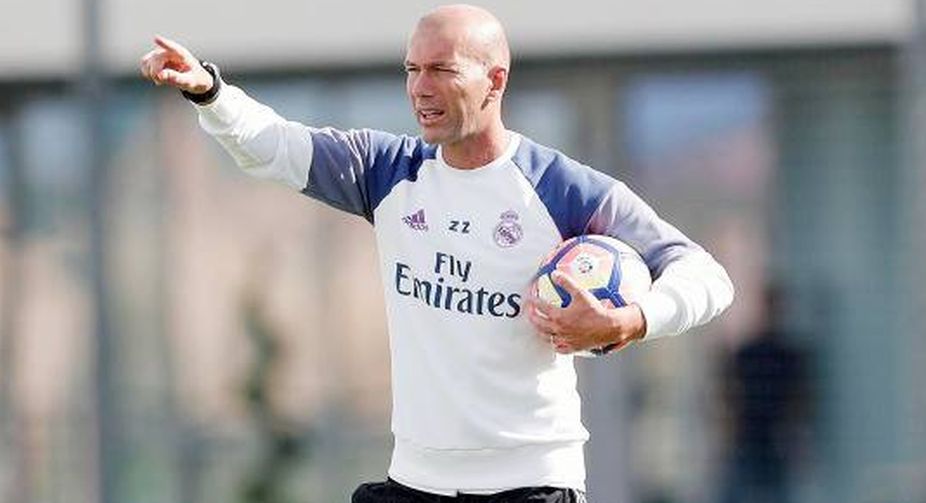
Coach Zidane says striker Morata happy at Real Madrid

Morata returned to Real Madrid this summer after a two-year stint with Juventus.

IANS | Madrid |

Real Madrid head coach Zinedine Zidane dismissed a story published in an Italian paper on Tuesday on striker Alvaro Morata's desire to return to Juventus and said the youngster is "happy" with the reigning European football champions where he is "at home".

Morata returned to Real Madrid this summer after a two-year stint with Juventus. But Italian daily Corriere dello Sport on Tuesday claimed that he was keen to move back to Turin.

"I don't think that information is very true. He looks happy to me because he's at home and he's working well," Zidane told realmadrid.com.

"He's very involved in the project. I do not think what's been said is true."

On the future of defender Pepe, whose contract comes to an end in summer, the coach outlined his intention to keep the veteran Portuguese.

"He's an important player and he's part of Real Madrid. He has been here for 10 years and has already made history with us. I want him to stay here and I'm only interested in what he can do for us," he said.

Pepe, meanwhile will miss the Copa del Rey last 16 first leg against Sevilla on Wednesday after the Portuguese sustained a muscle injury in his left leg, reports Efe.

Pepe was absent from the last training session of Real Madrid on Tuesday morning while he had an MRI scan that showed he has sustained a muscle injury.

Real Madrid will also miss the efforts of Sergio Ramos, Gareth Bale, Mateo Kovacic and Lucas Vazquez in the first leg of the Copa del

Rey.

With the absence of Pepe and Ramos, the Spanish club will have only defenders Raphael Varane and Nacho Fernandez against Sevilla.

Ramos exercised alone on Tuesday, while Bale, Kovacic and Vazquez did not work out in the training session in which Norwegian Martin Odegaard participated.

Volkswagen’s Pune facility records highest production ever in 2016

Statesman News Service | New Delhi |

In 2016, Volkswagen Group India’s Pune manufacturing facility recorded its highest production numbers ever in a calendar year. The plant, which produces cars such as the Polo, Vento, Ameo and the Skoda Rapid, manufactured 145,145 cars in 2016.

Dr Andreas Lauermann, president and managing director, Volkswagen India, said, “This is the fourth year in a row that the Volkswagen Pune Plant has recorded a growth in its production volume. Despite a challenging year, there was a surge in demand for our cars this year.”

“The main contributor for the increased production was the high demand from our Indian customers who have appreciated the made-for-India and made-in-India Ameo. Along with that, the Vento whose success in India and around the world, has been noteworthy contributor too,” he added.

The Pune facility manufactured 36,700 Polos, 15,400 Ameos, 83,300 Ventos (VW exports the Polo and Vento from India) and 9,600 Rapids last year, in addition to assembling the 1.5-litre TDI diesel engine. The domestic production was recorded at over 60,500 units with a 12 per cent rise compared to 2015. On the other hand, the export production saw 22 per cent growth – 84,500 cars – in 2016 compared to the previous year. The plant has achieved a localisation level of approximately 82 per cent (without engines and transmissions). Additionally, the VW Pune unit also crossed the milestone of manufacturing over 250,000 cars for the export market since the export production began in 2010.

(Source: CarDekho)

GST: States demand tax on high sea sales, higher compensation

PTI | New Delhi |

In fresh roadblocks to GST rollout, states on Tuesday demanded taxation rights for sales in high seas and also increasing the number of items on which cess is to be levied to compensate the states to deal with revenue loss estimated at Rs.90,000 crore post demonetisation.

Initially, a Rs.55,000 crore GST compensation fund was proposed to be created by levying cess on demerit or sin goods and luxury items, but post demonetisation the compensation amount is expected to go up to Rs.90,000 crore as most states have seen revenue decline of up to 40 per cent, non-BJP ruled states claimed.

Also, coastal states pressed for rights to levy GST on trade of goods within 12 nautical miles offshore, holding up finalising of the draft law for levy of Integrated-GST (IGST) on inter-state trade.

At the eighth meeting of the all-powerful GST Council, TMC-ruled West Bengal, CPM-led Kerala and Congress-ruled Karnataka pressed for including area up to 12 nautical miles in the definition of states within IGST law, a standoff that led to chairman and Union Finance Minister Arun Jaitley agreeing to seek legal opinion on its Constitutional validity.

"We couldn't reach a consensus on a very important issue that relates to defining of a state. This is 12 nautical miles from the state. Can states charge GST from them or not? Right now states like Gujarat, Karnataka, Kerala, Maharashtra, West Bengal and Odisha are charging VAT or sales tax within 12 nautical miles. For eg when a ship is loaded with oil or products, the tax on that is charged by the states.
"All the coastal states, irrespective of parties, combined in saying that we must have 12 nautical miles within the state jurisdiction. Whereas the draft IGST law was looking at having taxation rights with the Centre," West Bengal Finance Minister Amit Mitra told reporters.

The Day 1 of the panel meeting did not take up the contentious issue of control of assesses which had been till now holding up roll out of Goods and Services Tax (GST) regime. The issue would be discussed on Wednesday.

While representatives of opposition-ruled states were unanimous in saying April 1 target date for rollout of the new regime is not possible, even BJP-ruled Gujarat said GST could become a reality from September. 

Modi’s New Year-eve sops to cost over Rs.3,500 crore to economy

IANS | New Delhi |

Prime Minister Narendra Modi's announcements on the New Year's Eve, including sops in housing, agriculture and for pregnant women, will cost the economy a total of over Rs.3,500 crore annually, a State Bank of India report said on Tuesday.

"The overall fiscal impact of all these measures will be around Rs.3,500 crore per year," State Bank of India's (SBI) Ecowrap report read.

Modi announced two housing schemes in urban areas for persons of economically weaker section (EWS) or low income group (LIG) with income up to Rs.6 lakh, which will cost Rs.1,000 crore per year, the report said.

The scheme for financial assistance to pregnant women, wherein Rs.6,000 will be transferred directly to the bank accounts of these women, will cost Rs.1,200 crore to the government. 

The relief measure for farmers, which will exempt the loans for Rabi crop from interest for a period of 60 days, will put a burden of Rs.1,300 crore on the government.

Modi also announced a scheme for senior citizens, under which they will receive a fixed interest rate of 8 per cent for a period of 10 years on deposits up to Rs.7.5 lakh, and the interest amount can be paid monthly.

The report said that the senior citizens' scheme should be tweaked further to improve financial security.

"Though the scheme is laudable, it may be tweaked further. The lock-in period of 10 years is quite a long span of time in the case of senior citizens, given the life expectancy of around 68 years in India."

"We suggest that the lock-in period should be at most five years rather than 10 years," the report stated.

"The rate of interest should be a minimum of 8 per cent or whatsoever prevailing in the market with a defined upper bound," it suggested.

The report further said that a maximum deposit limit should be Rs.15 lakh, instead of the proposed Rs.7.5 lakh.

"On the basis of Rs.7.5 lakh deposits, the monthly interest payout will be around Rs.6,000, which may be a negligible amount to manage the day-to-day activities," it added.

5.7 magnitude quake jolts Northeast; One dead, four injured

PTI | Agartala |

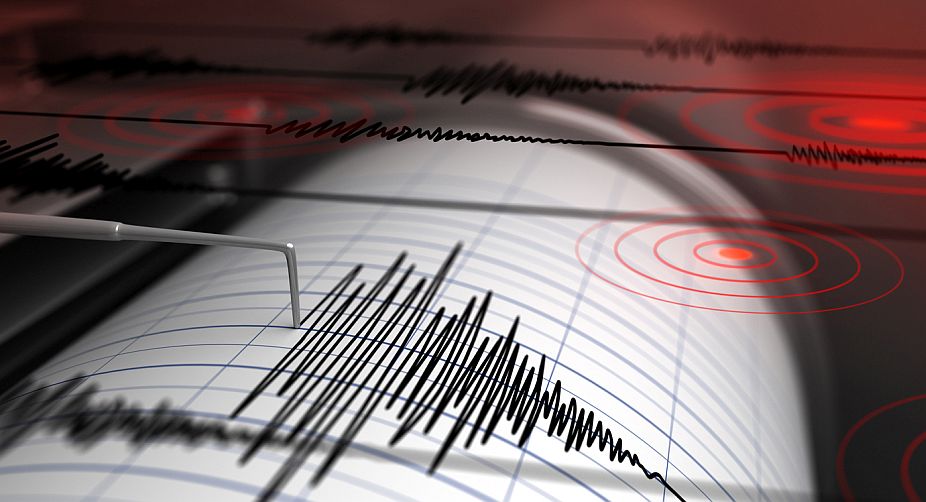
A moderate intensity earthquake measuring 5.7 on the Richter Scale and epicentred in Tripura jolted the country's Northeast on Tuesday, triggering landslides in the hill state and leaving a woman dead and four others injured.

According to the National Centre for Seismology, the epicentre of the temblor which occurred at 14:39 hrs was in Dhalai district in Tripura at a depth of 28 km.

Panic-stricken people ran out of homes, offices and buildings in the region. 50-year-old woman Kamalini Kanda died after suffering a heart attack at her residence at Natunbagan in Kamalpur sub-division of the district, local MLA, Anjan Das, said.

"It was terrible as the quake lasted for about one and half minutes," Biswajit Bhattacharya, a resident of the area, said.

At least 30 houses developed cracks, officiating Sub-divisional Magistrate of Kamalpur in Dhalai, Amitava Chakma, said.

"It was the strongest earthquake that I have experienced till date. It felt as if the whole building would collapse," Pradip Mallik, an Agartala resident, said.

The quake was traced to a location in Ambassa area, about 59 km from Agartala, an official at the Regional Seismological Centre told PTI.

The officer-in-charge of Dhalai and Unakoti districts of state fire service department, Sukumar Debbarma, said landslides occurred in a number of places in a five-km radius along the Chhamanu-Gobindabari road.

Debbarma said a portion of the boundary wall of the fire service office at Unakoti district had collapsed due to the earthquake.

"A 20-meter stretch of the boundary collapsed," he said.

Four persons including two women were injured in adjacent Unakoti district and all of them were admitted to the district hospital, police said.

Manik Deb, a resident of Kailashahar town of the district, fainted during the quake while Prashanta Das, a mason was seriously injured when he fell from roof while working.

Azerunnesa (30) of the town was injured when a brick fell from a roof on her, while Lipika Malakar, who lives in the outskirts of the town was injured as she tripped while running in fear.

Officials in Meghalaya said the quake was felt for quite some time but there was no report of damage anywhere in the state.

The quake was felt in Assam too, including capital Guwahati, and people rushed out of their houses and offices.

"Karimganj, Hailakandi, Cachar and Dima Hasao are the bordering districts of Assam with Tripura. We received reports from the authorities that no damage has taken place there," Assam State Disaster Management Authority (ASDMA) Joint Secretary Nandita Hazarika said.