Logo

‘I am UP’s adopted son, won’t ditch the state’

SNS | New Delhi |

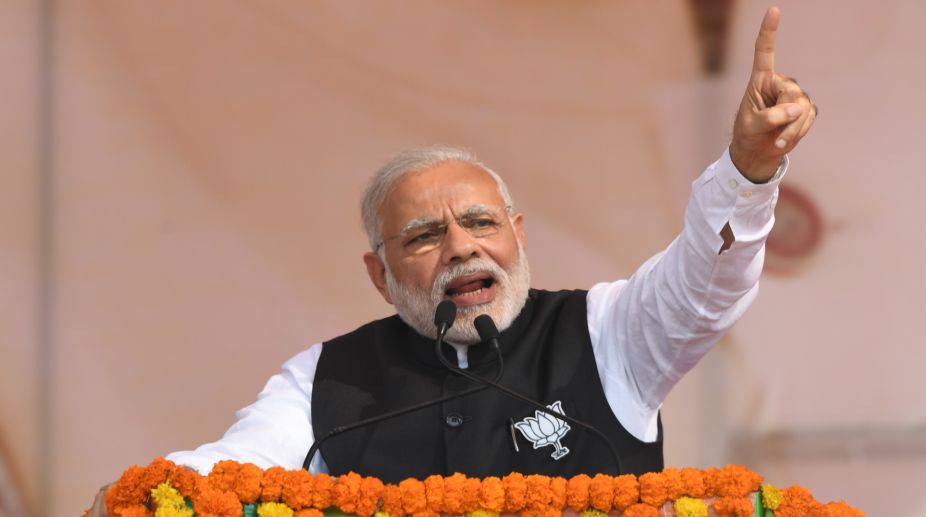
Prime Minister Narendra Modi on Thursday said he was the "adopted son" of Uttar Pradesh as he slammed the successive governments of SP, BSP and Congress for failing to curb the high-crime graph in the state.

“Krishna was born in Uttar Pradesh but made Gujarat his karma bhoomi. I was born in Gujarat but I am the adopted son of UP. I cannot ditch the state that has given me this great honour,” Modi said at a public rally in Hardoi.

He lambasted the ruling Samajwadi Party (SP) for not maintaining law and order in the state.

“UP notorious for maximum number of gangrapes in the country and it also witnesses the highest political murders,” said Modi.

“The SP, BSP (Bahujan Samajwadi Party) and the Congress have not focuses on how to bring in development in the state. All they are concerned about is how to use the people here as vote banks,” Modi added.

However, the fact remains that India will progress only if UP develops, Modi said further.

The third phase of polling in Uttar Pradesh will take place on February 19. A total of 69 assembly seats spread over 12 districts will go to polls.

‘Pak most dangerous country for world’

PTI | Washington |

Pakistan is probably the "most dangerous country" for the world, a former CIA official has said, citing the potential dangers emanating from its failing economy, rampant terrorism and one of fastest growing nuclear arsenal.

Kevin Hulbert, a former CIA Station Chief in Islamabad, warned that the "failure" of Pakistan would have implications for the world.

Pakistan is like the bank that is "too big to fail", or "too big to allow to fail" more appropriately, because allowing the bank to fail could have catastrophic impacts on the greater economy, Hulbert wrote in the Cipher Brief – a website for the intelligence community.

"We have big problems in Afghanistan with its population of 33 million people, but Pakistan has about 182 million inhabitants, over five times the size of Afghanistan," he said.

"With a failing economy, rampant terrorism, the fastest growing nuclear arsenal, the sixth largest population, and one of the highest birthrates in the world, Pakistan is of grave concern," Hulbert said.

"In the end, while Pakistan is not the most dangerous country in the world, it probably is the most dangerous country for the world. There seem few levers to pull in Pakistan today, but if we pursue a strategy of containment or disengagement, things will only get worse," he said.

The US and the IMF have given billions of dollars in financial assistance because the specter of Pakistan collapsing presents US President with more nightmare scenarios than probably any other country in the world, he said.

"So, we keep throwing money at it, trying to steer them towards good behavior, and with only limited success. But, we must keep trying," he added.

In Afghanistan, Hulbert said the only real mission today is to stop the country from falling to the Taliban and to prevent Afghanistan from becoming a safe haven for terrorists who might plan attacks against the West.

"Meanwhile, if we stay, the death toll for the US continues as the casualties dribble in," he said.

Govt needs to politically engage with Kashmir youth: NC

PTI | Srinagar |

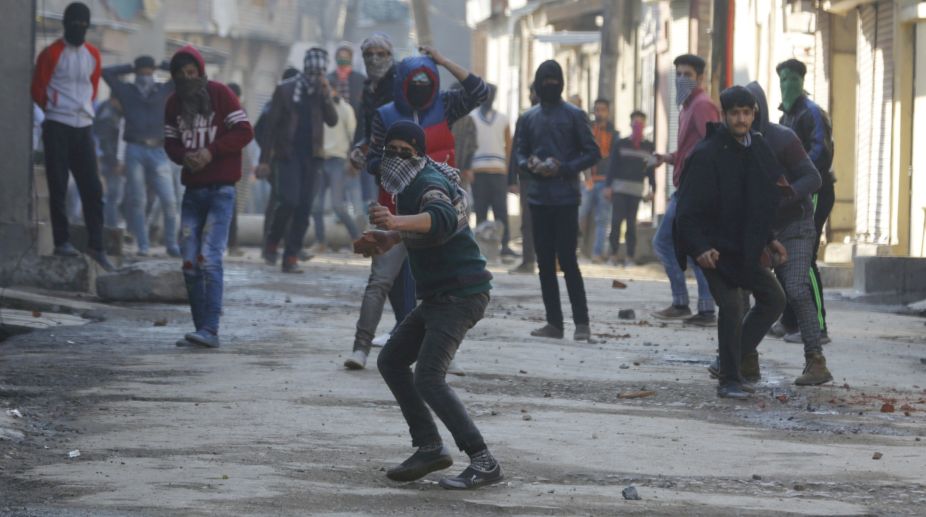
Opposition National Conference on Thursday dubbed as "tragic" the Army Chief's warning of tough action against stone-pelters and said the government needs to engage politically with the "alienated" youth of the Valley.

"Mobs rushing to encounter sites should concern us and alarm us into constructive political action – NOT issuing threats of no mercy. The Govt needs to engage politically with the alienated youth of Kashmir – threats and warnings will only compound their hostility," NC state spokesperson Junaid Azim Mattu said in a series of tweets.

He said it was "tragic that New Delhi was warning the alienated youth of Kashmir through army chiefs".

The NC spokesperson said in a democratic set-up, politically-alienated people cannot be made to cooperate by threats.

Army chief Bipin Rawat had on Wednesday warned those attacking security forces during anti-militancy operations of "tough action".

The stern message from Rawat came after three soldiers faced heavy stone-pelting at Parray Mohalla of Bandipore in north Kashmir when they were about to launch an operation against militants holed up there.

Alerted by the stone-pelters, the militants had got an opportunity to fire hand grenades and empty a few magazines from AK-rifles into the advancing troopers, leaving three jawans dead and some others, including a Commanding officer of CRPF, injured. One terrorist managed to flee the area.

General Rawat said security forces in Jammu and Kashmir were facing higher casualties due to the manner in which the locals were preventing them from conducting the operations and "at times even supporting the terrorists to escape".

"We would now request the local population that people who have picked up arms, and they are the local boys, if they want to continue with the acts of terrorism, displaying flags of ISIS and Pakistan, then we will treat them as anti-national elements and go helter-skelter for them.

"They may survive today but we will get them tomorrow. Our relentless operations will continue," the Army chief had said.

No jurisdiction to hear plea against Rahul, CM: Cops to court

PTI | New Delhi |

Delhi Police has told a court here that it does not have jurisdiction to hear a plea filed against six persons, including Rahul Gandhi and Arvind Kejriwal, for questioning the surgical strikes carried out by the Army last year.

The police in a status report filed before Additional Chief Metropolitan Magistrate Gagandeep Singh said the alleged offensive statements were not made in area, of which this court has jurisdiction. The report was filed by officials of Jagatpuri police station here.

The submission, however, was opposed by complainant's advocate Rakshpal Singh, who said even if the offence was committed at different places, a zero FIR can be lodged at another place and later transferred to the police station concerned for further investigation.

He said he would place several judgements on the next date of hearing in support of his arguments.

The court said, "Status report (by police) has been filed. Put up for arguments on March 22."

The court was hearing a complaint filed by east Delhi resident Pravesh Kumar against six persons – Congress Vice President Rahul Gandhi, Chief Minister Arvind Kejriwal, Congress leaders Digvijay Singh and Sanjay Nirupam, Delhi Water Minister Kapil Mishra and actor Om Puri.

The police also sought deletion of Om Puri's name from the complaint following his death.

The court had earlier directed the police to file an action taken report on the complaint which alleged that six persons had termed the surgical strikes by the Army as false and politically motivated. The statements had hurt the image of the Army as well as the country, it has claimed.

The Army had conducted surgical strikes against terror launch pads in PoK on September 29, 2016 in response to the Uri terror attack.

The plea sought lodging of FIR against them for alleged offences under sections 121A (conspiracy to wage or attempt to wage was against India), 124A (sedition), 131 (abetting mutiny or attempting to seduce a soldier, sailor or airman from his duty), 153B (imputations, assertions prejudicial to national integration) and 120B (criminal conspiracy) of the IPC.

The complainant, who also annexed media reports with the plea, has said he had given a complaint at Jagatpuri Police Station on October 7 last year but no action was taken by cops after which he approached the court.

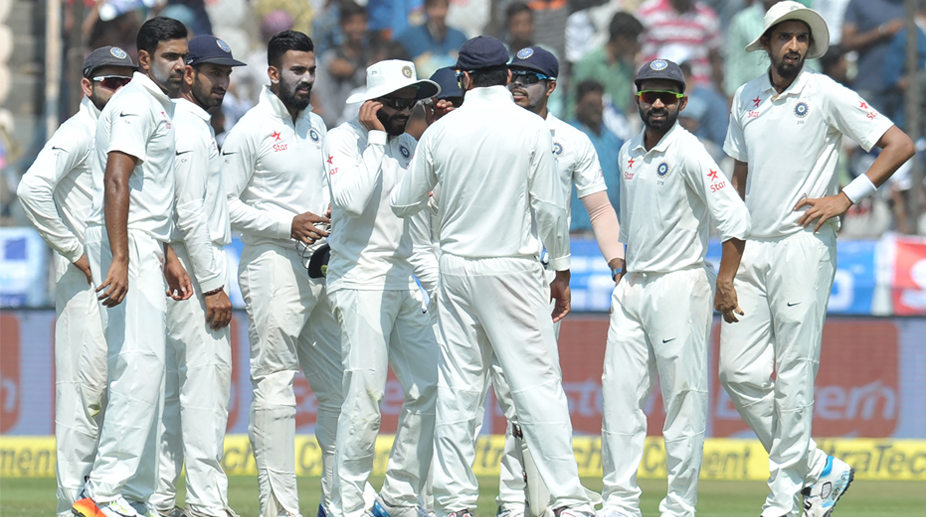
New panel will bring ‘undiluted cricket’ to fans: Vinod Rai

Rai also added that Sreesanth is welcome to go to the court if he has a case to contest.

IANS | New Delhi |

Former Comptroller and Auditor General Vinod Rai, who heads the Supreme Court-appointed Committee of Administrators (COA) of the BCCI, said on Thursday that the new panel is committed to bring cricket to the doorsteps of the fans in its "undiluted form".

Rai, who along with former India women's team captain Diana Edulji, historian Ramchandra Guha, and IDFC Managing Director and CEO Vikram Limaye were named by the apex court to supervise the working of the Board of Control for Cricket in India (BCCI), said the committee will restore the national cricket board back to its democratic set-up.

"The Supreme Court order came on January 30 and on February 4, I went abroad. I have just come back yesterday. So my experience has been very good," said Rai of his time at the board so far.

"There is absolutely no problem in handling BCCI because I sincerely believe that the number of cricket lovers in this country is humongous. We need to bring cricket to the doorstep of the cricket lovers in its undiluted form," Rai told reporters here. 

"So BCCI needs good governance, we will provide that and restore it back to the democratic set-up that it should be," he added.

Commenting on his relation with the International Cricket Council (ICC) especially in the aftermath of the world cricket body's push to approve in principle the new constitution and revenue distribution model, Rai said: "There are no road-blocks with the International Cricket Council (ICC), none at all. I am absolutely confident that we will be able to do exactly the way it was meant to be."

"These are all formal channels, there is no personality issue involved in any of these. These are all well-structured agencies and we just have to ensure that they actually follow the structure that has been devised," he added.

On tainted pacer S. Sreesanth's threat of dragging the BCCI to court to contest his life ban, Rai said the Kerala bowler is welcome to go to the court if he has a case.

"I have absolutely no information about it. Those day-to-day issues will be handled by the management of the BCCI. If he has a case, he is welcome to go to court," he said.

The 34-year-old Sreesanth, who was banned for life by the BCCI due to his alleged involvement in the infamous 2013 Indian Premier League (IPL) spot-fixing scandal, on Wednesday hinted he would be playing for a Kerala Club in a first division two-day game, commencing on Sunday.

FIFA acts against ex-Costa Rica, Guatemala chiefs

Both former officials could be banned for life from any soccer-related activities.

IANS | Madrid |

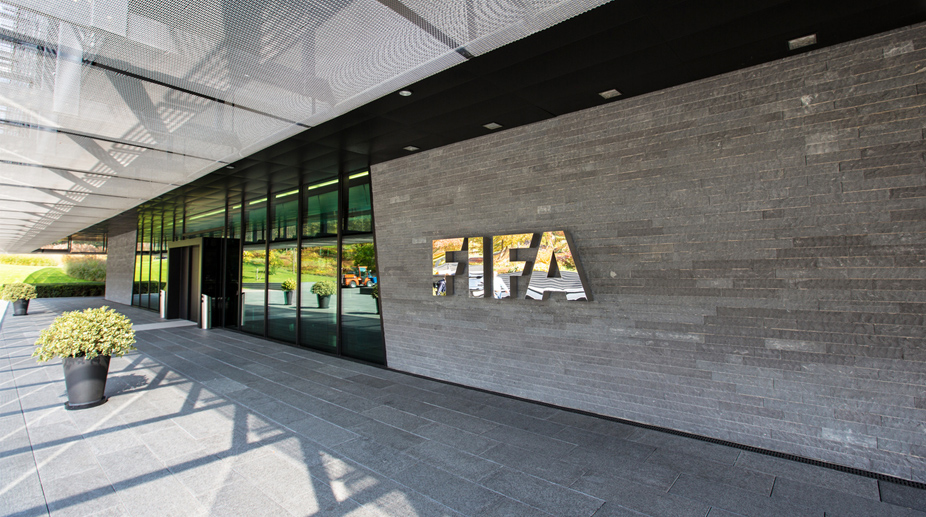
The FIFA ethics committee has decided to take legal action against the former presidents of the Costa Rican and Guatemalan football federations.

According to FIFA, Cornel Borbely, Chairman of the Investigatory Chamber of the Ethics Committee, completed the investigations into alleged illegal payments Costa Rica's Eduardo Li and Guatemala's Brayan Jimenez received from sports marketing companies, reports Efe news agency.

Jimenez was found guilty on July 29, 2016 by the Federal Court of Brooklyn in New York on counts of blackmail and cybercrime while Li was found guilty on Octtober 7, 2016 of committing similar offences.

Borbely recommended that both former officials should be banned for life from any soccer-related activities due to their involvement in corruption cases.

A FIFA statement added that "for reasons linked to privacy rights and the presumption of innocence until proven guilty, the adjudicatory chamber will not publish further details at the present time".

FIFA acts against ex-Costa Rica, Guatemala chiefs

Both former officials could be banned for life from any soccer-related activities.

IANS | Madrid |

The FIFA ethics committee has decided to take legal action against the former presidents of the Costa Rican and Guatemalan football federations.

According to FIFA, Cornel Borbely, Chairman of the Investigatory Chamber of the Ethics Committee, completed the investigations into alleged illegal payments Costa Rica's Eduardo Li and Guatemala's Brayan Jimenez received from sports marketing companies, reports Efe news agency.

Jimenez was found guilty on July 29, 2016 by the Federal Court of Brooklyn in New York on counts of blackmail and cybercrime while Li was found guilty on Octtober 7, 2016 of committing similar offences.

Borbely recommended that both former officials should be banned for life from any soccer-related activities due to their involvement in corruption cases.

A FIFA statement added that "for reasons linked to privacy rights and the presumption of innocence until proven guilty, the adjudicatory chamber will not publish further details at the present time".

MRI scans can predict babies at risk of autism

IANS | New York |

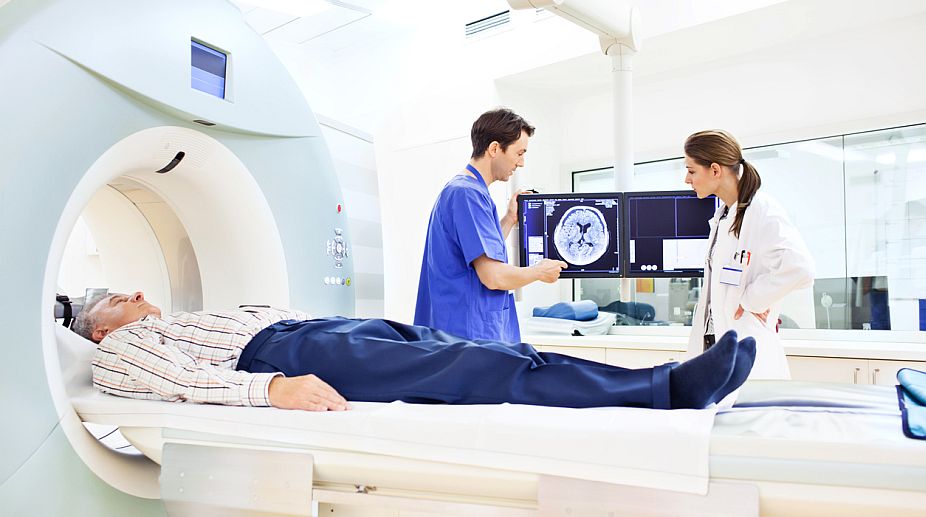
Magnetic resonance imaging (MRI) of babies at 6 and 12 months with older siblings with autism may correctly predict 80 per cent of those infants who may develop it at two years of age, researchers have found.

Siblings of children diagnosed with autism have a higher risk — one out of every five births — of developing the disorder, compared to those in the general population.

"Typically, the earliest we can reliably diagnose autism in a child is age 2 when there are consistent behavioural symptoms. But in our study, brain imaging biomarkers at 6 and 12 months were able to identify babies who would be later diagnosed with autism," said Annette Estes, Professor at University of Washington.

People with autism spectrum disorder (or ASD) have characteristic social deficits and demonstrate a range of ritualistic, repetitive and stereotyped behaviours. 

Brain scans showed that children with autism had a faster brain surface growth rate between 6 and 12 months as well as a faster growth rate of overall brain size between 12 and 24 months, compared to children without autism. 

For the study, published in the journal Nature, a team led by researchers from the University of North Carolina, Chapel Hill, analysed — MRIs of brain volume, surface area, cortical thickness at 6 and 12 months of age, and sex of the infants — and used a computer programme that identified approximately 8 out of 10 infants who later developed autism.

They tracked differences in brain development among three groups: infants with a high family risk (i.e., older sibling with autism) who were later diagnosed with autism at age 2 years, infants with a high family risk who did not have autism at age 2 years and infants with a low family risk who did not have autism at age 2 years.

MRI scans can predict babies at risk of autism

IANS | New York |

Magnetic resonance imaging (MRI) of babies at 6 and 12 months with older siblings with autism may correctly predict 80 per cent of those infants who may develop it at two years of age, researchers have found.

Siblings of children diagnosed with autism have a higher risk — one out of every five births — of developing the disorder, compared to those in the general population.

"Typically, the earliest we can reliably diagnose autism in a child is age 2 when there are consistent behavioural symptoms. But in our study, brain imaging biomarkers at 6 and 12 months were able to identify babies who would be later diagnosed with autism," said Annette Estes, Professor at University of Washington.

People with autism spectrum disorder (or ASD) have characteristic social deficits and demonstrate a range of ritualistic, repetitive and stereotyped behaviours. 

Brain scans showed that children with autism had a faster brain surface growth rate between 6 and 12 months as well as a faster growth rate of overall brain size between 12 and 24 months, compared to children without autism. 

For the study, published in the journal Nature, a team led by researchers from the University of North Carolina, Chapel Hill, analysed — MRIs of brain volume, surface area, cortical thickness at 6 and 12 months of age, and sex of the infants — and used a computer programme that identified approximately 8 out of 10 infants who later developed autism.

They tracked differences in brain development among three groups: infants with a high family risk (i.e., older sibling with autism) who were later diagnosed with autism at age 2 years, infants with a high family risk who did not have autism at age 2 years and infants with a low family risk who did not have autism at age 2 years.

TRAI begins operator-assisted drive tests to check call drops

PTI | New Delhi |

In a bid to check the quality of mobile services, regulator TRAI has begun operator-assisted drive test that captures real-time data to monitor the level of call drops and voice quality across multiple cities.

"The operator-assisted drive tests have started in all the five regions of TRAI, and a number of cities have been covered," its Chairman RS Sharma said.

The operator-assisted tests have already taken place in Mathura (UP-West circle), Jaisalmer, (Rajasthan), Ujjain (Madhya Pradesh) and Mangalore (Karnataka) among others.

Tests are underway or slated to be conducted over the coming weeks in locations include Kalyan, Noida, Jammu, Guwahati-Dispur, Mysore, Hyderabad, Rajkot, Bhopal, and Jhansi, as per the schedule drawn up by the regulator.

A new concept by Telecom Regulatory Authority of India (TRAI), the 'operator-assisted' drive tests are distinct from the independent drive tests conducted by the regulator, as such tests are conducted in co-ordination with telecom service providers.

The operator-assisted tests involves the telecom firms' equipment and costs, with the regulator monitoring and supervising the entire process.

Last year, independent drive tests were conducted by TRAI in Amritsar (August-September), and in Delhi, Hyderabad, Bhopal, Chandigarh, Mumbai, Lucknow, Kanpur, Ahmedabad, Ranchi, Darjeeling, Sikkim and Trivandrum (May-June).

Typically, drive tests — whether TRAI's independent tests or operator-assisted tests — assess the performance of networks on various quality benchmarks, including call set-up success rate, call drop, blocked calls and Radio Frequency (RF) coverage.

On the ongoing Points of Interconnect (PoI) dispute between Reliance Jio and Bharti Airtel, Sharma said that the regulator will continue to "monitor the situation".

"The last I saw, it was quite okay. In case of two operators there were no call failures, and with the third operator there were call failures in certain circles.

Secretary TRAI will call a meeting soon to take a stock of the situation," he said.

Asked about his views on the proposed consolidation in the telecom industry where Vodafone and Idea have begun talks for merger of India mobile operations, Sharma declined to comment saying the regulator has no role to play at this point.

"It is a business arrangement and a business activity…So I should not be making any comments on that. I am sure when the business activity is to take place on merger, the processes which are applicable in these cases will be followed," he said.


TRAI begins operator-assisted drive tests to check call drops

PTI | New Delhi |

In a bid to check the quality of mobile services, regulator TRAI has begun operator-assisted drive test that captures real-time data to monitor the level of call drops and voice quality across multiple cities.

"The operator-assisted drive tests have started in all the five regions of TRAI, and a number of cities have been covered," its Chairman RS Sharma said.

The operator-assisted tests have already taken place in Mathura (UP-West circle), Jaisalmer, (Rajasthan), Ujjain (Madhya Pradesh) and Mangalore (Karnataka) among others.

Tests are underway or slated to be conducted over the coming weeks in locations include Kalyan, Noida, Jammu, Guwahati-Dispur, Mysore, Hyderabad, Rajkot, Bhopal, and Jhansi, as per the schedule drawn up by the regulator.

A new concept by Telecom Regulatory Authority of India (TRAI), the 'operator-assisted' drive tests are distinct from the independent drive tests conducted by the regulator, as such tests are conducted in co-ordination with telecom service providers.

The operator-assisted tests involves the telecom firms' equipment and costs, with the regulator monitoring and supervising the entire process.

Last year, independent drive tests were conducted by TRAI in Amritsar (August-September), and in Delhi, Hyderabad, Bhopal, Chandigarh, Mumbai, Lucknow, Kanpur, Ahmedabad, Ranchi, Darjeeling, Sikkim and Trivandrum (May-June).

Typically, drive tests — whether TRAI's independent tests or operator-assisted tests — assess the performance of networks on various quality benchmarks, including call set-up success rate, call drop, blocked calls and Radio Frequency (RF) coverage.

On the ongoing Points of Interconnect (PoI) dispute between Reliance Jio and Bharti Airtel, Sharma said that the regulator will continue to "monitor the situation".

"The last I saw, it was quite okay. In case of two operators there were no call failures, and with the third operator there were call failures in certain circles.

Secretary TRAI will call a meeting soon to take a stock of the situation," he said.

Asked about his views on the proposed consolidation in the telecom industry where Vodafone and Idea have begun talks for merger of India mobile operations, Sharma declined to comment saying the regulator has no role to play at this point.

"It is a business arrangement and a business activity…So I should not be making any comments on that. I am sure when the business activity is to take place on merger, the processes which are applicable in these cases will be followed," he said.

Campaigning for phase-III of UP polls to end on Friday

PTI | Lucknow |

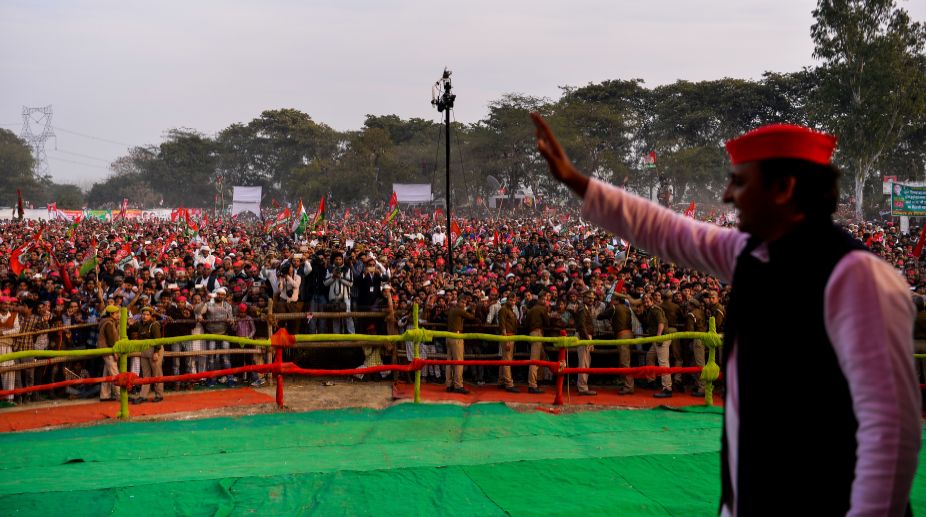
Curtains will come down on Friday on the hectic campaign in 69 Assembly seats spread over 12 districts of Uttar Pradesh that will go to polls in the third phase on February 19.

The districts are Farrukhabad, Hardoi, Kannauj, Mainpuri, Etawah, Auraiya, Kanpur Dehat, Kanpur, Unnao, Lucknow, Barabanki and Sitapur.

In the 2012 Assembly polls, SP had won 55 of these 69 seats, while BSP, BJP and Congress secured just 6, 5 and 2 respectively. One seat went to an Independent.

On the campaign trail, Prime Minister Narendra Modi has sought to puncture Chief Minister Akhilesh Yadav's "kaam bolta hai" slogan by stating it was the SP leader's "karnama" (misdeed) which spoke for him.

While, Akhilesh questioned him on "acchey din" promise claiming that it was elusive. He said that after the turnout trend of first two phases, the blood pressure of opposition has shot up.

In a bid to woo minority voters, he also tried to attack BSP supremo Mayawati stating, "She cannot be trusted. She can join hands with BJP again to form next government."

Mayawati, however, clarified in her speeches that "she will prefer to sit in the opposition instead of joining hand with anyone" while urging minority voters to back her party.

After skipping constituencies falling in the first two phases, SP patron Mulayam Singh Yadav campaigned for brother Shivpal Singh and daughter-in-law Aparna Yadav, but preferred not to seek votes for others.

He is said to be perturbed over SP forming a coalition with Congress.

Campaigning for phase-III of UP polls to end on Friday

PTI | Lucknow |

Curtains will come down on Friday on the hectic campaign in 69 Assembly seats spread over 12 districts of Uttar Pradesh that will go to polls in the third phase on February 19.

The districts are Farrukhabad, Hardoi, Kannauj, Mainpuri, Etawah, Auraiya, Kanpur Dehat, Kanpur, Unnao, Lucknow, Barabanki and Sitapur.

In the 2012 Assembly polls, SP had won 55 of these 69 seats, while BSP, BJP and Congress secured just 6, 5 and 2 respectively. One seat went to an Independent.

On the campaign trail, Prime Minister Narendra Modi has sought to puncture Chief Minister Akhilesh Yadav's "kaam bolta hai" slogan by stating it was the SP leader's "karnama" (misdeed) which spoke for him.

While, Akhilesh questioned him on "acchey din" promise claiming that it was elusive. He said that after the turnout trend of first two phases, the blood pressure of opposition has shot up.

In a bid to woo minority voters, he also tried to attack BSP supremo Mayawati stating, "She cannot be trusted. She can join hands with BJP again to form next government."

Mayawati, however, clarified in her speeches that "she will prefer to sit in the opposition instead of joining hand with anyone" while urging minority voters to back her party.

After skipping constituencies falling in the first two phases, SP patron Mulayam Singh Yadav campaigned for brother Shivpal Singh and daughter-in-law Aparna Yadav, but preferred not to seek votes for others.

He is said to be perturbed over SP forming a coalition with Congress.

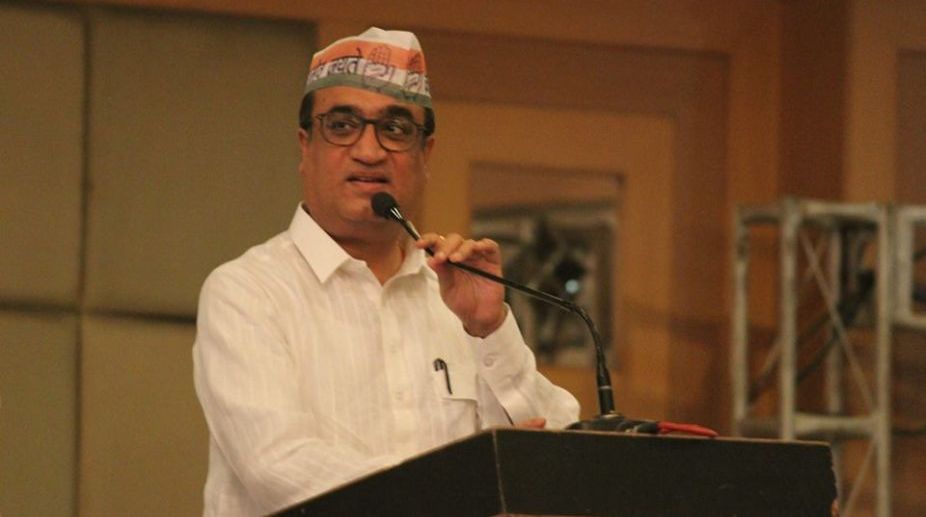
AAP has failed to meet people’s expectations: Ajay Maken

IANS | New Delhi |

Congress leader Ajay Maken has said that Delhi Chief Minister Arvind Kejriwal is a "dream merchant" who is still in "opposition mode" and that the AAP government has failed to meet expectations of the people in several areas, including infrastructure, health and education.

In an interview, Ajay Maken, 53, who is Delhi Congress chief, said that the Congress was on a revival path in the city and would perform well in the municipal polls later this year.

Maken said Kejriwal shoots questions at others but rarely answers queries posed to him.

"Kejriwal must understand that he is no more in the opposition. Gone are the days when he can run away after asking questions. He should answer questions of the opposition and of the people," Maken said.

He said Kejriwal's Aam Aadmi Party (AAP) had won a huge mandate in the 2015 assembly elections by making tall promises and by negating the work of the Congress government in Delhi in 15 years.

"Kejriwal came to power by weaving dreams. I call him a dream merchant. He made false criticism of the work of Congress governments led by Sheila Dikshit," Maken said.

"Whether it is infrastructure, roads, health or education, the AAP government has failed. You won't find a single new flyover project initiated in the last two years. No new hospital has been started," Maken added.

He said the number of buses run by the city's bus service DTC has come down in the last two years.

The AAP government has blamed the central government for delaying clearances for many of its projects, including allotment of land for hospitals by the Delhi Development Authority.

Maken also alleged that the Kejriwal government had not responded adequately when the city faced problems related to dengue and chikungunya.

Referring to the third phase of the Metro Rail project, Maken said it was the first time that the corporation had missed its completion deadline.

The Congress leader alleged that the Jan Lokpal Bill brought by the AAP government was "weak".

"They said that they would end corruption, but has the promise been met? Many of their own MLAs and ministers have been booked by police (on various charges)," Maken said.

Maken, who has been a minister in the United Progressive Alliance (UPA) government, alleged that the tussle witnessed between the central government and the Delhi government was "stage managed".

"Much of the face-off is stage managed. It suits Kejriwal and (Prime Minister) Narendra Modi, because both of them have come to power by making tall promises. They have not been able to deliver on them," Maken said.

He said the Congress was being strengthened "in a way that suits modern-day politics".

The AAP had won 67 of 70 seats in the 2015 assembly elections while the Congress could not open its account.

Maken said the Congress had suffered electoral defeats earlier too and will bounce back to power.

AAP has failed to meet people’s expectations: Ajay Maken

IANS | New Delhi |

Congress leader Ajay Maken has said that Delhi Chief Minister Arvind Kejriwal is a "dream merchant" who is still in "opposition mode" and that the AAP government has failed to meet expectations of the people in several areas, including infrastructure, health and education.

In an interview, Ajay Maken, 53, who is Delhi Congress chief, said that the Congress was on a revival path in the city and would perform well in the municipal polls later this year.

Maken said Kejriwal shoots questions at others but rarely answers queries posed to him.

"Kejriwal must understand that he is no more in the opposition. Gone are the days when he can run away after asking questions. He should answer questions of the opposition and of the people," Maken said.

He said Kejriwal's Aam Aadmi Party (AAP) had won a huge mandate in the 2015 assembly elections by making tall promises and by negating the work of the Congress government in Delhi in 15 years.

"Kejriwal came to power by weaving dreams. I call him a dream merchant. He made false criticism of the work of Congress governments led by Sheila Dikshit," Maken said.

"Whether it is infrastructure, roads, health or education, the AAP government has failed. You won't find a single new flyover project initiated in the last two years. No new hospital has been started," Maken added.

He said the number of buses run by the city's bus service DTC has come down in the last two years.

The AAP government has blamed the central government for delaying clearances for many of its projects, including allotment of land for hospitals by the Delhi Development Authority.

Maken also alleged that the Kejriwal government had not responded adequately when the city faced problems related to dengue and chikungunya.

Referring to the third phase of the Metro Rail project, Maken said it was the first time that the corporation had missed its completion deadline.

The Congress leader alleged that the Jan Lokpal Bill brought by the AAP government was "weak".

"They said that they would end corruption, but has the promise been met? Many of their own MLAs and ministers have been booked by police (on various charges)," Maken said.

Maken, who has been a minister in the United Progressive Alliance (UPA) government, alleged that the tussle witnessed between the central government and the Delhi government was "stage managed".

"Much of the face-off is stage managed. It suits Kejriwal and (Prime Minister) Narendra Modi, because both of them have come to power by making tall promises. They have not been able to deliver on them," Maken said.

He said the Congress was being strengthened "in a way that suits modern-day politics".

The AAP had won 67 of 70 seats in the 2015 assembly elections while the Congress could not open its account.

Maken said the Congress had suffered electoral defeats earlier too and will bounce back to power.

Australia’s Church paid $213m to abuse victims

IANS | Sydney |

The Australian Catholic Church has paid $213 million to victims of sexual abuse since 1980, an inquiry heard on Thursday.

The money was divided between thousands of victims, the Royal Commission into Institutional Responses to Child Sex Abuse was told.

The data showed the average payment was about $70,000, the BBC reported.

The Catholic Church made the payments in response to 3,066 of 4,445 child sexual abuse claims between 1980 and 2015.

More than 40 per cent of claims were received by a handful of male orders.

They included compensation, treatment, legal and other costs, said Gail Furness, the lead lawyer assisting the commission in Sydney.

"The Commission's experience is that many survivors face barriers which deter them from reporting abuse to authorities and to the institution in which the abuse occurred," Furness said.

The average delay between an alleged abuse and it being reported was 33 years, she said.

Earlier this month, the Commission heard that 7 per cent of the nation's Catholic priests allegedly abused children between 1950 and 2010.

Australia’s Church paid $213m to abuse victims

IANS | Sydney |

The Australian Catholic Church has paid $213 million to victims of sexual abuse since 1980, an inquiry heard on Thursday.

The money was divided between thousands of victims, the Royal Commission into Institutional Responses to Child Sex Abuse was told.

The data showed the average payment was about $70,000, the BBC reported.

The Catholic Church made the payments in response to 3,066 of 4,445 child sexual abuse claims between 1980 and 2015.

More than 40 per cent of claims were received by a handful of male orders.

They included compensation, treatment, legal and other costs, said Gail Furness, the lead lawyer assisting the commission in Sydney.

"The Commission's experience is that many survivors face barriers which deter them from reporting abuse to authorities and to the institution in which the abuse occurred," Furness said.

The average delay between an alleged abuse and it being reported was 33 years, she said.

Earlier this month, the Commission heard that 7 per cent of the nation's Catholic priests allegedly abused children between 1950 and 2010.