Logo

UP Assembly elections phase-III: Polling underway

PTI | Lucknow |

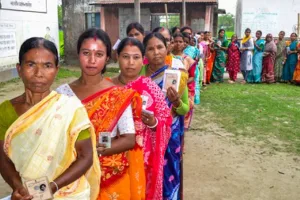
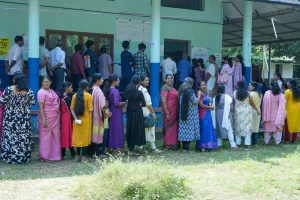
Polling is underway in 69 Assembly constituencies that figure in phase-III of the staggered Uttar Pradesh elections.

Union Home Minister Rajnath Singh's Lok Sabha constituency Lucknow, and SP strongholds Kannauj, Mainpuri and Etawah, figure in this round.

Farrukhabad, Hardoi, Auraiya, Kanpur Dehat, Kanpur, Unnao, Barabanki and Sitapur are among the 12 districts where these Assembly seats are spread across.

Etawah is the native place of SP patron Mulayam Singh Yadav, while another key district is Mainpuri, from where Tej Pratap Yadav is an SP MP. From Kannauj Dimple Yadav, wife of Chief Minister Akhilesh Yadav is MP.

In the 2012 Assembly polls, SP had won 55 of these 69 seats, while BSP, BJP and Congress secured just six, five and two respectively. One seat went to an Independent.

The fate of 826 candidates in this phase will be decided by 2.41 crore voters, including 1.10 crore women and 1,026 belonging to third gender category.

In this phase, the maximum number of 4,98,573 voters are in Sarojini Nagar seat of Lucknow, while the minimum of 2,72,294 voters are in Sisamau.

While the highest number of 21 candidates are in Etawah, minimum of three candidates are in Haidergarh (Barabanki).

Lucknow West and Central have 17 candidates each.

There will be 25,603 polling booths in this phase. Tight security arrangements have also been made.

A pedestrian effort overall

Krishnan Srinivasan |

Ritu Menon’s book is a travelogue, encompassing 2004 to 2015. Travel books are valid when the author’s personality or expertise give special importance and analysis to the places s/he visits, or because the places visited are themselves rarely travelled and unique. Neither is the case in this book. It is old material, the potted history and political analysis offered are out of date and superficial, the venues are well known and the author brings nothing new to the narrative. Her views and those of her numerous uninteresting companions are uniformly banal. Curiously, she scorns the very tourist industry, which she serves to promote. The sketches in the book are amateurish and unhelpful, and the absence of maps is a serious omission.

Farrukh Dhondy’s book is even more out of date, referring to the author’s stay in UK in the 1960s. It is for Hachette to answer why it has chosen to publish these short pieces about Dhondy’s years as a naïve undergraduate, and also to explain why the book is described as “a work of fiction (when) any resemblance to real persons …is purely coincidental”, when the actual names of real people occur throughout the work, which is clearly autobiographical. This book, neither entertaining nor interesting, is about an archaic setting and archaic notions. Dhondy can doubtless write well, and he is able to convince the reader that what he describes really happened, but he is worth reading only when he is self-deprecating — an aspect all too rare, since this book reveals him to be both an egotist and a snob.

Unlike legitimate doubts about Dhondy’s book, Gaind’s book is undoubtedly fiction, relating to an Indian ruler in 1909 who is also a detective. The text suffers from many defects, not least the author’s overwhelming desire to impress the reader with his great knowledge and vocabulary. Cliches and over-writing abound, and many parts of the book read like a spoof; thus one is subjected to phrases like “a righteous pain in Sikander’s regal behind” and “charging into the bedroom like Cardigan at Balaclava.”

This story is, when boiled down to the essentials, a straightforward locked room mystery that would have required 150 pages instead of the 328 if the excessive verbosity had been excluded. Despite its excessive length, there is no development of character, most descriptions appear as if taken from an auction catalogue, and some anachronistic expressions cannot be dated to 1909. Gaind calls this “the first maharaja mystery”. He would be well advised to introspect and not essay a second one until he can desist from playing the intellectual; gives his uniformly disagreeable characters,  including the hero, much more depth; makes all his non-heroes less fat, his women less heroine-like and puts his dictionary and Thesaurus in the dustbin. He would also do well to get over his racial bigotry against Europeans, which he displays ostentatiously to win Indian nationalistic approval — a bias which does not, needless to say, seem to apply to European females.

Nihal Singh’s novella about the Emergency in India from 1975 to 1977 begins with introducing four characters, a former anarchist, a Muslim conformist, a “gritty” woman reporter “committed to her country and profession”, and a veteran journalist-cum-social activist. This promising start, however, is not sustained; the author diverges into disquisitions, which are excessive distractions in view of the brevity of the book, into Indian politics, the cultural inheritance from the British Raj, the impact of censorship on the print media, Indian tastes and traits, the Soviet Union, Bengal under the CPM, and the internal politics of The Statesman of that time. There are short-lived shunts backwards and forwards in time, and some anachronisms — the BJP was hardly a force in the mid-1970s, and Ferraris were totally unknown in Delhi in that period. The gritty woman reporter, who turns out to be the main character, proceeds to Dubai and Singapore, breaking the connections with the Emergency. The remaining three lead characters also do not fulfil their fictional missions; the former anarchist moves to Austria, the Muslim to Belgium, and the activist is jailed and swiftly disappears altogether from the narrative. Love, which is mentioned in the title, or more accurately sex, is described as being practiced exclusively with non-Indians; is that because it is more plausible in India’s notoriously sex-starved society?

As for the Emergency, Nihal Singh observes it was “by no means a dictatorship of the Middle East or Latin American variety”,  being more like “vegetarian fascism” and his views of The Statesman of the day will no doubt be controversial — for example, Cushrow Irani by using bugging devices “was playing the role of an amateur Hercule Poirot” . The author notes that the Emergency was felt less in the non-Congress ruled states. Some characters, including many of Indira Gandhi’s close associates, make an appearance by name, but do not remain in the text long enough to give evidence of their own disagreeable personalities. Sanjay Gandhi is described as “living in his own bubble”.

In general, this book is an opportunity lost. Nihal Singh is a journalist who has met everyone that matters from the 1960s onwards, and has personal knowledge and insights into all the dramatic periods of Indian history and foreign policy over six decades that would be valuable today if set down. But fiction is not the right vehicle for him to convey his thoughts on history or on those who made it for good or ill. This material would have made a greater impact as a factual essay.

The reviewer is india’s former Foreign Secretary

A fishy matter

Maneka Gandhi |

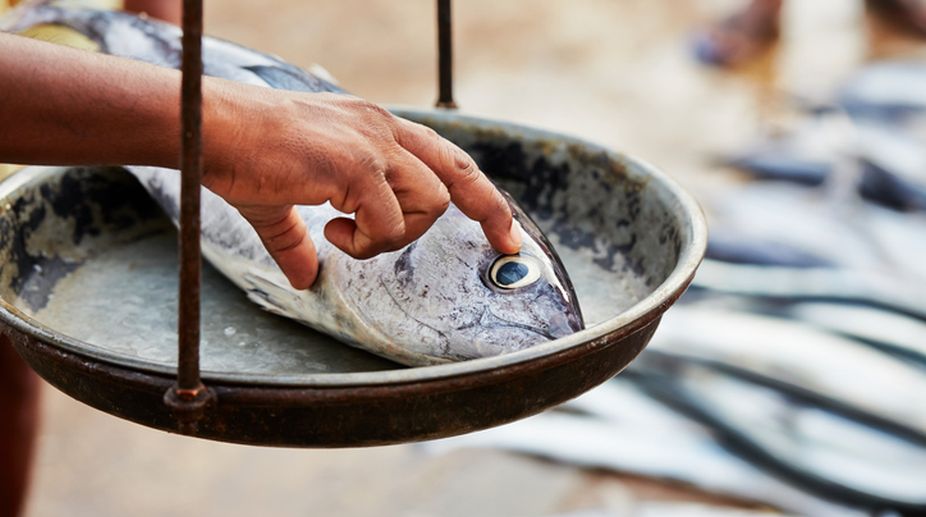
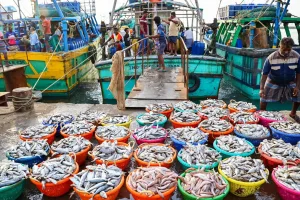
Now that the agriculture ministry has announced that it is putting a huge emphasis on commercial fish production, you should know what you will get when you eat those fish. Parasites like sea lice, viruses, heavy metal, chemicals, antibiotic residues and antibiotic-resistant bacteria are some of the gifts that you get for free when you eat farmed fish.

In a typical aquaculture facility, fish eggs are raised in a hatchery. The young fish are then transferred to inland ponds, or sections of the sea separated from the main body by nets. To increase the production and profits, the density of fish in these enclosures is kept very high – in fact, the owners keep stuffing fish in till they start dying off. 10 per cent death is acceptable. It is only when the die off increases beyond 30 per cent then stocking stops. 

These fish are so crowded that they resemble the chickens in poultries that cannot move their wings and sit huddled on A4 paper sizes of cage till they are killed. A 2.5-foot-long salmon is given four feet of water for its entire life – these fish normally swim hundreds of miles in one day and can even climb small dams. Trout farms are even more crowded – 27 fish in four feet space.

As children get lice in crowded boarding schools, the first problem is that of fish lice. There are 559 kinds of sea lice. These are marine parasites that feed on the mucus, skin tissue, and blood of fish. The adult females produce six to 11 egg strings of 1,000 eggs each. Sea lice move between fish.

In severely crowded conditions, sea lice eat down to the bone of a fish’s face. Lesions appear on the body as the lice eat the scales, and the fish become so ill that they become susceptible to other diseases. The lice remain in the fish even after they are killed. This problem exists in farmed fish all over the world. In 2012, the Canadian grocery chain, Sobey’s, had to pull out all the fish from its shops after sea lice was found in them. In Scotland, government inspections showed farms with a minimum of 44 lice per fish.  Irish “organic” farms showed between 54-71 sea lice per farmed salmon – over five times the Government’s allowed maximum. Imagine what happens in India where there is no checking of farms, and fish are sold on the roadside.

Pus filled boils or furuncles on the human head are caused by a bacterium called staphylococcus aureus. In a severe infection, an individual may get fever, swollen lymph nodes and fatigue. The furunculosis bacterium has also been found in sea lice.

Fish farms deal with this – not by reducing the fish in the pond, but by increasing the toxic pesticides poured into the water. In the last 10 years, use of these poisonous chemicals has gone up ten times. Medicines, given for the control of sea lice, include organophos phates which cause cancer in humans. Dichlorvos was used for many years and replaced by azamethiphos. Both cause mutations. Cypermethrin and Deltamethrin are the two pyrethroids commonly used to control sea lice. In humans these cause difficulty in breathing, tremors, incoordination,rash, lower sperm counts and breast cancer. The main drugs used are Avermectins, including Ivermectin and Emamectin benzoate. Since these are toxic for humans, the fish farm is supposed to stop the drugs 175 days before killing the fish. But who’s counting?
Amoebic gill disease is the main problem in most fish farms. It is a potentially fatal disease caused by the amoeba Neoparamoeba perurans. To bring down the mortality, Levimasole, which is used to deworm cattle (and as an anti-cancer drug in humans), is added to the water at 10 parts per million. Chloramine and Chlorine dioxide are also used. Since the fish are crowded and living in chemical waters, they are now so physically stressed that their bodies develop weakened immune systems and are prone to every kind of infection. They rub against each other and the sides of cages – as do the chickens – damaging their fins and causing infections. Aquaculture operators use strong antibiotics to control disease (For every fish you eat from an inland fish pond, hundreds have died. A normal die off is 20 per cent for fin fish, 40 per cent for shrimp and 50 per cent for molluscs.) 

The most frequent fish infections treated with antibiotics, are skin ulcers, diarrhoea and blood sepsis. The micro-organisms, responsible for these infections, belong to bacterial families that also produce infections in humans.

These antibiotics are given in the feed, baths and as injections. An unlimited amount of oxytetracycline and flumequine is used, and this stays in the body. One study has found up to 578.8 milligrams per kg in trout and sea-bass farms. Shrimp farms in India will probably show even more.

The antibiotics used in aquaculture, either for prophylactic or therapeutic purposes, often accumulate in the tissue of aquatic animals.  These drug residues cause allergies, toxic effects, changes in the intestinal microbial fauna in the fish eater. Residue of chloramphenicol in food consumed by humans can even result in aplastic anaemia, which leads to very serious bone marrow diseases.  Nitrofuran antibiotics are known to cause cancer. 

So, humans get not just bacteria with their fish but they also eat antibiotics, which make them resistant to Tetracycline , trimethoprim, sulfonamide and streptomycin antibiotics which they really need when they fall ill. Salmonella and E.Coli bacteria are the first to become antibiotic resistant, and evidence shows that the bacteria Typhimurium DT104, which is a cause of salmonellosis in humans and animals, originated in fish farms in Asia which use florfenicol extensively.  Antibiotics in farmed fish also cause allergies and poisoning. The use of antibiotic quinolones is unrestricted in aquaculture in countries with growing aquaculture industries, such as India, China and Chile. For example, in Chile, statistics indicate that annually 10–12 metric tons of quinolones are used in human medicine and approximately 100–110 metric tons of these antibiotics are used in aquaculture. 

These broad-spectrum antibiotics have serious side effects associated tendinitis and tendon rupture, causing permanent disability. Other risk factors include patients with kidney, heart and lung transplants, renal failure, rheumatoid arthritis. Nervous system effects include insomnia, restlessness and, rarely, seizure, convulsions, and psychosis. Common side effects include gastrointestinal effects such as nausea, vomiting, and diarrhoea, as well as headache and insomnia. There are no records of how much is used in India. But you get to eat it when you eat farmed fish.

Chemical fertilisers and pesticides are used widely in fish farms. The fertiliser is used to increase the growth of fish food and they remain in the body of the fish. A piscicide is a fish poison used to eliminate a dominant species of fish in a body of water, as the first step in attempting to populate the body of water with a different fish. They are also used to combat parasites. Piscicides, such as rotenone, saponins, TFM, niclosamide and Antimycin A, are widely used in India, specially in shrimp ponds. So is Formalin and malachite green, commonly used as disinfectants. Malachite green has been reported to cause cancer, physical abnormalities and lung collapse.

Fish farming has more than tripled within the past 15 years and 40 per cent of all the fish are now artificially bred. Do you want to risk eating them?
 
To join the animal welfare movement contact gandhim@nic.in, www.peopleforanimalsindia.org

Somewhere in the mind

David Barnett |

Not far from where I live there’s a landscape that’s soaked in apocalyptic imagery. Thornton is a wild and sometimes bleak place, on the hills above Bradford, where the Brontë sisters were born before moving to Haworth, the place they’re more usually associated with, six miles away. 

Thornton is farmland and scrub, beautiful in the summer sun, foreboding and often impassable in the depths of winter. There’s a place called World’s End View, from where you feel it really is possible to sit out the apocalypse. There are scattered communities with Biblical names — Egypt, Jerusalem, and Jericho, which even had its own monstrous walls in the Victorian era, massive ramparts that edged the road through and held back the mountains of waste from the stone quarries.

There’s a chapel that dates back to the 16th century, which is thought to have been one of the birthplaces of the English Dissenting Christianity movement. The land is well known to be the haunt of the Gytrash, a spectral black hound that snuffled its way into Jane Eyre by Charlotte Brontë, born here 200 years ago. 
It’s a place that has soaked up history and stories, legends and folklore, tales that sit and ferment in the unforgiving stone, long outlasting those frail humans who first forged them. It has what we might call psycho-geography, an entwining of people and place, where humans influence the land and the land, in turn, makes its indelible mark on generations of people. 

And Thornton is by no means alone in having this strong sense of history and myth about it, there will doubtless be a place just like it near where you live, or grew up. And this is what has informed a new book, Spirits of Place, which over the course of a dozen essays looks at the locations where stories are so embedded that they seem to become part of the landscape themselves. 

The book is edited by Liverpool-based writer John Reppion, who used the title last year for a one-day event in his native city, at Calderstones Park. The park takes its name from the Neolithic chambered tomb on the site, which is thought to date back to 3,000 BCE and of which only six stones remain, covered with spiral engravings. The event there was a day of discussion and debate about how such places can transcend their mere physicality and carry with them, over hundreds and even thousands of years, the imprint of human interaction. 

“When I was a kid I always associated places with stories, things that had happened to me there or things I had heard about,” says Reppion. “And someone else will have their own experiences, or hear the same stories, and it creates this common human experience.” 

Psycho-geography is a commonly used term these days, and one of its most well known proponents is the writer Iain Sinclair. Although born in Cardiff, Sinclair is primarily known for his examinations of London and how its history is tied to places. His 2002 book, London Orbital, details his journey on foot around the M25, repositioning that bane of motorists everywhere as an occult bracelet around the capital, hung with the charms of dark deeds and echoes from the distant past. 

Sinclair has contributed an essay to Spirits of Place, in which he abandons London for Palermo, Italy, exploring the ghosts that haunt its catacombs. Sinclair was the first person Reppion contacted when, after the Calderstones event, he decided to forge ahead with a book on the subject. But he was adamant that he didn’t want Sinclair to write about London. 

“I don’t live in London, I’ve been there may be 30 times in my life,” says Reppion. “But nine times out of 10, when I read pieces like this, it’s about London.” He pauses, and says, “I’ve nothing against London, or people who write about it, but not everyone lives there. I wanted to broaden out this discussion.” 

Sinclair on board, Reppion also recruited another legend of psycho-geography, Alan Moore. Once best known for his graphic novel work, including Watchmen and V for Vendetta, Moore has written two novels centred on his native Northampton; 1996’s The Voice of the Fire and last year’s 1,200-page magnum opus, Jerusalem. Moore is also Reppion’s father-in-law, father of the writer Leah Moore, to who Reppion is married. With his editor’s hat on rather than in his son-in-law guise, Reppion asked Moore to step outside his Northampton-based comfort zone, just as he asked Sinclair to ignore London, and the resulting essay, “Coal Memory”, is about the seam of stories and folklore that runs alongside Britain’s buried cache of the black stuff. 

Perhaps two obvious choices for the book, as Reppion says, “There were plenty of people I could have asked to contribute, but they were all white British men of a certain age. I’ve nothing against that; I’m one myself. But I wanted this book to have a wider brief and show that this subject is something that’s common to the entire world.” 

Thus we have stories from Gazelle Amber Valentine, a nomadic writer who criss-crosses America and Europe, charting its stories of “Appalachian hillsides with lapsed or hidden mines… abandoned Soviet Olympic training centres in Poland… Albanian dirt tracks built for Roman chariots”. There’s tales of the Philippines’ colonial influences and dark atrocities from Kristine Ong Muslim and reports of devils in Sri Lanka from Vajra Chandrasekera. 

These are not ghost stories, not in the usual sense. They are a secret history of places we either know well or have never visited; off-the-beaten-track guides to the things that only happen because the stories people have told of them endure and remain, forever stitched into the buildings and natural landscape. 
And it doesn’t have to be ancient history that resonates with places. Warren Ellis’s essay in the book, “A Compendium of Tides”, marks how his home on the Thames Estuary has been shaped by the sinking of ships full of bombs, by secret, sealed military test sites, by abandoned sea forts. 

“Something I find fascinating is how the stories exist independently of the people,” says Reppion. “I can walk along to a place I know where something happened a long time ago, and know I’m in the right place. Then I walk on, and someone I don’t know comes behind me, and stops at the same place, and they know the story too.” 

An illustration of that does involve actual ghosts. Some years back, Reppion was writing a book about the tales of ghosts that were said to haunt Liverpool. He received two stories from people who didn’t know each other, who both swore they had seen a ghostly Cavalier in a village on Merseyside — one that the history books said the Civil War had never touched. Then he chanced upon one amateur local history pamphlet, which had the only record of an incident barely worth mentioning in the official histories — a troop of Cavaliers had literally passed through the village, raiding it as they did so, and moved on. 

“That was my light bulb moment, I suppose,” he says. “That’s what got me thinking about how places can store up these stories. The Romans called it genius loci — actual spirits of place. These days it’s taken to mean how a place can sort of have a personality, how stories and events are not just linked to a place but also influence and colour how people think about them.”

Spirits of place, edited by John Reppion, is out now from Daily Grail Publishing

The Independent 

Reflections on a master craftsman

Swapan Mullick |

For a long time, the world had conveniently divided Indian cinema between Satyajit Ray and Bollywood. That there was nothing in between as was evident from Penelope Houston’s famous observation that as long as someone didn’t come along to make a difference, “Ray’s Bengal will be cinema’s India”. That was around the time creative young minds from across the country were discovering the art of cinema not just in the work of Ray but in the films of global masters like Bergman, Kurosawa, Fellini, de Sica, Wajda and critics who went on to produce the French New Wave. The discovery reinforced the film society movement that Ray had begun in the 1940s and later found young enthusiasts like Adoor Gopalakrishnan studying direction and screenplay writing at the Pune film institute and then masterminding the emergence of the Chitralekha Film Society in Kerala. If the idea was to pave the way for a new kind of cinema literacy, there was no personal ambition till then to move from theatre, to which many of them were still attached, to an industry that posed many hurdles in India.

But the change had to come in the global response to Indian cinema. Adoor Gopalakrishnan may well claim to have destroyed some firm impressions when he emerged with a remarkable cinematic vocabulary in Swayamvaram in 1972. Parthajit Baruah’s book is the latest in a series of studies on the work of Kerala’s most well-known filmmaker. Clearly he was never part of the popular scenario in his state.

But with quotes from foreign critics like Jean-Michel Frodon from France and Derek Malcolm from Britain as well as from senior contemporaries like Shyam Benegal, the author defines the credentials of a filmmaker who was justly regarded as the heir to Satyajit Ray in the eyes of world cinema. Derek Malcolm is quoted as saying, “His films come from as deep within the culture of Kerala as Ray’s came from within Bengal. But, like Ray, his work easily transcends those boundaries”. This is confirmed by the countless festivals and awards even though he may have just made around a dozen films that have found limited space in theatres. Malcolm goes on to note that Adoor “is as strict with himself as Ray, refusing any compromise for the sake of popularity and his films not only have an acute sensibility but a force of expression that underlines the nature of what he wants to say’’. Gopalakrishnan himself has often acknowledged his debt to Ray in terms of the human appeal that runs through his work. But within that broad canvas, there are differences between the two that the author is quick to notice. While Ray was a great storyteller and delved into the wealth of Bengali literature — from Tagore to the modern writers with original screenplays as well — his younger contemporary in Kerala was not so keen on plot-driven material. His films are more cerebral, complex and metaphorical with long passages of silence. Ordinary people and everyday occurrences contribute to the larger picture of Kerala’s socio-economic realities and become an integral part of an artistic idiom.

If Ray’s characters are outspoken and the situations come alive with brilliant exchanges that can never really be translated into another language even in another part of India, Gopalakrishnan’s protagonists have a world within themselves that he loves to explore. In the process, he has never compromised with the principles of pure cinema and never really began to make films till he was ready to follow his artistic conscience. These are facets of his work that the author reveals in his study though much of it is carried over from earlier studies.

There is a chapter that deals at great length on the socio-political climate in Kerala that formed the backdrop of films like Kodiyettam and Mukhamukham. There are also efforts to depict a conscious effort to break away from typical images of Indian women in Swayamvaram, Elippathayam and  Mathilukal where the characters represent the struggle of women to survive in a conservative society. But his women are never rebels. They are strong but cannot escape the compulsions of a male-dominated society. The author ascribes this to the debt that Gopalakrishnan owed to his mother just as he relates the non-violence of his male protagonists, even when they are confronted by injustice, to his firm attachment to Gandhian principles.

While all this gives the filmmaker the position he deserves in Malayalam cinema, the book seems to miss out on the broader canvas of Indian cinema. The Indian New Wave, when it did make an appearance, was more of a concept than a constructive movement. Baruah may have reasons to consider Gopalakrishnan as the most prominent ambassador of the generation that slipped into the parallel stream though it was Mrinal Sen who made Bhuvan Shome on a ridiculously low budget provided by the Film Finance Corporation and tasted what he had described as an “unexpected” success. Adoor himself never reached out to the FFC that began to support the new generation of filmmakers. The more pertinent question was what the “new wave” was all about apart from the fact that they were all in search of an “alternative” idiom that never really reached audiences and, if they did, produced a climate of confusion. And, finally, it never lasted long enough to challenge the powers of the establishment.

Baruah offers only a sketchy part of the history perhaps partly because Gopalakrishnan never really considered himself to be a segment of that alternative movement. Instead, he confronted political complexities in his own style as he did in Kathapurushan that offered a broad sweep of the socio-political changes from the 1940s that marked the period of the filmmaker’s childhood to the turbulent decades that followed. The pamphleteering that marked the protest of many of his contemporaries was replaced by the multiple realities, moral ambiguities and the introverted types that he turned into lasting images.

The author returns to the films to have a new look but, for those who have been following Gopalakrishnan’s work over the years, there would not be too many new insights.

Students of cinema or research scholars may still find enough material to make this study a worthwhile document. The author rightly recalls Swayamvaram as not just being a turning point in Malayalam film history in terms of themes and cinematic ideas like the use of sound effects but also as a social and artistic experience that can be further explored. Gopalakrishnan remains a master craftsman speaking with courage and subtlety in the language of cinema. This book could turn out to be a well-documented reference.

The reviewer is Director, The Statesman print  Journalism school

The old school tie

Girish Bhandari |

The other day someone was mentioning the sheer thrill of watching Formula 1 racing. Well, I participated in a local version many years ago.

My friend Ghosh and I were posted to Chandigarh for about a month. Many of our friends were stationed at Ambala. We decided to give them a surprise. Ghosh took out his big motor bike and we hit the road. It was not the maddening traffic of today, yet the trucks whooshed by, as Ghosh raced the motor bike.

We had a great time at Ambala. Our friends insisted on our staying the night, but we had our training session the next morning. We started at nine, back to Chandigarh. Hardly had we gone about 10 km, when the engine coughed and went silent. Ghosh tried all the “kicks” at his command, but the obstinate mule refused to come to life.

We tried to stop a passing truck, but no one really bothered. They must have been thinking that we were highway robbers. It was getting bitterly cold. As a last attempt I kicked the starter with all my might. It jarred my knee, but the engine decided to take pity on us. Delight! Ghosh declared that he would not stop the bike come what may, now that it had started.

It was a dark night, with almost no lights on the highway. But the road was clear in the full beam. No fog, no smog. He accelerated. Suddenly, I felt that a tornado had passed by us. I saw a motor bike with two young fellows just fly by. “Yahoo”, they shouted.

Ghosh took it as a personal insult. He gritted his teeth and speeded up. We caught up with them within five km. This time it was my turn to clinch my fist and shout “Yahoo”.

After about five minutes, the tornado hit us again. We speeded up …the race went on. After a couple of kilometres we came across a level crossing, which was closed. But Ghosh decided that the bike could not be stopped. He, therefore, took a 500-metre diversion and crossed the rail track. The bike wobbled and lurched and protested but we regained the highway again.

The wind had gained a further icy edge. We decided finally to  stop, for a cup of tea. Ghosh was not in favour, but I could not have gone further. My hands were numb. Suddenly we saw the Yahoo gang. They were four teenagers on two motorbikes. On one pretext or the other, they were trying to pick up a fight in their youthful exuberance. They could have easily had their way with us, being taller and more muscular than us.

 “Whats your name”, the most hefty one accosted Ghosh. “I am Ghosh”, said my friend. “You Bong what are you doing here”, the hefty continued. Ghosh had spent fifteen years in Jalandhar, where his father was a senior engineer. This time Ghosh spoke in chaste Punjabi peppered with some typical Punjabi swear words. The gang could not believe their ears.

Then, one of them noticed the tie which Ghosh had folded and kept inside his pocket. “Where did you get this tie?”, he asked. “Why, this is my school tie, which I still wear”, answered Ghosh. The Yahoo gang was flustered. “Excuse us sir, for our bad manners. We study in the same school. Accept our apologies as you are a senior” said the most belligerent looking boy.

We ordered a fresh round of tea. It was now close to twelve. As Ghosh kicked the starter, the bike showed its tantrums again. It would not start. A member of the gang brought out a wrench and a spare spark plug, fitted it in and gave it an ever so gentle kick. The bike roared, and so also all of us in unison Yahoooo…!

Their two bikes almost drove as pilots for us, and we reached Chandigarh in another half hour.

Thanks to the School Tie!

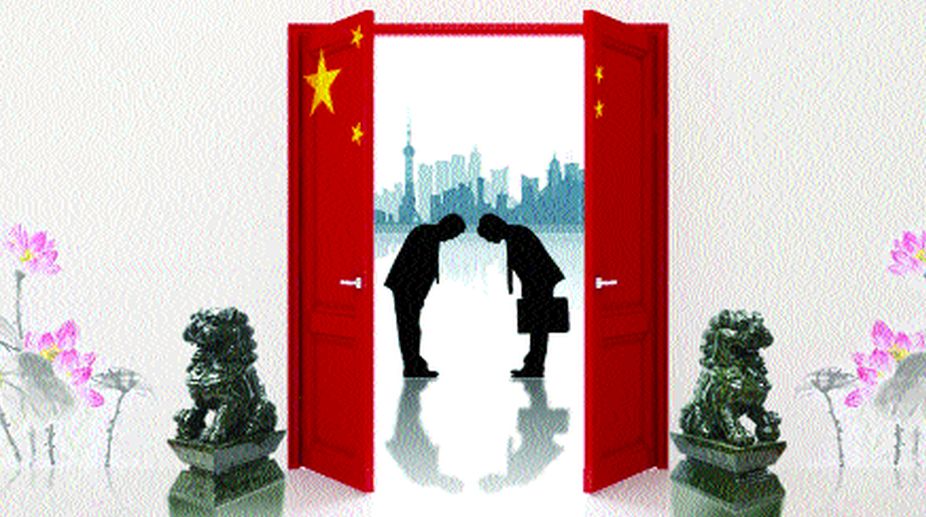
China should let HK breathe

Frank Ching |

These are dark days for Hong Kong. Its freedom index has just been further downgraded by Washington-based Freedom House to 61 points out of 100, continuing the downward spiral of recent years — a result of increasing interference by Beijing in the territory’s domestic affairs despite China’s promises of autonomy.

The abduction of Chinese billionaire Xiao Jianhua from his residence in the Four Seasons Hotel on the eve of Chinese New Year is a sign that, despite global criticism over the kidnapping of Hong Kong booksellers in 2015, Beijing continues to take actions that recklessly jeopardise Hong Kong’s status as an international financial center, damaging China’s own interests in the process.

After all, Hong Kong is still a big asset for China, for example, in helping in the internationalisation of the Chinese currency. Beijing likes to say that what’s good for China is good for Hong Kong. But it is equally true that what’s good for Hong Kong is good for China.

Many people these days are speaking up for Hong Kong. A group of China specialists, led by Orville Schell of the Asia Society and Susan L. Shirk, who served as deputy assistant secretary of state during the Clinton administration, has prepared a report on U.S. policy toward China, with recommendations for the new Trump administration.

Where Hong Kong is concerned, the task force recommends that the U.S., while recognizing Hong Kong as part of China’s sovereign territory, should also reiterate the importance it places on the full and faithful implementation of the letter and spirit of the Basic Law and the Sino-British Joint Declaration guaranteeing Hong Kong a ‘high degree of autonomy’ within the ‘One Country, Two Systems,’ formula."

The policy recommendation says: "The United States also should publicly call attention to the concerning trend of encroachment by Beijing on Hong Kong’s autonomy and should increase cooperation with the Special Administrative Region government of Hong Kong in various functional domains that can reinforce its promised degree of autonomy. The U.S. Congress should continue its tradition of issuing annual reports concerning political developments in Hong Kong and its changing relationship with Beijing."

Meanwhile, Chatham House in London issued a research paper, "The Critical Transition: China’s Priorities for 2021" — the year marking the centenary of the founding of the Communist Party of China.

In a thoughtful chapter, Tim Summers sees Hong Kong facing serious challenges with even the survival of the handover deal itself in question.

"The centre of political gravity in Hong Kong is shifting away from the mainland at the same time as their economies are increasingly intertwined," Summers argues. "The contradictions this brings will unsettle Hong Kong society further, and anti-Beijing sentiment in Hong Kong is likely to grow."

Concern about Hong Kong is also voiced by a third group, PEN America, an organization of writers, editors and publishers that supports free expression. Its lengthy document, "Writing on the Wall," examines in detail the abductions of Hong Kong booksellers in 2015, in particular, that of British national Lee Bo in Hong Kong and Swedish national Gui Minhai in Thailand.

In its conclusion, the organization asserts that "the threats to the civil and political rights of Hong Kong residents after 1997 are abundantly documented" and recommends vigorous action by various governments to publicize Chinese violations of international law.

Of course, abductions by Chinese governments did not begin with the communists. Sun Yat-sen was kidnapped in London in 1896 and imprisoned in the Chinese legation; luckily, he was rescued by British friends before he was shipped off to China to be executed. Paradoxically, Hong Kong historically provided sanctuary to dissidents and independent thinkers, from China and elsewhere. Philippine nationalist Jose Rizal, Vietnamese revolutionary Ho Chi Minh and even underground Chinese communist party members all sought, and found, refuge under the British colonial flag.

The provision of haven continued even after 1997 because of "one country, two systems." The policy recognized that Hong Kong’s value to China lay in it being different from the mainland, despite the inherent tension that is implied. After all, China’s 1.3 billion people don’t need another Chinese city. China should realize that relentless suppression is not a wise policy. A little breathing space to provide an outlet for pent-up emotions, which Hong Kong represents, is good for the country. That is to say, doing right by Hong Kong is also a plus for China. Allowing criticism — and critics — to exist in Hong Kong won China plaudits for the last two decades. Continued tolerance will gain goodwill for China, not least from Hong Kong’s many friends around the world.

China post/ann.

Stop the World, I want to get off!

Andrew Sheng |

Just under one month after Donald Trump has assumed the Presidency of the United States, the old order has been turned upside down. Most of us thought that an electoral candidate would rise to the occasion on winning, seeking reconciliation between the contending parties, smoothing ruffled feathers and then get on with the serious business of governing.

Here we have the new US President coming out with all guns blazing, changing not only policies by the tweet, but also saying that the US legal system is broken, taking on his intelligence agencies, the judiciary and his closest neighbour. The result was the judiciary firmly rejecting his travel ban, and the firing of his National Security Adviser. 

As comedian Cecily Strong of Saturday Night Live (SNL) said to Trump, “You’re doing too much, OK? I want one day without a CNN alert that scares the hell out of me.”

Time out, please.

The hit TV series West Wing is nothing compared with the Trump Reality Show, which is more like a Morality Play.  

The Trump players are so righteous in what they believe in, that they are 100 per cent sure what they are doing is right; as Presidential Senior Adviser Stephen Miller said, the President “will not be questioned.”  For the first time in world history, we have one leader connected directly and 24×7 to the whole world by tweets, so that we can all gasp at where the United States is going as a country.  

We are now in a global media feed-back frenzy that does not know how to stop.  The reason is that the President clearly tweets vigorously in response to all the media reports, and his close advisers respond with such vehemence and moral indignity that the media shoots back immediately with barrages of stories, dressed as comedy or refutation of lies and conspiracies. CNN, Saturday Night Live, New York Times and Washington Post never had such spikes in viewer ratings, all because of this feedback loop.  In between, the Trump Administration is supposed to get on with the business of governance, which was a “steady-as-she-goes” routine until he appeared.

Surprisingly, the financial markets are shrugging off all the nervous political energy with the Dow Jones reaching an all time high.  Even Janet Yellen’s hint that higher interest rates are approaching as the US economy begins to recover is treated as good news.  Furthermore, the outgoing Fed Governor in charge of pushing through the major financial reforms like Dodd-Frank is himself admitting that the regulations have inadvertently hit the community banks.  So, either the serious and smart money thinks that what is going on in Washington DC is only a blip, or they are aiming to push the market up and pull out before it all comes crashing down.

“Stop the World. I want to get off!” was a British musical first staged in 1961, becoming a Hollywood movie in 1996.  In my humble opinion, this musical is a light-hearted but important supplement to George Orwell’s book, “1984”, published in 1949 shortly before the author’s premature death. The book has become hot-selling again, as people are trying to think through how to deal with the theme of government as Big Brother.  

“1984” was influential because Orwell was ruthlessly honest about the powerlessness of the small man within big government.  He introduced new words like “Doublethink means the power of holding two contradictory beliefs in one’s mind simultaneously, and accepting both of them”.   Orwell was the author also of the famous satire, “Animal Farm” which introduced the phrase, “all animals are equal, but some are more equal than others.”

Sounds familiar?

“Stop the World” is about the whole life story from beginning to end of a man called Littlechap, who starts out poor and then becomes rich and successful, eventually becoming elected to public office.  In between, he gets involved with various women – Russian official Anya, German domestic Ilse and American blond cabaret singer Ginnie. 

The songs in this musical by the British award-winning team of Leslie Bricusse and Anthony Newley are eerily evocative of what is happening before our very eyes.  They were responsible for the music and lyric for famous movie theme songs such as Goldfinger, You Only Live Twice and Willy Wonka & The Chocolate Factory.

After an introductory ABC Song, the second song is “I want to be Rich”, followed by “Welome to Sludgepool”, “Gonna Build a Mountain” and then “Glorious Russian” and “Family Fugue”.   Act II starts off with “All-American”, followed by the hit, “Once in a Lifetime”.

The lyrics of the last song, entitled “What kind of fool am I?”, made famous by the hit singer Sammy Davis Jr. say it all.
 
What kind of fool am I
Who never fell in love
It seems that I’m the only one
That I have been thinking of
What kind of mind is this
An empty shell
A lonely cell
In which, an empty heart must dwell
 
What kind of clown am I?
What do I know of life?
What can’t I cast away this mask of clay
And live my life
Why can’t I fall in love
Like any other girl
And maybe then I’ll know
What kind of fool am I?
 
What kind of lips are these?
That lie with every kiss
That whisper empty words of love
That left me alone like this
What cant I fall in love
Like any other girl
And maybe then I’ll know
What kind of fool am I?”

A morality play is unfolding before our very eyes.  Whether it is satire, comedy, farce or tragedy, we simply have to watch it with our eyes wide open.
 
The writer, a former Central banker, comments on global affairs from an Asian perspective.

Special to ANN. 

Post-Truth Europe ~ I

Arunabha Bagchi |

The Oxford dictionary has decided to anoint “post-truth” as the word of the year 2016. The dictionary defines this as “relating to or denoting circumstances in which objective facts are less influential in shaping public opinion than appeals to emotion or popular beliefs.” The usage of the word increased dramatically after the Brexit vote in the United Kingdom and the election of Donald Trump as the Republican nominee in the US presidential election in the summer of last year. Two canonical examples cited by the liberals as “post-truth” are the claim of the Brexiteers that 350 million pounds that the UK contributes to the EU budget every day would be used to improve the National Health Service if the UK withdrew from the EU, and the other was the deliberate silence of Donald Trump when asked about the innuendo that Barack Obama was actually born outside the US, and therefore became the US President illegally.

These were just two of a series of statements by politicians to circumscribe obvious facts by appealing to prejudices of the electorate to achieve their goals and the “post-truth” world became a full-fledged reality in the West. Since India lies beyond the radar of the western intellectuals and analysts, they failed to realize that the “post-truth” world was actually born two years earlier in India with the campaign of the BJP during the parliamentary election of 2014.

After Oxford dictionary’s decision to term “post-truth” as the word for 2016, numerous articles appeared in major international media around the turn of the calendar year on this topic. Cheap philosophical discussions ensued, with Plato and Nietzsche taking the centre stage. Plato’s theory of forms was portrayed as conceptualizing “the truth”, the first attempt towards a theory of knowledge. Eminent philosophers since then developed their own versions of the theory of knowledge, which finally led to Immanuel Kant’s revolutionary idea that we never could know “things-in-themselves”, but only refected through causality, possibility, necessity etc that he called categories. The Plato-Kant paradigm was to know the truth as an eternal and unchangeable concept. This illylic idea was shattered by Frederische Nietzsche when he argued that truth was a function of power ~ the power to dominate the thinking of others. Coupling truth with power changed the western philosophy forever. The key concept was “contingency”, and Nietzsche argued that “truth was relative to the perspective of the truth-seeker.” This meant, in essence, that there were many “truths”, and the concept of “one truth” was a fiction. The fractured truth put the idea of God on a shaky foundation and morality lost its moorings in the West. This actually excited Nietzsche, as he thought that this would work against the herd mentality of people and they would have to “create” their own morality.

Nietzsche dominated western philosophy, both from the right and from the left, throughout the last century. Then towards the turn of the century the American philosopher Richard Rorty developed a theory of an ideal society where multiple truths was the norm. The key is intellectual humility and the need of conversation to reach a consensus. He argued that the political and intellectual elite are still trapped in the Enlightenment mindset and think that “we can discover the truth, provided we use our reason the right way. Whoever does not manage to get at the truth simply hasn’t been using their God-given intellect the right way, and therefore needs to be Enlightened.” Rorty predicted catastrophic consequence of this attitude in the post-Enlightenment world of Nietzsche. He argued in Achieving Our Country that ordinary people not sharing the “truth” of the political and intellectual elite would elect a “strongman” and “all the political correctness the academic left had been trying to build for decades would come flooding back as discrimination, stronger and ruder than ever.”

It took only eighteen years for his prophecy to become reality with the election of Donald Trump as the President of the United States. In fact, it was already realized two years earlier with the overwhelming victory of Narendra Modi in India. The fragmentation of truth was atomized with the advent of social media like Facebook and Twitter and the “post-truth” world became the reality in India, even before it took decisive hold in the West during the unstoppable election campaign of Donald Trump.

Now “post-truth” is threatening Europe as three major national elections are coming up there within the next eight months. Let us start with the election in the Netherlands, a small but significant country situated between Germany and the United Kingdom. The Dutch have a liberal tradition going back for centuries and they were a founding member of the European Union. In a way, they are the bridge between the Continental Europe and the Anglo-Saxon world. They had traditionally three major parties, the center-right Liberal Party, the centrist Christian Democrats and the center-left Labor Party. A decade ago the exterme right of the Liberal Party split under the leadership of Geert Wilders with the same isolationist and rabid anti-Muslim message as that of Donald Trump long before he came to the political scene. The Netherlands has parliamentary democracy and proportional representation. Coalition is a must to form a government there. As per convention, the Queen asks the party with the largest percentage of votes to start the coalition deliberation. With the Christian Democrats and Labor Party steadily losing their support, despite veering to the right, the PVV party of Geert Wilders has now become the largest party in the Netherlands in all opinion polls. At first it was considered the voice of protest in between two elections. The belief was that at the polling booth the level headed Dutch would still refrain from voting for PVV. This time it is different. With Brexit and victory of Donald Trump, Wilder’s support has solidified and there is real panic among the traditional political parties. There are behind the scene campaigns for supporters of all center/center-left parties, including the Greens, to vote for the Liberal Party just to thwart Wilders from getting the highest perccentage of votes. The whole of Europe is watching.

(To be concluded)

Manipur polls

Editorial |

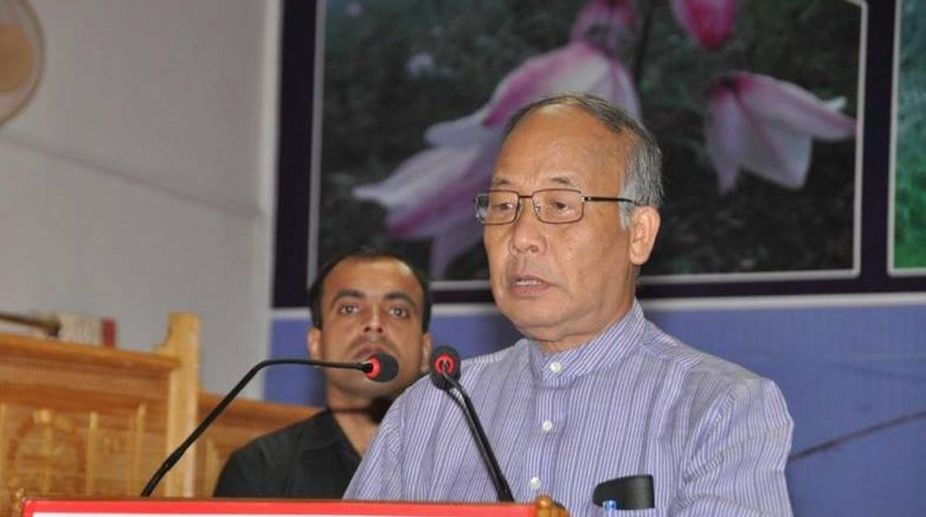
Prime Minister Narendra Modi is scheduled to address an election meeting in Imphal on 25 February. So confident is he of dumping Congress chief minister Okram Ibobi Singh’s 15-year-rule that he might even promise the Manipuris another visit to Imphal next month to personally convey his gratitude to them for reposing their faith in the BJP for the first time. The party kickstarted its election campaign as early in September last year and has been able to incite disaffection among smaller parties as well as the ruling Congress. At least eight out of ten, including a former Samata Party-led chief minister, Radhabinod Koijam, reportedly switched over. Not surprising though, because nowhere is the phenomenon of defection so acute as in that state. Before Ibobi took over in 2002, the state was run mostly by rag-tag parties.

The Centre is apparently unhappy with the Ibobi government over its failure to end the indefinite economic blockade of the state’s two vital national highways, imposed by the Manipur-based, pro-NSCN(IM) United Naga Council since 1 November last year. This is in protest against the chief minister’s decision to meet the Kukis’ three-decades-old demand for upgradation of Kangpokpi sub-division, in the Naga-majority Senapati district, to a separate revenue entity. On the night of 8 December 2016, Ibobi took the wind out of the sails of the UNC by creating seven new districts. In the 2012 assembly election Ibobi came to power riding on the popularity he had earned in May 2010 when he successfully blocked NSCN(IM) general secretary, Thuingaleng Muivah’s bid to enter Manipur to visit his native 
village Somdal in Ukhrul district. Next month, Ibobi faces yet another crucial popularity test over his bold decision on the new districts. 

Podium protection

Editorial |

Legislators often seek the “protection” of the Chair when they are interrupted or heckled while exercising their right to unfettered expression of opinion in Parliament or the state Assemblies. And though those institutions are frequently hailed as “temples” or “shrines” of democracy, the sad reality is that now there appears there is need for physical protection of the “Chair”. Those entrusted with designing and “fitting out” the new (temporary) chamber of the Andhra Pradesh legislature are making a determined effort to make it difficult for agitated legislators to surround the presiding officers, pressure them. The podium at the interim secretariat at Velagapudi (20 km from Vijayawada) will be over six-and-a-half feet above the “floor” of the House. And while, as is customary, there will be stairs on both sides of the podium, there will also be wooden railings that can serve as barricades, and positions earmarked for marshals to keep unwanted persons a safe distance away. Obviously lessons have been learnt from unhappy experience (in various legislatures) of angry MLAs/MPs surrounding the Chair, tearing and throwing papers. The chamber of the apex legislature has also been witness to members “getting physical”, not stopping at waving placards, and on one occasion a member used pepper-spray against his opponents ~ and that came during Andhra-related turmoil.

Those measures, and a sophisticated sound-system, which can be de-activated at the discretion of the Speaker, could help in maintaining order in the House. Yet recourse to such measures only emphasises the pathetic state of institutions of the democracy. What next: bullet-proof glass shields to keep the Speaker/ministers safe? Fencing to keep Treasury and Opposition members apart? More “empowered” marshals and frequent orders from the Chair to evict unruly members? Yet the ugly stand-off in the legislatures is only a realistic reflection of the divisions in the body-politic, it is a matter of “us” versus “them”. There is very little of the “collective wisdom” of the House being brought to bear on any issue, and the government being willing to accept suggestions from across the floor. And when there is consensus on a legislative proposal there is a tendency for it to be approved “without discussion” ~ as if that were a matter for pride. Keeping the Chair “safe” actually articulates the danger facing the system of parliamentary democracy.
 

Born-again Kalimpong

Editorial |

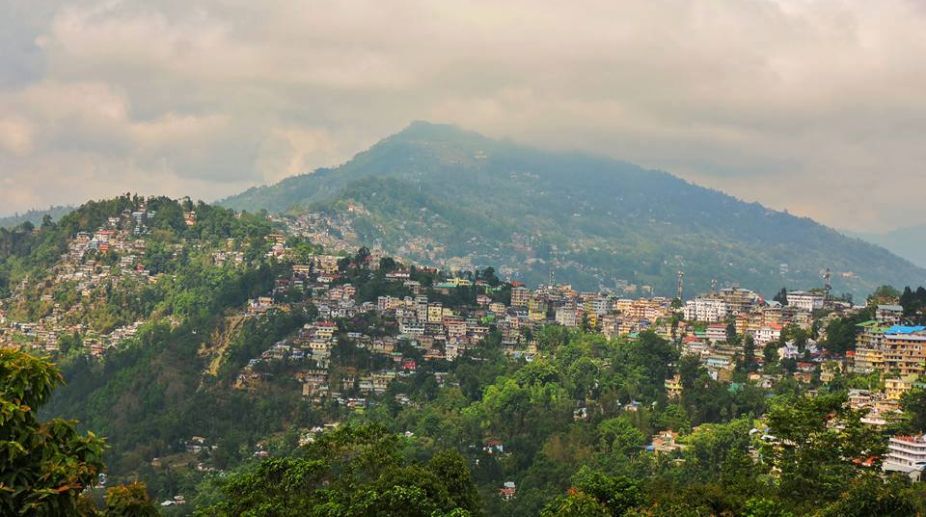
The upgrade of Kalimpong as West Bengal’s 21st district is much more than a mere extension of the loop of governance as an imperative for administrative exigence. For the delightful hill station, it is a watershed development after its annexation by the British on 6 December 1864. Last Tuesday, it was a born-again Kalimpong on the state’s map as the sub-division and headquarters of an army division emerged from the shadow of Darjeeling, as often as not overbearing and for the past three decades an occasionally turbulent part of Bengal. Small wonder that the status of a district after 152 years was quite the most emotive feature of the grandstanding. It ought to be fairly convenient to administer Kalimpong ~ a new DM and SP have already assumed charge ~ not least because as a district it boasts the thinnest population in the country ~ barely 49,403 according to the 2011 Census, against Darjeeling’s 9.37 lakh. The crippling water scarcity needs urgently to be addressed. Not that the size and population of Darjeeling had become unwieldy over time; by sanctioning a full-fledged district, the state government has deferred to ethnic sensitivities. One must give it to the Chief Minister that she has gone beyond the formation of development boards for Lepchas (the original settlers), Bhutias, Tamangs, Sherpas, and Limbus. It would be less than fair to debunk the initiative as an attempt to neutralise the Gorkhas. The experiment will hopefully lend a sharper focus to hill development, though the importance of a holistic exercise cannot be discounted.

There is without question a flip side to what Mamata Banerjee calls a “Valentine’s Day gift” to the people of Kalimpong. Markedly, she has tempered the ha-ha with an oblique warning to the Gorkha Jan Mukti Morcha and its ally, the Bharatiya Janata Party, not to “indulge in arson and violence” over statehood… without giving the Gorkha Territorial Administration an opportunity to function as an exercise in loose federalism. Of course, the GJMM has an almost historical grouse, chiefly pertaining to exploitation by the plains. Ergo, it is hard not to wonder whether a critical compulsion was to undercut the virulence of the statehood movement, now being spearheaded by the GJMM. There is little doubt that the carving out of Kalimpong as a district in its own right is intended to take the wind out of the GJMM sails. For the sparse population of Kalimpong, which does include the Gorkhas, the formation of a district does signify a policy of appeasement. Ethnic unity must be maintained despite the multiplicity of ethnic groups, and the message must resonate across the hills of Darjeeling in the wider canvas. Succinctly, this is also the lesson to be drawn from a born-again Kalimpong.

Fearless by nature

Khalid Kumbhar |

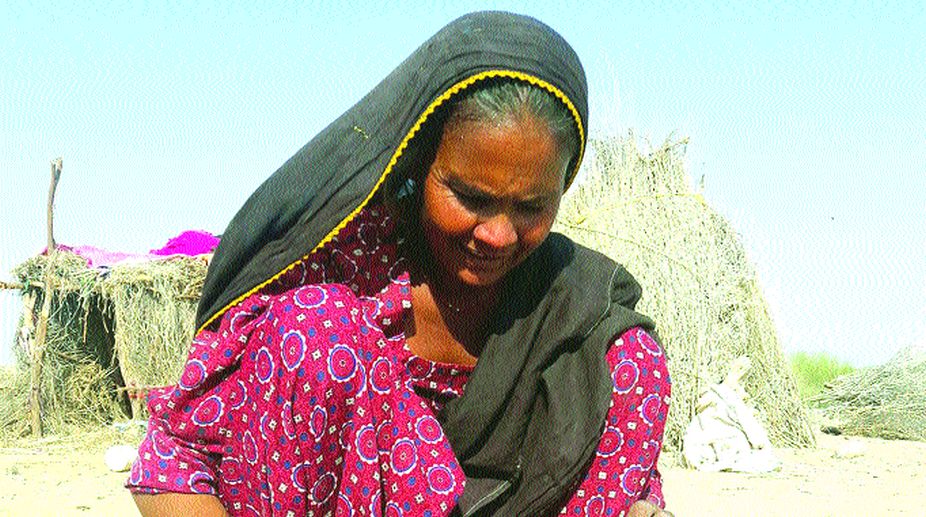
From inside a straw hut she had built, Meeran pulled out a small, woven basket and opened the lid covered in a swatch of azure blue fabric. With quick, nimble fingers she nudged the coiled cobra sleeping in the folds of a dusty pale cloth. The four-foot-long snake rose up, and, displeased at being awakened, began to sway, spreading its hood. Its eyes were level with Meeran’s steady gaze.

I was in Sobharo Shah, a small village 50 kilometres from Mithi, the capital of the Tharparkar district in Sindh. Sobharo Shah is one of the many small settlements in the vast desert where Meeran and her nomadic Jogi tribe live.

The Jogis make a living working the land during harvest season, earning a tidy sum in the process. During the rest of the year though, they trek by foot in the Tharparkar desert, performing snake shows and selling handicrafts. They can be identified by the quilted bags slung on their shoulders, in which they carry cobras and the snake charmer’s flute, a been.

As an anthropologist from Tharparkar who has worked with the Jogis, I had heard about a female snake charmer – the first female jogi or jogan, a fearless woman who had caught some of the finest cobras. My search for her had begun in Mithi.

“The jogan lives in the village by the tube well,” said the locals I met by the roadside, as I drove along the endless sand dunes of Tharparkar with my photographer. It was wintertime, and the temperatures during the day were a comfortable 25 degrees Celsius. The nights were cooler.

From the beginning

Amid a cluster of small huts made of mud and straw, we found Meeran, 50, tending to her two goats and cow. She was friendly. A smile broke out on her face, as we came closer.

She laid down a rilli, a handmade patchwork quilt, that was much too small for all of us, so we ended up sitting on the sand. In the winter chill, the grains felt biting cold on the palms of my hands. Meeran seemed perfectly at ease.

Locals walked past us, wrapped in black shawls shot through with glowing coloured thread. Meeran stood out among them – she was dressed simply in an ajrak print ghagra and a top called a polka. Around her neck was a beaded necklace, and on her finger was a dull gold ring. She lit a cigarette and called to her daughter to bring tea. Smiling, she began her story.

“My husband was a Jogi, but he was afraid to touch the cobras,” said Meeran. “Whenever he ventured into the desert to catch snakes, he would take me along.”

Upon spotting a burrow, her husband would lure out the cobra, using the techniques the Jogis have perfected over generations. When the snake would surface out of the pit, he would pin its head down with a stick – and then call his wife. Meeran would reach over and grab the cobra with her bare hands and help place it in a basket.

After her husband died in 2007 from a heart attack, Meeran decided to continue catching snakes. But her first chance came two years later.

Meeran was working in the cotton fields with her daughter when a snake slithered past the daughter’s foot. “All the workers ran away from the field,” Meeran told me. Terrified, her daughter kept exhorting Meeran to get away. Meeran had another idea: “I wanted to keep the cobra.”

Breaking a branch from the nearest tree, Meeran followed the snake’s trail. Snakes are at an advantage in the sand, which allows them to move faster and disappear easily into the shifting earth. But there was no sand here, only a river nearby and the stony ground. Meeran soon caught up with the cobra.

Pinning its head to the ground with the branch, she lifted it with her hands. Her daughter screamed and begged her to drop the serpent. Other workers stood around stunned. Meeran took her quilt bag and, placing the cobra inside, hung the satchel from a tree branch.

She then calmly resumed her work in the field. Later, she took the cobra home and kept it in the basket that once belonged to her husband.

Meeran’s fearlessness was evident on the day we met.

The cobra in the basket was a recent catch and easily provoked. It shared the basket with some gems, trinkets and a small smooth stone called a mann.

The mann, the Jogis believe, has powers to heal. It is formed when the sand accumulating in the belly of the snake mixes with its poison. Snake bites are often treated by placing the mann on the wound, which “sucks the poison out of the body”.

Meeran slowly began to push the cobra back down into the basket. There was a second, younger snake in the quilt bag, she told us. “If the basket is left open, the cobra will eat the younger snake.”

Everything in the basket was for sale, other than the cobra and the mann, Meeran said, as she closed the lid, the cobra retreating into the basket.

I had spent years following the Jogis, writing about their culture and lives. But there was still much about their rituals and beliefs that remained mysterious.

On Meeran’s forehead, for instance, was a tattoo of a celestial body, which she said was the moon. To my eyes, it appeared like a star. On each of Meeran’s eyebrows was a tattooed line. She would not tell me their meaning, other than saying that the heavens were an inextricable part of the Jogis’ belief system.

Life had not been easy for Meeran. She had seven daughters and one son. Two of her daughters – both married within the community – had been abandoned by their husbands, a common occurrence among the Jogis.

There was no ostensible reason for the abandonment, said Meeran. “There are a lot of problems in our homes. But we seldom go to the police. We try and solve the issues amongst ourselves.” Meeran’s daughters had moved back in with their mother. As we were chatting, her youngest daughter, a 20-year-old, came to sit by her side. I asked the young woman if she had ever tried to catch a snake. “No,” she replied. “Even my brother cannot catch snakes. It is very dangerous.” Meeran smiled.

It was this past fall that Meeran became really famous. She had moved to Nagarparkar, near River Hakra in Tharparkar district. She was busy setting up her straw home when a cobra appeared. There were many Jogis present, but no one had a stick to pin the snake down. It was a large-sized serpent, more than five feet long. The Jogis there decided it was dangerous and futile to catch it. Meeran disagreed.

She asked a Jogi to play the been before the cobra. The snake paused. No one dared approach it. Meeran crawled up stealthily from behind and caught the cobra by its head with her hands. “I felt immense pride that day, being a woman amongst all the snake catchers. I felt I had proven myself to the community.”

The women of the Jogi tribe mostly tend to crops and the home. At times, they go out begging. Catching and training snakes was the men’s domain. The harvest season in Tharparkar was coming to an end. The Jogis were going to migrate again soon. Meeran’s family would join the caravan, taking along their goats and cow.

Along the way, the Jogis would look out for snakes. Meeran was hoping to catch a big cobra for herself. “The cobra is our identity,” Meeran said, with a smile, taking a deep puff of her cigarette.

dawn/ ann

Building peace

Abha Sharma |

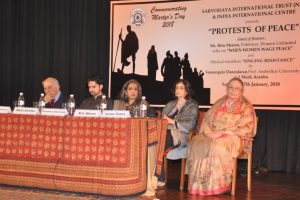
War destroys, divides… homes, hearts, and relationships. The world today is in the throes of various conflicts and crisis, which has rendered hundreds of millions homeless and also virtually robbed them of a decent future. Women and girls are among the worst affected, often used, abused or left behind to pick up the pieces. Yet, when it comes to having a stake – and say – at the peace table, they are completely sidelined. Recently, resolute female voices from different strife-torn regions came together at the Jaipur Literature Festival to share some agonising experiences and ideas on building peace.

During the session ‘Women Waging Peace’ feminist activist Ruchira Gupta led the discussion that included Assamese writer and head of the Assam Sahitya Sabha, Dhruba Jyoti Borah, Kashmiri poet Naseem Shafaie and Dr Ornit Shani, a well-known political historian and lecturer at the University of Haifa, Israel.

Sharing her observations on Israeli women’s participation in the peace process in what can only be described as one of the most violent regions in world Dr. Ornit Shani said, “The interesting thing about our movement is that it is successfully bringing closer women of all ages and ethnic and religious backgrounds – Palestinian-Jewish, orthodox-secular, Muslim-Christians, Russians, grandmothers, daughters – from the margins of the peace discourse to the centrestage. We are training women [to have a voice] like never before.” 

According to Dr. Shani, the idea behind having all the different voices on the peace table is to be able to change the approach with which the entire process is dealt. “Our mission is to transform the discourse in two ways—by highlighting the fact that the world wants peace and focusing on security. Here, security is measured on the scale of not how many missiles or aircrafts one has amassed but in terms of social security, personal security and economic employment security,” she asserted. 

Recalling her stint in the UN where she worked in conflict-hit areas for over a decade, Gupta stated that one of the reasons why women are the worst sufferers of war is because they are forced to grant sexual favours to soldiers, often referred to as “sugar daddies”, who are actually supposed to ensure their safety. Moreover, it’s not uncommon to find women being trafficked from these areas or brothels coming up in “absolutely normal looking households”. The very purpose of creating a UN Gender Task Force was to deal with such adverse situations and pay special attention to women and ensure that they are have a stake in peacekeeping. “Creating such platforms is crucial as very often women’s voices are neglected and negotiating peace remains the job of men.  As mothers, wives and daughters, women have a longer term interest in peace,” she pointed out.  

In 2000, the United Nations Security Council had acknowledged the need for women’s participation in negotiating peace, which resulted in the creation of Resolution 1325 to address the impact of war on women and the significant role they need to play in conflict management and achieving peace. “As the mother of an 18 year old in active military service, I publicly went on television to question my government’s decision to embark on a military operation, especially entering into Gaza in the summer of 2004. More than 2,000 people were killed in just a few weeks. Many more thousand Palestinians were rendered homeless. At the time, in retaliation, 4,000 rockets were fired from Gaza. Such mindless violence didn’t make sense to me as a woman and as a mother so I launched an initiative, Mother’s Asking,” Dr Shani shared.

On the heels of her intervention, other women’s groups, too, came up with similar projects. “During an interaction of a group of Israeli Palestinian and Jewish Israeli women, it became clear to everyone that there was no choice but to fight for peace. So jointly decided to set up a movement, Women Waging Peace,” she added.

Incredibly, the March of Hope these women conducted, initially in November 2014 after the war and later on in October 206 from the north of Israel to Jerusalem was a resounding success. “It was extraordinary to witness the determined women trudge 240 kilometres to demand peace. We are out there, doing what it takes, to change the political language to usher in peace,” she revealed. At the time, Dr Shani had contemplated embarking on a hunger strike to make a point and she was deeply moved when a Palestinian woman (whose son was in Gaza) expressed her wish to join her.

“Only mothers who lose their children know how war ruins lives and households,” reiterated Gupta, “Jumping into bunkers, shifting from here to there leads us nowhere.”

The Middle East has been living through an inter-generational crisis brought on by a fight for land and identity, something that states in north east India are only too familiar with. Dhruba Jyoti Borah has seen from close quarters the devastation unleashed by over two decades of ethnic insurgencies and armed struggle. “One girl from Udalguri district in Assam, who was sexually assaulted during ethic clashes and whose parents were shot dead, joined a rival insurgent outfit. She became a very tough instructor, training soldiers of hate. However, after facing many ups and downs, she realised that violence can never be the answer and she gave up that life. Instead, she became an entrepreneur, employing 200 women. These days, she’s become a very important part of the peace negotiation process between the state administration and the insurgent groups. She is a remarkable example of the kind of change that women are capable of bringing not just in themselves but in their community as well,” he narrated.

As someone who has grown up in the shadow of war Kashmiri poet Naseem Shafaie has used a creative medium to give vent to her feelings. Shafaie, who has been a teacher, recalled how her journalist husband was shot five times. “He survived that vicious attack but life generally gets derailed by such experiences,” she said. Fortunately, she found solace in poetry. For her, it “can play an important role in creating peace and keeping the hope of peace going”.

Women may largely be ignored by political establishments and their efforts towards peace may remain unknown and unsung but that has never stopped them from trying to join hands and find a common ground to put an end to bloodshed and war mongering. Whether in Assam or Kashmir in India or Haifa in the Middle East, they have shown how words and gestures of peace will definitely outlast the guns. 

women’s feature service

India may meet its energy needs from moon by 2030

IANS | New Delhi |

India may be able to meet all its energy requirements from resources on the moon by 2030, a scientist associated with the ISRO said on Saturday.

Sivathanu Pillai, a distinguished professor at the Indian Space Research Organisation (ISRO), said here that India's all energy requirements can be met through Helium-3 mined from the moon.

"By 2030, this process target will be met," Pillai said while delivering the valedictory address at the three-day ORF-Kalpana Chawla Space Policy Dialogue, organised by Observer Research Foundation.

Pillai, a former chief of BrahMos Aerospace, said mining lunar dust, which is rich in Helium-3 is a priority programme for the ISRO.

According to an ORF release, Pillai said other countries are also working on the project and there is enough helium on the moon, which can meet the energy requirements of the world.

"In a few decades, people will be going to the moon for honey-moon," Pillai quipped.

Lt. Gen. P.M. Bali, Director General, Perspective Planning, Indian Army, said the launch of GSAT-7, India's first dedicated military satellite, is a testimony to the country's outlook towards using the outer space for national security.

He noted that India possesses one of the largest constellations of communication and remote sensing satellites covering Asia Pacific.

Lt. Gen. Bali said although India continues with a civilian orientation to its space programme, the changing regional and global realities require it to also develop military assets in space and on ground as an emerging regional and global power.

He said there is a need for a dedicated military space programme with adequate resources at its disposal because of "the changing realities in our neighbourhood".

India, Portugal to operationalise Social Security Act soon

Ashok Tuteja | New Delhi |

India and Portugal have decided to bring the Social Security Agreement (SSA) between them into force in a move that protect the interests of Indian professionals and skilled workers employed in the European nation.   

The SSA was signed by the two countries on 4 March 2013,  in New Delhi. On 7 February, Portugal, on completion of the relevant constitutional and legal formalities, conveyed to the Indian side that it was ready to bring the SSA into force.

As per Article 22 of the SSA, the SSA would come into force 90 days following the date of receipt of notification of completion of internal formalities by the respective parties. Accordingly, the SSA between the two countries would come into force on8 May, an MEA press release said.  The SSA with Portugal will provide the following benefits to Indian nationals working in Portugal:

  • For short term contract, up to 5 years, no social security contribution would need to be paid under the Portuguese law by the detached workers provided they continue to make social security payments in India. The benefits shall be available even when the Indian company sends its employees to Republic of Portugal from a third country;
  • Indian workers shall be entitled to the export of the social security benefit if they relocate to India after the completion of their service in Portugal. Self-employed Indians in Portugal would also be entitled to export of social security benefit on their relocation to India; and
  • The period of contribution in one contracting state will be added to the period of contribution in the second contracting state for determining the eligibility for social security benefits.

As on date, India has signed and operationalised "comprehensive” SSAs with 17 countries ~ Australia, Austria, Belgium, Canada, Czech Republic, Denmark, Finland, France, Hungary, Japan, Luxembourg, Netherlands, Norway, Portugal, Sweden, Switzerland and South Korea. India also has an SSA with Germany, which is in the process of getting operationalised.

The SSA between India and Portugal when operational will favourably impact the profitability and competitive position of Indian and Portuguese companies with foreign operations in either country by reducing their cost of doing business abroad.  The SSA will also help promote more investment flows between the two countries.

India, Portugal to operationalise Social Security Act soon

Ashok Tuteja | New Delhi |

India and Portugal have decided to bring the Social Security Agreement (SSA) between them into force in a move that protect the interests of Indian professionals and skilled workers employed in the European nation.   

The SSA was signed by the two countries on 4 March 2013,  in New Delhi. On 7 February, Portugal, on completion of the relevant constitutional and legal formalities, conveyed to the Indian side that it was ready to bring the SSA into force.

As per Article 22 of the SSA, the SSA would come into force 90 days following the date of receipt of notification of completion of internal formalities by the respective parties. Accordingly, the SSA between the two countries would come into force on8 May, an MEA press release said.  The SSA with Portugal will provide the following benefits to Indian nationals working in Portugal:

  • For short term contract, up to 5 years, no social security contribution would need to be paid under the Portuguese law by the detached workers provided they continue to make social security payments in India. The benefits shall be available even when the Indian company sends its employees to Republic of Portugal from a third country;
  • Indian workers shall be entitled to the export of the social security benefit if they relocate to India after the completion of their service in Portugal. Self-employed Indians in Portugal would also be entitled to export of social security benefit on their relocation to India; and
  • The period of contribution in one contracting state will be added to the period of contribution in the second contracting state for determining the eligibility for social security benefits.

As on date, India has signed and operationalised "comprehensive” SSAs with 17 countries ~ Australia, Austria, Belgium, Canada, Czech Republic, Denmark, Finland, France, Hungary, Japan, Luxembourg, Netherlands, Norway, Portugal, Sweden, Switzerland and South Korea. India also has an SSA with Germany, which is in the process of getting operationalised.

The SSA between India and Portugal when operational will favourably impact the profitability and competitive position of Indian and Portuguese companies with foreign operations in either country by reducing their cost of doing business abroad.  The SSA will also help promote more investment flows between the two countries.