Logo

New Zealand, New Caledonia qualify for FIFA U-17 World Cup

New Caledonia qualified with a 3-2 win over Solomon Islands.

PTI | New Delhi |

New Zealand and New Caledonia will represent Oceania at the Under-17 Football World Cup to be held in India in October after the pair won their respective semifinals at the OFC Championship in Tahiti.

It was a history-making occasion for New Caledonia which will take part in their first ever FIFA tournament. New Zealand, meanwhile, will be featuring in their sixth successive FIFA U-17 World Cup.

New Caledonia qualified with a 3-2 win over Solomon Islands while defending champions New Zealand beat Papua New Guinea 2-1.

New Zealand is coached by former international and Leeds United defender Danny Hay.

Besides hosts India, four Asian countries — Iran, Iraq, Japan and North Korea — have already qualified for the third most important FIFA tournament to be competed among 24 teams.

The 2017 FIFA U-17 World Cup will be held in six Indian cities — New Delhi, Kolkata, Guwahati, Navi Mumbai, Margao and Kochi — from October 6-28.

Stress trigger epileptic seizures

PTI | Washington |

Sleep deprivation and stress are the major triggers of seizures, according to a new study that tracked epilepsy patients using a smartwatch app.

The study, that was carried out in the span of 10 months, had 598 people sign up to track their seizures through an smartwatch app called EpiWatch.

When participants felt a seizure aura starting, they opened the app. Using the smartwatch's sensors, the app recorded participants' heart rate and movements for 10 minutes.

The app asked them to perform tasks to test responsiveness. After the seizure ended, participants were given a brief survey about seizure type, aura, loss of awareness and possible seizure triggers.

"The data collected will help researchers better understand epilepsy, while helping people with epilepsy keep a more complete history of their seizures," said Gregory Krauss, from Johns Hopkins University in US.

"The app also provides helpful tracking of seizures, prescription medication use and drug side effects – activities that are important in helping people manage their condition," Krauss said.

In all, 40 per cent of the group tracked a total of 1,485 seizures, with 177 participants reporting what triggered their seizures.

Stress was the most common trigger, linked to 37 per cent of seizures. Participants also identified lack of sleep as a trigger for 18 per cent of the seizures.

Menstruation, overexertion, diet, missed medication and fever or infection were other triggers, according to the study.

It was also noted that seizure triggers did not vary by the type of seizure people had.

"Seizures are very unpredictable. Our eventual goal is to be able to use wearable technology to predict an oncoming seizure.

"This could potentially save lives as well as give people with epilepsy more freedom. The data collected in this study helps us take a step in that direction," said Krauss.


Stress trigger epileptic seizures

PTI | Washington |

Sleep deprivation and stress are the major triggers of seizures, according to a new study that tracked epilepsy patients using a smartwatch app.

The study, that was carried out in the span of 10 months, had 598 people sign up to track their seizures through an smartwatch app called EpiWatch.

When participants felt a seizure aura starting, they opened the app. Using the smartwatch's sensors, the app recorded participants' heart rate and movements for 10 minutes.

The app asked them to perform tasks to test responsiveness. After the seizure ended, participants were given a brief survey about seizure type, aura, loss of awareness and possible seizure triggers.

"The data collected will help researchers better understand epilepsy, while helping people with epilepsy keep a more complete history of their seizures," said Gregory Krauss, from Johns Hopkins University in US.

"The app also provides helpful tracking of seizures, prescription medication use and drug side effects – activities that are important in helping people manage their condition," Krauss said.

In all, 40 per cent of the group tracked a total of 1,485 seizures, with 177 participants reporting what triggered their seizures.

Stress was the most common trigger, linked to 37 per cent of seizures. Participants also identified lack of sleep as a trigger for 18 per cent of the seizures.

Menstruation, overexertion, diet, missed medication and fever or infection were other triggers, according to the study.

It was also noted that seizure triggers did not vary by the type of seizure people had.

"Seizures are very unpredictable. Our eventual goal is to be able to use wearable technology to predict an oncoming seizure.

"This could potentially save lives as well as give people with epilepsy more freedom. The data collected in this study helps us take a step in that direction," said Krauss.


2nd ODI: Taylor smashes ton as New Zealand beat South Africa

Taylor scored an unbeaten 102 runs as New Zealand beat South Africa by six runs in the second ODI.

IANS | Christchurch |

New Zealand defeated South Africa by six in the second One-Day International (ODI) at the Hagley Oval here on Wednesday.

New Zealand's veteran batsman Ross Taylor got to a record 17th ODI century off the last ball of the New Zealand innings before the bowlers did the needful to stop the Proteas six runs short.

Taylor scored an unbeaten 102 to help New Zealand post 289/4 after they opted to bat. South Africa came within sniffing distance, thanks to a late 26-ball half-century from Dwaine Pretorius, but eventually finished on 283/9.

Taylor had shared the New Zealand record of 16 ODI centuries with Nathan Astle, and had been in a rich vein of form since returning from eye surgery in early January. 

On his way to his century, Taylor also became only the fourth New Zealander to score 6,000 ODI runs.

He received excellent support from the skipper Kane Williamson and Jimmy Neesham. Neesham scored an unbeaten 71, while Williamson notched up 69.

Chasing a competitive total, many South African batsmen — including Quinton de Kock (57) and AB de Villiers (45) — made good starts but were unable to go on and anchor the innings. As a result, South Africa looked out of the competition at 214/8, but Pretorius gave New Zealand some nervous moments, helped by mis-fields and poor bowling at the death.

The third ODI will be played in Wellington on Saturday.

2nd ODI: Taylor smashes ton as New Zealand beat South Africa

Taylor scored an unbeaten 102 runs as New Zealand beat South Africa by six runs in the second ODI.

IANS | Christchurch |

New Zealand defeated South Africa by six in the second One-Day International (ODI) at the Hagley Oval here on Wednesday.

New Zealand's veteran batsman Ross Taylor got to a record 17th ODI century off the last ball of the New Zealand innings before the bowlers did the needful to stop the Proteas six runs short.

Taylor scored an unbeaten 102 to help New Zealand post 289/4 after they opted to bat. South Africa came within sniffing distance, thanks to a late 26-ball half-century from Dwaine Pretorius, but eventually finished on 283/9.

Taylor had shared the New Zealand record of 16 ODI centuries with Nathan Astle, and had been in a rich vein of form since returning from eye surgery in early January. 

On his way to his century, Taylor also became only the fourth New Zealander to score 6,000 ODI runs.

He received excellent support from the skipper Kane Williamson and Jimmy Neesham. Neesham scored an unbeaten 71, while Williamson notched up 69.

Chasing a competitive total, many South African batsmen — including Quinton de Kock (57) and AB de Villiers (45) — made good starts but were unable to go on and anchor the innings. As a result, South Africa looked out of the competition at 214/8, but Pretorius gave New Zealand some nervous moments, helped by mis-fields and poor bowling at the death.

The third ODI will be played in Wellington on Saturday.

Man jailed in UK for live-streaming court case

PTI | London |

A man who filmed and live-streamed a court case on to Facebook in the UK has been jailed for 28 days for contempt of court.

David Davies, 39, broadcast the footage while a person gave evidence at Cardiff Crown Court in Wales on Monday.

He was arrested when he returned to the court on Tuesday.

A judge sentenced him for contempt of court later that day, the BBC reported.

Cameras are not allowed in courts in England and Wales.

South Wales Police was alerted by a member of the public who saw the footage online.

Police Constable Richard Sellek said: "Unfortunately, cases such as this are becoming more and more commonplace.

"There are prominent notices within all courts about the use of mobile phones before people enter the courtroom.

"This should serve as a warning to others who think that the law does not apply to them," Sellek said.

Man jailed in UK for live-streaming court case

PTI | London |

A man who filmed and live-streamed a court case on to Facebook in the UK has been jailed for 28 days for contempt of court.

David Davies, 39, broadcast the footage while a person gave evidence at Cardiff Crown Court in Wales on Monday.

He was arrested when he returned to the court on Tuesday.

A judge sentenced him for contempt of court later that day, the BBC reported.

Cameras are not allowed in courts in England and Wales.

South Wales Police was alerted by a member of the public who saw the footage online.

Police Constable Richard Sellek said: "Unfortunately, cases such as this are becoming more and more commonplace.

"There are prominent notices within all courts about the use of mobile phones before people enter the courtroom.

"This should serve as a warning to others who think that the law does not apply to them," Sellek said.

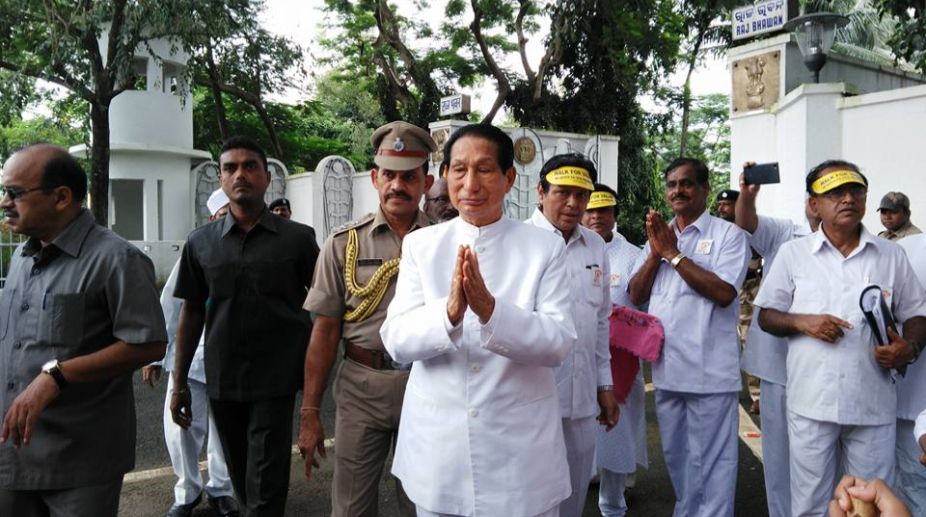
Odisha committed to all-round development of people: Governor

IANS | Bhubaneswar |

Odisha Governor S C Jamir on Wednesday said the state government is committed to ensuring all-round development of all sections of people on non-negotiable basis.

Addressing the Odisha Assembly at the start of the budget session, Jamir said his government has taken several steps for the development of the state and also stood firmly with the people on the Mahanadi water issue.

"I am proud that my government has stood firmly with the people of Odisha to ensure their due share of water from the Mahanadi river," said the governor.

He said to prevent unauthorised construction activities by the Chhattisgarh government upstream of the Mahanadi river and to safeguard the interests of the people of Odisha, the state government had approached the central government seeking formation of a tribunal to resolve the issue and also moved the Supreme Court.
"My government will leave no stone unturned to protect the interests of people of Odisha on the Mahanadi river," said Jamir.

He said the state government has consistently and continuously striven to achieve a sustainable and inclusive higher economic growth and reduction of regional, social and gender disparities.

"The state has achieved significant improvement in finance during the last 15 years through various fiscal reform measures, as a result of which the state is able to undertake various developmental activities from its own resources," the governor said.

He said the Odisha Fisheries Policy is being implemented to double the fish production in the state in five years.

Sea food exports touched Rs.1,791.81 crore during 2015-16 and the state government has set a target of Rs.20,000 crore worth exports in coming years, he added.

He said during 2017-18, average milk production and procurement per day is expected to reach 6.6 lakh litres and chilling and processing capacity is likely to be enhanced to 9.4 lakh and 7.0 lakh litres per day, respectively.

The state government has set a target of creating 10 lakh hectares irrigation potential by 2019, Jamir said.

On plans to augment development of green energy, he said a pro-active Renewable Energy Policy has been notified during 2016-17 for translating the objectives.

"The 20MW solar project at Manamunda has been commissioned successfully and 1,000MW solar power is being proposed to be set up at suitable locations," said the Governor.

Maintaining that the overall law and order situation in the state during 2016 remained peaceful, Jamir said the overall intensity of Left Wing Extremism (LWE) activities came down in the state, though the situation remained challenging in parts of Malkangiri, Koraput and Kalahandi districts, which is gradually improving.

He said a large number pro-Left wing extremists and sympathisers have publicly announced withdrawal of their support to the LWE activities in Malkangiri district, which is very encouraging.

In order to increase the mobile telephone connectivity in the LWE-affected areas, 248 towers have been operationalised and to augment police capacity, 250 new posts in different ranks created, said the governor.

Govt sets up mechanism for speedy stake sale in PSUs

Prashant Mukherjee/SNS | New Delhi |

The government has set itself strict timelines to meet the ambitious target of raising Rs.72,500 crore in 2017-18 from stake sale in its central public sector enterprises. The Department of Investment & Public Asset Management (DIPAM), the government department entrusted with the disinvestment programme, has said the entire process of listing a public sector unit and putting it on the block would be completed within 165 days or in about 5- and-a- half months.

"We are aware of our targets. We are putting in place a revised mechanism and procedure to ensure timebound listing of identified CPSEs on stock exchanges. This is in line with the budget announcements," Neeraj Gupta, DIPAM secretary said.

Union Finance Minister Arun Jaitley announced in his budget on 1 February that the government intends to raise Rs.72,500 crore in 2017-18 through disinvestment. Of this, Rs.46,500 crore would be raised through disinvestment, Rs.15,000 crore through strategic disinvestment and Rs.11,000 crore through the listing of insurance companies.

 The list of eligible CPSEs for listing would be ready within one month from the finalisation of audited accounts of the last financial year, based on the criteria of a positive net-worth, no accumulated losses and having earned net-profits in three preceding years, Gupta said. This will be prepared by the concerned ministry or department or DIPAM.

DIPAM is in the process of setting up an Inter-ministerial Group (IMG) to appoint advisors and intermediaries to guide the process of disinvestment through public offer. The process for the appointment of advisers, including merchant bankers and legal advisers, will be completed within eight weeks of the IMG being set up. 

The IMG will be headed by Secretary, DIPAM. The other members will include secretaries or joint secretaries of the concerned AM or AD, Department of Legal Affairs, Department of Economic Affairs,  Department of Public Enterprises, Ministry of Corporate Affairs, Financial Advisor of the concerned AM/AD and DIPAM and CMD of the concerned CPSE.

An Empowered Committee (EC) will be constituted under the secretary of the concerned administrative ministry or department, with the mandate to complete time-bound documentation of the draft red herring prospectus (DRHP). 

In cases of listing through sale of government's stake, Cabinet Committee for Economic Affairs (CCEA) approval for listing of identified CPSEs will be obtained by DIPAM. In case of issue of fresh equity in conjunction with the sale of GoI’s stake for listing, CCEA approval shall be obtained by the concerned administrative ministry or department.

The disinvestment proceeds in the current financial year are Rs.37,696.03 crore at present. The government has set a target of Rs.56,500 crore to be raised from disinvestment this fiscal.

‘Child marriages’ go unnoticed in Himachal belt

Archana Phull | Shimla |

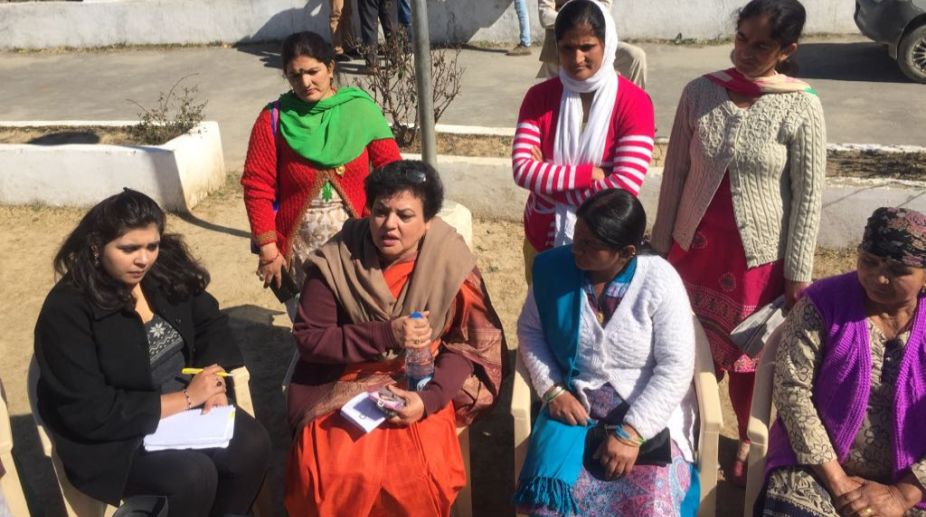
The National Commission for Women (NCW) is likely to pin down Himachal government on the ‘disturbing phenomenon’ of ‘child marriages’ and ‘unregistered marriages’ allegedly going unnoticed in interior Shillai area in Sirmaur district of Himachal Pradesh.

A three member team led by NCW member, Rekha Sharma had visited Shillai, one of the most backward sub-division in the country, last week to probe reports of alleged ‘trafficking of poor girls under the garb of marriages’ and may come out with a report shortly.

"I have met so many people in the area. Prima facie, I can’t say or prove that trafficking of girls is being done. But it is certainly a matter of concern as to how the men from Haryana are able to get information on girls for marriage from this area, which is backward with poor road connectivity. It indicates the presence of some middlemen in the process in an organised manner,” NCW member, Rekha Sharma told The Statesman over phone.

She talked of worrying phenomenon of alleged child marriages and unregistered marriages in the area.

“We got records in the hospital as per which the girls, who have not attained the age of 18 years, have delivered babies. Many marriages are unregistered, which is a disturbing trend,” she said.

The media had recently brought to light that the poor and illiterate girls from Shillai were being married to men from Haryana allegedly over ‘monetary benefits’ due to economic stress. Haryana, the reports said, had skewed sex ratio so men from there come to this interior belt of Himachal, looking for brides.

The Himachal government had, however, rubbished such reports of marriages in lieu of monetary benefits, which were, although, based on the survey by then Sub Divisional Magistrate (SDM) on the marriages of girls from Shillai in Haryana.

Even Chairman of Himachal Pradesh State Commission for Women, Jenab Chandel, who went to Shillai to look into the issue, had denied any such phenomenon.

However, dissatisfied with the replies of the state functionaries, including the police, the NCW member, who visited Shimla in December last year for public hearing, had decided to look into the matter herself.

Sources said the NCW team, which included legal expert also, talked to a number of families in Shillai area.

The team visited Demana village in Manal Panchayat near Shillai, where out of around 30 families, nine girls were married in Haryana and some parents were reportedly unable to tell where their daughters were living.

The NCW member said the team would make a report based on observations and recommendations and shortly submit it to the Commission, the Central government and the state government.

“The Himachal government should investigate into the whole issue, go deeper into the socio-economic reasons in the area and have a development plan to uplift people,” she said.


Sikkim youth arrested with 11 kg charas in Himachal

Statesman News Service | Shimla |

After nabbing two foreign nationals with drugs, Himachal Police on Wednesday arrested a youth with 11.10 kg charas from Bhunter area of Kullu district around 200 km from here.

Superintendent of Police, Kullu, Padam Chand told The Statesman that the youth identified as Roshan Gurung was arrested during routine checking at Jachhani check post in Bhunter area of Kullu district. “The Police officials were conducting routine checking at Jachhani check post when Gurung tried to flee from the spot upon seeing police,” he said.

Padam Chand said Gurung allegedly threw the bag he was carrying but was nabbed by alert police officials and 11.10 kg charas was recovered from his possession.

On interrogation, Roshan Gurung told the police that he was residing in Manikaran area since the last few years, he added. A case has been registered against the accused and further investigations in the case are on.

It is worthwhile to mention here that Kullu police had earlier arrested Nigerian and US national in drug smuggling case and the contraband seized from their possession is valued around Rs 15 crore in the international market.

Antyodaya Express for common man: All you need to know!

SNS | New Delhi |

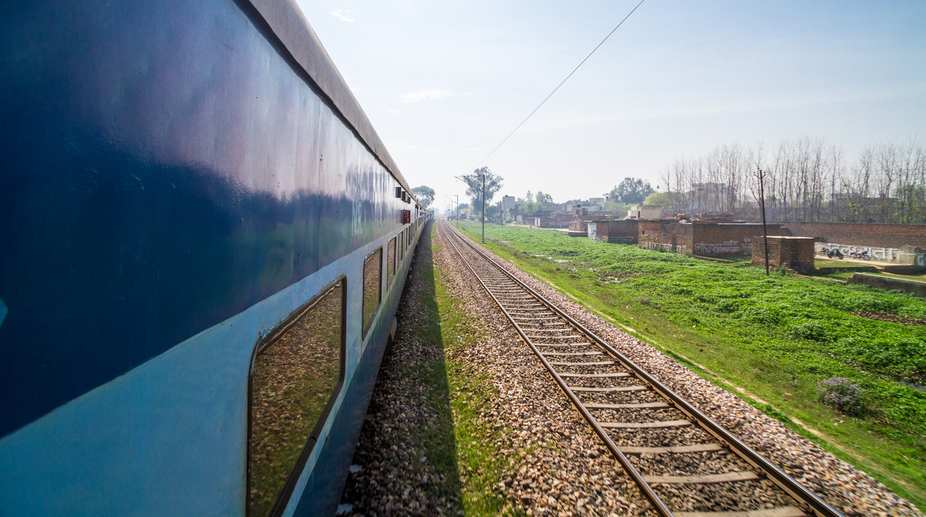
Focusing on the upliftment of weakest sections of the society, Union Railway Minister Suresh Prabhu on Wednesday unveiled a new train–Antyodaya Express–for the common man, with the focus on clean India.

The Antyodaya Express will run on the Southern Railway line–Mumbai-Tatanagar route.

The train will provide facilities similar to that of first class. The train, equipped with luxury items such as cushioned seats, aluminium composite panels, and LED lights will facilitate the passengers in unreserved coaches.

“The facilities provided in Antyodaya coaches are similar in first class. Our government's focus is on Aam Aadmi (common man) so we launched the product with many facilities for them,” Prabhu said.

But what about the travel fare. If we get facilities similar to first class, do we need to pay similar fare or more?

The fare structure is not clear yet. But, according to reports, “the fare structure will be 10-15 per cent higher than the regular fare”.

A first in general class, the train is equipped with bio-toilets for zero discharge of effluents and toilet occupation indication lights with better visibility from compartments.

Apart from modern equipment, Antyodaya also focusses on ‘Clean India’ and ‘Save Electricity’ movements as the train has LED lights and enhanced capacity dustbins.

In the Budget, It was announced that the government would launch four new passenger services. Meanwhile, two train services, Humsafar and Antyodaya have been unveiled and two others, Tejas Express and Uadaya Express, are expected to be unveiled soon.

Punjab Ramsar sites under threat

Pankaj Dhiman | Chandigarh |

Blame it on pollution and erosion in the catchment areas, Punjab’s three  Ramsar sites — Harike, Kanjli and Ropar – representing the state’s rich flora and fauna are posing a picture of neglect.
With a total area of 5,648 hectare, these three wetlands are under threat due to water pollution due to pollutants outflow from the adjoining industries, erosion in the catchment areas, cattle grazing and eco-tourism activities and garbage pollution on the river banks.
According to the ecologists, Harike lake, wetland regularly supports threatened ecological communities including 20, 000 or more water birds and one per cent of the individuals in a population of several species. The wetland is facing the problems of silting which is causing the shrinkage of wetland area.
Besides this, water pollution due to pollutants outflow from the adjoining industries to wetland is another reason for depleting ecology there. Other reasons which affect the ecology of state’s wetland are water pollution by pesticides, fertilizers from surrounding agricultural fields and sewage from the towns affecting water quality.
Similarly, invasion and excessive growth of weeds chock wetland surface and water ways degrades ecology, erosion in the catchment areas and cattle grazing and fishing are among major threats to ecology of wetlands. Ecologists also said, due to several biotic, political and local pressures all three Ramsar sites are facing severe problem and losing Ramsar criteria of international importance and standards.
“Present condition of these wetlands, degrades ecology, shrinking wetland area and declines biodiversity especially birdlife diversity and population. Also, the criteria for eco-tourism are something different. At present, plying of motor boats in the Ropar wetland area is discouraging practise for habitat. In recent years, number of migratory birds has increased at the wetland hence the human interference should be discouraged,” ecologist TK Roy, coordinator of the Asian Waterbird Census said.
Only Harike Lake within protected area comes under Punjab Wildlife Preservation Department. So this department has taken some initiative as plantation, habitat management, conservation awareness for its wildlife conservation and protection.
Dhirendra Singh, Chief Wildlife Warden, Punjab, said, “We are working on couple of initiatives to protect wetland’s flora and fauna. It is a continuous process on which we have told our teams to be on standby to keep a vigil round the clock".

Audi lines up 10 new launches, aims to overtake Mercedes-Benz in India

Audi plans to launch ten products this year, including ‘a couple of completely new models’ as part of its ongoing efforts to enhance its position in the country.

PTI | Updated :

German auto major Audi is gunning to regain over a period of time the top slot in Indian luxury vehicles segment which it had lost to rival Mercedes-Benz.

The company plans to launch ten products this year, including ‘a couple of completely new models’ as part of its ongoing efforts to enhance its position in the country.

“There has been a phase of consolidation (in India) and we are looking at a sustainable number one position here. Audi belongs there,” Audi India Head Rahil Ansari told PTI.

When asked how soon the company looks to overtake Mercedes-Benz again, he declined to share a timeframe.

“We need to be number one again at some stage of time. It doesn’t have to be overnight but it can’t take till 2030 either. What is important is that it has to be sustainable business for all involved, including our dealer partners,” Ansari added.

In 2015 Audi lost its number one position in the Indian luxury car market to Mercedes-Benz. It had taken the top spot from another German rival BMW in 2013.

Audi has not shared its 2016 sales numbers in India. Mercedes-Benz sold 13,231 units in 2016, marginally down from 13,502 units in 2015. BMW on the other hand sold 7,861 units, up 14 percent from 2015.

When asked about new product launches, Ansari said: “For 2017 there will be 10 new launches, out of which there will be a couple of products which haven’t been introduced in the Indian market before.”

Audi has already launched the diesel version of its best selling sedan A4 in India. It is also preparing for the new A3 sedan.

“While the volume models are important, we will also be launching those cars which can give a ‘Halo effect’ so that we can turn our car customers into fans,” Ansari said, hinting at the company’s plans to bring performance-oriented cars.

Going forward, he said, in order to achieve its goals Audi will focus on new products, more customer targeted activities such as referral programmes to keep its existing buyers within the ‘Audi family’ while also trying to convert potential new buyers.

Health Regulatory Commission in offing in Bengal

PTI | Kolkata |

The West Bengal government on Wednesday said it has decided to set up a Health Regulatory Commission to monitor the functioning of private hospitals and nursing homes in and around the city.

The decision to form the commission was taken following complaints of alleged over-charging of patients and negligence in their treatment.

Chief Minister Mamata Banerjee announced this after over an hour-long meeting with the representatives of top private hospitals and nursing homes situated in and around the city.

"We have decided to set up a West Bengal Health Regulatory Commission which will be monitoring the billing and performance of private hospitals and nursing homes," she said.

The meeting was called by Banerjee, who is also the Health Minister, after a number of complaints poured in at the health department from different sections, including top leaders and MLAs, alleging that private hospitals and nursing homes were charging patients exorbitantly and negligent in the treatment.

A bill in this regard would be placed in the assembly on March 3 during the next session, Banerjee also announced.

The commission will have 10-members, comprising a former chief justice, health experts, principal secretary of the Health Department, representatives of hospitals and patients, who are the consumers, Banerjee said.

The regulatory commission will submit its report to the chief minister every month, she added.

The state was already planning to amend the West Bengal Clinical Act, the Chief Minister said, adding it should be made "strong" and the amendment would be brought on March 3 in the assembly.

"People must keep this in mind that the state government will extend full support to those doing good work but it will take action against those who are not performing well," she said.

In the meeting, Banerjee also pulled up the representatives of top private medical facilities and held them responsible for charging patients excessively, negligence in treatment, keeping patients in ICUs and on ventilators for long periods without justification and not releasing dead bodies if the bills were not settled.

Gigantic 400-m-year-old ‘monster worm’ found

PTI | Toronto |

Scientists have discovered a new species of an extinct primordial giant worm with terrifying snapping jaws that lived about 400 million years ago.

Researchers studied a fossil untouched for more than two decades at the Royal Ontario Museum in Canada and discovered the remains of the giant extinct bristle worm.

The new species is unique among fossil worms and possesses the largest jaws ever recorded in this type of creature, reaching over one centimetre in length and easily visible to the naked eye, researchers said.
Despite being only known from the jaws, comparison with living species suggests that this animal achieved a body length in excess of a metre.

This is comparable to that of 'giant eunicid' or 'Bobbit worms' which are fearsome and opportunistic ambush predators, using their powerful jaws to capture prey such as fish and cephalopods such as squids and octopuses and dragging them into their burrows.

"Gigantism in animals is an alluring and ecologically important trait, usually associated with advantages and competitive dominance," said Mats Eriksson from Lund University in Sweden.

"The new species demonstrates a unique case of polychaete gigantism in the Palaeozoic, some 400 million years ago," he added.

The specimens were collected in 1994. Sample materials, from what proved to belong to the Devonian Kwataboahegan Formation, were brought back to the Royal Ontario Museum, where they have been stored until now.

The study was published in the journal Scientific Reports.

Gigantic 400-m-year-old ‘monster worm’ found

PTI | Toronto |

Scientists have discovered a new species of an extinct primordial giant worm with terrifying snapping jaws that lived about 400 million years ago.

Researchers studied a fossil untouched for more than two decades at the Royal Ontario Museum in Canada and discovered the remains of the giant extinct bristle worm.

The new species is unique among fossil worms and possesses the largest jaws ever recorded in this type of creature, reaching over one centimetre in length and easily visible to the naked eye, researchers said.

Despite being only known from the jaws, comparison with living species suggests that this animal achieved a body length in excess of a metre.

This is comparable to that of 'giant eunicid' or 'Bobbit worms' which are fearsome and opportunistic ambush predators, using their powerful jaws to capture prey such as fish and cephalopods such as squids and octopuses and dragging them into their burrows.

"Gigantism in animals is an alluring and ecologically important trait, usually associated with advantages and competitive dominance," said Mats Eriksson from Lund University in Sweden.

"The new species demonstrates a unique case of polychaete gigantism in the Palaeozoic, some 400 million years ago," he added.

The specimens were collected in 1994. Sample materials, from what proved to belong to the Devonian Kwataboahegan Formation, were brought back to the Royal Ontario Museum, where they have been stored until now.

The study was published in the journal Scientific Reports.