Logo

Pence denies double standard as private email use uncovered

AFP | Washington |

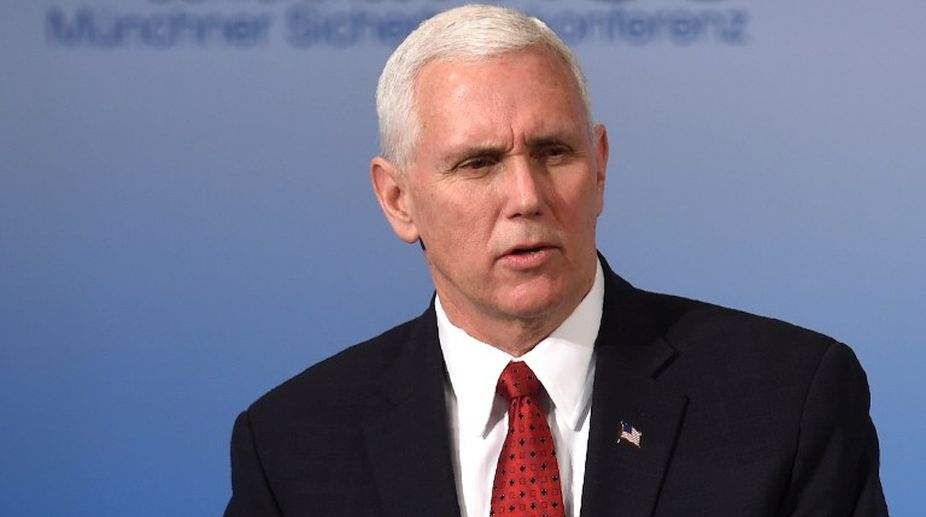
Defending his use of a personal email account, US Vice President Mike Pence has said "there's no comparison" between his situation and Hillary Clinton's use of a private email server that rocked the 2016 presidential campaign, a media report said.

Pence used his personal email account to conduct state business while he was Indiana's Governor, CNN reported on Friday.

"There's no comparison whatsoever," Pence said when asked about whether his situation gave him any sympathy for the Democratic presidential nominee.

He was at an event with House Speaker Paul Ryan in Janesville, Wisconsin, when quizzed.

In the personal email Pence discussed issues like the resettling of Syrian refugees and other matters on an AOL account that was hacked in a phishing scam, according to details released on Thursday.

In one September 2014 exchange, Pence asked his then-Homeland Security Adviser John Hill for an "update of the investigation in Columbus (Indiana) following the vandalism … to area churches … Including the church I grew up in." 

In another email from November 2015, Pence asked his communications staff to promote an op-ed from then Senator Dan Coats about Indiana's fight to bar Syrian refugees from settling in the state.

Hill also alerted Pence to an FBI terror assessment in another exchange included in 30 pages of emails provided to CNN by Indiana Governor Eric Holcomb's office in response to a public records request. 

The emails and the successful hack of Pence's email account were first reported on Thursday night by The Indianapolis Star.

It's unclear from the release how often Pence used his AOL account for state business versus his state-provided email address.

For months on the campaign trail, Pence accused Clinton of being dishonest and threatening US national security because she used an unsecured private email server while she was Secretary of State. 

A few days before the general election, on November 2, Pence said at a rally in Colorado that the "FBI has reopened the investigation in to Clinton's private email server. It's a serious matter. Now we commend the FBI in this case for following the facts because in America, no one is above the law."

The Vice President's email was compromised in 2016, according to a Pence official, and emails were sent from his account saying that he was robbed on an overseas trip and he needed money. 

After the scam was discovered, he set up an entirely new private email account, the official told CNN.

A Pence official would not comment or characterise what is in the AOL emails that were not released. 

Pence spokesman Marc Lotter told CNN in a statement: "Similar to previous Governors, during his time as Governor of Indiana, Mike Pence maintained a state email account and a personal email."

Lotter did not explain if previous Indiana Governors also used their personal email accounts to conduct state business.

Clinton's use of private email was the subject of a federal investigation that determined she had exchanged classified information on a server based out of her New York home. 

The FBI determined Clinton's actions were not worth prosecuting, but FBI Director James Comey in 2016 berated her actions.

"He did everything to the letter of the law, he turned all his emails over, unlike Hillary Clinton, who lost at least 30,000, who knows how many more, on her private server," White House spokeswoman Sarah Sanders said. 

Sanders added: "He's a governor, which means he wasn't handling classified information like she was."

CNN submitted a public records request to the Indiana Governor's office in September for emails between Pence, using his personal AOL email, and his top staff. 

The Indiana Democratic Party released a statement on Thursday calling for "full disclosure" on Pence's use of private emails. 
 

Pence denies double standard as private email use uncovered

AFP | Washington |

Defending his use of a personal email account, US Vice President Mike Pence has said "there's no comparison" between his situation and Hillary Clinton's use of a private email server that rocked the 2016 presidential campaign, a media report said.

Pence used his personal email account to conduct state business while he was Indiana's Governor, CNN reported on Friday.

"There's no comparison whatsoever," Pence said when asked about whether his situation gave him any sympathy for the Democratic presidential nominee.

He was at an event with House Speaker Paul Ryan in Janesville, Wisconsin, when quizzed.

In the personal email Pence discussed issues like the resettling of Syrian refugees and other matters on an AOL account that was hacked in a phishing scam, according to details released on Thursday.

In one September 2014 exchange, Pence asked his then-Homeland Security Adviser John Hill for an "update of the investigation in Columbus (Indiana) following the vandalism … to area churches … Including the church I grew up in." 

In another email from November 2015, Pence asked his communications staff to promote an op-ed from then Senator Dan Coats about Indiana's fight to bar Syrian refugees from settling in the state.

Hill also alerted Pence to an FBI terror assessment in another exchange included in 30 pages of emails provided to CNN by Indiana Governor Eric Holcomb's office in response to a public records request. 

The emails and the successful hack of Pence's email account were first reported on Thursday night by The Indianapolis Star.

It's unclear from the release how often Pence used his AOL account for state business versus his state-provided email address.

For months on the campaign trail, Pence accused Clinton of being dishonest and threatening US national security because she used an unsecured private email server while she was Secretary of State. 

A few days before the general election, on November 2, Pence said at a rally in Colorado that the "FBI has reopened the investigation in to Clinton's private email server. It's a serious matter. Now we commend the FBI in this case for following the facts because in America, no one is above the law."

The Vice President's email was compromised in 2016, according to a Pence official, and emails were sent from his account saying that he was robbed on an overseas trip and he needed money. 

After the scam was discovered, he set up an entirely new private email account, the official told CNN.

A Pence official would not comment or characterise what is in the AOL emails that were not released. 

Pence spokesman Marc Lotter told CNN in a statement: "Similar to previous Governors, during his time as Governor of Indiana, Mike Pence maintained a state email account and a personal email."

Lotter did not explain if previous Indiana Governors also used their personal email accounts to conduct state business.

Clinton's use of private email was the subject of a federal investigation that determined she had exchanged classified information on a server based out of her New York home. 

The FBI determined Clinton's actions were not worth prosecuting, but FBI Director James Comey in 2016 berated her actions.

"He did everything to the letter of the law, he turned all his emails over, unlike Hillary Clinton, who lost at least 30,000, who knows how many more, on her private server," White House spokeswoman Sarah Sanders said. 

Sanders added: "He's a governor, which means he wasn't handling classified information like she was."

CNN submitted a public records request to the Indiana Governor's office in September for emails between Pence, using his personal AOL email, and his top staff. 

The Indiana Democratic Party released a statement on Thursday calling for "full disclosure" on Pence's use of private emails. 
 

4 killed in Indonesia floods, landslides

IANS | Jakarta |

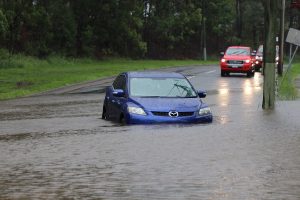
At least four people were killed and thousands others displaced due to floods and landslides in Indonesia's West Sumatra province, a disaster agency official said on Saturday.

Heavy downpours occurred in Limapuluh Kota district which led to communication cut and also triggered a blackout.

"The landslide have buried about eight vehicles. So far, we have recovered four bodies from the vehicles. Other vehicles are still buried under mud and rocks. Perhaps there are others trapped inside," the official told Xinhua news agency.

"Floods have also forced thousands of villagers to flee homes, but we do not have the details of the figure," he added.

4 killed in Indonesia floods, landslides

IANS | Jakarta |

At least four people were killed and thousands others displaced due to floods and landslides in Indonesia's West Sumatra province, a disaster agency official said on Saturday.

Heavy downpours occurred in Limapuluh Kota district which led to communication cut and also triggered a blackout.

"The landslide have buried about eight vehicles. So far, we have recovered four bodies from the vehicles. Other vehicles are still buried under mud and rocks. Perhaps there are others trapped inside," the official told Xinhua news agency.

"Floods have also forced thousands of villagers to flee homes, but we do not have the details of the figure," he added.

Trump admin has very positive view of Indo-US ties: Jaishankar

PTI | Washington |

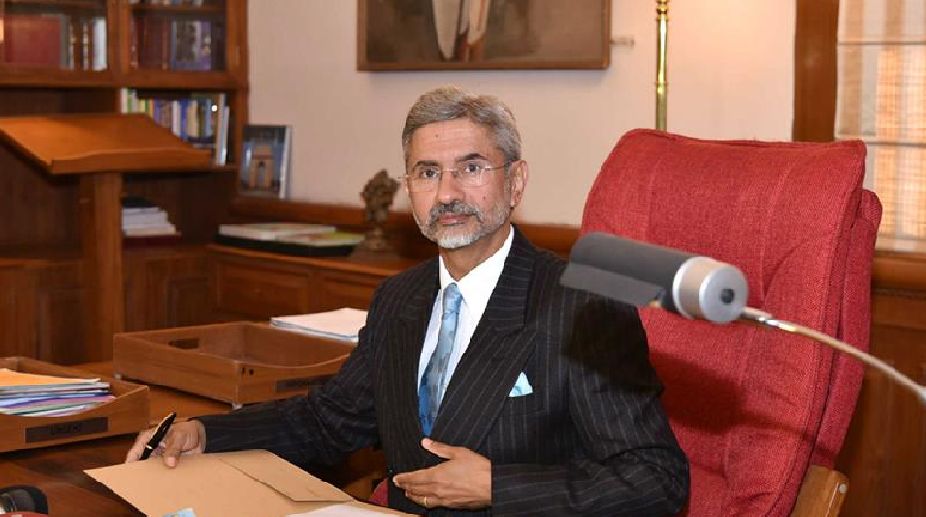
The Trump Administration has a "very positive view" of the Indo-US relationship and a lot of interest in taking the ties forward, Foreign Secretary S Jaishankar said today after his wide-ranging talks with senior Cabinet members and top officials here.

"Optimistic" about the continuation of the upward trajectory of the bilateral relationship, Jaishankar told Indian reporters here that the India-US Strategic and Commercial Dialogue, which was started under the previous Obama administration, would be held later this year.

Dates were being worked out for the India visit of Secretary of State Rex Tillerson and Commerce Secretary Wilbur Ross to hold the first India US Strategic and Commercial Dialogue under the Trump administration.

"Overall, (the) sense was that the Administration has a very positive view of the relationship, positive view of India," said Jaishankar, who along with Commerce Secretary Rita Teotia, is on a visit here to engage with the new Trump administration.

"We saw a lot of goodwill and a lot of interest in taking the relationship forward," he said.

Jaishankar, during his visit, held a number of key meetings here, including with Secretary of State Tillerson, Commerce Secretary Ross, Secretary of Homeland Security Gen (retd) John Kelly, National Security Advisor R McMaster, and Deputy Assistant to the President, Ken Juster.

The visiting Indian officials, accompanied by the Indian Ambassador to the US, Navtej Sarna, also met the top leadership of the US Congress, including House Speaker Paul Ryan, House Minority Leader Nancy Pelosi, Senate Foreign Relations Committee Chairman Bob Corker and his House counterpart Congressman Ed Royce.

They also met Senator Mark Warner, Co-Chair of the Senate India caucus, and Co-Chairs of India Caucus in the House Congressman George Holding and Congresswoman Tulsi Gabbard.

Jaishankar and Teotia, during their visit, interacted with US businesses through the US India Business Council.

"The (US) Congress has been extraordinarily supportive of the growth of this relationship. Since there has been a change in the political landscape, we thought engaging them was something which was important," Jaishankar said.

"Broadly with the (US) administration, we explained to them the progress that the India US relation has made in the last many years. So it was a full spectrum (of) discussions," he said.

Trump admin has very positive view of Indo-US ties: Jaishankar

PTI | Washington |

The Trump Administration has a "very positive view" of the Indo-US relationship and a lot of interest in taking the ties forward, Foreign Secretary S Jaishankar said today after his wide-ranging talks with senior Cabinet members and top officials here.

"Optimistic" about the continuation of the upward trajectory of the bilateral relationship, Jaishankar told Indian reporters here that the India-US Strategic and Commercial Dialogue, which was started under the previous Obama administration, would be held later this year.

Dates were being worked out for the India visit of Secretary of State Rex Tillerson and Commerce Secretary Wilbur Ross to hold the first India US Strategic and Commercial Dialogue under the Trump administration.

"Overall, (the) sense was that the Administration has a very positive view of the relationship, positive view of India," said Jaishankar, who along with Commerce Secretary Rita Teotia, is on a visit here to engage with the new Trump administration.

"We saw a lot of goodwill and a lot of interest in taking the relationship forward," he said.

Jaishankar, during his visit, held a number of key meetings here, including with Secretary of State Tillerson, Commerce Secretary Ross, Secretary of Homeland Security Gen (retd) John Kelly, National Security Advisor R McMaster, and Deputy Assistant to the President, Ken Juster.

The visiting Indian officials, accompanied by the Indian Ambassador to the US, Navtej Sarna, also met the top leadership of the US Congress, including House Speaker Paul Ryan, House Minority Leader Nancy Pelosi, Senate Foreign Relations Committee Chairman Bob Corker and his House counterpart Congressman Ed Royce.

They also met Senator Mark Warner, Co-Chair of the Senate India caucus, and Co-Chairs of India Caucus in the House Congressman George Holding and Congresswoman Tulsi Gabbard.

Jaishankar and Teotia, during their visit, interacted with US businesses through the US India Business Council.

"The (US) Congress has been extraordinarily supportive of the growth of this relationship. Since there has been a change in the political landscape, we thought engaging them was something which was important," Jaishankar said.

"Broadly with the (US) administration, we explained to them the progress that the India US relation has made in the last many years. So it was a full spectrum (of) discussions," he said.

Bengaluru Test: India win toss, elect to bat against Australia

Australia have named an unchanged XI, while India have brought in Abhinav Mukund and Karun Nair.

IANS | Bangalore |

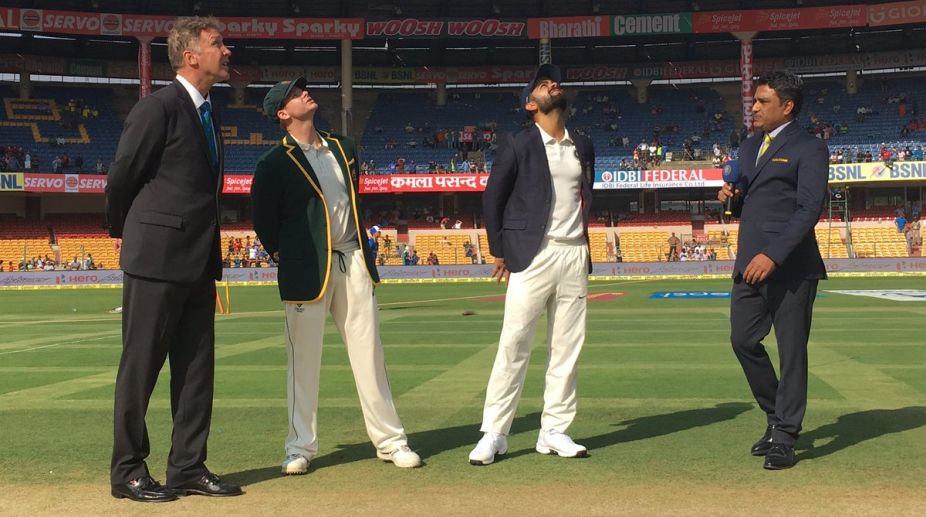
India skipper Virat Kohli won the toss and elected to bat against Australia in the second cricket Test at the M Chinnaswamy Stadium here on Saturday.

Australia have named an unchanged XI, while India have brought in Abhinav Mukund and Karun Nair.

Abhinav makes a comeback to the Test side after five-and-a-half years, replacing Murali Vijay, who has suffered a shoulder injury.

Nair, who scored a triple century in his last Test, also gets a chance after India decided to drop Jayant Yadav for an extra batsman.

Teams:

India: Abhinav Mukund, Lokesh Rahul, Cheteshwar Pujara, Virat Kohli (C), Ajinkya Rahane, Karun Nair, Wriddhiman Saha (WC), Ravichandran Ashwin, Ravindra Jadeja, Umesh Yadav, Ishant Sharma.

Australia: David Warner, Mark Renshaw, Steve Smith (C), Shaun Marsh, Peter Handscomb, Mitchell Marsh, Matthew Wade (WC), Steve O'Keefe, Nathan Lyon, Mitchell Starc, Jose Hazlewood.


Bengaluru Test: India win toss, elect to bat against Australia

Australia have named an unchanged XI, while India have brought in Abhinav Mukund and Karun Nair.

IANS | Bangalore |

India skipper Virat Kohli won the toss and elected to bat against Australia in the second cricket Test at the M Chinnaswamy Stadium here on Saturday.

Australia have named an unchanged XI, while India have brought in Abhinav Mukund and Karun Nair.

Abhinav makes a comeback to the Test side after five-and-a-half years, replacing Murali Vijay, who has suffered a shoulder injury.

Nair, who scored a triple century in his last Test, also gets a chance after India decided to drop Jayant Yadav for an extra batsman.

Teams:

India: Abhinav Mukund, Lokesh Rahul, Cheteshwar Pujara, Virat Kohli (C), Ajinkya Rahane, Karun Nair, Wriddhiman Saha (WC), Ravichandran Ashwin, Ravindra Jadeja, Umesh Yadav, Ishant Sharma.

Australia: David Warner, Mark Renshaw, Steve Smith (C), Shaun Marsh, Peter Handscomb, Mitchell Marsh, Matthew Wade (WC), Steve O'Keefe, Nathan Lyon, Mitchell Starc, Jose Hazlewood.


Fire erupts inside Trump International Hotel

IANS | New York City |

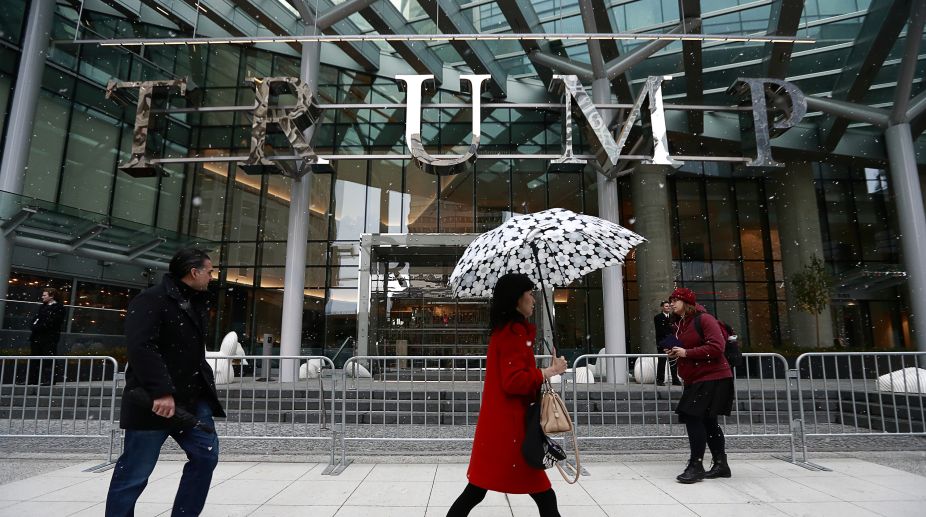
A fire broke out in an apartment under construction at the Trump International Hotel and Tower on Friday on Columbus Circle here, according to reports.

The blaze started at around 4.12 am local time on the 47th floor of the 52-story building at 1 Central Park West, New York Post reported.

The fire was sparked when a piece of machinery malfunctioned in the apartment, authorities told WCBS.

The blaze, which forced a partial evacuation of the building, was brought under control at about 5.20 am. local time, CBS reported. The upper floors were vented because of carbon-monoxide concerns.

One person was treated for smoke inhalation.

The 166-apartment condo tower, which was built in 1996, features hotel-style service, health club, pool, sauna and steam room, among other amenities, according to Trump International Realty.

Mexico increases consular protection for expats in US

IANS | Miami |

Mexico's consulate in Miami has inaugurated a new section to enhance protections for Mexicans in the US as they face new challenges posed by the policies of President Donald Trump, a media report said .

The establishment of such a section in each of the 50 Mexican consulates in the US is part of President Enrique Pena Nieto's response to Trump's negative stance toward the Aztec nation, Consul-General Jose Antonio Zabalgoitia told Efe news on Friday.

At the Miami consulate, the section will have a staff of four, three of them attorneys.

The new sections are needed because the "current circumstances are different from those we had for many years," Zabalgoitia said. 

"It is necessary to concentrate consular work and prioritise consular protection."

The diplomat said that while he was yet to see any "alarming" changes in the situation of Mexicans in South Florida, the consulate was trying to anticipate future needs and "organise the work to be more efficient."

Since taking office on January 20, Trump has taken steps to fulfill his campaign promise to build a wall on the US-Mexico border to prevent the entry of "bad hombres".

The new administration has also adopted a more aggressive approach to enforcement of immigration laws, which is a cause for concern among the country's estimated 11 million undocumented migrants.

More than 600,000 Mexicans live in Florida, according to Zabalgoitia, who declined to estimate how many of them are undocumented.

He did note, however, that more than 70,000 Mexicans in Florida entered the US as seasonal agricultural workers with H-2A visas, Efe news reported.

Acknowledging an increase in the number of Mexicans deported from Florida, Zabalgoitia said he has seen no sign of raids or mass detentions targeting people from his country.

So far, he said, the most visible reaction to the Trump era has been a surge in expats with US-born children coming to the consulate to register their offspring as Mexican citizens.

"Warlier, I signed two birth registrations per week, while yesterday (Thursday) alone I signed 15," the consul-general said.

Facing a greater threat of deportation or, in some cases, mulling the idea of returning to Mexico on their own initiative, expats are now anxious to ensure that their children also have Mexican citizenship, Zabalgoitia said.

UP Assembly elections 2017: Polling begins for sixth phase

IANS | Lucknow |

Polling for 49 seats in the sixth and penultimate phase of the Uttar Pradesh elections began at 7 am on Saturday.

The over 1.72 crore electorate will decide the fate of 635 candidates across seven districts in eastern UP.

Prominent candidates in the fray include Bharatiya Janata Party's Swami Prasad Maurya (Padrauna) and former state unit chief Surya Pratap Shahi (Pathardeva), and jailed don Mukhtar Ansari, contesting from Mau on a Bahujan Samaj Party ticket.

Maximum number of candidates are in Gorakhpur city where 127 candidates in fray for its nine seats, while the minimum number of candidates – seven – are in Mohammadabad Gohna seat in Mau. 

Trump turns accusations around, links Democrats to Russia

IANS | Washington |

US President Donald Trump tried on Friday to turn the tables on Democrats by linking them with Russia, at the same time his Attorney General Jeff Sessions remained under investigation for his contacts with Moscow.

On his personal Twitter account, Trump urged an immediate investigation of Senate Democratic minority leader Chuck Schumer's connections with Russia and Kremlin boss Vladimir Putin, EFE news reported.

In his tweet, Trump made the request and posted a photo of Putin together with Schumer, calling the New York Senator a "total hypocrite".

The photo in question is from September 2003 and was taken in New York at the first gas station in that city belonging to Russia's Lukoil company.

The Senator replied to the President, also on Twitter, almost immediately and told him he had no problem talking about his contact with Putin and the Russian leader's associates, which "took place in 2003 in full view of press & public under oath", and challenged Trump to say whether "you & your team" would do the same about their contacts and connections with Russian officials.

Trump called for an investigation of Schumer as the scandal boiled over about Russia's contacts with Sessions, whose position is the equivalent of the Justice Minister in other countries.

While he was Senator and Advisor to Trump's electoral campaign, Sessions met twice with the Russian ambassador in Washington, Sergey Kislyak, in the months preceding last November's US presidential election and amid evidence of Moscow's interference in the election.

While the Senate was in the process of confirming Sessions as the new Attorney General and asked about his contacts with the Kremlin, he decided to hide his meetings with Kislyak because, he now says, they were associated with his position as Senator and not as an Advisor to the Trump campaign.

But under the unrelenting criticism, Sessions gave a press conference this Thursday to announce he would not take part in the investigation by his department, the Department of Justice, into the suspected Russian hacking into the presidential elections to harm the chances of Democratic candidate Hillary Clinton, EFE news reported.

In a statement to reporters, Sessions said, "I have decided to recuse myself from any existing or future investigations of any matters related in any way to the campaigns for President of the United States." 

During a breakfast organised by the digital daily Politico, the leader of the Democratic minority in the House of Representatives, Nancy Pelosi, called "insufficient" and "totally unacceptable" Sessions' decision to recuse himself.

In Pelosi's opinion, the fact that Sessions decided to exit the investigations is "an admission" that he knew he did wrong in hiding from the Senate his contacts with the Russian ambassador, and was "a reflection of the weak moral authority of this administration."

After noting his "total confidence" in Sessions, Trump said on Thursday in another tweet that his Attorney General "could have stated his response more accurately" when asked about Russia in the Senate, but it was unintended and he did nothing wrong.

Manipur Election 2017: Voting begins for first phase

PTI | Imphal |

Voting for the first phase of polling in Manipur covering 38 constituencies began on Saturday amidst tight security.

Polling began at 7 am and will end at 3 pm, the Election Commission (EC) said.

An electorate of 19,02,562 comprising 9,28,573 male and 9,73,989 female voters will decide the fate of 168 candidates. The number of new voters is 45,642.

Of the total 1,643 polling station where polling is being held, the EC has identified 837 polling stations as hyper sensitive and 529 as sensitive.

For maintaining peaceful polling 280 companies of central paramilitary forces and armed police of other states have been deployed.

Out of these 30 companies are being kept for looking after the two national highways connecting Imphal and other states in view of the four-month-old indefinite economic blockade by United Naga Council (UNC).

The rest of the security forces will be deployed in the polling stations, the EC said adding that Manipur Police will not be be deployed in them.

In the first phase prominent political figures of the state like Speaker Th Lokeswar Singh, ministers I Hemochandra Singh, Govindas Konthoujam, Kh Ratankumar Singh and T Manga Vaiphei, Manipur PCC President T N Haokip, former ministers Phungzathang Tonsing, and Y Erabot Singh and BJP leader Th Chaoba Singh are in the election fray, the EC said.

Uneven tribute to a pioneering master

Tapati Chowdhurie |

The annual Uday Shankar Festival was held at Rabindra Sadan recently. The festival, in fact, is the most important in the country in general and West Bengal in particular. If examined in its proper perspective, Udayshankar was the leading figure in the renaissance of Indian dance. His change of career from being an aspiring painter to that of a professional dancer is recorded in the history of dance. Anna Pavlova, the best ballet dancer of the world of that time, collaborated with Udayshankar and presented Hindu Wedding and Radha and Krishna in 1923. At the behest of Pavlova, he came back to his native country to learn and explore Indian dance forms. Udayshankar’s talent and destiny made him choreograph a fusion style of dance that incorporated European theatre techniques. In short he was the pioneer of modern dance in India.

Considering his greatness, the festival could be staged with a little more professionalism. Giving performance space to as many six groups and solo dancers in one evening did not do them justice and was taxing for the audience as well. Rasikas could hardly settle down to an aesthetic enjoyment of a piece because of its short duration. Also the skill of the performers chosen was not often of a high standard and a strict weeding out of those with little or no skill was the need of the day. The platform could perhaps be given to proven dance forms, categorised under headings such as classical, neo-classical, modern, contemporary, creative, et al and attracting an international crowd should have been its agenda. It could perhaps be more publicised to let people know about it in the first place.

Mamata Shankar ballet troupe’s dance offerings to the festival were the most fitting tribute to the larger than life personality of Udayshankar. All the four dance pieces were meaningful and creative. Rain Drops, Sunbeam and Thunder personified the elements as they played hide-and-seek in a most interesting manner. On the other hand, Dreams for ever was a daughter’s homage to her father and there was pathos in the piece. The daughter frequently dreams about the imaginative choreographic works of her father and in the piece, she effectively recapitulated parts of her dream with the help of the music composition of the legendary Ananda Shankar, her brother.

The concept of Chetana spoke about both sides of good and evil that are inherent in the nature of man. The message is why not give a chance to the noble qualities that we are blessed with and make the world a better place. The piece Nirmala, choreographed by Mamata Shankar’s senior disciple Amrita Bhattacharya, was about the oldest profession of women. It asked why they were pushed into a profession that did not give them any dignity. The last two pieces followed the ideals of Udayshankar who said that one should not remain satisfied by producing the choreographic works of their mentors alone. Also, one’s works should reflect contemporary subjects.

Coming to the performances, Kathak groups and solo artists showcased seven performances in total. It was impossible for a lay person to know, which of them represented the best. Kathaka Ashimbandhu Bhattacharya’s presentation of Niravanastakam by Adi Shankaracharya introduced to the audience the concept and philosophy of Shiva. Shivoham Shivoham is the oldest chant wherein, the lord revealed his true nature. This ancient chant was topped up with Kathak Mel-Bandhan that combined the traditional techniques of the Lucknow and Jaipur gharanas. A Kathaka to the core, his aesthetic presentation of the poem, Teri khusbu se bhara khat mai jalau kaise was blissful.

Saato Ki Sangam by Kathaka Sandeep Mallick was unique. In it he used the seven musical notes to reflect the seven colours of the rainbow on seven beats of the rhythmic cycle in a pristine and polished Kathak style. It preceded the poem Aami by Rabindranath Tagore. Then there was Naad vandana, displaying rhythm with the sound of ankle bells. Taal teowra was used to depict tandava and taal rupak was chosen for lasya. He concluded with Tagore’s Bahe nirantaro ananto aanando Dhara.

Paromita Moitra’s Moods of Drums was entertaining while Bharatanatyam exponent Pankaj Sinha Roy performed excellently. On the other hand, Krittika, the Rina Jana Ensemble’s presentation of Dasavatar or the ten incarnations of Lord Vishnu and the abhinaya piece Ki sova go kunje, a traditional Oriya song rendered in Gulu Kelucharan style of Odissi by Kaushik, Subhomita, Sanghamitra and Swagata were artistic. Jana herself was the choreographer of both pieces.

Odissi dancer Sreyashi Dey’s solo on Shiva-Shakti was diligently rendered in the style of her guru Gangadhar Pradhan, parts of which were choreographed by Guru Bichitranand Swain. A versatile dancer she could perform both the tandava and the lasya style stylistically. Satabdi Mallik is another upcoming star in the Odissi firmament who has imbibed the Debaprasad style of Odissi from Guru Durgacaharan Ranbir. She chose to perform Dasam Mahavidya with her group. It was a power packed rendition, which impressed the audience.

Pallavi Krishnan, a daughter of Bengal and daughter-in-law of Kerala, has established herself as a leading Mohiniattam dancer. A product of Kerala Kalamandalam she was excellent in the rendition of Mahalakshmi Astakam. She extolled the qualities of Adi Shakti Parama Brahma Swarupini with the greatest of reverence in the graceful style of the form. Her piece Pingola was excellently choreographed.

Prabal Gupta presented Kalkeya Vadham in which Urvashi was saved by Arjuna from Vajrabahu and Vajraketu. Urvashi fell in love with the mighty warrior and she surrendered herself to him, only to be repudiated. Urvasi, whose charm never failed to allure any man, could not believe that her advances went unrequited. Filled with rage, Urvasi curses Arjuna who is fated to be a eunuch for a year, which as the readers of the great epic Mahabharata know, was a boon when the Pandavas spent a year in disguise in the kingdom of Virat. The playwright Kottyath Tampuran’s similes and metaphors to describe the greatness of Arjuna lent itself to a telling translation in the expressive language of Kathakali. A serious dancer, Gupta specialises in both Stree Vesham and Purush Vesham. The padam of Urvashi was taken from Nivatakavacha Kalkeya Vadham. It was a 16 matras paddiniya chitta padam, which was choreographed by the Central Sangeet Natak Akademi Awardee Guru Sri Sadanam Balakrishnan.

Kalamandalam Goutam presented his self-choreographed Chitrangada with the scholars of West Bengal State Music Academy in Kathakali style. Tagore’s dance drama Chitrangada was visualised most innovatively. Kurupa and Surupa were imaginatively essayed by the same person. Manly Chitrangada assumed female grace with the help of Madana to allure Arjuna. Feelings of love flowed into the young maiden, who admired her new-found glory in front of a five feet mirror placed on the stage. This was creative indeed as was the symbolic flower basket lowered from the top to represent Cupid, the god of love. In aharya abhinaya, Arjuna was in white as his character portrayed sattvik abhinaya. Ileana Basu and Diptangshu Pal were convincing in the role of Chitrangada and Arjuna.

Dhruvajyoti Tumi Jishu was a creative work directed by Alokananda Roy with the inmates of West Bengal’s correctional home. It was the story of Jesus from birth to crucifixion. The songs were chosen from the works of Tagore and some of them were Klanti aamay Khama Karo prabhu, Aek din jara merechilo jare, Chalo jai aaji subho dine pitaro bhabone , Bipade more rakhkha karo and Andho jone deho alo. The crucifixion scene was poignantly portrayed after showing the Stations of the Cross, which left a lump in one’s throat. Life must be unconditionally celebrated by one and all — that message was brought home in the last presentation of the festival.

The Gong is wrong

Graeme Ross |

Let me say from the outset that I have sympathy with those who consider movie people as overpaid, egotistical prima donnas and the Oscars a bloated, gluttonous love in for and by people who have lost all touch with reality. But at the end of the day it’s nice to see in any field — whether it’s sport, the arts or everyday life — the correct decisions being made, and quite often Oscar has got it wrong. So in that spirit here are just 12 of the great Oscar injustices that rankle with me.

Alfred Hitchcock never won an Academy Award

It has been well documented but it still astonishes that Hitchcock never won an Academy Award. Anointed as “the master of suspense”, that acclaim didn’t translate to statuettes on Hitch’s mantelpiece.

Amazingly, of 52 Hitchcock movies, only five won Oscars of any kind. Rebecca was the only one to win Best Film, but David O Selznick as producer claimed that one, and only one actor, Joan Fontaine for 1941’s Suspicion, lifted an acting Oscar. Consider also one of the many reasons to love Hitchcock movies — the seamless interplay between the score and the action — his collaborations with Bernard Herrmann alone produced the unforgettable soundtracks for Psycho, North by Northwest and Vertigo and marvel at the fact that only 1945’s Spellbound won for its score.

So how does one account for Hitchcock’s Oscar snub? Snobbery, for a start. There seemed to be a feeling abroad that somehow his films, many of which are now acknowledged as classics, were either light entertainments or mere populist thrillers or, worse, horror movies. Hitchcock himself didn’t help this conception, often downplaying his considerable achievements. Nominated five times for best director for Rebecca, Lifeboat, Spellbound, Rear Window and Psycho, Hitchcock was unlucky in that in some of these years he came up against bona fide classics and equally great directors as in 1940 (Rebecca), when John Ford won best director for The Grapes of Wrath, 1945 (Spellbound) when he lost to Billy Wilder for The Lost Weekend and 1954 (Rear Window) when he lost to Elia Kazan for On the Waterfront.

However, Vertigo, which topped Sight and Sound’s 2012 list of the greatest films of all time, wasn’t even nominated in 1958 — hard to take given that voters were swayed by the light froth of Gigi — while in 1960 Psycho so shocked and appalled voters that its greatness wasn’t recognised. Hitchcock’s absence from the winner’s enclosure remains a stain in Oscar history. He did, however, receive an honorary Academy Award, the Irving G Thalberg Memorial Award, in 1968.

Grant never won an Academy Award

Grant was nominated just twice for best actor in Penny Serenade (1941) and None But the Lonely Heart (1944), films that are largely forgotten now, but he had to make do with an honorary Oscar in 1970. Grant made his name with wonderful comic performances in a clutch of classic screwball comedies of the 1930s such as The Awful Truth and Bringing Up Baby, but 1940 was his stellar year. James Stewart won the best actor Oscar for The Philadelphia Story, but Grant as CK Dexter Haven underpins the whole film and his performance is every bit the equal of Stewart’s. Grant was the only one of the four leads not to be nominated.

The same year also saw Grant excel as the duplicitous fast-talking newspaper editor Walter Burns in Howard Hawks’s His Girl Friday. Falling then under the aegis of Hitchcock who recognised his dark, multi-layered side, Grant gave model studies in ambiguity in Suspicion (1941) and Notorious in 1946, but the Oscar would continue to elude the man once described as the most important actor in the history of cinema, perhaps conversely, because he was misinterpreted as one-dimensional and just a movie star. Or perhaps, as one of the first major stars to go freelance, in effect leaving the studio system in order to control his own career, Grant alienated the studios and the Academy. This outsider status may help explain his failure to win an Oscar. Or perhaps on-screen he was always just too much like Cary Grant.

Barbara Stanwyck never won an Academy Award

By common consensus, the great Barbara Stanwyck was one of the most versatile and popular actresses of Hollywood’s golden age, yet she unaccountably missed out on an Oscar despite four Best Actress nominations.

Her performance as the vulgar mother forced to give up her daughter to give her a better life in Stella Dallas barely left a dry eye in the house in 1937, but she lost to Luise Rainer, a two-hit wonder, who had also won the previous year, and who then virtually disappeared from the screen. In 1941, voters preferred the demure Joan Fontaine in Suspicion to Stanwyck’s incredibly funny and sexy turn as nightclub performer Sugarpuss O’Shea, but surely her legendary star turn as the scheming murderess in 1944’s Double Indemnity would sway the academy?

No dice: the Oscar went to Ingrid Bergman for being slowly driven mad by her wicked husband in Gaslight, and Stanwyck lost to Jane Wyman for her role as a young mute girl in Johnny Belinda in 1948. So, in common with Cary Grant, one of the greatest actresses in the history of the movies had to make do with an honorary award in 1982.

Henry Fonda loses best actor Oscar to his friend James Stewart (1940)

I love James Stewart to bits and he is superb in The Philadelphia Story, but his great friend Henry Fonda really should have lifted the Best Actor gong for his unforgettable embodiment of one of literature’s greatest moral protagonists, Tom Joad in The Grapes of Wrath.

John Steinbeck said that Fonda’s performance made him believe his own words, and perhaps if Fonda had won then Stewart would have been deservedly rewarded for It’s a Wonderful Life.

Citizen Kane won just one Oscar (1941)

The young tyro Orson Welles had ruffled too many feathers and egos to win over the academy and had to make do with just the single Oscar for Citizen Kane, for Best Original Screenplay, which he shared with Herman J Mankiewicz. John Ford took Best Director for How Green Was My Valley, which also won Best Picture. It’s a lovely film; however, Kane has regularly topped best film polls for decades, but its greatness wasn’t rewarded on the night.

Double Indemnity upstaged by Going My Way at the 1944 Awards

Billy Wilder’s 1944 classic Double Indemnity, the epitome of film noir, was nominated for seven Oscars but won none, being upstaged by the Bing Crosby slushfest Going My Way, which lifted seven awards. Seemingly, war-weary voters preferred the feel-good factor of Going My Way to the cynical, amoral tone of Wilder’s dark vision.

It was all too much for Wilder. On Going My Way director Leo McCarey’s visit to the podium to collect the Best Director statuette, a severely peeved Wilder stuck out his foot, tripping him and leaving McCarey in Wilder’s words, stumbling perceptibly.

Judy Garland loses Best Actress to Grace Kelly for A Star is Born (1954)

The academy seemed more impressed by Kelly playing the dowdy, washed-out (well, as dowdy and as washed-out as the fragrant Miss Kelly could ever be) wife of alcoholic Bing Crosby in The Country Girl than Garland in the role she was fated to play. Given her own struggles, only Judy could inhabit the role of starlet Esther Blodgett in such an all-consuming way and, by the way, just how unlucky was James Mason to come up against Marlon Brando in On the Waterfront for Best Actor? Garland wasn’t helped by dreadful editing of A Star is Born, but perhaps Hollywood didn’t relish the spotlight turning inwards on itself and I can only echo a distinctly unimpressed Groucho Marx, who sent Garland a telegram, Dear Judy, this is the biggest robbery since Brinks.

Tony Curtis not nominated for Sweet Smell of Success (1957)

By 1957, after years of swords, tights and juvenile costume dramas, Tony Curtis’s time had come and he as now landing parts that stretched his not inconsiderable acting talents. His sole Oscar nomination for Best Actor would arrive the following year in Stanley Kramer’s anti-racism drama The Defiant Ones, and he was every bit as good in Some Like it Hot as Jack Lemmon, who was nominated plus he had better legs than Lemmon.

However, this is Curtis’s greatest performance by far. As the reptilian Sidney Falco, the cookie full of arsenic press agent who will do anything to achieve his aims in Alexander Mackendrick’s devastating film noir, Curtis tapped hitherto unsuspected depths to give a stunning breakthrough performance that destroyed his matinee idol image for good. People now realised that Curtis could act and wasn’t just a pretty boy with a haircut named after him. Unfortunately, the Academy didn’t agree and Curtis wasn’t even nominated for best supporting actor, with Red Buttons winning for Sayanora. Yes, quite.

Raging Bull loses Best Film to Ordinary People (1980)

Robert Redford’s first directorial effort is an almost great study of the breakdown of a family unit after tragedy strikes, but Raging Bull is a certifiable classic, arguably the peak of Martin Scorsese’s considerable achievements. Just to rub salt in the wounds, Redford took the Best Director Oscar too, but Raging Bull’s visceral assault on the senses and influence will last as long as cinema itself. Evidently, the academy wasn’t too keen on Marty for long enough as Taxi Driver lost to Rocky in 1976 and his gangster masterpiece Goodfellas lost to Dances with Wolves in 1990. But hey, you won’t catch me complaining too much about that one as the success of Dances with Wolves provoked a revival of the western, and that isnever a bad thing.

Titanic sweeps the board at the 1997 Awards

Nominated for 14 Oscars and winner of 11, including Best Film and Best Director, which should have gone to LA Confidential and Curtis Hanson, and Best Song and Best Score, which should have gone to… well, anything, really, rather than Celine Dion’s interminable warbling and James Horner’s clichéd score. Titanic’s success was surely a case of hype over substance.

I’m not saying it’s a bad film, but give me the simple pleasures of 1958’s A Night to Remember any time.

Crash beats Brokeback Mountain for Best Picture (2005)

Even presenter Jack Nicholson seemed shocked when he announced Crash as the winner of Best Picture at the expense of the highly acclaimed Brokeback Mountain, which had lifted just about every other major best picture award going. Crash is a very decent movie but Ang Lee’s beautifully shot and hugely emotional love story of two Wyoming cowboys really should have won, but mysteriously lost out on the night.

Amy Adams and Annette Being not nominated for Best Actress in 2017

With Meryl Streep taking her ubiquitous place among the runners and riders for her 20th yes 20th Oscar nomination, it would have been a real breath of fresh air if either or both of these fine actresses had been considered for note perfect performances. Particularly galling is Adams’s omission for Arrival as she was initially mistakenly included on the official Oscar website. As for Bening, who missed out for her moving performance in 20th Century Women, and has been nominated four times for Oscars, surely her time will come.

The Independent

Making a radical departure

Olivia Ho |

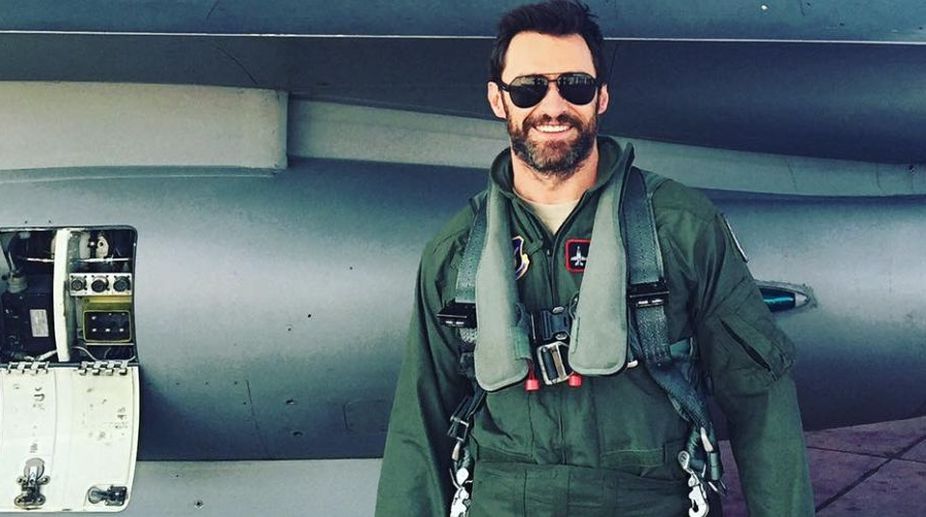
As Australian actor Hugh Jackman bids goodbye to his most iconic character, Wolverine after nine films and 17 years, what he will miss most is the sense of family in the X-Men film franchise. He feels this especially with Patrick Stewart, whose character Professor X has become a father figure to Wolverine over the years.

“I’m going to miss being on a set with this man,” says 48-year-old Jackman of the acclaimed 76-year-old British actor, at a press event in Taipei, “I like to think there’s such a thing as the art of living and, if there’s anyone who’s perfected that art, it’s this man here. I’ve learnt a lot about how to live life from him.”

That sense of family comes through in the new Wolverine film Logan, which opened yesterday. In it, Jackman plays a waning version of the eponymous superhero in 2029, when mutants like him have nearly vanished. Reduced to driving a limousine to make ends meet, he cares for the ailing Professor Charles Xavier, dubbed “America’s most wanted nonagenarian”, whose psychic powers have spiralled out of control as age erodes his mind.

Jackman was “star-struck” when he found himself on the set of the first X-Men film in 1999 with his idol Stewart, whom he had always dreamt of performing Shakespeare with. 17 years later, it is his turn to carry Stewart — literally, as Logan frequently lifts Charles in and out of a wheelchair.

“I told Hugh when we met to start work on the film that I had lost 20-plus pounds for the role and it was with him in mind,” quips Stewart, adding, “I felt safe, even when he was going very fast down a flight of narrow stairs.”

Their characters’ precarious existence on the Mexican border is interrupted by the arrival of young mutant Laura, played by 11-year-old newcomer Dafne Keen. Logan reluctantly becomes her surrogate father, as the three go on the run from the corporation that created her.

“Family is not convenient,” says Jackman, who is married to actress and producer Deborra-Lee Furness with two children. “It is annoying, frustrating, you don’t get to choose it; you have to learn to live together with people you have nothing in common with. It’s such a great microcosm of the world.”

With scenes of Logan driving through a wall between Mexico and the United States, and helpless people trying to cross a border to safety, one could draw parallels with the real-world issues of tightening immigration controls in America and the refugee crisis.

Jackman acknowledges this, but cautions against pigeonholing the film as a “political movie” that focuses only on the plight of certain groups of people. “It takes away from the heart of the movie, which speaks to every single person on the planet,” he says, “As uncomfortable or dangerous or annoying as it is, the road to living a worthwhile life in society is to open yourself up, to learn from the other, to put yourself in his shoes before your own.”

Stewart echoes his sentiment, “If only some of our leaders and political figures could practise that — stand where that person is standing, see it as your problem, not theirs — it could transform how we live.”

In what Jackman calls a “radical departure” from the rest of the franchise, Logan is no blockbuster adventure bursting with explosions, alien invasions or super-jets. Rather, it is three generations of mutants on a road trip. “It’s three superheroes in a car, needing gas and running out of battery,” Jackman says.

He, Stewart and Keen bonded during the long hours in which they were stuck in the car together. “We were in that car in pretty intense conditions,” says Stewart, “100o F temperature, 95 per cent humidity and ineffectual air-conditioning, which certainly did not reach the back seat, where I was!”

To pass the time, he says, they played word games Jackman invented and sang songs. “I saw the crew outside, wondering ‘What the heck is going on with those three?’ It was delightful.”

Both men were full of praise for their young English-Spanish co-star Keen, who did most of her own fighting in the film and hated being told to stop work at the end of the day, so much so that the producers had to sidle up to her parents to get them to intervene.

Jackman and Stewart’s long connection made it easy for them to banter and improvise, under the encouragement of director James Mangold. Stewart’s favourite ad-lib comes from a scene in which Logan tells a family they meet on the road that his “father” used to be the principal of a school, to which Charles, who formerly ran an institute for the X-Men, responds, “A special needs school”.

Such moments of levity inhabit an otherwise brutal film, in which Jackman took beatings so violent that his wife found them hard to watch. While shooting a fight scene, he accidentally punched his stunt double in the jaw; then took a blow to the face four takes later.

In the film, Logan’s powers of healing have begun to fail as he ages and the multiple wounds he sustains are starting to take their toll. Likewise for Jackman, it gets harder to be Wolverine as he gets older. “You can see I’m not healing as well,” he says ruefully, tapping a plaster on his nose left over from his latest skin cancer treatment — he had a sixth basal cell carcinoma removed last month.

As he had ruled out the possibility of another film as Wolverine, the stakes were high on set. “I was a bit of a pain in the neck to James,” he says. “I didn’t want there to be any regrets, feeling that we could have done anything else.”

Jackman may be leaving the franchise, but it will not be leaving him, he says. “We’ll still be at the table having dinner; we just don’t have to cook it anymore.”

Stewart, who previously said he would not rule out a return to the franchise, admits that he changed his mind as he watched the credits roll on the film a week ago in Berlin. “I realised I don’t think, in terms of Wolverine and Charles Xavier, that we can do better than this. This is a perfect conclusion.

“Maybe I’m done too. And I’m very, very content about that.”

The Straits Times/ANN

It’s the border tax, stupid!

Andrew Sheng |

As President Donald Trump finally sounded presidential in his address to the US Congress this week, after a tumultuous first month of sound and fury in tweets, executive orders and policy switches that left friends and foes around the world in total confusion.
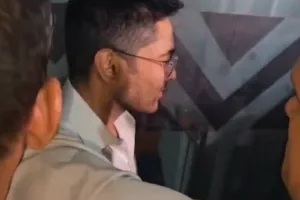
But listening and watching carefully President Trump’s showmanship, there is method to his seemingly erratic messages. They drive his opponents mad because they seem to disregard facts, logic or context. But the simple tweets in 140 characters convey very simple messages to his followers that he is delivering on what he promised – a Strong America and America First.
Trump is the first 21st-century politician that is using 21st-century technology to deliver his messages to the people, bypassing the traditional media, intellectuals, bureaucracy and establishment – what his chief strategist Steve Bannon defines as the “swamp”.

Trump’s tweets reduce complexity to simplicity – appealing to the gut. He diverts attention by making outrageous, politically incorrect points in order to gain tactical advantage.

is not the classic dictum “the medium is the message”, but rather “the message is the action”. Whether what is promised can be delivered is less relevant than whether the tweet strikes a political nerve. 21st century technology is all about instant gratification.

There is an ancient Chinese text called “Thirty Six Strategems” by an unknown author that probably dates back to the Warring States period (475-221 BC); it can be used to interpret the real signal behind what the Trump strategists mean and intend to do.

The first of the 36 strategems is “Crossing the Sea by Fooling Heaven”. The parable is about how to achieve one’s objective by deluding the masses by acting in the open, but diverting everyone’s attention. The theme of the strategem is that the best secrets are those right in the open – you signal left and turn right.

However outrageous, preposterous and seemingly illogical, Trump and his team have been consistent in one key message – he will deliver on his promises to his supporters. The more sound and fury against Trump, the more the media and the Democrats makes the man.

Bannon, the White House chief strategist, stirred emotions when he suggested in an interview with the press a fortnight ago about “deconstructing the administrative state.” There are three vertical buckets in his strategy – the delivery of stronger defense and homeland security; the economic nationalism of “re-constructing” trade arrangements, such as rejecting TPP; and thirdly, deconstruction of the administrative state in winding back regulations and the bureaucracy. All these appeal to the right wing of the Republican Party, who reject the liberal order that increased the size of government and the bureaucracy, creating more regulations and welfare that sapped the power of what Bannon called “enlightened capitalism”, the freedom to do business without the shackles of high taxes and big bureaucracy.

So far, the financial markets are cheering the Trump Administration, even though much of the promises are yet to be delivered. The reason is because all the major proposals appear to be pro-business – reduction in income tax, $1 trillion in infrastructure, $54 billion on additional defense, cutting welfare costs (Obamacare) and kicking out illegal “bad dudes”. If delivered (a big if for all measures), these are positive for short-term growth, inflation and job creation.

more the Democrats argue against these proposals, the more they set themselves up as the scapegoat if Trump’s promises cannot be delivered.

Politics aside, how is all such spending going to be paid for? The answer is the border tax.

Most believers in free trade and the current multilateral system forget that the Trump Administration is moving towards a series of bilateral negotiations, which means that the multilateral system will be “deconstructed” by starving it from new resources. These may include contributions to foreign aid, Environmental Protection Agency and the like.

Trump’s team is cleverly co-opting the cross-border tax idea, pushed hard by Paul Ryan, the Republican Congressional Speaker, to finance their policies going forward. The tax works on making import costs non-deductible, which according to a Peterson Institute study, is equivalent to a 25 per cent subsidy on exports and 25 per cent tax on imports. In the short-run, this will reduce the US trade deficit, which is consistent with the “Make America Strong” theme. Furthermore, it will fuel inflation, exactly what is required to reduce the US debt burden.

From this side of the Pacific, no one should be lulled by the fact that Trump has reversed course and endorsed the “One-China Policy.” The main victims of a border tax, which is almost certain to come, will be China and Asia, because that is the largest source of American imports other than Canada and Mexico. After all, the border tax is not aimed at Asia, but the effect is the same.

Thus, to dismiss the noise coming out of what appears to be chaotic and conflicting messages from the White House amidst cacophony of media and bureaucrats arguing against the Trump policies, is to miss the deep threat of the signal – he will restore American Exceptionalism by deconstructing the multilateral balanced order.

In tweet form, the biggest threat to Asian growth is the border tax.

The English philosopher of science, Stephen Toulmin (1922-2009) argued that in the shift from Modernity to Post-Modernity, there are two paths – one forward looking in facing the future, and the other nostalgic and backing into old ideas of religious purity and nationalism. Trumpland is not about the End of History, as forecast in 1990 by political scientist Francis Fukuyama, but about the Return or Revenge of History, in which American nationalism and protectionism is returning to its historical roots.

Managing this tumultuous change in political course will require all the wisdom of Asian classics. When the elephant charges, the last of the 36 Strategems may be the smartest for many: “To run is the best stratagem.” The trouble in an increasingly small world is that you can run, but you can’t hide.

The writer, a former Central banker, writes on global issues from an Asian perspective.