Logo

Rupee rises 4 paise to 4-month high in early trade

PTI | Mumbai |

Continuing with its strong rally, the rupee edged up another 4 paise to a four-month high of 66.63 against the US dollar in early trade on March 8 on increased selling of the American currency by banks and exporters.

Forex dealers said that besides the dollar's weakness against other currencies overseas, continued foreign fund inflows and a higher opening in domestic equity market also supported the rupee's momentum.

The rupee had closed at 66.63 on November 10 last year.

The local currency had ended 4 paise higher at 66.67 in trade on March 7, rising for the second consecutive day.

Meanwhile, the benchmark BSE Sensex rose by 22.76 points, or 0.07 per cent, to 29,022.32 in early session on March 8.

UP Assembly elections 2017: Last day of polling puts Varanasi in focus

SNS | Uttar Pradesh |

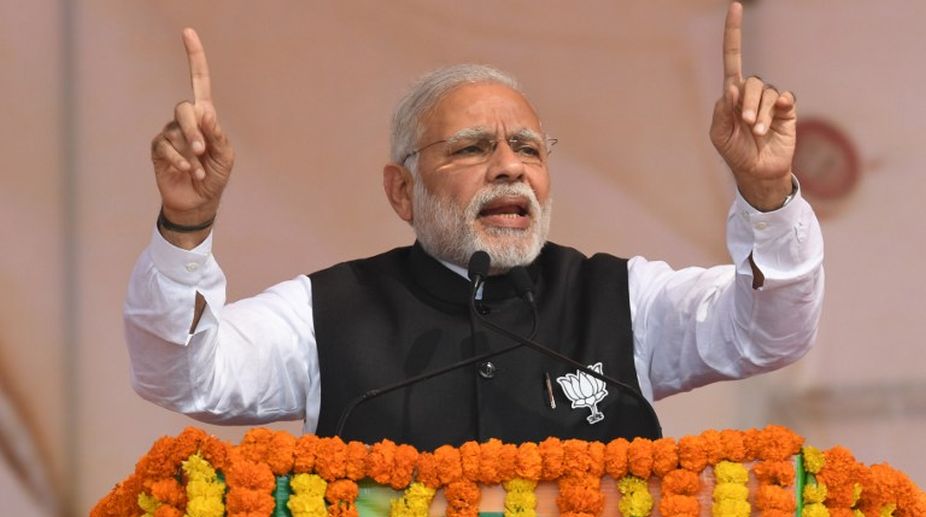
As the UP Assembly election 2017 enters the last day of polling on March 8, Prime Minister Narendra Modi’s constituency Varanasi has become the centre of attention. Polling in 40 constituencies across seven districts has started in the seventh phase of the UP Assembly election 2017 and a total of 1.41 crore voters, including 64.76 lakh women are expected to cast their votes. Till 9 am, the voting per cent was 10.43%.

The last phase of the UP polls saw extensive campaigning from party stalwarts. In the last few days itself Narendra Modi held many roadshows and election rallies. BSP’s Mayawati, Congress vice president Rahul Gandhi and Samajwadi party leader Akhilesh Yadav were among the others who led their parties in Varanasi. Prominent candidates in the last poll include BSP candidate Sibakatullah Ansari and Congress’ Ajai Rai, who is contesting from Pindra.

Seeing #ShaveYourOpinion on your Twitter feed? Here’s what it means

SNS |

Women have always been under pressure to look their best, be it in Bollywood or the corporate world. Appearance has always been one of the most important parameters by which a woman is judged. Although India is a free country but women from all races of life are always seen fighting for equal rights and equal treatment.
But leading ladies of Bollywood like Disha Patani, Sonakshi Sinha, Vidya Balan and Deepika Padukone among others have by and again taken a stand against body shamers. And now the television actresses have taken a stand against body shamers.
One such attempt against shamers is the new #ShaveYourOpinion. So, if you have been wondering what the celebrities are doing posting their pictures with razors we have the answer for you!
 
What is #ShaveYourOpinion?
 
#ShaveYourOpinion is a online campaign started by a few actresses to create awareness in the society that a woman can wear whatever she likes and nobody has the right to stop her. Taking the campaign forward, television actors like Jennifer Winget, Anita Hassanandani, Mandira Bedi, Ragini Khanna and Shruti Seth have posted a picture on their Instagram account holding a razor in their hand.
This campaign is especially gaining attention at a time when International Women’s day is around the corner and the celebrities are going full throttle to make a point against body shamers.
 

Manchester United star Zlatan Ibrahimovic accepts 3-match ban

As a result, the Swede has been ruled out of United's FA Cup quarterfinal tie against Chelsea.

SNS | New Delhi |

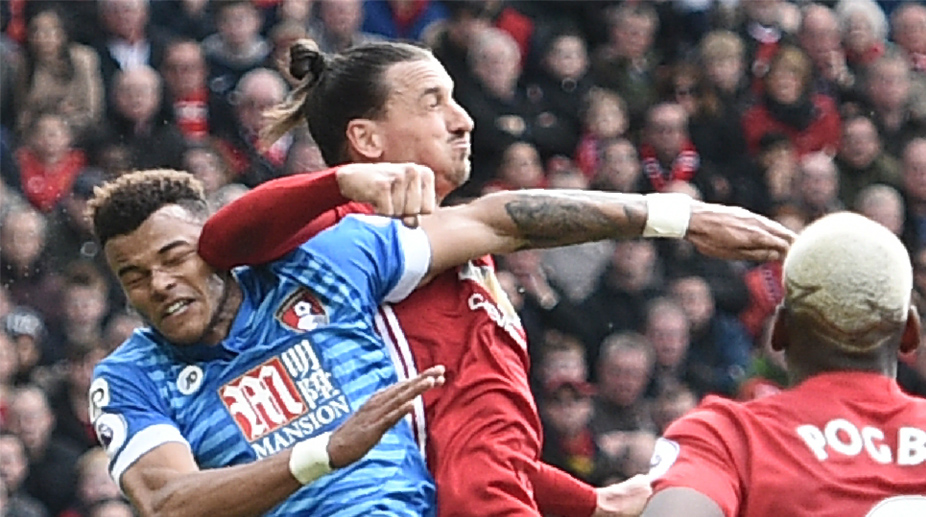
Manchester United’s star striker Zlatan Ibrahimovic on Tuesday accepted a 3-match ban slapped on him by the Football Association (FA) for elbowing Bournemouth defender Tyrone Mings during a English Premier League match between the sides on Sunday.

The FA released the following statement:
"Zlatan Ibrahimovic will serve a three-match suspension with immediate effect after he admitted an FA charge of violent conduct and accepted the standard penalty.
"It follows an incident in or around the 44th minute of the game between Manchester United and AFC Bournemouth on Saturday (4 March 2017).
"The misconduct was not seen by the match officials at the time but caught on video.”

The Swede has only missed one league game in the 2016-17 season with the English giants and that was a game against Arsenal in November.

The news comes at a particularly bad time for the Red Devils, as the 35-year-old will miss a crunch FA Cup quarterfinal against Chelsea and two subsequent league games against Middlesborough and West Brom. With the race for the Champions League spots heating up, United cannot afford to drop points and his big presence in the box will be sorely missed by the English giants as he is their top-scorer in all competions by a considerable margin.

He is, however, available for selection for United’s Europa League tie against Rostov as the suspension is applicable only for domestic fixtures.

Sensex opens on cautious note to recover 23 points

PTI | Mumbai |

The benchmark Sensex opened on a cautious note to recover almost 23 points in early trade on Wednesday on fresh buying by investors in select blue-chips amid foreign fund inflos wand mixed Asian cues.

However, investors turned cautious ahead of the exit poll results due on March 9 for the ongoing assembly elections.

Concerns have also grown over a hike in interest rates by the US Federal Reserve next week.

The 30-share index was trading higher by 22.76 points, or 0.07 per cent, to 29,022.32 with bank, healthcare, power, capital goods and FMCG leading the recovery.

The gauge had lost 48.63 points yesterday on profit-booking and the prospect of the Federal Reserve raising interest rates next week.

The NSE Nifty was up 10.15 points, or 0.11 per cent, at 8,957.05 in early trade.

Brokers said that buying by investors in select blue-chip stocks coupled with a mixed trend in other regional markets influenced sentiment here.

Among other Asian markets, Hong Kong's Hang Seng was up 0.48 per cent, Shanghai Composite Index rose 0.02 per cent, while Japan's Nikkei was down 0.50 per cent in early trade on Wednesday.

The US Dow Jones Industrial Average ended 0.14 per cent lower on March 7 trade.


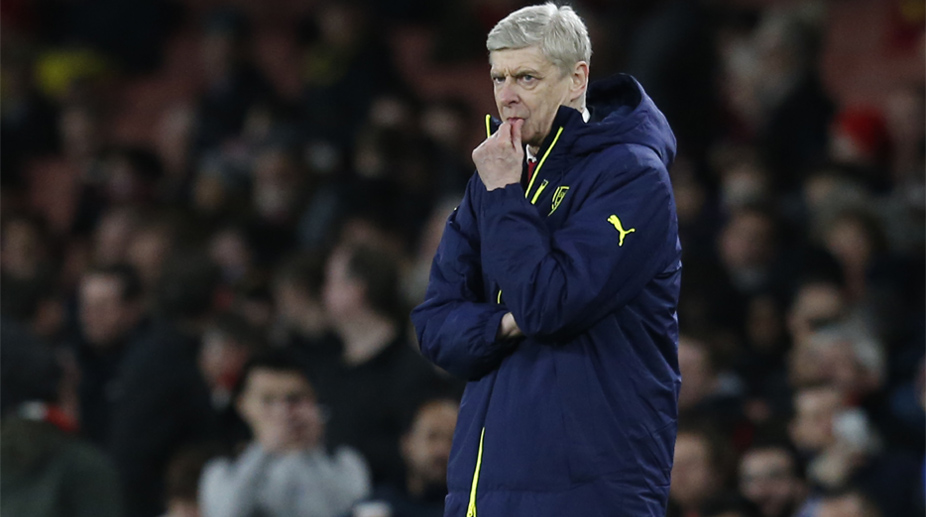
Arsene Wenger looks lost, says Arsenal legend Ian Wright

It is the seventh year in succession that Arsenal have gone out of the Champions League in the last 16.

AFP | London |

Arsenal great Ian Wright claimed the club were going through the worst period in their recent history after their 10-2 Champions League last 16 humiliation by Bayern Munich.

Bayern repeated their 5-1 first-leg win in Tuesday's second leg to condemn Arsene Wenger's side to their heaviest defeat at the Emirates Stadium since they moved from Highbury in 2006.

It is the seventh year in succession that Arsenal have gone out of the Champions League in the last 16.

"It's a sad day because we've gone out again at this stage. We're going through a period in our history that's the worst," Wright, who played under Wenger, said on BT Sport.

"With everything that's going on, you have to say it will take some sort of monumental effort for Arsenal to turn it around in terms of the drive and determination of the players.

It feels like something is coming to an end."

Wenger, who has been Arsenal manager since 1996, is out of contract at the end of the season and was the target of a protest from around 200 disgruntled fans prior to Tuesday's game. At the final whistle, some fans held up banners calling for him to leave.

Wenger has said he will make an announcement about his future either this month or next.

"He looks like a lost man," said Wright. "It just seems to be mounting up. You've got the fans, the protests. It's imploding."

Wednesday's British newspaper sports pages put the boot in, with several screaming "WENGER OUT" in a nod both to Arsenal's elimination and the calls from supporters for him to step down.

The Daily Express headlined its match report "SHAME AGAIN" and The Times said Wenger had hit an "all-time low".

The Daily Telegraph said Arsenal had been "humiliated", with Wenger "urged to quit by fans", while The Guardian said he had been left "staring into the abyss".

The Daily Mirror focused on a picture of Arsenal forward Alexis Sanchez supposedly smirking on the bench after being taken off, beneath the headline: "LAUGHING STOCK".

Wenger, 67, revolutionised Arsenal after arriving in England as a virtual unknown from Japanese club Nagoya Grampus Eight in September 1996.

He led the club to three Premier League titles and four FA Cups in his first nine seasons, including the famous 'Invincibles' league campaign of 2003-04 when Arsenal went 38 games without defeat.

But the years since have yielded only two FA Cup successes, in 2014 and 2015, and while Arsenal have continually qualified for the Champions League, they last reached the semi-finals in 2009.

A recent run of three defeats in five games has seen Arsenal drop out of the Champions League places in the Premier League. Their best hope of silverware lies in the FA Cup, with non-league Lincoln City due to visit the Emirates in the quarter-finals on Saturday.

My fault Steve Smith turned around: Peter Handscomb

Smith's contentious action has not gone down well with rival captain Virat Kohli.

PTI | New Delhi |

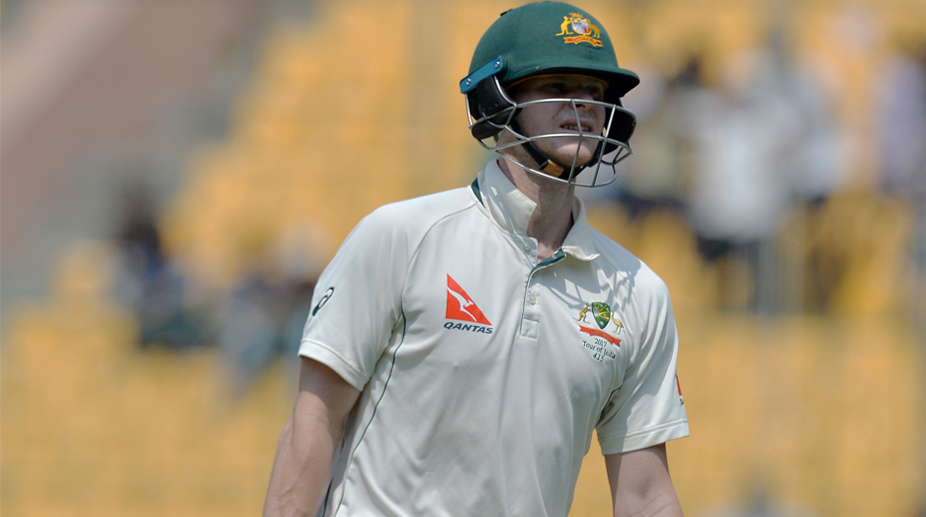
Australia batsman Peter Handscombe on Wednesday admitted his fault in suggesting skipper Steve Smith to seek inputs from the dressing room after being adjudged leg-before off Umesh Yadav on the fourth day of the second Test, which India won by 75 runs.

Smith's action did not go down well with rival captain Virat Kohli, who said that he would "never do something like that on cricket field."

Post midnight, it was Handscombe, who took to Twitter to defend his captain and take the blame for what Smith has termed as a "brain fade". Handscombe said he did not know the rules pertaining to DRS referral.

"I referred smudga to look at the box… my fault and was unaware of the rule. Shouldn't take anything away from what was an amazing game!," Handscombe wrote on his official twitter page.

Even former Australia captain Michael Clarke said that it was Handscombe who had suggested Smith to turn around while making it clear that he finds this move "unacceptable".

"I want to find out from the Australian team if they're using the DRS in that way, if they are then that is unacceptable," Clarke told a leading news channel.

"My concern and my worry is that when you look at the footage of what happened with Steve Smith, Peter Handscomb …
Actually suggests to Steve Smith to turn around and have a look at the support staff.

"If it is only a one-off, I don't think that would have happened. "The fact that Peter Handscomb is even thinking about telling the Australian captain to turn around and look to the support staff, I've got my concerns."

Kohli on his part had said:"We have been inconsistent with the DRS but we take our decisions on the field, we don't ask for confirmation from the dressing room. I have seen it twice while batting. I have seen their players looking upstairs (dressing room). I told the umpires, this had to stop. I don't want to mention the word but it falls in that bracket. I would never do something like that on the cricket field."

Former India captains Sunil Gavaskar and Sourav Ganguly were also critical of Smith's actions.

"I don't think that was in the spirit of the game. We have to see what the ICC and match referee do. I have not seen other earlier incidents but I saw it clearly when Smith did that today, he was clearly gesturing to the dressing room," Gavaskar told a tv channel.

Ganguly also demanded action from authorities.

"The umpires and match referee must ensure this doesn't happen in future," Ganguly said.

Champions League: Sergio Ramos rescues Real Madrid against Napoli

Once again, Los Blancos' captain delivered in an important game with a stunning performance!

SNS | New Delhi |

Sergio Ramos’s goalscoring instincts proved crucial yet again for holders Real Madrid, scoring one and forcing an own goal from Dries Mertens as the holders beat Napoli 3-1 away (6-2 aggregate) to progress to the quarterfinals of the UEFA Champions League for the seventh consecutive time on Wednesday night.

Napoli had lost just one of their last 20 European home ties sent out their strongest possible side and with an intent to attack Los Blancos from kick off.

And like in the first leg, the Gil Azzurri took the lead fairly early in the first half. Their domination in midfield was rewarded when Dries Mertens put the home side ahead in the 25th minute, sprinting on to Marek Hamsik’s through ball and finishing well past Keylor Navas from a tight angle.

Madrid tried to reason with a goal of their own and came close when star striker Cristiano Ronaldo rounded Pepe Reina in the box but hit the post to keep the Italian’s hopes of progressing to the next round alive.

It was Mertens’ turn to strike the post next, after a loose ball fell his way inside the Madrid penalty area as Napoli searched for a second goal which would really put the pressure on the 11-time champions.

Hamsik then was sent through off a long ball but didn't have the pace to beat Pepe and Ramos, who were hot on his heels and as a result, his shot from distance went nowhere near Navas and the goal
Trailing 1-0 at half time but still ahead on aggregate (3-2) Madrid knew they could not start the second half as they had started the first. And Zinedine Zidane’s half time talk seemed to have worked as the away side came out the stronger, pressing for a goal which would change the complexion of the tie.

While their midfield had begun to control possession, Madrid’s much-vaunted trio, the BBC (Bale, Benzema and Ronaldo), were stuck in second gear and had been limited to shots from distance.

It was left to their prolific scorer from the back, Ramos, to head home in the 51st minute from a Toni Kroos corner. Once that ball touched his temple, it was destined for the net and Napoli were up against it for now they needed to score a minimum of two to force the round-of-16 clash into extra time.

Ramos struck for the second time just six minutes later and while his header was on target, Pepe Reina had it covered but Mertens decided to defend it and it took a deflection off him to settle into the net, effectively confirming the result in Madrid’s favour.

Napoli then went all in a bid to score but while Madrid survived a couple of close brushes, they had a chance of their own to seal the match when full back Dani Carvajal made brilliant run into the box but could not apply the finish with the goal at his mercy

Substitute Alvaro Morata finally scored a third deep into injury-time to mirror the first leg’s scoreline, tapping home after Reina had initially saved Ronaldo’s shot.

While Madrid have not been in imperious form by any stretch of the imagination, their ability to churn out results while still stuck in second gear is impressive and alongside Bayern Munich and Paris Saint-Germain, are the top contenders for this year’s Champions League title.

Champions League: Bayern Munich wipe the floor with Arsenal

Closer to a basketball score than a football one, will this result spell the end of Wenger's reign?

SNS | New Delhi |

Bundesliga giants Bayern Munich made Arsenal’s miserable season worse with an 5-1 away win to send the Premier League side crashing out of the Champions League (10-2) on aggregate, in an incredibly one-sided affair at the Emirates Stadium on Tuesday night.

After the first leg of their round-of-16 tie had ended in a 5-1 result in favour of the Bavarians, the Gunners were left with literally mission impossible in the second leg but nobody could have predicted such an embarrassing scoreline.

Once the lineups were announced, however, most Arsenal fans must have felt it was not to be their night. 
For star winger Alexis Sanchez, benched for the Liverpool game on the weekend (Which they lost far too easily) was warming the bench for the second time in a week. Alongside him was Mesut Ozil, recovering from sickness and without two of their biggest names, it was always going to be difficult to get a positive result.

And on the darkest hour in the club’s rich history, they initially saw light at the end of the tunnel when Theo Walcott scored a solo goal to shock the away side in the 20th minute. The Gunners somehow had breached Manuel Neuer’s goal, much to the delight of the home fans.

It all proved to be a false dawn, however, as Bayern always looked in control after that even if they failed to breach David Ospina in the opening 45 minutes.

Post the interval, the Bayern storm hit Arsenal as Laurent Koscieny got himself sent off for a blatant shove on Robert Lewandowski inside the box in the 53rd minute. The Pole cooly dispatched his penalty two minutes later and with a man advantage, Bayern were guaranteed a win and it was always going to be a case of how many by the end of the night.

Arjen Robben, who scored a wondrous goal in the first leg, then put Bayern ahead on the night with a sweet left-footed finish after a one-two with Lewandowski had given him time to pick his corner from inside the penalty area in the 68th minute.

Instead of attempting damage control, Arsenal unwittingly went on the offensive, which left them susceptible on the counter. And substitute Douglas Costa got Bayern’s third off a rapid counter attack, sidestepping past Shkodran Mustafi before sending in a left-footed curler 12 minutes from time.

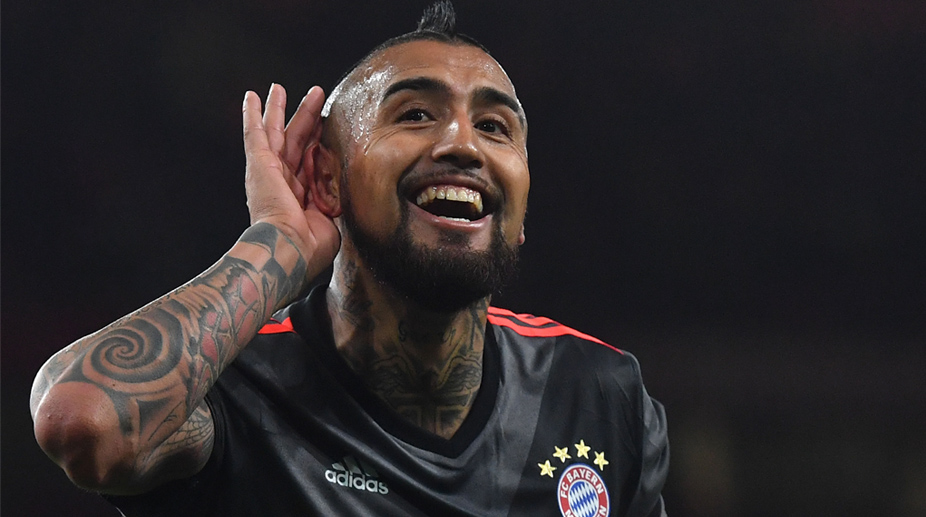
Arturo Vidal then wrapped up the match with two goals, the first which was a cheeky dink in the 80th minute and the second a tap in five minutes later after Costa had teed him up.

A 10-2 aggregate has no excuses and it is the heaviest defeat by any English club in the history of the UEFA Champions League and calls for Arsene Wenger to hand in his resignation will only grow louder and at this juncture, it is hard to disagree. While Arsenal have failed to make it to the last four in Europe for a long time, their domestic fortunes haven't been great either. 

For Carlo Ancelotti and Bayern, this tie has proven that Bayern are strong contenders for this year’s Champions League and if one considers the Italian manager’s successes on the continent, it would be hard to deny the Bavarians a sixth title come May.

Linking Aadhaar to legal entitlements will affect women, children: Activists

Asad Ashraf | New Delhi |

The recent announcement by the Human Resource Development Ministry to link Aadhaar card with various government programmes has caused much ire among activists working on legal entitlements. Such activists working with different organisations came together here on Tuesday on the eve of Women’s day and slammed the government for making Aadhaar card compulsory for availing several schemes which apply directly to women and children.  

The case against Aadhaar is pending in the Supreme Court at the moment, and legal experts believe that making it mandatory for anything in the mean time is illegal. Usha Ramanathan, an independent legal researcher, said, “To make Aadhaar mandatory as of now is completely illegal. “

"What we are seeing today is rampant and shameless illegality by the state. The Aadhaar inverts the idea of transparency. It makes people transparent but the state opaque. The Aadhaar has become about finding new ways to deny people their entitlements rather than making sure people actually receive entitlements. We are at a point when there are 50 per cent of children who are malnutritioned and now we are saying that they will not get food because they do not have an Aadhaar card," she added.

The Statesman also spoke to those who have been denied entitlements as they do not have an Aadhaar cards.

Gita from Laal Gumbad, Delhi, said her husband, eldest daughter and she had Aadhaar numbers while her other three children did not. She said "I gave birth certificates of 3 of my children who did not have Aadhaar. But they said Aadhaar is mandatory, then I got their Aadhaar cards made but when I went again they told me that now the quota is over and I cannot get rations." 

Amrita Johri of Satark Nagrik Sangathan explained, "Aadhaar relies on internet and electricity. This might seem like a problem only of rural areas. But we don't have to go far. In South Delhi in East Mehraam Nagar there is a ration shop with no signal, no network. Officials said we have to show that Aadhaar is a success. Finally in this South Delhi ration shop the POS  ( Public Distribution System) machine was hung on a jamun tree so it could work."

She asked "When there are so many failures, why is there no acknowledgment of this by the government?"

Anjali Bhardwaj, of  Satark Nagrik Sangathan, said, "Official data of the Delhi Government shows there is 0% failure rate of biometric authentication using Aadhaar. Despite the fact that on the ground we have found people whose biometrics never match with the machine. Those with biometric failures are shown as not coming to collect rations. Those who are shown as not coming to collect rations are shown as bogus, cards are cancelled and these are declared as savings.

“The Prime Minister said in the Lok Sabha in February 2017 that 4 crore ration cards were found bogus through use of Aadhaar in PDS. However, there is no information in the public domain about the details of these so-called bogus cards and the basis for declaring them bogus,“ she said.

  Magsaysay Award winner Bezwada Wilson of the Safai Karamchari Andolan said, "It is a problem for identity ~ identity of vulnerable communities. We (manual scavengers) want to bury our identity but society doesn't allow us. Aadhaar is a stigma upon us forever. Aadhaar is an obstacle it makes our identity forever. "

Control elements

Tapan Kumar Maitra |

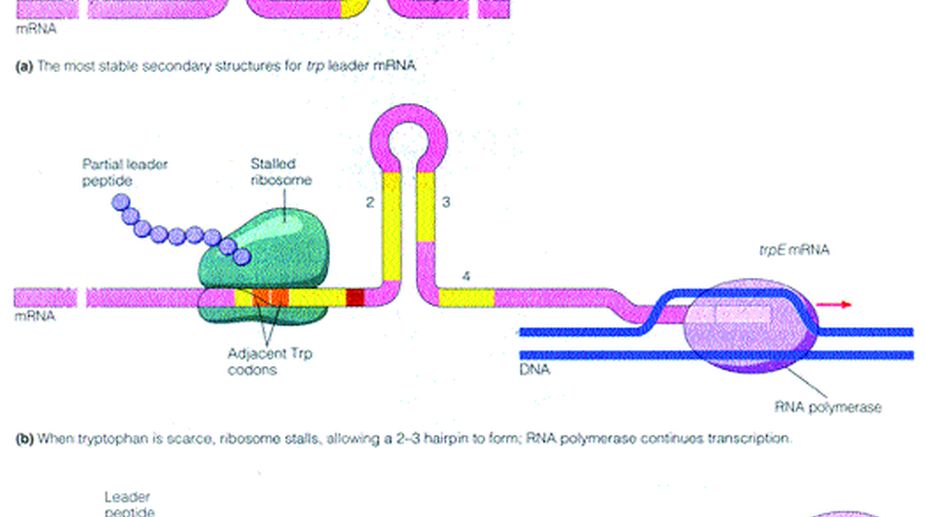
All the regulatory mechanisms so far control the initiation of transcription. Prokaryotes also employ some regulatory mechanisms that operate after the initiation step. A classic example was discovered when Charles Yanofsky and his colleagues found that the trp operon of E coli has a novel type of regulatory site located between the promoter/operator and the operon’s first gene, trpE. This stretch of DNA, called the leader sequence (or I), is transcribed to produce a leader mRNA segment, 162 nucleotides long, located at the end of the polycistronic trp mRNA.

Analysis of trp operson transcripts made under various conditions revealed that, as expected, the full-length, polycistronic trp mRNA is transcribed when tryptophan is scarce. This allows the enzymes of the tryptophan bio-synthetic pathway to be synthesised, and hence the pathway can produce more tryptophan. On the other hand, when tryptophan is plentiful, the genes coding for the enzymes of the tryptophan pathway are not transcribed, also as expected. An unexpected result, however, was that the DNA corresponding to most of the leader sequence is transcribed under such conditions. Based on these findings, Yanofsky suggested that the leader sequence contains a control region that is sensitive to tryptophan levels. This control sequence somehow determines not whether trp operon transcription can begin, but whether it will continue to completion. The effect of this control element was called attenuation because of its role in attenuating, or reducing, the synthesis of mRNA.

How the attenuation mechanism works, it must start with a closer look at the trp operon leader mRNA segment. This leader has two unusual features that enable it to play a regulatory role. First, in contrast to the non-translated leader sequences typically encountered at the end of mRNA molecules, a portion of the trp leader sequence is translated, forming a leader peptide 14 amino acids long. Within the mRNA sequence coding for this peptide are two adjacent codons for the amino acid tryptophan; these will prove important. Second, the trp leader mRNA also contains four segments (labelled regions 1, 2, 3, and 4) whose nucleotides can base-pair with each other to form several distinctive hairpin loop structures. The region comprising regions 3 and 4 plus an adjacent string of eight U nucleotides is called the terminator. When base pairing between regions 3 and 4 creates a hairpin loop, it acts as a transcription termination signal.

As Yanofsky’s experiments suggested, translation of the leader RNA plays a crucial role in the attenuation mechanism. A ribosome attaches to its first binding site on the trp mRNA as soon as the site appears, and from there it follows close behind the RNA polymerase. When tryptophan levels are low, the concentration of tryptophanyl tRNA (tRNA molecules carrying tryptophan) is also low. Thus, when the ribosome arrives at the tryptophan codons of the leader RNA, it stalls briefly, awaiting the arrival of tryptophanyl tRNA. The stalled ribosome blocks region 1, allowing an alternative hairpin structure to form by pairing regions 2 and 3. When region 3 is tied up in this way, it cannot pair with region 4 to create a termination structure, and so the RNA polymerase continues, eventually producing a complete mRNA transcript of the trp operon. Ribosomes use this mRNA to synthesise the tryptophan pathway enzymes, and production of tryptophan therefore increases.

The writer is Associate Professor, Head, Department Of Botany, Ananda Mohan College, Kolkata, and also Fellow, Botanical Society of Bengal, and can be contacted at tapanmaitra59@yahoo.co.in

When information is imperfect

Ananthanarayan |

In The Honeymoon Machine, a 1961 Hollywood farce, the computer aboard a US naval ship off the coast of Venice is used to predict outcomes at roulette. The National Bank was heading for bankruptcy when the role of the ship was detected and the US Government stepped in to avert a diplomatic crisis.

From an artificial intelligence viewpoint, predicting results at roulette is still outside the computers' capacity. With progress in the mathematics of how strategies are planned and methods of data analyses, however, computers are now doing better in other areas, which were thought to be outside their reach. Matej Moravcík, Martin Schmid, Neil Burch, Viliam Lisý, Dustin Morrill, Nolan Bard, Trevor Davis, Kevin Waugh, Michael Johanson and Michael Bowling, from the University of Alberta at Edmonton and the Charles University and the Czech Technical University at Prague report in the journal, Science, that yet another conceptual milestone has been passed, on the route of computers doing the things we thought only people can.  

One area where computers have proved themselves is in playing games of skill against human adversaries. A typical example is in chess, where each player has a vast choice of permissible moves, but only a few can lead to victory or avoid defeat. A method that many beginning human players try to use is to imagine the possible moves and counter-moves and then the answers, and the next lot of counter-moves, and so on. This, however, does not lead the player very far and, with practice, she switches to generic strategies. The computer, in contrast, has the capacity to analyse a huge number of possible exchanges. This ability alone, however, could not help computers, which still lost out to the experience of a good human player.

Computers then used a different tack, more like what a human player does — to look for patterns in board positions and select strategies from experience, making use of libraries and learning and getting better as the game progressed. Given the parameters of a situation, there is mathematical theory that can work out the strategy that is most likely to succeed, whatever the moves of the opponent, especially when the opponent uses the best possible strategy. Given the ability to analyse trends of data and to evaluate strategies, computers have got very good at chess, and a fine example is the hard time that IBM's Deep Blue computer gave grand master Gary Kasporov. Computers have similarly done very well in different kinds of board games, like Checkers, Backgammon and recently, the ancient Chinese game of GO.

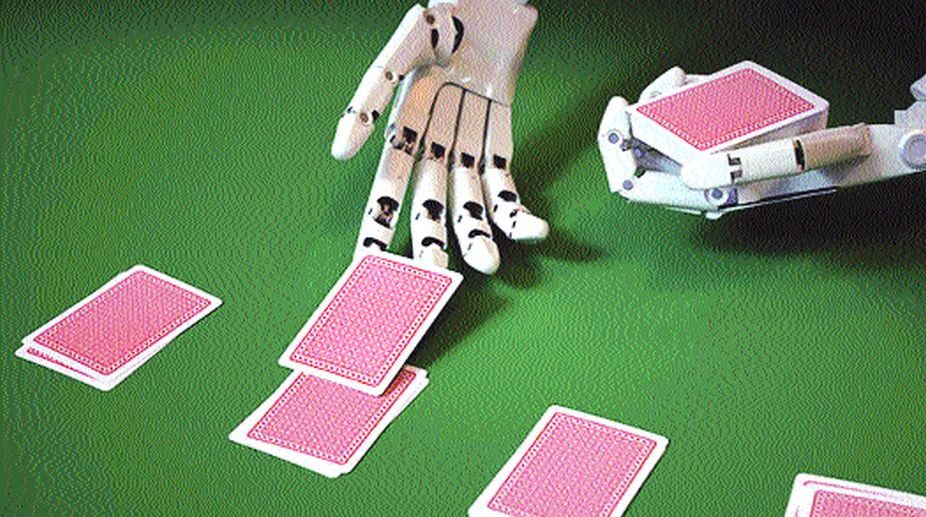
What these games have in common is that, with different degrees of complexity, all the data for generating moves that strengthen players' positions is there for both or all players to see. It is in these circumstances, of “perfect information”, that the algorithms, which help computers play these games, have worked. Another kind of game, which may be more akin to real life, is where all the data is not available to all players — a typical case is card games, where some of the cards known to one player are not known to others. How to programme computers to play this category of “imperfect information” games has been a challenge for over 60 years, say the authors of the paper in the journal. The authors then describe “DeepStack”, a computer procedure that can deal with this category of games, specifically a variation of poker, called “Heads up, no limit Texas hold'em”.

One method that computers use is to classify trends in data, which may represent images, for recognising patterns, or abstractions like the value of chessboard positions. This method seeks to fit the data into a formula, called a “hypothesis” and then to test the formula with untried situations. For example, a value, like the price of a house, may depend on a combination of factors like the area in square feet, the number of bathrooms, the number of floors, the area of the garden, the distance to the supermarket, the Metro station and so on. The computer tries out different weightages, or multiplying factors that attribute importance to the factors, to create an algebraic expression, based on the value of the factors, that works out the value of the house.

The method that is used to go from one set of multiplying factors to a better set is to change the factors in such a way that it minimises the sum of the differences between the values given by the hypothesis and the actual values. This difference is known as the cost function, and the values used are called the training values. Using these methods, which have grown in complexity and sophistication, a powerful computer can take in the data of the pixels of the screen of a digital camera and make out if the image is of house, a car, a dog or man or a woman. While it is routine for these programmes to compare fingerprints, they can now even recognise faces.

These programmes are now run the way the human brain works, which is, not by maintaining an exhaustive library with which to compare new data, but by strengthening the paths that lead to specific responses. In this way, networks of nerve cells in the brain go through a process of learning every time differently strengthened, random responses lead to correct or incorrect results. This is the way a human baby, for instance, learns the use of language long before she hears about the rules of grammar. Computers now mimic this process by creating layers of software “nodes” that receive inputs from the nodes in an earlier layer and then pass signals to the nodes in a subsequent layer. Whether the answer that the final layer outputs is correct or not then controls how multipliers along the path are increased or decreased, till paths that lead to correct answers become more likely.

As we just said, these methods have been successful in automating complex, adversarial problems, exemplified by games of strategy, but of the kind where the information available is there for all players to use. The other kind –”imperfect information” games — has additional features of each player not only using the extra information she has but also of trying to mislead other players into forming incorrect impressions of the assets the first player holds. And the game of poker, where players make bets on cards that only they know, against cards that only the other players know, consists of “bluffing, of little tactics of deception, of asking yourself what the other man is going to think…” in the words of Von Neuman, pioneer of strategy theory and computing, that the journal paper quotes.

In games like poker, the deception is practiced by both sides and “how our opponents' actions reveal their (private) information depends upon their knowledge of our private information and how our actions reveal it,” the authors say in the paper. Solving imperfect information games then involves this kind of “recursive” reasoning, where one thing depends on another, which itself depends on the first thing, and so on. The probability of a line of play being chosen by a player depends on the history of the game, the private information of the player, which could be revealed by the game history, and again the player's suspicions about others' private information revealed by their own past play history. The factor to be minimised, for improving strategy, then moves from the cost function, to a value called the counterfactual regret, which measures the difference between the utility of a method of play chosen and the value that was possible.
The DeepStack algorithm was then tried out in actual practice, playing 3,000 games each against eleven professional poker players. The result was that DeepStack could beat ten of these eleven pros “by a statistically significant margin”. While this is an achievement, the authors emphasise that the DeepStack algorithm represents a paradigm shift in the approach to large, sequential, imperfect information games. 

“With many real-world problems involving information asymmetry, DeepStack also has implications for seeing powerful Artificial Intelligence applied more in settings that do not fit the perfect information assumption. The abstraction paradigm for handling imperfect information has shown promise in applications like defending strategic resources and robust decision making as needed for medical treatment recommendations. DeepStack's continual resolving paradigm will hopefully open up many more possibilities,” the authors say.

The writer can be contacted at response@simplescience.in

Getting Ambedkar parks ready!

Arati R Jerath |

As UP’s bureaucracy sensing something that the media and pollsters have missed? Residents of Lucknow and NOIDA are surprised to see a flurry of activity at Mayawati’s Ambedkar Parks. Suddenly, they are being cleaned and spruced up, damaged statues of elephants are being repaired, statues of Dalit icons are being washed and polished and shrubs and trees are being trimmed.

Bureaucratic circles say the Lucknow Development Authority and NOIDA Development Authority have started the clean up on their own. There were no orders from above. Their explanation is that UP’s babudom is taking no chances. Suppose the next chief minister is Mayawati?

Although Mayawati and the BSP seemed to be trailing initially, reports suggest that they have picked up steam in eastern UP while the SP-Congress alliance is going down. Although the BJP maintains an edge, the buzz in the bureaucracy is that Mayawati is catching up. The babus want to be prepared just in case she sneaks past the BJP.

The parks were completely neglected under the Samajwadi Party government. Officials cleverly recognize that in its current mood of wooing Dalits, a BJP government in Lucknow would have no objections to Ambedkar Parks being given a facelift. And if Mayawati wins, the bureaucracy would be spared her wrath for not taking care of her parks.
Interestingly, both Authorities have set a deadline for the contractors of March 10. They want the parks ready the day before the results come out.

Blow hot, blow cold

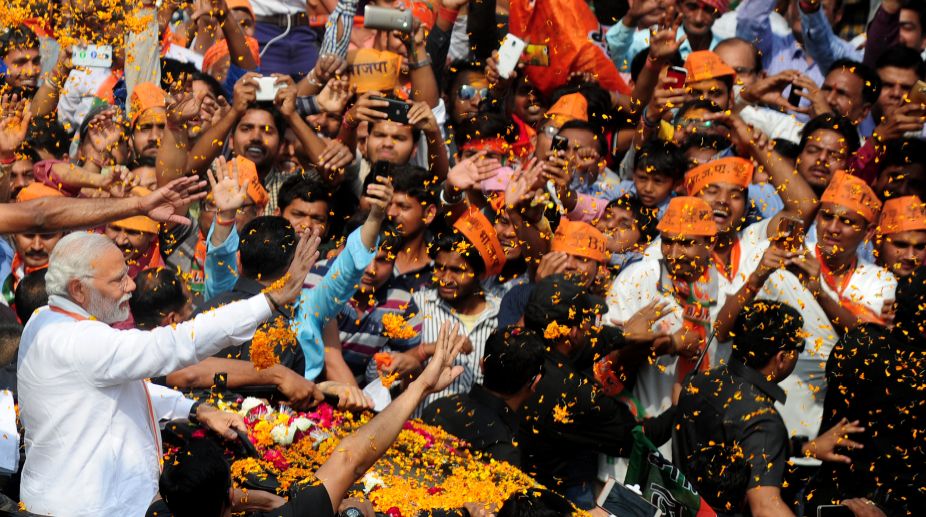
Residents of Varanasi were both tickled and annoyed by Narendra Modi’s three-day power show in their city.  They were tickled because they got to see the PM up close. Modi is such a star that it was like having a top film actor in their midst. Among the more amusing comments from bystanders who thronged the streets to catch a glimpse of the PM were remarks like the following: he’s so fair, his hair shines like silver.

And then there were those who were annoyed by the disruption his three-day sojourn caused. Shops were closed, restaurants shut, business came to a standstill and the police as usual harassed anybody and everybody who came in their way because they were in total panic about the security risk to the PM.

BJP insiders say that this last burst of intensive campaigning by Modi has certainly made a difference. It injected more enthusiasm in listless cadres and added fizz. The downside is that all the workers were so busy with arrangements for the roadshows, visits to temples and his rallies that electioneering work ground to a standstill. An important task that remains unfinished in the hullabaloo is the distribution of voter chits which guides voters to their booth, tells them their serial number in the voters’ list and familarises them with the party candidate. This is an important part of ground campaigning which BJP workers have not been able to complete in the excitement of hosting Modi in Varanasi.

Destination Varanasi

It was quite a sight to see virtually the entire union cabinet descend on Varanasi to campaign for the BJP. Some of them like Piyush Goyal decided to do a people’s campaign by mingling with common folk. He even sat in a small dhaba to eat the city’s famous kachori-aloo. A photo of him sitting on a wooden bench and tucking into the food was published in a local newspaper the next day and became a talking point in the city.    

Arun Jaitley surprised everyone by taking the first available flight to Varanasi after landing from a grueling trip to London. He was so anxious to be where the action is that he didn’t stop in Delhi for more than a quick breakfast and some freshening up.

His task in Varanasi was to mollify angry traders who are upset by the 30,000 income tax notices that have been sent after demonetisation. Traders attended his meeting hoping to hear some words of reassurance. Instead, they got a lecture about the benefits of demonetization and 7 per cent GDP growth rate despite notebandi.

As Jaitley droned on trying to whip up a feel-good factor, the traders decided that silence was the best policy. Not one opened his mouth to talk about their demonetisation woes, the income hit they have taken and their worries about the tax notices. Many of those who attended the meeting came away dissatisfied. There were also those who stayed away from the meeting as a form of protest.

Wooing boatmen

Remember controversial union minister of state Sadhvi Niranjan Jyoti? She had kicked up a storm with her communal campaign in the Delhi assembly election 2015, asking for votes for Ramazada, not haramzada. Her remark led to almost the entire winter session of Parliament being paralysed and the PM was forced to distance the government from the comment. Since then the Sadhvi has kept a low profile.

Well, she was back in action in Varanasi where she was deployed to campaign among her caste folk, the Nishads. This community of boatmen is upset with the BJP on various counts and Jyoti was tasked to try and woo them back. Nishads are an important voter group in Varanasi and depend on the Ganges for a living.

They are upset with the BJP and Modi because of plans to build a jetty at the Dashashwamedh Ghat for visitors to watch the famous evening Arti. Traditionally, boatmen row visitors out on the river to watch the arti. A jetty will finish their livelihood.

Niranajan has no answers to their problem or to their demand to be included in the list of Scheduled Castes instead of Backward Castes. But she is believed to have done what she does best, which is to polarize emotions on religious lines.

Game of ping-pong at the WTO

Armin Rosencranz, Aditya Vora |

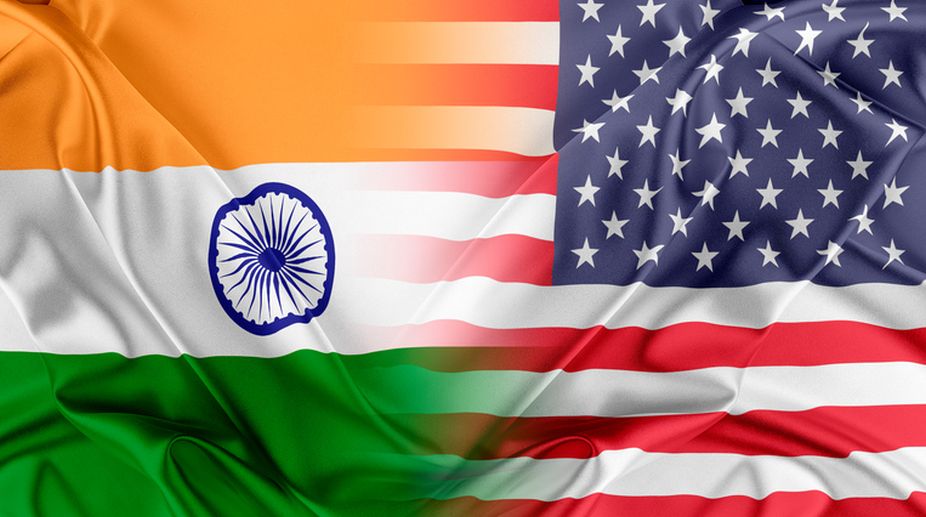
In the most recent turn of events in the tussle over domestic subsidies between the United States and India at the World Trade Organisation, the US, on 21 February vehemently opposed India’s plea to formulate a dispute resolution panel. This plea continues the case that India filed at the WTO in September 2016. India alleged that the domestic content requirements and subsidies provided by eight US states contravened WTO law, and are very similar to those under the Jawaharlal Nehru Solar Mission (JNSM) that the WTO Appellate Body earlier held to violate WTO law.

The United States argued that Article 3.10 of the Dispute Settlement Understanding (DSU) makes it clear that in instances where Member States use the WTO for political reasons not founded in law, the defending State has the right to summarily have the case disposed off. The DSU requires that the States use the WTO “in good faith” and that “complaints and counter-complaints […] [in distinct matters] should not be linked”.

To find the sweet spot in this chatter, the US and India’s domestic content requirements are similar. Eight US states provide incentives for using solar modules manufactured in their respective states. Similarly, the JNSM provides a requirement to use domestically produced solar modules manufactured in India. Both seem to fall short of complying with WTO law.

India takes issue with 11 US state laws. Three involve tax incentives related to biofuel produced in Montana; two involve renewable energy technology requirements in California; and the remaining six cover a variety of domestic content requirements for electricity production via solar, wind, and anaerobic digestion in Washington, Massachusetts, Connecticut, Michigan, Delaware and Minnesota.

Anaerobic digestion involves biological processes through which biodegradable materials (waste water and solid waste) break down to form biogas. This biogas can be combusted to generate electricity and heat.

The US victory last year in the dispute against India regarding local content requirements for JNSM will affect the US’s ability to defend its own state-level renewable energy programs: The Appellate Body of the WTO held that India's local content requirements violate national treatment obligations under Article III:4 of the GATT. It disregarded all of India's defences.

Considering the similarity between the US and Indian programmes, India should have a perfect precedent to argue its case. WTO members concur that the local content requirements violate core national treatment obligations.

Another defence for the US, though weak, would be under Article XXIV.12 that states all WTO members should take reasonable measures to ensure that the laws made by sub-national or state governments comply with WTO laws. The US may argue that it had taken “reasonable measures” to ensure compliance. However, there is no precedent for this under WTO practice. Moreover, such an argument would open a Pandora’s box for such exemptions and could close the route to challenge another country’s sub-national policies that breach WTO law.

India does not export a significant amount of renewable energy equipment to the U.S. and the state-level programmes in question have “virtually no effect on commerce,” according to the US. “At a time when WTO dispute settlement resources are stretched thin, we regret that India would seek to use WTO resources on such a matter,” complained the US.

India, for its part, reiterated arguments made in its 9 September 2016 consultation request. The 11 state-level renewable energy programmes it identified in that request allegedly contain production incentives based on local content requirements, in violation of the agreement on Subsidies and Countervailing Measures, Article III of the General Agreement on Tariffs and Trade, and Article 2.1 of the Agreement on Trade-Related Investment Measures.

Under the DSU, the first request for a dispute settlement panel may be blocked by any member, as the US did on 21 February. A second request may not be blocked. The next DSU meeting is slated for March 21, and the US appears to be out of options.

The writers are, respectively, professor of law and a student at the Jindal Global Law School (JGLS), Sonipat.

Game of ping-pong at the WTO

Armin Rosencranz, Aditya Vora |

In the most recent turn of events in the tussle over domestic subsidies between the United States and India at the World Trade Organisation, the US, on 21 February vehemently opposed India’s plea to formulate a dispute resolution panel. This plea continues the case that India filed at the WTO in September 2016. India alleged that the domestic content requirements and subsidies provided by eight US states contravened WTO law, and are very similar to those under the Jawaharlal Nehru Solar Mission (JNSM) that the WTO Appellate Body earlier held to violate WTO law.

The United States argued that Article 3.10 of the Dispute Settlement Understanding (DSU) makes it clear that in instances where Member States use the WTO for political reasons not founded in law, the defending State has the right to summarily have the case disposed off. The DSU requires that the States use the WTO “in good faith” and that “complaints and counter-complaints […] [in distinct matters] should not be linked”.

To find the sweet spot in this chatter, the US and India’s domestic content requirements are similar. Eight US states provide incentives for using solar modules manufactured in their respective states. Similarly, the JNSM provides a requirement to use domestically produced solar modules manufactured in India. Both seem to fall short of complying with WTO law.

India takes issue with 11 US state laws. Three involve tax incentives related to biofuel produced in Montana; two involve renewable energy technology requirements in California; and the remaining six cover a variety of domestic content requirements for electricity production via solar, wind, and anaerobic digestion in Washington, Massachusetts, Connecticut, Michigan, Delaware and Minnesota.

Anaerobic digestion involves biological processes through which biodegradable materials (waste water and solid waste) break down to form biogas. This biogas can be combusted to generate electricity and heat.

The US victory last year in the dispute against India regarding local content requirements for JNSM will affect the US’s ability to defend its own state-level renewable energy programs: The Appellate Body of the WTO held that India's local content requirements violate national treatment obligations under Article III:4 of the GATT. It disregarded all of India's defences.

Considering the similarity between the US and Indian programmes, India should have a perfect precedent to argue its case. WTO members concur that the local content requirements violate core national treatment obligations.

Another defence for the US, though weak, would be under Article XXIV.12 that states all WTO members should take reasonable measures to ensure that the laws made by sub-national or state governments comply with WTO laws. The US may argue that it had taken “reasonable measures” to ensure compliance. However, there is no precedent for this under WTO practice. Moreover, such an argument would open a Pandora’s box for such exemptions and could close the route to challenge another country’s sub-national policies that breach WTO law.

India does not export a significant amount of renewable energy equipment to the U.S. and the state-level programmes in question have “virtually no effect on commerce,” according to the US. “At a time when WTO dispute settlement resources are stretched thin, we regret that India would seek to use WTO resources on such a matter,” complained the US.

India, for its part, reiterated arguments made in its 9 September 2016 consultation request. The 11 state-level renewable energy programmes it identified in that request allegedly contain production incentives based on local content requirements, in violation of the agreement on Subsidies and Countervailing Measures, Article III of the General Agreement on Tariffs and Trade, and Article 2.1 of the Agreement on Trade-Related Investment Measures.

Under the DSU, the first request for a dispute settlement panel may be blocked by any member, as the US did on 21 February. A second request may not be blocked. The next DSU meeting is slated for March 21, and the US appears to be out of options.

The writers are, respectively, professor of law and a student at the Jindal Global Law School (JGLS), Sonipat.

The choppy Indus

Salman Haidar |

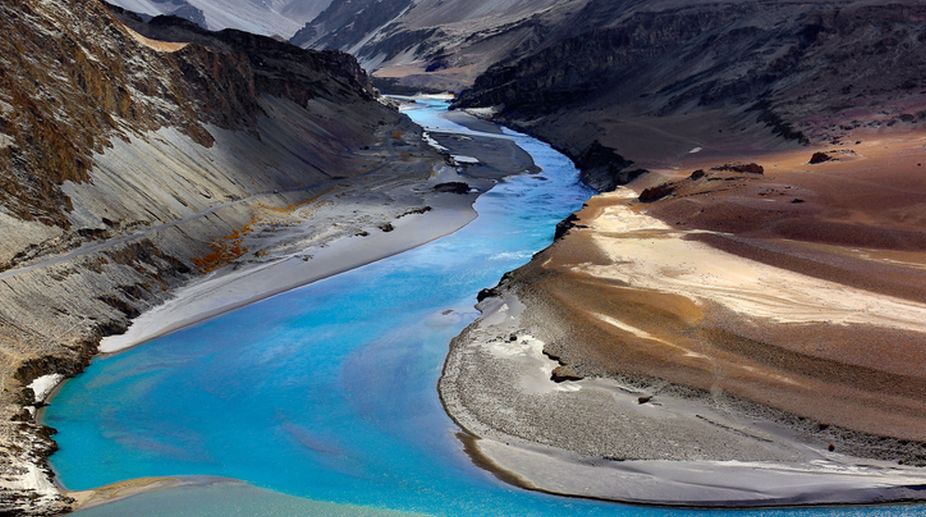
The Indus Waters Treaty (IWT) of 1960 is an important landmark in the bilateral affairs of India and Pakistan. When the country was divided in 1947 no issue seemed more likely to lead to violent conflict than the sharing of the waters of the Indus and its tributaries. For each of the two new countries, the Punjab, already torn and devastated, was the crucial breadbasket, source of food security and repository of hopes for the future, and neither felt it could afford to lose any part of the water supply from the elaborate modern irrigation system of the Indus that had brought prosperity to the expanses of the north Indian plains. But the terms of Partition took little account of this requirement; the boundary line bequeathed by the British made an impossible tangle of the irrigation system of Punjab, with the head works often located in India while the canals were downstream in Pakistan. In the seriously disturbed conditions of the time it was feared that unresolved claims on the waters could drive the two countries to war. In the event, these apprehensions proved unfounded but in the charged situation of the time there was real fear that the issue could spin out of control, which brought the two countries to make a serious effort to come to agreement so as to head off risk of conflict.

The IWT needs to be seen against this background as something more than a water-sharing arrangement, for it has features of a basic agreement aimed at preserving the peace. The gravity and complexity of the issues is such that negotiating the IWT was a long-drawn and immensely complicated process. Apart from the sustained effort of the two principals, it also needed the good offices of the World Bank to bring it to a conclusion, both as a facilitator and as a source of funding for dams and other structures that neither of the countries at that stage could readily provide on their own. To ensure that the agreement would function as envisaged, and that there was no tampering with the agreed arrangements, a bilateral Commission was established to meet regularly and keep a watchful eye on Treaty implementation. It was also decided that in the event of the two countries failing to agree among themselves, neutral experts acceptable to both sides would be appointed to go into the issues, and, eventually, should the need arise, for third party arbitration to decide on conflicting demands and claims. Thus implementation of the IWT is backed by groups of experts who can help maintain agreed procedures and resolve problems of implementation.

Since 1960 when the IWT came into operation, the regular consultation process mandated by the treaty has been maintained, not always smoothly or without dispute, but without any threatening disruption. With this, the IWT has survived decades of the troubled relations between India and Pakistan because both countries continue to find value in what it provides, and also because from the start it has been strongly backed by the World Bank. Meetings of the Commission have helped resolve many complex technical differences that could have threatened the IWT if left to themselves. As the lower riparian, Pakistan has always been very alert to anything that can look like denial by India of its proper downstream share of the water, and from time to time it has indulged in allegations of large-scale diversions by India. However, such suspicions have only reflected the general mistrust that affects bilateral ties and were unsupported by evidence, for it is obvious that engineering works for diversion structures cannot be constructed by stealth or be concealed from view.

Another supposed infringement by India that figured at one stage in Pakistan’s complaints arose from what were believed to be the military implications of India’s upstream projects. At least two of them, respectively on the Jhelum in Kashmir and Baglihar in Jammu, were held up because military strategists in Rawalpindi feared the storages could be manipulated to cause floods to gain tactical advantage in the event of Indo-Pak hostilities ~ the fears were always fanciful and had no tangible basis but give an idea of some of the hidden fears that may lie within the IWT.

The main challenge to the IWT, now as in the past, is not to be found in its intrinsic complexity so much as in the uncertain relations between India and Pakistan. As has been seen time and again, a downturn in bilateral relations can lead to demands to re-examine the relevance of the IWT, with it being argued that there is no benefit in continuing to remain engaged at times when India is being targeted by terrorists succoured from across the border. Some considerations of this nature seem to have led India to suspend its participation in the IWT Commission after the Uri attacks last September. Though India did not rescind its commitment to the IWT, it showed its unwillingness to maintain even minimum relations owing to these cross border attacks. Thereafter For some months implementation of IWT was suspended but now it seems the World Bank has been active in persuading the two sides to resume engagement and a meeting of the Commission is imminent. This is to be welcomed for the complicated issues of the IWT require attention if they are not to fester and lead to further complications.

It is not the standoff in the IWT alone that could be affected by the limited resumption of contact now planned, and India’s decision to attend the Lahore meeting can perhaps become a small step towards restoring a measure of normality in overall ties. Dialogue between the two countries has been in suspension but maybe some signs of easing are to be discerned, as in India’s readiness to acquiesce in the appointment of a Pakistani Secretary-General to head the SAARC Secretariat. This is not the first time that India has given its support to a Pakistani candidate, and SAARC has always sought to diversify its Secretariat by making room for all member states. Whatever may be its reservations about Pakistan’s role in South Asia, India has been supportive of SAARC and has tried to enhance its effectiveness by giving it more room for initiative, especially at the level of the Secretariat, so that it can hold its own in a diverse and fast changing world. Bilateral differences within SAARC have thus not been permitted to stand in the way of what can benefit the organization as a whole. The Indian decision to join the consensus in favour of the Pakistani candidate as SG of SAARC can be a small chink to encourage better cooperation in the region and perhaps even help restore some of the presently moribund ties.

The choppy Indus

Salman Haidar |

The Indus Waters Treaty (IWT) of 1960 is an important landmark in the bilateral affairs of India and Pakistan. When the country was divided in 1947 no issue seemed more likely to lead to violent conflict than the sharing of the waters of the Indus and its tributaries. For each of the two new countries, the Punjab, already torn and devastated, was the crucial breadbasket, source of food security and repository of hopes for the future, and neither felt it could afford to lose any part of the water supply from the elaborate modern irrigation system of the Indus that had brought prosperity to the expanses of the north Indian plains. But the terms of Partition took little account of this requirement; the boundary line bequeathed by the British made an impossible tangle of the irrigation system of Punjab, with the head works often located in India while the canals were downstream in Pakistan. In the seriously disturbed conditions of the time it was feared that unresolved claims on the waters could drive the two countries to war. In the event, these apprehensions proved unfounded but in the charged situation of the time there was real fear that the issue could spin out of control, which brought the two countries to make a serious effort to come to agreement so as to head off risk of conflict.

The IWT needs to be seen against this background as something more than a water-sharing arrangement, for it has features of a basic agreement aimed at preserving the peace. The gravity and complexity of the issues is such that negotiating the IWT was a long-drawn and immensely complicated process. Apart from the sustained effort of the two principals, it also needed the good offices of the World Bank to bring it to a conclusion, both as a facilitator and as a source of funding for dams and other structures that neither of the countries at that stage could readily provide on their own. To ensure that the agreement would function as envisaged, and that there was no tampering with the agreed arrangements, a bilateral Commission was established to meet regularly and keep a watchful eye on Treaty implementation. It was also decided that in the event of the two countries failing to agree among themselves, neutral experts acceptable to both sides would be appointed to go into the issues, and, eventually, should the need arise, for third party arbitration to decide on conflicting demands and claims. Thus implementation of the IWT is backed by groups of experts who can help maintain agreed procedures and resolve problems of implementation.

Since 1960 when the IWT came into operation, the regular consultation process mandated by the treaty has been maintained, not always smoothly or without dispute, but without any threatening disruption. With this, the IWT has survived decades of the troubled relations between India and Pakistan because both countries continue to find value in what it provides, and also because from the start it has been strongly backed by the World Bank. Meetings of the Commission have helped resolve many complex technical differences that could have threatened the IWT if left to themselves. As the lower riparian, Pakistan has always been very alert to anything that can look like denial by India of its proper downstream share of the water, and from time to time it has indulged in allegations of large-scale diversions by India. However, such suspicions have only reflected the general mistrust that affects bilateral ties and were unsupported by evidence, for it is obvious that engineering works for diversion structures cannot be constructed by stealth or be concealed from view.

Another supposed infringement by India that figured at one stage in Pakistan’s complaints arose from what were believed to be the military implications of India’s upstream projects. At least two of them, respectively on the Jhelum in Kashmir and Baglihar in Jammu, were held up because military strategists in Rawalpindi feared the storages could be manipulated to cause floods to gain tactical advantage in the event of Indo-Pak hostilities ~ the fears were always fanciful and had no tangible basis but give an idea of some of the hidden fears that may lie within the IWT.

The main challenge to the IWT, now as in the past, is not to be found in its intrinsic complexity so much as in the uncertain relations between India and Pakistan. As has been seen time and again, a downturn in bilateral relations can lead to demands to re-examine the relevance of the IWT, with it being argued that there is no benefit in continuing to remain engaged at times when India is being targeted by terrorists succoured from across the border. Some considerations of this nature seem to have led India to suspend its participation in the IWT Commission after the Uri attacks last September. Though India did not rescind its commitment to the IWT, it showed its unwillingness to maintain even minimum relations owing to these cross border attacks. Thereafter For some months implementation of IWT was suspended but now it seems the World Bank has been active in persuading the two sides to resume engagement and a meeting of the Commission is imminent. This is to be welcomed for the complicated issues of the IWT require attention if they are not to fester and lead to further complications.

It is not the standoff in the IWT alone that could be affected by the limited resumption of contact now planned, and India’s decision to attend the Lahore meeting can perhaps become a small step towards restoring a measure of normality in overall ties. Dialogue between the two countries has been in suspension but maybe some signs of easing are to be discerned, as in India’s readiness to acquiesce in the appointment of a Pakistani Secretary-General to head the SAARC Secretariat. This is not the first time that India has given its support to a Pakistani candidate, and SAARC has always sought to diversify its Secretariat by making room for all member states. Whatever may be its reservations about Pakistan’s role in South Asia, India has been supportive of SAARC and has tried to enhance its effectiveness by giving it more room for initiative, especially at the level of the Secretariat, so that it can hold its own in a diverse and fast changing world. Bilateral differences within SAARC have thus not been permitted to stand in the way of what can benefit the organization as a whole. The Indian decision to join the consensus in favour of the Pakistani candidate as SG of SAARC can be a small chink to encourage better cooperation in the region and perhaps even help restore some of the presently moribund ties.