Logo

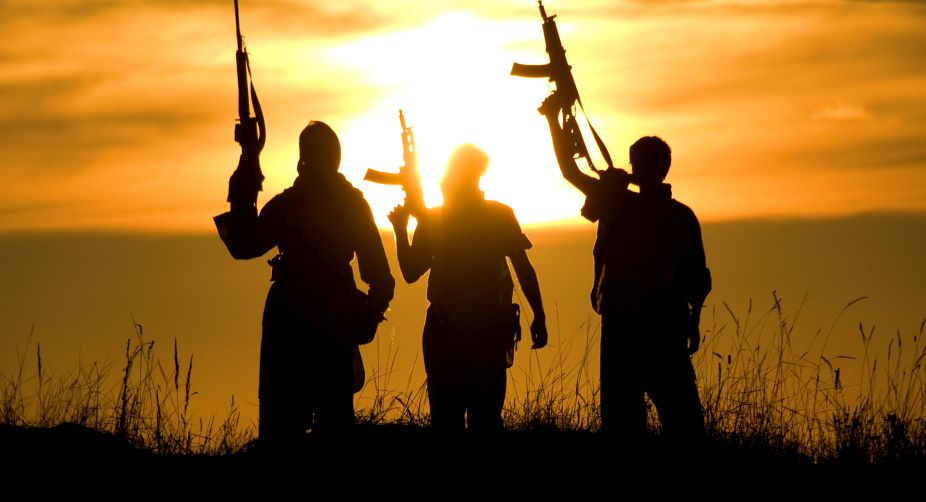
30 terrorists, 9 security men die in Pakistan operation

IANS | Islamabad |

More than 30 terrorists and nine security personnel have been killed in Pakistan since the army launched a major operation last month, the military said on Friday.

The military announced on February 22 the start of the countrywide operation codenamed "Radd-ul-Fasaad", ("Reject Discord"), after a series of terrorist attacks that killed over 100 people in the country.

According to the army's Inter-Service Public Relations, the security forces also foiled a number of terror attacks during the operation, which still continues across the country.

Nine security personnel have lost their lives in the operation.

In one of the major raids, five terrorist were killed on March 7 when they were planning to attack a judicial complex in Swabi, a district in northwestern Khyber-Pakhtunkhwa province.

The intelligence-based operation targeted sleeping cells of the militants who were using their hideouts to facilitate the bombers for terror attacks.

Army spokesman Major Gen. Asif Ghafoor said in a statement earlier that the operation was aimed at "indiscriminately eliminating residual and latent threat of terrorism, consolidating gains of operations made thus far and further ensuring security of the borders."

Young hands sow seeds for better tomorrow

Akash Khanna | New Delhi |

“Look deep into nature, and then you will understand everything better,” Albert Einstein once said.

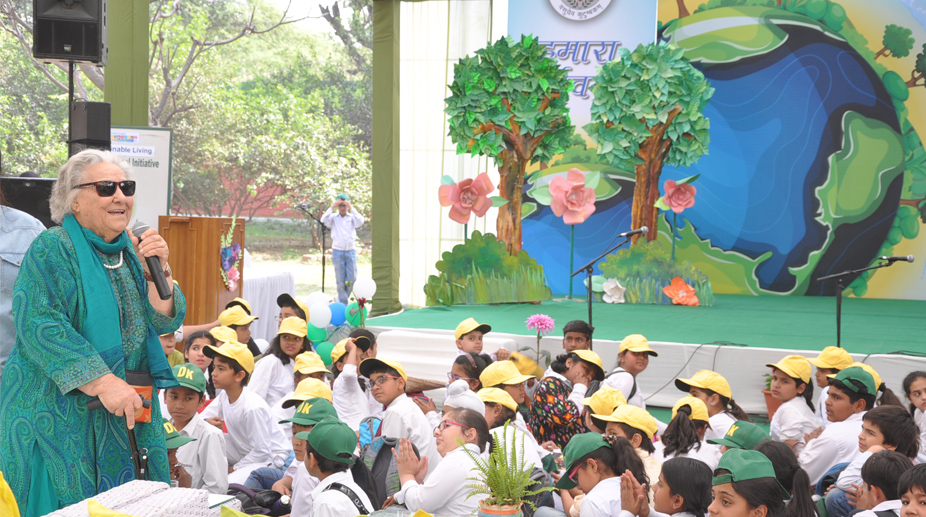
Motivated enough by the idea and to celebrate the season of spring, Springdales School, Dhaula Kuan and Pusa Road jointly organised a two-day environment festival ‘Hamara Paryavaran’ here. The event concluded on Friday.

“It feels good to see students are putting good efforts to preserve the environment,” BC Sabat, Senior Sc Officer/Eco Club Programme Coordinator, Department of Environment, Govt of Delhi, told thestatesman.com, at the event.

“Such events are important to motivate our students because they are the future of this society and only they can cherish these values if learn at an early age,” Sabat, who graced the event as chief guest, added.

He spoke about Eco Clubs run by the Delhi Government, where students are trained on various environmental issues. “We teach them about environmental issues like plantation, water conservation and measures to control air pollution,” he said.

Based on the idea of three As – Awareness, Action and Art, the environment festival exhibited workshops, artefacts and presentations of numerous agricultural practices followed at the school farm such as composting, paper recycling, gobar gas plant, rain water harvesting etc.

“It’s nice to know that children at such a young age are sensitised to a level where they are taking action. They are not just talking about problems but talking about their solutions as well,” Livleen Kahlon, the guest of honour, said watching the kids engrossed in agricultural practices.

Kahlon is Associate Director, Sustainable Development Outreach & Youth Education, The Energy and Research Institute (TERI).

“People are conscious and the level of awareness has increased in recent past,” she said, referring to the initiative taken by the school and requested other schools to work in the same direction.

Talking about the idea behind celebrating the environment festival, Springdales Schools Director Jyoti Bose said, “It’s important to expose urban children to the rural setup to inculcate respect for nature.”

Zidane looking forward to facing his ‘master’ Ancelotti in Champions League

The tie, which not only pits Madrid against a historic rival, sees them take on former coach Ancelotti.

IANS | Madrid |

Real Madrid head coach Zinedine Zidane commented on Friday that he thinks Real Madrid's Champions League quarter-final tie against Bayern Munich, currently under the guidance of former Spanish capital club coach Carlo Ancelotti, is evenly balanced.

The tie, which not only pits Madrid against a historic rival, sees them take on former coach Ancelotti, who led the Spanish side to their tenth European crown. The draw has given Madrid a slight advantage in that they play the first game in Munich with the return leg in front of their fans in the Santiago Bernabeu, reports Xinhua news agency.

"It is almost like master against student," commented Zidane, reminding reporters in Real Madrid's Friday press conference that he had been assistant coach to Ancelotti during his spell in Madrid.

"He is a good man and we all know what he did in Madrid," added Zidane who believes the tie is "50-50 … it is normally best to play the first leg away from home, but I don't have any preferences over that. We have to go there and score a goal and then we will see what happens in the return leg."

Zidane said he had no preferences whether he would rather win the Spanish league or the Champions League with Madrid.

"I would like to win them both and you have to try and win everything; at the moment we are five games from winning the Champions and 12 from the Liga. Bayern are a good side and a tough rival."

"They won't be scared of us, they have a good side and they are doing well, it is going to be attractive for the clubs and for football fans," he concluded.

At long last

Editorial | New Delhi |

Finally, after nearly 37 years of sustained effort the BJP has been able to install its government in Manipur. The political house that Congress chief minister Okram Ibobi Singh built over 15 years of his uninterrupted rule has finally crumbled. And this despite his party securing 28 seats in the 60-member House ~ three short of the magic figure to form a government. This should be seen as reassuring evidence of the voters’ faith in Ibobi’s government. After failing to muster the required strength, Ibobi stepped down gracefully, in keeping with democratic traditions.

The BJP’s performance ~ 21 seats ~ was impressive, given the fact that in its previous essays it had drawn a blank. As a matter of fact, even before the election it became clear that smaller groups like the National People’s Party (it won four seats), Naga People’s Front (four), Lok Janshakti (one) and All India Trinamul Congress and Independent (one each), would be the king-makers. Barring the last two, others are either NDA members or supporters.

Politicians in Manipur have the incredible ability to switch allegiance or offer themselves to the highest bidder. They also have the weakness to be sucked by centripetal forces. Little wonder, the BJP’s first chief minister, N Biren Singh, was, until three months ago, a disgruntled Congress minister. Such turncoats were largely responsible for political instability in the past. That Manipur saw the funerals of as many as 18 ministries between 1972 and 1998, carries its own tale. The BJP ministry’s stability will depend on how dexterously it distributes largesse. Every MLA wants a ministerial post and a plum portfolio. The party has to redeem several electoral promises such as fast and steady development, lifting the nearly five-month-old economic blockade and banning frequent imposition of bandhs and strikes and, most importantly, its assurance to the Meiteis in the 3 August 2015 framework Naga peace accord that the Centre signed with the NSCN (IM) leadership, where there is no mention of Manipur, implying no dismemberment of the state’s territory to satisfy the Nagas. Last but not the least, will the BJP be able to lift the ban imposed by a top Meitei militant group in July 2000 on screening of Hindi films, playing of Hindi music and display of sign boards in Hindi? And how long will it keep silent on the Manipuris’ most-hated Armed Forces (Special powers) Act, in force since the end of 1979?

Nepal’s coalition jitters

Editorial | New Delhi |

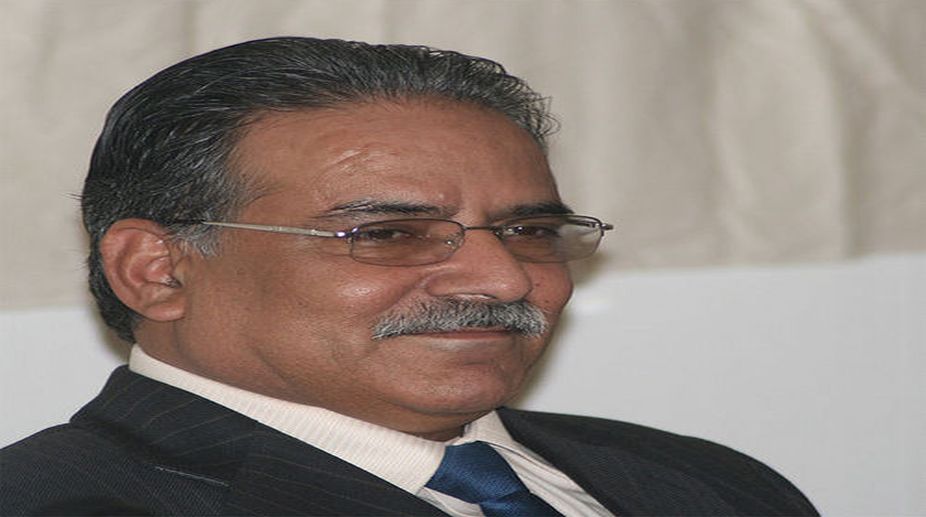
Nepal has been roiled by political instability since the devastating earthquake two years ago. The political temblors have reinforced the destabilisation caused by the natural. Indeed, the Himalayan country has known two Prime Ministers since 2015. Wednesday’s withdrawal of Madhesi support, specifically of the Samyukta Loktantrik Madhesi Morcha (SLMM), may not affect the Prachanda government as it has 320 members in the 601-member Constituent Assembly. The government led by the CPN-Maoist Centre is backed by the Nepali Congress, Rashtriya Prajatantra Party, and certain fringe entities. This can scarcely inspire confidence in Kathmandu, however. The degree of forward movement consequent upon last year’s decision of the Madhesis to join the Prachanda coalition has been dissipated in a little over six months. As a restive ethnic group on the border with India, the Madhesis have conveyed a robust message ~ the incumbent dispensation, much like the previous Oli government, has failed to meet the ultimatum to fulfill their festering demands, chiefly a reorganisation of the provinces and a liberal citizenship policy. The latest ultimatum expired on Tuesday, and the coalition has ceased to be a cohesive entity with the withdrawal of support. The Morcha has severed its seven-month-old ties, implicitly accusing the government of backtracking on assurances, indeed to take care of ethnic sensitivities. It bears recall that the constituents of the Madhesi-led Morcha had voted for Prachanda in the prime ministerial election on August 3 last year on the basis of the pledge that the government would concede their demand for an amendment to the Constitution. The Madhesi decision to withdraw support to the government came hours after Prachanda made a desperate last-ditch attempt to convince them to participate in the impending local polls. Once again he has promised to amend the Constitution but without addressing the core issue ~ reorganisation of the provincial boundaries. It was, therefore, unrealistic to expect the eleventh-hour feelers to mollify the ethnics. The other concerns that the Madhesis have raised are that the government had infringed upon the jurisdiction of provincial governments, which are yet to be formed, by declaring local-level elections. The government’s indifference runs counter to the terms of the three-point agreement reached last August, notably the pledge that the Prachanda government would amend the Constitution.

Regretfully, successive governments in Kathmandu have been impervious to the festering demands, resulting in a six-month economic blockade last year of the India-Nepal border by the Madhesis. With fuel and medicine supplies having been disrupted, India has unwittingly been drawn into the vortex of the dispute. Politically, Nepal may not be in crisis quite yet; but Prachanda will hopefully take a call on the contentious issues that are no less important than the local elections ~ apparently the Prime Minister’s immediate obsession. The credibility of the government is at stake.


Helming the MoD

Gurmeet Kanwal | New Delhi |

Defence Minister, Manohar Parrikar, has been sent back to Goa in the party’s interest to take over as the chief Minister once again. His departure has created a void at a critical time when the state of defence preparedness and slow pace of military modernisation need the government’s urgent attention. Major operational voids in the war establishment of the three Services need to be made up early in order to enhance combat readiness.

It is only in the last six months that Parrikar had launched a concerted drive to make up the existing deficiencies by invoking emergency financial powers of the government. The government had at long last begun to address the ‘critical hollowness’ plaguing defence preparedness ~ a term used by General VK Singh. He had also initiated reforms in the procedures for the acquisition and indigenous manufacture of weapons and equipment. A new minister will take time to settle down and learn the ropes of defence procurement. Large-scale deficiencies in ammunition and important items of equipment continue to adversely affect India’s readiness for war and the ability to sustain military operations over 20 to 30 days. According to a CAG report, the army is reported to have some varieties of ammunition for barely ten days of conflict and it will cost over Rs 20,000 crore to replenish stocks. It will be recalled that during the Kargil conflict in 1999, about 50,000 rounds of artillery ammunition had to be imported from South Africa. The occurrence of such a situation during a time of crisis must be avoided through a prudent replenishment and stocking policy.

The government has signed contracts with Russian manufacturers to procure ammunition and spares worth Rs 5,800 crore for the army and Rs 9,200 crore for the air force. Similar deals are being negotiated with French and Israeli companies. However, it has been reported that the traditional norms of stocking ammunition at intense rates for 30 days of fighting and normal rates for 30 days are being watered down. If this is true, it would be a retrograde step. 
Modernisation of the armed forces has been proceeding at a slow pace due to the inadequacy of funds, rigid procurement procedures, frequent changes in the qualitative requirements, the black-listing of several defence manufacturers and bureaucratic red tape. Parrikar had appointed a committee led by Dhirendra Singh, former Home Secretary, to review the Defence Procurement Procedure (DPP). Several pragmatic amendments were approved by the Defence minister and DPP 2016 was issued in early-April 2016.

Weapons and equipment purchase projects worth over Rs 1,50,000 crore have been accorded ‘acceptance of necessity’ (AON) by the Defence Acquisition Council (DAC) chaired by the Defence Minister since he took charge in late 2014. Contracts have been signed for acquisitions worth approximately Rs 90,000 crore. However, it will take three to five years before deliveries begin. In the army, artillery modernisation is yet to begin. There is an urgent need to acquire approximately 3,000 pieces of 155 mm/ 52-calibre guns to replace obsolescent guns and howitzers. So far a contract has been signed only for 145 pieces of M777 155 mm/45-calibre howitzers from the US. Air defence and army aviation units are also equipped with obsolete equipment that has degraded their readiness for combat and created vulnerabilities.

Modern wars are fought mostly during the hours of darkness, but most of the armoured fighting vehicles ~ tanks and infantry combat vehicles ~ are still ‘night blind’. Only about 650 T-90S tanks of Russian origin have genuine night-fighting capability. The infantry battalions need over 30,000 third generation night vision devices. Other requirements for infantry battalions include 66,000 assault rifles ~ a soldier’s basic weapon, carbines for close quarter battle, general purpose machine guns, light-weight anti-materiel rifles, mine protected vehicles, 390,000 ballistic helmets, and 180,000 lightweight bullet proof jackets. Action to acquire these items has been initiated and needs to be constantly monitored by the minister himself.

The Navy is in the process of building an air defence ship at Kochi to replace the aircraft carrier INS Vikrant, six Scorpene submarines at Mazagon Docks and 22 destroyers, frigates, corvettes and other ships such as fast attack craft, landing ships and support ships. However, India’s maritime security challenges are growing and the Navy not only needs to modernise but also expand its footprint in the Indo-Pacific region.

Modernisation plans of the air force are proceeding ahead, but at a snail’s pace. The MMRCA project to acquire 126 fighter aircraft to replace obsolete MiG-21s appears to have been shelved, except for the government’s plans to purchase 36 Rafale fighters from France for which a contract has been signed. Meanwhile, Lockheed Martin (F-16) and Boeing (F-18), both of the US, and Grippen of Sweden are reported to have jumped into the fray again with offers to produce their aircraft locally with transfer of technology (ToT). The IAF also requires two AWACS early warning aircraft, six mid-air refueller tankers, 56 transporter planes, 20 advance jet trainers, 38 basic trainers, 48 medium-lift helicopters, reconnaissance and surveillance helicopters, surface-to-air missile systems and electronic warfare suites. All three Services need to upgrade their C4I2SR capabilities to prepare for effects-based operations in a network-centric environment and to match ever increasing Chinese capabilities.

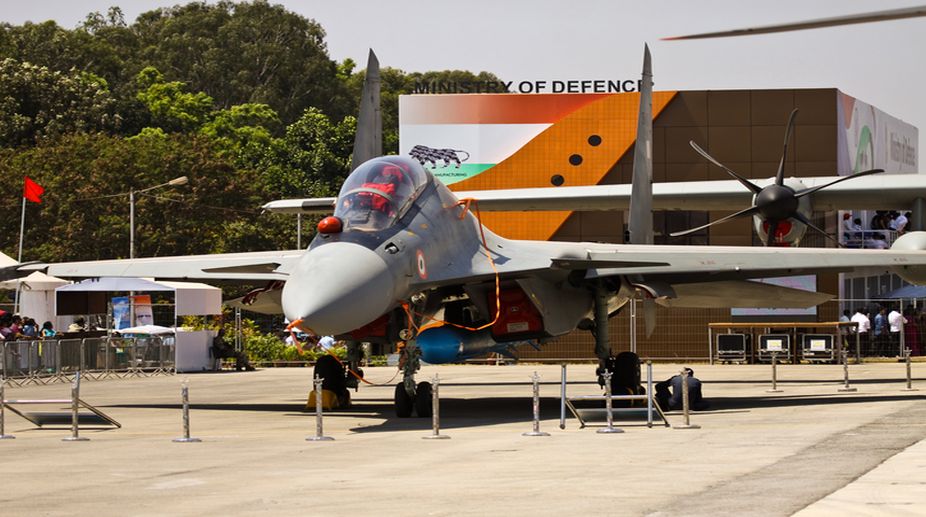
The serviceability state of warfighting equipment needs substantial improvement. Many frontline equipment are ‘out of action’ for want of spares. It is suspected that the delay in changing the old batteries of INS Sindhuratna could have been the cause of the accident that resulted in the death of two officers, injuries to seven sailors and irreparable damage to the submarine. The serviceability state of the SU-30MKI fighter-bomber fleet is reported to be just about 50 per cent. Numerous vehicles in the army are ‘off road’ for want of tyres, tubes, batteries and items likes spark plugs.
Financial management too needs a major overhaul. All of the required acquisitions are capital intensive and the present defence budget cannot support many of them. The defence budget for FY 2017-18 has dipped to 1.62 per cent of the country’s GDP ~ the lowest level since the disastrous 1962 War with China. Parliament’s Standing Committee on Defence and the armed forces have repeatedly recommended that it should be raised progressively to 3.0 per cent of the GDP if India is to build the defence capabilities that it needs to meet future threats and challenges and discharge its growing responsibilities as a regional power in Southern Asia. The budgetary allocations earmarked on the capital account for the modernisation of the armed forces will continue to be surrendered unless the government sets up a rolling, non-lapsable defence modernisation fund of approximately Rs 50,000 crore under the Consolidated Fund of India. Cutting down on wasteful subsidies from which the people do not really benefit in a meaningful manner would be one way to spare more funds for national security.

The armed forces are now in the fifth and final year ~ indeed the final month ~ of the 12th Defence Plan (2012-17). It was never formally approved with full financial backing by the Cabinet Committee on Security (CCS). The government also has not formally approved the long-term integrated perspective plan (LTIPP 2007-22) formulated by HQ Integrated Defence Staff.

Without these essential approvals, defence procurement is being undertaken through ad hoc annual procurement plans, rather than being based on duly prioritised long-term plans that are designed to systematically enhance India’s combat potential. These are serious lacunae as effective defence planning cannot be undertaken in a policy void. The government must commit itself to supporting long-term defence plans. Structural reforms need to be implemented in an early time-frame to improve national security decision-making and synergise defence planning. The most important issue that has been pending for long is the appointment of a Chief of Defence Staff (CDS). This was first recommended by the Arun Singh Committee on Defence Expenditure in the early 1990s and then by a Group of Ministers led by Deputy Prime Minister LK Advani. Though the CCS had approved the appointment of CDS, no one has been appointed as yet. It is time for the Modi-led NDA-2 government to implement the decision of the Vajpayee-led NDA-1. The new minister will have a lot on his plate and will need to put in many months of hard labour to come to grips with the complexities of defence preparedness and military modernisation in the prevailing regional environment.

The writer is Distinguished Fellow, Institute for Defence Studies,

‘We have changed with the times’

Rajan Bahadur | New Delhi |

What started as a food distribution programme is today a major international humanitarian agency delivering emergency relief and long-term international development projects. Founded in 1945, CARE International (Cooperative for Assistance and Relief Everywhere) has a presence in 80 countries.  Four years ago, it made the transition to an India entity, CARE India. The India board operates under the global CARE federation.

Speaking about the organisation’s work, CARE India’s Managing Director and CEO, Rajan Bahadur, elaborated upon the challenges faced in the various sectors, or verticals to ASHA RAMACHANDRAN. Excerpts:
 
Q: With Prime Minister Narendra Modi stressing on the need to educate the girl child, how is CARE India gearing up?

A: CARE India works under four verticals: health, education, livelihood and disaster preparedness and thereby disaster management. Within this, our focus is on women and the girl child. We are more focused on marginalised communities. We work across 14 states currently and we have a large operation of close to 40 projects. We have changed with the times. What was once for food distribution is a very different organisation now. As I mentioned, our focus is on women and the girl child.

Last year (FY 2015-16), CARE India directly reached out to 1.36 lakh children (52 per cent girls from the most marginalised communities). We also do a lot for education, including the Kasturba Gandhi Balika Vidyalayas (KGBV). We are not just impacting girl child but also training  teachers. Most of these are residential programmes.

Udan, a recent programme in Mewat, Haryana, is basically for girls who are school drop-outs and girls who have never been to schools. It’s a 11-month residential programme, where they work and learn with a peer group. So, the girls not just study but also (learn) community living and then we put them into the mainstream.

India is a huge country and there is so much differentiation between girls and boys. The basic DNA of CARE India is to make sure that we work at school level and also make a difference to the community. We build capability and capacity to bring that change.
 
Q: Despite several policy measures, the plight of women and their safety appears to have improved little. Your comments.

A: Protection of Women against Domestic Violence Act, 2005, is important. But we as an organisation would work on a platform which is more at ground level. So we would work with girls ad women to bring in that social change and a cultural change.

There is a difference between equality and equity. Say, in a family, food is never equally distributed. Normally it happens that the housewife gets the least. And when she is expecting, instead of getting more than her due, she continues to get less. Yet she is doing the maximum amount of work. So, I think a lot needs to be done in terms of how women and their roles are accepted in society.

CARE India works a lot with creating self-help groups (SHGs). Today there are people who have not stepped out of their houses and are running small businesses. These women are negotiating with banks.

We work with men as well and it’s worked wonderfully. So, men are also sensitised. But the basic thing is you can protect women against violence. Unless the men are sensitised, unless the household is sensitised too … there has to be a consensual (move).

The other thing is, when women become earning members, their respect within their families goes up ~ their acceptance, their dependence, all of that changes. The husband and the in-laws are supportive. They know there’s money coming in and because of money there is hygiene and better nutrition. We strongly believe that if a woman is empowered and has got the capacity, she makes a far greater difference for there’s a ripple effect around her.  We work a lot with boys and men as well. Unless we arrest the underlying cause of the problem ~ some of these are unequal power relations ~ we will never be able to create a level playing field.
 
Q: Women are also getting skills in negotiating and marketing, which were traditionally held by men?

A: Of course. We have various projects on skill building. Then there are related cycles of confidence levels. When the women are empowered, they make sure that what they couldn’t get, like education, their children will get them.
 
Q: Are there any changes needed in government policy and the law to meet needs of women?

A: Government is doing a lot. But the nature of the business is so large that a lot more needs to be done. They seem to be moving in the right direction. But it will take time. You can keep on criticising the Swachh Bharat Abhiyan or the Beti Bachao, Beti Padhao programmes. But they need time to gather momentum. Yes, more can be done. We (CARE India) are playing a far greater role. Government itself is very serious about this, which is a good thing.
 
Q: Can you throw some light on CARE's new models of public-private partnership and livelihood in the rural area?

A: Whether it’s land rights or agri-farming, we will work on that. These are important to us because these are marginalised tribal communities. And again, while our focus is women and girl child, it’s not like we don’t work with men. In fact, at the grassroots level, there has to be connectivity. You can’t be segregating one from the other. It actually works well when they have each other’s support.
 
Q: What are your views on PPP?

A: There are different ways of looking at it. CARE India works with the Centre, the state governments, with corporates, public sector companies and other NGOs. We help build the capacities of smaller NGOs. There may be areas during disasters where we are not present. We would then reach out to those with whom we already have an MoU, so that we can step in at any point of time and start working.
 
Q:. Turning to another major area of CARE India's work, disaster management, given India's strides in this sector, do you think the country is geared up to meet any eventuality? 

A: About 10-15 years ago, we could almost predict that say in UP during monsoons, certain areas would get flooded. Today, you can’t predict. Whether you attribute it to climate change, population expansion, or whatever, every month there is some disaster. Who could imagine Hyderabad or Chennai getting flooded? And flood means not just rainwater but crazy floods. So, I think things are changing.

When there’s a disaster, government agencies are sometimes dependent on organisations like us. What really counts is the human element. Everything else is secondary and everybody is on a level playing field.

After the tsunami and the Mumbai terrorist attack, there was a lot of learning. It was not that people did not know it earlier but nobody realised the magnitude. I’m sure that as an organisation, as an economy and as a government, we are far better prepared today.
 
Q: What is CARE India's role in disaster management and mitigation?

A: We work at two levels: disaster relief and, before that, with communities for disaster preparedness, how to anticipate and how to build more resilient homes and so on. It’s like a fire drill ~ prepare people how to go about it.

The writer is the Managing Director and CEO of CARE, India.

Time to sever ties with N Korea

June H. L. Wong | New Delhi |

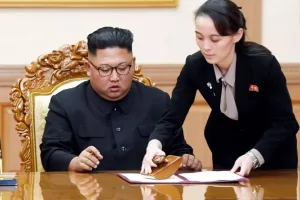
Serves North Korea right. Its Supreme Leader Kim Jong-un wanted his half-brother dead and his lackeys decided to do the dastardly deed in Malaysia.

Analysts have surmised Malaysia was chosen over Macau and Singapore – places Kim Jong-nam was also known to frequent – because it posed the least political and economic risk to North Korea.

Pyongyang must have also taken into consideration the relaxed and friendly ties between the two countries where its citizens could go in and out without visas and scrutiny.

So when Jong-nam was poisoned at Kuala Lumpur International Airport 2 on Feb 13, Pyongyang most likely expected unsuspecting Malaysia to believe a man named Kim Chol died of a heart attack and, since he had a diplomatic passport, dutifully release the body to the North Korean Embassy. End of story.

As it turned out, even the most well-laid plans can go awry and they certainly did for the North Koreans.

A day later, a Reuters report, quoting US and South Korean government sources, announced to the world Jong-nam’s strange, sudden death and the whole thing unravelled.

After that, Malaysian authorities couldn’t just let it go. By miscalculating badly, Jong-un brought massive world attention on himself and his insanely run nation.

Jong-nam’s assassination by a swipe of nerve poison is so surreal that it is the stuff of Hollywood movies. And it actually is.

In the 2014 comedy, The Interview, two American TV talkshow hosts, played by Seth Rogan and James Franco, get an exclusive invitation to interview Jong-un. The CIA gets wind of it and enlists the two to assassinate him with a fast-acting poison on a medical plaster to be administered by a handshake!

Pyongyang found the movie so offensive, it threatened “merciless retaliation” against the US. But maybe it also found inspiration in the modus operandi.

Even before Jong-nam’s sensational murder, there was little good news about North Korea.

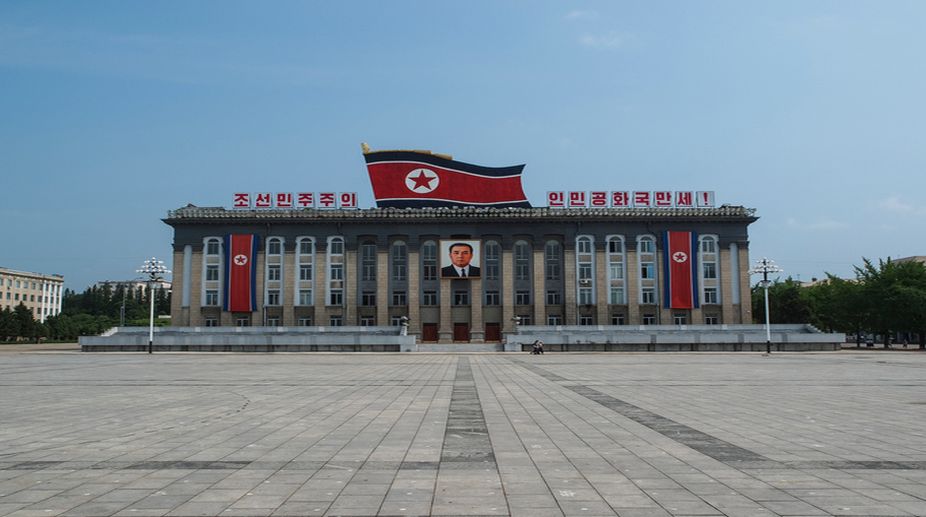
It has long made a mockery of its official name as the “Democratic People’s Republic of Korea”. This is a totalitarian hermit kingdom ruled by three generations of a dynastic family that has gotten more brutal and psychotic with each successor to the “throne”.

The Kims have been obsessed with building military might over feeding their brainwashed subjects. As a result, famine and starvation has been a recurring feature. In the 1980s, The Star newspaper started a North Korean Famine Fund that raised a few million ringgit from sympathetic Malaysians.

Another devastating famine struck from 1993 to 1999 which the United Nations says killed an estimated two million people.

The World Food Programme (WFP) was allowed entry in 1995 and never left. Two of the 11 Malaysians who managed to return from North Korea after Pyongyang’s decision to bar Malaysians from leaving the country, were working for WFP.

Then there was the horrifying news of how Jong-un executed his uncle by marriage, Jang Song-thaek and his entire family, including his son Yong-chol who was recalled as the ambassador to Malaysia, in December 2013.

Shocking as it was, since those killings involved North Korean citizens and took place on “home ground”, the rest of the world shrugged off the whole unsavoury episode and did nothing.

But North Korea has spilled blood outside its borders. Pyongyang was held responsible for the attempted assassination of South Korean president Chun doo-hwan during his official visit to Yangon, Myanmar, in October 1983 which killed 21 people, including four of his Cabinet ministers, and wounded 46 others. In November 1987, Pyongyang ordered the bombing of Korea Airlines Flight 858 which was flying from Baghdad to Seoul in an attempt to destabilise South Korea and disrupt the 1988 Olympic Games.

After each deadly episode, there was fury and condemnation. Yangon suspended diplomatic ties for a while but these were resumed to the extent Myanmar and North Korea were considered “secret allies” by the United States.

Malaysia-North Korea relations may have soured considerably but in all likelihood, bilateral ties would normalise after some time; already media interest in Jong-nam’s murder is winding down. His body will have to be eventually returned to North Korea and Malaysians stuck in Pyongyang will be allowed to leave.

But should we be so forgiving even though there were no Malaysian casualties in this incident? 

The assassination should be viewed in relation to what’s currently happening on the Korean Peninsula. For almost two decades since 1999, no diplomacy and international sanctions have been able to derail North Korea’s pursuit of its nuclear weapons programme.

When Jong-un took over in 2011, he made no bones that his “first, second and third” priorities were to strengthen his military. By 2016, he was able to test-fire dozens of missiles with possible nuclear warhead capability from mobile launches and submarines.

The latest test on March 6 with four long-range missiles fired into the sea, just 300km off the Japan’s northwest coast, has spooked Tokyo, angered Seoul and even rattled Beijing.

The situation is further complicated by Seoul hurriedly agreeing to the US installing its Terminal High Altitude Area Defence (THAAD) anti-missile system in South Korea. That has not gone down well with Beijing and Moscow.

As tensions escalate, putting North Korea and the US and its allies on a collision path, what should Malaysia and the rest of the Association of Southeast Asian Nations do?

All 10 members of Asean have long had formal diplomatic ties with Pyongyang, some more friendly than others, and the region ranks behind only China in economic importance for North Korea, according to the South China Morning Post which describes the number of North Korean diplomats in the region as “inordinate”.

Jong-nam’s murder has exposed how Pyongyang had exploited Asean’s “relaxed diplomatic policy to conduct clandestine activities in Kuala Lumpur and Singapore,” says SCMP.

This included North Korean intelligence agents using a front company, Glocom, with its office in the heart of Kuala Lumpur to sell battlefield radio equipment, in violation of UN sanctions.

The world waits to see how pugnacious President Donald Trump will handle North Korea. But Malaysia and the rest of Asean must also act and not go back to status quo because North Korea is not an east Asian problem for only the US, China, South Korea and Japan to tackle. As Albert Einstein warned, “The world is in greater peril from those who tolerate or encourage evil than from those who actually commit it.”

So Asean should stop being so nice and start dismantling Pyongyang’s spy nests in their midst. No amount of economic benefits can justify a bilateral relationship with a paranoid nation led by a murderous megalomaniac. 

The writer is the former group chief editor of The Star Media Group, Malaysia. This is a series of columns on global affairs written by top editors and columnists from members of the Asia News Network and published in newspapers and websites across the region.


Reliance-CPSE second ETF oversubscribed 3.7 times

IANS | Mumbai |

Retail investors of Reliance Mutual Fund Central Public Sector Enterprises-Exchange Traded Fund (CPSE ETF) have, on the final day on Friday, bid for Rs 9,200 crore, that is, over 3.7 times of Rs 2,500 crore issue size, the company announced here.

Reliance Mutual Fund, a part of Reliance Capital, plans to raise Rs 2,500 crore through its second further fund offer (FFO) of its CPSE ETF.

Over 1.2 lakh retail applications were received for the second FFO. Institutional portion was oversubscribed 7.6 times while retail portion was subscribed two times.

This is the third tranche on offer. Through two tranches earlier, the government raised Rs 3,000 crore in March 2014 and Rs 6,000 crore in January 2017, respectively.

"We, as Reliance, are delighted to have raised subscription interest of over Rs. 23,000 crore in the ETF in last two months leading Ato disinvestment of Rs 8,500 crore. This clearly shows the future potential of fund raising through ETFs," said Sundeep Sikka, CEO, Reliance Mutual Fund.

CPSE ETF, comprises scrips of 10 PSUs namely ONGC, Coal India, IOC, GAIL (India), Oil India, PFC, Bharat Electronics, REC, Engineers India and Container Corporation of India.

On Tuesday, anchor investors of CPSE ETF bid for Rs 5,700 crore, that is, over 7.5 times of Rs 750 crore of reserved quota.

Some of the anchor investors who participated in the bid on day one are BNP Paribas, Morgan Stanley, SocGen, CitiGroup while the domestic investors include LIC, Exide Insurance, SBI Bank, Axis Bank and Canara Bank.

Politicians, civil society protest linking Aadhaar with midday meals

Statesman News Service | New Delhi |

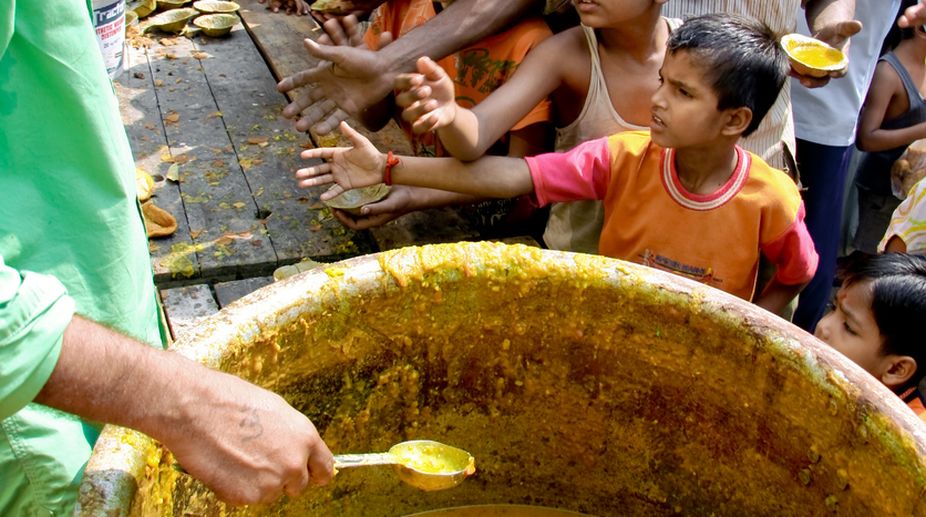
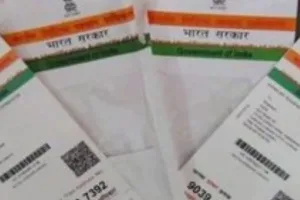
Taking forward the struggle against linking Aadhaar card with midday meals in government schools, National Federation of Indian Women and Right to Food campaign along with MPs from different political parties held a protest outside the Ministry of Human Resource Development here today.

The protest meeting was attended by hundreds of people from Uttar Pradesh, West Bengal, Odhisa, Rajasthan, Chhattisgarh, Jharkand and Bihar. Activists said they oppose any move by the Central government to make Aadhaar compulsory for children under the midday meal scheme in government schools.

Speaking at the meeting, Kavita Srivastava of Peoples Union for Civil Liberties (PUCL) said, “This government should not have any misconception that their electoral victories will dilute our struggle, we will continue to fight for the rights and legal entitlements of the most oppressed and backward communities. The rule for biometrics does not allow children under five years to have any biometric identification. "

Emphasising on government's willingness to get everyone enrolled under Aadhaar, she added, “Mr Modi as part of his Digital India project wants to see India as the largest digital empire in the world and that at the cost of sacrificing the entitlements of crores and crores of women , children and old people in this country. It’s also an indication that now we are moving towards surveillance states whereby a government wants to closely monitor the activities of every individual.”

Annie Raja of the National Federation of Indian Women insisted the government is moving towards complete privatisation by attacking these social welfare schemes.

“It is natural that when Aadhaar card is made mandatory for children to have their entitlements such as midday meal, a large chunk of them will remain excluded from getting these benefits, this will cut the expenditure of the government and in turn cause decrease of footfall in different schools," she said. “Is this the way Prime Minister wants to build a new India, with illiterate youths?” she asked.

In a series of orders, the Supreme Court has made it clear that Aadhaar cannot be made compulsory for people's entitlements. However, in the last few years, Aadhaar has been made compulsory for a growing list of welfare schemes.

The protest meeting was later joined by Rajya Sabha MPs Oscar Fernandes of Congress and D Raja of the CPI. Addressing the gathering, Fernandes said linking Aadhaar card with midday meal is absolutely ridiculous. "Children from our own country are studying in these schools, the government is trying to withdraw the social welfare schemes initiated by the UPA government. We gave children food and pen in schools, the government is snatching it away from them," he said.

D Raja of the CPI said his party will continue to fight over this issue both outside and inside Parliament. “We raised this issue in Parliament yesterday, it is important for the government to understand that having Aadhaar is voluntary and not mandatory. I understand the concern of people since I myself went to a school where midday meal was served to us."

The government in its last notification had mentioned that schoolchildren will continue to avail the facility of midday meal by using other identities but eventually they will have to get an Aadhaar card.

Rly officers being sent to Japan, China for training in high speed train tech

Statesman News Service | New Delhi |

A slew of railway officers will be sent to Japan and China for getting specialised training on high speed rail technology. Thirty eight officers of various services of Indian Railways have been identified for getting the training in Japan. This will be the second batch of railway officers going to Japan for such training.

Political clearance is being obtained from the Ministry of External Affairs for sending another lot of railway officers to China. The first batch will comprise 40 railway officers. They will go to South West Jiaotong University for a training course in civil engineering. An academic services agreement was signed with Jiaotong University.

A high-speed train corridor with 15 stations is being proposed between Ahmedabad and Mumbai. Japan International Cooperation Agency (JICA) has been conducting feasibility studies for setting up of high speed railway corridor.

It is also learnt that Railway officers will be getting training in the IITs and IIMs, India’s premier engineering and management institutes. The Indian Railways will be sending 20 officers from various services to IITs and IIMs for rail-related research and advanced studies.

The focus will be on upgrading the tracks, signalling and electrification system on the railway tracks so as to improve punctuality and speed of trains. This assumes greater significance in the wake of the railways introducing high-speed rail network in the country.

Panel calls for streamlining of NITI Aayog

Statesman News Service | New Delhi |

After a scrutiny of NITI Aayog’s 2017-18 budgetary demands, the Parliamentary Standing Committee on Finance today said the Aayog should be “suitably” streamlined to handle its wide range of functions, like guiding Central and state governments as a think tank, resolving inter-state disputes, conducting studies and setting up tinkering labs.

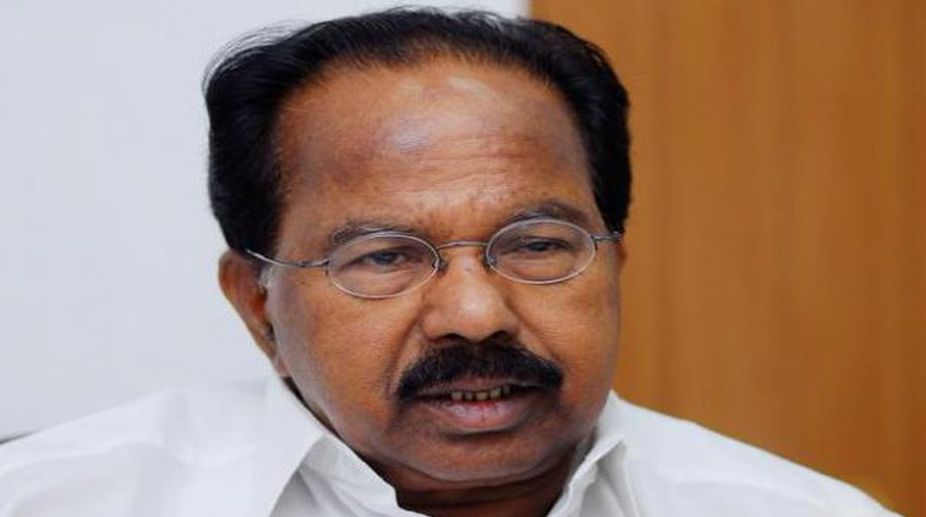
In its report presented to Parliament, the Committee headed by Mr Veerappa Moily, said its “general impression” was that “although various initiatives seem to have been launched by the NITI with much fanfare, the concrete outcomes expected from them seem to be missing”.

The committee admonished the Ministry of Planning (NITI Aayog) for delayed submission of its budgetary details.
The committee said it wants the NITI “to focus more on results, outcomes and the concretisation of well-conceived ideas and innovations”. It said “as the allocative role of the erstwhile Planning Commission is not to be played any longer, the Committee would suggest that the NITI should now function as an effective think-tank guiding the Central and State Governments in policy-making and also implementation of governmental programmes and schemes”.

Reviewing the functioning of NITI Aayog which replaced the Planning Commission two years ago, the Standing Committee said the Aayog’s two schemes, Atal Innovation Mission (AIM) and Self-Employment and Talent Utilisation (SETU), were assigned Rs 150 crore and Rs 1000 crore, respectively, in the 2015-16 Budget but the provisions were later reduced to just Rs 2 crore in the absence of guidelines, rendering the well-devised schemes infructuous.

The Committee said in its previous report, it had expressed displeasure on the “lackadaisical approach and inability of NITI” to share any information on its Mid-Term Appraisal (MTA) of the 12th Five Year Plan, which comes to a close this month-end. “They (the committee) are dismayed to know that till last year, NITI had only prepared a draft appraisal document,” the report said. After its 12th Plan MTA, the NITI should institutionalise the MTAs in its working for
future, the committee said.

Expressing doubts about whether the NITI Aayog had the wherewithal to deal with its extensive responsibilities, the Committee said the Aayog had not given information on the allocations it proposed for its various initiatives. The committee’s report said it wanted to know about the data mining and analysis being done by it in its
various studies and appraisals.

“The Committee would urge upon them (NITI) to refocus on the programmes and schemes meant particularly for the social sector, as the Ministry of Finance, by its very nature, can only play a limited role in this regard due to their orientation towards fiscal consolidation,” the report said. The Committee said it expects the “present role and
mandate of NITI to be accordingly simplified with greater clarity and vision about its assigned role and functions”. It desired that the NITI focus on resolving inter-state disputes and conflicts between communities, like water disputes.

4 out of 10 RTIs rejected on grounds not permitted under Act

Statesman News Service | New Delhi |

While the Government of India received a record number of 9.76 lakh RTIs, four out of every 10 RTIs rejected were on grounds not permitted under the RTI Act, according to the Central Information Commission's 2015-16 annual report.

A quick analysis of the report carried out by Venkatesh Nayak of the Commonwealth Human Rights Initiative (CHRI) found that during 2015-2016, 9.76 lakh RTI applications were said to have been received by registered public authorities which is 2.21 lakh or 22.67% more than that received in 2014-15.

The analysis carried out by CHRI found that the public authorities rejected 6.62 per cent of the RTI applications processed during 2015-2016. This seems to have come down by 1.77% from the high of 8.39 reported in 2014-15.

The analysis found that the highest proportion of RTI applications was not rejected under permissible exemptions but in the mysterious category of “others”. Of 43% rejections recorded under this category, more than 4 out of every 10 RTI applications rejected were for reasons other than those permitted by the RTI Act.

The Prime Minister’s Office is one of the public authorities that employed this device frequently.

Forty seven per cent of the 9.76 RTIs were rejected under various clauses in Section 8 of the RTI ACT. One per cent was rejected under Section 9 and 7% were rejected by the 26 security and intelligence organisations partially excluded under Section 24 of the RTI Act.

The analysis of the CIC report by CHRI also said the Ministry of Drinking Water and Sanitation and Ministry of Overseas Indian Affairs have not reported their RTI statistics despite registering with the CIC. On the other hand, only 33 % of the public authorities from the Ministry Of Road Transport and Highways reported their RTI statistics to the CIC.

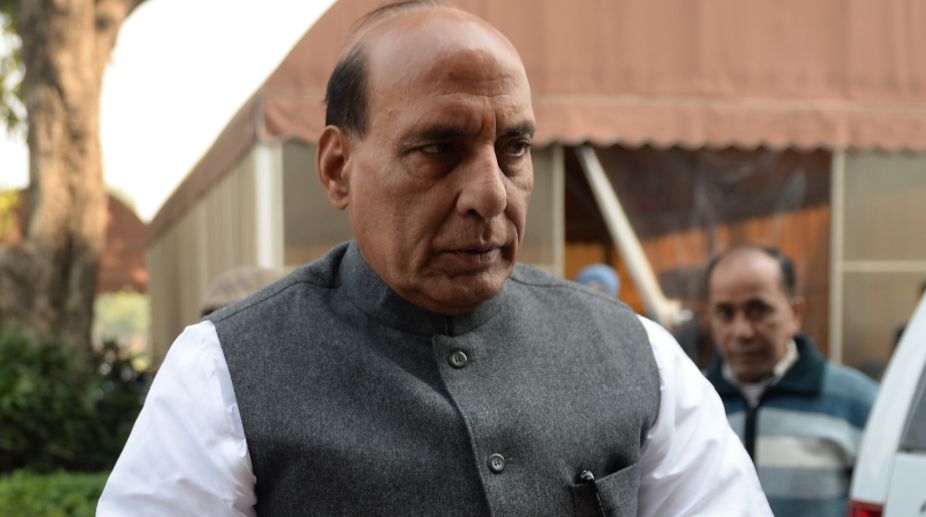
Govt has been taking steps to improve J&K situation: Rajnath Singh

Statesman News Service | New Delhi |

The Centre has been taking a series of steps to improve law and order situation in Kashmir, Union Home Minister Rajnath Singh told the Lok Sabha today. Replying to a debate on the demands for grants of the Home Ministry, Mr Singh said the Centre has adopted a humanitarian approach to the problem of Jammu and Kashmir and taken a series of measures to improve the situation in view of the recent unrest in the state.

On the Pathankot terror attack, he said investigation in the case was at an advanced stage and the Centre is committed to punish its perpetrators. Referring to terror incidents in the country, he said killing of militants has increased in the recent past in the valley. While 99 terrorists had been killed in 2011, the number rose to 222 in 2016, and nearly 1442 terrorists have surrendered this year as against 394 in 2011, the minister informed the Lok Sabha.

Elaborating on the situation of areas affected by Left Wing Extremism (LWE), Mr Singh said the number of districts affected by naxalism has reduced from 106 to 68, with 35 being the most affected, across seven states including Andhra Pradesh, Bihar, Chhattisgarh, Telangana and Maharashtra.

On the role of women in internal security, the Home Minister said the Centre has instructed states to reserve 33 per cent of posts in police forces for women. "I have written to chief ministers of all the states with regard to 33 per cent reservation in women and police. State governments have taken cognizance of it and are working in that direction," Mr Singh said.

For giving protection to women, the Home Minister said under the Nirbhaya Fund created after the gruesome Delhi gangrape of 2011, nearly 40,500 police personnel are being trained especially for protection of women and cyber security.

Security guidelines based on post Pathankot report issued

IANS | New Delhi |

The Defence Ministry on Thursday said it has issued guidelines for security of defence installations after taking into consideration a report of a committee that was constituted post-Pathankot attack.

After the Pathankot attack, the Defence Ministry had constituted a committee under former Vice Chief of Army Lt. Gen. Philip Campose (retired).

In a written reply to the Lok Sabha, Minister of State for Defence Subhash Bhamre said the recommendations of the committee included installation of technology-based security infrastructure; positioning of well-trained, armed and equipped 'Quick Reaction Teams' (QRTs) at high-threat and high-priority military bases; and conduct of periodic security audits, among other suggestions.

"Based on the recommendations of the committee and after consultation with the Services Headquarters, Guidelines for Security of Defence Installations have been issued to the Services Headquarters," Bhamre said.

The response comes a week after a parliamentary panel on Defence Ministry rapped government for not taking any "concrete measures" following terror attacks like Uri and Pathakot.

The Parliamentary Standing Committee on Defence, headed by Maj. Gen. B.C. Khanduri (retired), in an earlier report had said that hightened security measures needed to be taken post-Pathankot terror attack.

The government, in an action-taken report sent to the panel, said the report by a committee under Campose, which was submitted on May 20, 2016, was being examined "in consultation with all stakeholders".

The panel had said it was "disturbed" to note the "apparent lack of sincerity" on the part of the Defence Ministry and desired that the situation should improve.

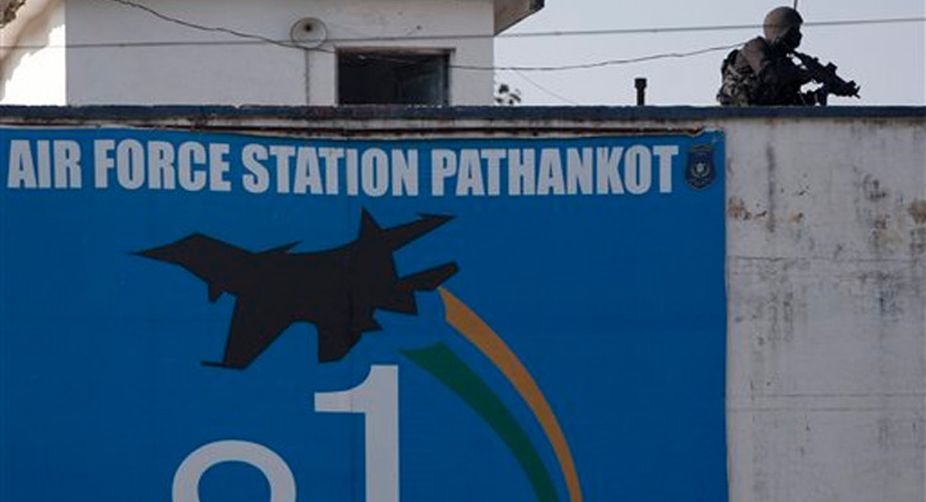
Terrorists attacked the Pathankot Air Force Station, part of the Western Air Command of the Indian Air Force on January 2, 2016. Seven security personnel and one civilian were killed and 37 security personnel and one civilian were injured. All the four terrorists, who were from Pakistan, were gunned down.

On September 18, 2016, four heavily armed terrorists attacked an Army camp near the Uri town in Jammu and Kashmir. A total of 19 Army personnel were killed in the incident.

AIIMS work hit as nurses take mass casual leave

IANS | New Delhi |

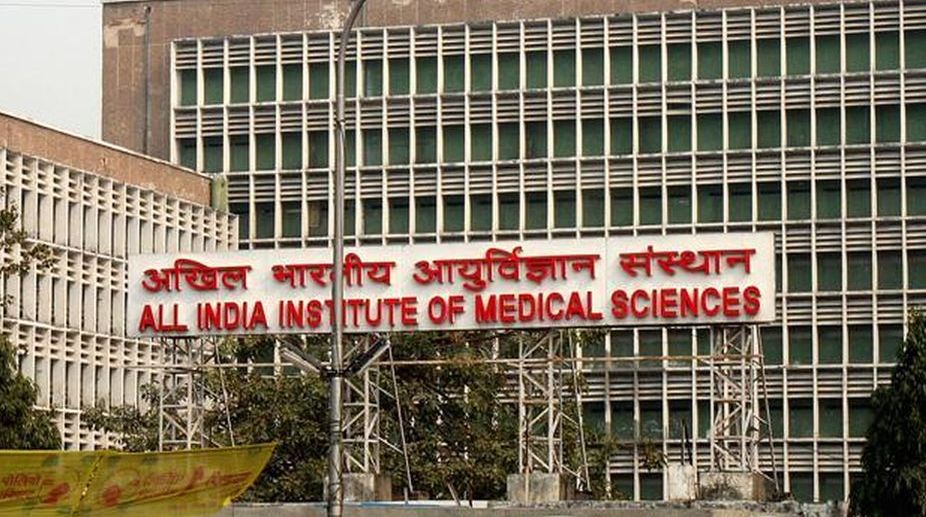
Over 5,000 AIIMS nurses on Friday took mass casual leave, hitting the functioning of the premier medical institute. As many as 90 surgeries were postponed, and intake of trauma cases and emergency services affected.

All India Institute of Medical Sciences (AIIMS) administration urged Centralised Accident and Trauma Services (CATS) ambulances not to bring in patients to the AIIMS but take them to other hospitals.

No trauma surgeries were performed at the AIIMS trauma centre that has five operation theatres, as against 15 surgeries on normal days. 

"We could not do any operation due to the protest. We somehow ran our Out Patient Departments. In my department, 16 operations had to be deferred," said AIIMS Acting Director Balram Airan, who is also head of Cardio Thoracic and Vascular Surgery Centre.

Airan said nursing students were roped in to deal with the situation. 
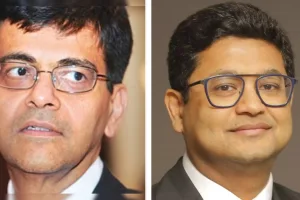
"It is the nurses who take care of surgical equipment during surgeries. In their absence, it is simply impossible to perform operations, except for minor laprascopic surgical procedure," said a doctor at the Orthopaedic Department. 

He said post-surgery care of many patients were also affected, forcing resident doctors to chip in.
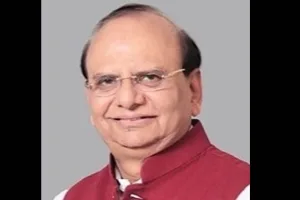
"There was no one to take care of Intensive Care Unit patients, where they are usually kept after surgery for observation. Resident doctors looked after such patients," said the doctor.

"We have told the administration that if our pay scale is not increased from Rs 4,600 to Rs 5,400, we will go on an indefinite strike from March 27," said a senior nurse. 

Nurses are demanding higher pay scale despite coming under the purview of the Seventh Pay Commission. They also are seeking increase in nursing allowances by Rs 7,800. 

The AIIMS administration said it will re-forward their demands to the Health Ministry.

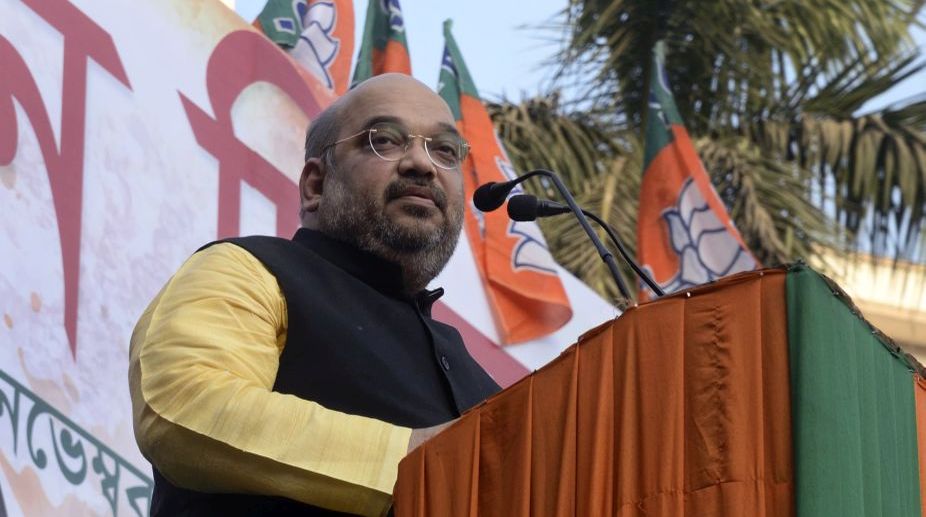
Modi, policies helped win elections: Amit Shah

IANS | Mumbai |

BJP President Amit Shah on Friday said a massive mandate in Uttar Pradesh and Uttrakhand for the party is a result of Prime Minister Narendra Modi's policies and his popularity among the masses.

Participating in 'India Today Conclave 2017' here through video-conferencing, the Bharatiya Janata Party chief said elections could not be won due to one or two reasons and multiple reasons helped the party win.

"For us, Modi-ji and his policies made it possible to win assembly elections with such a huge mandate," Shah said.

"There was a wave in BJP's favour in Uttar Pradesh and results proved that caste-based and dynastic politics has no place in India. 

"The BJP's motto is inclusive growth of the country without any appeasement policy." 

As for the BJP forming governments in Goa and Manipur despite not having the mandate, Shah said: "There were hung assemblies in the two states. Any party with majority can form a government in cases like these."

Commenting on Modi government's demonetisation, the BJP President said it was a "multi-dimensional step" and was not aimed at polls. 

"It was just one step in a massive effort to curb black money and corruption," he added.

He said: "Reform is a small word; "it aims at transformation." 

"We took some hard steps with regard to funding for political parties. Change will come gradually; we have started the process," Shah said.

Asked about BJP's alliance with Shiv Sena in Maharashtra, Shah said: "Our alliance with the Shiv Sena is intact and will remain so." 

"There's no issue with the Shiv Sena; there was a friendly match in Maharashtra civic polls with the Shiv Sena," he said.

He ridiculed Delhi Chief Minister Arvind Kejriwal and Bahujan Samaj Party chief Mayawati for their charge that electronic voting machines were tampered with in Uttar Pradesh and Punjab. 

"They should know the EVMs can't be tampered with. No one listens to Kejriwal in the country," he said.

Shah said he hoped the BJP will again form the government at the Centre in 2019, saying that every election is important for the BJP.