Logo

Railways to buy recycled water from private players

PTI | New Delhi |

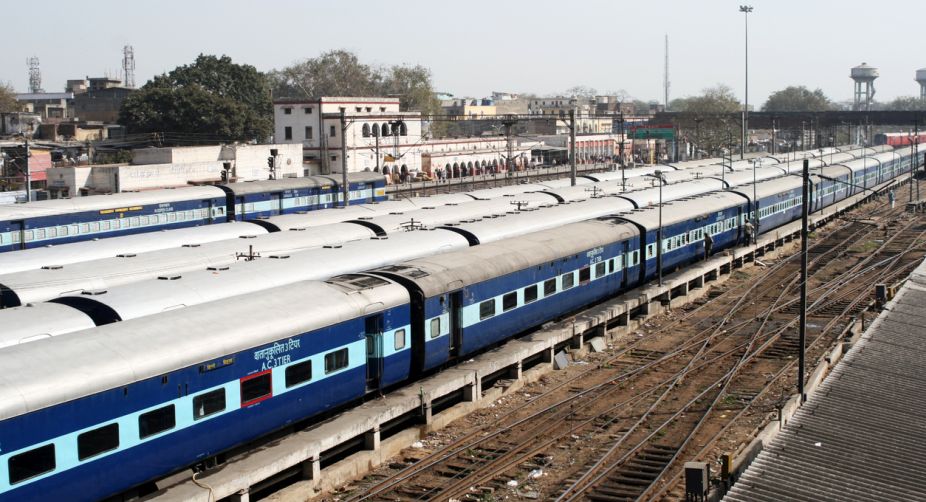
The Indian Railways aims to cut down its water bill and save up to Rs.400 crore annually with a roadmap for buying recycled water from private players.

With the dual aim of conserving the precious resource and reducing its consumption, the Railways will unveil its water policy, a first for the national transporter, for extensive use of treated water from water treatment plants for non-drinking purposes.

The Indian Railways Water Policy, expected to be rolled out on March 22 (World Water Day), will spell out the way forward for all the railway zones including colonies, hospitals, factories, workshops and training centres to achieve the goal of reduced consumption and increased use of recycled water.

Currently, the Railways buys water from the states and its water bill is about Rs 4,000 crore a year.

"The water policy envisages buying treated water from water treatment plants for two paise per litre, while we now purchase water for seven paise per litre," said a senior Railway Ministry official.

The policy has drawn out a detailed framework for setting up water treatment plants with private participation to generate an adequate amount of treated water for non-potable purposes.

The private players will be encouraged to set up these plants and the Railways will ensure the purchase of treated water from these units, said the official.

The water policy also envisages the revival of all the defunct water bodies on railway land across the country, various ways of recharging groundwater, including rainwater harvesting in all railway buildings.

A concrete action plan for water management, water-efficient fittings and regular water auditing is a part of the new water policy of the Railways.

The official said the water policy is part of the commitment India has made to the UN under the Intended Nationally Determined Contributions (INDCs) to reduce water consumption and the Railways has assumed a pro-active role in it.

As a signatory to the United Nations Framework for Climate Change (UNFCC), India is committed to reducing water consumption by 20 per cent by 2030.

Ed Sheeran buys Italian vineyard

PTI |

Singer Ed Sheeran has bought a home in Italy because he loved its vineyard.

The Shape of You singer revealed that he has splashed out on a property in Umbria, which was struck by a 6.6 magnitude earthquake when he was visiting last year, reported Contactmusic.

"I didn't want to buy in Tuscany because there are too many English people there. There is a vineyard and the moment I saw it I knew I had to buy that place.

"It's in Umbria. When the earthquake happened, I was there and I felt it, but I'm not that close to where it happened," Sheeran says.
 

Ed Sheeran buys Italian vineyard

PTI |

Singer Ed Sheeran has bought a home in Italy because he loved its vineyard.

The Shape of You singer revealed that he has splashed out on a property in Umbria, which was struck by a 6.6 magnitude earthquake when he was visiting last year, reported Contactmusic.

"I didn't want to buy in Tuscany because there are too many English people there. There is a vineyard and the moment I saw it I knew I had to buy that place.

"It's in Umbria. When the earthquake happened, I was there and I felt it, but I'm not that close to where it happened," Sheeran says.
 

Pakistan violates ceasefire along LoC, Indian Army retaliates

PTI | Jammu |

Pakistani troops on Sunday violated the ceasefire twice by firing from automatic weapons along the LoC in Bhimbher Gali and Balakote sectors of Jammu and Kashmir, drawing retaliation from the Indian Army.

"There was unprovoked ceasefire violation by Pakistan Army in Bhimbher Gali and Balakote sectors from 0600 hours to 0645 hours using 2 inch mortars and automatic weapons", a Defence Spokesman said today.

Army troops gave a befitting reply, the spokesman said.

This was the fifth ceasefire violation along the LoC in Poonch-Rajouri belt in the past 11 days.

On March 13: There was unprovoked ceasefire violation by Pakistan Army in Poonch sector by using 82 mm mortars and automatic weapons.

On March 12: Pakistani troops had resorted to ceasefire violation by firing 82 mm mortars in Krishnagati sector along LoC in Pooch district. 

On March 9: An Army jawan was killed on March 9 when Pakistani soldiers initiated indiscriminate and unprovoked firing on Indian Army posts along the Line of Control (LoC) in Poonch sector.

Pakistan violates ceasefire along LoC, Indian Army retaliates

PTI | Jammu |

Pakistani troops on Sunday violated the ceasefire twice by firing from automatic weapons along the LoC in Bhimbher Gali and Balakote sectors of Jammu and Kashmir, drawing retaliation from the Indian Army.

"There was unprovoked ceasefire violation by Pakistan Army in Bhimbher Gali and Balakote sectors from 0600 hours to 0645 hours using 2 inch mortars and automatic weapons", a Defence Spokesman said today.

Army troops gave a befitting reply, the spokesman said.

This was the fifth ceasefire violation along the LoC in Poonch-Rajouri belt in the past 11 days.

On March 13: There was unprovoked ceasefire violation by Pakistan Army in Poonch sector by using 82 mm mortars and automatic weapons.

On March 12: Pakistani troops had resorted to ceasefire violation by firing 82 mm mortars in Krishnagati sector along LoC in Pooch district. 

On March 9: An Army jawan was killed on March 9 when Pakistani soldiers initiated indiscriminate and unprovoked firing on Indian Army posts along the Line of Control (LoC) in Poonch sector.

BJP mulling theme song for MCD poll campaign

PTI | New Delhi |

After roping in celebrities, Delhi BJP is now planning to have its own election theme song to add zing to its campaign in the high-stakes MCD polls.

The municipal election is due on April 22 and the campaigning is likely to begin soon.

Delhi BJP chief Manoj Tiwari, a folk singer himself, has expressed the desire to have a song for the upcoming polls, which may carry the flavours of Poorvanchal in its lyrics.

"We should have a song for the MCD polls. The opening line could be something like 'Jiya Ho Dilli ke Bala' or something similar. It can be worked out," he said.

Tiwari, who hails from Bihar, is a popular Bhojpuri singer. He has also acted in a number of vernacular films. He has a huge fan following in the Poorvanchal region, both in Uttar Pradesh and Bihar, and the BJP is betting big on his image to woo the voters hailing from that region.

'Jiya Ho Bihar ke Lala', a song sung by Tiwari in Bollywood film 'Gangs of Wasseypur', was an instant hit.

Asked if he would like to sing the campaign song himself, a smiling Tiwari said, "Let us see."

Betting big on the MCD polls, the BJP has already roped in the Phogat sisters of 'Dangal' fame — Geeta and Babita — Bhojpuri filmstar Ravi Kishan and several other achievers from different fields to shore up its fortunes.

"We are going all-out for the MCD polls and have set a very high target for ourselves. Our triumphs in Uttar Pradesh and Uttarakhand have given a fresh impetus to our workers and volunteers and to add to that strength, we are bringing in big faces as well," a BJP source said.

BJP president Amit Shah, general secretary (organisation) Ramlal and Union minister M Venkaiah Naidu are slated to address a convention of polling booth in-charges at the Ramlila Maidan here on March 25.

Wrestlers Geeta and Babita were recently appointed brand ambassadors by South Delhi Municipal Corporation to promote the 'Swachh Bharat' campaign in south Delhi.

"Talks are almost complete with (cricketer) Shikhar Dhawan," the source added.

Poorvanchalis constitute a big chunk of voters in Delhi and therefore, the party will also use Ravi Kishan in its campaign to woo those hailing from Bihar and eastern Uttar Pradesh.

For the 2014 Lok Sabha election campaign, the BJP, riding on the Modi charisma, had come up with the 'Badlo Dilli' campaign video song.

BJP mulling theme song for MCD poll campaign

PTI | New Delhi |

After roping in celebrities, Delhi BJP is now planning to have its own election theme song to add zing to its campaign in the high-stakes MCD polls.

The municipal election is due on April 22 and the campaigning is likely to begin soon.

Delhi BJP chief Manoj Tiwari, a folk singer himself, has expressed the desire to have a song for the upcoming polls, which may carry the flavours of Poorvanchal in its lyrics.

"We should have a song for the MCD polls. The opening line could be something like 'Jiya Ho Dilli ke Bala' or something similar. It can be worked out," he said.

Tiwari, who hails from Bihar, is a popular Bhojpuri singer. He has also acted in a number of vernacular films. He has a huge fan following in the Poorvanchal region, both in Uttar Pradesh and Bihar, and the BJP is betting big on his image to woo the voters hailing from that region.

'Jiya Ho Bihar ke Lala', a song sung by Tiwari in Bollywood film 'Gangs of Wasseypur', was an instant hit.

Asked if he would like to sing the campaign song himself, a smiling Tiwari said, "Let us see."

Betting big on the MCD polls, the BJP has already roped in the Phogat sisters of 'Dangal' fame — Geeta and Babita — Bhojpuri filmstar Ravi Kishan and several other achievers from different fields to shore up its fortunes.

"We are going all-out for the MCD polls and have set a very high target for ourselves. Our triumphs in Uttar Pradesh and Uttarakhand have given a fresh impetus to our workers and volunteers and to add to that strength, we are bringing in big faces as well," a BJP source said.

BJP president Amit Shah, general secretary (organisation) Ramlal and Union minister M Venkaiah Naidu are slated to address a convention of polling booth in-charges at the Ramlila Maidan here on March 25.

Wrestlers Geeta and Babita were recently appointed brand ambassadors by South Delhi Municipal Corporation to promote the 'Swachh Bharat' campaign in south Delhi.

"Talks are almost complete with (cricketer) Shikhar Dhawan," the source added.

Poorvanchalis constitute a big chunk of voters in Delhi and therefore, the party will also use Ravi Kishan in its campaign to woo those hailing from Bihar and eastern Uttar Pradesh.

For the 2014 Lok Sabha election campaign, the BJP, riding on the Modi charisma, had come up with the 'Badlo Dilli' campaign video song.

Delhi traffic situation alarming, police failed: Panel

PTI | New Delhi |

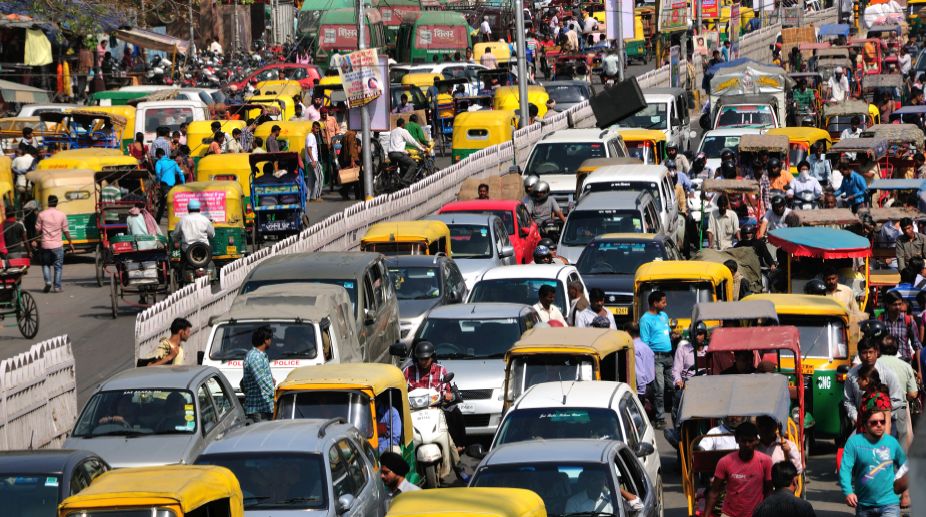
A Parliamentary panel has described the traffic situation in the national capital as "alarming" and said the Delhi Police has "failed" to improve it.

The Parliamentary Standing Committee on Home Affairs has observed that a large number of vehicles get registered in Delhi everyday and the roundabouts at various crossroads, instead of traffic signals, caused congestion.

"The committee feels that the Delhi traffic congestion has become quite alarming and the Delhi Police has failed to implement any significant measure to improve the situation," the panel has said.

In its report submitted to the Parliament, the panel headed by former home and finance minister P Chidambaram has taken note of the choked roads in Delhi which make evacuation of "protected persons" difficult during a traffic congestion.

The committee has recommended that the Delhi Police needs to prepare a meticulous traffic management plan and allocate adequate funds to address the issue.

"Urgent measures should be taken for managing the city traffic in a better way such as construction of more arterial roads and parking bays, declaring some roads as one-way, coming up with effective emergency evacuation measures for protected persons and stringent measures against traffic violators," the panel has recommended.

Delhi traffic situation alarming, police failed: Panel

PTI | New Delhi |

A Parliamentary panel has described the traffic situation in the national capital as "alarming" and said the Delhi Police has "failed" to improve it.

The Parliamentary Standing Committee on Home Affairs has observed that a large number of vehicles get registered in Delhi everyday and the roundabouts at various crossroads, instead of traffic signals, caused congestion.

"The committee feels that the Delhi traffic congestion has become quite alarming and the Delhi Police has failed to implement any significant measure to improve the situation," the panel has said.

In its report submitted to the Parliament, the panel headed by former home and finance minister P Chidambaram has taken note of the choked roads in Delhi which make evacuation of "protected persons" difficult during a traffic congestion.

The committee has recommended that the Delhi Police needs to prepare a meticulous traffic management plan and allocate adequate funds to address the issue.

"Urgent measures should be taken for managing the city traffic in a better way such as construction of more arterial roads and parking bays, declaring some roads as one-way, coming up with effective emergency evacuation measures for protected persons and stringent measures against traffic violators," the panel has recommended.

N Korea tests new rocket engine: KCNA

AFP | Seoul |

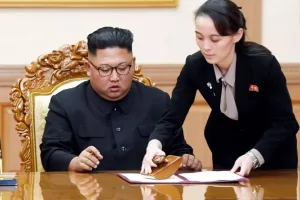
North Korea has tested a new high-performance rocket engine, the country's state media said on Sunday.

Overseeing the test, leader Kim Jong-Un "emphasised that the whole world will soon witness what eventful significance the great victory won today carries", KCNA reported, hinting that the North is preparing to launch a new satellite rocket.

"The development and completion of a new-type high-thrust engine would help consolidate the scientific and technological foundation to match the world-level satellite delivery capability in the field of outer space development, he noted", KCNA said.

Rocket engines are easily re-purposed for use in missiles.

Outside observers say that the nuclear-armed Pyongyang's space programme is a fig leaf for weapons tests.

The new US Secretary of State Tillerson arrived in Beijing yesterday after visits to US allies Japan and South Korea where he said the US would no longer observe the "failed" approach of patient diplomacy with Pyongyang, warning that American military action against the North was an option "on the table".

The tougher US talk followed two North Korean nuclear tests last year and recent missile launches that Pyongyang described as practice for an attack on US bases in Japan. 

N Korea tests new rocket engine: KCNA

AFP | Seoul |

North Korea has tested a new high-performance rocket engine, the country's state media said on Sunday.

Overseeing the test, leader Kim Jong-Un "emphasised that the whole world will soon witness what eventful significance the great victory won today carries", KCNA reported, hinting that the North is preparing to launch a new satellite rocket.

"The development and completion of a new-type high-thrust engine would help consolidate the scientific and technological foundation to match the world-level satellite delivery capability in the field of outer space development, he noted", KCNA said.

Rocket engines are easily re-purposed for use in missiles.

Outside observers say that the nuclear-armed Pyongyang's space programme is a fig leaf for weapons tests.

The new US Secretary of State Tillerson arrived in Beijing yesterday after visits to US allies Japan and South Korea where he said the US would no longer observe the "failed" approach of patient diplomacy with Pyongyang, warning that American military action against the North was an option "on the table".

The tougher US talk followed two North Korean nuclear tests last year and recent missile launches that Pyongyang described as practice for an attack on US bases in Japan. 

US asks Hawaii judge to clarify ruling on Trump travel ban

AP | Honolulu |

The government is asking a federal judge in Hawaii to clarify his order blocking President Trump's revised travel ban, arguing that it shouldn't apply to new rules on refugees.

A Justice Department motion filed on Saturday asks Judge Derrick Watson to clarify the scope of his temporary restraining order, arguing it should only apply to Trump's temporary ban on travel from six mostly Muslim countries.

The Justice Department says the ruling shouldn't apply to a section of Trump's executive order that temporarily suspends admission of refugees to the US and caps the number admitted this fiscal year at 50,000.

The Justice Department also argues the Hawaii ruling shouldn't block Trump's order that security officials review whether other countries are providing enough information to ensure would-be immigrants aren't a security threat. 

Contentious G20 shows US needs time to ‘adapt’: Lagarde

AFP | Baden-Baden (Germany) |

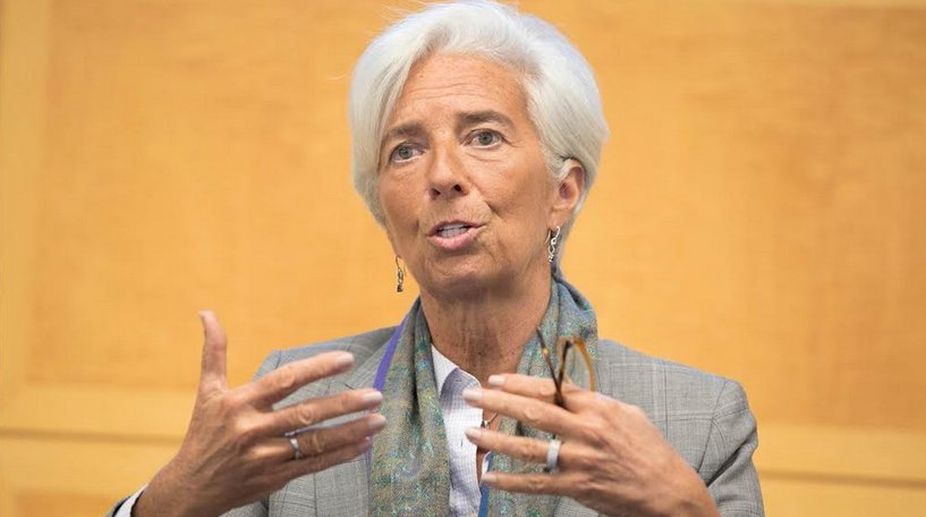
IMF chief Christine Lagarde sought to play down fears over the US weakening international commitments to free trade and climate change today, saying the new White House needed time to "adapt and learn".

"Whenever there's a new member at a G20 meeting, there is a process of learning and adaptation," Lagarde said after a finance ministers' gathering in Baden Baden, western Germany.

After a two-day meeting, ministers from the group of developed and emerging nations released a communique that dropped past years' language rejecting protectionism, supporting multilateral trade talks, and committing nations to support the 2015 Paris climate accords.

"There's a new administration in Washington which will find its feet, and which for the moment is obviously taking care not to commit itself too strongly to anything," Lagarde said.

US Treasury Secretary Steven Mnuchin dismissed previous agreements as "not relevant" in remarks to journalists after today's talks.

Carried to power on the back of a political storm over deindustrialisation in vast areas of the US, President Donald Trump vowed in his inauguration speech to "follow two simple rules: buy American and hire American".

His strategy includes threats to penalise companies that manufacture abroad by heavily taxing their products.

But Lagarde insisted that she has "high hopes, especially regarding trade," after the G20 pointed to growing confidence about a global economic recovery and promised to refrain from manipulating currencies.

Trump has attacked major exporters China and Germany over their currencies, saying they are too weak against the dollar — making their products cheaper compared with competing American goods.

In the event, there was little debate on the divisive topic around the G20 tables, various sources said.

In its own statement, the IMF said it would ensure "vigorous exchange rate surveillance" to help hold countries to their promises. 

Closer Reflection On The Minorities Issue

Claude Arpi | New Delhi |

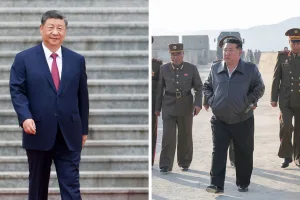
ON March 11, a rare event took place in Beijing. The seven members of the Politburo’s Standing Committee ~ Xi Jinping, Li Keqiang, Zhang Dejiang, Yu Zhengsheng, Liu Yunshan, Wang Qishan and Zhang Gaoli ~ dined together. According to Xinhua, they attended “a gathering on the sidelines of the annual sessions of the NPC and the CPPCC National Committee at the Great Hall of the People.” The Seven Big Bosses met with the deputies of the ‘ethnic minorities’ elected to the National People’s Congress (NPC) and the People’s Political Consultative Conference (CPPCC).

Is this an indication that something is boiling in the Tibetan, Uyghur and other areas in China that are dominated by minorities? Xinhua reported that Xi Jinping and his colleagues “arrived at the banquet hall of the Great Hall of the People at 7:45 p.m. to the enthusiastic applause from the lawmakers and political advisors in ethnic costumes.” Kalsang, a Tibetan sitting next to the President, would have said: “Good evening, General Secretary”.

Xi was pleased “to learn about improved life in his village, where big changes in education, medical services, elderly care and housing have taken place,” according to the news agency. He told a deputy from Xinjiang that they need “to make solid efforts for ethnic unity and lead people in pursuing a well-off life.”

It looks as if ‘ethnic unity’ is absent in today’s China. While a Tibetan senior Communist official, Jampa Phuntsok, presided over the dinner, the other leaders had “cordial conversations with the lawmakers and advisors, encouraging them to contribute to the Chinese nation’s rejuvenation,” commented Xinhua.

Sun Chunlan, director of the United Front Work Department and member of the Politburo, stated that the Party “attaches great importance to ethnic work and has made a set of decisions and arrangements to support ethnic regions.” Xinhua noted that everyone was happy: “Attendees of the gathering also enjoyed performances showcasing China’s ethnic arts.”
Tibetans and Uyghurs might be happy, but this unusual gathering raises serious questions. Why should China’s seven supreme leaders need to ‘dine’ together with the representatives of China’s minorities, if there were no disturbing issues to be discussed?

It is a fact that the Middle Kingdom’s periphery is today terribly unstable and Beijing does not know how to handle the situation (except by increasing the repression and offering a few economic carrots). And more repression automatically brings more resentment; a vicious circle!

A day before the dinner, the Chinese media reported that President Xi Jinping had urged the security forces to erect a ‘Great Wall of Steel’ around Xinjiang, after a recent spike of attacks, blamed by the authorities on Islamic extremists. Xi was speaking to PLA’s officers; he requested the Armed Forces to bring ‘lasting peace and stability’ to Xinjiang: “Maintaining stability in Xinjiang is a political responsibility,” Xi said.

During the same NPC meeting, some senior officials from Xinjiang Uygur Autonomous Region remarked that “the region has maintained a high-pressure crackdown to ensure stability and safety, as destabilizing factors remain.”
Shohrat Zakir, chairman of the regional government, stated that Xinjiang had been “resolutely and forcefully” fighting terrorism to maintain stability in the past year. “People across Xinjiang have recently joined public gatherings to show resolve in fighting terrorism.”
Sharhat Ahan, deputy secretary of the region’s Commission for Political and Legal Affairs, pleaded for a popular mobilization to join ‘the people’s war against terrorism’ and he threatened: “Terrorists should be warned not to ‘hit the rock with eggs’ or they would face serious consequences.”

And this is the country which does not want to list Masood Azhar as a terrorist.

A couple of articles in The South China Morning Post confirm that all is not rosy on China’s Muslim front. In the first piece, the journalist reported about a small ethnic Hui town in the south-western border province of Yunnan ~ “While the Chinese government has cracked down on religious activities among the Muslim Uygur community in Xinjiang, ethnic Hui Muslims more closely integrated with Han Chinese society have been able to enjoy much greater religious freedom. However, growing Islamophobia in China has seen both groups targeted by online attacks at a time when anti-Muslim rhetoric is on the rise across the world.”

The Islamophobia is partly due to the severe repression in Xinjiang and the Party’s constant propaganda about ‘Muslim terrorists’. The traditionally well-integrated Hui community is becoming nervous: “With the country’s top leaders repeatedly warning of the dangers of radical Islam, increasing levels of online hate speech are fuelling concerns that the heavy controls in Xinjiang could be extended to the Hui community in Yunnan,” remarked the article.

Another article in the same Hong Kong newspaper noted: “The growing popularity of anti-Islamic rhetoric, which is seldom challenged by state media or subject to the censorship for which China’s internet is famous, has sparked concerns that, left unaddressed, these tensions will spill over into real world conflict.”

The issue has become so serious that the entire Politburo’s Standing Committee had to invite the deputies of Tibet, Xinjiang or Ningxia to reassure them. Whether this work on the ground is another issue.

In January, the Chinese media reported that eight people were killed in a violent attack in Pishan county of Hotan Prefecture in Southern Xinjiang. According to the local Government, three knife-wielding men attacked and stabbed several people. Subsequently, the police shot dead the three attackers and ten others were injured. The Chinese media asserted: “Order has been restored and an investigation is ongoing. The identity of the attackers was not disclosed,” but they were obviously Uyghurs.

A few days earlier, Radio Free Asia (RFA) had reported that Uyghurs had been called to several meetings to confess their ‘crimes’. According to RFA, this was part of a campaign called ‘Revealing Errors’; the meetings were held in Aksu Prefecture “to uncover behaviour considered politically destabilizing.” The same source added: “Residents are called to a podium one by one to confess these errors after they have listed them on a 39-question form. They are also told they will face legal consequences if they attempt to cover up their own or anyone else’s anti-state activities.”
Does it not sound like the return of the Cultural Revolution?

The writer is an expert on China-Tibet relations and author of  Fate of Tibet.

United front the only way out

Editorial | New Delhi |

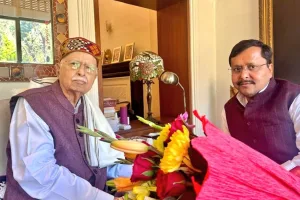
There appears to be some truth in the assertion that the “Bodo tangle” continues even after their political and economic aspirations have been met. Since 2005 the Bodos have been enjoying autonomy under the Sixth Schedule, which is exclusively for hill tribes but was amended to accommodate the Bodos, who are a plains tribe. The person who clinched this is Hagrama Mohilary, who commanded the militant group, Bodo Liberation Tigers. The then BJP Deputy Prime Minister LK Advani persuaded him to lay down arms (apparently to shore up the party’s image in the region as a peace-maker) and join the mainstream. At the time of taking over the leadership of the autonomous council, Mohilary made it clear that his main objective was to secure a separate state. Little wonder, because finance for development of autonomous councils is routed through Dispur.
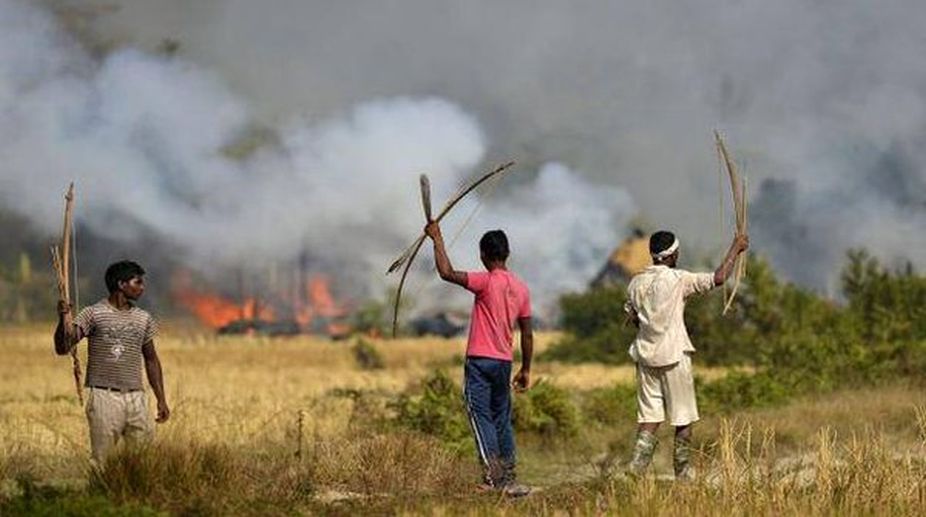
Reports speak of 2,000 Bodos in Kokrajhar observing a hunger strike to demand a separate state. They have also threatened to blockade vital rail and road links that pass through their area and which serve the region’s hill states. The separate state demand, however, is not new. The now-defunct Plains Tribal Council first espoused the cause of a separate state of Udaychal in the 1960s for plains tribes.

Later the All Bodo Students’ Union assumed leadership. In 2003, it signed an accord with then chief minister of Assam, Hiteswar Saikia, but it floundered within a few years over the issue of demarcation of borders. The trouble with the Bodos is that there are too many organisations and they are yet to realise that unless they sink their differences and make common cause, they cannot go ahead with any peace process.

Spare Viraat Vikrant’s agony

Editorial | New Delhi |

THE “breaker’s yard” is the ultimate destination of most ships, so it will be no disgrace if Viraat follows Vikrant into being sold as scrap metal ~ though many a naval heart may be broken if history repeats itself. What would be tragic, disgraceful, or any other adjective an “old salt” might prefer to use, would be if the second carrier of the Indian Navy is subjected to as prolonged and agonising a fate as its predecessor: Vikrant had been abandoned and neglected for so long that even her scrap value had deteriorated before she was towed away to be broken: after occupying precious berthing space in the naval dockyard in Mumbai long enough for the “hero” of the war for the liberation of Bangladesh to be dubbed a “rust bucket”. Apprehensions of a re-run have been raised in respect of Viraat too ~ after de commissioning warships “lose” their ‘INS’ prefix ~ and unless an early decision is taken on their re-use or dismantling there is the risk of them losing their reputation too. Sadly, no plan for Viraat had been firmed up before her Colours were run down her mast. The initial proposal to convert her into a maritime museum by the Andhra Pradesh government ~ after the central government had washed its hands off any project of that nature ~ have been scuttled for the same reason as a similar suggestion for Vikrant, a lack of finances. According to one estimate it would require an outlay of Rs 1,000 crore. Now there is talk of a floating hotel, or a diving platform. Not too different from Vikrant having been mentioned as a heliport, casino etc. The Viraat has been afloat since 1944 and there is no need for “talking in the air”. An early decision by the central government is necessary, which must not be delayed because of the change of guard in the MoD. There are limits to emotion and sentiment coming in the way of cold reason.
There would be a school of thought that would not be enthused by the campaign to “Save Viraat”. True that was home to a host of naval aviators, but she was not the first carrier. And unlike Vikrant she had not fought battles under the Indian ensign. Maybe it would now be best to await the de-commissioning of an Indian-built “capital ship” to revive maritime museum dreams.


‘A good day for democracy’

Editorial | New Delhi |

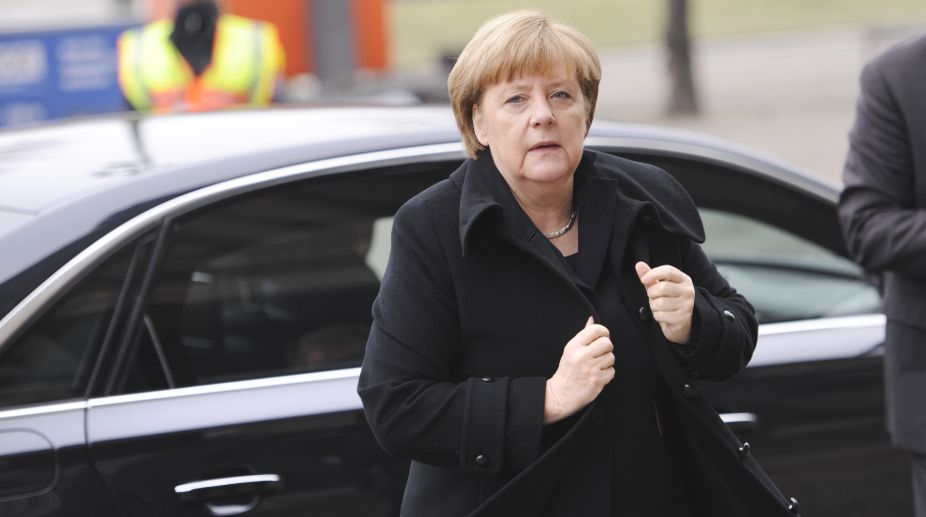
THE outcome of the Dutch parliamentary elections comes at a critical juncture for Europe, amidst the increasingly distressing tendency to blend populism with nationalism. One can almost hear a collective sigh of relief across the Continent after the Dutch Prime Minister, Mark Rutte’s triumph against the challenge of the anti-Islam, anti-EU, populist Geert Wilders. There is little doubt that the high turnout has yielded a decidedly pro-European result, signifying what the German Chancellor, Angela Merkel, has called “a good day for democracy”, verily a victory for Europe’s libertarian values. The defeat of the far Right is no less a victory against furious extremism that has roiled the Continent and different parts of the world in recent years. The result can be contextualised with nationalist trends across the Atlantic since last November. Mr Rutte has emitted a signal to the likes of Donald Trump that the Netherlands bears witness to a vote for “free and tolerant societies”. The Dutch voter has betrayed a remarkable degree of responsibility and maturity in a crucial moment for Europe as a whole. Small wonder that the parliamentary result in a relatively small country has been greeted with overwhelming applause… as a robust expression of serious politics, responsible leadership, and a stout rejection of populism.  The election will be documented for its pragmatism, and not for playing to a reckless gallery. The result conveys a signal too to France where the Right is straining every nerve for the electoral stakes this summer.

Beyond borders, the implications of the election are profound. Which alone explains why an influential swathe of the world was riveted to the vote. After Britain’s referendum to leave the EU ~ now fairly confirmed by both the Lords and the Commons ~ and President Trump’s intensely nationalist agenda, a victory for Geert Wilders, who had pledged to “de-Islamicise” the Netherlands and take the country out of the EU if he won, would have sent shockwaves across Europe in a potentially critical year. The French far-right leader, Marine Le Pen, who has pledged a referendum on EU membership if she is the next resident of Elysee Palace, is expected to make the runoff round in the presidential elections. Germany’s Eurosceptic Alternative für Deutschland (AfD) is said to be on course to win its first federal parliament seats later in the year. It is early days to speculate on a possible psephological swing across the Continent; but it shall be a great day in the contemporary history of Europe if this week’s Dutch vote can tilt the pattern generally. There may be hope yet for democracy, tolerance, religious denominations, and nationalities within one country. The world must keep its fingers crossed. Let Europe show the way to America.