Logo

Myanmar steps up anti-money laundering drive: Media

IANS | Yangon |

Myanmar is stepping up anti-money laundering and anti-terrorism financing drive as part of the work procedure of Asia-Pacific Group on Money Laundering, a government-owned newspaper reported on Wednesday.

The drive includes mutual evaluation in the member countries, amendment of the anti-money laundering law, formation of a working committee for mutual evaluation in the member countries in 2016, Global New Light of Myanmar quoted Police Colonel Kyaw Win Thein.

Thein told the same in a meeting of the Central Committee for Anti-Money Laundering on Tuesday, chaired by Minister of Home Affairs Kyaw Swe, Xinhua news agency reported.

Myanmar enacted the Anti-Money Laundering Law in March 2014, and formed the anti-money laundering central committee in August 2014. 

Tasked to formulate policies on anti-money laundering and combating financial support for terrorism, the central board is also cooperating with international and regional organisations and neighbouring countries.

It has so far cooperated with Thailand, Indonesia and Australia in combating money laundering and financial terrorism.

Kate Hudson sparks dating rumours with musician

IANS |

Actress Kate Hudson has sparked dating rumours with musician Danny Fujikawa after they were spotted kissing each other here.

Hudson, who was previously married to rock star Chris Robinson, was spotted kissing Fujukawa during an outing on March 19.

"Kate had his arms around herself and they kissed. They definitely looked like more than friends," a source told people.com.

Hudson and Fujikawa had lunch together at a cafe before they headed to her house.

Rumours of their romance came shortly after they were seen getting cosy.

"They were with another couple. It looked like a double date. Kate kept kissing him at the table," another source said.

Hawaii seeks to extend injunction blocking Trump travel ban

AP | Honolulu |

Attorneys representing Hawaii in the state's challenge to President Donald Trump's travel ban are asking a federal judge to extend his temporary restraining order blocking the ban or turn it into a preliminary injunction.

US District Judge Derrick Watson halted key portions of Trump's executive order before it went into effect last week.

He's instructing Hawaii to file its preliminary injunction motion on Tuesday morning. The government will have until Friday to oppose the motion.

Watson is setting a hearing for March 29.

A Department of Justice spokeswoman declined to comment on whether the government still plans to appeal the Hawaii ruling.

The government is appealing a ruling from a federal judge in Maryland that also blocked the ban from taking effect. 

Wastewater key to solving global water crisis: UN

AFP | Paris |

Recycling the world's wastewater, almost all of which goes untreated, would ease global water shortages while protecting the environment, the United Nations said in a major report on Wednesday.

"Neglecting the opportunities arising from improved wastewater management is nothing less than unthinkable," said Irina Bokova, director-general of UNESCO, one of several UN bodies behind the report issued on World Water Day.

For decades, people have been using fresh water faster than Nature can replace it, contributing in some regions to hunger, disease, conflict and migration.

Two-thirds of humanity currently live in zones that experience water scarcity at least one month a year.

Half of those people are in China and India.

Last year, the World Economic Forum's annual survey of opinion leaders identified water crises as the top global risk over the next decade.

On current trends, the UN Environment Programme forecasts that water demand — for industry, energy and an extra billion people — will increase 50 per cent by 2030.

Global warming has already deepened droughts in many areas, and the planet will continue to heat up over the course of the century, even under optimistic scenarios.

"There is an absolute necessity to increase water security in order to overcome the challenges brought on by climate change and human influence," said Benedito Braga, head of the World Water Council, an umbrella grouping of governments, associations and research bodies.

Wastewater — runoff from agriculture, industry and expanding cities, especially in developing nations — is a major part of the problem.

That is especially true in poor countries where very little, if any, wastewater is treated or recycled.

High-income nations treat about 70 per cent of the wastewater they generate, a figure that drops to 38 per cent for upper middle-income countries.

In low-income nations, only eight per cent of industrial and municipal wastewater undergoes treatment of any kind.

More than 800,000 people die every year because of contaminated drinking water, and not being able to properly wash their hands.

Water-related diseases claim nearly 3.5 million lives annually in Africa, Asia and Latin America — more than the global death toll from AIDS and car crashes combined.

Chemicals and nutrients from factories and farms create deadzones in rivers, lakes and coastal waters, and seep into aquifers.

The 200-page World Water Development Report details a four-pronged strategy for transforming wastewater from a problem to a solution, said lead author Richard Connor of UNESCO's World Water Assessment Programme. 

Earthquake rocks Indonesia’s tourist Bali island

AP | Jakarta |

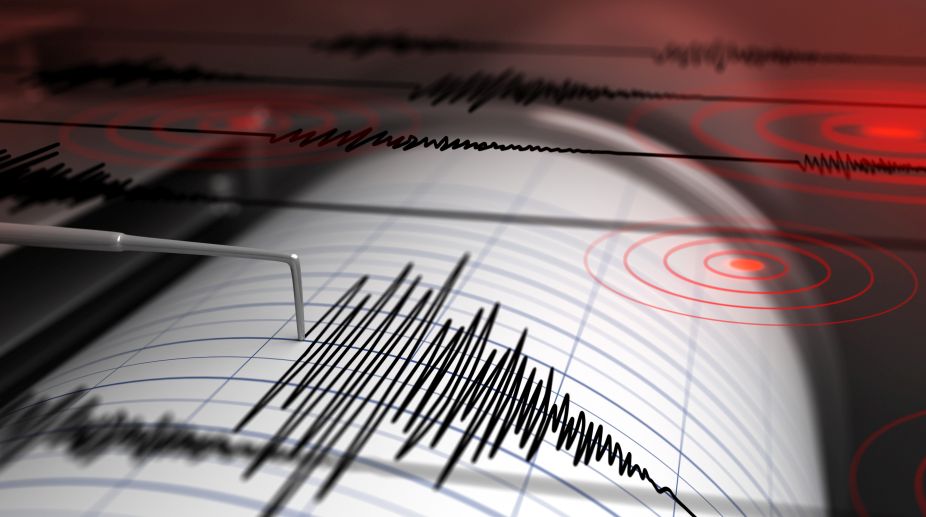
An earthquake has hit Indonesia's resort island of Bali, causing some panic among resident, but there were no immediate reports of damage or casualties.

The United States Geological Survey says the magnitude 5.5 earthquake that struck at 7:10 am (local time) on Wednesday was centered 2 kilometers northeast of Banjar Pasekan, a town on the southeastern part Bali, at a depth of 118 kilometers.

Witnesses said many residents and tourists ran out of their homes and hotels toward higher ground, but the situation returned to normal after they received text messages saying the quake had no potential to trigger a tsunami.

Indonesia is prone to the seismic upheaval due to its location on the so-called Pacific Ring of Fire. 

George Clooney surprises an elderly fan on her 87th birthday

PTI | Los Angeles |

Actor Geroge Clooney gave his 87 year old fan a birthday surprise when he paid a visit to her on her special day.

The 55-year-old actor paid a visit to Pat Adams, a resident at the Sunrise Sonning Retirement and Assisted Living Facility in Reading, Berkshire, South East England, to celebrate her birthday after she had told staff members how fond she was of the star, reported Entertainment Tonight.

"The lady in the picture, loves George Clooney and mentions every day how she would love to meet him, especially as he lives so near to where I work. So letters have been sent asking would it be possible for her dream to come true.

(sic)," a colleague at the residential home shared a picture of Pat with her favourite star on their official Facebook account.

The "Ocean's Eleven" star also bought a card and a bouquet of flowers for Pat, which made the visit "extra special".

The post continued: "What was extra special it was her Birthday in the week. He bought a card and a lovely bunch of flowers (sic)."

Happy at Chelsea, don’t want Real Madrid move: Thibaut Courtois

Chelsea are enjoying an excellent run in the current English Premier League season.

IANS | London |

Chelsea goalkeeper Thibaut Courtois has dismissed speculation about a possible move to Real Madrid, insisting that he will continue at his present club.

Real Madrid are reportedly considering a move to acquire the services of the Belgium international should the ongoing talks with Manchester United custodian David De Gea fall through.

"I don't see myself at Real Madrid. I see myself at Chelsea, the club that six years ago saw me playing in Belgium and gave me the opportunity to sign for them," he was quoted as saying by the Guardian on Tuesday.

"They also allowed me to be three years at Atlético (Madrid), which helped me to be the keeper that I am now."

Chelsea are enjoying an excellent run this season. They have opened up a 10-point gap at the top of the English Premier League (EPL) standings and have reached the semi-finals of the FA Cup.

Courtois, who is happy with his form and Chelsea's performance this season, asserted that he is keen to extend his current contract with the London club which runs out in 2019.

"We will see at the end of the season if they offer me something. For the time being, there has not been an offer. I'm happy in London and I'm delighted with the success we are having this season," the 24-year-old said.

Sensex plunges 222 pts in early trade on global cues

PTI | Mumbai |

The benchmark BSE Sensex declined further by about 222 points to 29,263.74 and the NSE Nifty slipped below the 9,100-mark in early trade on Wednesday due to selling in pharma, auto and oil stocks.

The 30-share Sensex fell by 221.71 points, or 0.75 per cent, to 29,263.74 with 25 of its constituents trading the negative zone. The barometer had lost 163.54 points in the previous two sessions.

Sustained selling by investors amid a weak trend in Asian markets following overnight losses at the US market led to fall in stocks, brokers said.

A depreciating rupee against the dollar also weighed on the sentiment.

All BSE sectoral indices led by metal, auto and realty were trading in the red, with losses up to 1.30 per cent.

Bharti Airtel fell by over 2 per cent, Mahindra & Mahindra by 1.9 per cent, ICICI Bank by 1.8 per cent on BSE.

Among pharma stocks, Cipla, Sun Pharma and Dr Reddy fell up to 1 per cent.

The NSE Nifty plunged by 80.40 points, or 0.88 per cent, at 9,041.10 points.

Among other Asian markets, Hong Kong's Hang Seng fell 1.39 per cent and Shanghai Composite shed 0.77 per cent while Japan's Nikkei was down 2.01 per cent in early trade today.

The US Dow Jones Industrial Average ended 1.14 per cent lower on Wednesday.

US exploring new options against North Korea: White House

PTI | Washington |

The United States is exploring new diplomatic, security and economic options against the escalating threat posed by North Korea's nuclear and ballistic missile programs, the White House said on Wednesday.

"The US, in coordination with our allies, is exploring a new range of diplomatic, security, and economic measures in response to the grave and escalating threat posed by North Korea s nuclear and ballistic missile programs," White House Press Secretary Sean Spicer told reporters.

The White House statement in this regard comes days after Secretary of State Rex Tillerson said that the US is running out of its strategic patience against North Korea, which has been indulging in a series of provocative behaviours including missile tests in alleged violation of the UN resolutions.

Congressman Ed Royce, Chairman of House Foreign Affairs Committee, has introduced a bipartisan legislation in House of Representatives to tighten US sanctions against North Korea.

Korean Interdiction and Modernisation of Sanctions Act, H.R.1644 expands sanctions to deter North Korea's nuclear weapons programs; and targets those overseas who employ North Korean slave labor, a source of billions of dollars in annual revenue for the regime.

It also cracks down on North Korean shipping and use of international ports, and; requires the administration to determine whether North Korea is a state sponsor of terrorism.

"North Korea s nuclear arsenal poses a growing and urgent threat to the United States. Soon, many believe the Kim Jong Un regime will be able to target all 50 states and our Asian allies with a nuclear warhead," Royce said.

In a testimony before the House Foreign Affairs Committee, Bruce Klingner, senior research fellow for Northeast Asia at the Heritage Foundation, said security situation on the Korean Peninsula is dire and worsening.

"There is a disturbingly long list of reasons to be pessimistic about maintaining peace and stability in northeast Asia," he said.

As the Trump administration conducts its North Korea policy review, it faces a perfect storm of Asian headaches, threats, and crises, he said.

Initial indications are that the administration will emphasize improving defense capabilities, particularly ballistic missile defense; augmenting pressure tactics on the regime; and seeking ways to get Beijing to fully enforce UN sanctions, he noted.

Anthony Ruggiero, senior fellow, Foundation For Defense Of Democracies, said the Trump administration can return to a more effective North Korea policy by getting tough on both China and North Korea, support key allies in the region and introduce new sanctions on North and strengthen existing ones.

"North Korea represents a direct threat to the United States and our allies, and we must radically change our approach to North Korea sanctions efforts," Ruggiero said. 

Guterres urges world to stand up against intolerance

IANS | United Nations |

UN Secretary-General Antonio Guterres on Tuesday urged the world to stand up against intolerance and build communities that recognise diversity not as a source of weakness, but a source of strength and richness.

"In a time of upheaval and change, it is easy to paint vulnerable communities as the cause of problems… people are being targeted because of their race, nationality, ethnicity, religion or sexual orientation," Guterres said at an event at the UN General Assembly commemorating the International Day for the Elimination of Racial Discrimination, Xinhua reported.

The event was held here against the backdrop of rising discrimination and violence against those perceived as different.

Highlighting the particular plight of migrants as well as those, especially women and girls, from minority communities who are often targeted as "scapegoats" and experience racial profiling by authorities, the secretary-general stressed the collective responsibility "to do better" and to protect human rights of all.

"We all have a role to play," he said. "After all, racial discrimination destabilizes societies, undermines democracies and erodes the legitimacy of governments."

"By acting together to end discrimination, we can lift humanity as a whole," he said.

In his remarks, the secretary-general also reminded that international law requires states to take effective actions to prevent and eliminate discrimination on all grounds and in all fields of civil, economic, political, social and cultural life.

"They must be vigilant and respond immediately and appropriately, including by prohibiting incitement to racial, national and religious hatred and ending racial profiling," he said, calling on politicians and leaders to speak up and counter hateful speech.

"Let us stand up against intolerance and eliminate discrimination," he noted, "Let us join forces in our global campaign — Together for Respect, Safety and Dignity for all."

The International Day for the Elimination of Racial Discrimination, which falls on March 21, commemorates the killing of 69 unarmed protesters in 1960 in Sharpeville, South Africa, who were staging a peaceful protest against the discriminatory pass laws of the racist apartheid regime.

Iraqi forces evacuate civilians from Mosul amid heavy clashes

IANS | Mosul |

Iraqi government forces battling the Islamic State in Mosul's western side evacuated hundreds of civilians from the city centre on Tuesday, as troop progress slowed down faced with strong resistance from the militants, Iraqi officials said.

"Our forces evacuated hundreds of civilians to prevent terrorists from using them as human shields, while our troops are pushing inside the old city centre to recapture the al-Nuri Mosque," Lt Gen Raid Shakir Jawdat, commander of the federal police forces, said in a statement, Xinhua reported.

"Dozens of federal police snipers positioned themselves atop building tops in the neighbourhoods of the old city centre around the al-Nuri Mosque," Jawdat said.

The troops have been fighting street by street and house by house to recapture the historical al-Nuri Mosque in the middle of Mosul's old city centre, but were slowed by heavy resistance from the IS militants and the presence of some 500,000 people living in old homes with narrow alleys.

The mosque with its famous leaning minaret, which gave the city its nickname "al-Hadbaa" or "the hunchback", has a symbolic value as it was the place where IS leader Abu Bakr al-Baghdadi declared the cross-border "caliphate" in large areas in Iraq and Syria in his sole public appearance in July 2014.

"The battles to liberate Mosul's western side is progressing slowly caused by fear of harming civilian lives, in addition to the presence of increasing number of Daesh (the IS) snipers in Mosul's city centre, with its narrow alleys," Defence Ministry spokesman Brig. Gen. Yahya Rasool told a news conference in eastern Mosul. 

Meanwhile, commandos of the Counter-Terrorism Service forces freed the neighborhood of Risala and residential buildings of the adjacent Nablus neighbourhood west of the old city centre after days of heavy clashes with the IS militants, Abdul-Amir Yarallah from the Joint Operations Command said in a statement.

Elite troops continued their heavy clashes against the IS militants in several nearby neighbourhoods, as they advanced closer to Mosul's western edge and densely populated old city centre, where hundreds of thousands of civilians are believed to be still trapped under the IS rule.

The fierce battles brought the total number of civilians who left their homes in Mosul's both eastern and western sides to 415,000 since the beginning of the military offensive in October to reclaim the IS's largest stronghold in Iraq, according to Jasim al-Attiyah, deputy minister of the Iraqi Migration and Displaced Ministry. 

Iraqi Prime Minister Haider al-Abadi, who is also commander-in-chief of the armed forces, announced the start of an offensive on February 19 to drive extremist militants out of the western side of Mosul.

Late in January, Abadi declared the liberation of Mosul's eastern side, or the left bank of Tigris, after over 100 days of fighting IS militants.

However, Mosul's western part, with its narrow streets and a population between 750,000 and 800,000, appears to be a bigger challenge to Iraqi forces.

Mosul, 400 km north of the Iraqi capital of Baghdad, has been under IS control since June 2014, when government forces abandoned their posts and fled, enabling IS militants to take control of parts of Iraq's northern and western regions. 

Indestructible animals

Ian Johnston | New Delhi |

They are the world’s toughest animals, capable of living anywhere from the bottom of the ocean to 5,500 metres up a Himalayan mountain.  They can be boiled at temperatures of up to 150 degrees Celsius or frozen to near absolute zero, but still tardigrades — tiny, Muppet-like creatures also known as water bears or moss piglets just will not die. They have even been found on the outside of the International Space Station, where the lack of pressure would kill a human in minutes at most. The tardigrades found it so pleasant, they decided to settle down, have sex and produce offspring.

Now researchers have discovered how they pull off one of their most extraordinary survival techniques.

Dr Thomas Boothby, of North Carolina University, who led the study, said, “The big takeaway from our study is that tardigrades have evolved unique genes that allow them to survive drying out. In addition, the proteins that these genes encode can be used to protect other biological material like bacteria, yeast, and certain enzymes from desiccation.” These proteins have been named TDPs or tardigrade-specific intrinsically disordered proteins in honour of the 1mm-long creatures who evolved to have them.

Previously it had been thought that a type of sugar called trehelose, which is found in other organisms including brine shrimp, was the secret behind the tardigrade’s Lazarus-like ability to return from the dead after being dried out for up to 10 years. Following the discovery, reported in the journal Molecular Cell, the scientist put the genes into yeast and bacteria, which then gained the same properties as the tardigrades.

Dr Boothby said TDPs could be used to protect crops from drought and to preserve medicines without using a refrigerator. “Being able to stabilise sensitive pharmaceuticals in a dry state is very important to me personally,” he said. “I grew up in Africa, where lack of refrigeration in remote areas is a huge problem. These real-world applications are one of the things that led me to study tardigrades.”

THE INDEPENDENT

The source of lipids

Tapan Kumar Maitra | New Delhi |

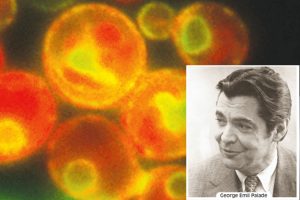
The biosynthesis of lipids and their fates within eukaryotic cells reveal that the endoplasmic reticulum is the primary source of membrane lipids including phospholipids and cholesterol. Indeed, most of the enzymes required for the biosynthesis of the various membrane phospholipids are found nowhere else in the cell. 

There are, however, important exceptions. For example, while mitochondria import from the ER all of the phosphatidylcholine, phosphatidyl inositol, and phosphatidylserine found in their exterior and interior membranes, they acquire phosphatidylethanolamine indirectly by decarboxylating imported phosphatidylserine. Other significant exceptions are the biosynthesis of cholesterol and dolichol by peroxisomal enzymes and the synthesis of chloroplast-specific lipids in the chloroplast.

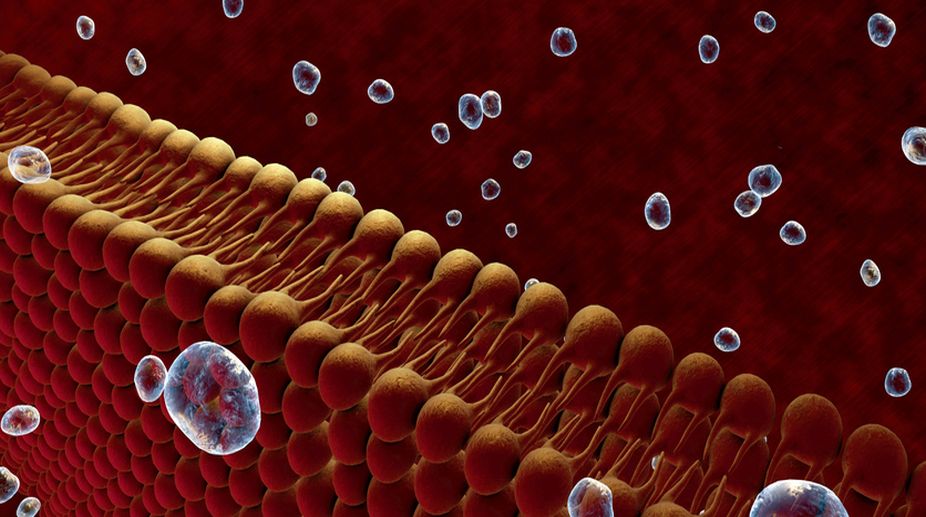
Biosynthesis of phospholipid molecules is restricted to one monolayer of the ER membrane. Specifically, the active sites of the enzymes involved are exposed to the cytosol, and newly synthesised lipids are incorporated into the monolayer of the membrane that faces the cytosol. Cellular membranes, of course, are phospholipid bilayers, with phospholipids distributed to both sides. Thus, there must be a mechanism for transferring phospholipids from one layer of the membrane to the other. Because it is thermodynamically unfavourable for phospholipids to spontaneously flip at a significant rate from one side of a bi-layer to the other, transfer depends on phospholipid translocators, or flippases, which catalyse the translocation of phospholipids through ER membranes.

Phospholipid translocators, like other enzymes, are quite specific and affect only the rate of a process. As a result, the precise phospholipid molecules transferred across a membrane depend on the complement of translocators available. Therefore, this translocator specificity contributes to the membrane asymmetry. For example, the ER membrane contains a translocator for phosphatidylcholine, but not for phosphatidylethanolamine, phosphatidylinositol, or phosphatidylserine. Consequently, phosphatidylcholine is found in both the cytosolic and lumenal layers of the ER membrane whereas the latter three phospholipids are confined to the cytosolic layer. When vesicles form from the ER membrane and fuse with other organelles of the endo-membrane system, the distinct compositions of the cytosolic and lumenal layers established in the ER are transferred to other cellular membranes.

Movement of phospholipids from the ER to a mitochondrion or chloroplast poses a unique problem. Unlike organelles of the endo-membrane system, mitochondria and chloroplasts do not grow by fusion with ER-derived vesicles. Instead, phospholipid exchange proteins (or phospholipid transfer proteins) found in the cytosol convey phospholipid molecules from the ER membrane to the outer mitochondrial and chloroplast membranes. Each exchange protein recognises a specific kind of phospholipid, removes it from one membrane, and carries it through the cytosol to another membrane. Such transfer proteins also contribute to the movement of phospholipids from the ER to other cellular membranes, including the plasma membrane.

Although the ER is the source of most membrane lipids, the compositions of other cellular membranes vary significantly from the composition of the ER membrane. For example, a striking feature of the plasma membrane of hepatocytes is the relatively low amount of phosphoglycerides and high amounts of cholesterol, sphingomyelin, and glycolipids an increasing gradient of cholesterol content from the ER through the compartments of the endo-membrane system to the plasma membrane. This correlates with an increasing gradient of membrane thickness. ER membranes are about five nm thick, whereas plasma membranes are about eight nm thick. 

The writer is Associate Professor, Head, Department of Botany, Ananda Mohan College, Kolkata, and also fellow, Botanical Society of Bengal, and can be contacted AT tapanmaitra59@yahoo.co.in.

Trump signs bill pushing for crewed NASA mission to Mars

IANS | Washington |

US President Donald Trump on Tuesday signed a bill into law that set a goal for the country's space agency NASA to send humans to Mars by 2033.

The bill, known as the NASA Transition Authorization Act, authorised $19.5 billion budget in spending for NASA for the fiscal year 2017, Xinhua reported.

The bill reaffirmed "our national commitment to the core mission of NASA," Trump said, according to a pool report.

"It supports NASA's deep space exploration including the space launch system and the Orion spacecraft … It advances space science by maintaining a balanced set of mission and activities to explore our solar system and the entire universe."

Under the bill, NASA was directed to further advance human deep space exploration, including establishing "potential human habitation on another celestial body and a thriving space economy in the 21st Century."

It also ordered the agency to develop a human exploration roadmap for "the long-term goal of human missions near or on the surface of Mars in the 2030s" and specifically asked for a feasibility study of a Mars human spaceflight mission to be launched in 2033.

Last week, the Trump administration proposed a budget that would reduce NASA's fiscal year 2018 budget to 19.1 billion dollars.

Do you wish to erase your memory?

Ian Johnston Delves Deeper | New Delhi |

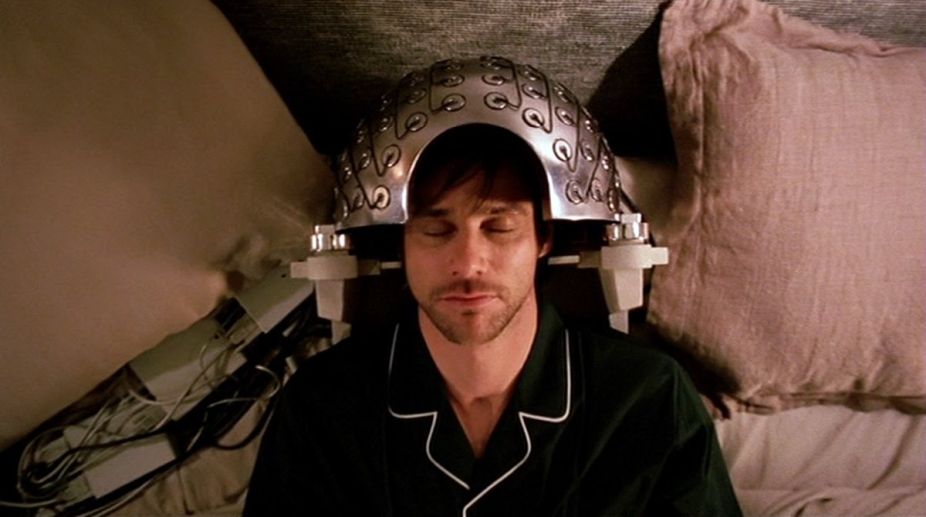
Scientists have demonstrated “proof of principle” that traumatic memories can be erased from the brain — as seen in the science fiction film, Eternal Sunshine of the Spotless Mind. 

Studies in mice demonstrated that fearful memories prompted by a sound associated with an electric shock could be turned off and on. The researchers said, however, that attempting to experiment on humans was full of ethical problems and some way off. But their studies suggest it will be possible at some point in the future, for example, to treat people suffering from post-traumatic stress disorder or drug addiction. 

Speaking recently at the annual meeting of the American Association for the Advancement of Science in Boston, Sheena Josselyn said that they had been able to discover the specific brain cells where a particular memory was stored.  “So we can target where in the brain a memory has gone,” she said. “We can then decrease the activity in these cells … And it is as if we erase the memory.” After this was done, the mice were unperturbed when they heard the sound they had previously learned to associate with the shock. 

Increasing the cells’ activity restored the memory of the shock — enough to be unpleasant but not to cause lasting harm — to the mice. “We can turn memory on and turn memory off,” Josselyn said, “It really does give us proof of principle. If there’s a memory problem, we don’t have to target the entire body or the entire brain.” 

Josselyn, of Toronto University, said that it was possible that in the future scientists could develop “a heat-seeking missile or a heat-seeking drug that would somehow operate on just the cells important for this memory”.  “We can erase a fearful memory in mice, suggesting in people there might be a way of targeting just those cells that are important in just this traumatic memory and perhaps getting rid of it,” she said. “The spotless mind,” interjected Professor Howard Eichenbaum, director of the Centre for Memory and Brain at Michigan University, who was taking part in the same briefing to the press at the meeting. 

In Eternal Sunshine of the Spotless Mind, an estranged couple erases memories of each other after breaking up, but things do not go quite to plan. Eichenbaum cautioned that there were a limited number of brain cells involved in such memories and killing off one memory might damage others. But he added, “If this memory was particularly severe and was destroying your life, then it might be a reasonable compromise.” 

Asked about the ethical considerations, Josselyn said that being able to target the potential treatment was a key issue, adding that she did not see a future in which brain cells would be killed off to remove memories.  “The ethics are a really important question. I think we are the sum total of our memories,” she said, “We all learn from our mistakes. If we erase the memory of our mistakes, what is to keep us from repeating them?” 

But she added, “For something that really interferes with your everyday life, I think a treatment that targets just those cells could be appropriate.” In addition to removing fearful memories, the researchers have been able to get rid of memories associated with taking cocaine among the mice, suggesting this could lead to new ways of treating drug addicts. 

Memories are stored in what is known as an engram, which consists of brain cells that fire in a particular pattern. When something happens, the brain cells, or neurons, compete against each other to store the memory. Josselyn said, “We showed that if two related events occur in a small time window — six hours — then the same neurons win the competition for allocation to both engrams. 

“This links the two related memories. If, on the other hand, two events occur more than six hours apart, non-overlapping populations of neurons are recruited and the memories are kept separate. 

“Our results suggest that this neuronal competition during memory formation is a mechanism that links or disambiguates related emotional memories.”

THE INDEPENDENT 

When machines learn from us

S Ananthanarayanan | New Delhi |

Being able to recognise things, or faces, which we have seen before, is both to remember what it looked like and to know it is the same thing even if it were oriented differently the second time we see it. Automating the act of making out the object, or pattern recognition by machines is hard enough. To be able to make it out even when it looks different, like humans can, is a puzzle that the computer world is yet to crack.

Understanding how the human eyes and brain can remember and recognise a great variety of objects would help computer scientists find ways to improve the performance of machines. While there has been some progress towards this understanding, Mark W Schurgin and Jonathan I Flombaum, department of psychological and brain sciences, Johns Hopkins University, in their paper in the Journal of Experimental Psychology, bring out yet another aspect of the act of recognition of things briefly seen, by humans. With the help of a remarkably simple experiment, they show that people who see a thing briefly on two closely separated occasions are more likely to remember if they believe it was the same thing that they saw the second time too.

One feature of remembering objects or people is that we remember better if we see them in motion. When an object moves across the field of vision, it presents more than one view of its three-dimensional self and the collection of images we receive creates in our brain a more rounded picture. We are then better equipped to recognise the object when we see it again, even from a different angle or position that we have not encountered. This is equally true when we see people, of course, and when people move, we also see a unique and personal method of movement, which can identify the person even if seen the next time around in poor lighting!

Seeing a moving object is again not a passive act but one where we move our eyes, head and body. The movement of the eyes is to bring an object that we see on the periphery, to the centre of our field of view. And these movements, along with the movement of the object itself, lead to muscular action being associated with the images, several of which, from different angles, get imprinted in our brain. One known part of the process of creating a memory, the John Hopkins paper says, is a “temporal association rule”. This is to say that a short encounter with an object, maybe a few seconds, or less, can be considered as creating a series of independent images, one changing into the other, of the same object. The way the images change over the short exposure gives the brain bases to imagine what changes in the object to expect in a subsequent exposure, to help recognition.

The experiment of the John Hopkins duo examined how the brain selects images of an object in motion, which were formed in quick succession, to store as changing images of a specific object. While the association with the movements of the eyes as an object was seen in motion, would help identify all images as of the same object, there is an understanding that the brain uses its past encounters, or notions, known as “core knowledge” about the world to make out which of the images that it sees are of the same object. One part of this knowledge is the way things move, which helps us identify the correct images of objects in motion. And the John Hopkins experiment set out to test this idea.

The experiment consisted of flashing a pair of images of an object, one after the other, in front of an observer. How well the observer recalled the object was then tested, to see if she could tell the difference between an object she had been shown and another that looked a lot like it. The effect of the experience of the observer, on how well she stored the two images of each object that she was shown, was tested through a variation in the way the two images of each object were shown. The way the objects were briefly displayed was by showing them to be darting out from behind a screen and then back to be hidden again — doing this twice. In half the cases, however, the second appearance of the object was not from behind the same screen, but from behind another screen on the other side of the display.

The result of the trials was that objects shown both times from the same side of the display were remembered some 20 per cent better. And the conclusion drawn is that both the images were stored as relevant images, to help recall, when the brain could expect that the object emerging from behind the same screen was the same object as had been seen before. When the object emerged from different sides, however, they were more likely to be some different objects and the two images were not stored together. The object was then less effectively recalled. “Your brain has certain automatic rules for how it expects things in the world to behave. It turns out that these rules affect your memory for what you see,” says Schurgin, graduate student at the University.

The image that physically appears before both the eye and a camera screen is only a collection of illumination values of arrays of nerve cells, pixels, or light sensing devices. It is the brain, or the pattern recognising software, that needs to make sense of the raw data. While pixel by pixel comparison against a recorded template could work only if the image shown is the same as what is in memory, machine systems employ different approaches to extract the essential features from the original, to look for in new images, which may be not the same but similar. And then, computers are programmed for “machine learning”, or to improve the process that they use for recognition, as and when they encounter more instances of images, and the feedback of how well they identified them.

Image processing by machines is growing in importance, with the development of driverless cars, automatic surveillance systems, robots to deal with production lines and for security of banking transactions. The present work by Schurgin and Flombaum could help create machine learning systems that derive value from images in motion and to select, based on past encounters, the images that need to be stored and from which it would be useful to learn.

The writer can be contacted at response@simplescience.in.

A man picked by Modi and Shah

Arati R Jerath | New Delhi |

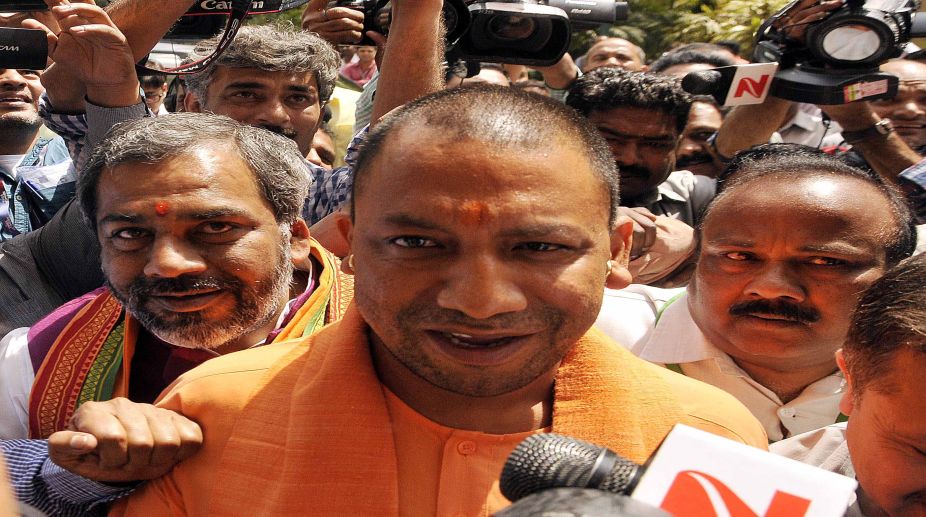
Only those who don’t understand the dynamics of Modi’s BJP and its relationship with the RSS would believe stories doing the rounds that the Sangh leadership foisted Yogi Adityanath on the Modi-Shah duo as the chief minister of Uttar Pradesh. The Yogi was handpicked by the PM and his Man Friday, the BJP president.

It is well known in BJP circles that the RSS has always been suspicious of Adityanath even as it appreciates his hardline Hindutva ideology. Adityanath has never been a member of the RSS; nor for that matter is he officially a member of the BJP either. The BJP has accommodated Adityanath, and before him his mentor, Avaidyanath, in its Lok Sabha list because of the power and influence they wield in Gorakhpur and surrounding areas. 

Adityanath is an independent-minded person with a secure base. Consequently, he has never had to accept the authority of either the RSS or the BJP.

However, unlike the tense relationship he had with the BJP led by Vajpayee and Advani, the present leadership of Modi and Shah has a healthy respect for Adityanath. The Yogi from Gorakhpur gets on well with Shah in particular. The BJP president has been heard in the past praising Adityanath as a powerful and effective campaigner. 

Before the campaign began in earnest, Modi and Shah are believed to have toyed with the idea of projecting Adityanath as the CM candidate. They shelved the idea because they feared his rhetoric would polarise the Muslims behind the BSP, making Mayawati a formidable challenger for the UP prize.

Once the stunning verdict came on March 11, it was but a short hop for Yogi from star campaigner to chief minister of the country’s most populous and politically most important state.  The RSS had left the choice to the Modi-Shah duo. Sangh leader in charge of BJP Krishan Gopal was used to douse any resentment there may have been among leaders like the BJP’s UP chief Keshav Prasad Maurya who had the right credentials too. He is a Hindutva hardliner, a Ram mandir activist and a backward caste to boot.

In a last ditch attempt to stop the BJP from forming a government in Goa, the Congress is believed to have offered Vijay Sardesai of the Goa Forward Party the post of chief minister. Sardesai is a former Congressman who walked out because of differences with the party’s Goa president Luiz Faleiro.

The Congress was so desperate to halt the BJP juggernaut that it sidelined Faleiro to woo Sardesai. It seems Sardesai did not immediately refuse. But the Congress offered him such an unattractive deal that he ultimately declined. The Congress wanted a rotational arrangement with him: two and a half years as CM for Sardesai and two and a half years for a person from the Congress. Sardesai wanted a full term.

Although Congress leaders are blaming the role of “casino money” in propelling the BJP to power despite the defeat of its sitting chief minister and six incumbent ministers, the party must look inwards to see where it went wrong. It is quite clear that the Congress was tardy in cobbling up the numbers which gave the BJP an advantage.
Many in the Goa Congress are upset with the leadership for allowing the government to slip out of the party’s hands. Vishwajit Rane, who resigned on the day of the trust vote, is just the first casualty of the fading appeal of the Gandhis. Others may follow suit in the coming months.

Well planned

Narendra Modi’s planning for every action is so meticulous and so well thought out to the last detail that it’s no wonder he leaves his opponents far behind. Just consider the kind of detailed planning that went into his victory lap in Delhi the day after the results were announced.

It seems Modi wanted to do something around the 325 figure. That’s the staggering number of seats the BJP won in UP. Finally, it was suggested to him that he should do a roadshow from Meridien Hotel to the BJP national headquarters on Ashoka Road. The route was carefully chosen. The distance from the hotel to the BJP office on Google map is 325 metres. That matches the UP seat tally. Modi was so taken with the idea that he waved aside security concerns and walked the distance. He was, of course, well protected by a posse of SPG officers. Nevertheless, it was a victory lap straight after Modi’s heart. 


Missing from action

Where was Rahul Gandhi when the results were announced? For three days after counting day, he was missing from public view. On result day, all winners and even losers addressed the media. But not Rahul.

Considering Rahul had put himself out to lead his party’s campaign in UP, although it was contesting just 105 seats, political watchers felt that he owed it to the public to step out and say something after the rout. The Congress won just 7 seats.

The buzz in Congress circles is that Rahul took off for a short holiday in the hills immediately after campaigning ended for the final phase on March 8. He surfaced the day after Holi only to say that the Congress is “a little down” in UP. 
Modi and Amit Shah are 24×7 politicians. They eat, breathe, sleep and talk politics. If he wants to challenge them, Rahul will have to stop treating politics like a 9-5 job that allows him to take weekends off and short holidays whenever he wants.