
Logo

Path of progress

Arupjyoti Gogoi | New Delhi |

The Lower house of India’s bicameral Parliament Lok Sabha passed the Maternity Benefit (Amendment) Bill on 9 March, which has already been passed by the Rajya Sabha on 11August last year. This inter-alia includes:

  • Increasing maternity benefit to woman covered under the Maternity Benefit Act, 1961 from 12 weeks to 26 weeks up to two surviving children in order to allow the mother to take care of the child during his/her most formative stage.
  • Providing maternity benefit of 12 weeks to commissioning mother and adopting mother.
  • Facilitate “work from home” to a mother with mutual consent of the employee and the employer.
  • Making mandatory in respect of establishment having 50 or more employee.
  • To have the facility of crèche either individually or as a shared common facility within such distance as may be prescribed by rules and also to allow four visits to the crèche by the woman daily. Including the interval for rest allowed to her and every establishment to intimate in writing and electronically to every woman at the time of her initial appointment about the benefits available under the Act.

These changes will have major impact on the health, well-being and growth of the future generation in the country. It will have positive impact on women’s participation in labour force and will improve the work- life balance. The Maternity Benefits (Amendment) Act, 2016 will come into the force only after the President’s assent.  

Commenting on the bill, T Muralidharan, chairman, TMI Group said, “A great move by labour minister Bandaru Dattetreya from employee stand point. From employer stand point this will be a dampener. As it is many employers find women dropping off from work due to marriage and hence all the training cost incurred for hiring fresh women is not recovered.  Now the maternity leave enhancement means more cost to the employer to hire a woman instead of men.” He further added, “What if the woman quits the job after the maternity leave? While I welcome the increase in leave, I would have preferred if part of the increased leave would be leave without pay. This would be fair to both. The paternity leave will be the next legislation I suppose.”

Jayanthi Vaidyanathan, director, human resources, PayPal said, “This is indeed a historic move that will encourage more women to continue in the workforce and have fulfilling careers. Industry reports suggest that 41 per cent of women in technology companies tend to leave mid-career, most notably around childbearing years. With the bill passed today, we can begin providing women the motivation to reverse this trend. We have already adapted this approach— our caregiving policies reflect our focus on enabling better participation from women in our workforce. Our maternity policy includes paid leave for 26 weeks and our enhanced adoptions as well as paternity leave policies include 16 weeks for our female employees and 10 days of paternity leave.”

Krity Sharma, head-people, Tesco Bengaluru, said, “We fully support and applaud the new legislation that has been passed ensuring wellness for both mother and child. When it comes to parenting, we want them to have the best possible care and feel fully supported, so that they can enjoy this significant phase. We will be making the necessary changes to the existing maternity leave policy. This includes 10 days of paternity leave ensuring both the mother and the father are able to spend more time. This helps boost a healthy and productive work environment, as well as emotional well-being of the company's colleagues. Further aligning our policies with the government legislation, we're also inaugurating our new, improved childcare centre at our campus with enhanced facilities to provide a more holistic support to our colleagues."
Path of progress

Arupjyoti Gogoi | New Delhi |

The Lower house of India’s bicameral Parliament Lok Sabha passed the Maternity Benefit (Amendment) Bill on 9 March, which has already been passed by the Rajya Sabha on 11August last year. This inter-alia includes:

  • Increasing maternity benefit to woman covered under the Maternity Benefit Act, 1961 from 12 weeks to 26 weeks up to two surviving children in order to allow the mother to take care of the child during his/her most formative stage.
  • Providing maternity benefit of 12 weeks to commissioning mother and adopting mother.
  • Facilitate “work from home” to a mother with mutual consent of the employee and the employer.
  • Making mandatory in respect of establishment having 50 or more employee.
  • To have the facility of crèche either individually or as a shared common facility within such distance as may be prescribed by rules and also to allow four visits to the crèche by the woman daily. Including the interval for rest allowed to her and every establishment to intimate in writing and electronically to every woman at the time of her initial appointment about the benefits available under the Act.

These changes will have major impact on the health, well-being and growth of the future generation in the country. It will have positive impact on women’s participation in labour force and will improve the work- life balance. The Maternity Benefits (Amendment) Act, 2016 will come into the force only after the President’s assent.  

Commenting on the bill, T Muralidharan, chairman, TMI Group said, “A great move by labour minister Bandaru Dattetreya from employee stand point. From employer stand point this will be a dampener. As it is many employers find women dropping off from work due to marriage and hence all the training cost incurred for hiring fresh women is not recovered.  Now the maternity leave enhancement means more cost to the employer to hire a woman instead of men.” He further added, “What if the woman quits the job after the maternity leave? While I welcome the increase in leave, I would have preferred if part of the increased leave would be leave without pay. This would be fair to both. The paternity leave will be the next legislation I suppose.”

Jayanthi Vaidyanathan, director, human resources, PayPal said, “This is indeed a historic move that will encourage more women to continue in the workforce and have fulfilling careers. Industry reports suggest that 41 per cent of women in technology companies tend to leave mid-career, most notably around childbearing years. With the bill passed today, we can begin providing women the motivation to reverse this trend. We have already adapted this approach— our caregiving policies reflect our focus on enabling better participation from women in our workforce. Our maternity policy includes paid leave for 26 weeks and our enhanced adoptions as well as paternity leave policies include 16 weeks for our female employees and 10 days of paternity leave.”

Krity Sharma, head-people, Tesco Bengaluru, said, “We fully support and applaud the new legislation that has been passed ensuring wellness for both mother and child. When it comes to parenting, we want them to have the best possible care and feel fully supported, so that they can enjoy this significant phase. We will be making the necessary changes to the existing maternity leave policy. This includes 10 days of paternity leave ensuring both the mother and the father are able to spend more time. This helps boost a healthy and productive work environment, as well as emotional well-being of the company's colleagues. Further aligning our policies with the government legislation, we're also inaugurating our new, improved childcare centre at our campus with enhanced facilities to provide a more holistic support to our colleagues."
Inculcating technological advancement

Pradipto Chakrabarty | New Delhi |

I dream of a digital India where cyber security becomes an integral part of our national security,” said Narendra Modi. It is not only the Prime Minister who nurses this goal. His defence minister Manohar Parrikar recently warned that wars in the future will be fought in cyberspace.  In this context, it is important to realise the significance of cyber security and what it means for the country’s defence and progress. As they say, every regiment needs a strong defence to be invincible.

Today, digital India can’t do without the protective wall of cyber security.  From smartphones and broadband networks to cloud computing and business data analytics, the information technology industry has witnessed tremendous growth in the last decade and is expanding with each passing day. While the present government’s push to integrate technology as an indispensable part is commendable, the vulnerability and misuse of personal, professional, and national security data are ringing serious alarm bells. 

According to the Cost of Data Breach Study in India 2016, the average total cost per data breach paid by Indian companies has increased by 9.5 per cent. Another recent study by ASSOCHAM & PWC, the registered numbers of cybercrime cases have surged to a whopping 300 per cent between 2011 and 2014. With reports of data breaches every other day, most of them resulting in grave financial or privacy losses, there is no other alternative than to sit up and take serious note of the threat.

The digital space in the country is susceptible to various types of intrusions such as cyber espionage, stealing of computerised data of commercial value or national importance, electronic frauds via hacking, attacks on open networks, large-scale digital assault, and so on. As India takes significant strides towards a cashless economy and more data is being generated and stored on company networks, the associated risk of data breaches are also multiplying. White-collar crime has evolved into a smarter avatar in the last five years or so, and terrorism in India is witnessing a moment of change from the operational perspective as cyber goons are adapting newer technologies.
In general, businesses nowadays work with one or more outsourced partners. Resultantly, data sharing is no longer confined of insiders. Moreover, while organisations may spend huge amounts of money on password authorisation mechanism, employees casually share their system passwords giving access to various people, which actually defeat the very purpose of security administration. When it comes to data protection and cyber security, it must be noted that even small mistakes by employees can cause long-term damage of reputation and massive losses. 

The country has not seen the kind of high-profile attacks that the advanced economies have in the recent times, which explains our attitude of nonchalance and measly cyber protection budgets. While cybercrime is considered as a major threat faced by businesses presently, most often it does not form a part of the management board agenda, which indeed adds to the risk. 

In today’s evolving threat environment, intruders are using a variety of methods and technology to attack our systems. This ranges from seeding malwares right up to complex attacks such as Advanced Persistent Threats and Distributed Denial of Services. The critical success factor for securing the integrity of data in this ecosystem lies in our capability to defend. This requires a radical shift in the core competence of today’s cyber warriors. 

A security professional in today’s environment will require strong analytical knowledge to evaluate and predict vulnerabilities. India will need more and more security professionals with skills required configuring and using threat detection tools, performing data analysis, interpreting the results to identify vulnerabilities, threats, and risks to an organisation with the end goal of securing and protecting applications and systems.

A lot more needs to be done by authorities, enterprises, individuals, and other stakeholders in upgrading cyber security to match global standards. Setting up of national cyber security architecture in consultation with recognised industry bodies can be of help in monitoring and fortifying network systems in the country. Private entities need to safeguard their digital assets, be aware of newer threats and keep pace with technology by adapting a people-centric, multi-prolonged approach. 

Cyber security is no longer restricted to high-end computer learning, but practically percolates into almost every aspect of our daily lives. As per estimates by Nasscom Cyber Security Task Force, India will need 1 million trained professionals by the year 2025. CompTIA’s International Trends in Cyber Security research reveals that nearly eight out of 10 managers responsible for network data protection expect data security to become a more important priority for their companies over the next two years. 

Of course, acknowledging the fact that cyber thieves are probably a step ahead and hence making netizens specifically aware of risks is the first step. But, protecting computer networks from illegal attempts of accessing protected information requires a lot of expertise. Education in this field must be seen as key pillars to effectively combat the threat if “Digital India” is to spread its wings. 

The writer is Regional Director, COMPTIA.

Inculcating technological advancement

Pradipto Chakrabarty | New Delhi |

I dream of a digital India where cyber security becomes an integral part of our national security,” said Narendra Modi. It is not only the Prime Minister who nurses this goal. His defence minister Manohar Parrikar recently warned that wars in the future will be fought in cyberspace.  In this context, it is important to realise the significance of cyber security and what it means for the country’s defence and progress. As they say, every regiment needs a strong defence to be invincible.

Today, digital India can’t do without the protective wall of cyber security.  From smartphones and broadband networks to cloud computing and business data analytics, the information technology industry has witnessed tremendous growth in the last decade and is expanding with each passing day. While the present government’s push to integrate technology as an indispensable part is commendable, the vulnerability and misuse of personal, professional, and national security data are ringing serious alarm bells. 

According to the Cost of Data Breach Study in India 2016, the average total cost per data breach paid by Indian companies has increased by 9.5 per cent. Another recent study by ASSOCHAM & PWC, the registered numbers of cybercrime cases have surged to a whopping 300 per cent between 2011 and 2014. With reports of data breaches every other day, most of them resulting in grave financial or privacy losses, there is no other alternative than to sit up and take serious note of the threat.

The digital space in the country is susceptible to various types of intrusions such as cyber espionage, stealing of computerised data of commercial value or national importance, electronic frauds via hacking, attacks on open networks, large-scale digital assault, and so on. As India takes significant strides towards a cashless economy and more data is being generated and stored on company networks, the associated risk of data breaches are also multiplying. White-collar crime has evolved into a smarter avatar in the last five years or so, and terrorism in India is witnessing a moment of change from the operational perspective as cyber goons are adapting newer technologies.
In general, businesses nowadays work with one or more outsourced partners. Resultantly, data sharing is no longer confined of insiders. Moreover, while organisations may spend huge amounts of money on password authorisation mechanism, employees casually share their system passwords giving access to various people, which actually defeat the very purpose of security administration. When it comes to data protection and cyber security, it must be noted that even small mistakes by employees can cause long-term damage of reputation and massive losses. 

The country has not seen the kind of high-profile attacks that the advanced economies have in the recent times, which explains our attitude of nonchalance and measly cyber protection budgets. While cybercrime is considered as a major threat faced by businesses presently, most often it does not form a part of the management board agenda, which indeed adds to the risk. 

In today’s evolving threat environment, intruders are using a variety of methods and technology to attack our systems. This ranges from seeding malwares right up to complex attacks such as Advanced Persistent Threats and Distributed Denial of Services. The critical success factor for securing the integrity of data in this ecosystem lies in our capability to defend. This requires a radical shift in the core competence of today’s cyber warriors. 

A security professional in today’s environment will require strong analytical knowledge to evaluate and predict vulnerabilities. India will need more and more security professionals with skills required configuring and using threat detection tools, performing data analysis, interpreting the results to identify vulnerabilities, threats, and risks to an organisation with the end goal of securing and protecting applications and systems.

A lot more needs to be done by authorities, enterprises, individuals, and other stakeholders in upgrading cyber security to match global standards. Setting up of national cyber security architecture in consultation with recognised industry bodies can be of help in monitoring and fortifying network systems in the country. Private entities need to safeguard their digital assets, be aware of newer threats and keep pace with technology by adapting a people-centric, multi-prolonged approach. 

Cyber security is no longer restricted to high-end computer learning, but practically percolates into almost every aspect of our daily lives. As per estimates by Nasscom Cyber Security Task Force, India will need 1 million trained professionals by the year 2025. CompTIA’s International Trends in Cyber Security research reveals that nearly eight out of 10 managers responsible for network data protection expect data security to become a more important priority for their companies over the next two years. 

Of course, acknowledging the fact that cyber thieves are probably a step ahead and hence making netizens specifically aware of risks is the first step. But, protecting computer networks from illegal attempts of accessing protected information requires a lot of expertise. Education in this field must be seen as key pillars to effectively combat the threat if “Digital India” is to spread its wings. 

The writer is Regional Director, COMPTIA.

A war waged in perpetuity

S Muddasir Ali Shah | New Delhi |

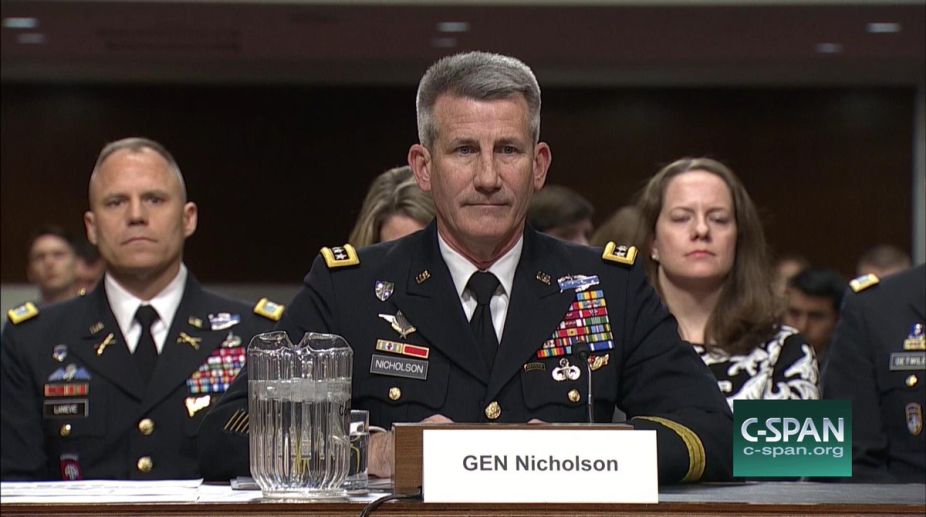
Top American military commander General Nicholson’s call for the deployment of more Nato troops to Afghanistan has come with an eerie sense of déjà vu: the continuation of the longest war in US history.

While testifying before the Senate Armed Services Committee, Nicholson characterised the conflict as a stalemate. In straightforward language, his statement amounts to an outright victory for the Taliban. As if on cue, Centcom chief General Votel also informed senators the commanders were putting the final touches on a new strategy that would require more troops. Almost without reservation, he upheld Nicholson’s assessment of what has come to be seen as a forgotten war, and underlined the imperative of staying engaged with Pakistan to ensure the new strategy works.

Astoundingly, Defence Secretary Mattis has been tight-lipped on plans for Afghanistan, which found no mention in the president’s inaugural speech. However, he did acknowledge at a Senate hearing: “Our country is still at war in Afghanistan … we are in serious trouble. The Taliban have eroded some of our successes.”

Some US officials insist the Western-backed Kabul government remains unaffected by Taliban’s battlefield gains. Amidst this pettifoggery, no one seems to appreciate the unpalatable reality that wars (once initiated) drag on in perpetuity. With Afghan forces literally on the run in many parts of the country, the international coalition bafflingly chose to place politics over the grim security environment in pulling out combat troops from Afghanistan.

Outgunned by resurgent Taliban in chronic combat zones, the security forces have suffered unsustainably high casualties over the past two years. From 1 January  through 19 August 2016, 5,523 Afghan service members lost their lives, and 9,665 were wounded. In 2017, the death rate is rising far above last year’s levels. The unrelenting insurgency thus poses the most immediate challenge to the US reconstruction effort and viability of the Afghan state.

The soaring casualty rates can be partly attributed to recurrent leadership failures in many police and military units. As violence escalates, a whole slew of gains in key areas (like poverty, women’s rights and the education gender gap) are eroding.

But in disregard of the ground situation, troop withdrawals were euphemistically described as force management levels. Apart from impeding the coalition’s success, the morale-busting moves have emboldened the militants.

Now familiar with the mission’s shifting timelines, an off-the-wall tactic of the Obama administration, the rebels look poised to wait out international forces. This tends to make matters worse for the US and Nato in Afghanistan.
President Trump is yet to unveil his policy on the war in Afghanistan. An impulsive leader like him can be expected to take radical foreign policy decisions.

If Trump responds positively to his commanders’ request for a new troop surge in Afghanistan, Pakistan will once again assume a key role in supporting the ill-starred American military campaign across the border.

However, Trump’s likely reliance on Pakistan is bound to evoke a negative reaction from the Afghan government, which has often ruled out engagement with the neighbour it accuses of using the Taliban as a policy instrument.

President Ashraf Ghani, feeling let down by Islamabad, says any bilateral negotiations with Pakistan will only take place in the presence of a neutral third party. One wonders who this honest broker could be, and whether or not Islamabad would accept this condition.

Apparently unconcerned about the bleak scenario, Ghani and Chief Executive Abdullah remain locked in a ferocious power struggle. They have failed to introduce badly needed electoral reforms or curb widespread administrative graft in government institutions.

If a military stratagem alone had been a panacea, Obama’s much-touted gambit of sending 30,000 extra soldiers into Afghanistan would have resulted in an outright victory. Instead, the Taliban grew stronger, something that also exposed the ex-president’s fantasy.

Hopefully, Trump will not lose sight of the current complex situation in Afghanistan. He should remember that a few thousand more service members can in no way accomplish a mission that 100,000 US troops failed to achieve seven years ago. Escalation alone does not automatically translate into success.

By any metric, the three-pronged campaign — nation-building, fighting against the Taliban and curbing the illicit drug commerce — has not yielded tangible results. But the amount spent on the mission is simply staggering: $1 trillion and counting. The reconciliation drive is a track that has lamentably gone cold and deserves the best possible shot.

Dawn/ANN.

A war waged in perpetuity

S Muddasir Ali Shah | New Delhi |

Top American military commander General Nicholson’s call for the deployment of more Nato troops to Afghanistan has come with an eerie sense of déjà vu: the continuation of the longest war in US history.

While testifying before the Senate Armed Services Committee, Nicholson characterised the conflict as a stalemate. In straightforward language, his statement amounts to an outright victory for the Taliban. As if on cue, Centcom chief General Votel also informed senators the commanders were putting the final touches on a new strategy that would require more troops. Almost without reservation, he upheld Nicholson’s assessment of what has come to be seen as a forgotten war, and underlined the imperative of staying engaged with Pakistan to ensure the new strategy works.

Astoundingly, Defence Secretary Mattis has been tight-lipped on plans for Afghanistan, which found no mention in the president’s inaugural speech. However, he did acknowledge at a Senate hearing: “Our country is still at war in Afghanistan … we are in serious trouble. The Taliban have eroded some of our successes.”

Some US officials insist the Western-backed Kabul government remains unaffected by Taliban’s battlefield gains. Amidst this pettifoggery, no one seems to appreciate the unpalatable reality that wars (once initiated) drag on in perpetuity. With Afghan forces literally on the run in many parts of the country, the international coalition bafflingly chose to place politics over the grim security environment in pulling out combat troops from Afghanistan.

Outgunned by resurgent Taliban in chronic combat zones, the security forces have suffered unsustainably high casualties over the past two years. From 1 January  through 19 August 2016, 5,523 Afghan service members lost their lives, and 9,665 were wounded. In 2017, the death rate is rising far above last year’s levels. The unrelenting insurgency thus poses the most immediate challenge to the US reconstruction effort and viability of the Afghan state.

The soaring casualty rates can be partly attributed to recurrent leadership failures in many police and military units. As violence escalates, a whole slew of gains in key areas (like poverty, women’s rights and the education gender gap) are eroding.

But in disregard of the ground situation, troop withdrawals were euphemistically described as force management levels. Apart from impeding the coalition’s success, the morale-busting moves have emboldened the militants.

Now familiar with the mission’s shifting timelines, an off-the-wall tactic of the Obama administration, the rebels look poised to wait out international forces. This tends to make matters worse for the US and Nato in Afghanistan.
President Trump is yet to unveil his policy on the war in Afghanistan. An impulsive leader like him can be expected to take radical foreign policy decisions.

If Trump responds positively to his commanders’ request for a new troop surge in Afghanistan, Pakistan will once again assume a key role in supporting the ill-starred American military campaign across the border.

However, Trump’s likely reliance on Pakistan is bound to evoke a negative reaction from the Afghan government, which has often ruled out engagement with the neighbour it accuses of using the Taliban as a policy instrument.

President Ashraf Ghani, feeling let down by Islamabad, says any bilateral negotiations with Pakistan will only take place in the presence of a neutral third party. One wonders who this honest broker could be, and whether or not Islamabad would accept this condition.

Apparently unconcerned about the bleak scenario, Ghani and Chief Executive Abdullah remain locked in a ferocious power struggle. They have failed to introduce badly needed electoral reforms or curb widespread administrative graft in government institutions.

If a military stratagem alone had been a panacea, Obama’s much-touted gambit of sending 30,000 extra soldiers into Afghanistan would have resulted in an outright victory. Instead, the Taliban grew stronger, something that also exposed the ex-president’s fantasy.

Hopefully, Trump will not lose sight of the current complex situation in Afghanistan. He should remember that a few thousand more service members can in no way accomplish a mission that 100,000 US troops failed to achieve seven years ago. Escalation alone does not automatically translate into success.

By any metric, the three-pronged campaign — nation-building, fighting against the Taliban and curbing the illicit drug commerce — has not yielded tangible results. But the amount spent on the mission is simply staggering: $1 trillion and counting. The reconciliation drive is a track that has lamentably gone cold and deserves the best possible shot.

Dawn/ANN.

A new prism to view poverty

Chandra Mishra | New Delhi |

For me, Gandhi’s third class compartment tour of India in a half-naked fakir avatar was a shrewd Baniya political masterstroke until I spent 37 hours in the unreserved general class of the Howrah-Yashwantpur Express in the first week of March. Those 37 hours of “cattle class” travel from Kolkata to Bangalore with migrant laborers from West Bengal, Bihar and Odisha not only changed my perception of Gandhism, but also my understanding of poverty.

How disconnected we are with the changing mindset of the poor when we mistake them gravely in the category of “beggars are no choosers” and boast of poverty alleviation through schemes such as subsidized meals, rice@1 rupee, freebees, Indira Awas Yojana, and so on. But we have probably goofed up somewhere. For sure. Otherwise Samser of Muzaffarpur, Bihar, the land of leechi, would have not “rented out” his BPL card and shifted to Koramangala to work as a house painter. 

A half-drunk old construction worker narrated how he married off his daughter to a “capable” groom working as a crane operator in Bangalore. The most satisfied and proud was Laxmi, a Telugu lady from Palasa, Andhra Pradesh, dividing her time between two sons working in Kolkata and Hyderabad. Both of her sons own homes in the slums of these cities. Why do they travel so far for work? Aren’t their state governments caring enough towards the impoverished?
“Government gives some 100 days work. Should we sit idle for rest 265 days?” – quipped a young man from Malda, West Bengal, who was venturing out for the first time in pursuit of work. “My children do not eat that substandard BPL rice, it smells,” murmured an old lady from Paralakhemundi, Odisha.  “I gifted my Indira Awas to another widowed lady of our village. She was living in a dilapidated hut with her two children. I don’t want to get stuck in a village where there is no future,” explained another who has shifted his wife and parents to a rented slum house in Immadihalli of Bangalore.

Yes, Future! The poor are equally conscious of their future. They have ambitions too. The fact that Prasun Mondal of Bardhamaan sold his MGNREGA job card and relocated to Vijaywada for work speaks a lot. Almost 99 per cent of the migrant laborers in that compartment were hooked up to their smart phones. Great news for Digital India; even our poverty is digitalised. So poverty is no longer confined to hunger for two square meals a day, but redefined in the changing categories of hunger – hunger for better life, better future, education for children, building own house, and remarkably, hunger for being able to achieve all these through hard work.

A group of Bodo boys from Udalguri, Assam, working in a small guest house in the Majestic of Bangalore will quit their jobs at the end of this month. Why? “I am getting Rs.8,000 per month apart from free accommodation and food. But our friends in Goa get Rs.10,000 per month. We will shift to Goa”, said 26-year-old Simonsa who cleans the floor.

Ramachandra, a 64-year-old roadside tailor at Balepet circle of Bangalore is financing education of his three children. The elder son is a 8th semester engineering student whose annual fees is Rs.55,000; the second son is pursuing cost accounting and the daughter is studying B.Com. Not to be surprised, Ramachandra is all praise for the demonetisation of Narendra Modi, as he feels, “the rich have learnt a lesson”.

If economics, according to Max Hartwell, is “study of poverty”, then Indian elections are essentially the politics of poverty. Poverty has been the most dominant vote bank in Indian politics. All major political forces in India – the parties of the ‘have-nots’(Communists) to the rightist party of the ‘haves’ (BJP known for its traditional Brahmin-Baniya-Rajput support base), centrist Congress and regional satraps like MGR, NTR, Jayalalitha and Naveen Patnaik – have always used populist schemes to ensure support of the poor as the backbone of their power.

But the Congress, which first turned poverty to a vote bank through the “garibi hatao” slogan of Indira Gandhi, lost its traditional support base miserably in the 2014 general election as it failed to understand the changing definition of poverty and aspirations of the poor. All that re-enactment of the old Gandhi-Indira-Rajeev era poverty tourism – visiting the home of widowed Vidarbha farmer Kalavati Bandurkar or dining and sleeping in the tribal huts of Niyamgiri – didn’t turn into votes. Nor even the flagship MGNREGA of Sonia Gandhi led National Advisory Council.

Had half of the economically poor, socially poor (Dalits 24.4 per cent) and socio-economic-religious poor (Muslims 14 per cent) who formed the traditional loyal vote bank of Congress for decades, voted for the party, the Gandhis would have been the invincible monarchs in electoral politics. While the Congress tried to connect with the poor with an “aam aadmi ka saath” image, Modi aggressively addressed their subconscious aspirations by projecting himself as the “tea-seller’s son for Prime Minister”. The “Ache Din” dream of Modi trumped the “roti-kapda-makan” of Congress in the battle of poverty.

India, being the second most unequal country, where top 1 per cent of the population owns 58.4 per cent of the country’s total wealth and where 80 per cent of adults (voters) belong to the bottom half owning just 1 per cent collectively, the “neighbour’s envy” factor is dominant in our socio-economic psychology.

Modi wore a soft Robin Hood hat through demonetisation, perceived as a bold step to rob the rich of their ill-gotten money. This was just like the socialism card played by the late Indira Gandhi who nationalised commercial banks through a midnight ordinance in 1969  and used abolition of Privy Purses to improve the  Congress tally in Lok Sabha to 352 in 1971 from 283 with a strike rate of 79.82 per cent  compared 54.84 per cent in 1967. ‘Jealousy for the rich, but aspiration to be rich’ is a complicated psychological phenomenon of poverty which has always played a vital role in the voting behavior of the poor.  This was proved again in UP, where laptops and unemployment doles of Akhilesh, MGNREGA of Congress and Dalit identity politics of Mayawati got defeated by dream merchant Modi.

This is how our classroom and conference hall intellectualism fails to understand the changing definition of poverty, from the poor’s point of view.  It defies all official yardsticks of poverty – of Tendulkar (Rs 27 in rural, Rs 33 in urban), Rangarajan (Rs 32 in rural and Rs. 47 in urban) or World Bank ($1.90). Far beyond extreme, absolute and relative poverty, this is a phase of civilisational poverty, when the poor want to live like civilized citizens with dignity, not like pigs.  Fuelling aspirations for votes may be easy. But can the Prime Minister meet these rising expectations of his new found vote bank? Let’s hope “Achhe Din” would not meet the unexpected fate of “Bharat Uday”. 

The writer was a founder member of State Employment Mission, Govt of Odisha and now works on Zero Unemployment Model.

A new prism to view poverty

Chandra Mishra | New Delhi |

For me, Gandhi’s third class compartment tour of India in a half-naked fakir avatar was a shrewd Baniya political masterstroke until I spent 37 hours in the unreserved general class of the Howrah-Yashwantpur Express in the first week of March. Those 37 hours of “cattle class” travel from Kolkata to Bangalore with migrant laborers from West Bengal, Bihar and Odisha not only changed my perception of Gandhism, but also my understanding of poverty.

How disconnected we are with the changing mindset of the poor when we mistake them gravely in the category of “beggars are no choosers” and boast of poverty alleviation through schemes such as subsidized meals, rice@1 rupee, freebees, Indira Awas Yojana, and so on. But we have probably goofed up somewhere. For sure. Otherwise Samser of Muzaffarpur, Bihar, the land of leechi, would have not “rented out” his BPL card and shifted to Koramangala to work as a house painter. 

A half-drunk old construction worker narrated how he married off his daughter to a “capable” groom working as a crane operator in Bangalore. The most satisfied and proud was Laxmi, a Telugu lady from Palasa, Andhra Pradesh, dividing her time between two sons working in Kolkata and Hyderabad. Both of her sons own homes in the slums of these cities. Why do they travel so far for work? Aren’t their state governments caring enough towards the impoverished?
“Government gives some 100 days work. Should we sit idle for rest 265 days?” – quipped a young man from Malda, West Bengal, who was venturing out for the first time in pursuit of work. “My children do not eat that substandard BPL rice, it smells,” murmured an old lady from Paralakhemundi, Odisha.  “I gifted my Indira Awas to another widowed lady of our village. She was living in a dilapidated hut with her two children. I don’t want to get stuck in a village where there is no future,” explained another who has shifted his wife and parents to a rented slum house in Immadihalli of Bangalore.

Yes, Future! The poor are equally conscious of their future. They have ambitions too. The fact that Prasun Mondal of Bardhamaan sold his MGNREGA job card and relocated to Vijaywada for work speaks a lot. Almost 99 per cent of the migrant laborers in that compartment were hooked up to their smart phones. Great news for Digital India; even our poverty is digitalised. So poverty is no longer confined to hunger for two square meals a day, but redefined in the changing categories of hunger – hunger for better life, better future, education for children, building own house, and remarkably, hunger for being able to achieve all these through hard work.

A group of Bodo boys from Udalguri, Assam, working in a small guest house in the Majestic of Bangalore will quit their jobs at the end of this month. Why? “I am getting Rs.8,000 per month apart from free accommodation and food. But our friends in Goa get Rs.10,000 per month. We will shift to Goa”, said 26-year-old Simonsa who cleans the floor.

Ramachandra, a 64-year-old roadside tailor at Balepet circle of Bangalore is financing education of his three children. The elder son is a 8th semester engineering student whose annual fees is Rs.55,000; the second son is pursuing cost accounting and the daughter is studying B.Com. Not to be surprised, Ramachandra is all praise for the demonetisation of Narendra Modi, as he feels, “the rich have learnt a lesson”.

If economics, according to Max Hartwell, is “study of poverty”, then Indian elections are essentially the politics of poverty. Poverty has been the most dominant vote bank in Indian politics. All major political forces in India – the parties of the ‘have-nots’(Communists) to the rightist party of the ‘haves’ (BJP known for its traditional Brahmin-Baniya-Rajput support base), centrist Congress and regional satraps like MGR, NTR, Jayalalitha and Naveen Patnaik – have always used populist schemes to ensure support of the poor as the backbone of their power.

But the Congress, which first turned poverty to a vote bank through the “garibi hatao” slogan of Indira Gandhi, lost its traditional support base miserably in the 2014 general election as it failed to understand the changing definition of poverty and aspirations of the poor. All that re-enactment of the old Gandhi-Indira-Rajeev era poverty tourism – visiting the home of widowed Vidarbha farmer Kalavati Bandurkar or dining and sleeping in the tribal huts of Niyamgiri – didn’t turn into votes. Nor even the flagship MGNREGA of Sonia Gandhi led National Advisory Council.

Had half of the economically poor, socially poor (Dalits 24.4 per cent) and socio-economic-religious poor (Muslims 14 per cent) who formed the traditional loyal vote bank of Congress for decades, voted for the party, the Gandhis would have been the invincible monarchs in electoral politics. While the Congress tried to connect with the poor with an “aam aadmi ka saath” image, Modi aggressively addressed their subconscious aspirations by projecting himself as the “tea-seller’s son for Prime Minister”. The “Ache Din” dream of Modi trumped the “roti-kapda-makan” of Congress in the battle of poverty.

India, being the second most unequal country, where top 1 per cent of the population owns 58.4 per cent of the country’s total wealth and where 80 per cent of adults (voters) belong to the bottom half owning just 1 per cent collectively, the “neighbour’s envy” factor is dominant in our socio-economic psychology.

Modi wore a soft Robin Hood hat through demonetisation, perceived as a bold step to rob the rich of their ill-gotten money. This was just like the socialism card played by the late Indira Gandhi who nationalised commercial banks through a midnight ordinance in 1969  and used abolition of Privy Purses to improve the  Congress tally in Lok Sabha to 352 in 1971 from 283 with a strike rate of 79.82 per cent  compared 54.84 per cent in 1967. ‘Jealousy for the rich, but aspiration to be rich’ is a complicated psychological phenomenon of poverty which has always played a vital role in the voting behavior of the poor.  This was proved again in UP, where laptops and unemployment doles of Akhilesh, MGNREGA of Congress and Dalit identity politics of Mayawati got defeated by dream merchant Modi.

This is how our classroom and conference hall intellectualism fails to understand the changing definition of poverty, from the poor’s point of view.  It defies all official yardsticks of poverty – of Tendulkar (Rs 27 in rural, Rs 33 in urban), Rangarajan (Rs 32 in rural and Rs. 47 in urban) or World Bank ($1.90). Far beyond extreme, absolute and relative poverty, this is a phase of civilisational poverty, when the poor want to live like civilized citizens with dignity, not like pigs.  Fuelling aspirations for votes may be easy. But can the Prime Minister meet these rising expectations of his new found vote bank? Let’s hope “Achhe Din” would not meet the unexpected fate of “Bharat Uday”. 

The writer was a founder member of State Employment Mission, Govt of Odisha and now works on Zero Unemployment Model.

Civil-Military construct~I

Ashok kapur | New Delhi |

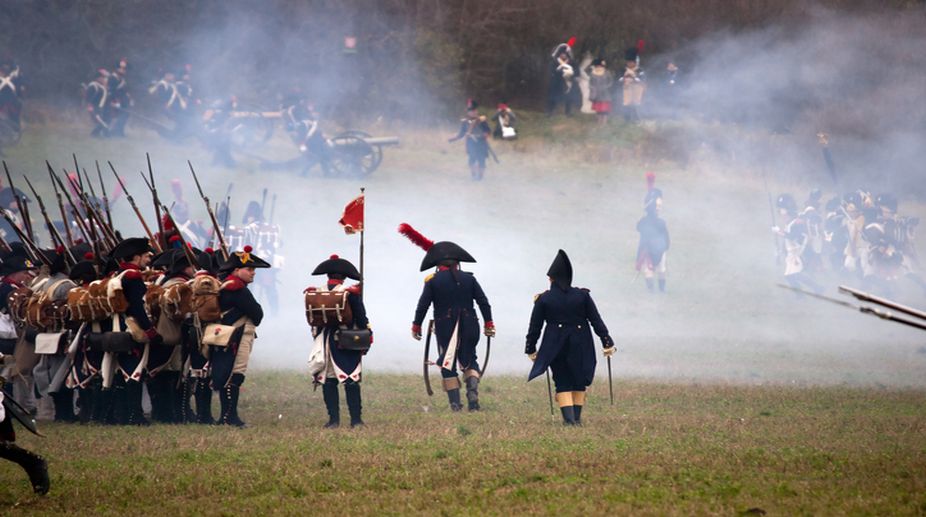
Napoleon Bonaparte, arguably one of the world’s greatest military strategists and generals, had crafted his own obituary ~ “Let my children and grandchildren study history. It is the only valid philosophy and the only true psychology”. Few leaders and military commanders would have known better about diplomacy, inter-state relations and the conduct of war.

The rare wisdom and insight of the great military commander comes to one’s mind in the context of the long-drawn campaign undertaken by a handful of retired Indian military officers to somehow exert pressure on the political executive to create a ‘post’ of Defence Supremo to proffer a ‘single-point’ advice to the Government on matters military. He is projected as a five-star general and the present chiefs of Army, Navy and Air Force will report to him. And the Supremo will report directly to the PM.

In a cruel irony of history, the aura surrounding the persona of Napoleon, a genius, if one may use the term in the context of military strategy, was shattered in his own lifetime. In the hour of his greatest triumph and dazzling glory, he faced a humiliating defeat. His military campaign in Russia resulted in an unprecedented disaster. His war strategy culminated in the decimation of his own Army. And then, he eventually lost to the British and was incarcerated in a faraway island.

Napoleon’s wisdom only underscores something known and acknowledged by statesmen the world over, especially in modern civilian democracies. ‘War is too serious a business to be left to the military leadership alone’. More so, a war in the age of nuclear weapons. And history provides a host of instances where the civilian leadership has repeatedly proved to be superior in its overall judgment of matters military. A war strategy at higher levels is the rightful domain of experienced civilians who have a wider exposure and a richer insight into statecraft.

‘War’ has been defined as ‘pursuit of politics by other means’. The issue of civilian control even during the time of war is of critical contemporary relevance especially to countries like India. Undeniably, our democracy has roots, but these are not deep enough. The military needs to be told, once and for all that its place is in the barracks, not in the boardroom. This imperative of subordination of the military to the civilian leadership is a certitude of democracy not only during peacetime but also during wartime. Historically, whenever the military viewpoint has overruled civilian leadership even during war, the result has been a disaster.

The explicit subordination of the military to the civilian leadership is embedded in the constitutional rule of law in modern times, beginning with the first such arrangement in the USA in the late 18th century. Thereafter, it has been formalised in modern civilian democracies the world over, notably in the UK, France, Canada, Australia etc. And in India in 1950, with the adoption of the Constitution. The military has been made accountable to the permanent civilians manning the Defence Ministry, headed by the elected Defence Minister.

The first comprehensive law in India crafted by one of the greatest jurists of the 19th century, Lord Macaulay, was the Criminal Procedure Code,1860. He was the first Chairman of the Law Commission of India, an entirely new invention of the British Raj. According to it, even during serious law and order situations when the civil administration has to summon the assistance of the Army, the most senior military officer is “required” to obey the civilian magistrate’s orders on the scene. The ‘chain of command’, as the military jargon goes, with a civilian in charge, is explicit.

It goes to the credit of India’s sovereign Parliament that it adopted the said legislation verbatim in 1950. Secondly, the CrPC set the model for future legislation in independent India. The military has not been given any role in civilian governance, the powers being vested in the civilian magistracy. This is based on the sound democratic norm that defines civil service (that runs the government) as “that form of governance whereby the armed services of the government are excluded from governance”.

The last century has been one of the bloodiest in history, beginning with the first World War during 1914-18. The traditional military aristocracy, by and large still dominated the politics of major European powers ~ save Great Britain ~ that were engaged relentlessly in mindless bloodletting for years, without a clear political goal save the “destruction of the enemy”. For more than four years, major land battles were fought not so much as to advance into Germany as to fight each other in trenches, to “regain lost ground”. See-saw battles were fought by both sides, killing each other’s soldiers by the thousands every day. In the words of an eminent military strategist, it was “trench stalemate ~ blind (military) leaders blindfolding people.”

The stated objective of military leadership on either side appears to have been “Total War”. The eventual surrender of Germany was achieved at high human cost, as the political objective was lost sight of in between. The military leadership ~ on either side ~ that dominated the conduct of war throughout, was more engaged in an ego play. Personal glory underscored battle objectives, whereby thousands of soldiers were sacrificed daily. There was virtually no counting of the dead or the wounded. “To and fro the struggle swayed, with equal slaughter and ferocity.”
By the time of the Second World War (1939-45), democracy had gradually developed roots in Europe and America save Japan, Germany and Italy. Little wonder that these three powers were the major aggressors in starting the war. In Japan, the control of the civilian government was nominal even prior to the World War. In the early 1930s, the autonomous Japanese military on its own launched an entirely unprovoked attack against China, and occupied Manchuria. The Japanese civilian government was shocked. It could do nothing except acquiesce in impotent rage.
During the Second World War, France was a major world power. Ironically, it was the French military that capitulated to the Nazi invader, and let it overrun and occupy France for four years, ignoring the earlier forebodings of the French Government.

The civilian leadership had been repeatedly urging the French military to read the writing on the wall but to no avail. For four years, the occupying German army ravaged the country and caused untold suffering to the hapless civilian populace. The French army leadership imprisoned its own Prime Minister!

(To be concluded)

The writer is a retired IAS officer.

Civil-Military construct~I

Ashok kapur | New Delhi |

Napoleon Bonaparte, arguably one of the world’s greatest military strategists and generals, had crafted his own obituary ~ “Let my children and grandchildren study history. It is the only valid philosophy and the only true psychology”. Few leaders and military commanders would have known better about diplomacy, inter-state relations and the conduct of war.

The rare wisdom and insight of the great military commander comes to one’s mind in the context of the long-drawn campaign undertaken by a handful of retired Indian military officers to somehow exert pressure on the political executive to create a ‘post’ of Defence Supremo to proffer a ‘single-point’ advice to the Government on matters military. He is projected as a five-star general and the present chiefs of Army, Navy and Air Force will report to him. And the Supremo will report directly to the PM.

In a cruel irony of history, the aura surrounding the persona of Napoleon, a genius, if one may use the term in the context of military strategy, was shattered in his own lifetime. In the hour of his greatest triumph and dazzling glory, he faced a humiliating defeat. His military campaign in Russia resulted in an unprecedented disaster. His war strategy culminated in the decimation of his own Army. And then, he eventually lost to the British and was incarcerated in a faraway island.

Napoleon’s wisdom only underscores something known and acknowledged by statesmen the world over, especially in modern civilian democracies. ‘War is too serious a business to be left to the military leadership alone’. More so, a war in the age of nuclear weapons. And history provides a host of instances where the civilian leadership has repeatedly proved to be superior in its overall judgment of matters military. A war strategy at higher levels is the rightful domain of experienced civilians who have a wider exposure and a richer insight into statecraft.

‘War’ has been defined as ‘pursuit of politics by other means’. The issue of civilian control even during the time of war is of critical contemporary relevance especially to countries like India. Undeniably, our democracy has roots, but these are not deep enough. The military needs to be told, once and for all that its place is in the barracks, not in the boardroom. This imperative of subordination of the military to the civilian leadership is a certitude of democracy not only during peacetime but also during wartime. Historically, whenever the military viewpoint has overruled civilian leadership even during war, the result has been a disaster.

The explicit subordination of the military to the civilian leadership is embedded in the constitutional rule of law in modern times, beginning with the first such arrangement in the USA in the late 18th century. Thereafter, it has been formalised in modern civilian democracies the world over, notably in the UK, France, Canada, Australia etc. And in India in 1950, with the adoption of the Constitution. The military has been made accountable to the permanent civilians manning the Defence Ministry, headed by the elected Defence Minister.

The first comprehensive law in India crafted by one of the greatest jurists of the 19th century, Lord Macaulay, was the Criminal Procedure Code,1860. He was the first Chairman of the Law Commission of India, an entirely new invention of the British Raj. According to it, even during serious law and order situations when the civil administration has to summon the assistance of the Army, the most senior military officer is “required” to obey the civilian magistrate’s orders on the scene. The ‘chain of command’, as the military jargon goes, with a civilian in charge, is explicit.

It goes to the credit of India’s sovereign Parliament that it adopted the said legislation verbatim in 1950. Secondly, the CrPC set the model for future legislation in independent India. The military has not been given any role in civilian governance, the powers being vested in the civilian magistracy. This is based on the sound democratic norm that defines civil service (that runs the government) as “that form of governance whereby the armed services of the government are excluded from governance”.

The last century has been one of the bloodiest in history, beginning with the first World War during 1914-18. The traditional military aristocracy, by and large still dominated the politics of major European powers ~ save Great Britain ~ that were engaged relentlessly in mindless bloodletting for years, without a clear political goal save the “destruction of the enemy”. For more than four years, major land battles were fought not so much as to advance into Germany as to fight each other in trenches, to “regain lost ground”. See-saw battles were fought by both sides, killing each other’s soldiers by the thousands every day. In the words of an eminent military strategist, it was “trench stalemate ~ blind (military) leaders blindfolding people.”

The stated objective of military leadership on either side appears to have been “Total War”. The eventual surrender of Germany was achieved at high human cost, as the political objective was lost sight of in between. The military leadership ~ on either side ~ that dominated the conduct of war throughout, was more engaged in an ego play. Personal glory underscored battle objectives, whereby thousands of soldiers were sacrificed daily. There was virtually no counting of the dead or the wounded. “To and fro the struggle swayed, with equal slaughter and ferocity.”
By the time of the Second World War (1939-45), democracy had gradually developed roots in Europe and America save Japan, Germany and Italy. Little wonder that these three powers were the major aggressors in starting the war. In Japan, the control of the civilian government was nominal even prior to the World War. In the early 1930s, the autonomous Japanese military on its own launched an entirely unprovoked attack against China, and occupied Manchuria. The Japanese civilian government was shocked. It could do nothing except acquiesce in impotent rage.
During the Second World War, France was a major world power. Ironically, it was the French military that capitulated to the Nazi invader, and let it overrun and occupy France for four years, ignoring the earlier forebodings of the French Government.

The civilian leadership had been repeatedly urging the French military to read the writing on the wall but to no avail. For four years, the occupying German army ravaged the country and caused untold suffering to the hapless civilian populace. The French army leadership imprisoned its own Prime Minister!

(To be concluded)

The writer is a retired IAS officer.

Well-meant, but …

Editorial | New Delhi |

Pardon the taking of recourse to the oft-deprecated journalistic line “only time will tell…” Yet that would be a realistic evaluation of the somewhat surprising suggestion of the Chief Justice of India for yet another attempt at an out-of-court, mediated settlement of the long-festering highly-emotional sore that is the Ram Janmabhoomi-Babari Masjid dispute at Ayodhya. What triggers a degree of intrigue is precisely what Mr Justice JS Khehar had intended when offering himself, or a brother judge, as mediators between the disputing parties. What would be the status of that mediation, would the recommendations be binding, would central and state laws be amended to facilitate any such mediated settlement? The Chief Justice’s out-of-the-box offer also caused a mini-stir since it was not made at a formal hearing at which all parties to the dispute were present. Queries are also being raised as to why the apex court was now advocating an out-of-court settlement when the judicial apparatus had been seized of the matter for decades. Sure there was much appreciation of the CJI’s declaring it a sensitive and sentimental issue, but one set of critics wondered if the apex court was seeking a way out of eventually having to pronounce a judicial verdict in which there was limited scope for a compromise solution. Another set of critics wondered if the timing of the CJI’s observations were inadvertently influenced by the political equation re-determined on March 11.

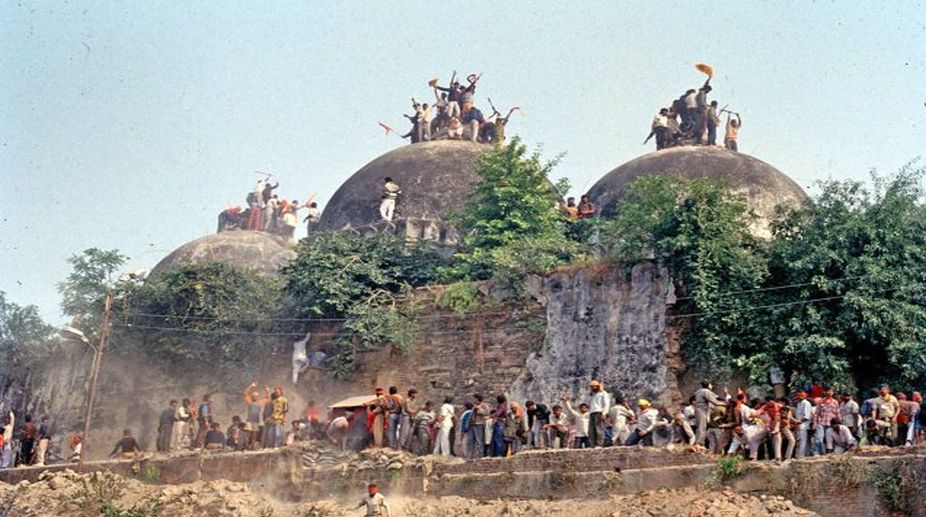
On the face of it, there was all-round appreciation of the call for a negotiated settlement, but just under the surface was an insistence by the Ram Janmabhoomi votaries that the disputed site be handed over to them for the construction of a temple, and that there was nothing sacred about the Babari Masjid. The contrary view was that the suggestion was tantamount to surrender, and that after its vandalisation on December 6, 1992, the mosque had acquired its own sentimental status. That within hours of the CJI’s suggestion all the major players were back in action, vehemently re-stating the positions that had led to the serious, at times inflammatory and occasionally violent stand-off confirmed that an ambience conducive to negotiations was yet to obtain.

Hence the prospects of another attempt at negotiations appeared as bleak as during previous endeavours. So did the developments in the apex court on Tuesday serve to douse, or stoke, the fires that many believe were ignited centuries ago, and were more recently fuelled by sectarian politics? Perhaps some movement will be “reported” when the issue is taken up again by the court some ten days hence. Maybe it would be fair to conclude that, regardless of the outcome, their Lordships “did try”…where other entities had failed.

Well-meant, but …

Editorial | New Delhi |

Pardon the taking of recourse to the oft-deprecated journalistic line “only time will tell…” Yet that would be a realistic evaluation of the somewhat surprising suggestion of the Chief Justice of India for yet another attempt at an out-of-court, mediated settlement of the long-festering highly-emotional sore that is the Ram Janmabhoomi-Babari Masjid dispute at Ayodhya. What triggers a degree of intrigue is precisely what Mr Justice JS Khehar had intended when offering himself, or a brother judge, as mediators between the disputing parties. What would be the status of that mediation, would the recommendations be binding, would central and state laws be amended to facilitate any such mediated settlement? The Chief Justice’s out-of-the-box offer also caused a mini-stir since it was not made at a formal hearing at which all parties to the dispute were present. Queries are also being raised as to why the apex court was now advocating an out-of-court settlement when the judicial apparatus had been seized of the matter for decades. Sure there was much appreciation of the CJI’s declaring it a sensitive and sentimental issue, but one set of critics wondered if the apex court was seeking a way out of eventually having to pronounce a judicial verdict in which there was limited scope for a compromise solution. Another set of critics wondered if the timing of the CJI’s observations were inadvertently influenced by the political equation re-determined on March 11.

On the face of it, there was all-round appreciation of the call for a negotiated settlement, but just under the surface was an insistence by the Ram Janmabhoomi votaries that the disputed site be handed over to them for the construction of a temple, and that there was nothing sacred about the Babari Masjid. The contrary view was that the suggestion was tantamount to surrender, and that after its vandalisation on December 6, 1992, the mosque had acquired its own sentimental status. That within hours of the CJI’s suggestion all the major players were back in action, vehemently re-stating the positions that had led to the serious, at times inflammatory and occasionally violent stand-off confirmed that an ambience conducive to negotiations was yet to obtain.

Hence the prospects of another attempt at negotiations appeared as bleak as during previous endeavours. So did the developments in the apex court on Tuesday serve to douse, or stoke, the fires that many believe were ignited centuries ago, and were more recently fuelled by sectarian politics? Perhaps some movement will be “reported” when the issue is taken up again by the court some ten days hence. Maybe it would be fair to conclude that, regardless of the outcome, their Lordships “did try”…where other entities had failed.

Horror by the Thames

Editorial | New Delhi |

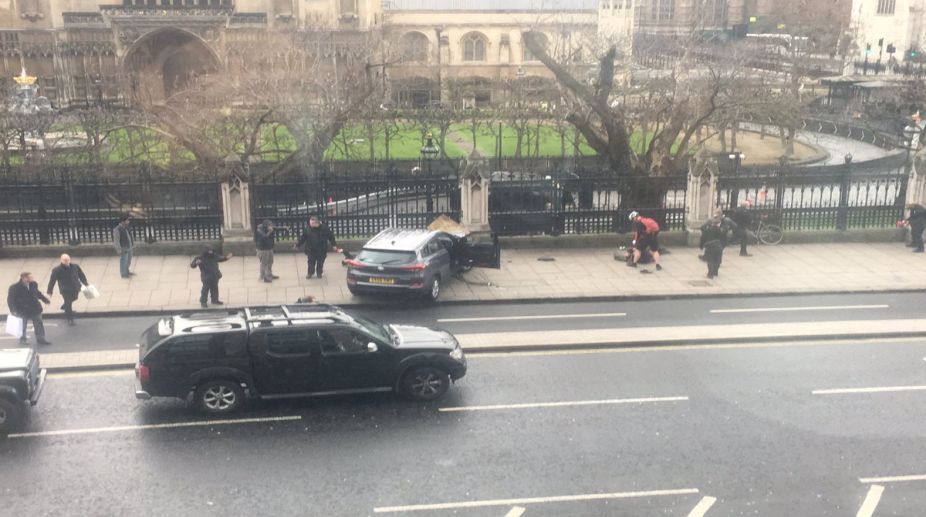
The symbolism is devastating. Wednesday’s carnage outside the Palace of Westminster was an attack on democracy in its cradle. The death of five persons, including an unarmed policeman and the assailant, is but a symptom of an enormous tragedy, recalling London’s 7/7 more than a decade ago. Prime Minister Theresa May has hit the bull’s eye with her succinct comment ~ “sick and depraved”, a searing condemnation that has summed up the hideous intent of the terrorist across the world. Yet the outlook must be frightful when one reflects that the current wave of global terrorism has now struck the heart of London. Mercifully, the attacker failed to enter Parliament; the consequence is too chilling to imagine if he had. The inbuilt and massive security around the Commons and the Lords was effective in protecting the rarefied assembly.

The tragedy deepens, however, with the death of innocents, as in Paris, Brussels, Tunis, and other parts of the world. This week is the anniversary of the ISIS outrage at Brussels airport, where 32 people were killed in a coordinated assault. Predictably, Parliament is under “lockdown”; yet it is testament to the resilience of British democracy that Ms May has expressed the hope that the renewed bedlam and butchery in London ~ if on a far lesser scale compared to 7/7 ~ will not undermine the country’s values. As yet, nothing is known of the attacker’s nationality, still less the motive save that it is another bout of calculated malevolence. The country is poised to step out of EU, but Europe shall remain the geographical expression that it is. This is the primary distinction that is yet to be sufficiently grasped. It must be accepted nonetheless that an outrage in any part of Europe is an attack on the Continent. This is the sinister thread between the killings in Berlin on Christmas eve and Wednesday’s mayhem in London. Both were assaults on Europe’s centres of power.

The horror by the Thames has roiled the nerve-centre of the democratic engagement, historical landmarks, and tourist attractions. London does have the resilience to recover soon enough, as it did after the carnage in the Underground. It is obvious that the attack on Westminster was timed on a crucial day of the week ~ a Wednesday, the day of the “Prime Minister’s questions” when her movements would be fairly well known. There will be questions in coming days about the identity of the assailant and his associates, if any. For now, however, the world must appreciate the professionalism with which the police countenanced the horrible and the brutal. Even as it braces for the possibility of lone, indoctrinated radicals dismantling, attack after attack, civilization as we know it.


Horror by the Thames

Editorial | New Delhi |

The symbolism is devastating. Wednesday’s carnage outside the Palace of Westminster was an attack on democracy in its cradle. The death of five persons, including an unarmed policeman and the assailant, is but a symptom of an enormous tragedy, recalling London’s 7/7 more than a decade ago. Prime Minister Theresa May has hit the bull’s eye with her succinct comment ~ “sick and depraved”, a searing condemnation that has summed up the hideous intent of the terrorist across the world. Yet the outlook must be frightful when one reflects that the current wave of global terrorism has now struck the heart of London. Mercifully, the attacker failed to enter Parliament; the consequence is too chilling to imagine if he had. The inbuilt and massive security around the Commons and the Lords was effective in protecting the rarefied assembly.

The tragedy deepens, however, with the death of innocents, as in Paris, Brussels, Tunis, and other parts of the world. This week is the anniversary of the ISIS outrage at Brussels airport, where 32 people were killed in a coordinated assault. Predictably, Parliament is under “lockdown”; yet it is testament to the resilience of British democracy that Ms May has expressed the hope that the renewed bedlam and butchery in London ~ if on a far lesser scale compared to 7/7 ~ will not undermine the country’s values. As yet, nothing is known of the attacker’s nationality, still less the motive save that it is another bout of calculated malevolence. The country is poised to step out of EU, but Europe shall remain the geographical expression that it is. This is the primary distinction that is yet to be sufficiently grasped. It must be accepted nonetheless that an outrage in any part of Europe is an attack on the Continent. This is the sinister thread between the killings in Berlin on Christmas eve and Wednesday’s mayhem in London. Both were assaults on Europe’s centres of power.

The horror by the Thames has roiled the nerve-centre of the democratic engagement, historical landmarks, and tourist attractions. London does have the resilience to recover soon enough, as it did after the carnage in the Underground. It is obvious that the attack on Westminster was timed on a crucial day of the week ~ a Wednesday, the day of the “Prime Minister’s questions” when her movements would be fairly well known. There will be questions in coming days about the identity of the assailant and his associates, if any. For now, however, the world must appreciate the professionalism with which the police countenanced the horrible and the brutal. Even as it braces for the possibility of lone, indoctrinated radicals dismantling, attack after attack, civilization as we know it.


Call to help farmers increase income levels

IANS | Hyderabad |

Union Minister of State for Science and Technology Y.S. Chowdary on Thursday called for finding ways and means to help farmers increase their income levels and reduce the cost of living.

He was speaking here at the inauguration of India's first "Rural Innovators Startup Conclave 2017" (RISC). 

The National Institute of Rural Development & Panchayati Raj (NIRDPR) is organising the two-day event to build capacities and promote fresh talent by giving them a platform to display their innovations.

The minister said that the NIRDPR could play a major role in capacity building and help farmers get educated in fundamental financial literacy and cost accountancy.

W.R. Reddy, Director General, NIRDPR, noted that this was the first of its kind platform to connect all institutes and agencies promoting innovation and start-up culture to look at the rural landscape.

"RISC will be an annual feature that can handhold and mentor the innovators and connect the startups with funding agencies. We believe rural development can be accelerated by infusion of technology tapping the creative minds of the youth across the country," he said.

The organisers pointed out that Indian start-ups were mostly IT-based and cater to urban services and that innovation and technology diffusion for rural development was the need of the hour.

"Other important stakeholders who act as support systems to rural innovators are still evolving. There is a need to develop and nurture mentors, angel investors, faculty, corporates, media so that they play a much more active role in contributing to the ecosystem."

On the second day of the conclave, the start-ups will received the awards in six areas — agriculture and allied, green energy technologies, drinking water, health and sanitation, waste to wealth, sustainable housing and other livelihoods.

Call to help farmers increase income levels

IANS | Hyderabad |

Union Minister of State for Science and Technology Y.S. Chowdary on Thursday called for finding ways and means to help farmers increase their income levels and reduce the cost of living.

He was speaking here at the inauguration of India's first "Rural Innovators Startup Conclave 2017" (RISC). 

The National Institute of Rural Development & Panchayati Raj (NIRDPR) is organising the two-day event to build capacities and promote fresh talent by giving them a platform to display their innovations.

The minister said that the NIRDPR could play a major role in capacity building and help farmers get educated in fundamental financial literacy and cost accountancy.

W.R. Reddy, Director General, NIRDPR, noted that this was the first of its kind platform to connect all institutes and agencies promoting innovation and start-up culture to look at the rural landscape.

"RISC will be an annual feature that can handhold and mentor the innovators and connect the startups with funding agencies. We believe rural development can be accelerated by infusion of technology tapping the creative minds of the youth across the country," he said.

The organisers pointed out that Indian start-ups were mostly IT-based and cater to urban services and that innovation and technology diffusion for rural development was the need of the hour.

"Other important stakeholders who act as support systems to rural innovators are still evolving. There is a need to develop and nurture mentors, angel investors, faculty, corporates, media so that they play a much more active role in contributing to the ecosystem."

On the second day of the conclave, the start-ups will received the awards in six areas — agriculture and allied, green energy technologies, drinking water, health and sanitation, waste to wealth, sustainable housing and other livelihoods.

Men more prone to infertility due to less sleep: Experts

IANS | New Delhi |

Men are more likely to have infertility with less sleep than women, said IVF experts on Thursday.

According to them, sleep seems to have an impact on male fertility and snoring may be the first sign. 

"Studies show that men, who have disturbed sleep may have sperm counts equal to only 70 per cent, compared to those who sleep normal, and are less likely to impregnate their partner," said Sagarika Agarwal, IVF Expert at city-based Indira IVF Hospital.

Stating that testosterone is a male hormone that is crucial for reproduction, Agarwal said that majority of daily testosterone release in men occurs during sleep. 

"Total sleep time, thus, has been positively linked with testosterone levels. As per studies, those who suffered disturbed sleep with less than six hours a night also had lower sperm quality. Poor sleep interferes with the body's ability to produce sperm," said Agarwal.

Shivani Rai from the Gynaecology Department of the city-based Ram Manohar Lohia Hospital said that male infertility is usually caused by problems that affect either sperm production or sperm transport.

"Poor sleep for more than three weeks may cause lower sperm count, deformity in shape and decreased ability to move ahead. Either low numbers of sperm are made or the sperm that are made do not work properly," said Rai.

Apart from lower sperm count, Rai also said that poor sleep duration could also contribute to an unhealthy lifestyle, decreased libido and a decrease in sex.

Appropriate sleep hours of at least seven to nine hours helps optimise men's fertility and their chances of contributing to a pregnancy.

According to Vipin Chandra, another city-based Consultant of Gynaecologist, sperm transport problems are found in 30 per cent of the males. 

"Blockages (often referred to as obstructions) in the tubes that take sperms away from the testes to the penis can cause a complete lack of sperm in the ejaculated semen. A sedentary lifestyle contributes to it."