Logo

In sizzling tar … A family gets wiped out

Editorial | New Delhi |

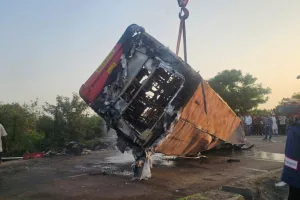
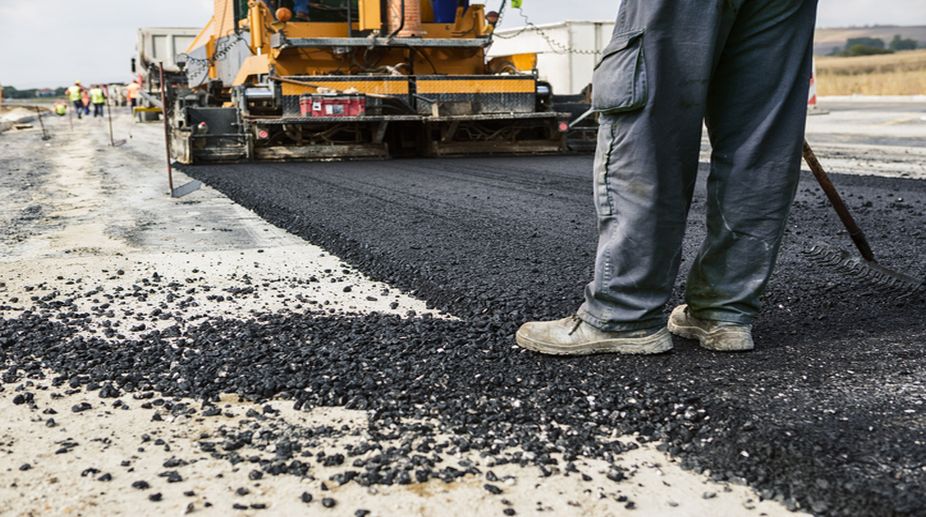
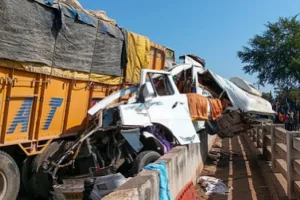
The accident has been as extraordinary as one of the ghastliest in West Bengal’s recent memory. The number of the National Highway is not the central issue; the nub of the matter must be that the Durgapur Expressway has over the past few months incurred the dubious distinction of an inter-state death trap that connects West Bengal with northern India. So it was last Wednesday when a family of seven ~ travelling in their straight-from-the showroom Ciaz car ~ was wiped out when a speeding tanker, laden with molten tar, skidded off the highway at break-neck speed and collapsed on the car in the vicinity of Burdwan. The family was driven quicker to an excrutiating death than to their destination of Patna. To use the language of the metaphor, they were literally bathed in sizzling molten tar; an accident such as this might well be the first of its kind in Bengal or any other state. It matters little whether the Motor Vehicles Act is a piece of Central or state legislation. What matters most is the role of the peripheral district’s traffic police department, which alas has been found wanting. The nature of the mishap made rescue operations difficult, and for the six-year-old it was a terminal cry for help… from beneath the tar. Elementary rules of the highway would suggest that the tar-laden truck ought to have run along a different/designated lane, instead of following the track earmarked for passenger traffic. Indeed, transporting inflammable material and parking such tankers alongside the passenger track are now the norm rather than the exception. It thus comes about that loaded tankers carry oil, chemicals, hot bitumen consignments… even explosives. Indeed, the illegality spread has reduced the highways to hell, National Highway 2 being particularly vulnerable. The stretch between Dankuni and Panagarh, for instance, alone witnessed 44 fatal accidents over the past year.

High-minded lament over the need to impose speed restrictions is a horribly belated attempt to be wise after the event, notably the Chief Minister’s directive to the police to take stringent action for traffic violation. The fact of the matter, of which the police administration cannot be unaware, is that there aren’t any strict speed restrictions in place, let alone proper regulation of traffic, most particularly at inhospitable hours. Both the National Highway Authority of India and the state administration are said to be chewing over the proposal to reduce the speed limit from 100 km per hour to the 60-80 range. Enough have died and many more incapacitated, and a firm decision is now direly imperative.


In sizzling tar … A family gets wiped out

Editorial | New Delhi |

The accident has been as extraordinary as one of the ghastliest in West Bengal’s recent memory. The number of the National Highway is not the central issue; the nub of the matter must be that the Durgapur Expressway has over the past few months incurred the dubious distinction of an inter-state death trap that connects West Bengal with northern India. So it was last Wednesday when a family of seven ~ travelling in their straight-from-the showroom Ciaz car ~ was wiped out when a speeding tanker, laden with molten tar, skidded off the highway at break-neck speed and collapsed on the car in the vicinity of Burdwan. The family was driven quicker to an excrutiating death than to their destination of Patna. To use the language of the metaphor, they were literally bathed in sizzling molten tar; an accident such as this might well be the first of its kind in Bengal or any other state. It matters little whether the Motor Vehicles Act is a piece of Central or state legislation. What matters most is the role of the peripheral district’s traffic police department, which alas has been found wanting. The nature of the mishap made rescue operations difficult, and for the six-year-old it was a terminal cry for help… from beneath the tar. Elementary rules of the highway would suggest that the tar-laden truck ought to have run along a different/designated lane, instead of following the track earmarked for passenger traffic. Indeed, transporting inflammable material and parking such tankers alongside the passenger track are now the norm rather than the exception. It thus comes about that loaded tankers carry oil, chemicals, hot bitumen consignments… even explosives. Indeed, the illegality spread has reduced the highways to hell, National Highway 2 being particularly vulnerable. The stretch between Dankuni and Panagarh, for instance, alone witnessed 44 fatal accidents over the past year.

High-minded lament over the need to impose speed restrictions is a horribly belated attempt to be wise after the event, notably the Chief Minister’s directive to the police to take stringent action for traffic violation. The fact of the matter, of which the police administration cannot be unaware, is that there aren’t any strict speed restrictions in place, let alone proper regulation of traffic, most particularly at inhospitable hours. Both the National Highway Authority of India and the state administration are said to be chewing over the proposal to reduce the speed limit from 100 km per hour to the 60-80 range. Enough have died and many more incapacitated, and a firm decision is now direly imperative.
Taking time to have a personal life: Selena Gomez

IANS | Los Angeles |

Singer Selena Gomez, who is currently rumoured to be in a relationship with singer The Weeknd, says she is now taking time to have a personal life.

The 24-year-old paid a surprise visit to high school students here in honour of the Step Up Foundation and fashion brand Coach.
Gomez joined Coach CEO Victor Luis and Step Up CEO Jenni Luke in leading a Step Up curriculum lesson to promote confidence and help students realise their potential and capabilities on Thursday, reports aceshowbiz.com.

The singer told students of Alliance Margaret M. Bloomfield High School and Alliance Leichtman-Levine Environmental Science High School that she wanted the atmosphere to be comfortable, casual and for everyone to feel free to get to know her.

"Right now, I'm actually enjoying finding moments for myself," Gomez said. 

"I like having a little mystery to where I'm at. I think that makes me feel very empowered, very in control of where I'm at. I'm taking time to have a personal life. I'm doing things that I love that I'm passionate about that I care about…it just makes me happy," she added.

Gomez was earlier in an on-and-off relationship with singer Justin Bieber.

Taking time to have a personal life: Selena Gomez

IANS | Los Angeles |

Singer Selena Gomez, who is currently rumoured to be in a relationship with singer The Weeknd, says she is now taking time to have a personal life.

The 24-year-old paid a surprise visit to high school students here in honour of the Step Up Foundation and fashion brand Coach.

Gomez joined Coach CEO Victor Luis and Step Up CEO Jenni Luke in leading a Step Up curriculum lesson to promote confidence and help students realise their potential and capabilities on Thursday, reports aceshowbiz.com.

The singer told students of Alliance Margaret M. Bloomfield High School and Alliance Leichtman-Levine Environmental Science High School that she wanted the atmosphere to be comfortable, casual and for everyone to feel free to get to know her.

"Right now, I'm actually enjoying finding moments for myself," Gomez said. 

"I like having a little mystery to where I'm at. I think that makes me feel very empowered, very in control of where I'm at. I'm taking time to have a personal life. I'm doing things that I love that I'm passionate about that I care about…it just makes me happy," she added.

Gomez was earlier in an on-and-off relationship with singer Justin Bieber.

Nepal requests India to supply more electricity

PTI | Kathmandu |

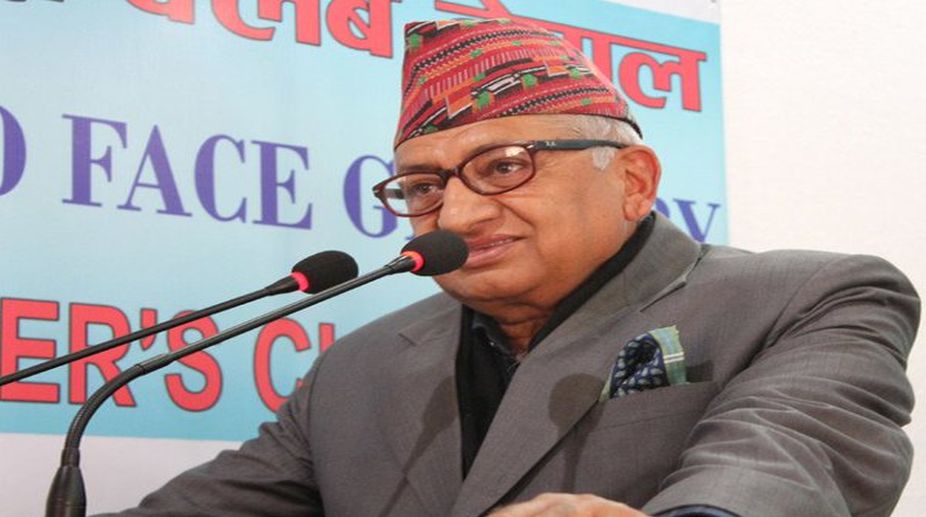
Nepal has requested India to provide additional power through two newly-built transmission lines as part of the country's efforts to end load-shedding.

In a meeting with India's Union Power Minister Piyush Goyal, Nepal's Ambassador in New Delhi Deep Kumar Upadhaya requested India to expedite supply of electricity through 132kV Kushaha-Kataiya and 132kV Raxual-Parwanipur cross-border transmission lines, Kathmandu Post reported.

"During the meeting, issues relating to the supply of additional power through the newly built transmission lines, review of tariff at which India is selling power to Nepal, and Nepal-India cooperation in the power sector were discussed," said Hari Odari, spokesman of the Nepal Embassy in New Delhi.

"Minister Goyal has assured that he will instruct concerned agencies in India to expedite the process," he said.

They have reached an understanding to arrange a meeting between Nepal Electricity Authority (NEA), the state-owned power utility, and Power Trade Cooperation of India to settle all technical issues related to supply of power to Nepal.

NEA has already requested India to provide 50 MW of electricity through each of these two transmission lines. It is planning to supply electricity bought from India to industrial corridors in Nepal.

Hydropower generation in Nepal has plunged by almost 60 per cent as the water level in most of the river basins has fallen due to onset of the dry season.

As a result, NEA is relying heavily on the electricity bought from India to keep the country free from power cuts.

To bridge the gap, Nepal is currently importing around 380MW of electricity from India through various cross-border transmission lines.

The country's peak electricity demand hovers at 1,240 MW.

NEA has managed to end power outages by cutting off power supply to energy-intensive industries during peak electricity consumption hours.

Nepal, home to around 6,000 rivers, rivulets and tributaries, has the potential to generate over 40 GW of electricity through hydropower, nut as of now, its installed capacity stands at less than 1,000 MW.

There is a big gap in demand and supply of electricity because Nepal has not been able to build bigger hydropower plants since the 70MW Middle Marsyangdi Hydroe-lectric Project, located in Lamjung, came into operation in 2008.

Nepal requests India to supply more electricity

PTI | Kathmandu |

Nepal has requested India to provide additional power through two newly-built transmission lines as part of the country's efforts to end load-shedding.

In a meeting with India's Union Power Minister Piyush Goyal, Nepal's Ambassador in New Delhi Deep Kumar Upadhaya requested India to expedite supply of electricity through 132kV Kushaha-Kataiya and 132kV Raxual-Parwanipur cross-border transmission lines, Kathmandu Post reported.

"During the meeting, issues relating to the supply of additional power through the newly built transmission lines, review of tariff at which India is selling power to Nepal, and Nepal-India cooperation in the power sector were discussed," said Hari Odari, spokesman of the Nepal Embassy in New Delhi.

"Minister Goyal has assured that he will instruct concerned agencies in India to expedite the process," he said.

They have reached an understanding to arrange a meeting between Nepal Electricity Authority (NEA), the state-owned power utility, and Power Trade Cooperation of India to settle all technical issues related to supply of power to Nepal.

NEA has already requested India to provide 50 MW of electricity through each of these two transmission lines. It is planning to supply electricity bought from India to industrial corridors in Nepal.

Hydropower generation in Nepal has plunged by almost 60 per cent as the water level in most of the river basins has fallen due to onset of the dry season.

As a result, NEA is relying heavily on the electricity bought from India to keep the country free from power cuts.

To bridge the gap, Nepal is currently importing around 380MW of electricity from India through various cross-border transmission lines.

The country's peak electricity demand hovers at 1,240 MW.

NEA has managed to end power outages by cutting off power supply to energy-intensive industries during peak electricity consumption hours.

Nepal, home to around 6,000 rivers, rivulets and tributaries, has the potential to generate over 40 GW of electricity through hydropower, nut as of now, its installed capacity stands at less than 1,000 MW.

There is a big gap in demand and supply of electricity because Nepal has not been able to build bigger hydropower plants since the 70MW Middle Marsyangdi Hydroe-lectric Project, located in Lamjung, came into operation in 2008.

Will HIV-AIDS Bill pave way for stigma-free life to patients?

Pari Saikia | New Delhi |

Over 2.1 million people in the country estimated to be living with Human Immunodeficiency Virus (HIV) and Acquired Immune Deficiency Syndrome (AIDS) have now the right to avail necessary medical treatment and possibly live a stigma-free life with equal rights. The Union Cabinet has now passed the HIV and AIDS (Prevention and Control) Bill, which was long introduced in 2014. 

The bill was first introduced by former Health and Family Welfare Minister Ghulam Nabi Azad in the Rajya Sabha on February 11, 2014. Then on March 21, 2017, through a voice vote from Health and Family Welfare Minister Jagat Prakash Nadda, the bill was passed. It now paves way for necessary medical treatment and right to dignified life at par with non HIV/AIDS people.

While there are reports of dissenting voice from the HIV-AIDS community over the bill, medical experts are of the view that once the Bill comes into effect, the percentage of patients with Post Traumatic Stress Disorder, a long term mental distress, or Acute Stress Disorder (short term) that commonly develops after being diagnosed with HIV/AIDS virus, would reduce to 2.5 to 5.5 percent.

“The passing of HIV Bill, 2014, is not only an achievement for the HIV and AIDS community living in India, but also a message for the medical fraternity at large, who will now take care of HIV and AIDS positive patients with utmost care without delaying or denying their rights,” said Dr Amal Baishya, Senior Psychiatrist and Consultant with Guwahati Medical College, Guwahati.

"This is a common phenomenon where you see HIV/AIDS affected patients hesitate to openly deal and discuss about the problem due to huge stigma, shame and lack of awareness surrounding HIV/AIDS in our community. As a result, ASD or PTSD starts incurring people soon after being detected with HIV and AIDS,” he added.

Post Traumatic Stress Disorder (PTSD) is a severe anxiety disorder than Acute Stress Disorder (ASD). Any HIV/AIDS patient with the former condition generally fails to respond to medical treatment.

Another doctor who wished to maintain anonymity said, “Mention of high level of mass awareness is what is missing from the bill. Now, focus should be on adding HIV/AIDS as well as psychiatry departments, chambers or specialised doctors in every health center and hospital at district level is the need of the hour.”

“Instead of mentioning ‘as far as possible’ measures by the central and state governments, ‘free and compulsory treatment’ is what needed in the lists under the ambit of HIV bill, 2014,” the doctor added.

Essentials in the HIV Bill, 2014

1. Under the HIV Bill, 2014, anybody with HIV and AIDS in India will not be denied of medical treatment. The Central or State Governments will itself ensure that the treatments and medical assistance are provided.  

2. Health centers, hospitals refusing or denying treatment to HIV and AIDS patients have to furnish clear justification behind their denial. Severe action will be taken against them.

3. As per the Section 13, the Central or State Governments shall include measures for providing as far as possible, anti-retroviral therapy and opportunistic management to people living with HIV or AIDS.

4. The bill criminalises discrimination against HIV/AIDS afflicted people and those associated and living with them.

5. Safeguarding and granting rights like acceptance and fair treatment to them in educational institutions, workplaces, healthcare services, sale or renting out of property, standing for public or private office, provision of insurance etc.

6. The bill prohibits various institutions from forcing people to undergo no HIV test, medical treatment or research as pre-requisite for employment or education.  

7. The confidentiality and consent of HIV/AIDS community will be safeguarded while dealing with HIV and AIDS patients. This mean they should not be compelled to disclose HIV status except against their consent unless it is called by a court order.

8. The government has allocated Rs.2,000 crore fund as part of National AIDS Control Programme for 2017-18. This allocation will enhance access to healthcare services.

Will HIV-AIDS Bill pave way for stigma-free life to patients?

Pari Saikia | New Delhi |

Over 2.1 million people in the country estimated to be living with Human Immunodeficiency Virus (HIV) and Acquired Immune Deficiency Syndrome (AIDS) have now the right to avail necessary medical treatment and possibly live a stigma-free life with equal rights. The Union Cabinet has now passed the HIV and AIDS (Prevention and Control) Bill, which was long introduced in 2014. 

The bill was first introduced by former Health and Family Welfare Minister Ghulam Nabi Azad in the Rajya Sabha on February 11, 2014. Then on March 21, 2017, through a voice vote from Health and Family Welfare Minister Jagat Prakash Nadda, the bill was passed. It now paves way for necessary medical treatment and right to dignified life at par with non HIV/AIDS people.

While there are reports of dissenting voice from the HIV-AIDS community over the bill, medical experts are of the view that once the Bill comes into effect, the percentage of patients with Post Traumatic Stress Disorder, a long term mental distress, or Acute Stress Disorder (short term) that commonly develops after being diagnosed with HIV/AIDS virus, would reduce to 2.5 to 5.5 percent.

“The passing of HIV Bill, 2014, is not only an achievement for the HIV and AIDS community living in India, but also a message for the medical fraternity at large, who will now take care of HIV and AIDS positive patients with utmost care without delaying or denying their rights,” said Dr Amal Baishya, Senior Psychiatrist and Consultant with Guwahati Medical College, Guwahati.

"This is a common phenomenon where you see HIV/AIDS affected patients hesitate to openly deal and discuss about the problem due to huge stigma, shame and lack of awareness surrounding HIV/AIDS in our community. As a result, ASD or PTSD starts incurring people soon after being detected with HIV and AIDS,” he added.

Post Traumatic Stress Disorder (PTSD) is a severe anxiety disorder than Acute Stress Disorder (ASD). Any HIV/AIDS patient with the former condition generally fails to respond to medical treatment.

Another doctor who wished to maintain anonymity said, “Mention of high level of mass awareness is what is missing from the bill. Now, focus should be on adding HIV/AIDS as well as psychiatry departments, chambers or specialised doctors in every health center and hospital at district level is the need of the hour.”

“Instead of mentioning ‘as far as possible’ measures by the central and state governments, ‘free and compulsory treatment’ is what needed in the lists under the ambit of HIV bill, 2014,” the doctor added.

Essentials in the HIV Bill, 2014

1. Under the HIV Bill, 2014, anybody with HIV and AIDS in India will not be denied of medical treatment. The Central or State Governments will itself ensure that the treatments and medical assistance are provided.  

2. Health centers, hospitals refusing or denying treatment to HIV and AIDS patients have to furnish clear justification behind their denial. Severe action will be taken against them.

3. As per the Section 13, the Central or State Governments shall include measures for providing as far as possible, anti-retroviral therapy and opportunistic management to people living with HIV or AIDS.

4. The bill criminalises discrimination against HIV/AIDS afflicted people and those associated and living with them.

5. Safeguarding and granting rights like acceptance and fair treatment to them in educational institutions, workplaces, healthcare services, sale or renting out of property, standing for public or private office, provision of insurance etc.

6. The bill prohibits various institutions from forcing people to undergo no HIV test, medical treatment or research as pre-requisite for employment or education.  

7. The confidentiality and consent of HIV/AIDS community will be safeguarded while dealing with HIV and AIDS patients. This mean they should not be compelled to disclose HIV status except against their consent unless it is called by a court order.

8. The government has allocated Rs.2,000 crore fund as part of National AIDS Control Programme for 2017-18. This allocation will enhance access to healthcare services.

Aadhaar linkage in schools reduces fake enrollments

Smriti Sharma Vasudeva | New Delhi |

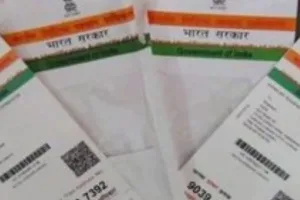
The linking of Aadhaar cards with mid-day meals has resulted in a steep fall in fake enrollments in government schools across the country, according to officials of the Unique Identification Authority of India (UIDAI).

In Haryana, the enrollment of students from class I to VIII has gone down by 16 per cent in the last two fiscals. In 2014-15, total enrollment for students from class I to VIII in the state was 19.58 lakh which went down by 3.26 lakh in 2015-16 when as many enrollments were found to be bogus. The state government was thus able to save lakhs of rupees on providing free uniforms, books, mid day meals, etc., to those students who apparently existed only on paper.

Recently, in Jharkhand, as per the information, when a report was sought by the government on the total enrollment of students across 40,000 primary and upper primary schools, it was revealed that in 2016-17, 48 lakh students were enrolled while in 2015-16, 50.42 lakh students were enrolled. Officials confirmed that more than 2.5 lakh enrollments were bogus or in many case duplicates as many students were found to be enrolled in more than one school to gain maximum benefits.

Data with The Statesman reveals that in Maharashtra, about 14-15 per cent fake enrollments were found across the state after a robust database was created to gauge the impact of the midday meal scheme.

In Jalgaon district of the state, a random survey in three primary schools threw up interesting statistics. It was found that every school had on an average 30-70 students who existed only on paper but the schools were still siphoning off Rs 900 per student from the government as subsidy for ensuring books, uniforms, etc.

UIDAI sources said linking of Aadhaar with student enrollments across the country has benefitted the students and the states equally. "There is much more transparency and accountability now and the benefits of the student-oriented scheme are reaching in a more efficient way.”

In Kerala, Aadhaar linkage has led to optimisation of the student-teacher ratio. Thanks to this exercise, no new posts have been sanctioned in the state for the past two years. This has led to the state exchequer saving approximately Rs 540 crore annually.

Even in Kerala, a whopping five lakh students were found to be fake enrollments. In 2010-11, the total number of students enrolled in schools across Kerala was 39 lakh and by 2014-15, the number reduced to 34 lakh after the details of the students were seeded with Aadhaar database.

In 2014, the department decided to take a re-look at the number of teachers to be appointed and leveraged the benefits of Aadhaar. A government order was issued, asking schools to collect the Aadhaar numbers of every student. As per estimates by the state government, the reduction in the number of students has led to a potential decrease in the number of teachers by around 12,000.

Aadhaar linkage in schools reduces fake enrollments

Smriti Sharma Vasudeva | New Delhi |

The linking of Aadhaar cards with mid-day meals has resulted in a steep fall in fake enrollments in government schools across the country, according to officials of the Unique Identification Authority of India (UIDAI).

In Haryana, the enrollment of students from class I to VIII has gone down by 16 per cent in the last two fiscals. In 2014-15, total enrollment for students from class I to VIII in the state was 19.58 lakh which went down by 3.26 lakh in 2015-16 when as many enrollments were found to be bogus. The state government was thus able to save lakhs of rupees on providing free uniforms, books, mid day meals, etc., to those students who apparently existed only on paper.

Recently, in Jharkhand, as per the information, when a report was sought by the government on the total enrollment of students across 40,000 primary and upper primary schools, it was revealed that in 2016-17, 48 lakh students were enrolled while in 2015-16, 50.42 lakh students were enrolled. Officials confirmed that more than 2.5 lakh enrollments were bogus or in many case duplicates as many students were found to be enrolled in more than one school to gain maximum benefits.

Data with The Statesman reveals that in Maharashtra, about 14-15 per cent fake enrollments were found across the state after a robust database was created to gauge the impact of the midday meal scheme.

In Jalgaon district of the state, a random survey in three primary schools threw up interesting statistics. It was found that every school had on an average 30-70 students who existed only on paper but the schools were still siphoning off Rs 900 per student from the government as subsidy for ensuring books, uniforms, etc.

UIDAI sources said linking of Aadhaar with student enrollments across the country has benefitted the students and the states equally. "There is much more transparency and accountability now and the benefits of the student-oriented scheme are reaching in a more efficient way.”

In Kerala, Aadhaar linkage has led to optimisation of the student-teacher ratio. Thanks to this exercise, no new posts have been sanctioned in the state for the past two years. This has led to the state exchequer saving approximately Rs 540 crore annually.

Even in Kerala, a whopping five lakh students were found to be fake enrollments. In 2010-11, the total number of students enrolled in schools across Kerala was 39 lakh and by 2014-15, the number reduced to 34 lakh after the details of the students were seeded with Aadhaar database.

In 2014, the department decided to take a re-look at the number of teachers to be appointed and leveraged the benefits of Aadhaar. A government order was issued, asking schools to collect the Aadhaar numbers of every student. As per estimates by the state government, the reduction in the number of students has led to a potential decrease in the number of teachers by around 12,000.

Shah slams AAP govt, asks BJP workers to reclaim MCDs

IANS | New Delhi |

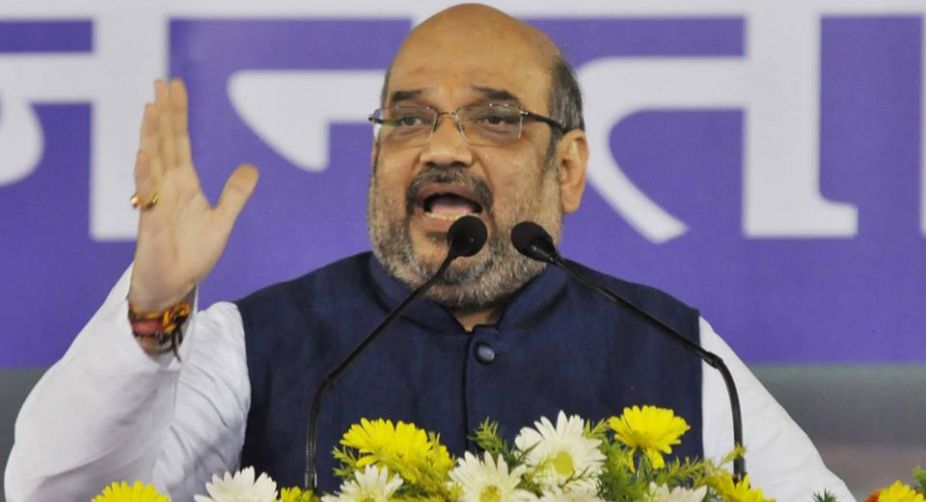
Unleashing a blistering attack on the Aam Aadmi Party (AAP) government in the national capital, BJP president Amit Shah on Saturday exhorted his party workers to reach out to people across Delhi to ensure the BJP’s victory in the upcoming elections to the three Muncipal Corporations of Delhi (MCDs). 

Addressing a mammoth convention of booth-level BJP workers at Ramlila Maidan here, Shah charged that the AAP government led by chief minister Arvind Kejriwal had been unable to fulfil the promises made to the people during the last assembly elections despite having been in power for two years. 

The BJP chief accused the AAP dispensation of being allegedly corrupt, charging that 13 AAP legislators had been found to be involved in various kinds of offences. 

"Various cases of corruption have been reported against AAP MLAs," Shah charged. He said the Delhi Jal Board, Waqf Board, Delhi Commission for Women and other Delhi agencies had been surrounded by corruption charges during the AAP rule in the city. 

He sought to compare it with the BJP-led central government's trackrecord, claiming not a single corruption allegation could be levelled against the nearly three-year-old  Narendra Modi government.   

Shah alleged that the Delhi CM had been spending Delhi's funds elsewhere to boost AAP's electoral prospects outside Delhi, which could not be justified. 

Pointing to a map of India near the dais, he told BJP workers to see the "saffron party" having won from across the country with only Delhi remaining a "white spot" in such a picture. 

Asking BJP activists to make all-out efforts to ensure the BJP’s victory in the 23 April MCDs elections, 

Shah highlighted the point that "This is not just an election for municipal corporations, but it is an opportunity to ensure that the AAP government gets uprooted in the next polls". He said it was Delhi where the Bharatiya Jana Sangh, the BJP's erstwhile avatar, initially came to power to start its growth and become what it is today. 

Showcasing the achievements of the Modi government, the BJP chief also referred to the "surgical strikes" 

carried out inside PoK by Army personnel to destroy terrorist launch pads there. 

A slew of Union ministers ~ including M Venkaiah Naidu, Harsh Vardhan and Vijay Goel ~ and BJP MPs from Delhi were present at the rally. 

Addressing the rally, Mr Naidu came down heavily on the Kejriwal government for its alleged non-cooperation with the Centre, urging BJP workers to strengthen PM Modi's hands by working hard for ensuring the BJP's triumph in the Delhi civic polls. The BJP has been ruling MCDs for 10 years. 

Mr Naidu said, "Development has got speeded up in each city in the country" through various schemes after the BJP came to power at the Centre. "But this city (Delhi) is lagging behind because the AAP government is not ready to develop Delhi in cooperation with the Modi government," he alleged. 

The development projects in the national capital could not be taken up properly unless the Centre, the state government and the municipal corporations cooperate with one another and work together, Mr Naidu said. 

Mercury may reach 39 degrees by month-end

IANS | New Delhi |

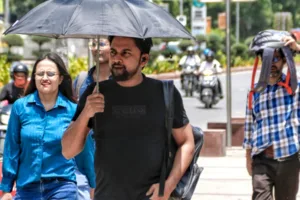
With the national capital already sizzling due to a significant rise in the mercury, making March the hottest in the last six years, the Met department says the temperature could rise to 39 degrees Celsius by the end of month.

On Saturday, the maximum temperature in Delhi was 35 degree Celsius, four notches above the season's average. This is expected to rise by four degrees by the end of March.

"The maximum temperature expected to rise to 36 degrees on Monday, 37 degrees on Tuesday and 38-39 degree Celsius by the end of the month, even as western disturbance is expected by Tuesday, 28 March," an official of the India Meteorological Department told IANS.

According to IMD officials, western disturbance — a storm system originating in the Caspian Sea and the Mediterranean Sea which causes rain and snowfall in the northwest of the Indian subcontinent and mallows down weather — would keep the temperature well around 38 or 39 degrees, which may have further increased otherwise.

Director of private weather forecasting agency Skymet Mahesh Palawat said that western disturbances forms rain in the hill and cyclonic circulation over Rajasthan, however this time, according to the current weather pattern it will not rain. 

"This means that the days would remain hot by the March end. But it is unlikely to touch 40 degrees," Palawat said.

Meanwhile, Delhi already faced 38 degrees on Thursday, March 23, which was hottest since 2011.

According to the IMD archives, highest maximum temperature in 2016, 2015 and 2012 was 37 degrees. In 2014 it was 34 degrees, 2013 it as 35 degrees and in 2011 it was 36 degree Celsius.

Two killed, 10 injured in communal violence in Gujarat

IANS | Ahmedabad |

Two persons were killed, one of them in police firing, and 10 others injured while around 50 houses were ransacked and set ablaze along with many vehicles following a communal clash in a village in Gujarat's Patan district on Saturday evening, police said.

Patan Superintendent of Police Ashwin Chauhan said a minor altercation between two students over some dispute while going for the high school examinations in Vadavali village soon assumed communal overtones and flared up into a major clash involving people from at least three surrounding villages.

Violent mobs first ransacked and then torched around 50 houses of a particular community. More than two dozen vehicles parked in front of the houses were also burnt down.

Police from Patan and Mehsana rushed to the spot but with the situation threatening to spiral out of control, in-charge Director General of Police P.P. Pandey despatched Inspector General of Police, Gandhinagar to the riot-torn village to oversee matters. It also took more than 10 fire engines from Mehsana, Ahmedabad and Gandhinagar to douse the fire in the houses and vehicles set ablaze.

Police carried out a baton-charge and used teargas shells to disperse the mob but the violence continued, forcing them to open fire in which one youth was killed. At least 10 people sustained injuries in stone throwing between the two groups.

Kejriwal pledges to scrap house tax if AAP wins MCD polls

Statesman News Service | New Delhi |

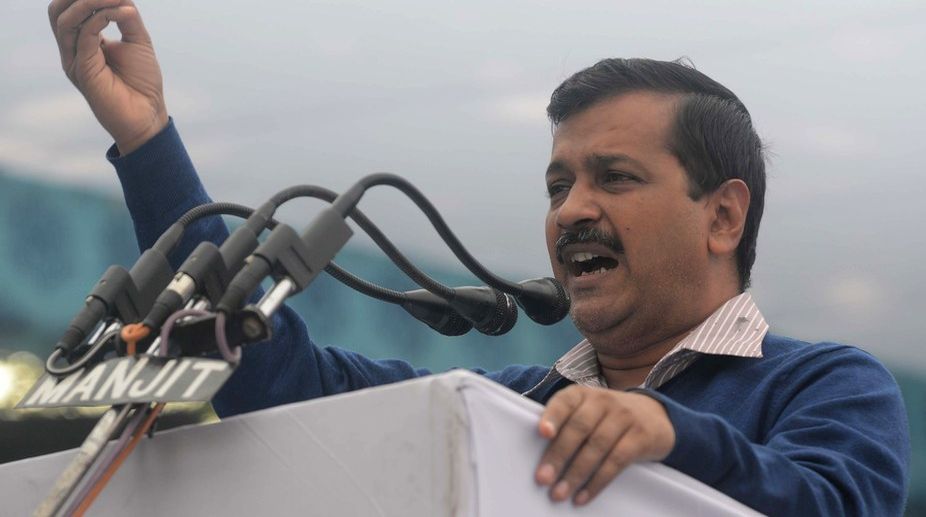
Making a major populist announcement in the run-up to the upcoming elections to the three Municipal Corporations of Delhi (MCDs), the Aam Aadmi Party (AAP) leader and Delhi Chief Minister Arvind Kejriwal on Saturday pledged that if his party comes to power in MCDs, it will abolish residential house tax levied by the municipal bodies and will also waive all related pending dues. 

"As soon as the AAP comes to power in the MCDs with a full majority, we will abolish the collection of house residential tax and waive all pending dues with immediate effect. We are making this promise with full responsibility and after thorough study and planning," Kejriwal told a press conference here. 

"After coming to power in Delhi (in 2015), our government kept its promise of halving electricity bills and offering 20,000 liters of water for free for each family within one month," the AAP leader said. The AAP's rival parties had then said that such measures would bankrupt the government but actually the Delhi Jal Board’s revenue increased by Rs 178 crores, the CM added. 

Describing the current house tax structure as "draconian", Kejriwal alleged that it has become a source of widespread corruption for municipal councillors and officers in all three MCDs being ruled by the BJP for 10 years. 

There are an estimated 9 lakh property tax payers in Delhi and about Rs 600 crore in revenue is earned annually by the three MCDs. 

Kejriwal said his party has examined the accounts of MCDs and that money to be saved by plugging corruption in them will be utilised to cover the shortfall in their revenue. 

The AAP chief also clarified that industrial and commercial property tax will remain unchanged. In the name of house tax, people of the city are "harassed", he said promising that the AAP would put an end to it. 

Kejriwal promised that within a year of coming to power in the MCDs, the AAP administration would turn around the finances of the loss-making Delhi municipal bodies and ensure that their employees get their salaries on or before the seventh of every month. 

Pledging to make Delhi a modern, "model city" for "the country and the world" if his party wins the MCD polls, he said the AAP will soon release its manifesto for the MCDs elections to spell out in detail its proposals and pledges. 

"Together the councillors of BJP and Congress have looted the MCDs on a massive scale, and will have to face the consequences of their corruption. They must answer to people how within 5-10 years they have moved from scooters to Mercedes and BMWs," Kejriwal charged, claiming that "We will end this loot and make sure the money spent by MCDs reaches the right people and right causes". 

The CM also promised that "We will bring in more participation from among the RWAs and the citizens in matters of cleanliness and maintenance of parks, so that these services can be improved". 

He alleged that MCDs have become a "den of corruption and misgovernance". "We have seen how BJP and Congress councillors have relaid the same roads over and over on paper and siphoned off all the money. The MCD has spent Rs 7 lakhs on fountains that never worked….Thousands of ghost employees are paid salaries, even as genuine employees are not paid on time. The AAP will put an end to this regime of corruption after coming to power," he claimed. 

The 23 April elections to MCDs are set to be a litmus test for the AAP's popularity in Delhi after its dismal performance in recent Punjab and Goa assembly elections.  

Pakistan starts border fencing with Afghanistan: Army Chief

IANS | Islamabad |

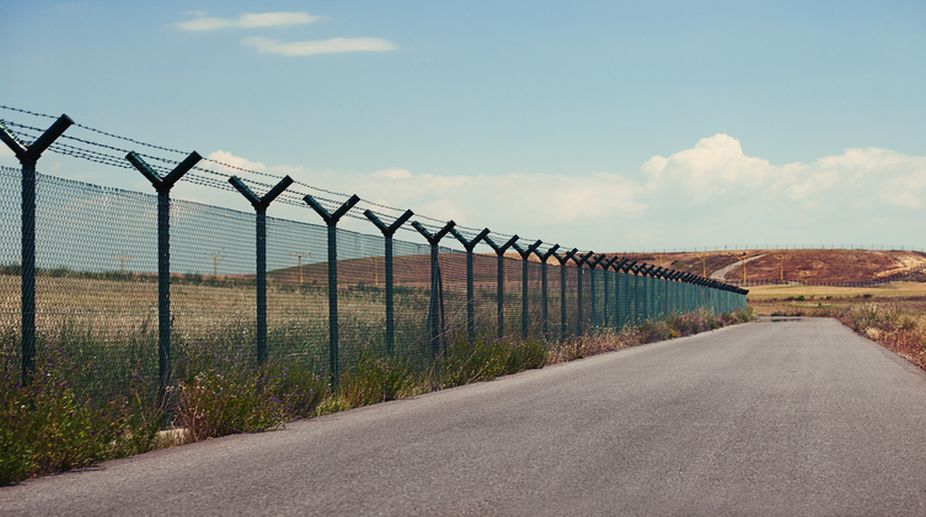
Pakistan Army Chief General Qamar Javed Bajwa said on Saturday that the country has started fencing the border with Afghanistan in a move to stop the cross-border movement of the militants.

Security officials have long been complaining that the Pakistani militants, who have escaped as a result of military operations, now operate from the Afghan soil of the border. 

Pakistan and Afghanistan have nearly 2,600-km-long common border, mostly porous, and Pakistani officials insist that bombers could enter Pakistan due to weak border control.

During his visit to Pakistan-Afghan border areas in Mohmand and Orakzai tribal agencies, Bajwa told the troops that fencing has commenced in Bajaur and Mohmand agencies as they are high threat zones.

Both Bajaur and Mohmand border Afghanistan and had once been under the influence of the Tehreek-e-Taliban Pakistan.

"Additional technical surveillance means are also being deployed along the border besides regular air surveillance," Bajwa said, adding the Pakistan Army shall employ all resources required for defence of the country and security of peace-loving Pakistani tribes.

The army chief said that efforts are in hand to evolve a bilateral border security mechanism with the Afghan authorities, according to an army statement.

"A better managed, secure and peaceful border is in mutual interest of both brotherly countries who have given phenomenal sacrifices in the war against terrorism," he said.

No agreement to carve out larger Nagaland, says government

IANS |

The Union Government on Saturday sought to clarify that there was no agreement or decision on carving out a larger Nagaland state and termed media reports on the issue "erroneous".

"Some media reports have appeared recently to the effect that the Government of India has agreed to carve out a larger Nagaland State by taking away the territories of the states contiguous to Nagaland. Such reports are erroneous. It is clarified that there is no such agreement or decision of the Government of India," said a Union Home Ministry statement. 

Assam had witnessed protests after reports in the media that National Socialist Council of Nagaland-Isak-Muivah General Secretary T. Muivah had said the August 2015 'framework agreement' recognises his outfit's demand for territorial integration of Naga-inhabited areas in the region.

The Naga group is keen on a 'Greater Nagalim' which includes tracts of land in Arunachal Pradesh, Assam, Manipur and parts of Myanmar where there are Naga inhabitants.

Assam Chief minister Sarbananda Sonowal had also said earlier that there is no proposal with the central government about larger Nagaland.

"We are committed to protecting Assam's territory," he had said. 

No agreement to carve out larger Nagaland, says government

IANS |

The Union Government on Saturday sought to clarify that there was no agreement or decision on carving out a larger Nagaland state and termed media reports on the issue "erroneous".

"Some media reports have appeared recently to the effect that the Government of India has agreed to carve out a larger Nagaland State by taking away the territories of the states contiguous to Nagaland. Such reports are erroneous. It is clarified that there is no such agreement or decision of the Government of India," said a Union Home Ministry statement. 

Assam had witnessed protests after reports in the media that National Socialist Council of Nagaland-Isak-Muivah General Secretary T. Muivah had said the August 2015 'framework agreement' recognises his outfit's demand for territorial integration of Naga-inhabited areas in the region.

The Naga group is keen on a 'Greater Nagalim' which includes tracts of land in Arunachal Pradesh, Assam, Manipur and parts of Myanmar where there are Naga inhabitants.

Assam Chief minister Sarbananda Sonowal had also said earlier that there is no proposal with the central government about larger Nagaland.

"We are committed to protecting Assam's territory," he had said.