Logo

China border roads still a distant dream

Statesman News Service | New Delhi |

India’s bid to build quality all weather roads along its border with China in order to connect remote areas and move military weapons and equipments in the event of an aggression to 'assert' its territorial claims in the region near the Line of Actual Control (LAC), has been compromised due to construction defects and alleged irregularities in border road works.

In the wake of heightened road and track construction work undertaken by China along India’s Northern and Eastern frontiers in 1997, India constituted a China Study Group (CSG) to study the requirement of road communication along the China border for brisk movement of troops in case of any aggression. The idea was to assert the country’s territorial claims and upgrade logistic sustenance capability in these areas.

At the end of its study, the CSG identified 73 strategically important roads along the border as Indo-China Border Roads (ICBRs). The Cabinet Committee on Security (CCS) in 1999 had approved the construction of these roads, to be done by the Border Roads Organisation (BRO) under the Ministry of Defence, and set a tentative target of work between 2003 and 2006. The target was later extended to 2006-2012. But till now the work is far from over.

After more than 15 years since the project for the proposed 73 roads was first sanctioned, the country’s plans to have a network of high quality roads along its border with China remains a pipe dream.

The Indian military establishment which has tested the capability of some of these roads has found them unfit for the movement of heavy military guns like Bofors, Smerch and Pinaka. They have expressed their dissatisfaction with the quality of the road works. Of the 73 sanctioned ICBR projects, 61 cover a total length of 3409.27 km (Arunachal Pradesh ~ 1788.24 km; Himachal Pradesh ~ 116.99 km; J&K ~ 1093.14 km; Sikkim ~ 56.10 km; Uttarakhand ~ 354.80 km) scheduled to be completed at an estimated cost of Rs 4643.75 crore by 2012. The remaining 12 were to have been completed by local Central PWD, NBCC and state PWDS.

Some of the identified road projects with serious construction defects along the SinoIndian border are: BonaGelling, Harong-Chushul Road, Sasoma-Saserla and Koyal-Photile-Chushmule-Zurasa.

An audit of the project work by CAG has squarely blamed the unsatisfactory quality of work, late completion, poor monitoring of work progress for the slow progress. As of March 2016, a total of 707.24 km as against 3409.27 km of roads at an estimated cost of Rs 4536 crore has been completed. This is only 36 per cent’ of the total project covering only 22 of 61 roads under the project. Of the 24 roads examined in detail 17 were found to be substandard.

Even six roads of length of 197 km which have been completed at a cost of Rs 164 crore were not fit for running of specialised vehicles/equipment due to limitations like steep radiant, less width, inadequate turning radius, effective alignment, etc., the CAG in its report tabled in Lok Sabha on 10 March had alleged.

The DG Border Roads in reply to the charges of various anomalies in the ICBRs projects on 15 July 2016 declined comment but maintained that the Indian Army was associated all along with the BRO.

The central audit body has now proposed a 'Court of Inquiry' expeditiously against the 'erring officials'. It called for proper and timely action to resolve the defects or problems pointed out by the Chief Technical Examiner of the ICBRs project.

Trump disappointed after healthcare bill defeat

PTI | Washington |

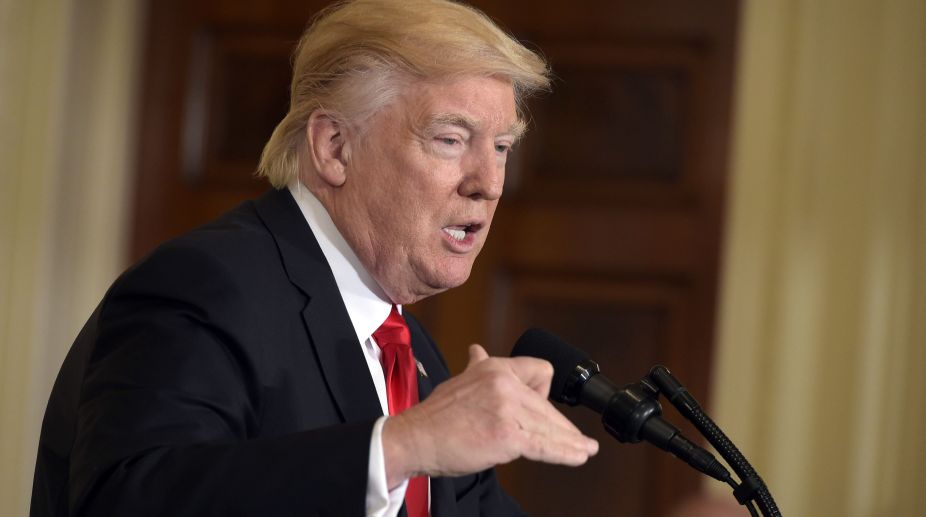
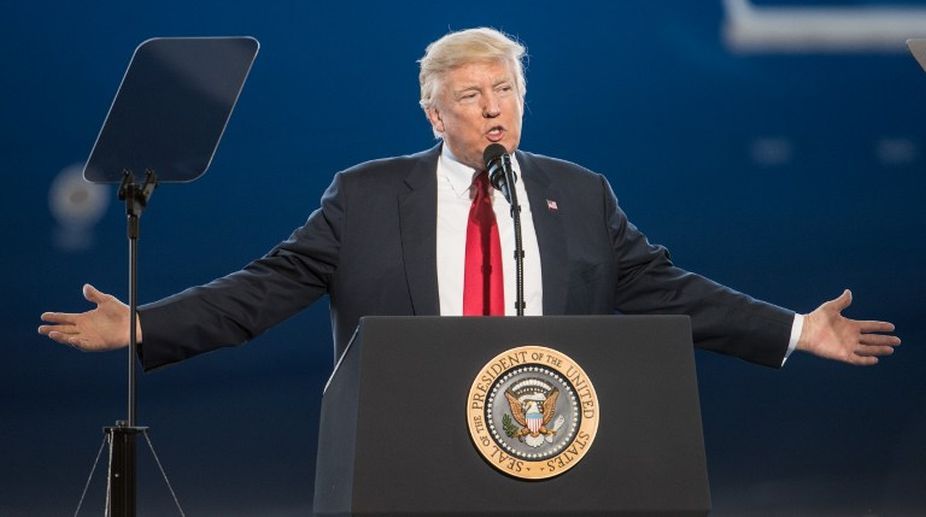
Donald Trump has suffered a humiliating legislative defeat as Republicans were forced to pull their repeal of the Obamacare bill, prompting the US President to warn Americans that bad things are going to happen.

House Speaker Paul Ryan failed to garner enough votes in the Republican-controlled House of Representatives for the passage of the new healthcare bill to replace the Obamacare due to opposition from some of its own party lawmakers, in particular the one that have grouped themselves under the banner of Freedom Caucus.

The US House of Representatives ~ similar to the Lok Sabha of the Indian Parliament ~ has 435 members. The Republican party enjoys a simple majority in the House with 235 members.

Ryan, however, who had been leading the effort on behalf of Trump, could not muster the majority 215 votes. As a result, in an effort to avoid the humiliation of a defeat, Ryan announced that he was withdrawing the move to have a vote on Affordable Care Act (Obamacare).

Unlike India, US Congress does not have an anti-defection bill, as a result of which US lawmakers are free to exercise their right to vote on a bill as per their wish and not according to dictate of the party leadership.

Blaming the opposition democrats for the failure, Trump warned that now Obamacare is going to stay, people would see a sudden rise in their insurance premium. It's going to happen (explode). There’s not much you can do about it. Bad things are going to happen. There's not much you can do to help it. I've been saying that for a year and a half. It's not sustainable. There's no way out, Trump told reporters at the White House after the bill was withdrawn.

As we got closer and closer everyone was talking about how wonderful (Obamacare) was. Now it will go back to real life, people will see how bad it is and it's getting much worse. When President (Barack) Obama left, 2017 was going to be a very bad year for Obamacare, Trump said. Going to see explosive premium increases and the deductibles are so high that no one is going to be able to use it, he said.

Having fought and won the presidential elections on the platform of repealing and replacing Obamacare, Trump said he honestly believe that the Democrats will come to the Republicans and say let's get together and get a great health care bill or plan that's really great for the people in this country. I think that's going to happen, he said. Trump said he was very close to getting enough votes in the House, but fell short of 10-15 votes. We were very very close. It was a very tight margin. We had no Democratic support, the President said.

I've been saying for the last year and a half that the best thing we could do, politically speaking, is let Obamacare explode. It's exploding right now, he said. We couldn't quite get there, we were a small number of votes short. There are many people who don't realise how good our bill was, he said adding that the people don't realise there were two legislative phases to go.

If (Democrats) got together with us, and got us a real health care bill, I'd be totally okay with that.

The losers are Nancy Pelosi and Chuck Schumer, because they own Obamacare. They 100 per cent own it. They have Obamacare for a little while longer until it ceases to exist, which it will at some point in the near future, Trump said.

Fading charm of newspapers

Shantanu Mukharji | New Delhi |

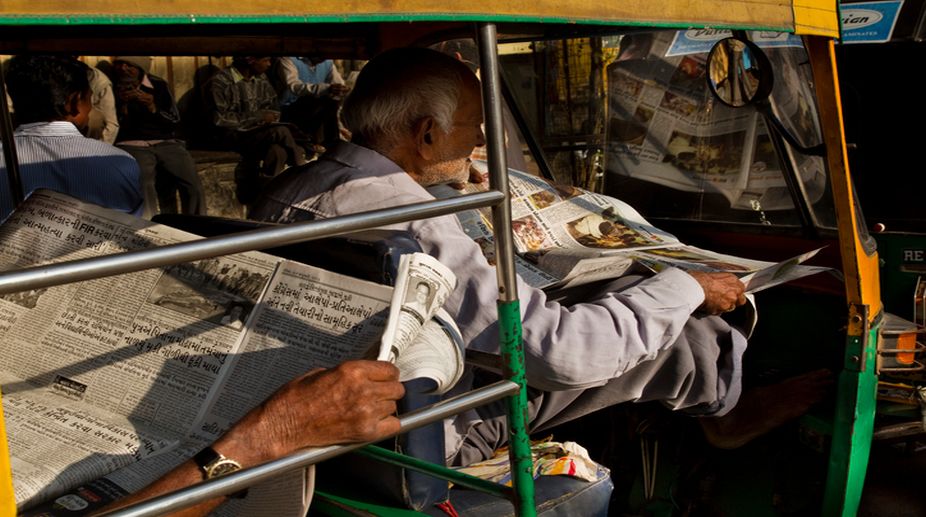
I grew up with the distinct smell of daily newspapers . Dailies bring back buckets full of pleasant memories. There was the early morning wait for the hawker to throw the paper with immaculate aim landing right on your balcony on the right floor. The hawkers looked so confident and completely dedicated belonging mostly to Bihar and East UP.  Slight delay in the delivery would be so frustrating as if one was delayed on a ‘date’ . It would be so disappointing on days when newspaper offices would be closed. On national holidays there were no deliveries. It would then invariably be a dull and colourless day.

The smell of the newspaper and its bold headlines those days would be so welcoming and refreshing. They would, unlike in the present day, be without unnecessary advertisements and flyers offering concessional cuisine and host of ‘home delivery’ stuff. These additional and superfluous pages are also largely responsible for the newspapers losing their old charm. Presently, the extra sheets and supplements are unwieldy and loosely arranged making reading less interesting .

Belonging to the old school of thought and a person of vintage , I miss newspapers of yesteryears . Reading them with a cup of hot beverage had its own charm. Between father and son, the sheets would be divided to ensure that both were able to read simultaneously to adequately appropriate the ‘paper’.

Someone would jump to the comic strips, some to the crossword, some to obituaries to see if any acquaintance had ceased to exist . Matrimonial column, birthday forecasts and cartoons on the front page by eminent cartoonists like RK Laxman, Sudhir Dar, Rajinder Puri, Abu Abraham et al were attractions par excellence. Avid newspaper readers would cram each item as if they were learning lessons by heart. And in many homes, the news would ensure animated discussions on politics and sports. 

In certain newspapers, the editorials and Op-Ed articles were duly recommended for Civil Service aspirants. Such was their content and  worth. Also, such substantial and meaningful write-ups would often reflect public opinion and help shape many policies of the State. There was consistent and diverse coverage including on international happenings and news that was reported ‘ hundred years ago’. One was abreast with all the news and views.

Digital formatted newspapers and online portals have proliferated affecting the interest in printed newspapers. The mere feel of seeing regular newspapers and turning their pages with patience and eagerness had a sweet touch and class. 
Technology and digitalisation are considered signs of a progressive society, so perhaps the online news portals are rationed with "two minute reads" or " three minute reads". Such signs are stifling for an old man who grew up with the newspapers of the 1950s and the 60s.

My family and I still subscribe to dailies and are unable to reconcile to the radical change of new formats which are flooded with sensation and provocations albeit political and Bollywood news causing bitterness and acrimony. Sadly, the old ethic followed by the newspaper culture of exercising restraint to spare the aged and defenceless is conspicuously absent. Scathing attacks to sensationalise news is becoming more a routine than exception.

Why are Muslim converts vulnerable?

Adam Deen | New Delhi |

The initial aftermath of the horrific attacks on the British Houses of Parliament led many organisations scrambling for information. As more information is being released by the police and intelligence agencies, the attacker has now been identified as 52-year-old Khalid Masood. Masood, who was born in Kent but later moved to the West Midlands, was a former English teacher, a husband, and a father of three. Masood was also a convert to Islam; and yet another case that establishes the seemingly inexplicable allure of radical Islamist ideology to converts.

Though it is vital to reiterate that for the vast majority of converts to Islam the motives are rarely political, converts have, time and time again, been found go through a rapid process of radicalisation when it comes to committing violent terrorist attacks and tend to be the most vicious when doing so. I believe that there are three main reasons why converts are particularly vulnerable to radicalisation.

Firstly, because converts often know very little about Islam when they first decide to switch over, they are susceptible to brainwashing and propaganda, making them ideal targets for recruiters. Because the convert will often have no one else to consult and no independent guide to their new faith, recruiters may feed the individual whatever information they wish, and the indoctrination can easily go unchecked and unchallenged.

Individuals who are Muslim from birth retain the potential to be advised on their extremist views with more moderate interpretations by a family member or a Muslim friend. With converts, this opportunity is non-existent since there isn’t a moderate sounding board for their ideas.Unfortunately, with social media becoming the main source of Islamic education today for Muslims newly discovering their religiosity, the default position is a puritanical reading of the Qur’an or one of an Islamist leaning. This theological maze is immensely difficult to navigate for Muslims who come from Muslim families, let alone for converts.

This leads us to the second major factor in the radicalisation of converts: they are eager to please. Because converts find themselves trying to integrate with an entirely different subset of society, they are compelled to quickly forge new relationships in order to demonstrate their loyalty and faithfulness to the community, and to show that they belong.
Converts have something to prove, and they are thus much more likely to employ theatrics and exhibit their loyalty through savagery. The savagery and harshness is a way of overcompensating for the fact that they are new to the religion and that their knowledge is very minimal.

Lastly, we need to analyse the social standing of a convert. A non-Muslim who converts to Islam will likely find themselves marginalised, at least to some extent, from their family and friends when they decide to make this major change and declare a drastically different worldview. To add to this, the convert has chosen to partake in a religion that, for whatever reasons, is one of the most ostracised and controversial faiths in our world right now.

Consequently, the convert is now doubly marginalised from society. This, in turn, will lead the convert to involve themselves heavily in their new religion in order to establish a new and reformed social status with their Conversion to any religion, let alone to one that is routinely labelled backward, is a testing journey and one that can leave a person feeling abandoned by all sides. While family and friends may shun them for making such a drastic change, the mainstream Muslim community may still see them as outsiders. In such a scenario, joining a small, intimate band of extremists, who are always on the hunt for recruits and wouldn’t turn anyone away, may appeal to the convert’s desire for belonging and membership.

To understand the process of radicalisation, it is vital that we view the problem holistically while also considering nuances such as converts’ increased susceptibility to extremist views. Extremists will continue to spread their propaganda. How we respond to extremist messaging, and whether we provide a robust theological counter-attack, will impact future generations and those who are most vulnerable.

The key to safeguarding these individuals is to delegitimise the broad spectrum of ideas that are shared by extremists and the mainstream religious community. Only then can extremist ideology can be laid bare for what it is: an artificial claim to salvation and a distortion of core Islamic teachings.

The Independent. 

The Mexicans that Trump so hates

Basab Dasgupta | New Delhi |

Donald Trump’s rhetoric about illegal Mexican immigrants has raised global interest in the Mexican people and their culture. Most Indians probably feel a solidarity with them because of our common skin color. This essay is an account of my interactions with the Mexicans.

My first exposure to Mexicans took place when my company RCA established factories just south of the border in Juarez, Mexico, mainly in order to reduce the labour cost in assembling television-related circuits and components. I visited the RCA plant in Mexico for the first time in 1985 and immediately felt homesick; everything in the town – people, buildings, food, pollution, transportation, hot weather, street hawkers and panhandlers – all reminded me of India!  I made several more visits while I was at RCA and enjoyed my visits. 

I got intimately involved with Mexico and the Mexican way of doing things when I later worked at Sony. Part of my charter was to move some production lines for producing TV components from San Diego to Tijuana across the border and start an operation there. Later in my professional life I spent a year and a half, not only working but also living in Mexico; not in a border town like Tijuana but in an industrial city, Torreon, in the middle of the country.

I was impressed by the work ethic of Mexican line workers and their national pride.  The first observation went completely against the stereo-typed image of Mexican laborers as being lazy, taking long siestas and drinking plenty of “cerveza” (beer).  The workers were hard-working, disciplined and ready to obey their superiors without asking any questions. This was in sharp contrast to the unionized American workers I saw in RCA plants in USA. 

Their national pride surprised me. I found that the most effective way to motivate Mexican workers was to stoke this pride. Instead of promising raises in salary or improving the plant working condition, one could simply say “You can prove that Mexican workers can not only do anything that American or Japanese workers do, but they can do it better!”
It was also very clear that the Mexicans were acutely aware of the perceptions “gringos” (Americans) had about them.

They even made fun of that.  Most of them accepted it but a few clearly wanted to be like the Americans and had the necessary drive. I also found that Mexicans were clever enough to take advantage of their image of not being fluent in English. For example if they failed to do some task that I had suggested they would pretend that they did not understand me. 

It was much later, when I was living and working in Torreon, that I got a deeper and more accurate understanding of Mexicans.  First I realized that demographically Mexico is quite unique in the sense that it is sharply divided into two groups: the descendants of the Europeans – Spaniards, Germans, Italians and the like – who came along with the Spanish invasion and the ones who are truly indigenous and of Aztec Indian origin.  Unlike most other nations the two groups did not quite thoroughly mix by interracial breeding. 

The two groups are visually distinguishable: the first has fairer skin color and sharp Caucasian features while the second is darker and has a native Indian look. They are also segregated socially: the first group controls the country by holding important political positions, owning flourishing businesses and fertile farm lands and running key industries.

The second group basically serves the first group; by working for them in factories, farming, doing all kinds of manual labour-intensive jobs and paying taxes. They are usually poor and uneducated. It is a classic case of “haves” and “have-nots”, but very sharply divided along racial lines i.e. Caucasian versus indigenous Indians and with no inter-mixing.

I also realized that all the foreign companies that established manufacturing plants in Mexico to lower their labour costs were actually creating a somewhat artificial “middle class” with employees from both social groups and in fact helping bridge this gap. In particular all the “indirect” people (managers, engineers, accountants etc) enjoyed a certain social status and economic comfort that was rare before the invasion of the “maquiladoras” (the transplants of foreign companies). The lure of this good life, in turn, encouraged more Mexicans to get the necessary education and seek jobs at foreign factories. It was similar to what is happening in India today with IT jobs offered by American companies with good salaries.

Another surprising element for me was the lack of modern role models for the young people to idolize in any area: literature, technology, sports (in spite of their performance in soccer), art, music etc. There are plenty of heroes from the days of civil war and revolution, but there is hardly any famous person who the young people can look up to and say “I want to be like him/her”.

Finally, the Mexicans, being overwhelmingly Catholic, struck me as not only very religious but almost fatalistic. They are God-fearing to the extent of being completely passive and easily satisfied.

I think that it is a shame that Mexicans, by and large, have remained poor and uneducated people, best known for their illegal immigration into USA and the thriving drug business. There is no reason to believe that Mexican people cannot be as successful in all areas as people from any other country, especially having a country like USA across the border. People of Mexican ethnicity living in USA have proved it. 

There are some obvious reasons for this failure such as mega corruption at the upper echelons – both in private and public sectors and a general lack of career paths.  What is really missing is a passionate leader who can get to the root causes and inspire people. There is also a fundamental issue of lack of confidence among Mexicans in their own ability to succeed. 

My guess is that every Mexican kid growing up suffers from an identity crisis. He does not know if he would belong to the elite class with money and power or if he is a commoner who would have to struggle through life. Typically he cannot decide and leaves his future in the hands of God!  What I had originally thought as a national pride was really just a façade behind which everyone could hide.

I am sad to see what happened to Mexico over the past ten years or so.  Most foreign companies who went there for cheap labour discovered that labour rates in China are a fifth of those in Mexico and they gradually folded their operations in Mexico in order to move them to China. The flourishing middle-class that was emerging from the presence of international companies started to disappear.  There was a glut of workers who had no jobs, no security and no future.  The drug lords moved in and filled the void, essentially recruiting this vast labour force to expand their empires and to cater to the ever increasing drug use in the USA.

I have mixed feelings about illegal immigration.  I am certainly against the idea of supporting hundreds of thousands of people for their well being with tax dollars and enraged at the thought of criminals crossing the border into the US.

However I cannot really blame them.  If my family was starving to death and/or living every day in fear of the drug lords, I would definitely think of fleeing to a neighbouring country, especially if it happens to be the richest and most prosperous in the world. There is also some poetic justice in the fact that many of American states once belonged to Mexico.

The Mexicans are desirable as a minority group because they are hard-working, family-oriented and believe in God.

The real solution to the illegal immigration problem would come if and when a strong visionary Mexican leader can build a prosperous country which is self-sufficient and a society that is envy of other countries. It is certainly possible.

Mexico has all the ingredients: natural resources, qualified people, good schools, proximity to USA, vast lands for farming and establishing factories, a language spoken by half of the world’s population, a central geographic location between the two Americas and a rich history to be proud of.

The writer, a physicist who worked in academia and industry, is a Bengali settled in America.

Truth about post-truth: Two Concepts And The Points Of Distinction

Shubham Sharma | New Delhi |

A fair amount of ink has been spilled as reams have been written about the novel notion of post-truth. The term has gained widespread acceptance, not only in universities and centers of learning, but in the Western world at large. I use Western because we are yet to discover an Oriental match for the term or more so because it is the Western world that has of late been witness to socio-political upheavals. Following the cartographic rendition of the world in terms of east and west, it was the latter which hitherto claimed monopoly over truth and facts as it looked down upon any logical inference coming out of the former. It appears that the West must now take a call on the matter even though it remains a civilizational pursuit rather than a manifest entity. At best, man remains a pursuer of truth rather than a beholder of the same.

“Post-truth” became part of the official lexicon after the Oxford dictionary incorporated the term. It is now imperative to examine the meaning of the term “truth”, an exercise in which we are seldom engaged in. Truth has been defined as ‘the quality or state of being based on facts’. Thus, the presence of empirically observed objective facts is the precondition for the existence of truth. So does it mean that the Western world was in denial of objective facts? Indeed it was! The governments of the Western world in pursuit of the capitalist liberal agenda were blind to the facts of income inequalities, centralization of capital following the boom phase which resulted in a massive roll-back of the achievements of the metropolitan working class and the people of the third world and the subversion of progressive political parties in the Western world, for instance the New Labour phenomenon in the UK.

The golden period of capitalism was sustained through demand aggregation by the State. As for instance, the US budget deficits which were incurred inter alia to finance the massive military expenditure, ensuring investment, growth and high rates of employment. Until then, truth for the West remained as the end of history, the ultimate triumph of the liberal capitalism and trickle-down economics. Any alternative vision of the world was not only deemed unfit for practice and propagation, but was regarded as ‘false utopia’. Such an exclusivist version of truth crashed with the election of Donald Trump in America, Brexit and the rise of far-right political outfits in Europe. It appeared as if the concept of truth underwent a self-negation of sorts and that too in its own philosophical backyard.

Conceptually, the notion of post-truth also fails to serve the purpose of research in social sciences. The idea of post-truth has been abstracted from the concrete which is methodologically incorrect. It is necessary for a concept to be concretized from the abstract so that it does not run the risk of reaping thinner observations. For instance, Marx developed his idea of the ‘base’, which is an abstraction, from commodity exchange to circulation of money and other concrete realities of the world which one could empirically observe and cognitively discern. This process of concretizing from the abstract helped Marx’s theory in gaining acceptability across time and space. In other words, the theory would always have to say something until commodities are exchanged for a cost or price in terms of money.

But the concept of post-truth fails to carve out such an elegant methodological niche for itself. Furthermore, post-truth has a class character, which does not mean that a particular class exercises a monopoly over the usage of the term. Rather it is reflective of the gloom of a class which reaped the benefit of a liberalized economy in the metropolis. The reaction of the sufferers, mostly the traditional working class, has unfortunately metamorphosed into an ethno-national backlash, which has come to be seen beyond the realm of the mundane, hence post-truth.

Philosophically speaking, truth is both a cognitive and an objective category. As a cognitive category, truth can have many variants. For a theist, god is the ultimate truth whereas for the atheist it might be reason and rationality. For a shaman, truth is the practise of his rituals, whereas for a man of science truth lies in experimentation and verification. Such cognitive truths, as Foucault has observed, serves to exercise power in society which is not possible except ‘through the production of truth’ in terms of knowledge and power. As an objective category, truth has to be supported and sustained by facts. The cognitive bias, which might be the result of cultural or religious affiliation, would not serve as the yardstick to measure the veracity of claims regarding  truth.

The idea that there exists an ‘other world’ would gain credence in the minds of theists but to be established as an objective fact it has to be observed, proven and if possible, verified in a systematic manner. Thus for the idea of post-truth to gain currency, it has to first exhaust the categories mentioned. This seems to be a far-fetched dream as man has lived with religious beliefs on the one hand and grown potatoes in Martian conditions on the other, has reached the pinnacle of medical science, whereas a novice Aussie has impersonated as a professional doctor for ten years.
Until mankind finds it difficult to find truth one can contend by substituting Rabindranath’s invocation of god in Dhulamandir ~ “Truth is where the tiller is tilling the hard ground and where the pathmaker is breaking stones.”

The writer is Research Scholar, Department of International Relations, Faculty of Social Sciences, South Asian University, New Delhi.

More the merrier: BJP eyes Meghalaya and Mizoram

Editorial | New Delhi |

Now Meghalaya and Mizoram have the only two Congress administrations left in the North-east where at one point of time it ruled the roost in most of the seven states. While the BJP conquered Assam in 2014 in a decisive manner, it grabbed Arunachal Pradesh without even having to go to the hustings and in a manner clearly undemocratic and unethical. The Congress in Manipur lost to the BJP despite being on top in the numbers game and surrendered gracefully to the democratic process. Now the BJP anaconda is slithering towards the last two surviving Congress-ruled states, Meghalaya and Mizoram, which are going to the polls in February/March and November 2018, respectively. In Mizoram the BJP tested the waters in 1993 and again in 1998 but failed to open its account. But in 2003 when Mizo National Front chief Zoramthanga was the chief minister, the BJP had an opportunity to rise and shine as the former had maintained a good relationship with saffron party leaders. At that point of time the ethnic minority groups had a say in at least 10 assembly constituencies and the BJP had already made inroads into the Chakma stronghold. They were settled in Mizoram by the Nehru government in 1964 on humanitarian grounds. Not for nothing is the BJP interested in early rehabilitation of nearly 30,000 Bru refugees who, after fleeing Mizoram in 1997, are biding their time in Tripura’s evacuation camps.

In the late 1990s, when in power at the Centre, the BJP also tried to make inroads into Tripura’s tribal areas by joining hands with a party that had links with militant groups. The BJP was able to send seven MLAs to the Nagaland assembly in 2003 with the proxy support of the NSCN (M). The results of the just-concluded Manipur assembly election could have been different without the tacit support of the NSCN (IM). Clearly this is no burden on the BJP’s conscience.

No cause for pride: A success story goes awry

Editorial | New Delhi |

The lions of the Gir forest, the only surviving habitat of the Asiatic species, have long been a matter for parochial pride among the people of Gujarat; their netas in particular. They had joined forces to script a creditable conservation story that saw the once-dwindling population increase to an impressive 503 cats when the last census was conducted in 2015. Sadly that success story seems to have “gone to the head”, for no fewer than 160 lions have died in the last couple of years. What is “telling” is that though the authorities had made much of the numbers increasing, it required RTI action to extract the confession about the 160 deaths: 94 between April 2015 and March 2016, another 67 thereafter. Of particular concern is that a large number of deaths were the result of animals coming in contact with the electrified fences agriculturists have raised to protect their crops, or after falling into uncovered wells ~ which conservationists contend are deliberate death-traps. It was a campaign against electrified fencing and open wells some years back that had helped reduce the “threat” to the cats, now the protection-effort seems to have lost impetus. Cases of lions being hit by trains or motor vehicles on roads running through the forest have also taken their toll.

What is also evident is that the Gir’s “protected sanctuary zone” is unable to sustain the present populace and the lions have to look beyond it for prey upon which to feed, and that has aggravated the man-animal conflict. The local authorities are not in favour of expanding the sanctuary zone as that would be unacceptable to people living there. Further complicating the “stand-off” is the state government’s reluctance to accept the proposal ~ endorsed by international agencies ~ to re-locate some lions to the Kuno-Palpur forest in Madhya Pradesh, which expert studies have found suitable for “creating” a second habitat which might also improve the genetic strain. Though the central government and the apex court have supported re-location, the Gujarat authorities keep raising objection. A section of critics allege that when he was chief minister in Gandhinagar, Mr Narendra Modi had been in the forefront of the resistance to re-location: now that he calls the “national shots” will he look beyond narrow boundaries to reinvigorate the lion population? Surely 160 lion deaths should serve as shock therapy.

In sizzling tar … A family gets wiped out

Editorial | New Delhi |

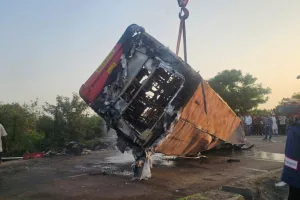
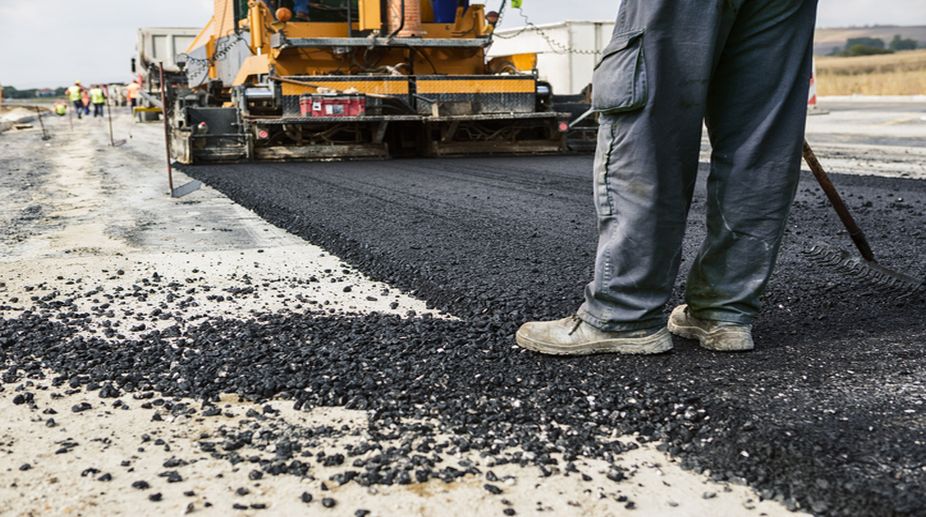
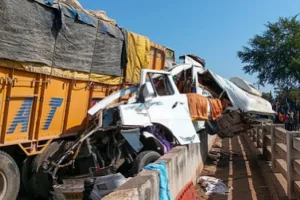
The accident has been as extraordinary as one of the ghastliest in West Bengal’s recent memory. The number of the National Highway is not the central issue; the nub of the matter must be that the Durgapur Expressway has over the past few months incurred the dubious distinction of an inter-state death trap that connects West Bengal with northern India. So it was last Wednesday when a family of seven ~ travelling in their straight-from-the showroom Ciaz car ~ was wiped out when a speeding tanker, laden with molten tar, skidded off the highway at break-neck speed and collapsed on the car in the vicinity of Burdwan. The family was driven quicker to an excrutiating death than to their destination of Patna. To use the language of the metaphor, they were literally bathed in sizzling molten tar; an accident such as this might well be the first of its kind in Bengal or any other state. It matters little whether the Motor Vehicles Act is a piece of Central or state legislation. What matters most is the role of the peripheral district’s traffic police department, which alas has been found wanting. The nature of the mishap made rescue operations difficult, and for the six-year-old it was a terminal cry for help… from beneath the tar. Elementary rules of the highway would suggest that the tar-laden truck ought to have run along a different/designated lane, instead of following the track earmarked for passenger traffic. Indeed, transporting inflammable material and parking such tankers alongside the passenger track are now the norm rather than the exception. It thus comes about that loaded tankers carry oil, chemicals, hot bitumen consignments… even explosives. Indeed, the illegality spread has reduced the highways to hell, National Highway 2 being particularly vulnerable. The stretch between Dankuni and Panagarh, for instance, alone witnessed 44 fatal accidents over the past year.


High-minded lament over the need to impose speed restrictions is a horribly belated attempt to be wise after the event, notably the Chief Minister’s directive to the police to take stringent action for traffic violation. The fact of the matter, of which the police administration cannot be unaware, is that there aren’t any strict speed restrictions in place, let alone proper regulation of traffic, most particularly at inhospitable hours. Both the National Highway Authority of India and the state administration are said to be chewing over the proposal to reduce the speed limit from 100 km per hour to the 60-80 range. Enough have died and many more incapacitated, and a firm decision is now direly imperative.

In sizzling tar … A family gets wiped out

Editorial | New Delhi |

The accident has been as extraordinary as one of the ghastliest in West Bengal’s recent memory. The number of the National Highway is not the central issue; the nub of the matter must be that the Durgapur Expressway has over the past few months incurred the dubious distinction of an inter-state death trap that connects West Bengal with northern India. So it was last Wednesday when a family of seven ~ travelling in their straight-from-the showroom Ciaz car ~ was wiped out when a speeding tanker, laden with molten tar, skidded off the highway at break-neck speed and collapsed on the car in the vicinity of Burdwan. The family was driven quicker to an excrutiating death than to their destination of Patna. To use the language of the metaphor, they were literally bathed in sizzling molten tar; an accident such as this might well be the first of its kind in Bengal or any other state. It matters little whether the Motor Vehicles Act is a piece of Central or state legislation. What matters most is the role of the peripheral district’s traffic police department, which alas has been found wanting. The nature of the mishap made rescue operations difficult, and for the six-year-old it was a terminal cry for help… from beneath the tar. Elementary rules of the highway would suggest that the tar-laden truck ought to have run along a different/designated lane, instead of following the track earmarked for passenger traffic. Indeed, transporting inflammable material and parking such tankers alongside the passenger track are now the norm rather than the exception. It thus comes about that loaded tankers carry oil, chemicals, hot bitumen consignments… even explosives. Indeed, the illegality spread has reduced the highways to hell, National Highway 2 being particularly vulnerable. The stretch between Dankuni and Panagarh, for instance, alone witnessed 44 fatal accidents over the past year.

High-minded lament over the need to impose speed restrictions is a horribly belated attempt to be wise after the event, notably the Chief Minister’s directive to the police to take stringent action for traffic violation. The fact of the matter, of which the police administration cannot be unaware, is that there aren’t any strict speed restrictions in place, let alone proper regulation of traffic, most particularly at inhospitable hours. Both the National Highway Authority of India and the state administration are said to be chewing over the proposal to reduce the speed limit from 100 km per hour to the 60-80 range. Enough have died and many more incapacitated, and a firm decision is now direly imperative.

Taking time to have a personal life: Selena Gomez

IANS | Los Angeles |

Singer Selena Gomez, who is currently rumoured to be in a relationship with singer The Weeknd, says she is now taking time to have a personal life.

The 24-year-old paid a surprise visit to high school students here in honour of the Step Up Foundation and fashion brand Coach.

Gomez joined Coach CEO Victor Luis and Step Up CEO Jenni Luke in leading a Step Up curriculum lesson to promote confidence and help students realise their potential and capabilities on Thursday, reports aceshowbiz.com.

The singer told students of Alliance Margaret M. Bloomfield High School and Alliance Leichtman-Levine Environmental Science High School that she wanted the atmosphere to be comfortable, casual and for everyone to feel free to get to know her.

"Right now, I'm actually enjoying finding moments for myself," Gomez said. 

"I like having a little mystery to where I'm at. I think that makes me feel very empowered, very in control of where I'm at. I'm taking time to have a personal life. I'm doing things that I love that I'm passionate about that I care about…it just makes me happy," she added.

Gomez was earlier in an on-and-off relationship with singer Justin Bieber.

Taking time to have a personal life: Selena Gomez

IANS | Los Angeles |

Singer Selena Gomez, who is currently rumoured to be in a relationship with singer The Weeknd, says she is now taking time to have a personal life.

The 24-year-old paid a surprise visit to high school students here in honour of the Step Up Foundation and fashion brand Coach.

Gomez joined Coach CEO Victor Luis and Step Up CEO Jenni Luke in leading a Step Up curriculum lesson to promote confidence and help students realise their potential and capabilities on Thursday, reports aceshowbiz.com.

The singer told students of Alliance Margaret M. Bloomfield High School and Alliance Leichtman-Levine Environmental Science High School that she wanted the atmosphere to be comfortable, casual and for everyone to feel free to get to know her.

"Right now, I'm actually enjoying finding moments for myself," Gomez said. 

"I like having a little mystery to where I'm at. I think that makes me feel very empowered, very in control of where I'm at. I'm taking time to have a personal life. I'm doing things that I love that I'm passionate about that I care about…it just makes me happy," she added.

Gomez was earlier in an on-and-off relationship with singer Justin Bieber.

Nepal requests India to supply more electricity

PTI | Kathmandu |

Nepal has requested India to provide additional power through two newly-built transmission lines as part of the country's efforts to end load-shedding.

In a meeting with India's Union Power Minister Piyush Goyal, Nepal's Ambassador in New Delhi Deep Kumar Upadhaya requested India to expedite supply of electricity through 132kV Kushaha-Kataiya and 132kV Raxual-Parwanipur cross-border transmission lines, Kathmandu Post reported.

"During the meeting, issues relating to the supply of additional power through the newly built transmission lines, review of tariff at which India is selling power to Nepal, and Nepal-India cooperation in the power sector were discussed," said Hari Odari, spokesman of the Nepal Embassy in New Delhi.

"Minister Goyal has assured that he will instruct concerned agencies in India to expedite the process," he said.

They have reached an understanding to arrange a meeting between Nepal Electricity Authority (NEA), the state-owned power utility, and Power Trade Cooperation of India to settle all technical issues related to supply of power to Nepal.

NEA has already requested India to provide 50 MW of electricity through each of these two transmission lines. It is planning to supply electricity bought from India to industrial corridors in Nepal.

Hydropower generation in Nepal has plunged by almost 60 per cent as the water level in most of the river basins has fallen due to onset of the dry season.

As a result, NEA is relying heavily on the electricity bought from India to keep the country free from power cuts.

To bridge the gap, Nepal is currently importing around 380MW of electricity from India through various cross-border transmission lines.

The country's peak electricity demand hovers at 1,240 MW.

NEA has managed to end power outages by cutting off power supply to energy-intensive industries during peak electricity consumption hours.

Nepal, home to around 6,000 rivers, rivulets and tributaries, has the potential to generate over 40 GW of electricity through hydropower, nut as of now, its installed capacity stands at less than 1,000 MW.

There is a big gap in demand and supply of electricity because Nepal has not been able to build bigger hydropower plants since the 70MW Middle Marsyangdi Hydroe-lectric Project, located in Lamjung, came into operation in 2008.

Nepal requests India to supply more electricity

PTI | Kathmandu |

Nepal has requested India to provide additional power through two newly-built transmission lines as part of the country's efforts to end load-shedding.

In a meeting with India's Union Power Minister Piyush Goyal, Nepal's Ambassador in New Delhi Deep Kumar Upadhaya requested India to expedite supply of electricity through 132kV Kushaha-Kataiya and 132kV Raxual-Parwanipur cross-border transmission lines, Kathmandu Post reported.

"During the meeting, issues relating to the supply of additional power through the newly built transmission lines, review of tariff at which India is selling power to Nepal, and Nepal-India cooperation in the power sector were discussed," said Hari Odari, spokesman of the Nepal Embassy in New Delhi.

"Minister Goyal has assured that he will instruct concerned agencies in India to expedite the process," he said.

They have reached an understanding to arrange a meeting between Nepal Electricity Authority (NEA), the state-owned power utility, and Power Trade Cooperation of India to settle all technical issues related to supply of power to Nepal.

NEA has already requested India to provide 50 MW of electricity through each of these two transmission lines. It is planning to supply electricity bought from India to industrial corridors in Nepal.

Hydropower generation in Nepal has plunged by almost 60 per cent as the water level in most of the river basins has fallen due to onset of the dry season.

As a result, NEA is relying heavily on the electricity bought from India to keep the country free from power cuts.

To bridge the gap, Nepal is currently importing around 380MW of electricity from India through various cross-border transmission lines.

The country's peak electricity demand hovers at 1,240 MW.

NEA has managed to end power outages by cutting off power supply to energy-intensive industries during peak electricity consumption hours.

Nepal, home to around 6,000 rivers, rivulets and tributaries, has the potential to generate over 40 GW of electricity through hydropower, nut as of now, its installed capacity stands at less than 1,000 MW.

There is a big gap in demand and supply of electricity because Nepal has not been able to build bigger hydropower plants since the 70MW Middle Marsyangdi Hydroe-lectric Project, located in Lamjung, came into operation in 2008.

Will HIV-AIDS Bill pave way for stigma-free life to patients?

Pari Saikia | New Delhi |

Over 2.1 million people in the country estimated to be living with Human Immunodeficiency Virus (HIV) and Acquired Immune Deficiency Syndrome (AIDS) have now the right to avail necessary medical treatment and possibly live a stigma-free life with equal rights. The Union Cabinet has now passed the HIV and AIDS (Prevention and Control) Bill, which was long introduced in 2014. 

The bill was first introduced by former Health and Family Welfare Minister Ghulam Nabi Azad in the Rajya Sabha on February 11, 2014. Then on March 21, 2017, through a voice vote from Health and Family Welfare Minister Jagat Prakash Nadda, the bill was passed. It now paves way for necessary medical treatment and right to dignified life at par with non HIV/AIDS people.

While there are reports of dissenting voice from the HIV-AIDS community over the bill, medical experts are of the view that once the Bill comes into effect, the percentage of patients with Post Traumatic Stress Disorder, a long term mental distress, or Acute Stress Disorder (short term) that commonly develops after being diagnosed with HIV/AIDS virus, would reduce to 2.5 to 5.5 percent.

“The passing of HIV Bill, 2014, is not only an achievement for the HIV and AIDS community living in India, but also a message for the medical fraternity at large, who will now take care of HIV and AIDS positive patients with utmost care without delaying or denying their rights,” said Dr Amal Baishya, Senior Psychiatrist and Consultant with Guwahati Medical College, Guwahati.

"This is a common phenomenon where you see HIV/AIDS affected patients hesitate to openly deal and discuss about the problem due to huge stigma, shame and lack of awareness surrounding HIV/AIDS in our community. As a result, ASD or PTSD starts incurring people soon after being detected with HIV and AIDS,” he added.

Post Traumatic Stress Disorder (PTSD) is a severe anxiety disorder than Acute Stress Disorder (ASD). Any HIV/AIDS patient with the former condition generally fails to respond to medical treatment.

Another doctor who wished to maintain anonymity said, “Mention of high level of mass awareness is what is missing from the bill. Now, focus should be on adding HIV/AIDS as well as psychiatry departments, chambers or specialised doctors in every health center and hospital at district level is the need of the hour.”

“Instead of mentioning ‘as far as possible’ measures by the central and state governments, ‘free and compulsory treatment’ is what needed in the lists under the ambit of HIV bill, 2014,” the doctor added.

Essentials in the HIV Bill, 2014

1. Under the HIV Bill, 2014, anybody with HIV and AIDS in India will not be denied of medical treatment. The Central or State Governments will itself ensure that the treatments and medical assistance are provided.  

2. Health centers, hospitals refusing or denying treatment to HIV and AIDS patients have to furnish clear justification behind their denial. Severe action will be taken against them.

3. As per the Section 13, the Central or State Governments shall include measures for providing as far as possible, anti-retroviral therapy and opportunistic management to people living with HIV or AIDS.

4. The bill criminalises discrimination against HIV/AIDS afflicted people and those associated and living with them.

5. Safeguarding and granting rights like acceptance and fair treatment to them in educational institutions, workplaces, healthcare services, sale or renting out of property, standing for public or private office, provision of insurance etc.

6. The bill prohibits various institutions from forcing people to undergo no HIV test, medical treatment or research as pre-requisite for employment or education.  

7. The confidentiality and consent of HIV/AIDS community will be safeguarded while dealing with HIV and AIDS patients. This mean they should not be compelled to disclose HIV status except against their consent unless it is called by a court order.

8. The government has allocated Rs.2,000 crore fund as part of National AIDS Control Programme for 2017-18. This allocation will enhance access to healthcare services.

Will HIV-AIDS Bill pave way for stigma-free life to patients?

Pari Saikia | New Delhi |

Over 2.1 million people in the country estimated to be living with Human Immunodeficiency Virus (HIV) and Acquired Immune Deficiency Syndrome (AIDS) have now the right to avail necessary medical treatment and possibly live a stigma-free life with equal rights. The Union Cabinet has now passed the HIV and AIDS (Prevention and Control) Bill, which was long introduced in 2014. 

The bill was first introduced by former Health and Family Welfare Minister Ghulam Nabi Azad in the Rajya Sabha on February 11, 2014. Then on March 21, 2017, through a voice vote from Health and Family Welfare Minister Jagat Prakash Nadda, the bill was passed. It now paves way for necessary medical treatment and right to dignified life at par with non HIV/AIDS people.

While there are reports of dissenting voice from the HIV-AIDS community over the bill, medical experts are of the view that once the Bill comes into effect, the percentage of patients with Post Traumatic Stress Disorder, a long term mental distress, or Acute Stress Disorder (short term) that commonly develops after being diagnosed with HIV/AIDS virus, would reduce to 2.5 to 5.5 percent.

“The passing of HIV Bill, 2014, is not only an achievement for the HIV and AIDS community living in India, but also a message for the medical fraternity at large, who will now take care of HIV and AIDS positive patients with utmost care without delaying or denying their rights,” said Dr Amal Baishya, Senior Psychiatrist and Consultant with Guwahati Medical College, Guwahati.

"This is a common phenomenon where you see HIV/AIDS affected patients hesitate to openly deal and discuss about the problem due to huge stigma, shame and lack of awareness surrounding HIV/AIDS in our community. As a result, ASD or PTSD starts incurring people soon after being detected with HIV and AIDS,” he added.

Post Traumatic Stress Disorder (PTSD) is a severe anxiety disorder than Acute Stress Disorder (ASD). Any HIV/AIDS patient with the former condition generally fails to respond to medical treatment.

Another doctor who wished to maintain anonymity said, “Mention of high level of mass awareness is what is missing from the bill. Now, focus should be on adding HIV/AIDS as well as psychiatry departments, chambers or specialised doctors in every health center and hospital at district level is the need of the hour.”

“Instead of mentioning ‘as far as possible’ measures by the central and state governments, ‘free and compulsory treatment’ is what needed in the lists under the ambit of HIV bill, 2014,” the doctor added.

Essentials in the HIV Bill, 2014

1. Under the HIV Bill, 2014, anybody with HIV and AIDS in India will not be denied of medical treatment. The Central or State Governments will itself ensure that the treatments and medical assistance are provided.  

2. Health centers, hospitals refusing or denying treatment to HIV and AIDS patients have to furnish clear justification behind their denial. Severe action will be taken against them.

3. As per the Section 13, the Central or State Governments shall include measures for providing as far as possible, anti-retroviral therapy and opportunistic management to people living with HIV or AIDS.

4. The bill criminalises discrimination against HIV/AIDS afflicted people and those associated and living with them.

5. Safeguarding and granting rights like acceptance and fair treatment to them in educational institutions, workplaces, healthcare services, sale or renting out of property, standing for public or private office, provision of insurance etc.

6. The bill prohibits various institutions from forcing people to undergo no HIV test, medical treatment or research as pre-requisite for employment or education.  

7. The confidentiality and consent of HIV/AIDS community will be safeguarded while dealing with HIV and AIDS patients. This mean they should not be compelled to disclose HIV status except against their consent unless it is called by a court order.

8. The government has allocated Rs.2,000 crore fund as part of National AIDS Control Programme for 2017-18. This allocation will enhance access to healthcare services.

Aadhaar linkage in schools reduces fake enrollments

Smriti Sharma Vasudeva | New Delhi |

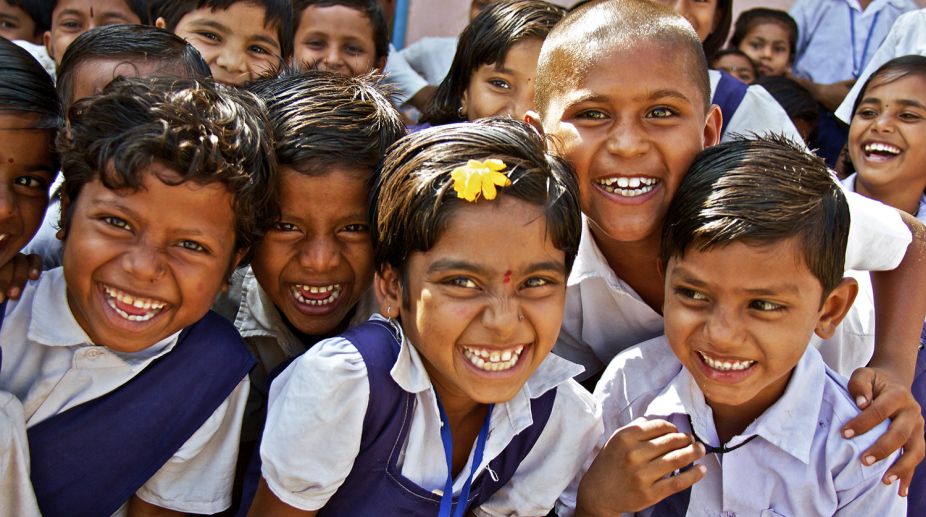
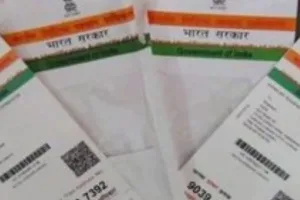
The linking of Aadhaar cards with mid-day meals has resulted in a steep fall in fake enrollments in government schools across the country, according to officials of the Unique Identification Authority of India (UIDAI).

In Haryana, the enrollment of students from class I to VIII has gone down by 16 per cent in the last two fiscals. In 2014-15, total enrollment for students from class I to VIII in the state was 19.58 lakh which went down by 3.26 lakh in 2015-16 when as many enrollments were found to be bogus. The state government was thus able to save lakhs of rupees on providing free uniforms, books, mid day meals, etc., to those students who apparently existed only on paper.

Recently, in Jharkhand, as per the information, when a report was sought by the government on the total enrollment of students across 40,000 primary and upper primary schools, it was revealed that in 2016-17, 48 lakh students were enrolled while in 2015-16, 50.42 lakh students were enrolled. Officials confirmed that more than 2.5 lakh enrollments were bogus or in many case duplicates as many students were found to be enrolled in more than one school to gain maximum benefits.

Data with The Statesman reveals that in Maharashtra, about 14-15 per cent fake enrollments were found across the state after a robust database was created to gauge the impact of the midday meal scheme.

In Jalgaon district of the state, a random survey in three primary schools threw up interesting statistics. It was found that every school had on an average 30-70 students who existed only on paper but the schools were still siphoning off Rs 900 per student from the government as subsidy for ensuring books, uniforms, etc.

UIDAI sources said linking of Aadhaar with student enrollments across the country has benefitted the students and the states equally. "There is much more transparency and accountability now and the benefits of the student-oriented scheme are reaching in a more efficient way.”

In Kerala, Aadhaar linkage has led to optimisation of the student-teacher ratio. Thanks to this exercise, no new posts have been sanctioned in the state for the past two years. This has led to the state exchequer saving approximately Rs 540 crore annually.

Even in Kerala, a whopping five lakh students were found to be fake enrollments. In 2010-11, the total number of students enrolled in schools across Kerala was 39 lakh and by 2014-15, the number reduced to 34 lakh after the details of the students were seeded with Aadhaar database.

In 2014, the department decided to take a re-look at the number of teachers to be appointed and leveraged the benefits of Aadhaar. A government order was issued, asking schools to collect the Aadhaar numbers of every student. As per estimates by the state government, the reduction in the number of students has led to a potential decrease in the number of teachers by around 12,000.