Logo

Srinagar Bypolls 2017: Internet services suspended in 3 districts

IANS | Srinagar |

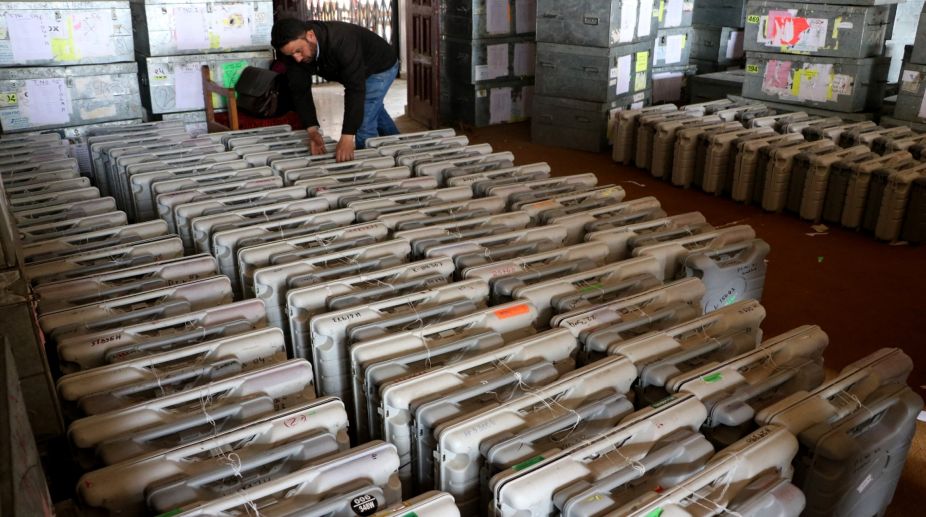
Authorities have suspended all internet services in the three districts of Srinagar, Budgam and Gandarbal where voting is scheduled on Sunday for the parliamentary by-elections.

Both mobile internet and fixed line broadband connectivity were suspended in the three poll-bound districts which constitute Srinagar-Budgam parliamentary constituency.

The authorities refused to confirm the suspension of the internet connectivity on record. 

Sources told IANS that the suspension has been enforced to prevent separatists and rumour mongers from disrupting the polls.

The voting in the parliamentary by-poll would begin at 7 a.m. and end at 5 p.m.

A total of 1,261,397 voters are eligible to exercise democratic right for which 1,559 polling stations have been set up. 

Police and paramilitary forces have been deployed to secure the poll staff and polling stations.

Ruling Peoples Democratic Party candidate Nazir Ahmad Khan is challenged by former Chief minister and National Conference President Farooq Abdullah.

Although there are nine candidates in the fray, the contest is mainly between Khan and Abdullah who is the joint candidate of the National Conference and the Congress.

No deadline for introduction of Sharia banking in India: RBI

PTI | New Delhi |

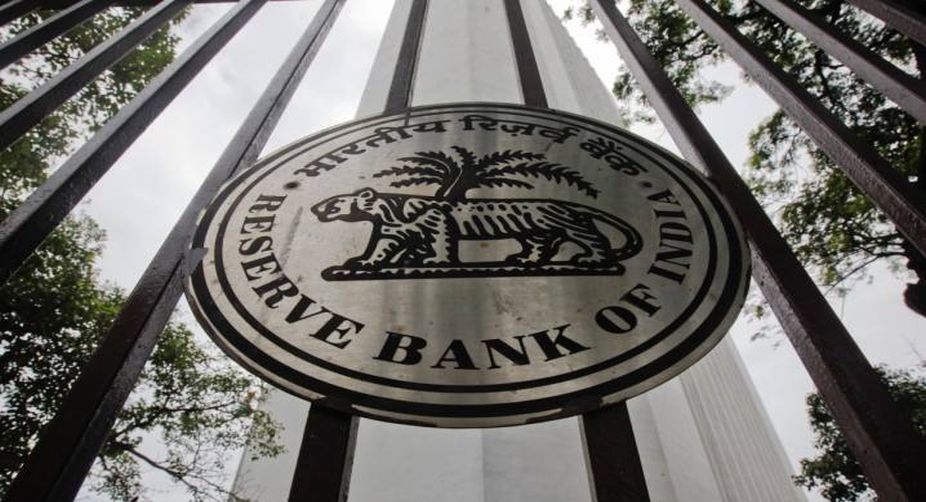
No deadline has been set for introduction of Sharia or interest-free banking in India, the Reserve Bank of India (RBI) has said.

Islamic or Sharia banking is a finance system based on the principles of not charging interest, which is prohibited under Islam.

The RBI had earlier proposed opening of “Islamic window” in conventional banks for gradual introduction of Sharia- compliant banking.

Responding to an RTI application, the RBI said it has not taken any step to introduce Islamic window in banks for gradual introduction of Sharia-compliant interest-free banking in India.

“RBI has not set any deadline for introduction of interest-free banking,” the central bank said in response to the RTI query filed by PTI.

However, on the instruction of the central government, an Inter-Departmental Group (IDG) set up in RBI has examined the legal, technical and regulatory issues for introducing interest-free banking in India and has submitted its report to the government, it said.

The RBI had in February last year sent a copy of the IDG to the Finance Ministry.

“In our considered opinion, given the complexities of Islamic finance and various regulatory and supervisory challenges involved in the matter and also due to the fact that Indian banks have no experience in this field, Islamic banking may be introduced in India in a gradual manner,” the central bank had told the Ministry in a letter.

In late 2008, a committee on Financial Sector Reforms, headed by former RBI governor Raghuram Rajan, had stressed on the need for a closer look at the issue of interest-free banking in the country.

“Certain faiths prohibit the use of financial instruments that pay interest. The non-availability of interest-free banking products results in some Indians, including those in the economically disadvantaged strata of society, not being able to access banking products and services due to reasons of faith,” the committee had said.

Transgenders becoming reality: Aparna Sen

PTI |

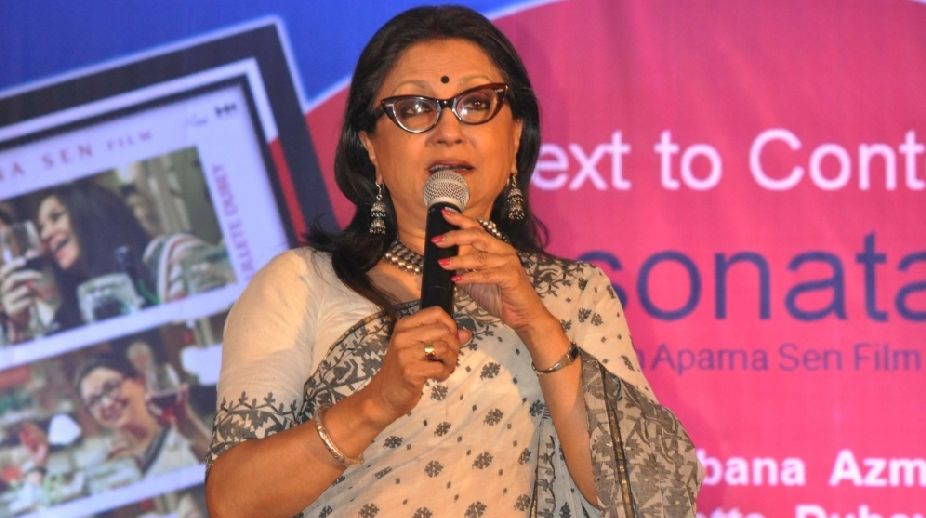
Actress-filmmaker Aparna Sen who helms and stars in the forthcoming film Sonata said she included a transgender character in the English drama to enhance visibility of the marginalised.

"I felt, apart from friendship, the film was exploring many aspects of the 'feminine'. I wanted to broaden that spectrum, include a person from a different economic strata and include a transgender female because transgenders are becoming a reality," she said here at a discussion on Text in Context.

Sonata is an adaption of the eponymous play by playwright Mahesh Elkunchwar. It will hit the screens on April 21.

The English drama is a psychological exploration of three unmarried women facing a mid-life crisis. It stars Lilette Dubey, Sen and Shabana Azmi.

Sen said the marginalised sections of society are "completely invisible".

"There was a time when I started including a challenged person in almost all my films because of only one reason… because we have made them completely invisible and people have had no exposure to them. So I don't want to make them invisible. Let there be this transgender girl who is a friend of ours. So that's the reason I included a transgender character," she added.

RSS body wants govt to impose 30% import duty on pulses

PTI | New Delhi |

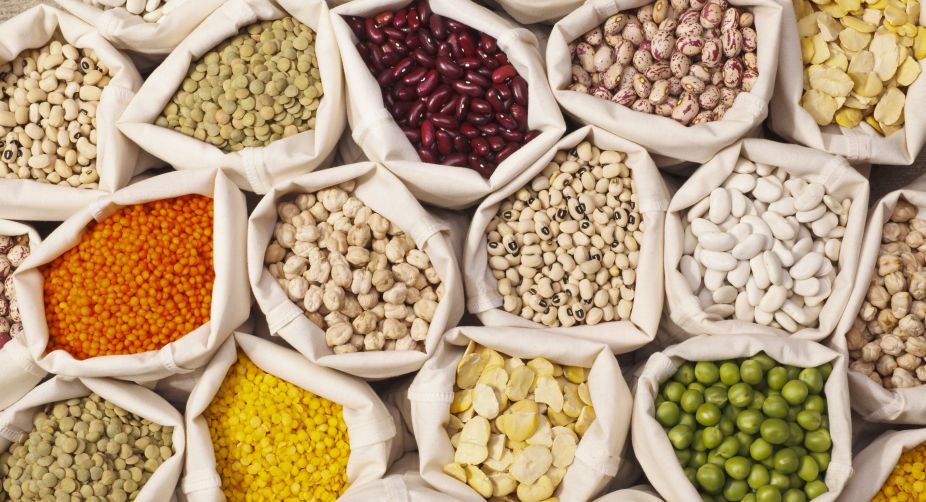
Concerned over declining prices of pulses produced domestically due to cheap imports, an RSS- affiliated body on Sunday urged the government to impose a 30 per cent import duty on them to help safeguard farmers' interests.

In a letter to Union Commerce Minister Nirmala Sitharaman, the Swadeshi Jagran Manch has asked her to step in while fearing that the country's food security will be at the mercy of international markets.

It said unless the government imposes customs duty on pulses, the situation may turn worse and farmers would be disinclined to produce more pulses domestically, due to poor productivity and low prices.

Manch national co-convener Ashwani Mahajan told Sitharaman that her Ministry has exempted import of pulses from paying the 10 per cent imports duty which has led to large-scale imports at lower prices.

Mahajan said the custom duty exemption notification on pulses expired on March 31 and urged the government not to issue a fresh notification for continuing with the exemption.

“I take this opportunity to urge you to kindly not pronounce any such notification of exemption from duty, after lapse of this notification.

“There after kindly impose at least 30 percent duty to safeguard the interest of the farmers and for the food security of the nation,” he said.

The Manch said the exemption of pulses from import duty, done to support domestic supplies and keep prices of pulses low for consumers, does not have relevance now as domestic prices of the commodity have come down.

It said it is unfortunate that due to zero duty import of pulse traders have flooded the market with yellow peas.

The Manch said this is bound to kill traditional pulses market for ever for hotel and restaurant industry, the biggest consumer of pulse.

According to the RSS body, though the government tried to procure pulses from farmers at Minimum Support Prices (MSP), not all farmers could get the benefit of support prices.

“As a result, zero duty import of pulses has killed the farmers' income in pulses,” Mahajan said, adding that traders are selling imported pulses at comparatively lower prices in the market and pulses are being sold below the MSP announced by the government.

“The country's food security will be at the mercy of international markets. This is not a prudent approach,” he said.

The Manch co-convener said the erstwhile USSR suffered due to lack of domestic food supplies and India needs to encourage domestic production of pulses and oil seeds for its food security.

Further, he said, importers have created huge processing and warehousing facilities near major ports like refined oil companies.

Cow protectors could harm BJP

Kalyani Shankar | New Delhi |

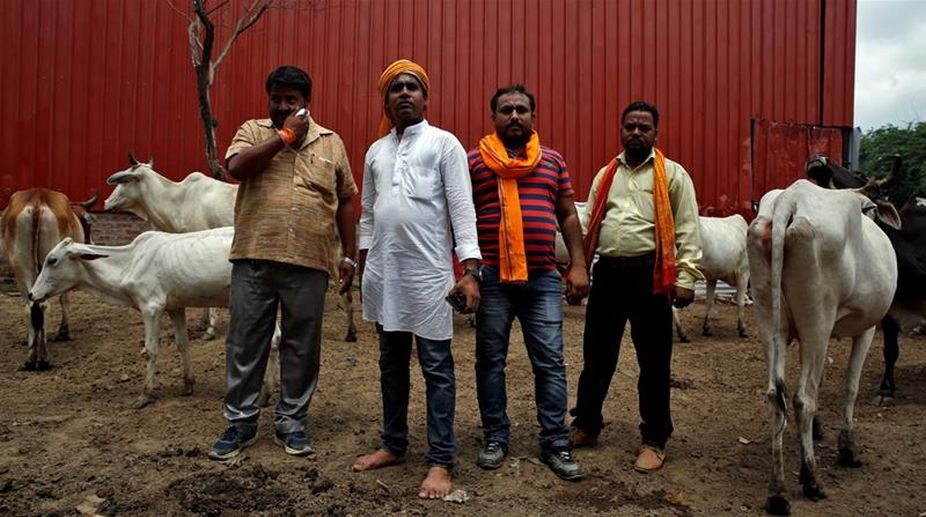
Should cow vigilante groups be banned? This question has surfaced once again with the opposition criticising the ruling BJP for promoting such vigilantism after the recent killing of a Muslim farmer Pehlu Khan who was attacked with four others in Alwar, Rajasthan on 1 April by an alleged right wing group. The 55-year-old Khan who was transporting cattle died after being beaten up by a mob of about 200 cow protection vigilantes. Cow vigilantes are self-styled cow protectors who take the law into their own hands and attack those who slaughtered or are suspected to have slaughtered cows.

Echos of the incident were heard in Parliament on Thursday when Union Home Minister Rajnath Singh assured the Lok Sabha that things would be sorted out. The echo has also reached the Supreme Court which has asked six states for their views on a plea seeking a ban on cow vigilante groups. The court has issued notices to Rajasthan, Maharashtra, Gujarat, Jharkhand, Karnataka and Uttar Pradesh, five of which are ruled by the BJP. The petitioner also alleged that these groups were committing atrocities against Dalits and minorities in the name of protection of cows and other bovines and they needed to be "regulated and banned in the interest of social harmony, public morality and law and order in the country".

The National Human Rights Commission is not lagging behind as it too has sought a report on the Alwar mob incident. The Scheduled Caste commission chairman P.L. Punia last year had demanded a ban on gau rakshaks as their attacks mostly affect the Dalits who depend on their livelihood on the leather trade.

With all this, can State governments and the Centre remain passive? The immediate provocation for this demand is the Pehlu Khan killing. This is not the first instance of cow vigilante activism. It came to focus in July last in Gujarat, when four Dalits were brutally beaten up for allegedly having skinned a cow followed by other such incidents elsewhere. The opposition case is that these so-called fringe groups have become bolder after Prime Minister Narendra Modi took over in 2014.

Cows are considered sacred by Hindus. Except in half a dozen states, mainly in the North-east, cow slaughter is not legal in the rest of the country including Rajasthan. Many states impose heavy fines on offenders, and imprisonment. Gujarat recently made cow slaughter punishable with a life term in jail. For the BJP, cow protection has been a core issue for long. The cow protection committees, which have sprung up in most BJP-ruled states in recent times, are insisting on implementing the laws and have set up vigilante committees to enforce the laws.

The cow belt, where cow vigilantism is most rampant, is also a hub of atrocities against Dalits, 63 per cent of which occur in just four states, Uttar Pradesh, Bihar, Madhya Pradesh, and Rajasthan. But beef is part of the traditional diet of Christians and Muslims, religious minorities in the country, and the ban heavily affects the main livelihood of these communities.

Why is there an increase in cow vigilantism? The first reason could be that Hindu right wing groups might be feeling that their time to rule has come and to implement their Hindutva policies. The second could be that the Sangh Parivar might think since Modi had become prime minister with their support, it is really they who should be ruling and not Modi. The third could be that Modi himself is from the parivar stable and is trying to implement the policies that he believes in as an RSS pracharak.

However, chanting the development mantra, Modi had come down heavily on cow protection committees last year in the wake of cow vigilantism. While addressing a town hall meeting in the capital he had noted that pseudo gau-rakshaks who claimed to be cow protectors during the day often resorted to criminal activities at night. He even asked the states to open dossiers to see how many of them were criminals. But what happened in Rajasthan shows that this injunction fell on deaf ears.

The opposition claims that cow vigilantism has increased after the Yogi Adityanath government came to power in Uttar Pradesh and clamped down on illegal slaughterhouses. Some other BJP-ruled states such as Haryana, Rajasthan and Jharkhand followed suit. This perhaps emboldened these gau rakshaks to indulge in violence in the name of protecting cows. The point is that even if the cow protection laws are not followed, the vigilante groups should file complaints in police stations and not take the law into their own hands.

Cow vigilantism may become counterproductive if not addressed properly. Cow politics has now reached a stage where it could defeat its main protagonists. The BJP and RSS have the most to lose as the RSS has been trying to unite Hindus. How can this vigilantism help when Dalits will be alienated? It is, thus, time for the PM and RSS chief Mohan Bhagwat to realise that they are not going to win this war. They must speak out before it is too late.

Although Rajnath Singh had assured the House that the matter would be addressed he did not spell out a plan of action. It is time that the Modi government sends out another stern signal asking the vigilante groups to take care of the cows rather than indulging in vandalism.

Ostrich approach to reporting disease

Bharat Dogra | New Delhi |

One of the most important challenges before India, and one closely tied to reducing human distress, is to bring down the incidence of several serious diseases.

The first challenge is to have accurate estimates of prevalence of these diseases so that efforts in keeping with the scale of the problem can be initiated. But in India this first step itself has been marred by the tendency to underestimate important diseases and health problems, and continuance of reporting and estimating procedures that are likely to err on the side of underestimation.

In the case of tuberculosis, for example, the recently released Global TB Report 2016 prepared by the WHO has stated that India reported only 56 per cent of its disease burden in 2014 and 59 per cent in 2015. The revised estimates have put the incidence of TB in India at 217 per 100,000 people in 2015 instead of the previous estimate of 127.

If a disease is substantially understated, it is certain that funds allocated to fight and treat it will also be significantly below the actual need. This is even clearer in the case of leprosy where premature claims of elimination of the disease as a public health problem created pressures to underreport incidence. Significant underestimation led to an overall curtailment of efforts to reduce the disease. However the folly of this approach has been realised now and special drives are being taken up to bring out the many hidden cases of this badly stigmatized disease. In September-October 2016, a 20-day drive launched by the Union Health Ministry helped to detect at least 20,000 hidden cases of leprosy even though less than a third of the country was covered. Overall about 125,000 new cases were detected in India in 2014-15.

Substantial underreporting of malaria has similarly led to anti-malaria efforts that are well below requirements, particularly in the vast tribal belt of central India. According to government data about 2 million people suffer from malaria in a year while about 700 die due to this disease annually. WHO estimates that about 15 million people suffer from malaria annually in India while about 20,000 of them die. The estimates of people getting affected by malaria and dying from it obtained in the much discussed Million Death Study were many times higher than even the WHO study.

Jan Swasthya Sahyog, a health organization known for its work in the tribal belt of Chattisgarh, reported in 2010 that at the time of a malaria epidemic it counted about 200 deaths in a single block of Bilaspur district while the government reported 42 deaths in the entire state. Government figures were restricted to only laboratory reports from its health facilities, and these also followed norms which were likely to result in significant underreporting of malaria deaths.

Snake-bites are an important cause of death in rural India and the poor are likely to be the victims. These deaths being very sudden are also very distressing and traumatic for rural households. The estimate of 45,900 snake bite-related deaths in a year made by the Million Death Study is regarded as fairly reliable by experts, but this is over 30 times higher than the government estimate based on only hospital reporting. As the government estimate of snake bite deaths is a huge underestimation, this leads to a substantial lowering of the funds and efforts needed to save the lives of mostly poor victims of snake bites.

Similarly in the case of rabies, government figures indicate deaths ranging between 244 and 556 in a year for recent years for which figures are available. However the Million Death Study found that some 12,700 people died from symptomatically identifiable furious rabies in a year. If anything this is likely to have risen due to an alarming increase in the number of stray dogs in many areas. But the huge underestimation of mortality by the government results in a situation where adequate resources are not available for saving dog bite victims from the possibility of a very painful and traumatic death.

There is scattered but convincing evidence that most occupational diseases are underestimated to a shocking extent, and in fact in many cases occupational origins of serious diseases are simply denied. This is certainly true of silicosis, probably the most widely prevalent occupational disease. Yet most of its victims are not even aware that they are afflicted by occupational diseases and have claims to compensation.

Clearly there is significant room for improvement in estimation of diseases so that more reliable and accurate estimates of diseases can become the basis for arranging efforts and funds to fight these.

The writer is a freelance journalist who has been involved with several important social initiatives and movements.

Exit the Brits

Arunabha Bagchi | New Delhi |

After nine months of heat and bluster following the Brexit vote, the die has been finally cast. On 29 March the British Prime Minister, Theresa May, invoked Article 50 of the Lisbon Treaty in a letter to the European Council President, Donald Tusk, informing him of Britain’s decision to leave the European Union (EU). It is a momentous event in world history and has signalled the start of a negotiating process for the UK to extricate itself from the EU that must be concluded within two years of invoking Article 50. There is no precedent and no one has a clear idea of how best to proceed. The final letter of Ms May was more conciliatory than her previous postures, although she subtly reminded her EU colleagues that Britain would not mind reducing security and antiterrorism cooperation if she were to get a bad trade deal at the end of the negotiations. British tabloids accentuated that part of her letter that the Europeans interpreted as the old fashioned blackmail. It also sounded less convincing after the Westminster attack few days back, that put a hole in the British propaganda of having the best anti-terror measures in place in the whole of Europe.

Theresa May was in the ‘soft’ Remain camp during the Brexit campaign, while most of her ministers were ‘hardcore’ members of the Leave camp. One of them, the current Brexit minister, David Davis, will lead the British negotiating team in Brussels. The Foreign Minister, Boris Johnson, has been deliberately kept out of the loop because of his propensity to make reckless and tasteless jokes even on serious occasions. According to the Westminster insiders, there is still no clear unequivocal negotiating strategy on the British side. On the EU side, the negotiations will be led by Michael Barnier, a former EU commissioner and a former French Finance Minister. He expects the negotiations for British withdrawal from the EU to be completed around September 2018, and believes that new trade negotiations of Britain with the rest of EU would begin only in earnest thereafter. All the remaining 27 EU member-states seem to agree with this strategy as does the European Parliament. Once the negotiations of British exit from the EU are complete, the terms must be approved by parliaments of all the 27 EU member countries, as well as by the European Parliament. A political spectacle of historical proportion!

The first point on the agenda, as far as the EU negotiators are concerned, is the Brexit bill that the UK owes to the EU for commitments that the country signed, many of which are yet to be implemented. The amount making the rounds is 60 billion euros. EU financial experts are working round the clock to disentangle the maze of commitments to come up with the final bill. The Brexit extremists do not want to pay a single cent and are threatening the hard Brexit. The UK government is more reticent and wants to discuss the bill on condition that Britain gets a virtual free trade agreement with the EU in return. The EU, by contrast, does not even contemplate discussing any trade deal before a reasonable agreement is reached about the terms of British withdrawal from the EU. There are vexing issues like the rights of EU workers currently employed in Britain and the British citizens working in the EU. Pension liability of British workers retired after working in the EU bureaucracy is another important issue. The EU wants a status quo of EU workers employed in Britain and Britons working in the EU through an interim agreement. This may be difficult for Ms May to accept, as it involves the Polish and Romanian workers, among others, who were targeted by the Leave camp and played a major role in the ‘Leave’ vote.

The greatest beneficiary in the UK of the EU membership has been the City of London, which has become the world’s financial hub of the same scale as New York, and possibly larger. It was made possible by what is called “passporting”, which allows bankers working from London to perform valid financial transactions throughout the EU. With loose banking regulations in the UK and the availability of easy capital from the Middle East and many former colonies, along with off-shore facilities provided by various British isles between the coasts of England and France, the City grew at an unprecedented scale during the last four decades of British membership of the EU. Bankers from the Continent flocked to the City in droves. The EU is determined to withdraw this “passporting” right unless the movement of EU residents to the UK (and vice versa) is denied by the British government. There is huge anxiety among the investment bankers about the future. Most investment banks have already announced plans for shifting some of their staff to the Continent. This would cause a huge potential loss of taxes for the UK government. The investment banks are jittery about waiting for two years to watch the final outcome of the negotiations. They are already planning to relocate some staff to the Continent to prepare for any contingencies.

Negotiations will start in earnest only after the German election this September. The French election will be decided in early May, but the French negotiating position would not change much with the election of the new President, assuming that Marina Le Pen would be defeated in the second and final round of voting there. The German position would be somewhat more conciliatory to the British position if Merkel remains the Chancellor. Any unexpected majority by the Social Democrats in the German election would certainly harden the official German negotiating position. One country that may lose out heavily is Poland that always got unstinted support from the British in any dispute within the EU. In the European power-game, Britain always supported the Polish people for centuries.

Britain also sabotaged all plans of the core group of EU countries to have a two-tier Europe, with one group proceeding with fast political union, with the countries on the periphery left to do that at their own pace. Now there is panic in Poland that this two-speed Europe might indeed be a reality. Already the xenophobic governments of Poland and Hungary are causing huge frustration among the governments of the West European countries.

Last, but not the least, is the problem of Scotland the majority of whose inhabitants voted to remain within the EU. Fearing resurgence of the independence movement there, Theresa May has warned them against any such attempt. This has infuriated the Scottish First Minister, Nicola Sturgeon, so much that she did not even wait for the end of negotiations with the EU and announced plans for a new referendum for the independence of Scotland from the rest of the UK. Then came suddenly the issue of Gibraltar to the front of the agenda. Gibraltar was captured by the British from Spain at the beginning of the eighteenth century. It has a small land border with Spain and people there voted overwhelmingly to remain in the EU. At the same time, they voted in 2002 to remain within the United Kingdom. Now Spain sensed the chance to tighten her noose around Gibraltar when the EU member-states agreed to give veto right to Spain on whether the final result of the negotiations between the UK and the EU would also apply to Gibraltar. Any denial of Spain for easy access to her territory would cause economic havoc to Gibraltar, a small rocky territory with only 30,000 inhabitants. In return, Spain has agreed to allow an independent Scotland’s membership to the EU, which they consistently opposed till now for fear of breaking away of Catalonia from Spain. Some British ministers are even threatening to go to war with Spain, as they did over Falkland Islands with Argentina. Things are getting increasingly bizarre.

In response to Wednesday’s letter of Theresa May to Donald Tusk invoking Article 50 of the Lisbon Treaty, came the EU’s draft negotiating guidelines published by President Tusk. This is broadly how the Sunday British newspaper, The Observer, has described it. To Ms May’s request for parallel talks about terms of departure and future trade relations, the answer was an emphatic ‘“No”. Her gamble to use the rights of existing EU citizens during negotiations was also greeted with a determined “No”.

To the British Government’s proposal to give special status to the border between the Irish Republic and Northern Ireland, the answer was again “No”. On special deals for the City and car manufacturers, the starting point was a “No”. The guidelines also clearly declared that the principle of freedom of movement of EU nationals is sacrosanct and must be abided by Britain in exchange for special trading status with the EU post 2019. An ominous start of negotiations indeed.

The writer is former Dean and Emeritus Professor of Applied Mathematics, University of Twente, The Netherlands.

Razzmatazz reigns

Editorial | New Delhi |

One definition of a classic is “that which has stood the test of time”. In this era of the instantaneous, a decade would appear long enough to earn that accolade. And it is not just a question of time: the massive response to “Season Ten” of the Indian Premier League and the publicity it generates, along with the continuously ringing cash registers, combine to cock a snook at the purists.

The most popular T20 cricket fiesta on the planet has silenced its legion of detractors. For all their doomsday prophesies, the tournament has come to stay, overcoming myriad hurdles on its way to a success never imagined at its launch. The league has now grown into an entity much more than the sum of its parts, even making a mockery of the climate-change naysayers by providing a refreshing cool as the heat of the Indian summer takes a toll on most other kinds of physical activity: politics apart, our netas are truly folk for all seasons.

For the next six weeks or so a specially created variety of cricket-lover will have a buffet of delight, high quality sport laced with the entertainment and hoopla that modern commerce triggers. Make no mistake about it, the tamasha would have lost its appeal had the cricket not been effervescent. For while T20 may not have been an Indian “invention”, the IPL established itself as a brand well before the terms “start-up” or “make in India” acquired their current connotation. And if in the process the players benefited, and some teams “crashed”, it all boils down to market forces being at work ~ only the snotty-nosed still dare to look down disdainfully at balance-sheets.

Only those who refuse to “see” will not be alive to the overall improvements in fielding, running between the stumps, revised tactics by bowlers, and the batsmen’s ability to register a “maximum” almost at will.

The game has been revolutionised, it has seen acknowledged superstars rubbing shoulders with aspiring youngsters, but above all cricket has been transformed into a game for the masses, Indian masses at least. No wonder that attempts at similar leagues have been floated to try and make hockey, football, badminton, etc., reap the same kind of harvest. Sure there have been negatives too ~ what human activity does not have its seamy side? Even the most vicious critics have slowly toned down their assault. For nothing matches the roar of approval from a stadium packed to the proverbial rafters. Neither cricket nor T20 were around when the term vox populi vox dei was coined. At some stage people did talk about “Gods or flannelled fools” ~ the IPL has scripted its own chapter in cricket history.

Syria’s Child

Editorial | New Delhi |

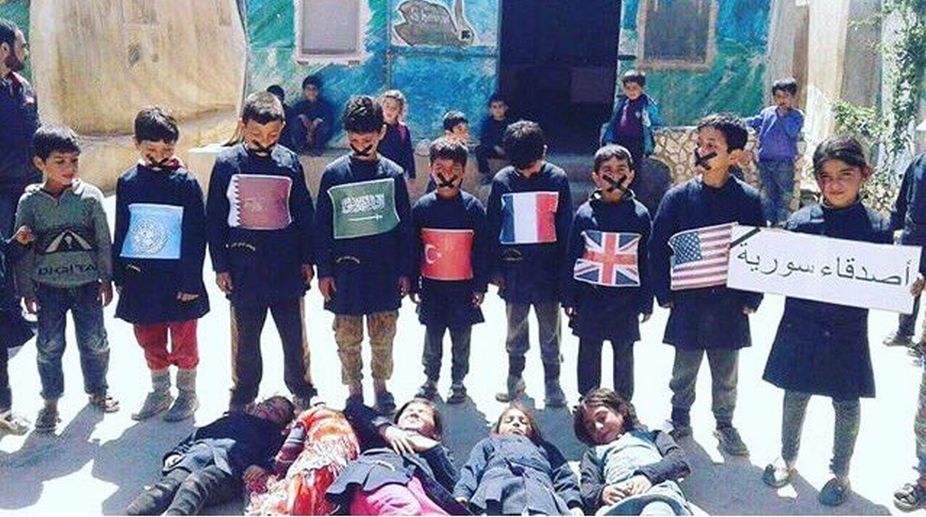
The repression of Bashar al-Assad is beneath condemnation. Visuals of the bodies of children “writhing, choking, gasping or foaming at the mouth,” to summon the evocative expressions of The New York Times, portray horrendous inhumanity six years after the Arab Spring. And the state-sponsored disaster has happened in a country where the upheaval of 2011 was long ago reduced to irrelevance. These children are among the 70 who have been killed through the use of a nerve agent, probably Sarin gas, in Syria’s Idlib province.

The world is scarcely convinced by the strenuous efforts of the Syrian security forces to deny its involvement, let alone whether the military was acting under orders from the Presidential palace in Damascus. Suffice it to register that the palace still possesses prohibited ammunition in its armoury despite the fact that Syria, officially at least, had joined the Chemical Weapons Convention and turned over its chemical arsenal in 2013, as part of a deal to avert US military action.

Even the “red line” set by President Obama as a precaution against chemical attacks has not been adhered to ~ a fact that appears to have given Donald Trump another handle against his predecessor. Judging by the presentations of the British Foreign Secretary, Boris Johnson, and the EU foreign affairs chief, Federica Mogherini, at the European Parliament in Brussels last Wednesday, “all evidence points to the Syrian President being behind the attack”. And it shall not be easy for the Kremlin to counter the very obvious. Of course, the comity of nations needs to be united against Assad at this juncture, and above all lend an impetus to the “peace talks” in Geneva. But this isn’t the moment for another bout of pow-wow.

Almost certainly, the world knows who did it. And the world, pre-eminently the United Nations, must now act. The official version strains credulity. Syria has blamed the rebels who hold the town of Khan Sheikhoun.

And the spin-doctors among Assad’s friends in Moscow claim that Syrian planes had struck a rebel stockpile of nerve agents, accidentally releasing them into the atmosphere. For all the inherent strength of the insurgents and the Caliphate, the “stockpile of nerve agents” remains the preserve of the establishment.

To put it bluntly, the Assad regime has used illegal weapons against its own people. Ergo, the Syrian government has committed a war crime, going by the certitudes of international law. It is a crime that is embedded in the regime’s impunity. Strained efforts to duck the reality are a convoluted exercise in self-deception. It is a terrifying prospect if the use of chemical weapons goes unpunished. Assad being Assad, he may yet wriggle out of the catastrophic crime.

The Mermaid Silhouette

The cuts, shape and make pf the mermaid phenomenon reflect a ‘fishy’ story which is elegant, vibrant and graceful.

Pramita Bose | New Delhi |

What is a mermaid after all? The dictionary meaning would suggest the obvious. A mythical sea-creature with the head and trunk of a woman and the tail of a fish, conventionally depicted as beautiful and with long flowing golden hair. Yes, that’s the precise definition. Now picture this ‘mermaid’ phenomenon raiding the fashion world with myriad styled dresses and gowns. The cuts, shape and make reflect a ‘fishy’ story which is elegant, vibrant and graceful.

Admitting that it is more appropriate as evening wear, designer Rashi Kapoor states that “mermaid dresses are essentially formal outfits. The combination of the fitted bodice with the elaborate skirt, makes for an ideal formal, occasion wear”. Designer Amy Billimoria too seconds her opinion with the “it definitely is an evening silhouette” line.

In the accessories department, “dainty diamonds, statement solitaires, art deco and artistic metal would nicely match a mermaid wardrobe,” affirms Kapoor. “Mermaid-cut outfits should be accessorised by extremes. Bold accessories like headgears, neck-chokers and neck-cuffs are best admired with mermaid-oriented dresses,” she offers ahead. One could toy a lot with accessories depending on what neckline the outfit has, say the designers in unison. “A strapless dress with a necklace, otherwise dangling earrings would adequately suffice a sartorial choice in mermaid fashion,” assists designer Pooja Solanki of Intri Printifashion label.

To put your best foot forward, the fashion experts recommend high heels and stilettos as the greatest option to wear with mermaid outfits. “Footwear must be neat, delicate and very feminine. “Open-toed shoes and pointed stilettos in high heels best harmonise with these dramatic dresses,” Kapoor sums up.

For the hairdos, a messy bun, updos and side twirls would no doubt look awesome with mermaid kind of ‘charming dressing’.“Mermaid outfits are attractively bold and styled in exquisite ways. Different hairstyles from bouffant to messy hair, based on the styling and occasion should amp up the overall get-up. Yeah, the outfits are all about drama and the ornate hairstyles should add onto it,” notes Kapoor.

“Less is more” is the key dictum for mermaid fashion make-up, say a few exponents. “Go for a deep dark eye makeup and bright lip colours,” advises Billimoria. “Play up the eyes dramatically to work really well with mermaid cut outfits. However, it is improper to associate only a specific make-up or a hairdo with a particular outfit. The outfits may be dramatised or underplayed with respect to the wearer’s make-up, her personality, the occasion to wear them and her styling,” believes Kapoor.

Among celeb fashionistas, “Indian dames namely Sonam Kapoor, Katrina Kaif, Urvashi Rautela are praised to carry off mermaid fashion with a lot of panache. Whereas international divas Emma Watson, Angelina Jolie and Beyonce Knowles are stealing the stares all the way,” acknowledges Solanki. If Deepika Padukone had successfully sported mermaid cut kurtas in her debut feature film, Om Shanti Om, then actors Kareena Kapoor, Katrina Kaif and Shilpa Shetty have also embraced the vogue with enviable élan, insists Kapoor.

“Donatella Versace, Jennifer Lopez, Beyonce and Kim Kardashian are some of the globally-reputed style-empresses who have been there and done that on various events and red-carpet affairs,” she further stresses. Like most designers, Billimoria too puts her money on the desi damsel Deepika Padukone to lend justice to the mermaid magic! For the foreign connect, she states that “though there are many who love to brandish this look, yet my all-time personal favourite is the age-defying Meryl Streep”.

Presumably, mermaid fashion looks apt on all tall and leggy lasses. However, there’s no hard and fast norm to this general notion of having a “tall body-type with a great shape” as a must requisite to carry off this look.

Solanki debunks the myth: “Not necessarily. A person with short height may also opt for a mermaid collection in her closet. The only rider is to go for less volume in the hem. That’s it,” she lays an emphasis. “This cut actually enhances the body frame. It is how toned the figure is, that is of more importance than the height. Even petite frames on short height are made more prominent by mermaid cut dresses. Height though shall always have an added advantage,” fathoms Kapoor.

When quizzed if the make is heavy at the bottom as the material is stitched to form layers as in fish-scales and also subsequently determine its streamlining effect, to that, Solanki replies, “Mermaid gown is also referred to as fishtail gowns, for the purpose of mimicking the imaginative shape of a mermaid tail. Hence the tiers at the bottom make the gown tangibly thick and weighty.”

“The dress is skin-fit or close to skin fit till the thighs. To maintain this construction-balance, a couple of seams are added at the lower half for the touch of flare and simultaneously enable the silhouette assume the shape of a mermaid with her tail-fin,” volunteers Kapoor.

Fishtail skirts and fishnet socks are also much in demand, study the designers. “Skirts are an extension to the silhouette. However the fishnet socks are in sync with the sheer, transparency trend, which is yet another genre to explore,” points out Solanki. “Fishtail skirts are the less formal option of a mermaid dress, and can be worn by most, teamed with loose or close-fitted tops and blouses. However, unlike mermaid dresses, here the outfit may not be form-fitted at the bodice,” remarks Kapoor.

Billimoria declares that “sporting fish net socks is a matter of personal style”.

Travels with chai

Danial Shah | New Delhi |

I am fond of travelling, especially off the-beaten path. On these trips, although I cherish many moments of solitude, I also enjoy meeting all kinds of people and it would not be wrong to say that without this interaction with the locals and other visitors, my trip would be incomplete.
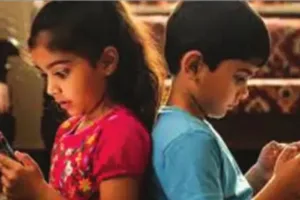
Whether I am in solitude or being social, sipping a cup of hot chai is a must for me. I’ve had tea in some of the remotest parts of Pakistan with different versions of chai, such as chai made with goat milk in the desert of Tharparkar, chai with salt in the mountains of Himalayas and Karakoram, chai with too much sugar in the northwest of Sindh and chai without milk (black tea) in the Deosai Plains.

My connection with chai started with a family tradition back in my childhood. It was a daily ritual to have tea every evening. That was the time when everyone would gather together for chitchat, and the family would interact. As I grew up, the tradition of chai sittings extended to meeting friends over chai, though later, as I began travelling, it got limited to either having tea on my own or with the people that I met there.

Tea is not an integral part of our culture — from north to south and east to west. Most of the time, I mostly did not have to buy the cup of tea on my travels but it was offered by the locals as part of their hospitality. Most of my encounters with people were very raw.

In the middle of nowhere, I come across people who don’t have a clue who I am or where I belonged to, yet they opened their arms for me. Since most of my travels are solo, in order to socialise a bit, I have tea at various places, sit, relax, think and reflect. Sip after sip.

Each experience has a different story. One winter I spent a night at the shrine of Shah Abdul Latif Bhitai in Bhitshah.

The fakirs were singing Bhitai’s poetry. In order to stay awake, they have chai every hour as they play. One of the fakirs saw me sitting in the front listening to them, and offered me a cup of tea. For them, it was a small gesture to say thank you for listening to them. I felt connected.

On a 45-minute flight from Islamabad to Skardu, I was flying above some of the highest mountains in the world, over the Himalayas, flying next to Nanga Parbat, the ninth highest mountain on earth.

On that flight, the cup of tea I had was good company to share the view with in solitude. But it was not until the early 20th century that the British started marketing campaigns and tea stalls were set up in different work places controlled by the company, including railways stations, factories, mines, etc. where workers were allowed tea breaks.

On main railway stations and junctions, vendors were assigned to offer free hot chai to passengers and workers commuting from one point to another. That is how tea became popular with the masses in parts of the world where the British ruled.

It was much later in life that I discovered that the British introduced tea in the subcontinent in the early 19th century when tea cultivation began in Assam. Initially, tea produced by the British East India Company in the subcontinent was only for the market in the West, and later the company saw a good opportunity to expand its market within the region. In 1881, the Tea Association of India was formed by the East India Company to expand tea business in British-ruled India (present-day India, Pakistan and Bangladesh).

But it was not until the early 20th century that the British started marketing campaigns and tea stalls were set up in different work places controlled by the company, including railways stations, factories, mines, etc. where workers were allowed tea breaks.

On main railway stations and junctions, vendors were assigned to offer free hot chai to passengers and workers commuting from one point to another. That is how tea became popular with the masses in parts of the world where the British ruled. Prior to that only herbal tea was consumed in India. Ironic then how often we refer to tea as ‘our culture.’

Dawn/ ANN

A magnificently creative mind

Archita Mittra | New Delhi |

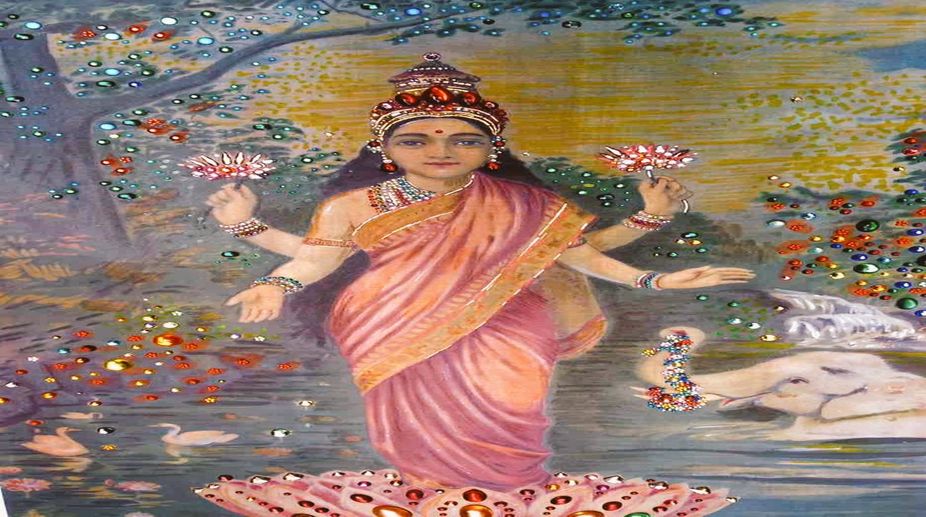
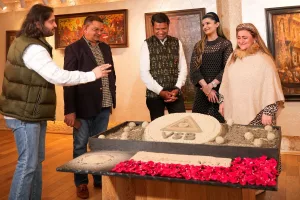
‘When I work, I am in the painting’, Olaf Van Cleef says in his French-accented English, sitting comfortably in the plush chair of his Taj Bengal hotel room and enjoying a light lunch with fellow journalists. The view from the window is sumptuous, verdant and serene – a long line of trees fading into the horizon of the cityscape-a definite rarity in this urban metropolis; and perhaps at the back of his magnificently creative mind there’s an idea of a painting brewing inspired by this view. Although born in Belgium and living and working in France, India has always been a recurring influence in his exquisite artwork and a second home, ever since he first visited the country at the age of 15, enamoured with the tales of adventure he’d read in Kipling’s Jungle Book . The world of wild nature-with elephants, exquisite butterflies, and tropical flowers- appealed to his imagination and never left him. His exhibitions here are immensely successful, as evident from the fact that in one of them, all the paintings were sold out in the first fifteen minutes of being unveiled. A dedicated majority of his clientele regularly buy his paintings of gods and goddesses for their ‘puja rooms’, with a noticeable rise in sales during the time of Diwali.

Coming from the illustrious Van Cleef family who were jewellers to the Czars and with his years of experience and expertise at working as a counsellor on high range jewellery at Cartier, it seems natural that he would channelize his creativity into a medium like painting that allows him to explore his love for Indian mythology, his talent at handling minute Swarovski crystals and semi-precious stones, and experiment with antique paper, fine-tipped pens, water colours to create highly-detailed works of art, so detailed in fact that you’d need a magnifying glass to observe the seven glimmering shades of gold he used to colour the many coins lying at the feet of Lakshmi, the goddess of wealth.

His attention to detail is something that indeed sets him apart. Each of his paintings is a labour of love. ‘Some require 150, 250 hours of work’, he says, preferring to work at mainly night, as daylight tends to interfere with the way he perceives the light and shine of the different stones. While showing us his most recent works, one notices that even in the most simplistic of his pictures, there are several other paintings hidden within it, so that every time you view it, you’ll notice something new, something different, whether it is the glimmer of light falling on the intricate wings of a butterfly done with chocolate paper or the first dewdrop clinging to the veins of a leaf. When asked about his creative process, he brings his ipad where he has taken pictures of the different stages of making art- right from the very beginning where he lets the paper soak in the colours to the slow and painstaking effort of adding tiny crystals one by one. This strenuous dedication and precision sums up the reason he says ‘I always work on one painting at a time’.

In fact in his approach to both work and life, he is very orderly, preferring to do one thing after the other. While unveiling his latest paintings, he shares interesting anecdotes, but it is only after the customary photo shoot is complete, that he sits down for lunch and an interview.

He is a fan of Raja Ravi Verma and Jamini Roy. When initially starting out, he preferred to work with abstract pointillism but that did not resonate with the audience. ‘No one wanted to buy my work’, he laments. So he switched to painting figures from Hindu myth, yet his skilful use of bright colours was vaguely Impressionistic and there is still pointillism in the rich detail. When he went to Bhutan, he was struck by the simplicity and ease of life there, and did a series of paintings of Buddhist and Tibetan deities and local folklore complete with delicate labyrinthine dragons as well.

Now, there is also a subtle movement in the subjects he chooses to paint. The larger canvasses feature the usual deities from the Hindu pantheon, often imagined with French undertones and innovative symbolism, but the smaller ones show us that Olaf is slowly preferring to return to his childhood dreams and fancies- painting lush peacocks, cockatiels, frogs, lotuses- and even three-headed elephants. When I ask him about his favourite Indian god, his answer is a quick and confident ‘Ganesha’, not only because it is one of the most easily recognizable and iconic gods worldwide (‘there are families in Brazil who worship him as well, he informs us) but it also connects him with his childhood fascination with elephants.

Olaf has certainly come a long way, but his enthusiasm makes it clear that he has no intention of stopping. He has exhibitions coming up and he’s involved with a bit of designing the Jagaddhatri Puja at the once-French colony of Chananagar. And it seems he has found his purpose in life: each of his paintings is its own reward.

How he saved himself

Kashmira Gander | New Delhi |

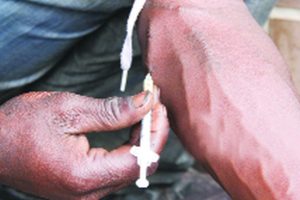
Glowing with health, Khalil Rafati is the best advert that his million-dollar juice brand could hope for. But almost two decades ago, he was a heroin addict on the verge of a fatal overdose, and paramedics were fighting to save his life for the ninth time.

In 2003, Rafati —who was born in Ohio — was hooked on heroin and crack cocaine, and weighed just 109 pounds. A decade prior, he had moved to Los Angeles to follow his dream of becoming a film star. But it didn’t quite work out. Instead, he made a living washing cars for stars like Slash. After dabbling with drugs, he gradually became addicted. He was then repeatedly arrested for drug-related offences, and was in and out of rehab. But something about his ninth brush with death snapped him out of this near-deadly cycle. After spending four months at a rehab centre, he has been clean ever since and his mental and physical health have replaced crack as his obsession.

Rafati was among millions of Americans who have struggled with addiction to opiates and heroin. In 2016, heroin use in the US hit its highest level for two decades according to the UN. And in Rafati’s opinion, “places that are shallow and pretentious as LA” lend themselves to addiction. “Millions of people come here, much like I did, to become rich and famous,” the 47-year-old tells The Independent. “When those dreams get shattered, it’s quite easy to pick up the drink and the drugs.”

As he learned more about healthy living, he decided he wanted to help those similarly affected by addition and opened his Riviera Recovery rehab centre. There, he would blend up juices and smoothies for his clients who would pay $10,000 to get clean. As word spread of his juices’ unique ingredients — from pollen to maca powder — Rafati realised he was onto something. He established Sunlife Organics in 2011 and opened a flagship store in Malibu. Now, Rafati has six juice bars and over 200 members of staff across California.

But Rafati could have hardly predicted his success. And fear, not money, was his greatest driving force to get clean. “The fear of returning to my hopeless state of despair,” he says.

Rafati shared his remarkable story in his autobiography I Forgot to Die. People have responded “incredibly,” to his experiences. “I think people are desperate to listen to stories of redemption and hope because there are so many people hurting in the world right now.”

“Sometimes I go on Amazon and read the reviews in tears because they are so beautiful,” he adds.

Despite his struggle with drugs, Rafati is resolute that chapter in his life is over. He rejects the idea that temptation is a daily struggle for addicts, or at least for him. “In the beginning, yes of course, if you have a physical addiction to something it’s going to take months to alleviate that physical craving,” he says. “But if somebody is willing to really change, if they really want to change, it’s not that complicated. We just love to complicate things, especially drug addicts and alcoholics. We are so sensitive and we think we are so clever and complex.”

At the same time, he has little time for those without sympathy for those hooked on drink and drugs. “They are obviously sick and broken themselves. We are all entitled to help; we should all help each other. No matter what the circumstance is. That doesn’t mean give money to a drug addicts, sometimes you have to say no to somebody is suffering from addiction. Or tell a loved one to move out from the house even though it upsets them — that in a way is helping them too. We must all love each other.”

The biggest misconception surrounding drug addiction, he goes on, is that it is a death sentence. “They (addicts) want to believe that it’s impossible to stop because that’s the easiest thing for them to believe. Taking responsibility for where we are in our lives and what has happened to us is a very heavy burden that most people are not willing to accept.”

But Rafati isn’t in the business of inflating his ego, or selling himself as a hero. “I don’t get too caught up in the ones claiming my book saved their life,” he adds. “I know better than that. I know better than to believe my own press. I can’t save anybody, we can only save ourselves.”

The Independent

Celebrating the Dutch Golden Age

Zafar Masud | New Delhi |

Whenever one happens to be in The Hague, what a pleasure it is to visit Delft, a peaceful town full of crisscrossing canals less than half an hour’s bus ride away from The Netherlands’ capital. On a fine, warm day even sipping a cup of tea at a sidewalk café or enjoying a soft drink while watching the boats row by is ecstasy in itself.

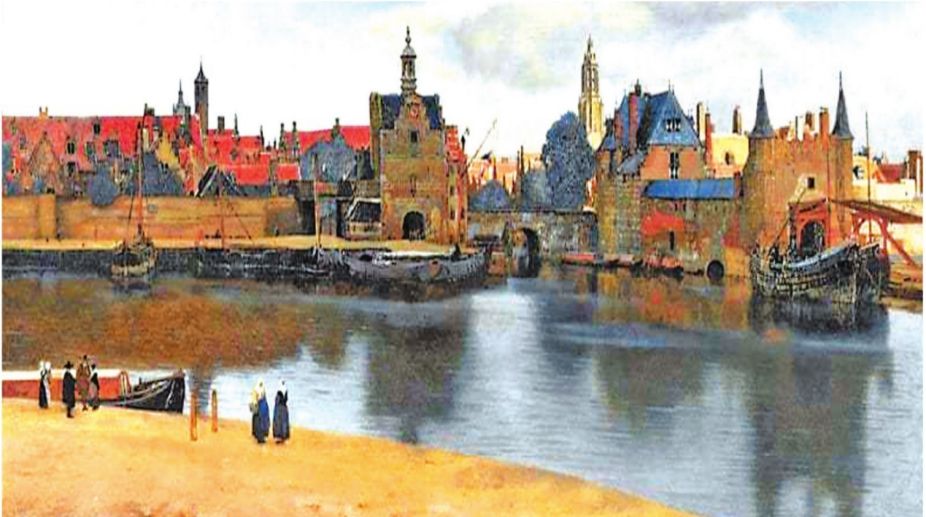
However, this little Venice has much, much more to offer to an art enthusiast. Though the Vermeer Museum has nothing of the monumental grandeur of a Louvre, stepping into it is a sensation similar to the one you have when you enter a home to see the works of a painter who invites you in.

Following his rather early death in 1675, Johannes Vermeer’s untraditional creations were practically immediately forgotten in Delft where he was born, where he worked all his life and died. After being ignored for nearly two centuries, about 20 of his masterpieces were discovered in 1866 by French art critic and researcher Théophile Thoré-Burger.

He was astounded to notice the total mastery with which Vermeer captured the rays of light and the illuminated or shadowed angles of flowers, human forms, tables, chairs and other objects in his paintings. The expert’s persistent inquiry inevitably resulted in a thorough hunt by other art enthusiasts of the time. Soon enough, a total of 70 works were listed in a catalogue that Thoré-Burger painstakingly prepared. However, it is generally believed today that no more than 37 of these paintings were actually done by Vermeer, the others being works created under his influence at later dates. This may appear to be a small figure for an artist’s achievements, but when you think of the relatively brief, 43 years of Vermeer’s lifetime, things start falling into place more comprehensively.

Vermeer’s eloquent paintings appear all the more sumptuous when you learn that during his entire career he had no mentor, no students and no friends. He followed nobody’s style and was never able to sell his works while alive. His graceful solitude was perhaps the reason for his being named the ‘Sphinx of Delft’ by Thoré- Burger, a title made popular by other art virtuosos of the period.

Contrary to the accepted tradition when painters could only live and work if they were encouraged and sponsored by royal and aristocratic families, Vermeer preferred to survive in extreme poverty. His characters consequently were fairly often women doing housework, knitting or going through kitchen routines. The backgrounds were inevitably the two rooms of the painter’s own modest house.

Though a few scenes of interiors of other abodes are not non-existent in Vermeer’s paintings, they are rare, and they always represent work — a lady learning to play a piano, a young man trying to paint, a busy astronomer or a geographer studying. Of the 37 so far acknowledged creations of Vermeer, only two paintings show outside vistas of Delft.

The capture of light rays, whether entering a room through a side window or being reflected on people’s faces are so realistic that a number of commentators today claim Vermeer certainly had access to some kind of an elementary version of a photographical instrument, if not really a camera in the modern sense. But serious art critics reject this hypothesis as pure nonsense. ‘Why not accept the simple fact that Vermeer was a genius who had visions of things different from his contemporaries and the mastery to transfer them to his canvases?’ they ask.

The original idea of the organisers at the Louvre museum in Paris was to expose, from February to May this year, the original works by Vermeer in the company of paintings by many other artists who were inspired by the Sphinx of Delft. The exhibition has been a success from Day One — when nearly 10,000 visitors waited their turns to enter the Louvre. The usual number for a successful show on the opening day is normally 5,000.

The organisers finally solved the problem by requesting the visitors to procure advance reservations through the internet in order to avoid extra long waiting times. For the moment, one still has to wait for about half-an hour to enter the hall where the Vermeer’s are being exposed.

Vermeer masterpieces are being exhibited for the first time at Louvre, Paris which is a part of a season dedicated to the Dutch Golden Age Dawn/ANN.

Defence Ministry to launch innovation organisation

IANS | New Delhi |

Defence Innovation Organistaion (DIO) is to be launched as a non-profit company later this month to foster technology development and innovative products with commercial potential for the defence sector, informed sources said.

The company is being formed by defence electronics major Bharat Electronics Limited (BEL) and defence aviation major Hindustan Aeronautics Limited (HAL). 

The Defence Ministry had in December approved the creation of a Defence Innovation Fund (DIF) under which the DIO is being formed. 

"This was a Ministry of Defence initiative and was tasked to BEL and HAL. The new entity will work under the guidance of the ministry which will provide the ideas and topics for innovation," a BEL source told IANS.

The company will fund development of new and innovative products and solutions for India's defence requirements. 

"Anyone from academia, medium and small enterprises, research and development institutes, individuals and start ups can approach DIO for funding," source said.

"BEL and HAL are contributing Rs 5 crore each to Defence Innovation Organisation, a Section 8 company, to promote innovation in defence. The company will be launched within this month," the source said.

As per the Section 8 of the Indian Companies Act, 2013, not-for-profit companies can be established for promotion of art, culture, science et al. 

After the launch, DIO will choose a knowledge partner for screening the ideas received for funding support.

The selected ideas will be financially supported to work on the proof of concept and those will go through further down selection process to select concepts that can be funded for prototype development.

The successful prototypes will also be helped in their commercialisation.

"If we get good response then the fund can go up to Rs 100 crore, with Rs 50 crore each from both the partners," source added.

The process of the registration of the company is in final stages.

According to sources, the company's board will initially have two nominated directors, one each from the HAL and BEL. The process of selection of the nominee directors is underway. 

The DIO, in future, may also have some independent directors.

IPL 2017: Shane Watson-led RCB beat Delhi Daredevils in a thriller

RCB registered a 15-run victory over Delhi Daredevils (DD) in an exciting clash.

SNS | New Delhi |

Kedar Jadhav’s 69-run knock and an impeccable bowling line-up helped Royal Challengers Bangalore (RCB) register a 15-run victory over Delhi Daredevils (DD) in an exciting clash of the IPL 2017 at the M Chinnaswamy Stadium, Bengaluru on Saturday.

Defying odds, Delhi wicketkeeper-batsman Rishabh Pant, who lost his father recently, scored an inspiring knock of 57 runs off 36 balls, with four sixes and three boundaries.

It appeared as DD has already handed RCB their second consecutive defeat, but then Pawan Negi (2/3) came out of the blues and turned the table.

Negi bowled a perfect seam-up fast delivery that deceived Pant and hit his leg stump.

For Delhi, Pant emerged as a ray of hope early blows. DD lost their initial wickets cheaply as Aditya Tare, Sam Billings, Karun Nair and Sanju Samson managed to contribute just 18, 25, four and 13 runs respectively.

Pinch-hitters Chris Morris (4) and Carlos Brathwaite (1) also failed to impress with the willow.

Besides Negi, Billy Stanlake and Iqbal Abdulla also claimed two wickets each.

Captain Shane Watson, Yuzvendra Chahal and Tymal Mills carried one wicket each in their kitty to join the party.

Earlier in first innings, Zaheer Khan (2/31) and Chris Morris (3/21) led Delhi’s bowling attack.

However, wicketkeeper-batsman Kedar Jadhav managed to score a causative 69-run knock to lay a foundation for RCB at their home ground.

The 32-year-old batsman from Maharashtra smashed five boundaries and five sixes and concluded his knock at a notable strike rate of 186.48.

Jadhav became the second victim of Delhi skipper Zaheer, who had dismissed Vishnu Vinod (9) earlier in the same over.

Hitting a full-on delivery by Zaheer, Jadhav lofted it towards mid-off where Morris made no mistake.

Pacer Pat Cummins and spinner Shahbaz Nadeem took the scalp of Mandeep Singh (12) and Watson (24) to support the bowling attack.

Click here for more stories related to IPL 2017

Ankur Mittal guns for gold at Cyprus World Cup

Swati Sharma | New Delhi |

After winning gold and silver medals in the recent two World Cups, Ankur Mittal, ace double trap shooter of the country and World number 5 now, sets his eyes on  the World Cup in Cyprus which would commence in the last week of April.
 
With his remarkable performance in the World Cup in Mexico on March 22, Ankur won the gold medal, leaving behind the world number one James Willet of Australia. Ankur, however, had to satisfy himself with a silver in the World Cup in New Delhi in February this year losing the Gold Medal match to Willet whom he defeated in Mexico.
 
With the two great performances  in  consecutive world cups, Ankur is elated and is confident of replicating the performance in the World Cup in Cyprus.

“You generally gain confidence after winning medals at international level,” said Ankur, who has started his practice for the next international competition. In Mexico, the 25-year-old shooter had created finals World record scoring 75/80 to win the gold medal.
 
Although shooting was in his blood, reaching this far had never been easy for Ankur . He had grown up watching his  father Ashok Mittal  shooting but it was from his brother  Ajay Mittal  who became his  inspiration .  
 
“In 2007 Ajay had won Gold medal in the Asian Championship in double trap and back to back he won it again in 2008. It was then I was inspired to try my hands with shooting,” Ankur said, adding, “I started with trap shooting in 2008 and reached as far as nationals but in 2009 I switched over to double trap.”
 
Besides his own brother who also gave him the initial training, Rajyavardhan Singh Rathore was the biggest inspiration. He also acknowledges the contribution of Ronjon Sodhi , another legendary double trap shooter of the country.  In 2010 he had gone for a week`s training to Italy but it was Sodhi who turned out to be a great help.
 
Consequently, Ankur was selected in the Junior Indian team and won a Gold Medal in the Junior World Cup in 2011 and a bronze in the same year in World cup in Finland. However the  hard work of this young shooter got him a place in the senior Indian team in 2013 which he had retained till now.
 
Ankur holds the national record of highest score of 144/150 .  Last year he won a bronze in the Asian Championship in Abu Dhabi. He then won the Gold medal of the National Championship at Jaipur in November and secured his place in the selection trials in Patiala for the World Cups in New Delhi, Mexico and Cyprus  leaving behind all his competitors .  Ankur, now, targets the Cyprus World Cup.
 
Ankur`s family hails from Sonepat but is now settled in Delhi . He did his schooling in Delhi and graduation from Hansraj College . Now he is pursuing MBA from Manav Rachan International University .  On completing his education, he wants to join the family business.

The shooter reveals that the best way for him to relax is spend time at home  and watch his favourite TV series like Flash. He also loves to explore nature and scuba diving.

Besides shooting, badminton was Ankur`s second love and he had played till state level when young . “At times I go for swimming and occasionally play golf,” states Ankur  who opts for gym , yoga and meditation to keep himself physically fit.