Logo

Markets trade higher; Nifty regains 9,200 mark

SNS | New Delhi |

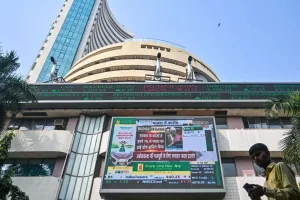
Despite mixed Asian equity markets, domestic benchmark indices snapped three-session losing streak and registered gains in the first hour of trade on Tuesday.

At 9.45 am, the Sensex was trading 235 points or 0.80 per cent higher at 29,649 while the Nifty50 was trading 66 points or 0.72 per cent up at 9,205.

Broader markets again outperformed the front liners. BSE Midcap and BSE Smallcap indices climbed 0.8 per cent and 1 per cent respectively.

All the BSE sectoral indices, except Realty index, were trading in the positive zone with Metal index leading the gains, up 2.2 per cent. Power (up 1.2 per cent), Bankex (up 1 per cent) and Oil & Gas (up 0.9 per cent) indices were other notable gainers. Realty index slipped 0.1.

On Monday, the BSE Sensex closed 48 points or 0.16 per cent down at 29,414 while the NSE Nifty ended 12 points or 0.12 per cent lower at 9,139.

Top gainers in the Sensex-30 pack: Adani Ports (up 3.4 per cent), Tata Steel (up 2.2 per cent), Gail (up 1.9 per cent), ITC (up 1.3 per cent) and NTPC (up 1.3 per cent).

Top losers in the Sensex-30 pack: Coal India (down 0.8 per cent), M&M (down 0.4 per cent), Sun Pharma (down 0.4 per cent), Cipla (down 0.2 per cent) and Bharti Airtel (down 0.1 per cent).

The Rupee was trading six paise down at 64.63 against the US Dollar.

Soldier martyred in Pakistan firing in J-K’s Poonch

IANS | Jammu |

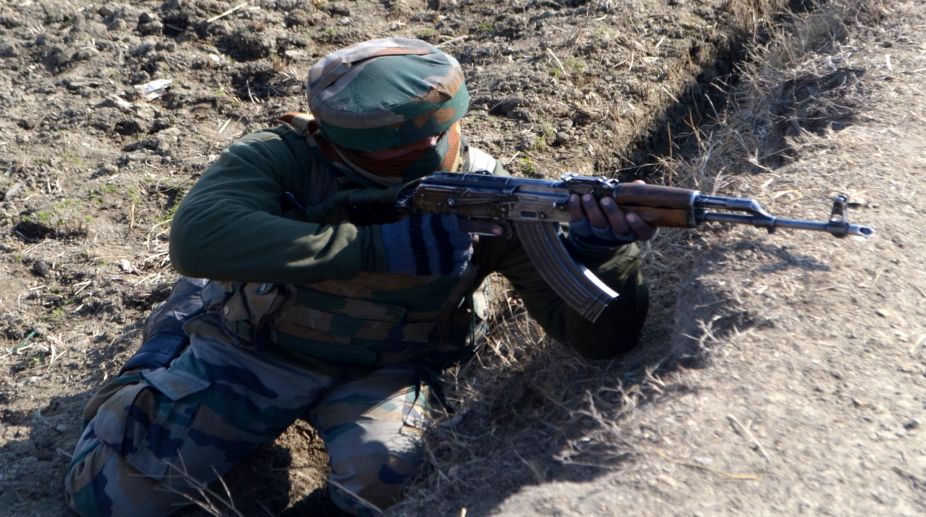
An Indian Army soldier was martyred in Pakistan firing on the Line of Control (LoC) in Jammu and Kashmir's Poonch district, police said on Tuesday.

The soldier was killed in Mendhar sector of the LoC in a sniper fire from the Pakistani side late on Monday evening, police sources told IANS here.

Pakistan Army had also continued indiscriminate firing and mortar shelling in Naushera sector of the LoC in Rajouri district on Monday.

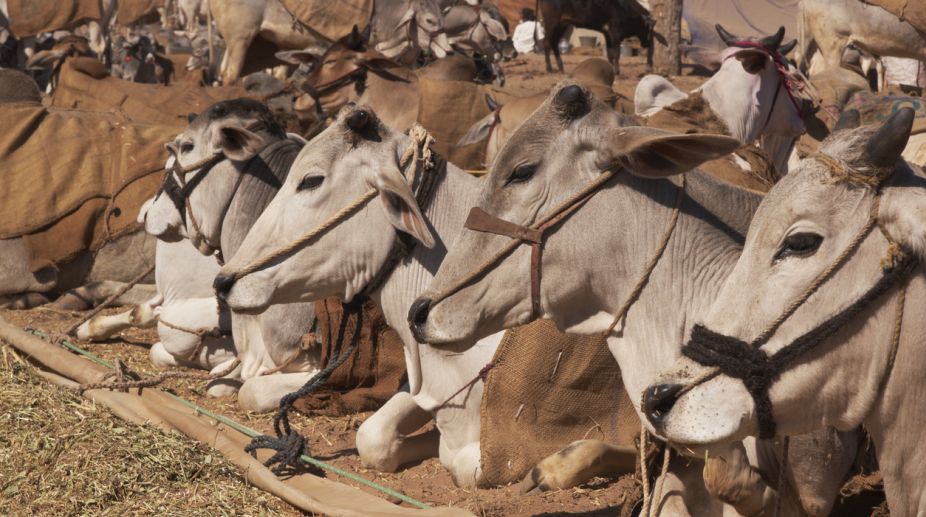
Dozens of cattle were killed on the Indian side in the indiscriminate shelling and firing.

The Indian Army had retaliated strongly.

Exchange of fire between the two sides which started at 8 a.m. on Monday had continued till late evening, defence sources said.

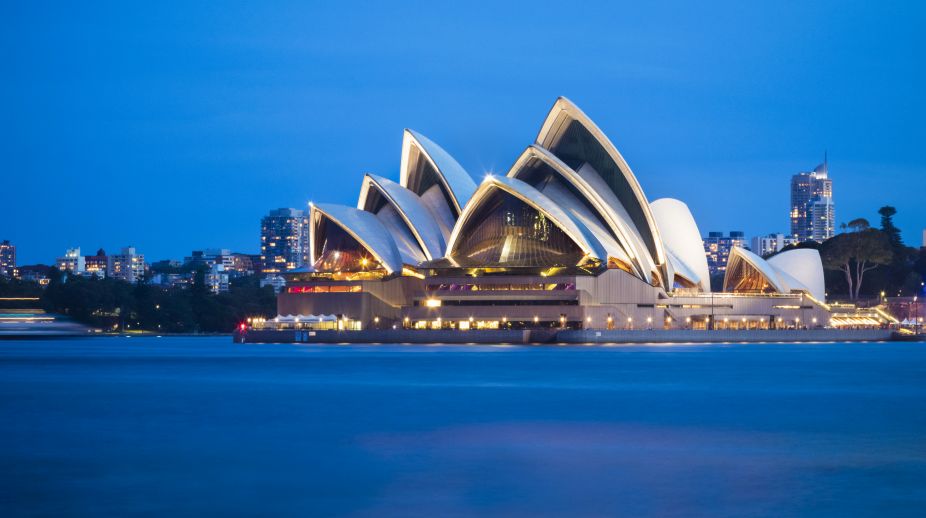
‘Sydney Opera House under threat of terror attack’

IANS | Sydney |

A leading business organisation in Australia warned on Tuesday that the iconic tourism and entertainment precinct, the Sydney Opera House, is at threat of terrorist attack, a media report said.

The warning came after a multitude of vehicles were spotted driving up the pedestrian strip toward the world-famous landmark, Xinhua news agency reported.

Many were concerned about the potential of an attack similar to those seen in London, Nice and elsewhere around the globe if security was not improved.

Speaking to the local media, Patricia Forsythe, executive director at the Sydney Business Chamber said the lack of oversight at the iconic complex was concerning.

She said that a new agency was required to ensure the safety of all those who use the precinct.

"It is timely that these agencies develop a complete approach to the future development of Circular Quay, which would include security," Forsythe said.

A resident who did not wish to be named, spoke of an incident that occurred earlier in the year that saw a work van appear out of nowhere and drive down the pedestrian promenade.

"All of a sudden there's a van coming behind us and there were people everywhere," the resident said.

"They drove the entire length of the promenade … it was scary." 

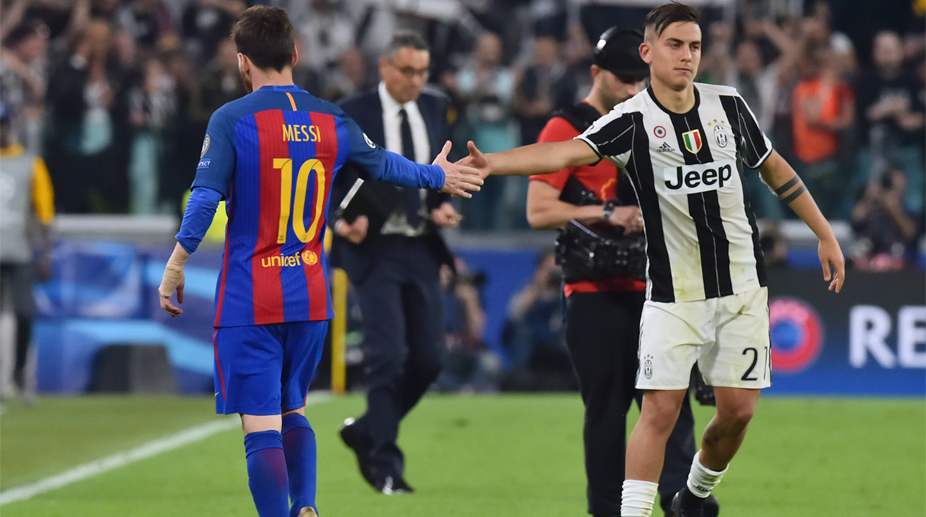
Rising star Paulo Dybala is Lionel Messi’s mirror image

The similarities between the two Argentines have been noted by Gonzalo Higuain among others.

AFP | Barcelona |

Diminutive, dynamic and armed with a deadly left foot, Paulo Dybala could be a prototype of a Lionel Messi clone.

The similarities between the two Argentines, who face off in Wednesday's Champions League quarter-final second leg between Juventus and Barcelona, have been noted by Dybala's strike partner Gonzalo Higuain among others.

The fact that Argentina now looks for the next Messi rather than the next Diego Maradona is as good a testament to the five-time world player of the year's achievements as any.

Hundreds of talented number 10s were christened as Maradona's heir before Messi turned even the "Hand of God" into distant memory.

"Messi is the best, he shows it every day," said Higuain, who joined Juventus in a fractious transfer from Napoli for €90 million($96 million) at the start of the season and has played alongside Messi for most of his 68 Argentina caps.

"Paulo is still young. He is 23 and has the world at his feet," he told Premium Sport.

The younger man won the battle in the first leg last week with a quickfire first-half double as Juventus claimed a commanding 3-0 lead.

However to win the war, the Italian champions must resist for 90 minutes at the Camp Nou to prevent another famous Barcelona comeback.

The Catalans overcame a record 4-0 first-leg deficit by beating Paris Saint-Germain 6-1 in the second leg at home in the last 16.

"It's one of my greatest nights in football," said Dybala after the first leg. "Let's not ruin it now."

Last week in Turin was only the second time Dybala and Messi have graced the same pitch.

The first time was a far unhappier experience for Dybala as he was sent off on his first start for Argentina.

A tearful Dybala was consoled and bailed out by his captain that night as Messi scored the only goal in a 1-0 World Cup qualifying win over Uruguay last September.

"Messi told me to be calm, that these things happen and that it was the referee's fault," Dybala said afterwards.

Yet, even a red card brought comparisons to Messi as he too was sent off for the only time in his career just minutes into his Argentina debut.

Dybala's big break in the national team could yet come due to another piece of uncharacteristic Messi indiscipline.

Messi is banned for three of Argentina's four remaining games of a floundering World Cup qualifying campaign, with Dybala clearly the most natural replacement.

Even despite seeing red that night in Mendoza, Dybala achieved a long-awaited "dream".

"My dream was to play a one-two with him and I managed to do that," he said. "It is incredible to play by his side."

Higuain knows more than most about the joys and pressures of playing next to Messi.

The former Real Madrid man is often derided as the reason Messi has failed to win a major international trophy having missed gilt-edged chances in the 2014 World Cup and 2015 and 2016 Copa America finals.

Matching Messi is an almost impossible task. At 23, he had already won the Ballon d'Or and is now just two goals off a remarkable 500 for Barcelona.

However, Higuain recognises a common talent and points to Messi's consistency as the goal for his teammate to reach.

"He has the characteristics to become one of the best players in the world.

"After getting to the top so quickly, it is not easy to stay there for many years.

"There will be many ups and downs and you have to always maintain an equilibrium and not listen to the critics or the compliments." (

Navy rescues 4 from tugboat off Mumbai coast

IANS | Mumbai |

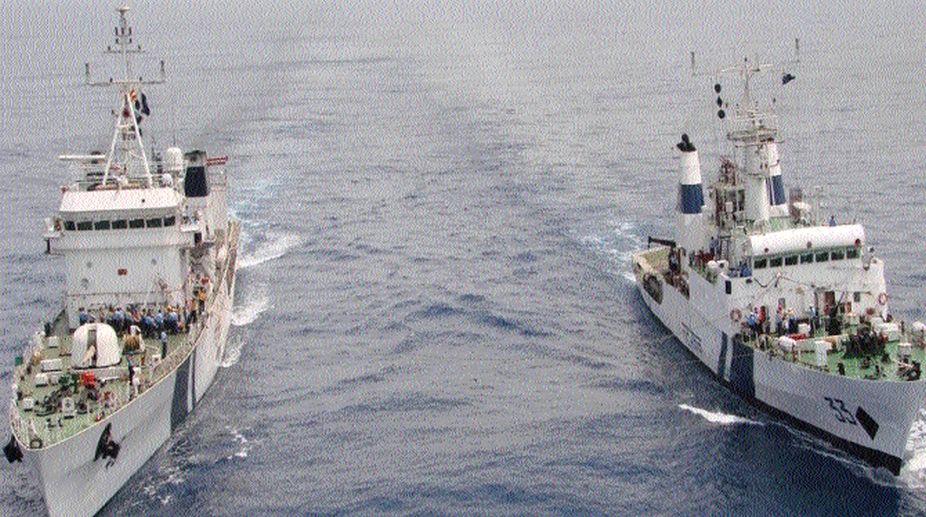
Indian Navy has rescued four crew members of a tugboat off the Mumbai coast, after the boat ran aground on rocks during low tide, a statement said.

The tugboat Sonika, with four on board had run aground on rocks in the waters off Raj Bhavan during low tide late on Monday night and had begun to flood. 

The site is in vicinity of the area where a Shivaji statue is planned to be built.

A distress call was received at the Mumbai Main Police Control Room from the tugboat after which a police launch from Mahim reached the site around 9.15 p.m. on Monday.

But they could not approach the tugboat due to rocks and shallow waters.

The Indian Navy was then approached for assistance and the Joint Operations Centre was also contacted by the police.

"At about 11.20 p.m., a naval Seaking C helicopter, with divers onboard, was launched from Naval Air Station Shikra. The helicopter was able to extract all four stranded men and returned to base by 11.45 p.m.," the Indian Navy said in a statement.

The rescued men were provided medical check up on arrival by doctor of INS Shikra. The crew was safe and no injury was reported.


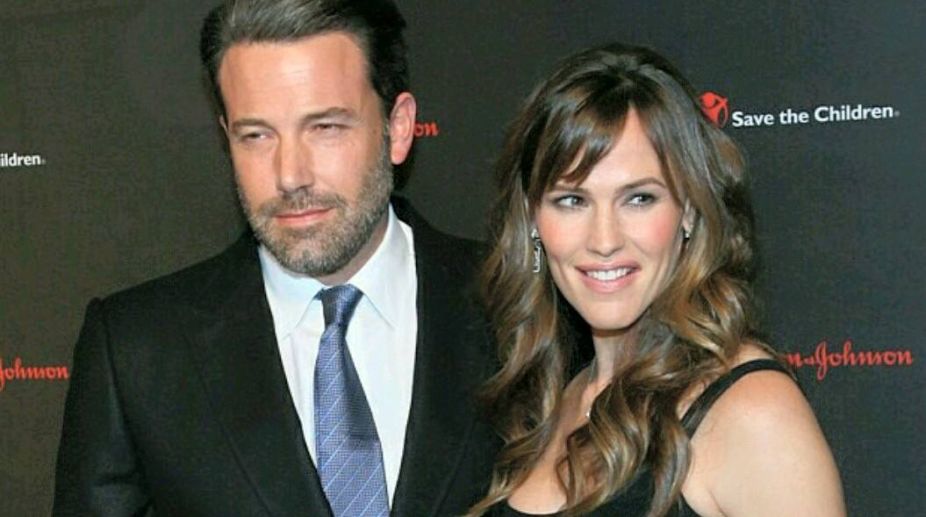
Who is Ben Affleck dating?

IANS | Los Angeles |

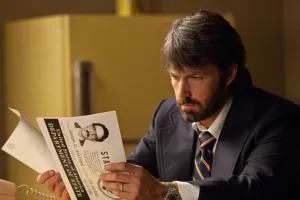
Actor-filmmaker Ben Affleck is moving on from his separation from actress Jennifer Garner, and is "dating someone else".

Affleck and Garner have officially filed for divorce, almost two years after they announced their separation in 2015.

According to sources, there's no animosity between Affleck and Garner, reports tmz.com.

"Affleck is dating someone, though not seriously," said a source. 

Another source said that Affleck is "ready to move on". 

The Batman Begins actor has moved out of their family home here.

According to tmz.com, the former couple had no pre-nuptial so will now embark on the process of working out the financial details.

It is being reported that their divorce could take over six months due to the amount of property they share.

Xi to attend Belt and Road forum’s opening ceremony

IANS | Beijing |

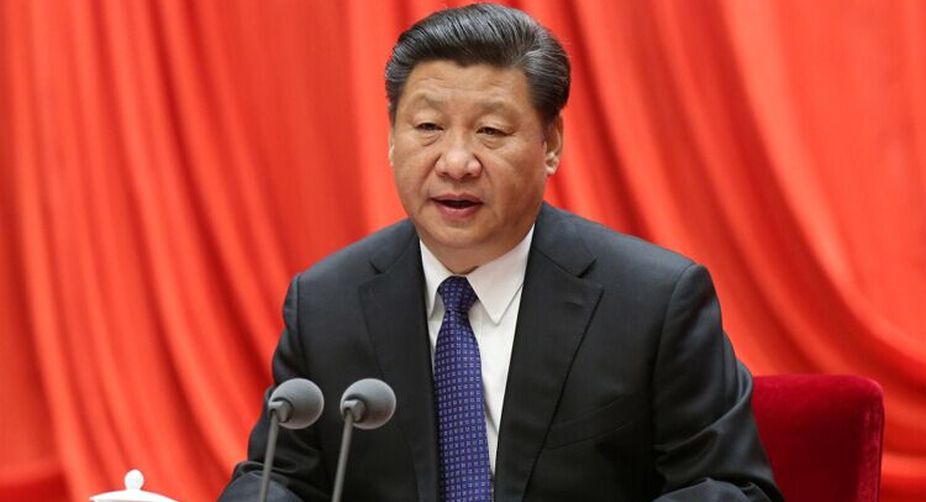
Chinese President Xi Jinping will attend the opening ceremony of the Belt and Road Forum for International Cooperation in May, Chinese Foreign Minister Wang Yi said on Tuesday.

Xi will also host the round table summit of the leaders at the time. Both the ceremony and the summit will be held here on May 14 to 15, Xinhua news agency reported.

According to Wang, 28 heads of state and government leaders will attend the forum.
 

EPL: Sanchez, Ozil strike to end Arsenal away woes

The Gunners' performance wasn't convincing but will still bring some relief to manager Arsene Wenger.

AFP | Middlesbrough |

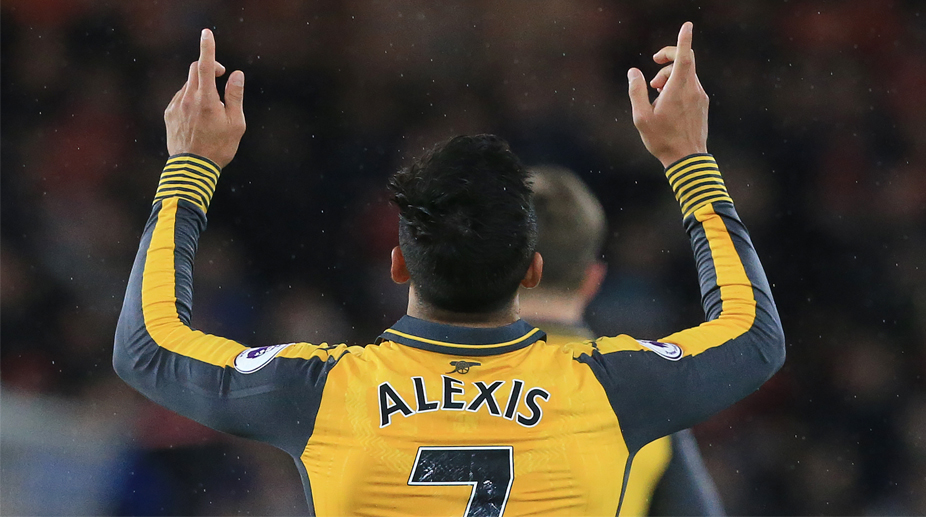
Goals from Alexis Sanchez and Mesut Ozil ended Arsenal's run of four successive away defeats with a scratchy 2-1 victory over struggling Middlesbrough in their Premier League clash on Monday.

The Gunners' performance was far from convincing but will still bring some relief to their beleaguered manager Arsene Wenger.

There was a period after Alvaro Negredo scored an equaliser when Middlesbrough, who have won only four league games this season, looked capable of going on to claim their fifth scalp.

Arsenal are new seven points behind fourth-placed Manchester City with a game in hand, while Middlesbrough lie six points from safety and have also played one game fewer than most of the teams above them.

"It (the top four) is mathematically still alive," Wenger told Sky Sports.

"We knew we needed to win. Now we have a little break with the FA Cup (they play Manchester City on Sunday in the semi-final) and then we come back again to the league."

At least Arsenal's trip to Teesside began far more smoothly than their previous away game at Crystal Palace when they were caught in London traffic and arrived shortly before the kick-off.

They reached Middlesbrough's Riverside Stadium with plenty of time to spare, yet there was still a lack of direction on the pitch as they searched for a route to goal in the opening stages.

Wenger had made the sort of selection decisions that he usually reserves for cup ties against teams from lower divisions.

The French manager announced six changes from the team that lost 3-0 at Palace seven days earlier and, even more significantly, employed wing-backs alongside a defensive trio for the first time since 1997.

His tactical alterations did not provide instant results, although they did enjoy the bulk of the early possession and Olivier Giroud's claims for a penalty when he was floored by Daniel Ayala certainly had some merit.

Arsenal's attacking difficulties were not unexpected because Middlesbrough went into the game after conceding only 37 goals — two fewer than Wenger's under-performing side.

Marten de Roon headed past the Arsenal goalkeeper Petr Cech midway through the opening half, but was offside — Middlesbrough were unimaginative and with 42 minutes gone, they were behind.

A foul by Adam Clayton on the edge of the area was a gift for Sanchez, the Chilean star flighted his free-kick over the wall and inside the post.

It was his 19th Premier League goal of the season and only three fewer than the entire Middlesbrough team going into this game, so it was a surprise that the home side suddenly looked capable of producing a response in the second half.

Middlesbrough were immediately on the front foot and levelled inside five minutes after Sanchez lost possession.

The hosts broke quickly down the right through Stewart Downing, whose cross was missed by Laurent Koscielny before Negredo steered it past Cech.

Suddenly, the game burst into life, with Downing heavily involved. The former England winger wasted an excellent opportunity when George Friend's cross was allowed to reach him at the far post, then the pair combined again to carve out a chance for Ayala.

Downing's cross was headed back towards goal by Friend and Ayala looked certain to score before he directed his header too close to Cech.

Arsenal's response was impressive in the 63rd minute as Sanchez's through ball picked out Ozil, but goalkeeper Brad Guzan sensed the danger and did well to save at the feet of the German international.

However, the outcome was different in their next confrontation eight minutes later.

Sanchez was involved again with a cross that was chested down by Aaron Ramsey, leaving Ozil with the chance to drill Arsenal back in front from close range.

Leicester City defender Wes Morgan fit to face Atletico Madrid

However, Leicester coach Craig Shakespeare will be dealing with problems in midfield and in attack.

IANS | Leicester |

English football champions Leicester City trained on Monday for the second leg of the Champions League quarter-finals against Atletico Madrid with central defender Wes Morgan as well as Yohan Benalouane attending the training session after recovering from injuries.

However, Leicester coach Craig Shakespeare will be dealing with problems in the midfield and in attack with the absence of Nampalys Mendy and Islam Slimani, reports Efe.

Although Morgan missed the last six games with his teammates due to back pain, he showed up for Monday's training session.

Yohan Benalouane, who could not finish Saturday's Premier League game against Crystal Palace, also made it to the training field.

The first leg at Madrid ended in a 0-1 defeat for the Foxes. This is perhaps a reminder that they are on the verge of writing history if they manage to make a comeback and qualify for the semi-finals. 

Last season, they wrote the first chapter of their outstanding story by winning the English Premier League (EPL) for the first time in the club's history.

I-League: Trevor Morgan resigns as East Bengal coach

With only two matches remaining, East Bengal are six points behind league leaders Mohun Bagan.

IANS | Kolkata |

After four back-to-back losses in the I-League football championship, under-fire East Bengal chief coach Trevor Morgan resigned on Monday.

East Bengal lost to DSK Shivajians 0-1 a week after going down 1-2 to arch-rivals Mohun Bagan. Previously, Chennai City FC and Churchill Brothers too beat them away and at home, respectively.

With only two matches remaining, East Bengal are six points behind league leaders and arch-foes Mohun Bagan.

"I have got the resignation letter from Trevor. I don't know about the future course of action. You should talk to the club secretary (Kalyan Majumder) to know about it," said Santosh Bhattacharya, the football secretary who played the pivotal role in ensuring Morgan comes back for a second innings in Kolkata.

Manoranjan Bhattacharya and Tushar Rakshit will be taking charge of the red and gold brigade for the remainder of the I-League season.

East Bengal (27 points from 16 matches) will play Minerva Punjab FC and Mumbai FC in their two remaining matches in the I-League.

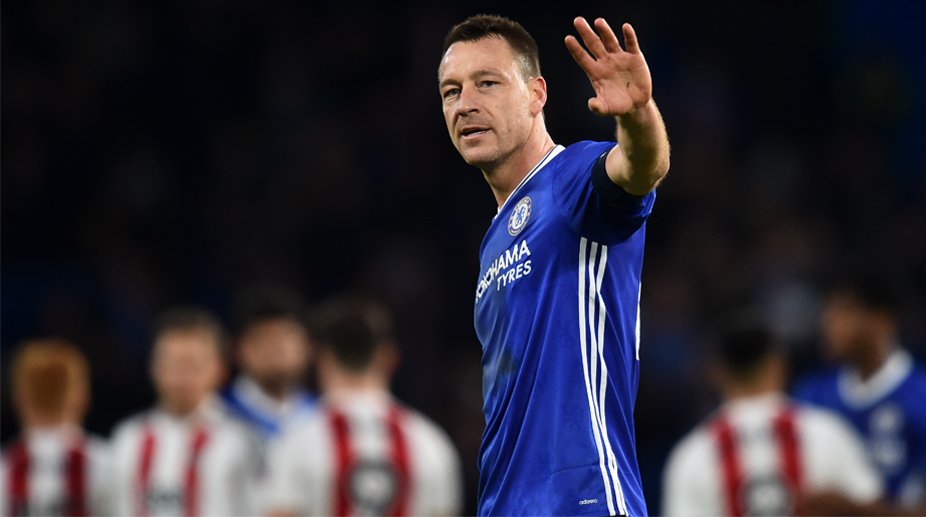
Chelsea confirm captain Terry to leave club at season-end

Commenting on his future plans, the 36-year-old said: "I will decide on my future in due course."

IANS | London |

Chelsea announced on Monday that skipper and club legend John Terry will end his 22-year association with the capital football club at the end of the season after his contract expires.

Since his debut with the first team in 1998, Terry has worn Chelsea's jersey in 713 matches, in which he has scored 66 goals, reports Efe.

In a statement released on the club's website, Chelsea said: "John Terry and Chelsea Football Club jointly announce our captain will leave the club at the end of the season."

"Everybody at Stamford Bridge would like to express our enormous gratitude to John and wish him the very best of luck for the future," the club added.

Terry, who spent most of his career at the London side, said: "After 22 years there is so much to say and so many people to thank at this great football club.

"From coaches, team-mates and staff to the fans who have given me so much support down the years, I can't thank you enough. There will be opportunities for me to speak further about this over the coming weeks." 

Commenting on his future plans, the 36-year-old said: "I will decide on my future in due course, but for now I am committed to helping the team achieve success this season."

The centre-back concluded by saying that he has always had a fantastic relationship with the club, which he said "will continue beyond my playing days".

Terry, Chelsea's most decorated player, won 14 major honours with the Blues, including one Champions League trophy, four English Premier League (EPL) titles, one Europa League, five FA Cups and three League Cups.

The statement added that both the club and Terry look ahead to the possibility of him returning to hold other positions off the field.

"He is, as the famous banner reads, our captain, leader, legend, and we wish John the very best of luck in the next chapter of his magnificent career," the club said.

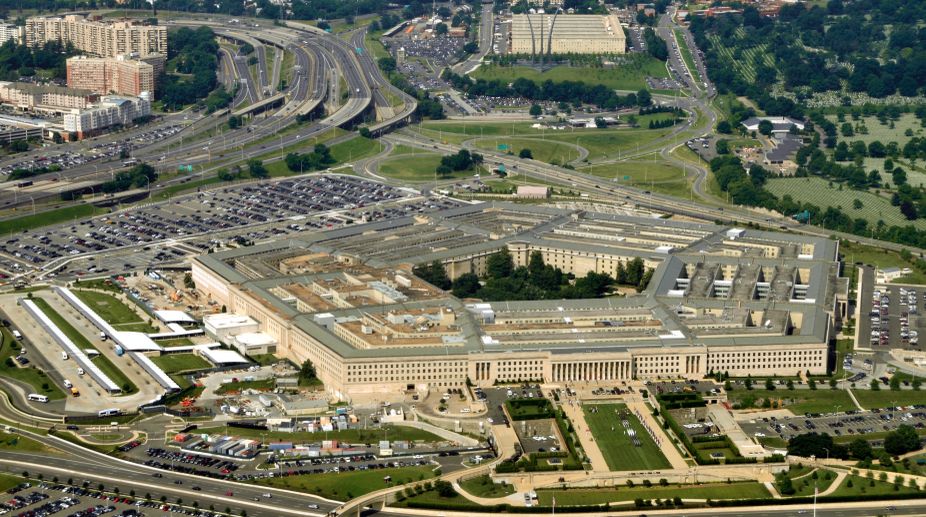
Pentagon starts US nuclear posture review under Trump’s order

IANS | Washington |

The US Defense Ministry has officially started a review of the country's nuclear posture and will submit a final report to President Donald Trump at the end of this year, the Pentagon announced Monday.

"Today, Secretary (James) Mattis directed the commencement of the review, which will be led by the deputy secretary of defense and the vice chairman of the Joint Chiefs of Staff, and include interagency partners," Xinhua news agency quoted a Pentagon spokeswoman as saying.

"The process will culminate in a final report to the president by the end of the year," said the statement.

The nuclear posture review was ordered by Trump in a January executive action on military readiness.

The January memo called for a review "to ensure that the United States nuclear deterrent is modern, robust, flexible, resilient, ready and appropriately tailored to deter 21st-century threats and reassure our allies." 

Democratic lawmaker Adam Smith, a ranking member of the House Armed Services committee, said he hopes the review includes a "thoughtful assessment" to "rethink what the priorities should be for a strong yet affordable nuclear arsenal."

"In the past, nuclear posture reviews have considered in depth the crucial role played by efforts to enhance strategic stability and prevent nuclear proliferation," he said in a statement.

"It is important that this review do the same. I hope that it includes a thorough assessment of policy options that would allow us to avoid a costly and dangerous nuclear arms race; and that it properly analyzes the enormous risks inherent in lowering the threshold for using nuclear weapons." said Smith.

Though planned since January under Trump's order, the start of the nuclear review comes at a time of high anxiety over increasing tensions on the Korean peninsula.

The last time the Pentagon conducted a nuclear posture review was in 2010.


Knowledge versus skills

Nisha Nair | New Delhi |

Education for the sake of attaining a degree is not desirable considering the increase in educated unemployment in the country.

It calls for better indication at what guides the aims and objectives of an individual. Achieving a degree is surely a sign of formal education but it does not guarantee an individual growth, social stability or financial security.

While the need for skill inculcation has always found space in various educational policy documents churned out in the country since independence, current discourses in the arena of both school and higher level has increasingly emphasised on outcome based learning.

There is no doubt that skill education has acquired a greater importance in the current socio-economic context of the country.

As per a report published by Ernst and Young by 2026 demographically, India would at an advantageous position with approximately 64 per cent of our population laying in the age bracket of 15 to 59 years, with only 13 per cent of population aged about 60.

Skilled education therefore is imperative for us to be able to reap the demographic dividend which a young population would offer. If education does not respond to the need in a growing economy like ours, then it would fail its youth in attaining both basic and higher aspirations of life.

Moving beyond merely focusing on learning objectives, in the Visitor’s Conference 2016 at Rashtrapati Bhavan, the human resource development minister, Prakash Javadekar spoke about government’s measure to broadly define expected outcomes of education at different levels of learning.

An outcome based learning is at the heart of ensuring that entire education process is geared toward inculcation of learning objective thus is at the heart of skill based education. President Pranab Mukherjee, himself on various occasions, has stressed on the importance and role of education in putting India on “a fast track to the first world”.

In this context, skill development has been quite rightly stressed as an important aspect of educational output both at the level of secondary and tertiary education. This responds to the ability of the learner to secure an employment leading to their personal and professional growth.

This calls for greater collaboration between schools and institutes of higher learning on one hand and educational institutions and industry partners on the other. It would help in identifying the required skill sets, reducing the gap in curriculum and inculcation of skills required by the industry and economy.

The need of the hour is to ensure that the stakeholders from different levels of education work in consonance with each other and with experts from industry in enhancing the skilled manpower. Developing specialised courses at school level which can also be further pursued at undergraduate and postgraduate level, summer schools offered by higher education institution and industry experts, skill oriented shortterm and long term workshops/ courses offered by professional bodies could be some effective measures.

Having argued in the favour of skill oriented education must respond to a broader set of goals. Though skill education is important, higher education must be the site of knowledge acquisition, generation, creativity and innovation.

Education for the sake of knowledge and its creation leading to self-actualisation of learners must be at the heart of larger goals of learnings.

It must not only correspond to the individual, communal, domestic or national needs but effectively respond to global reality and aspirations.

The writer is Assistant Professor, Jindal Global Law School.

Of paramount importance

Partha Halder | New Delhi |

The country’s most coveted engineering entrance exam— the gateway to IIT’s is scheduled on 21 May.

With JEE Main, students have just crossed the first hurdle towards their goal. If they have done well, and are eyeing a seat, then the most critical phase of their journey has begun.

It’s all about shifting gear to the next level in terms of learning, fine tuning of acquired skills, harnessing capabilities, monitoring of strengths and weaknesses, plugging of loopholes, assessing national level standing, ensuring of output maximisation and above all optimising available time.

It is strongly advisable to begin with a systematic study and concept-wise revision plan hence one must devote half a day to prepare a full proof study plan.

This exam is viewed as a selection process as it selects the best out of the best. Understandably so, the competition is expected to be stiff and virtually allowing no room for any kind of slippages. Hence a methodical approach at every step of preparation is of paramount importance.

Here are few pointers:

  • During revision, remember it is the quality of time spent that is important and not just the quantity. You must engage in concept wise revision. If you revise concept wise then chances of inadvertently missing out on anything is minimal thus improving the quality of overall attempts.
  • While revising, you must pick up representative problems specific to a concept or chapter and solve them. As a result, while solving a question you will be reminded of certain concepts or techniques studied earlier and hence other related things will get refreshed in your mind.
  • If you did not get sufficient time to revise Class XI syllabus before Class XII board exam then you must do it now as 40 to 45 per cent of the questions in JEE Advanced could be from Class XI syllabus.
  • This exam will consist of two question papers, each of three hours duration. Both the question papers will consist of three separate sections on chemistry, physics and mathematics. It will be of objective type, designed to test comprehension, reasoning and analytical ability of candidates. It is a lot more conceptual based paper hence one needs to revise concepts thoroughly along with its application. Moreover, JEE Advanced is known to come up with surprise element(s), every year which impacts a student’s performance. Hence, questions must be solved by applying your reasoning and analytical ability.
  • One must subscribe to a good All India Level Mock Test Series. This will help to assess their skills at the national level. You must solve at least one All India Mock Test every week.
  •  Prepare an action plan to narrow the gap. Implement the newly formed strategy in the next All India Mock Tests. Subject wise weak areas needs to be identified and revisit those concepts all over again to plug loopholes.
  • Develop strategy for time management in between the sections of different subjects.
  • While writing the tests you should look at building the right exam temperament, adjust body clock, develop ability to focus in various test-taking environments, etc.
  • Keep concept clarity at all times, there should not be any room for any kind of doubts. One should underline those keywords while reading the question. Once a student is able to decipher those keywords then they would be able to have absolute concept clarity on how to solve them.
  • Success in JEE Advanced is directly proportional to the number of questions solved and not “solution seen by you”. Hence, you must not refer to solution without solving a question by yourself. Give sufficient time to think logically and analytically to develop a solution approach to a problem.
  • Questions selection is extremely crucial. Every paper consists of easy, moderate and difficult questions. Hence while solving mock test develop an eye for selecting the right questions. By quickly solving the easy and moderate questions will enable you to clear the cutoff easily. To go the next level attempting difficult ones would be the key. Idea is to keep negative marks at bay. This will automatically create a huge difference with the majority of students as they would be randomly picking up negative marks.
  • Keep referring to high quality notes prepared over the last couple of years.
  • One must remain physically fit and mentally focussed. Hence practice meditation to develop inner calm, self control and power of concentration. Do not overstress/overstretch yourself and late night study must be avoided. Include physical activity in your daily schedule to remain fit and to maintain the right energy level.​​​​​​

The writer is Director, FIITJEE, Punjabi Bagh

Relevance of Bhandari’s India visit

Birendra P Mishra |

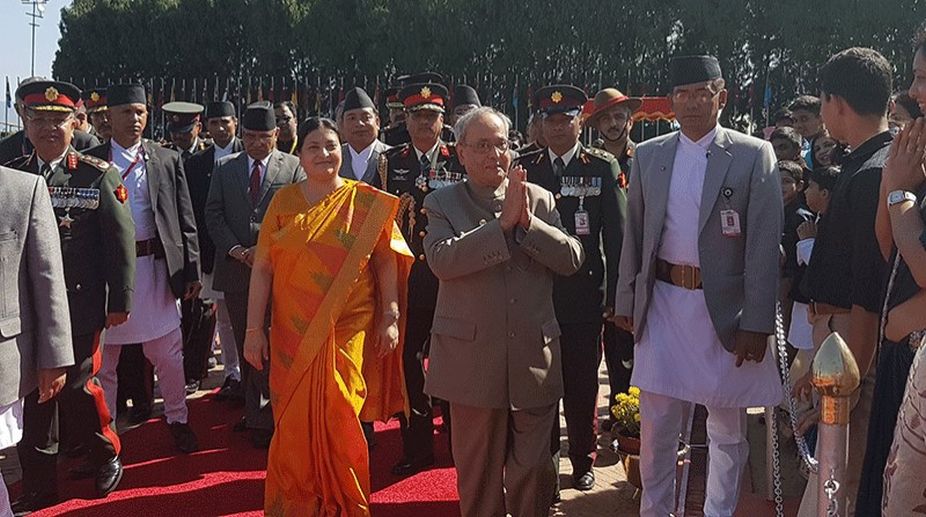
Nepalese president Bidya Devi Bhandari has embarked on her maiden 5-day state visit to India. Her earlier visit was cancelled abruptly last year by the KP Sharma ‘Oli’ led government on account of alleged Indian involvement in his removal.

President Bhandari, who was one of the vice-presidents of the CPN-UML before getting elected to the highest position in 2015, was a close associate of the party chief, Oli.

The president is the titular head without any executive power. The impact of the visit will have to be watched to assess the extent to which it will help recoup ties after the cancellation of her last visit.

Significantly, during the last one year, there has been a change of guard in Kathmandu and PM PK Dahal ‘Prachanda’ has already visited New Delhi.

Indian president Pranub Mukherjee too made a successful visit to Nepal in early November last year. During his visit he had expressed his eagerness to receive his counterpart in Delhi as early as possible.

India believes that the first foreign visit by any Nepalese head of state and government to India is a diplomatic achievement. In reality, such visits have only cosmetic value.

Over the years, India seems to have failed in its diplomacy due to drastic change in psychological and geographic make up of Nepal, as the country no longer remains totally dependent on India for its political and economic support.

China and the international community have come up forcefully behind it. Ironically, India’s good intention to encourage democratic exercises in Nepal was taken by the monarchy and the ruling elite as interference in its internal politics since early 1950s.

The ruling elite, which took over politics by winning the Constituent Assembly elections, took exception to India’s benign suggestion to include all communities in its political fold. This was taken again as Indian interference leading to the worst period of relations and resulted in a blockade of goods at the Indian border.

Historically, Nepal-India relations acquired strategic importance after Tibet became the autonomous region of China making Nepal the buffer state between India and China. This changed the geopolitics of Nepal. It was never under British India.

But the first Btirtish resident was sent to Kathmandu in April 1802. However, formal diplomatic relations were established through the 1815- 6 treaty of Sugauli.

The Nepalese establishments had to deal with the British before 1947 in accordance with the treaties of 1792, 1801, 1815-6, 1860,and 1923. The 1815-6 treaty of Sugauli reduced the boundaries of Nepal but the treaty of 1860 extended it as a prize for helping the British army in capturing Lucknow, the capital of Avadh.

After independence, India signed the Treaty of Peace and Friendship in September 1950. More importantly, Nepal-India relations, which were decided millions of years ago by Nature, by the lofty Himalayas and the perennial rivers, were also established between two peoples settled over the adjoining border areas from times immemorial but were guided by various treaties signed from time to time during the last 250 years when Nepal acquired its present geographic boundaries.

To some, the 1950 treaty had opened up the vistas of cooperation and opportunities for development as barrages on Kosi and Gandak provided irrigation facilities not in Nepal alone but also in India and relieved millions of people of their suffering from floods in Bihar.

However, in reality, most of the provisions of the treaty have been rendered ineffective in the course of time, except the provision of free movement of citizens of each country to the other (Art.7).

It thus necessitates a timely revision. There are unseen forces in Kathmandu which ignore the security concerns of India and pressurise India indirectly to get the border regulated by itself, if not sealed. They believe the open border situation minimises the independence of the country.

Strikingly, this is against the age-old dispensation which has enabled people to go on pilgrimage in either country, allowed Nepalese to earn bread and butter in India, especially the unemployed youth from the western hills of Nepal, and encouraged the Madhesis to continue to have marital relations in Bihar and UP.

Over and above, it will curtail the easy accessibility of common people to procure materials of daily need at cheaper rates at local bazaars. Interestingly, the formation of the India-Nepal Eminent Persons' Group, whose third two-day joint meeting ended in Kathmandu on 6 April poses many questions.

Will it be possible to review the special relations by eight persons, four from each side, in a limited time frame? It is intriguing as to why the group was not made inclusive enough and left out deliberately some major communities.

The unrealistic recommendations by the Group will be difficult to implement on the one hand and these may land Nepal in yet another conflict, on the other. Some sceptics hold that the vastness of the terms of reference of the group could render the exercise futile in the 21st century, when borders are being made irrelevant throughout the world and natural resources are being harnessed for serving the humanity.

In the present context, there will hardy be any problem–centric consultations during the Presidential visit, except an overview of relations. Even current issues like reviewing vital relations as defined by the Treaty of Peace and Friendship, 1950 cannot be taken up, as the Eminent Persons Group formed by both sides is discussing it.

Of course, it cannot be ruled out that the forthcoming local level elections and the Madhesi outfits’ participation in the election do not figure in the discussions.

The writer, a former Election Commissioner of Nepal, is associated with the Nepal Transition to Peace Institute.

Don’t make an Iraq or Libya out of Syria

Harsha Kakar |

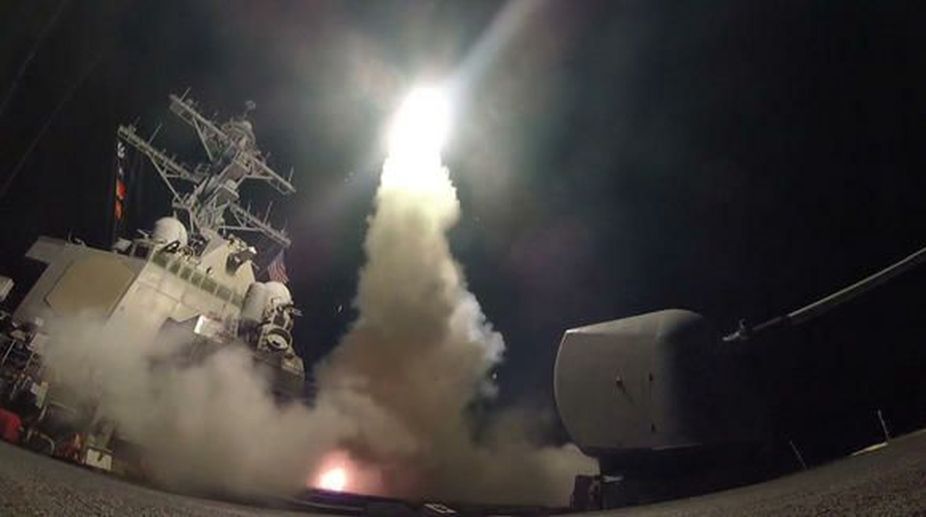
The launch of 59 Tomahawk missiles against the Syrian regime by the US has again brought the region into focus. While the world deplores the use of chemical weapons, there is always a lingering doubt on who is correct; the US which blames Syria for the strike or the Russians who claim it was done by the rebels to malign the regime.

The Russians and the Iranians strongly back Bashar-el Assad and refuse to discuss any future of Syria without him.

The US and its allies are clear and seek a Syria without Assad, hence openly support rebels seeking to oust him. In this confusion, there is no mention of who could replace Assad, and how a vacuum could possibly create another Iraq or Libya, where Islamist groups have re-emerged.

For over seven years, Syria has been the epicentre of civil strife fuelled by a proxy war between opposing superpowers. Weapons under production are tested on its soil, new military bases created, cities destroyed, populations displaced and innocent civilians killed.

All this to enable one man to be overthrown or supported to continue in power. Crudely put, Assad is a male version of ‘Helen of Troy’, launching a million bombs or missiles.

The Syrian scenario has a multitude of groups operating almost independently, with latent support from powerful nations or neighbours. This has enabled the ISIS to flourish, draw in cadre, launch assaults in neighbouring countries and regions far from the battle zone, resulting in the greatest humanitarian crisis and migration since World War II.

The missile strikes by the US and its oft repeated claim that Assad must go, bring back haunting memories of similar claims in earlier days and subsequent fallouts.

The US walked into Iraq, claiming Saddam Hussein had Weapons of Mass Destruction (WMD). Many theories abound on the true reasons for its intervention. The most logical is that post his defeat in Kuwait, Saddam was contemplating shifting to another currency for sale of oil in lieu of the dollar.

This would have harmed the US economy as the dollar being an international currency enables it to continue with its fiscal policy of deficits and still control the world economy. Hence, Saddam had to go and the WMDs were only an excuse.

The US waded in, destroyed his regime and installed a unity government. It disintegrated Iraq’s military and attempted to re-create it. The result was chaos, breakdown of law and order and opened doors for the ISIS to rise from the ashes.

The US withdrew without ensuring stabilisation. It failed to comprehend the geopolitical requirements of the region, implying a strong divide between communities, requiring a strong government and powerful military to control the region.

The US is back, battling the ISIS. Gaddafi in Libya handed over designs of a nuclear weapon obtained clandestinely from Pakistan and North Korea to the US, seeking peace.

When the Arab Spring commenced in Libya, the US supported the uprising. Barack Obama admitted it was his gravest mistake.

In February 2011, at the commencement of the uprising, led by the al Qaeda, the US launched over 130 Tomahawk missiles on the Libyan military and eliminated its ability to restore order. The result was overthrow of Gaddafi and re-emergence of the al Qaeda, which the US has recommenced engaging.

Libya remains unstable, with different factions controlling different parts of the country. While Syria, Iraq and Libya are oil producers, North Korea is not. Hence the country has only been threatened but never acted against.

For a nation like the US, with technology and precision missiles at its beck and call, monitoring the movement and location of any North Korean leader (present or past) was never impossible, nor was eliminating him.

There would always be an element of risk, which sometime back could have been accepted. Presently with a vast collection of missiles and nuclear devices, North Korea is a missed opportunity.

The US intervention in Afghanistan was hurried, seeking revenge and retribution to 9/11. The operations were swift and body bags were accepted back home; after all, they were avenging American lives. The elimination of Osama Bin Laden was the turning point.

The aim was achieved, America’s most wanted man was brought to justice and there was no need for it to remain. Thus Obama began implementing his plans for withdrawal, even without stabilising the country or annihilating the Taliban.

The US was seeking an exit strategy, but there was no answer in sight. Presently, Afghanistan remains a mess, solely because the US played soft with Pakistan which did and continues to support the Taliban. Ignoring the US, other nations in the neighbourhood have jumped in, attempting to resolve the Afghanistan tangle.

It could end with another regime change with the Taliban either joining the government or controlling part of the country. The missile strike on Syria has resulted in the US and Russia drifting further apart and cooperation, if any, on the future of Syria is all but over.

For any nation, irrespective of how powerful it is, attempting a regime change in another nation unless there is a locally acceptable alternative, especially where sect, tribal and ethnic differences exist, would fail. It would open doors for radical Islamic groups to emerge destabilising a larger region. Recent history has proved this, but lessons have been ignored.

Maintaining forces to ensure stabilisation, post a regime change, is an expensive effort for any power. Hence it compels them to pull out before completion of the mission, solely on economic grounds. Before world powers take any decision on Assad’s future, the region should be stabilised and an alternative acceptable to all parties must exist. Accountability to prevent a recurrence of Iraq, Libya or Afghanistan should be laid down.

The world community must unite against superpower games, seeking enhanced control over regions and resources, killing innocent humans and impacting nations, including those far removed from the conflict, solely for personal interest and power.

The writer is a retired Major-General of the Indian Army.

What’s the beef?

Prasenjit Chowdhury |

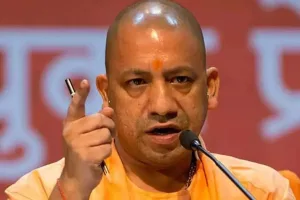
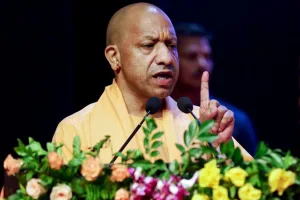
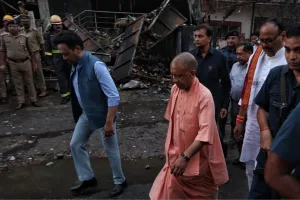
I am not sure if the UP Chief Minister, Yogi Adityanath, who has effected a crackdown on illegal abattoirs, has read The Sexual Politics of Meat by Carol J Adams.

First published in 1990, the book is known for its extreme positions and incendiary language against meat-eating, such as “the rape of animals” and “the butchering of women.” Carol J Adams wrote: “Behind every meal of meat is an absence: the death of the animal whose place the meat takes.”

Environmentalism has now been added to the compelling aesthetic logic against meat-eating. Had the animal-loving CM argued instead that producing a single calorie of beef requires eight or more calories of grainfeed and that expanded meat consumption has a multiplier effect on the demand for grains, he would have appeared to be fashionable and not so culturally orthodox.

Yogi Adityanath might as well enjoy reading JM Coetzee’s novel, Elizabeth Costello, marked by strong criticism against the eating of carcasses. Given the caveat that meat causes a drain on grain and that red meat can increase one’s cholesterol level, this book can prove to be the mantra for the forced path to vegetarianism.

Yogi Adityanath’s moral crusade can find resonance from unseemly quarters and can be supported on completely different grounds. Supermarkets with meat counters full of scores of different cuts (or entire eviscerated carcasses) of at least half a dozen mammalian and avian species (cattle, pig, sheep, chicken, turkey, duck) on display, point to a degree of carnivory that might appear completely distasteful not only to those who are averse to meat-eating but also to those who might find it an affront to their sense of aesthetics.

In the West, delicatessen sections display an enormous variety of processed meat products. This is visually stimulating. The domination of fast-food outlets and ubiquitous burger chains in India might partly justify the findings of the wellknown 2006 CSDS survey on food that a whopping 69 per cent Indians are non-vegetarian. An estimated 55 per cent of Brahmins are non-vegetarians.

Homer wrote in the Odyssey that when the Greeks and Trojans weren’t fighting they often enjoyed a few plump, well-turned sausages grilled over the campfire.

Constantine banned sausages shortly after he inherited the Roman Empire. Uttar Pradesh has emerged as the country’s market leader in terms of production and export of meat. Historian DD Kosambi in his Ancient India (1965) averred that “Vedic Brahmins had fattened upon a steady diet of sacrificed beef”.

But the Far Right in India would have none of either Kosambi or DN Jha, the latter arguing in his well-researched work, Holy Cow: Beef in Indian Dietary Traditions, that the ‘holiness’ of the cow is a myth and its flesh was very much part of the early Indian non-vegetarian food regimen and dietary traditions.

And more importantly, long before the advent of Islam in India, beef had been associated with Indian dietary practices. His survey of ancient Indian scriptures, especially the Vedas, shows that amongst the nomadic, pastoral Aryans who settled here, animal sacrifice was a dominant feature till the emergence of settled agriculture.

“No serious historian, not even ‘Hindu’ ones like RC Majumdar or KM Munshi, has ever disputed that ancient Hindus ate beef,” Jha once said furnishing evidence that cow slaughter and consumption by Hindus of all classes, including Brahmins, continued as late as the 19th century. Therefore, Yogi Adityanath’s crusade against meat-eating, or to be more precise beef-eating, reeks of vegetarian Brahminical Hinduism.

It bears recall that Prime Minister Morarji Desai’s Janata government had passed legislation banning alcohol and the eating of beef.

The consumption of beef is one of the most affordable sources of nutrition. This must be realised by the ardent proponents of Hindutva. Apart from Maharashtra, where both meat and fish are widely consumed, Bengalis and Kashmiri Brahmins or coastal Brahmins like the fish-eating Saraswats would almost certainly oppose strictures on their dietary practices.

Only some two years back, the Jammu bench of the state High Court directed the administration to enforce a decades-old beef ban that has been on the statute book since the days before Independence. The Ranbir Penal Code was revived, and this gave the political Opposition and the separatists enough ammunition in the Muslim-majority state.

But the food politics is bound to circumscribe the whole of India if one considers that about eight states, mostly in the Northeast and Bengal and Kerala, allow unrestricted cow slaughter while the rest have some form of restriction.

The story goes that Jinnah was once offered a box of ham sandwiches for lunch. He exclaimed that if the voters came to know that he was going to eat ham for lunch, he did not have a “ghost of a chance” of being elected The founder of Pakistan did have his lunch anyway at Cornaglia’s, a famed Bombay restaurant of the day, and did not hesitate to savour a plate of pork sausages.

But Jinnah was no Mohammad Akhlaq. Nor for that matter was the country then under the overarching control of the Rashtriya Swayamsevak Sangh. In contrast, much of Mahatma Gandhi’s first month in London was spent in long walks, searching for a vegetarian restaurant as he had to abide by the three vows his mother had advocated ~ to abstain from meat, wine, and women while abroad.

On one occasion, he prepared non-vegetarian food for a Muslim friend on the occasion of Eid, though he himself was a strict vegetarian. Meat politics acquired a new dimension recently when the BJP-ruled Gujarat passed a stringent law making cow slaughter punishable with life imprisonment.

Vikram Saini, a legislator from Uttar Pradesh and coaccused in the 2013 Muzaffarnagar riots, vowed to break the hands and legs of the apostate who “doesn’t consider the cow to be a mother, or kills cows”. Chhattisgarh Chief Minister Raman Singh has threatened to “hang cow killers”.

Indeed, the meat politics revolves around a non-existent monolithic Hinduism in the aftermath of the lynching of a Muslim in a village near Delhi for allegedly consuming beef, the revival of legislation banning the sale and consumption of beef in J-K, and now widespread cow vigilantism in UP and elsewhere.

All this is a recipe for disaster not only for the Muslims but for a vast majority of non-vegetarian Hindus. The trends are ominous as Narendra Modi completes three years as the Prime Minister of India.

The writer is a Kolkatabased commentator on politics, development and cultural issues.