Logo

IPL 2017: Despite lack of runs, Ajinkya Rahane happy as long as RPS win matches

Rahane's bat went silent but the right-hander said he satisfied with his personal form.

PTI | Mumbai |

He might not be scoring big runs in the ongoing IPL, but Rising Pune Supergiant opener Ajinkya Rahane is a contented man as long as his contributions are bringing out positive results for his side.

Rahane so far has hit just one fifty (60 off 48 balls) in the ongoing IPL and that too came in the lung opener against Sunrisers Hyderabad on April 5.

Thereafter, Rahane's bat went silent but the right-hander said he satisfied with his personal form.

“I am happy the way I am batting at the moment. It is important to spend time in the middle. Right now the way I am middling and timing the ball, I am really happy. As long as we are winning matches I am happy because that is important,” Rahane said at the post-match press conference on Monday night.

“Switching from Test to T20 format is about mental adjustment and I did that completely well,” he said.

Rising Pune Supergiant on Monday halted Mumbai Indians' winning streak by clinching a three-run win in a thriller of a contest at the Wankhede stadium here.

Mumbai needed 17 runs in the last over for a win but Rsing Pune Supergiant left-arm pacer Jaydev Unadkat did just to clinch the encounter in his side's favour.

Asked Rahane about the rationale behind the final over to Unadkat over Shardul Thakur, he said, “After the 19th over, when (Steve) Smith, I and Mahi bhai (Mahendra Singh Dhoni) were discussing who should bowl between Shardul and Jaydev (Unadkat), we picked up Jaydev. Shardul has good pace and we didn't want to give batsman the pace in the last over.

“Jaydev's pace is comparatively lesser than Shardul and his slower ball is effective. The wicket was also little slow and Rohit (Sharma) was a set batsman, so our point was not to give them pace.

“One side of the ground is small and one or two shots in the last over (could have made the difference). That was the planning in the last over.

The final over also witnessed a heated conversation between Mumbai Indians skipper Rohit Sharma and on-field umpire S Ravi.

Having seen Rohit shuffle across the stumps, Unadkat pushed the third delivery of the over wide and Rohit, realising that the ball was veering away from the guideline for wide deliveries, left it alone.

But umpire Ravi didn't call it a wide that infuriated Rohit and he started arguing with Ravi forcing the the square-leg umpire A Nand Kishore to intervene.

Asked about the issue, Rahane said, “That was a right call by the umpire. As a batsman when you move and if the bowler bowls outside that area goes to the bowler. Rohit's behaviour at that point was natural. Somewhere as a captain, as a player you feel when the match is so close. I don't think there was any fault in Rohit's behaviour.”

“That happens on the field and remains on the field, it is part and parcel of the game. It will also happen in future, but you should respect the umpire's decision.”

Terming Monday's win and the one against Royal Challengers Bangalore as big, Rahane said that each bowler has different stock balls.

“It is not easy to bowl yorkers, everyone has different bowling style. Ben Strokes' stock ball is the yorker, which you saw in the 19th over. That over was important for us. Jaydev's (Unadkat) strength is slower ball. Every bowler has different plan,” he signed off.

Le Pen steps down as party leader

IANS | Paris |

French presidential front-runner representing the far-right National Front (FN) Marine Le Pen said that she would step down as the party's leader to focus on gathering large number of voters ahead of the decisive round in May.

"I have always considered that the President of the Republic is the President of all the French and must gather all the French, but it is necessary to translate words into act," she told France 2 public television on Monday.

"I decided to leave the presidency of the National Front, and I am no longer the President of the National Front. I will be above partisan considerations," Xinhua news agency quoted her as saying.

"We are the ones who will defend the most and the best the democracy. None of my actions will be carried out without the people or against the people. I am the only one who can guarantee the French's protection," she added.

Le Pen brought the anti-establishment FN party into the country's political mainstream on Sunday's first round to elect new president for the next five years.

She came second with 21.30 per cent, or 7.67 million votes, a record number mirroring a growing public support for anti-immigrant party hostile to Europe.

The 48-year-old female presidential contender succeeded her father Jean-Marie Le Pen in 2011 to head the NF party. Since then, she has been working to softening the party's image by targeting widespread support of young public and workers.
 

Chinese cos buy Chevron Bangladesh

ANN |

US oil giant Chevron Corporation on Monday announced that its subsidiary, Chevron Global Ventures Ltd, entered into an agreement to sell the shares of its wholly-owned indirect subsidiaries operating in Bangladesh to Chinese consortium Himalaya Energy Co Ltd.

Himalaya Energy is owned by China ZhenHua Oil Co and CNIC Corporation Ltd. The financial deal has not been disclosed.

Chevron Bangladesh operates Block 12 (Bibiyana Field) and blocks 13 and 14 (Jalalabad and Moulvibazar fields). Closing of the transaction is subject to satisfaction of certain closing conditions.

Chevron is currently responsible for more than half of the country's daily gas production. The company provides more than 1,400 million cubic feet per day (mmcfd) of gas from these three fields against the country's daily production of around 2,600 mmcfd. Of the three fields, the Bibiyana alone provides more than 1,100 mmcfd of gas.

Besides, Chevron daily produces around 9000 tonnes of condensate — a liquid fuel by-product found in some gas fields. The country's other gas fields produce around 1,500 tonnes of condensate.

Chevron's earlier operations — including discovery of the massive Bibiyana field in the late nineties — were spearheaded by Unocal which was globally acquired by Chevron in 2005. The company invested around $3 billion. It currently has 538 employees.

The US firm operates under two production sharing contracts (PSC) under which it gets maximum $3 dollars for per 1000 cubic feet of gas. Under the PSCs, Bangladesh gets proportionally a bigger chunk of gas as free share, making the deals very profitable for the country.

Chevron announced selling out of its assets in different countries, including in Bangladesh, last year due to oil price slump that led to losses. As the company decided to sell its Bangladesh assets, the government made an offer. However, Chevron didn't accept it and started negotiations with Chinese company ZhenHua Oil.

Chevron Corporation is one of the world's leading integrated energy companies. Through its subsidiaries across the world, the company is involved virtually in every facet of the energy industry.

While surveying the Bibiyana field area, Chevron (previously Unocal) introduced three-dimensional seismic survey in Bangladesh for the first time in the late nineties.

(The Daily Star)

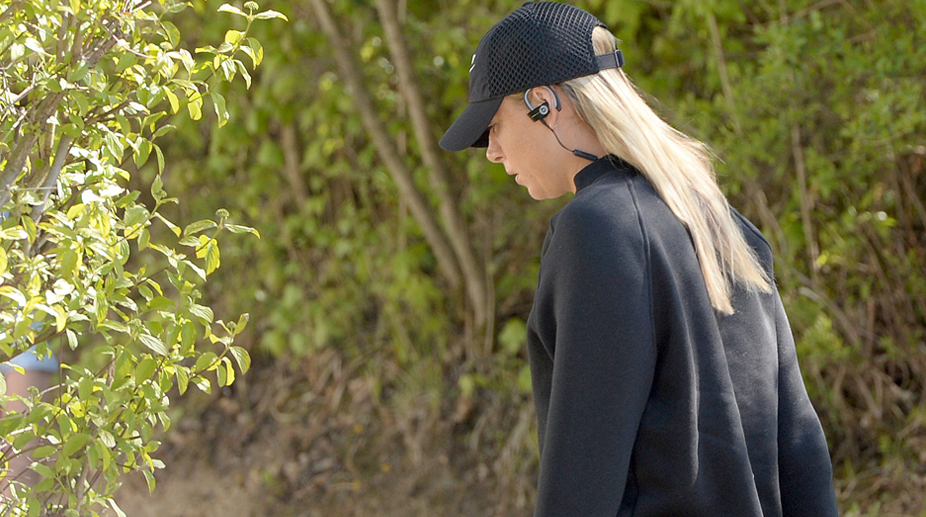
Maria Sharapova’s rags-to-riches journey resumes in Stuttgart

On Wednesday in Stuttgart, the 30-year-old will return to tennis after a 15-month doping suspension.

AFP | Stuttgart |

From the shadow of Chernobyl's nuclear wasteland to international super-stardom and from penniless arrival in the United States, without a word of English, to a fortune of $200 million.

It may sound like the stuff of Hollywood dreams, but the story of Maria Sharapova is a testament to the power of one individual to make it, whatever the odds, whatever the controversy, whatever people think.

On Wednesday in Stuttgart, the 30-year-old will return from a 15-month doping suspension to open the next chapter.

When she takes to the court to face Roberta Vinci, it will be to the consternation of many opponents and the relief, albeit privately, of a women's tour left flagging by the absence of Serena Williams, probably Sharapova's only serious rival in the arena-filling business.

Sharapova shot to international fame as a giggly 17-year-old Wimbledon winner in 2004 — the third youngest player to conquer the All England Club's famous grass courts.

She would go on to win the Australian and US Opens while claiming two titles at the French Open, despite famously likening her movement on Roland Garros's crushed red brick to a "cow on ice".

Siberia-born Sharapova first picked up a racquet at the age of four in Sochi, where her Belarus-born parents had settled after escaping the deadly clutches of the 1986 Chernobyl disaster.

Spotted by Martina Navratilova, she was encouraged to move to Nick Bollettieri's Florida academy, the proving ground of Andre Agassi and Monica Seles.

Father Yuri and the seven-year-old Maria left for the US in 1994 with just $700 to their names.

Yuri took odd jobs like dishwashing to finance his daughter's dreams although visa restrictions meant mother Yelena was back in Russia, separated from her daughter for two years.

When Sharapova was nine, the mighty IMG group spotted her talent and funded the $35,000 fees required for the Bollettieri school.

She made her professional debut at 14 in 2001 and by 2003 reached the world top 50. She won her first tour titles in Japan and Quebec.

Then in 2004, her Wimbledon final triumph over Williams made her an overnight international celebrity.

One year later, she became the first Russian woman to be ranked number one in the world while, in 2006, she won her second major at the US Open.

But in 2007 and 2008, she began her long, on-off battle with shoulder trouble.

She still had time to win the 2008 Australian Open before a second shoulder injury kept her off tour for the second half of the season, including missing the US Open and Beijing Olympics.

A 10-month absence from the sport, as she recuperated from surgery, saw her ranking slip to 126, but she was back in 2012, capturing the French Open to become the 10th woman to complete a career Grand Slam and adding Olympic silver to her resume that year.

Her 2014 French Open title was another high after a dispiriting injury low.

More injury troubles followed before the bombshell announcement of her positive test for meldonium at the 2016 Australian Open — where she fell in the quarter-finals to Williams, her last match before her suspension.

With Williams, she has endured her most testing rivalry — on and off the court.

The two famously exchanged personal insults over their love lives when Sharapova began a two-year romance with Bulgarian player Grigor Dimitrov, a rumoured previous suitor of the American.

Sharapova had previously been engaged to former Los Angeles Laker star Sasha Vujacic.

She may have been unlucky in love, but Sharapova hit the jackpot in her commercial affairs.

She made almost $30 million in 2015, according to Forbes, with $23 million of that coming from endorsements and once signed a contract extension with Nike worth a reported $70 million.

"Beauty sells. I have to realise that's a part of why people want me. I'm not going to make myself ugly," she said.

She owns luxury homes — one in Florida, one in California — and is making a lucrative career as an entrepreneur.

In 2012, she launched her own line of candy, 'Sugarpova', and during her suspension, signed up for a Harvard Business School course.

But she insists that retirement was never an option despite her absence meaning her world ranking has disappeared, leaving her at the mercy of wildcards into tournaments.

Those free-passes have irked many of her contemporaries already suspicious of the Russian's aloofness.

"I know I am respected," says an unconcerned Sharapova.

Australian PM visits troops in Iraq, Afghanistan

IANS | Canberra |

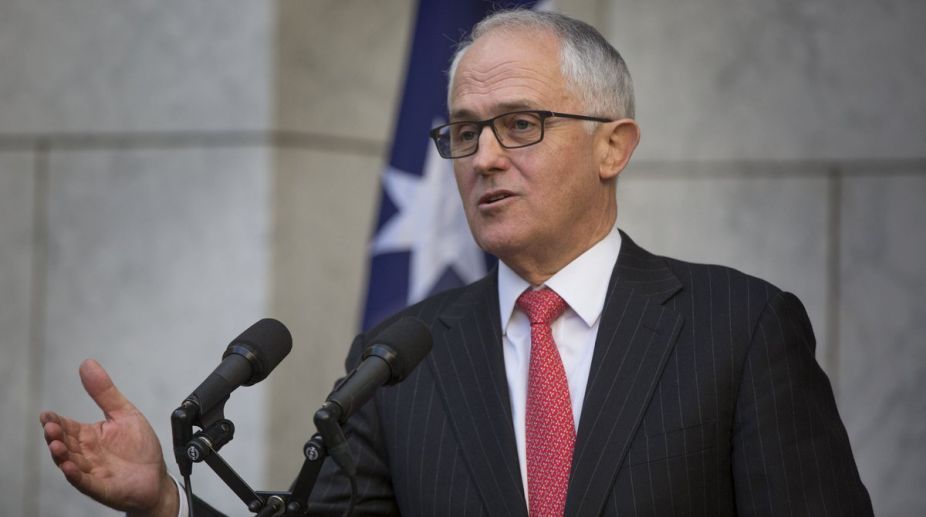
Australian Prime Minister Malcolm Turnbull travelled to Iraq and Afghanistan to visit his troops in the region and to asses his country's military contribution, an official release on Tuesday said.

"The Prime Minister has marked Anzac (the Australian and New Zealand Army Corps) Day with a visit to the troops in Afghanistan and Iraq," the Prime Minister's office wrote on its Twitter account along with photographs of this trip, Efe news reported.

During his two-day visit, Turnbull met with Iraqi Prime Minister Haider al-Abadi in Baghdad as well as Afghan President Ashraf Ghani and US Secretary of Defence James Mattis in Kabul.

Turnbull told Mattis that Australia will continue to work alongside the US, NATO and Afghanistan in encouraging security institutions in that country, said The Australian newspaper.

Turnbull's visit comes shortly after the death of 138 soldiers as a result of a Taliban attack on April 21 at a military base in northern Afghanistan, one of the worst terrorism strikes on the country's army.

Australia has deployed 270 members of its armed forces in Afghanistan for assistance and training tasks, and some 780 in Iraq and Syria to help collaborate in airstrikes.

Since 2002, 42 Australian soldiers have died in Afghanistan and two in Iraq.

"This trip was not just an occasion to celebrate Anzac Day with Australians (and New Zealanders) who are serving on the front lines, it was an invaluable opportunity to assess the progress of the wars in Iraq, Syria and Afghanistan," Turnbull said in a statement.

Australia and New Zealand on Tuesday commemorate Anzac Day in remembrance of when the Allied troops landed in Gallipoli, Turkey, on April 25, 1915 during the First World War, where over 26,000 of their soldiers died in combat and many more were wounded.

Although the Gallipoli campaign was a failure, Australia and New Zealand consider it as an important moment in which both countries forged their true national spirit, uniting the entire population in the war effort.
 

Is Cambodia ready for South East Asia’s tallest building?

ANN | Phnom Penh |

It would be hard for visitors to miss the affluence that is revealing itself in Phnom Penh now. There are numerous shopping malls, large and small, massive government buildings and a host of international banks. Despite all that, the plan for huge investment in building Southeast Asia’s tallest office building there cannot but raise enormous curiosity.

The Phnom Penh one knew of after the Vietnam War was a dusty, boisterous city filled with traditional markets and sizzling roadside barbecues. But there was an air of ambition in the new generation as well as in expat residents.

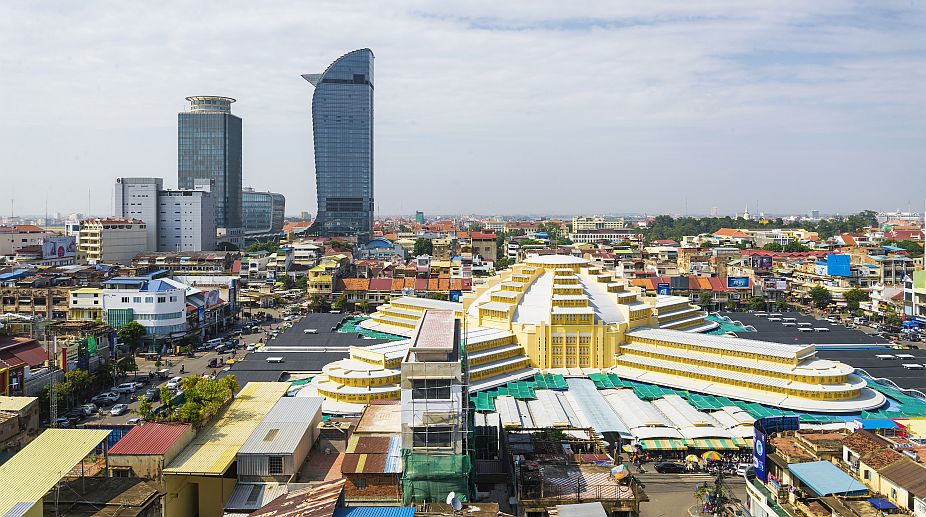
The Khmer capital city has changed dramatically over the past few decades. Viewed from Psar Thmey (central market), two high-rises – Canadia Tower and Vattanac Capital Tower – stand out as the new landmarks. Shaped like the back of a dragon, the Vattanac Capital Tower is now the tallest building in Cambodia. The 188-metre, 39-storey tower has dominated Phnom Penh’s skyline since it was completed in 2014.

Khmer tycoon Chhun Leang of the Vattanac Group invested US$170 million (Bt5.8 billion) to build the country’s first skyscraper bringing luxury lifestyle to Cambodia. Its official website advertises the building as consisting of two impressive towers and a glass and steel podium: Vattanac Capital Tower 1 is a 38-floor skyscraper with grade A offices, luxury retail and a world-class five-star hotel; Vattanac Capital Tower 2 is a lifestyle cube which has a cinema, fitness, forecourt and medical floors among a host of other attractions.

Many international brands such as Hugo Boss, Brioni, L’Occitane and Longchamp opened their outlets in the tower to serve ultra-rich Cambodian elite and foreigners.

While analysts and observers said Vattanac Capital Tower’s business was not so successful due to low occupancy and limited shopping activities there, the Vattanac management team said the business was doing well. “With the opening of our hotel, Rosewood Phnom Penh, later this year, we expect our business will continue to prosper. We believe that there are still plenty of investment opportunities in Cambodia and we invite all prospective investors to join us on this exciting and rewarding journey in Cambodia,” said a senior official of the group who declined to be named. Construction of high-rise buildings – 10 to 40 storeys high – is booming these days.

There would be more tall buildings in future. Sino Great Wall Inter-national and Wuchang Shipbuilding Industry Group Co Ltd have signed a joint-venture with Cambodian-owned Thai Boon Roong Group, investing more than $2 billion to build another twin-tower building that would rise 560 metres above the ground, 108 metres taller than Petronas Towers in Kuala Lumpur.

To have the highest building in Southeast Asia is a dream of the people of the country, rather than a viable business proposition, said president of Cambodian Values and Estate Agents Association Kim Keang.

“No tall building in this region can make profit; it would be only a symbol of the country, not something investors would be interested in. If you have $10 billion and are going to die very soon and have nothing else to do, you can build it and put your name there,” he said.

“But for business people it doesn’t make sense. Taipei 101 does not make profit, Petronas Twin tower cannot make profit, so why would they build in Cambodia? Who will invest $2 billion for such dream?”

Nevertheless it remains a dream for many Cambodians though it may be inaccessible to them.

Cheng Sotha a 37-year-old housewife, said: “It is good for the image of Cambodia if we can see more and more high buildings in our city. There are some, but too few if we compare with Bangkok, Singapore or Kuala Lumpur where my family and I go on tours. We feel happy and proud to see these high buildings in our city just like those we see abroad.”

Indeed, it was a dream for Phnom Penh residents to see a beautiful and modern city since the Khmer capital city was damaged and dilapidated by the Khmer Rouge during 1975-1979. Born a year after Khmer Rouge was ousted, Cheng Sotha said she was not aware of what the Maoist regime did with the city. Older generations have bitter memories of a ghost town.

During the years when she was growing up, the economy was still bad and living standards quite poor. “But it is different now. We have peace, we can travel wherever we want, so why can’t we have high buildings in the city. It is a symbol of modernisation of our country,” she said.

Cambodia languished in conflict and civil war for a long time. The country has just started to enjoy the benefits of peace, restoration and development after the 1990s when it opened itself to foreign investments. Rebuilding the city began 27 years ago when Taiwanese investors paraded to purchase land and property for real estate development.

Phnom Penh city development has seen ups and downs over the past decade. Land and property speculation inflated prices between 2005 and 2008 when investors from South Korea entered the sector. Real estate in Cambodia, however, was hit by the global financial crisis in 2008. The price of land went down from millions to only thousands of US dollars. It was not a good time for city building, many people lost their jobs, many lost their businesses and many went bankrupt, said a land developer who has been in the business for 10 years.

There were a few constructions in Phnom Penh during 2008-2011. “That was a very quiet time. There were not many projects in Phnom Penh then. You did not see luxury cars like Land Rover, Rolls-Royce or BMW here during that time,” said Kim Keang.

Construction in Phnom Penh sprung back to life again in 2012 when the government talked about economic integration into the Asean community since 10 countries opened to liberalisation, with less restriction and no business boundaries. Investors from Japan, China, Taiwan, Singapore, Malaysia, Thailand and even overseas Cambodians flocked to the country.

The difference this time is that they have come with big projects. Between 2012-2014 most real estate transactions involved land. Investors from China, Taiwan, Hong Kong, and Macau came to buy land and they began construction in 2015, said Kim Keang.

By law, foreigners cannot buy land but there are many ways to buy land in Cambodia. Most foreigners set up a joint-venture company with a 49:51 partnership. Some people buy citizenship; Thais for instance can seek citizenship easily for $50,000-$60,000.

But that is not the single factor luring investors to build in Phnom Penh. Cambodia is no longer a war zone. The kingdom borders Thailand, Vietnam and Laos as well as the Gulf of Thailand, and has enjoyed a high growth rate over the past decade with GDP rising on average by 7-8 per cent annually.

Cambodia has a demography very supportive of new development. The numbers of the middle class are increasing from very poor, poor to lower middle class and middle class. While neighbouring Thailand is entering ageing society rapidly, Cambodia is relatively young. Of the 16 million population, 70 per cent are under 38, numbering more than 10 million.

Politics is perhaps more stable than in many other countries in the region. Political fighting is still going on like in many other countries but the atmosphere is relatively calm, according to a diplomat. Fighting was reported only by the media but behind the scenes, strongman Hun Sen can now can make a deal with many factions and rivals. “Cambodian politics is very stable because only one guy has power, while the rest do not,” a diplomat said, and noted political stability is a desirable environment for investment.

Living in Phnom Penh is wonderful, said one expat. As it is a multi-currency city. visitors don’t need to change money on arrival. It is more open than others in Asean, more than Thailand, Singapore or Malaysia in term of currency. Some people say Cambodia is the second Las Vegas as they can pay for everything – taxi, meal and even company salary in US dollars.

Cambodian lifestyles have changed a lot to keep pace with the new developments in the city. Ten years ago, there were only about a dozen high-rise buildings in Phnom Penh. As of the end of last year, there were 901 new projects including a number of high-rise buildings requesting permission for construction, with investment of $3.1 billion. A report filed by Ministry of Land Management, Urban Planning and Construction showed that the number of high-rise buildings 10- to 40-storeys high numbered 313, together with 134 residential areas.

However high-rise buildings might fit only some parts of the city lifestyle. Housewife Cheng Sotha said she lives with her family in a house and Cambodian people mostly prefer houses to city high-rises. She visits high-rise buildings occasionally for dining or parties but her husband, a financial auditor, works in a Phnom Penh tower.

“I understand that only some people can afford the price to live there, but in the future – five to 10 years from now – there will be more people who can afford it,” she said.

Kim Kaeng agreed that having space in a high-rise building is a kind of status symbol of the rich.

“In Cambodia, it is normal for the rich to have three to five houses, plots of land, many cars, but if you have three condo units, people will regard you as really rich,” he said, noting that developers raised the price for that reason. Condominiums are expensive, perhaps even more so than in some parts of Bangkok.

The number of rich Cambodians is increasing. In Phnom Penh, 5-10 per cent of the 3-million population are rich, 10-20 per cent are middle class and more than 70 per cent are low-income groups, he said, adding the lower-income groups are slowly upgrading to lower middle-class.

In Cambodia, lower income means people who earn $200-$300 per month; the average salary is $250 while the lower middle class earn about $500-$700 a month.

Though construction cost is only $700, they sell at $2,500-$3,000 per square metre, making two to three times profit, he said. “It’s too expensive for local people to afford, so more than 80 per cent of condo buyers are foreigners.”

Many condo projects are now under construction and there is likely to be oversupply when they finish by the end of this year, he said.

“What we have now might be enough for local demand and for foreigners who live and work in Cambodia, but the current supply is more than adequate. If Cambodia can bring more foreign investors, that would be good for that sector,” he said.

Since 2015, land developers have invested in high-rise condos and shopping malls, focusing on middle- to high-end customers but now the market is changing because the rich have enough properties, houses, condos and lands, and they don’t need to buy more.

Investors looking for opportunities should focus on residences and shopping malls, Kim Kaeng said, adding the Japanese brand Aeon Mall is quite successful, boasting a Japanese name and Bangkok quality.

But the time has not arrived yet for high-end and luxury outfits as the rich would not buy at home.

(The Daily Star)

Rupee up 10 paise in early trade

PTI | Mumbai |

The rupee strengthened by 10 paise to 64.34 against the US Dollar in early trade on Tuesday on increased selling of the American currency by banks and exporters.

Forex dealers said that apart from sustained selling of the greenback by banks and exporters, a higher opening of the domestic equity market backed up the Rupee at the Interbank Foreign Exchange.

However, the US Dollar's strength against other currencies overseas capped the Rupee's gain, they added.

On April 24, the Rupee had closed at a nearly two-week high by rising 17 paise at 64.44 against the US currency on heavy selling of the Dollar by exporters.

Meanwhile, the benchmark BSE Sensex surged 167.59 points, or 0.57 per cent, to 29,823.43 in early trade.

I get insecure in front of the camera: Zoe Saldana

IANS | Los Angeles |

Actress Zoe Saldana says she gets insecure and conscious as soon as camera starts rolling.

When asked her about other genres she wants to explore, Saldana said that she wants to try her hand at comedy. 

"It is so funny because whenever the camera are not on, I am much more comfortable with being myself. I get so insecure and self-aware when the cameras are on," Saldana told IANS during a Disney press meet for Guardians of the Galaxy Vol. 2 here.

She added: "I think too much. But I would like to to see whether or not I will be able to be funny in a movie or play." 

The Disney film will release in India on May 5.

RBI governor Urjit Patel suggests merging public sector banks

IANS | New York |

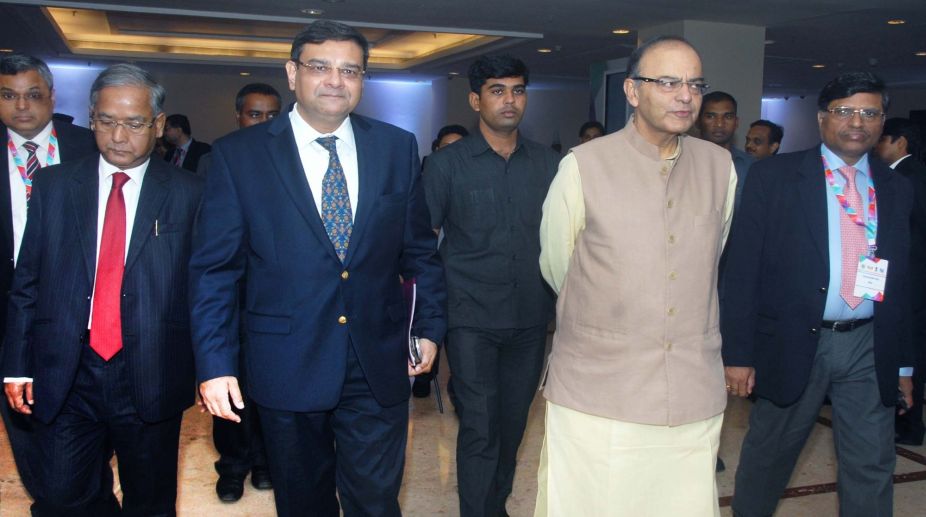
Reserve Bank Governor Urjit Patel says that merging public sector banks and having fewer of them would be better for the sector and also help deal with problem of non-performing assets (NPA).

Do we need so many public sector banks, he asked while delivering the Kotak Family Distinguished Lecture at Columbia University here on Monday. It is better to consolidate them into fewer banks, he said.

Some of these banks can be merged in return for government assistance in taking care of the NPA problem and this would also make them more efficient, he said.

There was already a trend in that direction, according to him.

"The weaker banks are losing market share (and) that is a good thing," Patel said. "The stronger banks are gaining market share, which is a good thing, particularly the private sector banks. In a way it is working; those who need to shrink are shrinking."

"Lenders who are stronger are gaining more market share," he added. "I think there is a nice shift happening and we need to work with that to resolve this."

The merger of banks would lead to savings through consolidation of bank branches and operations, he said.

Some of the employees could be offered buyouts, he said adding that younger, digital-savvy personnel can be hired to further expand digital banking operations.

Patel also said that divestment in public sector banks would have a positive role for the sector.

"Divestment measures would improve overall banking sector health," he said. 

Improved market valuations would create an opportune time for the government to divest some of the ownership in the restructured banks and this would reduce the overall amount that the government needs to inject into them to deal with the NPA problem, he added.

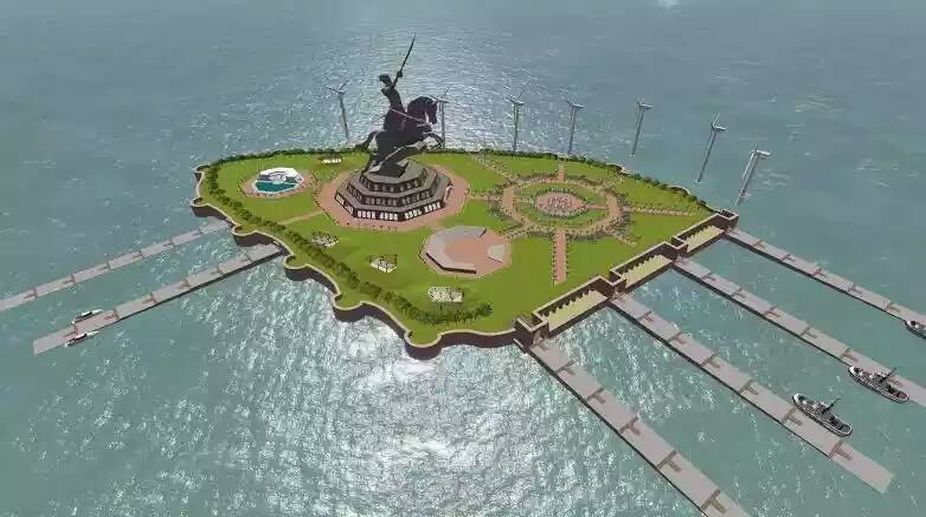
Bid for Shivaji statue points to huge cost escalation

IANS | Mumbai |

The Maharashtra PWD is learnt to have approved L&Ts bid to construct phase one of the ambitious Chhatrapati Shivaji memorial — at a cost that is much higher than the estimate for the entire project.

The L&T's bid, which will still need a final cabinet nod, is for Rs 3,826 crore for Phase 1 of the project, over 50 per cent higher than the state government's estimate of Rs 2,500 crore for the initial phase.

Public Works Department Minister Chandrakant Patil is in Mumbai on Tuesday for a cabinet meeting. However, he was not available for comments despite several attempts.

With the bids much higher than the estimates, sources indicated that the government may even decide to retender the project.

Sources also suggested that if the L&T bid is finally approved, it may not be in conformity with the Central Vigilance Commission's (CVC's) as well as the state's own bid evaluation guidelines.

Financial bids of only two firms were considered — the other being the Afcons-Shapoorji joint venture which bid a whopping Rs 4,779 crore for Phase 1.

The guidelines say that there have to be at least three technically-qualified bids to open the financial bids for a project of this magnitude.

The PWD had invited bids for the construction of the memorial in the Arabian Sea – billed to be the world's tallest statue once built, at 192 metres – on an EPC basis (engineering, procurement, construction) and as many as 13 firms evinced interest.

The PWD engaged Egis as the consultant for the pre-bid stage. Egis is also a consultant for the 182-metre tall Statue of Unity of Sardar Patel that is to come up on a river island near Vadodara in Gujarat.

Incidentally, when first mooted by the erstwhile Congress-Nationalist Congress Party government in 2009, the controversial project's cost was pegged at around Rs 260 crore.

The PWD has since estimated the project cost at Rs 3,600 crore, with the estimate for Phase 1 being Rs 2,500 crore and Rs 1,100 crore for Phase 2.

The L&T bid for just phase one is thus well over the overall project cost.

Sources in the PWD told IANS that only the cabinet could approve a project of this size.

West Indies vs Pakistan: Visitors eyeing win on final day

Misbah ul Haq became just the sixth batsman in Test history to be left stranded on 99 not out.

AFP | Kingston |

Yasir Shah ripped through the top order of the West Indies second innings in the final session of another long day to put Pakistan on course for victory at the end of the fourth day of the first cricket Test at Sabina Park, here.

After captain Misbah ul Haq became just the sixth batsman in Test history to be left stranded on 99 not out as Pakistan were dismissed for 407 in their first innings, the hosts, trailing by 121 runs, were reduced to 93 for four at stumps on Tuesday with Shah taking all four wickets.

They go into the final day needing another 28 runs to erase the first innings deficit with the pair of nightwatchman, Devendra Bishoo and debutant Vishaul Singh, expected to be under immense pressure, especially from the rampant leg-spinner, when play gets underway on a wearing pitch on the final morning.

Shah struck with his very first delivery, bowling Kraigg Brathwaite with a ball that skidded through on the opening batsman.

He quickly added the scalps of newcomer Shimron Hetmayer and Shai Hope before finishing off with the important wicket of Kieran Powell, the opener taken at slip by Younis Khan for a well-played 49.

That late drama was in contrast to the pedestrian progress through the first two sessions of the day as Misbah worked his team into a dominant position despite being left one run short of an 11th Test century.

Last man and debutant Mohammad Abbas was trapped leg- before by Roston Chase on the stroke of the tea interval.

In his usual phlegmatic manner, Misbah ensured Pakistan constructed their position of dominance via a succession of partnerships after they resumed on the fourth morning at 201 for four and facing the threat of the second new ball.

Yet it was a far from a flawless effort as the West Indies extended their season of woe in the field, allowing the opposing skipper to escape when he should have first been taken at short-leg by Singh off Shannon Gabriel and then later on in the morning session by Alzarri Joseph running back at mid-off to the bowling of leg-spinner Bishoo.

It was Bishoo who eventually broke an 88-run sixth-wicket stand between Misbah and Sarfraz Ahmed, the wicketkeeper batsman playing in his usual pugnacious manner in getting to 54 before he was bowled around his legs attempting a sweep shot just after lunch.

During the course of his innings, Ahmed went past 2,000 runs in his Test career.

Misbah achieved a milestone of his own when he notched his 5,000th Test career run before reaching the half-century mark and began to play an increasingly important role through the afternoon session as the West Indies emerged from the listless indifference of the first session to finally get among the wickets.

Joseph removed Mohammad Amir and Wahab Riaz in quick succession to finish with three wickets in the innings, the same as fellow opening bowler Gabriel.

When substitute fielder Jermaine Blackwood ran out Shah, Misbah was on 68 with the score at 373 for nine.

However, Abbas displayed determination and discipline in surviving with his captain for 45 minutes while Misbah controlled most of the strike and edged towards the coveted century.

Just one run away, though, he was denied when Chase trapped the newcomer in front.

Misbah's innings spanned nine minutes short of six hours, during which he faced 223 deliveries, striking three sixes and five fours. 

Japan begins construction for new US base amid protests

IANS | Tokyo |

The Japanese Defence Ministry on Tuesday started construction of seawalls for a new US base in Okinawa amid local uproar, a media report said.

The Okinawan chapter of Japan's Defence Ministry began the construction to surround an area in a coastal region on the island for the controversial relocation of a US military base, Xinhua news agency reported.

The Okinawa Defence Bureau launched the full-scale operations around a site to be filled with sand and earth that would prevent sediment spreading.

The construction work has drawn staunch criticism from local residents as well as officials in Okinawa, and protests to the reclamation work have been frequent.

Okinawa Governor Takeshi Onaga is a staunch opponent to the base's relocation and has been fighting doggedly to see the plan scrapped.

He has sued and been counter-sued by the Japanese government.

In February, Onaga visited the US in person to convey his message of resistance to US President Donald Trump.

Onaga may now look to block Prime Minister Shinzo Abe's government's reclamation work by refusing to issue a permit necessary for coral reefs to be moved in the area in which land is being reclaimed from, sources have said.

The land reclamation work and future construction was to facilitate the relocation of the US Marine Corps' Air Station Futenma.

The Futenma base is currently located in a densely populated area of Ginowan in Okinawa and will be relocated to the coastal area of Henoko as per the Japanese government's plans despite resolute local opposition.

The Defence Bureau's new phase of construction on Tuesday follows maritime reclamation work in February involving dropping concrete blocks into the sea off the coast of Henoko from vessels equipped with large cranes.

The vessels dropped 220 blocks, each weighing 14 tons to form barriers in four areas in the sea where the seawalls would be built.

The islanders feel they have been till date "used" by the government before, during and after WWII, with protests at hosting 74 per cent of all US bases in Japan further intensifying following the the crash-landing of an MV-22 Osprey in Nago in Okinawa in December 2016.

Mexico border wall important tool to stop drugs: Donald Trump

IANS | Washington |

US President Donald Trump said that the border wall with Mexico is a "very important tool" for preventing the entry of illegal drugs into this country.

"The Wall is a very important tool in stopping drugs from pouring into our country and poisoning our youth (and many others)!" Trump tweeted on Monday, adding that "if the wall is not built, which it will be, the drug situation will NEVER be fixed the way it should be". 

Trump is insisting that the budget agreement being negotiated by lawmakers to avoid a partial shutdown of the US government include funding for the wall, but that demand is complicating the negotiations, Efe news reported.

The White House has asked Congress to approve $1.4 billion for building the wall, the financing of which is an obstacle blocking a budget agreement to avoid a partial shutdown of the US government, in the budget agreement to fund government operations.

But Democratic congressional leaders oppose including funds for the wall in the budget and have warned that if Trump does not withdraw his demand, they will allow the government to be shut down.

The estimated cost of building the wall, one of Trump's key campaign promises, has risen from the $8 billion initially calculated by the mogul to $21.6 billion, according to the latest figures from the Department of Homeland Security.

Sensex jumps 161 points; M&M, RIL lead gainers

SNS | New Delhi |

Amid positive Asian equity markets, domestic benchmark indices extended gains and started Tuesday’s trading session in the positive zone. At 9.45 am, the Sensex was trading 161 points or 0.54 per cent higher at 29,817 while the Nifty50 was trading 43 points or 0.47 per cent up at 9,261.

In the broader markets, BSE Midcap and BSE Smallcap indices jumped 0.8 per cent and 0.6 per cent respectively.

Among the BSE sectoral indices, Realty index registered the biggest gain with a jump of 1.5 per cent. Oil & Gas (up 1 per cent), Capital Goods (up 0.9 per cent) and Healthcare (up 0.7 per cent) indices were other notable gainers. FMCG index slipped 0.2 per cent.

On Monday, the BSE Sensex ended 291 points or 0.99 per cent up at 29,656 while the NSE Nifty closed 99 points or 1.08 per cent higher at 9,218.

Top gainers in the Sensex-30 pack: M&M (up 2.1 per cent), Reliance Industries (up 2 per cent), HDFC (up 1.3 per cent), ICICI Bank (up 1.2 per cent) and Wipro (up 1.2 per cent).

Top losers in the Sensex-30 pack: Adani Ports (down 0.8 per cent), ITC (down 0.4 per cent), Gail (down 0.3 per cent), Tata Motors (down 0.3 per cent) and TCS (down 0.2 per cent).

Meanwhile, the Rupee was trading 15 paise higher at 64.31 against the US Dollar.

Shutdown affects normal life in Tamil Nadu

IANS | Chennai |

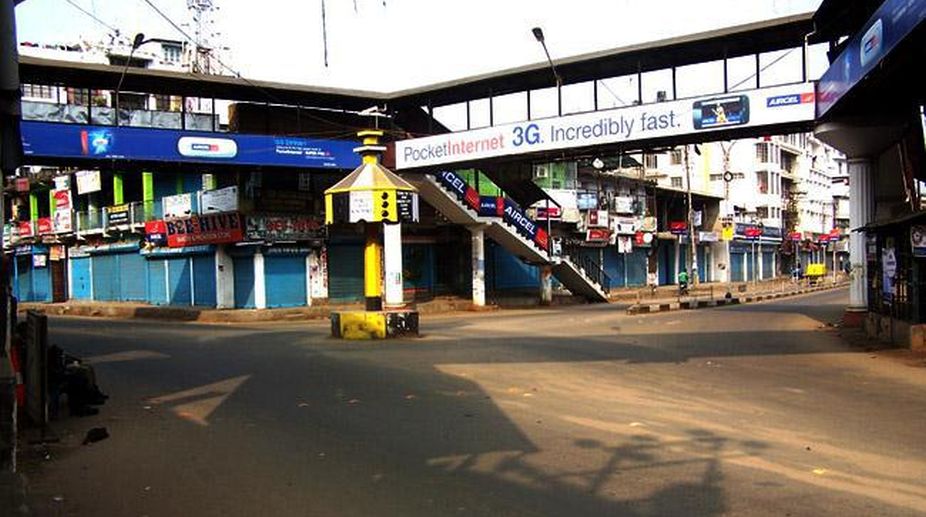
Normal life was affected in Tamil Nadu due to the shutdown strike called by opposition parties in the state on Tuesday.

While shops, hotels downed their shutters across the state, government buses were seen plying on the roads.

Offices — central/state government, public and private sector undertakings remained open.

Police were deployed in large numbers to prevent any untoward incidents in major places across the state.

Demanding immediate action on the part of state and central governments in resolving the issues of Tamil Nadu's farmers, opposition parties last week decided to observe the shutdown strike on April 25.

A meeting of opposition parties chaired by DMK Working President M.K. Stalin at the party's headquarters here decided to call for a state-wide shutdown on Tuesday among the several resolutions adopted there.

The opposition parties also urged the Tamil Nadu government to waive off all farm loans and convene a special session of the assembly to discuss the farmers' issues.

The meeting also passed resolutions urging the Centre to constitute the Cauvery Management Board, the Cauvery Regulatory Authority, declare the Cauvery delta region as Special Agriculture Zone, scrapping of the hydro-carbon project and others.

The shutdown strike was called by DMK, Congress, CPI(M), CPI, VCK, IUML. Trade unions affiliated to these parties also lent their support.

Trade bodies representing the movie industry, farmers, transport operators, traders association and others also extended their support to the shutdown strike.

Petrol bunks were open with operators wearing black badges showing their support to the strike.

According to reports reaching here, majority of the hosiery units in Tirupur were shutdown.

In Tiruvarur farmers were protesting on the railway tracks.

According to reports reaching here, shops in Puducherry were shutdown.

Pak cricket community hails Younis Khan for 10,000 runs milestone

Enigmatic fast bowler Shoaib Akhtar said Younis is a thorough professional.

PTI | Karachi |

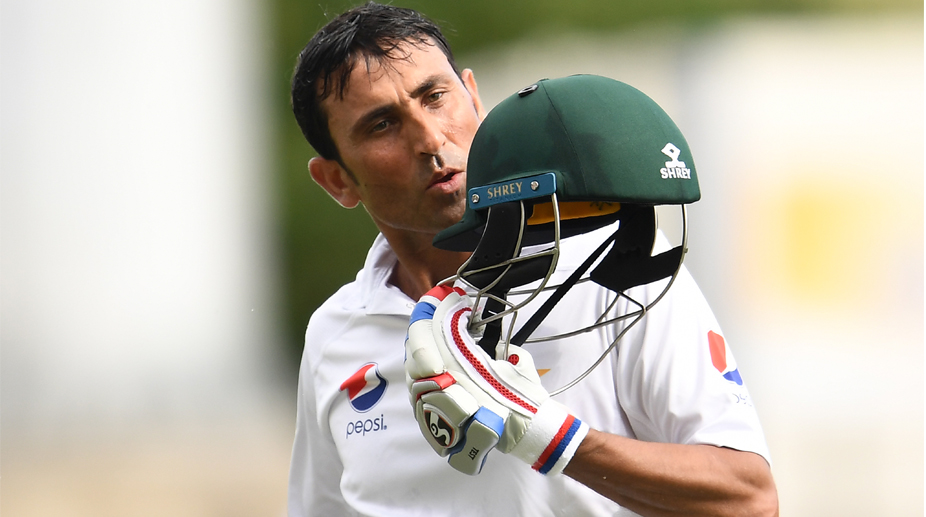
Pakistan cricketing fraternity has lavished praise on former captain Younis Khan after he became the first player from the country to complete 10,000 Test runs.

Younis, who has announced that he will retire from international cricket after the three-match Test series in the Caribbean, reached the milestone on the third day of the first Test against the West Indies on Monday enroute  his 58-run knock in Pakistan's first innings.

"I think Younis completing 10,000 Test runs is a historic moment for Pakistan cricket and there can be no better role model for world cricket than Younis," former Test captain Ramiz Raja said.

Former captain Rashid Latif, who played a significant role in fighting for Younis' Test debut in 2000, said he was delighted with the achievement of the batsman.

"No other player was more deserving of this milestone than Younis. I just hope that the Pakistan Cricket Board now takes full advantage of his experience even after his retirement," Latif said.

He said whatever little issues affected Younis' career were because he was a straightforward and honest man.

Enigmatic fast bowler Shoaib Akhtar said Younis is a thorough professional.

"He is born to be associated with cricket and the way he has remained committed to the game is a great example for youngsters to follow," Akhtar said.

He also urged the PCB to utilise Younis after his retirement.

Until Younis broke his record, Javed Miandad remained Pakistan's highest Test run-getter and Younis now also holds the record for most Test centuries (34) by a Pakistani batsman.

Chief selector Inzamam-ul-Haq, under whose captaincy Younis produced some sterling performances, said that retirement was Younis' personal decision but it would take time to find a suitable replacement for him.

"He has always remained a great contributor to the national team and even when I was captain he was always upfront to face any challenge. The way he used to prepare himself for every match or net session is something our young cricketers need to follow as well if they want to progress in international cricket," Inzamam said.

Former captain and teammate Mohammad Yousuf added: "I think he has done the right thing in deciding to step down on a high and hopefully he has set the right example for others to follow. It was always a pleasure batting with him because he is a thorough professional."

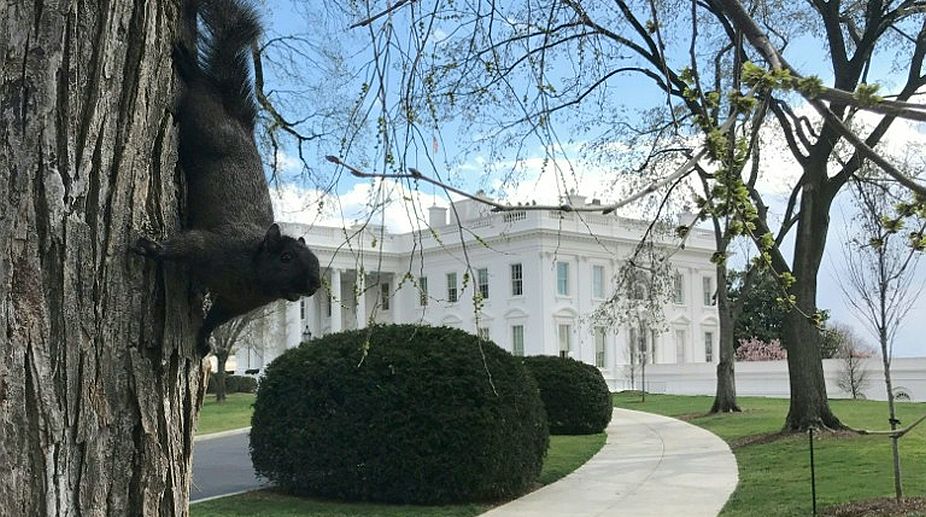
White House to host private briefing on North Korea

IANS | Washington |

The White House has announced that it would host an unusual private briefing on North Korea for the entire Senate amid escalating tensions, a media report said.

Press secretary Sean Spicer told the media on Monday that the lawmakers would be briefed on Wednesday by several senior administration officials, including Secretary of State Rex Tillerson and Defence Secretary Jim Mattis, The Washington Post reported. 

He emphasised that the meeting plan had been convened by Senate leadership and that the White House was serving "as the location".

A senior administration official said the meeting with senators will take place in the auditorium at the Eisenhower Executive Office Building, the building next to the White House that houses most of the National Security Council. 

The auditorium will be temporarily turned into a "sensitive compartmented information facility", which is the term for a room where sensitive national security information can be shared, the official said.

Such facilities are configured to withstand eavesdropping or other technical snooping.

David Popp, a spokesman for Senate Majority Leader Mitch McConnell, said: "The President (Donald Trump) offered to host the meeting and the Majority Leader agreed."

Other Senate leadership staffers signalled that most, if not all, senators in both parties are expected to attend the White House briefing, The Washington Post reported.

However, the unusual location left many staffers confused.

During debates surrounding Syria's civil war, terrorist attacks in Europe and the Federal Bureau of Investigation's into Russian interference in US elections, Cabinet secretaries and senior law enforcement officials have travelled to Capitol Hill to brief lawmakers.

A senior aide, said it was President Trump's idea to hold the meeting at the White House.

"I heard this came from Trump himself, that in a nutshell he said, ‘Why don't we have them up here instead?'" he added.