Logo

Japanese minister quits over offensive comment on 2011 quake

IANS | Tokyo |

Japanese Reconstruction Minister Masahiro Imamura resigned on Wednesday and was immediately replaced, one day after he made an offensive comment about the 2011 earthquake and tsunami, a media report said.

Imamura, 70, said at a meeting of the ruling Liberal Democrat Party (PLD) on Tuesday that it was fortunate that the disaster on March 11, 2011 struck the northeast of the country instead of Tokyo, Efe news reported.

During his speech, the Minister said that it was estimated that the disaster has caused losses in social infrastructure worth $226 billion.

He called that a limited impact that would have been much worse if the area of Japan's capital had been affected, according to local media at the meeting.

Imamura retracted his words shortly after his speech, but even Prime Minister Shinzo Abe was prompted to apologise, saying he considered the comment "extremely inappropriate" and "painful" for those affected by the disaster.

The new Minister of Reconstruction will be Masayoshi Yoshino, a native of Fukushima Prefecture and former Minister of Environment, according to Kyodo news agency.

The ministry was created in 2011 to deal with the reconstruction of the areas affected by the 2011 earthquake and tsunami, as well as to address issues related to the nuclear accident in Fukushima.

EU to exclude financial services from post-Brexit deal

IANS | Brussels |

The European Union (EU) reportedly intended to exclude the financial services sector from a trade deal with Britain after Brexit, media reports said.

According to Brussels-based online newspaper EUobserver on Tuesday, the bloc's new draft negotiating guidelines spelled out that any free trade deal that would allow the London continued access to EU markets would require that Britain continued to respect the EU's regulatory and supervisory standards.

An earlier version of the guidelines only said that future trade agreement should "not endanger financial stability in the Union and encompass safeguards against unfair competitive advantages", Xinhua news agency reported.

The change would serve a blow to British Prime Minister Theresa May, who has called an election for June 8. In a letter sent to the EU to notify of Britain's exit, she argued for an ambitious free trade agreement that covers financial services.

France, Germany and other countries are looking to attract financial companies once Britain leaves the single market with Brexit.

EU leaders, without May, are scheduled to gather in Brussels on Saturday to agree on Brussels' negotiation guidelines.

A new draft of guidelines will be discussed at a political level by European affairs ministers on Thursday, before being endorsed in Saturday's summit.

Judge blocks Trump order on sanctuary cities

IANS | San Francisco |

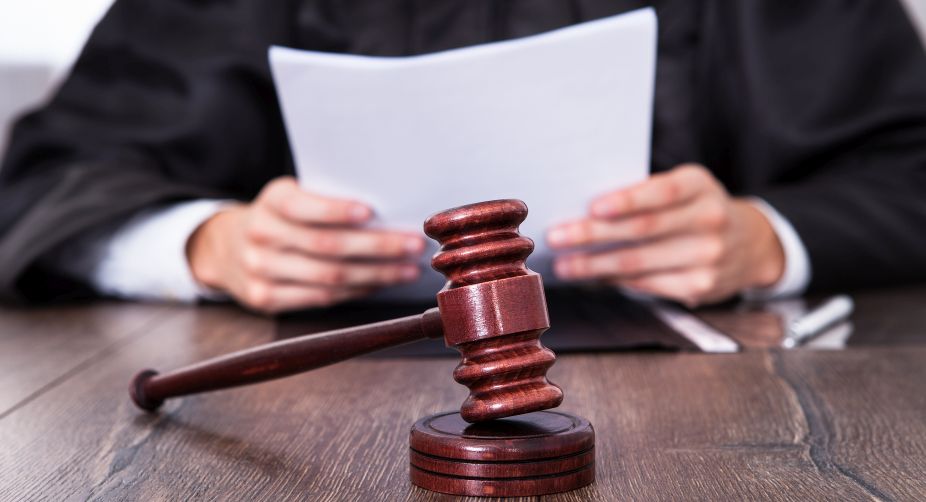
A federal judge ruled that US President Donald Trump can not coerce "sanctuary cities" to cooperate with immigration officers by withdrawing federal funds, media reports said.

The temporary ruling by Judge William Orrick of the US District Court for the Northern District of California on Tuesday, followed a 70-minute hearing on April 14 over San Francisco and Santa Clara County's lawsuit over the executive order signed by Trump on January 25, Xinhua news agency reported.

The executive order, issued five days after the President took office, directed the Attorney General and Homeland Security Secretary to make sure that sanctuary jurisdictions "are not eligible to receive federal grants, except as deemed necessary for law enforcement purposes".

The lawsuit on February 3 in the federal court requested for an injunction to halt the enforcement of the order.

"We're fighting for the United States Constitution and we succeeded after the Trump Administration tried to do an end run around it," Santa Clara County Supervisor Cindy Chavez said in a statement after the judge's ruling.

"The court's decision is a win for the neediest people in our nation. Seniors in need of food, foster youth in need of shelter and children who need medical care. We'll continue being a welcoming, safe and diverse community," she said.
 

Republicans remove Mexico border wall from budget negotiation

IANS | Washington |

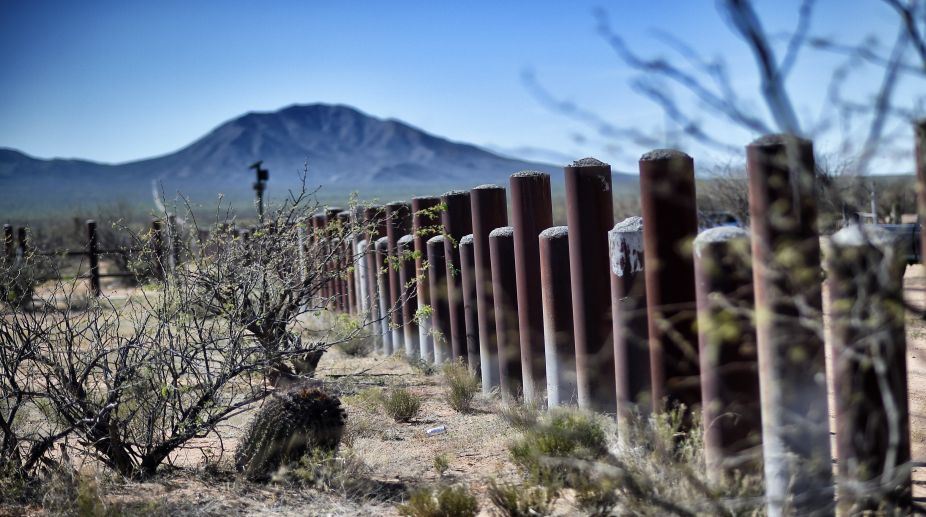
Republican lawmakers removed the funds allocated for the Mexico border wall from their budget, given that the Democrats were unwilling to agree to back the budget with it and after President Donald Trump softened his stance on the matter.

The President on Tuesday seems to be open to withdrawing the $1.4 billion he had demanded for the barrier be included in the federal budget, which must be approved before Friday if a partial government shutdown is to be avoided, Efe news reported.

After Trump went public with his budget proposal last month, in which he included his request for funding to start construction of the wall, Democrats warned Trump that they would block any budget bill that included it.

The Democrats' unwillingness to compromise on the issue seems to have been effective in terms of obtaining their initial objective.

The conservative leadership in the Upper House on Tuesday presented a new proposal with the wall construction funds out of the equation, although it includes funding for strengthening security along the US-Mexico frontier, Senate officials said.

On Monday evening, Trump softened his stance on his demand for immediate funding for wall construction, saying during a meeting with a group of conservative media outlets that he could wait until autumn for the funds and include them in the budget for FY 2018, which will be negotiated at that time.

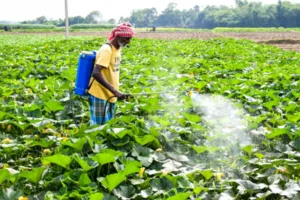
However, after signing some executive orders on agriculture Trump repeated that the US "desperately" needs the wall, adding that it will be build "soon".

La Liga: Roberto Soriano hands Villarreal shock win at Atletico Madrid

Victory hauls Villarreal to within five points of fourth-placed Sevilla, who have a game in hand.

AFP | Madrid |

Villarreal kept their slim hopes of Champions League football next season alive as Roberto Soriano's late winner shocked Atletico Madrid 1-0 at the Vicente Calderon.

A battle between the two best defences in La Liga was unsurprisingly settled by a single goal when the Italian turned home Cedric Bakambu's cross eight minutes from time.

Victory hauls Villarreal to within five points of fourth-placed Sevilla, who have a game in hand, and eight of Atletico in third.

Atletico enjoyed the vast majority of the play and chances, but were undone by a brilliant performance by Andres Fernandez in the Villarreal goal.

"Many times we have won this way and today it was our turn to lose," said Atletico boss Diego Simeone.

"We played well and went looking for the goal the whole game but the ball didn't want to go in."

Fernandez made a stunning double save early on as Angel Correa wriggled free inside the area to fire goalwards before Saul Niguez's powerful header was turned to safety.

The Villarreal stopper also denied the in-form Antoine Griezmann and Nico Gaitan before the break.

Gaitan then had Atletico's best chance of the game early in the second-half. However, he failed to reward boss Diego Simeone for a rare start as again he was denied by Fernandez's outstretched hand.

Villarreal had offered almost nothing as an attacking threat for the first hour but the introduction of Soriano and Bakambu from the bench posed a threat on the counter-attack in the final quarter.

Soriano should have done better with a huge chance that was blocked by Diego Godin 12 minutes from time.

However, he made amends just four minutes later by turning home Bakambu's cross to inflict just Atletico's second league defeat since the sides last met back in December.

And Atletico were also dealt a blow a week ahead of the first leg of their Champions League semi-final with Real Madrid as Belgian winger Yannick Carrasco had to be replaced just 15 minutes after coming on as a substitute with a collarbone injury.

At the bottom of the table, Tony Adams remains without a point in three matches in charge at Granada after Sandro Ramirez's double earned Andalusian rivals Malaga a 2-0 win at Nuevo Los Carmenes.

Defeat means Granada could now be relegated as early as Saturday should they fail to win at Real Sociedad and Leganes beat Las Palmas on Wednesday.

Adams's men remain seven points adrift of safety and have yet to even score since he replaced the sacked Lucas Alcaraz earlier in April.

Former Barcelona winger Ramirez produced the few true moments of quality with a rasping drive from outside the area two minutes into the second-half before sealing the victory in stoppage time with his fifth goal in as many games.

Sporting Gijon also failed to give their chances of survival a boost as they were held 1-1 at home to Espanyol to remain three points adrift of safety.

US deeply concerned about Turkey’s airstrikes in Syria, Iraq

IANS | Washington |

The US said it is "deeply concerned" that Turkey conducted airstrikes in Syria and Iraq without "proper coordination" with Washington or the coalition forces, media reports said.

"We have expressed those concerns to the government of Turkey directly," State Department spokesman Mark Toner told a regular news briefing on Tuesday. "These air strikes were not approved by the coalition and led to the unfortunate loss of life of our partner forces in the fight against ISIS (the Islamic State) that includes members of the Kurdish Peshmerga."

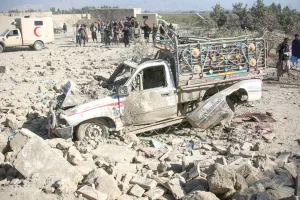
The Turkish warplanes on Tuesday conducted airstrikes targeting the positions of the Kurdistan Workers' Party (PKK) in northern Iraq, killing at least five Iraqi Kurdish fighters and wounding ten others, Xinhua news agency cited local Kurdish media reports.

The Turkish jets, in the early hours of the day, hit the PKK positions in different areas in northwestern Iraq, but the Iraqi Kurdish fighters who were close to the PKK positions apparently were killed by mistake.

Meanwhile, the Turkish military said it has carried out airstrikes against suspected Kurdish rebel positions in northern Iraq and in northeastern Syria, in a bid to prevent militants from smuggling fighters and weapons into Turkey.

Toner also noted that the Iraqi government had expressed concerns with Turkey's airstrikes, stressing that "military action in Iraq should respect Iraqi sovereignty". 

The PKK, which wages a separatist war against Turkey since 1984, is listed as a terrorist organisation by Turkey, the US and the European Union. 
 

Confident of BJP’s win in civic polls: Manoj Tiwari

IANS | New Delhi |

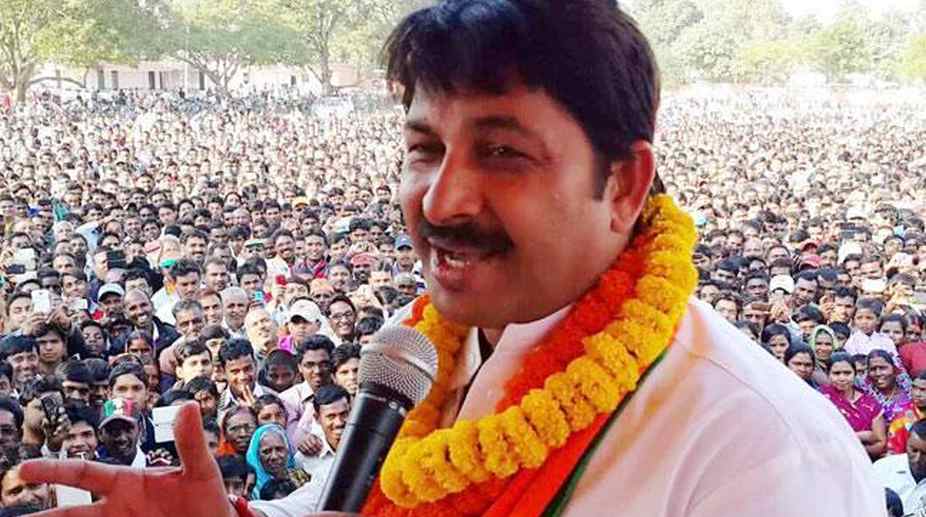
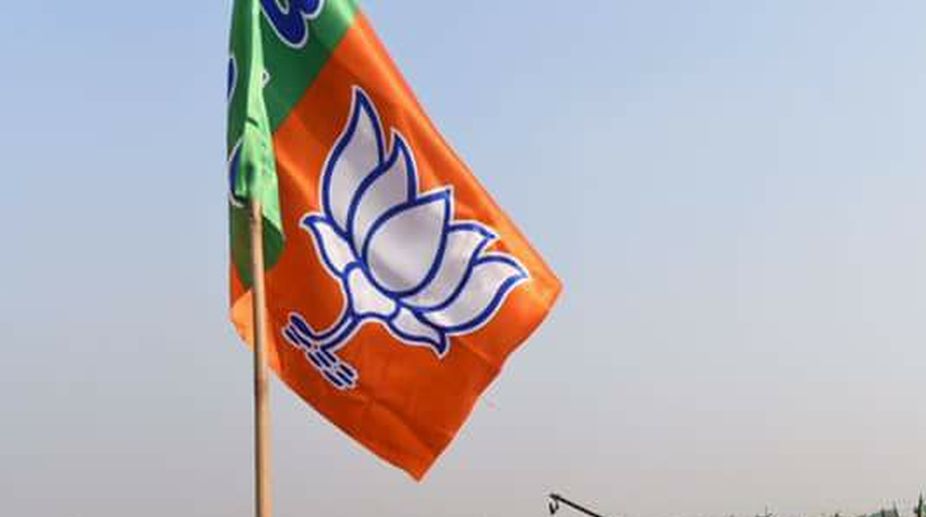
Bharatiya Janata Party's Delhi chief Manoj Tiwari on Wednesday said he was sure his party would win the civic polls.

"I am sure we will win. I have no doubt about it," Tiwari told the media, as counting of votes began.

He said the BJP would make Delhi a "clean city" and free it from all sorts of diseases after the party "wins" the municipal elections.

Voting for 270 of the total 272 wards of the three municipal corporations saw around 54 per cent balloting on Sunday. Election was countermanded in two wards following the death of candidates. 

Over 2,500 candidates contested the elections to North Delhi Municipal Corporation and South Delhi Municipal Corporation (104 seats each) and East Delhi Municipal Congress (64 seats). 
 

MCD election results 2017: BJP ahead of Congress, AAP; set for grand win

IANS | New Delhi |

The BJP was leading in all the three civic bodies, while Delhi's ruling AAP was at second spot, and the Congress was trailing at third spot, according to counting trends after an hour, Delhi State Election Commission officials said on Wednesday.

The BJP was leading in 110 wards, the AAP in 28 and the Congress in 23 wards.

In North Delhi Municipal Corporation, the BJP was ahead in 48 wards, the AAP in 13 and the Congress in 9 wards.

In South Delhi Municipal Corporation, the BJP was leading in 44 wards, the AAP in 13 and Congress in 9.

In East Delhi Municipal Corporation, the BJP was leading in 20 wards, AAP in 2 and Congress in 5 wards.

EPL: Chelsea extend lead thanks to Diego Costa, Eden Hazard

Seven points clear, over to Tottenham Hotspur now!

SNS | New Delhi |

Chelsea striker Diego Costa struck his 50th English Premier League goal as the Blues beat Southampton 4-2 at Stamford Bridge on Tuesday to extend their lead to seven points, putting them in pole position to lift the 2016-17 title.

Antonio Conte had decided to start Diego Costa and Eden Hazard on the bench on Saturday’s FA Cup semifinal win over Tottenham Hotspur. ,But against Southampton, the Italian manager restored them to the starting XI and the rested stars proved to be decisive yet again.

Hazard, who had been crucial in securing that thrilling win over Spurs, proved just why he is one of the world’s best wingers by finishing Costa’s lay off in the 5th minute to give Chelsea a roaring start.

Southampton, the 2016-17 EFL Cup finalists, were caught sleeping as despite having multiple players inside their box, allowed Hazard to run in and beat Fraser Forster with ease.

They, however, didn't let the early setback rattle them and equalised via ex-Chelsea midfield Oriol Romeu in the 17th minute. James Ward-Prowse’s corner had found Manolo Gabbiadini in the box. But as the Italian was forced wide due to the trajectory of the ball, he deftly passed it across the face of goal for Romeu to tap in.

The away side’s equaliser briefly put the Chelsea faithful on edge as only weeks ago, Crystal Palace had stunned the league leaders at Stamford Bridge. Conte urged his side to restore their lead before the break and as the clock ticked on, it seemed the second-half would begin with the teams deadlocked.

However, much to the Saints’ chagrin they conceded a soft goal on the stroke of half-time. Marcos Alonso headed N’Golo Kante’s long ball across the goal and Gary Cahill promptly headed past Forster.

Chelsea began the second-half as they had started the first, scoring early via Costa, who outmuscled Ryan Bertrand to meet Cesc Fabregas’ cross, his header leaving Forster with no chance in the 53rd minute.

With a lead of two goals, the Blues kept possession, looking to hit Southampton on the counter and almost had a fourth when Hazard set up Kante, but Forster came out of his goal quickly to narrow the angle, making an important save. 

Chelsea weren't to be denied a fourth, however, as Costa got his 19th goal in a brilliant manner, playing a one-two first with Hazard and then with Pedro before finishing at the near post in the 89th minute.

Southampton scored a consolation goal late in injury-time when former Blues man Bertrand headed home full-back Cedric Soares’ cross. But the home crowd continued cheering.

While Spurs have a game in hand, it will not be an easy one as they are to travel to in-form Crystal Palace and should they drop points, the title-race may well be over.

For Chelsea, the win comes at a crucial juncture in the season as losses to Palace and Manchester United had raised doubts in recent weeks. While a daunting trip to Everton on Sunday awaits, they will fancy their chances against any side.

Yemen funds desperately needed to avert famine: UN chief

AFP | Geneva |

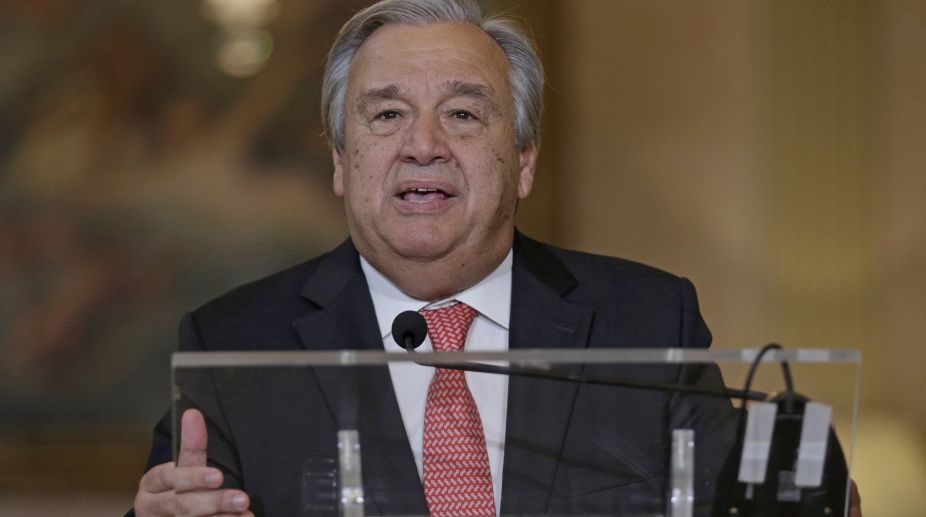
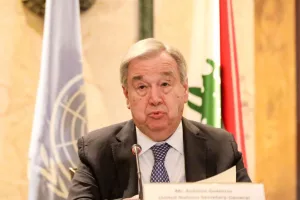
UN chief Antonio Guterres urged countries  on Tuesday to pitch in to help prevent a looming famine in war-torn Yemen, warning that children especially were already dying at an alarming rate.

"Yemen today is experiencing a tragedy of immense proportions," the UN Secretary General told country representatives gathered in Geneva for an aid pledging conference.

"We are witnessing the starving and the crippling of an entire generation," he said, adding that Yemen is gripped by "the world's largest hunger crisis".

Appealing to donors, he stressed that "a famine can be prevented if we act quickly and commit to funding crucial life-saving assistance".

The conference, co-hosted by the Swiss and Swedish foreign ministers, comes after the UN in February said Yemen needed USD 2.1 billion (1.9 billion euros) of aid this year alone.

The UN had warned that unless international donors stepped up their response the war-torn country faced a "serious risk of famine".

By today, only 15 per cent of that appeal had been funded, Guterres said.

UN humanitarian chief Stephen O'Brien told the conference that Yemen was "the world's largest humanitarian crisis today."

A total of 17 million people, or around 60 percent of its population, are going hungry, while seven million of them do not know where their next meal is coming from and need immediate food aid, the UN said.

Children especially are bearing the brunt of the crisis.

"On average, a child under the age of five dies of preventable causes in Yemen every 10 minutes," Guterres said.

"This means 50 children in Yemen will die during today's conference, and all those deaths could have been prevented."

Many of the children who survive "will be affected by stunting and poor health for their entire lives," he added.

Swedish Foreign Minister Margot Wallstrom noted that with two million children out of school, there is a growing risk of recruitment by armed groups, while two-thirds of girls are married off before the age of 18.

"We must act now", she said.

Yemen's war has pitted pro-government forces against Iran-backed Huthi rebels and their allies, renegade troops loyal to former president Ali Abdullah Saleh.

A Saudi-led coalition intervened in Yemen in March 2015 to help the government retake the capital Sanaa and swathes of the country's north and west.

Fighting in Yemen has killed more than 7,700 people over the past two years and forced 3.3 million people to flee their homes, according to UN numbers.

Mehbooba holds security meet, advocates healing touch towards youth

PTI | Srinagar |

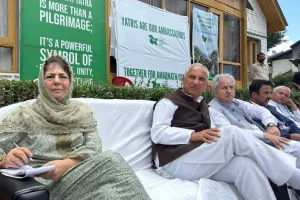
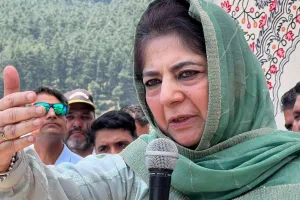
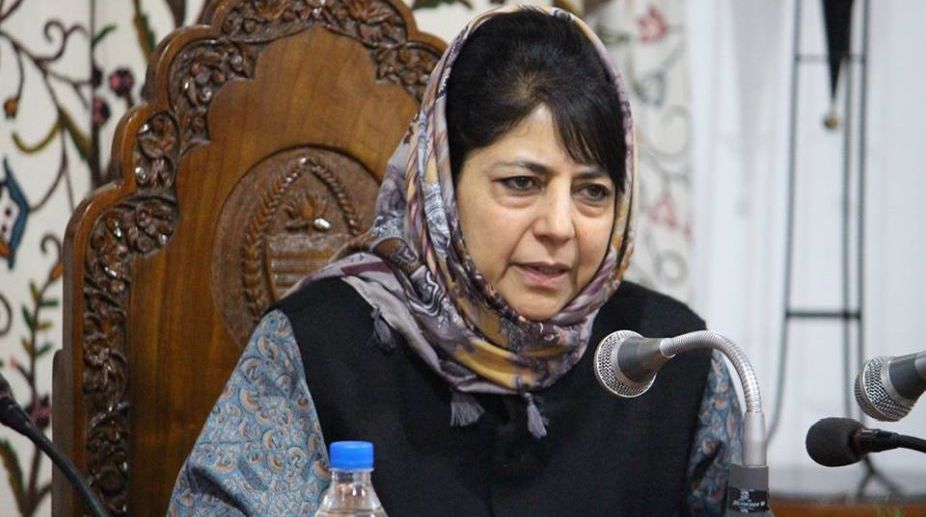
The worsening security situation in Kashmir was discussed on Tuesday at a high-level meeting where Chief Minister Mehbooba Mufti directed the forces to exercise restraint and advocated a "healing touch" towards "our own youth" caught in the cycle of violence.

She said youth engagement should be prioritized rather than viewing it as a routine law and order issue and asked the security agencies to improve interface with the public to allay people's apprehensions and misgivings about the system.

She was chairing a meeting of the Unified Command Headquarters, the multi-agency security body, here against the backdrop of spiralling protests and violence in the Kashmir valley over the last few weeks.

"The youth unfortunately caught in the cycle of violence are our own youth who ought to be won over with healing touch," Mehbooba said at the meeting attended by Deputy Chief Minister Nirmal Singh and top officials of the state government, the army and the paramilitary forces.

"The Chief Minister directed the security agencies to exercise restraint while dealing with provocative situations," an official said.

She said that wherever restraint had been exercised, it had shown positive results on the ground for the government and helped in maintaining peace and order.

Advocating holding of counseling sessions for the youth, Mehbooba said it would not only help allay their apprehensions and misgivings about the system but would also give the security agencies a chance to reach out to people through community policing, the official said.

She said youth engagement should be prioritized rather than viewing it as a routine law and order issue and directed that care should be taken to avoid and minimize all collateral damage while conducting operations.

"She also directed that parents of the youth be taken into confidence as and when there is some complaint about any youth and in no way should the family be held accountable for the deeds of the said youth," they added.

Besides the Deputy Chief Minister, the meeting was attended by Chief Secretary B R Sharma, Financial Commissioner and Principal Secretary to Chief Minister B B Vyas, Principal Secretary, Home, R K Goyal, Director General of Police S P Vaid, GoC-in-C of Northern Command Lt Gen Devraj Anbu, Corps Commanders of various Army formations operating in the state; and Divisional Commissioners of Kashmir and Jammu.

Senior officers of CRPF and BSF were also present in the meeting.

Mehbooba had yesterday met Prime Minister Narendra Modi and Union Home Minister Rajnath Singh in Delhi and emphasised the need for a dialogue with separatists to contain deterioration in the situation.

Trump threatens Canada over milk imports

IANS | Washington |

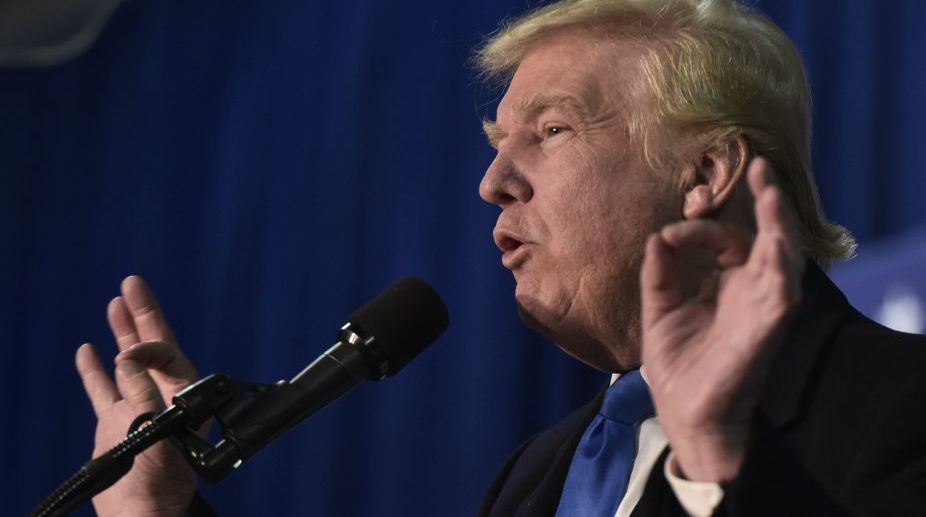
President Donald Trump accused Canada of hurting milk producers in Wisconsin and other US states, warning that he will not continue to put up with such behaviour.

"Canada has made business for our dairy farmers in Wisconsin and other border states very difficult. We will not stand for this. Watch!" Trump tweeted on Teusday.

On Monday, the administration announced its decision to impose a 20 per cent tariff on lumber imports from Canada after claiming that it was unable to come to an agreement on the matter with the US northern neighbour, Efe news reported.

In an interview with The Wall Street Journal, US Commerce Secretary Wilbur Ross said that Canada had been notified about Trump's decision and that the tariff will be applied retroactively.

The US lumber industry has complained for decades that Canada subsidizes its producers to be able to sell wood products at reduced prices in the US market.

The President's threat comes while the two nations are preparing to renegotiate the North American Free Trade Agreement signed, along with Mexico, more than two decades ago.

NAFTA is a trade "disaster", Trump reiterated last week, returning to a theme that he pounded non-stop during the election campaign, namely that he will renegotiate a better deal for the US.

Up to now, Trump's harshest criticisms of NAFTA have focused on Mexico, but in the past few days the president has shifted his sights to accuse Canada of harming US farmers and milk producers.

Meanwhile, Trump is scheduled on Tuesday to sign an executive order instructing his team to review the policies and laws governing the agricultural sector with an eye toward doing away with rules that could "unnecessarily hinder economic growth in the agriculture sector".
 

Record 1,000 metre-long offered on 362nd urs of Shah Jahan

IANS | Agra |

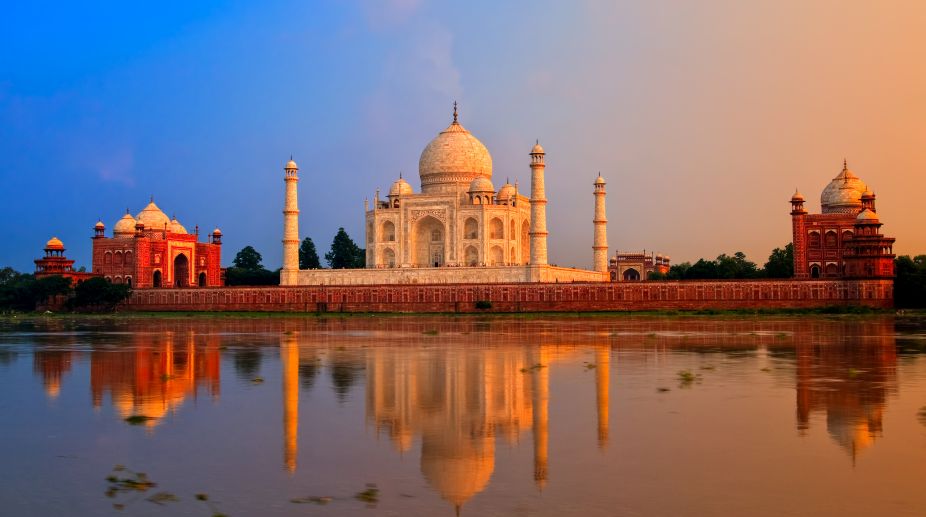
A record 1,000-metre-long ceremonial chadar was offered on Tuesday at the graves of Mughal Emperor Shah Jahan and his Empress Mumtaz Mahal on the 362nd Urs of the builder of the immortal memorial to love here.

While one end of the chadar was at the southern gate of the Taj Mahal, the other was at the original graves of the royal couple. Access to the original graves are only during the annual Urs while visitors to the 17th-century monument only get to see a replica.

The chadarposhi ceremony began on Tuesday afternoon after the Kul Sharif ritual. The first to offer the chadar were officials of the Archaeological Survey of India and the Central Industrial Security Force which guard the Taj complex.

The ceremony was organised by the Khuddam-e-roza headed by Tahiruddin Taahir.

Hindus and Muslims both joined the ceremonial procession.

Syed Munnawar Ali of the Urs committee said the "chadarposhi" ceremony represented peace and harmony in the world.

An estimated crowd of 40,000 faithful joined the ceremony. Entry to the monument was free on Tuesday.

D Raja meets Sonia, discusses common candidate for presidential poll

IANS | New Delhi |

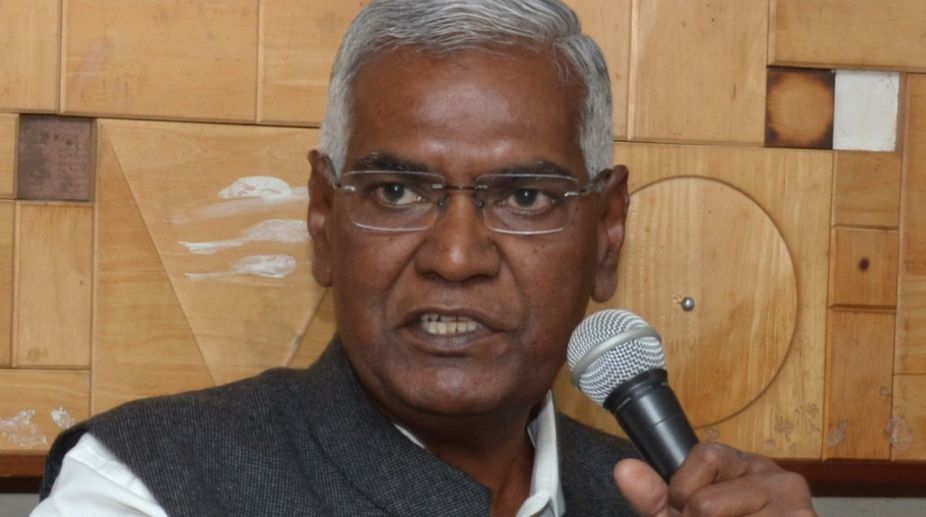
Communist Party of India (CPI) leader D Raja met Congress President Sonia Gandhi here to discuss the upcoming presidential election and conveyed his party's stand to support a "common candidate" put up by all the "secular democratic parties".

"The issue of presidential election came up for discussion. I have expressed our party's position on presidential election. We will go along with other secular democratic parties to put up a common candidate. 

"We are also talking to other parties. If a common candidate is put up that will be good," Raja said.

Raja also said no name for the candidature was discussed in the meeting, which took place on Monday.

"She listened to us and agreed with me. She has already met several people and is trying to reach out to others also," said Raja.

Raja said there were discussions on the current political situation and on the issue of cow vigilantism. 

"There is growing intolerance in the country and the situation demands some kind of united people's resistance and she also agreed to it," he said.

Sonia Gandhi had earlier met Bihar Chief Minister Nitish Kumar and CPI-M General Secretary Sitaram Yechury to discuss the upcoming presidential elections and the need to field a joint opposition candidate.

Don’t call them ancient

Emma Gilberthorpe | Kolkata |

In Down the Mighty River with Steve Backshall, the adventurer and naturalist took a journey through New Guinea, the world’s second largest island.

As he travelled along the Baliem River for the new documentary series, through some of the densest jungle on the planet, Backshall visited the Dani people, which the BBC described as an “ancient tribe”.

I spent two years living with groups not far from the Dani, and was disappointed to hear this sort of language still being used. T

his distorted perspective perpetuates the myth of the “living fossil” or the “backwards tribe”. After all, what exactly is an “ancient tribe”? Surely, by definition, an ancient tribe is either really, really old, or really, really dead. The Dani are neither. Nor are they “backward”.

The 25,000 or so Dani people scattered across the Baliem Valley are very much alive and well, prospering in a challenging region despite being faced with land dispossession from mining, military control from Indonesia, and the occasional film crew from “the West”.

Indeed, the Dani have featured in several TV and film documentaries over the years. The first of these, Dead Birds, made in the early 1960s by anthropologist-filmmaker Robert Gardner, followed two males as they went about their everyday business. Back then, the Dani were a model of “tribal culture” representing what was fast becoming an elusive example of “stone-age man”.

They used stone tools, practised gift exchange and fought over territory.

Such practices were typical across the island of New Guinea, particularly in the vast central highlands.

Over 50,000 years of habitation, this almost impenetrable rainforest proved the ideal environment for developing permanent agriculture, complete with drainage canals.

The Dani themselves were only first “discovered” in 1938 when, completely by chance, a pilot flying overhead spotted their cultivated fields.

But they had long been part of a complex social network of exchange and interaction that reached across the island.

Even the government patrols and prospectors that once infested New Guinea were restricted to more accessible coastal regions, so the island’s rural inhabitants continued farming, trading and intermarrying across huge distances.

They live 1,600 metres above sea level in the heart of the Cyclops Mountains. By the time of “discovery”, the indigenous population had, politically, already been divided in two.

In 1828, European colonisers separated New Guinea in half, right down the 141st meridian.

By 1963 the western half was formally annexed to Indonesia, while the east became formally detached from Australia in 1975 to form the independent state of Papua New Guinea.

The Dani people are therefore governed ultimately from the Indonesian capital Jakarta, some 3,500km away, while an international border separates them from their kin in Papua New Guinea.

These culturally and historically linked groups have been fighting ever since to release West Papua from Indonesia.

The region’s cultural complexity has made it an ideal location for anthropologists and my own work has taken me to the Kutubu and Ok Tedi regions in Papua New Guinea.

In Ok Tedi, which lies just on the other side of the 141st meridian, my friends and hosts were very similar to the Dani people that Backshall met.

Like the Dani, they value the sal kambun (penis gourd) and bul bul (grass skirts) as symbols of identity, and they value the stone axe for its practical ability to outlive and outperform the modern alternatives sent to replace it — steel axes and knives.

The ritual amputation of digits is common across the island. As anthropologist Karl Heider recalls in his ethnographic examination of the Dani, close female relatives of males killed in warfare (not those who die from “natural” causes) “have their fingers chopped off”.

This is not unique to the Dani — in fact, digit/hand amputation was not unusual among men and women across the highland region before missionary intervention.

In one of his most memorable scenes, Backshall was invited to sleep alongside the smoke-dried remains of a legendary village elder.

Such mummification is actually quite rare across the highlands, even among the Dani, who according to Heider cremate the dead in a detailed and lengthy series of funerary rites. The practice is typically associated with the Anga language group in Papua New Guinea and likely spread eastwards to the Dani.

In recent years, the Dani have been affected by mining, tourism and ongoing attempts to “Indonesianise” their highland culture.

But perhaps the biggest threat of all comes from the military presence representing Indonesian interests in a resource-rich land with what they see as a “backwards” culture.

Like the colonialists who described the vast area of internal New Guinea as “uninhabited”, government bodies and multinationals still view rural landscapes as Terra nullius, “no one’s land”.

The illusion of “no one’s land” and “the ancient tribe” is not helpful to the amazing people who live there.

My friends in Ok Tedi and Kutubu are artists, school teachers, academics, gardeners, widows, businessmen and businesswomen.

And yet, everything they do remains tightly entwined by a rich, resilient and dynamic culture.

The writer is a senior lecturer in anthropology at the University of East Anglia, UK

The Independent

Towards an ‘economic ice age’

S Ananthanarayanan | Kolkata |

Adam Smith, the 18th century father of modern economics, said that the very motivation of the participants in a market — to seek their own gain — itself impels them to action that leads to better distribution of goods and prices for the consumer.

At a more mechanical level, the molecules of a gas, which are in constant and rapid motion, interact with other molecules when placed in a container.

These interactions are known to follow well-documented rules, particularly that the total energy of motion when one molecule bounces off another, remains constant.

One particle may hence end up with more energy than it started with, but only thanks to something given up by another particle.

The second particle is then likely, in the next encounter, to regain the energy lost.

The way the speeds of the molecules distribute themselves, finally, is that very few particles have high or low energy but a great many have a level of energy that falls in between.

This level of most common particle energy can be shown to be the one where there is the greatest number of different ways for the molecules, with various speeds of motion, to have the same total energy.

It could also be called the point of most equitable distribution of energy, given the dynamics of collisions and the conservation of total energy.

Victor M Yakovenko, Qin Liu and Scott Lawrence, of the Joint Quantum Institute, department of physics, at the University of Maryland, have drawn a parallel between the way molecules of a gas tend to share energy and the way incomes, energy use and CO2 emissions tend to be distributed among the populations of the world.

They reported their findings, some months ago, in the journal, Entropy.

The paper in is based on the US Information Administration International Energy Statistics, which show the historical and projected data, of energy use and emissions.

Although there is improvement in the efficiency of power generation, in terms of lesser emission, both power consumption and emission have been increasing, with rising population.

The paper notes that the energy consumption and population of developed countries have stabilised and it is the developing world, like China for energy, and India and others for population, which account for the global increase.

This trend, however, is the result of great energy inequality among countries. While the total consumption by developing countries is still less than other countries, the inequality becomes acute if population is taken into account and countries are characterised by consumption per capita.

To see if the gas laws could help in understanding economic activity, the researchers treated the money with an individual as equivalent to the speed of a molecule.

In transactions between individuals, like in collisions of molecules, there would be exchange and redistribution of money. The comparison is valid because the total money in a system, like the total energy in a gas, is conserved, or stays constant, for some time.

The proposition was that after allowing for the possibility of debt, which does not exist in molecules of a gas, money also distributes itself, with mathematical precision, in the same way as the speed of molecules.

In studies of actual distribution of money, to verify the notion, there is a difficulty of different currencies and purchasing power, in cross border comparison.

Studies were therefore made of the distribution of income in the US, UK, Australia, EU countries, Romania and others — the results are that the distribution of the number of persons in increasing income ranges, in most cases, over a group of 97 per cent of the population, is exactly like energy in the case of a gas.

For the comparison between countries, the differences in currency and purchasing power were not accounted for by taking the energy consumption per capita to represent physical living standards.

The studies used data of the World Resources Institute, of 130 countries from 1990 to 2005 and from the US Energy Information Administration, which covers 220 countries over 1980 to 2010.

In using energy consumption as a measure, the world-wide energy resources were considered as redistributable and as constant, as also the population of countries, at least for a time.

The proposition again, is that the proportion of persons with higher energy consumption should fall, as the level of energy consumed is raised, in the same way as the distribution of the molecules of a gas.

The data is found to strongly support the proposition and the current data shows a progression from highly unequal distribution in 1980 to more uniform, and closer to theory, distribution in 2010 — a feature which the authors of the paper attribute to globalisation of the world economy. The distribution in 2010 is shown in figure 1, which plots the falling numbers of people who consume increasing levels of energy in the 220 countries studied.

The average energy consumption in the main countries of the world is also indicated. A revealing representation of the data is with the help of the so-called Lorenz curve (figure 2), which plots the fraction of energy consumption against fraction of the population at that level of consumption.

The curves for different years, 1980, 1990, 2000 and 2010 have been shown. A case where the numbers of consumers increase uniformly as we consider larger fractions of energy would be complete equality and this is the straight, diagonal line in the graph.

The other lines — the curves — indicate actual conditions, from 1990 to 2010, with the deviation from the ideal reducing every decade.

How far the Lorenz curve deviates from the ideal, diagonal, straight line indicates the level of inequity and is measured by a metric called the Gini coefficient — abbreviated as G — of the Lorenz curve.

One can see that G=0 is the diagonal itself, where everything is equal, and the opposite is G=1. The figure shows that the G value has been falling from 0.66 to 0.55, approaching the value of G=0.5, which is the equilibrium state of natural distribution, with large numbers of interactions and transactions, as in a volume of gas.

The fall from 0.66 to 0.55 indicates reducing inequality and is attributed to the globalisation of the economy in recent decades. The authors drew a parallel with temperature inequality and the tendency of nature to equalise temperature, which amounts to the dismantling of an element of “order” being the driving force in physical systems.

This can also be stated as the tendency to maximise disorder, and another word for the level of disorder is entropy.

The authors note that developed countries now have ageing populations and reducing consumption, including of energy, and stagnating growth.

But developing countries, China particularly, have become rising consumers of energy, per capita. And even this growth is slowing down and there is talk of an “economic ice age”, the paper noted.

While different causes have been suggested, the authors propose that the slowdown appears to be intrinsic and, in terms of thermodynamics, arises from falling inequality and increasing entropy.

On a brighter note, they ask if economic slowdown may bring in reduced carbon emissions and slow down climate change.

The progression from 1980 to 2010, however, only shows changes in distribution, not control of emissions.

While the parallel with thermodynamics helps with insight into the mechanisms at work, population control and using renewable energy sources may allow growth and economic activity without affecting the environment.

The writer can be contacted at response@simplescience.in

The jinx that haunts Advani

Arati R Jerath | New Delhi |

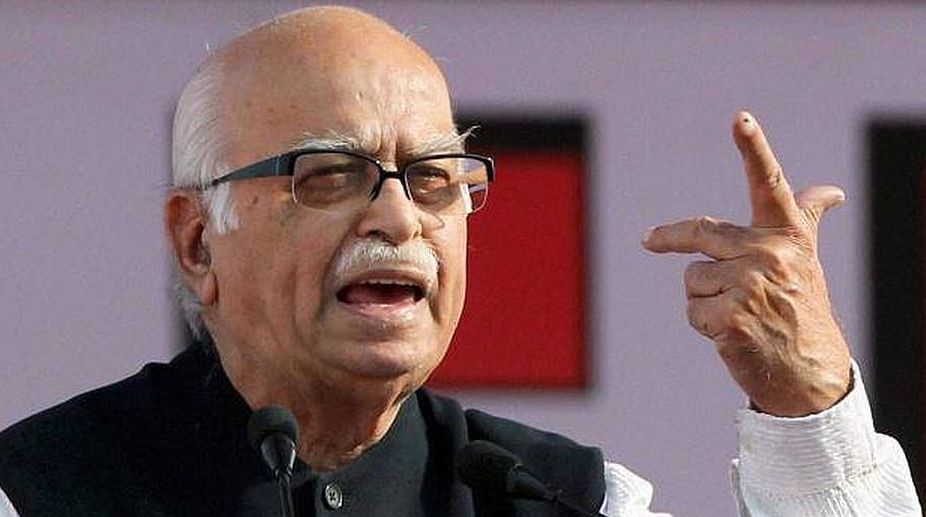
Asense of déjà vu must be gripping BJP patriarch L K Advani.

His hopes of becoming the President of India have been dashed in much the same manner as he was robbed of his dream to be prime minister.
The Jain diaries and the hawala case snatched the PM’s post from under his nose back in 1995.
Now the Supreme Court order reviving the Babri Masjid demolition case against him has ruled him out as a potential presidential candidate to succeed Pranab Mukherjee.

In fact, BJP circles are buzzing with comparisons between Narasimha Rao and Narendra Modi.

Rao used the Jain diaries and the hawala case to hound his opponents inside and outside his party.

Advani as president of a rising BJP then was one opponent he feared. For Modi, the SC order could not have come at a more opportune time.

In one go, the order has snuffed out two aspirants for the post of President, Advani and Murli Manohar Joshi.

The names of both were in circulation in BJP as well as opposition circles.

Advani was BJP president and the face of the Ram mandir campaign which put the saffron party on the national map.

He would surely have been its PM nominee in the 1996 election but for the hawala case filed against him the year before.

As questions rose, even within the RSS, about his integrity, Advani quit as BJP president in a fit of pique and announced Vajpayee’s name as the party’s PM face for the election.

Although Advani was later acquitted in the case, it was too late. Vajpayee had caught the public imagination and went on to be PM.

Like the hawala case, the Babri Masjid blow has come on the eve of the presidential election, due in June this year.

BJP circles are wondering whether a jinx haunts Advani which trips him up just as he nears the pinnacle of his ambition.

Orchestrated drama

The ongoing drama in the AIADMK in Tamil Nadu appears to have been orchestrated with an eye on the upcoming election for the President of India.

The BJP-led NDA is short of an estimated 25,000 votes in the electoral college which will vote. A united AIADMK can make up the shortfall.

But to get the AIADMK on its side, the BJP first has to purge it of Sasikala’s influence. Sasikala wants no truck with the BJP which she feels has been promoting former chief minister O Panneerselvam against her.

The first steps towards her marginalisation in the party have been taken with the investigation into bribery charges against Sasikala’s nephew Dinakaran and the start of unity talks between rival factions of the AIADMK.

It seems deputy Lok Sabha Speaker and veteran AIADMK leader M Thambidurai is playing a significant role behind the scenes as an interlocutor between the BJP and the two factions of his party.

ust this week, he had another meeting with BJP president Amit Shah, say BJP sources. He is believed to be in touch with Shah on a regular basis.

The election for the President is due in June but the process will begin in May. The BJP would like to tie up the AIADMK’s support before that.

There is talk that the AIADMK will be inducted into the NDA and one of its leaders may even be given a ministerial berth.

Looking ahead to 2019

Amit Shah is hyper active these days wooing potential friends and allies. He has set in motion the process of getting the AIADMK on the BJP’s side, possibly into the NDA.

The timeline for this is before the June presidential election. But he seems to also be looking ahead at the 2019 polls simultaneously.

He has started talks with Mulayam Singh’s younger brother Shivpal Yadav, say BJP sources. Shivpal has met Shah at least twice since the formation of the BJP government in UP.

He has also met chief minister Yogi Adityanath twice. BJP circles say Shah is exploring the possibility of getting Shivpal on his side before the 2019 polls.

The aim is to split the Yadav vote and spoil the party for the much talked about mahagathbandhan between Akhilesh Yadav, Mayawati and the Congress. Interestingly, the BJP is working on Akhilesh’s half brother Prateek and wife Aparna as well.

The young couple has met both Shah and Adityanath several times.

Adityanath also visited the gaushala they run in Lucknow and commended them on the steps they have taken to protect the cow. It looks like new alignments are taking shape for the 2019 Lok Sabha election which the Modi-Shah duo is determined to win at any cost.

Electoral tie-up

Meanwhile, on the other side, Mayawati and Akhilesh Yadav are in regular touch to discuss the possibility of an electoral tie-up.

The buzz in UP is that they will test out the viability of a mahagathbandhan in the bye-polls for the Gorakhpur and Phulpur Lok Sabha seats.

The seats will be vacated after Yogi Adityanath and Keshav Maurya resign from the Lok Sabha. They are the MPs from these constituencies.

They have been told to resign only after the presidential and vice presidential polls in June and July respectively.

This means the bye-polls will probably take place towards the end of the year, possibly with the assembly elections in Himachal Pradesh and Gujarat.

They will be a litmus test for a possible Mayawati-Akhilesh partnership.

Equally, they will be a litmus test for Amit Shah who is doing his best to thwart a Biharstyle mahagathbandhan in UP.