Logo

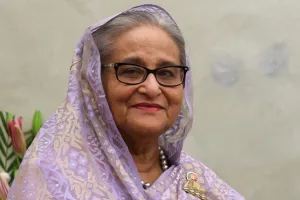
Hasina’s flirtation a cause for alarm

Shantanu Mukharji | New Delhi |

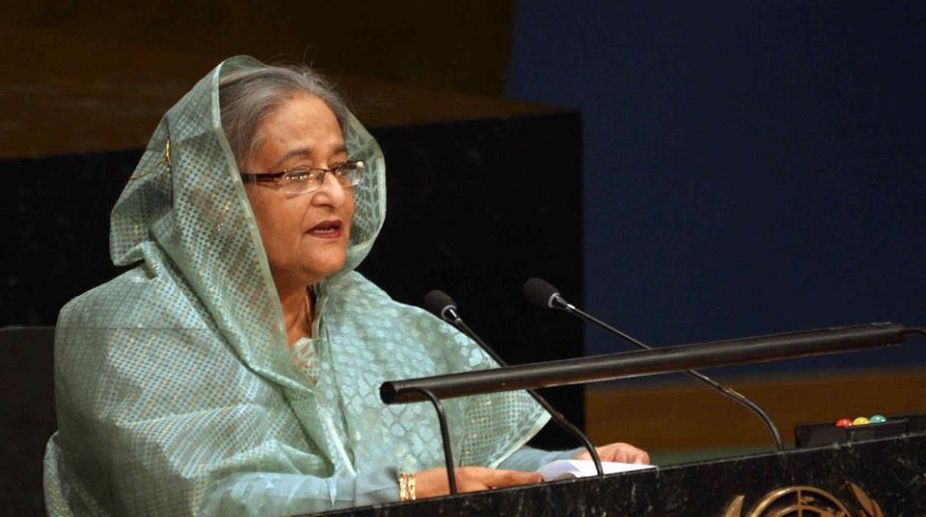
Bangladesh watchers were euphoric after the much hyped and publicised India visit (April 7-10) of Prime Minister Sheikh Hasina raising perhaps misplaced hopes that she would strengthen her secular credentials upon return.

Intriguingly, however, the secular forces in Bangladesh have been deeply disappointed by Hasina’s recent statements which could be seen as warming up to the Islamic hardliners, clearly departing from her secular stance.

The issue emanated from the statue of a Greek goddess, Themis (Greek goddess of justice) installed inside the Supreme Court at Dhaka becoming an eyesore to Islamic hardliners who went on a campaign demanding removal of the idol as it wore a saree which was considered opposed to the tenets of Islam.

The vitriolic campaign was spearheaded by none other than Hefazat-eIslam, an extreme Islamic hardline outfit which has registered a robust growth contributing to reinforcement of fundamentalism in Bangladesh.

Reverting to Hasina’s body language, it is more than an extraordinary coincidence that these gestures became apparent within only 48 hours of her return from India, especially when progressives in Bangladesh had earlier felt that apart from inking numerous bilateral treaties, the Indian polity must have subtly put across to her to be more firm in dealing with Islamic extremists constantly perpetrating excesses on minorities, foreigners and liberals .

On April 11, while addressing Supreme Court judges in Dhaka, Hasina said, “I don’t like it myself it being called a Greek statue and how did a Greek statue reach here?”

This statement has shocked many. Secular and forward thinking lobbies in Bangladesh are crestfallen by Hasina’s tenor.

They apprehend that emboldened by her “pro-Islamic” rhetoric, anti liberation forces may start demanding removal of statues and memorials erected in memory of the 1971 liberation war.

Prominent crusader of secularism in Bangladesh, Shahriar Kabir has already criticised Hasina for what he described as her U-turn. Elaborating on the development, litterateur Taslima Nasreen has questioned the hardliners saying that it’s Greece and only Greece which has given civilisation and the statue is a symbol of Greek culture.

She has said that any move to remove the statue would be a clearly regressive step. Hasina did not stop here.

On a different occasion but in the same vein, she stated that her government would soon start recognising degrees obtained from hardline madrasas thus paving the way for millions of religious scholars to qualify for jobs in public and private sectors.

If implemented (and it looks very likely) in the not so distant future, Bangladesh may have theocratic elements embedded in all walks of life.

And precisely because of this, seculars appear alarmed and apprehend that Hasina is trying to reach out to hardliners – to befriend them to be on her right side as the dates of the next general elections draw close.

Even if we assume such gestures are for electoral reasons, Hasina should keep an exit route open. The radicals wouldn’t let her escape without fulfilling her promises.

The Jamat-e-Islami is banned but its cadres are around following the party ideology in letter and spirit. Jamat and Hefazat-eIslam may have different names but they remain steadfastly united in pursuit of their goal to make Bangladesh an Islamic state.

Politically and diplomatically therefore, Hasina should be astute enough to wean one away from the other lest her own political existence is imperilled.

Hasina will play with fire if she continues to come closer to Hefazat-e-Islam. The group has shown a tremendous rise within only seven years. Its cadres have increased manifold. Its agenda is loud and clear.

It wants enactment of blasphemy laws including banning of Ahmediyas as an Islamic sect.

Its 13-point charter still holds good and it had already demonstrated its scheme of things in 2013 through a long march exposing its strength and drawing more popular support. One should not forget that such outfits are linked to terror.

Bangladesh is already under the ISIS scanner and witnessed a series of terror attacks full of fury and devastation.

Many youth stand radicalised and we don’t know how many are fighting with the ISIS rank and file.

After the collapse of ISIS, the cadres will be back in Bangladesh adding muscle to the ultras. The most dreaded home grown terror outfit, JMB took off with cadres who had participated in the Taliban-led war in Afghanistan.

That’s a lesson to be borne in mind . Those at the helm in Dhaka must exercise extreme discretion and keep bodies like Hefazat-e-Islam at a distance so that her party does not collaborate with it.

This is vital in the interest of peace and stability in the region .

The writer is a retired IPS officer and a security analyst. He is also a senior fellow of the India Police Foundation. The views expressed are personal.
Parties and Politics

Subrata Mukherjee | New Delhi |

The trend of minority parties gaining a majority in the Lok Sabha and the legislative assemblies began with the very inception of Indian democracy.

In the first General Election, Nehru’s Congress received 43 per cent of the votes but had an overwhelming majority in the Lok Sabha and legislative assemblies.

Mavalankar’s diktat was that to be recognised as the Opposition would presuppose 10 per cent of the seats.

This was rooted in the anxiety to ensure a two-party system.

At that point of time, this was regarded as the inevitable consequence of following the first-past-the-post system as had happened in the USA, Britain, Australia, Canada and New Zealand.

However, Mavalankar’s optimism was not fulfilled. When the system of one-party dominance was challenged and gradually suffered erosion, a fragmented party system emerged.

This led to a quirky situation ~ even candidates with one per cent of the votes, won and became ministers.

The first phase of the decline of Congress domination led to a struggle for power between Congressmen and exCongressmen resulting in an unstable period of transition.

Ex Congressmen, pre-eminently VP Singh, Chandra Sekhar and Inder Gujral became Prime Ministers. After Rajiv Gandhi’s assassination, the Congress had to settle somewhat uneasily for the Narasimha Rao regime.

Facing the wrath of Sonia Gandhi who had propelled and supported opponents like Arjun Singh, it was a miracle that he completed his term despite having to lead a minority party in the Lok Sabha.

Sonia’s taking charge of the Congress energised the party but its weaknesses were clearly manifest.

The contrary position of the Congress in Pachmari, especially to go it alone, had emitted mixed signals to parties which otherwise would have been natural allies of the Congress.

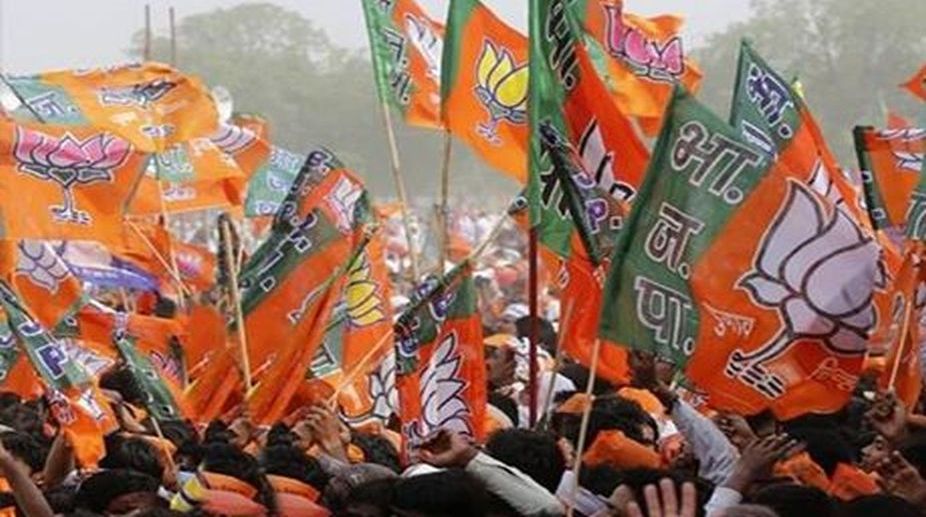
The BJP is the only party that did not emerge out of the Congress. It suffered a humiliating defeat in the 1980 Lok Sabha elections when it secured only two seats and with all its stalwarts defeated.

The CPI-M and the breakaway faction of the Congress ~ Mamata Banerjee’s Trinamul ~ softened their stand vis-a-vis the BJP ending the latter’s isolation and it became an alternative to the Congress ideologically at a time when the party was grappling with the post-liberalised economy by abandoning the Nehruvian state-dominated socialistic pattern of the economy.

However, even at that time Vajpayee’s BJP was perceived as another variant of the Congress. It appeared that only a Congresslike system could work in India.

The Vajpayee regime with a weak Congress as opposition, emboldened the BJP leadership. It advanced the date of the 2004 elections as it was convinced of its victory.

The BJP’s campaign of “shining India” and Advani’s assertion that the BJP, like the Conservative Party in Britain, was the natural party of governance was believed to be the true recipe of success.

The 2004 election defeat was a shocker for the BJP and the exit of Vajpayee allowed a weak Congress to continue and win the next election also under the divided leadership of Sonia Gandhi and Manmohan Singh.

The latter lacked legitimacy as he was neither a seasoned politician; nor could he nurture a constituency of his own. Right through his years as the Prime Minister he was a Rajya Sabha member from Assam, and this ran counter to the convention that a Prime Minister should be a Member of the Lok Sabha.

From 2004 to 2014, Rahul was projected as a person waiting to take over the mantle of his party.

His abilities remained untested and the result was the party’s humiliating defeat in 2014, securing only 19 per cent of the votes while the BJP won 31 per cent, 12 percentage points more than the Congress.

The factors that led to the debacle of the Congress were never seriously analysed. Apart from corruption and alleged policy paralysis, the Congress overplayed the card of identity politics.

Manmohan Singh’s assertion that Muslims have the first claim to the nation’s resources neither helped the community economically nor did it help the party to consolidate its position politically.

The paradigm shift in Indian politics was more because of a rudderless Congress than to a resurgent BJP as a national alternative. Narendra Modi championed the cause of development and national identity.

In the recent Assembly elections in five states, attention was riveted to Uttar Pradesh because the state sends 80 members to the Lok Sabha and a victory in UP would mean a victory at the Centre. Shyama Prasad Mukherjee’s statement, India that is Bharat that is Uttar Pradesh, sums up its pivotal position.

The BJP’s spectacular victory has thrown up the serious limitations of identity politics. Both Mayawati’s BSP and Akhilesh Yadav’s Samajwadi Party have oscillated in power with a core vote-share of 20 per cent each.

This had created an illusory biparty system in the state. The BJP had a vote-share of 42 per cent in the 2014 Lok Sabha elections and 40 per cent in the 2017 Assembly elections, a drop of 2 percentage points.

In the 2012 Assembly elections, the BJP had 16 per cent votes which has increased to 40 per cent in 2017. Identity politics has its inherent limitations and our political process is moving away from it.

Both the SP and BSP were partisan and oligarchic and not in tune with the aspirations and expectations of mainstream voters.

The support base of both the parties being limited, they could not meet the challenge of a larger well organised juggernaut, the BJP, with a larger issue-based perspective.

Akhilesh’s gamble of aligning with the Congress did not inspire confidence as the party in UP was busy retaining its pocket boroughs in Amethi and Rae Bareli.

Demonetisation and not fielding a single Muslim candidate was offset by BSP fielding a disproportionate share of Muslims which helped the BJP to consolidate its majoritarian base and placate many non Yadav OBCs who in a normal issueless election would have gone to the SP.

It is fairly certain that even if Narendra Modi had not carried out an aggressive campaign, the BJP victory was a certainty.

His campaign could have been more graceful had he avoided unnecessary references to the burning ghat and a burial ground and Harvard and hard work.

To secure a massive majority is an achievement but its consequences are uncertain. Rajiv Gandhi received 49 per cent of the votes in the 1984 national elections. In 2015, AAP secured more than 50 per cent votes in Delhi.

But within a year, the euphoria evaporated.

The biggest gain in the recently concluded elections is the phenomenal rise of undecided voters, who defying their group identities, voted according to their judgement.

The age of mature voting has arrived in India and all political leaders and parties are on notice. Perform or perish is the new reality.

The BJP has emerged as a pan-Indian party. The Congress is down but not out. It won Punjab on its own strength.

However, the further decline of the Congress is worrisome as this would weaken the foundations of our democracy.

A serious introspection is necessary for the Congress about its present dynastic leadership which has failed to deliver.

Ever since he took over as vice-president of the party, Rahul Gandhi has lost 17 elections.

Another matter of concern for our democratic process is the anxiety of the BJP to grab power by any means, as has happened in Goa and Manipur.

A strong and stable party system still eludes us.

The writer is former Professor, Department of Political Science, University of Delhi.

Testing time

Editorial |

The BJP has finally succeeded in its more than three decade-old gameplan to find its feet in Manipur.

Already going great guns after the March Assembly election, the impression sought to be created now is that though it lacks the stamp of legitimacy ~ having won just 21 of the 60 assembly seats ~ its patched-up majority may even repeat the performance in 2022.

This is because it has dependable coalition partners like the four-member Naga People’s Front.

Though not a pre-poll ally, it is part of the Democratic Alliance of the Nagaland government, which has some BJP members.

The other four-member team, the National People’s Party, is pro-Centre.

The lone Trinamul Congress and Independent members were left with little choice but to be part of the team.

Two Congress MLAs have already switched their allegiance. People in general appear to have reposed their faith in the BJP (it claims to have enrolled as many as 400,000 new members over the last two years).

What they expect from the new government is salvation from two scourges ~ frequent indefinite economic blockades of the state’s two vital national highways and removal of the draconian Armed Forces (Special Powers) Act, in force in the state since the end of 1979.

Ever since the saffron brigade foraged into Christian-dominated Nagaland, winning seven seats on debut in the 2003 assembly elections, albeit with the proxy support of the NSCN -IM, the strong feelings among tribals of the BJP being communal have all but disappeared.

On this basis, the hill tribes’ allegation that the Meitei-led government is communal does not stand scrutiny.

Since becoming a state in 1972, two Tangkhuls ~ Yangmasho Shaiza and Rishang Keishing ~ together ruled the state for 13 years and a Muslim chief minister was at the helm of affairs for three years.

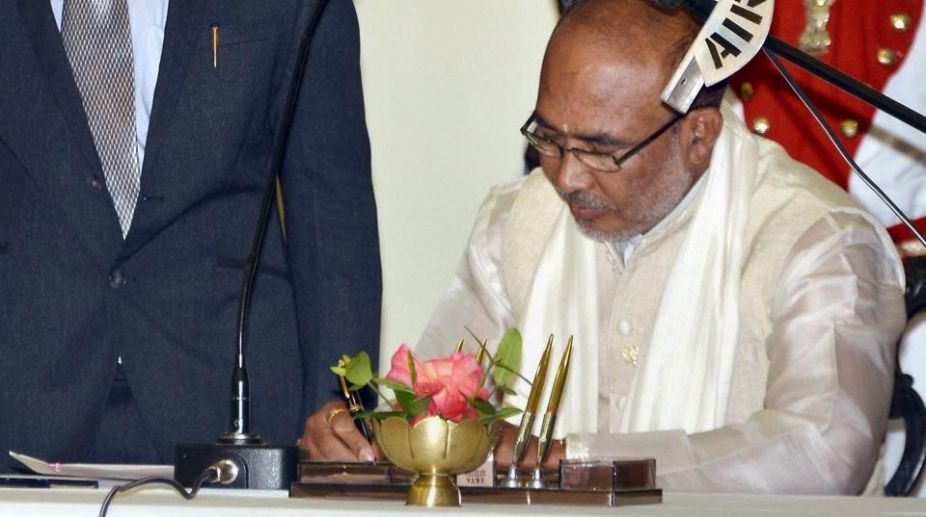
New chief minister Thongombom Biren Singh, who some months before the election was a minister in the Congress government under Okram Ibobi Singh, has the difficult task of building bridges between the valley and the hills.

After NSCN -IM general secretary Th Muivah raised the demand for integration of all Naga-inhabited areas of contiguous three states, the traditional bonhomie between them has disappeared.

More so after the Ibobi government, in May 2010, prevented Muivah from entering Manipur to visit his native village of Somdal in Ukhrul.

Biren Singh did well by visiting Ukhrul where he was reportedly given a warm welcome by Tangkhuls.

Perhaps his government will contribute towards maintaining hill-valley camaraderie by allowing Muivah to visit his birthplace.

In fact, the Ibobi government was not against Muivah’s visit as such; it merely feared upheavals if his supporters organised public meetings.

Fraught respite

Editorial |

The Pakistan Supreme Court last week reached a halfway-house in the case against Nawaz Sharif’s alleged involvement in the Panamagate scandal.
The verdict is neither here nor there. The country’s Prime Minister has not been disqualified. Yet any sense of satifaction has been tempered by the fact that the five-judge Bench has not awarded a clean chit either.

The differences within the court must have been sharp if the ratio of the split verdict ~ 3-2 ~ is any indication.

Of particular significance therefore are the two dissenting notes.

The two judges, who have ruled against Sharif, observed that he should be disqualified as he could no longer be considered ‘honest’ and ‘truthful’ (ameen and sadiq), whereas the other three were in favour of forming a Joint Investigation Team to take a call on whether or not the charges against the Prime Minister were true.

The sigh of relief stems from a not too comforting margin. On the surface, the judicial process is bound to be prologed further still with the court ordering the formation of a JIT to probe how the family’s money was transferred to Qatar.

With the present Army Chief General Khamar Javed Bajwa, not as averse to the civilian establishment as some of his predecessors, notably the previous chief, Sharif can be reasonably sure that the Rawalpindi GHQ will not be anxious to rock the boat quite yet.

However, there is no sense of euphoria pending the findings of the JIT. A section of the judiciary is ranged against the Prime Minister as are a crosssection of parties ~ Imran Khan’s Pakistan Tehreeki-Insaf (PTI), the Jamaat-i-Islami (JI), the Watan Party and the All Pakistan Muslim League, which had framed the case as a campaign against corruption.

Once again the judiciary has emerged as an important factor in the power-play, in addition to the military and the Opposition.

The verdict has doubtless been a close call for the Prime Minister. Though he has not been given a clean chit, he has been saved from the ignominy of being disqualified.

Dismissal would have left his party (PML-N) in power, but would have led to another bout of instability in a season of modest growth, marginally improved security, and an uneasy truce between the civilian government and a powerful military.

The result of the JIT probe will be crucial for Sharif not least because of the scheduled elections next year.

The fact that the court is not convinced with the evidence garnered thus far hasn’t really gone in Sharif’s favour.

The Bench is unanimous on the point that it was not satisfied with regard to the money trail provided by the Sharif family’s counsel and has ordered the formation of a JIT to investigate the business dealings abroad. It is a fraught respite.


Websites of DU, AMU, IIT-Delhi hacked

IANS | New Delhi |

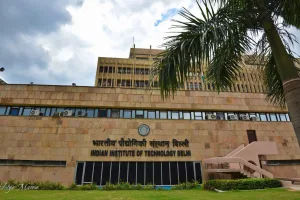
Websites of Delhi University (DU), Aligarh Muslim University (AMU), Indian Institute of Technology -Delhi and some other educational and training institutions were hacked allegedly by some Pakistan-based groups on Tuesday.

The portals of DU, AMU, IIT-Delhi and IIT-BHU, when opened, did not show the usual information and were posted with messages and videos about alleged atrocities by Indian security forces in Jammu and Kashmir.

The hackers, who called themselves PHC, also posted some pro-Pakistani slogans on the websites, and said: "Nothing deleted or stolen. Just here to deliver my message to Indians."

The message asked Indians if they were aware of what their soldiers were doing in Kashmir. The hacked portals also had "Pakistan zindabad" slogans. 

Websites of University of Kota, Army Institute of Management and Technology, Defence Institute of Advanced Technology, Board of Research in Nuclear Sciences, and National Aerospace Laboratories did not open or could not be reached. 

When contacted, educational institutions said they were linked to Ernet India Server which hosted their websites. 

Afsar Khan, former Registrar and a member of AMU website management team, told IANS that the website for admissions was hosted locally and was working fine. 

"Ernet (Education and Research Network) India Server that hosts websites has been hacked. They are working on it and it will be restored within 3-4 hours. Our website for admissions, which is hosted locally, is working fine and we won't face any problem on that front," he said. 

DU, in its statement, said the website of the university was inaccessible from outside the campus for some time "due to some problems in the domain name servers pointing incorrectly to another site". 

"The problem was detected and immediately rectified by contacting ERNET, who has provided the domain name for University of Delhi," the statement said.

IIT-Delhi spokesperson Kalyan Bhattacharjee told IANS that there was nothing wrong with their server and it was Ernet that was hacked.

"Our server is intact. We are registered with the ERNET — under the Ministry of Electronics and Information Technology. They have a DNA server and has our addresses," he said.

"It is this address location that was tampered with by some external agency," Bhattacharjee said, adding that the ministry is investigating the matter.

Delhi gets respite with light rain, similar weather on Wednesday

IANS | ​​​​​​​ New Delhi, |

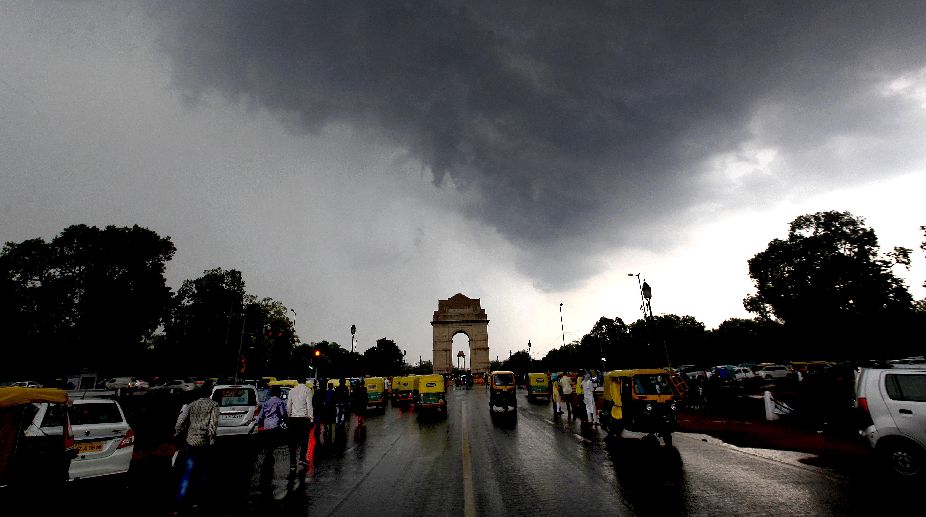
Light showers cooled down the national capital on Tuesday night with after a hot day that saw the maximum temperature recorded at 38.3 degrees Celsius, average for the season, the Met Office said. Thunderstorm and rain are also likely on Wednesday.

A weather official said that the light rain was observed at various locations in the city around 9.30 p.m. and that the sudden change in the weather was due to western disturbance — a storm system originating in the Mediterranean Sea that causes rain and snow in the northwestern region of the Indian subcontinent. 

"Partly cloudy sky with possibility of thunderstorm is likely on Wednesday," said an official of the India Meteorological Department (IMD) here. 

The maximum and minimum temperatures are likely to hover around 38 and 23 degrees Celsius, respectively. 

The minimum temperature on Tuesday was recorded at 23.8 degrees Celsius, a notch above the season's average, while the humidity oscillated between a high of 55 and a low of 22 per cent. 

Monday's maximum temperature settled at 37.8 degrees Celsius, while the minimum temperature was recorded at 25.6 degrees Celsius. 
 

Significance of Modi’s Israel visit enormous: Israeli envoy

IANS | New Delhi |

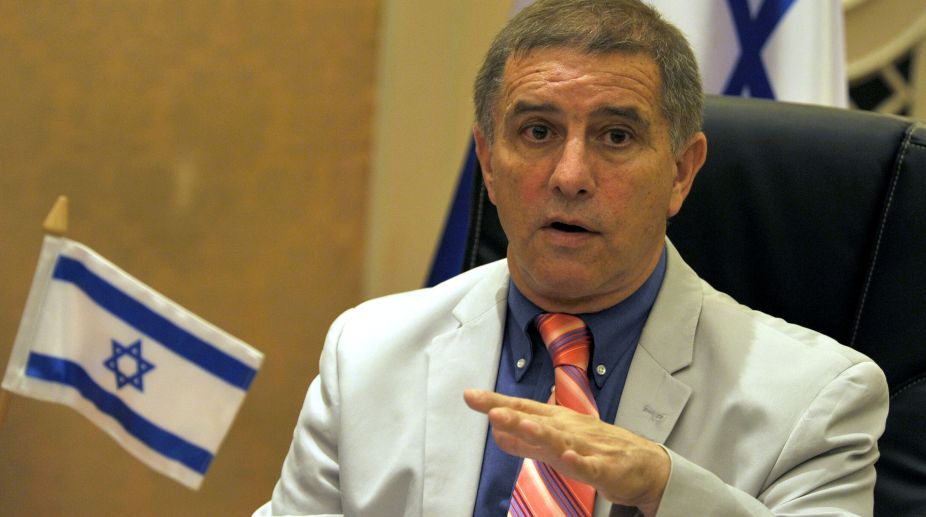
Israel's Ambassador to India Daniel Carmon on Tuesday called the coming visit of Prime Minister Narendra Modi to Israel as enormously significant.

"Its timing is so right. The fact that this visit happens after so many years, after being so hesitant, after not talking about it… things have evolved. It took an effort," Carmon said after delivering a special address on 'India-Israel: Enduring Partnership' at an event organised by Syama Prasad Mookerjee Research Foundation at the Nehru Memorial Museum and Library here.

"The (bilateral) relation is very deep," he said. 

On the importance of the bilateral defence relationship, the envoy said, "The defence relationship is there. It is not the only facet of our relation. In order to reflect the depth of our relation, we should be doing more in other areas."

Although the dates have not been finalised, Modi is expected to visit Israel in July while returning from G-20 Summit in Hamburg (Germany) from July 7-8.

This will be the first prime ministerial visit from India to Israel.
On a query on terrorism, Carmon said: "Terrorism is one of the challenges that we face and India and Israel have suffered a lot due to terrorism."

"The challenge is how to unite the forces — either bilaterally or through an international mechanism. The world lacks the mechanism; the world even lacks the definition of what terrorism is."
"This is a new battlefield and it is not between the armies anymore," he added.

Carmon also talked of the challenge of safeguarding human rights while fighting terrorism.

During his address, Carmon said his country's focus now is on cooperation in the field of water resources management, dairy farming and agricultural cooperation at the next level.

He also talked about promotion of better understanding between the people of the two countries about each other's culture and history.

Offering his condolences on the death of CRPF jawans in the Maoist attack in Chhattisgarh, Carmon said: "Very sad news from Chhattisgarh. We have sent out our condolences to the victims' families."

India and Israel are celebrating 25th year of their diplomatic relationship.

India established diplomatic relations with Israel on January 29, 1992. Since then, two Israeli Presidents — Ezer Weizmann and Reuven Rivlin — have visited India, in 1996 and 2016 respectively.

President Pranab Mukherjee visited Israel in October 2015.

Israel Aerospace Industries on April 6 announced the signing of contracts worth almost $2 billion for the supply of medium-range surface-to-air missiles and the missile defence systems to the Indian Army.

Israel is one of the largest and most reliable suppliers of military hardware to India.

IPL 2017: RCB, SRH share points after rain wash-out

RCB with five points in their kitty are placed at sixth in the IPL team standings.

IANS | Bengaluru |

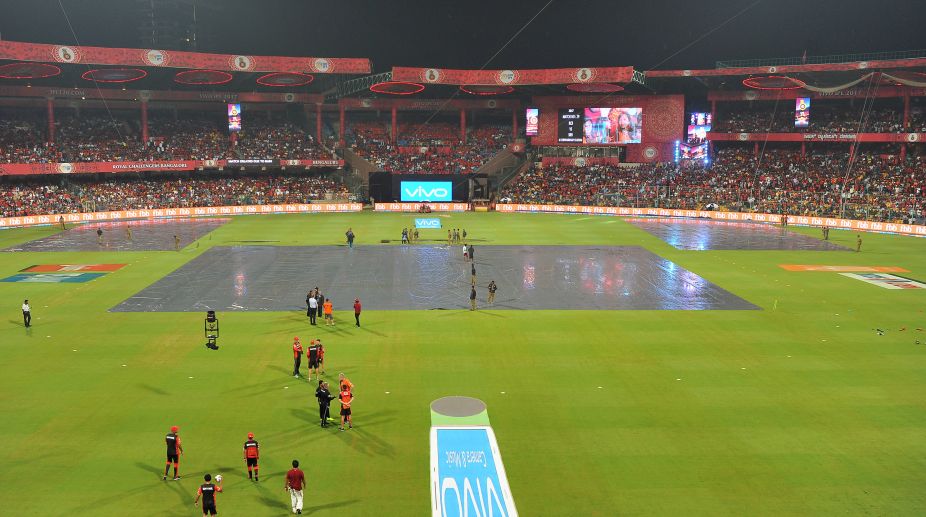
The Indian Premier League (IPL) match between Royal Challengers Bangalore (RCB) and Sunrisers Hyderabad (SRH) at the M Chinnaswamy Stadium here on Tuesday was called off due to incessant rain.

Both the teams will share a point each as the rain refused to relent. 

RCB with five points in their kitty are placed at sixth in the IPL team standings while the visitors are at third with nine points from their eight outings.
 

Champions Trophy: Sam Billings wants to give England selectors ‘headaches’

The 25-year-old also said England is ready to make the most of the home advantage.

IANS | London |

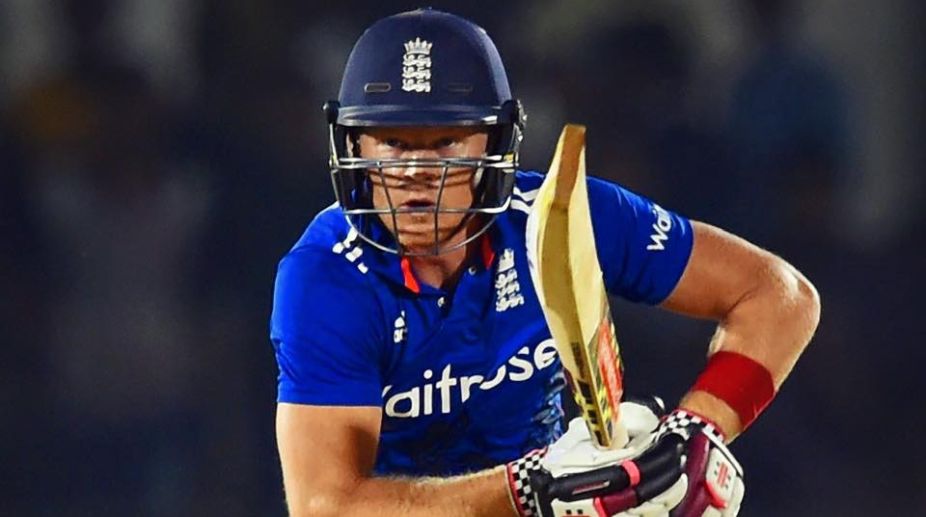
England wicketkeeper-batsman Sam Billings feels his inclusion in the England squad for the upcoming International Cricket Council (ICC) Champions Trophy, starting here from June 1, is enough to give "headaches" to the national selectors.

Billings said his flexibility to bat at any position besides keeping wickets will give the side different options.

"I want to give the selectors some headaches. I have proven that I can put in match-winning performances and get big scores," Billings was quoted as saying by ecb.co.uk.

"I think I can offer different options because of my flexibility in being able to bat between one and seven as well as keep wicket, so I think I have something to offer the team," he added.

Exuding confidence on the composition of the team to win the tournament, the 25-year-old said the side is ready to make the most of the home advantage.

"Our aim is to win the Champions Trophy and we will go into the tournament with nothing to fear because of the ability in our whole squad," said Billings, who is currently playing for Delhi Daredevils in the Indian Premier League (IPL).

"We have amazing quality throughout the squad and everyone can come in and do a really good job."

Billings was named in the 15-man England squad that will play a three-match One-day International (ODI) series against South Africa next month before the start of Champions Trophy. He was also included in the 14-man group for the two-match ODI Series against Ireland in May.

Acknowledging the pressure of playing in front of the home crowd, the right-hander said the team should use that to their advantage.

"There is always going to be pressure, especially in a home tournament, but should be using that to our advantage," he said.

"We know how good we are and how good we can be. We have the attitude to improve and we go into every game believing we can win."

"It's a cliche, but we will take it one game at a time. If you look too far ahead, that's when you run into problems, but we know the end goal.

"We have a great team and a great group of players who are mates and enjoy each other's company, so we will all be really looking forward to it," he added.

England will start their Champions Trophy campaign against Bangladesh at the Oval on June 1 before completing the group stage with matches against New Zealand and Australia.

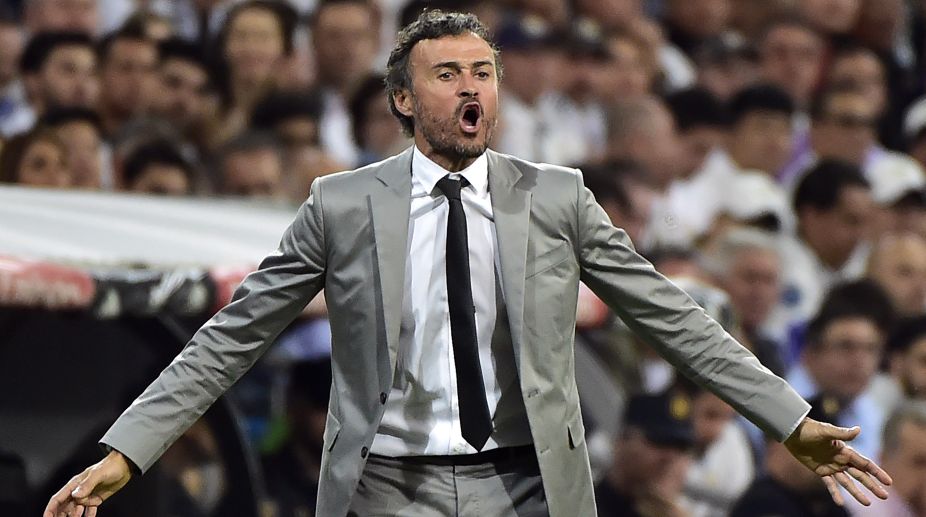
Coach Luis Enrique calls Clasico victory ‘morale booster’ for Barcelona

Enrique hoped that this victory will serve "as a stimulus" as the season enters its final stretch.

IANS | Barcelona |

FC Barcelona coach Luis Enrique said on Tuesday that the Clasico victory against hosts Real Madrid has boosted the morale of the Catalan football giants.

The coach urged his squad to be organised in the remaining La Liga matches after defeating Real Madrid 3-2 and topping the table, reports Efe.

During a press conference on the eve of the clash against Osasuna, he reiterated that "the win at the Santiago Bernabeu (stadium) was a morale booster".

Enrique hoped that this victory will serve "as a stimulus" as the season enters its final stretch.

With only five games before the end of the season, the coach prefers to focus on beating Osasuna on Wednesday at the Camp Nou stadium here.

"The key is to win the points because we absolutely must continue chasing them," the coach stressed referring to runners-up Real Madrid.

He added that he does not believe that Barcelona are favorites to win the La Liga and predicted the end of the season will be "complicated" for both clubs.

Barcelona lead La Liga with 75 points after 33 matches on goal difference, while second-placed Real Madrid have the same points with one match in hand against Celta Vigo.

Amit Shah launches BJP’s ‘Vistar Yatra’ from Naxalbari

IANS | Siliguri |

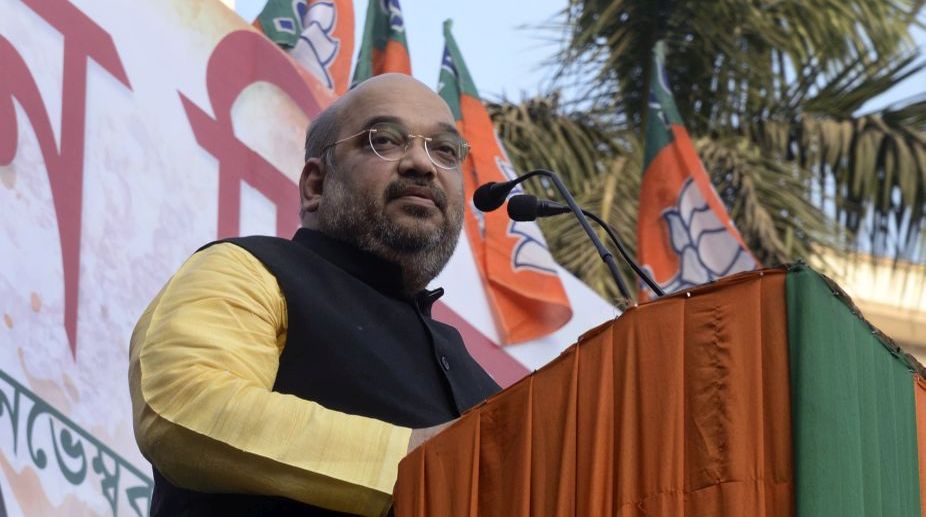
BJP chief Amit Shah on Tuesday lunched at a tribal's house, and knocked on the doors of the locals here as part of an intensive booth-level mass contact programme in Naxalabari block — the cradle of the 50-year-old Maoist movement in India — in northern West Bengal's Darjeeling district.

Shah held a meeting of Bharatiya Janata Party (BJP) workers in booth number 93 of the Naxalbari assembly constituency at the house of the party's only panchayat member in the area — Sadhana Mandal, to mark the start of his 15-day 'Vistar Yatra' to expand the party's base.

The BJP president, who arrived here at 11 a.m., had lunch at the house of party activist Raju Mahali — a tribal daily wager, who makes a living by painting apartments and buildings.

Shah sat on the floor at Mahali's spartan house in Dakkhin Katiajote village, and was served vegetarian fare on a banana leaf. The menu was rice, moong dal, 'potol' (a small gourd) fry, squash curry, papad and salad.

At the workers' meeting, Shah accused the Mamata Banerjee-led state government of not letting the central government's developmental schemes percolate down to the grassroots.

"The Bengal government is not letting Modiji's schemes to percolate down to the grassroots. A (Pradhan Mantri) Ujjawala Yojana is working well in Gujarat, Uttar Pradesh, Haryana. But we are facing difficulties in Bengal in delivering the benefits of Modiji's scheme to the poor and the under-privileged people," Shah said.

"The Bengal government thinks they will be able to stop Modiji's chariot. I want to tell the leaders of Trinamool Congress that the more you try to dominate, the more you carry out injustice, the lotus will bloom," he said.

Shah said Bengal is becoming poorer by the day and the state, which once led the nation, has now plunged into "chaos due to the prevailing unemployment, violence and appeasement politics" pursued by the Banerjee regime.

"After observing the public enthusiasm,, I am confident that the lotus will bloom. The progress of BJP in Bengal is a certainty. No one can block its way forward," he said.

Alluding to the recent Kanthi Dakhsin assembly by-poll, where the BJP finished second by pushing the Left Front to the third spot, Shah said the huge support for the BJP is an indication of "Bengal's yearning for change from TMC's misrule and politics of appeasement".

Describing Naxalbari as one of the last frontier villages in the country, sharing borders with Bhutan, Nepal and Bangladesh, Shah asserted that the central government led by Narendra Modi has been working to reach out to all such villages in the country through its developmental programme.

"I Will spread the message of PM Modi's pro-poor governance and Sabka Saath-Sabka Vikas (development for all with all) from Naxalbari, once known for violent Red Revolution," he said, referring to the area which was the stage for an armed peasant uprising in 1967 led by the local tribals that inspired the Maoist movement which over time spread to various other states.

The BJP chief also praised the demonetisation of Rs 1,000 and Rs 500 currency notes by the Modi government, arguing that the policy has benefitted the country and played a "big part" in the recently-held assembly election in Uttar Pradesh, which the party swept.

Shah is scheduled to visit Chief Minister Mamata Banerjee's constituency Bhowanipore in south Kolkata on Wednesday.

The eastern state forms the first leg of Shah's 'Vistar Yatra', during which he would spend three days each in four states and a Union Territory, in an effort to strengthen the party organisation at the grassroots.

After West Bengal, Shah would move to Odisha, Telangana, poll-bound Gujarat and the Union Territory of Lakshwadeep.

Shah is scheduled to visit select booths in each port of his call, holding workers' meetings, going to some houses as part of an intensive mass contact programme, and addressing intellectuals, besides interacting with senior party leaders.

Women’s empowerment by education has positive impact on future: President

IANS | Panaji |

Women's empowerment through education will have a positive impact on our future generations, President Pranab Mukherjee said on Tuesday.

He also called for a greater collaboration between universities and industries in order to make the education system more effective.

"It is important that young women particularly those belonging to marginal sections gain increased access to the portals of colleges and universities.

"Women's empowerment through education will have a positive impact on our future generation. It is rightly said that if we educate a man, we educate an individual but if we educate a women, we educate an entire family," Mukherjee said in his address at the Goa University's 29th annual convocation ceremony.

"As concepts and understanding evolve, our faculty has to be better prepared with up-dated knowledge. A strong research eco-system has to be built on the plank of institutional collaborations, research parks, and talented researchers. There also have to be close link between Indian universities and industries," he added.

Calling for value-oriented learning, Mukherjee also said that a strong connection with society would provide the edifice for value-oriented learning in them.

"This will instill in the students a sensitivity that will inspire them to search for solutions to vexed socio-economic problems in the environment in which they are living. The onus is on our institutions to produce men and women of substance and character, not merely competent professionals," he said.

Troopers’ sacrifice won’t go in vain, will review Maoist strategy: Rajnath

IANS | Raipur |

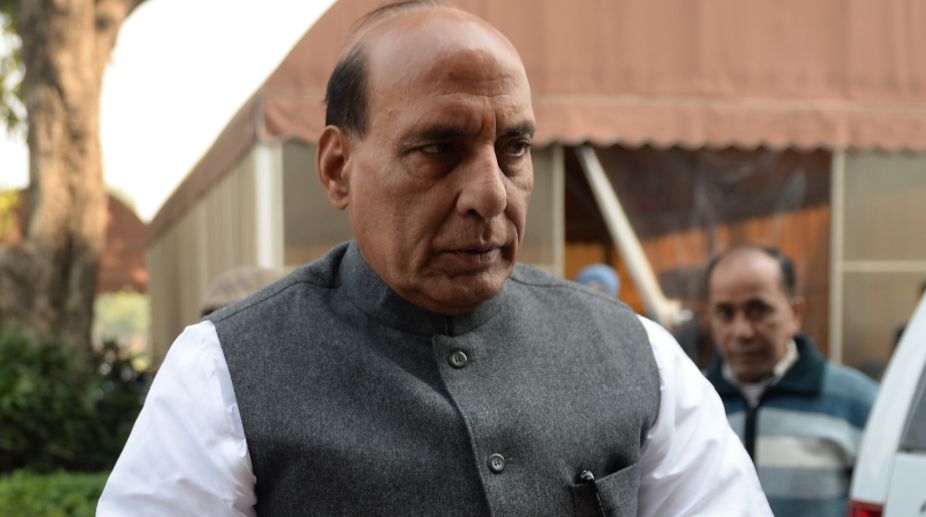
A day after 25 CRPF troopers were massacred by Maoists in Chhattisgarh, Union Home Minister Rajnath Singh on Tuesday said that the strategy to root out left-wing extremism will be reviewed and a meeting of affected states has been convened on May 8 for the purpose.

The Home Minister, who visited the state to pay tributes to the 25 Central Reserve Police Force troopers killed at their camp, termed the massacre as a "cold blooded murder" and said that their sacrifice won't go in vain.

"The attack in Sukma is a cold blooded murder… It is an act of cowardice. The attack was out of desperation," he told reporters after paying homage to those killed.

"We are working to root out the problem of LWE (left-wing extremism). The LWE groups are anti-development. They do not want development in the area. The Centre and state governments will work together," he added.

Rajnath Singh said he had convened a meeting of states affected by Maoism on May 8. "We will review the strategy and if necessary we will revisit it."

He also accused the Maoists of using tribals as cannon fodder.

On Monday, around 300 Maoists, including women, ambushed a CRPF contingent in a forested patch in Chhattisgarh, killing the troopers and escaping with their AK-47 assault rifles.

Rajnath Singh, who reached Raipur with Minister of State for Home Hansraj Ahir and CRPF's Additional Director General Sudeep Lakhtakia, said the government would not let the sacrifices of the troopers go in vain.

"We have accepted it as a challenge. It will be answered appropriately."

"We have lost precious lives of our soldiers… Left-wing extremists are trying to impede the progress (of the region)… They are the biggest enemy of the poor," he added.

Responding to a query over alleged intelligence failure in the incident, Rajnath Singh said, "This is not the time for a blame game."

Rajnath Singh also visited a hospital and enquired about the health of the CRPF personnel injured in the Maoist ambush. He said that all the injured soldiers are now out of danger.

Later, attending a function in Bihar, Rajnath Singh again accused the Maoists of using tribals as a shield and dared them to face the security forces from the front. He also threatened tough action against the rebels of they continue to attack security forces.

In Raipur, Chattisgarh Chief Minister Raman Singh, who also addressed the media with Rajnath Singh, said that fight against Maoists would continue with "more vigour".

"The fight against Maoists in Sukma is the biggest operation against LWE in the country. We have decided to enhance our activities and construction work in the region," he said.

But, senior Congress leader Digvijaya Singh stirred a controversy by reiterating that Raman Singh and the BJP had a "deal and understanding" with the Maoists in the state.

He called for talks with all stakeholders to bring Maoist violence under control.

"Chief Minister Raman Singh ji and the Bharatiya Janata Party win elections from there because they had a deal and understanding with the Maoists. I have said this before, and I am stating it again," he told reporters.

Digvijaya Singh said unless the state's tribal villagers are taken into confidence, Maoist violence cannot be brought under control.

"The government should talk to all the stakeholders. Prime Minister Narendra Modi and his government only believe in 'jumlas' and have been indulging in it since May 2014," he said.

Condemning the attack, the Communist Party of India (CPI) objected to the term "red terror" for Maoist violence.

"The CPI strongly condemns the killings… in Sukma… Paying its respect to the jawans, the party conveys its deep condolences to their families," it said in a statement.

But it objected to the "attempt to term it as red terror".

"There are several Left parties in Chhattisgarh, including the CPI, which are working in defence of tribal people. They do not agree with Maoists — politically and ideologically and also with their form of struggle."

The CPI said that both central and state governments "need to do serious introspection in the larger context and perspective" to find out why it has been "failing to handle the situation in the region".

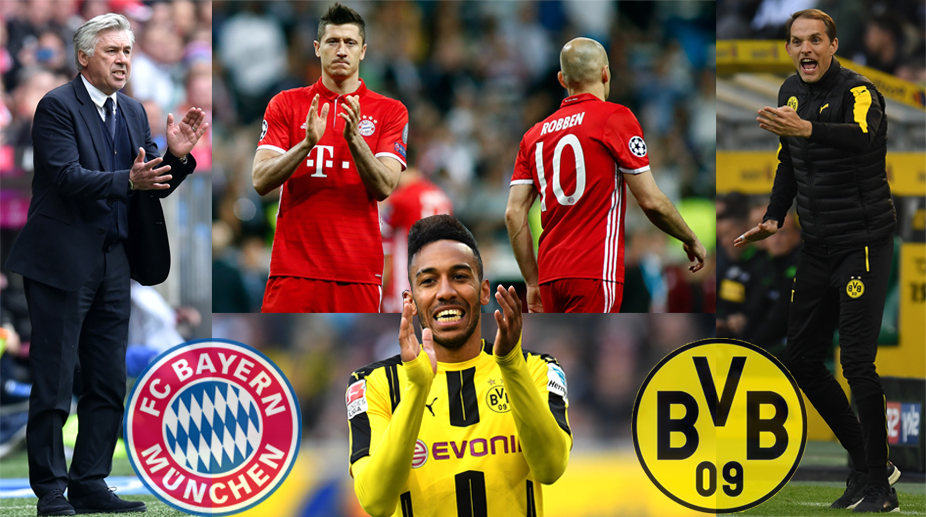
DFB Pokal preview: Bayern Munich host Borussia Dortmund in Der Klassiker

German football's biggest rivarly is revisited for a what promises to be a classic cup semifinal!

Prithviraj Dev | New Delhi |

German football’s most epic rivalry, Der Klassiker, will witness is latest instalment when Bayern Munich host Borussia Dortmund in the DFB Pokal semifinal on Wednesday night at Munich's Allianz Arena.

The Bavarians will be looking to put their European heartbreak at the hands of Real Madrid behind them as will Borussia Dortmund who were knocked out at the hands of Monaco

The League is out of Die Borussen’s reach. Hence, their young squad may have more motivation as they try to end the season with at least one trophy.  Beating Bayern on their home turf, however, will be no easy feat and regardless of the outcome, this will be one cracking game of football.

Bayern Munich

Munich were unlucky to lose to Madrid, but have only themselves to blame after being extremely profligate, a trait normally not associated with German’s most successful team.

They beat their arch-rivals four-one recently in the league. But without the likes of Manuel Neuer, they will find it difficult to achieve a repeat of that scoreline. For Dortmund’s youthful exuberance is at times almost impossible to stop. That is why Bayern need their big guns to be firing on all cylinders at the Allianz Arena.

At the centre of the attention will be Robert Lewandowski, a man who Dortmund need no reminding of after having spent a goal-laden four years with the Black and Yellow. 

Javi Martinez and David Alaba are struggling with minor injuries but should make the match day squad at least, giving Ancelotti an almost full complement of player to choose from. With their European ambitions curtailed, the pressure is on the Italian manager to deliver a League and Cup double at least.

What they are saying: “You practice a penalty in training from time to time, but we don't want to let it come to that,” Bayern captain Philip Lahm (as per www.fcbayern.com)

Injury doubts: Manuel Neuer (Foot), Javi Martinez (Thigh), David Alaba(Thigh)

Suspension Alert: None

Borussia Dortmund

While it would be unfair to say Sven Ulreich is Bayern’s weak link, there is no denying that the Bayern’s reserve keeper is no patch on Manuel Neuer. So with Bayern without their No. 1, and Marco Reus fit and firing again, there is plenty of optimism for this young Dortmund side who will be desperate to avoid ending the season empty-handed.

Dortmund’s front three of Ousmane Dembele, Pierre-Emerick Aubameyna and Reus is as good as any across Europe and with no Neuer between the posts, they will be licking their lips in anticipation.

Centre-back Sokratis suffered a knock over the weekend but he should be fit to start. However, Nuri Sahin suffered ligament damage which means his season has come to an end. Sahin’s loss shouldn't be concerning Thomas Tuchel too much as he has plenty of talent to call upon.

What they are saying: “Whenever Marco Reus plays he scores important goals for us. That goes to show what and who we have been missing throughout this season. Marco is a guy who can do special things. We need him to be on top form, otherwise we don't have a chance in Munich” Borussia Dortmund coach Thomas Tuchel (As per www.bvb.de)

Injury doubts: Mario Gotze, Marc Bartra (Wrist), Andre Schurrle( ) Sokratis (Muscle Injury), Nuri Sahin (Ankle)

Suspension Alert: None

Super Stat: The first Der Klassiker  began with a 2–0 win for Dortmund in Munich on 16 October 1965!

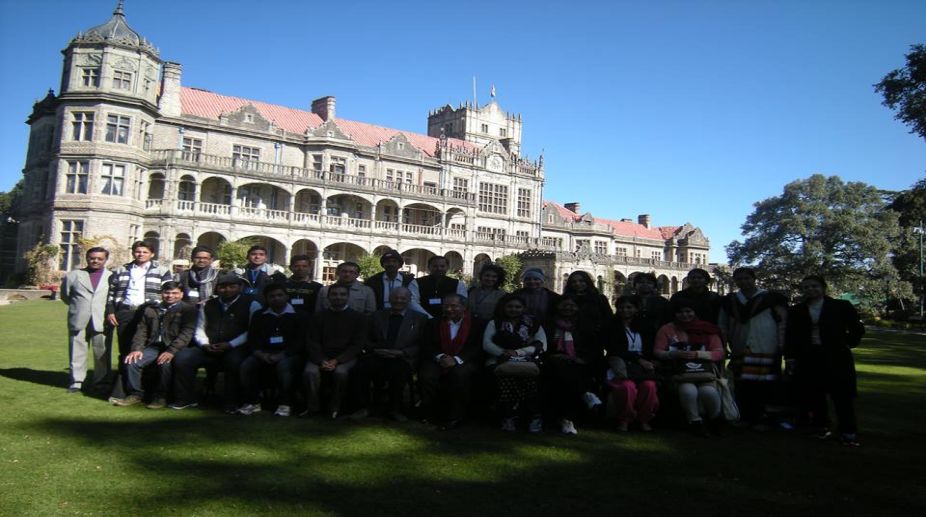
Three-day seminar on ‘Regional Cultures and New Media Technologies’ at IIAS

Statesman News Service | New Delhi |

A three-day national Seminar on “Regional Cultures and New Media Technologies’ will be organised at the Indian Institute of Advanced Study, Shimla from April 26.

“This seminar is an attempt to address the cultural continuum that lies between the local/immediate, the national capital or cultural production hubs and the many linkages in the vast web that connects them. The term ‘regional’ used here is not the same as ‘peripheral’ if one were to follow the mainstream vs margins discourse. The term ‘Region’ as inherently ‘unsteady’, ‘diffuse’ and are constantly reformulated by linguistic, cultural and geo-political communities,” an official said.

Traders suspend toll collection in Ghaziabad

IANS | Ghaziabad |

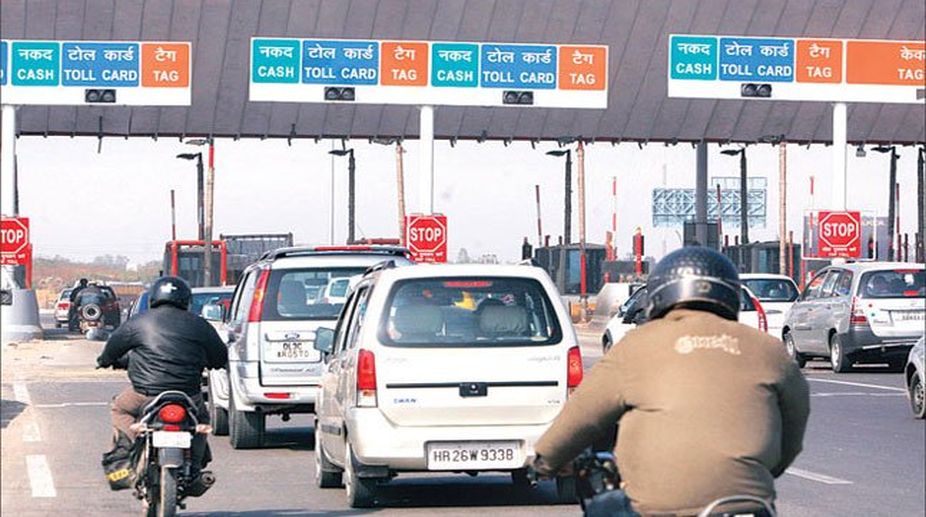
Traders in Ghaziabad on Tuesday protested against the collection at Dasna toll plaza and freed the passage of vehicles for over an hour.

They staged a sit-in at the toll plaza and suspended the collection of toll on National Highway 24.

There was heavy police deployment at the plaza but the police personnel merely watched as the traders warned the collectors to stop the collection of toll within a month.

In a memorandum submitted to National Highways Authority of India site engineer R.K. Pandey and addressed to Chief Minister Yogi Adityanath, the traders demanded immediate suspension of toll collection.

According to them, the toll was being collected illegally as its term had expired three years ago. The contractor collected the toll with the help of goons, the traders said.

Samyukt Vyapar Mandal President Ashok Bhartiya said the traders would open the barrier free to all if the collection did not stop before August 15.

Manchester City vs Manchester United: Combined XI for Manchester Derby

Two of the most expensively assembled squads in the Premier League, but who makes the cut?

Prithviraj Dev | New Delhi |

Footballing derbies are special as they go beyond typical rivalries and transcend into something much more. And, the Manchester Derby has become one of the most intriguing fixtures in the English Premier League calendar.  
 
With City set to host United on Thursday at the Etihad in a game that will prove crucial in the race for the top-four, thestatesman.com has compiled a combined XI (4-4-2 formation) from the Manchester clubs based on their sterling performances in the 2016-17 season.

Goalkeeper: David de Gea
City’s keepers never stood a chance. Claudio Bravo has been atrocious in his debut Premier League season and while Willy Caballero is a decent deputy, he isn't in the same league as United custodian David de Gea. The 26-year-old is the number one goalkeeper in England (And perhaps in the world!) without a doubt. Should he leave Old Trafford in the summer, it will leave a gaping hole that the Red Devils will struggle to cover.
 
Left Back: Gael Clichy
Clichy finally seems to have nailed his berth in the City starting XI and has strengthened his manager’s faith in him by being consistent through the season. This time, he has no injury concern, the same which cannot be said for Luke Shaw. He has flitted in and out of Jose Mourinho’s squad while back-up Daley Blind has made more appearances than him at left-back this season.
 
Centre Defence: Eric Bailly
Alongside Antonio Valencia, Bailly has been the only ever-present in the Red Devils back-four. Initially thought to be too rash, the Ivorian has tempered his game and the results have been there for all to see. Tough and quick, the 23-year-old has had quite the year in Manchester, unlike City man John Stones, who has struggled to justify his exorbitant price tag. Stones may well prove to become the leader he is touted to be, but his performances this year have been below-par.
 
Centre Defence: Nicolas Otamendi
A startling selection for some, Otamendi’s rough style may not be for everyone, but it is effective more often than not. He’s played almost every game and with captain Vincent Kompany fit again, looks to be Guardiola’s favored. United centre-back Chris Smalling had impressed briefly alongside Bailly, but as is the case with Kompany, he has been on the treatment table for too long to merit an inclusion.

Right Back: Antonio Valencia
Arguably the best right-back in the Premier League right now, Valencia has become an epitome of consistency this season. Bacary Sagna has been injured too often this season and Pep Guardiola prefers Jesus Navas ahead of Pablo Zabaleta. Not to take anything away from United’s Ecuadorian, who has even learned how to cross as an added bonus!
 
Left Midfield: Leroy Sane
Sane has been impressive since the turn of the year, acclimatising to the Premier League easily. Fast and incisive, it is safe to say the 21-year-old has begun to repay the considerable transfer fee City had to shell out for him in the summer. Anthony Martial has struggled in his second season at Old Trafford, with several issues preventing him from repeating last year’s heroics. Had he been a regular starter under Mourinho, Sane may have been pushed out, but as things stand, City’s speed demon makes the cut.
 
Centre Midfield: Kevin De Bruyne

Playing a deeper role than he is accustomed to, De Bruyne has been consistent. His set-pieces are devastating, his work-rate has surprised many and his ball-playing ability is top-notch. United man Paul Pogba has overcome a rocky start to show flashes of his immense potential, but is still not the finished article and that is why, City’s Belgian maestro seals this spot.
 
Centre Midfield: Ander Herrera
Herrera has been excellent and thriving as he has enjoyed an extended run of starts this season. He deserve an inclusion in the PFA team of the year, according to many. City midfielders Yaya Toure and Fernandinho have had solid but nowhere near anything as what Herrera has been doing for the Red Devils.
 
Right Midfield: Raheem Sterling
Sterling continues to grow, silencing his many doubters. As Pep Guardiola looks to fashion his next team, the 22-year-old English winger is likely to play a pivotal role. He’s never been short on speed but as his crossing and finishing get better, Sterling is emerging into that all-round winger City want him to be. Henrkikh Mkhitaryan had a difficult start to life at United. While he has turned things around, he cannot be included ahead of Sterling.

Centre Forward: Zlatan Ibrahimovic
Yes, he may be injured and will in all probability not be playing for United next season. But Ibrahimovic’s contributions to Mourinho’s side since signing on a free transfer in the summer cannot be overstated. The veteran Swede has carried the Red Devils’ goalscoring burden for a major chunk of the season and his big presence along with his unflappable confidence make him an easy pick.

Centre Forward: Sergio Aguero
Much has been made of Aguero’s ‘indifferent’ form this season, but 17 goals from 21 starts is not a bad return from any angle. The Argentine remains one of the deadliest forwards the EPL has to offer and on Thursday, United will be desperate to keep him quiet, Such is the high regard he is held by his peers. 
 
Final Score: Manchester City 6, Manchester United 5