Logo

Defence manufacturing policy coming soon: Jaitley

IANS | New Delhi |

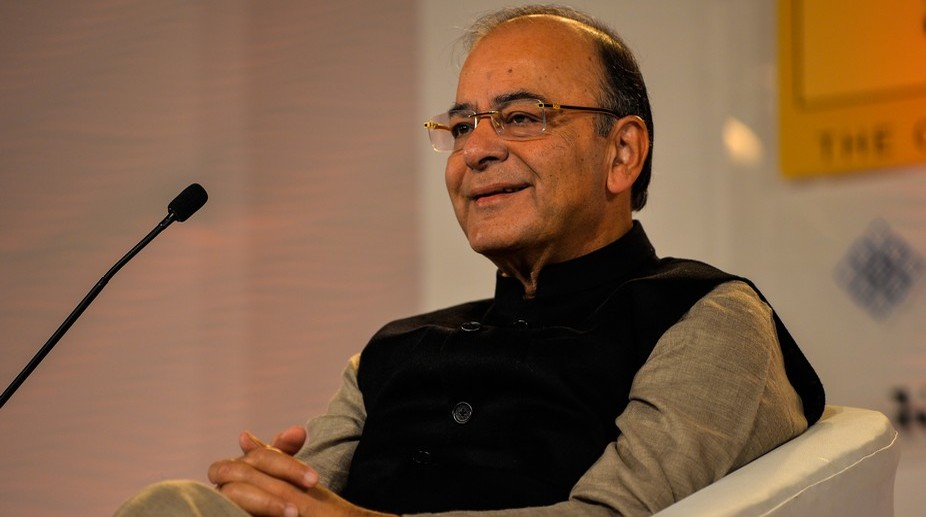
The Indian government will soon unveil a policy to encourage domestic defence manufacturing and reduce imports of military equipment, Union Finance and Defence Minister Arun Jaitley said on Friday.

"India is the world's largest arms importer, spending some 1.8 per cent of its GDP on defence. It imports about 70 per cent of defence equipment, a proposition which the government wants to change," Jaitley said at the annual session here of the Confederation of Indian Industry (CII).

"We're in the advanced stages of formulating a policy where we can ensure that instead of just being buyers… on the strength of technological and other tie-ups, India also becomes a manufacturing economy," he said.

"The response that we have from domestic and international industry has been quite encouraging itself," he added.

India has targeted spending of around $250 billion by 2025 on weapons and defence equipment.

On the theme of manufacturing, Jaitley also said that at a time of protectionist trends in the developed world, India can become the leading proponent of globalisation only if the country improves on its manufacturing.

"On whether we can lead the process of globalisation, if for three years in a row we can be among the fastest growing economies in the world…on services we are among the leaders," he said.

"But the question is, can we improve our manufacturing?" 

Through various measures, the government is trying to increase the contribution of manufacturing, which has shrunk to around 15-16 per cent of India's GDP, to around 25 per cent.
 

Pulwama college incident: Principal absolved after inquiry

PTI | Srinagar |

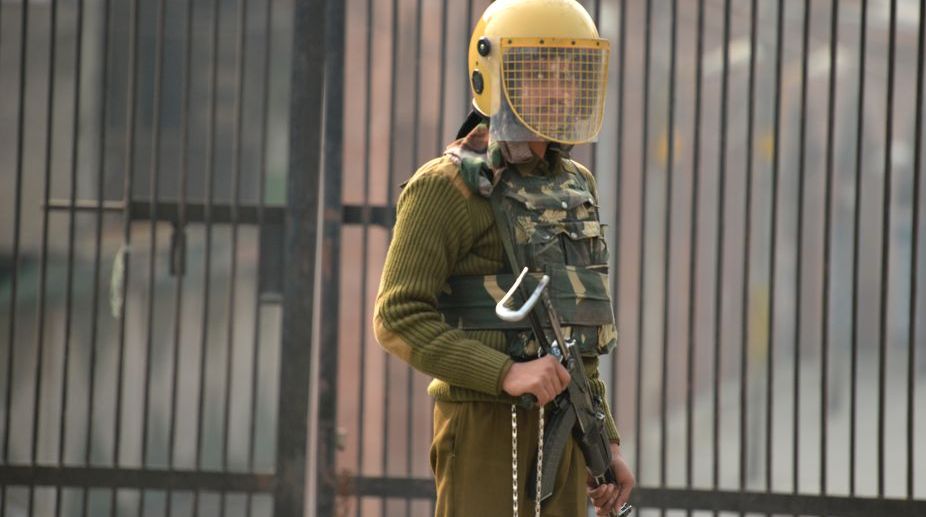
The principal of Pulwama Degree College has been absolved of any wrongdoing by an official inquiry panel in trying to stop security personnel from entering his college.

The inquiry conducted by Divisional Commissioner Kashmir, Baseer Khan, has been completed within a week's time and its report submitted to Jammu and Kashmir Education Minister Alftaf Bukhari, who had ordered the probe into alleged highhandedness of security forces against the students of the college.

"The inquiry has been completed and its report was submitted yesterday," the officials said.

They said the inquiry absolved Abdul Hameed Sheikh, the principal of the college.

"Nothing has been found against him and he would be reinstated soon," the officials said.

They, however, declined to comment further on the findings of the inquiry.

Sheikh was removed from his post and the charge handed over to a senior faculty member after the government ordered the inquiry into the incident of stone-pelting on security forces who had entered the college premises on April 15.

Dozens of students were injured in security forces action.

Several videos, purportedly showing security forces personnel thrashing the students and forcing them to shout abuses at Pakistan, went viral.

In one of the videos, the college principal confronts the security forces as they were entering the premises of the educational institution.

He is purportedly seen shouting at cops, telling them to kill him first before entering the college premises.

The Pulwama incident led to massive protests by students across the Valley, forcing the authorities to shut the colleges for five days last week.


For AAP, power is a mean, not the aim: Phoolka

Ranjeet Jamwal/SNS | Chandigarh |

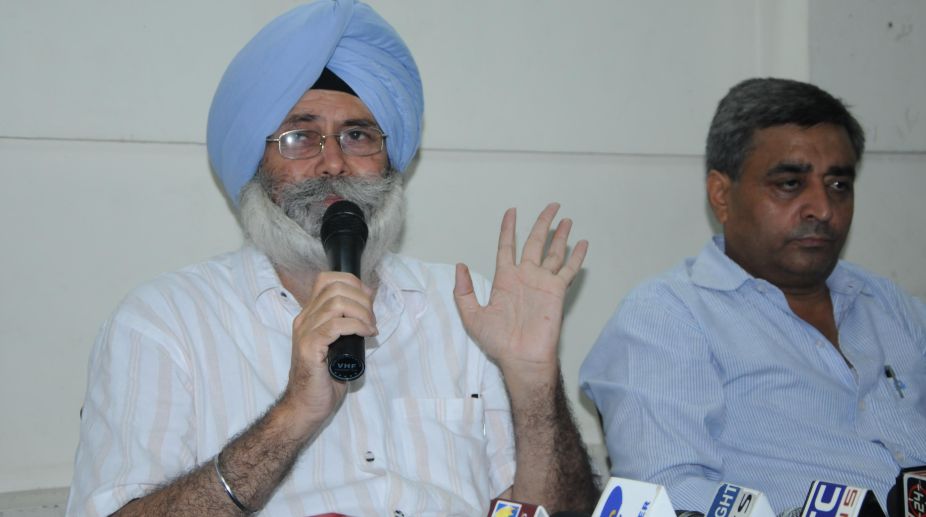
With questions being raised over Aam Aadmi Party's (AAP) future after the big poll losses in Delhi and Punjab, senior party leader and opposition leader HS Phoolka on Friday said the party is here to change the system with or without power.

"Existence of AAP is enough to change the system. Punjab has proved it. We are social activists, making a change in society is satisfying for us," Phoolka said in a 'tweet' from his Twitter handle @hsphoolka.
Later Phoolka told The Statesman that winning or losing an election makes no difference to the AAP as the party was fighting for the public even without being in power.

"We are social activists. Power is mean for us (to change the system), not the aim," he said, adding that despite the recent setbacks, the AAP is still the fastest growing party in the country.

Phoolka, who is who, has been fighting the cases of 1984 riot victims in Delhi and elsewhere, said the AAP is already having positive impact, on Indian politics and Punjab is an example of it.

"Many decisions of the present Captain Amarinder Singh government  including the ban on red beacons and promise for farm loan waiver have been copied from the AAP manifesto which was released much before the Congress," he said.
The legislator from Dakha said if the Punjab Congress has not copied AAP's ideas like farm waiver for farmers, why is that party's governments in other states not announcing farm loan waiver.

 "The Congress is anyway having difficulty is fulfilling the big promises like farm loan waiver which  the party made in Punjab  just to copy AAP," he added.

 On the need of changes in the AAP post the loss in Delhi's civic polls and Punjab Assembly elections, Phoolka said introspection is required at every level of the party. "Our leaders as well as workers need to introspect what has gone wrong," he said.

Ever since the AAP's loss in the Punjab Assembly elections, several state leaders have already expressed resentment "Delhi leadership" and blamed its strategy for the poll debacle.

 The latest to lambast the AAP leadership was party's star campaigner and Lok Sabha member from Sangrur, Bhagwant Mann, who slammed the high command for the drubbing in the recent state Assembly elections and questioned the logic of not naming a chief ministerial candidate.

Condition of Dalits, Adivasis pitiable in Gujarat: Mayawati

PTI | Lucknow |

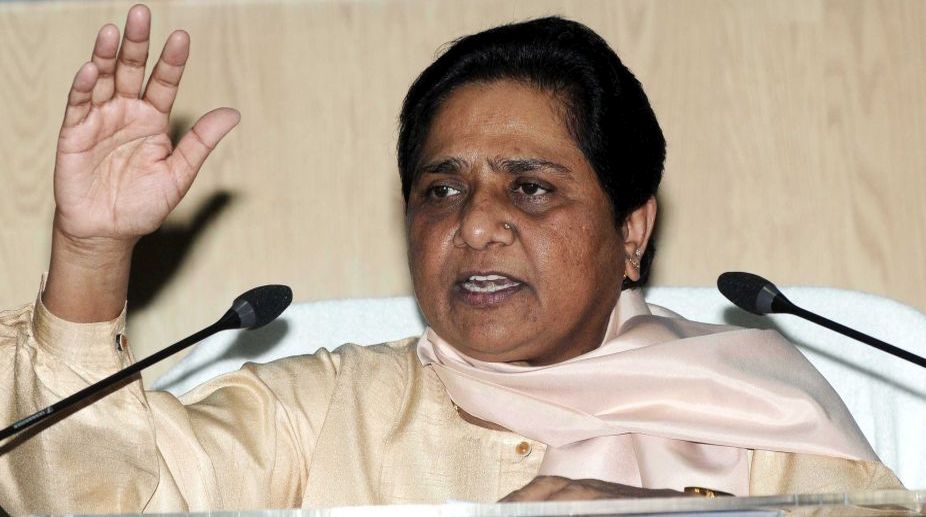
With Gujarat gearing up for the Assembly elections later this year, BSP chief Mayawati on Friday alleged Dalits were living in pitiable condition in the state and that they should "unite and uproot" the BJP in the upcoming polls.

"The condition of Dalits, Adivasis (tribals) and the poor among the 'sarva samaj' is very bad in Gujarat…the capitalists and the rich are ruling the roost…social fabric there has been disturbed…there is excessive discrimination with the Muslims and they have no place to get justice," she said.

Mayawati was speaking at the review meeting of her party's Gujarat unit here.

"If the deprived sections there (in Gujarat) unite on the basis of mutual brotherhood and contest the coming Assembly elections, they can oust the communal and casteist BJP," she said.

Though admitting that the number of Dalits in the western state was less, the BSP supremo said the Una incident had forced the community to question the establishment.

Four Dalit youths were brutally thrashed by 'cow vigilantes' at Una in Gir Somnath district of Gujarat in July last year. The incident had led to massive protest in various parts of the country.

Issuing instructions to party workers for the Gujarat polls, Mayawati said her party will fight for the rights of the Adivasis to end their harassment.

Genes that helps Tibetans survive at high altitudes

IANS | New York |

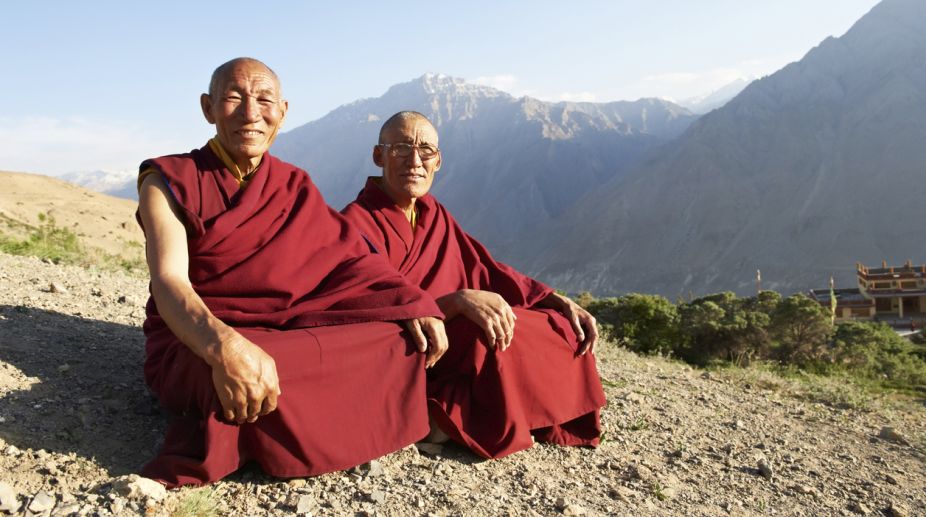
Variants of five different genes — including one originating in the extinct human subspecies Denisovans — help Tibetans survive the harsh conditions of the high altitudes, says a study.

The people of Tibet have survived on an extremely high and arid plateau for thousands of years, due to their amazing natural ability to withstand low levels of oxygen, extreme cold, exposure to UV light and very limited food sources. 

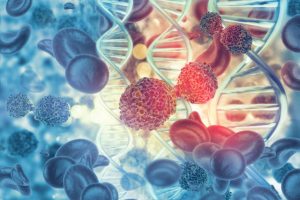
For the study, published in the journal PLOS Genetics, the researchers sequenced the whole genomes of 27 Tibetans and searched for advantageous genes. 

"The comprehensive analysis of whole-genome sequence data from Tibetans provides valuable insights into the genetic factors underlying this population's unique history and adaptive physiology at high altitude," said study co-author Tatum Simonson from University of California San Diego in the US.

The analysis identified two genes already known to be involved in adaptation to high altitude, EPAS1 and EGLN1, as well as two genes related to low oxygen levels, PTGIS and KCTD12.

They also picked out a variant of VDR, which plays a role in vitamin D metabolism and may help compensate for vitamin D deficiency, which commonly affects Tibetan nomads. 

The Tibetan variant of the EPAS1 gene originally came from the archaic Denisovan people, but the researchers found no other genes related to high altitude with Denisovan roots.

Denisovans are believed to have gone extinct about 40,000 years ago.

Further analysis showed that Han Chinese and Tibetan subpopulations split as early as 44 to 58 thousand years ago, but that gene flow between the groups continued until approximately nine thousand years ago.

Grandmother’s smoking linked to autism in grandchildren

IANS | London |

If a girl's maternal grandmother smoked during pregnancy, the girl is 67 per cent more likely to display certain traits linked to autism, such as poor social communication skills and repetitive behaviours, says a study.

The researchers also found that if the maternal grandmother smoked, this increased by 53 per cent the risk of her grandchildren having a diagnosed autism spectrum disorder (ASD).

"In terms of mechanisms, there are two broad possibilities. There is DNA damage that is transmitted to the grandchildren or there is some adaptive response to the smoking that leaves the grandchild more vulnerable to ASD," said one of the study authors Marcus Pembrey, Professor at University of Bristol in Britain. 

"We have no explanation for the sex difference, although we have previously found that grand-maternal smoking is associated with different growth patterns in grandsons and granddaughters," Pembrey said.

For the study, published in the journal Scientific Reports, the researchers followed all the participants in Children of the 90s study.

Based at the University of Bristol, Children of the 90s, also known as the Avon Longitudinal Study of Parents and Children (ALSPAC), is a long-term health-research project that enrolled more than 14,000 pregnant women in 1991 and 1992. 

It has been charting the health and development of the parents and their children ever since and is currently recruiting the children of the original children into the study.

The findings suggest that if a female is exposed to cigarette smoke while she is still in the womb, it could affect the developing eggs — causing changes that may eventually affect the development of her own children. 

Rs.58.86 lakh in scrapped currency notes seized; 3 detained

PTI | Ahmedabad |

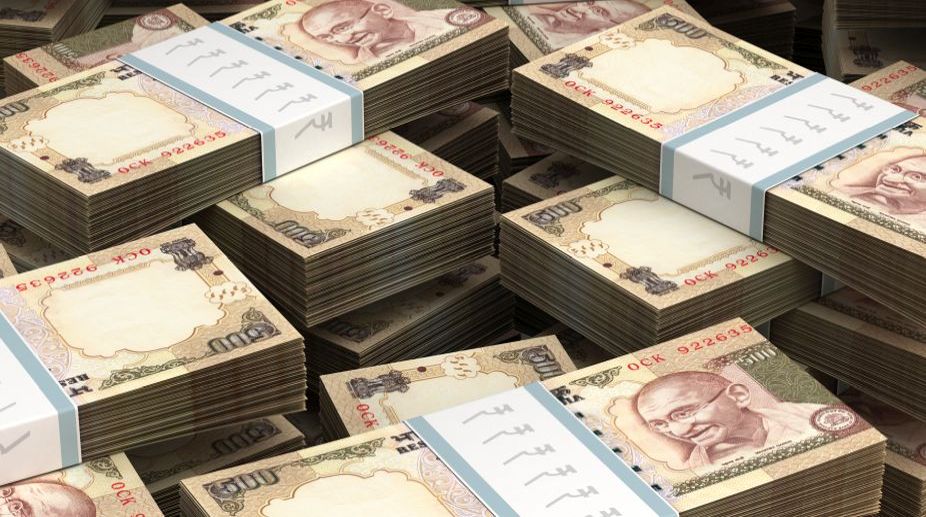
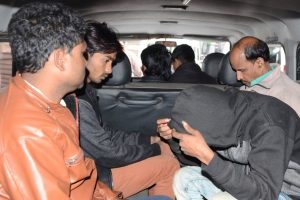
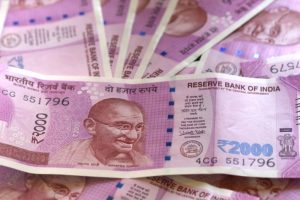
Three persons were detained with scrapped currency notes having a combined face value of Rs.58.86 lakh in Sabarkantha district of Gujarat, police said on Friday.

The trio was detained with the demonetised bills on late Thursday at Vinayak Hotel in Vadali town in the district, said Police Sub Inspector of Vadali Police, V R Chaudhari.

The three have been identified as Mushtakim Abuwala, Mohammad Sufian Shaikh– both residents of Dariyapur in Ahmedabad–and one Yakub Ghanchi, a resident of Dholka town of Ahmedabad district.

"These three persons were nabbed as soon as they arrived at Vinayak Hotel with scrapped currency notes having a face value of Rs 58.86 lakh. They wanted to exchange it with new notes. Though they appear to be commission agents, they claimed that the cash belonged to them," said Chaudhari.

The seized currency include 2,794 notes of Rs.1,000 and 6,185 notes of Rs.500 each.

After placing the trio under detention, police seized the old notes and began their procedure to inform the Income Tax department to conduct an investigation into the matter, Chaudhari added.

AAP open to take call on leadership change: Kumar Vishwas

IANS | New Delhi |

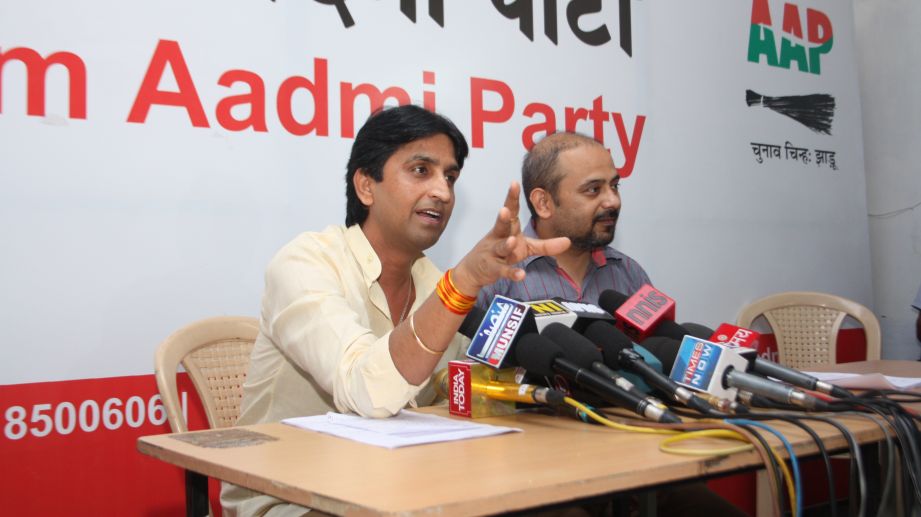
AAP leader Kumar Vishwas on Friday said the party was open to take a call on change in the leadership because blaming the EVMs entirely for its poll defeats was wrong when "there is mistrust among people for us".

Speaking to IndiaToday TV, Vishwas, considered close to Chief Minister and party founder Arvind Kejriwal, said the Aam Aadmi Party (AAP) needed to "introspect" over its defeat in the April 23 Delhi municipal polls.

He said the party should ponder over the reasons for the defeat in the civic polls.

"I am pained because it is our sixth continuous defeat. It is certain that people did not vote for us in the civic polls. There is mistrust for us among people," the TV news channel quoted him as saying.

"Blaming EVMs is not good. It can be a factor, which can be raised and discussed, but we failed to reach out to the voters. The party should introspect the reasons for the loss." 

Asked if there could be a change in the leadership, Vishwas said: "We will discuss this in the party soon."

On the appointment of Gopal Rai as the Delhi unit convener, the AAP leader hinted that he was not happy with the decision taken in a meeting where he was not invited.

He said the Politial Affairs Committee of the party was told about it but the decision must have been taken in Kejriwal's meeting with legislators earlier in the day. 

"Gopal bhai is capable but there were other candidates too," Vishwas said.

He said the party needed to decide what it was fighting against — corruption, or parties, or individuals, including Prime Minister Narendra Modi.

"We didn't sit at the Jantar Mantar to fight against the Congress, Modi, the BJP or EVMs," Vishwas said. 
 

HC extends stay on proceedings against Babul Supriyo

IANS | Kolkata |

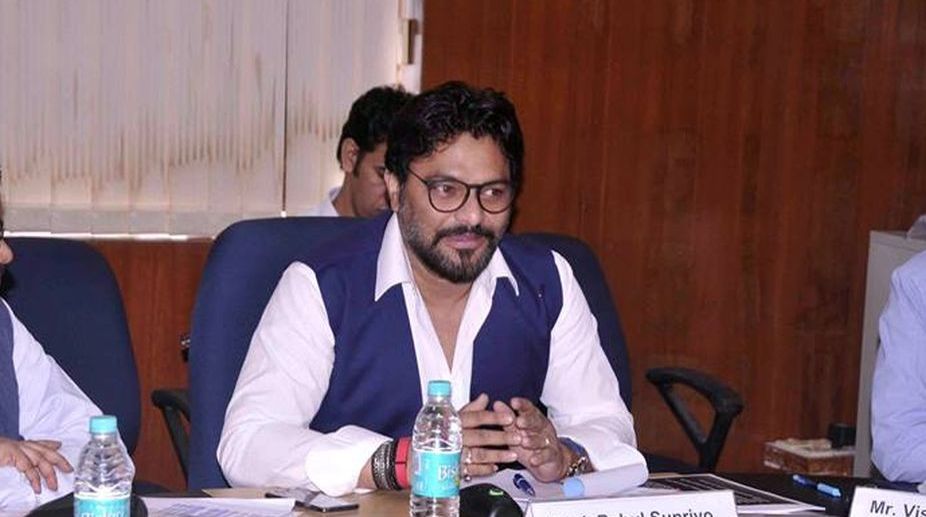
The Calcutta High Court on Friday extended a stay on proceedings against Union minister Babul Supriyo on a complaint by a Trinamool Congress MLA alleging that he had made disparaging remarks against her.

Justice Joymalyo Bagchi extended the stay till the matter appears for hearing again six weeks after the coming summer vacation.

On March 20, Justice Bagchi had stayed the proceedings which had been initiated by a city court over Mahua Moitra's allegation that Supriyo had made the derogatory comments against her during a television debate.

The minister had moved the high court praying for quashing of proceedings against him under Section 509 (word, gesture or act intended to insult the modesty of a woman) of the IPC.

Supriyo, through his counsel Priyanka Tibrewal, moved the court today seeking an extension of the stay of proceedings granted earlier.

The TMC MLA's counsel also moved a petition praying for vacation of the interim stay.

Hearing both the parties, Justice Bagchi extended the stay.

The court directed Supriyo to file an affidavit in the meantime stating his position on the allegation made by Moitra.

An Alipore court judge had issued a bailable warrant against Supriyo following his failure to appear in connection with the case.

The Union minister had challenged it in the high court and prayed for quashing of proceedings against him.

No holiday on birth, death anniversary: Delhi govt

PTI | New Delhi |

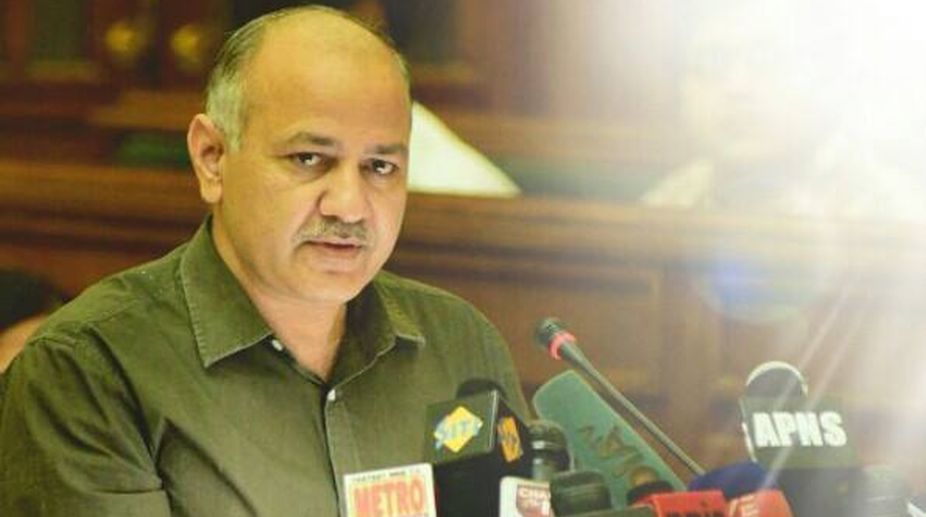
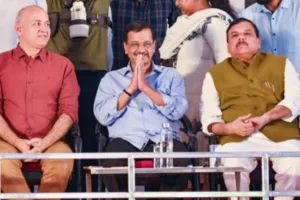
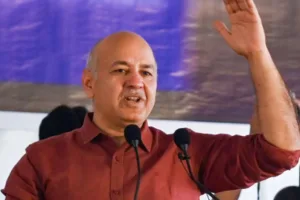
Taking a cue from Uttar Pradesh, the Delhi government has decided to cancel public holidays marking the birth or death anniversary of eminent personalities, Deputy Chief Minister Manish Sisodia said on Friday.

"The Delhi government will cancel holidays on birth or death anniversary of eminent personalities. I have issued instruction to the chief secretary in this regard," he tweeted.

Sisodia lauded the Yogi Adityanath government in Uttar Pradesh for cancelling 15 public holidays on birth or death anniversary of eminent personalities.

"The Uttar Pradesh government has taken a good initiative in this matter. We should always be ready to learn from other states," he said.

The UP Cabinet had on April 25 decided to cancel 15 public holidays in educational institutions.

"Instead, students in schools and colleges would now be taught about the great personalities on these days," it had said.

India’s economic growth unevenly distributed: Hamid Ansari

PTI | Warsaw |

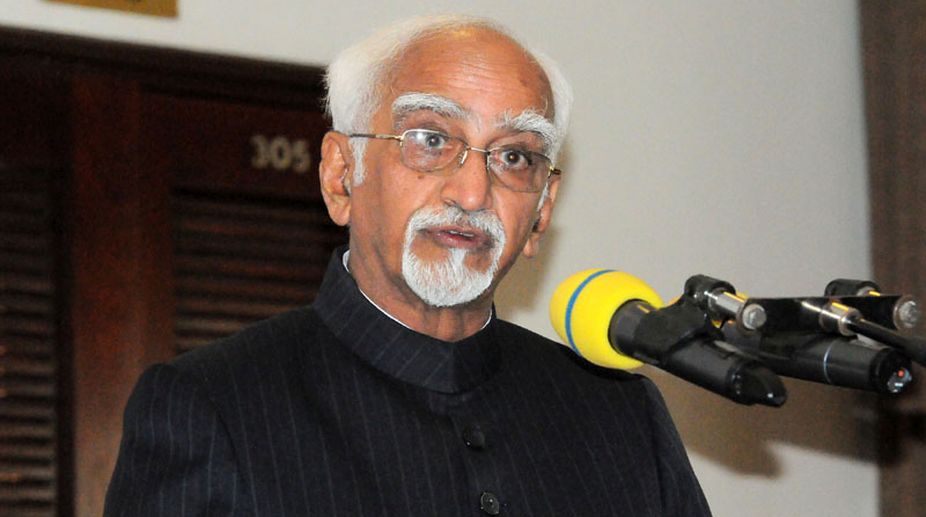
Vice President Hamid Ansari said on Friday that despite the benefits of India's economic growth being unevenly distributed the “losers” from the market-led reforms have not challenged the country's democratic system.

Ansari said the new economic policies, including the liberalisation programme, were fostered in a democratic and deliberative environment and India was “now getting used to its much higher rate of growth.”

Addressing students at the University of Warsaw, the largest institution of higher education in Poland which was established in 1816, on 'Seven Decades of Indian Democracy', he spoke about the economic successes India achieved in non- traditional areas of exports such as the information technology industry, which rapidly grew to become a giant from a very modest beginning.

Another such area is that of pharmaceuticals, he said, where Indian ingenuity has brought huge reductions sometimes a cut of 80 per cent or so in the price for many essential drugs, like AIDS medicines.

“Such growth has allowed us to lift millions of Indians out of abject poverty and to offer them a better quality of life,” he said.

“We are modernising our agriculture, manufacturing and services and are trying to adopt digital transactions. Our human development index, modest as yet, is rising and in some more developed regions like Kerala, approximates those of developed nations,” he said.

He said while the net effect of economic growth has been an improvement in the quality of life of an average Indian citizen, these benefits have been unevenly distributed.

“And yet, it is a testament to the democratic deepening in India that the losers from market-led reforms have not challenged the democratic system of India,” he said.

India's GDP now is almost USD 2.4 trillion from just about USD 273 billion in 1991, an increase of almost nine times. “Our per capita income, in the same period, increased almost 15 times in terms of current and 12 times in constant prices,” he said.

Ansari said the growing Indian middle class is now a market of global significance and despite the global slowdown, the United Nations World Economic Situation and Prospects 2017 Report projects Indian economy to grow by 7.7 per cent in 2017 and 7.6 per cent in 2018, making it the fastest growing large economy in the world.

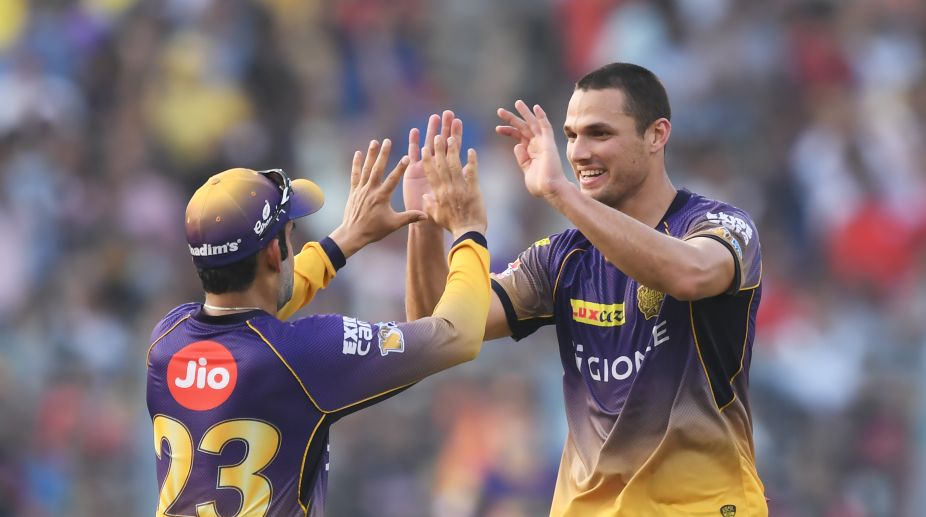
IPL 2017: Nathan Coulter-Nile’s 3/34 restricts Delhi to 160/6 against KKR

Samson top-scored with his 2nd fifty of the IPL season while Iyer played a good hand too.

IANS | Kolkata |

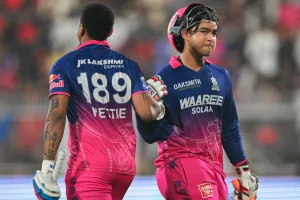
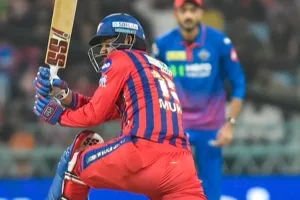
Kolkata Knight Riders (KKR) pacer Nathan Coulter-Nile picked up three wickets to blunt Sanju Samson's half century and restrict Delhi Daredevils to 160/6 in 20 overs in an Indian Premier League game at the Eden Gardens on Friday.

Australian Coulter-Nile, coming back into the side after a one-match break, returned best figures of (3/34) in his four overs picking up the wickets of Shreyas Iyer and Rishabh Pant at crucial junctures to halt Delhi's surge.

Samson (60; 38b 4×4 3×6) top-scored with his second fifty of the IPL season while Iyer (47; 34b 4×4 1×6) played a good hand too.

Ankit Bawne — playing in place of Aditya Tare — was not out on 12 while Pat Cummins did not face a ball when their innings ended.

Delhi openers Karun Nair (15; 17b, 3×4, 0x6) and Samson started well with the former playing the aggressor's role in the first few overs, welcoming Chris Woakes with two consecutive boundaries in his first two deliveries of the match.

The pair stitched together a 48-run stand before Narine removed Nair who missed a sweep with the ball striking his back leg for a plumb leg before wicket decision.

The hosts suffered a blow when in-form wicketkeeper batsman Robin Uthappa picked up a knock and had to leave the field with Sheldon Jackson — playing in place of Piyush Chawla — taking over the gloves in the 10th over.

Iyer and Samson did not hit a boundary for 46 balls before the latter brought up his fifty with a six off Kuldeep Yadav over the square leg boundary. 

The duo engineered a 75-run partnership for the second wicket before Samson tried to play across the line and was plumb in front off the bowling of Umesh Yadav (1/38).

Iyer at the other end, took time to settle down before finally looking to accelerate by hitting Umesh for two back-to-back fours. Yusuf Pathan made a hash of the first one, failing to stop the innocuous ball.

Rishabh Pant (6) did not last long, adjudged LBW unluckily when the ball was going down leg off Coulter-Nile's delivery. In the same over, Iyer was sent back just three short of his half century by the Australian.

Corey Anderson (2; 5b; 0x4, 0x6) was dropped twice by Kuldeep in the 17th over before the New Zealand all-rounder was run out.

Brief scores: Delhi Daredevils 160/6 in 20 overs (Sanju Samson 60, Shreyas Iyer 47; Nathan Coulter-Nile 3/34, Sunil Narine 1/25)

Medical fraternity up in arms against prescribing generic medicines to patients

Smriti Sharma Vasudeva | New Delhi |

Even as the government is making efforts to provide affordable healthcare to all, starting with asking the doctors to prescribe generic medicines, the medical fraternity is up in arms over the move for two reasons. First, the non-availability of generic medicines and second, the questionable efficacy of these generic medicines.

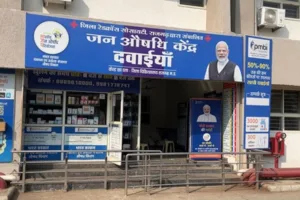
According to officials, the generic medicines are not available with majority of the government-run hospitals as the medicines which are given to the patients are procured in accordance with the preference policy through the Central Public Sector Enterprises (CPSEs). The medicines procured from CPSEs are thus branded medicines and not generic which are then made available at discounted prices for patients at Jan Aushadhi Centres.

At present, there are over 1,200 Jan Aushadhi Stores across the country which include 31 stores located in Punjab, 22 in Haryana, 16 in Delhi, four in Chandigarh and 17 in Himachal Pradesh. The patients getting treatment at the government hospitals, health centres and dispensaries are advised to buy medicines from these stores only.

A senior health department official in Chandigarh on conditions of anonymity said, "We purchase the medicines as per the policy only from CPSEs and are branded medicines. If the government is willing to provide us with the generic medicines under the policy, we will be more than happy to offer the same to our patients. The problem is that presently there is no provision to buy generic medicines under the policy".

Another big impediment in prescribing generic medicines to the patients is their questionable efficacy. Explaining the difference between a branded and a generic medicine, a senior doctor working in the premier tertiary care institute, Post Graduate Institute of Medical Education and Research (PGIMER), Chandigarh, said, "Generic medicines are the name of salts which constitute a medicine instead of the branded names. However, one of the biggest drawback of prescribing a generic medicine is that unlike the branded medicines which have a higher bioavailability, the generic medicine have very low bioavailability which makes them less effective. Bioavailability of any medicine is the absorption proportion of a drug in the body so as to have an active effect. So if a patient is taking a generic medicine, the percentage of absorption may be less than 60-70 per cent".

Explaining further, the doctor said, "Another drawback of these generic medicines is that these are procured from third party manufactures and are stamped by the brands under the garb of generic as their own . So if a brand X is manufacturing a branded medicine for fever for a price of Rs 100 per strip, the same brand will also sell a strip of generic medicine at Rs 60 without its name or logo.

"A patient who buys the generic medicine at Rs 60 per strip may feel he saved money but in reality, he ended up buying a less effective medicine that too at Rs 60 which actually costs the pharmacist Rs 10 from the manufacturer".

Arsene Wenger says Arsenal bigger power despite Tottenham Hotspur rise

Tottenham are currently second on the EPL table with 74 points from 33 matches.

IANS | London |

Arsenal may finish below arch-rivals Tottenham Hotspur in this season's English Premier League (EPL) but manager Arsène Wenger is confident that his club is still the bigger power in north London.

Tottenham are currently second on the EPL table with 74 points from 33 matches, just four points behind leaders Chelsea with five games to go in this season's campaign.

They have continued their good form from last season, when they were serious contenders for the title till late in the season.

Arsenal on the other hand, languish at the sixth spot with 60 points from 32 matches and face a tough battle to finish in the top four and cinch one of the automatic qualifying spots for next season's Champions League.

With the two bitter rivals set to take each other on in the north London derby on Sunday, Tottenham fans are relishing the prospect of finishing above Arsenal for the first time since 1995.

"It's certainly one of the few times where, if you look at people's opinions, Spurs are favourites. It looks a bit like that but it doesn't matter too much to me. It's true that always in our press conferences we have to respond, if the worst happens what do you do?

"But let's make sure that the best happens and give absolutely everything to make sure that we finish in a very strong way our season," Wenger was quoted as saying by the Guardian on Friday.

"I expect an open match, committed match, a game with high pace, but there could be goals in there because both teams play a positive football if you look at the quality of the players."

Wenger, who is gearing up for his 50th north London derby since taking charge of Arsenal in 1996, asserted that finishing above Tottenham is important for the team's pride and his players will go all out in the remaining games in order to do so.

He also insisted that Arsenal will still remain the bigger club even if they are not able to achieve the target.

"The priority for us is to finish in the top four. After that, for the pride and the continuity or our achievements, yes we want to fight to be in front of Spurs. 

"We have to focus on what is really important to us at this moment, which is to finish in the top four. Let's be honest, I've answered that question about a shift in power over 18 consecutive years. Nothing changes in that," he said.

"You cannot say that the weight of one year has the weight of 20."    

Action will be taken on Dhingra commission’s findings: Khattar

PTI | Chandigarh |

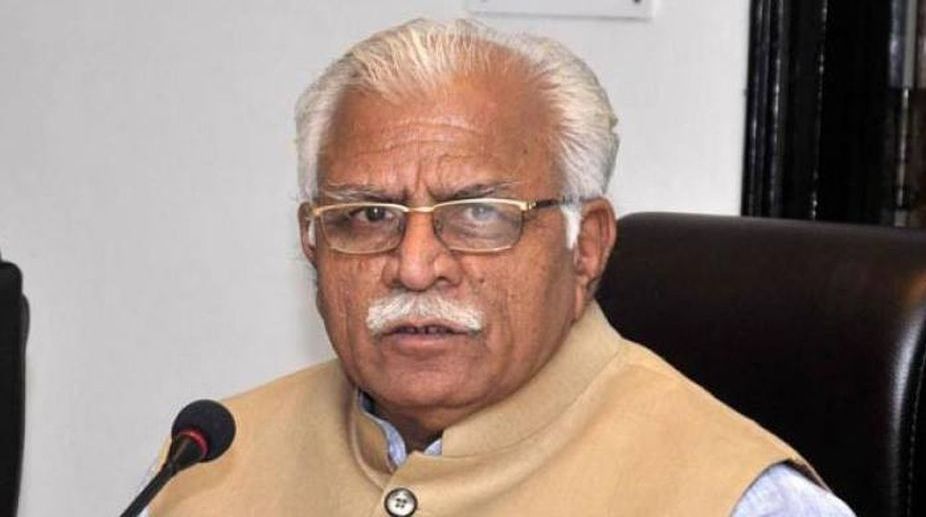
Action will be taken on the findings of Justice S N Dhingra commission that probed alleged irregularities in grant of land licences to a firm owned by Robert Vadra, son-in-law of Congress chief Sonia Gandhi, Haryana Chief Minister Manohar Khattar said on Friday.

He denied the Congress' allegation that the commission's report was leaked and said the court should take cognisance of the matter.

His reponse came after a media report claimed that Vadra had been indicted by the commission for making unlawful profits in a land deal in 2008.

Khattar noted that the court has not given permission to make public the report of the commission, formed by his government after coming to power in October 2014.

The commission was asked to probe alleged irregularities in grant of licences by the previous Bhupinder Singh Hooda-led Congress government for development of colonies, housing societies and commercial complexes in four Guragon villages.

Vadra's Skylight Hospitality is among the firms under scanner.

"Once the report is made public and something comes out, it will be a matter of investigation," the chief minister said.

"Details" of the commission's findings were published by a daily today which cited people familiar with the report.

According to them, "there was collusion aimed at benefiting Vadra's company".

The commission has sought an inquiry into properties bought by Vadra, Priyanka Gandhi's husband, and his businesses, it claimed.

Reacting to it, Khattar said that if at all such a thing comes up, it will be a matter of probe.

Priyanka had on Thursday released a statement saying her finances had nothing to do with those of her husband or his company Skylight Hospitality, which had made controversial land deals with realty major DLF.

The statement from Priyanka's office came after a query was made to Vadra asking whether a portion of the money he had received from the DLF was used by his wife to buy properties in Faridabad in Haryana.

The statement mentioned about Priyanka Gandhi having bought five acres of agricultural land in village Amipur in Faridabad district for Rs.15 lakh on April 28, 2006, six years prior to the purported land deal involving Skylight Hospitality.

The commission had submitted its 182-page report to Khattar on August 31, 2016.

The contents of the report are yet to be made public by the state government which had given an undertaking in the Punjab and Haryana High Court not to release the report until directed by the court.

Former chief minister Hooda had petitioned the high court challenging the constitutional validity of the panel and had accused the government of resorting to political vendetta.

It was during hearing of Hooda's petition that the state government had told the court that it will not make public the report.

Recently, the Haryana government submitted the commission's inquiry report to the apex court in a sealed cover following a diection to this effect.

The apex court had asked to furnish the report while adjudicating a batch of appeals relating to acquisition of land and its allocation to various private parties for residential and commercial establishments.


‘Baahubali 2’: A fitting and fantasy-esque finale

IANS | Mumbai |

Film: Baahubali 2: The Conclusion

Director: S. S. Rajamouli

Cast: Prabhas Raju, Rana Daggubati, Ramya Krishnan, Anushka Shetty, Tamannaah Bhatia, Nasser, Charandeep, Satya Raj, Prabhakar, Rakesh Varre, Rohini, Tanikella Bharani, Teja Kakumanu

Why did Kattapa kill Baahubali? This perennial question that haunted those who have seen Baahubali: The Beginning will now be rested. Director S.S. Rajamouli does answer this question and offers much more in Baahubali 2: The Conclusion, which is an action-packed revenge drama.

For the uninitiated, Baahubali is the story of an orphan prince Amarendra Baahubali and his son Mahendra Baahubali in the Kingdom of Maheshmati. While the first edition concentrated on Amarendra being unaware of his identity, the Conclusion takes off from where the first part ended and delves deeper into the life of Amarendra Baahubali, the father of Mahendra Baahubali the child who was dramatically saved in the opening shots of the earlier film.

Narrated in a melodramatic manner with surreal action sequences and epic battle scenes along with plenty of dilemmas and betrayals, it is Amarendra's tale that is interestingly gripping as it answers the question of why Kattapa killed Baahubali.

The final act of The Conclusion, which concentrates on Mahendra's story seems like a rushed job. And with a run time of 167 minutes, the film eventually seems to drag.

On the performance front, with dramatic lines and over-the-top acts, every actor performs his part earnestly. With an imposing, yet tender personality, Sathyaraj as Kattapa, the loyal warrior, is impressive. Prabhas Raju in a dual role is charming as Amarendra and sincere as Mahendra Baahubali.

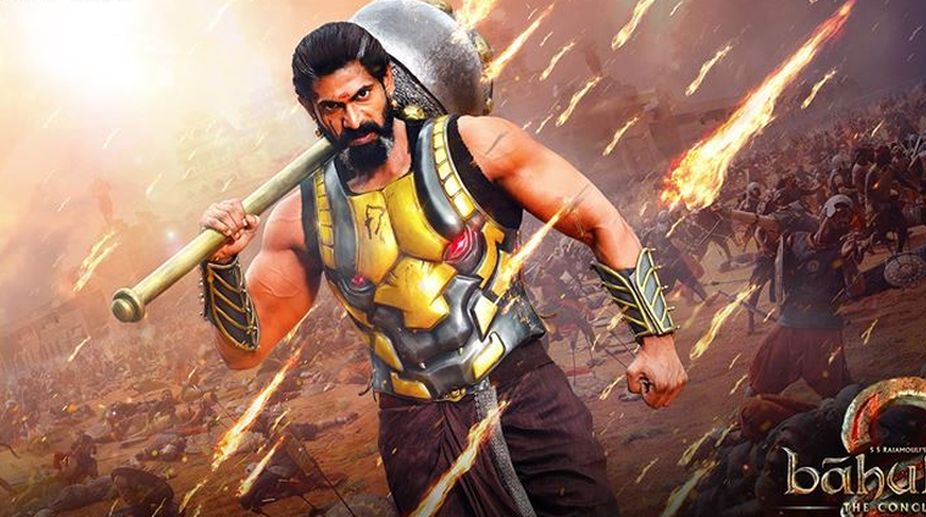
Rana Daggubati excels as the vicious Bhalladeva. But it is Nassar as the scheming Bijjala Deva, father of Bhalladeva, who steals the thunder from Rana.

Ramya Krishnan as the Rajmata Sivagami along with Anushka Shetty as Devasena — Amarendra's wife — offer a stimulating performance. Tamannaah Bhatia as Avantika, Mahendra's love interest, in a miniscule role has nothing much to offer.

On the technical front, like its prequel, this film too is at par with any big ticket Hollywood caper, in terms of its mounting. Visually the film is colossal and monumentally spectacular. In fact, it is a bit better than the previous edition in terms of VFX effects and sharper edits. The action sequences too are artistically and aesthetically choreographed. The music and background score by MM Kreem add to the cinematic experience.

Unfortunately the dubbing in Hindi is not up to the mark.

Overall, this concluding part of Baahubali will appeal to you, irrespective of whether you have seen The Beginning.
 

New diabetes app forecasts blood sugar levels

PTI | New York |

Scientists have developed a new personalised app that can allow people with type 2 diabetes to keep a tighter rein on their blood sugar levels – the key to managing the disease.

The app, Glucoracle, comes with an integrated algorithm that predicts the impact of particular foods on an individual's blood glucose levels.

“While we know the general effect of different types of food on blood glucose, the detailed effects can vary widely from one person to another and for the same person over time,” said David Albers, from Columbia University Medical Centre (CUMC) in the US.

“Even with expert guidance, it is difficult for people to understand the true impact of their dietary choices, particularly on a meal-to-meal basis,” said Albers.

“Our algorithm, integrated into an easy-to-use app, predicts the consequences of eating a specific meal before the food is eaten, allowing individuals to make better nutritional choices during mealtime,” said Albers.

The algorithm uses a technique called data assimilation, in which a mathematical model of a person's response to glucose is regularly updated with observational data – blood sugar measurements and nutritional information – to improve the model's predictions.

“The data assimilator is continually updated with the user's food intake and blood glucose measurements, personalising the model for that individual,” said Lena Mamykina, assistant professor at CUMC, whose team designed and developed the app.

Glucoracle allows the user to upload fingerstick blood measurements and a photo of a particular meal to the app, along with a rough estimate of the nutritional content of the meal.

This estimate provides the user with an immediate prediction of post-meal blood sugar levels.

The researchers initially tested the data assimilator on five individuals using the app, including three with type 2 diabetes and two without the disease.

The app's predictions were compared with actual post-meal blood glucose measurements and with the predictions of certified diabetes educators.

For the two non-diabetic individuals, the app's predictions were comparable to the actual glucose measurements.
For the three subjects with diabetes, the app's forecasts were slightly less accurate, possibly due to fluctuations in the physiology of patients with diabetes or parameter error, but were still comparable to the predictions of the diabetes educators.
The findings were published in the journal PLOS Computational Biology.