Logo

Secret romance

Statesman News Service | New Delhi |

Amid her ongoing divorce and custody battle against estranged husband Brad Pitt, actress Angelina Jolie is reportedly having a secret romance with a British entrepreneur and is enjoying private rendezvous with him. “It is challenging for Jolie to move on from Pitt, but she is doing what she can to nurture a secret romance with a new guy,” a source told hollywoodlife.com.

“She and her new man, a handsome British entrepreneur with strong political ties and aspirations, have held a few secret rendezvous at the Malibu estate where she has been staying occasionally since her split from Pitt,” the source added. The source claimed that Jolie organises the rendezvous when Pitt looks after their six children. The new man in Jolie’s life is said to be a philanthropist businessman whom she met in London last year.

That feeling of unexplainable

Shoma A Chatterji | New Delhi |

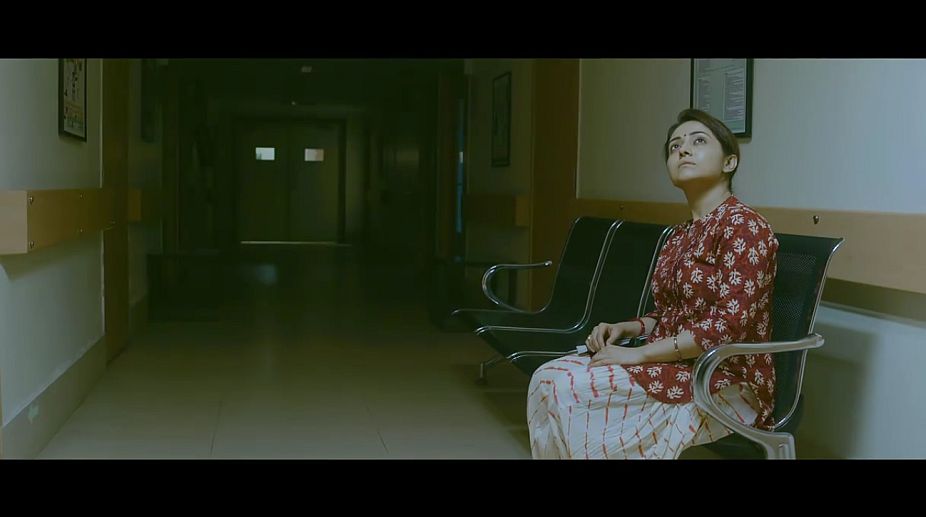
The literal translation of Shunyota is emptiness, a feeling of a hollow vacuum inside one that defies description or analysis. This Bengali film is the first to take on demonetisation as the central plot point. Directed by Suvendu Ghosh, it portrays three good short stories that explore the consequences of demonetisation on three different families placed in three areas of life and geography.

In response to what drove him to make a feature film on such a bold and controversial subject, the director said, “I have directed five feature films till now. Of these, my fourth film Chetana, that tackled the value system, released in August last year, won the best director and best story award at the Dubai International Film Festival. In November, the Prime Minister announced the historic demonetisation decision with a deadline of only a few hours. This practically pushed me as a filmmaker, with a social conscience, to make a feature film on its impact.”

Ghosh picked three short stories, independent of each other but bonded with the single subject — demonetisation — that had an instantaneous shock effect among cross sections of people in West Bengal. These stories have been authored by Anirban Roychowdhury after demonetisation was announced by the Government of India on 8 November last year when the whole country experienced a fiscal tsunami.

The first story deals with a widow who works in a coal field in Ranigunge. She fixes her daughter Basi’s marriage by selling her small piece of land for the dowry though Basi does not want to get married as that will rid them of the only piece of land they own. Lakshmi hands over the money to the father of the would-be groom to buy a pump. That very night, demonetisation turns the money handed over in devalued notes into mere wads of paper. The groom’s father hands back the money and breaks off the alliance saying that the girl is unlucky. By the time Lakshmi goes to the local bank and gets her notes changed for legal tender, it is too late.

On the other hand, a young Bengali couple from Sikkim arrive in Kolkata for the surgery of their two-and-a-half-year old son who is suffering from a rare heart disease in the second story. Television channels are agog with the news of demonetisation and the hospital refuses to accept the massive sum for the surgery in plastic money. The husband rushes off to get emergency funds through the good offices of a family friend and asks his wife to wait till he arranges the cash. But he finds himself trapped for no fault on his part while the little boy is taken to the operation room for the surgery.

The third story is about a middle-aged man who runs a business of repairing fishing trawlers in his small village. He lives with his wife and marriageable daughter but is almost pathologically miserly and keeps his wife and daughter in constant penury. He is obsessed with the touch, smell and feeling of all the currency notes he has gathered in a huge trunk he hides under his bed and always keeps his room locked. What happens to this man and his huge bank of currency notes when demonetisation strikes makes this the most powerful celluloid statement among all the three.

Why then, did the Central Board of Film Certification clamp down on the film’s release at the last minute and instruct the director to make cuts? In a letter to Ghosh on 31 March, the Kolkata regional office of the CBFC asked him to communicate within 15 days his “acceptance or otherwise” of he recommended cuts. The missive said that the cuts were decided as per the directives of the CBFC chairperson and recommendations of the examination committee.

The recommended cuts included deletion of two sequences and muting of four sentences/parts of sentences/words with beeps. One of the recommended deletions was a ten-second sequence that talks of “a large number of unacceptable death processions in the country revolving around demonetisation”. Ghosh was also asked to mute a part of a sentence with a beep that says “the government has committed the wrong, and while the big fish will survive, the small fish will be trapped”. Earlier, the Kolkata regional office of the CBFC had referred the film to the board’s chairman Pahlaj Nihalni for a decision on certification citing “differences of opinion among members of the (examining) committee”. Ghosh says, “It (the film) has no political colour but had they (CBFC) suggested that I consider making cuts. I think the subject of the film was the reason why they could not take a decision… They probably did not view short films as a threat. But a feature film with a commercial release is a different scenario.” Finally, Ghosh agreed to the six cuts but “the delay in the release of the film by around one month has been extremely painful for me as a director,” he adds. “I can only thank the media, which rose to the occasion and helped me by headlining the news across media outlets, spoke to me directly and allowed us to make our statement that ushered in the release finally.

“The producer Uday Singh, who is into real estate and agreed to produce my film because he believed in it and also because we are old friends, would have suffered financially had we taken our case to court. It would have been a big risk for me as director and for Singh as producer even though the film has been made on a shoestring budget of Rs 35 lakhs, incredible in these days where even an average film has a budget of Rs one crore.”

Ghosh cast a very good blend of veteran actors and new faces for the film. He says, “I consider this an out-of-the-box film, so big stars would have detracted from my subject, which is hot and sensitive at the same time.” And his cast has done him proud. Shunyota may not win an Oscar but it is a neat film with good performances by veteran actors and reasonable performances from the debutantes. There are twists and turns but very little melodrama and is stripped of cheap and soppy sentimentalism. The background score by Pinaki Bose has resurrected folk musical instruments of Bengal and this works beautifully in the film. Samar Haldar’s art direction is touched with the honesty of authenticity reflecting three different spaces the three stories cover.

Happy at last that Shunyota has finally found an audience, Ghosh says, “I think honesty always pays back.”

Ignoring the larger populace

AC Tuli | New Delhi |

Hindi film music has a wide range; it is also quite rich in content. Our film lyricists have always excelled in writing all kinds of songs to suit every occasion — love songs, comic songs, lullabies, nuptial songs, pensive ghazals, scintillating qawwalis, piety-inspiring bhajans and naats, and of course sad and tearful songs on the plight of the poor and hapless.

It’s the songs of the last named genre that are now, not much heard in Hindi films. Maybe it is because of the changes that have been taking place in our socio-cultural life over the last three or four decades. Or maybe the stories of the films now being made in Bollywood are mostly centred on people who come from the well-to-do classes of urban India.

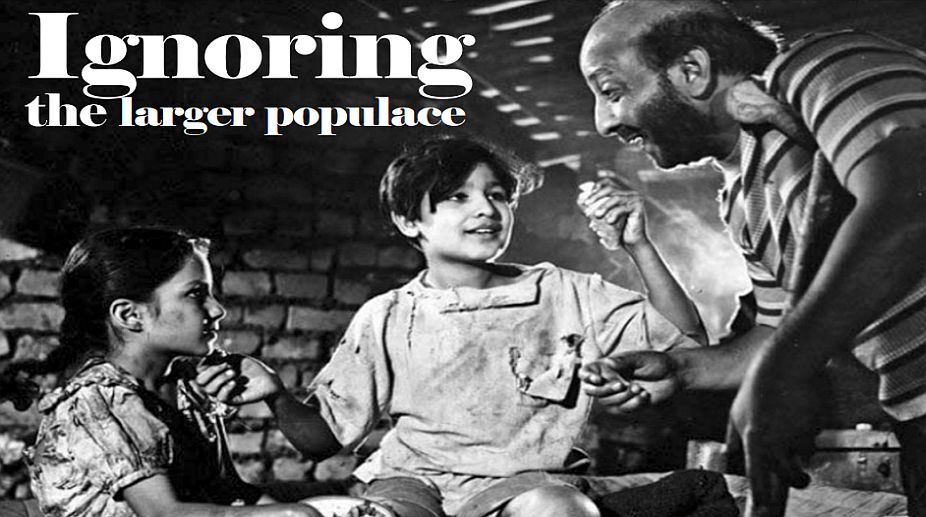
India of course is still quite poor, but perhaps not as depressingly poor as it was, say, some 60 or 70 years ago. Rural India, however, is still in a bad shape. Our farmers are still at the mercy of natural forces. Excessive rains or a prolonged spell of drought can even today ruin a farmer economically. Imagine if Bimal Roy’s film, Do Bigha Zameen (1953) were released today with some changes in order to contextualise its story for these times — would anybody find anything incongruent about it? I think it would be considered a good film and quite relevant to our times.

It’s because even today a small farmer is as helpless as Shambu Mahato, the protagonist of Do Bigha Zameen. Like the hapless Shambu, the small farmers are in distress now as well. Shambu was ruined because he could not repay a debt of around Rs 250 that he owed to the village zamindar. Farmers are ruined now and commit suicide because he cannot repay the bank’s loan. So, sad, tearful film songs bemoaning the plight of the poor — though no longer heard in Hindi films — can touch our hearts even today.

Perhaps the first sad song on the plight of the poor was heard in the 1942 Hindi film, Zamindar. The song, “Duniya mein garibon ko araam nahin milta, rotey hain to hasney ka paigaam nahin milta…” was written by Qamar Jalalabadi, set to music by Ghulam Haider, and sung by Shamshad Begum.

After India achieved independence, the poor naturally looked forward to the coming of achhe din in their lives. But, like an ever receding mirage, those achhe din kept eluding them. But still the poor did not give up hope. In 1951 came Ranjit Movietone’s film Hum Log, starring Balraj Sahni, Nutan, Sajjan and Shyama. It was directed by Zia Sarhadi and was a dark, gloomy film telling the story of a family living in grinding poverty. With every passing day, the hardships of the family keep increasing. The unemployed young son has given up all hope of ever seeing achhe din for his family. The young daughter suffers from TB but there is no money in the house for her medical treatment. The film ends on a note of vague hope for the poor with the song, “Gaaye chala ja gaaye chala ja, ik din tera bhi zamana aayegaa…” The song, “Ajab tori duniya ho morrey Rama, ajab tori duniya…” in Do Bigha Zameen is sung by poor rickshaw-pullers, roadside hawkers, and down-at-heel dailywage labourers when, at the end of a hectic day, they sit together outside their hovels to relax and entertain each other with some music. This song in the film is reflective of the irony in the life of the poor — it is they who build the palatial buildings and roads for others but themselves live in hovels. They grow cereals, vegetables, and fruits for others but their own children often go to sleep on an empty stomach. In mills, the poor make cloth for others but they remain clad in rags. This song was written by Shailendra and composed by Salil Choudhary.

Raj Kapoor’s Boot Polish (1954) was a landmark film in the history of Hindi cinema. The film tells the story of two orphan children living with their stonehearted aunt, who ill-treats them and forces them to beg on the streets of Bombay (now Mumbai). But the children, encouraged by a cripple of their locality called John Chacha, try to earn an honest living by working as shoeshine boys. There was a touching song in this film in the voice of Mohammad Rafi and chorus. On the screen it was sung by orphan children, “Tere laadlon ki dua maangte hai, tumhaare hain tumse dayaa maangte hain…” Set to music by ShankarJaikishen, it was written by Shailendra.

In the 1955 Hindi film Seema, a miserably poor man with some orphan children in rags goes from street to street begging for alms. With an old harmonium dangling from his neck, he sings, “Hamein bhi de do sahara ke besaharey hain, phalak ki godh se toote hue sitare hain…” and the little orphan children dance to its tune. The most touching couplet of this song is, “Bharaa ho pet to sansaar jagmagaata hai/Sataaye bhookh to imaan dug-magaata hai…” (When one’s belly is full, the world looks brightly lit up, but when the pangs of hunger torment, one’s honesty and integrity are in peril).

In 1956 came a film called Naya Aadmi starring NT Rama Rao and Anjali Devi, in which there was a stirring song on the pathetic plight of the poor, “Garibon ka paseena behraha hai, yeh paani behte behte kehraha hai, kabi wo din bhi aayega yeh paani rung layega….” It was written by Rajinder Krishan, composed by Madan Mohan and sung by Mohammad Rafi.

In the 1966 film Dus Lakh, the duet sung by Mohammad Rafi and Asha Bhonsle, “Garibon ki suno, wo tumhari sunega, tum ek paisa do ge, wo dus lakh de gaa…..” became so popular that for years it was the favourite song of street beggars in northern India as they moved from door to door.

A song in Manoj Kumar’s film Roti, Kapada, Aur Makaan (1974) graphically showcased the plight of the common man who is unable to meet the daily needs of his life because his expenses are always outstripping his meagre income. The song, “Powder waalley doodh ki malayee maar gayee, gareeb ko bachche ki padhaee maar gayee, Baaki jo bacha awo mehangaee maar gayee…” evokes in vivid detail the setbacks that the poor face in their daily life because of inflation and soaring prices of essential commodities. It was sung by Mukesh, Lata, Narinder Chanchal, Jani Babu and chorus.

“Happiness is but an occasional episode in a general drama of pain” was the last line of Thomas Hardy’s famous tragic novel, The Mayor of Casterbridge. Indeed, happiness, in the life of the poor, is just an occasional episode.


‘I am quite different from my father’

Rakesh Kumar | New Delhi |

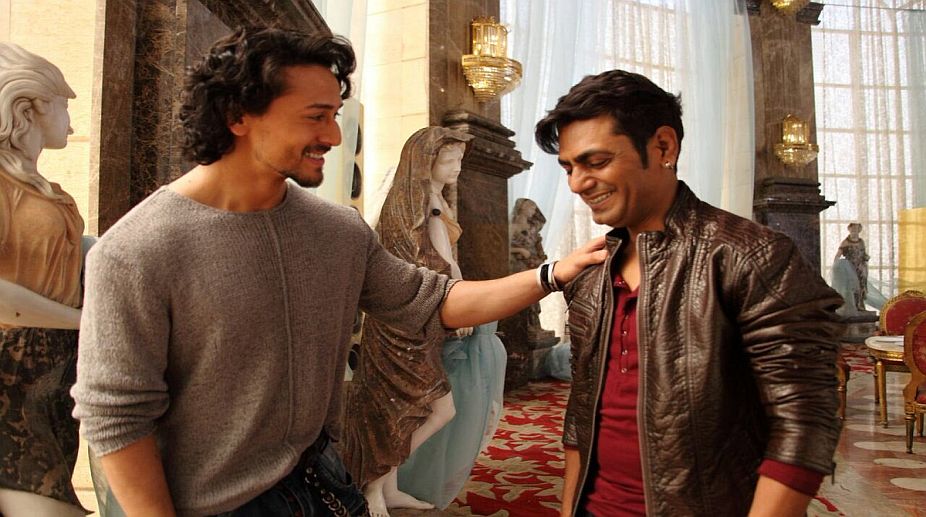
Tiger Shroff is just three years old in the film industry with three films under his belt. However, the actor — son of yesteryear star Jackie Shroff — has successfully made a space for himself through hard work and immense talent. In the last three years, Shroff has acted in Heropanti, Baaghi and A Flying Jatt while Munna Michael and Student of the Year 2 are in the pipeline. On the sidelines of the launch of the kids’ channel, Sony YAY, the actor spoke about his childhood, upcoming projects and journey in Bollywood. Excerpts:

Q What is the reason for your popularity among kids? Also, this brand has to do with children.

I am a child at heart. I was very excited when I got this endorsement. The reason for my being popular (among children) is because the films I have been doing, like A Flying Jaat, are quite popular with them.

Q Can you share some of the moments of your childhood? Like, did you watch a lot of television?

Actually, unlike other kids, I was more into outdoor sports. I used to play a lot of football and basket ball, and you know, I also wanted to become a footballer. Acting came in at the last minute, when I realised football does not have much scope in the country. Therefore, I thought I should apply the same discipline in acting that one used in sports. Of course I did watch television! I watched cartoons and played games. Interestingly, I still copy many stunts from that game.

Q What are the advantages and disadvantages of being a star kid?

I think disadvantages are more. The foremost challenge for me is I am Jackie Shroff’s son. Therefore, coming out of his shadow is very tough. Eventually, with my work I am proving I am quite different from my father. Be it my dance or personality, all are different from him. It is not happening with me but with every star kid, people think as we come from the same background it becomes quite easy for us to face the camera. Therefore, expectation grows many folds. The only advantage one has is that it is easier to get noticed by the production houses.

Q Do you find nepotism in the film industry?

To tell you the truth, I haven’t come across nepotism in this industry. Today, if you are good, you will get work. I don’t think there is segregation between stars’ offspring and non-film background people.

Q You are quite active in sports and stunts. What do would suggest to today’s kids if they try to copy you?

I have been doing these things since childhood. But I would urge whoever wants to try to do it should do so under supervision. They should never try it themselves. It is good to acquire this skill, but don’t use it just to show off as anything could happen, especially with beginners. It is good to do them with some supervision.

Q Your next film Munna Michael is in the pipeline. What is it about?

It is family entertainer and a very clean film. One will get each and every flavour, like music, dance, action and romance. I think it is a film for everybody. I am very excited about it.

New innings for an old festival

Swapan Mullick | New Delhi |

When the International Forum of New Cinema was established more than 30 years ago, the film society had run into a lean patch. Cine Central had managed to survive independently on the strength of its own initiatives and support from film lovers. Many of their fellow organisations had been compelled to wind up because of rapid developments in technology that had made it easier to look for VHS cassettes and subsequently DVDs to be watched in the comfort of drawing rooms. It was difficult to convince them that the creative experience of watching films in a theatre had an excitement of its own. The debate that followed the screening would find distant echoes and remain in the mind if the film deserved attention.

The response of a thinking audience turned the Cine Central into a major event long before the Kolkata Film Festival had been conceived. It had entries from major festivals and drew visitors who had discovered that Kolkata had a long established tradition of cinematic consciousness that later extended to other cities. The festival was subsequently made to coincide with the more colourful event presented by the state government, which came to be recognised by FIAFP, the apex body of international film festivals.

However, it preserved an identity of its own and was aimed at a more serious audience. It now seems that the film society has chosen to revert to the practice of organising the festival as an independent offering four months after the Kolkata Film Festival. At a time when the film society movement deserves to be revived, this would seem to be a step in the right direction. Over the years, Cine Central has shown that it has the expertise and the connections required to have a festival of its own.

It has begun a new innings this year at the revamped Yuva Kendra where the Swami Vivekananda auditorium offers an excellent environment for lively exchanges after the screenings. This year there was a good enough selection of films from more than 20 countries — less than what is offered at major festivals but wide-ranging enough to claim serious attention.

One missed the participation of foreign guests but that is not something that one would expect from a festival of modest proportions. The opening ceremony brought two of Bengali cinema’s veterans — filmmaker Nripen Ganguly and actress Lily Chakraborty. The former has made just a few films that never really entered the mainstream. But his association with some of the best filmmakers has kept him involved even at the age of 90. The actress has had an acting career of more than 50 years both in what was then Bombay and Tollygunge but is best remembered for her films with Ajoy Kar, Asit Sen, Gulzar and, of course, Satyajit Ray. The lifetime award that the society conferred on her was well deserved on the sheer strength of the number of films she acted in from the days of Bhanu Goenda Jahar Assistant. As a supporting artiste in several hundred films, she displayed a competence that made directors comfortable.

The film festival, however, had a different attraction in the sense that the audience comes with keener interest in what is happening in the world of cinema. Festivals have thrown up new names and there is always a possibility of discovering directors as interesting as Jafar Panahi and Kim Ki-duk. The opening film was The Empty Hours from Mexico. It was about a young man who is entrusted with the task of looking after a motel and runs into an unusual romantic experience. It becomes quite natural in the environment that prevails. From Norway came The Man Who Loved Yngve about a young man whose life takes tragic turns after a chance encounter from which there is no escape. The French entry, Bird People, was an engaging comment on contemporary morality that has a telling impact on people’s lives. The film has a lighthearted tone that one has come to associate with French social dramas.

A similar kind of irreverence marks the Cuban film, Boccaccio in Havana. The interest also lies in the unconventional treatment where a number of characters from different stories are held together by the same writer. There were two comparatively unknown directors from Bangladesh in Nadijon and Krishnapaksha, which offered in interesting contrast in rural and urban backdrops but with a more realistic approach. It confirmed that one section of the Bangladesh cinema was moving outside the popular stream.

Young Sophie Bell from Sweden and Long Story Short from Denmark found new directors exploring the liberal climate that had a varied impact on young people. The films never rose to extraordinary heights but there was a sense of social investigation that made the experience quite purposeful. One also had reason to be pleased with entries like The Healing from Serbia, Future Lasts Forever from Turkey and More Than Just Enemies from Austria that offered glimpses of the new generation of filmmakers.

The first year of the festival’s revival missed some of the earlier sparks. But with an organisation that has just celebrated its golden jubilee and remains deeply committed to the cause of good cinema, there is reason to be hopeful about the future.

Banks need to raise private capital to deal with bad loans: RBI

IANS | Mumbai |

The mounting problem of bad loans of banks cannot be resolved by their simple recapitalisation and options like raising private capital for state-run banks need to be considered to deal with the issue, the RBI said on Friday.

"I wish to propose that we deal with the ailing public sector banks in creative ways instead of just propping them up with state aid," said Reserve Bank of India Deputy Governor Viral Acharya addressing an event by the Federation of Indian Chambers of Commerce and Industry (FICCI) Ladies Organisation.

"Clearly more recapitalisation with government funds is essential. However, as a majority shareholder of public sector banks, the government runs the risk of ending up paying for it all. The expectation of government dole-outs has been set by the past practice of throwing more good money after bad," he said.

Some nationalised banks need to be "re-privatised", Acharya said, to reduce the amount of capital that the government needs to infuse in them and help maintain fiscal discipline.

Citing the Global Financial Stability Report by the International Monetary Fund, he said: "Indian industrial sector is now among the most heavily indebted in the world in terms of the ability of its cash flows to meet its bank loan repayments and it comes out as worse-off compared to other emerging economies in terms of how little bank capital it has set aside to provision for losses on its assets."

Under its Indradhanush programme, the government is putting in Rs 70,000 crore in state-run banks over four years starting from financial year 2015-16. Of this, Rs 50,000 crore is the allocation for the first two years, with the balance equally divided between financial years 2017-18 and 2018-19.

The non-performing assets (NPA) of state-run banks at the end of last September, rose to Rs 6.3 lakh crore, as compared to Rs 5.5 lakh crore at the end of June 2016.

Former RBI Governor Y.V. Reddy has recently said there is no "political economy consensus" on tackling the mounting problem of bad loans of banks, which cannot be resolved by their simple recapitalisation.

Second round of bidding for UDAN soon

Statesman News Service | New Delhi |

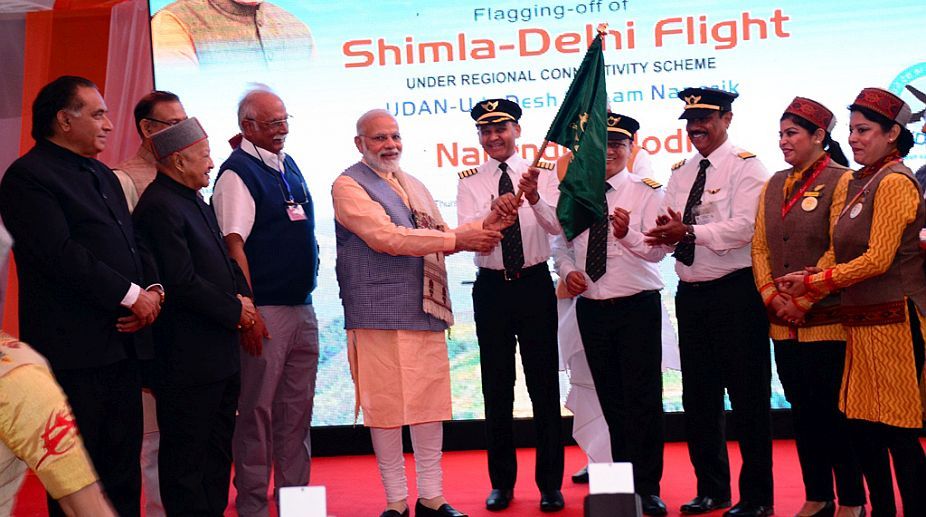
The second round of bidding for the Civil Aviation Ministry's regional connectivity scheme, UDAN, that was launched by Prime Minister Narendra Modi on Thursday, is likely to take place soon as proposals have started pouring in. This time, the ministry  is hopeful that other domestic airlines like Go Air, IndiGo and Jet Airways will also participate. 

"After the launch of Shimla-Delhi sector in North and launch of  Hyderabad-Kadapa, Hyderabad-Nanded and Nanded-Mumbai sectors in South, the other major players are reassured," said Minister of State for Civil Aviation Jayant Sinha.  

He said issues regarding the Regional Connectivity Fund are likely to be resolved. "There was an issue with Federation of Indian Airlines regarding the way the levy for RCF is collected. That may be resolved soon," said Sinha. 

In the first round of bidding a total of 31 airports have been revived. This is in addition to the already existing 75 airports. By next year, the ministry hopes the number of operational airports will increase to more than 200. 

Sinha said the unserved and underserved airports that will be part of the second round of bidding are being identified. "All the airports which were part of the first round of bidding will also be part of the second round of bidding," said Sinha. 

A uniform security cover will be needed for all the revived airports and the ministry is in discussion with Ministry of Finance over the financial aspects.

Delhi schools light the lamp of literacy

Statesman News Service | New Deslhi |

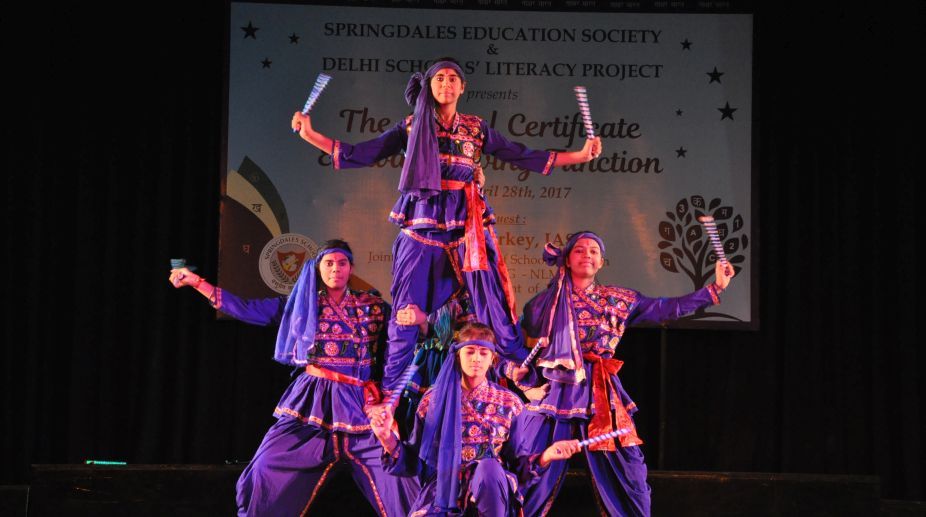
"Hum deep shiksha ke hain, jagmagayenge jag me" (we are the lamp of literacy, we will enlighten the world), goes the lyrics of a song while the inauguration lamp was lit for the Delhi School Literacy Project Annual Award Giving Ceremony at the Springdales School, Dhaula Kuan here on Friday.

The 29th anniversary of the award giving ceremony was organised to celebrate the relentless efforts and deep commitment of the student community to uphold the inspiration of literacy.

“Students are being the change they want to see. That is the encouragement you get when you are hear them and see what they are doing,” Springdales School Principal Jyoti Bose told ‘thestatesman.com’ on the sidelines of the event.

The event showcased many cultural performances by school students in Delhi.

“We all did it together as a unit of schools in Delhi. A lot of ideas are emerging from the students themselves," Bose said.

The DSLP Annual Award Giving Ceremony was started way back in 1988 and the Springdales School feels honoured to host its 29th anniversary.

“The honour comes from the fact that you contributed for a noble cause in many ways. So many hearts and minds have worked together to make it this bigger and beautiful. NGOs, state resources centers, people from village, governmental and non-governmental organisations and schools all came together for this common cause,” she added.

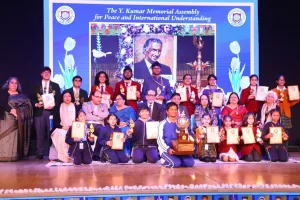
The Springdales School, Dhaula Kuan received Baldev and Kamala Bhatia Memorial Trophy for their community work, whereas the Pusa Road branch won the Henry Selz Foundation Trophy for making the second largest literates under DSLP.

The Bhatnagar International School, Vasant Kunj, bagged the Sufia Ajmali Trophy for making the largest number of literates under the programme.

Other proud recipients were New Era Public School, Mayapuri that won the UNICEF trophy, St George's School, Alaknanda with the Rotary Club Trophy and Evergreen Sr Sec School, Vasundhara Enclave that claimed the Satpal Singh Memorial Trophy.

Muskan Midha of Manav Sthali School was bestowed with the ML Kapoor Memorial Trophy for making the highest numbers of learners (160) on an individual level.

Presenting the awards and certificates to the participating schools, Chief Guest Ajay Tirkey, IAS, Joint Secretary, Department of School Education and Literacy, Ministry of Human Resource Development, congratulated the DSLP and its member schools on sustaining the programme.

“Literacy is a complex subject to work on. I advise every student, who volunteered for this noble event, to continue their work and aim for the stars,” Tirkey said.

P Loomba, Honorary Secretary of DSLP, who has been working tirelessly in monitoring and guiding the project, proposed the vote of thanks in the end.

Islam does not condone terrorism: Al-Azhar chief

IANS | Cairo |

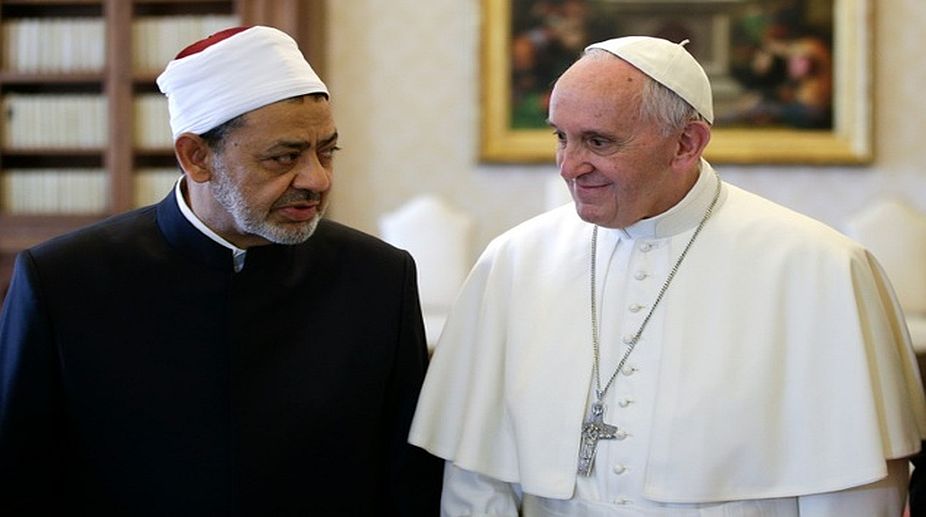
The Muslim faith is not a terrorist religion, Ahmad al-Tayeb, the Grand Imam of Cairo's prestigious Al-Azhar mosque – the highest seat of Sunni learning – said on Friday.

"Islam is not a terrorist religion, just as Christianity and Judaism are not," Tayyeb told an international peace conference in Cairo on Friday attended by Pope Francis during his two-day visit to Egypt.

Islam should not be judged on the basis of the actions of a "limited group of people" who misinterpret its sacred texts, Tayeb said.

In the same way, the Crusades during the Middle Ages do not make Christianity a violent religion, nor should Judaism be judged for the occupation of the Palestinian territories, he said.

Before the visit – the first papal trip to Cairo since John Paul II's in 2000 – Francis said he was travelling as a "messenger of peace".

The visit is aimed at improving Christian-Muslim dialogue and reaching out to Egypt's Christian minority, three weeks after bombings at two Coptic churches killed 47 people.

The Vatican and Egypt's prestigious Al-Azhar university in February resumed dialogue sessions in Cairo that were broken off in 2011 after Pope Benedict XVI deplored an attack on a Coptic Church in the city of Alexandria.

Relations between the Vatican and the Al-Azhar earlier faltered in 2006 when a speech given by Benedict appeared to associate Islam with terrorism.

IPL 2017: Siddarth Kaul, Shikhar Dhawan shine as SRH beat KXIP by 26 runs

Siddharth Kaul and Ashish Nehra scalped three wickets each as Hyderabad defeated Punjab.

IANS | Mohali |

Sunrisers Hyderabad defeated Kings XI Punjab by 26 runs in an Indian Premier League match at the I.S. Bindra Stadium here on Friday.

Chasing 208, Punjab were restricted to 181/9 with Shaun Marsh (84), Eoin Morgan (26) and Martin Guptill (23) the only big contributors.

For Hyderabad, Siddarth Kaul and Ashish Nehra scalped three wickets each while pacer Bhuvneshwar Kumar took two wickets for 27 runs.

Punjab started off on a positive note but after adding 26 runs for the first wicket, opener Guptill was dismissed by Bhuvneshwar Kumar as he tried to loft the knuckle ball but was caught by Moises Henriques. Guptill's 11-ball knock was laced with four boundaries and one six.

After one over, the in-form Manan Vohra (3) was sent packing by experienced pacer Nehra to make Punjab reel at 37/2 in four overs.

Skipper Glen Maxwell also failed to step up to the occasion as he was dismissed by Kaul on a duck.

Middle-order batsmen Marsh and Morgan then forged a 73-run partnership to give some hope to the hosts but while trying to pace up the scoring rate, the latter was dismissed by spinner Rashid Khan.

Morgan tried to slog-sweep a tossed up delivery but failed in doing so and Deepak Hooda took a good catch at wide long-on. Morgan faced 21 balls, in which he hit two boundaries and one six.

With 70 runs required from 30 balls, Wriddhiman Saha (2) came in to the middle and but could not gave Marsh the much-needed support as he was clean-bowled by Kaul in the 15th over.

Things got worse when Marsh was sent back to the pavilion in the next over. His brilliant 50-ball knock was stopped by Bhuvneshwar with the score on 138/5. Marsh slammed 14 boundaries and one six before he was caught at deep mid-wicket by Hooda.

Punjab's lower-middle order also failed to deliver with Axar Patel (16), Anureet Singh (15), Mohit Sharma (2), Ishant Sharma (5 not out) failed to achieve the required run-rate.

Earlier, put in to bat, openers David Warner and Shikhar Dhawan helped Sunrisers Hyderabad post a challenging 207/3.

Right from the start, Dhawan (77) and Warner (51) thrashed Punjab's bowlers all around the park, getting past the 100 run mark in just 10 overs.

Both openers forged a 107-run partnership with the run-rate of 10.70 before Warner was sent packing by Punjab's skipper Maxwell.

Warner tried a slog-sweep over mid-wicket but totally missed the ball and got bowled. His 27-ball knock was laced with four boundaries and four sixes.

Unperturbed by the fall of Warner's wicket, Dhawan, who seemed good at the middle, continued the assault.

But after adding another 40 runs with Kane Williamson (54 not out), he was dismissed on a Mohit Sharma delivery. Dhawan slammed nine boundaries and one six in his 48-ball innings.

Williamson along with veteran batsman Yuvraj Singh (15) then paced up the scoring rate, adding 24 runs in three overs before Yuvraj was dismissed by Maxwell in the 17th over.

With two overs remaining, middle-order batsmen Henriques and Williamson then completed the proceedings in style as they added 31 runs in two overs to post a challenging total.

For Punjab, Maxwell scalped two wickets while Mohit Sharma took one wicket.

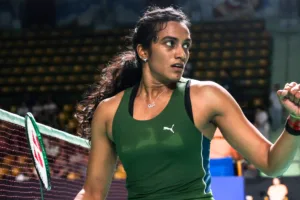
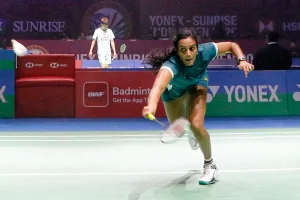
PV Sindhu crashes out of Badminton Asia Championships

Sindhu won the 1st game before the eighth-seeded Chinese staged a comeback to win 15-21, 21-14, 24-22.

IANS | Wuhan (China) |

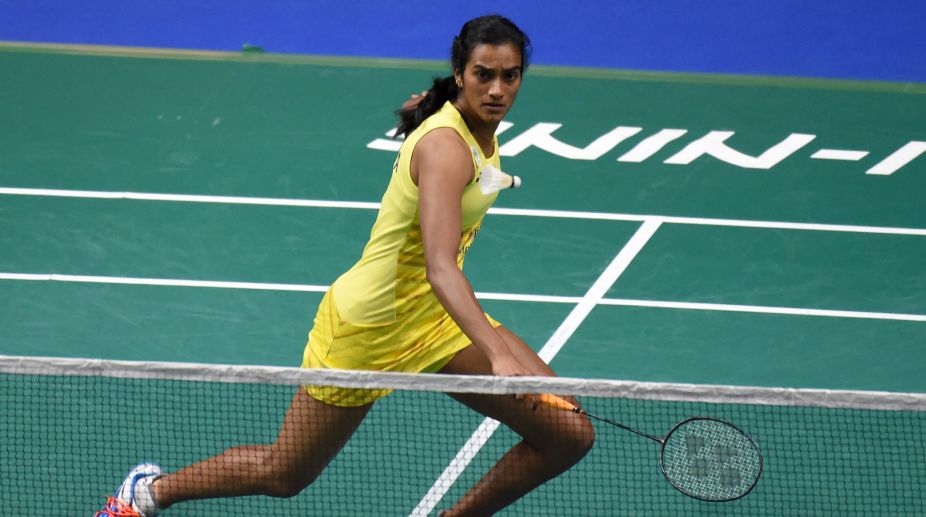
Indian star PV Sindhu went down fighting to Bingjiao of China in the women's singles quarter-finals in the Badminton Asia Championships 2017 here on Friday.

The fourth-seeded Sindhu won the first game before the eighth-seeded Chinese staged a comeback to win 15-21, 21-14, 24-22 in one hour and 17 minutes.

Sindhu was off to a promising start, winning six consecutive points to take a 12-5 lead in the first game.

Although the local shuttler tried hard to reduce the gap, the Indian held on to clinch the opening game and take the lead.

Bingjiao was in much better form in the second game, opening up a 3-0 lead early on. 

The Chinese then won four back-to-back points to increase her lead to 13-7.

Although Sindhu battled hard and won three successive points to reduce the gap, Bingjiao produced a three-point burst to increase her lead and held on from there to level the issue.

The third and decisive game was an exciting affair.

Bingjiao took the early lead, winning seven successive points to open up a comfortable 8-1 advantage. Sindhu, however, drew level at 12-12. 

It was then a neck and neck affair, with neither shuttler prepared to yield an inch.

At one point, Bingjiao took four consecutive points to lead 19-16 before Sindhu took three points to draw level again.

The closing stages saw some thrilling action. With Sindhu enjoying a one-point lead at 22-21, Bingjiao clinched three successive points to take the game and the match.

JSW mulling steel plant at Posco site in Odisha

IANS | Bhubaneswar |

Sajan Jindal-led JSW, which has expressed interest in investing Rs 50,000 crore to set up a 10 million tonne a year steel plant in Odisha, may set up the plant in the location earlier earmarked for the Posco plant.

"Posco site is one of the possibilities. We are examining locations in different places including one near Paradip. But decision over identifying land is yet to be taken," said Jindal after holding a meeting with Chief Secretary A.P. Padhi.

He, however, said that it would not be easy for his company to set up the project in Jagatsinghpur, where the South Korean company faced several difficulties.

Earlier last year, Jindal, after a meeting Chief Minister Naveen Patnaik at a business meet in Bengaluru, had expressed his desire to set up a mega steel plant in Odisha.

Posco India has decided not to go ahead with the Rs 52,000 crore project and requested the Odisha government to take back its 2,700 acres of land provided to it near Paradip for setting up a 12 mtpa steel plant.

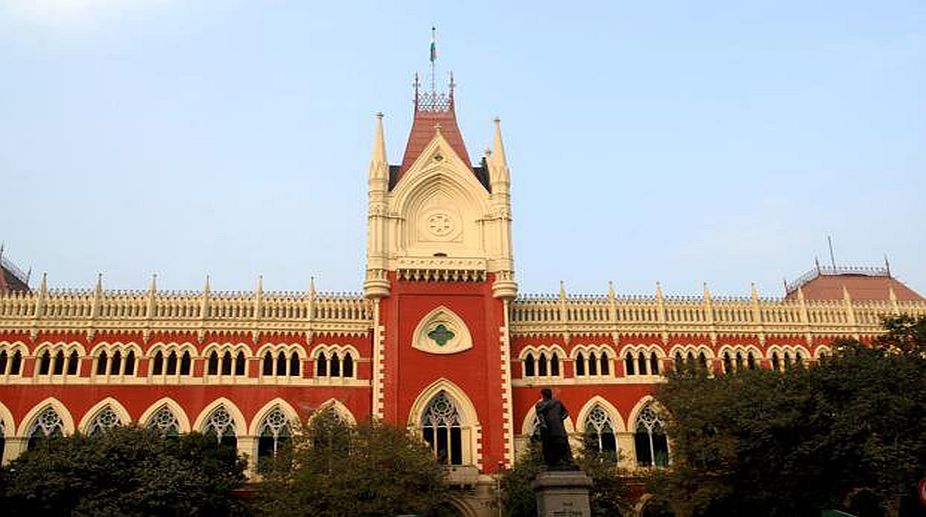
Calcutta HC tells Trinamool MP to cooperate with CBI’s Narada probe

IANS | Kolkata |

The Calcutta High Court on Friday allowed the CBI to carry on with its probe into the Narada sting video footage case and directed accused Aparupa Poddar – a Trinamool Congress Lok Sabha member – to extend all cooperation to the agency.

A single judge bench of Justice Joymalyo Bagchi gave the directive on a petition moved by Poddar seeking quashing of the FIR filed by the Central Bureau of Investigation (CBI) against her under the Prevention of Corruption Act.

Her lawyer prayed before the court that Poddar could not brought under the purview of the said Act as she was not a people's representative when the video footage was recorded.

The counsel in his submission referred to Narada News Portal CEO Mathew Samuels' claim that he had recorded the footage in April 2014. The results of the Lok Sabha polls were declared a month later, when Poddar won her maiden Lok Sabha election from Arambagh, he argued.

The judge asked the CBI to submit to the court all relevant records related to its probe on the next hearing on May 10.

Poddar has to extend all cooperation to the probe, Justice Bagchi said.

The controversy erupted in assembly election-bound West Bengal in March last year when Narada News portal uploaded video footage purportedly showing the Trinamool leaders receiving money in exchange of favours to a fictitious company.

The Calcutta High Court ordered a CBI preliminary inquiry into the case exactly on March 17, and asked the federal investigation agency to submit the report within 72 hours.

The Trinamool Congress appealed to the Supreme Court on March 21, challenging the High Court' order, but the apex court refused to interfere with the order though it extended the deadline for the preliminary probe to one month.

On April 17, the CBI filed an FIR against a dozen senior Trinamool including former and current state ministers, MPs, and an MLA, besides IPS officer S.M.H. Mirza.

Among those whose names figure in the FIR are Trinamool Vice President and Rajya Sabha member Mukul Roy, Lok Sabha members Sougata Roy, Sultan Ahmed, Kakali Ghosh Dastidar, Poddar and Prasun Banerjee.

Also featuring in the list are state ministers Subrata Mukherjee, Firhad Hakim, Suvendu Adhikari, city mayor and state minister Sovan Chatterjee, legislator Iqbal Ahmed and former minister Madan Mitra.

The accused have been charged with criminal conspiracy and under various sections of the Prevention of Corruption Act, 1988.

To grow rapidly, India needs to embrace digitisation: NITI CEO

IANS | New Delhi |

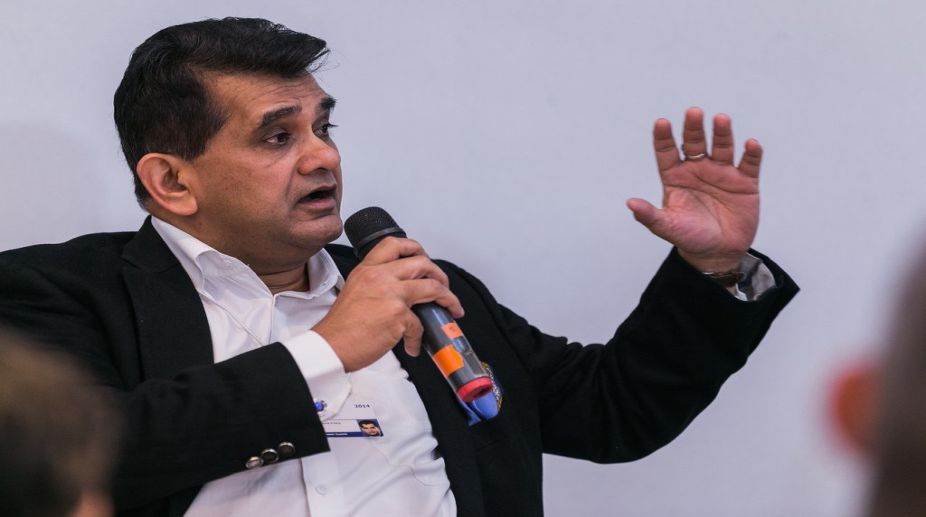
Digitisation is the future of the manufacturing market and India needs to embrace this change if it wants to grow rapidly, NITI Aayog CEO Amitabh Kant said on Friday.

At the Confederation of Indian Industry's Annual Session, Kant said while it took 150 years for Britain to double its per capita income, China did it in just 12 years "on the back of manufacturing".

"My view is that if India wants to grow rapidly – and create jobs rapidly – it can't be done without the manufacturing sector."

Kant said manufacturing itself was going through a huge process of digitisation and India needed to embrace this change.

"Manufacturing companies would become digital companies in future… And India has a huge advantage because we have trained manpower. We set up our IITs (Indian Institutes of Technology) early and our IT (Information Technology) sector has done very well," he said.

"We can achieve this quantum technological jump far more rapidly than any other country."

Kant also stressed on the need to boost India's exports and said no country since the World War II made it big solely based on the domestic market.

"Be it Japan, Korea or China, they all made it big on the back of exports by penetrating the global market," he said.

And to penetrate the global market, India needs to improve its process of standardisation so it matches the global standards, the NITI CEO added.

NITI Aayog Vice Chairman Arvind Panagariya said India's share in global trade was a mere 1.7 per cent and there is a need to significantly improve that.

On concerns of the rise in protectionism world over, he expressed hope that the global markets would remain open.

"But regardless of what happens outside, the global trade pie is very large and India's share in it very small. So it is important for India to increase its share in the pie even if the pie shrinks (due to protectionism and other factors)," he said.

He said India made more progress in the last 15 years than it did in 50 years before that.

"In the next 15 years, the progress we can achieve would eclipse that of the 70 years," he added.

On concerns of job losses in the labour market due to technological advances and digitisation, Panagariya said India still had a 15-year window for that to happen.

Kant said there won't be any loss of jobs but emergence of new kinds of jobs.

"And India needs to train itself for those new higher-skill jobs, which would be higher-paid as well," he said.

The two-day Annual Session of the CII on the theme "Future of Globalisation: Can India lead?" would conclude on Saturday.

India’s first ‘book village’ coming up in Maharashtra’s strawberry country

IANS | Mumbai |

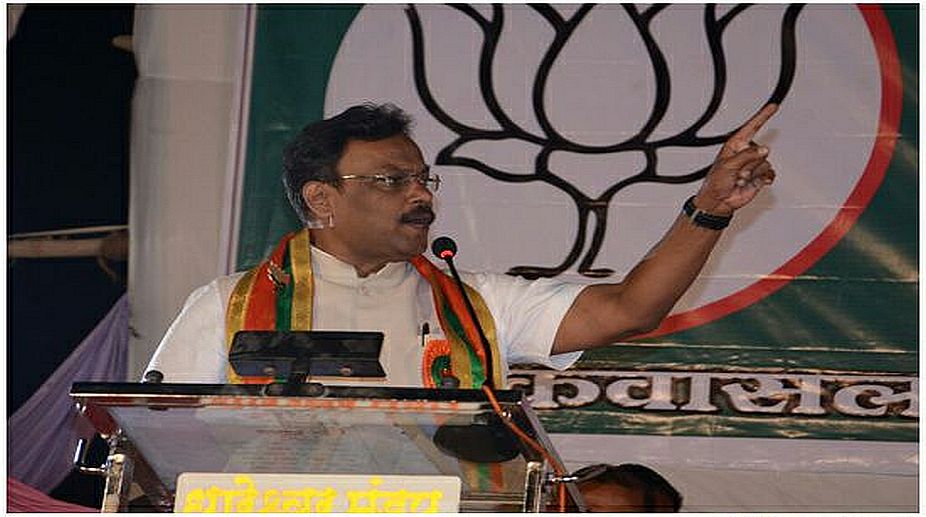
The sleepy village of Bhilar, in the heart of Maharashtra's famed 'strawberry country' will soon get another identity as India's first "book village", Education Minister Vinod Tawde said here on Friday.

Inspired by Britain's Hay-on-Wye, the state government has decided to convert the village near the twin hill-stations of Mahabaleshwar-Panchgani into a readers's paradise.

"Preparations are completed and the country's first-ever 'book village' will be inaugurated on May 4 by Chief Minister Devendra Fadnavis," Tawde told media persons.

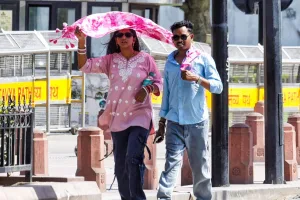
Located around 250 kms or five hours drive from Mumbai and five kms before the climb to Panchgani, Bhilar boasts of a year-round salubrious climate, lush greenery and surrounded by hundreds of acres of strawberry farms which turn a dazzling pink during the winter cropping season.

"The government has financed around 15,000 books to be kept there permanently for the public at around 25 key locations around the village of 600 families. Anybody can simply pick up a book of his/her choice, read for as long as they want and keep it back for the others," said Tawde on the unique concept.

The government has also provided a suitable reading ambience comprising glass cupboards, chairs, tables, tee-poys, large decorative umbrellas, etc to make the experience pleasant for book connoisseurs.

The 25 book hotspots in the village have been decked up into 'mini-libraries' and 75 artists have creatively designed the 25 locations with support from Asian Paints Ltd, he added.

Initially, the books ranging from literature, poetry, religious, women and children oriented subjects, history, environment, folk literature, biographies and autobiographies to festival specials shall be available in Marathi and after a couple of months other languages will be introduced.

"The initiative will help people, especially among the younger generations to imbibe the reading habits and rekindle the interest in our country's rich literary heritage and culture," said Tawde.

The state government had committed on February 27, 2015 – Marathi Language Day – to launch a 'book village' in the state, on the lines of Britain's immensely popular Hay-on-Wye book village and literary festivals concept.

After lot of deliberations, Bhilar village in Satara district, was selected to be India's first 'book village'.

The next phase would be organising literary festivals comprising book and poetry reading sessions, writing, publishing and teaching workshops, exhibitions, debates, discussions with literary personalIties and other literature-culture programmes to popularise the concept in India.

Starting with a lone bookstore in 1962, Hay-on-Wye village was bursting with bookshops by 1970s, earning the sobriquet of 'Town of Books'.

Later, it developed into a centre for literature and literary 'Hay Festivals' attracting top writers and celebrities from all over the world, besides sponsorship from top media and publishing houses.

Over the years, the Hay Festivals have spread to Italy, Spain, Peru, Colombia, Denmark, Mexico, Kenya, The Maldives and other countries.

The next Hay Festival in Britain is scheduled to start from May 25.

Jobless man kills mother in Delhi

IANS | New Delhi |

An unemployed man, unable to fend for his elderly mother, strangled her at his residence in west Delhi, police said on Friday.

Police said the crime came to light around 10 a.m. on Tuesday when the accused Laxman Kumar Naidu, 48, made a call to the Police Control Room that he had killed his 78-year-old mother. He was arrested.

The accused, living in Mohan Nagar at Sagarpur, is suffering from depression and has been unemployed for the last couple of months, Deputy Commissioner of Police Surender Kumar said.

He strangled his mother Laxmi Naidu when she was sleeping, Kumar added.

Jamaat launches Muslim law awareness campaign

Statesman News Service | New Delhi |

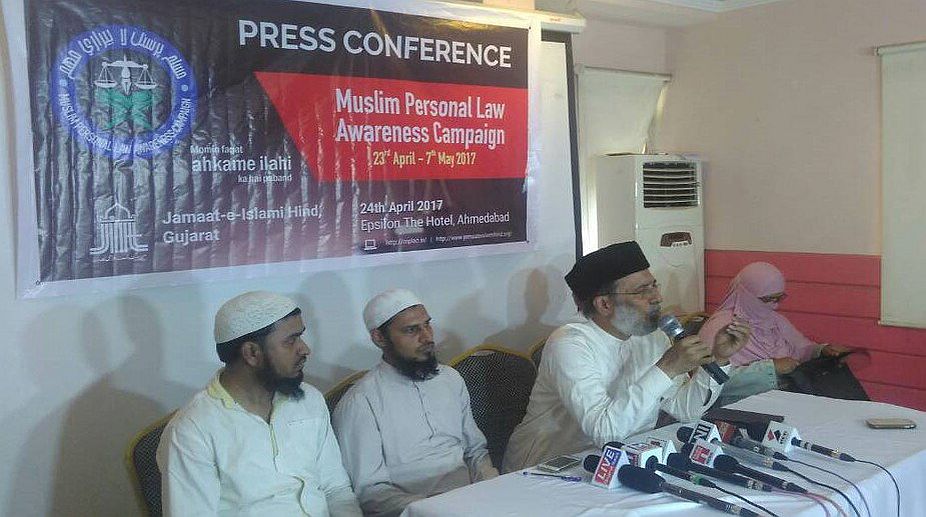
In the wake of recent media debates and political intervention on matters of Islamic Shariah, Jamaat-e-Islami Hind has launched what it calls an awareness campaign for Muslim Personal Law.

Through the 14-day campaign from 21 April, the organisation will reach out to Muslim masses and people from other communities to remove their "misconception" on Muslim law and teachings of Islam on family issues like marriage and divorce.
Jamaat said it is mostly the ignorance of the Muslim masses about Islamic family laws and their consequent faulty conduct while dealing with domestic disputes that have created a distorted image of Muslims and Islam.

Talking to the Statesman, Maulana Syed Jalaluddin Umari, president of Jamaat-e- Islami Hind and also vice-president of All India Muslim personal Law Board, said, “It must be recognised that the primary reason for violation of Shariat is large-scale ignorance of Muslim masses and lack of sincere commitment to Islamic norms. A large section of Muslim society does not even know basics of Islam. Many Muslims do not know the rules and instructions which would guide them in matters of marriage, divorce, inheritance and the like. Hence, there is an imperative need to educate, uplift and morally reform the Muslim society.”

He said the current debate on triple talaq in the media and elsewhere is to divert attention from real issues of the community.

Talking about the contradictions in Muslim Personal Law and Indian laws under the Constitution, Salim Engineer, general secretary of the Jamaat, said Muslims in India have constitutional right to practice Muslim Personal Law. “Indian constitution has given us right to practice our religious laws. It is our constitutional right,” he said

During this campaign, the organisation plans to reach out 4-5 crore people, according to Mohammad Jafar, convener of the campaign and also a member of All India Muslim Personal Law Board. He told the Statesman, “For this 700 public meetings and 8000 Friday sermons will be used. The campaign will also cover 2000 villages."

The organisation has also designed an app called MPLAC.in for reaching out to people. This mobile application contains relevant information on Muslim Personal Law.