Logo

Trouble for Rupani as minister demands more to ‘serve’ people

Statesman News Service | Ahmedabad |

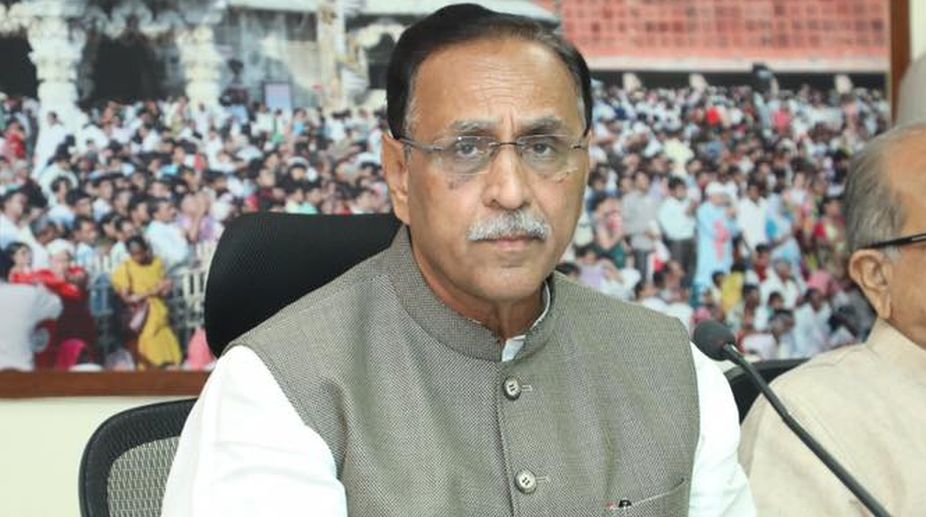
The teething trouble for the one-week-old Vijay Rupani ministry doesn’t seem to be over as another minister has raised objection about not being allotted adequate portfolios through which he could ‘serve’ the people.

Minister of state for fisheries, Parshottam Solanki, a five-time MLA from the coastal region, stayed away from the first meeting of the newly formed Cabinet in protest against portfolio allocation.

Parshottam Solanki, who was named as an arsonist by justice Srikrishna Commission that investigated into the Mumbai riots after the 1993 blasts and the demolition of the Babri Masjid, is an influential leader of the Koli community involved in fishing in coastal areas of the state.
Solanki’s defiance of the party’s decision just days after deputy chief minister Nitin Patel’s rebellion was contained with the intervention of BJP president Amit Shah, is certainly an ominous sign for the new Ministry in Gujarat.

Given that everyone is aware that the decision about portfolio allocation was taken by the BJP’s high command in Delhi, a junior minister like Solanki’s tantrum is a sure sign that the phobia about Modi-Shah duo is beginning to evaporate from the minds of party people here.
In a diplomatic move, Solanki told newspersons that he was himself not so angry but his community people were aggrieved at the allocation of a single portfolio to him this time.

Mr Solanki, who was involved in the Rs 400 crore fishing contract scam during his earlier tenure, went to the chief minister’s chamber to demand some more portfolios but could not do so as the room was crowded.

As a damage control exercise, senior minister Bhupendrasinh Chudasama was deputed to sort out the issue with Solanki but the latter remained adamant on his demand.

He said that with the fisheries department allocated to him, he can serve only the fishing community in coastal areas and noone else. During his last four terms as minister, Parshottam Solanki was also given charge of Animal Husbandry department.

Cong needs whole-time cadre: HPYC chief

Statesman News Service | Shimla |

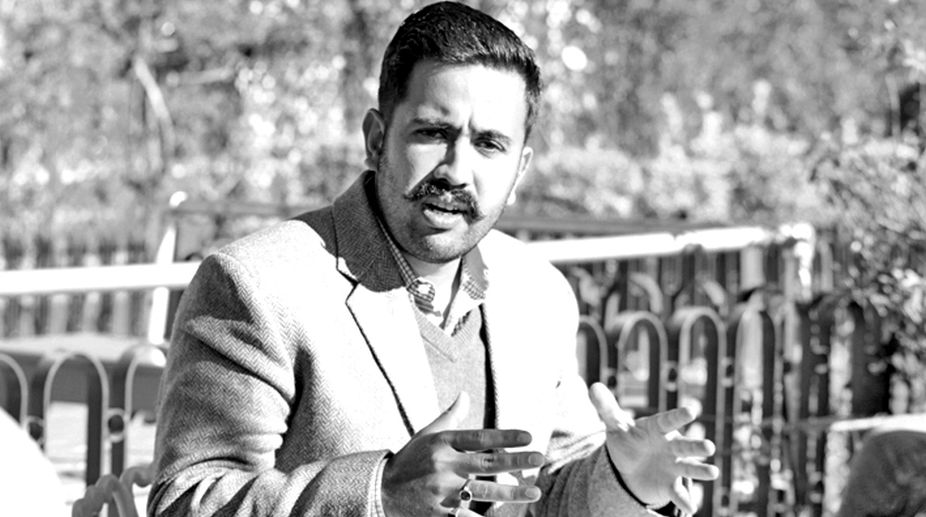
Emphasizing for the Congress to re-invent itself and prepare itself for the 2019 Lok Sabha elections, Himachal Pradesh Youth Congress president Vikramaditya Singh said there was a need for a whole-time cadre in the party on the lines of the Rashtriya Swayamsevak Sangh (RSS).

Talking to media persons here on Wednesday, he said it is a known fact that RSS had played a big role in bringing BJP to the Centre and also in Himachal in the recent Vidhan Sabha elections.

“If we want to reinvent our selves and want to make the Congress more aggressive for the 2019 general elections, there is need for trained cadre to make the party strong in all circumstances. The main focus of the Congress should be on booth level in the times to come. I had taken it up with All India Congress Committee chief Rahaul Gandhi during his recent visit to Shimla,” said Vikramaditya, who is
also an elected legislator from Shimla (Rural) constituency.

He said: “Endowed with the twin responsibilities, as Youth Congress president and as legislator, I accept and welcome public verdict… In times to come we will work our way forward and take steps to strengthen the party, so that any shortcomings is done away with.”
Reacting to chief minister Jai Ram Thakur’s statement that blamed the previous government for pushing the state into Rs 46,500-crore debt, Vikramaditiya said: “When Congress came to power in 2012, it took the reins of the state which was already under the financial burden of Rs 28,000 crore to Rs 30,000 crore left by the then previous BJP government. Had, the Congress got the Central assistance from time to time, there would have been no need to take loans from various agencies like the World Bank. The previous Congress government had left no stone unturned for the state’s progress and development.”

In a reply to the question on the leadership of the Congress Legislative Party, he said: “The party needs a strong leadership and should be from amongst the senior leaders, who is over three time winners in the Assembly elections. Besides, the leaders should be well versed with parliamentary process and should have a reasonable standing amongst the public.”

“Chief minister Jai Ram Thakur’s gesture to put an end to negativity and political vendetta in the state is a welcome step. The politics of vendetta is a culture that had previously come into existence, similar to Tamil Naidu and Punjab and I think it is a very good opportunity to put an end to it and we should start a new beginning in the era of Himachal Pradesh,” he said.

Sushma Swaraj, Shashi Tharoor trade barbs over Hindi

Statesman News Service | New Delhi |

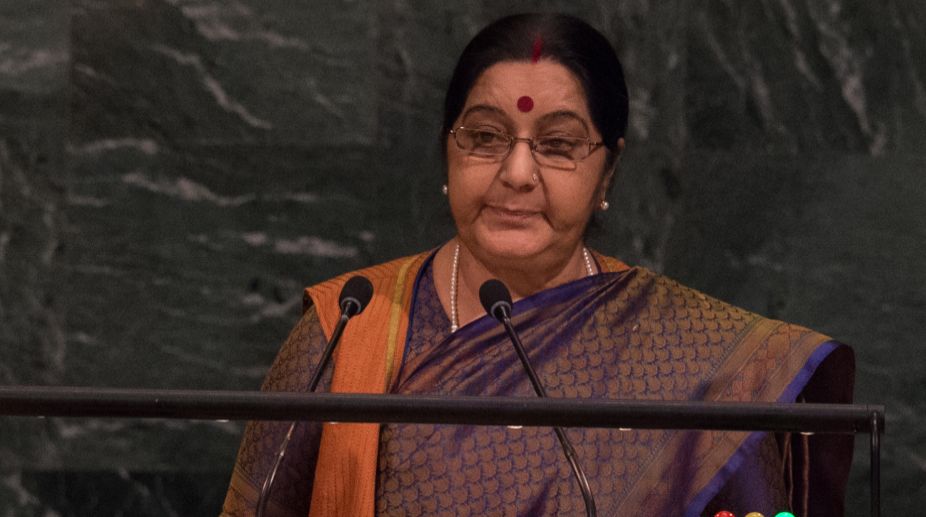
A question on making Hindi an official language at the United Nations saw External Affairs Minister Sushma Swaraj and Congress MP Shashi Tharoor trading barbs in the Lok Sabha on Wednesday.

Even as Swaraj said India was ready to bear all expenses, if necessary up to Rs 400 crore, to make Hindi one of the official languages of the United Nations but its rules for acquiring such a status prevent the country from doing so, Tharoor sought to know why effort should be made to make Hindi one of the languages in the UN as it is only India’s official language and not the national language.

“If tomorrow someone from Tamil Nadu or from West Bengal becomes the Prime Minister, why should we force him to speak in Hindi at the UN,” he asked. Tharoor also said Hindi is the official language of only one country ~ India ~ while other official languages in the UN are spoken in several countries.

However, Swaraj countered Tharoor saying he was unaware that Hindi is an official language of Fiji and is also spoken widely in Mauritius, Suriname, Trinidad and Tobago and many other countries. She called his remark “ignorant”.

According to the UN rules, support of two-third member countries (129 nations) is required out of the total 193 member nations, Swaraj said during Question Hour.

Besides, all member nations will have to bear the cost of making Hindi one of the official languages of the UN.
“It is not difficult to get the support of two-third member nations. But when the issue of bearing the expenses comes, many small nations become hesitant which has led to a big hurdle in making Hindi an official language of the UN,” she said, adding that despite this, the efforts are on.

When a BJP member said that India has to pay Rs 40 crore as cost for making Hindi one of the languages in the UN, the minister said the government is ready to pay “even Rs 400 crore if required” but the world body’s rules do not permit that.

RS uproar stalls debate on triple talaq Bill

Statesman News Service | New Delhi |

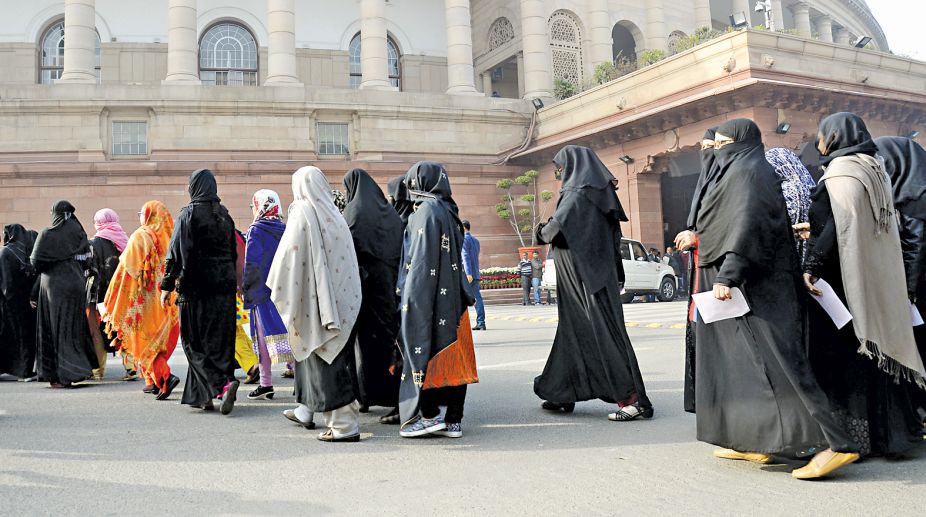
The Triple Talaq Bill, passed by the Lok Sabha without much difficulty, remained stuck in the Rajya Sabha on Wednesday as the House failed to take up Opposition motions to refer it to a Select Committee because of furore from Treasury Benches.

The government maintained the Opposition motions from the Congress Party and Trinamul Congress did not follow rules and were therefore invalid. Deputy Chairman P J Kurien ruled the motions were valid, but failed to proceed with voting on the issue, as there was no order.

Kurien said the amendments proposed by the Opposition parties were valid as Chairman M Venkaiah Naidu was informed about the motions well in time. At this, Leader of the Opposition Ghulam Nabi Azad, supported by major Opposition parties, said “Division, please,” urging the Chair to go through the voting. This provoked a sudden furore from the Treasury Benches, which sensed trouble, as the Opposition enjoying majority in the House could have its way on the issue. Kurien had already warned the House that he would adjourn the proceedings, if there was no order, and he adjourned it finally till Thursday. Law and Justice Minister Ravi Shankar Prasad moved the Muslim Women (Protection of Rights on Marriage) Bill for consideration of the House saying there were cases of instant divorce by Muslim men by uttering talaq three times, even after the Supreme Court judgment declaring it illegal. He said the apex court had wanted Parliament to legislate on the issue to end the “unfair practice”. Leader of the House Arun Jaitley, who gave arguments why the Opposition motions to send the Bill to a Select Committee were not in order, said the principal Opposition party, the Congress Party had supported the Bill in the Lok Sabha but was opposing it in the Upper House.

After the Bill, making the triple talaq practice a congnisable offence punishable with up to three years’ imprisonment, went through easy passage in the Lok Sabha, despite the Congress Party’s demand to refer it to a Standing Committee, there was much speculation on the fate the Bill would face in the Upper House. There was worry in the Treasury Benches on the issue as the combined Opposition enjoys a majority in the House. Demanding the reference to a Select Committee, the Opposition maintained that a scrutiny of the Bill by the Committee was necessary as it had not been referred to a Standing Committee, as per the normal practice of referring all major Bills to it. The Opposition parties said the Select Committee would be able to take evidence on the issue from all stakeholders.

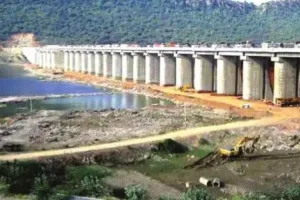
Post-lunch, the House had already witnessed a 55-minute adjournment when BSP’s Satish Misra, referring to the Maharashtra incidents demanded a discussion on attacks on Dalits in the country. Kurien said the House had to take up a calling attention motion over barrage construction over the Mahanadi. Misra was supported by the Congress and others who said the attacks were planned. After the adjournment, nearly the whole Opposition was exercised over the Dalits issue.

Fireworks in Parl over Bhima-Koregaon strife

Statesman News Service | New Delhi |

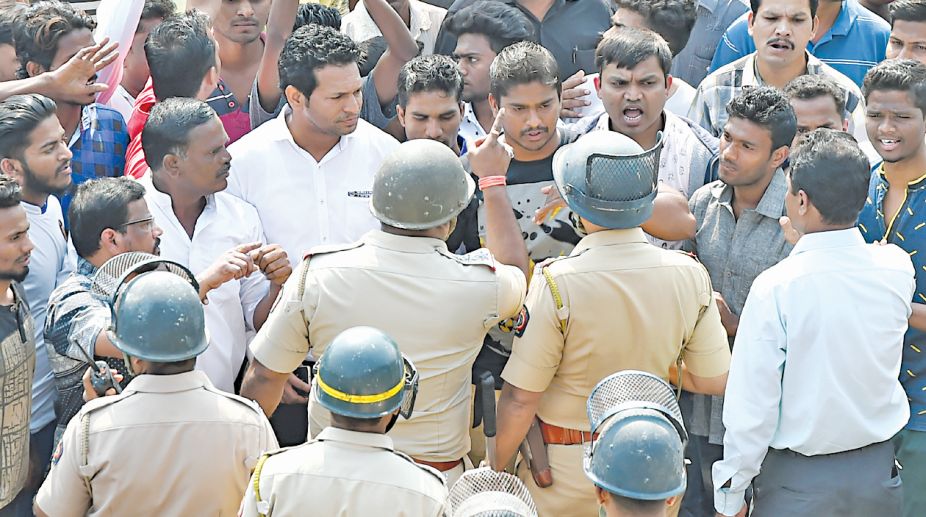
The Maharashtra violence and alleged atrocities against Dalits rocked both Houses of Parliament and triggered political fireworks outside Parliament too on Wednesday, with the Congress-led Opposition attacking the ruling BJP and its ideological mentor RSS in this regard while targeting Prime Minister Narendra Modi for his “sustained silence” over the continuing atrocities against Dalits across the country.

Accusing the RSS and certain Hindutva outfits of allegedly sparking the caste violence in Pune’s Bhima-Koregaon that spread to other parts of the BJP-ruled Maharashtra, the Congress also demanded an inquiry by a Supreme Court judge into the episode.

Hitting back, the BJP charged the Congress with allegedly seeking to stoke the caste conflict and divide the people for political gains. In the Lok Sabha, Congress leader Mallikarjun Kharge, gunning for PM Modi and the BJP-RSS, said that the Bhima-Koregaon violence was the latest instance of atrocities against Dalits in the country, which, he added, included cases like the Una flogging and Rohith Vemula’s suicide.
Kharge said that the atrocities against Dalits has been on the rise in the country, alleging that such incidents have been occuring in the BJP-ruled states including Gujarat and Maharashtra. “The RSS and certain hardcore Hindutva outfits are behind the Bhima-Koregaon violence. They are trying to drive a wedge between the Marathas and Dalits in Maharashtra,” he told the Lower House amid protests from the BJP members. He said some “fascist forces” always want to keep the Dalits at the bottom of the Indian society. Kharge, a veteran Dalit leader, demanded that PM Modi should come to the House and make a statement over violence against Dalits.

“Why is Prime Minister Narendra Modi silent on the issue? He always keeps mum on such issues. He has become a ‘Mouni (silent) Baba’ on Dalit issues,” he alleged.

His comments evoked angry reaction among BJP MPs, with Parliamentary Affairs Minister Ananth Kumar rejecting the charges and accusing the Congress of following the colonial British’s “divide and rule policy”.Kumar accused the Congress of seeking to fuel the caste conflict for its political gains.

Agitated Congress members trooped into the Well, shouting slogans against the Modi dispensation following which Speaker Sumitra Mahajan adjourned the House briefly.

The Rajya Sabha proceedings were frequently disrupted during the day, with Opposition parties like the BSP and the Congress attacking the BJP dispensation over the Maharashtra violence and atrocities against Dalits.

The celebrity s liability

Statesman News Service |

On 21 December 2017 the Union Cabinet cleared the Consumer Protection Bill, 2017. The bill is scheduled to be tabled in Lok Sabha during the current Winter Session. One of the interesting aspects to be noted about the bill is that for misleading ads, it provides for fine and a ban on celebrities. For first instance of offence, the fine will be up to Rs 10 lakh and one-year ban on any endorsement. For the second instance, the fine will be up to Rs. 50 lakh and a ban of up to three years.

The definitions of endorsement, endorser and the punishment for endorsers for participating in misleading endorsements retain the form provided in the 2016 Bill. Since the provisions governing the issue of endorsers’ liability for misleading advertisements remain unchanged, the need for a proper understanding of this specific portion of law and the debates surrounding it remain relevant.

However, we believe that currently this issue of endorsers’ liability as incorporated under the Bill has been substantially misunderstood. The fallacy exists at three levels.

Liability for mere appearance
In several debates, the proposed law has been interpreted to mean that any celebrity shall be held liable merely by virtue of his appearance, performance or participation in a misleading endorsement. This manner of understanding the proposed law exists because we have seen experts arguing, while opposing this amendment, that it would be unjust to hold the celebrity liable when he merely lends his face, voice or image to the advertiser or reads the script given to him; or that if the noose of law is tightened around celebrities for mere association with a misleading advertisement, then by the same logic, media, advertising agencies or other intermediaries should also be held liable; or that even the lawyer upon whose advice the celebrity gives a nod to participate in an advertisement should be held liable.

Those standing in support of the proposed amendment have also depicted a similar understanding of the provisions. This is the reason they present their arguments in favour of this amendment in the way they do. Consequently, they build their arguments upon two grounds – first, since celebrities are influential personalities, they must be careful in their choice of promotion and second, celebrities receive large payments for their promotional activities which justifies the imposition of accountability on them.

However, often these arguments miss the point that there is a distinction between an a celebrity ‘endorsing’ a product on the one hand and his participation in an advertisement showing fictional dramatisation on the other.

This kind of misunderstanding might have occurred because of the turn of events before the final draft of the Bill was chalked out. Post the introduction of the 2015 version of the Bill, it was forwarded to the Parliamentary Committee for review. When the Committee invited suggestions from stakeholders, the debate regarding celebrities’ liability became news due to the participation of celebrities in the misleading advertisement of Maggi noodles. Resultantly, the Committee received suggestions such as the inclusion of celebrities’ liability for their participation in misleading ‘advertisements’.

Hence, while giving suggestions, the terms endorsers and celebrities, and endorsement and advertisement were used interchangeably. Further, in response to these suggestions, the Committee vaguely proposed that under the Bill endorsers/celebrities’ liability should be incorporated. Therefore, in the report presented by the Parliamentary Committee, this distinction between the terms endorser and celebrity and endorsement and advertisement did not get due attention. As a result, when the report entered the public domain, its reading would have paved way for the misunderstanding that the new law proposes to hold celebrities liable even for mere participation in a misleading ‘advertisement’.

It is necessary to keep in mind that endorsement is a subset with advertisement being the superset. Endorsement is the message which makes consumers believe that it reflects the actual opinion, findings or experience of the person making such endorsement. Hence, the term ‘endorse’(ment) for such advertisements. Therefore, when one who may be a celebrity or even an ordinary individual, endorses a product he does something more than merely lend his name, face or image or merely participate by reading of script or dramatisation.

Hence, the definitions of ‘endorsement’ and ‘endorser’ under the Bill suggest that where on one hand even a non-celebrity individual can endorse a product, on the other mere participation of a celebrity in an advertisement does not always amount to endorsement. Thus, in cases where celebrities merely advertise (and not endorse) a product, the provisions of the Bill would not apply. We acknowledge that the line that exists between endorsement and advertisement may not be very clear in countries like India where hero-worship is prevalent. Nonetheless despite this lack of clarity on distinction in practical lives, the expressions endorsement and advertisement cannot be considered as synonymous in a legal sense.

Therefore, it is necessary to note that the sole rationale behind the imposition of liability upon celebrity endorsers under the proposed law is not their sheer influence, or existence of social or moral responsibility among other reasons; rather it is solely the factor of endorsement that brings any celebrity under the lens of the proposed amendment.

Liability of celebrity endorsers
It has further been overlooked that the Bill holds celebrity endorsers liable for their involvement in a misleading ‘endorsement’ and not for their association with a misleading ‘advertisement’ (wherein endorsement comprises the message of the endorser while advertisement includes several other components in addition to endorsement messages. These supplementary components can be sound effects, angel dusting of products advertised, etc). This implies that if for instance, the endorser in the advertisement of tomato flavoured chips states that the chips are crispy, then he can be held liable only if the chips are not crispy and not for instance when the chips are found to lack the redness of tomato powder on their surface as shown in the advertisement.

Endorsers’ liability for defects
In several debates, those arguing against the imposition of liability on celebrity endorsers have stated that it is unjustified to hold endorsers liable if the product endorsed turns out to be ‘defective’. They contend this is because the celebrity lacks control over the manufacturing process of the product or the management of the business enterprise.

This line of argument highlights the third possibility of misunderstanding the proposed law.This is due to the fact that the
provisions under the Bill do not aim at foisting liability upon a celebrity endorser if the product turns out to be defective; instead, it provides for imposition of obligations only if his endorsement turns out to be deceptive.

Therefore, the appropriate example of cases where the suggested law can bring the celebrity endorsers under its ambit would not be the instance of Indian cricketer Mahendra Singh Dhoni’s liability if Amrapali fails to finish the real-estate project endorsed by him on time. Instead the correct example in this context would be the advertisement of Reebok Easy Tone shoes in which the actress Bipasha Basu acted as the endorser when Reebok launched its EasyTone running shoes, claiming that the shoes could tone the calf muscles by 11 per cent and the claim was found to be false. If we clear these three misunderstandings from the debates surrounding the Bill, we would realise that the debate boils down to the question of whether the celebrity endorser should be held liable if his endorsement turns out to be misleading.

Callous state, concerned courts

Statesman News Service |

15 December 2017 was the most unusual day for the visually impaired persons in the recent times. This day, at around 11 a.m., the Delhi Development Authority (DDA) demolished a hostel, Louis Welfare Progressive Association of the Blind in Janakpuri’s Virender Nagar, which had been home to many visually impaired students for the last seven years. Uninformed of this development, around the same time, the Supreme Court delivered a very progressive judgment in ‘Rajive Raturi vs Union of India’ benefitting millions of persons with disability (PWD). Lets us examine the dichotomy of circumstances visited upon the visually impaired persons on the same day within a matter of a few hours and the emerging legal discourse.

Leaving Visually Impaired Homeless
The demolition of the hostel for the blind by DDA has left 20 visually impaired students in the cold and open. As an academic person involved in disability rights studies and movement, I am aggrieved by this inhumane act of DDA. It is not denied by DDA that the hostel which housed the visually disabled students, mainly of Delhi University and adjoining Sarvodaya School, had been operational for the last seven years. This hostel building was given to visually impaired students for use in 2010 by the then area Councillor. Earlier an anganwadi centre for slum children used to operate from these premises, but it was relocated.

To justify the demolition and compelling visually handicapped students to be homeless in severe winter conditions, the DDA official said, “We have been making correspondence with the hostel management since April this year. They have been informed four times since then. A day before the demolition, they were informed verbally. We did not inform them in writing as they could procure stay order from the court and it becomes very difficult for the DDA to clear encroachments then”. There is no denying that demolition of unauthorised structures is well within the jurisdiction of DDA. However, such an official stand in this case does not seem tenable at all. Firstly, nothing was done to rehabilitate the visually impaired students and secondly, they did not have an opportunity to challenge this objectionable demolition.

In fact, it raises questions about the procedure followed and the insensitive approach of DDA. Why was a written notice not served on the hostel inmates about the demolition? Why was no effort made by DDA to consult the Delhi Government for rehabilitating these differently abled students prior to the demolition drive? At the same time, we must not forget that these visually impaired students were not homeless but have been rendered so by State action. Not leaving it at that, DDA has suggested these students seek refuge in the Night Shelters run by the Delhi Urban Shelter Improvement Board. Is that actually the most reasonable and suitable solution? Will it absolve DDA of its brutal action? Compelling these visually impaired students to find a temporary stay at such ‘Night Shelters’ is nothing but a poor remedy being thrust upon them. This reflects callousness of DDA in dealing with cases involving persons with disability.

Notwithstanding the fact that the case is still open for investigation concerning the overall process of demolition adopted and followed in this case, it cannot be denied that a fool-proof plan of rehabilitation should have been worked out in advance. It would have prevented the visually impaired students from being thrown out in the open. Nature has already visited hardship on them and such State action has only compounded their woes. It was not a case of a regular land encroachment where an enterprise was being run for profit. This hostel was run by the visually impaired students themselves and for the well being of similarly disabled brothers and friends. Instead, DDA chose to deal with them in an extreme manner, citing compliance of procedures, which itself is doubtful. DDA has done nothing less than subject visually impaired students to mental agony, humiliation and emotional trauma which amounts to doing violence to their human dignity. It can be read to be an infringement of their fundamental rights enshrined under Article 14 and 21 of the Constitution of India. Perhaps, a strong case against the State is on the way.

Visually Impaired Persons Right to Accessibility
In stark contrast to this story runs a historic judgment pronounced by the Supreme Court on the same day in ‘Rajive Raturi vs Union of India’. The Supreme Court recognised the fundamental concern of visually handicapped persons in respect of safe access to roads and transport facilities. The court extended the benefit of this judgment to all persons with any form of disability. This is because accessibility is the primary and non-negotiable concern of every PWD. The Supreme Court issued 10 directions prescribing time frame for both the Central Government and the State Governments to identify government buildings for making them accessible by visually impaired persons and also directed governments to complete the retrofitting in a stipulated time period. The Court also clarified that no further time shall be granted in this regard. Directions have also been issued to make airports and railways accessible to the PWDs.

The Supreme Court said that “without these facilities, movement of such persons gets impaired and this can even be treated as infringement of their fundamental rights under Article 19(1)(c) of the Constitution, which is guaranteed to each and every citizen of this country.” The right of accessibility is well subsumed within the overarching right to life guaranteed under Article 21 of the Constitution of India. This judgment has a discreet undertone that non-compliance with such directions would not only invite judicial consequences but would also amount to discrimination against PWDs. This could perhaps lead to a second case against the State for infringement of the fundamental right of PWDs.

Judiciary Steps in
In the first case made out above, the Delhi High Court has already taken suo moto cognizance of DDA’s action. The High Court has issued notice to DDA and has sought a status report with regard to rehabilitation of the visually impaired students who have been displaced. Indian judiciary’s disabled-friendly activism is well known in our country. The Delhi High Court’s intervention is a welcome and exemplary step.

his shall ring a warning bell for other State Governments as the second case made out may soon see judicial actions across the country. This would only reinforce faith of millions of PWDs in the Indian judiciary. May this unusual story of the visually impaired leave profound impact on State actions and we see timely implementation of the Supreme Court’s directions and the disability law of 2016.

Iran’s discontent may not die out

Mahir Ali |

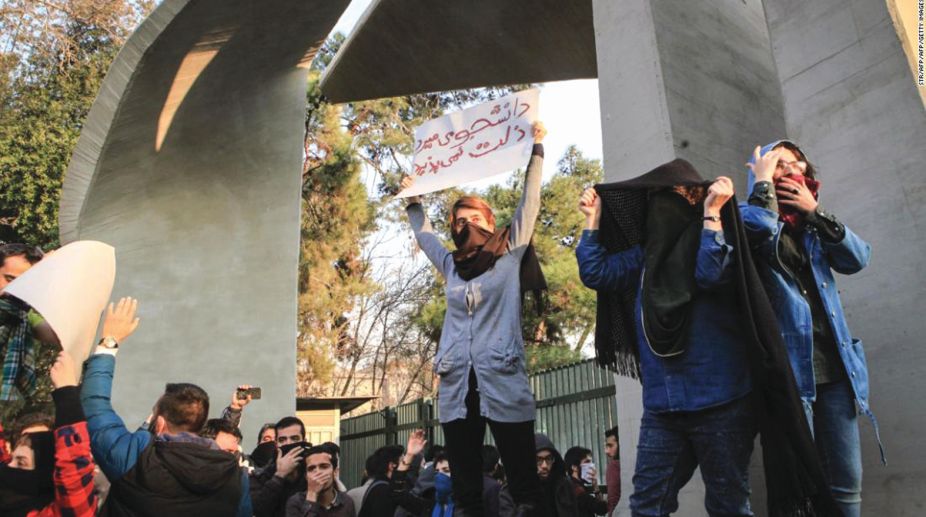
In the absence of any obvious trigger, the eruption in Iran as 2017 drew to a close took everyone by surprise, providing an unexpected signpost for the new year. Given that the first protest occurred in Mashhad, a city whose political and clerical elite is implacably hostile to President Hassan Rouhani’s administration, it is fairly probable that the initial demonstration was instigated by hardliners as part of the ongoing tussle between conservatives and reformists.

If so, the attempt backfired spectacularly as slogans proclaiming “Death to Rouhani”, ostensibly because of his government’s economic failures, were joined before long by shouts of “Death to the dictator” — a reference to Supreme Leader Ayatollah Ali Khamenei — and the airing of a broader array of grievances.

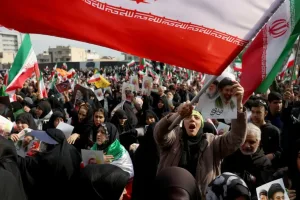
The protests spread rapidly across the country, but have thus far remained relatively small, with slogans reportedly ranging from wholesale denunciations of the clerical order and the expending of state resources on strategic initiatives in Syria, Lebanon, Yemen and Gaza, to scattered calls for reinstating the monarchy.

In contrast to the so-called Green movement mobilisations of 2009, which were much larger but restricted mainly to urban centres, this time the marchers have tended to be working class rather than middle class. The regime’s initial response has also been rather less brutal than it was under Mahmoud Ahmadinejad, although Rouhani’s assurance that peaceful protests were perfectly legitimate has been accompanied by dire warnings from the interior minister as well as the dreaded revolutionary guard. A dozen deaths had been officially acknowledged by the start of the week, amid reports of hundreds of arrests.

Tehran, like everyone else, was caught on the hop, and evidently remains uncertain about the gravity of the threat it faces. Its reaction will largely depend on whether the seemingly leaderless and somewhat rudderless protests grow in size and intensity, or peter out within the next few days.

However, whether or not it finds wider expression on the streets in the short run, the discontent will not die out. It has existed at various levels of society since the 1979 revolution, when one form of brutal repression gave way in due course to another, often victimising the same segments of political opinion. Iran may be a democracy, unlike most of its neighbours, but its limits are prescribed by a self-selecting clerical elite. The social constraints, rooted in obscurantism, that were imposed after 1979 have always been resented, and occasionally resisted, by substantial sections of society.

Inevitably, though, it’s the economics that takes precedence in everyday lives. Overall, conditions may have improved somewhat since the Ahmadinejad years, but the dividend expected from the nuclear deal with the West has never quite materialised for most Iranians. Inflation has been tamed, but vast disparities of wealth remain, amid widespread corruption and considerable youth unemployment. The austerity budget introduced last month promises little relief, let alone any structural changes that might reorient the economy towards the greater good.

Let’s not forget, though, that any serious attempt at reforms geared towards a more equitable society would encounter serious resistance from segments of the clergy and the Revolutionary Guard with well-entrenched economic interests. For instance, Maziar Bahari noted in The Washington Post last week that Mashhad is home to the Imam Reza shrine, which is not just a shrine but “a multi-billion-dollar conglomerate that owns a number of industries, banks, hospitals and, of course, seminaries across Iran. The conglomerate runs under the supervision of … Ayatollah Ali Khamenei.”

Predictably, the protests in Iran have cheered up the hostile regimes in the US and Israel, with Donald Trump and Benjamin Netanyahu unable to contain their excitement. Although Trump accorded Pakistan the privilege of picking it as the target for his first tweet of 2018, in some of his last tweets of the preceding year he hailed Iranians for whatever they were up to — never mind that his administration’s actions have sharply reduced the reformists’ room for manoeuvre.

More alarmingly, senior Republican senator Lindsey Graham told Trump that tweets were not enough: “The Iranians are watching us in North Korea, and North Korea is watching us in Iran. We’ve got a chance here to deliver some fatal blows to really bad actors in 2018, but if we blink, God help us all.”

To the likes of him one might say: Unlike you, senator, North Korea has absorbed the lessons of the fatal blows to the regimes of Saddam Hussein and Muammar Qadhafi. God help us indeed if the idiocy of the White House is compounded by congressional belligerence.
Not surprisingly, elements in Iran have already been suggesting, with no evidence, that the protesters are taking their cue from Saudi Arabia, Israel or the US.

Change in Iran would be welcome, although it isn’t imminent; but to be meaningful, it must come from within.

Pollution hits the homeless hardest

Bharat Dogra |

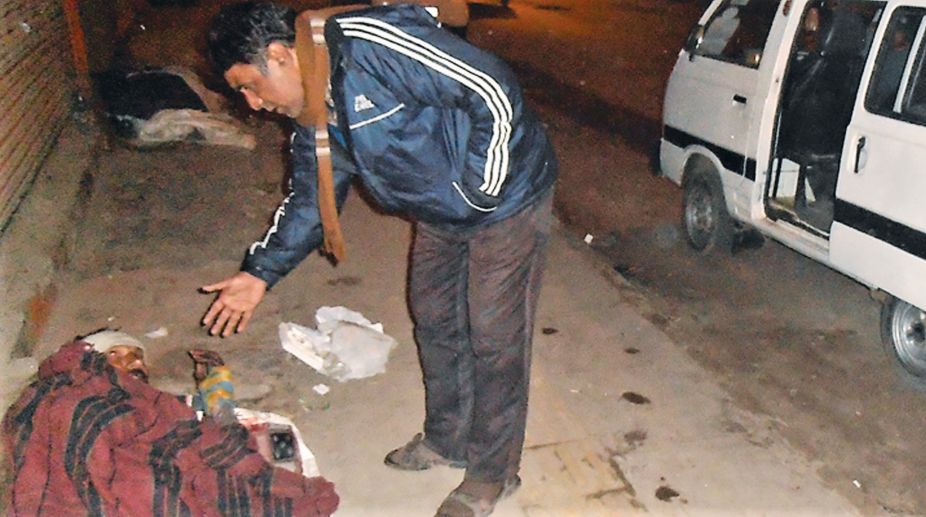
Whenever the air pollution situation becomes serious, people are advised to stay indoors as much as possible. But what about the people who have no ‘indoors’ to stay – people who are homeless? They really have no alternative but to face the brunt of pollution. During the daytime, many of them have to work outdoors. During the night those who cannot access night shelters have to sleep outside, no matter how polluted the air is and how cold the weather is.

While there has been a significant improvement in access to night shelters for homeless people in Delhi and a few other cities, overall in the country only a minority of the homeless can access night shelters. In fact even in the cities best served by night shelters, not all homeless people are protected from weather extremes and pollution. One reason is that several homeless families need to live together; they cannot be segregated into male and female shelters.

Another reason is that some groups of homeless tend to live together on their own due to community ties. Some homeless people who pull rickshaws or handcarts want to remain near these livelihood-earning assets at night. At places there are no shelters for women. Clearly it is not possible for many people to access night shelters.

Hence just a night shelter-based approach is not adequate to cover all homeless people. Other more flexible and innovative approaches have to be used to provide protection to those homeless people who cannot avail of night shelters, but such efforts are seen very rarely in our cities.

Even if we take a conservative view that about one per cent of the urban population in India is homeless, this still gives us an estimate of around 4 million homeless people which is much more than the combined capacity of all night shelters in the country. But the reality is that the number of homeless people is likely to be much higher.

This is particularly so if we also include a category of very precariously housed people. For example, a person may have a hut, but it is so overcrowded that the person has to sleep outside. Then there are those people whose huts or houses have been demolished and they live in makeshift dwellings with hardly any protection from weather extremes. Then there are people who have been pushed to the outer parts of the city by resettlement schemes but as employment is closer to their earlier living space, they try to live close to their place of work in some precarious arrangement.

The census operations find it difficult to cover homeless people in any case and it is even more unlikely that they will care to cover the less clear cases of homelessness. Census data collectors even lack the means to do so.
Most of the homeless people suffer from serious health problems, under-nutrition, malnutrition and weakness to begin with, and so are very vulnerable to the accentuation of their health problems in pollution-crisis situations. Yet it is the homeless who are the worst covered by health services of most cities.

Paramjit Kaur, director of Ashray Adhikar Abhiyan, an organization working with homeless people says, “Innovative health programmes aimed more specifically at meeting the needs of homeless people are urgently needed and these need to be stepped up at the time of pollution-crisis situations.” Having been involved with one such innovative effort in Delhi’s Jama Masjid area for several years, she says that once the needs of homeless people are understood on the basis of experience, even a relatively low budget programme can make an important contribution in terms of reducing the distress of people.

Efforts such as providing simple but hot and nutritious food in shelters are useful for improving the health of homeless people. Some good efforts in this direction in Delhi could be helpful for other state governments that want to step up such work in their cities. In some cities the homeless people find it difficult to access government hospitals so special cards can be provided to them to ensure such access.

Another aspect of pollution which affects homeless people is the temporary ban on certain types of economic activities. For example, a ban on construction activities would deprive a large number of homeless persons from work. In such situations, there may be a special need for providing free or subsidised food at night shelters where inmates may be affected by such forced unemployment.

In cities where construction of proper night shelters may take some time and may not be possible this winter, temporary solutions such as utilising public places at night as shelters for some time could provide immediate relief to some extent to the homeless.

From Kashgar to Syria

Claude Arpi |

In 1949, a few months after the new People’s Republic of China was proclaimed, Mao moved to ‘liberate’ large areas in the periphery of the Middle Kingdom. While the remnants of the Nationalist forces were slowly and systematically annihilated in the Mainland, Mao annexed Xinjiang using two tactics ~ a large number of troops were sent to the New Dominion and the surrender of some Nationalist leaders was induced. It was relatively easy for the Great Helmsman who had got the assurance from the Soviets that they would not interfere.

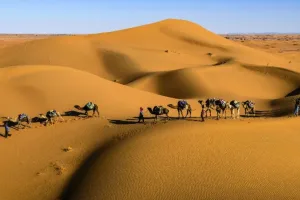
The PLA had however to cross deserts, walk over high snow-capped mountains and suffer starvation to realise this unbelievable military feat, walking some 3,000 kms in six months, to complete their mission. Strategically, Communist China was at the Gate of Tibet …and of India; a couple of years later, the construction of a road across the Indian territory in the Aksai Chin area would start.

A recently released CIA report gives a good oversight on what happened in Kashgar in 1949-50. Although written in March 1951, the note remarked: “The Chinese troops stationed in Sinkiang use systematic, disciplined violence for political reasons, (while) rations, ammunition and military stores are received from the USSR.”

The local government officials assured the people that “the Chinese in the administrative structure were there simply to teach the natives of Sinkiang the art of governing, and that soon the full Governmental administrative responsibility would be turned over to the people of Sinkiang.”

It is ironic that nearly seventy years later, the Han are still struggling to manage the restive province and still use systematic violence. Retrospectively today, one understands the importance for China of the annexation of Xinjiang with its natural resources such as oil, but also for trade routes which are now revived under schemes such as One Belt One Road initiative or the China Pakistan Economic Corridor.
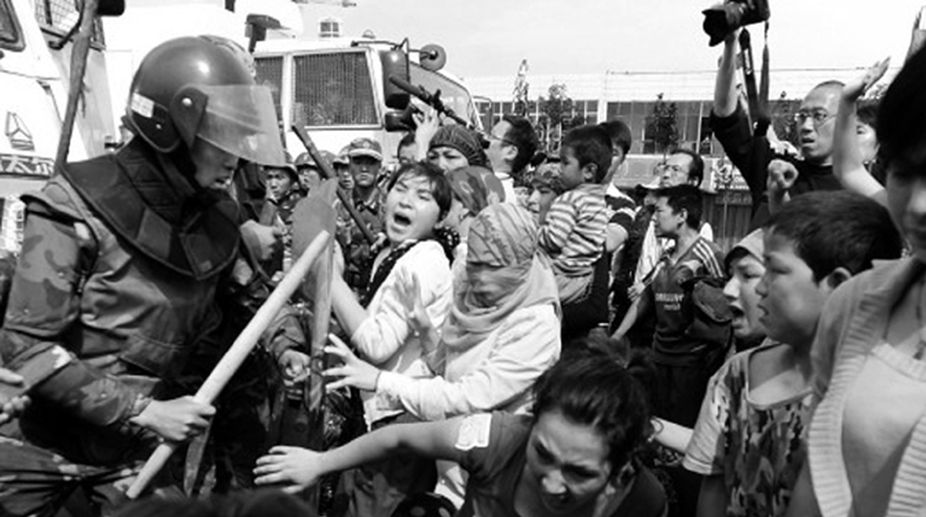
But Xinjiang remains far from being ‘liberated’; on the contrary, the Chinese State is slowly transforming the restive province into a nursery for terrorism. The South China Morning Post recently explained: “For many in the Muslim ethnic group, China has become unlivable since Beijing launched a security crackdown in Xinjiang in 2009.”

The Hong Kong newspaper takes the case of one Ali, an Uygur who has been fighting in Syria. Ali had paid smugglers to get him into Turkey and then to Syria, where he was trained to use a Kalashnikov… to later return to China. After spending two-and-a-half years in Syria with him, his brother told the newspaper: “We’ll avenge our relatives being tortured in Chinese jail. Since 2013, thousands of Uygurs, a Turkish-speaking Muslim minority from western China, have travelled to Syria to train with the Uygur militant group Turkestan Islamic Party and fight alongside Al Qaida, playing key roles in several battles. Syrian President Bashar al-Assad’s troops are now clashing with Uygur fighters as the six-year conflict nears its endgame.”

According to Uygur exiles, more than 10,000 Uygurs fled China following the repression. The SCMP concluded: “But the end of Syria’s war may be the beginning of China’s worst fears.”

As the vicious circle continues, Debka, the Israeli weekly reported that according to intelligence sources “2,500 Chinese elite troops are on the way to Syria to fight Chinese Uighur Islamist extremists and their Turkish-backed plan to set up an autonomous enclave in the rebel-held Idlib province of northern Syria.” Will it help?

Debka’s sources affirmed that China has secured permission from Damascus to send Chinese troops from two elite units ~ the ‘Siberian Tigers’, a PLA Navy Special Force from north-east China’s Shenyang Military Region and the ‘Night Tigers’, a Special Forces Unit from Lanzhou.

Already two years ago, a new Chinese Counterterrorism Law made it legal for China’s PLA to get involved in anti-terror operations abroad. The legislation allows the PLA and Armed Police’s forces to carry out counter-terror missions overseas with the approval of the Central Military Commission.

Xinhua affirmed: “Public security and national security authorities could also send personnel overseas for counter-terrorist missions, but these must be approved by the State Council and agreements signed with the countries concerned.”

Having borders with eight nations ~ Mongolia, Russia, Kazakhstan, Kyrgyzstan, Tajikistan, Afghanistan, Pakistan and India ~ Xinjiang is a convenient conduit for terrorist movements towards the Middle East and the world in general. In the meantime, repression is increasing every day in Xinjiang.

Radio Free Asia (RFA) recently reported that the authorities have earmarked a substantial amount of cash to reward the residents of Hotan prefecture (north of India’s Aksai Chin) who report ‘acts of terrorism’. “The Counter-Terrorism Reward Resolution, enacted by the government of Hotan Prefecture, set aside 100 million yuan ($15.2 million) for information on suspicious activities, and for individuals who attack or kill terrorists,” the official Hotan Daily newspaper said in a post on its WeChat social media account.

A security guard from Aqsaray police station in Hotan’s Qaraqash county read to RFA an official notice posted in the station; it is entitled “Announcement of Payment Categories for Rewarding Members of the Public Who Provide Information on Illegal Activities Relating to Acts of Terrorism or Violence.” The notification said: “People from all ethnic backgrounds who provide tips or clues of any illegal activities relating to acts of violence or terrorism will receive high rewards, once the information has been confirmed to be genuine after investigation.”
Also according to RFA, nearly 10 per cent of the population of Bullaqsu township, a county near Kashgar, have been detained. A former resident of Bullaqsu told RFA that “a large number of people have been arrested in the county this year, leaving some townships with hardly any males to be seen.” The person who now lives in exile asserted: “Bullaqsu was one of the townships most affected by the arrests in Kashgar …groups of people have been arrested and sent to detention centres every week.”

Most of this happened after the appointment of Chen Quanguo as Communist Party chief in August 2016. “A series of harsh policies have been initiated targeting Uygurs in the region, where members of the mostly Muslim ethnic group complain of religious and cultural repression and harassment under Chinese rule,” says RFA.

Since then, Chen, who had earlier practised his ‘recipe’ in Tibet for five years, has been rewarded with a seat on the Politburo. Thousands of Uygurs, who have been accused of harbouring ‘extremist and politically incorrect’ views, have been detained in re-education camps and prisons throughout Xinjiang since April. Earlier this year, Human Rights Watch (HRW) released a ‘glossary’ of special slogans or ‘formulations’ (tifa) used by the Chinese officials in Tibet when referring to party policies. The same applies today to Xinjiang.
‘Poetic’ tifas such as Social Management, Comprehensive Rectification, Preventive Control, Eliminate-Unseen-Threats, Nets-in-the-Sky, Traps-on-the-Ground or Copper-Ramparts-Iron Walls, are regularly used.

The latter one, for example, translates into “an impenetrable public security defence network consisting of citizen patrols, border security posts, police checkposts, surveillance systems, internet controls, identity card monitoring, travel restrictions, informant networks, and other mechanisms.”

The implementation of these tifas is often dreadful, but efficient for Beijing. China has for example decided to collect DNA samples from all Xinjiang’s residents; the name Mohamed is banned for newborns, men can’t have beards, etc.
China is definitely breeding more terrorists.

The writer, an acclaimed author and commentator, holds the Field Marshal KM Cariappa Chair of Excellence at the United Service Institution of India.


Medical mish-mash

Editorial |

Medical science is a much too specialised discipline and does not lend scope for cutting corners. This is quite the most charitable construct that can be placed on the Bill that was tabled in Parliament last Friday, to bridge the gap between allopathy on the one hand and homoeopathy, ayurveda, unani, and siddha at another remove. The legislative initiative is distinctly a bow in the direction of tradition ~ the flavour of the season ~ and fairly implicit is the anxiety to blend the traditional with the modern, indeed an effort to bring “other systems” of medicine into mainstream healthcare. Hence the cavil of the Indian Medical Association that the bridge-course proposal is “an opportunity for traditional healers to make a backdoor entry into modern medicine”. Towards that end, the bill provides for a “bridge course”, one that is unlikely to benefit either tradition or modernity. This is arguably the worst of both worlds. It will be difficult for the allopathic fraternity to readily concur with the proposal on a short-cut intended to “enhance the interface” between the two systems. Tuesday’s strike by doctors, though much to the detriment of patients across the country, was an expression of no-confidence in the legislation. One must give it to West Bengal’s health department, however, that at least the outpatients’ departments (OPDs) in state hospitals were open for day-care.
There can be no short-cuts in the teaching and learning of medical science, not to forget diagnosis and treatment. To say this is not to cast doubts on the efficacy of the various other branches of medicine; only to underline the fact that the risk of the patient suffering as a consequence of this mish-mash is dangerously real. Not wholly unfounded are fears that the proposed system will serve to reinforce quackery; in Kolkata, for instance, quacks have been arrested for attending to a wide range of patients, including those suffering from cancer. It would be tragic if medical science is reduced to a matter for police action… and so it has been in many parts of the country. The nub of the matter must be that not many patients, let alone allopaths, have faith in the traditional system, however effective it sometimes is. Given the generally decrepit state of public health, most particularly in rural India, it would be utterly disingenuous to tinker with so critical an aspect of public policy.

The striking facet of the Bill, that will be readily endorsed, is the proposal to set up the National Medical Commission ~ a new regulatory entity that will replace the Medical Council of India (MCI) that has for long been accused of corruption and inaction in the face of unethical practices by doctors, and lack of transparency in its functioning. While pluralism in many other spheres of national life is to be welcomed, there is little or no scope for medical pluralism.

Called to order?

Editorial |

Some six decades ago the ever-caustic Krishna Menon had asked if for all their sophisticated technology American arms manufacturers could produce a gun that fired in one direction. At the core of that unanswered query was Pakistan’s duplicity, and exploiting to dubious advantage the considerable financial aid provided by Washington. The point has been powerfully re-emphasised in President Donald Trump’s accusing Islamabad of “lies and deceit”, misusing 33 billion dollars of aid over the past 15 years, and giving a safe haven to the terrorists being hunted in Afghanistan. For starters the Trump administration has gone on to announce the suspension of a substantial aid package, but the larger question is whether the US will carry Trump’s threat through to its logical conclusion.

The US has long been alive to the double-game Pakistan has been playing ~ if it was trying to wrest Kashmir from India during Krishna Menon’s time, its increasingly radicalised military that “controls” the nation’s affairs has developed to a fine art the use of terrorism as an instrument of state policy, even against US interests ~ but has stopped short of curtailing aid to an extent which caused Islamabad to hurt. Hence the world will be watching if this is not another case of Trump’s blusterb eing little more than an angry outburst. Clearly there is need to pressure Islamabad, but no action-line is apparent by which the writ of the military is curtailed and enlightened civil society regains the power to ensure that a principled Pakistan takes its place in the comity of nations.

It is a trifle disturbing that while the External Affairs ministry opted for mature reticence over the apparent downswing in US-Pak relations, a minister of state in PMO reduced India to ridicule by contending that New Delhi had been “vindicated” by President Trump’s slamming of Pakistan. It betrayed the cheap thrills generated by any brand of US “certification”. Foreign affairs are delicate and complex, the Prime Minister would to well to restrain his underlings. There really is little scope for glee or gloating, a downgrading of Pakistan does not equate with an upgrading of India ~ except in myopic minds. Internal troubles in Pakistan bring little gain to India except that the “non-state actors” get a free hand.

The Pakistani reaction to Trump has, even if temporarily, brought a degree of unity to its political establishment. India needs to closely monitor how Islamabad sets about enhancing its relations with both Beijing and Moscow: which would be to India’s detriment. There will soon be a change of guard in the MEA, and new personal relationships will have to be forged, maybe some time taken for things to settle down. Hence there is small cause for joy over an assumption ~ little more than that ~ of being “vindicated”.

UP criminal killed in encounter with police

Statesman News Service | Meerut |

In an encounter the Shamli police killed Sabir Jangheri, a criminal who had a reward of Rs 1 lakh on his head. An SHO and a constable of police also sustained injuries in this encounter.

The condition of constable Ankit Singh is stated to be critical and he has been referred to Fortis hospital . Ankit Singh and Inspector Bhagwat Singh was admitted to Anand Hospital of Meerut with serious injuries . While the constable got two bullet injuries on his head the Inspector received to bullet injuries on his thigh.

On a tip off In charge of Kairana Kotwali of Shamli district Bhagwat Singh raided village Jangheri to arrest criminal Sabir Jangheri who was absconding from the custody of Barabanki police. Singh and his team started combing in the village after which the exchange of fire started between the police and Sabir. In the en counter Sabir was killed while the duo cops sustained injuries.

Sabir Jangheri was a sharp shooter of Mukeem Kala gang who was arrested by the STF in 2015 alongwith Kala and sent to Jail. About six months before he had eloped from the custody of Barabanki police , told SP Shamli Ajay Pal Sharma and was in the hitlist of the police .

3 arrested in Meerut over fake passport

Statesman News Service | Meerut |

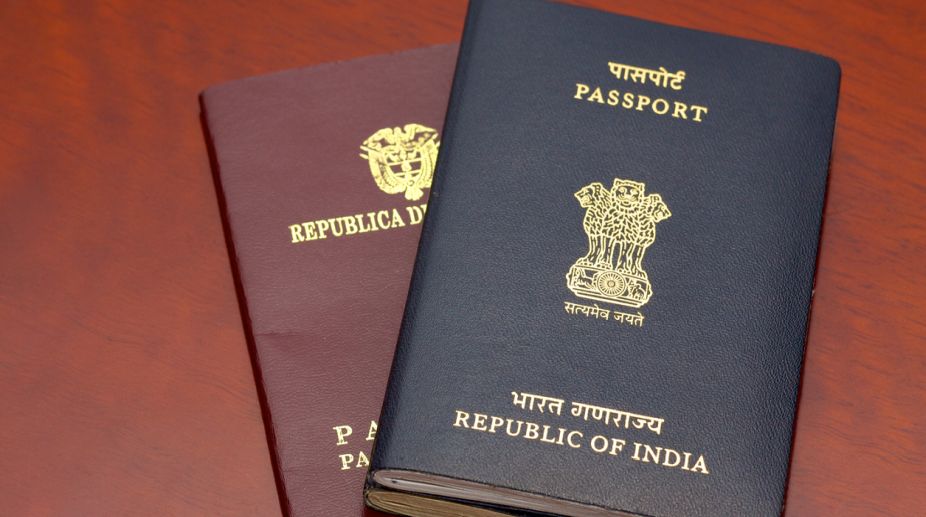
Anti Terrorism Squad( ATS) arrested a Bangladeshi and two others from Muradnagar of district Ghaziabad and Deoband on Tuesday . The Bangladeshi was found possessing fake documents which were allegedly provided by the other two.

The operation was carried out by ATS seeking help of special task force and area police.

The team arrested from Muradnagar Yusuf Ali alias Nazarul of Bangladesh while Wasim Ahmad and Ahsan Ahmad from Deoband . They also recovered computers, fake Aadhar cards and driving licenses, laptop, printers and semi finished documents including photocopies of passports from their possession.

Yusuf Ali was staying here on fake passport and documents . On the tip off the other two were arrested from Deoband with the equipments needed to make forged documents .

SSP of Saharanpur Babloo Kumar has said that who so ever would be found involved in helping anti national elements would face action , even if they are from the police or government departments . The SSP has also formed teams to identify and nab those who are involved in making and providing fake passports .

UP and Kolkata police had arrested a few Bangladeshi from Deoband, Lucknow and Delhi who were staying in different parts of the country on passports made through fake documents which were made in Deoband.

Officials suspect that arrested Wasim and Ahsan were also involved in making fake passports and other documents to help Bangladeshis to stay in the region with fake identity.

This could as well be linked with Abdullah Ul Maamoon who was arrested from Kutesra village of Muzaffarnagar on August 6 last year by the ATS. Abdullah was associated with Bangladesh based terrorist organisation Ansarullah Bangla and was living in Deoband for a long time . He also had managed to get his passport from there .

Another Bangladeshi Rajaul Rahman was arrested from Delhi by Kolkata police .

He also lived in Deoband- before shifting to Delhi.

Thereafter ATS arrested three Bangladeshi, Imran , Rajijuddim and Mohd Firdaus from Lucknow who were living in village Bhanaura also of Deoband.

During the investigation the cops came to know of the sleeping modules who help the anti nationals facilitating their stay here.

‘Time-bound projects in Himachal’

Statesman News Service | Shimla |

Urban Development, Town and Country Planning and Housing Minister Sarveen Chowdhary on Wednesday said the department would simply procedures to facilitate common citizens and the developers.

Presiding over the review meeting of Town and Country Planning department, she said the vacant posts in the department would be filled up in a phased manner and the IT cell would be made more effective to keep check on violations in construction throughout the state.
The minister directed the officers of the department for setting up future targets and achieving them in a fixed time frame.

The minister said the work in preparing development plans for Shimla and Kullu towns under AMRUT would be completed shortly. The plans would provide basis for infrastructure provisional, effective land use management and utilization, spatial growth management, project planning, and urban management in both the towns. The department was also developing GIS based Existing Land Use (ELU) for Sundernagar, Jogindernagar and Ghumarwin towns. Besides, preparation of urban renewal scheme for Lower Bazar, SubziMandi, Gunj Bazar and Krishna Nagar area of Shimla town was also under progress.

Chaudhary stressed the need for better coordination with Revenue, Pollution Control Board and other concerned departments for better execution of housing projects and ensuring enforcement of the laws and procedures. She said the procedure would be simplified for sanctioning maps and special priority would be given for clearing the pendency.

Additional Chief Secretary, UD, TCP and Housing, Tarun Kapoor emphasized that planning should be practical, idealistic so that it could be implemented. He added that it should be ensured that once a plan is complete, it was enforced effectively. He also stressed the need for simplification of procedures to facilitate the people.

Director, TCP, Sandeep Kumar gave a detailed presentation on the activities and projects being undertaken by the department in the planning areas, special areas and SADAs. He said that the department had taken lead in ease of doing business and it was offering all facilities online. Besides, massive awareness campaigns were also being undertaken in the state to motivate people for taking the services of TCP department.

Warm welcome for CM in home district Mandi

Statesman News Service | Shimla |

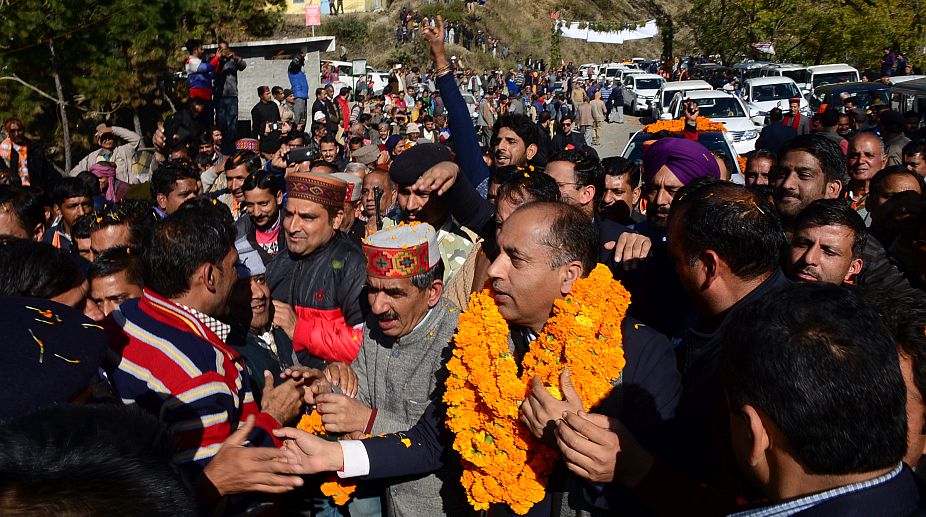
Chief Minister Jai Ram Thakur was given unprecedented welcome upon his arrival in home district, Mandi on Wednesday with hundreds of locals queuing up across the roads at several locations.

Thakur happens to be the first chief minister from the district and it was his first visit to home district after taking over as CM of the state.
He was welcomed by Irrigation and Public Health Minister Mahendra Singh and Sundernagar MLA RakeshJamwal along with hundreds of party workers at Salapar, the entry point in Mandi district.

From Salapar onwards, Thakur cavalcade turned into road show with locals dancing to the tunes of folk music instruments.
The buoyed locals raised slogans to welcome the Chief Minister and the huge gathering led to massive traffic jam on Kullu-Manali national highway.Thakur will address a public meeting at a public meeting in Mandi and he would return to Shimla on Thursday.

BJP MLA embarrasses govt in Assembly

Statesman News Service | Jammu |

The PDP-BJP ruling coalition was embarrassed on Wednesday when a BJP MLA Sukhnandan Choudhary stormed into the Well of the Assembly accusing the government of “biased approach” towards his constituency in the Jammu division.

Sukhnandan walked into the Well twice accusing his own government of acquiring farmers’ lands for pittance to construct the ring road and later walked out of the house. When he did not get satisfactory reply from the minister, he walked out of the house.

The house witnessed pandemonium for the second consecutive day as the opposition members belonging to Congress, National Conference (NC) and Independents trooped into the well and raised slogans against the government after the Speaker Kavinder Gupta disallowed discussion on civilian killings and rise in terrorism related incidents in Kashmir and ruled that the issue could be discussed during the Zero hour.

The opposition members were on their feet and created noisy scenes as the adjournment motion on the issue moved by the Congress, NC and Mohammad YousufTarigami of CPM was rejected by the Speaker. The opposition members later walked out of the house.

The opposition members said there was rise in incidents of terrorism after the PDP-BJP government came to power. About 400 persons, including security personnel and terrorists, were killed during 2017. Several security force personnel and civilians also lost their lives due to the increased number of incidents of shelling civilian areas by Pakistan troops. There were more than 515 incidents of firing and shelling on Indian villages in 2017 against 228 incidents in 2016.

The opposition members disrupted proceedings of the house during the question hour and demanded that the adjournment motion should be accepted for discussion on the alarming situation.