Logo

My audience is my award: Grammy-winner Vikku Vinayakram

IANS | Dhaka |

For Grammy Award-winning Indian percussionist T.H. Vinayakram, fondly known as Vikku Vinayakram, the audience is his award and he performs keeping its taste in mind at every concert.

“For me the award is my audience. Every concert is an award for me… and the audience reaction. Before a concert, I don’t have any plans in my mind before getting on the stage,” Vinayakram, 75, told IANS in an interview on the sidelines of the recently-concluded five-night Bengal Foundation’s Bengal Classical Music Festival.

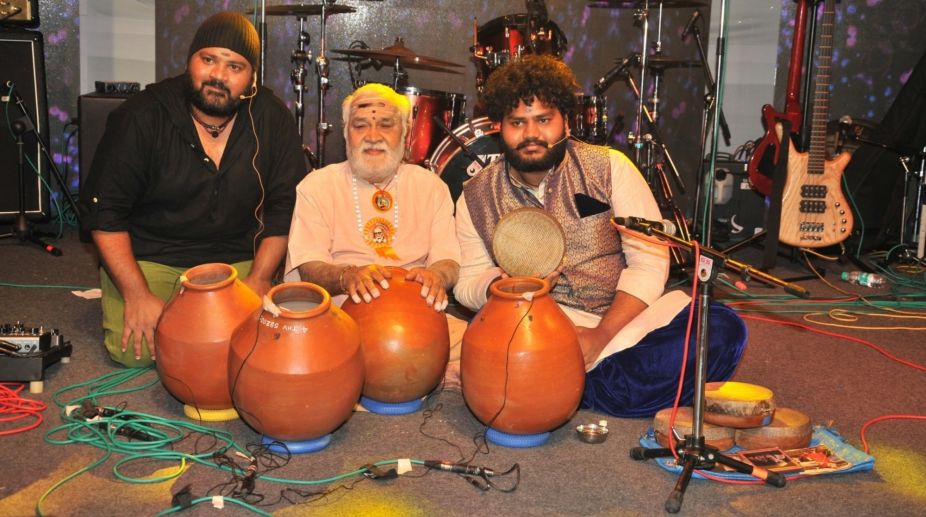
Along with son V. Selvaganesh and grandson S. Swaminathan, a unique case of three generations performing together, the Padma Bhushan award winner took the third day of the event by storm, giving it a rock concert-like feel and producing heart-racing sounds that got every single person watching the recital on their feet and clapping hard.

Gleaming with satisfaction while mentioning the 3G connect in his family (three generations playing together), Vinayakram said the future of Indian percussion is fine as youngsters are coming back to traditional music.

“The instrument which I play and the one my son plays (kanjeera) used to be called ‘side-mans’. It means you can use it or not. The main instrument is the Mridangam. If you see a concert, you won’t see it without a Mridangam but you can see one without the ghatam.

“Now it has all changed. Because of the media, the percussion world has opened now. People have started learning this instrument now and it is getting popular. The youngsters are now Western but when it comes to playing instruments, they are still traditional. It’s like a cycle.

“Maybe in the middle, the focus was more on Western instruments, but it’s coming back now (to Indian instruments). The youngsters are taking it very seriously. They want to keep the culture (alive),” he explained.

It was Vinayakram who popularised the ghatam, so much so that tabla legend Zakir Hussain would always take him along on concerts to play the instrument.

Sitting beside him, Vinayakram’s son Selvaganesh, a former member of the original Shakti, a quintet which combined elements of traditional Indian music with elements of jazz, said he is fortunate to not play the ghatam as it allowed him to be part of the band and rub shoulders with Zakir Hussain.

The band consisted English guitarist John McLaughlin, Zakir Hussain (tabla), the later U. Srinivas (mandolin), Shankar Mahadevan (vocal), and Selvaganesh (kanjeera, ghatam, mridangam).

“Me and my son play the same instrument (kanjeera) but I am lucky because, had I played the ghatam, I would not have got a chance to play with my father and Zakir (Hussain) bhai.

“For Zakir bhai, ghatam means Viku. I got an opportunity to play with Zakir bhai because I am a kanjeera player,” the 45-year old said.

On his father’s 1991 Grammy-winning feat, Selvaganesh said: “When he won the Grammy we did not realise what it was. Every year he gets an award. Since his 20s he has been getting one or the other award every year — and now he is 75. For him, an award is like the second day of the New Year.

“So when he won the Grammy, we all felt, ‘Ok, it must be one of those awards’. But later on, when we got to know what the Grammy is, we were, ‘Oh my God, my dad is a Grammy winner’.”

Divulging 3G’s future plans, Selvaganesh signed off by saying they recently did a concert in Bengalure involving 75 ghatam players.

“They had a group, split for symphony. Overall we want to do that once more and take it to different places with composed music. So that’s the future plan.”


Seasons in the sun in Himachal Pradesh

IANS | Shimla |

The sun is shining brightly in Himachal Pradesh these days while a thick blanket of fog refuses to lift from most parts of the northern Indian plains.

Shimla, the Queen of Hills, is recording the “warmest” days owing to long sunny spells, while cities like Chandigarh, Amritsar, Karnal, New Delhi and Lucknow, located in the plains, are reeling under cold wave conditions with the sun fogged out.

Hill destinations have been experiencing long hours of sunny weather for over a week and the day temperatures in most places have risen. The dry weather would prevail till January 15, the Met said.

An official at the Shimla meteorological bureau told IANS that the maximum temperature in the hill state is one-two degrees above the season’s average.

But nights and mornings are intensely cold.

Data accessed from the weather bureau indicates the weather in hill destinations of Shimla, Kufri, Narkanda, Chail, Kasauli, Dharamsala, Palampur, Dalhousie and Manali is “warmer” in the day, perfect for a break from the biting chill of the plains.

“What a sun in Shimla. A perfect break from the foggy conditions in Delhi,” said tourist Sandeep Dikshit.

“We are literally enjoying balmy days here,” his wife Parul added.

Manmohan Singh, director of the meteorological department, said: “The maximum temperature in the hills is one-two degrees above average due to the long sunny days, while the minimum temperatures are one-two degrees below average due to clear skies.”

The humidity level of plus 80 per cent causes fog. In the plains it is more than 80 per cent. However, in the hills it’s around 50 per cent these days.

In Shimla, located around 7,000 feet above sea level, the minimum temperature was 2.1 degrees Celsius on Friday, whereas the maximum was 13.5 degrees on Thursday.

The night temperature in Dharamsala was 5.2 degrees Celsius, whereas popular tourist resort Manali saw a low of minus 2.6 degrees.

At minus four degrees, Kalpa, some 250 km from the state capital, saw a mild overnight snowfall.

IPL 2018: MS Dhoni signing his ‘big IPL deal’ with CSK is getting viral on internet, video

CSK franchise along with Rajasthan Royals is back in the Indian Premier League after two years’ ban.

SNS |

The former Indian skipper Mahendra Singh Dhoni, who had led Chenni Super Kings (CSK) for so long, has once again reunited with the yellow jersey along with Suresh Raina and Ravindra Jadeja. CSK retained Dhoni for 15 crore.

Meanwhile, Raina was retained by CSK for Rs 11 crore and all-rounder Ravindra Jadeja for Rs 7 crore.

Now a video of Dhoni is getting viral on the internet in which Dhoni could be seen signing his big deal with CSK. In that video, Dhoni’s daughter Ziva could be seen sitting next to him.

CSK franchise along with Rajasthan Royals is back in the Indian Premier League after two years’ ban.

The official page of CSK on micro-blogging site Twitter has shared the video of MS Dhoni singing his deal and captioned it as, ” Thakida thakida thakida Thala @msdhoni!

#ReturnOfTheSuperKings

#SummerIsComing #WhistlePodu #goosebumps 🔥”


Ricky Ponting to coach Delhi Daredevils in IPL 2018

The Daredevils were coached by Paddy Upton in the last season, and finished sixth on the table with six wins from 14 matches.

New Delhi |

Delhi Daredevils on Thursday unveiled former Australia captain Ricky Ponting as the new coach of the Indian Premier League (IPL) outfit for the 2018 season.

Having previously coached fellow IPL franchise Mumbai Indians to the 2015 title during a two-year stint at the club, Ponting will take over at the Daredevils for the 2018 season.

“We are glad to announce our new head coach for IPL 2018 and it is none other than the legend, Ricky Ponting,” Daredevils confirmed the news on their Twitter handle.

The Daredevils were coached by Paddy Upton in the last season, and finished sixth on the table with six wins from 14 matches.

Earlier in the day, the Delhi franchise also retained the young Indian duo of Rishabh Pant and Shreyas Iyer along with South African all-rounder Chris Morris for the 11th edition of the cash-rich league.

Assam Police lodge FIR against Mamata Banerjee over NRC remarks

SNS | New Delhi |

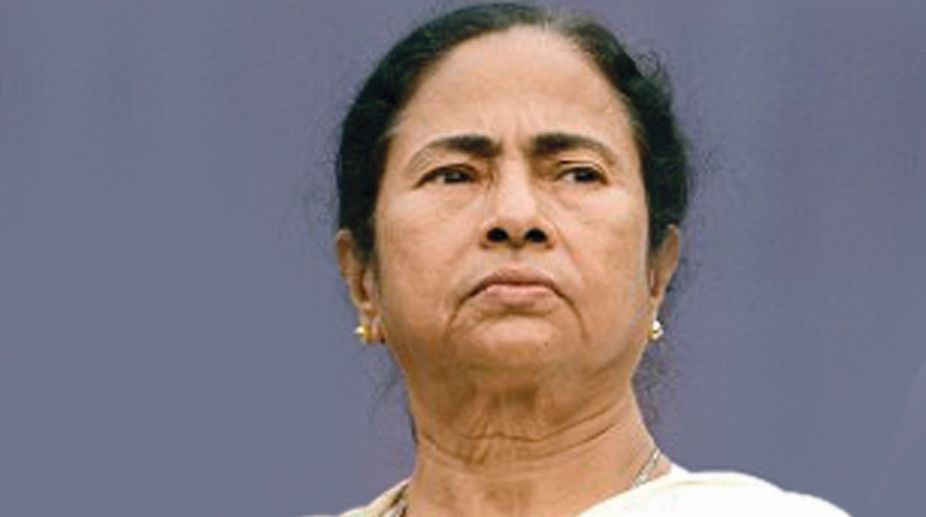
The Assam Police have registered an FIR against West Bengal Chief Minister Mamata Banerjee for allegedly promoting enmity between communities in the state.

On Thursday, the police booked Mamata for hate speech after multiple complaints made by several lawyers alleged that her speech over the updation of National Register of Citizens (NRC) was inflammatory and could create enmity between communities in Assam.

Banerjee had claimed that the BJP-led government at the Centre of “hatching a conspiracy” to drive out Bengalis from Assam by “excluding” their names from the first draft of the NRC published on 31 December midnight.

According to media reports, on the issue of FIR, Deputy Commissioner (Central) of Guwahati Police Ranjan Bhuyan said that Latasil police station received a complaint regarding an alleged speech of the West Bengal Chief Minister. We have registered the complaint and will carry out the investigation as per law.

The complaint was filed by Gauhati High Court advocate Tailendra Nath Das and the police have registered an FIR under Section 153(A) of the Indian Penal Code, he added. The section pertains to promoting enmity among groups on grounds of religion, race, place of birth, residence, language and doing acts prejudicial to maintenance of harmony.

BJP criticise Mamata’s speech

Criticising West Bengal Chief Minister Mamata Banerjee for her “conspiracy” comments on updating of the National Register of Citizens (NRC) in Assam, Bengal BJP President Dilip Ghosh on Thursday said she was making it “an issue out of a non-issue” for political interest.

“Nothing of that sort is being done. Some surveys were conducted to drive out foreigners. In the first draft of NRC, many names of our party leaders are missing. Such allegations are made to get political mileage out of it,” Ghosh said

“The Trinamool (Congress) supremo is trying to make an issue out of a non-issue. The updating of NRC was our responsibility, but for her it was an (political) issue,” he added.

(With agency inputs)

Of cartoons, healthy foods, road safety and world records

IANS |

Read about Rajinder Puri’s virtuosity as a prescient columnist, fearless writer and activist and flick through a collection of his best political cartoons; know about the food that helps us strengthen our mind and memory; get guidelines on road safety through very interesting stories written by a bunch of contemporary writers; and get informed about hundreds of exciting new records that mark our nation’s and its people’s attempts at bettering the best.

The IANS bookshelf has varied fare for this weekend.

1. Book: What A Life

Authors: Partha Chatterjee and Arvindar Singh

Publisher: Niyogi Books

Pages: 147

Price: Rs 495

In this kaleidoscopic collection are some of the best political cartoons since Independence by Rajinder Puri. Used as a vehicle for spreading public awareness on the burning issues of the day, these cartoons give us a glimpse of Puri’s virtuosity as a prescient columnist, fearless writer and activist.

His work exudes a certain directness and purity of purpose that continue to impress and intrigue discerning readers in its combination of realism and humour. No matter how controversial some of Puri’s cartoons seem, his vision of society, politics and life will continue to play an important role in contemporary culture.

2. Book: Super Foods For Awesome Memory

Author: Shipra Khanna

Publisher: Rupa

Pages: 153

Price: Rs 395

We are what we eat and so our memory is linked to food. The helplessness that overwhelms us when one forgets a name can be embarrassing. In this age of instant googling, this is just the start of the ebbing process where memory is gradually relegated to a shrinking space in our brains. Enter Master Chef India Shipra Khanna who tells you about the fish that helps you meditate or a walnut that prevents you from going nuts.

This amazing book of recipes brings to us on a platter the food that helps us in strengthening our mind and memory. And this food is to be found not in some exotic location but in our own kitchen. Try her recipes and see for yourself how you can fight the complacency and sloth that come in the way of your exercise and positive action, thereby making for a better life. From chicken recipes that keep ageing away to recipes made with coconut oil that help fight memory loss, super foods for awesome memory is the book you will never forget.

3. Book: Have A Safe Journey

A compilation of short stories by 25 authors

Publisher: Amaryllis

Pages: 241

Price: Rs 299

“Have a Safe Journey” is a collection of short stories on road safety. It attempts to make readers realise the importance of road safety, not through boring guidelines, rules and regulations but through interesting stories that will force you to be always careful on the road.

It includes stories by bestselling writers Ashwin Sanghi, Anand Neelakantan, Kiran Manral, Shinie Antony, Priyanka Sinha Jha, Pankaj Dubey and Arvind Passey among others.

These are the stories of pain, loss and hope that make the readers realise the dangers of drunken driving, talking on the phone while driving, speeding, importance of wearing helmets and seat belts, use of a baby seat, etc.

The stories also talk about the importance of helping road accident victims and being a good Samaritan instead of running away from accident sites. The stories are not preachy; instead they use humour, wit, tragedy, horror and futuristic ideas to encourage readers to observe traffic rules and drive safely.

4. Book: Limca Book Of Records 2018

Publisher: Hachette

Pages: 424

Price: Rs 550

Be amazed. Be informed. Be Proud. Get to know about our country’s best in human endeavour, education, defence, government, adventure, cinema, literature and the arts, along with additional chapters on science and technology, business and economy, the natural world and structures.

With a brand new look and reader-friendly infographics, charts and tables, this photo-filled book now includes all the fascinating absolutes you always wanted, such as the longest, tallest, fastest and heaviest records that have stood steadfast across years and decades. Plus hundreds of exciting new records that mark our nation’s and its people’s move towards always bettering the best.

Release of Telugu movie ‘Touch Chesi Chudu’ delayed till February

SNS | New Delhi |

The release of actor Ravi Teja’s movie Touch Chesi Chudu has been delayed till February.

According to buzz in the film industry and first media reports Touch Chesi Chudu was due to release on the occasion of Sakaranti (January  12) but was later postponed to the January 26, 2018.

The makers of Touch Chesi Chudu have yet to release any sort of trailer for the film to be seen by the audience. However the Tollywood buzz suggests a release of the film on February 2, 2018, if all the issues related to it are cleared.

The film has been stalled for months after the first look poster of the movie was released on December 29, 2017. It was also reported to have recently finished the shoots and wrapped up the productions after final scenes were shot.

Touch Chesi Chudu starring Ravi Teja as hero and Raashi Khanna and Seerat Kapoor as heroines is directed by newcomer Vikram Sirikonda and is jointly produced by Bujji and Vallabhaneni Vamsi.

Lalu seeks ‘minimum punishment’ in fodder scam due to ‘poor health’

SNS | New Delhi |

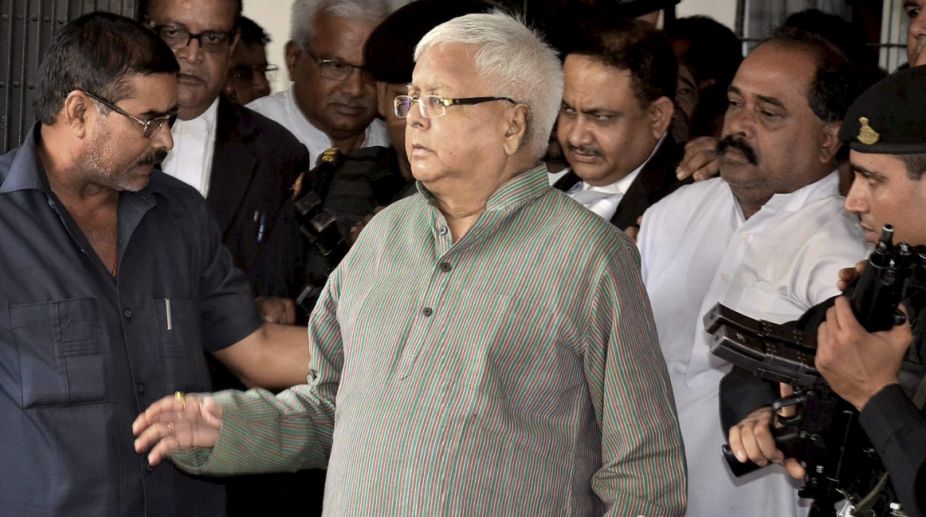
As the special CBI court in Ranchi is all set to sentence RJD chief Lalu Prasad Yadav in a case of fodder scam, the former Bihar chief minister on Friday sought minimum punishment owing to his poor health.

In a plea filed in the court of Justice Shivpal Singh, Lalu’s lawyer has pleaded to the court have mercy on his client who is a heart patient and also has diabetes.

The plea further said that the Birsa Munda jail in Ranchi, where Lalu is lodged at present doesn’t have clean drinking water which could be harmful to Lalu’s health.

Moreover, there’s no provision for any medical care in case of an emergency, the court was told.

Therefore, the Rashtriya Janata Dal (RJD) chief should be let off with minimum punishment.

The request comes a day after Lalu told the court that he felt very cold in the jail to which the judge replied play ‘tabla’.

Interestingly, the judge on Thursday revealed that he was getting phone calls from “Lalu’s men” about the case indicating that he was being threatened.

On Tuesday, the former Bihar CM’s lawyer had urged the court for minimum punishment owing to the RJD chief’s age.

Lalu is likely to get three to seven years’ punishment, as per reports. If he is awarded three years’ sentence, he will be able to get bail soon.

The fodder scam relates to fraudulent withdrawal of Rs. 89.27 lakh from Deoghar treasury 21 years ago.

His co-accused and former Bihar Chief Minister Jagannath Mishra was let off in the case pertaining to embezzlement of over Rs. 85 lakh from the Deoghar Treasury between 1991 and 1994.

A total of 17 accused including Lalu were pronounced guilty by the court while six were let off.

The RJD chief has already been convicted in another fodder scam case that cost him his Lok Sabha seat and disqualified him from contesting elections. Both Lalu and Jagannath Mishra are out on bail in the case.

Hearing in the multi-million fodder scam case was completed on December 13 in a special Central Bureau of Investigation (CBI) court of Ranchi.

In all, there were 34 accused in the case, out of which 11 died during the course of the trial, while one turned CBI approver and admitted the crime.


Hindus not united as a community in Goa: RSS

IANS | Panaji |

Hindus are not united as a religious community in Goa and there is need to join hands for Hindu-related causes, a RSS state functionary said on Thursday, ahead of the organisation’s statewide programme aimed at bringing together members of the majority community.

“They (Hindus) are not united. They are split. That is the main challenge. We come together in various temples. We come together on various festivals, but when we need to come together as Hindus for a cause, we are unable to do that. We neglect it,” South Goa Sanghchalak Yeshwant Paradkar told a press conference here.

“We need to think about how we need to come together as a Hindu samaj and work towards nationhood and nation,” he also said.

Hindus account for nearly 66 per cent of the state population, while Roman Catholics come next with a population of more than 25 per cent.

Addressing the same press conference, Goa Vibhag Sanghachalak Laxman Behare also said that the upcoming ‘Hindu Chetana Sangam’ was also aimed at “depicting a vivid view of Rashtriya Swayamsevak Sangh strength and unity” to college going youngsters and working youth.A

The programme will be held across January 7, across Goa, where the RSS has faced a split some months back, after Subhash Velingkar, a veteran Sangh volunteer and Sanghachalak for nearly two decades broke away from the parent organisation, after differences with Chief Minister Manohar Parrikar.

Behare, officially addressing the media for the first time since the split, sought to refute any rift.

“Nobody has left Sangh including Velingkar. He himself considers a part of Sangh. We go to him, meet him. We express our views. He doesn’t say that he has left,” he said.

When the Yamuna riverbed becomes home for Delhi’s roofless

Anand Singh |

It’s 9 p.m. and a biting chill has set in as dozens of migrant labourers start gathering near the Yamuna embankment in north Delhi’s Kashmere Gate area. Welcome to one of the national capital’s open-to-the-sky shelters — just one km away from Chief Minister Arvind Kejriwal’s residence in the Civil Lines area — for homeless workers who have not been able to find a place in one of the Delhi government’s many night shelters.

“I will spend the night here,” Omprakash, a daily labourer, told IANS as he prepared to lay discarded newspapers on the Yamuna riverbed and tried to cover his face with a shawl to beat the chill.

“We are not allowed in the night shelters as we are not regulars,” he said, taking out two slices of bread from his bag — his dinner.

Omprakash, who hails from Bareilly in Uttar Pradesh, is also ill. He says he suffers from a breathing problem and has a wound in his right thigh.

More people trickle in, armed with blankets and shawls, ready to spend the night under the open sky — because they don’t have a choice.

The Yamuna riverbed where the migrants have chosen to be is choc-a-bloc with animal waste, with its attendant foul smell to which is added that of the putrid river water.

“In the shelters, there is very little space to sleep,” Raju, a migrant from Katihar in Bihar, complained. “And with very less space to sleep in, it becomes impossible for us to relax after working for the whole day,” he said.

He also complained of thefts in the night shelters.

“We earn a very small amount, we cannot afford to lose our earnings and valuables by spending a night in the shelters,” he rued.

His grouse was echoed by Lalan Mandal, who hails from Darbhanga in Bihar. “We want to go to the night shelters, but after earning, when we go… then our money is stolen from there,” Mandal said.

Mandal has two children and his work as a plumber earns him around Rs 12,000-Rs 13,000 per month.

“We too have our children and our family, and we are living with our problems so that they don’t face trouble in future,” he said.

Alam Khan, who had occupied a spot near Mandal, said, “I work as a hand-rickshaw pusher and after working for a whole day when I return, I am abused there (in the night shelters).

“So we don’t prefer to go there and sleep here in the open,” said Khan, who also hails from Katihar.

He also complained that the staff at the night shelters most of the time allow in only their own favourites and don’t care for the others.

However, he is not alone as over 150 people have by now gathered at the spot, eager to grab the few clean areas left.

This IANS correspondent also visited six nearby night shelters, which were found to be over-crowded.

The Delhi government’s Delhi Urban Shelter Improvement Board (DUSIB), while announcing its Winter Action Plan on December 15, 2017, said it runs 251 shelters — 83 of them housed in permanent buildings and 113 operating out of porta-cabins. FIfty-five temporary shelters in tents have also been put up for the winter season.

Although the Board claims that the night shelters can accommodate close to 20,000 people, only about 10,000 homeless people are using them. The Delhi government has also announced that it will serve breakfast of “tea and rusk” till the end of January to those occupying the night shelters.

The DUSIB said that to bring the homeless to the night shelters, 20 rescue teams have also been pressed into service and will be doing the rounds every night. They can be contacted by citizens who want to report on the homeless by dialling a 24X7 control room number (011-23378789/8527898295/96) and a “Rain Basera” mobile application.

But despite the government’s efforts, thousands of people are still forced to live on the streets of the city. According to a 2014 DUSIB survey, the number of homeless in Delhi is 16,000, while various NGOs estimate that the number may run up to 100,000 or more.

Sunil Kumar Aledia, Executive Director of the NGO Centre for Holistic Development, said: “As per the guidelines of the National Urban Livelihood Mission, at least 50 sq ft of space should be given to every person in the night shelters.

“But Delhi shelters lack space and people get only 10-12 sq ft area,” he said, adding that most of the people avoid going to the night shelters due to over-crowding.

Aledia also said that this year, between December 1 and 14, at least 108 homeless people have died.

“In December 2016, 2015 and 2014, the death toll of the homeless was 235, 251 and 279, respectively,” he added.

Sleeping less than 8 hours a night can lead to depression

Regular sleep disruptions can increase the difficulty in shifting attention away from negative thoughts.

IANS | New York |

Are you in the habit sleeping less than eight hours a night? Beware, you may be at risk of suffering from depression and anxiety, according to a study.

Regular sleep disruptions can increase the difficulty in shifting attention away from negative thoughts.

While other people may be able to move on from their negative thoughts, people low on sleep can have trouble ignoring it.

wake up, fesh

This means that inadequate sleep is part of what makes negative intrusive thoughts stick around and interfere with people’s lives, the researchers said.

“We found that people have some tendencies to have thoughts get stuck in their heads, and their elevated negative thinking makes it difficult for them to disengage with the negative stimuli that we exposed them to,” said Meredith Coles, Professor at the Binghamton University.

“These negative thoughts are believed to leave people vulnerable to different types of psychological disorders, such as anxiety or depression,” Coles added.

For the study, published in the journal ScienceDirect, the team assessed the timing and duration of sleep in individuals with moderate to high levels of repetitive negative thoughts (e.g., worry and rumination).

The participants were exposed to different pictures intended to trigger an emotional response, and researchers tracked their attention through their eye movements.

The timing and duration of sleep may also contribute to the development or maintenance of psychological disorders, a finding that could potentially allow psychologists to treat anxiety and depression by shifting patients’ sleep cycles to a healthier time or making it more likely a patient will sleep when they get in bed, the researchers said.

CBI probing graft cases against IFFCO, KRIBHCO officials: Centre

IANS | New Delhi |

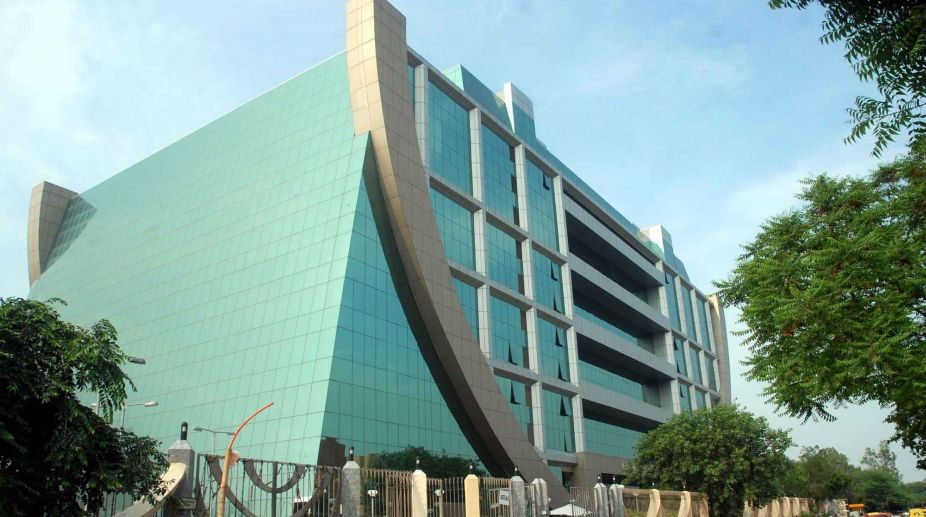
The CBI is probing graft cases against Indian Farmers Fertiliser Cooperative Ltd (IFFCO) and the Krishak Bharati Cooperative Ltd (KRIBHCO) officials, Parliament was informed on Thursday.

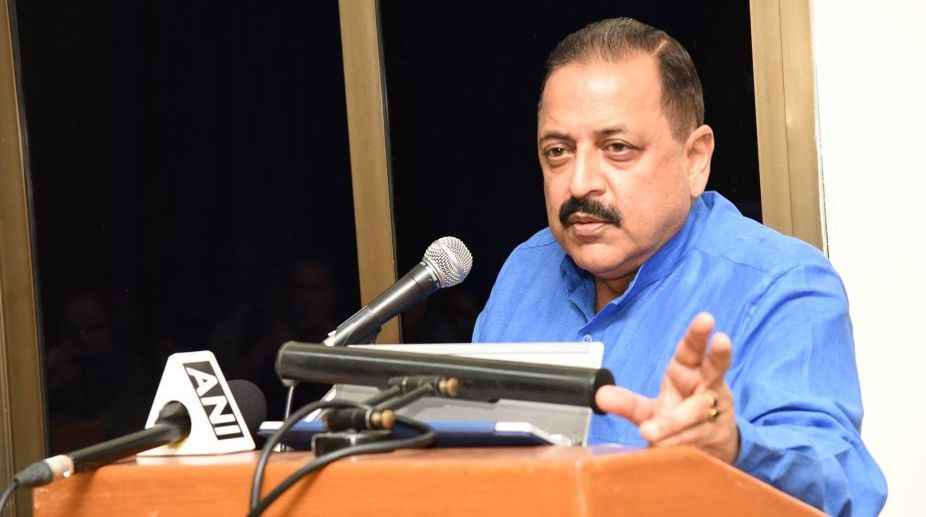
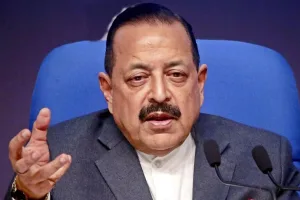
Minister of State for Personnel Jitendra Singh told the Rajya Sabha, in a written reply, that the Central Bureau of Investigation (CBI) had registered four cases against officials of IFFCO and KRIBHCO since 2014.

“CBI has registered four cases, including three regular cases and one preliminary enquiry, against three officers and unknown officials of IFFCO and KRIBHCO,” he said, adding that chargesheets have been filed in the court in the two “regular” cases of 2014 and 2016.

Massive stars are abundant in nearby galaxy than thought

IANS | london |

Astronomers have discovered an “astonishing” overabundance of massive stars in a neighbouring galaxy, to our own Milky Way which are more abundant than previously thought.

Using the European Southern Observatory’s (ESO) Very Large Telescope, the researchers discovered nearly 1,000 massive stars in 30 Doradus — a gigantic stellar nursery in the Large Magellanic Cloud galaxy also known as the Tarantula nebula.

“We were astonished when we realised that 30 Doradus has formed many more massive stars than expected,” said lead author Fabian Schneider, research student at the University of Oxford.

The team used detailed analyses of about 250 stars with masses between 15 and 200 times the mass of our Sun to determine the distribution of massive stars born in 30 Doradus – the so-called initial mass function (IMF).

With the dicovery in 30 Doradus, the scientists derived the most accurate high-mass segment of the IMF to date, and showed that massive stars are much more abundant than previously thought.

Until recently, the existence of stars up to 200 solar masses was highly disputed, and the study shows that a maximum birth mass of stars of 200-300 solar masses appears likely.

“We have not only been surprised by the sheer number of massive stars, but also that their IMF is densely sampled up to 200 solar masses,” added co-author Hugues Sana from the University of Leuven in Belgium.

The discovery, published in the journal Science, has “far-reaching” consequences for our understanding of how stars transformed the pristine Universe into the one we live in today, the researchers said.

Massive stars are particularly important for astronomers because of their enormous influence on their surroundings are known as their ‘feedback’.

They can explode in spectacular supernovae at the end of their lives, forming some of the most exotic objects in the Universe – neutron stars and black holes.

Turn boring bathroom into a contemporary one

Make your bathroom look more contemporary with geometric designs, splashes of distinct colours.

IANS | New Delhi |

Make your bathroom look more contemporary with geometric designs, splashes of distinct colours like black pearl, earthen hues and different patterns, suggest experts.

Abhishek Somany, Managing Director and Manish Bhatia, CEO  have listed a few ways of turning a boring bathroom into a contemporary one:

* Palette perfection: Ditch the simple and monochromatic colour scheme. Add splashes of distinct colours like unique hues of brown, dramatic black and shades of white. Some brands even offer bathroom style in colours like black pearl and earthen escape, that could be given a try.

* Contemporary designs for fittings and fixtures: A bathroom with a contemporary design aims to rationalise bathroom space by putting-off extra embellishment and instead focussing more on simple, angular shapes and lines or flowing curved fixtures.

Geometric patterns can also bring a modern style to your design, while adding an element of visual attraction at the same time.

* Trending tile patterns: Contemporary bathrooms do not need to be void of textured walls as they make a minimalist space come alive with style. There are a number of tiles available in the market with natural finishes like exotic stones, marble, granite, metal or wood patterns.


* Keep it lit: Lighting constitutes as the most important part of modern design, and simple lighting fixes can elevate the bathing experience. Contemporary design philosophy relies heavily on geometric shapes and lines, therefore you must keep this in mind while selecting light fixtures, windows and placement options.

Skylights are great idea for modern bathrooms because they add more natural light which has many benefits — from lifting your spirits in the morning to keeping mold at bay.

Number of North Korean defectors drop in 2017

IANS | Seoul |

 The number of North Koreans defecting to South Korea dropped 21 per cent in 2017, its lowest level since Kim Jong-un came to power six years ago, according to official data released here on Friday.

A total of 1,127 North Koreans arrived in South Korea last year as compared to 1,418 in 2016, the Unification Ministry data showed.

The number of defectors peaked in 2009, at 2,914.

Experts believe that security has been bolstered especially since the second half of 2015, when more border controls and high-tension barbed wire fences were set up around the Tumen River, which separates China from northeastern North Korea.

Last year, the vast majority of defectors were women (83 per cent), thus maintaining the trend, as women make up 71 per cent of all North Korean defectors to the South.

A total of 31,339 North Koreans have managed to flee to the neighbouring country after the Korean War (1950-1953) ended with an armistice, but no peace treaty has ever been signed.

The tally surpassed 30,000 in November 2016.

Unable to cross into South Korea by land, majority of the defectors choose to cross the Amnok or Tumen rivers to reach China and from there to a third country – mainly Thailand and Mongolia – where they ask for asylum at South Korean embassies and consulates, something they cannot do in Beijing.

China wants to avoid mass migrations of North Koreans and does not consider them as refugees but as “economic migrants”.

If defectors are found in China they are forcibly repatriated to North Korea.

A rivalry in the realistic setting of a forgotten war

IANS |

Title: The Beckoning Isle

Author: Abhay Narayan Sapru

Publisher: Wisdom Tree

Pages: 157

Price: Rs 245

The operation against the Liberation Tigers of Tamil Eelam (LTTE) by the Indian Peace Keeping Force (IPKF) in Sri Lanka in the 1980s may have been a doomed venture, but this riveting tale of rivalry between an Indian Special Forces officer and a battle-hardened LTTE commander based on realistic settings comes as a breath of fresh air in a market where war books are few and far between.

Abhay Narayan Sapru’s “The Beckoning Isle” is a gripping account of the IPKF’s operation versus the LTTE guerrillas and is his second book on war from a combat soldier’s perspective.

Sapru, who himself served in the elite Special Forces and now works in a private bank, makes it clear in the preface that while a plot has been interwoven, most of the incidents, places and experiences are factual.

While the book gives a peek into the history of that war, it also describes in graphic detail what the Indian soldiers had to contend with in what was essentially a peace-keeping venture.

“Untrained in fighting on the local terrain, ill-equipped and burdened with a conventional military mindset, it was the Indian Army’s Vietnam and by the time the IPKF pulled out, it was minus 1,200 men, cremated on a foreign soil and nearly 3,000-plus wounded,” Sapru states in the preface.

“In contrast to the Kargil conflict, which was covered extensively by the media, the military entanglement in Sri Lanka is a forgotten war — and was one even while it was being fought — with the last vestiges finally obliterated by the passage of time.”

The tale of the young and dedicated Captain Hariharan and LTTE commander Silvam criss-crossing each other’s paths takes the reader through the dank, humid, mine-infested dense jungles of Sri Lanka and brings to light the sheer intensity the Tamil Tigers brought to the conflict.

It is a tale of two men on opposing sides but fatalistic in their beliefs and shows human behaviour, politics and the intrigue surrounding the whole conflict.

The very fact that Silvam was trained by Captain Hariharan’s father at a cantonment town in the Himalayas shows that the Indian Army too should be given credit for having trained, at the instance of the Research and Analysis Wing (RAW) spy agency, 15,000 Sri Lankan Tamil Tigers from various political parties and turning them into what they were — giving no quarter and asking for none.

The circumstances under which Silvam, who worked as an accountant, took up arms and kept a cyanide capsule to avoid surrender, show how the Tigers were determined in their belief and individually fiercely dedicated to the job at hand.

Silvam’s fleeting trysts with his wife and son also give a glimpse into the personal life of a Tamil Tiger who puts cause over family. Towards the end of the book, one can feel the respect an Indian had for the enemy despite the intensity and sheer viciousness of the conflict.

“The Beckoning Isle” is an action-packed and fast-paced read.

CBI files corruption case against AMU’s former VC

IANS | New Delhi |

The CBI has registered a corruption case against the Aligarh Muslim University’s former Vice Chancellor Naseem Ahmad for his alleged involvement in the illegal appointment of an official in the varsity in 2005.

The Central Bureau of Investigation (CBI) FIR said that Ahmad committed the offence when he was Vice Chancellor between 2002 and 2007.

Ahmad had resigned from his position after allegations of appointing Shakaib Arsalan as Assistant Finance Officer in 2005 was termed a violation of provisions of the AMU Act and rules.

The FIR mentions charges of criminal conspiracy, cheating and Prevention of Corruption Act against Ahmad, Arsalan (now Joint Finance Officer) and then Deputy Finance Officer Yasmin Jalal Beg.

The vacancy for the posts of Assistant Finance Officer and Deputy Finance Officer were advertised by the AMU on January 1, 2004 and 22 candidates had applied. The CBI preliminary enquiry found that nine of the 22 candidates were found to be eligible for the first post did not include Arsalan.

Arsalan submitted a representation that his Chartered Accountant degree was not being considered equivalent to a post-graduate degree in the shortlisting process whereas an AMU notification recognises these degrees as equivalent, it alleged, adding he had requested his consideration for the interview held on February 3, 2005.

Beg, now Finance Officer, allegedly in violation of laid down procedure, recommended the candidature of Arsalan for interview on the grounds that CA degree is the optimum qualification for any finance person and if a CA has applied for the position of the AFO, he will be an asset for the department.

“Beg had put the note even though the file was not marked to her,” the CBI FIR alleged, adding the note was forwarded through the Registrar and approved by the Vice Chancellor.

There was one more candidate with a CA degree with 60 per cent marks and several other candidates who had scored over 55 per cent marks in PG examination as per advertised eligibility conditions of the University, the FIR said.

Arsalan in his representation had concealed that he scored less that 55 per cent marks in CA examination and misled the officials by enclosing his part one marksheet which showed 55 per cent marks, it alleged.

Beg concealed that there was one more candidate with a CA degree and recommended Arsalan’s candidature as part of the “criminal conspiracy”, it alleged.

Based on the interview, Arsalan was one of the three candidates recommended for the position of AFO and this was approved by the Vice Chancellor on behalf of the Executive Council.

The CBI found that the Vice Chancellor can use special powers on behalf of the Executive Council but such decisions mandatorily should be reported to the Council which was not done in the meeting held on October 4, 2005, the FIR alleged.

“It has thus revealed that Ahmad, though not competent to relax the qualification, deviated from the advertised qualification and approved the candidature of Arsalan to be called for interview for the post of Assistant Finance Officer in AMU. Further the relaxation and deviation in the matter of appointment was not reported to the Executive Council and neither ratified from them,” the FIR alleged.