Logo

Cap likely on ‘cap politics’ in Himachal Pradesh

Archana Phull | Shimla |

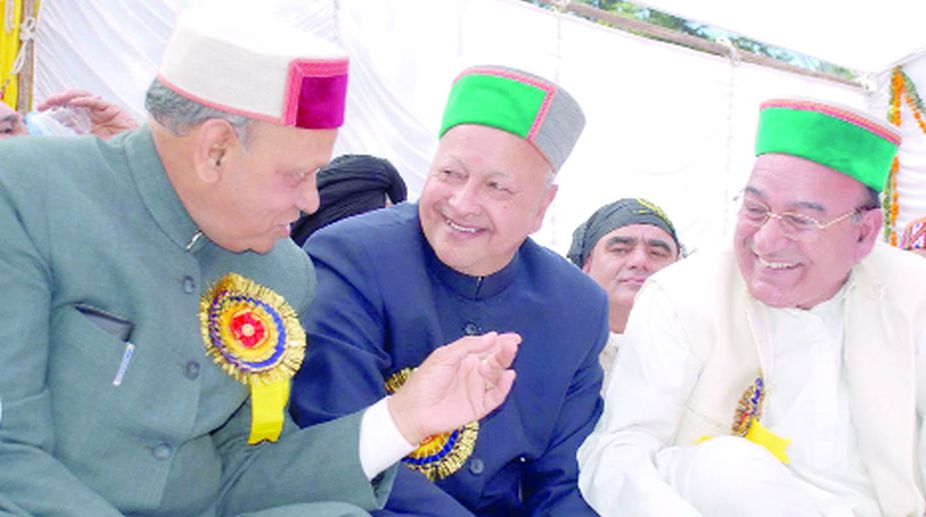
The ‘cap politics’ in Himachal Pradesh may slip into the past with younger and new leadership of Bharatiya Janata Party (BJP) as well as Congress not identified with caps.
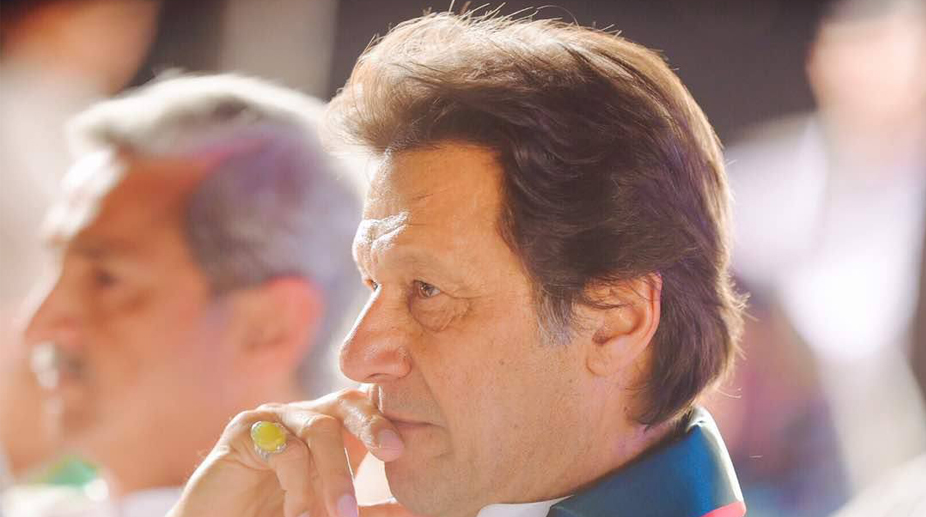
Neither Chief Minister (CM), Jai Ram Thakur, nor Congress Legislature Party Leader, Mukesh Agnihotri wear Himachali cap in routine.

Even state BJP chief, Satpal Singh Satti and state Congress president, Sukhvinder Singh Sukhu are not identified with caps.

This is in departure from the trend, as for over two decades, colours of the Himachali caps demarcated political loyalties. Especially, with former CM, Virbhadra Singh from Shimla district always donning a cap with green band and his rival, former BJP CM, Prem Kumar Dhumal wearing a cap having maroon band, as a matter of distinctive choice.

While different Himachali caps signify different regions in the state, the ‘green band’ and the ‘maroon band’ on caps almost became a trademark of Congress and the BJP respectively, as Singh and Dhumal called the shots in Himachal politics.

The supporters of two leaders (who became CMs alternatively since 1998) also started portraying political identity with similar caps, with the passage of time.

Even the ordinary folks would switch to caps with green or maroon bands, depending on which party forms the government. Folks in warmer areas, who don’t need a head gear, had taken to distinctive caps just for political signals.

Singh was so touchy about the colour of his cap, that if anyone presented him maroon cap, he would not relish it.

In previous Congress government, he once refused to accept the cap with maroon band, gifted to him by the then health minister Kaul Singh Thakur in a function in Shimla in the presence of the Union Health minister JP Nadda.

With BJP taking over the reigns in HP, the people, however, still gift the cap with maroon band to the CM, ministers or other BJP leaders in official or public functions as a trend. But the ‘cap politics’ is seemingly not going to stay for long now. This was evident during the first visit of CM, Jai Ram Thakur to his home district Mandi earlier this month, where he was presented a white Himachali cap worn in areas of Kullu district.

The first session of the state Assembly was witness to the changing trend. While many BJP leaders were not wearing any Himachali cap, some others were wearing the traditional Kullu cap with a multi-colour border.

In Congress, a prominent example was first time and youngest MLA of HP Assembly, Vikramaditya Singh (Virbhadra Singh’s son), who was wearing an exclusive Himachali cap, but with a maroon band.

Uttarakhand’s revenue police soon to be history

Statesman News Service | Dehradun |

The revenue police, constituted during British rule in the Garhwal and Kumoan hills, will pass into history books by July this year. The Uttarakhand High Court, in a landmark judgment in Nainital on Saturday, has asked the state government to replace the revenue police with normal police.

The concept of revenue officers acting as policeman came into existence in the Indian Himalayan region due to the low crime rate. The High Court in its order took note of a 2011 case in which a married woman was murdered for dowry at Gawana village in Tehri.  Citing practical problems faced by the revenue staff in investigating crime cases the court asserted that as ‘Patwari’ and other revenue staff are not trained to investigate crime cases and do not have modern gadgets, they should be replaced.

Raghuveer Rawat, a local resident of Chakrata in Dehradun district, said, “My village area is under revenue police. The Patwari wears normal civil clothes and his staff ‘Khaki’ dress like that used by Chaukidars. With time crime is increasing in the hills and the old system should be replaced.”

A Division Bench of Justice Rajiv Sharma and Justice Alok Singh asked the Uttarakhand government to increase the number of police stations and arrange other facilities within six months to replace revenue police with normal police. The high court decision has taken the Uttarakhand government by surprise as they will have to create infrastructure for policing in remote areas within six months.

Barring four districts, a major portion of Uttarakhand comes under the revenue police. Revenue officials including Kanoongo, Lekhpal and Patwari have been conferred the powers and functions of the police officer to investigate offences.  The British government introduced the revenue police system one-and-a-half centuries back.

Tilak Nagar hospital to miss yet another deadline

Statesman News Service | New Delhi |

South Delhi Municipal Corporation (SDMC) is likely to miss another deadline of the launch of 100-bed Tilak Nagar Colony hospital. The civic authority had claimed last November that as part of its drive to extend and improve health facilities in the capital the hospital would make functional by Aprill 2018.

The project has missed several deadlines after construction started in 2015.

According to a SDMC official, “only 75 per cent of the work has been completed and the remaining work like installation of electrical fittings and purchase of medical equpment will take at least one year,” said a senior SDMC official.

The offical recounted that funds for the project had beenincreased from Rs 5 crore to Rs 19 crore by the Delhi government to help speed up work.

He had said “to install all the necessary equipments, Rs 60 to Rs 70 crore is required, besides Rs 30 crore is needed for monthly expenses. We are exploring all the possibilities to complete the work at the earliest.”

Residents of the area which has no other government hospital in the area are understood to in interested in early inauguration of the hospital. Tilak Nagar Colony hospital besides catering to outdoor patients is expected to offer specialised services in medicine, paediatrics, gynaecology/obstetrics, ophthalmology, ENT, and dentistry.

BJP to raise 20 ‘serious issues’ in Delhi Assembly

Statesman News Service | New Delhi |

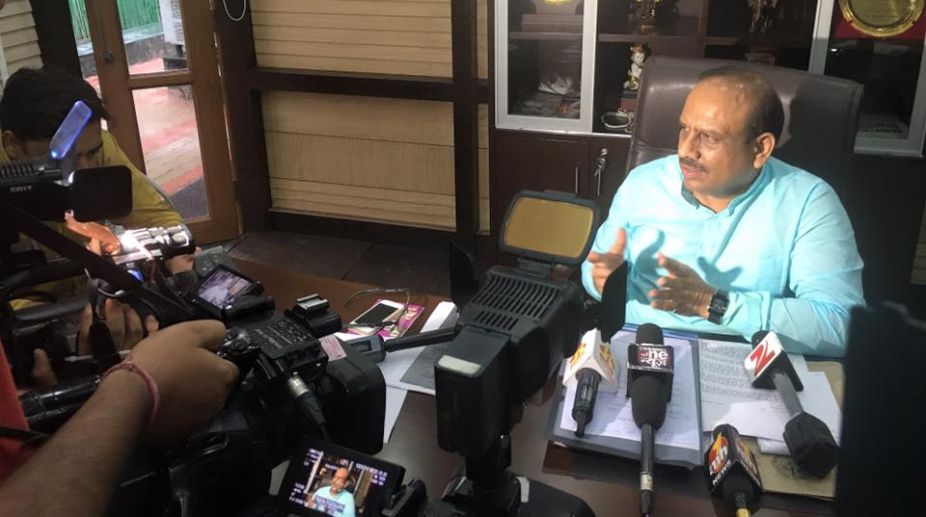
The Delhi BJP leadership on Saturday said that the party would raise 20 ‘serious issues’ related to people, including the sealing of eateries and shops in Delhi and attitude of the Delhi government in notifying 351 roads besides proposed hike in the power tariff during the upcoming Assembly session beginning 15 January.

Addressing a news conference, leader of opposition Vijender Gupta said that in a letter written to the Speaker of the Assembly, the BJP demanded that discussion should be held on the issue of sealing, power and water tariffs, Metro, health issues and deaths due to cold conditions in the capital.

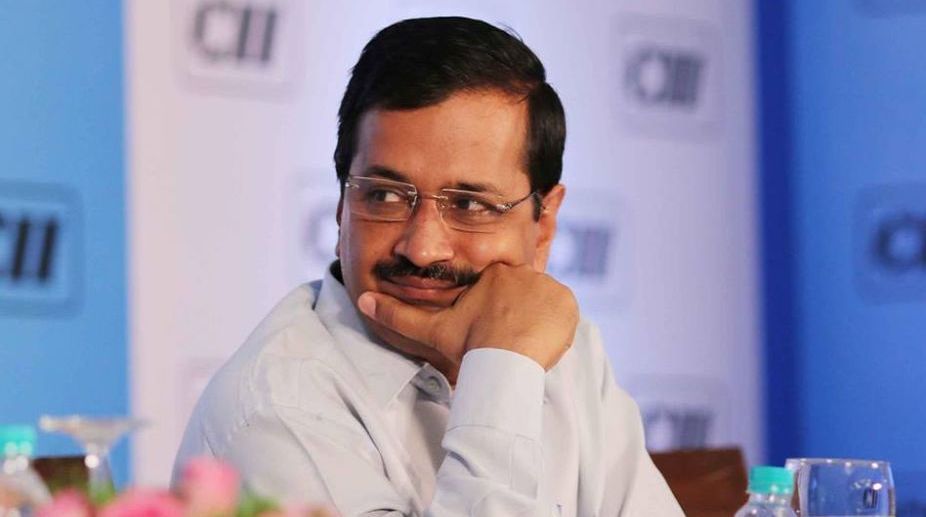
“The return of the file by Delhi government pertaining to notification of 351 roads pending for last 10 years proves that on the one hand there is red tapism in the working of government and on the other the Arvind Kejriwal  government is working with the malice towards the people of Delhi,” he alleged.

Gupta claimed that in 2007 the municipal corporations had surveyed the roads in accordance with the Delhi Master Plan-2021 and after passing a preamble and proposal, they first forwarded a list of 2183 roads and subsequently another 351 roads to the government for notification but the then Congress government under Sheila Dikshit notified the 351 roads. Leader of  opposition mentioned that those 351 roads were connected with rural Delhi, unauthorised colonies and East Delhi.

He announced that “BJP will also raise the issue of nexus between Kejriwal  government and private hospitals/schools, which has been manifested in the case of Max Hospital along with the failure of the government to fill the EWS quota in the admission to the private schools,” said Gupta.

Arvind Kejriwal announces sops for Dwarka residents

Statesman News Service | New Delhi |

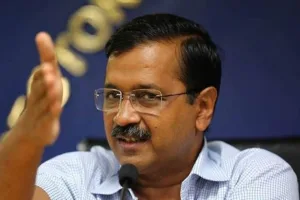
Chief Minister and Delhi Jal Board chairman Arvind Kejriwal took an initiative on Saturday and resolved some long-standing issues of residents in Dwarka/Palam at a public interaction session attended by area MLAs and senior Jal Board officials.

The Chief Minister promised the residents of Dwarka that DJB would waive off the arrears on sewer charges for past use of borewells in the area. Also residents who sealed borewells would not have to pay charges for water meters, he promised.

Kejriwal announced that penalties on non-installation of rainwater harvesting systems too would be abolished but cutioned that all residential societies would have to install those systems within six months (by 30 June 2018). After that, annual certification will be done by DJB officials.

The CM also announced that till the DDA data was furnished, the authority would not force residents to clear their dues. The Chief Minister assured the residents that he would take up with the issue with Lieutenant Governor of Delhi, who is also DDA chairperson, the issue of DDA not having provided complete data to the DJB, which was causing hardships to residents due to outstanding bills.

After listening  to grievances of the residents, the CM announced that individual complaints like inflated bills would be addressed within a week and for the convenience of residents, a cash counter would be set-up at Dwarka Sector5.

Meanwhile, area MLAs announced that residents could submit their complaints at their offices also.

Lady doctor caught, minor girl rescued from inhuman bondage

Aakash Srivastava | New Delhi |

A case of child labour and atrocity has come to light in north-west Delhi’s Model Town area, wherein a 14-year-old girl was confined, brutually beaten and tortured by her lady doctor employer.

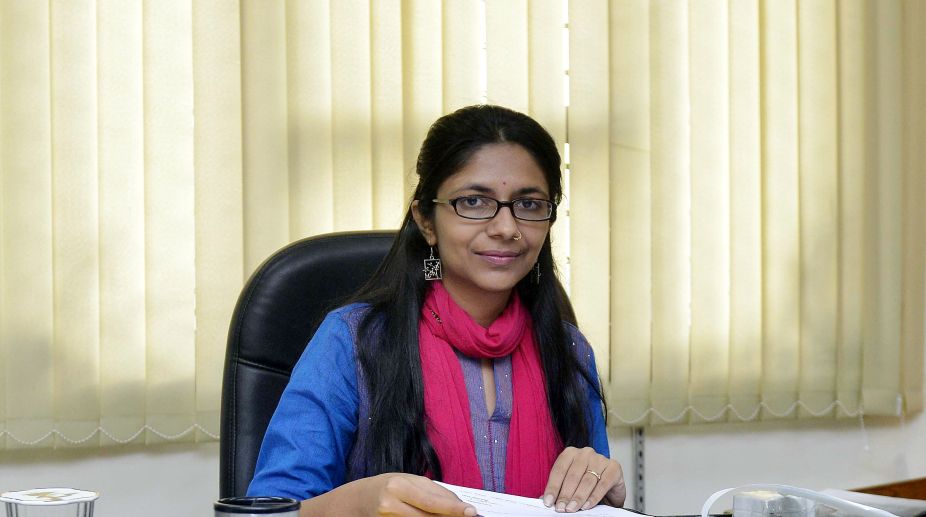
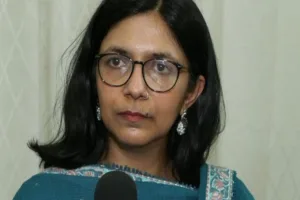
The girl was rescued by Delhi Commission for Women (DCW) after it received a complaint about her being held hostage and being harassed by the doctor, said DCW chief Swati Maliwal.

She told The Statesman that; “as we were informed about the situation of the girl, I along with my colleagues Sarika Chaudhary and Promila Gupta went to the house. Initially, we were confronted by the lady doctor. She was reluctant to let us inside the house so we forcibly opened the door and went ahead with our investigation.”

“Subsequently, we found the victim in a miserable condition. She informed she is a native of Jharkhand,” Maliwal said. Elaborating on the condition of the minor, the DCW chief stated; “the girl was not even provided woollen clothes. She had bruises all over her body and several burn marks on her hands and fingers which pointed to atrocities and torture she had undergone.”

She said the girl broke down while narrating her tale. She came from a poor family in Ranchi. Poverty had prompted her parents to send their daughter to Delhi through a placement agency which promised  her a good job, Maliwal told The Statesman.

Expressing her disappointment Swati Maliwal averred; “it is an irony that a doctor and mother of a two-year-old child treated a minor girl in an inhuman manner. The condition of the girl was so miserable that it is beyond words to explain. High education cannot guarantee good conduct and the accused must be given high punishment.”

Meanwhile, deputy commissioner of police Aslam Khan disclosed that the lady doctor had been arrested. “As the victim did not accuse any other family member besides the lady doctor for her ill treatment, no action was taken against the doctor’s husband,” said DCP.

he ssaid a case under Sections 323 (for voluntarily causing hurt), 342 (wrongful confinement), 370 (trafficking of person), 374 (unlawful compulsory labour) of Indian Penal Code, and Sections 75 (for cruelty to child) and 79 (for sending the child outside the jurisdiction of the competent authority) of Justice Juvenile Act and 16 Bonded Labour Act was registered against the accused at Model Town police station.

The DCP further disclosed that primary investigation revealed that the minor was brought to Delhi from Ranchi. “We studied the documents of placement agency procured from the house of the accused. The contact number and address were found to be fake. However, police identified the person who brought minor from Ranchi. His name is Ram and he operates from Jharkhand.

The officer said that a team had been deployed to go to Jharkhand and track down the suspect.

1984 riots: Punjab minister faces flak for denying Cong role

Statesman News Service | Chandigarh |

With the Supreme Court ordering fresh probe by a new special investigation team (SIT) into 186 cases related to the 1984 anti-Sikh riots, the ruling Congress is facing criticism from Opposition parties.

While the Shiromani Akali Dal (SAD) and the Aam Aadmi Party have demanded action against the Congressmen involved in these riots, Punjab Cabinet minister Rana Gurjit Singh on Saturday faced flak for denying his party’s role in the same.

Speaking to reporters in Jalandhar on Friday, Singh said the Congress was not responsible for the riots. “Though our party was in power at that time in Delhi, that doesn’t mean it was responsible for the riots,” he said. Criticising the minister’s statement, AAP said it was a ‘white lie’.

The irrigation and power minister had betrayed the Sikh community by giving a clean chit to the Gandhi family which had engineered the 1984 anti-Sikh genocide, solely to retain his ministry as it was slipping away from his hands due to allegations of corruption, the SAD alleged.  In a statement here, former minister Maheshinder Singh Grewal said it was inconceivable that any Sikh could deny Congress hand in the massacre which was well documented and established.“The entire Sikh community in the world knows that the Gandhi family and its acolytes perpetrated the worst massacre in Delhi and forty other towns and cities in the country. Congress leaders led mobs which burned Sikhs alive. Victim families have recorded their testimonies and named leaders like Sajjan Kumar and Jagdish Tytler. By denying all this Singh is not only doing a grave dis-service to the Sikh community, but also insulting the memory of 8,000 Sikhs who were butchered by Congress goons,” he said.

Asking Singh to apologise immediately to the community and rise above politics to echo the stand taken by the entire Sikh world, Grewal said this was the only way  the minister could wash away the “sin” committed by him.

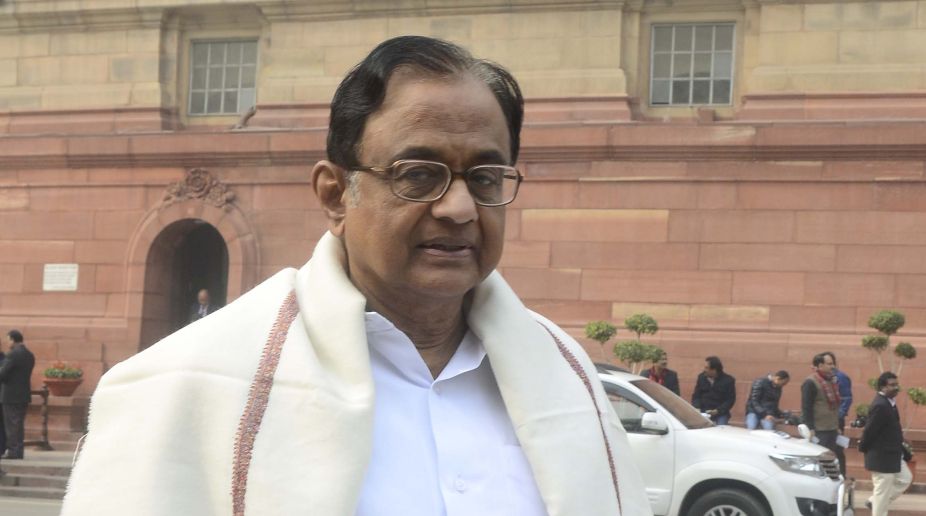
ED raids Karti; Cong, P Chidambaram cry pol vendetta

Statesman News Service | New Delhi |

The Congress and its senior leader P Chidambaram on Saturday accused the Narendra Modi government of allegedly unleashing “vicious political vendetta” against Opposition parties and their leaders after the Enforcement Directorate (ED) earlier in the day reportedly carried out raids at ten premises linked to Chidambaram’s son Karti, including the ex-Union minister’s Delhi residence, in connection with its money laundering probe in the Aircel-Maxis case.

These raids were carried out in nine premises in Chennai, including Karti’s residence, and at Chidambaram’s Jorbagh residence in the national capital, with the ED sources saying that certain “incriminating” documents were seized during the raids. Chidambaram however maintained that “nothing was found” during these raids, attacking  the Modi government for allegedly misusing the ED to target his family.

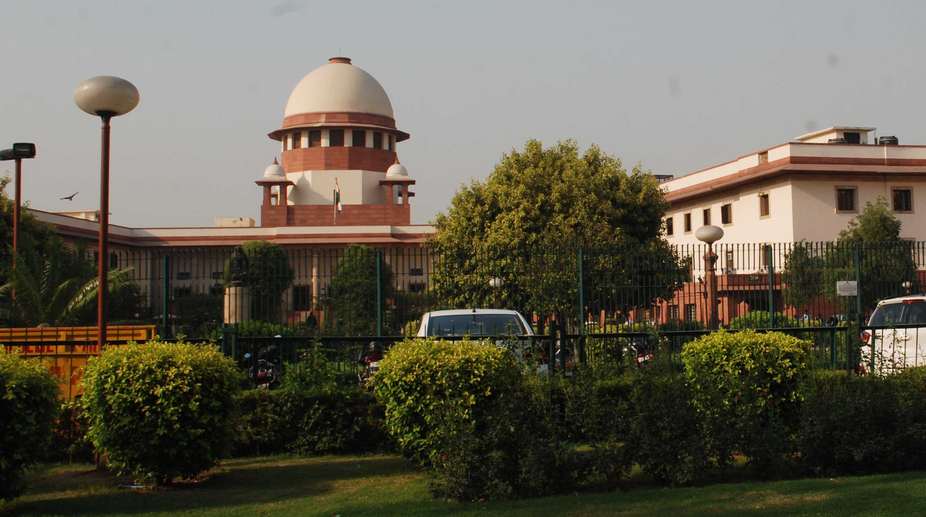
“Yesterday, the Supreme Court issued notices to the ED in cases where the submission is that the ED has no jurisdiction to conduct any investigation in the so-called Aircel-Maxis case. The ED was asked to file its reply and the cases were adjourned to 30 January,” Chidambaram said.

“There is no FIR against me or my son in the Aircel-Maxis case. There is no predicate scheduled offence. Hence the ED has no jurisdiction. Yet the ED, at the instance of the government, continues to misuse its powers,” he charged.

“I belong to the Opposition party. Let the government misuse the ED. I shall neither bend nor break and I shall continue to speak and write,” Chidambaram said. The Congress alleged the Modi government was using ED and the CBI to settle political scores.

Gujarat Governor embarrasses BJP govt on jobless growth

Statesman News Service | Gandhinagar |

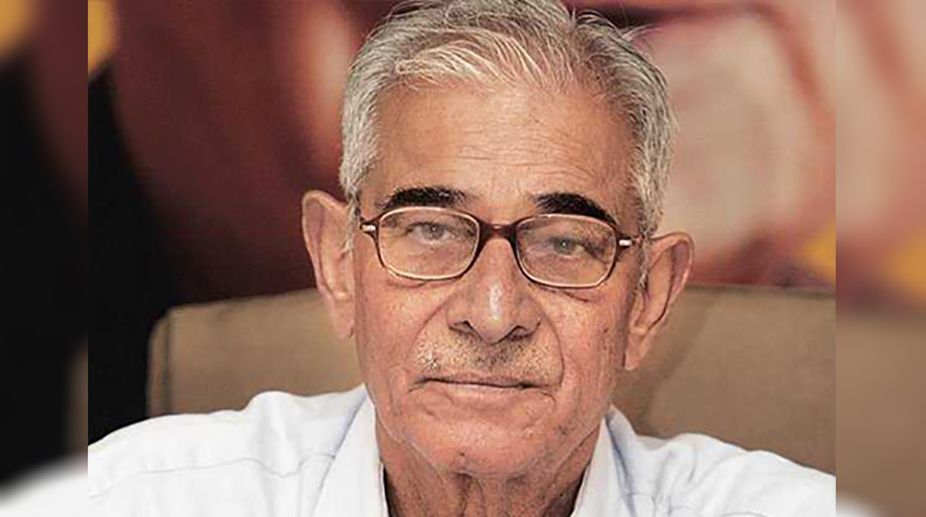
In a majorembarrassment for the ruling BJP in Gujarat, state Governor O P Kohli has saidthat there is a growing discomfort among the state’s educated youth due to the grim employment scenario.

The Governor’s observation is at variance with the BJP government’s claims that the job situation in Gujarat has improved during its 22-year tenure.

Delivering his address at the convocation of the Gujarat Technological University (GTU) here, Mr Kohli said that growing unemployment raises the question on the relevance of higher education in the country.

Chief  Minister Vijay Rupani and Education Minister Bhupendrasinh Chudasama were present at the convocation where the Governor spoke his mind.

Belonging as he does to the same ideological camp that is currently at the helm of affairs in the country, Mr Kohli shouldn’t have embarrassed the BJP government but the university professor in himprobably couldn’t have resisted the temptation to tell the truth.  The Governor said that the feeling of discontent among youths is natural when they do not get jobs despite getting higher education. “Such discontent among youths is a warning bell for any society,” said Mr Kohli.

The Governor also had a dig at the ‘development’narrative of the BJPgovernment by saying that development of some cities doesn’t mean the development of the country, a phenomenon activists and Opposition parties had been pointing out before and during the just concluded election campaign. This is not the first time in recent days that a dignitary in Gujarat has spoken about the reality that the government wants to keep under the wraps.

Only last week, even before the newly sworn-in ministry had started its formal functioning, state Chief Secretary Dr J N Singh had said that the distress among the farmers was the cause of the ruling BJP’s tally going down in the Assembly elections. Asked to comment on the Governor’s remarks,Education Minister Bhupendrasinh Chudasama said that these were his ‘personal opinion’.

Marriage, politics and soothsayers

Irfan Husain |

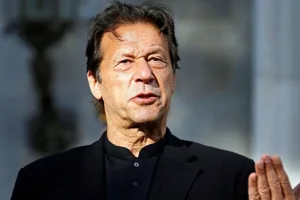
Whatever people might think about Imran Khan’s words and antics, nobody can deny that he brings a lot of colour and macho swagger to politics.

By making bizarre accusations against rivals, he succeeds in putting them on the defensive while deflecting any criticism of his own course of action. And, like Trump, he shrugs off attacks from the tiny minority of liberal, secular critics who quaintly seek the truth in Pakistan’s political discourse.

And so the PTI circus rolls on from one triumph to the next, lights ablaze and trumpets blaring. In fact, it’s the only show in town, with other parties and politicians providing the chief showman with a series of easy targets. Nawaz Sharif is hit with the charge that he handed over state secrets to the Americans. Proof? That’s a 20th century concept with no relevance to contemporary Pakistani politics.

With just a few months to go until the general elections, you would think Imran Khan would be burnishing his party manifesto, and highlighting the achievements of his party in KP province. Far from it: judging from media coverage, the whole country is fixated on the Great Khan’s marriage proposal to his ‘spiritual guide’.

Frankly, I couldn’t care less about who Imran Khan marries: what happens between two consenting adults should be strictly their business. However, the fact that a national leader, and a serious contender for the country’s most powerful civilian job, should need the crutch of a resident soothsayer is disturbing.

According to breathless media coverage, it was the lady in question who advised Khan to go to the mountain resort of Nathiagali while the Panamagate trial was going on. But do we really want a prime minister who is so gullible? However, Khan is not alone in his superstitions: according to reports doing the rounds at the time, Nawaz Sharif sought guidance from a pir known as Dewana Baba in Mansehra.

We are informed through a report in Dawn from a couple of years ago that Asif Zardari probably managed to complete his term in office thanks to the powers of Pir Ejaz. Apart from this major triumph, he also claims that he was instrumental in enabling Zardari to access the $60 million sitting in Switzerland, and frozen by the authorities pending an investigation.

And let’s not forget the goats: apparently, one animal was slaughtered every day for the duration of the Zardari presidency. The same gent had advised the PPP head honcho to stay near the sea to ward off the evil eye, as well as other supernatural attacks launched by his enemies.

During her second stint as prime minister, Benazir Bhutto was reported to seek guidance from Dewana Baba, Nawaz Sharif’s seer. You’d think that after Sharif’s unceremonious departure, BB would have seen the light. No chance: once bitten by the oracle bug, the victim seeks to guard his spiritual flanks against attacks from the dark side.

It is often insecure leaders who seek the advice of oracles and seers. Lacking confidence in their own decision-making powers, they look to higher powers to guide them. And once you start believing in jinns, you need to counter hostile spirits with your own unseen troops.

But as we know all too well, soothsayers often get it terribly wrong. Just look at what happened to Rajapakse, the Sri Lankan ex-president: there he was, solidly entrenched with well over a year to go in his term of office, when he suddenly called for an early election. Overnight — and much to everyone’s surprise — a fractious opposition coalesced into an effective election machine, and defeated Rajapakse.

It later emerged that he had been advised by his resident oracle that the alignment of his stars predicted victory if he were to call the election a year earlier than they were due. Big mistake. When asked to explain what went wrong, the soothsayer replied that he had guided Rajapakse to victory twice before, and “two out of three” wasn’t a bad record.

In fact, while we pretend to be impervious to such superstitious rubbish, we surreptitiously glance at the horoscope columns in the newspapers to see what the stars say. Many supposedly rational leaders have sought spiritual help in gaining an edge over their rivals. Ronald Reagan’s wife regularly consulted a Californian syndicated horoscope columnist.

Mankind has always looked for help to ward off the terrors of the night when spirits stalk the land, and ghouls and zombies await the unwary. Most belief systems make mention of them in one form or another.

So in this wider context, does it matter that the man who would be prime minister believes in this mumbo-jumbo? Actually, yes. Many years ago, Imran Khan rubbished Darwin’s theory of evolution, overlooking the mass of accumulated evidence that supports it. Is this the man who will give us a ‘naya Pakistan’?

Year of the anti-truth, anti-Trump media

Raja Murthy |

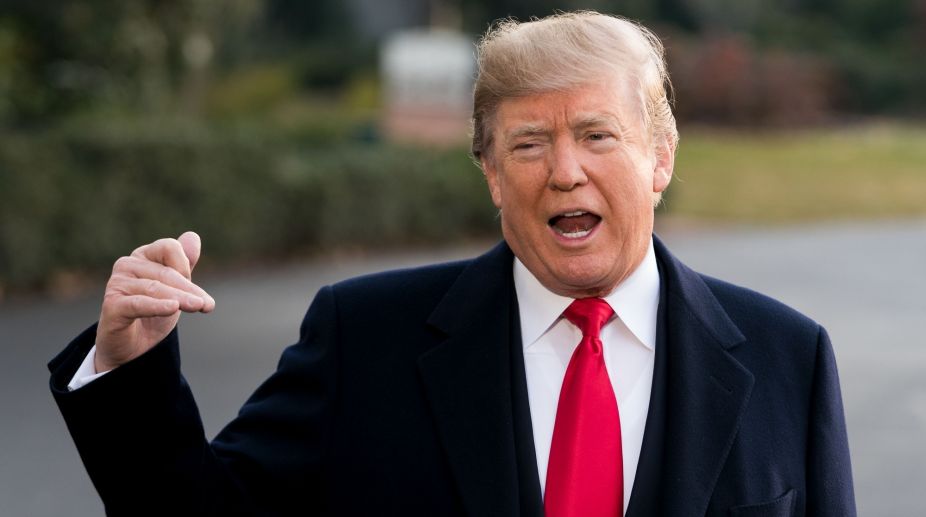
The word ‘psychotic’ comes with multiple synonyms, and related choices of ‘unbalanced’, ‘unhinged’, ‘frenzied’, ‘raving’, ‘hysterical’ describe how the media – particularly the North American variety – dealt with the maverick presidency of Donald John Trump in year 2017.

President Trump is a unique phenomenon of our times. He is a blunt instrument, an abrasive character but a genius for accomplishing what he sets out to achieve. Unbiased media professionals would have accurately reported his unprecedented presidency – a debutant politician successfully leading the world’s most powerful democracy in his very first electoral attempt.

But vested interests own or influence most major media houses that present a distorted picture of the 45th President of the USA. From when he announced running for US president, Trump has declared open war against the corrupt forces ruining his country’s economy. As expected, endangered vested interests wage their vicious war against him. I am not a fan but well-wisher of Trump, as I clarified to colleagues surprised at my supposedly ‘pro-Trump’ articles that are actually pro-facts and pro-fair play. I support Trump’s volition to serve his country, just as I wish Prime Minister Narendra Modi success in his developmental agenda for India. Trump and Modi may not always make the right decisions, or not always correctly execute their right decisions, but there is no doubting their sincerity of working very hard for their people.

President Trump faces deadlier challenges since he fights dangerous forces within his own Republican Party. But he has shown steely courage and determination. More President Trump rocks the corrupt establishment more vicious will be the attacks against him, and more dirty tricks to sabotage his presidency.

Take the ‘Russia collusion’ allegations, as instance. The multi-billionaire Trump being a Russian stooge obviously remains unproven after months of expensive ‘investigations’, simply because a blatant, ridiculous falsehood can never be dressed up as truth. The truth prevails sooner or later, but the media is on the wrong side.

In year 2017 – as during the 2016 presidential election campaign – Trump was victim of some of the most incompetent, unfair, biased, inaccurate, negativity-dripping and immature media coverage in my lifetime, and probably in all media history in democracies.

The continuing unbalanced nature of the anti-Trump attacks becomes more obvious in the mainstream media ignoring his impressive success after a year in the White House. He is turning around the US economy, has created hundreds of thousands of new jobs, got billions of dollars of investment, cut strangling regulatory mechanisms, ripped out lopsided trade deals, hit hard at lucrative illegal immigration rackets.

Ignored too is how Trump is delivering his pre-election promise to destroy terrorists. He has routed the maniacal ISIS in the Middle East, and is implementing a reality-based strategy to deal with the deceit-driven, terrorist-criminal state of Pakistan.

Yet unwary victims continue being brainwashed by the anti-Truth ‘media’ outlets. Common sense dictates not being fooled. Think for yourself, and never blindly believe what the media says. Cross-check facts, and look for the original source of a news report. Then you see how much the media ignores the positives of the Trump presidency and highlights real or imaginary negatives.

Trump being no shy violet, effectively counter-attacks what he calls the ‘Fake Media’ through social media. His Twitter account – with nearly 47 million followers and possibly hundreds of millions who daily track it – is presumably the most read media writing source currently in the planet. Media sections dismiss Trump’s tweets as ‘rants’, but the real rants are the motivated anti-Trump attacks that include buffoonizing and demonizing him. Ridicule is an effective weapon, and failed Hollywood actors like Alec Baldwin are part of the army of media puppets hired to mock a leader whose prickly, egoistic personality presents a ready target for ridicule.

Credit to Trump for not succumbing to the relentless pressure, and never giving up. That’s where the corrupt forces failed in their Trump-calculus: many other victims of orchestrated media attacks have backed out or resigned. But ‘quitting’ is not in the Trump vocabulary, and is key reason for his quality levels of success – whether in developing his real-estate business or his country’s seriously damaged economy. Never quit before the goal is reached.

I first took serious notice of Trump when, early in his campaign to be Republican presidential nominee, he called the media as “70 per cent dishonest”. For a presidential or prime ministerial contender to attack the media is rare, when the usual norm is to legally or illegally woo it as the Clinton campaign did. Only non-corrupt leaders with direct electorate support take on the corrupt media as Trump does.

Like fellow billionaire and Amazon owner Jeff Bezos who bought the Washington Post, Trump could have purchased a major media mouthpiece and hired publicity puppets. But he did not, and Trump’s open fight against the media actually is his biggest credibility badge.

The falsehood-spinners are losing. In their motivated anti-Trump tirade, the mainstream media further loses credibility when it badly needs credibility to survive. The truth has a force, and those on the side of honesty win – as Trump is in his work to ‘Make America Great Again’, in one of the most unique leadership tenures in modern history.


(The writer is a senior, Mumbai-based journalist.)

Against Redistribution

Basab Dasgupta |

Almost all physical systems on this earth naturally tend towards a condition of equilibrium or “equalisation” and there is a continuous movement or turbulence in the system until this condition is reached. When a water tank is connected to a second tank situated at a lower level, water from the higher tank would continue to flow to the lower tank until the water level becomes the same in two tanks. If a hot object comes in contact with a colder object, heat would flow from the hot object to the colder one until they both reach the same temperature. If an electrically charged object touches an uncharged object, charge would flow from the charged object until they both have the same potential. If we add a tablespoonful of sugar into a glass of water, sugar molecules would disperse into water until the concentration is uniform throughout the body of water. The list goes on.

Many also believe in a similar principle in social life. They think that some type of uniform wealth or resource distribution would be the remedy for all the ills and turmoil of the society including various conflicts, poverty, hunger etc., and as a result, human society would reach a peaceful stable status. They feel that this should be the goal of society at large. One can even go further and assert that, since all men are created equal, they all deserve to enjoy all the resources on this earth equally and have a fundamental right to do so. This is basically the concept of utopia and many religious people believe that this is also God’s intention.

I would like to argue that the human race would never reach this utopia and this is not God’s intention. There are three fundamental reasons for my assertion. One, achieving an equitable wealth distribution is not a natural process; most wealthy people do not want to simply voluntarily donate part of their wealth to the less fortunate, no matter what the situation might be. Two, from geographical and meteorological points of view, the earth is not uniform. Most of it is water and the terrain of the land is highly non-uniform. Weather wise, there are very hot regions and very cold regions and regions with all temperatures in between. As a result, people in different parts of the world face different problems. Three, contrary to the belief that “all men are created equal”, the fact is that all men are not created equal.

On the first point, it appears that the natural process is almost opposite of wealth distribution. It seems that wealthy people use their wealth to generate more wealth rather than donate. I would propose a “Gedanken” experiment whereby a large number of people are given the same amount of money and taken to an island, full of all kinds of natural resources and left there for a long period of time in isolation from the rest of the world to see how they behave in a socio-economic sense.

My belief is that, after a period of say five years, one would see a “bell-shaped” distribution in their wealth. Some people would find a way to exploit others and gain more resources by doing less. This is human nature. As a result, the rich people get richer and the poor people get poorer. So, if we force some artificial wealth redistribution scheme through political edicts or economic regulation, I doubt that it would lead to a permanently stable and peaceful society.

Secondly, a more uniform resource distribution would require a more uniform population distribution across the entire world. It would not make sense to distribute the same amount of wealth to people who cluster around large cities compared to the ones who struggle in the extreme weather conditions in some remote part of the world.

The inherent non-uniformity of the earth’s surface and weather pattern would almost automatically favour persons in certain regions over the ones from other regions whether or not a wealth distribution scheme is in place. In fact, these two non-uniformities are ultimately responsible for development of different races and cultures, which in turn have contributed to various inequalities and conflicts. The reason the USA is such a wealthy nation is simply because it is a vast country full of natural resources and is very sparsely populated.

The statement that “all people are created equal” is obviously incorrect if we interpret it literally: the differences in their DNA, culture, climate, mental and physical condition at birth, socio-economic condition of their social stratum etc all contribute to inequality. However, this statement was incorporated in the American Declaration of Independence more in a philosophical and Biblical sense. I would argue against it from the point of view of Hindu philosophy and concept of reincarnation.

I believe that people are not born equal because they are all at different points in their Karmic voyage towards Nirvana i.e. at different stages of progress in their hundreds of reincarnations. There are some who are in very primitive early stages and there are others in a more advanced stage from a spiritual point of view, depending on their activities in previous lives. I do not think that God wants to make this earth equally pleasant and comfortable for everyone so that people can live happily ever after. That would make this earth equivalent to some type of heaven and defeat the purpose of reincarnations.

I have heard one skepticism from many people: “If there was a God, then why is there so much misery on this earth? Why do innocent people get killed for no reason?” It seems to me that a conceivable answer would be to say that God does not want life on this earth to be wonderful and full of bliss. In fact, the whole point is for everyone to realise that life on this earth is indeed full of misery and the goal should be not to come back and go through the same agony in our next life.

I believe that wealthy people have wealth as a result of their good deeds in previous life. However, God did not give them wealth for them to accumulate more wealth or to indulge in materialistic possessions and physical pleasures. Wealth is meant for them as a means to free up their time so that they can do better things in life; being wealthy means one has to spend less time in the struggles of life and more time to think and seek self-realisation.

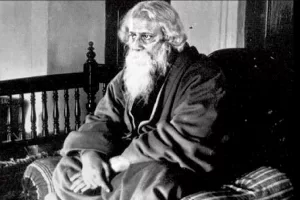
A good example is Rabindranath Tagore. He did not have to work a single day in his life because his family had plenty of money. So, he ended up devoting the time he had on his hand in pursuit of creative and spiritual thoughts. I have no doubt in my mind that he has been reincarnated in a “higher” life. Steve Jobs was a multi-billionaire, but he devoted his time with passion in various creative inventions which benefited billions of people. That was his way of seeking a higher power. Neither one was known to be a promoter of wealth redistribution, but they spent their money in establishing their values which benefited generations.

Now, if one feels a divine joy in sharing one’s wealth with others or donating everything one has to others, then one makes substantial progress in one’s spiritual journey. However, to make this progress one must feel that this joy is beyond anything one has experienced from materialistic and physical pleasures; that this joy is just a glimpse of the heavenly bliss that waits for one at the end of the journey. But this feeling has to come from inside and not from reading books or listening to sermons from a pastor or out of fear of going to “hell”, and certainly not from a political agenda. One must feel this divine joy in one’s heart. It is not related to how many people the donation has benefited or how.

Generosity in order to follow government policies or boost one’s social image does not count for anything in an ultimate spiritual sense for that person. Should we not care for the poor people who are hungry or homeless or suffering from some illness? Of course, yes, but only if our heart says “yes”. If one does not feel any compassion and simply walks away, that does not mean that one would end up in hell or some such horrible place; it simply means that there are many more reincarnations waiting for that person before divine enlightenment.

(The writer, a physicist who worked in academia and industry, is a Bengali settled in America.)

Brand sustenance

Editorial |

It is, as yet, only a promise ~ yet it reassures. By announcing their commitment to promote and resurrect their family heritage, the nephews of Brig. Kapil Mohan, who died recently, are seeking to sustain not only once-famous, family-owned brands in the liquor trade but continuing their uncle’s battle against major commercial houses with immense marketing muscle. Mohan Meakin’s products (originally Dyer Meakin) include Old Monk rum that was once third in the global best sellers ranking; Solan No.1 a single-malt whisky that had dominated the market after Independence, and Golden Eagle beer that was said to match the famous Murree beer of pre-Partition renown.

What marks the Mohan Meakin story unique is that Kapil Mohan (who steered the family business) hardly ever imbibed. An active member of the Territorial Army, he was more than satisfied retaining sizeable contract from the defence services: one reason why his brands hardly “grew” and ~ Old Monk excepted ~ were gradually squeezed off the shop-shelves. Kapil did venture farther, with limited success: Gold Coin apple juice did gain much popularity, and Mohan’s corn flakes are still on sale despite an international brand landing on the market. It is an Indian irony (hypocrisy?) that while domestic products that challenged all-powerful multinationals did earn some political support ~ Dukes lemonade and Campa cola being a couple of examples ~ the David versus Goliath scenario did not extend to the arena of alcoholic beverages.

And the netas finding it politically advantageous to dub them “liquor barons” meant that Mohan Meakin ploughed a lonely furrow. Perhaps it was its own worst enemy in commercial terms, yet there was something heroic to Kapil Mohan’s repeated spurning of overtures from multinationals and his insistence on doing things in the traditional manner. It certainly elevated Old Monk to iconic status, and there are many who still yearn for a bottle of Solan No.1 or a guzzle of Golden Eagle. Other brands  did enjoy some patronage but never quite the same devoted following as the “thoroughbreds” of the stable.

The “younger” Mohans have a fight on their hands, there is a lot of “catch up” to be played for the IMFL trade has exploded in recent years, and liberal imports have added a new dimension. Marketing and sales promotion have developed into a fine art, so while Old Monk might have a base from which a re-launch could be mounted, reviving the patronage for Solan No. 1 will require a huge effort, particularly if the refusal to yield to MNC-pressure is sustained. Still, tipplers are large-hearted blokes, sentimental too, and provided their legendary quality persists would laugh away modern marketing gimmicks to reach out for a shot or two to salute the late Brigadier who never showed the white flag to new kids on the block.

Killing at Karaya

Editorial |

The heart of Kolkata has been roiled by real estate Syndicate rivalry… and with mortal effect. Last  Tuesday’s killing of a promoter by the leader of a rival gang in the Karaya area of Park Circus, near the glitzy Quest mall, has jolted a respectable area of the city. In death, Fazlur Rehman represents the malaise, just as the alleged killer, Sheikh Idris, personifies the underbelly of urban development. Or more accurately, the development of under-development, to borrow the title of  Andre Gunder Frank’s seminal book. Nay more, it has happened when the city ought to have put its best foot forward ~ exactly a week before yet another global business summit on January 16 and 17.

The political affiliation of the Park Circus syndicates is not of overriding relevance to the context though political involvement cannot be discounted. Small wonder that there has been a boom in illegal constructions in the Park Circus-Beniapukur area ~ in the heart of the city. Of far greater moment  is the fact that these dubious entities are thriving in Kolkata and its peripheral areas despite the Chief Minister’s tough talk a few months ago, even prompting Begum Hasina to complain to Mamata Banerjee against one such operative in Salt Lake.

The unprecedented intervention by a neighbouring Prime Minister in an essentially civic issue was a grave embarrasment to the state government. These syndicates have been thriving since the high noon of the Left; the  process has been finetuned by the present dispensation. Allegations that the syndicate leaders are in cahoots with the police are not wholly unfounded; the immediate transfer of the head of the anti-rowdy section to an obscure police outpost is a dire reflection on policing. As often as not, MLAs head rival gangs… as in New Town and Salt Lake.

The nub of the matter must be that there has been a mushroom expansion of these thriving syndicates throughout the state in the absence of employment opportunities… for all the pledges on investment at the annual summits.  The mayhem at Karaya is but the symptom of a canker, indeed the third such incident since September 2016.  There is little doubt that matters have come to a head after a spree of rioting, criminal intimidation, and extortion.

It is a testament to the gravity of the problem that at least six syndicate activists in Park Circus have incurred the appellation of “crime lords”, in itself a confirmation of sinister reality ~ their operations are tacitly condoned by the law-enforcement authorities. Reports suggest that these easy riders on bikes are engaged to force tenants to vacate their homes  before the land comes under the pickaxe for the construction of flats, not necessarily  legal. Yet the criminal gangs thrive… with the Kolkata Municipal Corporation often facilitating the real estate boom. Kolkata bears witness to a potentially murderous cocktail of syndicate activists, the political class, the police, and the civic authorities. It is time to crack the whip.

A bitter brew for man and beast

M Krishnan |

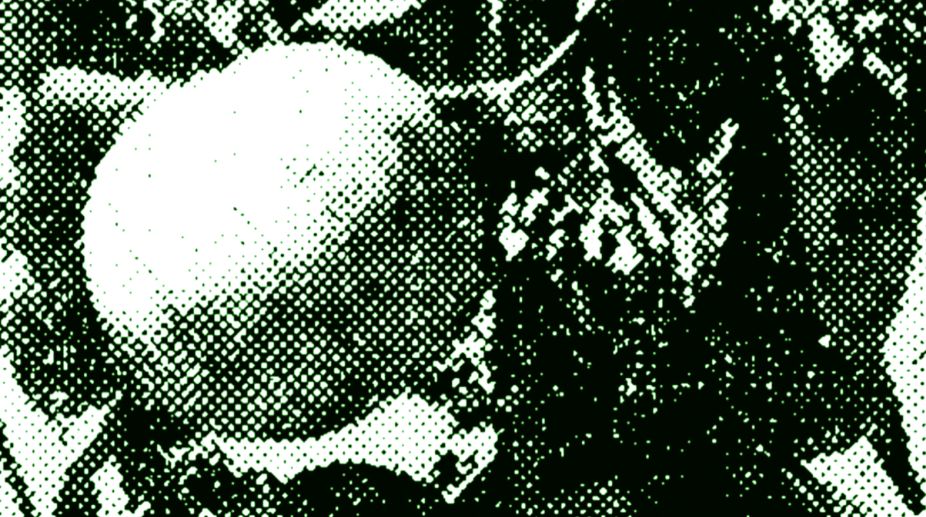
Can you guess what fruits and flowers are shown in my photograph? The lack of colour may be a handicap, and so I provide a description in addition. The flowers are a delicate, pale green, with an appetising fragrance, “with the scent of fenugreek” as Gamble has it, and the fruits are some two inches across, spherical, smooth, and coloured a most attractive deep pinkish orange. And inside this tempting rind is a bitter pulp, and embedded in it three or four round, flat, grey, coat-button seeds that are also bitter, and intensely poisonous.

In fact, these are the flowers and fruits of the “etti-maram”, a rather graceful tree still common enough in the south Indian countryside. In Tamil literary traditions the tree is considered the personification of total uselessness and is the classic simile for a man who is well off but does no one any good.

However, that is a fanciful literary comparison, and the value of the tree or rather its seeds, has been widely recognised not only in the south or in India, but all over the world. Many celebrated allopathic tonics of a generation ago were based on the bitter and poisonous principle in the seed, administered in small doses. When I was in college, I overheard a friend, preparing for an examination in pharmacology, mugging up the formula of a famous pick-me-up, and I remember it still: Syrupus ferri phosphates cum quininia et strychnina—it was the strychnine in it, much more than the iron phosphate or quinine, that gave that tonic its peculiar virtue.

In indigenous systems of medicine, too, strychnine has long been valued as a nervine tonic and appetiser, and still is. In the old days, a much greater and wider potency was ascribed to it. Up to a point, an immunity to its poison could be gradually cultivated, and it was taken for granted that all other poisons would be rendered innocuous, if one built up this tolerance of strychnine. It was something like prophylactic inoculation in its rationale, but unfortunately much less true. My grandfather (my father’s father, that is) could eat enough nuxvomica seeds to kill two normal men, for he had slowly built up a resistance to the poison. He lived to a ripe old age and ultimately died of natural causes and not poisoning, but nowadays faith in the belief has waned.

In fact, looking up “strychnine” in a recent American encyclopedia to get the latest information on its uses in medicine. I was greatly disappointed to find it dismissed as “an obsolescent heart stimulant”, replaced in modern practice by more efficient and less toxic substances. May be that is true of America, but people here still believe in strychnine, and not merely in its efficacy as a heart stimulant.

That it is poisonous and can kill, given in a sufficient dose, is a well known fact. What is less well known is that quite a few birds and beasts eat the fruit, bitter as it is, pulp seed and all, with no subsequent regrets. I remember a stay in a forest rest house whose amenities were somewhat primitive. I found the early morning coffee intensely bitter, and told the rest house man that he should take the pains to make a less bitter brew. He charged me heavily for fresh coffee seeds, but next morning it was no different, and when I commented on this sharply, he argued that there was nothing wrong with the decoction he had made, and that it was the milk, which he had not made, that was bitter.

More to humour the man, who was evidently a whimsical lunatic, than anything else, I sipped the decoction he offered me ~ and it was truly excellent! Then I tried a spoonful of the milk, and it was at once clear that improbable as it seemed, the man spoke the truth. I asked him if they fed the local cows on cinchona bark, and he informed me unsmilingly that it was not that and no fault of the milkman either, but that the cows had a passion for the ripe fruit of the “etti-maram” which they indulged in when sent out to graze in the jungles. I stuck to black coffee for the rest of my stay there not without a sneaking thankfulness for the fact that my ancestor could not take note of this cowardice on his grandson’s part.


This was published on 20 March 1967

Antonio Conte updates on Gary Cahill’s injury

The veteran defender looks set to be out of action for a few weeks at least!

SNS | New Delhi |

Chelsea suffered a major blow early on in their Premier League tie with Leicester City on Saturday as Gary Cahill limped off to be replaced by Andreas Christensen and Antonio Conte confirmed that the veteran defender has a muscular ailment.

“Gary Cahill has a muscular problem that is not serious,” Conte stated at the post-match press conference in London on Saturday.

Must read: Listless Chelsea held by 10-man Leicester City

The Blues, perhaps suffering from their mid-week exertions in the Carabao Cup semi-finals, were second best to the Foxes in an intriguing 0-0 draw at Stamford Bridge.

Claude Puel’s Leicester were the better of the sides, especially in the first-half and forced Thibaut Courtois into a number of key saves and arguably deserved to be ahead at the interval.

Match referee Mike Jones would send off Leicester fullback Ben Chilwell in the 68th minute but despite the man disadvantage, the Foxes held on for a valuable point.

Don’t miss: Leicester City boss Claude Puel gives verdict on Chelsea draw

Conte added that he was unsure of the recovery time the Englishman would require but the return of David Luiz from a knee injury has bolstered his defensive options so the Blues are not exactly bare at the back.

Christensen, who signed a long-term contract earlier in the week, is expected to start in Cahill’s stead, while it perhaps gives the out-of-favour Luiz a chance to win his place back after a lengthy spell on the sidelines.

Also read: Liverpool vs Manchester City: 5 players to watch out for

The Blues take on Norwich City in a FA Cup third round replay on Wednesday before traveling to Brighton & Hove Albion for a Premier League clash on Saturday.

Conte’s men are in third place at the moment, but could drop to fourth if Liverpool manage to beat runaway leaders Manchester City on Sunday.

Essential micronutrients

Maneka Gandhi |

All living beings require vitamins, essential micronutrients, and these should come through the diet. An extra dose of vitamin has very little nutritional benefit if you are already healthy, but if you are deficient in any vitamin you will require supplements so that your cells and tissues can grow properly. Vitamins facilitate the chemical reactions that produce among other things, skin, bone and muscle. If there is serious deficiency in one or more of these nutrients, you may develop a deficiency disease. Even minor deficiencies may cause permanent damage. Some well known illnesses connected with vitamin deficiencies are beriberi, pellagra, scurvy and rickets.

In 1910 Vitamin B1 (thiamine) was discovered by Japanese scientist Umataro Suzuki and its food source was rice bran. In 1913 Vitamin A (retinol) followed and its food source was considered cod liver oil. Between 1920 and 1948 all the other vitamins were isolated. The last one was Vitamin B 12 (cobalamin) and its source was liver, eggs and any other animal products.

In the 1930s the first commercial yeast-extract vitamin B complex and semi-synthetic vitamin C supplement tablets started being sold. From then to now, the consumption of vitamins and multi-vitamins has become a common practice in many households. Thirteen vitamins are recognized at present and each one has a particular function. Some function as antioxidants, others, especially in the B group, help enzymes to work.

Vitamins are classified as A, B (including B1 Thiamine, B2 riboflavin, B3 Niacin, B5, B6 (Pyridoxin), B7 Biotin, B9, B12 (Cobalamin), C, D, E and K. As supplements become an integral part of our lives, it is important to know where they come from. The B group has other common names which are on the packaging labels: (thiamine, riboflavin, niacin, pantothenic acid, biotin, vitamin B-6, vitamin B-12 and folate).

Most Indians would be surprised to know how many vitamins are derived from animals and are not vegetarian. Product descriptions are not always honest. While the law directs manufacturers to display the contents of their products, it is not mandatory for them to display the source of these ingredients. Many vitamin supplements are not vegetarian.

Whether or not one opts to continue consuming these vitamins is a personal choice, but you must be aware of their animal content.

Vitamins tablets or capsules usually contain additives that aid in the manufacturing process, or the way the vitamin is digested by the body. These are some of them:

Gelatine is the most commonly used animal ingredient in vitamin supplements. It forms the basis of most capsule shells and is also used in the coating and filling of tablets. Gelatine is derived from boiling hooves, stomach, and other tissue linings, of pigs, cows and goats.

Other components of fillers and lubricants, on the coating of vitamin supplements, are magnesium stearate and caprylic acid. Magnesium stearate is derived from stearic acid, which is a fatty acid found in pigs, chicken, cows, fish, milk and butter. Caprylic acid comes from the milk of goats, cows and sheep.

Many tablets are coated with colours to make them look attractive. Many of these colours are animal based. A commonly used red food dye is made from carmine, which comes from the dead bodies of scale insects similar to beetles.

Lanolin is another animal sourced material used to manufacture vitamin D supplements. It is obtained from wool-bearing animals. (D3 is also made from fish oils. This is dangerous because it may have hidden mercury content). Vegan vitamin D3 supplements, sourced from algae, are a viable alternative. Or, stand in the sun.

Another common ingredient is cod liver oil, which is used as a source of vitamin A and vitamin D. This comes from oils extracted from the liver of cod fish. Vitamin B12 (cobalamin) is often derived from organ meats, especially liver, from lamb, veal, beef, and turkey, fish eggs, clams, mackerel and crab meat. So are Vitamins B 2, B 3, B 5 , B 6, B 7.

Omega-3 supplements usually use products based on fish, fish oil, eggs, meat etc..

Duodenum substances are used in many vitamins to help in the absorption of vital nutrients. These are derived from the digestive tracts of cows and pigs.

Lipase is an ingredient used in digestive enzyme supplements. This comes from the tongues of calves and lambs. Pepsin, which is sometimes included, comes from the stomach lining of pigs. Bone meal is used as a source of calcium in some vitamin supplements. This is basically crushed animal bones.

Calcium supplement tablets have glycerine, which can be extracted from soy or palm but is usually taken from animal tallow (animal fat). Cholecalciferol, used in all vitamin supplements, is extracted from sheep wool.

Do not listen to people who tell you that some vitamins have to be from meat/dairy extracts. There is no vitamin which is exclusively found in non-vegetarian food. Each vitamin has plant based alternatives.

Vegetable cellulose caps are an alternative for gelatine. Stearates used as fillers and lubricants on coating can be derived from palm oil, rather than animals. There are also vegetable sources of caprylic acid which come from coconut or palm oil.

Alternative sources of Vitamin D include yeast extract ergosterol, algae and, of course, exposing skin to sunshine. Cyanocobalamin, which comes from soy, can be used for Vitamin B12supplements. Kiwifruit seed oil, chia seed, fig seed oil, hemp, flax and black raspberry are good sources of Omega-3.Vitamin A can be made from carotene.

There are ways to derive lipase from oilseed and cereal seed for use in digestive enzyme supplements. Crushed animal bones, used for calcium, can be replaced by a number of vegetarian sources, including calcium carbonate, kale, mustard greens, soy, broccoli, leeks, spinach, beets, vegetable compost, plant mulch, dolomite and clay.

Despite these vegetable ingredients being available, the hugely profitable health supplement industry often chooses to use animal based products because they are easily available, from slaughterhouses, and cheap.

Apart from plant alternatives, almost all commercially sold vitamin supplements can also be made from synthetic vitamins. There are no chemical differences between vitamins produced synthetically and those derived from plant or animal sources. Synthetic production is becoming more popular, as, such vitamin tablets are easier to produce and found to be even more cost effective than animal products.

More funds need to be channelled into the R&D of plant alternatives, for use in vitamin supplements. We need to chart a path away from the unnecessary violent methods of producing vitamin supplements. An increase in the consumer demand for plant based supplements will push the industry in a better direction. There are many multivitamin brands that come from animals, or use animals, in their production. Some of these are: In life Multivitamin, Centrum, Herbalife, Healthvit, Muscle Pharm Armour V, Revital, Univita, Amway Nutralite, Opti-Men, Muscle Tech Platinum Multi Vit Supplement among others. You need to write and ask the company.

Vitamin supplements don’t promote health, or prevent disease. They simply treat deficiency. As much as possible, we should rather eat a variety of more whole foods directly. This is more sensible, not to say healthier, than trying to derive micronutrients from these same foods and consuming those in tablets.


(To join the animal welfare movement contact gandhim@nic.in , www.peopleforanimalsindia.org)