Logo

This Indian team can beat South Africa in their home: Morne Morkel

However, de Villiers and Dean Elgar later stabilised their inning.

SNS |

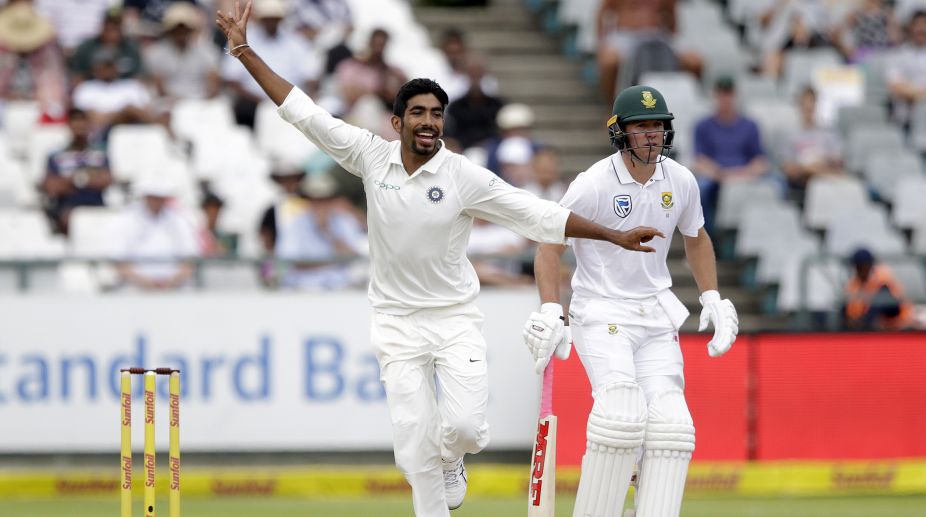
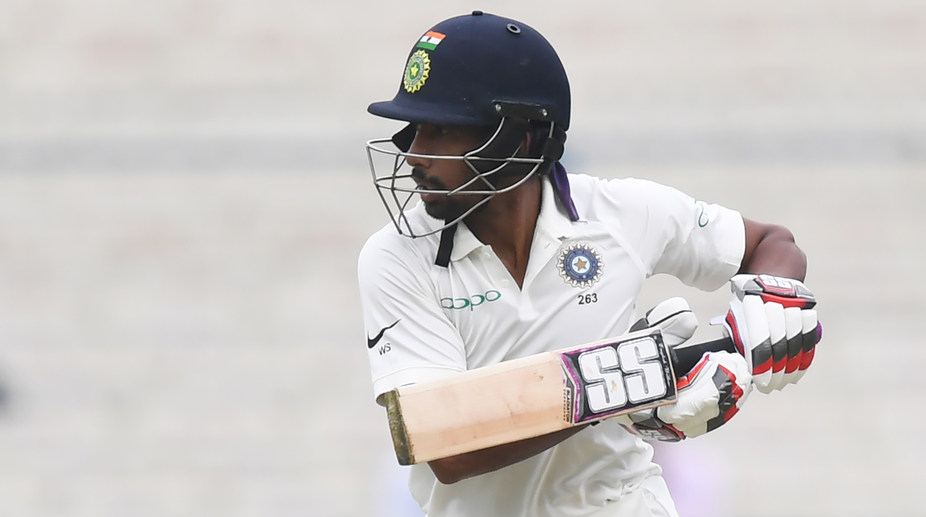
After bowling out South Africa for 335 runs in the first inning of the second Test at SuperSport Park in Centurion, Indian skipper Virat Kohli fought a lone battle before the visitors were bowled out for 307.

Other than Virat (153), only opener Murali Vijay and spin wizard Ravichandran Ashwin left a mark with the bat with Ashwin scoring 38 and Vijay 46 runs for India.

On the third day of the second Test match, the Indian captain rattled the Proteas bowling attack and earned praises from South African speedster Morne Morkel. The 33-year-old believes that this Indian team have the potential to win a series in South Africa.

Faf du Plessis side had taken a lead of 118 runs with the help of AB de Villiers’ half century as the day ended. In the second inning Indian pacer Jasprit Bumrah disturbed the hosts top order by sending Hashim Amla (1) and Aiden Markram (1) back to the pavilion.

However, de Villiers and Dean Elgar later stabilised their inning.

While talking about Kohli’s sensational knock, Morkel said: “Virat is very competitive. They are over here to compete and they’ve got a team that could potentially beat South Africa for the first time here. That’s his nature. It gets him going and keeps him going. We’re well aware of that but we don’t take any notice of it. And if you get a batsman of his quality, you’ve got time to adjust.”

“Bowling certain lengths, certain lines, we’ve got that small window to make a play. To keep him quiet on this sort of surface, we have to bowl as many dot balls as possible,” Morkel added.

While talking about Jasprit Bumrah’s spell, Morkel said, “Bumrah has got the perfect action for this sort of wicket. He is very skiddy. Talking to our batters and doing some preparation before the Test match, we’ve got our game plans.”

“Talking about collapses (in the second innings) is a bit of a red flag but it’s something that we do talk about – losing a cluster of wickets is not ideal.”

“Individuals must take responsibility, but there’s a massive thing in the team to build partnerships. Hopefully tomorrow we can get that lead that we want,” the Proteas pacer concluded.

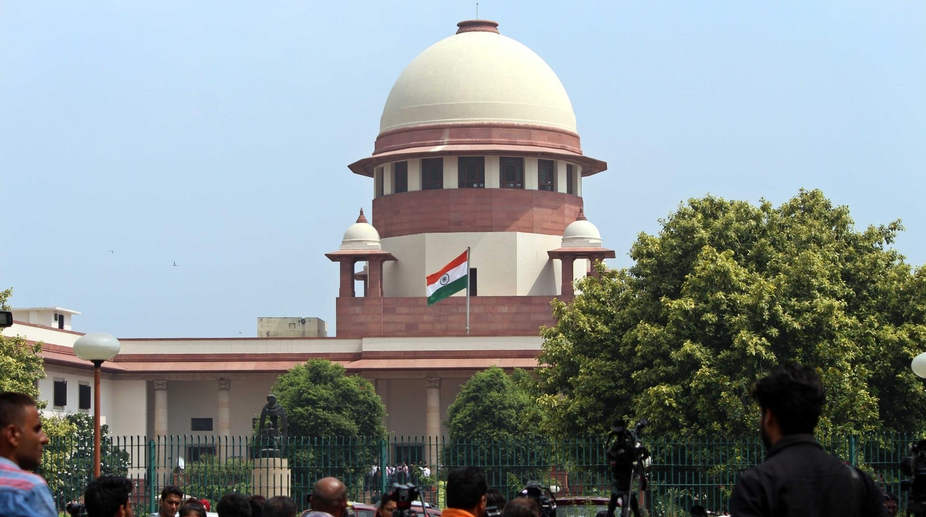
Attack on adult man, woman by khap panchayat ‘absolutely illegal’: SC

SNS | New Delhi |

The Supreme Court on Tuesday termed any attack by ‘khap panchayat’, individual or association against adult and and female opting for inter-caste marriage.

The apex court said if an adult man and woman marry, no khap, panchayat, individual or society can question them.

A bench of Chief Justice Dipak Misra and Justices A M Khanwilkar and D Y Chandrachud asked the Centre to give its reponse on suggestions earlier given by amicus curiae (friend of the court) Raju Ramachandran on ways to prevent harassment and killing of young couples in the name of family honour for marrying inter-caste or intra-clan (gotra).

“Whenever there is any kind of collective attack on a boy or girl who are adult, it is absolutely illegal,” the bench said and listed the matter for February 5 for further hearing.

The apex court had earlier sought suggestions from an NGO ‘Shakti Vahini’, amicus curiae and ‘Khap Panchayats’ on the issue.

Khaps are caste or community organisations in villages which at times act as quasi-judicial bodies and pronounce harsh punishments based on regressive and age-old customs and traditions.

The NGO had moved the top court in 2010 seeking directions to the central and state governments to prevent and control honour crimes by taking a number of measures.

Earlier, the apex court had invited ‘khap panchayats’ to hear their views before issuing any order to stop them from harassing and killing couples and women in the name of honour.

The Centre had pleaded with the apex court to put in place a mechanism to monitor crimes against women by khap panchayats, as the police was not able to protect women facing ordeal at their hands.

(With agency inputs)

Truecaller for Android gets contacts, call history, block list backup and restore option

SNS |

Popular communication app Truecaller on Monday launched “Truecaller Backup” feature for Android devices which allows users to backup and restore their contacts, call history, block list and settings to Google Drive.

“Truecaller Backup has been one of the most requested features by its users and will simplify a user’s transition to a new phone or SIM card by securely backing-up their contacts and settings and stored on your Google Drive,” the company said in a statement.

The backup file will only be available for Google Drive users to start with but the feature will be expanded to other backup storage in future. Users can also customise the frequency of backup between daily, weekly, monthly and on demand.

The upgrade enables the recovery of any lost data from Google Drive which the app can restore to its last saved state.

Another feature named “Truecaller Contacts” now lets a user even search for contacts whose details they haven’t saved but have previously communicated with. The Truecaller Contacts view contains all the contacts a user has sent or liaised with on call or text. This makes it easier for Truecaller users to recall and communicate with temporary contacts without saving them in their phonebook.

(Written with inputs from IANS)

Germany to add China’s yuan to currency reserves

AFP | Beijing |

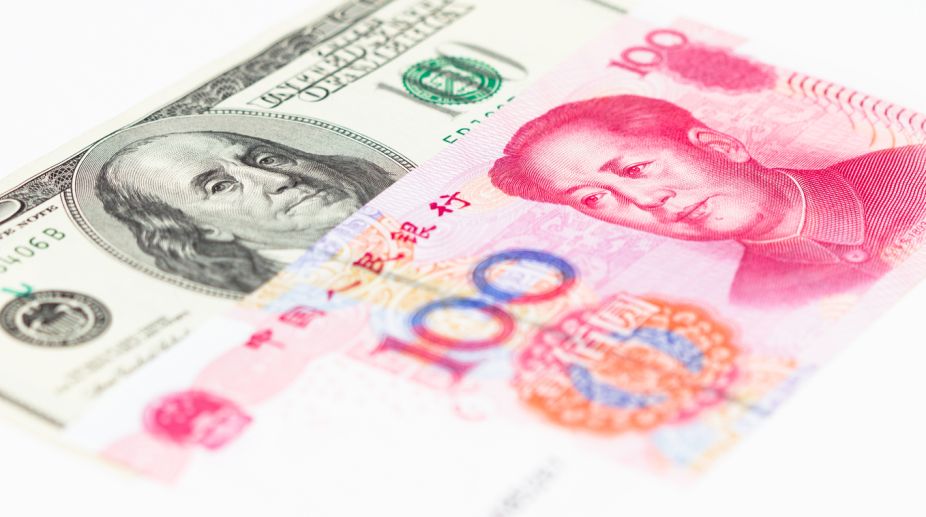
Germany’s central bank has said it will include China’s yuan in its reserves, giving another boost to Beijing’s drive to internationalise the currency and helping send the unit to two year highs.

The Bundesbank said its board had decided in July to invest in the renminbi, as it is also known, to take account of its growing importance globally, though it did not say when it would begin to include it or how much it would purchase.

“The decision to accept the renminbi is part of a long- term diversification strategy and reflects the growing role of the Chinese currency in the world financial system,” Bundesbank board member Joachim Wuermeling told AFP yesterday.

The German central bank regularly reviews the composition of its currency reserves “by weighing risks and benefits”, Wuermeling said.

“In addition to dollars and yen, (the bank) has invested in Australian dollars since 2013 and seeks to invest in other currencies.”

The move comes after the European Central Bank in June converted 500 million euros’ worth of its dollar reserves into yuan.

China was Germany’s top trade partner in 2016, ranking first in the European country’s imports and fourth as an export destination.

The Bundesbank’s currency reserves totalled some 170 billion euros (USD 210 billion) in November.

The yuan has gained increasing global clout in recent years and in September 2016 it joined the dollar, pound, yen and euro in the IMF’s elite “special drawing rights” reserve currency basket.

It strengthened to 6.4138 against the dollar yesterday, its highest level since December 2015, according to China’s Foreign Exchange Trade System, but weakened slightly to 6.4319 today.

The unit has rallied from lows close to 7.0 against the greenback seen at the turn of the year, with the dollar also coming under pressure from most other currencies.

China’s central bank only allows the tightly controlled yuan to rise or fall two percent on either side of a daily reference rate to prevent volatility but it takes into account market pressures when making its decision.

But the latest rise could lead officials to intervene, analysts say, to prevent the currency becoming too expensive.

Ding Shuang, chief economist for Greater China and North Asia at Standard Chartered Plc in Hong Kong, said: “Policy reactions may include outright interventions right before close, or a relaxation of outflow control measures to release the yuan appreciation pressure.

“The government will likely gradually expand the range each year, paving the way for a lightly managed float in two to three years.”

The yuan’s weakness against the dollar has been a sensitive issue with the United States, with President Donald Trump in the past hitting out at what he calls unfair trade practices by China aimed at giving their exporters an advantage over US firms.

VHP president Pravin Togadia’s health stable: Doctor

PTI | Ahmedabad |

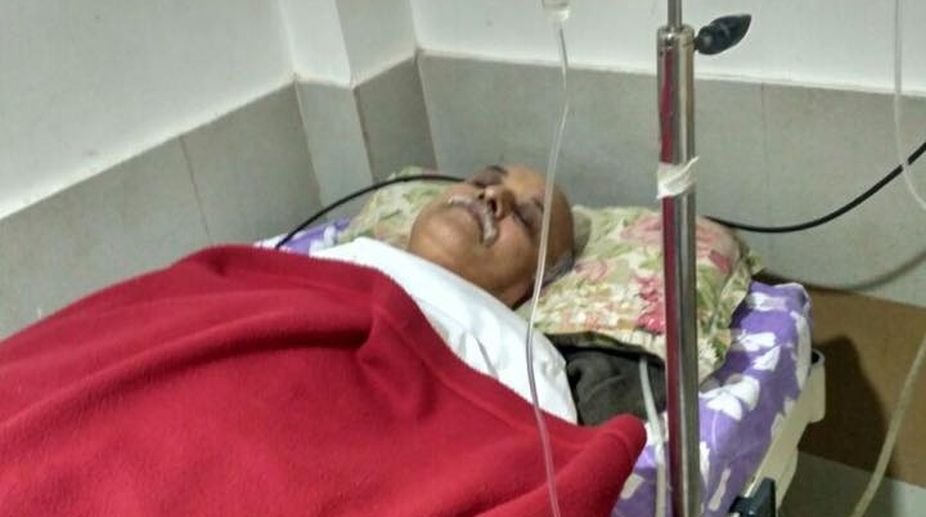
The condition of VHP international working president Pravin Togadia was stable, a day after he was found in an unconscious state at a park in the city, a doctor attending him said on Tuesday.

Senior officials of the Crime Branch went to the hospital this morning where Togadia is admitted to inquire about the incident.

The VHP leader, a Z-plus category protectee, went “missing” on Monday morning after stepping out of the VHP headquarters in Paldi area of the city when a contingent of Rajasthan Police came to arrest him in an old case.

According to a statement issued on Monday by the VHP in Delhi, Togadia (62), who suffered from low blood sugar levels, was found in an unconscious state in Shahibaug area and was taken to Chandramani Hospital located in the same area.

As the word spread, hundreds of VHP workers rushed to the hospital last night.

Dr Rupkumar Agrawal at the hospital said that his health was stable.

“Togadia was brought to the hospital by someone in 108 ambulance service. He was in an unconscious state,” Agrawal had said last night.

Patidar Anamat Andolan Samiti (PAAS) leader Dinesh Bambhaniya, who met the VHP leader this morning, also said that he was doing fine.

Ahmedabad’s Joint Commissioner of Police (crime) J K Bhatt also visited Togadia at the hospital.

The VHP had earlier claimed that Togadia was detained by Rajasthan Police in connection with the case, but the latter denied this.

The mystery over Togadia’s disappearance on Monday had deepened, with a senior police officer maintaining that neither the local Sola police nor Rajasthan Police had arrested him.

Sola police station officials said a team of Rajasthan Police visited them on Monday to execute an arrest warrant against Togadia under Section 188 (disobedience to order duly promulgated by public servant) of the Indian Penal Code (IPC), but could not find him at his residence.

According to a senior Crime Branch officer, Togadia, a resident of Thaltej area in the city, boarded an auto-rickshaw from the VHP headquarters in Paldi area on Monday morning and was untraceable since then.

India vs South Africa, 2nd Test: Game is still in balance, says Jasprit Bumrah

He said the main focus was to create pressure on the hosts’ batsmen.

IANS |

India pacer Jasprit Bumrah on Monday said the game is still in balance and his team will look to create pressure on the fourth day of the second Test match against South Africa.

He said the main focus was to create pressure on the hosts’ batsmen.

“The game is still in balance. We will look to create pressure tomorrow and pick up some early wickets,” Bumrah told reporters here.

“We wanted to keep things simple and build pressure as a unit. We wanted to build pressure from both ends, thinking if we dry up their runs they will have to make some opportunities.

“So we were just focusing on creating pressure. That was helping us and that was our basic game, he added.

South Africa reached 90/2 in their second innings after bowling out India in their first outing for 307 runs on the third day.

A.B. De Villiers and Dean Elgar put together an unbeaten partnership of 87 before bad light and rain disrupted majority of the post-tea session.

On the rain and early stoppage of the play, Bumrah said: “We were carrying a good momentum and we wanted to carry on. It’s okay, we never get too disappointed because there is still lot of play is left in the match.”

“We don’t get too disheartened that this didn’t happen. We wanted to carry on but the things didn’t work out so its okay,” he added.

Bumrah also praised de Villiers, who slammed an unbeaten half-century and put the hosts to swell their overall lead.

“It is always very challenging and AB is a world class batsman, every one knows that. He has proved that over the years and he has done well everywhere.

“He is a great player and to do well against him always gives me confidence. I look at it as an opportunity and learn from it,” said the Indian pacer.

Centre to use satellite data, drone images to settle insurance claims for crop loss

Vijay Thakur | New Delhi |

In order to get timely and accurate data of crop loss for early payment of insurance claims to the farmers, the Union Government is planning to use smart technologies to settle crop loss claims under the crop insurance programme and maintain a satellite data through remote sensing technology for dispute discrepancy resolution.

Presently general claims under the Pradhan Mantri Fasal Bima Yojana (PMFBY) are settled on the basis of yield data arrived from the crop cutting experiments (CCEs). For the localised loss of hailstorm, landslide inundation and other post-harvest, crop losses are being calculated on individual surveys.

However, the total number of manual CCEs is still insufficient as a result of which, there is an inordinate delay in claim processing and settlement. As a result, the government has planned real-time collection and transmission of yield date through a smartphone, CCE Agri APP for the Kharif 2017 season, to speed up the settlement of crop insurance cases.

Besides, Government would also start using Remote Sensing Technology (RST) including satellite data, and drones based images especially for CCE planning and risk mapping of districts for dispute and area discrepancy resolution. It would further ensure rationalization of actuarial premium rates, auto calculation of claims on the basis of real-time yield data and timely settlement of claims of farmers, said a senior officer of the Agriculture Ministry.

The government has already reduced the insurance unit area to village and panchayat level for major crops and asked state government to conduct at least 4 CCEs per crop at village panchayat level, 10 CCEs at revenue circle level, 16 at the Block level and 24 at District level. “But still it is a time-consuming process as there was only a small window available for CCEs, which was leading to delay in settlement of cases,” the officer said. The smart technologies would resolve and expedite these issues to a great extent, he added.


5,946 SPOs appointed in J-K in 2017: JK govt

PTI | Jammu |

The Jammu and Kashmir government on Tuesday said 5,946 special police officers have been appointed in the state in 2017.

However, the engagement of SPOs is made district-wise and unit-wise basis in the state.

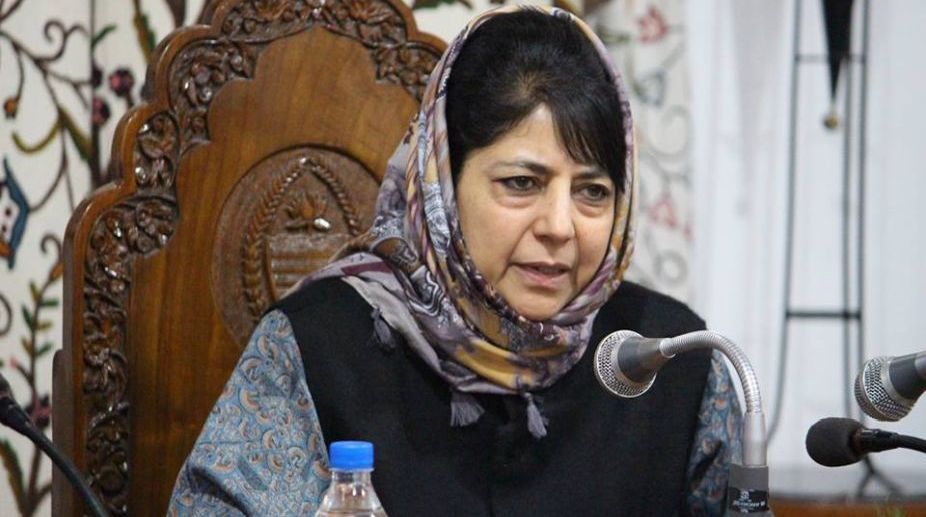
In a written reply to the question of member Krishen Lal in the Assembly, Chief Minister Mehbooba Mufti said 5,946 people have been engaged as SPOs during the year 2017.

Of these, the highest number of 1,017 SPOs were appointed in Kupwara district, followed by 604 in Srinagar, 571 in Budgam, 397 in Baramulla, 362 in Jammu and 291 in Bandipora, she said.

ALSO READ: Mehbooba in Delhi to meet PM over J&K’s special status

ALSO READ: Kashmiri militants killed by Indian forces are ‘martyrs’, says PDP MLA

ALSO READ: Militant killed in J&K operation

ALSO READ: Panun Kashmir demands scrapping of special status of J&K

ALSO READ: Special status to J-K: SC seeks Centre’s response

GNFC shuts down Dahej plant indefinitely post gas leak

PTI | New Delhi |

Gujarat Narmada Valley Fertilizers & Chemicals Ltd (GNFC) on Tuesday said it has shut down its plant at Dahej indefinitely post a gas leak incident.

“In the morning on January 15, 2018, there has been a sudden leakage at TDI-II plant, Dahej, which called for plant shutdown at Dahej (Gujarat) … However, as a matter of abundant precaution, management has decided to close the plant indefinitely,” GNFC said in a regulatory filing.

The company clarified that neither there was any property damage nor any loss of life.

It said the plant will be closed till the “root cause is thoroughly analysed, reviewed and necessary further safety measures to be taken are fully evaluated in addition to current safety precautions”.

GNFC said, “this decision to close TDI-II Plant indefinitely is taken till the process of necessary preparations, putting in place further checks and balances and thorough evaluation is over”.

In November 2016 too, the facility was shut down after a mechanical failure in a chemical reactor caused leakage of poisonous phosgene gas.

The company restarted commercial operation in February last year, more than three months after being shut due to the gas leak. Six people had died in the incident.

The state PSU had conducted a safety audit by an international company before restarting it.

The safety/hazard operability as well as asset stability study was done by Lloyd, a UK-based company, under the supervision of experts from several countries…

TDI is mainly used in the manufacturing of flexible polyurethane foam, furniture cushion, industrial gaskets, protective pads for sports & medical use and in automobiles – seat furniture, lining and sun visors.

Shares of GNFC were trading 4.73 per cent lower at Rs 515 on BSE.

Oranges: A way to healthy and radiant skin

Discover the lost sheen of your skin embracing this citrus fruit.
Oranges are good to eat and worthy to feel!

Deepa Gupta | New Delhi |

Has your skin lost its luster? Add a natural glow to it not by lathering too many cosmetics but by way of natural food ‘orange’.

Your skin needs a boost from within to look fresh and glowing. Since oranges are acidic in nature, they help your skin to feel pampered in all possible ways.

Here are 10 reasons why oranges are actually good to enhance your natural beauty.

Deep skin cleanser: The citric acid in oranges exfoliates the skin admirably and removes dead skin cells cleansing the pores from deep inside. It improves the skin texture and color.


Brings back luster: Freeze fresh orange juice in ice cubes tray. Rub the frozen orange ice-cubes on your face to brighten the dull skin.

Anti-aging: Eating orange daily increases the production of collagen keeping the skin firm and hydrated. It wards off aging and wrinkles.

Shrinking the open pores: Apply the orange juice on your face. Leave for five minutes and then rinse off. Repeat daily for a month. You will see your enlarged pores getting closed.

Toning and refreshing the skin: Rub half cut orange on your skin and let it stay for five minutes and then wash off. Your skin will get toned with bloom.

30 minutes facial exercise daily can make you look younger

Exfoliate your skin: Being rich in citric acid and fruit acids, orange juice dries away acne. Apply its grated peel paste on your acne and scars to reduce them and their marks as well.

Instant glow: Scrub orange peel powder on your face and get an instant glow.

Detoxification of body: Eat an orange daily to flush away toxins from the body. It combats free radicals to make your skin radiant and fresher.

Natural bleaching agent: Mix orange peel powder with wholesome milk or curd. Make a thick paste and apply on face. Leave it for half an hour and then rinse off. Your skin will naturally get bleached.


An effective natural hair conditioner: Mix a well half cup of orange juice, half cup of water and two teaspoons of organic honey. Apply this paste to shampooed hair. Let it rest for 10 minutes, then wash off. Your hair will shine reflecting health with beauty.


Oranges are usually a staple of the Indian diet. You can eat them raw as well or apply its pulp, juice or peel on your skin to enjoy the beauty with no side-effect.

India’s forgotten roots in Southeast Asia

Sahana Singh |

Twenty years ago, when I moved from India to Singapore with my husband, I found myself marvelling at the many reminders of home after the initial strangeness of being in a foreign city settled down.

These reminders reveal themselves like threads woven through the fabric of daily life – my neighbour lighting incense before an altar, the new year timed to the lunar calendar, even the concern for departed atmans (souls) as echoed in the observance of the Hungry Ghost Festival.

To be sure, similar beliefs and practices can arise across cultures. But it was when I visited Malaysia, Indonesia, Thailand, Cambodia, Laos, Myanmar and Vietnam that it became increasingly evident to me that there was a Greater India that most Indians were unaware of. The batik designs worn by stewardesses aboard Singapore Airlines bore an unmistakable Indian stamp. The Buddhist religion was, of course, the most obvious Indian export.

There were other deities like Ganesha in Thailand, which were clearly of Hindu origin. Of course, Buddhism was itself an artificially separated religion; its concepts flew seamlessly from the earlier streams of thought enshrined in the Vedas.

But the biggest Indic influence I saw was in the diffusion of Sanskrit into the languages of the region. Bahasa, Bumiputera, Samudra, rasa, Jaya and Raja were just a few of many Malay words that were rooted in

Sanskrit. And yet, to my surprise, the museums I visited in Malaysia were more focused on European colonial powers, which became significant only during the last 400 years.

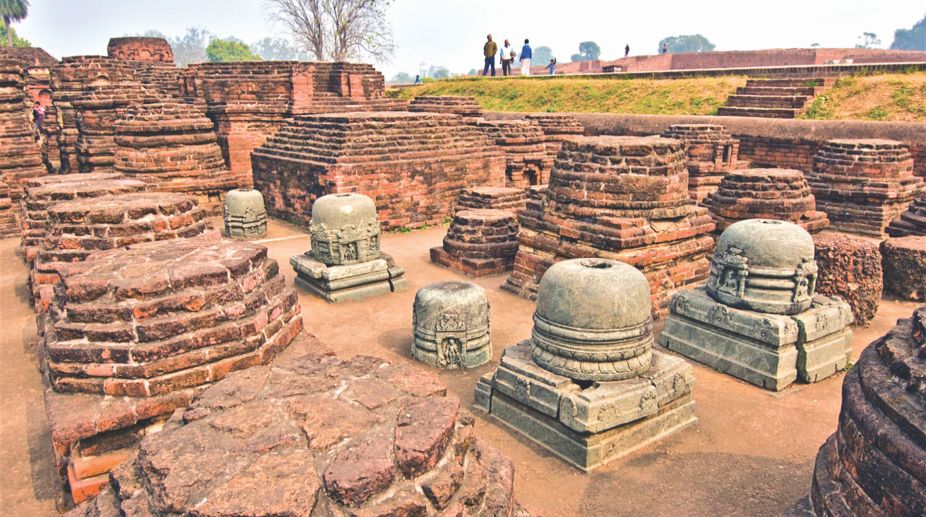
As I began researching for my book on the educational heritage of ancient India, I discovered that Indian knowledge had far-reaching impact. Universities were scattered over the entire land of India. There was, of course, the famous Nalanda in the fifth century AD and Takshashila a thousand years earlier, but apart from these, there were scores of forest universities, temple universities and campuses of learned men and women dating back more than 5,000 years.A sizeable number of foreign students from China, Korea, Japan, South-east Asia and West Asia flocked to India. Famous Chinese students (later professors) such as Fa-Hien (fifth century AD), Xuanzhang and Yijing (both from seventh century AD) have left behind detailed accounts of the educational ecosystem of India.

The subjects taught included logic, sciences, mathematics, grammar, debate, astronomy, medicine and more, which were mostly taught in Sanskrit. The colleges were funded by grants from kings and queens. Villagers contributed food grains, clothes and other necessities to support students and professors. There was a well-oiled machinery to facilitate the culture of learning.

Foreign students made difficult journeys on foot, pack animals and by ship, often risking their lives, to imbibe knowledge from the professors of India. It was not easy to gain admission into the top universities such as Nalanda, which had stringent entrance examinations that eliminated 80 per cent of applicants. This is why villages located around Nalanda had schools that trained students to crack the examinations.

During the course of their studies, foreign students such as Xuanzang copied hundreds of texts and carried back as many manuscripts as they could manage to their home countries. It was considered a sacred duty by these Chinese pilgrim-scholars to take back holy texts and their commentaries from India.

Interestingly, a large number of Indian scholars also travelled to China starting from the first century AD, upon being invited by kings from various dynasties. Hundreds of Sanskrit works were painstakingly translated into Chinese by Indian scholars in collaboration with Chinese intellectuals. It is on record that some of the Indian scholars were persuaded by Chinese kings to marry their daughters in order to produce gifted progeny. Several Indian mathematicians and astronomers from the best universities held high positions in China’s scientific establishments. This is how Indian numerals were introduced into China as also the “navagraha” calendar and navigational principles.

Indic ideas flowed in all directions and moulded customs and traditions. Since the South-east Asian countries were just a quick sail away from the major ports of India, it was commonplace for Indian traders, artisans and scholars to frequent these regions from ancient times (possibly the second century BC). The similarities in temples, deities, textiles, medicines and belief systems that we see today are not by coincidence.

It was India which set the trends in architecture, textiles, medical systems, consumer goods and navigational methods. It is not surprising that India was then the biggest supplier of economic goods (along with Ming-ruled China) to the world. This is not to imply that the Indian civilisation comprised people of superior intellect. Put simply, the antiquity of the Indian civilisation extends to thousands of years, during which people were able to get over the basic problems of survival earlier, and thereby focus their time and energies on unravelling the complex mysteries of the universe as well as in expanding trade.

It was the sea route to India that the colonial powers of Portugal, Spain, France and England set out to explore in order to gain direct access to the physical and intellectual wealth of India. It is why the Native Americans were exultantly called Indians and why in Lisbon, the place from where Portuguese ships set out towards Asia was called Avenidas de India (Avenue to India). The target was India, while the spice-endowed lands of South-east Asia turned out to be bonus offerings.

The name Singapura was not merely the result of a lion-like animal being spotted by an Indonesian prince. The island was a part of Sanskritic kingdoms centred in Indonesia, which were highly civilised and cultured. The powerful Srivijayan Empire and the Majapahit Empire cannot be dismissed as footnotes of history.

The marvels of engineering, logistics and management that we witness in temples of Angkor Wat and Borobodur were built by Indic dynasties that stand as reminders of the glorious civilisation that emanated from India.

Given the richness and extent of Indic influence, it is surprising that India’s contribution to building the edifice of Asean culture is not acknowledged to the extent it should be. The ties with European colonising powers are remembered better than the deep-rooted influence of a non-colonising India.


(The writer is an author, environmentalist and commentator who specialises in Indian history, water issues and current affairs. She has recently published a book, The Educational Heritage Of Ancient India – How An Ecosystem Of Learning Was Laid To Waste.)

(The Straits Times/ANN)

India vs South Africa: Dinesh Karthik to replace Wriddhiman Saha for third Test

The medical team of BCCI will continue to monitor his progress. In the second Test match Parthiv Patel replaced Saha.

SNS |

The All-India Senior Selection Committee has named Tamil Nadu wicket-keeper-batsman Dinesh Karthik as the replacement for Wriddhiman Saha for the third and final Test against South Africa. Karthik will join the Indian squad in South Africa before the third Test.


A mail from the Board of Control for Cricket in India (BCCI) read that, after the opening Test, during practice session, on Tuesday, Saha suffered an upper left hamstring tendon injury during training session.

However, the medical team of BCCI will continue to monitor his progress. In the second Test match Parthiv Patel replaced Saha.

Even though, Saha was not extra ordinary with his bat in the first Test yet he was outstanding with his gloves in Newlands Cape Town.

In the opening match against South Africa, Saha had broken former Indian captain Mahendra Singh Dhoni’s record for most number of catches by an Indian in a match.

Videos

MORE video STORIES

;

Videos

MORE video STORIES

;

‘Baby’ Moshe arrives in India with nanny who rescued him during 26/11

Shimon Rosenberg said that Mumbai is a lot safer now.

SNS | New Delhi |

Moshe Holtzberg, the baby who survived the 26/11 Mumbai terrorist attack, arrived in India with his grandfather Holtzberg Nachman.

“Shalom…bahut khushi (I’m very happy),” said a shy Moshe, who arrived at the Mumbai airport shortly after 8 am.

He will be meeting Israeli Prime Minister Benjamin Netanyahu while the latter is on his six-day visit to the country. Moshe will be in attendance at Chabad House on 18 January when Netanyahu opens a memorial for his parents and the other 164 victims of the terrorist attack.

Moshe lost his parents, Rivka and Gavriel Holtzberg, when Lashkar-e-Taiba terrorists attacked Chabad House located in Mumbai’s Colaba area.

The boy, who is now 11, was rescued by his Indian nanny Sandra Samuel.

Samuel, who was granted honorary Israeli citizenship for her bravery, is accompanying Moshe to India.

This is the first time since the attack that Moshe has come to India.

“I feel very happy to come to India, to Nariman House where I am going to pray. I will say hi to the people of India. I feel very good in this country,” Rosenberg said.

Holtzberg Nachman said that Mumbai is a lot safer now.

Prime Minister Narendra Modi had met Moshe on the former’s visit to Israel in July 2017. When Moshe expressed his desire to visit India, Modi immediately told him that he can visit anytime.

Nawaz Sharif appears before accountability court for 13th time

IANS | Islamabad |

A hearing of corruption references against former Pakistani Prime Minister Nawaz Sharif, his daughter and son-in-law, is underway in an accountability court in Islamabad, media reports said.

This is the 13th time the ousted prime minister is appearing before an accountability court.

Nawaz flew in with daughter Maryam Nawaz and her husband retired Captain Safdar from Lahore on Tuesday morning and made his way to court after a brief stay at Punjab House, Dawn.com reported on Tuesday.

A heavy contingent of police was seen stationed outside the court on their arrival.

Three witnesses are expected to record their statements in front of Judge Mohammad Bashir, who will hear the references.

A five-member bench of Pakistan’s Supreme Court on July 28 had directed National Accountability Bureau (NAB) to file references against Nawaz and his children in six weeks in the accountability court and directed the trial court to decide the references within six months.

The Supreme Court also assigned Justice Ijazul Ahsan a supervisory role to monitor the progress of the accountability court proceedings.

The former premier and his sons, Hassan and Hussain, have been named in all three NAB references, while Maryam and husband Safdar have been named only in the Avenfield reference.

Eight bodies found as ‘North Korean’ boat washes up in Japan

AFP | Tokyo |

Eight bodies have been recovered from a wrecked boat that washed ashore in central Japan, authorities said on Tuesday, suspecting the vessel is the latest in a series of North Korean “ghost ships.”

Coastguard rescuers found the corpses of seven men inside the wreckage of the boat that washed up in Kanazawa, central Japan, last week, senior police official Hiroshi Abe told AFP.

The badly decomposed remains of another man were discovered around 15 metres (50 feet) from the boat, added Abe.

“It is difficult to identify the bodies as they had begun to decompose,” he said, noting that rough seas had prevented officials from investigating the boat thoroughly.

“We spotted a tobacco box which carries some Korean letters, but we can’t confirm the boat came from North Korea,” he said.

However, coastguard officials believe it is the latest North Korean fishing vessel to wash up on the coast, following a record number of such cases last year.

Television footage showed the wreckage of the flat- bottomed vessel capsized on the beach.