Logo

“A dark novel: both moving and harrowing”

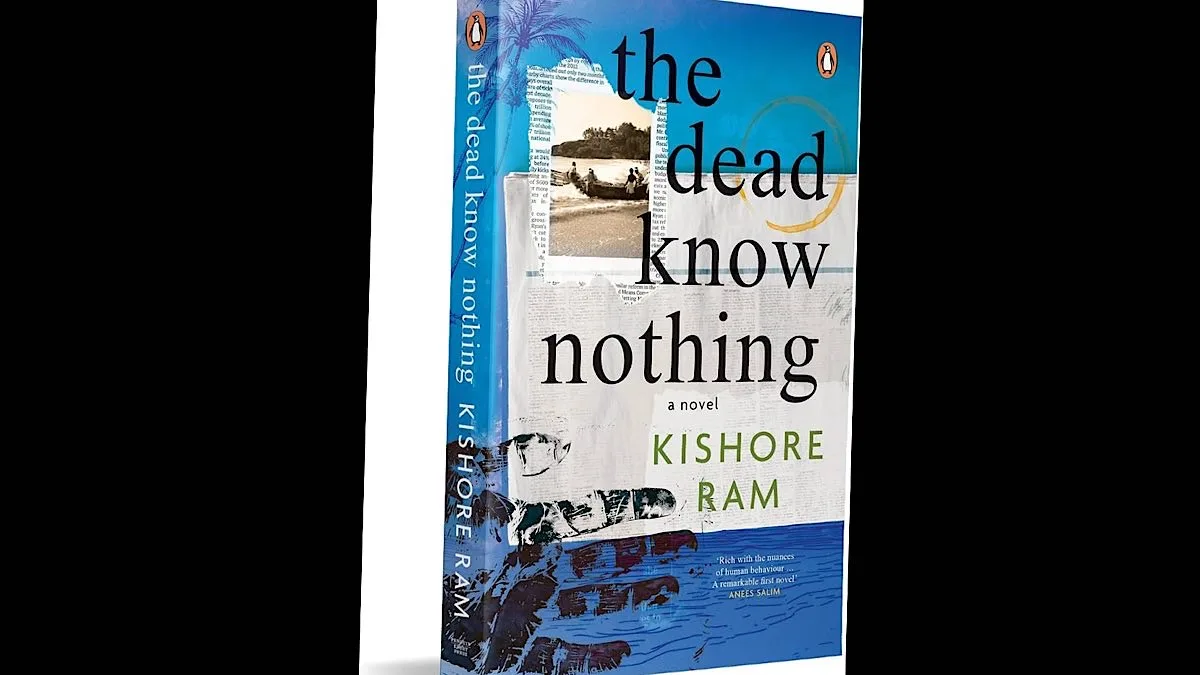
The tautologous title and two and half pages of acknowledgements serve to advertise the fact that this is a first novel by the author, something underlined by the redundant words ‘a novel’ on the front cover following the title.

Krishnan Srinivasan | Kolkata |

The tautologous title and two and half pages of acknowledgements serve to advertise the fact that this is a first novel by the author, something underlined by the redundant words ‘a novel’ on the front cover following the title. And yet this first-time product by Ram ‘The Dead Know Nothing’ is well worth the time spent in reading it, being a multi-layered and evocative work that will stimulate considerable thought while and after reading.

What is it with our Malayali brethren and Indian literature and innovation these days? Jeet Thayil, Arundhati Roy, Shashi Tharoor and Shinie Antony fill the pages with luminous prose and two actresses from Kerala starred in ‘All We Imagine as Light’ that won the Grand Prix at Cannes last year. Kishore Ram, also a Malayali and writing about Kerala, has a good future as an author of fiction.

The main character in the plot of this dense and sometimes challenging novel is former Christian seminarian Thankachan and the whole web of personal interactions and intrigue swirls around him. He is a Candide-like figure in the sense that he suffers great privations throughout the story, though his environment remains largely rooted to one Kerala island and is no world traveler like Voltaire’s anti-hero. A failure in examinations, sometimes through no fault of his own, he is overshadowed by Mathappan his elder brother with a dubious reputation, and he is cruelly used by nearly everybody he comes across. He is obliged to become a fisherman like his father and brother for want of any other career option, and becomes involved willy nilly in the murders and disappearances in the adjacent seas.

Ram introduces various salacious sections such as masturbation, homosexual eroticism, voyeurism and prostitution, though some such episodes appear to be introduced as artifices, seemingly as if the author felt it was necessary to add periodic spice to the text by picturing a degenerate scenario for his characters. These add little to the main narrative and often detract from it. In addition, the portrayal of extreme police brutality and their propensity to inflict torture and beatings on every man and woman who is unfortunate enough to fall into their ken, has more than an element of gratuitousness about it.

More serious still for this first novel, there is a multiplicity of characters, mainly male, in the narrative, which is helpful to set the scene but which can be somewhat overwhelming for any reader seeking to plot the complicated story line with attention. Another issue is the use of romanised text for the Malayali language. There is an age-old unresolved debate as to whether Indian words should be transcribed phonetically or whether texts in the English language should be rendered as translations into English. Ram’s book can be seen as a cautionary tale as far as the use of the vernacular is concerned.

One might have thought that the many luminaries that Ram has acknowledged might have advised him otherwise about these pitfalls, or perhaps he did not solicit their views. There are few women of any consequence in this novel. There is Thankachan’s mother, a formidable figure as a fish seller and matriarch but in the novel’s action she is still on the periphery. There is also Bushra, a Muslim woman who appears towards the end of the book as a putative widow whom Thankachan falls for but the marriage is thwarted (yet another tragedy for Thankachan) by the unexpected appearance of her husband who was presumed dead. One might critically say that the main females in this book are either harridans or sex objects. Thankachan’s two sisters hardly appear in the story.

All the above is not to say Ram’s book lacks merit. It definitely does not; on the contrary, despite the pervasive gloom, the setting is skillfully narrated and with considerable expertise in topography and fishing. The Hindu-Christian-Muslim underlying tension is well managed without being brought to the fore; similarly with the Tamil-Malayali persons, the main male characters whether appealing or otherwise, are deftly traced, the relevance of the Christian ethic and the frailties of the clergy are perfectly described without any condescension or compromise. Especially moving and realistic is the anxiety and helplessness of the fisherfolk when they come to know that they are being uprooted as illegal occupiers from their ancestral island as a consequence of not having legal title – which is the last thing they would have thought of or even managed to obtain – and their plight is due to the machinations of money men, real estate developers and crooked officialdom.

This is a dark novel, hardly light reading either in style or content. The picture Ram paints is both moving and harrowing and there seems to be little happiness in store or prospects for a better life for Thankachan or his associates in this portrayal of island life. This may indeed reflect the sad reality of the fisherfolk that Ram has drawn upon. Candide was driven in the end to reject the Panglossian view that “All’s for the best in the best of all possible worlds” — a phrase from Voltaire’s Candide used to contest the optimistic philosophy of Gottfried Leibniz, who argued that God must have created the perfect world, meaning all suffering is part of a grand plan. Ram does not permit his fictional Christian characters to reject Leibniz and draw the same conclusions as Candide, but they can be forgiven if they did so.

The Dead Know Nothing

By Kishore Ram

Ebury Press, Gurugram, 2025, pp 247, Rs 399/=

(The writer is a former foreign secretary)
PM Modi to lay foundation stone of major urea plant in Assam today

PM Modi will lay the foundation stone of a major new urea production facility at the Namrup Fertiliser Plant in Naharkatia, Assam, on Sunday.

IANS | New Delhi |

Prime Minister Narendra Modi will lay the foundation stone of a major new urea production facility at the Namrup Fertiliser Plant in Naharkatia, Assam, on Sunday, marking one of the most significant fertiliser infrastructure initiatives undertaken in the Northeast in recent decades.

The proposed fertiliser unit, with an estimated annual production capacity of 1.2 million metric tonnes of urea, is expected to play a crucial role in strengthening India’s agricultural supply chain while simultaneously giving a major boost to Assam’s industrial ecosystem.

The project is being positioned as a transformative step towards reducing dependence on fertiliser imports and ensuring timely availability of urea for farmers across the region.

According to the Assam government, construction of the new unit is expected to be completed within three years from the commencement of work. Once operational, the facility is likely to generate substantial direct and indirect employment opportunities and stimulate ancillary industries in and around the Namrup industrial belt.

Ahead of the Prime Minister’s visit, Chief Minister Himanta Biswa Sarma on Wednesday conducted a comprehensive review of preparations at the event venue and closely inspected the security arrangements being put in place for the high-profile programme.

The Chief Minister held detailed discussions with senior officials of the Assam Police, district administration, and departments responsible for logistics, protocol and event management to ensure a smooth execution of the Prime Minister’s schedule.

During his visit, Sarma also chaired a coordination meeting with top state government officials, including Chief Secretary Ravi Kota, stressing the need for seamless inter-departmental coordination in the run-up to the Prime Minister’s programme. Ministers Pijush Hazarika and Prashanta Phukan, along with Naharkatiya MLA Tarang Gogoi, accompanied the Chief Minister during the review.

As per the tentative schedule, Prime Minister Modi is expected to address a public meeting at the project site, during which he is likely to highlight the strategic importance of the fertiliser project and reiterate the Centre’s focus on accelerating industrial and agricultural development in the Northeast.

The Prime Minister arrived in Assam on Saturday afternoon, reaching Guwahati, he inaugurated the New Terminal Building of Lokapriya Gopinath Bordoloi International Airport, a landmark infrastructure project aimed at enhancing connectivity and passenger capacity in the region.

PM Modi’s visit underscores the Centre’s continued emphasis on infrastructure-led growth and balanced regional development, with Assam emerging as a key hub in India’s Act East and Northeast development strategy.

Fresh Food, Free of Fertilizer

Winter has finally descended upon Calcutta. Chilly dawns bathed in the soft, golden glow of the rising sun is inviting enough to drag ourselves out of warm blankets and head outdoors for a refreshing run or to the terrace for a stroll or at least to the balcony to sit and sip cups of steaming tea or coffee.

Dola Mitra | Kolkata |

Winter has finally descended upon Calcutta. Chilly dawns bathed in the soft, golden glow of the rising sun is inviting enough to drag ourselves out of warm blankets and head outdoors for a refreshing run or to the terrace for a stroll or at least to the balcony to sit and sip cups of steaming tea or coffee. For those of you who love to head to the bazaar to buy vegetables Bengali-style, with a “bajaarer bag” or “baajarer tholi” in hand and are delighted at the eye-soothing sight of rows and rows of openair stalls selling fresh, seasonal produce, here is some information if you didn’t already know it that is.

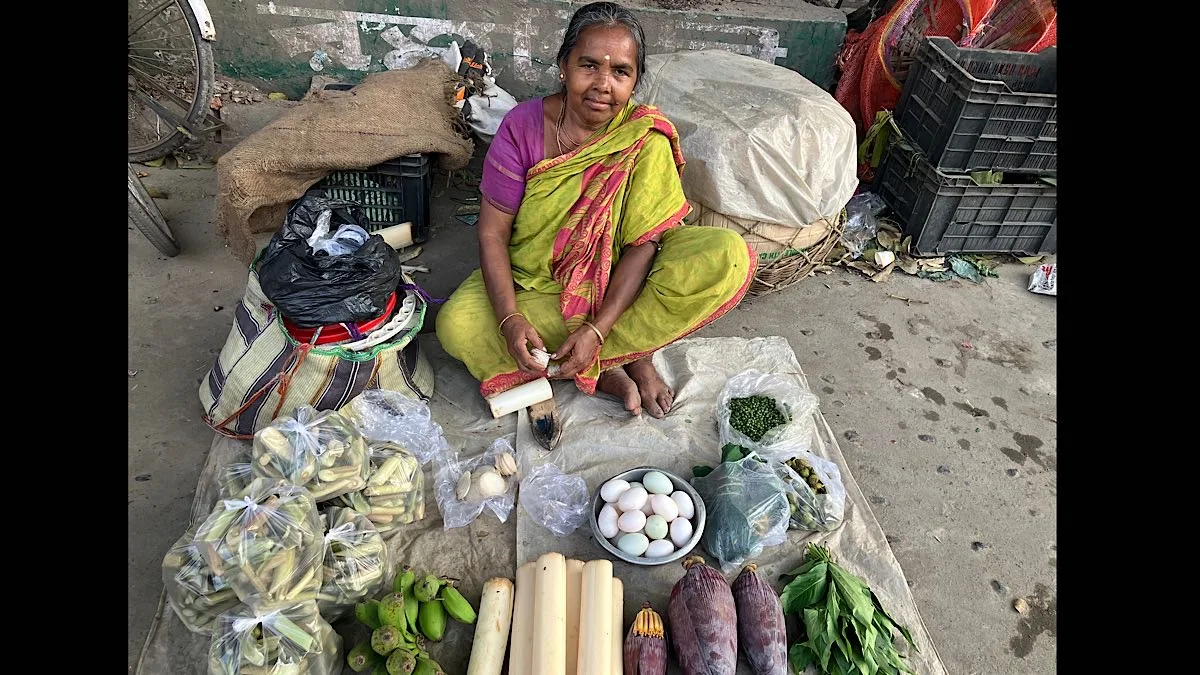
Not far from the city, there exists an organic bazaar which sells not just fertilizer-free vegetables but every other grocery item you can think of, all grown naturally without the use of pesticides or preservatives. From different daals (lentils); rice ranging from basmati to banskati to poultry (including eggs), dairy (including ghee, butter) and many kinds of condiments and spices….you name it and you are sure to find it.
Started two years and two months ago (it was inaugurated on October 17, 2023) it is situated in New Town. Yes, perhaps it is a little (or a lot) far for people who don’t live in the vicinity, but it is definitely worth a try, I think. The thought of fresh, fertilizer-free food sounds attractive enough for me to want to drag myself out of the comfort of settling for what’s close by.

Of course, there are those who would disagree. This includes members of my own dear family who don’t even want to take the trouble of stepping out to the corner store to buy provisions. They prefer the luxury of doing all shopping from home. In other words – yes you got it – order online. The trend has really caught on and a social divide has unwittingly crept up between the “online order-ers” and the “non-online order-ers”.

I, like my mother, am old-fashioned and like going out to the shops and stores for buying provisions which entails a certain degree scrutinizing the product I am going to purchase and therefore I am able to exercise a certain amount of control over what I buy. My sisters, especially my elder sister, on the other hand, are out and out online order-ers. As is my husband.

The typical “online orderer” loves to settle down comfortably on a chair, sofa or couch, log into their computers or phones, scroll down as a mindboggling variety of photoshopped photos of fruits and vegetable pop up at them. I have often seen smug, satisfied smiles, ever so faint, appear on the lips of online order-ers as they order. Yes, it is an addiction.
The thing is, the produce that gets eventually delivered (eventually, because what precedes it, is a lot of phoning back and forth that goes on between buyer and delivery boys and girls looking for the exact location to the house) never really looks quite like their computer or phone screen counterparts. The perfect pumpkins and for that matter the oranges, (so orange that they could give Vincent Van Gogh’s paintings of the fruit basket series a run for its palette) are never quite as delectably juicy on arrival as their promised versions online. The limes and lemons, on arrival seem a little smaller, less yellow or green than the promised pictures. Well, you get the picture (quite literally).
Anyway, the organic bazaar which is called “joibo haat” in Bengali (“haat” is the name for the charming moving markets of yore in the villages, where farmers would bring their produce, hawk and sell their fare during the day and wrap up by night.)

The “joibo haat” at New Town is open daily from 7 am to 7 pm. Started by the state government, the idea was to make fertilizer-free food accessible to the public while also making it easier for farmers to sell their produce. They come from far and wide (“From Kalimpong to Sunderban” says state Rajya Sabha member Dola Sen who is a coordinator). Their products are lab-tested for purity before being allowed out into the market.
Here is a little couplet I wrote:

At sunset, the winter light is pale gold,

“Do you have any potatoes left?” I ask the vendor.
“No, Didi….it is all sold”
The writer is Editor, Features, The Statesman

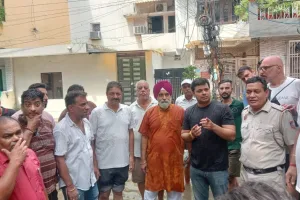
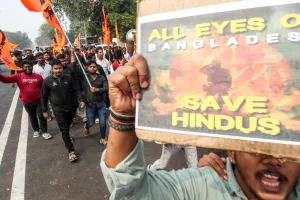
Bangladesh: 10 arrested over killing of Hindu youth Dipu Chandra Das in Mymensingh

At least 10 people have been arrested by RAB and police in connection with the murder of a Hindu youth in Mymensingh, Bangladesh.

Statesman News Service | New Delhi |

In connection with the brutal murder of Dipu Chandra Das, a 27-year-old Hindu youth, at least ten people have been arrested in Mymensingh, Bangladesh. The Rapid Action Battalion (RAB) apprehended seven suspects, while the police arrested three others, under coordinated operations at multiple locations.

Chief Adviser confirms arrests

Muhammad Yunus, the Chief Adviser of the Interim government of Bangladesh, confirmed the development in a post on X. The post read, “10 Arrested in Mymensingh Hindu Youth Beating Murder Case: Law enforcement agencies have arrested ten individuals in connection with the beating murder of Dipu Chandra Das (27), a Sanatan Hindu youth, in Baluka, Mymensingh.”

Details of the arrested

Those arrested by RAB include Md. Limon Sarkar (19), Md. Tarek Hossain (19), Md. Manik Mia (20), Ershad Ali (39), Nijum Uddin (20), Alomgir Hossain (38) and Md. Miraj Hossain Akon (46). The individuals arrested by the police include Md. Azmol Hasan Sagir (26), Md. Shahin Mia (19) and Md. Nazmul.

Dipu Chandra Das death

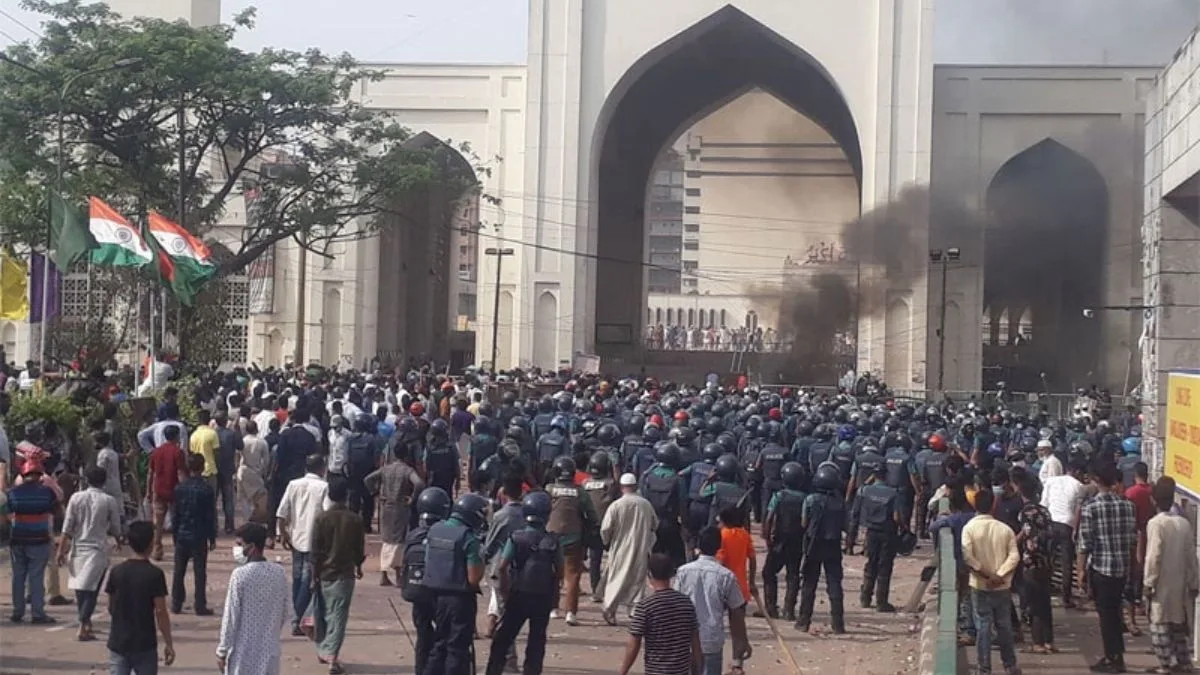
Reportedly, Dipu Chandra Das was attacked by a mob over allegations of blasphemy, and his body was set on fire. He later died from his injuries. The incident triggered widespread outrage and condemnation across the country, particularly among minority rights groups.

The Bangladesh Hindu Buddhist Christian Unity Council strongly condemned the killing of the Hindu man in Bhaluka, Mymensingh, in Bangladesh.

Incident amid broader political unrest

The killing of Dipu Chandra Das occurred during a period of heightened tension in Bangladesh following the death of student leader Sharif Osman Hadi. Hadi, the convenor of Inqilab Moncho and a parliamentary candidate for the February 2026 national elections, died on 18 December in Singapore while undergoing treatment for gunshot wounds sustained in an attack in Dhaka on 12 December.

The funeral prayer for Sharif Osman Hadi concluded in Bangladesh yesterday.

From Lal Salaam to Bharat Mata ki Jai

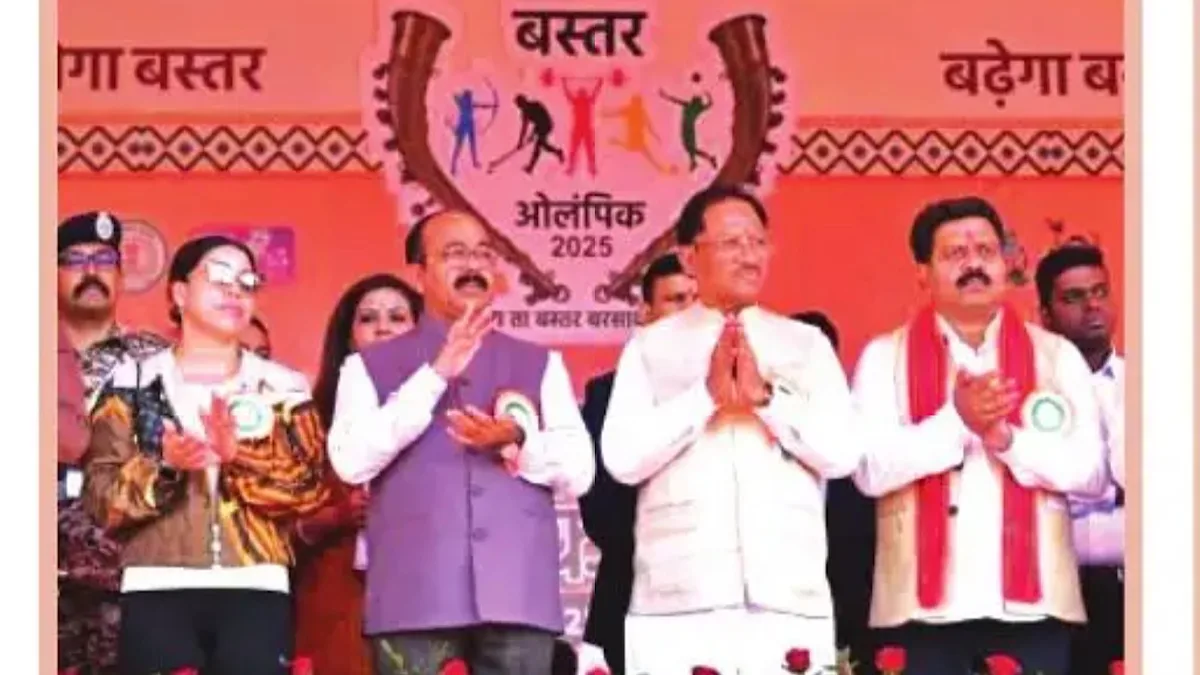
The Bastar Olympics emerged as a beacon of hope and unity in Jagdalpur, the heart of what was once India’s most notorious hotbed of Maoist violence.

Tuhin A. Sinha | New Delhi |

In the dense forests of Chhattisgarh’s Bastar region, where the air once carried the ominous chants of “Lal Salaam” amid gunfire and fear, a profound metamorphosis has taken place. Earlier this month, from December 11 to 13, 2025, the Bastar Olympics emerged as a beacon of hope and unity in Jagdalpur, the heart of what was once India’s most notorious hotbed of Maoist violence. This division-level mega event brought together seven teams from Bastar’s districts, along with a special contingent of surrendered Naxals, competing in traditional tribal sports like archery, javelin, and wrestling. Thousands gathered under the clear winter skies, not in dread of ambushes, but in celebration of athletic spirit and cultural heritage. The event, echoing with cheers and the rhythmic beats of tribal drums, symbolized a stark departure from the region’s blood-soaked past—a past riddled with extortion, kidnappings, and brutal encounters that claimed thousands of lives over decades.

Bastar, spanning seven districts and home to indigenous tribes like the Gond, Maria, and Halba, had long been the epicentre of Naxal insurgency. Maoists, drawing on grievances of exploitation and neglect, turned this mineral-rich land into a war zone, enforcing their red ideology through violence. Villages lived in perpetual terror, with schools bombed, roads mined, and development stalled. Yet, now, as athletes proudly waved the tricolour and chanted “Bharat Mata ki Jai,” it is evident that peace has reclaimed the narrative. This transformation didn’t happen by chance; it is the result of resolute leadership and strategic vision from Prime Minister Narendra Modi and Home Minister Amit Shah, who have vowed to eradicate Naxalism from India by March 31, 2026.

Prime Minister Modi’s determination to rid the nation of this Maoist scourge has been unwavering since he assumed office in 2014. Complementing PM Modi’s vision is Home Minister Amit Shah’s tactical acumen and iron will. HM Shah, often dubbed the architect of India’s internal security renaissance, has spearheaded a zero-tolerance policy against extremism. Since taking charge, he has overseen the deployment of additional Central Reserve Police Force (CRPF) battalions, equipped with advanced weaponry and training, to dominate the red corridors. HM Shah’s decisive actions include establishing forward operating bases in remote areas, cutting off Maoist supply lines, disrupting their financial networks and targeted seizures. At the Bastar Olympics’ closing ceremony on December 13, 2025, HM Shah delivered a stirring speech, likening Naxalism to a “poisonous snake” that must be crushed to safeguard innocent lives. He reiterated the 2026 deadline, declaring that no Indian should fall victim to this ideology post that date. His hands-on approach is evident in his frequent reviews of operations, where he pushes for inter-agency coordination between state police, paramilitary forces, and intelligence bureaus. Under his watch, the number of Naxal-affected districts has shrunk dramatically, from over 100 to fewer than 10, with Bastar serving as the flagship success story.

The duo’s political willpower is perhaps best illustrated by their response to major setbacks. In 2021, when Maoists ambushed security forces in Sukma, killing 22 jawans, PM Modi and HM Shah didn’t waver. Instead, they escalated operations, leading to the arrest of key leaders and the dismantling of urban Naxal networks. This resilience has inspired ground-level forces, boosting morale and effectiveness. Bastar’s turnaround exemplifies this synergy: once a no-go zone where even elections were boycotted, it now boasts voter turnouts exceeding 70%, with tribals actively participating in democratic processes. The inclusion of surrendered Naxals in the Olympics underscores the government’s rehabilitation focus, turning former rebels into symbols of redemption. PM Modi’s emphasis on “Atmanirbhar Bharat” has extended to these areas, promoting self-reliance through local initiatives, while HM Shah’s security blanket has ensured that development projects proceed unhindered.

Moving beyond security, the second pillar of Bastar’s revival is the Modi government’s aggressive developmental thrust, which promises a luminous future for its inhabitants. Schools, long shuttered by Naxal diktats that viewed education as a threat to their recruitment, have been reopened in droves. Over 265 new institutions now educate thousands of children, equipped with modern facilities, digital classrooms, and mid-day meals to combat malnutrition. Teachers, once fleeing the region, are returning under enhanced protection, fostering a generation free from indoctrination. This educational renaissance is breaking the vicious cycle of poverty and extremism, empowering youth with knowledge and skills for mainstream integration.

Economic opportunities are surging, transforming Bastar from a conflict economy to a hub of growth. The Bastar ‘Investor Connect’ initiative has attracted proposals worth Rs 52,000 crore, spanning agro-processing, mining, and eco-tourism. Local tribes are benefiting from value addition to their forest produce—like tamarind, mahua, and sal seeds—through cooperatives and processing units that ensure fair prices and employment. Mining operations, once halted by violence, are resuming responsibly, with revenues plowed back into community welfare. Tourism is booming, with the Bastar Pandum festival showcasing indigenous arts, crafts, and dances to global audiences, generating livelihoods for artisans and guides.

Infrastructure development is the backbone of this resurgence. Paved roads now connect remote villages, reducing isolation and enabling market access. Digital connectivity via BharatNet brings online education, e-governance, and telemedicine to doorsteps, bridging the urban-rural divide. Skill development centers, under schemes like Pradhan Mantri Kaushal Vikas Yojana, train locals in trades from hospitality to IT, preparing them for jobs in emerging industries. The Chhattisgarh government’s master plan for Bastar’s districts aligns seamlessly with the Centre’s vision, rolling out welfare schemes that provide housing, sanitation, and electricity to the most vulnerable.

As Naxalism recedes, Bastar is on the cusp of unprecedented prosperity. Amit Shah’s pledge to make it India’s most developed tribal region within five years is no rhetoric; it’s backed by actionable blueprints. Youth, once vulnerable to Maoist propaganda, now aspire to careers in sports, business, or civil services. Women-led self-help groups are driving micro-enterprises, fostering gender empowerment. The region’s biodiversity is being harnessed sustainably, with conservation projects that balance ecology and economy. The Bastar Olympics exemplifies the region’s journey from “Lal Salaam” to “Bharat Mata ki Jai”. It marks a decisive triumph for the locals of Bastar over adversity and fear, a triumph scripted by PM Modi and HM Shah’s indomitable will. It serves as a model for conflict resolution worldwide, proving that with security, development, and empathy, even the deepest scars can heal. As the sun sets over Bastar’s verdant hills, it rises on a future brimming with promise—a testament to India’s resilient spirit.

The writer is a national spokesperson of BJP and an acclaimed author.

Why aviation crisis caused a meltdown

Every few years, India gets a reminder of just how fragile its aviation ecosystem really is.

SHREY MADAAN | New Delhi |

Every few years, India gets a reminder of just how fragile its aviation ecosystem really is. This time, it took a week-long meltdown at IndiGo a prominent airline service, hundreds of cancellations, airports reduced to holding zones for luggage, and passengers stranded across the country, to expose a truth policymakers prefer to ignore: when a major chunk of the market is controlled by just two airlines, one company’s internal crisis becomes a national emergency. IndiGo’s shortage of pilots, triggered by the rollout of long-delayed fatigue-management rules, should have disrupted one airline. Instead, it paralysed India’s entire aviation network .

Fares shot up to Rs40,000-80,000, refunds lagged for days, and alternative carriers simply didn’t have the capacity to absorb the shock. In a competitive market, passengers would have options. In India’s duopolistic one, they had none. The fatigue rules themselves were not the villain. Pilot exhaustion is a well-documented safety threat globally, and aligning India’s Flight Duty Time Limitations (FDTL) with international norms is long overdue. But the transition was mishandled on every side. Regulators announced the rules almost two years ago, then delayed and re-delayed their enforcement, only to push through implementation abruptly, leaving airlines scrambling. IndiGo, famous for tight turnarounds and a “lean-staffing” model, underestimated how many additional pilots it needed. The regulator underestimated how quickly a brittle system can collapse.

This combination, poor planning meets a market with almost no buffers, is why passengers ended up paying the price. What’s missing from the conversation is the structural cause: India’s aviation sector lacks depth. When just two airlines, IndiGo and Air India, hold over 90 per cent of market share, the entire system depends on their ability to function flawlessly. No modern industry should operate on this kind of razor’s edge. The German aviation sector didn’t collapse when Lufthansa suffered an IT system outage. The US doesn’t grind to a halt when Delta faces a staffing shortfall. In those markets, multiple players create resilience. In India, passengers face a system where when “one airline falters, everyone suffers.” And consumers suffered immensely.

People missed job interviews, medical appointments and weddings. Some reached airports at dawn only to discover their flights cancelled with no SMS alert. Refunds trickled in only after government orders. A country aiming to become the world’s third largest aviation market cannot operate with outdated passenger protection norms. India needs a clear and enforceable Air Passenger Bill of Rights, one that guarantees automatic funds, timely alerts and fair compensation for last minute cancellations, without burdening airlines under knee-jerk regulations. But consumer rights alone won’t fix a market with too little competition. For genuine resilience, India must remove barriers that make it hard for new airlines to scale: high ATF taxes that erode margins, slot allocation policies that reward in cumb ents, and regulatory unpredictability that discourages investment. The government says India has room for five major airlines.

That won’t happen without policy reforms that make market entry easier and ensure a level playing field. IndiGo’s crisis wasn’t just about fatigue rules or rostering miscalculations. It was a stress test for the entire sector, and the system failed. India’s aviation future depends on embracing what every competitive, consumer-friendly market eventually learns: choice is stability. The more players in the sky, the fewer passengers will ever be stranded because one airline miscalculated. If India wants a resilient aviation ecosystem, it must stop firefighting and start enabling competition. The skies need more carriers, more capacity, and more consumer choice. Otherwise, this won’t be the last time passengers pay for a crisis they didn’t create. (The writer is Indian Policy Associate, Consumer Choice Center.)

Political will can solve inequality

Widening disparities in income and wealth both within and across countries have become among the most pressing global challenges of our time. As inequalities deepen, the call for coordinated international action has only grown louder, highlighting the need for shared commitment and collective responsibility.

AMIT KAPOOR AND MUKUL ANAND | New Delhi |

Widening disparities in income and wealth both within and across countries have become among the most pressing global challenges of our time. As inequalities deepen, the call for coordinated international action has only grown louder, highlighting the need for shared commitment and collective responsibility. Echoing this growing discourse is the G20 Global Inequality Report , prepare d under the leadership of Nobel Laureate Professor Joseph E. Stiglitz. A key fact the report mentions is that global wealth, which has more than doubled in the last two decades, reaching US$480 trillion in 2024, could have financed the eradication of world hunger, universal education for every child, and an accelerated shift away from fossil fuels had it been equitably distributed.

However, from 2000 to 2024, the top 1 per cent captured 41 per cent of all new global wealth, while the bottom half received only 1 per cent. This trend is not the inevitable outcome of globalisation or technology, as it is often claimed. The report puts this myth to rest with a simple, yet powerful message: inequality is a policy choice, and it is therefore solvable. The need of the hour for governments is to adopt alternative policy approaches that yield more equitable and fair outcomes, which in turn requires political will. Since the 1980s, many countries have adopted neoliberal policies, assuming that market forces with minimal regulation efficiently allocate resources, but this has only increased inequality. For example, the choice of tax policies, such as the value-added tax (VAT), has been regressive, as effective tax rates on corporations and the wealthiest individuals in most countries have fallen dramatically, disproportionately impacting poorer households.

Further, with governments enacting policies that deregulated the labour market and restricted trade unions, the power of labour vis-à-vis capital has been reduced, leading to wage stagnation and a smaller share of income for workers. The effects are stark: in constant 2024 dollars, the richest 1 per cent have seen their wealth rise by an average of US$1.3 m per person, while the bottom 50 per cent have seen their wealth rise by just US$585 – a 2,655-fold difference. Moreover, growth in advanced economies has been lower under neoliberal regimes than in the post-World War II era. Instead, the world now faces deepening crises: 3.4 billion people live in countries spending more on debt service than on health or education.

Neoliberalism was adopted with the understanding that it would increase inequality, a trade-off justified by the promise of higher overall growth, but that has failed to materialise. Instead, the effect of neoliberal policies, driven by the spread of globalisation, has been to favour capital and market flexibility at the expense of social welfare. Debt payments in the Global South have risen from 28 to 45 per cent of budget revenue between 2019 and 2025, and from 22 to 35 per cent of government spending. Between 1970 and 2023, Global South governments paid US$3.3 trillion in interest to creditors in the North, while global IP rules cause US$1 trillion to flow annually from the South to the North in royalties and licensing, and illicit financial flows drain US$89 billion from Africa each year.

It implies that capital is flowing from the Global North to the Global South. Additionally, unprecedented cuts in aid compound the crisis: the recent US cuts alone may lead to 14 million additional deaths by 2030, with the addition of escalating tariff p olicies that threaten export-oriented jobs and deepen poverty. Although income inequality among individuals worldwide has decreased since 2000, mainly due to economic development in China, it remains very high, with a Gini coefficient of 0.61 (the World Bank’s definition of ‘high inequality’ is a Gini coefficient above 0.4). Moreover, 83 per cent of the countries that make up 90 per cent of the world’s population experience high income inequality.

By 2025, 63 per cent of countries, home to 52 per cent of the world’s population, will slash public spending by a combined US$2.55 trillion over five years. Further, one in four people globally face moderate or severe food insecurity, i.e., regularly skipping meals, totalling 2.3 billion people, a number that has increased by 335 million since 2019. These structural inequalities are no accident; they result from globally imbalanced rules, shaped mainly by the North through institutions such as the IMF and the WTO. The necessary force to reverse the deliberate design of today’s inequality is not technical fixes, but political will. This will is the collective commitment by governments to acknowledge the legacy of past policy decisions, actively choose a different set of policies, and implement them to reverse the trend. Towards this end, the report argues that policymakers lack sufficient, reliable information on inequality trends and the impacts of present policies. Therefore, there is a need for a technical, non-advocacy body that would support governments and multilateral agencies by providing authoritative assessments and analyses of inequality to inform policymaking.

Inspired in part by the success of the Intergovernmental Panel on Climate Change (IPCC) and proposed to be called ‘International Panel on Inequality’ (IPI), the body could consist of a diverse, independent group of experts, supported by a secretariat centred on data and policy-relevant analysis rather than advocacy. The idea is to monitor existing research, assess data and knowledge gaps, and produce periodic, policy-relevant assessments of the drivers, measurement, and impacts of income and wealth inequality, and their relationships to other dimensions such as health and opportunity. This work by the “Extraordinary Committee of Independent Experts on Global Inequality,” an important legacy of the South African Presidency of the G20, consolidates decades of research and invigorates global coordination to reduce inequality at both national and international levels.

It combines rigorous academic and data-based evidence to argue that extreme inequality is a choice: one which not only undermines the economic security of the majority but also weakens our collective capacity to address planetary challenges such as climate change, public health crises, and food insecurity. The report offers a note of optimism amid harsh realities and the troubling legacy of past decisions. It contends that with informed choices rooted in a deep understanding of the structures, drivers, and consequences of inequality, it is possible to reverse current trends and build a future in which prosperity is more broadly and fairly shared.

(The writers are, respectively, chair and a researcher at the Institute for Competitiveness.)

Unequal Gains

India’s wealth story is increasingly told through a confusing set of headlines. On the one hand, the country is adding new dollar-millionaires at a brisk pace. On the other, the average Indian adult is not materially better off than a few years ago.

Statesman News Service | New Delhi |

India’s wealth story is increasingly told through a confusing set of headlines. On the one hand, the country is adding new dollar-millionaires at a brisk pace. On the other, the average Indian adult is not materially better off than a few years ago. This is not a statistical contradiction. It is a warning that inequality has moved from the margins to the centre of India’s economic narrative. Recent global wealth data places India among the world’s most unequal societies, with wealth concentration now comparable to that of far richer economies.

The comparison is unsettling not because it flatters India, but because inequality in several advanced economies has eased in recent years while it has worsened here. That divergence suggests outcomes are shaped less by inevitability and more by policy design. The most revealing insight lies in the divergence between average and median wealth. Average wealth per adult has declined in real terms, while median wealth has risen modestly. This tells a dual story. A segment of households is experiencing slow, incremental improvement. At the same time, wealth accumulation at the very top is accelerating so rapidly that it overwhelms those gains when averages are calculated. The surge in millionaires, therefore, is not evidence of broad prosperity; it is evidence of polarisation.

This polarisation is reinforced by the way Indians hold wealth. A disproportionately large share is tied up in property rather than financial assets. Property offers security but is illiquid and unevenly valued. Urban land prices surge while rural and semi-urban assets lag, hardening inequality across generations. Financial assets such as pensions, diversified equity and long-term savings are far better at spreading growth across a population. Their limited reach in India is not merely a financial-sector gap; it is an inequality multiplier. Currency movements and inflation complicate the picture, but they do not overturn it. Even when measured in local currency and adjusted for prices, average wealth has struggled to keep pace with the cost of living over the past five years. This means household balance sheets, taken as a whole, have failed to capture the benefits of headline economic expansion.

Growth has occurred, but resilience has not been evenly built. None of this implies that India is becoming poorer in absolute terms, nor does it deny improvements in consumption or access to services. Wealth does not measure human capital or the full depth of the informal economy. But it does reveal who is building buffers against shocks, and who is not. In an era of climate stress, health emergencies, and job volatility, that distinction matters. The policy lesson is clear. Growth rates alone are no longer an adequate yardstick. India’s challenge is to redesign the channels through which growth turns into household wealth: deeper financial inclusion, stronger wage growth at the lower end, and asset-building mechanisms that do not rely almost entirely on rising property values. Without this shift, India may continue to celebrate its new millionaires even as the distance between aspiration and security widens for the rest.

The First Ten

Pandemics do not begin with sirens or headlines. They begin with a cough that goes unreported, a fever mistaken for exhaustion, a worker who does not stay home because staying home costs money.

Statesman News Service | New Delhi |

Pandemics do not begin with sirens or headlines. They begin with a cough that goes unreported, a fever mistaken for exhaustion, a worker who does not stay home because staying home costs money. The real danger of a future bird flu outbreak lies not in its known lethality, but in how quietly it could establish itself before authorities realise what they are dealing with. Recent scientific modelling by Indian researchers Philip Cherian and Gautam Menon of Ashoka University offers a sobering lesson: when it comes to zoonotic diseases like bird flu; timing matters more than scale.

The difference between two detected human infections and ten is not incremental; it is decisive. Below a certain threshold, outbreaks are containable with focused interventions. Cross that line, and the disease behaves as if no early action was taken at all. This finding should reshape how India thinks about epidemic preparedness. Our public health reflex has often been to respond forcefully once numbers rise. But by then, according to the modelling, the outbreak has already escaped the tight web of households and close contacts and entered the wider population. Lockdowns, mass advisories, and blanket restrictions become necessary precisely because the moment for surgical containment has passed. What makes this relevant for India is the geography of risk. Dense poultry belts, informal labour, crowded housing and limited sick leave create ideal conditions for silent spread. A farm worker or market handler is unlikely to seek testing for flu-like symptoms unless surveillance systems are already alert and accessible.

By the time hospitals notice a pattern, the virus may already be several steps ahead. The research also exposes uncomfortable trade-offs. Quarantine, if imposed too early or too crudely, can increase infection within households. Vaccination helps, but it does not neutralise immediate family-level transmission. Even effective measures can backfire if deployed without precision. This argues for smarter public health, not harsher public health. Crucially, the study suggests that preparedness is not primarily about futuristic vaccines or worst-case scenarios. It is about detection speed, data flow, and decision-making authority in the first few days. Who has the power to shut a market? Who orders household quarantine? How fast can local health workers escalate an unusual cluster without bureaucratic delay? These are governance questions, not medical ones.

There is a temptation to reassure ourselves that an influenza pandemic would be manageable, that antivirals exist and systems are stronger than before. That may be true. But preparedness is not a static achievement; it is a race against exponential spread. Confidence without vigilance is simply another form of delay. The real warning here is not about bird flu alone. It is about how fragile the margin of control can be in any emerging epidemic. When the first ten cases decide the fate of thousands, the cost of hesitation is not measured in weeks, but in lives.

Perilous Spectacle

The digital age has transformed recognition and fame into commodities measured in likes, shares, and fleeting moments of virality.

S. S. SAXENA | New Delhi |

The digital age has transformed recognition and fame into commodities measured in likes, shares, and fleeting moments of virality. What once demanded years of effort in art, sport, or scholarship can now be replaced by seconds of reckless footage. A recent video titled “True Online Love” doing the rounds on social media, epitomizes this disturbing trend: a couple sits under a stationary goods train, hugging and kissing, only to roll away as the train suddenly whistles and moves.

Intended as thrilling entertainment, the act trivializes life and safety, reflecting a growing menace that threatens individuals and society alike. The allure of virality is engineered. Social media platforms reward sensational content, pushing material that provokes awe, laughter, or outrage. For impressionable youth, this creates a powerful incentive to escalate risk-taking. The developing brain, still learning judgment and impulse control, is particularly vulnerable. The promise of instant celebrity overshadows long-term aspirations and constructive development. Short-term gratification becomes the currency of identity, and dangerous stunts the medium of exchange. Statistics reveal the scale of the crisis. While comprehensive global data is difficult to collect, available studies and reports highlight the tragic consequences of this culture:

• Selfie-related deaths: 259 fatalities in 137 incidents globally between 2011-2017, with drowning, falls, and transport injuries leading.

• Blackout Challenge: 82 U.S. youth deaths between 1995–2007, at least 20 child deaths globally in 18 months around 2022.

• Tide Pod Challenge: Over 12,000 cases of detergent ingestion in 2017, with symptoms including vomiting and respiratory failure.

• Selfie fatalities since 2008: At least 109 deaths worldwide.

• Professional stunt performers: 80 per cent reported head impact injuries in their careers, despite safety protocols.

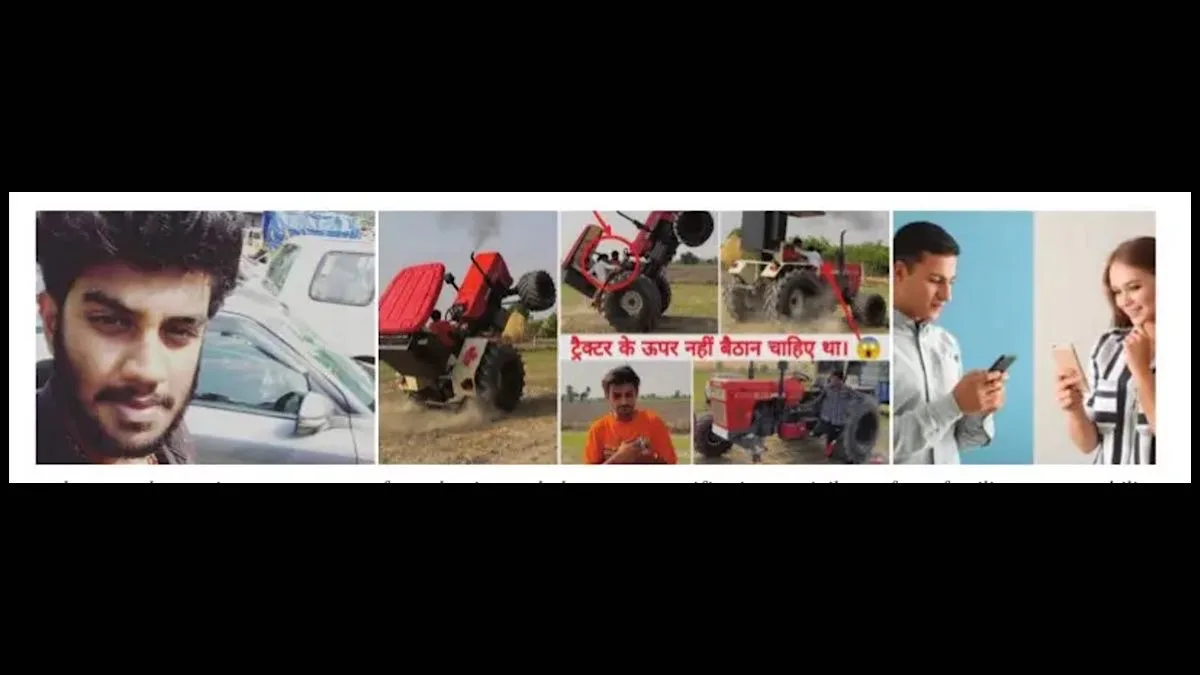
• Local incidents in India: Fatal bike crashes in Himachal Pradesh and Surat; tractor overturn in Karnataka; near-drowning in Rajasthan. These numbers, though incomplete, underscore the tragic consequences of equating risk with importance. India’s tragedies illustrate the immediacy of the problem. A 22-year-old engineering student died while filming bike stunts for social media reels, losing control and sustaining critical neck injuries. Another youth in Surat met a similar fate. In Karnataka, a tractor stunt overturned, killing the performer. A man in Rajasthan nearly drowned after being swept downstream during a river stunt. Even seemingly harmless acts have turned fatal: a 10-year-old boy suffocated himself with a skipping rope while imitating an online stunt. A famous biker attempting to film a speed video at nearly 300 km/h lost his life in a high-speed crash. Each case underscores the unpredictable nature of risk when safety is sacrificed for spectacle.

The consequences extend beyond physical harm. Law enforcement agencies have taken strict action against individuals performing dangerous stunts in public places. Police departments issue heavy fines and traffic violation notices. In Faridabad, an SUV owner was fined over Rs 15,000 for a video showing passengers standing through the sunroof and on window frames while the vehicle was moving. Arrests and criminal charges for reckless endangerment, negligent driving, and public nuisance are increasingly common. Vehicles used in stunts are often seized. These measures reflect the seriousness with which authorities view the issue, recognizing that such acts endanger not only performers but also unsuspecting members of the public. The ethical and social dimensions are equally troubling. Youth are exploited by algorithms that capitalize on their vulnerabilities, drawing them into a cycle where the desire for peer approval and the dopamine rush of online validation override judgment and restraint. Vulgar memes, obscene videos, and abusive comments steadily erode cultural and social values.

Even more disturbing is the casual desecration of deities, the trivialization of religious sentiments, and the AI driven commercial use of sacred symbols for cheap humour or viral traction. In a society that proudly calls itself religious and culturally rooted, such disrespect should trouble our collective conscience. When faith becomes a prop for entertainment and sacred icons are reduced to digital gimmicks, we must ask what kind of personalities and moral frameworks are being shaped. Instead of fostering responsibility, creativity, and constructive engagement, the culture of dangerous displays promotes recklessness, vulgarity, and short-term gratification, weakening the very values we claim to uphold. The case of “True Online Love” epitomizes this trend. What might appear to some as a romantic escapade is, in reality, a reckless act that trivializes life. A split-second miscalculation could have resulted in tragedy.

Creative energy that could have been directed toward art, sport, or innovation is wasted on hazardous acts. The societal menace lies in the normalization of such behaviour. When audiences applaud or share these videos, they inadvertently encourage imitation. The cycle continues, with each new stunt pushing the boundaries of risk further. Professional stunt performers, even with training and safety measures, face high injury rates. If professionals with controlled environments face such risks, the dangers for amateurs are exponentially greater. Unlike film sets, amateur stunts are performed in uncontrolled settings ~ public roads, rivers, railway tracks ~ without protective equipment. The absence of safety guidelines transforms these acts into potential disasters. Historical examples remind us that risk has always accompanied performance.

From Yevgeni Urbansky’s fatal stunt in 1965 to Evel Knievel’s perilous feats, danger was once the realm of trained professionals who understood its cost. Today, that boundary has vanished. Risk has been democratized; anyone with a smart phone can attempt what once required skill, discipline, and preparation. The barriers to entry have collapsed, but the dangers have not. Modern social media fatalities are simply the old daredevil tragedies ~ now multiplied and accelerated by digital reach. The broader implications are profound. The pursuit of internet fame has transformed dangerous acts into a public safety crisis. The exploitation of youth, erosion of cultural values, and diversion of energy toward meaningless pursuits represent a collective failure. Parents, educators, and policymakers must recognize the urgency.

Monitoring online activity, engaging in candid discussions about risks, and redirecting youthful energy into constructive pursuits are essential. Social media platforms must enforce stricter policies against content that encourages dangerous or illegal activities. Public awareness campaigns highlighting real-life tragedies can counter glamorization. The responsibility is collective, requiring vigilance from families, accountability from platforms, and enforcement from authorities. The challenge before us is clear. Dangerous displays may capture attention for a moment, but the consequences can last a lifetime. The solutions must be forceful and multi-pronged:

• Parental vigilance: Active monitoring of children’s online activity and candid conversations about risks.

• Educational reform: Integrating digital literacy and risk-awareness into school curricula.

• Platform accountability: Enforcing strict bans on content that glamorizes unethical and dangerous stunts, with penalties for violators.

• Law enforcement: Continued fines, arrests, and vehicle seizures to deter reckless acts. • Youth engagement: Redirecting energy into constructive pursuits ~ sports, arts, innovation, and civic responsibility.

• Public campaigns: Using real-life tragedies to counter glamorization and highlight consequences.

• Community role models: Celebrating young achievers in science, arts, and social service to provide alternative aspirations.

• Media ethics: Encouraging responsible coverage that avoids sensationalizing dangerous acts and instead emphasizes their risks. Ultimately, the chase for digital stardom is transforming reckless acts into a societal menace. Dangerous displays may thrill for a moment, but they leave scars that last forever. The “True Online Love” video is not a romantic escapade but a stark reminder of how social media distorts youthful aspirations. The tragedy lies not only in potential loss of life but also in the waste of talent, creativity, and energy.

The responsibility is ours – to defend youth from exploitation, to preserve the values that bind society, and to transform reckless impulses into constructive achievements. The time to act is not tomorrow, not someday ~ it is now. Let us choose vigilance over indifference and inspiration over neglect, so that the next generation remembers us not for our silence, but for our resolve. As Nassim Nicholas Taleb reminds us, “Courage is the only virtue that can’t be faked.” In an age where social media often rewards the illusion of bravery, true courage lies in speaking up, in taking a stand, and in enduring sacrifice for the greater good. It is this authentic courage ~ not the counterfeit of viral influence ~ that must guide our youth and inspire society to act before more lives are lost to the peril of reckless displays.

(The writer is a retired Air Commodore, VSM, of the Indian Air Force)

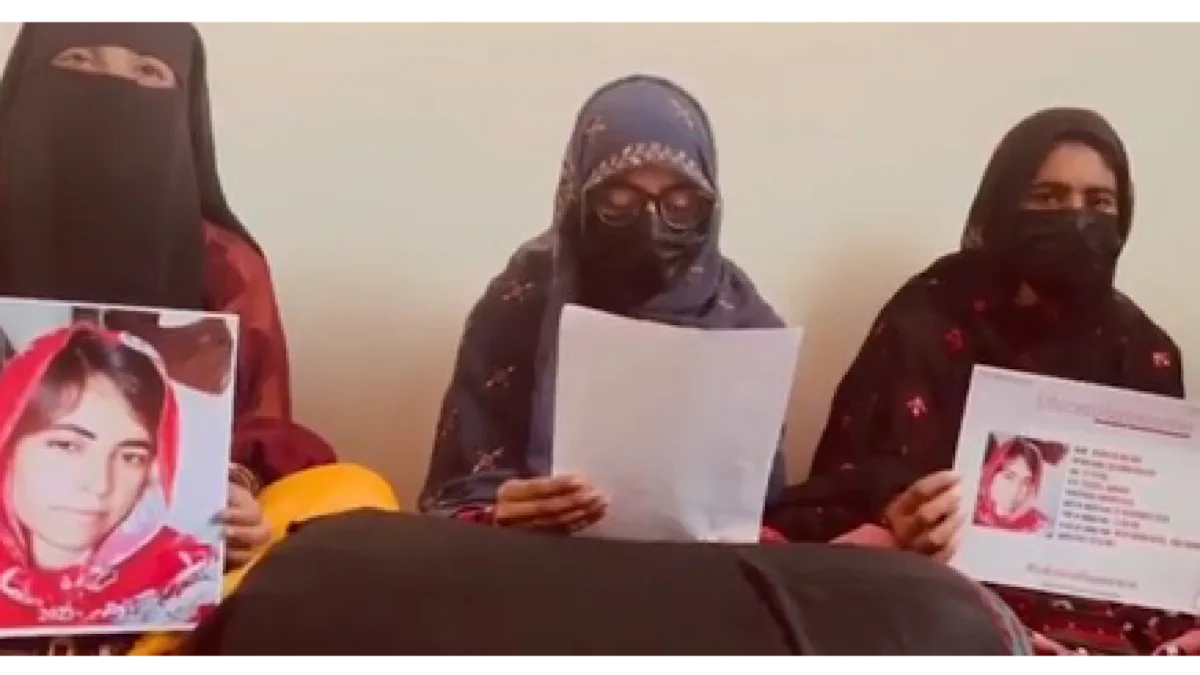
Two more women in Balochistan forcibly disappeared by Pakistani forces

As violence against women escalate in Balochistan, a leading human rights organisation on Saturday brought to light the enforced disappearance of two more Baloch women at the hands of Pakistani forces.

IANS | New Delhi |

As violence against women escalate in Balochistan, a leading human rights organisation on Saturday brought to light the enforced disappearance of two more Baloch women at the hands of Pakistani forces.

According to Baloch Voice for Justice (BVJ), Hani Dilwash and Heer Nisa Waheed were detained and then forcibly disappeared on Friday night from Hub Chowki in Balochistan.

The BVJ stated that the action violated fundamental rights and targeted civilians without any legal process.

Condemning the incident, the rights body demanded the immediate disclosure of their whereabouts.

“Security agencies continue to operate with impunity while families suffer ongoing trauma. Enforced disappearance remains a systematic tool of repression in Balochistan and must end,” the rights body stated.

This latest act comes hours after another Baloch woman Hajra Baloch was forcibly disappeared by Pakistan’s Counter Terrorism Department and other agencies from the same region.

Meanwhile, Paank, the Baloch National Movement’s Human Rights Department, on Saturday strongly condemned the dissemination of a defamatory poster targeting 15-year-old Nasreena Baloch, daughter of Dilawar Baloch, a resident of Teertej in Awaran district, Balochistan.

The rights body stated that this minor student forcibly disappeared on the night of November 22, when Pakistani security forces and intelligence personnel raided a house in the Daroo area of Hub Chowki around midnight, detaining her without warrant or explanation and transferring her to an undisclosed location.

“Her family has received no information about her whereabouts since the abduction, exacerbating their distress and highlighting a disturbing pattern of enforced disappearances targeting Baloch women and girls,” it added.

Sharing the picture on its social media platform X, Paank said, “The poster, prominently displayed at the gate of the Press Information Department (PID) building in Islamabad, contains baseless and malicious allegations intended to smear Nasreena’s character and justify her unlawful detention. Such propaganda appears to be a calculated effort by Pakistani intelligence agencies to fabricate bogus charges against her, further violating her rights and dignity.”

Paank urged international human rights bodies to intervene and hold those responsible accountable, ensuring the protection of vulnerable individuals like Nasreena from Pakistan-sponsored repression and defamation.

Rising threat to minorities in Bangladesh over false blasphemy accusations

The Human Rights Congress for Bangladesh Minorities (HRCBM) on Saturday asserted that blasphemy allegations have become a deadly instrument of persecution in the country — one that increasingly places religious minorities in mortal danger.

IANS | New Delhi |

The Human Rights Congress for Bangladesh Minorities (HRCBM) on Saturday asserted that blasphemy allegations have become a deadly instrument of persecution in the country — one that increasingly places religious minorities in mortal danger.

The rights body stated that this reality culminated in one of the most horrifying acts of communal violence in recent months when Hindu youth Dipu Chandra Das was brutally killed in a mob lynching on Thursday night in Bhaluka Upazila of Mymensingh district over false blasphemy accusations, with his body subsequently set ablaze.

Citing eyewitness testimonies, the HRCBM mentioned that Das may have been alive when he was set on fire, and that police intervention to save him was either delayed or missing at a critical moment.

“The killing of Dipu Chandra Das is not an isolated incident. It reflects a systemic and accelerating pattern in which blasphemy allegations are weaponised to terrorise, dispossess, and eliminate minority citizens,” the HRCBM stated.

The HRBM stressed that the brutal killing of Das not only violated individual criminal statutes but also breached the very foundations of Bangladesh’s constitutional order and its binding international obligations.

“The deliberate lynching and subsequent burning of a human being—whether alive or post-mortem—constitute grave crimes in themselves. To isolate debate solely around the act of burning is therefore legally and morally inadequate; the entire sequence represents a total collapse of the rule of law,” it added.

The rights body stated that this was not “mob justice” but an extrajudicial killing carried out under a false religious pretext, intended not only to kill one man, but to terrorise an entire minority community into submission and silence.

“Such acts represent serious social and institutional decay. When repeated with impunity, they do not remain isolated crimes; they become signals, teaching both perpetrators and victims that minority lives are dispensable, and that violence will be tolerated or excused,” the HRCBM noted.

Earlier this month, the rights body documented 73 blasphemy-related incidents in 32 districts from January to November 2025, warning that Bangladesh is facing a deepening human rights crisis driven by the misuse of blasphemy allegations.

According to the HRCBM, a significant number of these cases involved fabricated or manipulated digital evidence, including hacked social media accounts, fake screenshots, impersonation, or unverified online posts, often leading to arrests or mob violence without any cyber-forensic verification.

It added that Das became one of the most tragic symbols of this pattern—where an allegation alone was enough to destroy a life.

Condemning the brutal killing, the rights body said, “He was accused without proof, removed from his workplace, lynched by a mob, and set on fire. Whether death occurred before or during the burning, the meaning of the act remains unchanged: impunity has emboldened brutality, and minority lives have been rendered expendable.”

US forces seize 2nd oil tanker off coast of Venezuela

US Secretary of Homeland Security Kristi Noem said Saturday that the US forces seized another oil tanker off the coast of Venezuela earlier in the day.

IANS | New Delhi |

US Secretary of Homeland Security Kristi Noem said Saturday that the US forces seized another oil tanker off the coast of Venezuela earlier in the day.

“In a pre-dawn action early this morning on Dec. 20, the US Coast Guard with the support of the Department of War apprehended an oil tanker that was last docked in Venezuela,” Noem said on X.

The US military seized an oil tanker off the coast of Venezuela on December 10, a move the Venezuelan government condemned as “a blatant theft and an act of international piracy,” Xinhua news agency reported.

US President Donald Trump said on Tuesday that he has ordered a total blockade of all US-sanctioned oil tankers traveling to and from Venezuela. He also said in a later interview that the United States will continue seizing additional oil tankers.

Venezuela is completely surrounded by the largest Armada ever assembled in the History of South America,” Trump wrote in a lengthy post on his social media platform. “It will only get bigger, and the shock to them will be like nothing they have ever seen before — Until such time as they return to the United States of America all of the Oil, Land, and other Assets that they previously stole from us.”

In the post, Trump announced “A TOTAL AND COMPLETE BLOCKADE OF ALL SANCTIONED OIL TANKERS going into, and out of, Venezuela” and demanded the return of oil and assets.

The Venezuelan government responded to Trump’s post, calling his declaration a “reckless and serious threat,” against the country that it says violates international law, free trade and freedom of navigation.

“The President of the United States intends to impose in an absolutely irrational manner, a supposed naval military blockade on Venezuela with the objective of stealing the wealth that belongs to our homeland,” the Venezuelan government said in a statement.

Zelensky voices cautious optimism on proposed Ukraine-US-Russia talks

Ukrainian President Volodymyr Zelensky said that he generally supports the idea of a trilateral meeting involving the national security advisors of Ukraine, the United States and Russia, expressing cautious optimism about the prospect of such a meeting.

IANS | New Delhi |

Ukrainian President Volodymyr Zelensky said that he generally supports the idea of a trilateral meeting involving the national security advisors of Ukraine, the United States and Russia, expressing cautious optimism about the prospect of such a meeting.

Zelensky said the proposal was put forward by the United States and conveyed to him by Ukraine’s chief peace negotiator, Rustem Umerov, Xinhua news agency reported quoting the Interfax-Ukraine news agency.

Zelensky said that he was not sure that the meeting would bring something new, but noted that the result of previous talks in Türkiye was the return of captured soldiers and civilians.

“I am very glad that we had exchanges. Our people, our military, primarily prisoners, returned home. And civilians. And therefore we need to take such steps,” he said.

Zelensky added that “if the results are exchanges or some other agreements, I cannot be against it, then we support the proposal of the United States of America. Let’s see how it goes.”

He noted, however, that the most difficult issues in the ongoing peace process remain unresolved, including territorial issues, control over the Zaporizhzhia nuclear power plant, and funding for Ukraine’s reconstruction.

US President Donald Trump’s special envoy Steve Witkoff and his son-in-law Jared Kushner are expected to represent the US side, while the Russian delegation is expected to include Russian President Vladimir Putin’s special envoy Kirill Dmitriev, said the report.

Ukrainian National Security Advisor Rustem Umerov is also expected to meet with the US delegation separately in Miami or another location in the United States.

The US, European and Ukrainian officials have reached consensus or significantly closed gaps on 90 per cent of their differences on a 20-point US draft peace plan during the Berlin talks last weekend, officials with the Trump administration said.

BJP renews attack on Rahul Gandhi, alleges Soros link and meeting with ‘anti-India’ elements

that the Leader of the Opposition in the Lok Sabha met “enemies of India” during his recent visit to Germany.

Statesman News Service | New Delhi |

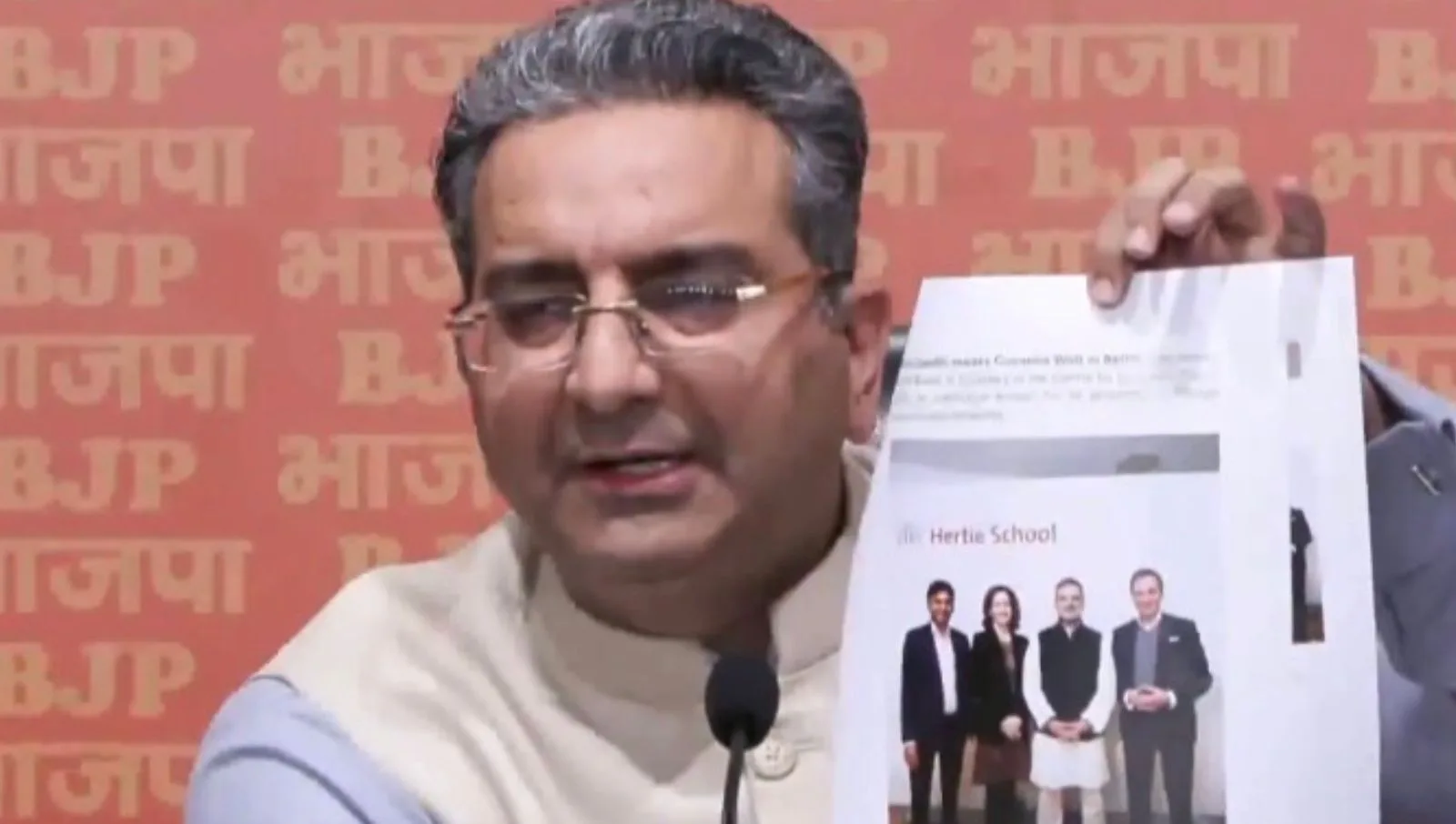
The ruling BJP on Friday reiterated its allegation of a link between billionaire investor George Soros and Rahul Gandhi, claiming that the Leader of the Opposition in the Lok Sabha met “enemies of India” during his recent visit to Germany.

Questioning what kind of “conspiracy he was hatching against the country” by “joining hands with such forces”, party spokesperson Gaurav Bhatia shared a purported photograph of Gandhi with Berlin-based Hertie School President Prof. Cornelia Woll and described it as “proof” of his meeting “anti-India forces” abroad.

Addressing the media, Bhatia claimed that Woll is one of the trustees of the Central European University, which he said is funded by a foundation associated with US-based billionaire George Soros.

“Rahul Gandhi and George Soros are like flesh and soul, and now further proof of this has emerged. Why is it that whenever a Parliament session is underway, Rahul Gandhi travels abroad and meets people who are enemies of India, who are jealous of India, and who attack India’s integrity? What kind of anti-India agenda is this, in which the Leader of the Opposition is conspiring against India with foreign forces?” Bhatia alleged.

This is not the first time Rahul Gandhi has been “found linked to anti-India activities”, Bhatia further claimed, calling him the “Mir Jafar of India.”

“George Soros gives anti-India statements, works against India, and funds riots. But he is not an Indian citizen—unlike Gandhi, who has taken an oath to protect India’s Constitution,” he added.

Netanyahu likely to brief Trump on fresh plan to attack Iran amid missile program concerns: Report

Netanyahu is expected to meet President Trump later this month in Florida.

Statesman News Service | New Delhi |

Israeli Prime Minister Benjamin Netanyahu is reportedly preparing to brief US President Donald Trump about a possible plan to attack Iran again amid concerns over Tehran’s expanding ballistic missile program.

Netanyahu is expected to meet President Trump later this month in Florida. While the meeting has not been formally scheduled yet, Trump has said that the Israeli Prime Minister wants to see him.

Israel, on the other hand, has confirmed a meeting between Trump and Netanyahu on December 29.

According to a report by NBC, “Netanyahu is expected to make the case to Trump that Iran’s expansion of its ballistic missile program poses a threat that could necessitate swift action.”

Earlier in June this year, Israel and Iran launched air strikes against each other. The fighting started after Israel’s targeted air strikes on Iranian nuclear and military facilities.

The Israeli attacks were part of Israel’s operation “Rising Lion” aimed at destroying Iran’s nuclear capabilities.

Later, the United States also joined Israel in its war against Iran as American fighter jets bombed three Iranian nuclear sites, including the highly fortified Fordow (Fordo).

Iran’s Fordow nuclear facility, which was the primary target of the US attack, was constructed with reinforced concrete at a depth of 80-90 m under the mountain rocks. It could only be penetrated by the massive GBU-57 Massive Ordnance Penetrator, which only the US has.

According to US media reports, six B-2 bombers had dropped a dozen 30,000-pound GBU-57 bunker buster bombs at the Fordow nuclear site.

After the attack, Trump had claimed the US strikes had completely obliterated Iran’s nuclear capabilities.

Bangladesh: Osman Hadi laid to rest; Inqilab Mancha issues 24-hour ultimatum for arrest of killers

Chief Adviser of Bangladesh’s interim government Muhammad Yunus and Army Chief General Waker-uz-Zaman attended the funeral.

Statesman News Service | New Delhi |

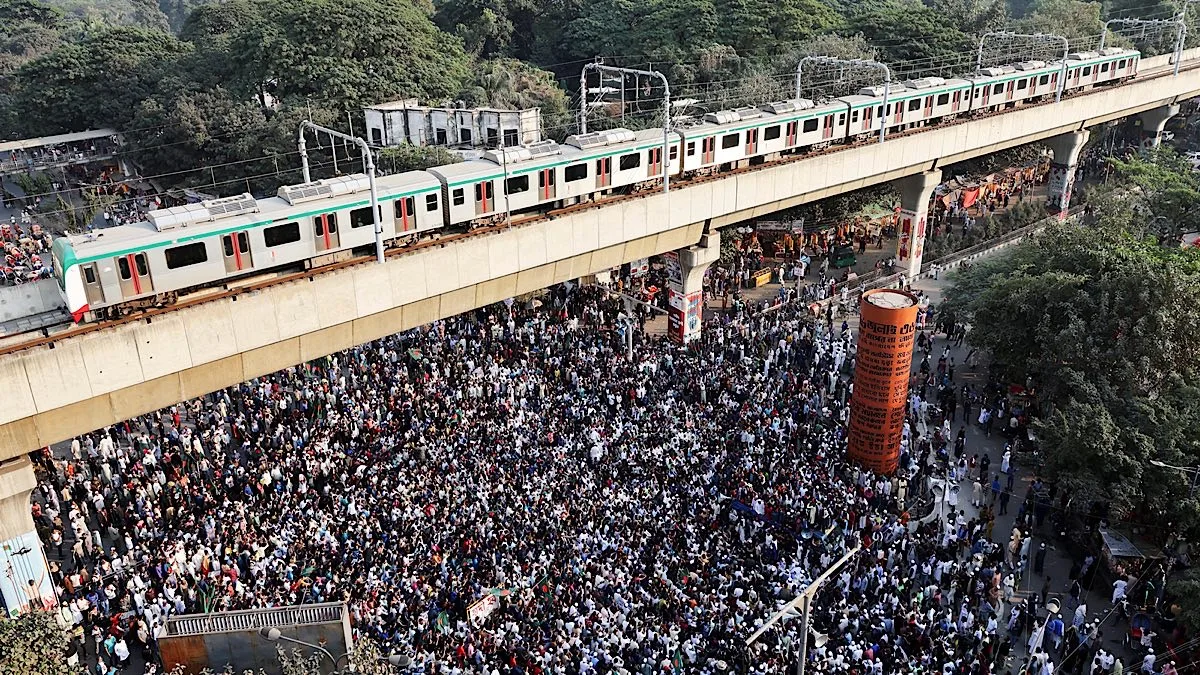
Bangladesh youth leader Sharif Osman Hadi was laid to rest on Saturday beside the grave of poet Kazi Nazrul Islam near the Dhaka University Central Mosque, amid tight security.

Hadi, leader of Inqilab Mancha, was shot dead on December 12 by unidentified assailants. He died in Singapore while undergoing treatment for the gunshot injuries sustained during a campaign-related attack in Dhaka.

Chief Adviser of Bangladesh’s interim government Muhammad Yunus and Army Chief General Waker-uz-Zaman attended the funeral.

In an emotional speech, Yunus said that Hadi would remain in the hearts of all Bangladeshis. “You are in our hearts, and you will remain in the hearts of all Bangladeshis as long as the country exists,” he said.

Following the funeral prayers, thousands of Hadi’s supporters gathered at Dhaka’s Shahbagh intersection, where Inqilab Mancha issued a 24-hour ultimatum to the Yunus administration to arrest those responsible for Hadi’s killing.

The crowd shouted slogans including “Inqilab, Inqilab – Zindabad, Zindabad” and “Not Delhi, Dhaka–Dhaka, Dhaka.”

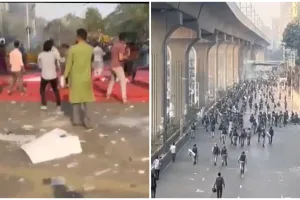
Hadi’s murder—he was a youth leader who rose to prominence during the student-led uprising against ousted Prime Minister Sheikh Hasina—triggered widespread violence, with supporters demanding swift action against the perpetrators.

Following news of his death, protests erupted in Dhaka and several other cities, with attacks reported on media houses, political offices, and cultural institutions.

Yunus reiterated that those responsible would be brought to justice and urged citizens to remain calm.