Logo

Empowered but powerless

In 1993, the 73rd Constitutional Amendment was hailed as the dawn of Gram Swaraj – village self-rule rooted in democratic decentralisation. The promise was clear: Panchayati Raj Institutions (PRIs) would no longer be mere implementing arms of Delhi or state capitals, but genuine institutions of self-government.

PRAVIN KAUSHAL | New Delhi |

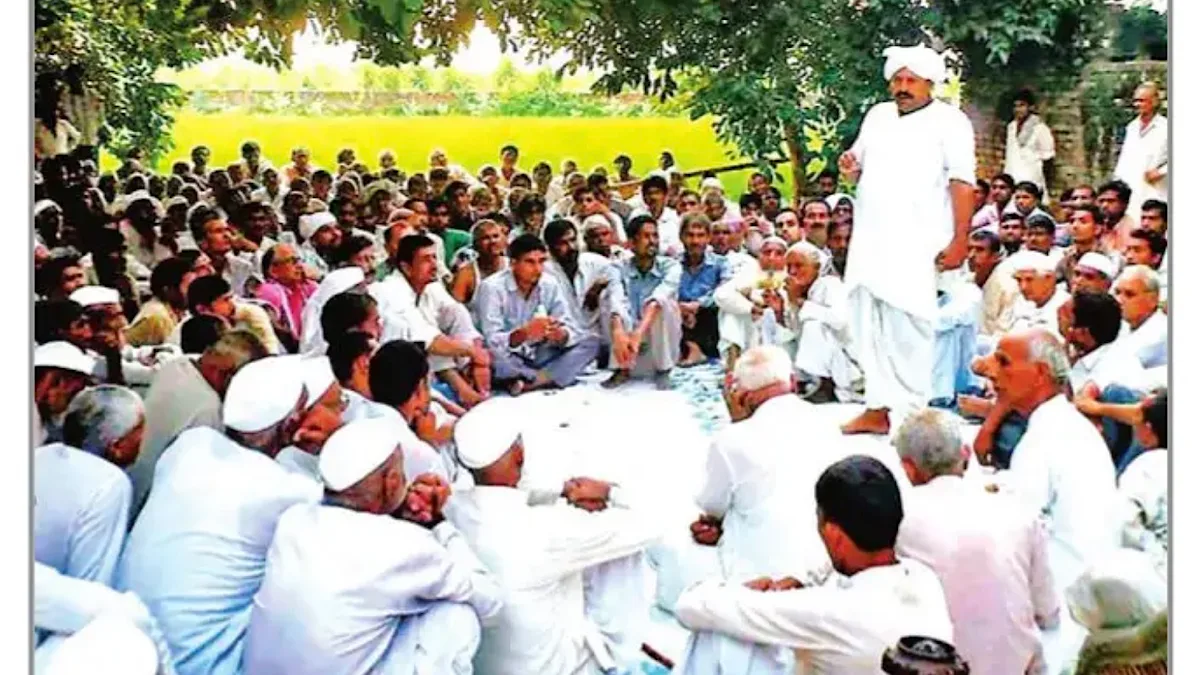
In 1993, the 73rd Constitutional Amendment was hailed as the dawn of Gram Swaraj – village self-rule rooted in democratic decentralisation. The promise was clear: Panchayati Raj Institutions (PRIs) would no longer be mere implementing arms of Delhi or state capitals, but genuine institutions of self-government. Three decades later, that promise is gasping for fiscal breath. India has successfully elected millions of village representatives. What it has failed to do is give them the one thing that guarantees autonomy: control over money. A recent RBI report on the Finances of Panchayati Raj Institutions presents a stark picture. Own Source Revenue (OSR) remains negligible, with Panchayats depending on state and central transfers for nearly 95 percent their funds.

Decentralisation, in practice, has remained administrative – not fiscal. Yet this failure is not uniform. The Panchayats Devolution Index 2024 reveals that India’s problem is not design, but political will. The contrast across regions is striking. The Devolution Index – which measures the transfer of funds, functions, and functionaries – shows southern states decisively ahead. Karnataka tops the list with a score of 72.23, followed by Kerala (70.59) and Tamil Nadu (68.38). The national average languishes at 43.69, while areas such as Jammu & Kashmir (27.85) and Jharkhand (27.73) remain near the bottom.

Why does the South lead? The answer lies in clarity and commitment. States like Karnataka and Andhra Pradesh have issued unambiguous orders empowering Panchayats to levy and collect taxes. In Kerala, Panchayats are not merely civic bodies; they function as planning units with independent budgets, authority over property taxes, and freedom to levy user charges without constant state approval. Decentralisation here is institutionalised, not rhetorical. Elsewhere, Panchayats remain trapped in a structural bind. Property tax – the most reliable source of local revenue – accounts for nearly 40 per cent of OSR nationwide. Yet India’s property tax-to-GDP ratio is just 0.2 per cent, among the lowest globally. This is not because rural citizens refuse to pay.

It is because, in many states, they are never properly asked. In Uttar Pradesh and Odisha, Gram Panchayats have either not been fully authorised to levy property tax or lack the operational ability to do so. Even where powers exist on paper, they are throttled by bureaucratic ambiguity – unclear definitions of “commercial property,” outdated property registers, and disputes over valuation. Compounding this is a deeper flaw: states often retain the power to assess property values while pushing the politically unpopular task of tax collection onto Panchayats. A village Sarpanch, without technical staff or surveyors, cannot realistically assess the value of a new warehouse or commercial complex. Beyond structure lies a behavioural challenge – the proximity paradox.

In villages, the tax collector and taxpayer are neighbours. A Sarpanch who enforces property tax or hikes water charges risks immediate social backlash and electoral consequences. Successful states have addressed this by letting the state play the “bad cop.” Maharashtra (Index score: 61.44) offers a useful model, where statutory minimum floor rates for local taxes are fixed by the state. This allows local leaders to tell residents, “The law requires this,” shielding them from direct blame while ensuring revenue flows. Another vast but neglected opportunity lies in common property resources – ponds, grazing lands, weekly markets, and minor forests.

Though legally meant for community benefit, control often lies with Forest or Revenue departments. A Panchayat attempting to lease a pond for fisheries or a market shed for weekly haats frequently runs into inter-departmental red tape. Transferring Operations and Maintenance rights to PRIs would not only generate revenue but also improve local stewardship and conservation. The solution is neither complex nor unknown. The Ministry of Panchayati Raj’s digital platform Samartha, aimed at end-to-end digitisation of OSR management, is a step forward. Digitisation reduces leakage, improves transparency, and creates reliable tax databases.

But technology cannot substitute political intent. State governments must recognise that hoarding fiscal power at the capital is inefficient. Home Minister Amit Shah has rightly noted that Panchayati Raj cannot succeed without revenue autonomy. Uttar Pradesh Chief Minister Yogi Adityanath has similarly called for “innovative practices” to boost Panchayat income. These statements must now translate into policy. A three-pronged approach is essential: Mandatory devolution: States must be legally bound to devolve taxation powers – especially property tax – to Gram Panchayats.

Capacity building: Scalable training programmes, such as those developed with IIM-Ahmedabad, must equip Panchayat officials with skills in valuation, accounting, and revenue management. Incentivisation : Finance Commission grants should be tightly linked to OSR performance. Panchayats that collect more should receive matching grants, creating a virtuous cycle. The 73rd Amendment delivered democratic decentralisation. But democracy without financial autonomy is hollow. Until Panchayats can pay their electricity bills without waiting for a state grant, Gram Swaraj will remain unfinished business. The southern states have shown what is possible. The rest of India must now follow.

(The writer is Director – Strategic Partnerships, Mrikal (Data/AI Center) and a Young Alumni Member, Govt. Liaison Task Force, IITKharagpur.)
The journo murders of the north-east

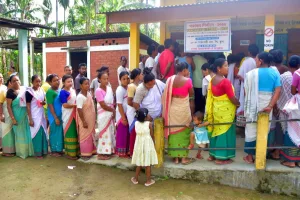
It’s amazing that a once- ‘disturbed’ region that lost over 30 editors/reporters /correspondents to assailants in three decades continues to maintain a no-journo murder index for nearly eight years now.

NAVA THAKURIA | New Delhi |

It’s amazing that a once- ‘disturbed’ region that lost over 30 editors/reporters /correspondents to assailants in three decades continues to maintain a no-journo murder index for nearly eight years now. The trouble-torn region of India, which witnessed the last sensational killing of media professionals in 2017, readies to bid adieu another year with no such unfortunate incidents. The north-eastern region continues to sustain the trend where the country in general loses five to ten journalists every year. As the year 2025 approaches the end, India as a billion-plus population nation recorded the murder of seven journalists till the third week of December.

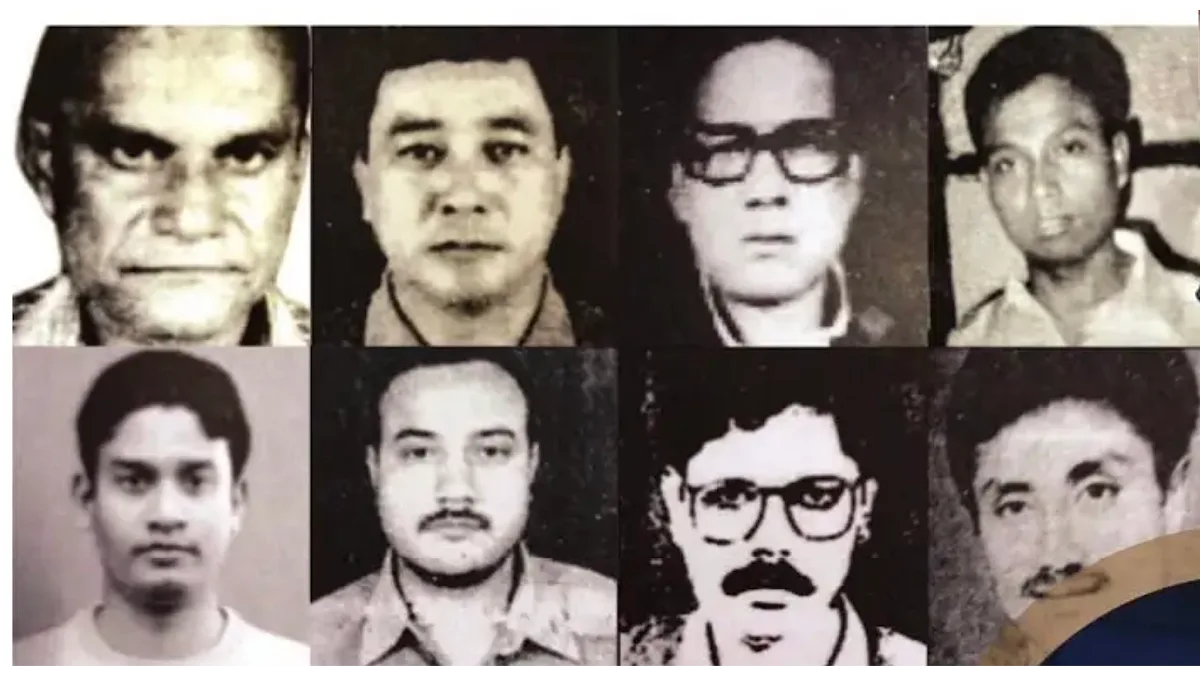
The region, comprising over 60 million people, last witnessed the assassination of two journalists in Tripura during 2017. The same tiny state, bordering Bangladesh, reported the assassination of three media persons (Sujit Bhattacharya, Ranjit Chowdhury and Balaram Ghosh) in 2013. They were killed together inside a Bengali newspaper office in Agartala. In the previous year, Assam and Manipur witnessed the murder of journalists (as Raihanul Nayum and Dwijamani ‘Nanao’ Singh fell prey to perpetrators) for the last time. Assam has witnessed the homicide of over 25 media workers since 1987. The culminating year has already emerged as a deadliest year for journalists since the beginning of the century after 2024, and according to the Geneva-based global media safety and rights body Press Emblem Campaign (PEC) no less than 163 media professionals were killed in 31 countries till date this year, where 2024 witnessed 179 journo-casualties around the world. By region, the Middle East leads with 87 deaths, ahead of Latin America with 25, Asia with 22, Africa with 15, Europe with 10 and the United States with 2, stated PEC president Blaise Lempen.

Two-thirds of the victims recorded in 2025 were killed in an area of armed conflict and among the countries most affected, he deplored the death of 15 media workers in Yemen, including 13 in an Israeli attack. The PEC counted this year’s seven media victims from India as Mukesh Chandrakar (stringer to NDTV from Bastar, Chhattisgarh), Raghavendra Vajpayee (Dainik Jagran from Imalia Sultanpur, Uttar Pradesh), Sahadev Dey (Republic Andaman, from Diglipur, Andaman islands), Dharmendra Singh Chauhan (Fast News India, Gurugram, Haryana), Naresh Kumar (Times Odia, Bhubaneswar, Odisha), Rajeev Pratap Singh (Delhi Uttarakhand Live, Joshiyara, Uttarakhand), and Pankaj Mishra (freelance journalist, Dehradun, Uttarakhand) till date. India’s immediate neighbour Bangladesh, which is still burning with political disturbances, reported the murder of Assaduzzaman Tuhin (Dainik Pratidiner Kagoj, Gazipur), Bibhuranjan Sarkar (Ajker Patrika, Munshiganj), Wahed-uz-Zaman Bulu (Dainik Ajker Kagoj, Dhaka) and Khandahar Shah Alam (Dainik Matrijagat, Dhaka) in 2025. Another neighbour, Nepal lost one journalist (Suresh Rajak, Avenues TV, Kathmandu) to a mass uprising. Myanmar, now facing a civil war, lost three scribes last year, but evaded any media casualty this year.

Bhutan, as usual, maintains no-journo victim once again. The region lost over 20 media workers to Covid-19 during the pandemic, in contrast to the national count of 300 media casualties. Besides three north-eastern scribes, who died while working in the national capital, others succumbed to the virus infection related ailments while performing their duty as corona warriors in home places. Assam witnessed the highest number of corona-casualties in the region, while Arunachal Pradesh, Nagaland, Mizoram, a n d Sikkim evaded any journo-death because of the corona infection. Even though the Union government in New Delhi and some State authorities offered compensation to the families of corona-victims among journalists, no north-eastern governments have come forward with such schemes. The Odisha government paid Rs 15 lakh to each family which lost a working journalist due to the corona infection.

Uttar Pradesh, Tamil Nadu, and Punjab governments compensated such victim families with Rs 10 lakh each. Both Andhra Pradesh and Chhattisgarh authorities paid Rs 5 lakh, followed by Bihar (Rs 4 lakh) and Telangana (Rs 2 lakh) to the king of journalists who died due to corona infection and complications. The Assam government initially announced that it would include the corona-media victims in the list of Rs 50 lakh life insurance scheme beneficiaries along with the other front-line warriors, but it maintained stoic silence over the commitment to compensate affected journo -families. Other north-eastern States followed the suit paying no attention to the matter. Is anybody listening?

(THE VIEWS EXPRESSED ARE PERSONAL TO THE AUTHOR. THE WRITER IS A GUWAHATIBASED SPECIAL REPRESENTATIVE OF THE STATESMAN)

Export Rebalance

India’s export map is quietly, but decisively, being redrawn. Recent data reveals a geographic rebalancing that goes beyond year-on-year fluctuations and points to a deeper structural shift in how ~ and where ~ the country earns its export revenues.

Statesman News Service | New Delhi |

India’s export map is quietly, but decisively, being redrawn. Recent data reveals a geographic rebalancing that goes beyond year-on-year fluctuations and points to a deeper structural shift in how ~ and where ~ the country earns its export revenues. Southern states are emerging as the new growth poles, while long-dominant western powerhouses are showing signs of strain. The rise of states like Tamil Nadu and Telangana is not accidental.

Their export growth reflects years of deliberate industrial strategy: building electronics and engineering clusters, integrating manufacturing with global supply chains, and aligning state-level policies with the needs of export-oriented firms. Tamil Nadu’s steady expansion across automobiles, electronics and engineering goods shows the advantage of diversification. It is no longer dependent on a single sector or market, making its export basket more resilient to global shocks. Telangana’s surge is equally instructive. Often viewed primarily through the lens of services and technology, it is now carving out a place in traditional engineering exports.

This suggests that newer industrial states, if they invest in logistics, skilling and ease of doing business, can scale exports rapidly even without a long manufacturing legacy. Karnataka’s recovery, powered by software-linked exports, reinforces the importance of embedding technology into export strategies rather than treating manufacturing and services as separate silos. By contrast, the slowdown in Gujarat and Maharashtra exposes the limits of legacy dominance. These states remain India’s largest exporters in absolute terms, but their export engines are closely tied to sectors that are increasingly vulnerable to global volatility ~ petrochemicals, gems and jewellery, and textiles.

When oil prices swing or discretionary demand weakens, the impact is immediate and severe. This does not imply decline in relevance, but it does signal a need for reinvention. What is striking is that the southern states’ gains are not coming at the cost of scale alone, but through value addition and sectoral upgrading. The shift mirrors global trade trends, where competitiveness increasingly depends on technology intensity, supply chain reliability, and product sophistication rather than low costs. States that have anticipated this transition are now reaping the rewards. For India as a whole, this redistribution of export momentum is a positive development. A broader export base reduces concentration risk and makes national performance less hostage to shocks affecting one region or sector. However, it also raises important policy questions.

Can the export-led success of the south be replicated elsewhere? And can traditional leaders adapt quickly enough to stay competitive? The answer lies in coordinated reform. Infrastructure, port efficiency, power reliability, and workforce skills must improve across regions. Just as crucial is helping older industrial hubs move up the value chain rather than relying on cyclical strengths. India’s export future will not be secured by geography alone, but by how effectively each region responds to a rapidly changing global trade environment. The emerging export map suggests one clear lesson: adaptability, not legacy, now determines leadership

Everest in Peril

The Himalayas, long revered for their sublime beauty and spiritual significance, are under siege ~ not by avalanches or blizzards, but by human neglect. Mount Everest, the crown jewel of the range, tells a stark story: discarded tents, oxygen cylinders, plastic bottles, and even human remains lie scattered across its slopes.

Statesman News Service | New Delhi |

The Himalayas, long revered for their sublime beauty and spiritual significance, are under siege ~ not by avalanches or blizzards, but by human neglect. Mount Everest, the crown jewel of the range, tells a stark story: discarded tents, oxygen cylinders, plastic bottles, and even human remains lie scattered across its slopes. For decades, well-intentioned campaigns and isolated clean-up drives have sought to address the problem, yet the mountain remains a symbol of ecological stress and failed accountability.

Tourism and adventure sports have brought economic benefits, but they have also exposed the limits of unregulated access. The number of climbers has surged, while the infrastructure for waste management has lagged. Temporary clean-ups and mandatory waste-return rules have had some effect, but the sheer scale of the challenge posed by extreme altitudes, limited climbing windows, and melting snow revealing decades of accumulated debris demands a far more systematic approach. Nepal’s newly announced five-year strategy represents a necessary pivot. By combining stricter waste management rules, mandatory clean-mountain briefings, technology-driven solutions like drones and GPS tracking, and policy mechanisms to regulate climber numbers and expedition timing, it moves beyond piecemeal efforts. Temporary waste collection centres at strategic camps, mandatory waste return quotas, and pilot testing of ropeways and drones are concrete steps that can make a difference, but only if rigorously enforced.

The plan also underscores a broader principle: tourism is not just an economic activity; it is a responsibility. Mountaineering is a privilege, not a right. Every expedition leader, climber, and trekking agency must recognise that the mountains they seek to conquer are fragile ecosystems, not refuse dumps. Local communities, mountaineering associations, and government agencies must share accountability. They must ensure compliance while exploring innovation to protect the environment. Tourists and climbers must understand that their presence comes with responsibility. Simple actions ~ carrying back waste, following guidelines, and respecting local regulations ~ can collectively make a massive difference. Without individual accountability, even the best policies will struggle to preserve the Himalayas’ fragile ecosystems for future generations. The stakes are immense. The Himalayas are the source of more than 6,000 rivers, supporting millions of lives downstream.

Biodiversity, cultural heritage, and the global reputation of Nepal’s mountains hang in the balance. Failure to act decisively risks turning these sacred landscapes into a cautionary tale of human greed and ecological collapse. Yet, the five-year plan offers a window of hope. It is an opportunity to transform Everest from a symbol of environmental neglect into a model of sustainable tourism. What is required now is more than policy ~ it demands collective will, responsibility, and the courage to enforce rules that may be unpopular but are essential. If Nepal succeeds, it will send a powerful message: humanity can coexist with its highest peaks. But only if it treats them with respect.

Employment for Youth

Much before acquiring skill and experience many individuals participate in the job market at a young age.

ARUP MITRA | Kolkata |

Much before acquiring skill and experience many individuals participate in the job market at a young age. A large majority of the youth end up in low productivity activities in the informal sector and/or formal sector activities in an informal capacity given the compulsions of earning their livelihood. The income outcomes are naturally poor and the prospects for acquiring further skill in the current job are dim. The kind of activities they are engaged in do not offer any opportunity for accessing on-the-job training. Hence, the scope of regularisation or any upward mobility is meagre.

Besides, capital-intensive economic growth has given rise to a wide spectrum of problems for young job market aspirants. In the post-Covid scenario, the youth has been facing severe challenges. The deceleration in demand and the lack of its revival aggravated labour market outcomes. New types of jobs have emerged (i.e., platform workers) but with new challenges. Whether the new jobs compensate for the job losses is an important question to be investigated. What job market securities and safety-nets are available, and in what ways the vulnerability of the youth can be reduced need detailed analysis. The labour market deregulations, the weakening of the bargaining power of the young labour market participants and the absence of adequate employment programmes are some of the major lacunae.

Further, mechanisation, technological advancements and innovation have brought in new employment challenges. New innovations relating to technological upgradation are highly capital and skill intensive, which in turn pose threats to the youth, especially those who do not have adequate skill and experience. Some of them may have joined the informal sector at a young age to acquire work experience but that may not be adequate to cope with the new challenges posed by technological progress. Besides, improvements in technical efficiency are a function of human capital which many young participants may lack. The young elderly, at times are compelled to participate in the labour market due to paucity of consumption expenditure.

Given their experience, employers prefer them over youth. In this process competition surges between the elderly and the youth as a result of which the latter keeps reducing the reservation price in order to get a hold in the labour market. This aggravates vulnerability of the youth. Machines and old people act as substitutes for young people in many fulltime jobs. As agriculture still accounts for a large percentage of the work force and the sector is already characterised by low levels of productivity, it is unlikely that new entrants into the labour market would have a high probability of getting absorbed into this sector. With higher levels of educational attainments, the expected earnings of the youth would not match the wages prevailing in the agriculture sector. The next best option is the rural non-farm sector.

However, if the activities in this sector are of a residual type, the rural to urban migration can become prevalent and migration of youth is likely to raise the supply of labour in urban areas significantly. Though employment configurations are generally envisaged in terms of three important dimensions ~ self-employed, casual wage and regular wage employment – , there can be many grey areas, not falling directly in these categories. If the own account enterprises are running profitably, they can be considered as the major absorber of new entrants as they protect youth from the vagaries of job search. However, given the fact that many of these enterprises operate at the margin, it is most likely that wage employment will be the category most sought after.

However, high shares of vulnerable employment, informality and working poverty are dominant in south Asia. Labour demand in the formal sector is too sluggish to absorb large numbers of young labour market entrants. Manufacturing accounts for a small share of total output and employment, compared to other developing regions, and this mostly affects low- and medium-skilled workers, who are still predominantly confined to working in agriculture and informal services. Given the inelasticity of employment in the public sector, the focus should be on the private sector as far as the prospects for growth and job creation are concerned. From the supply point of view, although primary school enrolment has increased, the transition rate from primary to secondary schooling is declining. Poor quality of basic formal education and persistent gender gaps in educational attainment do not allow the most vulnerable youth to get a chance to obtain decent work.

The world’s highest youth-to-adult unemployment rate ratio is evidenced in south Asia and more than 60 per cent of the region’s employed are estimated to be in vulnerable employment. The new entrants, particularly potential migrants, access a great deal of information pertaining to the job market at the destination through various informal networks. While the networks and familial ties are instrumental in job searches, the adverse outcomes are inevitable. Fragmented information acquired and passed on by the contact person to the potential migrant results in labour market segmentation, which in turn leads to mismatches between labour supplies and demand in various pockets within a given city, often with the former exceeding the latter.

The higher the duration of unemployment, higher is the probability that the job seeker would reduce the reservation wage; eventually employment taking place with meagre earnings. Further, neighbourhoods with higher spells of unemployment are likely to witness persistent unemployment, informality, vulnerability and unrest in terms of crimes and social disorder. Networks in such situations are often redundant and they reduce the probability of securing jobs as job-seekers may not be trustworthy. Informal networks with network concentration (or the lack of network diversification) lead to the absence of mobility and youth either hover around petty and marginal activities or remain engaged residually in activities with meagre earnings. The practice of similar jobs with different remunerations gets reinforced in the face of excess supplies of labour.

Those who are engaged informally either in the formal or in the informal sector encounter such consequences due to inadequate experience, partial information about the jobs and differences in networks. Even within the same organisation similar activities are performed at different wage rates due to the information asymmetry and the lack of regulations. Third-party involvement in hiring facilitates such discriminatory activities. The desperation of the youth to join the labour market without quality education triggers the compulsions to endorse such practices. The vulnerability of dropouts from education is highly prevalent in urban areas as the rural youth of such background migrate on a large scale. Part time and casual engagement do not generate any skills; even some of the fulltime occupations do not offer opportunities to improve employability.

With such occupational background as they initiate a search for fulltime jobs, they hold only weak bargaining power. On the other hand, volatility is extremely high as far as part time jobs are concerned which in turn adds to the vulnerability of the youth. Fulltime jobs in many activities, in the retail sector especially, have been split into several part-time jobs with a view to reducing costs. On the other hand, part-time jobs are the major hindrances to occupational and income mobility. The mismatches between education acquired at schools and the requirements in the job market are also said to be the major barriers to productive absorption of youth. Besides, those from poor socio-economic background are believed to have the pressure of joining the job market early for which they leave school, thus getting stuck in low productivity jobs.

Hence, from an empirical point of view it would be important to examine if youth from certain social background and poorer economic households are as vulnerable as those with lower educational attainments. Inadequate housing and poor health and social stress are said to raise the participation of youth in the job market. The inadequacy of skills and the compulsion to participate in the labour market, concentration in activities with excess supplies of labour, unrecognised work experience, lack of upward mobility and working with information asymmetry are some of the issues that the volume reflects on. Caste and gender disadvantages play an instrumental part in this context. Whether certain caste categories and young women are at a greater disadvantage than others, is an important line of enquiry.

A wide range of issues relating to occupational flexibility are pertinent. The role of skill-imparting institutions and major lacuna associated with their functioning have been widely noted. Social unrest and threats to the prospects of future growth in the absence of adequate youth employment are some contentious issues. The problems of the educated and uneducated youth are quite different and they need to be tackled separately. The youth tribulations due to the lack of economic growth and in the face of rising inequality and inadequate labour market opportunities are inescapable. Which policies hold better prospects for success and how the on-going policies need to be revived are indeed the important considerations.

(The writer is Professor of Economics, South Asian University)

‘Please help’: Gujarat student held in Ukraine appeals to PM Modi, alleges forced Russian Army recruitment

A Gujarat student detained in Ukraine alleges he was coerced into joining the Russian Army after false drug charges, prompting India to raise the issue diplomatically.

Statesman News Service | New Delhi |

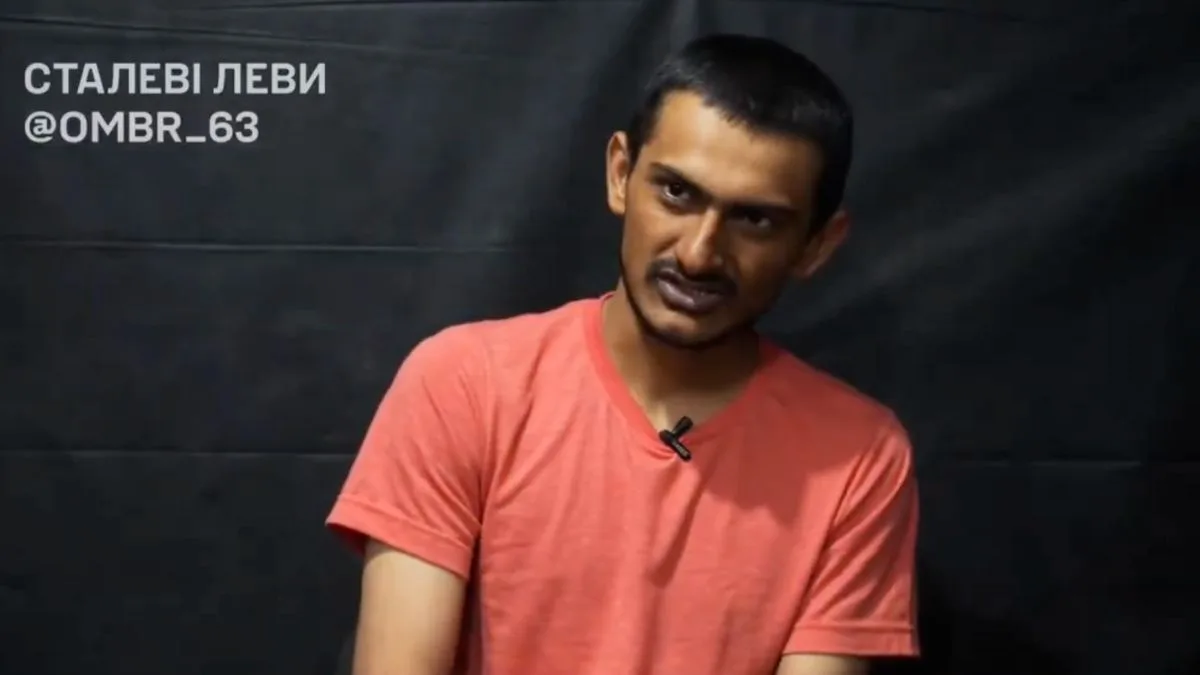
A Gujarat-based youth who travelled to Russia on a student visa has issued a strong warning to fellow Indians, urging them not to enlist in the Russian military under any circumstances.

In a video message recorded after his detention by Ukrainian forces, the student claimed he was coerced into military service after being threatened with fabricated drug charges in Russia. He said the case was falsely slapped on him and that he was told the charges would be withdrawn only if he agreed to join the Russian Army.

Gujarat student alleges coercion into Russian Army after false drug case

The student, identified as Sahil Mohammad Hussain from Morbi district in Gujarat, is currently being held in Ukraine following his capture. In the video circulated by Ukrainian authorities, he appealed to the Indian government for help in returning home. He said that while pursuing his studies in Russia, he had been working part-time with a courier company to support himself.

According to his account, Russian police implicated him in a narcotics case despite him having done nothing illegal. He alleged that several others were similarly targeted and pressured to choose between jail and military service.

An earlier report by the BBC in October had cited his mother as saying that her son travelled to Russia in January 2024 to pursue higher education, completed a short language course, and later moved cities for college. She alleged that drugs were planted in a parcel he was carrying during courier work in April 2024, following which he was detained.

The BBC report also noted that the family lost contact with him for several months after his arrest and came to know of his situation only after the Ukrainian video surfaced. Claims made in the video regarding the circumstances of his recruitment and deployment could not be independently verified.

In another video message, Hussain said he accepted the offer only to escape the false charges. After undergoing around 15 days of training, he was deployed to the frontline. He claimed that upon reaching the combat zone, he immediately surrendered to Ukrainian troops.

Hussain said Ukrainian forces later shared the videos with his mother in Gujarat and encouraged her to alert others about Indian nationals being misled into joining the Russian military. His mother has since moved a Delhi court seeking her son’s safe return to India. The matter is scheduled to be heard next in February.

“I came to Russia for studies in 2024. But due to financial and visa issues, I came in touch with some Russians who turned out to be in narcotics… I have not done anything. At least 700 people were jailed by Russia on drug charges. But the jail authorities gave them a choice of getting the charges dropped by joining the Russian military,” the Indian student said in the video.

Expressing despair over his situation, he warned young Indians planning to travel to Russia to remain extremely cautious, saying many fraudsters operate there and can trap people in false criminal cases.

“I feel hopeless. I don’t know what will happen. But I do have a message for young people who are coming to Russia, ‘be careful’. There are many scamsters here who can falsely implicate you in a drug case.”

He also made a direct appeal to the Indian government and Prime Minister Narendra Modi for intervention.

“I would like to appeal to the Indian government and Prime Minister Narendra Modi, please help,” he added.

India raises issue with Russia as families seek safe return of stranded citizens

Earlier this month, Foreign Secretary Vikram Misri said India was actively working to secure the release of its citizens who had ended up serving in the Russian armed forces. He also said the issue had been raised by Prime Minister Modi during discussions with Russian President Vladimir Putin.

Misri reiterated that Indian nationals should strictly avoid any offers linked to joining the Russian military, noting that several individuals were currently stranded and seeking assistance. Families of such Indians have also been staging protests, demanding stronger diplomatic intervention to bring their relatives back safely.

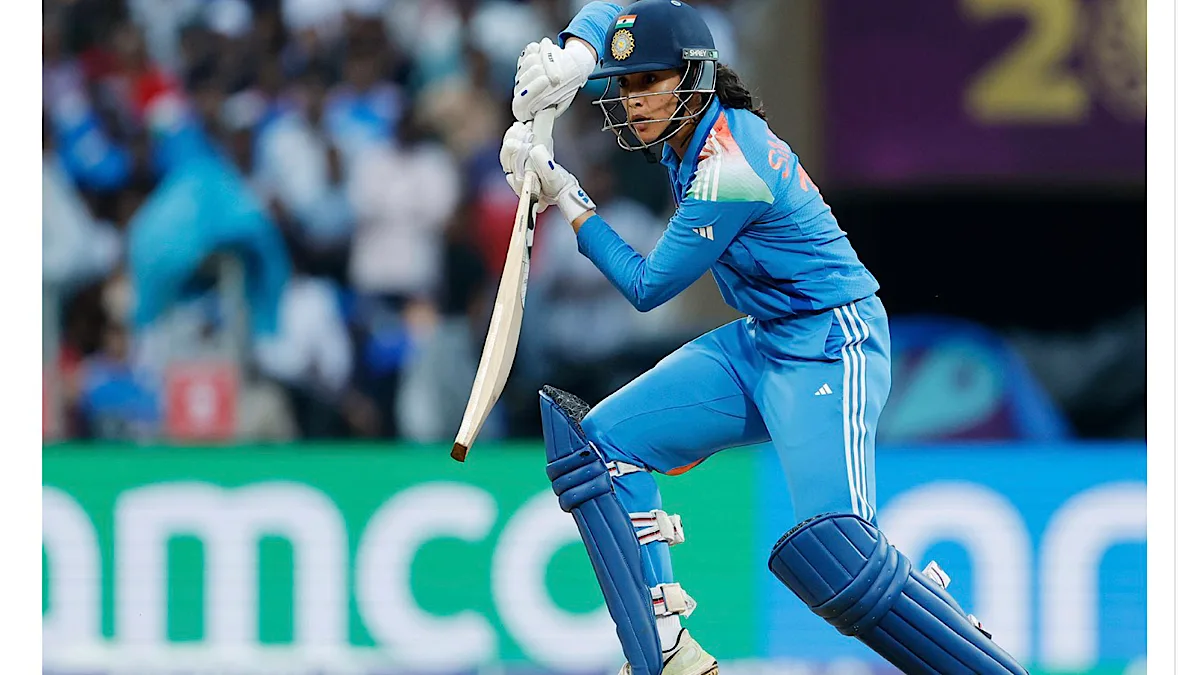
Smriti Mandhana becomes first Indian batter to hit 4000 runs in Women’s T20Is

Star Indian opener Smriti Mandhana scripted history as she became the first Indian to hit 4000 runs in Women’s T20I cricket.

ANI | New Delhi |

Star Indian opener Smriti Mandhana scripted history as she became the first Indian to hit 4000 runs in Women’s T20I cricket.

The left-handed batter achieved this historic milestone during the first T20I against Sri Lanka Women at the ACA-VDCA Cricket Stadium on Sunday.
Mandhana, who scored 25 runs during the opening T20I of the five-match series, also became the second woman to reach the landmark of 4000 runs in T20Is after New Zealand’s Suzie Bates (4716 runs).

Additionally, Mandhana is also the quickest to do so in terms of balls taken (3227) than Bates, who took 3675 balls to reach the 4000 runs milestone.
Also, Mandhana is just 42 runs away from scoring 10,000 runs in women’s international cricket. Mandhana has notched up 4007 runs in T20Is, 5322 runs in ODIs, and 629 runs in Test cricket to date.

Coming to the match, Jemimah Rodrigues slammed a match-winning, unbeaten half-century that helped the Harmanpreet Kaur-led India Women to a dominating eight-wicket win against Sri Lanka Women in the series opener on Sunday.
With this commanding win, the Women in Blue took a 1-0 lead in the ongoing T20I series against Sri Lanka.

While chasing a 122-run target, Jemimah hammered an unbeaten 69 runs off 44 deliveries, with the help of 10 fours that helped India Women to chase down the target in just 14.4 overs. Jemimah also equalled Mithali Raj’s four 50-plus scores against Sri Lanka in T20Is.
During the chase, Mandhana and Jemimah stitched a crucial 54-run partnership for the second wicket that put India into a commanding position.
Jemimah also stitched an unbeaten 55-run stand for the third wicket with captain Harmanpreet Kaur, who made an unbeaten 15 that helped the Women in Blue win the first T20I by eight wickets.

Earlier, after being asked to bat first, Sri Lanka Women were restricted to 121/6 in their 20 overs. Sri Lanka opener Vishmi Gunaratne was the top scorer for the visitors, scoring 39 off 43 balls.

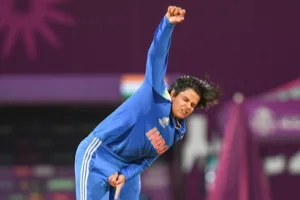
Among the bowlers, Deepti Sharma was the most economical, returning figures of 1/20 in her four overs, which included a maiden. Kranti Gaud finished with 1/23 from three overs, while Shree Charani conceded 30 runs and picked up one wicket in her four overs.
Brief scores: Sri Lanka Women 121/6 in 20 overs (Vishmi Gunaratne 39, Harshitha Samarawickrama 21; Deepti Sharma 1/20) vs India Women (Jemimah Rodrigues 69*, Smriti Mandhana 25; Inoka Ranaweera 1/17).

Pakistan: Over 1,300 security personnel deployed in Rawalpindi ahead of possible PTI protests

The deployment of police and security personnel comes amid rising tensions after a court on Saturday sentenced PTI founder and former Prime Minister Imran Khan and his wife Bushra Bibi to 17 years’ imprisonment in the Toshakhana-II case.

IANS | New Delhi |

Over 1,300 police officers and security personnel have been deployed in Rawalpindi to maintain law and order situation ahead of possible Pakistan Tehreek-e-Insaf protest and a Jamaat-e-Islami gathering at Liaquat Bagh, local media reported on Sunday, citing officials.

The deployment of police and security personnel comes amid rising tensions after a court on Saturday sentenced PTI founder and former Prime Minister Imran Khan and his wife Bushra Bibi to 17 years’ imprisonment in the Toshakhana-II case.

PTI leaders have expressed support for their leader and vowed action against the verdict they termed baseless. PTI’s Secretary General Salman Akram Raja on Saturday revealed that Imran Khan has urged his supporters to prepare for a street movement, Pakistan-based The Express Tribune reported.

According to officials, the deployment includes two superintendents of police, seven deputy superintendents of police, 29 inspectors and station house officers, 92 upper subordinates, and 340 constables.

Furthermore, seven sections of Elite Force commandos, 22 Rapid Emergency and Security Operations personnel, and 400 members of the Anti-Riots Management Wing have been posted in Rawalpindi to maintain law and order. Police has set up 32 pickets, each supervised by an upper subordinate, while Elite Force Commandos are carrying out patrols.

Imran Khan has issued a call for nationwide protest and announced his intention to challenge the court’s verdict in the Toshakhana-II case in the Islamabad High Court.

“I have sent a message to (Khyber Pakhtunkhwa Chief Minister) Sohail Afridi to prepare for the street movement. The entire nation will have to rise for its rights,” Imran Khan said as per the account of the conversation between the PTI leader and his lawyer shared on X, the Dawn reported.

He said that the court’s decision did not come as a surprise; however, he asked his legal team to approach the high court against the verdict.

The Toshakhana-II corruption case involves the purchase of an expensive jewellery set, gifted to Imran Khan, by the Saudi Crown Prince during an official visit in May 2021, at a nominal price.

The verdict was pronounced by Judge Central Shahrukh Arjumand of the Federal Investigation Agency (FIA)’s special court during proceedings conducted at Rawalpindi’s Adiala jail, where Imran Khan is imprisoned.

Under the ruling, Imran Khan was sentenced to a total of 17 years in prison, receiving 10 years of rigorous imprisonment under several sections of the Pakistan Penal Code, and seven years under the Prevention of Corruption Act.

Bushra Bibi also received a 17-year imprisonment sentence under the same legal provisions.

Additionally, both were fined Rs 16.4 million, with failure to pay the fines resulting in further imprisonment.

Ukraine says latest peace talks with US, Europe ‘productive’

Ukraine’s talks with US and European partners over the past three days in the US state of Florida were “productive and constructive,” Ukraine’s top peace negotiator Rustem Umerov said.

IANS | New Delhi |

Ukraine’s talks with US and European partners over the past three days in the US state of Florida were “productive and constructive,” Ukraine’s top peace negotiator Rustem Umerov said.

In a Facebook post, Umerov said discussions between Ukraine and the US focused on further development of a 20-point peace plan, aligning positions on multilateral and US security guarantee frameworks for Ukraine, and further development of an economic and prosperity plan, Xinhua news agency reported.

The sides also discussed timelines and the sequencing of next steps.

“Ukraine remains fully committed to achieving a just and sustainable peace,” Umerov said. “Our shared priority is to stop the killing, ensure guaranteed security, and create conditions for Ukraine’s recovery, stability, and long-term prosperity.”

“Peace must be not only a cessation of hostilities, but also a dignified foundation for a stable future,” he said, adding that Ukraine will continue “close coordination” with the US and Europe in the next stages.

He added that key European national security advisors joined the discussions to align on a shared strategic approach between Ukraine, the United States and Europe.

US presidential special envoy Steve Witkoff issued a similar statement on X, confirming that “a series of productive and constructive meetings” were held over the past three days.

The Ukrainian delegation included Umerov, who is also secretary of the National Security and Defense Council of Ukraine, and Andriy Hnatov, chief of the General Staff of the Armed Forces of Ukraine.

The US delegation included Witkoff, Trump’s son-in-law Jared Kushner and White House staff member Josh Gruenbaum.

Over the weekend, Russian President Vladimir Putin’s special envoy Kirill Dmitriev held separate talks with US officials in Miami, Florida. “The discussions are proceeding constructively,” Dmitriev told reporters Saturday.

During his annual year-end press conference in Moscow on Friday, Putin said Russia agrees to end the Ukraine crisis through negotiations, alongside eliminating the root causes, noting that now “the ball is entirely in the court of Ukraine and its European sponsors.”

UAE, French presidents vow to strengthen bilateral cooperation

President of the United Arab Emirates (UAE) Sheikh Mohamed bin Zayed Al Nahyan met with French President Emmanuel Macron to discuss bilateral relations and regional issues of mutual interest.

IANS | New Delhi |

President of the United Arab Emirates (UAE) Sheikh Mohamed bin Zayed Al Nahyan met with French President Emmanuel Macron to discuss bilateral relations and regional issues of mutual interest.

The two leaders, on Sunday, reviewed the historical and strategic partnership between their countries and explored ways to deepen cooperation in areas including economy and investment, culture, renewable energy, advanced technology, artificial intelligence and sustainability, Xinhua news agency reported quoting the state-owned Emirates News Agency.

France and the UAE maintain close defense ties, with the UAE being a major buyer of French military equipment, including fighter jets. Media reports have said Paris is considering deeper cooperation with Abu Dhabi on its future combat aircraft program, amid uncertainties over the project’s European partners.

During his visit to the UAE, Macron also met with French troops stationed in the country, where he announced that France had given final approval to replace its flagship aircraft carrier, the nuclear-powered Charles de Gaulle, as part of a long-term defense program, according to media reports.

Macron is making a working visit to the UAE to celebrate the end-of-year holidays with French forces deployed abroad and to hold talks with Emirati leaders on bilateral ties and regional stability.

In a social media post, the French president said his discussions with the UAE leader focused on strengthening the strategic partnership between the two countries, particularly in support of stability in the Middle East.

‘Russia fully committed to achieving peace’: Trump’s foreign envoy Steve Witkoff after Miami talks conclude

US President Donald Trump’s foreign envoy, Steve Witkoff, stated that Russia “remains fully committed to achieving peace” in Ukraine as the United States concluded talks with the Russian delegation in Miami, Florida.

ANI | New Delhi |

US President Donald Trump’s foreign envoy, Steve Witkoff, stated that Russia “remains fully committed to achieving peace” in Ukraine as the United States concluded talks with the Russian delegation in Miami, Florida.
In a statement on X, Witkoff said that Russia “highly values” the United States’ efforts to resolve the conflict.

The US envoy said, “Over the last two days in Florida, the Russian Special Envoy Kirill Dmitriev held productive and constructive meetings with the American delegation to advance President Trump’s peace plan on Ukraine. The American delegation included Special Envoy Steve Witkoff, Jared Kushner, and White House staff member Josh Gruenbaum.”
“Russia remains fully committed to achieving peace in Ukraine. Russia highly values the efforts and support of the United States to resolve the Ukrainian conflict and re-establish global security,” the statement read.

The negotiations were held between Russia and the United States as Ukrainian President Volodymyr Zelenskyy called on Washington to increase pressure on Moscow.
Earlier, Steve Witkoff and Secretary of the National Security and Defence Council of Ukraine, Rustem Umerov, termed the Ukrainian delegation’s meetings with American and European counterparts, in the backdrop of discussions on a peace deal in Miami, “productive and constructive.”
In a joint statement, they stated that a separate meeting was held over further development of US President Donald Trump’s 20-point plan, aligning positions on a multilateral security guarantee framework, and aligning positions on a US Security guarantee framework for Ukraine.
Rustam Umerov shared the statement on X, which said, “Over the last three days in Florida, the Ukrainian delegation held a series of productive and constructive meetings with American and European partners. The Ukrainian delegation included Secretary of the National Security and Defence Council of Ukraine, Rustem Umerov, and the Chief of the General Staff of the Armed Forces of Ukraine, Lieutenant General Andriy Hnatov.”

“The American delegation included Special Envoys Steve Witkoff and Jared Kushner, as well as White House staff member Josh Gruenbaum. Key European National Security Advisors also joined the discussions to align on a shared strategic approach between Ukraine, the United States, and Europe,” the statement added.

“A separate constructive meeting was also held in a US-Ukraine format, during which four key documents were focused on: further development of a 20-point plan, aligning positions on a Multilateral security guarantee framework, aligning positions on a US Security guarantee framework for Ukraine, and further development on an economic and prosperity plan,” the statement said.

Ukraine stated it discussed timelines and the next steps for peace.
Umerov stated, “Particular attention was given to discussing timelines and the sequencing of next steps. Ukraine remains fully committed to achieving a just and sustainable peace. Our shared priority is to stop the killing, ensure guaranteed security, and create conditions for Ukraine’s recovery, stability, and long-term prosperity.
“Peace must be not only a cessation of hostilities, but also a dignified foundation for a stable future. Ukraine highly values the leadership and support of the United States and the continued close coordination with its partners in the next stages of this important work,” the statement read.

Indian H-1B visa holders who flew back to renew work permits left stranded

Indian H-1B visa holders who travelled back this month to renew their American work permits are stranded amid their appointments being abruptly rescheduled by US consular offices

Statesman News Service | New Delhi |

Indian H-1B visa holders who travelled back this month to renew their American work permits are stranded amid their appointments being abruptly rescheduled by US consular offices, the Washington Post reported, citing three immigration lawyers.

The Indian high-skilled workers had appointments cancelled between December 15 and 26, the lawyers said, a period coinciding with the US holiday season. In emails viewed by The Washington Post, the State Department told visa holders their interviews were being delayed after the implementation of the Trump administration’s new social media vetting policy, “to ensure that no applicants… pose a threat to U.S. national security or public safety.”
The United States has expanded its review of social media and online presence to cover all H-1B speciality occupation workers and their H-4 dependents, the US Embassy in India said on December 10.

In a statement, a US Embassy spokesperson explained that the Department of State already conducts online presence checks for student and exchange visitor visa categories such as F, M, and J. Starting December 15, this review also included H-1B and H-4 applicants.
Emily Neumann, a partner at the Houston-based immigration firm Reddy Neumann Brown PC, said she had at least 100 clients stranded in India. Veena Vijay Ananth, an immigration attorney in India, and Charles Kuck, who practices immigration law in Atlanta, said they each had a dozen such cases.

“This is the biggest mess we have seen. I’m not sure there is a plan,” said Ananth.
A spokesperson for the State Department said, “While in the past the emphasis may have been on processing cases quickly and reducing wait times, our embassies and consulates around the world, including in India, are now prioritising thoroughly vetting each visa case above all else.”

According to an April 2025 report from US Citizenship and Immigration Services (USCIS), India accounts for 71 per cent of visa holders.
In July, the State Department announced that H-1B holders, and their dependents on H4 visas, would not be able to renew their documents in a third country as of September 2 and on September 19, Trump signed a proclamation imposing a USD 100,000 fee on new H-1B applications, the Washington Post reported.

The Washington Post reported that an Indian man living in the Detroit suburbs said he flew back to India in early December for a wedding and had consular appointments scheduled for December 17 and 23, which have now expired.
The Houston-based attorney, Neumann, asked, “How long are companies going to be willing to wait for these people?”

This comes after the proclamation issued by US President Donald Trump on September 19, ordering a USD 100,000 fee for new H-1B visa applications. According to the US State Department, current visa holders and petitions submitted before that date remain unaffected. Under the proclamation, a USD 100,000 fee must accompany every new H-1B visa petition filed after the deadline, including those submitted for entry into the 2026 lottery.

The new fee requirement applies only to individuals or companies filing new H-1B petitions or entering the H-1B lottery after September 21.

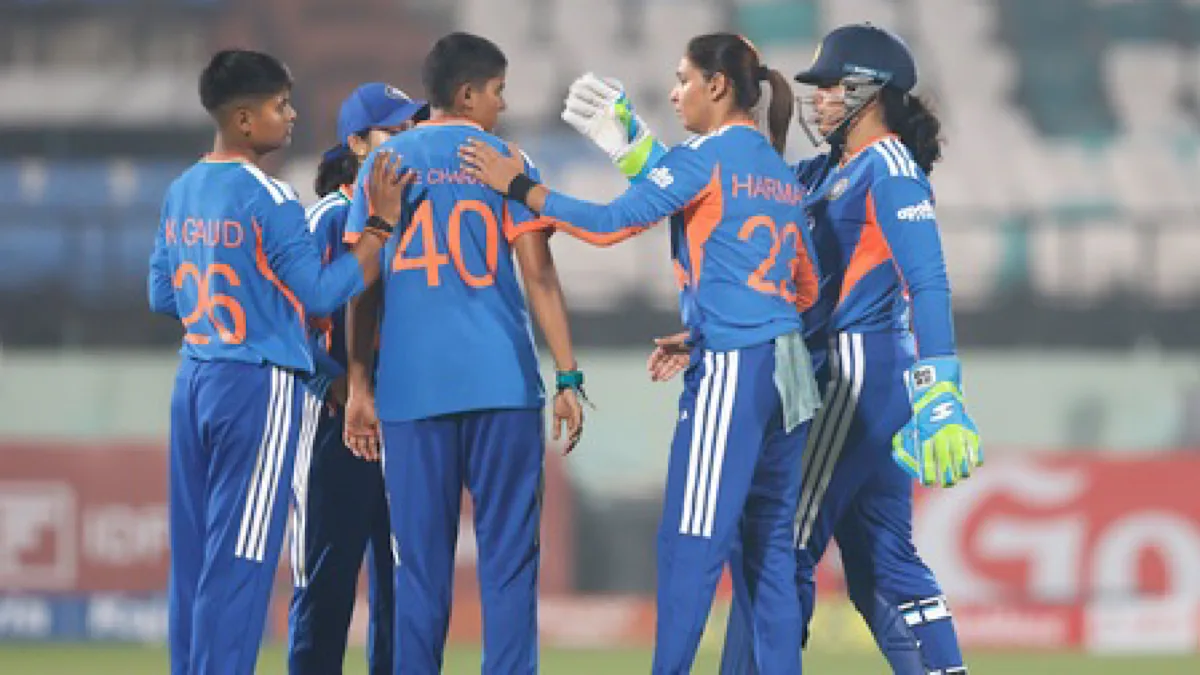
1st T20I: Jemimah’s 69 not out, bowlers help India Women beat Sri Lanka by eight wickets

Jemimah Rodrigues continued her superb form from the Women’s ODI World Cup as she slammed an unbeaten half-century to help India capitalise on a good bowling performance to beat Sri Lanka by eight wickets in the first match of the five-match women’s T20I series in Visakhapatnam.

IANS | New Delhi |

Jemimah Rodrigues continued her superb form from the Women’s ODI World Cup as she slammed an unbeaten half-century to help India capitalise on a good bowling performance to beat Sri Lanka by eight wickets in the first match of the five-match women’s T20I series in Visakhapatnam.

After the Indian bowlers came up with a superb performance to restrict Sri Lanka to a modest 121/6 in 20 overs, Jemimah, who scored a century to help India reach the World Cup final, scored 69 not out off 44 balls on Sunday and helped India race to 122/2 at the Dr. Y.S. Rajasekhara Reddy ACA-VDCA Cricket Stadium and win the match with 32 balls to score.

Jemimah scored her half-century off 34 balls as she struck 10 boundaries and shared two half-century partnerships — 54 for the second wicket stand with Smriti Mandhana, who scored a run-a-ball 25 after India lost Shafali Verma (9) early, and an unfinished 55-run partnership with skipper Harmanpreet Kaur for the third wicket.

Jemimah built her knock with patience and then unleashed some superb shots, was quick on her feet, played late cuts superbly, and ran brilliantly, at times egging Mandhana and Harmanpreet to put in an extra effort. Mandhana and Rodrigues repaired the Indian innings after Verma clipped Kawya Kavindi to square leg, where Gimhani picked a smart catch, diving forward.

Smriti was her usual left, cautious, and patient as he scored 25, becoming the first Indian batter to reach 4000 runs in women’s T20I cricket. She hit four boundaries before being caught by Nilakshika Silva at deep extra cover off Inoka Ranaweera.

Rodrigues found a willing partner in skipper Harmanpreet Kaur as they guided India to a comprehensive win with the captain scoring 15 not out as India went up 1-0 in the five-match series.

Earlier, the bowlers made an easy win possible for India in a match in which both teams were hampered by copious dew.

After skipper Harmanpreet Kaur elected to field on winning the toss in their first outing since winning the Women’s ODI World Cup in Navi Mumbai, the Indian bowlers strangled the Sri Lankan batters despite atrocious fielding that included a few dropped catches, misfields and a six palmed-over by Smriti Mandhana as the 50 overs World Champions struggled to adjust with the short format, which they were playing after a big break.

The Sri Lankans were not much better and struggled with the T20 format after they lost skipper Chamari Athapaththu for 15 off 12 balls as they managed to score only 31/1 in the Power-play. The Sri Lankan captain struck three fours in the first couple of overs before Kranti Gaud managed to sneak a ball through the gap between the bat and pad to rattle the stumps for her first Women’s T20I wicket.

Though debutant spinner Vaishavi Sharma failed to get a wicket, she conceded only 16 runs in her four overs as the Indians tied the Sri Lankans in knots. Deepti Sharma conceded only 10 runs in three overs, while N Shree Charani was comparatively costly in her spell of 1-30 in four overs. She was also guilty of dropping two easy skiers.

For India, Kranti Gaud (1-23), Deepti Sharma (1-20), and N. Shree Charani (1-30) claimed a wicket each.

Vishmi Gunaratne waged a lone battle for Sri Lanka as she scored a slow 39 off 43 balls, hitting a four and a six before she was run out to a piece of good work by Kranti Gaud. She shared a 38-run partnership with Harshitha Samarawickrama, but once the latter was out, Sri Lanka’s batting effort got derailed once again.

Hasini Perera 20 off 23 and Harshitha Samarawickrama (21 off 23) got starts but could not capitalise on them. But they helped the Islanders cross into three figures, though they could not manage to hit any big shots.

Both India and Sri Lanka have gone into the match with contrasting selection decisions. While India showed trust in the tried and tested, retaining a majority of players that figured in their triumphant 50-over World Cup winning campaign, Sri Lanka picked several youngsters as both teams try to find the best combination for the Women’s T20 World Cup to be held later in 2026.

Brief scores:

Sri Lanka Women 121/6 in 20 overs (Vishmi Gunaratne 39, Harshitha Samarawickrama 21; Kranti Gaud 1-23, Deepti Sharma 1-20, N. Shree Charani 1-30) lost to India Women 122/2 in 14.4 overs (Jemimah Rodrigues 69 not out, Smriti Mandhana 25; Inoka Ranaweera 1-17) by eight wickets

‘Maharashtra stands firmly with development’: PM Modi hails Mahayuti’s sweeping win in local body polls

The Prime Minister stated that the victory of the BJP-led alliance in the Maharashtra local body elections “reflects the public’s confidence in our people-centric vision of development.”

Statesman News Service | New Delhi |

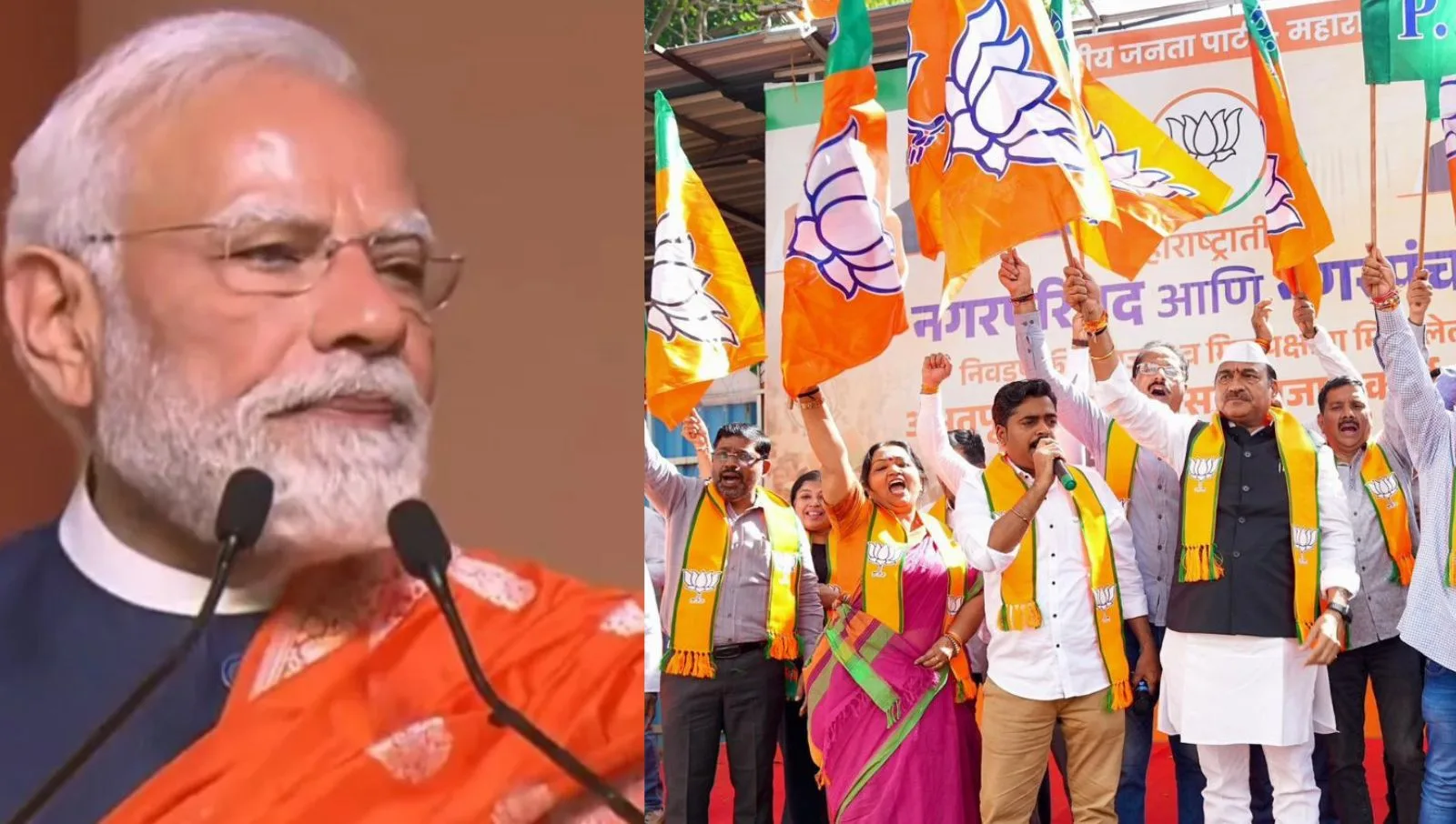
Prime Minister Narendra Modi on Sunday hailed the massive victory of the BJP-led Mahayuti alliance in the Maharashtra municipal council and nagar panchayat elections, asserting that the people of the state have firmly stood with development.

“Maharashtra stands firmly with development! I am grateful to the people of Maharashtra for showing their trust in the BJP and the Mahayuti in the municipal council and nagar panchayat elections,” Modi said in a post on X.

The Prime Minister stated that the victory of the BJP-led alliance in the Maharashtra local body elections “reflects the public’s confidence in our people-centric vision of development.”

The PM said that the alliance is “committed to working with renewed energy to fulfil the aspirations of every citizen of the state.”

According to the trends and results declared as of 3 PM, the BJP secured victory in 129 municipal councils to emerge as the single largest party. The Mahayuti alliance won 215 of the 288 municipal councils.

Maharashtra Chief Minister Devendra Fadnavis expressed his gratitude to the people of the state for giving such an overwhelming mandate to the BJP and the Mahayuti alliance.

“Truly grateful to the people of Maharashtra for blessing us with an overwhelming mandate in the municipal council and nagar panchayat elections. This remarkable success belongs to our dedicated karyakartas; it is their hard work, commitment, and perseverance that have made this victory possible,” Fadnavis said.

The Chief Minister further stated that in terms of the number of corporators, the BJP had won 1,602 seats in 2017, which has now surged to 3,325. Overall, the Mahayuti alliance has won 4,331 seats (62.30 per cent) out of a total of 6,952 seats.

He said that this victory is just a trailer of what will be seen in the upcoming municipal corporation elections. “I urge every party worker to work even harder and with greater dedication to drive us towards even bigger victories in the future!” he added.

Mamata Banerjee to hold meeting with Trinamool’s booth level agents in Kolkata tomorrow

West Bengal Chief Minister Mamata Banerjee is set to hold an important meeting with the Trinamool Congress booth-level agents (BLAs) at Kolkata’s Netaji Indoor Stadium on Monday, a senior Trinamool Congress leader said on Sunday.

IANS | Kolkata | Updated :

West Bengal Chief Minister Mamata Banerjee is set to hold an important meeting with the Trinamool Congress booth-level agents (BLAs) at Kolkata’s Netaji Indoor Stadium on Monday, a senior Trinamool Congress leader said on Sunday.

According to the Trinamool Congress leader, the Chief Minister will hold a meeting with selected BLAs from Kolkata and surrounding districts.

BLAs from 11 Assembly constituencies in Kolkata, as well as from selected constituencies in North 24 Parganas, South 24 Parganas, Howrah and Hooghly districts, have been called to this meeting.

The main discussion at this meeting will be the situation arising from the Election Commission’s Special Intensive Revision (SIR) exercise of West Bengal’s electoral rolls.

Following the publication of the draft voters’ list in the first phase of SIR, the names of nearly 58.5 lakh voters have been dropped across the state.

In terms of percentage, Kolkata’s 11 Assembly constituencies have set a record for the highest number of voters removed from the list.

This list includes the Chief Minister’s own constituency, of Bhabanipur.

However, Mamata Banerjee had held a meeting with the BLAs of Bhabanipur at her Kalighat residence last week.

At that time, she had hinted that there would be further discussions with the BLAs on a large scale.

According to some political observers, the Chief Minister might train her gun at the Election Commission over its role from holding the SIR in Bengal in Monday’s meeting.

A section of the political observers is keeping a watch on Monday’s meeting and what message she sends to the BLAs.

Meanwhile, Leader of the Opposition in state Assembly and senior BJP leader, Suvendu Adhikari, will also be present in the Assembly premises around the same time on Monday. ​​

BJP sources said that LoP Adhikari has summoned several BJP MLAs to the state Assembly on Monday.

The BJP’s Legislative Party will be keeping a close eye on Chief Minister Mamata Banerjee’s speech at the Netaji Indoor Stadium on Monday.

Mayor ensures survival of saplings amid prolonged dry spell in Shimla

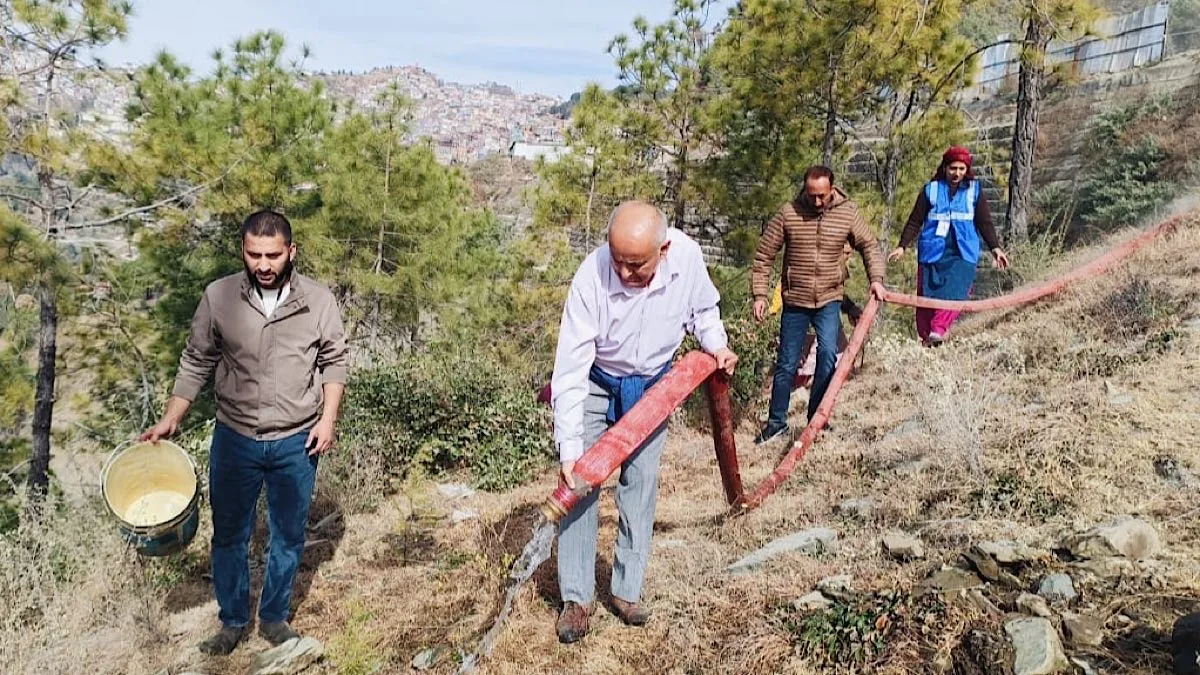
With a dry spell persisting in Shimla for over three months, the city Mayor Surinder Chauhan on Sunday personally took the initiative to irrigate saplings planted under the city’s tree plantation project at Chamina, to ensure a higher survival rate.

UNI | Shimla |

With a dry spell persisting in Shimla for over three months, the city Mayor Surinder Chauhan on Sunday personally took the initiative to irrigate saplings planted under the city’s tree plantation project at Chamina, to ensure a higher survival rate.

The Mayor, along with his team and members of the local Self Help Groups (SHGs), undertook the watering of saplings using water supplied through tankers. Chauhan said he had recently visited the area and observed that the prolonged dry spell could adversely impact the
survival of the newly planted saplings.

“We had undertaken a week-long tree plantation drive in Chamina, on the outskirts of Shimla, during August under the Rajiv Gandhi Van Samvardhan Yojna (RGVSY), which is a Himachal Pradesh initiative aimed at boosting afforestation. As the scheme also aims to strengthen rural livelihoods by shifting to a community-driven model, we engaged SHGs
to plant saplings and ensure their survival, intending to increase
green cover,” he informed, adding that around 3,000 saplings had been
planted over one hectare of land in Chamina.

“The area was adopted by the Shimla Municipal Corporation keeping in view the under-construction four-lane road in the area and its proximity to the super speciality hospital, Atal Institute of Medical Super Specialities (AIMSS).

“We intend to compensate for the loss of trees in the area due to development work and to beautify the surroundings while improving the oxygen bank for patients visiting the hospital,” said Chauhan.

He said that every person should plant at least two saplings in their lifetime for a clean and green environment. “Tree plantation is one of the effective ways not only to increase forest cover but also to reduce the carbon footprint. It plays a critical role in the global carbon cycle and is key to climate change mitigation and adaptation solutions,” Chauhan said.

He called upon NGOs and other organisations actively involved in plantation drives to ensure the survival rate of the saplings planted by them during the ongoing dry spell by regularly watering the young plants.

RGVSY, a community-driven afforestation programme aimed at boosting the state’s green cover while generating employment for local groups, was launched by Chief Minister Sukhvinder Singh Sukhu this year. The target is to plant trees over more than 9,000 hectares of forest land, of which 60 per cent will be fruit-bearing species.

To ensure a higher survival rate, the saplings will be maintained for five years.

Only 0.19% of Aravalli range eligible for mining, 100 meter rule ‘misinterpreted’: Govt

The clarification came amid mounting pressure over the purported change in the definition of the Aravalli range.

Statesman News Service | New Delhi | Updated :

Facing intense criticism for allegedly diluting protections for the Aravalli hills, the Narendra Modi government on Sunday clarified that only 0.19 per cent of the mountain range will be eligible for mining.

Union Environment, Forest and Climate Change Minister Bhupendra Yadav, who represents the Alwar Lok Sabha seat — one of the regions that significantly benefits from the Aravalli ecosystem — asserted that the Supreme Court has directed the preparation of a plan for sustainable mining.

“The total Aravalli area is about 1.47 lakh square kilometres. Only around 217 square kilometres — nearly two per cent (Yadav later clarified its 0.19 per cent) — is eligible for mining. Even so, the Supreme Court has directed that a Management Plan for Sustainable Mining be prepared. After that, permission from ICFRE will be required before any activity can proceed,” Yadav said.

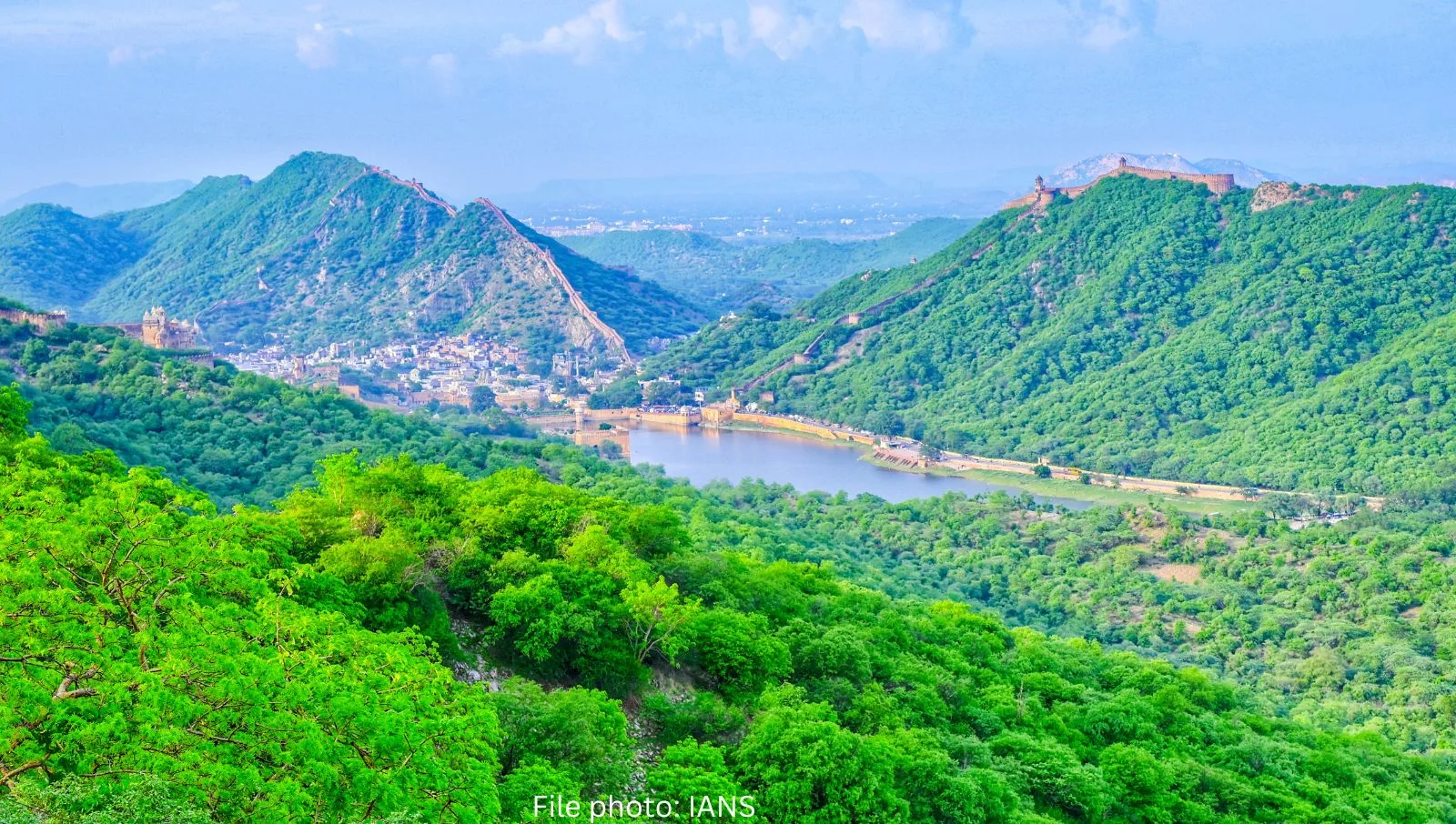
The minister reiterated that there are no relaxations in the protection of the Aravalli range. “The Aravalli range spans four states — Delhi, Haryana, Rajasthan and Gujarat. A petition regarding it has been pending in court since 1985,” he said.

He added that some YouTube channels have misinterpreted the 100-metre definition.

“Some YouTube channels wrongly interpret the 100-metre range as the top 100 metres, which is not true. The 100 metres refers to the spread of the hill from top to bottom, and the gap between two ranges will also be considered part of the Aravalli range. With this definition, 90 per cent of the area falls under the protected zone,” he clarified.

MUST READ | An ancient mountain range is on trial

Yadav further stated that all protected areas and forest reserves in Delhi will remain unchanged. “Our government has been running a Green Aravalli programme for the past two years. We are very committed to protecting the Aravalli, and a false narrative is being created,” he added.

The clarification came amid mounting pressure over the purported change in the definition of the Aravalli range.

The controversy started after the Supreme Court, on November 20, accepted the Centre’s definition of the Aravalli hills and approved recommendations for sustainable mining.

As per claims circulating widely on social media, the definition of the Aravalli hills had allegedly been altered so that only mountains 100 metres or higher would be considered part of the Aravalli range.