Logo

Shah meets BJP state leaders, targets 20 of Kolkata’s 28 seats

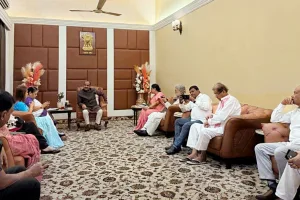
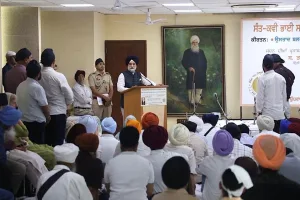
Continuing on his agenda to take stock of the BJP West Bengal unit’s preparedness for the Assembly polls scheduled early next year, Union home minister Amit Shah on Wednesday held a meeting with the party’s public representatives, past and present, at a hotel in Salt Lake here.

Statesman News Service | Kolkata |

Continuing on his agenda to take stock of the BJP West Bengal unit’s preparedness for the Assembly polls scheduled early next year, Union home minister Amit Shah on Wednesday held a meeting with the party’s public representatives, past and present, at a hotel in Salt Lake here.

Shah also held a closed-door meeting with BJP leaders, ministers, MLAs and even candidates, who had lost in the last Assembly elections, setting an ambitious target of winning 200 seats in the next West Bengal Assembly polls. Addressing the gathering, Mr Shah asserted that the party’s growth trajectory made the target achievable. “We want 20 of the 28 seats in greater Kolkata. If we can move from three seats to 77, why can’t we go from 77 to 200?” he asked, urging leaders and workers to intensify grassroots mobilisation.

Repeatedly stressing the importance of mass outreach, the home minister called for coordinated efforts at every level of the organisation. “Connect one worker with another. Expand communication. Wake everyone up,” he said, directing party cadres to focus on door-to-door campaigns across Kolkata and its adjoining four districts. He specifically instructed leaders to visit households, listen to people’s grievances and build sustained personal contact with voters.

The party’s former state president, Dilip Ghosh, who has largely stayed away from the forefront of BJP’s activities in the state over the past several months, was also invited to the closed-door meeting attended by the party’s MPs, MLAs, civic body councillors and organisational portfolio holders. The state president of the party, Samik Bhattacharya, and the state’s Leader of Opposition, Suvendu Adhikari, were also among the leaders present.

Although it wasn’t immediately known what transpired in the meeting, a senior party leader said that the invitees are likely to receive tickets for the upcoming elections, and Shah, considered BJP’s chief poll strategist, wanted to listen to these leaders about the campaign roadmap and share his thoughts with them.

Mr Shah also expressed concern over law and order, remarking that Kolkata was “not safe”, and accused the ruling Trinamul Congress of betraying its promise of “maa, mati, manush”. “The mother is under threat, and infiltration is rampant,” he alleged, calling on BJP workers to counter this narrative through direct engagement with citizens. Making his expectations clear, the home minister said aspirants seeking party tickets would have to prove their merit. However, party sources indicated that several candidates who had lost their constituencies earlier may be considered again in the upcoming elections.

“Everyone in the party is energised. We will win the 2026 polls and bring about true change in this state,” Adhikari told reporters before walking into the meeting. On Tuesday, Shah set the tone for the high-stakes Assembly polls, and launched a broadside against Mamata Banerjee, accusing her government of “dangerously altering” the state’s demography by abetting the infiltration of Bangladeshis for electoral gains and indulging in widespread corruption.

Shah visited Thanthania Kali Temple in central Kolkata before departing for Delhi.

Reacting to the call by Mr Shah, TMC spokesperson Jay Prakash Majumdar said: “They have been making hollow claims for a long time, saying ‘we will win’, ‘we will fight’, ‘we will form the government this time’. In the end, they are losing badly and ending up empty-handed. Such statements carry no value. The entire party is suffering from frustration.”

You are weaponising electoral rolls: Abhishek to CEC Gyanesh Kumar

The Chief Election Commissioner Gyanesh Kumar has been assigned to destroy the Election Commission of India (ECI) and the Indian Constitution, alleged Abhishek Banerjee, national general secretary of Trinamul Congress.

Statesman News Service | Kolkata |

The Chief Election Commissioner Gyanesh Kumar has been assigned to destroy the Election Commission of India (ECI) and the Indian Constitution, alleged Abhishek Banerjee, national general secretary of Trinamul Congress.

A 10-member Trinamul Congress delegation met Mr Kumar at Nirvachan Sadan this afternoon.

The members of the delegation were Rajya Sabha MPs, Saket Gokhale, Derek O’ Brien, Mamatabala Thakur, Ritabrata Banerjee, Nadimul Haque and Mr Kalyan Banerjee, Lok Sabha MP. The state ministers, namely, Chandrima Bhattacharya, Dr Manas Bhuniya and Pradip Mazumdar were also included in the delegation.

Mr Banerjee alleged: “Mr Kumar was secretary to the Union home minister Amit Shah and he has been appointed at the CEC to manipulate the voters’ list. Had the parties like Congress and AAP been alert, BJP would have lost the election battle in Maharashtra, Delhi, Haryana and Rajasthan. Chori is not happening in EVM. It’s happening in electoral rolls.”

He demanded that the ECI should publish the CCTV footage of the two-and-a-half-hour long discussion with the CEC so that the people could see that Mr Kumar was the lone speaker. Another Election Commissioner just spoke for 30 seconds. Mr Banerjee alleged that to avoid court cases by the opposition parties, the ECI is giving instructions in WhatsApp and not issuing notifications, flouting all norms. “The ECI is giving instructions to the officials in WhatsApp so that the opposition parties cannot move the court,” Mr Banerjee maintained.

Mr Banerjee demanded that the logical discrepancy list should be published. In earlier SIR there was no such thing as a suspicious list. “I clearly mentioned this to Gyanesh Kumar that you are weaponising electoral rolls,” Mr Banerjee said.

Mr Banerjee alleged that the allegations of infiltration had been made by the BJP after the saffron party lost the Assembly election in 2021 and its number of seats went down in 2024 Lok Sabha polls. “The names of 58 lakh voters have already been deleted; the ECI has failed to disclose how many of these deletions involve foreign nationals. Senior BJP leaders alleged that one crore Bangladeshi and Rohingyas were given shelter in Bengal for electoral advantage. Why has the ECI not issued show-cause notices or no taken action against such statements which directly pertain to the objectives of SIR,” he asked.

He said the ECI does not know that a private company Datamation Consultancy Pvt Ltd has been engaged by it to conduct knowledge, attitude and practice (KAP) surveys in certain Assembly constituencies in Bengal under the SVEEP programme. The company is a private entity having no statutory accountability under election law yet the electors are being asked to share sensitive personal information with it.

Mr Banerjee said the ECI is yet to take any decision as to whether the elderly people will not have to visit the camps to show their documents when there is a provision that polling personnel visit them during election.

Mr Banerjee maintained: “The people of Bengal will defeat the BJP with a thumping majority despite the deployment of agencies who will work in favour of the saffron party.”

New schedule of electoral duty for BLOs announced

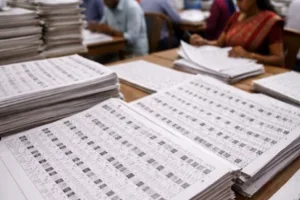
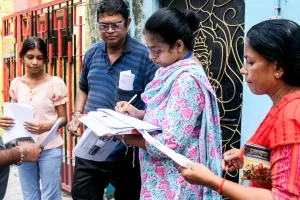
New schedules of responsibilities have been announced by the Election Commission of India (ECI) for the Booth-Level Officers (BLOs) engaged in the ongoing Special Intensive Revision (SIR) exercise from the New Year.

Statesman News Service | Kolkata |

New schedules of responsibilities have been announced by the Election Commission of India (ECI) for the Booth-Level Officers (BLOs) engaged in the ongoing Special Intensive Revision (SIR) exercise from the New Year.

The ECI mentions that schedules of responsibilities will continue till the final voters’ list is published on 14 February next year.

On the two weekend holidays, namely Saturday and Sunday, the BLOs will have to be present at the polling booths concerned for four hours.

Under the new schedule, BLOs will have to be present at the existing polling booths for two hours daily from Monday to Friday.

The BLOs will have to be present at the polling booths with Form-6, Form-7, and Form-8. While Form-6 pertains to the inclusion of new names in the voters’ list, Form-7 relates to the request for deletion of names from the list.

On the other hand, Form-8 is related to the application for shifting of residence or correction of entries in the existing electoral roll or replacement of an elector’s photo identity card or marking of a person with disability.

“This new schedule will start from 2 January and will continue till a reasonable period till the final voters’ list is published on 14 February, next year,” sources in the office of the Chief Electoral Officer (CEO), West Bengal said.

However, that period of the mandatory presence of the BLOs at the polling booths will definitely be over by January end, amid the secondary examinations conducted by the West Bengal Board of Secondary Education (WBBSE) starting from 2 February, and because the majority of the BLOs are teachers attached to different state-run schools in West Bengal.

“The main role of the BLOs was in the first stage of the three-stage SIR exercise, which was the enumeration stage. Now the role of the BLOs is limited,” said sources in the CEO’s office.

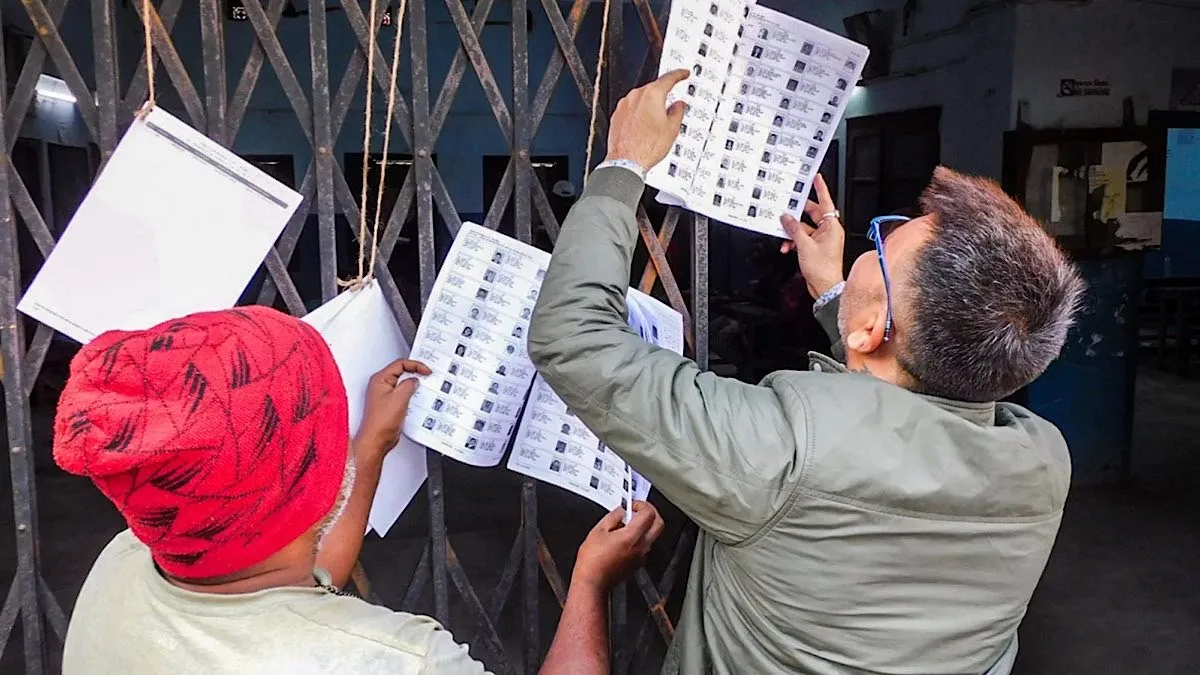
The draft voters’ list was published on 16 December. The final voters’ list will be published on 14 February next year. Soon after that, the ECI will announce the polling dates for the crucial Assembly elections in West Bengal, scheduled for next year.

Panicked youth, summoned for hearing, allegedly commits suicide

A young man from Saptagram in Hooghly, summoned for SIR hearing and fearing his name would be removed from the voter list due to lack of documents, allegedly committed suicide out of panic late on Tuesday night, according to his family members.

Statesman News Service | Kolkata |

A young man from Saptagram in Hooghly, summoned for SIR hearing and fearing his name would be removed from the voter list due to lack of documents, allegedly committed suicide out of panic late on Tuesday night, according to his family members.

Swapan Bagdi (36) was a voter of booth number 78 in Tisbigha, under the Saptagram Gram Panchayat of Saptagram Assembly constituency. A daily wage labourer, he was found hanging in a room in his house. His wife Pratima said, “The BLO had summoned my husband for SIR hearing. But he had no documents other than his voter ID card. Though I tried to convince him to go and see what the BLO says, he argued with me over the issue.”

She added, “He appeared highly distraught and tense, fearing that his voter card would not be enough. He apparently panicked for not possessing the required documents and later in the night, he took this drastic step in my absence.”

On receiving news of the young man’s death, local Trinamool leaders went to Tisbigha. Former MLA and current Zilla Parishad member Manas Majumdar said, “Swapan’s family has been living by the railway tracks for a long time. They don’t have any documents. The BLO asked him to come for the SIR hearing. They didn’t even deliver the notice at his house.”

Although Swapan’s family has been living on government land in this area for a long time, they don’t have any proper documents. Majumdar has held the Election Commission responsible for this unwanted death of the only earning member of the family. He alleged that the Election Commission is putting people in danger by conducting the SIR process in such a hurry.

Villagers, scholars hold silent protest to save Purulia’s hills from mining

Under the winter sun of western Purulia, the rocky silhouettes of Tillaboni and Panjaniya hills stood witness on Sunday to a rare, quiet resistance.

Biswabrata Goswami | Kolkata |

Under the winter sun of western Purulia, the rocky silhouettes of Tillaboni and Panjaniya hills stood witness on Sunday to a rare, quiet resistance. Villagers, students and scholars gathered at the foothills not with slogans or barricades, but with folded hands and placards, urging the authorities to halt granite mining that they say is slowly killing their land, water and breath.

The non-violent movement was organised by research scholars from Sidho Kanho Birsha University, to protect the Precambrian geomorphosites of Tillaboni and Panjaniya—ancient landforms that carry geological, ecological and cultural significance stretching back millions of years.

Granite mining continues at Panjaniya Hill, around 300 metres high, affecting villages like Panjaniya, Deshra and Sindurpur, with a combined population of nearly 1,500. Tillaboni Hill, rising to nearly 400 metres, supports another cluster of villages—Tillaboni, Ledabana, Madhapur, Gopinathpur, Tilagora and Kalaboni—taking the total population dependent on these hills to around 3,500.

“These hills are our lungs and kidneys,” said Sudarshan Mahato, a resident of Panjaniya village, standing near a scarred rock face. “The stone companies see only granite. We see water, forest produce, grazing land and the air we breathe. When blasting happens, our wells dry up and dust settles on our crops. How will we survive if the hills disappear?”

According to researchers, the Tillaboni-Panjaniya hills are part of the Precambrian geological formations – among the oldest on earth – making them invaluable records of the planet’s evolutionary history. Beyond geology, they sustain multiple ecosystems service: non-timber forest products, drinking and domestic water supply, groundwater recharge, grazing grounds, and spaces for local festivals and rituals tied to indigenous traditions.

For villagers, the loss is not abstract or scientific – it is immediate and deeply personal.

“Every crack made by mining shakes our houses and our hearts,” said Prabir Mahato, another villager, who joined the protest. “Our ancestors worshipped these hills. Our children climb these rocks, graze cattle here, collect leaves and fruits. If mining continues, we will be left with dust and disease.”

Participants in the gathering argued that unchecked extraction threatens not only the physical landscape but also the fragile socio-economic lifeline of tribal communities that have lived around these hills for generations.

Biswajit Bera, who has been documenting the geomorphology of the region, said the movement aims to push for official recognition of the hills as geo-heritage sites. “These geomorphosites provide provisioning, supporting and cultural ecosystem services. Declaring them as geo-heritage and promoting responsible geotourism can generate sustainable livelihoods without destroying the land,” he said.

Experts point out that geo-heritage status could open pathways for conservation-driven development – nature education, rock climbing, eco-guided trails and cultural tourism – while preserving groundwater systems and forest cover in an already drought-prone region of Junglemahal.

However, villagers fear that without immediate intervention, mining will advance faster than policy. Several participants said they had submitted complaints to local authorities earlier but saw little action on the ground.

Sunday’s gathering ended without confrontation, but with a shared resolve. As dusk settled over the red laterite soil and granite ridges, villagers dispersed quietly, leaving behind a message etched not in slogans, but in the enduring stone they seek to protect: development, they insist, cannot come at the cost of erasing the land’s memory, and their future.

‘Peace? Yes. At any cost? No’: Volodymyr Zelensky’s New Year message sets red lines for peace deal with Russia

President Volodymyr Zelensky said Ukraine wants peace but will not accept a weak deal, warning that agreements without strong guarantees would only prolong the war.

Statesman News Service | Mumbai |

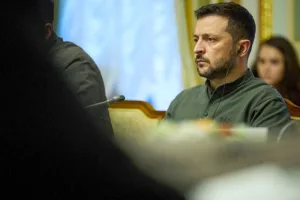
Ukrainian President Volodymyr Zelensky said Ukraine wants the war with Russia to end, but not through a settlement that weakens the country or puts its future at risk.

In his 21-minute televised New Year’s Eve address, delivered shortly before midnight, Zelensky acknowledged that Ukrainians are worn down after nearly four years of fighting. He pointed out that the conflict has already lasted longer than the Nazi occupation of many Ukrainian cities during World War II. Still, he stressed that exhaustion should not be mistaken for defeat.

“What does Ukraine want? Peace? Yes. At any cost? No,” the Ukrainian leader said, adding, “We want an end to the war but not the end of Ukraine.”

He said that while the country is tired, it has no intention of giving up. Any agreement that lacks solid and reliable guarantees, he warned, would only delay the conflict rather than resolve it.

“Are we tired? Very…Does this mean we are ready to surrender? Anyone who thinks so is deeply mistaken.”

Zelensky said ongoing diplomatic efforts are focused on securing a lasting settlement, not a temporary pause in fighting. He added that talks are close to completion, but the most difficult issues, particularly those related to territory, remain unresolved.

“That is exactly what every meeting, every phone call, every decision is about now…To secure a strong peace — not for a day, a week or two months, but peace for years.”

“Any signature placed on weak agreements only fuels the war,” he said, adding: “My signature will be placed on a strong agreement.”

According to Ukrainian media reports, Russia currently controls about a fifth of Ukraine’s territory, mainly in the south and east. Moscow has demanded that Ukrainian forces withdraw from parts of the Donbas region that are not fully under Russian control. Kyiv has rejected this demand, arguing instead for freezing the front lines where they stand.

“Does anyone still believe them? Unfortunately, yes,” he said, adding: “Because too often the truth is avoided and called diplomacy when in fact it is simply lies dressed up in business suits.”

Shielding the few, weakening the many

India stands at a pivotal moment. We have the ambition to transition from a $4 trillion to a $30 trillion economy, yet we often seem caught between the impulse to reform and the instinct to protect.

PRAVIN KAUSHAL | New Delhi |

India stands at a pivotal moment. We have the ambition to transition from a $4 trillion to a $30 trillion economy, yet we often seem caught between the impulse to reform and the instinct to protect. While we celebrate our digital public infrastructure and the rise of start-ups, we must also confront the structural shackles that threaten to slow us down: unjust protectionism, bureaucratic inertia, and the need for next-generation governance. The False Shield of Quality Control: One of the most concerning trends in recent policy is the weaponization of Quality Control Orders (QCOs).

Ostensibly designed to ensure safety and standards, QCOs have increasingly morphed into protectionism in its worst form. When QCOs are imposed on final goods to prevent dumping, they serve a strategic purpose. However, the current regime has rampant QCOs spread across over 700 commodities, including critical inputs and intermediates. This is a strategic blunder. By restricting the import of raw materials, we force our MSMEs to buy from a handful of large domestic manufacturers who sell at prices 35-40 per cent higher than global rates. Take the textile sector, particularly man-made fibres. We aim to be global champions, yet we cripple our downstream manufacturers with artificially expensive inputs. This does not build resilience; it kills competitiveness. It protects the profit margins of a few duopolies while decimating job creation for the millions employed in smaller factories.

If India wants to penetrate Global Value Chains (GVCs), we must accept a simple truth: no country manufactures everything. We must import competitive inputs to export competitive final products. Breaking the Bureaucratic Status Quo: If protectionism is the external barrier, bureaucratic inertia is the internal one. The Indian bureaucracy has traditionally been driven by physical and financial targets – money spent and buildings built – rather than tangible outcomes. We need a shift toward ruthless accountability. The Aspirational Districts Programme offered a template for this. By defining clear outcomes in health, nutrition, and education, and placing real-time data in the public domain, we forced districts to compete.

The result was that 115 of India’s most backward districts transformed themselves because their collectors knew they were being watched and ranked. We must apply this logic to our cities. Delhi’s perpetual garbage crisis or the crumbling infrastructure in our metros is not just a resource problem; it is a governance failure. We need to name and shame underperforming municipalities and reward those, like Indore, that deliver. Compassion has no place in measuring administrative competence. AI – The End of the Language Divide: While we fix our legacy systems, a new frontier is opening up that turns one of India’s oldest governance challenges into an asset.

For decades, our linguistic diversity – with dialects changing every 15 kilometres – was seen as a barrier to administration. Artificial Intelligence is flipping the script. With indigenous Large Language Models (LLMs) and initiatives like Bhashini, we are on the cusp of eliminating the language barrier entirely. Soon, a villager in rural Tamil Nadu or Bihar will not need to know English or even be literate to access government services. They will simply speak to theirphone in their local dialect to apply for a scheme, access credit, or fill a form. This is the next layer of our Digital Public Infrastructure. Just as UPI revolutionized payments, voice-enabled AI will revolutionize access. However, we must ensure that Indian data feeds Indian models.

We cannot afford a new form of colonization where our data trains foreign AIs that are then sold back to us as expensive services. The Roadmap Ahead: The path to a $30 trillion economy requires us to take the “red pill” of difficult reforms. We must finalize the labour codes to decriminalize entrepreneurship and allow our industries to scale. We must stop treating urbanization as a chaotic accident and start planning our cities as engines of growth. And most importantly, we must have the political will to dismantle the protectionist walls that comfort the few but constrain the many. India has the talent, the digital foundation, and the entrepreneurial energy. All we need now is the courage to let them compete.

(The writer is Director – Strategic Partnerships, Mrikal (Data/AI Center) and a Young Alumni Member, Govt. Liaison Task Force, IIT-Kharagpur.)

Neither victorious, nor vanquished

As the first quarter of the 21st century gently folds into history, humanity finds itself pausing not out of leisure, but out of necessity.

NARAYANAN KIZHUMUNDAYUR | New Delhi |

As the first quarter of the 21st century gently folds into history, humanity finds itself pausing not out of leisure, but out of necessity. Time, which once seemed abundant at the dawn of the new millennium, has moved with astonishing haste. The years since 2000 have not unfolded evenly; they have surged, collided, and reshaped the world with a force few could have anticipated.

Looking back at the past twenty-five years is like surveying a vast landscape marked by dazzling achievements, deep fractures, silent revolutions, and unresolved questions. It is a period that has tested human intelligence, ethics, resilience, and imagination like few others before it. The century opened with an air of confident optimism. The Cold War had ended, ideological binaries appeared exhausted, and globalization promised a borderless world driven by free markets, technological innovation, and shared prosperity. Nations spoke the language of cooperation, and the internet emerged as the great democratizer of knowledge. What began as a modest network of information soon transformed into a digital universe that altered how people learned, worked, loved, protested, and governed.

Emails replaced letters, video calls bridged continents, and digital platforms created new economies while dismantling older ones. Yet, with every door technology opened, it also revealed shadows – surveillance, data exploitation, addiction to screens, and the erosion of privacy. The illusion of a peaceful global order was abruptly shattered in September 2001. The terrorist attacks on the United States did more than destroy buildings; they reshaped the world’s political psyche. Fear became a dominant currency, security a consuming obsession. Wars in Afghanistan and Iraq followed, altering the geopolitics of West Asia and exp o sing the long-term consequences of interventionist policies. Terrorism evolved into a decentralized, ideological menace, while counterterrorism measures often strained civil liberties.

Over time, the nature of conflict itself transformed – moving away from declared wars to proxy battles, cyberattacks, economic coercion, and narrative manipulation. The global economy, meanwhile, experienced dramatic highs and devastating lows. The early years of the century celebrated unrestrained growth and financial innovation, only to be humbled by the global financial crisis of 2008. The collapse of f inancial institutions sent shockwaves across continents, wiping out livelihoods and revealing how deeply interconnected – and vulnerable – the world had become. Recovery was slow and uneven, leaving scars that reshaped public trust in institutions.

Inequality widened both within nations and between them, turning economic disparity into a central moral and political issue of our time. India’s story during these twenty-five years stands as a study in transformation layere d with contradiction. Entering the century as a developing nation burdened by poverty yet rich in potential, India steadily redefined itself. Economic reforms matured, industries expanded, and a vast middle class emerged. The information technology and services sectors propelled India into global relevance, making Indian talent indispensable to the world economy. Simultaneously, digital governance initiatives revolutionized daily life – banking became mobile, welfare delivery more targeted, and connectivity reached even remote corners of the country.

Politically, India witnessed intense dynamism. Coalition governments gave way to decisive mandates, and public discourse grew louder, sharper, and more polarized. Democracy remained vibrant, though frequently tested by ideological confrontations, institutional debates, and social unrest. Questions of identity, secularism, federalism, and free expression occupied the national conscience. Yet, through elections, judicial interventions, and civil society engagement, India continued to negotiate its plural character in a rapidly changing world. On the global stage, power equations shifted perceptibly. The rise of China as an economic and strategic force challenged existing hierarchies, unsettling the dominance of traditional Western powers.

The world moved steadily toward a multipolar order – less predictable, more competitive, and often unstable. International institutions created in the aftermath of World War II struggled to remain relevant, revealing gaps between global governance structures and contemporary realities. Amid human ambition and conflict, nature emerged as a relentless witness and warning. Climate change, once dismissed as a distant concern, asserted itself with undeniable urgency. Rising temperatures, erratic monsoons, melting glaciers, wildfires, and floods reminded humanity that progress divorced from ecological responsibility carries a devastating cost.

Environmental movements gained strength, driven especially by younger generations who questioned inherited models of development and demanded accountability from leaders and corporations alike. The planet, long treated as an infinite resource, asserted its finite limits. Then came the Covid-19 pandemic – perhaps the most defining global event of this quarter century. It brought the world to a standstill, collapsing the illusion of human invincibility. Borders closed, cities fell silent, and uncertainty became universal. Healthcare systems were stretched to breaking point, economies stalled, and social inequalities were laid bare. In India and across the world, the pandemic revealed both the fragility and resilience of societies.

Scientific collaboration produced vaccines at unprecedented speed, while ordinary people rediscovered the value of community, empathy, and patience amid loss and isolation. Culturally and socially, the past twenty-five years witnessed profound shifts. Traditional authority structures were questioned, conversations around gender equality, mental health, and individual freedom gained prominence, and marginalized voices found platforms. Yet, this era also witnessed growing polarization, shrinking attention spans, and a constant sense of unrest fuelled by relentless information flow. Humanity became more expressive, yet often more anxious; more connected, yet paradoxically lonely. As we close the first quarter of the twenty-first century, the world stands neither victorious nor defeated, but deeply instructed. The ledger of history records astonishing technological triumphs alongside sobering ethical failures.

India emerges as a nation of immense promise, balancing ancient wisdom with modern aspiration, while the world as a whole grapples with the challenge of coexistence in an age of rapid change. Looking back at the bygone twenty-five years is not merely an exercise in remembrance; it is an act of reckoning. The period teaches that progress without compassion breeds inequality, power without restraint invites conflict, and knowledge without wisdom risks self-destruction. As humanity steps into the next quarter of this century, the lessons of the past whisper insistently: the future will belong not to the fastest or the strongest, but to those capable of foresight, balance, and shared responsibility.

(The writer is a Thrissur-based accountant and freelance contributor.)

Power on Trial

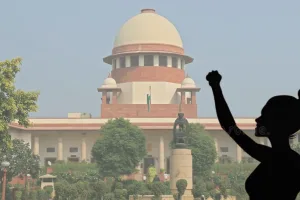
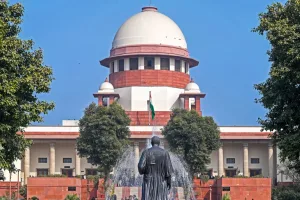
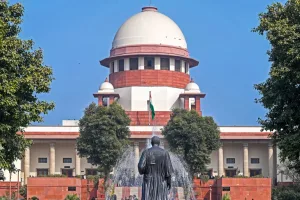
The Supreme Court’s decision to halt the suspension of the life sentence awarded to Kuldeep Singh Sengar is more than a procedural intervention.

Statesman News Service | New Delhi |

The Supreme Court’s decision to halt the suspension of the life sentence awarded to Kuldeep Singh Sengar is more than a procedural intervention. It is a reminder that justice in cases of sexual violence cannot be reduced to narrow textual interpretations divorced from power, context, and consequence. At the heart of the controversy lies a troubling legal question: whether an elected legislator occupies a position of trust or authority under child protection law.

The argument that political office does not automatically entail such authority may be technically defensible in isolation, but it collapses when placed against India’s lived political reality. Legislators wield influence not merely through statute but through networks of control ~ over police, local administration, and social hierarchies ~ especially in rural and semi-urban India. To pretend otherwise is to ignore how power functions on the ground. In India, where caste, gender, and political patronage often intersect, the abuse of authority rarely leaves formal fingerprints. The absence of a written order does not negate coercion; it merely reflects how power is exercised informally yet decisively.

This case starkly illustrates that imbalance. The survivor was a minor when she alleged prolonged sexual assault. Her attempts to seek redress were met with indifference, intimidation, and tragedy. Members of her family died in circumstances that raised serious questions. Her father died in custody. Even years later, the possibility of the convict’s release triggered public fear and protest, not because of sentiment alone but because of precedent. The Delhi High Court’s decision to suspend the sentence, on the basis that the aggravated provisions of child protection law did not apply, reflected a judicial approach overly focused on classification rather than culpability.

It risked sending a chilling message: that political power can exploit statutory silences to dilute accountability. The Supreme Court’s stay acknowledges that such cases demand heightened scrutiny, not mechanical application. Crucially, this is not about pre-empting the final legal outcome. It is about recognising that bail jurisprudence must adapt when the convict’s history includes patterns of coercion, violence, and interference with justice. The law does not operate in a vacuum; it operates within society. Where a survivor credibly fears retaliation, courts cannot treat bail as a neutral administrative step. The broader implication extends beyond one individual.

If legislators are excluded from the category of persons in authority under child protection laws, Parliament ~ not just the judiciary ~ must confront that gap. Democracies rest on the principle that greater power entails greater responsibility. Any legal framework that weakens this principle corrodes public trust. The Supreme Court’s intervention restores, at least temporarily, a sense that the justice system remains alert to this moral calculus. Whether that vigilance translates into durable legal clarity will determine how future survivors perceive the law ~ not as a maze of loopholes, but as a shield capable of standing up to power.

Mumbai Votes

As Mumbai heads into another Brihanmumbai Municipal Corporation election, the contest is being read not merely as a civic poll but as a referendum on the city’s changing social contract.

Statesman News Service | New Delhi |

As Mumbai heads into another Brihanmumbai Municipal Corporation election, the contest is being read not merely as a civic poll but as a referendum on the city’s changing social contract. For decades, municipal politics here were anchored in a relatively stable demographic and economic reality: an industrial city with a strong Marathi-speaking working class that translated cultural assertion into political dominance. That Mumbai no longer exists. The city has undergone a slow but decisive demographic shift.

Linguistic pluralism is now the norm, not the exception. Marathi speakers remain a significant presence, but they no longer form an unquestioned majority. Hindi-speaking populations, Muslims, Gujaratis, and a wide range of smaller linguistic communities together shape the electorate. In such a landscape, appeals built primarily on a single, linguistic identity face natural limits, especially in a city where mobility ~ social, economic, and geographic ~ is constant. The upcoming BMC polls bring this reality into sharp focus. They test whether civic politics can still be driven by cultural consolidation or whether it must respond to a more fragmented, issue-driven electorate. The answer increasingly appears to be the latter.

Today’s voters are less animated by questions of identity and more by the everyday pressures of urban life: transport bottlenecks, housing affordability, infrastructure fatigue, pollution, and the reliability of basic services. These concerns cut across language and region, reshaping how political legitimacy is earned. This shift has altered the grammar of Mumbai’s politics. Infrastructure has become the dominant political idiom, not because it is universally loved, but because it speaks to a city stretched across suburbs, satellite towns, and long commutes. Large projects promise predictability in an otherwise chaotic urban experience.

In contrast, symbolic politics ~ once central to civic mobilisation ~ now struggles to generate sustained momentum beyond a core base. Equally telling is the persistent voter apathy that shadows Mumbai’s elections. Turnout remains modest, particularly in affluent and commercial districts that wield outsized economic influence. This disengagement reflects a deeper change: the transformation of citizens into consumers of the city rather than participants in its governance. Municipal politics, despite the immense impact on daily life, no longer commands the urgency it once did.

The irony is that the BMC, one of India’s richest civic bodies, presides over a city that often appears politically fatigued. Electoral contests are keenly watched by parties but unevenly engaged with by voters. The danger is not that Mumbai lacks political choice, but that it risks losing civic voice. The forthcoming BMC election will therefore be less about who controls the corporation and more about what kind of city Mumbai chooses to be. It is a test of whether politics can adapt to demographic reality without retreating into nostalgia ~ and whether governance can reconnect with a population that has grown diverse, mobile, and quietly disengaged.

As the world ushers in 2026, PM Modi calls for ‘peace and happiness’

Prime Minister Narendra Modi extended New Year greetings to the nation, wishing good health and prosperity and praying for peace and happiness as India welcomed 2026.

Statesman News Service | New Delhi |

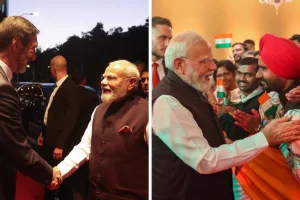
Prime Minister Narendra Modi on Thursday conveyed New Year greetings to the nation, expressing hope for peace, good health and prosperity in the year ahead.

In a message posted on X, the Prime Minister wished citizens success in their endeavours and fulfilment in their lives. “Wishing everyone a wonderful 2026. May the year ahead bring good health and prosperity, with success in your efforts and fulfilment in all that you do. Praying for peace and happiness in our society,” he said.

Delhi CM Rekha Gupta extends wishes to citizens

Delhi Chief Minister Rekha Gupta also shared New Year wishes, describing the occasion as a moment of renewed hope and positive energy for the people of the capital.

In her message on social media, she said the New Year should bring happiness, prosperity and good health to citizens. “Heartfelt congratulations and best wishes to all of you on the Anglo New Year. May this auspicious occasion of the New Year bring a message of new hope, positive energy, and sustained progress into the life of every citizen of Delhi.”

The Chief Minister added that the government’s commitment to public welfare and the development of Delhi would be pursued with renewed energy in the coming year. She said the trust and participation of citizens remained the foundation of the city’s progress, and called the New Year an opportunity to strengthen shared responsibility towards building an inclusive and prosperous capital.

“Our commitment to the service of Delhi and public welfare will be implemented this year with new energy and even greater resolve. The fundamental strength of Delhi, which continues to advance steadily toward development and good governance, is the trust and active participation of its citizens. This New Year provides an opportunity to deepen our shared responsibility for building a strong, inclusive, and prosperous capital,” CM Gupta added.

New Year celebrations marked across India

India ushered in the New Year with celebrations across cities and towns, as people gathered for countdown events and festive programmes. State governments increased security measures across cities to make sure New Year celebrations passed off without any trouble.

In metros such as Delhi and Mumbai, huge crowds gathered at popular spots like Connaught Place, India Gate, and Marine Drive, celebrating through the night in a lively atmosphere.

Authorities in a number of states had issued traffic advisories, set guidelines for restaurants and hotels, and positioned extra police personnel to manage the heavy crowds at public places.

3-month long winter migratory bird census begins in West Burdwan

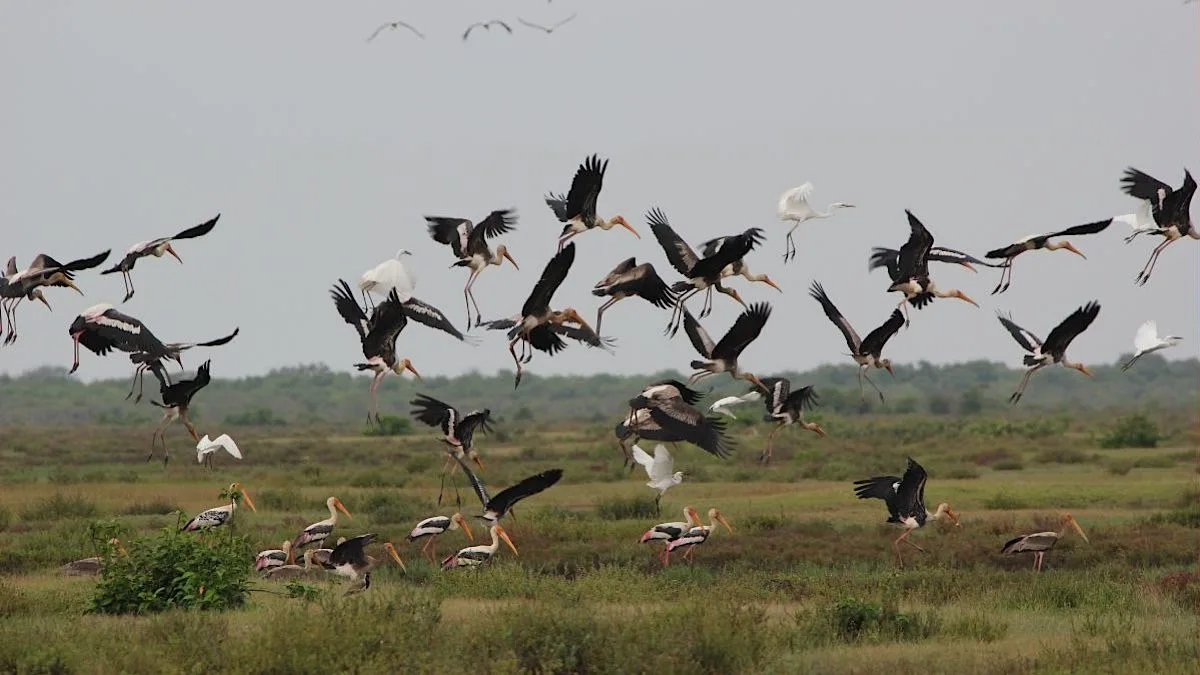
The three-month-long winter migratory bird census in West Burdwan district, conducted by the West Bengal forest department, in collaboration with several wildlife NGOs, has begun on a highly positive note this year.

Statesman News Service | Kolkata |

The three-month-long winter migratory bird census in West Burdwan district, conducted by the West Bengal forest department, in collaboration with several wildlife NGOs, has begun on a highly positive note this year. Experts believe that the number of migratory birds is likely to surpass all previous records, driven by severe winter conditions in south Bengal and significant improvements in water bodies and surrounding green habitats.

Speaking to The Statesman, Saptarshi Mukherjee, secretary of Wild Tuskers, Asansol, said that the census commenced on 1 December and will continue until 28 February, 2026 across West Burdwan district.

Wild Tuskers, Asansol, and Wings, Durgapur, are the two NGOs entrusted by the state forest department to conduct surveys of winter migratory bird arrivals in the district’s water bodies, spread across the Asansol Sadar and Durgapur sub-divisions respectively.

“So far this year, arrivals of Ruddy Shelduck (migrants from Tibet) and the Siberian Rubythroat have been recorded in very high numbers. Other species such as the Little Ringed Plover, Kentish Plover, Temminck’s Stint, Bluethroat, Small Pratincole, Citrine Wagtail, White Wagtail and Yellow Wagtail have also already been spotted by avian experts in West Burdwan district,” Mukherjee added.
With temperatures already dipping to around 9°C in the district, experts expect an even larger influx of winged visitors in January. While no new species have been recorded so far, the overall trend has been highly encouraging, and experts are confident that this year’s numbers will exceed those of previous years. This is particularly significant in a year when the theme of World Migratory Bird Day 2025 was “Shared Spaces: Creating Bird-Friendly Cities & Communities.”

Over the past few years, the NGOs and the state forest department have worked consistently to restore habitats around wetlands in West Burdwan district. Measures have included banning the use of DJ sound systems during the winter picnic season along riverbanks at Maithon, Durgapur, Kalyaneswari, Burnpur and Chittaranjan, among others.

Water hyacinths have been removed, degraded water bodies restored, and awareness campaigns against illegal poaching have received a positive response.

Every year, approximately two to three lakh migratory birds arrive at wetlands across West Burdwan district during the winter season, and this year the figure is expected to rise significantly.

The census is being conducted across several locations, including the Damodar riverbed, wetlands in ISP Burnpur, Kanksha in Durgapur, Gunjan Ecological Park near Ningha in Asansol, Colonel Singh Park and the Boat Club in Chittaranjan Railway township, and the Durgapur Barrage.

Scarcity of food and extreme cold in northern regions are the main reasons behind the annual ‘great escape’ of millions of migratory birds to relatively warmer countries such as India.

Arkajyoti Mukherjee of Wings, Durgapur, said that wildlife NGOs, along with the state forest department, have been working to plant native trees, protect local wetlands, discourage single-use plastics, support bird sanctuaries and eco-tourism, and spread awareness among local communities.

“Every flap of wings tells a story of survival. Protecting birds means protecting the health of our environment—and ourselves. When we save the birds, we save the skies, the forests and the future. ‘Save the wings and save the future’ is our loud and clear message for the new year,” he concluded.

Congress attacks Jaishankar over meeting with Pakistani Speaker in Dhaka, questions Govt’s stand after Pahalgam attack

Congress National Spokesperson Dr Shama Mohamed asked why the minister was greeting a Pakistani leader when cross-border terrorism by Pakistan continued unabated.

Shashikant Sharma | NEW DELHI | Updated :

The Opposition Congress on Wednesday launched a sharp attack on External Affairs Minister Dr S Jaishankar over his meeting with Pakistani National Assembly Speaker Ayaz Sadiq in Dhaka, questioning the Narendra Modi government’s stance towards Islamabad in the aftermath of the Pahalgam terrorist attack.

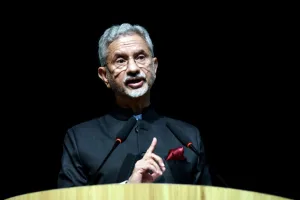
Reacting strongly to Jaishankar’s interaction with Sadiq on the sidelines of former Bangladeshi Prime Minister Khaleda Zia’s funeral, Congress National Spokesperson Dr Shama Mohamed asked why the minister was greeting a Pakistani leader when cross-border terrorism by Pakistan continued unabated.

“Why do you greet Pakistanis when you are abusing them here? According to India, the recent attack in Pahalgam was carried out by Pakistani terrorists. Has he spoken to them about that? Have they stopped terrorism on our soil?” she asked.

Raising the issue of casualties suffered by Indian armed forces due to cross-border terrorism, the Congress leader said, “How many jawans are killed every year? On one side, you greet them. On the other hand, the NSA’s son does business with them in Saudi Arabia. Then you play an Asia match with them when everyone, including the families of the Pahalgam victims, said it should not be played. When all Indians were against the match, it was still allowed to go ahead.”

Dr Mohamed further accused the government of hypocrisy, alleging that it engages with Pakistan behind the scenes while publicly criticising it.

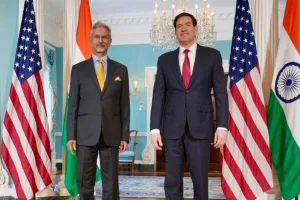
S Jaishankar meets Pak Assembly Speaker Ayaz Sadiq in Dhaka

“This is how the government treats a country that attacks you and with which you claim to have serious issues. On one side, you shake hands with Pakistan, and as soon as you return to India, you speak against it. So what exactly is your stand?” she asked.

Speaking to The Statesman, Mohamed said the Congress expects the External Affairs Minister to confront Pakistan directly on terrorism. “We want the minister to ask them—how dare you keep attacking us? How dare you keep sending terrorists onto our soil? Did we ever do that to you? Or is he confused?” she said.

The Congress leader’s remarks came after the Chief Adviser of the Bangladeshi Interim Government, Muhammad Yunus, shared photographs of Jaishankar greeting the Pakistani National Assembly Speaker.

“Sardar Ayaz Sadiq, Speaker of the National Assembly of Pakistan, exchanges greetings with Indian External Affairs Minister S. Jaishankar in Dhaka on Wednesday ahead of the funeral of former Bangladesh Prime Minister Khaleda Zia,” Yunus wrote on X.

The images showed the two leaders shaking hands, marking the first high-level interaction between India and Pakistan since the Pahalgam terrorist attack and Operation Sindoor.

Kolkata on high alert for New Year’s Eve with massive security cover

Kolkata will be under an unprecedented security blanket on New Year’s Eve, with police deploying nearly double the number of personnel compared to Christmas Day to manage large crowds, prevent rowdiness and ensure public safety during year-end celebrations.

Statesman News Service | Kolkata |

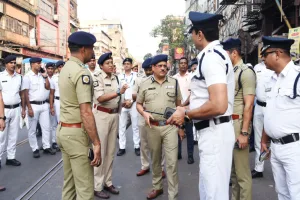
Kolkata will be under an unprecedented security blanket on New Year’s Eve, with police deploying nearly double the number of personnel compared to Christmas Day to manage large crowds, prevent rowdiness and ensure public safety during year-end celebrations.

Around 6,500 police personnel will be deployed across the city in two phases — an initial posting from around 9 a.m, followed by the main deployment from 4 p.m onwards.

Senior officers said the crowd on 31 December is expected to be larger than on Christmas, requiring tighter crowd control and quicker response mechanisms.

Sources in Kolkata police said that there will be special concentration in Central Kolkata, particularly the Park Street area where the rush is expected to be high.

Of the total deployment, around 4,000 police personnel will be stationed on roads between Park Street and the Alipore Zoo–Alipore Jail Museum stretch, with nearly 2,500 cops posted on Park Street alone.

Another 1,300 uniformed personnel will be deployed across other hotspots and special nakas in different parts of the city.

As in previous years, extensive use of technology will be made for surveillance.

Drones and a wide network of CCTV cameras will monitor crowd movement in Park Street and the Alipore Zoo areas.

Multiple watchtowers will be set up, and the central business district will be divided into several zones, overseen by 18 IPS officers. Police assistance booths will also be set up to help revellers.

Specialised teams from the detective department, the Kolkata Police STF, Special Branch and quick response teams (QRTs) will be on the ground.

By evening, plainclothes personnel, teams from the detective department’s watch section and the all-women “Winners Team” will be deployed in and around Park Street to prevent harassment and other illegal activities.

Sources at Kolkata Police headquarters, Lalbazar, said special teams have been formed based on intelligence inputs, with a special focus on the safety of women, children, and the elderly.

Extra security will also be in place on the Kolkata Metro, with additional Railway Protection Force personnel deployed to manage passenger rush.

Police have ordered a strict crackdown on drink driving, with special raids likely to continue daily through the festive period.

Instructions have also been issued to ensure crackers are not burst beyond court-mandated hours and to act against DJs playing music above permissible sound limits.

Cops have further decided not to allow people to loiter or block entrances of eateries.

“The crowd will be larger than Christmas and rowdiness is usually higher on this day, so our response has to be adequate,” a senior police officer said, adding that while Kolkata is generally considered safe, strict enforcement is necessary to ensure peaceful celebrations.

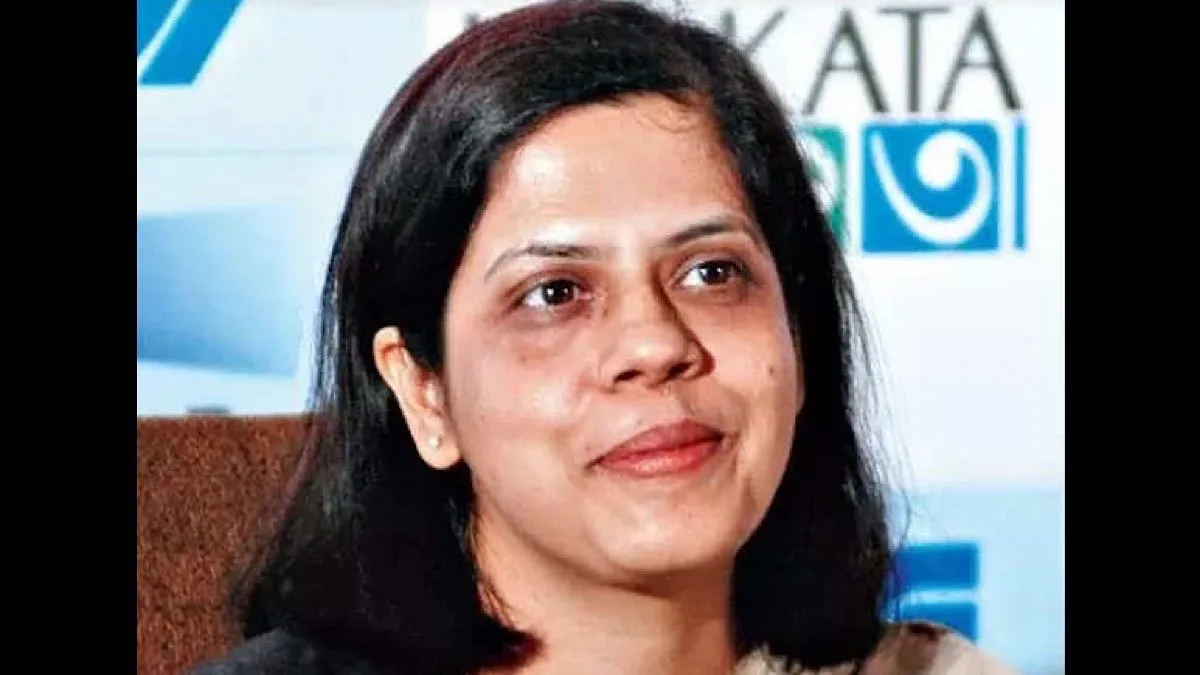
Nandini Chakraborty is new chief secretary

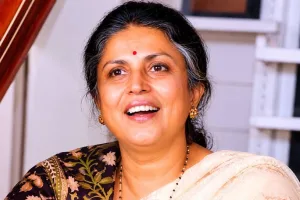
State government today appointed Nandini Chakraborty as the state Chief Secretary after the term of her predecessor, Manoj Pant came to an end, today.

Statesman News Service | Kolkata |

State government today appointed Nandini Chakraborty as the state Chief Secretary after the term of her predecessor, Manoj Pant came to an end, today.

Jagdish Prasad Meena would be the new home secretary with additional charge as secretary to the Hills, parliamentary affairs, personnel and administrative reforms departments.

A press release issued today by the state secretariat at Nabanna also said that outgoing chief secretary Manoj Pant, an IAS officer of 1991 batch, would be the principal secretary to the chief minister Mamata Banerjee in the rank of chief secretary.

Mrs Chakraborty, an IAS officer of 1994 batch, would be the first woman to hold the coveted post in the state. She was the home secretary with additional charges of hills and tourism departments of the government.

Earlier, Mr Pant’s tenure as chief secretary, which was to come to an end on 30 June had been extended by six months, following the appeal filed by the state government to the Centre seeking his extension.

GRSE strengthens ships export drive, lays keel for second vessel of MPV project

After achieving the goal “Make for India”, the Garden Reach Shipbuilders and Engineers (GRSE) embarked on a “Make for the World” vision.

Statesman News Service | Kolkata |

After achieving the goal “Make for India”, the Garden Reach Shipbuilders and Engineers (GRSE) embarked on a “Make for the World” vision. The warship maker laid the keel for the second vessel of the Multi-Purpose Vessel (MPV) project being executed for Germany’s Carsten Rehder Schiffsmakler and Reederei GmbH, official sources said on Wednesday.

This contract – the largest for MPVs in GRSE’s 141 years old history – is a testament to the shipyard’s efforts towards diversification of products and expansion to the global commercial shipbuilding market. The ceremony was graced by M Venkatesh Murthy, Chief General Manager, CSB, GRSE, Sujoy Chakravorty, Chief General Manager, Commercial, GRSE, in the presence of senior officials from GRSE and representatives from the German shipping firm & DNV.

The project involves the design and building of a modern series of high-performance vessels under the CORAL 7500 DWT MPV series. The initial contract for four vessels was signed on 22 June, 2024, followed by subsequent agreements bringing the total order to twelve vessels. The final contracts, including ninth to twelfth Hybrid Propulsion MPVs, were signed on 19 September.

Each MPV will have an overall length of 120 metres and a beam of 17 metres, with a draught of 5.85 metres. With a capacity to carry 7,500 metric tonnes of cargo, these vessels are equipped with a single, large cargo hold designed for bulk, general and project cargoes.

An innovative feature is the capability to carry containers on hatch covers and multiple large windmill blades on deck – enhancing flexibility in cargo handling. The project is being developed in close collaboration with German firms, including F.H. Bertling, ForestWave Navigation/Schulte & Bruns, and Delft Shipping. Technical design expertise has been provided by M/s SEDS, in partnership with GRSE. These ships shall be certified by DNV, the classification society.

Metro’s special security arrangements on New Year’s Eve

Aiming to ensure safety of commuters, the Kolkata Metro Railway has strengthened security arrangements at key metro stations, on New Year’s Eve.

Statesman News Service | Kolkata |

Aiming to ensure safety of commuters, the Kolkata Metro Railway has strengthened security arrangements at key metro stations, on New Year’s Eve.

The city Metro authorities have made special arrangements and additional RPF personnel have been deployed to man and regulate the passenger movement at crucial stations including Esplanade, Park Street, Maidan, Rabindra Sadan, DumDum and Dakshineswar. Also, women RPF officers and staff have been deployed at Park Street Metro station for the convenience of women and children. One special team is to remain present as a standby force at Park Street, Maidan and Esplanade Metro stations to tackle any emergency situation while a Quick Response Team (QRT) is to be kept ready as a special force at the three stations for emergency.

As learnt from the city Metro office, adequate staff have been posted at central control, and extensive CCTV monitoring on a real time basis is being carried out to ensure round-the-clock surveillance and passenger safety. Queue managers, loud hailers, ropes are being used and other passenger-control measures are being taken to regulate passenger movement at Park Street Metro station. Anti-sabotage checks are also being conducted with the help of dog squad.

In addition, another ‘Special Team’ comprising one officer and four staff have been deployed at Park Street Metro station. Adequate numbers of RPF personnel have been stationed at Park Street, Maidan and Esplanade Metro stations to provide proper guidance, help and assistance to commuters.

Notably, to facilitate the smooth and fast movement of commuters, Metro Railway has announced additional services at the night of New Year’s Eve in the Blue Line. The carrier is to run eight additional services on the Blue Line after 9.40 p.m.