Logo

Birch-Goa fire: Govt dismisses Arpora Sarpanch, Panchayat Secretary; cites negligence in granting approvals, licenses

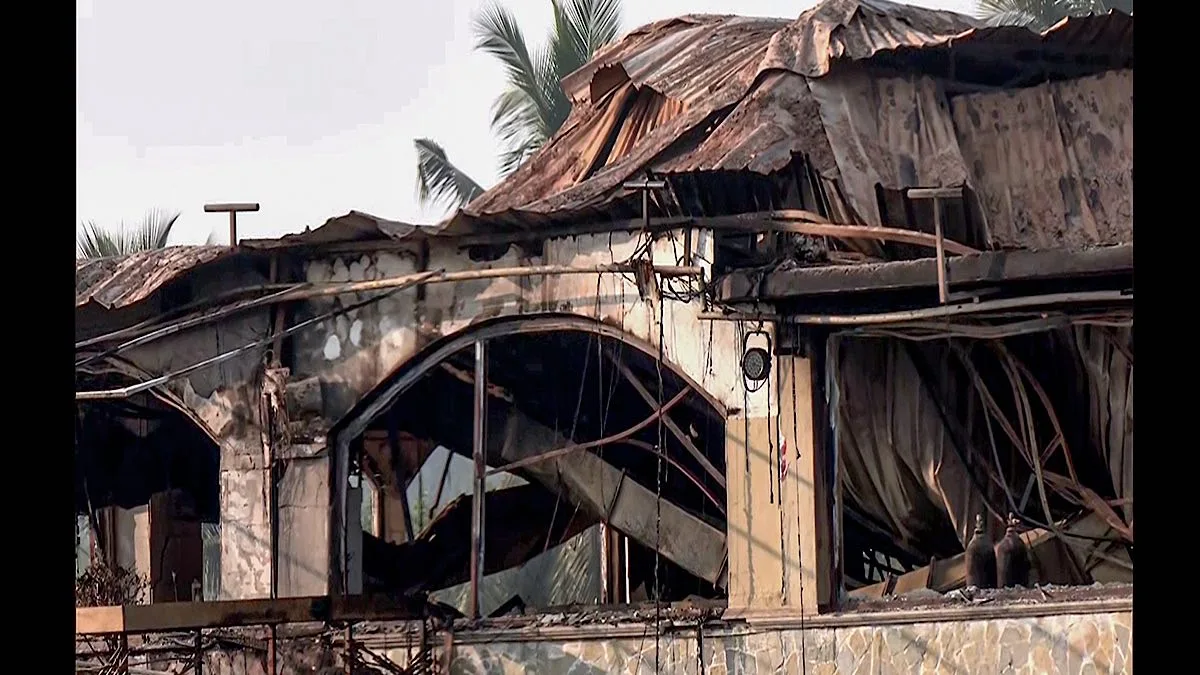
The Goa government has dismissed Arpora Village Panchayat Sarpanch, Roshan Redkar, and Panchayat Secretary of Arpora-Nagoa Village Panchayat, Raghuvir Bagkar, from service, finding “persistent negligence” in the ‘Birch by Romeo Lane’ fire case, which claimed the lives of 25 individuals.

Statesman News Service | New Delhi |

The Goa government has dismissed Arpora Village Panchayat Sarpanch, Roshan Redkar, and Panchayat Secretary of Arpora-Nagoa Village Panchayat, Raghuvir Bagkar, from service, finding “persistent negligence” in the ‘Birch by Romeo Lane’ fire case, which claimed the lives of 25 individuals.

Directorate of Panchayats, based on the Magisterial Inquiry Committee Report on the nightclub mishap, noted that the Sarpanch, “presided over meetings where the irregularities of the subject premises were either ignored or tacitly approved.” The report said that the Birch establishment was initially operated in a temporary shed and was converted into a nightclub “without any conversion sanad or approved building plans.”

The Directorate termed it as “persistent negligence” and “a breach of the public trust” that resulted in the fire. Raising a question on the people in positions of authority, the directorate order said, “What will happen if the protectors themselves become poachers?”
The Committee also mentioned that the Panchayat Secretary gave the House Number without ground verification stating, “incase the House Number allocation is legal, then I don’t go for inspection,” but he contradicted himself and later said, “I give house numbers by verifying the structures is existing on grounds without checking its documents, like construction license, approved plans etc.”

The Committee noted “grave irregularities” by the Village Panchayat in granting the requisite approvals and licenses.
A fire tragedy occurred at the ‘Birch by Romeo Lane’ nightclub in which 25 people died, and several others were injured on December 6.

Earlier on Monday, Goa Chief Minister Pramod Sawant said that officials responsible for granting permission to the Luthra brothers, Gaurav and Saurav Luthra, to operate the nightclub have been issued a show-cause notice.

Speaking to ANI, Chief Minister Pramod Sawant said, “I have given instructions to all Heads of Departments that all the officials connected to giving permission to the nightclub, all of them have been given a show cause notice, and if anyone is found guilty, they will be punished.”
Meanwhile, a Goa court on Monday sent Luthra brothers – Gaurav and Saurav Luthra to judicial custody until January 9, 2026.

Govt issues notification for commencement of select provisions of the National Sports Governance Act, 2025

The law will now come into force from January 1, 2026, and will govern the functioning of the national sports federations in the country.

IANS | New Delhi/Kolkata |

The Central Government has notified the commencement of select provisions of the National Sports Governance Act, 2025. The law will now come into force from January 1, 2026, and will govern the functioning of the national sports federations in the country.

The National Sports Governance Act, 2025 (25 of 2025), was notified in the Official Gazette on August 18, 2025. Section 1(2) of the Act provides that the Act shall come into force on such date as the Central Government may, by notification in the Official Gazette, appoint, and that different dates may be appointed for different provisions of the Act.

Accordingly, in exercise of the powers conferred by sub-section (2) of section 1 of the National Sports Governance Act, 2025, the Central Government has appointed January 1, 2026 as the date on which the provisions of sections 1 to 3, sub-sections (1), (2) and (4) of section 4, sub-sections (1) and (2) of section 5, sub-section (5) of section 8, sub-section (1) of section 11, sections 14 and 15, sub-sections (1) to (7) and (10) of section 17, sections 30 and 31, and sections 33 to 38 of the said Act shall come into force, the government informed in a release on Wednesday.

The provisions being brought into effect relate to the establishment and governance framework of National Sports Bodies, including the National Olympic Committee, National Paralympic Committee, National Sports Federations, and Regional Sports Federations. The provisions related to the constitution of the National Sports Board, compliance requirements applicable to recognised sports organisations, privileges and duties of recognised sports organisations, constitution of the National Sports Tribunal, and the rule-making powers of the Central Government will also come into force from January 1.

The phased commencement of the Act is aimed at ensuring a smooth transition to the statutory sports governance framework. The Act seeks to promote transparency, accountability, ethical practices, and good governance in sports administration, ensure the welfare of sportspersons, and provide for effective and timely resolution of sports-related disputes, in consonance with the Olympic Charter, the Paralympic Charter, and international best practices.

With effect from January 1, 2026, the institutional mechanisms envisaged under the notified provisions of the Act shall become operational.


TMC appoints Assembly coordinators in West Burdwan

Ahead of the 2026 West Bengal Assembly elections, the ruling Trinamul Congress (TMC) has taken a significant organisational step to strengthen its structure in West Burdwan district.

Statesman News Service | Kolkata |

Ahead of the 2026 West Bengal Assembly elections, the ruling Trinamul Congress (TMC) has taken a significant organisational step to strengthen its structure in West Burdwan district.

West Burdwan has nine Assembly constituencies — Asansol North, Asansol South, Kulti, Barabani, Jamuria, Raniganj, Pandaveswar, Durgapur West and Durgapur East. At present, the BJP holds three seats — Asansol South, Durgapur West and Kulti — while the TMC holds the remaining six. The party’s national general secretary, Abhishek Banerjee, has set a target of winning all nine seats in the 2026 Assembly elections.

To this end, the TMC has appointed four Assembly-level coordinators to oversee the nine constituencies in the district. According to party sources, the appointments are aimed at energising the organisation at the grassroots, strengthening booth-level coordination, and accelerating organisational activities in the run-up to the polls.

The coordinators and their respective responsibilities are as follows: Pradip Majumdar, state panchayat minister, will coordinate Durgapur East and Durgapur West; Malay Ghatak, state minister for law, judiciary and labour, will oversee Kulti and Asansol North; V Sivadasan, popularly known as Dasu and State Party Secretary, will coordinate Barabani, Jamuria and Pandaveswar; and Tapas Banerjee, MLA, will be responsible for Raniganj and Asansol South.

The party leadership hopes that these new organisational responsibilities will further strengthen the Trinamool Congress’s structure in West Burdwan district and have a positive impact on its performance in the forthcoming Assembly elections.

Mumbai wakes up to rain and cooler weather on the first day of 2026

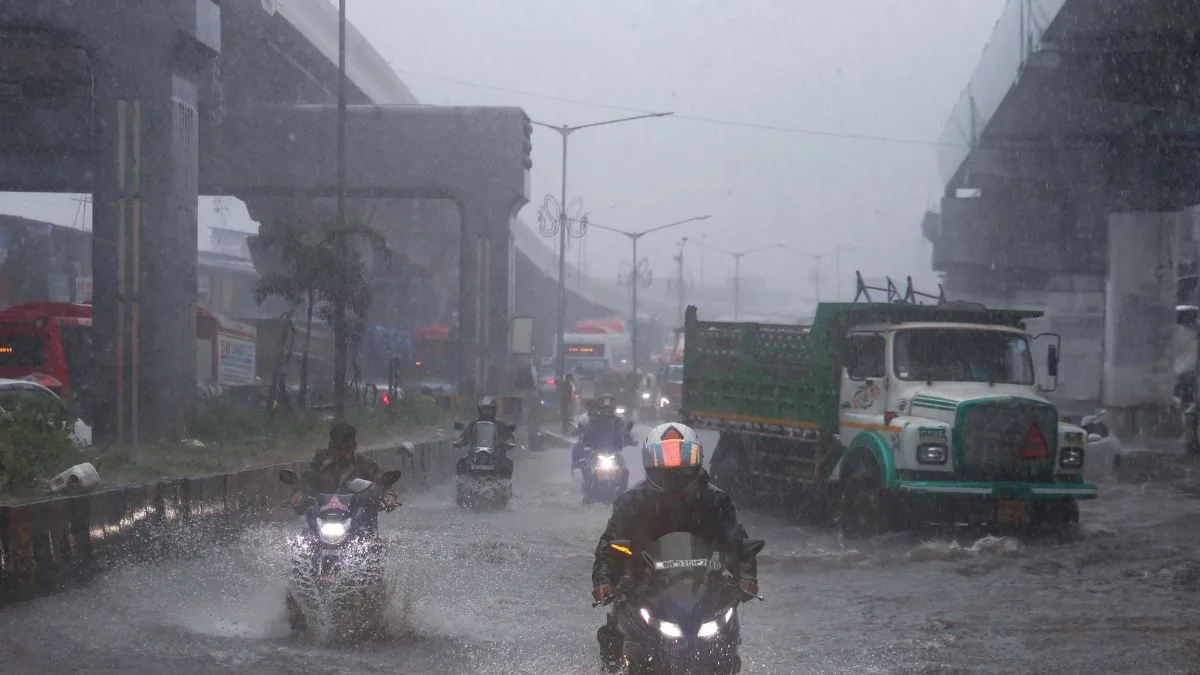
Mumbai started the New Year with rain and cooler temperatures. Showers across parts of the city led to travel disruptions, while air quality remained in the unhealthy range.

UNI | Mumbai |

Mumbai woke up to heavy showers and chilly weather on the first day of the New Year, catching many residents off guard.

The unexpected rain led to a sudden drop in temperatures, making it a unique start to 2026.

Several parts of the city experienced light rain before dawn, which later intensified into heavy showers in some areas, giving the New Year a wet and cool beginning. The India Meteorological Department (IMD) has not issued any official warnings so far.

However, the rain caused disruptions across the city, including delayed flights and the suspension of some train services.

According to the weather department, temperatures in Mumbai are currently ranging between 22 degrees Celsius and 28 degrees Celsius, with humidity levels at around 87 per cent.

The Air Quality Index (AQI) remains in the unhealthy category and has reached 184.

Weather experts said the rainfall is likely to help reduce pollution levels and improve air quality, potentially bringing clearer skies in the coming days.

Devotees across India begin New Year 2026 with prayers, holy dips and temple visits

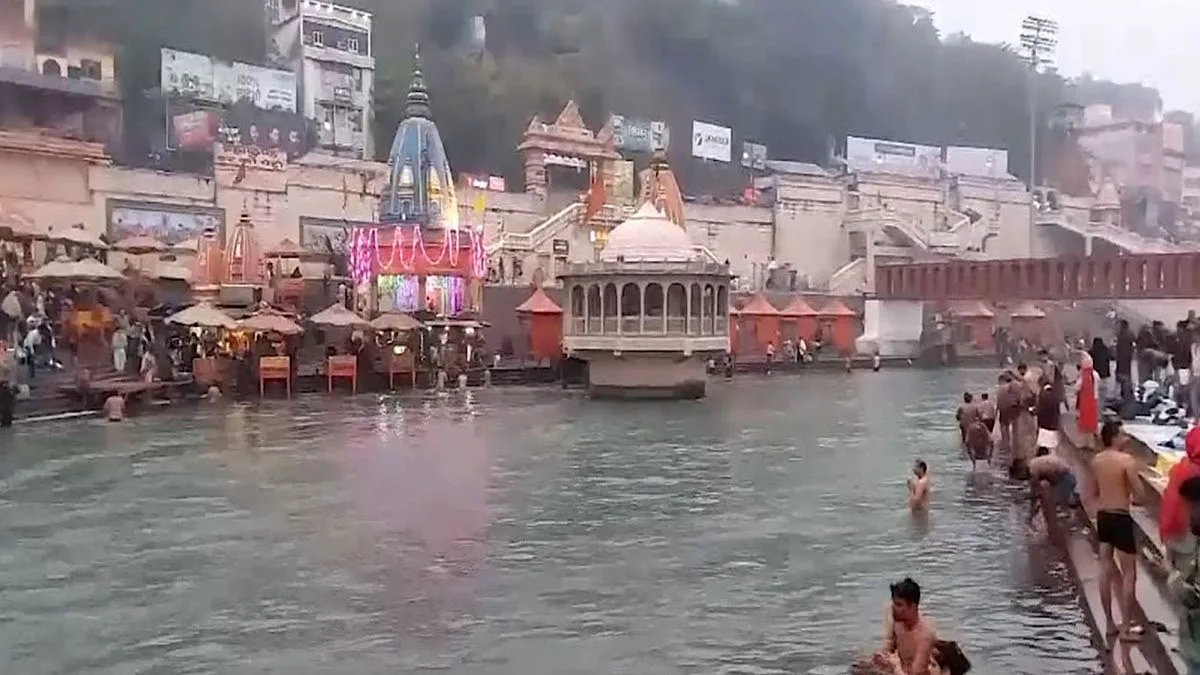
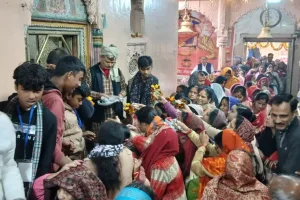
As the clock struck midnight, ushering in New Year 2026, devotees across India chose faith and prayer to mark the beginning of the year, with temples, shrines and holy rivers witnessing massive footfalls on Wednesday.

ANI | New Delhi |

As the clock struck midnight, ushering in New Year 2026, devotees across India chose faith and prayer to mark the beginning of the year, with temples, shrines and holy rivers witnessing massive footfalls on Wednesday.

In Jammu and Kashmir’s Reasi district, thousands of devotees visited the Shri Mata Vaishno Devi Shrine in Katra. Jyoti Singh, one of the pilgrims, said her journey was guided by faith. “I wanted to go to Vrindavan, but due to the blessings of Mata Rani, I have come here. May Mata Rani bless everyone,” she said.

Punjab’s Amritsar also saw large gatherings as devotees offered prayers and witnessed the traditional ‘Prabhat Pheri’ at the Shri Harmandir Sahib on the first day of the year.
In the national capital, devotees thronged prominent temples, including Jhandewalan Temple and the Sai Baba Temple at Lodhi Road, offering prayers for peace, prosperity and good health in 2026.

Uttar Pradesh emerged as a major focal point of religious activity. Large crowds gathered at the Shri Banke Bihari Temple in Vrindavan, Kashi Vishwanath Temple in Varanasi, Shri Krishna Janmabhoomi in Mathura and the Shri Ram Janmabhoomi Temple in Ayodhya. In Prayagraj, devotees took a holy dip in the Ganga river to welcome the new year.

At Haridwar in Uttarakhand, pilgrims and tourists flocked to Har Ki Pauri to take a ritual dip in the Ganges. Jhoomar, a devotee visiting with her family, said that the experience was special. “It is a nice beginning of the new year for us. I am very thrilled and excited to be here. The vibes are positive. We wanted to do something different and connect to our roots. It was important for the kids as well,” she told ANI.
Nandini Joshi, who visited the Shri Ram Janmabhoomi Temple in Ayodhya, praised the arrangements. “We were planning for a long time to come here, and today we started the new year with aarti and darshan. The management was commendable, and everything was done peacefully. I will forever remember this day,” she said.

In Mathura, Chanchal, a devotee from Dwarka in Gujarat, said beginning the year with devotion brought inner peace. “We have come to seek the blessings of Shri Krishna and start our year with that. We attended Yamuna Aarti, Braj-bhoomi Darshan and Janmbhoomi Darshan. I wish everyone a happy new year,” she said.

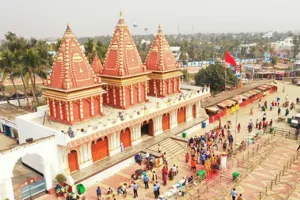
Eastern India also saw significant footfall, with devotees offering prayers at the Shree Jagannath Temple in Puri, Odisha, while in Assam, devotees thronged the Kamakhya Temple in Guwahati on the first day of the year.
In Telangana, devotees offered prayers at the Hanuman Temple in Chikkadpalli, Hyderabad, marking the new year with devotion.

From the Himalayas to the coasts, the first day of 2026 reflected a strong spiritual fervour, as people from different parts of the country chose to begin the year with prayers, rituals and a renewed connection to faith.

Real Madrid’s Kylian Mbappe suffers a knee injury, likely to be out for three weeks

Real Madrid suffered a setback on New Year’s Eve with forward Kylian Mbappe suffering an injury to his left knee and likely to miss the next few matches, the Spanish club said on Wednesday.

IANS | New Delhi |

Trailing table-toppers Barcelona by four points in the standings, Real Madrid suffered a setback on New Year’s Eve with forward Kylian Mbappe suffering an injury to his left knee and likely to miss the next few matches, the Spanish club said on Wednesday.

Madrid said in a brief statement that the French superstar had been diagnosed with a sprain but did not provide a timeline for his recovery.

“Following tests carried out today by the Real Madrid Medical Services on our player Kylian Mbappé, he has been diagnosed with a sprain in his left knee. His progress will be monitored,” the club said in a brief statement on its official website.

Meanwhile, French sports daily newspaper L’Equipe, without quoting a source, said Mbappe would be unavailable for at least three weeks. The newspaper added that Mbappe had been suffering for several weeks from an issue with the lateral ligament in his knee, and an MRI carried out on Wednesday morning revealed a lesion that requires treatment and rest.

Because of the injury, the French star did not participate in the year’s last training session in Madrid on Wednesday.

Mbappe’s injury is a big setback for Real Madrid as the striker has been in great form. Earlier this month, the French star scored his 59th goal for Madrid in 2025, tying the club record for the most in a year held by Cristiano Ronaldo.

Mbappé, who joined Madrid from Paris Saint-Germain (PSG) in 2024, has scored 29 times for Madrid this season, including a league-leading 18 goals in La Liga.

His absence could impact Real Madrid’s progress in the New Year as the proceedings continue after a short year-end break. Real Madrid will play their next match on Sunday.

The fact that Real Madrid play cross-town rivals Atletico Madrid in the second semifinal in the Supercup on January 8 in Jeddah means Mbappe has very little time to recover, and he has to be considered a major doubt for the competition, which has its final on January 11. Most believe that Real Madrid coach Xabi Alonso has his job on the line in Saudi Arabia, and the team could be playing for Alonso’s future without its star player.


36 herbs, one tonic: Discover why chyawanprash is the ultimate winter health booster

Chyawanprash, made from Amla and 36 medicinal herbs, is the perfect winter tonic. It boosts immunity, sharpens memory, and keeps your body full of energy and youthful vitality.

Statesman News Service | New Delhi |

Now that the winter months are around the corner, it is more important than ever to make sure that our body is strong and full of energy. Acharya Balkrishna has recently posted an important health tip on his Facebook page. Chyawanprash is the best tonic for health, he said.

Full of vitamin C and energy!

Chyawanprash is prepared using Amla, which is a Vitamin C powerhouse. Vitamin C not only boosts immunity but keeps one energetic and active.

Consuming Chyawanprash regularly will aid in delaying the process of aging and will make you feel young.

A combination of 36 medicinal herbs

The uniqueness of Chyawanprash stems from its distinct formula. Chyawanprash has the mixture of approximately 36 herbs, each of which has medicinal properties that are very beneficial for health.

These herbs combination helps enhance digestion, memory, immunity making it a complete health booster.

Chyawanprash benefits for body and mind

1. Increases immunity: It increases the body’s immunity to resist infections when the seasons are cold.

2. Improves digestion: The Herbal Blend promotes the process of digestion.

3. Sharpens memory: There are certain herbs in Chyawan Prash that improve brain functions and boost memory.

Acharya Balkrishna emphasises that Chyawanprash should be a daily part of your routine especially in winter. Small spoonful each day can make big difference in your overall health. It is easy to consume and suitable for all age groups.

So this winter, do not just cover yourself with warm clothes. Boost your immunity and energy with Chyawanprash.

A small habit can lead to a healthier, stronger, more vibrant life.

Also Read: Bajra benefits that make winter delicious and healthy; from strong muscles to pain-free joints

Delhi’s air quality plummets to ‘very poor’; capital wakes up with cold wave, fog

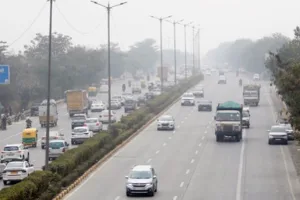
Delhi’s air quality dropped to the ‘very poor’ category on Thursday, with an Air Quality Index (AQI) reading of 371 recorded around 8:00 am, according to the Central Pollution Control Board (CPCB), on the very first day of the New Year 2026.

ANI | New Delhi |

Delhi’s air quality dropped to the ‘very poor’ category on Thursday, with an Air Quality Index (AQI) reading of 371 recorded around 8:00 am, according to the Central Pollution Control Board (CPCB), on the very first day of the New Year 2026.

According to data from CPCB, Delhi recorded an overall Air Quality Index (AQI) of 371 at 8 pm, placing it firmly in the ‘very poor’ to ‘severe’ category.
Several monitoring stations across the capital reported alarming pollution levels. Anand Vihar recorded an AQI of 418, while Wazirpur stood at 414. Rohini reported an AQI of 413, followed by Ashok Vihar at 392. Siri Fort recorded 384, RK Puram logged 381, Chandni Chowk registered 377, and ITO stood at 371.

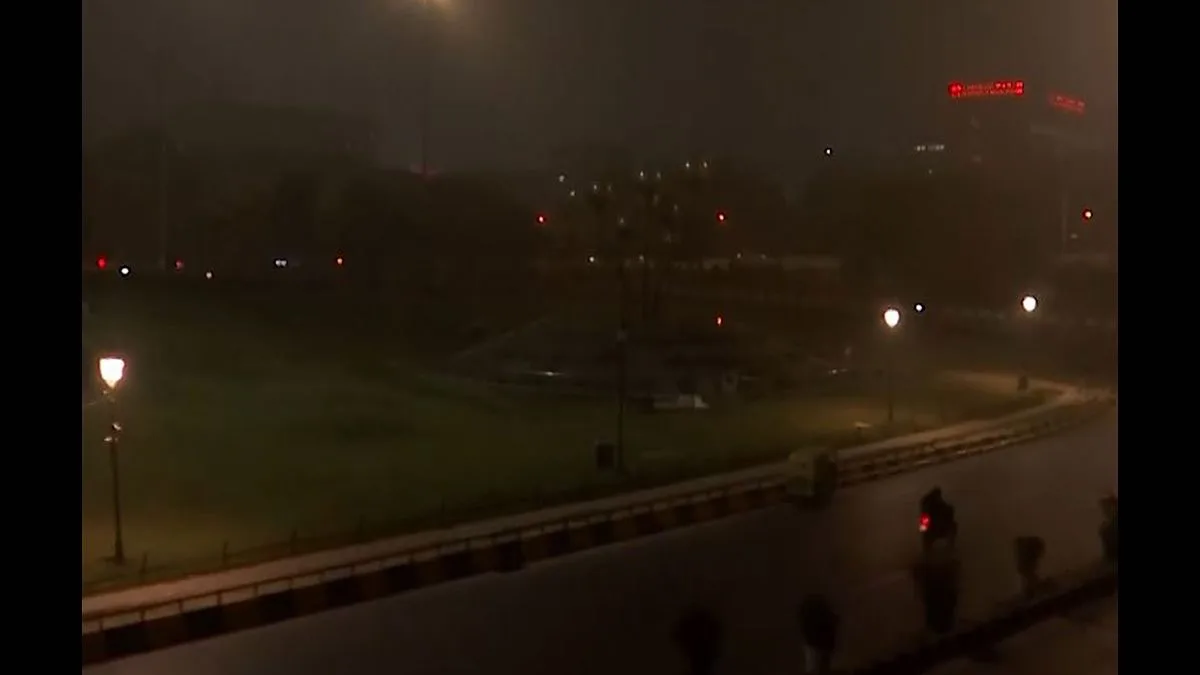
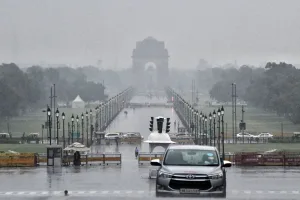
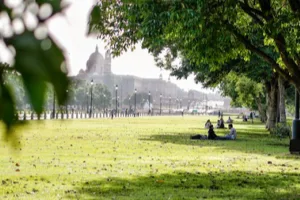
Despite the deteriorating air quality and reduced visibility due to dense fog, preparations for the upcoming Republic Day celebrations continued at India Gate, with security personnel and participants seen rehearsing for the grand parade.
According to the IMD (India Meteorological Department), dense to very dense fog is expected to persist over Odisha, Punjab, Haryana, Chandigarh and Delhi till January 5, while East Uttar Pradesh is likely to witness similar conditions till January 2. West Rajasthan is expected to remain under dense fog conditions till January 3, 2026.
The weather agency further stated that dense fog conditions are also likely during night and morning hours at isolated pockets over Jammu-Kashmir-Ladakh-Gilgit-Baltistan-Muzaffarabad and Jharkhand till January 2.

In addition, Himachal Pradesh, Uttarakhand, Sub-Himalayan West Bengal and Sikkim, Assam and Meghalaya, Nagaland, Manipur, Mizoram and Tripura are likely to witness dense fog conditions till January 5.

The IMD also forecast dense fog over Uttar Pradesh, Bihar, Punjab, Haryana, Chandigarh and Delhi till January 7, while west Rajasthan may experience similar conditions till January 4. East Rajasthan is expected to remain under foggy conditions between January 2 and January 4.

Meanwhile, Madhya Pradesh is likely to witness dense fog till January 1, with a fresh spell expected again during January 4 and 5. Gangetic West Bengal may experience dense fog conditions till January 3, according to the IMD.
The maximum and minimum temperatures in Delhi are likely to be in the ranges of 14°C to 16°C and 9°C to 11°C, respectively, on Thursday. The minimum temperature will be above normal (2°C to 4°C) and the maximum temperatures will be appreciably below normal over Delhi, as stated by IMD.

‘We believe in our victory’: Vladimir Putin’s New Year message offers no sign of softening on Ukraine

Russian President Vladimir Putin, in his New Year address on Thursday, exuded confidence in achieving victory in the Ukraine war. He assured its “fighters and commanders” that Moscow will continue to prevail in Ukraine.

Statesman News Service | New Delhi |

Russian President Vladimir Putin, in his New Year address on Thursday, exuded confidence in achieving victory in the Ukraine war. He assured its “fighters and commanders” that Moscow will continue to prevail in Ukraine.

He said this during his New Year address aired first in the Kamchatka peninsula, the easternmost Russian region to usher in 2026. The message was broadcast as Russia marked its main public holiday against the backdrop of a protracted and costly conflict.

Putin hailed the troops fighting in the war as “heroes” and sought to project resolve after nearly four years of fighting, as per The Moscow Times.
The president lauded the soldiers fighting on the front lines, saying, “We believe in you and our victory.”

Most of his New Year address was devoted to the war effort. He avoided mention of any allegations relating to the drone attack on his residence.
Notably, December 31 also marked 26 years since Putin first came to power in Russia.

The Russia-Ukraine conflict

With another year gone, the Russia-Ukraine conflict continues with no clear end in sight.

The war has taken a heavy human toll, with many military casualties on both sides, while millions of Ukrainians have been displaced due to the ongoing war.

The year 2025 saw an intensified diplomatic push led by the United States aimed at ending the hostilities. In the new year 2026, it would be interesting to see how the ongoing peace efforts would take shape.

After holding talks with US President Donald Trump in Florida, it is likely Ukrainian President Volodymyr Zelenskyy will participate in a summit with allied leaders in France on 06 January.

However, Moscow does not seem to be ready to soften its demands despite the escalated diplomatic activity.

Also read: Zelensky ‘doesn’t have anything until I approve it’: Donald Trump claims final say on Ukraine peace deal

CIA assessment undercuts Russia’s claim of Ukrainian plot to kill Vladimir Putin

US intelligence agencies have concluded that Ukraine did not attempt to target Russian President Vladimir Putin, contradicting Moscow’s claim of an assassination attempt.

Statesman News Service | Mumbai |

US intelligence agencies have found no evidence to support Russia’s claim that Ukraine tried to assassinate President Vladimir Putin in a recent drone operation, according to The Wall Street Journal report.

The conclusion follows an assessment by the Central Intelligence Agency, which determined that there was no attempt to target Putin or any of his residences. A US official familiar with the intelligence review said the findings contradict Moscow’s allegation. The CIA has declined to comment publicly.

According to the assessment, US intelligence believes Ukraine was planning a strike on a military target located in the same wider region as Putin’s country residence, but not near the site itself.

Russia has claimed that Ukrainian drones were aimed at Putin’s Novgorod-area residence, known as Dolgiye Borody, or Long Beards, and has described the incident as an attempted assassination.

Also Read: ‘Peace? Yes. At any cost? No’: Volodymyr Zelensky’s New Year message sets red lines for peace deal with Russia

US intelligence agencies track developments inside Russia using a combination of satellite imagery, radar monitoring and intercepted communications, The Wall Street Journal reported.

President Donald Trump appeared to cast doubt on the Russian claim after being briefed on the intelligence review by CIA Director John Ratcliffe. Trump shared a New York Post editorial on Truth Social that questioned whether the alleged attack had taken place, reposting a headline suggesting Russia was obstructing peace efforts.

Earlier, Trump told reporters he was “very angry” after Putin said during a phone call that Ukrainian drones had targeted his residence. When asked whether US intelligence had confirmed the incident, Trump said it was possible the attack may not have occurred, adding that Putin had told him it did.

Ukraine has acknowledged carrying out certain sabotage and targeted operations inside Russian territory but has firmly denied any attempt to target Putin or his residence.

Ukrainian officials have accused the Russian President of using the allegation to drive a wedge between Washington and Kyiv and to weaken Ukraine’s position in US-led peace negotiations.

Russia’s Defence Ministry has maintained its claim, saying it intercepted 91 Ukrainian drones allegedly heading towards Putin’s Novgorod residence. Russian officials also made public a video clip they claimed showed an explosives-equipped Ukrainian drone lying in the snow.

The allegation emerged shortly after Trump held a nearly three-hour meeting with Ukrainian President Volodymyr Zelenskyy, which Trump described as “excellent.” During the meeting, Trump raised the possibility of travelling to Kyiv to help advance peace efforts.

Moscow has since warned that the alleged drone incident could lead it to take a tougher stance in peace talks. Russia has also carried out additional drone strikes on Ukraine’s port region of Odessa.

Trump’s Truth Social post marked one of his strongest recent public criticisms of the Kremlin, despite previously saying Russia was interested in ending the war.

The claim has prompted reactions from several countries across Asia and the Middle East. Prime Minister Narendra Modi said he was “deeply concerned” by reports of the incident, while Pakistan’s Prime Minister Shehbaz Sharif called it “a heinous act.” The United Arab Emirates also issued a statement expressing concern.

Trump’s special envoy, Steve Witkoff, said he had spoken with national security advisers from Britain, France and Germany to discuss possible next steps toward peace. Ukrainian negotiator Rustem Umerov also took part in the discussions.

Witkoff said the talks focused on possible security guarantees and measures to prevent escalation, with the aim of ending the war and ensuring it does not resume.

Kareena Kapoor calls 2025 a difficult year for her family, says ‘we cried a lot but now we are here’

Kareena Kapoor Khan has called 2025 a deeply difficult year for her family, revealing they cried, prayed, and held on through tough times. As she welcomes 2026, the actress says gratitude, resilience, and hope have become their biggest strength.

Statesman News Service | New Delhi |

New year, new Kareena Kapoor: The last day of the year is usually about parties, countdowns, shiny wishes. But for Kareena Kapoor Khan, the goodbye to 2025 came with deep reflection. In a social media post, the actress called 2025 a “difficult year” for her family and admitted that they cried a lot along the way.

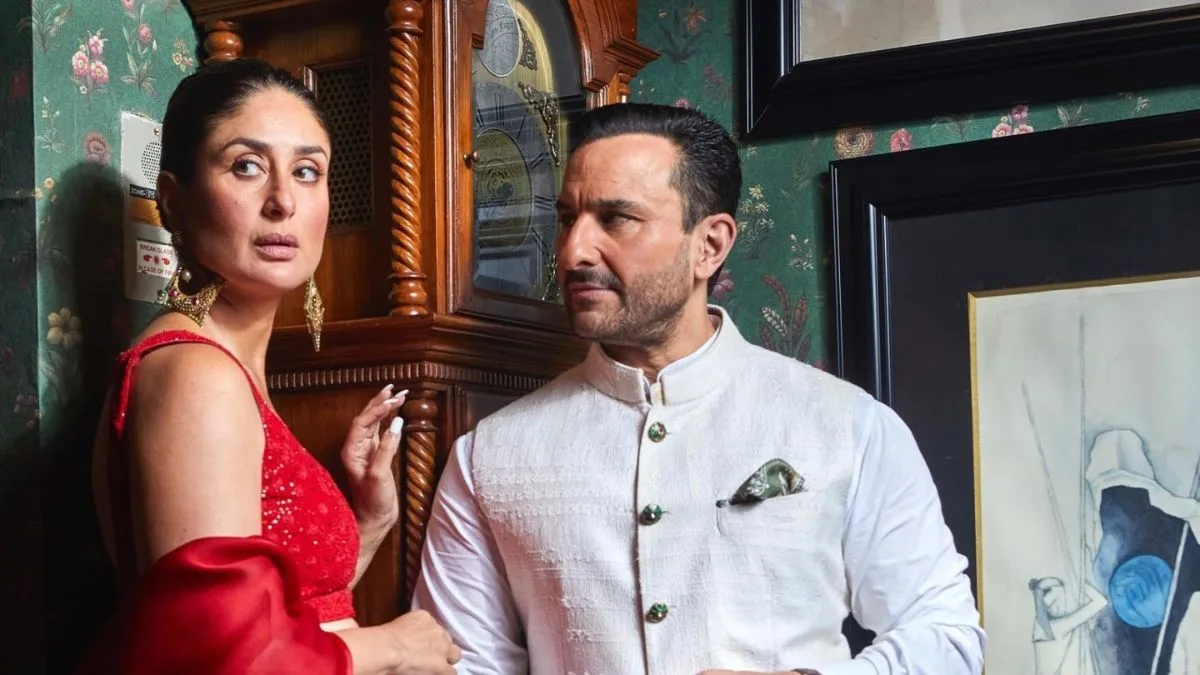
Sharing a warm photo with her husband, actor Saif Ali Khan, Kareena chose real feelings over perfect words.

“As we sit down and reflect on the fact that we made it to the last day of the year… we walked this far,” she wrote.

In her note, Kareena openly spoke about how the year tested not just her and Saif, but also their children and extended family. “2025 has been a difficult year for us, our children and our families,” she wrote.

What happened to Kareena Kapoor’s family in 2025

Behind Kareena’s words lies an incident that shook the entire family. In January 2025, Saif Ali Khan was attacked by a burglar inside their own home.

The incident happened late at night while the family was asleep. The attacker entered their younger son Jeh’s room, carrying a knife and demanding money.

Saif was stabbed multiple times and suffered serious injuries including a spinal injury. He was hospitalised for nearly 10 days and underwent intense treatment and recovery.

Saif Ali Khan breaks his silence

Appearing on the talk show Two Much with Kajol and Twinkle, hosted by Kajol and Twinkle Khanna, Saif opened up about the incident for the first time.

He recalled that it was around 2 am. Kareena had just returned home, they had spoken briefly, and everyone had gone to sleep. Suddenly, their maid rushed in, panicked, saying there was a stranger in Jeh’s room asking for money.

Without thinking, Saif ran into the dark room. What he saw still sends chills down the spine: a man standing over his child’s bed with a knife.

The attacker had already injured Jeh slightly on his hand and hurt the nanny. As the man tried to escape, Saif jumped on him, believing he could stop him.

Saif admitted that his reaction may not have been the safest, but in that moment, instinct took over. The attacker had two knives and began slashing wildly.

Saif tried to defend himself, remembering bits of his training, blocking blows where he could. But soon, he felt a heavy удар in his back.

“He had cut me everywhere. My neck and my back. And there was blood everywhere,” Saif said during the show.

The most heartbreaking moment came when his elder son, Taimur, saw him bleeding. The child feared his father might die.

Saif remembered looking at Taimur and calmly reassuring him, even while injured. “I told him I am fine. I am not going to die,” he said.

Also Read: New Year 2026 wishes, greetings, quotes, WhatsApp and Facebook statuses to share with your family and friends

Smriti Irani talks about her career risks, creative comeback, and personal growth as 2025 ends

Smriti Irani looks back at 2025 as a year of career risks and personal choices that brought growth and self-belief. Urging people to welcome 2026 with courage, she says it is important to live not just for others, but also for yourself.

Statesman News Service | New Delhi |

Smriti Irani ended 2025 on a thoughtful note. The actress-turned-politician shared video message that quickly caught attention online. Instead of talking about power, positions, pressure, she spoke about courage, choices, living life for oneself.

In the video, Smriti Irani is speaking calmly almost like she is talking to herself. She talks about the last day of the year when people usually rush to make new plans, set resolutions, dream of a better tomorrow.

She asks simple but powerful question. When you look back at the year gone by, what do you really see?

For her, 2025 was not just another year. It was a year of learning, courage, and personal joy.

A dream moment at Berkeley

One of the biggest highlights Smriti spoke about was her experience with the prestigious Berkeley institution. She shared that she not only studied at Berkeley but also got the chance to teach a class digitally.

She admitted that this might not sound like a big achievement to everyone. But for her, it was special. It was something she had only heard about in conversations before. Living that experience felt like a personal win.

Choosing creativity over fear

Smriti Irani also opened up about taking a big career risk in 2025. From the peak of her political journey, she decided to turn back to the screen and explore her creative side again.

People warned her. They told her not to risk what she had already achieved. Some even said it might not work for her.

But Smriti did not stop.

“I lived a little for myself”

Towards the end of her message, Smriti summed up her year in one honest line that she lived a little for herself in 2025.

She urged everyone to do the same in 2026. She reminded people that time keeps moving, relationships change, and moments pass. In the end, it is you who stays with yourself.

Also Read: New Year 2026 wishes, greetings, quotes, WhatsApp and Facebook statuses to share with your family and friends

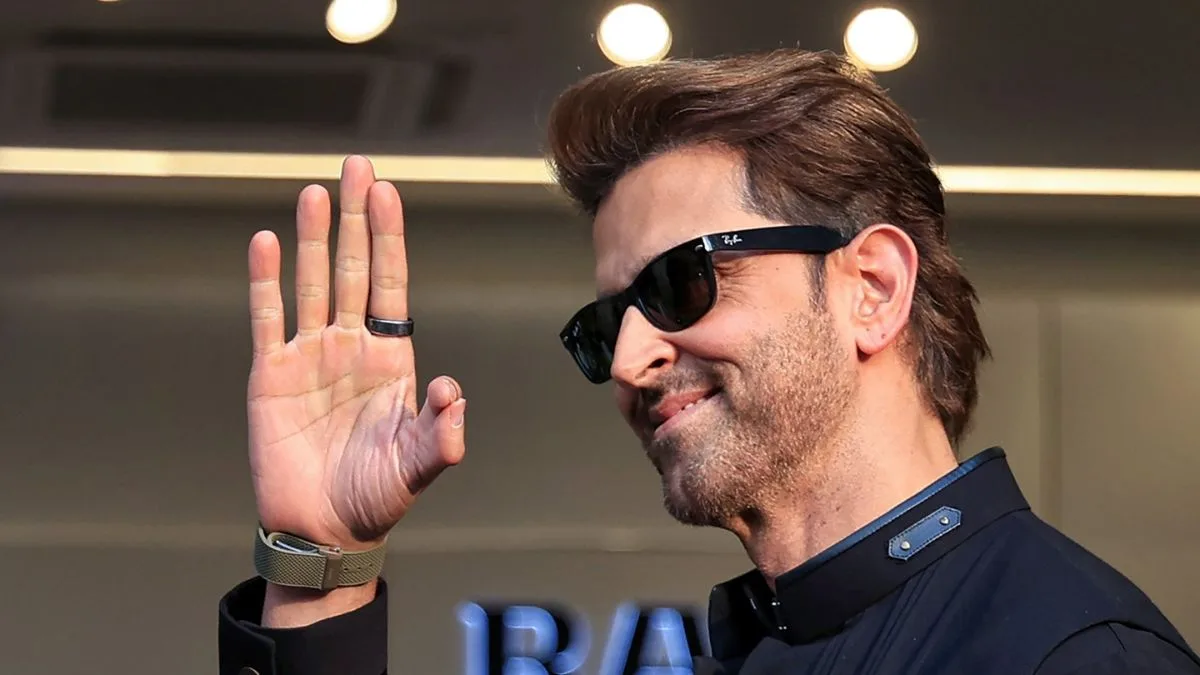
Hrithik Roshan makes light-hearted revelation about his double thumb while bidding farewell to 2025

Hrithik Roshan surprised fans with a playful revelation about his double thumb while sharing a warm goodbye message for 2025. The actor’s honest humour and family-filled celebrations once again showed his relatable side.

Statesman News Service | New Delhi |

Bollywood stars often share big movie announcements, fitness secrets, grand plans for the future. But this time, Hrithik Roshan surprised everyone with something much simpler and sweeter. While saying goodbye to 2025, the actor dropped what he jokingly called a “big revelation”, a fun truth about his famous double thumb.

Hrithik Roshan can’t make a heart shape with double thumb

Hrithik recently shared a post on social media as 2025 came to an end. The carousel showed him in a soft silhouette, with what looked like the shadow of his girlfriend, actor-singer Saba Azad, beside him.

Along with the photo, Hrithik wrote a message for his fans. He spoke about ending the year on a “very merry note” and sent love to everyone who supports him.


View this post on Instagram


A post shared by Hrithik Roshan (@hrithikroshan)

But what really caught attention was the playful line at the end.

Hrithik Roshan revealed that because of his double thumb, he cannot make a proper heart shape with his hands. He jokingly added that this is only the “second thing” he cannot do because of it, calling it a “big revelation”.

Wedding celebrations that broke the internet

Over the past few weeks, Hrithik has been everywhere online, thanks to his cousin’s wedding celebrations.

Hrithik attended the wedding with Saba Azad and his two sons, Hrehaan and Hridaan. The trio grooved to Sukhbir’s popular track “Oh Ho Ho Ho,” and the clip quickly went viral.


View this post on Instagram


A post shared by Hrithik Roshan (@hrithikroshan)

Hrithik looked sharp in a black outfit, while his sons matched the vibe in stylish black and white looks. Sharing the video, Hrithik admitted he needs to get “lighter on his feet” to keep up with his energetic boys.

Hrithik’s mother, Pinkie Roshan, also shared the same video and poured her heart out. She described watching her son and grandsons dance together as an emotional and proud moment. She also thanked Sussanne Khan, the mother of Hrithik’s sons, for raising them with strong values and love.

Deepika Padukone marks first Backstreet Boys concert and modak-making experience during US vacation

Bollywood stars Deepika Padukone and Ranveer Singh are celebrating the New Year 2026 in the US. Deepika enjoyed a Backstreet Boys concert in Las Vegas and shared sweet moments like making modaks at Vikas Khanna’s New York restaurant.

Statesman News Service | New Delhi |

Bollywood star Deepika Padukone is ending 2025 on a happy and relaxed note. The actor is currently in the United States with her husband Ranveer Singh enjoying a much-needed holiday before the New Year. And, she recently attended Backstreet Boys concert as well.

A dream concert ticked off the list

One of the biggest highlights of trip for Deepika Padukone was attending a Backstreet Boys concert in Las Vegas. For many millennials, the band is full of memories.

A close friend of the actor, Sneha Ramachander, shared a photo from the concert on social media. The picture shows Deepika and Sneha smiling brightly, with a massive crowd and a brightly lit venue behind them.

Deepika kept it simple and cool in a white T-shirt and jeans.

As soon as the picture surfaced online, it spread quickly across social media. Fans not only showered love on Deepika but also shared their excitement for the Backstreet Boys. Many users wrote about how the band brings back childhood and teenage memories, calling the concert “pure millennial joy.”

Vacation time in New York

Before Las Vegas, Deepika and Ranveer were also seen spending time in New York. Fans spotted the couple walking around the city and did not miss the chance to click selfies with them. Despite being global stars, Deepika and Ranveer were warm and friendly, happily posing with fans and sharing smiles.

Modaks, memories and a special blessing

Another sweet moment from their US trip came from celebrity chef Vikas Khanna’s New York restaurant, Bungalow. Deepika and Ranveer were seen preparing modaks. For Deepika, it was her first time making modaks there.


View this post on Instagram


A post shared by Vikas Khanna (@vikaskhannagroup)

Vikas Khanna shared the moment on Instagram, calling it a “blessed end to 2025.” He also mentioned that guests at Bungalow would enjoy pomegranate and cardamom modaks to welcome 2026 on an auspicious note.

In the same post, Vikas Khanna also praised Ranveer Singh’s latest film ‘Dhurandhar’. Directed by Aditya Dhar, the film has turned out to be one of the biggest hits of 2025. Ranveer plays the lead role, alongside actors Akshaye Khanna, Sanjay Dutt, Arjun Rampal and R Madhavan.

The film, released on December 5, is still running in theatres and has earned massive numbers at the box office.

Also Read: New Year 2026 wishes, greetings, quotes, WhatsApp and Facebook statuses to share with your family and friends

Himalayan pilgrimage explores grief, faith, and healing

Travel accounts of the vast Himalayan region that spans India, Nepal, China, Bhutan, Pakistan, Afghanistan and Tibet have proved to be a rich treasure trove for travellers, researchers, mountaineers, climate change experts, geologists, ecologists, as well as Hindu and Buddhist pilgrims.

Sanjukta Dasgupta | New Delhi |

Travel accounts of the vast Himalayan region that spans India, Nepal, China, Bhutan, Pakistan, Afghanistan and Tibet have proved to be a rich treasure trove for travellers, researchers, mountaineers, climate change experts, geologists, ecologists, as well as Hindu and Buddhist pilgrims, among sundry others.

Available data indicates that the earliest known travelogue about the Himalayas is likely an account by the Buddhist monk and traveller, Xuanzang (also known as Hiuen Tsang), in the 7th century, though his work focuses more on the routes through the region rather than being a modern-style travelogue. Other early accounts include those from early 8th-century monks, the travels of Adi Shankara around 800 CE, and the 17th-century journeys of Jesuit missionaries like Manuel Marques and Antonio de Andrade’.

The early 19th century detailed account of the Himalayas in two volumes titled, Travels in the Himalayan Provinces of Hindustan and the Panjab (1819-1925 ) by two Englishmen William Moorcroft, a veterinarian and the geographer George Trebeck, are fascinating documents of the Himalayan flora and fauna, the physical landscape, the interactions between the ‘natives’ and representatives of the East India Company that governed the Indian subcontinent till 1857. Understandably, the agenda of such explorations and travelogues was rarely about spiritual quests or socio-historical explorations. William Moorcroft had been informed that high breed horses, in probability Persian horses could be located in the Himalayan region, and it was specifically for this purpose that he had undertaken the journey that spanned a period of six years. Both the travellers died in 1825, and the manuscript of their travel account was acquired by the Asiatic Society in 1841. Another interesting travel account of this period is Among the Himalayas by Major L.A. Waddell and published in 1899 by Archibald Constable and Co, Westminster, London.

Expectedly, Somdatta Mandal’s expert English translation of Jaladhar Sen’s Himalay, first published as a book in 1900, serially published in the journal Bharati since 1893, is written in Bengali. It is essentially a chronicle of a month-long journey, narrated in the format of an informal diary, though dates are meticulously recorded. The English title is not a direct translation of the simple yet nuanced original Bengali title Himalay. In that case, it could be translated as The Himalaya, as Mandal does in her introduction. However, we find that the new English title in this publication is simple and descriptive- The Travels of a Sadhu in the Himalayas. Mandal informs her readers that prior to Sen’s travelogue in Bengali, two other Bengali travelogues of significance were published. The first was Jadunath Sarbadhikari’s Tirtha Bhraman (1865), followed by two travel accounts by missionaries of the order of Ramkrishna Mission in 1887 and 1839, respectively.

It is understood that the honorific sadhu is attributed to male ascetics and sages, who are considered to be distinguished spiritual thinkers and practitioners of the Hindu religion. They are known to preach and interpret religious dogmas, practice exoteric and esoteric religious norms and are widely regarded as preachers who have transcended their urge to live in a well-demarcated world of domesticity in a communitarian spirit of participation. Instead, ideally, the wise sadhus are regarded as reclusive individuals who have committed their lives to the intangible search for divinity as their spiritual mission.

Sen’s diary notes chronicle a period between 5 May 1890 to 8 June 1890, a few days more than a month of travel on foot through the Himalayan region, with two fellow sadhus, sometimes joined by pilgrims and others in quest of spiritual solace. Sen too is in quest of this spiritual succour, as his distressed soul suffers, mourns and longs for the loved ones he had lost all of a sudden. The death of his wife, mother and daughter in quick succession had a devastating impact on him. Sen was a writer, poet, editor and a philanthropist, a traveller, social worker, educationist, litterateur and was awarded the title, ‘Rai Bahadur’ by the British government.

The pages of Sen’s diary resonate with his voice till the very end of his narrative. Sen creates the impression of being a well-educated, cultured Bengali bhadralok, the ‘Rai Bahadur’ title slotting him rather well, though after the hurtful personal tragedy, he decides to abandon the lure of community life in search of peace for his aggrieved soul in distress. However, the diary does not track a journey that describes visions, spiritual flashes of some divine intervention, that could be regarded as a healing emollient emanating from the proximity to the abode of Gods. Instead, the diary foregrounds a sad, grieving man who wields the incisive spear of a rational mind, that sees through the antics and equivocations of fraudsters, thieves and dishonest priests as he journeys from one temple to another, situated in such revered locations as Devaprayag, Rudraprayag, Karnaprayag, Vishnuprayag, Joshimath and Badrinath.

It is interesting to notice that in both Moorcroft’s travelogues, written almost 80 years before Sen’s chronicle, Joshimath features in both as a tough terrain and yet as the gateway to the pilgrimage to Badrinath and Hem Kund. Joshimath seems relevant as this enchanting temple town is now very much in the news as it is slowly but steadily sinking as indiscriminate building of roads, hotels, resorts, and bridges have made the entire area dangerously fragile, a high-risk zone that is earthquake prone. In Sen’s travelogue, reference to Joshimath in superlative terms is truly noticeable.

Sen, who occasionally quotes excerpts from the poems of the Baul lyricist Kangal Harinath, whose book of poems he carries with him, also refers to English literature, specifically John Bunyan’s Pilgrim’s Progress, among others. Sen perhaps owes his liberated approach to the overwhelming spiritual mystique created by religious oral tradition, due to his familiarity with European literature and philosophy. So, referring to the overwhelming beauty of Joshimath, reaching which was so gruellingly arduous, Sen stated that many sadhus often made a detour, purposely avoiding a visit to the alluring Joshimath founded by Shankaracharya. Criticising this propensity, Sen writes in his chronicle, “If a place like Joshimath existed in Europe or America, countless scholars and educated youth with faith in religion would gather there every year…unfortunately, such possibilities seem absent in our country.”

Elsewhere, noticeably in the chapter that describes Narayan Darshan at Badrikashram, where, as Sen donates some money and is about to sign his name in Devanagari, the Mahanta curtly states, “If you write in English, the value of your signature will be even greater.”

Sen’s soul-searching discourse about his faith, his doubts, his indignation about the pretentiousness of the sadhus, posing as emissaries of the divine, is an integral part of this diary of 259 pages. While accepting the fact that he had donned the garb of an ascetic, who is typically known to have delinked himself from samsara, the immersion into a life of domesticity, Sen did not claim that he could engage in a dialogue with God, unlike many sadhus. In fact, Sen states with remarkable candour, “I was neither pious, nor a sadhu.” Sen repeatedly states in his diary that it was difficult for him to accept that he was a stereotypical sadhu with divine awareness, just because he was travelling with sadhus, who were his co-travellers in his Himalayan odyssey.

Significantly, Sen noticed that the sadhus were no different from ordinary people who had no curiosity in discovering the unknown, no appreciation of the splendorous Himalayan ecosystem, its serene woods and forests, the trickling fountains, the confluence of rivers, Prayag, as it is termed. Nor did the sadhus, who can be described as professional sadhus, have any empathy for the devotees who had endured immeasurable hardship to reach the remote temples. The endless streams of devotees visited the temples and donated their hard-earned money, seeking spiritual fulfilment and the benediction of God. However, Sen remarks with unmistakable irony that the leaders of the maths, the missionaries, squandered the donations of the devotees, “satisfying their desires and living in luxury.”

Though travelling with several sadhus and observing the sadhus on their pilgrimage to the seat of God, the imposing Himalayas, Sen records that the sadhus were unable to transcend pettiness, greed, selfishness, cruelty and intolerance and quite noticeably lacked empathy and compassion. Many sadhus were thieves and pilferers, and they were insincere, dishonest and avaricious. They even skipped pages as they read the holy books aloud, for the benefit of the devotees.

The diary has a number of remarkable passages of introspection and self-analysis, that makes this diary stand out as a document that resonates with deep philosophic perception and spiritual awakening. This indeed is the hallmark of Sen’s diary that chronicles a month-long journey into the remote parts of the Himalayas, describing temples big and small, some neglected, some abandoned, while some others stood out in their splendorous display of pilgrim footfall, the priests, pandas, dharmsalas and chatis, all playing a role in this subtly organised pursuit of faith.

So in a self-deprecating mood of annoyance, Sen states, “ with impoliteness in our hearts and tremendous ego in our heads, we dressed as sadhus…” but lacked love and empathy for others. His Himalayan pilgrimage convinces Jaladhar Sen that God did not reside within the temples that were under the control of mostly dishonest priests who masqueraded as God’s ambassadors. Sen states with conviction and courage, “Was I truly travelling, without proper food, shelter or rest, making such tremendous effort simply to see some ruined temples and old idols of God?”

Thereafter, Jaladhar Sen defines unhesitatingly, his moment of self -realisation and liberation of his spirit from the mundane coils of self-centred human life as he writes, “The bare beauty of the mountains, the varied natural scenery, the silvery flow of mountain streams, and the soothing effect of the cool breeze- these were the gods I worshipped.”

In the introduction to the Travels of a Sadhu in the Himalayas, the translator states that Sen’s diary is among the ‘earliest secular texts’ that inspired the publication of more such travelogues in the course of time. The oxymoronic impact of the secular sadhu’s travels in the Himalayas is unmistakable.

It is small wonder that Jaladhar Sen’s travelogue Himalay, first published in 1900, almost 125 years ago, fascinated Bengali readers and motivated many to explore the alluring Himalayan region. Somdatta Mandal’s English translation, The Travels of a Sadhu in the Himalayas ( 2025) of Jaladhar Sen’s Himalay will be a valuable addition to travel studies, cultural studies and translation studies.

Spotlight

The Travels of a Sadhu in the Himalayas

By Jaladhar Sen

Translated by Somdatta Mandal

Publisher: Speaking Tiger, New Delhi, 2025

Price: Rs 317, 239 pages

ECI: No FIR can filed against CEC

The Election Commission of India (ECI) on Wednesday rejected the police complaints filed against Gyanesh Kumar, Chief Election Commissioner (CEC) and) Manoj Agarwal, West Bengal Chief Electoral Officer (CEO), in connection with deaths of voters who had been summoned for hearing under the Special Intensive Revision (SIR) exercise.

Statesman News Service | Kolkata |

The Election Commission of India (ECI) on Wednesday rejected the police complaints filed against Gyanesh Kumar, Chief Election Commissioner (CEC) and) Manoj Agarwal, West Bengal Chief Electoral Officer (CEO), in connection with deaths of voters who had been summoned for hearing under the Special Intensive Revision (SIR) exercise.

Terming the police complaints as an attempt to intimidate the election officials, the CEO, West Bengal, wrote on X: “It has come to the notice of this office from various press releases that two complaints have been filed with the police, against the Chief Election Commissioner of India and the Chief Electoral Officer, West Bengal.”

The social media posts went on to state: “The allegations contained therein appear to be premeditated, unsubstantiated and a crude attempt to browbeat the officers tasked with discharging statutory duties in connection with SIR 2026. Such intimidatory tactics designed to threaten the election machinery into submission and derail the process are undoubtedly designed to fail.”

The post further emphasised that the issue would be pursued legally. The post said: “No stone will be left unturned to unearth the conspiracy behind these serial and fabricated complaints, rule of law and truth shall prevail. The election machinery in the state is committed to function with grit and rectitude solely and wholly in public interest.”

The ECI’s post on X comes as a reaction to the police complaints filed by the families of voters in Purulia and Howrah following the death of their elderly family members, who had received hearing notices under the SIR process. In Purulia, Kanai Majhi alleged that his 82-year-old father, Durjan Majhi, died by suicide hours before his hearing.

While in Howrah, Jamat Ali Sheikh’s son alleged mental duress caused by the hearing notice issued to his 64-year-old father, a valid voter, allegedly led to his death.

Govt plans holistic education for students

The education department will hold the Students’ Week 2026 from 1 to 8 January to foster life skills and 21-century skills and make them aware about student-centric schemes of the state government.

Tarun Goswami | Kolkata |

The education department will hold the Students’ Week 2026 from 1 to 8 January to foster life skills and 21-century skills and make them aware about student-centric schemes of the state government.

The programme will be held for the fourth consecutive year in 2026.

During the week, inclusive education will be emphasised along with landscape study for the students of classes VIII and IX. The students will be made aware about the environment through the ECO Club and Mission Life.

The programme will be inaugurated tomorrow. On the second day, Chief Minister Mamata Banerjee will give best wishes to the students taking part in the week. Textbooks and notebooks will be distributed among the students. The students with visual impairment will be given Braille and large note books. The students will be made aware about the heritage of their schools along with maintenance of personal hygiene, sanitation and hand washing.

On the third day the teachers will meet the guardians on academic issues that include the ongoing school activity, holistic progress report card, e-content on Banglar Siksha Classroom, book corner, wall magazine, kitchen garden and the strategies to improve reading habit.

There will be intense campaign on the awareness of various social issues like health and safety, prevention of early marriage and drug abuse and sexual abuse of the students among others.

On the third day, students of higher secondary section will be given life skill education and community-based activities.

On the fourth day, there will be competitions on reading, writing, storytelling activities, poster making, debate, elocution, quizzes and yoga.

Day five will be dedicated to life skill education focusing on group skill activities and interactive sessions. There will be workshops for teachers and students on innovative teaching practices.

On the sixth day the students will be taken to some important centres in their respective areas along with cleanliness drives within schools and surrounding communities for prevention of vector-borne diseases.

On the seventh day the projects made by the students will be displayed along with food festivals, cultural programmes among others.

Sandip Banerjee, educationist, said: “The idea of celebration of Students’ Week matches the state education policy of the state government in the vision of diversity, unity, inclusiveness and quality. It connects the students to social order and helps them to improve life skills for healthy psychological development. The whole idea enhances the spirit of social awareness through creative participation.”