Logo

Vijay to make national foray as TVK is likely to replace estranged DMK in INDIA Bloc

With the DMK moving out of the INDIA Bloc, the Tamilaga Vettri Kazhagam (TVK) is likely to replace the Dravidian major with Tamil Nadu Chief Minister Joseph Vijay expected to make his national foray by utilising this opportunity.

Statesman News Service | Chennai |

With the DMK moving out of the INDIA Bloc, the Tamilaga Vettri Kazhagam (TVK) is likely to replace the Dravidian major with Tamil Nadu Chief Minister Joseph Vijay expected to make his national foray by utilising this opportunity.

Having cemented the TVK’s alliance with the Congress by giving two ministerial berths in his cabinet to the national party, as well as a Rajya Sabha seat that Vijay could have retained for the TVK, he is interested in playing a part in national politics along with the Congress-led opposition combine.

Earlier in the day, AICC in-charge of Tamil Nadu, Girish Chodankar, met Vijay at the secretariat, and the discussion is said to be around Vijay’s entry into the INDIA Bloc.

Though the exit of the DMK, which has 22 MPs in the Lok Sabha and 8 in the Rajya Sabha, could be a temporary setback, Vijay stepping into the INDIA Bloc would give it star power and newfound charisma. It would go a long way in strengthening Rahul Gandhi’s position, sources in the Congress explain. Further, the special bond between Rahul and Vijay will help transform the political landscape in the coming Lok Sabha election, it is pointed out.

Already, Vijay had altered the political map of Tamil Nadu, and his TVK aims to occupy the secular space, once claimed by the DMK. With the Congress on his side, he has the much-needed secular credentials to take on the BJP. For the DMK, the Congress had provided the secular cloak thus far.

Further, Vijay’s film charisma extends far beyond Tamil Nadu’s borders, with a huge fan base in neighbouring Kerala, to a certain extent in Andhra Pradesh and in Karnataka, which could be of great use to the Congress at the time of elections. From the late DMK patriarch M Karunandhi to AIADMK czarina Jayalalithaa and MK Stalin, everyone kept their cadre in good humour by maintaining that they play a pivotal role in shaping national politics. Can Vijay be any different? ask observers.

West Bengal Assembly joins NeVA initiative, signs MoU to transition towards fully digital legislative functioning

The West Bengal Legislative Assembly on Thursday took a significant step towards digitising its legislative processes by signing a tripartite Memorandum of Understanding (MoU) for the implementation of the National e-Vidhan Application (NeVA), a flagship initiative of the Union Ministry of Parliamentary Affairs aimed at modernising legislatures across the country through a common digital platform.

Statesman News Service | New Delhi |

The West Bengal Legislative Assembly on Thursday took a significant step towards digitising its legislative processes by signing a tripartite Memorandum of Understanding (MoU) for the implementation of the National e-Vidhan Application (NeVA), a flagship initiative of the Union Ministry of Parliamentary Affairs aimed at modernising legislatures across the country through a common digital platform.

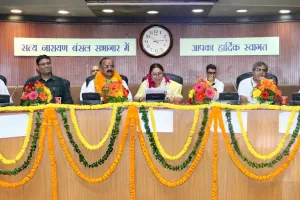
‎The agreement was signed in the presence of Union Minister for Parliamentary Affairs and Minority Affairs Kiren Rijiju, Minister of State (Independent Charge) for Law and Justice and Minister of State for Parliamentary Affairs Arjun Ram Meghwal, Minister of State for Information and Broadcasting and Parliamentary Affairs L Murugan, West Bengal Legislative Assembly Speaker Rathindra Bose and West Bengal Chief Minister Suvendu Adhikari, who joined the event virtually.

‎Addressing the gathering, Kiren Rijiju described the adoption of digital technology in legislative institutions as a transformative step and reiterated the Centre’s commitment to supporting the West Bengal Legislative Assembly in its journey towards becoming a fully digital House.

‎“Digital transformation is essential for strengthening legislative institutions and making governance more transparent, efficient and accessible. The Government of India remains committed to extending all necessary support to the West Bengal Legislative Assembly for the successful implementation of NeVA,” Rijiju said.

‎Welcoming the initiative, Chief Minster Adhikari said the state government was committed to modernising governance institutions through technology-driven reforms. He noted that digitisation would help improve efficiency and accessibility in legislative processes while aligning governance systems with contemporary technological advancements.

‎Arjun Ram Meghwal emphasised that digital platforms such as NeVA could significantly strengthen legislative functioning by ensuring timely and seamless access to information for legislators. “Technology-driven legislative systems can enhance efficiency, improve decision-making and ensure that members have access to legislative business and records in a timely manner,” he said.

‎L. Murugan highlighted the broader impact of technology on democratic governance, saying digital initiatives improve transparency, strengthen citizen engagement and make legislative information more accessible to the public.

‎Speaker Rathindra Bose expressed confidence that the implementation of NeVA would improve the efficiency and transparency of the Assembly’s functioning. “The adoption of NeVA will strengthen legislative processes and enhance accessibility to information while ensuring greater transparency in the functioning of the House,” he said.

‎In his welcome remarks, Nikunja Bihari Dhal, Secretary in the Ministry of Parliamentary Affairs, described West Bengal’s inclusion in the NeVA framework as an important milestone. He said the platform would enable the Assembly to function with greater transparency, punctuality and efficiency.

‎Satya Prakash, Additional Secretary in the Ministry of Parliamentary Affairs and Mission Leader of NeVA, assured the Assembly of continued support from the Ministry and the Central Project Monitoring Unit. He said technical assistance, capacity-building programmes and implementation support would be provided to ensure a smooth transition to a fully digital legislative ecosystem.

‎The MoU was signed by Satya Prakash on behalf of the Ministry of Parliamentary Affairs, Soumendra Nath Das, Principal Secretary of the West Bengal Legislative Assembly, on behalf of the Assembly, and Sampa Dhar, Special Secretary in the Parliamentary Affairs Department of the Government of West Bengal, on behalf of the state government.

‎With the signing of the agreement, the West Bengal Legislative Assembly has become the 33rd legislature in the country to join the NeVA initiative. According to the Ministry of Parliamentary Affairs, 21 legislatures have already completed the transition to fully digital functioning through the platform.

‎NeVA, a Mission Mode Project of the Ministry of Parliamentary Affairs, has been developed to digitise and modernise legislative functioning across India under a common digital architecture. The initiative is aligned with Prime Minister Narendra Modi’s Digital India vision and seeks to promote paperless, transparent, efficient and citizen-centric governance in legislative institutions.

‎The platform enables end-to-end digital management of legislative business, including questions, bills, notices, assurances, committee proceedings, lists of business, bulletins and other House-related activities. It also provides members with seamless access to legislative information and creates a permanent digital repository of legislative records and proceedings.

‎Officials said the inclusion of the West Bengal Legislative Assembly in the NeVA framework marks another step towards the national vision of “One Nation, One Application” for legislative governance, strengthening efforts to create a modern, technology-enabled parliamentary ecosystem across the country.

Deputy Collector arrested on charges of sexually exploiting woman in MP

A Deputy Collector in the Morena District of Madhya Pradesh has been arrested on charges of sexually exploiting a woman on the pretext of marriage.

Statesman News Service | Bhopal |

A Deputy Collector in the Morena District of Madhya Pradesh has been arrested on charges of sexually exploiting a woman on the pretext of marriage.

According to the police, the Deputy Collector was arrested on Wednesday night.

Civil Lines Police Station House officer Udaybhan Yadav said that the complainant woman has alleged that she first met the senior revenue department official on Facebook, and the two later started speaking over the phone.

According to the complaint, the Deputy Collector proposed to marry her, and the woman agreed.

She has further alleged that on March 30, 2025, the Deputy Collector took her in a car to a rest house in Morena, where he established physical relations with her against her wishes.

He allegedly sexually assaulted her at a government residence in Sabalgarh when he was posted there as the sub-divisional magistrate. He also took her to a flat in Gwalior and abused her, as per the FIR.
The woman has further alleged that the relationship continued from March 30, 2025, to June 3, 2026. She also claimed that the official was now refusing to marry her and had threatened to eliminate her family if she lodged a complaint, the police said.

Police officials said that a case against the Deputy Collector was registered on Wednesday at the Civil Lines police station under Section 69 (sexual intercourse obtained through deceitful means, particularly a false promise of marriage) of the Bharatiya Nyaya Sanhita.

Five die in Muzaffarpur hospital fire, elderly patient’s alertness helps save lives

At least five people were killed and more than 15 others injured after a massive fire, reportedly triggered by a short circuit, engulfed the ICU of Prasad Hospital in Muzaffarpur early Thursday.

Statesman News Service | Patan |

At least five people were killed and more than 15 others injured after a massive fire, reportedly triggered by a short circuit, engulfed the ICU of Prasad Hospital in Muzaffarpur early Thursday. The injured were shifted to other hospitals for treatment.

Authorities officially confirmed five deaths in the incident and said that exposure to intense heat and smoke inhalation might have caused the fatalities. However, the exact cause of death will be ascertained only after the postmortem.

“A total of five deaths have been confirmed. There are several injured persons, who are undergoing treatment at various hospitals,” Muzaffarpur Municipal Commissioner Rituraj Singh said.

Four of the deceased have been identified as Krishnanandan Prasad Singh (76), Geeta Devi (62), Shashank (30), and Uday Kumar (57). The identity of the fifth victim has yet to be officially disclosed.

Chief Minister Samrat Choudhary expressed grief over the tragedy and conveyed his condolences to the bereaved families and directed officials to provide immediate compensation of Rs 4 lakh each to the next of kin of the deceased.

Former chief minister Nitish Kumar also expressed condolences to the bereaved families. “The tragic loss of lives in the accident caused by a fire in a private hospital in Muzaffarpur district of the state is extremely heart-wrenching. I offer deep condolences to the bereaved families, and pray for the speedy recovery of the injured,” he said in a post on X.

Amid the tragedy, Bihar Health Minister Nishant Kumar left for Delhi from Patna. When journalists attempted to seek his response on the incident at the airport, he declined to comment, folded his hands before the media, and proceeded to board his flight.

The incident triggered outrage among relatives of the victims and other family members, who staged a protest on the hospital premises and demanded a thorough investigation and strict action against those found responsible.

A relative of one of the patients accused the police of failing to cooperate, alleging that instead of offering assistance, personnel were asking people to leave the area. Seeking accountability, she questioned who would take responsibility for the tragedy.

Amid the chaos, 95-year-old Radha Devi, who was admitted to the ICU, emerged as an unlikely hero. After noticing smoke spreading inside the ward, she quickly sensed the danger, removed her oxygen mask, and made her way out to alert hospital staff.

Radha Devi said she informed a security guard after spotting the smoke. Her warning prompted hospital authorities and staff to act swiftly and begin evacuating patients from the affected area.

Local residents said Radha Devi’s alertness and timely action helped save several lives and prevented the situation from becoming even more disastrous.

Following the incident, the Bihar Fire Services Department went on high alert. Director General Shobha Ahotkar has directed hospitals and hotels across the state to strictly comply with fire safety norms, while inspections of such establishments have been initiated.

Amid custodial torture concerns, CM tells Odisha police ‘Be people-friendly, tough on criminals’

Amid growing concerns over alleged police excesses and custodial torture incidents reported from different parts of Odisha, Chief Minister Mohan Charan Majhi on Thursday called upon police personnel to adopt a citizen-friendly approach while dealing firmly with criminals.

Statesman News Service | Bhubaneswar |

Amid growing concerns over alleged police excesses and custodial torture incidents reported from different parts of Odisha, Chief Minister Mohan Charan Majhi on Thursday called upon police personnel to adopt a citizen-friendly approach while dealing firmly with criminals.

“Be friendly to the public and tough on offenders. It is your duty and responsibility to enforce the law fairly and effectively,” the Chief Minister said while inaugurating a state-of-the-art police station at Talabania in Puri and dedicating several newly constructed police infrastructure projects across the state.
Highlighting the achievements of Odisha Police, Majhi said the force has played a commendable role in combating Left-Wing Extremism, maintaining public order and curbing narcotics trafficking. He noted that the state’s conviction rate has significantly improved following the implementation of the Bharatiya Nyaya Sanhita (BNS).

Odisha’s conviction rate rose to 87.6 per cent by December last year, reflecting improved investigation and prosecution processes, the CM claimed.

Majhi cautioned that a few isolated incidents could tarnish the police force’s overall image. Stressing the need for greater sensitivity and professionalism, he urged police personnel to remain vigilant and responsive while discharging their duties.
The Chief Minister said the government is placing special emphasis on training and capacity building for police officers and staff to enhance service delivery and public trust.

Referring to cybercrime and organised crime as emerging challenges, Majhi said such offences have become major concerns across the world. He stressed the need for police to embrace modern technologies and adopt a proactive approach to effectively tackle these evolving threats.

Expressing confidence in the capability of the Odisha Police, the Chief Minister said the force is well-equipped to meet contemporary policing challenges while ensuring law enforcement remains both effective and people-centric.

Yoga unites humanity beyond borders, says PM Modi as First World Yogasana Sports Championship begins in Ahmedabad

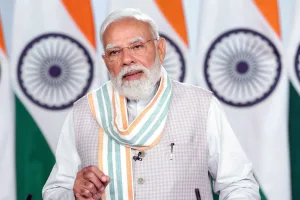
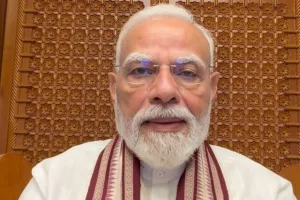
‎Prime Minister Narendra Modi on Thursday described yoga as India’s timeless gift to humanity and hailed the launch of the first World Yogasana Sports Championship as a landmark moment in the global journey of the ancient discipline, which he said continues to promote physical well-being, mental balance and harmony across cultures and nations.

Statesman News Service | New Delhi |

‎Prime Minister Narendra Modi on Thursday described yoga as India’s timeless gift to humanity and hailed the launch of the first World Yogasana Sports Championship as a landmark moment in the global journey of the ancient discipline, which he said continues to promote physical well-being, mental balance and harmony across cultures and nations.

‎Addressing participants at the inaugural World Yogasana Sports Championship in Ahmedabad via video conferencing, Modi underscored yoga’s growing global appeal and its ability to connect people beyond geographical, linguistic and cultural boundaries.

‎“Yoga is India’s timeless gift to humanity,” the Prime Minister said. “Uniting mind, body and spirit, it inspires a healthier, more harmonious world.”

‎Emphasising that yoga has evolved into a worldwide movement for wellness and holistic living, Modi said the practice offers a path towards inner peace and collective well-being at a time when societies across the world are facing unprecedented physical and mental health challenges. He noted that yoga’s universal values have enabled it to transcend national borders and become a shared heritage embraced by people from diverse backgrounds.

‎The Prime Minister also lauded participants in the championship for demonstrating the discipline, dedication and excellence associated with yogasana, the competitive sporting form of yoga that has gained increasing international recognition in recent years. He said the event represented a significant step in expanding the global footprint of yogasana and integrating it into the international sporting landscape.

Earlier in the day, Modi highlighted the championship’s significance in a post on social media platform X, describing it as a milestone in the global development of yogasana as a sport.

‎“On June 4, a very special competition, the 1st World Yogasana Sports Championship 2026, will commence in Ahmedabad. This platform has brought together yoga enthusiasts from around the world. It is a significant milestone on the global sporting roadmap for Yogasana,” he said in a social media post on Wednesday.

‎The Prime Minister also extended his appreciation to the organisers of the event and conveyed his best wishes to all participants. “My compliments to those who have organised such an innovative event and best wishes to all taking part,” he said.

‎The championship has drawn yoga practitioners, athletes and enthusiasts from several countries, reflecting the growing international popularity of yoga not only as a wellness practice but also as a competitive discipline. Organisers said the event aims to promote yogasana globally while encouraging greater awareness of the physical, mental and spiritual benefits of yoga.

‎Modi’s remarks come just weeks ahead of the observance of the International Day of Yoga on June 21, which has become one of India’s most successful global cultural initiatives. The annual event traces its origins to India’s proposal at the United Nations in 2014, when the General Assembly adopted a resolution declaring June 21 as International Day of Yoga with unprecedented support from member states.

‎Since then, yoga has emerged as a key pillar of India’s cultural diplomacy and soft-power outreach, with large-scale celebrations being organised across continents every year. Under Modi’s leadership, successive governments have sought to position yoga as a universal practice that promotes preventive healthcare, sustainable lifestyles and mental well-being.

‎The rise of yogasana as a competitive sport has been a more recent development, with national and international federations working to establish standardised formats, judging criteria and championship structures. Supporters of the movement argue that competitive yogasana helps showcase the athletic and technical dimensions of yoga while attracting younger participants and expanding its global audience.

‎The inaugural World Yogasana Sports Championship is being viewed as a significant step towards institutionalising the sport internationally and strengthening efforts to secure wider recognition for yogasana in global sporting forums.

‎Reaffirming India’s commitment to sharing the values embodied in yoga with the world, Modi said the ancient practice continues to serve as a powerful force for unity and harmony. He expressed confidence that the championship would further inspire people across nations to embrace yoga as a way of life and contribute to building a healthier and more balanced world.

Delhi Police adds 32 new MPVs to its PCR fleet to boost field presence

The Special Commissioner of Police (Delhi), of Special Police Unit for Women and Children, and the Special Police Unit for North Eastern Region (SPUNER) citizens, David Lalrinsanga had flagged off the newly-inducted PCR units on Wednesday from the Delhi Police Headquarters.

Statesman News Service | New Delhi |

With the objective of augmenting police mobility, expanding area coverage, enhancing overall visibility and responsiveness of Police Control Room (PCR) units to make people feel secure, the Delhi Police inducted 32 new Mobile Patrol Vehicles (MPVs) in its fleet, to be deployed across different districts.

The Special Commissioner of Police (Delhi), of Special Police Unit for Women and Children, and the Special Police Unit for North Eastern Region (SPUNER) citizens, David Lalrinsanga had flagged off the newly-inducted PCR units on Wednesday from the Delhi Police Headquarters.

According to a senior police official, the induction of these vehicles in the PCR fleet has been undertaken to reduce police response time, particularly in the areas where frequency of PCR calls is on a higher side, and to galvanize the overall functioning of the PCR Unit.
The upgraded fleet is expected to bolster the operational readiness, ensuring swift and effective response to distress calls and fostering a more citizen-friendly policing environment across the national capital.

Notably, the overall strength of the PCR fleet following the addition had now increase to 889 vehicles.

The new MPVs will be deployed across locations in the districts including South, South West, West, Rohini, Outer, Outer North, North, North East, Shahdara, East, South East and Central.

LG Saxena unveils Ladakh’s first centralised employment portal

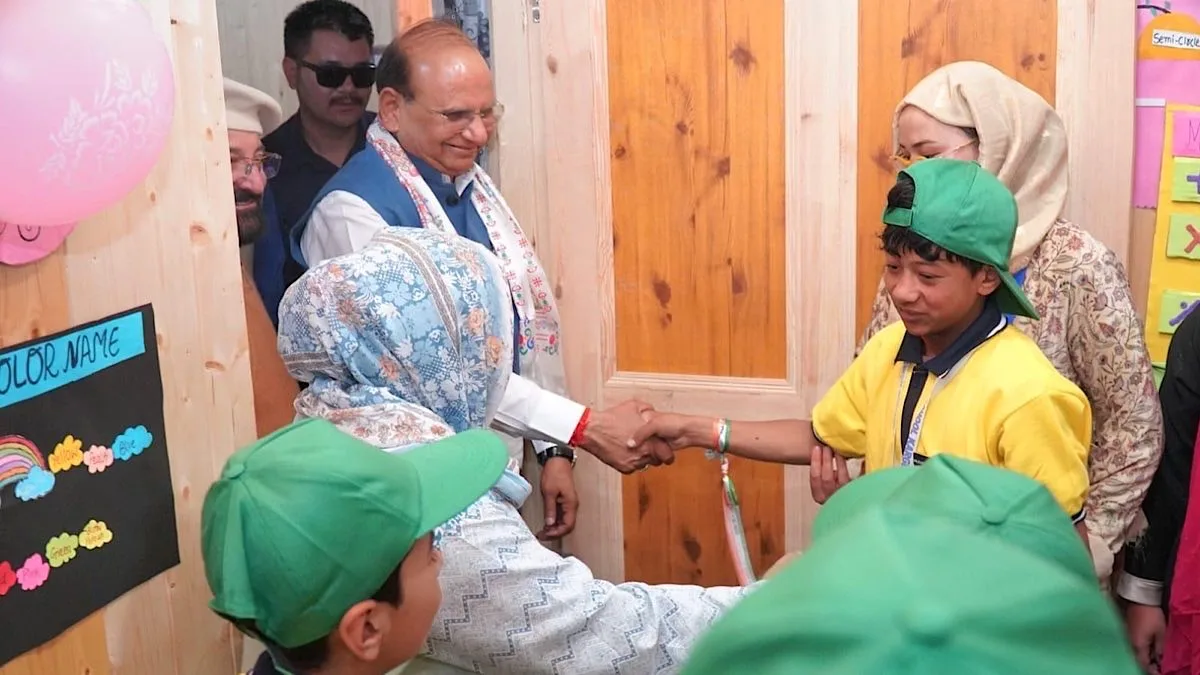
In a major push to expand employment opportunities for youth in Ladakh, Lieutenant Governor Vinai Kumar Saxena on Thursday launched the Integrated Job Portal Ladakh, a first-of-its-kind digital platform aimed at connecting job seekers and employers through a centralized and transparent recruitment system.

Statesman News Service | Jammu |

In a major push to expand employment opportunities for youth in Ladakh, Lieutenant Governor Vinai Kumar Saxena on Thursday launched the Integrated Job Portal Ladakh, a first-of-its-kind digital platform aimed at connecting job seekers and employers through a centralized and transparent recruitment system.

The portal (https://jobportal.ladakh.gov.in) has been developed following proactive intervention and vision of the Lieutenant Governor to create meaningful livelihood opportunities for the youth of Ladakh and establish a centralized platform for employment-related services. The portal will facilitate access to a wide range of employment opportunities, including full-time, part-time, contractual and outsourced positions across different sectors.

Employment remains one of the most important issues for the youth of Ladakh. In the absence of a dedicated employment portal, job seekers often had to browse multiple websites, social media platforms and informal channels to search for vacancies, making the process cumbersome, time-consuming and fragmented. The integrated Job Portal Ladakh seeks to address this challenge by bringing together employment opportunities from various sectors on a single platform, enabling applicants to search and apply for jobs with ease.

The portal has been developed with the objectives of providing a centralised employment platform for Ladakh, connecting job seekers with employers across sectors, simplifying recruitment processes, promoting transparent and accessible employment opportunities, local economic growth, and enabling data-driven employment planning and governance. It would significantly reduce paperwork and administrative burden, enable real-time employment analytics and promote local talent across the Union Territory.

Highlighting the broader significance of the initiative, Saxena observed that the portal would provide equal access to opportunities for youth residing in remote villages as well as urban centres.

Designed as a one-stop solution for employment needs in Ladakh, the portal aims to bridge the gap between job seekers and employers by leveraging technology to create a seamless and efficient recruitment ecosystem.

The platform offers several user-friendly features, including creation of professional candidate profiles, online job search, easy application submission, real-time application tracking and direct communication between employers and applicants. Employers can post vacancies, specify job requirements, screen candidates using advanced filters and connect directly with prospective employees through the portal.

Rajya Sabha polls: Tarun Chugh named BJP candidate from MP, Ravneet Bittu missing from list

The latest candidate line-up is viewed by political analysts as a calculated move to balance organizational experience with emerging regional equations.

Neeraj Bali | Chandigarh |

The Bharatiya Janata Party (BJP) has announced its slate of 11 candidates for the upcoming Rajya Sabha elections, highlighting major shifts in its regional legislative strategy. Among the most notable selections is BJP National General Secretary Tarun Chugh, who has been officially nominated to represent Madhya Pradesh in the Upper House of Parliament. Concurrently, the omission of Union Minister of State Ravneet Singh Bittu from the newly released list has generated significant political discourse.

The latest candidate line-up is viewed by political analysts as a calculated move to balance organizational experience with emerging regional equations. Chugh’s nomination from Madhya Pradesh is widely interpreted as a reward for his long-standing organizational dedication and extensive grassroots political acumen. Having served the party machinery in various key capacities, he has been an influential figure in managing institutional affairs across politically sensitive territories, including Punjab and Jammu & Kashmir.

The decision to elevate a seasoned strategist like Chugh underlines the high command’s focus on reinforcing its parliamentary bench with leaders capable of effectively articulating party policies. Meanwhile, the exclusion of Ravneet Singh Bittu, a prominent face from Punjab, from this specific list of 11 nominees has surprised many in political circles, triggering intense speculation regarding the party’s future deployment strategy for the Union Minister.

With the ruling party clarifying its initial preferences, the legislative landscape is expected to witness heightened political maneuvering in the coming days. Senior leaders indicated that the selection criteria heavily favored candidates with a proven track record of strengthening the party’s structural foundation, signaling a intensely competitive run-up to the final voting process.

Step up vigil & surveillance in border areas to curb cross-border crimes: Rajasthan CM

Rajasthan Chief Minister Bhajan Lal Sharma has directed officials to step up alertness and surveillance in districts along the Indo-Pak international border to curb cross-border crimes.

Statesman News Service | Jaipur |

Rajasthan Chief Minister Bhajan Lal Sharma has directed officials to step up alertness and surveillance in districts along the Indo-Pak international border to curb cross-border crimes.

Chairing a high-level review meeting of the state home department on Wednesday evening, the Chief Minister said, “Intensify surveillance and maintain a high alert in the bordering areas to effectively curb drone-based smuggling and other illegal activities.

Sharma, who holds the Home portfolio, directed District Collectors and Superintendents of Police in border districts to ensure better coordination at all levels for timely action against criminal activities.

The Chief Minister’s directive comes close on the heels of a similar review meeting held last week in Bikaner under the Chairmanship of Union Home Minister Amit Shah, following his visit to some border areas.

During his visit to Delhi earlier this week, CM Sharma also paid a courtesy call to National Security Adviser Ajit Doval.

Besides border security, Sharma also took stock of the situation regarding the growing menace of drug trafficking and its impact on the youth.

He directed authorities to dismantle organised drug trafficking networks and crush the financial backbone of these mafias and gangs.

The Chief Minister ordered that their economic assets either be attached or their immovable properties demolished.

Chief Secretary directs fast-tracking of solar projects across J&K

In a push to accelerate Jammu and Kashmir’s transition to clean energy, Chief Secretary Atal Dulloo on Thursday reviewed the status of ongoing solarisation projects and called for time-bound action to achieve renewable energy targets, including the development of mega solar parks and solar-powered government infrastructure.

Statesman News Service | Jammu |

In a push to accelerate Jammu and Kashmir’s transition to clean energy, Chief Secretary Atal Dulloo on Thursday reviewed the status of ongoing solarisation projects and called for time-bound action to achieve renewable energy targets, including the development of mega solar parks and solar-powered government infrastructure.

He stressed removal of the bottlenecks identified by the Science & Technology Department in advancing these efforts across the Union Territory.
The Chief Secretary emphasised the need for sustained and result-oriented follow-up by the Science & Technology Department on the issues deliberated upon, observing that a clear roadmap for addressing the challenges had emerged through collective consultations with all stakeholders.

He underscored that the department should fully leverage the support being extended by the Finance Department and other agencies to achieve the solarization targets within defined timelines.

Emphasizing the immense potential of renewable energy in Jammu and Kashmir, the Chief Secretary advised the department to undertake a comprehensive review of the land parcels identified on the PM Gati Shakti Portal and assess their suitability for establishment of mega solar parks under Government of India-supported programmes.

He called for a focused and mission-mode approach, directing the department to set measurable targets for the next six months, one year and two years, and ensure visible progress on the ground at each stage.

The meeting held detailed deliberations on a range of issues critical to the successful implementation of solar projects, including land acquisition and transfer, obtaining statutory clearances from various departments, execution of Power Purchase Agreements (PPAs) with distribution companies for evacuation of power generated from solarized buildings, and measures required to maintain grid stability for optimal utilization of solar energy assets.

Discussions also centred on the installation of Virtual Net Metering systems in Government buildings, adoption of a Unified Billing System for departments in place of separate billing for individual buildings, and provision of fresh power connections wherever required to facilitate seamless implementation of solar projects.

The stakeholders further deliberated upon the need for rationalization and levelisation of rates for projects being implemented under the Renewable Energy Service Company (RESCO) model to ensure greater efficiency of solar energy solutions across departments.

The meeting also reviewed the long-term roadmap for development of mega-scale solar power infrastructure in Jammu and Kashmir. Detailed discussions were held on issues relating to land transfer, execution of PPAs and feeder segregation, which are considered essential for efficient integration and utilization of future solar power assets in the Union Territory.
Reaffirming the government’s commitment to cleane and sustainable energy, the Chief Secretary called upon these departments to work in close coordination and expedite action on the decisions taken during the meeting so that Jammu and Kashmir catches up with other leading renewable energy developing regions of the country.

White Paper exposes Kerala’s Rs 5.07 lakh crore debt crisis

The White Paper on Kerala’s Finances titled “Kerala’s Fiscal Health: A Status Report” has officially revealed that the state’s total public debt has escalated to Rs 5.07 lakh crore.

Statesman News Service | Thiruvananthapuram |

The White Paper on Kerala’s Finances titled “Kerala’s Fiscal Health: A Status Report” has officially revealed that the state’s total public debt has escalated to Rs 5.07 lakh crore.

Tabled in the State Legislative Assembly by Chief Minister and Finance Minister VD Satheesan, the document outlines a severe fiscal crisis inherited by the newly elected United Democratic Front (UDF) government from the previous Left Democratic Front (LDF) administration.

The report, compiled by a three-member expert committee chaired by former Cabinet Secretary KM Chandrasekhar, highlights acute fiscal distress.

Beyond the main debt, the state faces Rs 48,733 crore in pending liabilities and deferred bills, including unpaid Dearness Allowance (DA) and Dearness Relief (DR) for employees and pensioners.

Roughly 77% of total revenue receipts are entirely consumed by committed expenses like salaries, pensions, and interest payments.

Interest payments alone absorb 20.9% of the state’s total revenue, meaning one out of every five rupees earned goes strictly towards debt service. Development and infrastructure funding has dropped to just 1.3% of the Gross State Domestic Product (GSDP), ranking Kerala among the lowest capital-spending states in India, the White paper states.

The state has operated under acute stress, relying on the Reserve Bank of India’s Ways and Means Advances for 262 days and entering overdraft for 84 days over the course of 2025.

Cumulative losses of public sector undertakings (PSUs) have surged to Rs 78,851 crore, with the Kerala State Road Transport Corporation (KSRTC) and the Kerala Water Authority flagged as the worst-performing entities.

The White Paper sharply critiques the Kerala Infrastructure Investment Fund Board (KIIFB), labelling its borrowing model as an unsustainable strain on state revenue. It details an outstanding loan liability of approximately Rs 21,000 crore that must essentially be treated as direct government liability. Furthermore, the document alleges clear political favouritism under the previous LDF government, noting that 20% of KIIFB’s total spending was directed exclusively to Kannur, the political stronghold of the CPM.

Chief Minister VD Satheesan said that the White Paper serves as an exercise in transparency, giving citizens the right to know the precise state of the treasury as a roadmap for future fiscal planning.

Opposition leader and former CM Pinarayi Vijayan, along with former Finance Minister KN Balagopal, vehemently rejected the findings. They came up with a dissent note against the White Paper. In the dissent note , KN Balagopal highlighted that the government tasked a three-member panel with drafting the document. He stated that the document lacks legal validity because it was created by three outsiders without the knowledge of the Finance Department. He noted that official white papers are traditionally prepared by the department itself, adding that the government is prohibited from sharing confidential financial documents with external parties.

Afghanistan need more Test cricket to grow: Shahidi ahead of India Test

Afghanistan captain Hashmatullah Shahidi believes his side has come a long way since its maiden Test appearance against India in 2018, but says regular exposure to red-ball cricket remains crucial for the team’s development.

Statesman News Service | New Delhi |

Afghanistan captain Hashmatullah Shahidi believes his side has come a long way since its maiden Test appearance against India in 2018, but says regular exposure to red-ball cricket remains crucial for the team’s development.

Afghanistan, who were granted Test status in 2018, will take on India in a one-off Test in New Chandigarh from Saturday. Their first-ever Test was also against India in Bengaluru, where they suffered a heavy defeat inside two days. Since then, Afghanistan have played only 12 Tests in eight years, with their most recent outing coming against Zimbabwe in October 2025.

Reflecting on the journey, Shahidi said the team is far more experienced now than it was during that historic debut.

“That 2018 match was our first-ever game in red-ball cricket, and compared to now, we didn’t have any experience back then. After that, we played more cricket and learned a lot. With time, you gain experience. Personally, I have gained a lot of experience compared to that time,” he said in the presser.

“We have more experience now, but we need to play more Tests. We play only one or two Test matches per year, so the boys don’t have that much experience playing red-ball cricket.

“But when it comes to our domestic structure, we have good first-class cricket in our country. Every boy plays six to seven games each and every year in red-ball. So that experience is also with us,” he added.

Afghanistan prepared for the match with a three-week training camp in Jalalabad, where players trained in conditions similar to those expected in India. “The weather was around 34°C to 35°C over there, so we got used to it. Most of us are okay with the hot weather.

“I have two double-hundreds in my Test career across 10 or 11 games. Rahmat Shah has scored a double hundred, and other guys have scored hundreds for Afghanistan in this format. This shows we have the patience and we know how to score runs here.

“As everyone knows, the best format of this game is Test cricket. If anyone is better at red-ball cricket, they will definitely be good at white-ball cricket. That’s why we have a lot of talent in Afghanistan… everyone is excited to play.”

Despite acknowledging the challenge of facing India at home, Shahidi said Afghanistan will approach the contest with confidence.

“We know India is a big country and they have a lot of players who can step up; there is no doubt the Indian players are very talented. But at the same time, I am the opposition captain, so I really want them not to do well in this game. I want my team to do well – we don’t hide or step backwards,” he said.

Ind v Afg: Siraj looks fine, no concerns over Pant’s leadership role, says Ten Doeschate

India assistant coach Ryan ten Doeschate on Thursday provided an encouraging update on pacer Mohammed Siraj’s fitness ahead of the one-off Test against Afghanistan, while also revealing that the team management is still weighing its spin-bowling combination for the match starting in New Chandigarh on Saturday.

Statesman News Service | New Delhi |

India assistant coach Ryan ten Doeschate on Thursday provided an encouraging update on pacer Mohammed Siraj’s fitness ahead of the one-off Test against Afghanistan, while also revealing that the team management is still weighing its spin-bowling combination for the match starting in New Chandigarh on Saturday.

India have had only a five-day gap between the end of IPL 2026 and the Test, and the team management is still finalising its bowling combination, particularly the spin department in the absence of the rested Ravindra Jadeja.

“Siraj bowled yesterday, he looked absolutely fine. It’s been great having some fresh faces around. Look, I think the chance of both of them playing in the test are probably pretty small. We haven’t finalised the combination but I would imagine Kuldeep will play, Washi will play and then one of those two will play.

“Also, you’ve got seven guys in the squad from GT who played an uphill final five days ago. So, it’s just been good having fresh faces and our main job now is to freshen the guys up and get them ready for a Test match starting in a couple of days,” said ten Doeschate ahead of the Test.

Pant remains a leader despite losing vice-captaincy

The former Dutch international also spoke about Rishabh Pant’s role in the team after he was removed as vice-captain, insisting that the wicketkeeper-batter remains an important figure in the dressing room.

“I don’t think you need a formal title to be a leader in a lead set-up like this. I think Rishabh understands that and I think he’s committed to being a good role model and a senior player.
I actually heard him and Gauti (head coach Gautam Gambhir) having a chat around that yesterday – how you want to conduct yourself as a senior player extends to your communication but also how you’re going to play. With Rishabh’s brilliance, we don’t want to take away all the stuff that he does,” he said.

“Occasionally, if he can adjust his game to play the situation slightly more, I think that’s something you’ll see him work on. But he’s been in great spirits again. He’s always one of those guys who’s happy and cheerful and drives the spirit in the team.

“You’ve got no complaints from him. You wouldn’t even notice that his role in the leadership structure has changed. So, no concerns about Rishabh and I can’t wait to see him back again,” he added.

Number three spot still under discussion

India are yet to settle on a long-term number three in Tests, a position that has seen multiple candidates since Cheteshwar Pujara’s exit. Ten Doeschate admitted the constant chopping and changing has not helped but suggested the team now wants to back one player for an extended period.

“There’s been a lot of changes in that spot and that’s not ideal. I think you need to look at the incumbents for that role and maybe stick with someone. It’s a difficult and very important position to bat. Dev (Devdutt Padikkal) comes in with a ton of runs in domestic cricket across all the formats.

“Obviously, Sai (Sudharsan) had a nice IPL with Gujarat. So they’re both in good form. I think whoever plays, they’ll be given a bit of rope. It’s quite difficult with one Test match now and then we don’t play a Test match for another two months and then you play two Test matches and then you don’t play for a while. So we need to factor that in.

“But I think the main point around there is we want to make a decision and then trust that person to grow into the role and ideally quickly because where we find ourselves in the WTC table, it’s obviously we don’t have time to bet in. That’s probably something we could have done better leading up to this, is nailing down that number three spot,” he said.

‘Detoxing’ players from white-ball habits

Ten Doeschate said the coaching staff’s biggest challenge has been helping players transition from the aggressive mindset of T20 cricket back to Test-match cricket.

“I don’t think good or bad is worth reflecting on. It’s certainly a challenge. But like I’ve said before, I’ve never seen an Indian cricketer moan or defer or not tackle head-on what they’re asked and required to do. It’s not ideal – it’s a good test of mental ability and also technical and tactical ability,” Doeschate said.
“Like I say, you’re playing an IPL final five days ago at night time, and now you’ve got to come and start a test match early in the morning at 34, 35 degrees. So, just another challenge on the road and the guys will take it on like they always do.”

He added that the focus has been on helping players return to red-ball basics.

“Our job is just to prepare the players for what’s ahead of them. Sleep cycle is probably top of that list and that’s been addressed. The players are acutely aware of what’s required and the change in conditions.

“But I guess from a white to red ball perspective or IPL to Test match cricket, it is really detoxing them and that’s what these three days have been. You want to make sure guys are making decisions based on where the ball’s pitched. You want to make a few technical tweaks on how you set up, maybe, and how you keep your bat shape and all those sort of things.

“The last two days and obviously today and tomorrow have been all about that. Just detoxing, guys, make sure that those habits that are required to be successful in white ball cricket are put to bed and they focus on playing proper Test cricket again,” he further said.

Patanjali University signs MoU with Indonesia’s lone Hindu University UHN for academic, Yoga collaboration

Members of Indonesia’s academic community and individuals devoted to Sanatan traditions witnessed the signing ceremony.

Statesman News Service | New Delhi |

Yog Guru Baba Ramdev’s Patanjali University on Thursday signed a Memorandum of Understanding (MoU) with Indonesia’s only Hindu university, Universitas Hindu Negeri (UHN) aimed at promoting student exchange programmes as well as shared platforms for research and yoga competitions.

Patanjali University Vice Chancellor and key aide of Baba Ramdev, Acharya Balkrishna, was also present on the occasion.

Members of Indonesia’s academic community and individuals devoted to Sanatan traditions witnessed the signing ceremony and widely publicized the event. Bali legislator Dr. Somveer was also present on the occasion.

Speaking at the event, Acharya Balkrishna said that under the MoU students from both countries will be able to collaborate on research projects and enhance their knowledge by sharing academic work with one another.

He further noted that the Indonesian university operates 35 different faculties.

“We are deeply overwhelmed and honoured to be here. Very soon, Patanjali will undertake major work not only in the academic field but also in the revival of yoga and Sanatan traditions in Indonesia,” said Balkrishna

Addressing the gathering, Professor Dr Gusti Ngurah Sudiana of UHN said that Patanjali University is a leading institution in the field of Yoga and Ayurveda and enjoys a global reputation.

He said that through this MoU, Indonesian students will benefit not only in Yoga and Ayurveda but also in other disciplines such as agriculture, research, information technology, and related fields.

Prof. Made Purnama of UHN hailed the MoU with Patanjali University as a golden opportunity for Indonesian students.

Earlier in the day, the management committee of Universitas Hindu Negeri (UHN) accorded a warm welcome to the Vice Chancellor of Patanjali University and the entire Patanjali University delegation.

Delhi LG calls for execution of action plan to halt and dismantle unauthorised constructions

The MCD has been asked to initiate a high-intensity, time-bound strategy mandating the complete detection and sealing or demolition of all ongoing and existing unauthorized constructions within a strict timeframe.

Statesman News Service | New Delhi |

Delhi Lieutenant Governor Taranjit Singh Sandhu, chairing a review meeting of the Municipal Corporation of Delhi (MCD) emphasized executing a comprehensive action plan to halt and dismantle unauthorized constructions. In this context, he sought a regulatory framework that ensures strict enforcement of building bylaws, penalizes illegal constructions and expansions, and establishes absolute institutional accountability across all the municipal zones.

The meeting was called to discuss a comprehensive action plan for stronger urban governance, improved civic infrastructure, and enhanced structural safety across the national capital.

The LG said the framework should be presented to his secretariat at the earliest and directed the civic body to implement a time-bound strategy to decisively tackle the unauthorized constructions.

He also reviewed key civic priorities in the meeting, including desilting storm-water drains before the monsoon, repairing roads and pavements to mitigate dust, and intensifying garbage clearance to strengthen sanitation standards.

The MCD has been asked to initiate a high-intensity, time-bound strategy mandating the complete detection and sealing or demolition of all ongoing and existing unauthorized constructions within a strict timeframe.

As part of zonal accountability mechanisms, local engineers, technical staff, and municipal oversight officers will be directly held accountable for any undetected illegal modifications or ongoing unauthorized construction within their respective jurisdictions.
In view of the forthcoming rainy season, the civic body presented its comprehensive action plan, specifically prioritizing the desilting and maintenance of storm-water drains to prevent local silt accumulation and terminal waterlogging.

A status update on intensified garbage clearance and legacy waste remediation across the national capital’s landfill sites was also presented in the meeting.
The current status of the dust mitigation measures was also reviewed to curb air pollution, complemented by road and pavement repairs.

Sandhu has directed that all road repairs and coverage of pavements should be completed before the monsoon sets in and its impact in terms of ambient dust should be visible during the period from November onwards, the peak period of the air pollution.

Water Metro to rooting out rot at Kolkata port: It’s raining development in Suvendu Adhikari’s West Bengal

Suvendhu Adhikari held a meeting with Union Minister for Ports, Shipping and Waterways Sarbananda Sonowal on Thursday.

Statesman News Service | Kolkata |

West Bengal Chief Minister Suvendu Adhikari on Thursday, June 4, said the BJP government in the state was considering to carve out a separate shipping wing from the transport department and explore the development of minor ports on the lines of Gujarat and Odisha.

Adhikari held a meeting with Union Minister for Ports, Shipping and Waterways Sarbananda Sonowal. While addressing mediapersons at the state secretariat, Adhikari said the state government was keen on strengthening maritime infrastructure and inland water transport.

Highlighting that the transport and shipping departments were functioning together in the state, Adhikari noted that they are considering creating a separate shipping wing in the future.

“We are also examining the possibility of developing minor ports on the lines of states such as Gujarat and Odisha,” Adhikari said.

The Chief Minister ntoed that work on the proposed deep-sea port project would move ahead on land identified at Dadanpatrabar, which is around 10 km from Tajpur.

“Yesterday, I had a meeting with Karan Adani regarding the proposed deep-sea port project at Tajpur. Earlier, the government did not have the required land in its possession. Following the change in government, we are convinced that developing the port at Tajpur is no longer feasible. We have therefore proposed an alternative site. The government currently has 1,700 acres of land available, approximately 10 km beyond Tajpur, which could be considered for the new project,” Adhikari said.

Adhikari further announced a major boost to water-based urban transport. He said the state capital would become the 18th city in the country to be connected to the Water Metro network.

“Kolkata will now be linked to the water metro system. The project has already been implemented at 17 locations across the country, including Kerala. Kolkata will be the 18th city to join the Water Metro chain,” he said.

“The previous government did not actively participate in several key projects of the Central Government. As a result, we missed the opportunity to be part of the Sagarmala 1 programme. However, yesterday, the PM approved the Sagarmala 2 programme, and we have decided to join the scheme. We are preparing project proposals worth Rs 22,700 crore for implementation over the next five years. These projects will focus on coastal fishing infrastructure, island development, and other maritime initiatives. During yesterday’s review meeting, the proposal for an underground tunnel was also discussed. Additionally, 44 new jetties are planned to be constructed, and we received 41 NOCs today… Beach restoration projects for Sagar Island have also been sanctioned under the programme. We have begun planning to promote the Sagar Mela on an international scale and establish it as a globally recognised event,” he said.

He further pointed out that illegal activities were taking place in the Kolkata Port area due to lack of coordination between the CISF and the Kolkata Police.

“We have decided to hold a coordination meeting every month. All illegal activities will be stopped. In Kolkata, six Ganga ghats are being built. Beautification has already been completed at two of them,” he said.