Logo

Phone-tapping case: KCR reaches Hyderabad ahead of SIT examination

Bharat Rashtra Samithi (BRS) president and former Chief Minister K. Chandrasekhar Rao today ahead of his examination by the Special Investigation Team (SIT) in the telephone-tapping case.

IANS | New Delhi |

Bharat Rashtra Samithi (BRS) president and former Chief Minister of Telangana K. Chandrasekhar Rao today, ahead of his examination by the Special Investigation Team (SIT) in the telephone-tapping case.

KCR, as the BRS chief is popularly known, will be questioned by SIT officials at 3 p.m. on Sunday at his residence in Nandi Nagar in Banjara Hills.

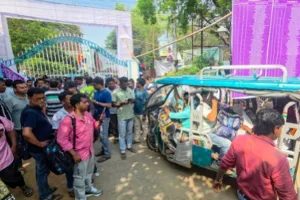
Police have tightened security around KCR’s house. Barricades have been erected to stop any gathering near the house. Only KCR’s family members were being allowed into the house.

Police stepped up security in view of the plans by BRS leaders and workers to gather at KCR’s Nandi Nagar house to show solidarity as they allege that he is being questioned due to “political vendetta” by the Congress government.

As the BRS cadres plan protests across the state, the Director General of Police has directed all Commissioners of Police and Superintendents of Police to take necessary precautionary measures to avert any untoward incidents and ensure maintenance of law and order.

The communication from the DGP’s office states that the BRS cadres may stage surprise protests such as ‘dharna’, ‘rasta roko’, rallies and burning effigies of the Chief Minister at all village, mandal and district headquarters in the state. It also said that in view of the ensuing municipal elections, BRS activists may try to escalate the issue to create law and order problems.

The SIT had summoned KCR for examination on Friday. The former chief minister was asked to make himself available at any place within Hyderabad but he conveyed to the SIT to fix any other date as was preoccupied in connection with the municipal elections.

KCR also sought his examination at his residence at Erravalli village in Siddipet district. However, SIT rejected his request and in its second notice pasted on his house in Hyderabad on the night of January 30, directed him to make himself available for examination in Hyderabad on Sunday.

The BRS leader, in his reply to SIT, stated he would make himself available at 3 p.m. on Sunday at his Nandi Nagar residence in Banjara Hills for examination by the SIT.

KCR also stated that the way the SIT proceeded with the second notice to him would not stand legal scrutiny. Pasting the notice on the wall of his house “is no notice in the eye of the law”, he said.

In his six-page reply to the notice, which cited several Supreme Court and High Court verdicts on the manner of serving of such notices, the BRS chief said the Jubilee Hills’ Assistant Commissioner of Police (ACP) had no jurisdiction to issue him a notice in the first place, as the house did not fall under the Jubilee Hills police limits. He said as per the provisions of the law, the SIT was “duty bound to record my statement at my place of residing, i.e. Erravalli and no other place.”

He, however, added that notwithstanding the legal position, he, being a former Telangana Chief Minister and present Leader of Opposition in the Legislative Assembly and a responsible citizen of this country, would be available for his examination at 3 p.m. on Sunday at Nandi Nagar residence.

KCR is the top-most leader of BRS to be questioned in the case, relating to the alleged tapping of phones of several people, including political opponents, businessmen, journalists and even judges during the BRS rule.

The SIT last month examined BRS working president K. T. Rama Rao, T. Harish Rao and Santosh Rao.

Stock markets trade lower amid high volatility ahead of historic budget day

The Sensex fell 240.83 points or 0.29 per cent, compared with the previous close of 82,566.37.

UNI | New Delhi |

The Indian stock market opened on a cautious note ahead of the special trading session on Sunday, with the benchmark BSE Sensex slipping nearly 241 points as investors remained guarded ahead of key policy cues from the union Budget.

The Sensex fell 240.83 points or 0.29 per cent, compared with the previous close of 82,566.37.

The index opened lower at 81,947.31 and remained volatile through the day, reflecting a clear lack of conviction among market participants.

During the session, the Sensex touched a day’s high of 82,430.82 and a low of 81,941.03, highlighting intraday swings driven by cautious trading and profit booking.
Market sentiment stayed subdued as investors avoided aggressive bets, preferring to wait for clarity on fiscal measures, taxation proposals and government spending priorities.
The unusual Sunday trading session, held to align with the Budget presentation, saw modest participation, with volumes remaining lighter than regular trading days.

Sectorally, budget-sensitive stocks were closely watched, though gains were capped.
Selected heavyweight stocks dragged the index lower, while buying interest remained selective. Broader markets also mirrored the muted trend, indicating a broader wait-and-watch approach across segments.

Overall, today’s market performance underscored a defensive and risk-averse mood, as participants positioned themselves cautiously ahead of post-Budget reactions. Analysts expect heightened volatility in the coming sessions, once policy announcements are fully absorbed and sector-specific implications become clearer.

‘Deal already made. India ready to buy Venezuelan oil’: Trump invites China as well

The United States President Donald Trump today said that an oil deal has been finalised between the United States and India. According to Trump, India has agreed to buy Venezuelan oil from the United States as opposed to purchasing it from Iran.

Statesman News Service | New Delhi |

The United States President Donald Trump today said that an oil deal has been finalised between the United States and India. According to Trump, India has agreed to buy Venezuelan oil from the United States as opposed to purchasing it from Iran.

While speaking to reporters on board Air Force One, Trump said, “We’ve already made a deal. India is coming in, and they’re going to be buying Venezuelan oil as opposed to buying it from Iran. So, we’ve already made the concept of the deal…”

This comes in just a day after Trump said that the Venezuelan oil exports are likely to resume under an arrangement backed by the United States. He had said yesterday, “The Venezuelan situation, the leadership is doing a very good job.” He further stated that countries will soon begin taking Venezuelan oil and that the United States will play a leading role. “We’re inviting countries of the world,” he said. “They’re going to be starting to take the oil.”


Also, the US President invited China to make a deal to buy Venezuelan oil. He said, “China is welcome to come in and make a great deal on oil…”

However, there has been no official announcement by the Indian government yet.

In recent days, the US President has made several remarks relating to the Venezuelan oil deals. While addressing the media on the renaming of Southern Boulevard, Trump said that Venezuela offered 50 million barrels of oil worth USD 5.2 billion to the United States, and he has accepted the offer.

He stated, “We’re dealing with the new President. We’re dealing with a lot of the people who are running the country…They said, we have 50 million barrels of oil, and we have to get it processed immediately because we have no room. Will you take it? I said, we’ll take it. It’s equivalent to USD 5.2 billion.”

Trump also hailed the “great relationship” that the US has developed with the new interim government of Venezuela, formed after the former Venezuelan President Nicolas Maduro’s capture in a US military operation.

“We’ve had a great relationship with the people who are currently the Interim President and everybody else. A lot of pressure has been released,” he said.

After the US military operation in Venezuela, Trump had said that the US will run Venezuela during a transition and needs total access to the oil and to other things in the country.

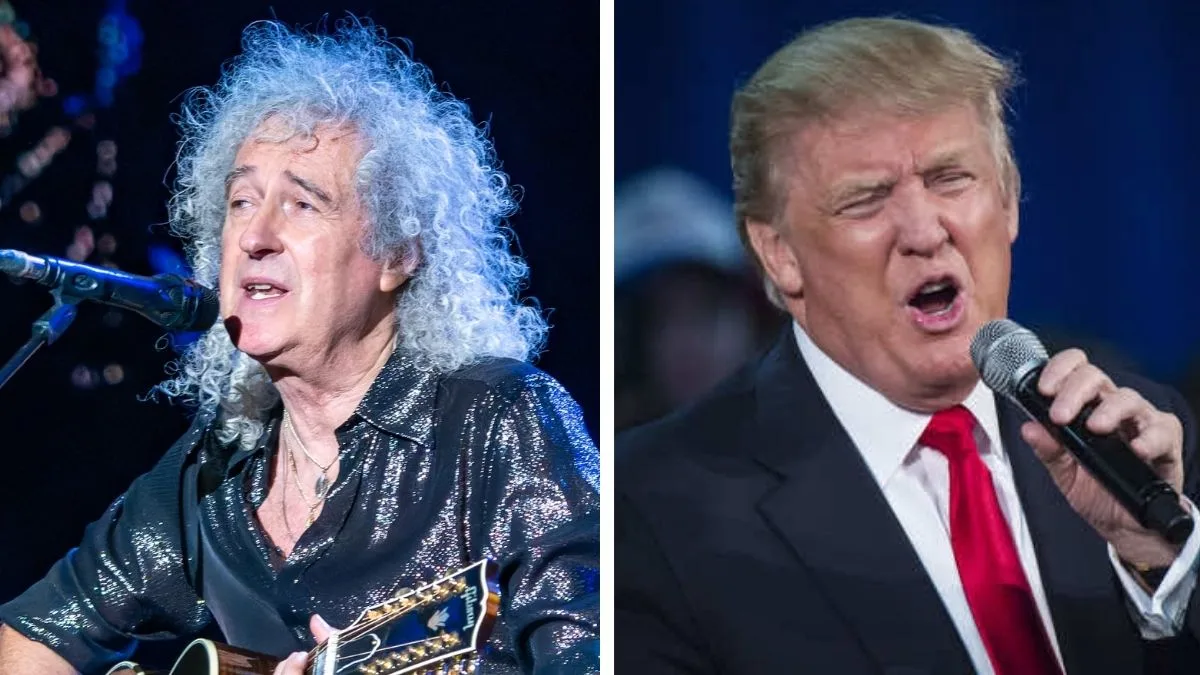
Brian May, Queen’s legendary guitarist, says US tours might be on hold amid safety concerns and Trump controversy

Brian May, Queen’s iconic guitarist, says the band may avoid US tours for now, citing safety concerns and past clashes with Trump over their music. Fans may have to wait a little longer to see Queen rock America again.

Statesman News Service | New Delhi |

It starts like a rock gossip whisper and ends like a quiet sigh. Brian May, the curly-haired guitar hero of Queen, is thinking twice before packing his bags for America again. This is that America the place where Queen once became larger than life, louder than stadiums, and bigger than the charts.

In a recent chat with the UK’s ‘Daily Mail’, May sounded thoughtful, cautious, and a little heartbroken. The message was clear: Queen is not rushing back to the US stage anytime soon.

Also Read: Donald Trump, Bill Gates and The Duke: Who and what’s inside the latest Epstein files

“America is a dangerous place right now”

May didn’t mince words. Speaking honestly, he said America feels “dangerous” at the moment. That fear, he admitted, is now part of the band’s touring decisions.

“It’s very sad,” he said, adding that Queen practically grew up in the U.S. and still loves the country deeply. But things feel different now. Not worse music-wise. Just… different vibes.

He also pointed out that Queen isn’t alone in this hesitation. According to May, many artists are quietly thinking twice before saying yes to American tours.

Queen + Adam Lambert: The modern chapter

Since 2012, Queen has been touring with Adam Lambert as their lead singer. The pairing surprised many at first but went on to win fans worldwide. Lambert brought power, drama, and respect to Freddie Mercury’s legendary shoes without trying to replace him.

Freddie Mercury, Queen’s original frontman, died in 1991 at just 45 due to AIDS-related complications. His absence is still felt, but the band has kept his spirit alive on stage.

Queen last played in the US in 2023 during their massive ‘Rhapsody Tour’. And Brian May himself popped up unexpectedly at Coachella last year, joining singer Benson Boone on stage.

Taking a breather, not a goodbye

In a 2024 interview with ‘Rolling Stone’, May admitted he was thinking about slowing down. Not stopping. Just breathing.

“I still want to play shows. I still want to innovate,” he said.

One idea clearly excites him: a Las Vegas residency. Even more specifically, ‘The Sphere’. May said watching the Eagles perform there got his creative brain buzzing. He imagined what Queen could do with that kind of technology. Big sound, bigger visuals, full magic.

Talks, he said, are happening.

Politics, music, old tensions

While May didn’t directly mention US politics in his latest comments, Queen has had past clashes. The band famously objected when Donald Trump used “We Will Rock You” at rallies without permission. Queen made it clear they were not okay with that.

So yes, history matters. And context matters.

Despite all the caution, May isn’t closing the door completely. He stressed that Queen is not retiring and not disappearing.

“Never say never,” he said about returning to the US.

For now, it’s a pause. A rethink. A band choosing safety and sanity over speed.

And somewhere out there, America waits hoping the Queen will, one day, decide it’s time to rock them again.

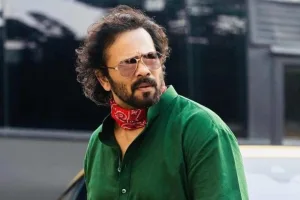
Rohit Shetty inside his Juhu home as gunmen fire five rounds outside; Mumbai Police launch high-level investigation

Unknown gunmen fired five rounds outside Rohit Shetty’s Juhu residence late Sunday night. The filmmaker was at home, no one was hurt, and Mumbai Police have launched a full-scale investigation.

Statesman News Service | New Delhi |

Mumbai’s quiet, star-studded Juhu neighbourhood was shaken awake early Sunday morning. At exactly 12:45 am, unknown persons fired five rounds of gunshots outside the residence of filmmaker Rohit Shetty, the man behind loud blockbusters, flying cars, and cop universes.

The shocking part? Rohit Shetty was inside the house at the time. No one was hurt.

What exactly happened?

According to the Juhu Police, the firing happened outside Shetty’s residential building. The filmmaker’s security guard heard the gunshots first and immediately alerted him. The guard later filed a formal complaint with the police.

Police officers reached the spot quickly and found empty bullet shells outside the building. The area was sealed, and panic spread quietly through the neighbourhood.

For now, the motive behind the firing remains unknown.

Zonal police teams and the crime branch rushed to the scene and began their investigation. A forensic team and ballistic experts also visited the location to examine the bullet shells and firing pattern.

Officials confirmed that five rounds were fired. Deputy Commissioner of Police (Zone IX), Dikshit Gedam, stated clearly that Rohit Shetty was present inside his home when the incident occurred.

Also Read: Vikram Bhatt and wife Shwetambari denied bail over alleged ₹30 crore cheating in film production deal

Multiple police teams have now been formed to track down the shooters.

Investigators are currently scanning CCTV footage from the surrounding area. They are trying to figure out how many people were involved, where they came from and how they escaped after firing.

Police are also checking whether the shooters were on foot or used a vehicle.

Officials say every possible angle is being explored from personal threats to random intimidation.

Heavy security outside the residence

After the incident, security was increased outside Rohit Shetty’s Juhu building. Police personnel were seen stationed near the tower, keeping a close watch on the area.

A high-level meeting of Mumbai Police officials was also held to discuss seriousness of case and future security measures.

A formal case has been registered against unknown assailants under relevant sections of the Bharatiya Nyaya Sanhita (BNS) and Arms Act.

Uneven Growth

India today stands at a moment that appears enviable on paper. Economic expansion remains among the fastest in the world, inflation is contained, public finances are under watch, and the country is approaching historic milestones in overall output.

Statesman News Service | New Delhi |

India today stands at a moment that appears enviable on paper. Economic expansion remains among the fastest in the world, inflation is contained, public finances are under watch, and the country is approaching historic milestones in overall output. Yet beneath these reassuring indicators lies a more unsettled reality, one that raises questions not about momentum, but about direction. The contradiction is increasingly visible in the labour market. Official data suggests improving employment, but the lived experience tells a more complicated story. Stable, salaried jobs remain scarce, while informal and platform-based work continues to absorb a growing share of the workforce.

This shift matters because India’s economic ascent over the past three decades was built not merely on growth, but on the creation of a broad middle class with predictable incomes and rising consumption power. That engine now shows signs of strain. The technology sector, once the country’s most reliable white-collar employer, is no longer expanding at earlier rates. Automation and artificial intelligence are beginning to reshape back-office functions that had anchored urban employment since the 1990s. At the same time, India’s export-facing industries are under pressure. Prolonged trade frictions and slowing global demand have exposed the vulnerability of sectors that depend on external markets. While new trade agreements promise future opportunity, competitiveness cannot be negotiated into existence. It depends on cost efficiency, scale, logistics and quality, areas where regional competitors have often moved faster.

Perhaps the most persistent concern, however, lies in private investment. For more than a decade, corporate capital expenditure has failed to regain the dynamism seen in earlier growth phases. Companies remain cautious, not because capital is unavailable, but because demand visibility is limited. Excess capacity continues to discourage new factories, new hiring, and long-term commitments. This hesitation carries consequences. When private investment stalls, the burden of growth falls disproportionately on government spending. Public infrastructure has undoubtedly improved connectivity and productivity, but it cannot permanently substitute for entrepreneurial risk-taking. Roads and railways create potential; only businesses convert that potential into sustained employment. Foreign investors, meanwhile, remain selective.

Despite India’s scale and political stability, inflows have remained modest compared to other fast-growing Asian economies during their peak years. Regulatory complexity, land acquisition hurdles, and labour uncertainty continue to shape investor perception, even as formal reforms attempt to signal openness. The upcoming budget is, therefore, less about stimulus and more about credibility. Fiscal restraint is necessary, particularly after tax reductions aimed at supporting household demand. Yet restraint alone cannot answer deeper structural questions. The challenge is to restore confidence, among businesses deciding whether to expand, among workers seeking stability, and among global investors evaluating long-term commitment. India’s growth story is not in crisis. But it is at risk of becoming imbalanced ~ strong in output, weaker in opportunity. The next phase of economic reform must focus less on celebrating speed and more on strengthening foundations. Growth that does not generate jobs, investment and confidence may look impressive, but it rarely endures.

Ninety & Never Out of Print

Rupa turns ninety this year. Rupa Publications, that is. I feel really proud to be associated with this renowned publishing house. They are the publishers of my two books, Decoding Didi and The Bengal Book.

Dola Mitra | New Delhi |

Rupa turns ninety this year. Rupa Publications, that is. I feel really proud to be associated with this renowned publishing house. They are the publishers of my two books, Decoding Didi and The Bengal Book. I was working for the national newsmagazine Outlook at that time and was really thrilled when I got an offer to write the books.
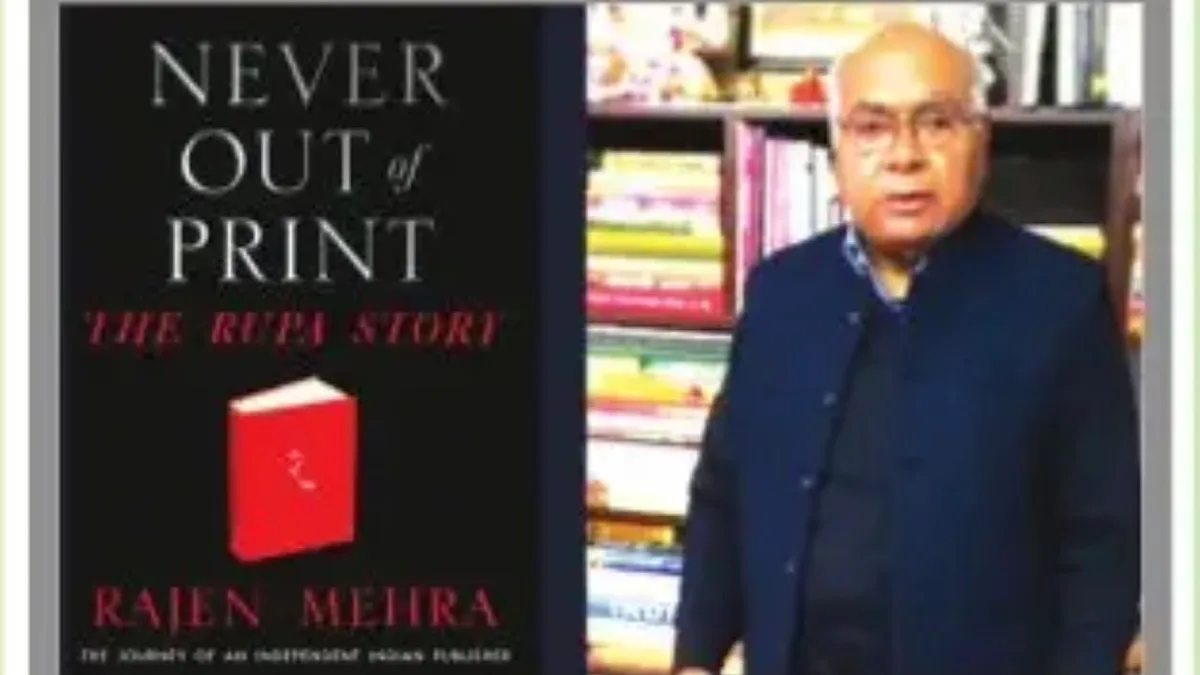
Rupa’s riveting story has been chronicled by Rajen Mehra, owner of Rupa, in his book, “Never Out of Print” (The Rupa Story: Journey of an Independent Indian Publisher) which came out last year.

It is a page turner of a tome.
Rupa’s journey began humbly on the sidewalks of Calcutta’s iconic New Market area where Daudayal Mehra (Rajen Mehra’s grand uncle), used to hawk hosiery. His talent as a salesman was spotted by a British man, who pursued him quite relentlessly and convinced him to switch to book selling. The sahib would not take no for an answer and the young man finally relented.
The rest is history.
Rajen Mehra came to Calcutta this week on the invitation of the Kolkata Book Fair. He has been conferred a lifetime achievement award by the publishing industry for his immense contribution.
What has struck me about Rajen Mehra even when I first spoke to him during the publication of my books is his disarming humility. Here is the head of an empire, who has his feet firmly on the ground. And that’s possibly the secret of his success.

I had occasion to meet Mr Mehra again this time when he came to Calcutta.
I wanted to interview him about his book and discuss the topic of publishing today.
He took time out from his packed schedule. I was running a little late. I Whatsapped him.
“Not to worry,” he messaged back. “I am sipping some nice Darjeeling tea. Take your time.”

I too sipped delightful Darjeeling tea and sitting in the mishti roddur or sweet sunshine of the Calcutta afternoon, asked away.
One of the questions I asked is whether the digital age is adversely impacting book publishing in the traditional physical form. And it was hearting to hear that one of the pioneers of the publishing industry in India who has a deep insight into the industry did not think so.
There are many many questions. Fortunately Rajan Da’s book answers many many of them.
Woven into the fabric of the fascinating personal, family story of how his granduncle Daudayal Mehra founded Rupa, are threads of the city’s and the country’s evolving history, its politics, economy, culture. Other than the intriguing account of the story of Indian publishing, the narrative is sprinkled with generous doses of humour in Rajen Da’s inimitable style. Understated. A quality, we come to know that he has imbibed from his illustrious granduncle.

Sample the following passage from the book where Rajen Mehra recounts his childhood:
“Every year we would spend our summer vacation in these UP towns and cities (Banaras, Allahabad and Kanpur). And every year it was the same train, the Toofan Mail, which took us to these destinations. This was a train which defied its name when it came to speed – it did not move at the speed of a storm or cyclone but chugged along at sedate pace. Our modest budget ensured that the family could not take a premium train like the Kalka-Howrah Mail, in which seats had to be reserved in advance. On the Toofan Mail, the reservation of your seat depended on how athletic your coolie was and how fast he could run and throw your luggage onto a seat. The Toofan Mail was a truly socialist, inclusive train. It would not differentiate between a big and a small station when it came to halting; it would stop at every station on the route. It would also stop in between stations because passengers were constantly pulling the emergency chain so they could get down at their villages and farms; the fact that the emergency chain was meant only for emergencies was cheerfully ignored.” (Page 29)

The book is studded also with a wide range of photos (including vintage book covers; old pictures from family albums and photos of the individuals and people who are mentioned in the pages; not to mention black and white illustrations and sketches of scenes depicted in the book.)

Rajen Mehra’s love for the city of Calcutta (something which I came to know of while speaking to him during the writing of my two books published by Rupa) is reflected in every turn of the page. The expression of deep admiration is an underlying aspect of it, tacit almost, as though echoing in between the lines.

(The writer is Editor, Features.)

Two minds across two states draft a new blueprint

With art brimming across India at a vibrant pace the need for infusing a new energy was a recurrent feeling for economist turned art lover Mehak Bhan ever since she founded 105Arts in Chandigarh.

Suroopa Chatterjee | New Delhi |

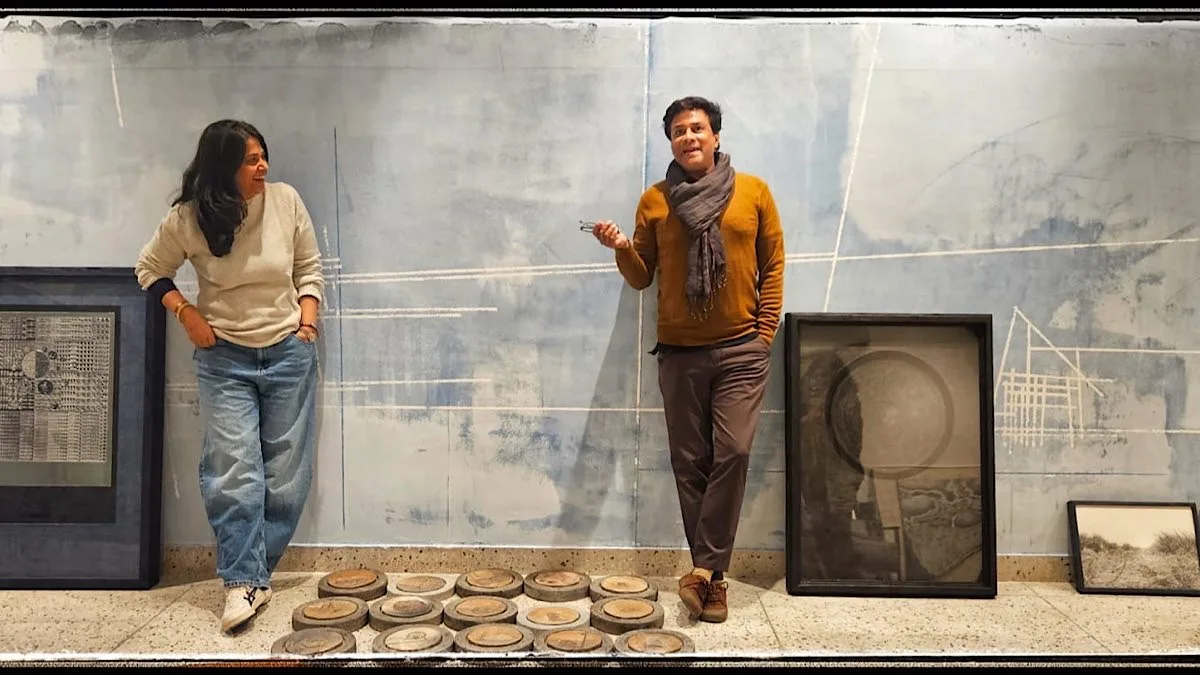
With art brimming across India at a vibrant pace the need for infusing a new energy was a recurrent feeling for economist turned art lover Mehak Bhan ever since she founded 105Arts in Chandigarh. While growing up, she often succumbed to the heady allure of art, design, architecture and space, visiting historical sites, galleries and museums living between Delhi and Chandigarh.

As she pursued economics, her passive observations switched to active interest. It was through art with which she was able to connect with people and her surroundings. She often found her senses moved and silenced within the layered meanings of the art she encountered, which eventually drew her in adult life to open a gallery. Albeit the charm and quaintness the city held for her, it seemed to falter behind where art was concerned. In a fortuitous turn of events her desire and thought manifested into action with a dash of unexpectedness as if to quieten her restless mind.

It was in the summer of 2025. An innocuous call to artist Avijit Dutta regarding his work in faraway Kolkata transpired into something promising and free flowing from the very first exchange. She was pleasantly surprised to have found a sounding board in the artist.

Conversations swiftly delved deeper towards art, its content, process and foundation in a spirit of candid camaraderie and shared vision. It didn’t take much time to ignite her confidence and conviction, allowing her to envisage and take a more defined curatorial direction with Avijit’s enthusiasm and passion.

The duo arrived at the thought that just as ideas often take shape on paper before they are realised, drawings too step in as blueprints in an artist’s trajectory. Coincidentally Chandigarh reminded them that it too was designed on paper having its unique blueprint. Both sides hastily decided that for a young gallery like 105Arts a blueprint had to be set as a foundational step towards its evolution.

It became a momentous day for Mehak Bhan when the show “Blueprint: What lines say” opened as the annual winter offering. Two expansive walls of the gallery’s ground floor and first floor were painted in an enthralling ammonia blue tint resembling an architectural diagram by Avijit as a spontaneous unplanned act.

Overnight 105Arts was bathed by the aura of colours and lines turning the tide of artistic and cultural landscape not just for the gallery but also the city. The experiment seemed to have etched in a new vibe, setting a precedent for more in the future.

An impressive spectrum of works of more than forty artists exuded their unique styles. The upper floor of old masters like Somnath Hore, Ganesh Pyne ,Manjit Bawa, Anjolie Ela Menon, Krishen Khanna and Proshanto Roy echoed the history, depth and timeless appeal in their masterly perfection. While contemporary seniors like Jayasri Burman, Baalaa R.M. Palaniappan, including Avijit Dutta’s own works graced the other walls among many others. Younger artists like Jaladhar Naskar, David Malakar, Dibyendu Seal, Ayesha Sultana, Hemant Dhane, Ravi Chunchula and other promising artists aroused art lovers and collectors’ interest, starting new dialogues of intrigue and interest.

In an effort to engage art students and draw them in an engaging discourse with greater clarity Mehak organized an interactive session. The confusion and dichotomies existing between nurturing inspiration and being authentic in an age of social media and instant publicity was succinctly addressed.

Mehak said, “The public response to Blueprint has been heartening. Visitors have engaged deeply with the works, spending time with the drawings rather than just viewing them. There has been curiosity, dialogue, and appreciation—particularly from collectors and young viewers encountering senior artists and works on paper in a renewed context. It feels that the show has opened up a meaningful conversation.”

In the words of the artist, “Art is not something temporary. It is timeless and eternal, one has to sit with it, soak in it, spend time with it till it becomes a part of the self beyond mere commercial acquisition. Art should open different vistas of communication in the gaze and reflect the inner philosophy of the creator behind it. Art is a search and till date I am merely practicing what I don’t know, but it is a search for something. I feel Chandigarh needed this show and I hope youngsters get inspired to lean towards art. In the end the flash of media and hype fades but hard work and being authentic is what matters.”

Shows like these reiterate that art is best received when rooted in honesty, emotion and purpose. Unknowingly two people had managed to set off a ripple of interest, awakening art lovers, flaneurs, students and the general public to the grace and magnetic draw that art can invoke. Looking over the success, the gallery has a long task ahead to surpass its own radiance it basks in at the present moment!

(The writer is a freelance contributor)

Navjot Kaur Sidhu resigns from Congress, alleges collusion between Punjab party chief and AAP

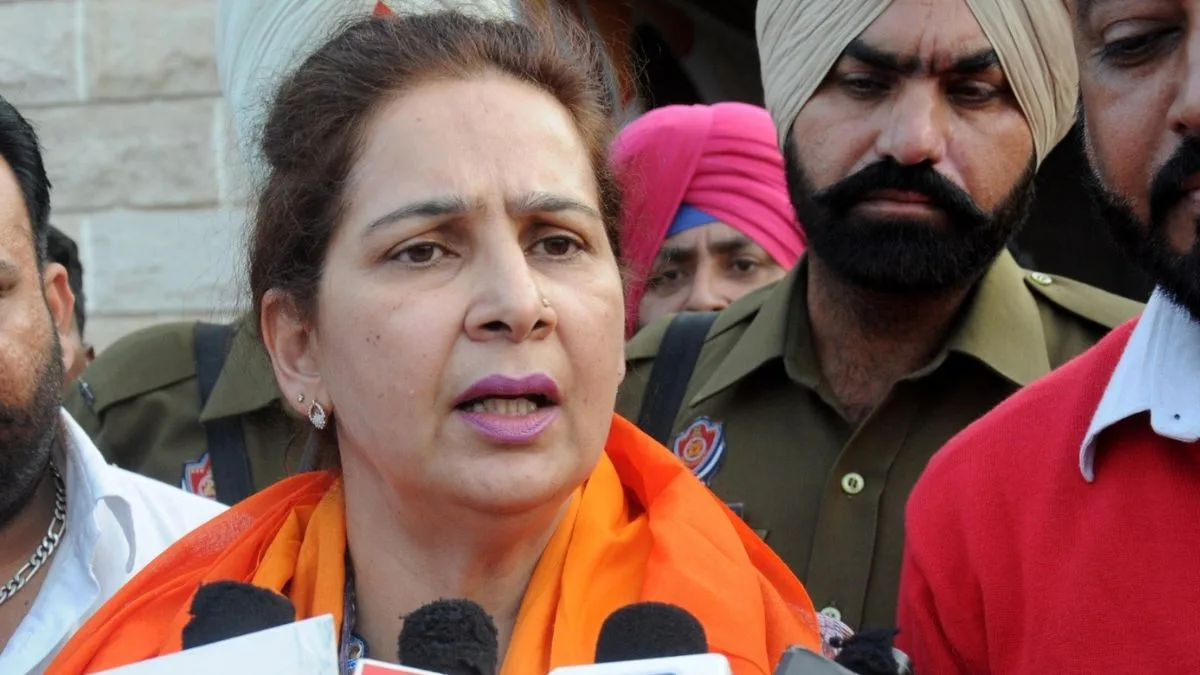
Navjot Kaur Sidhu has resigned from the Congress months after her suspension, renewing corruption and collusion allegations against Punjab Congress chief Amrinder Singh Raja Warring.

Statesman News Service | Mumbai |

Former Punjab MLA Navjot Kaur Sidhu has resigned from the Congress, months after being suspended from the party.

Her exit follows a renewed public attack on Punjab Congress president Amrinder Singh Raja Warring, whom she has accused of corruption and political collusion.

The resignation was announced through a post on X, where Sidhu alleged that Warring was working in tandem with the Aam Aadmi Party and Punjab Chief Minister Bhagwant Mann to weaken the Congress from within.

Allegations of collusion and internal sabotage

In her post, Sidhu described Warring as “the most horrific, incapable, corrupt president ever” and accused him of entering into an understanding with the Aam Aadmi Party for personal and political gain.

She wrote, “You saved yourself from jail by co partening with CM to destroy Congress. You have sold the party for petty gains with an understanding with AAP.”

Sidhu also alleged that senior Congress leaders who, according to her, worked against her interests were not only spared but rewarded.

She questioned the party leadership’s silence, asking why no action was taken against leaders she claimed had openly challenged the party line, while she faced suspension.

Suspension, controversy and the party’s response

Sidhu was suspended from the Congress in December 2025, days after her public remarks about an alleged Rs 500-crore offer linked to securing the Chief Minister’s post triggered unrest within the Punjab unit of the party.

At the time, Warring dismissed her allegations, calling them a diversionary tactic and accusing her of attempting to shield the AAP, according to ANI.

In her latest post, Sidhu claimed she possessed damaging evidence against the Punjab Congress chief but chose not to pursue it.

She wrote, “I have enough proof to destroy you, but I am not interested because I myself have quit Congress, where no promising leader is heard.”

She accused the party leadership of prioritising internal conflict over electoral success and said the Congress was paying the price for it.

“I have enough proof to destroy you, but I am not interested because I myself have quit Congress, where no promising leader is heard. You planted people in my seat with the intention to defeat my seat. Where is your action against senior leaders like Ashu, Channi, Bhattal ji, Dr Gandhi ji and many more who have openly challenged you and your party? You have just become a laughing stock, and people are enjoying your reels. Stop disrespecting Congress leaders who love Navjot. You are more busy in destroying the party rather than making it win. Shame on you for not being sincere with your own party, which is your mother party. You have done enough damage.”

Walking Through the Eternal City’s Timeless Landmarks

On my recent visit to Rome, I set aside a full day simply to walk—without a fixed plan, without rushing, allowing the city to reveal its iconic places in its own rhythm. Rome is one of the few cities in the world where even a casual stroll becomes a journey through layers of time.

ABHIK ROY | New Delhi |

On my recent visit to Rome, I set aside a full day simply to walk—without a fixed plan, without rushing, allowing the city to reveal its iconic places in its own rhythm. Rome is one of the few cities in the world where even a casual stroll becomes a journey through layers of time.

My morning began at the Colosseum, perhaps the most recognizable symbol of ancient Rome. Completed in AD 80, this massive amphitheater once echoed with cheers from tens of thousands of spectators who gathered to witness gladiatorial contests, wild-animal hunts, and elaborate public spectacles. Standing before its towering stone arches, I tried to imagine the drama and intensity of those ancient scenes, and could not help thinking of the brutalities and needless deaths of those who perished solely to entertain the powerful. Today, only its outer shell remains, but even in ruin, the Colosseum captures the ambition and engineering brilliance of the Roman Empire.

From there, I walked to the Roman Forum, once the bustling center of public life. Though many structures have crumbled, the remains of temples, basilicas, and triumphal arches hint at a world that shaped the political, legal, and cultural foundations of the West. As I wandered its paths, I felt a quiet sense of awe. Here, centuries ago, senators debated, generals celebrated victories, and citizens gathered to witness the unfolding story of their republic.

A short walk away stands the Pantheon, one of the greatest architectural achievements of the ancient world. Originally a temple dedicated to all the gods, it later became a Christian church. Its vast dome—with a central oculus open to the sky—still inspires a sense of wonder. When I stepped inside, sunlight streamed through the oculus, illuminating the interior with a gentle, celestial glow. It felt as though time had slowed, inviting me to reflect on the extraordinary skill required to build such a structure more than two thousand years ago.
My path then led me across the Tiber River toward the Vatican. Outside St. Peter’s Basilica, Bernini’s grand colonnades curved around the square like open arms, embracing the countless pilgrims and visitors who come from all corners of the world. Inside, the basilica’s vastness is overwhelming—the soaring dome designed by Michelangelo, the intricate mosaics, and the quiet presence of the Pietà, a sculpture that reveals the depth of human sorrow and compassion.
Nearby lie the Vatican Museums, home to some of the greatest masterpieces in history. The highlight, of course, is the Sistine Chapel. Standing beneath Michelangelo’s frescoes—The Creation of Adam and the magnificent Last Judgment—I felt a profound sense of reverence. The colors, the movement, the sheer scale of the work speak to the genius that defined the Renaissance and transformed the artistic landscape of Europe.
Later in the afternoon, I wandered toward Piazza Navona, one of Rome’s most beautiful squares. Built atop an ancient stadium, the piazza is adorned with Bernini’s Fountain of the Four Rivers, a masterpiece of Baroque sculpture filled with expressive faces and flowing forms. Cafés, artists, musicians, and the gentle hum of conversation give the space an atmosphere both lively and relaxed.
A short walk brought me to the Trevi Fountain, where cascading water flows over sculpted figures of Neptune and sea creatures. Though always crowded, the fountain possesses a charm that never fades. Visitors toss coins into the water, hoping to return to Rome someday—a tradition I happily continued.
As the day softened into evening, I made my way to the Spanish Steps. At their base stands the Keats–Shelley House, where the English poet John Keats spent the final months of his short life. Inside, letters, manuscripts, and personal items preserve the memory of a young man whose poetry continues to move readers around the world. Standing in the quiet room where Keats once looked out at these very steps, I felt a deep sense of connection to the city’s literary and artistic past.
Rome is a city of breathtaking monuments, but what lingers long after the visit is not just the grandeur of its landmarks—it is the feeling that history is always near, that beauty is never far away, and that every corner holds a story.
Every great site in Rome tells its own tale—but together, they reveal the spirit of a city that remains timeless.

(The writer is Professor Emeritus, Loyola Marymount University, Los Angeles)

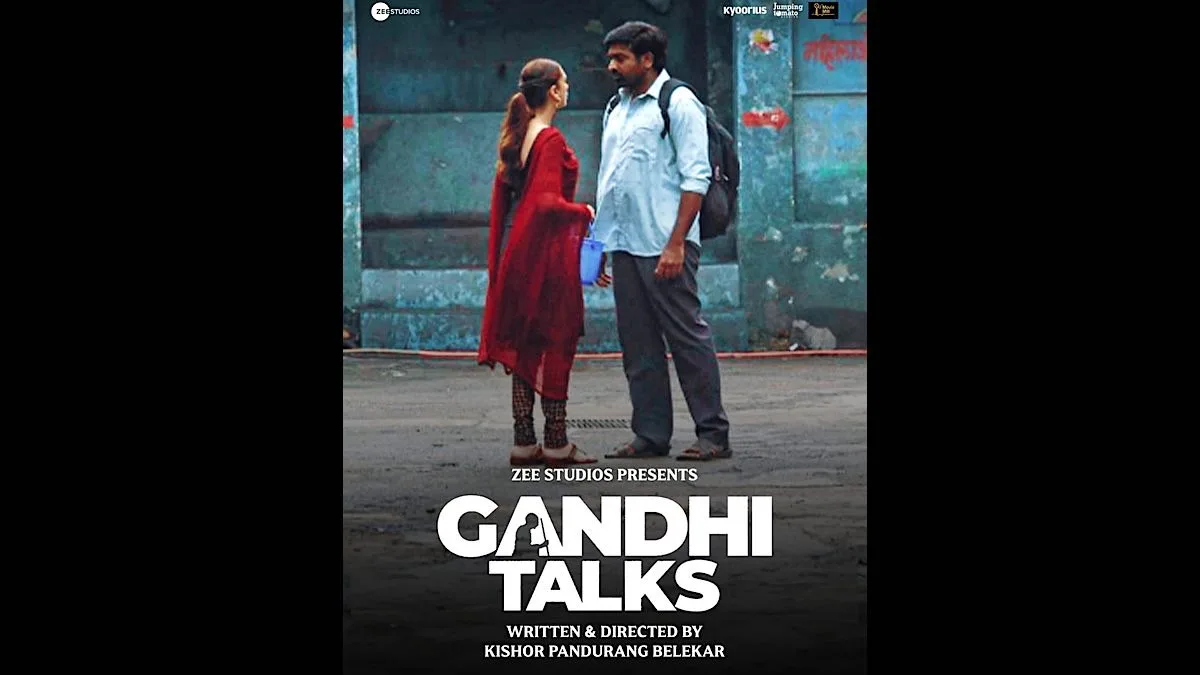
Vijay Sethupathi’s Silences Speak To Us In “Gandhi Talks”

Our cinema is so verbose and over-saturated with dialogues that just the idea of a film that does away with words completely is a treat to our agitated senses.

Subhash K Jha | New Delhi |

Rating: ****

Our cinema is so verbose and over-saturated with dialogues that just the idea of a film that does away with words completely is a treat to our agitated senses.
Gandhi Talks has a lot more going for itself than its mute mode. It is a perky twinkle-eyed tongue-in-cheek homage to the dinosaur named honesty. It is …well… not a diatribe but something far less noisy on corruption. The two main protagonist played by Vijay Sethupathi and Arvind Swamy are both down on their luck, one by birth the other by inheritance.

Writer-director Kishor Pandurang Belekar is no hurry to bring the two unvanquished losers together. The first time Sethupathi and Arvind Swamy come face to face, is a moment of profound celebration, and not only for the two capable actors. Jobless and desperate to feed his mother(Usha Nadkarni) Sethupathi’s Everyman(here called Mahadev) poses as Lord Krishna at a wedding, blue mood blue hue and all. When a boy mischievously throws food at ‘Bhagwan Krishna’, a guest, Arvind Swamy comes forward to gently wipe his face.
This exceptionally evocative interlude helps us, the audience, get over some of clunkier moments in a mansion which Arvind Swami is about to burn down while two thieves try to get their hands on whatever they could. The incendiary situation never quite attains the Chaplinesque glory it strives for.

But there is much more to find and cherish in the silences. Sethupathi’s balcony romance with the lovely Aditi Roy Hydari is delightful. Every time she is on screen she makes the dark clouds of Sethupathi’s life (it can’t get any worse than the dabbawalla sending threatening notes about stopping the food in the dabba) simply disperse.

The sunshine never evaporates even when happiness and hope do. This is a film that tells us to stay afloat even when your fortunes are drowning. Or in this case, burning.
At a time when everyone in the cinema is shooting personal and political guns, Gandhi Talks gets contagiously Gandhian on us without resorting to mush or melodrama. Sethupathi who has always maintained that the dialogues are the least essential component of cinema, proves it here. His silences are filled with humour and hope, even when the next meal is uncertain.
Karan B Rawat lenses the chawls of Mumbai and their eccentric characters (the retired old man who does nothing except fiddle with a rundown transistor, the overweight aunty who frowns forever) with an austere luminosity that respects the city while admonishing its cruelty.

A word on A R Rahman’s music. Since no one is speaking, the background score does all the talking. After the deplorable job he did in the background in Chaava, Rahman redeems himself in this one. This redemption seems in harmony with work that nurtures and heals the wounded soul of Mumbai as fate frowns at the most vulnerable and laughter is the best medicine.

The reviewer is a veteran film critic.

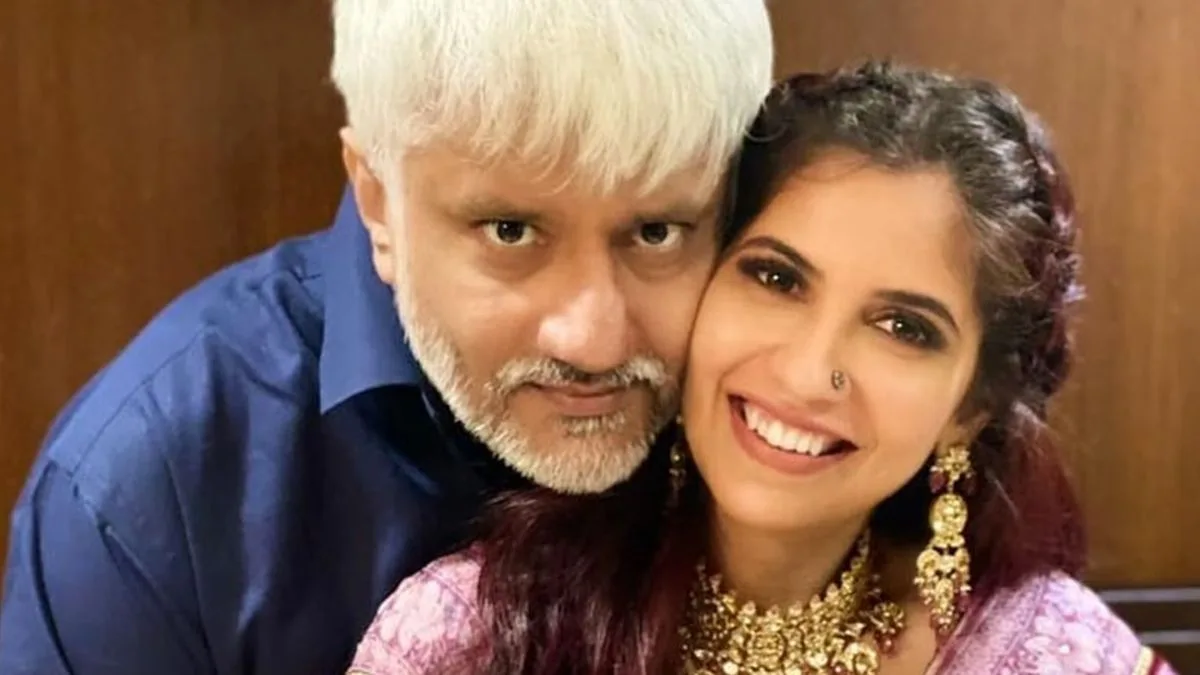
Vikram Bhatt and wife Shwetambari denied bail over alleged ₹30 crore cheating in film production deal

Filmmaker Vikram Bhatt and his wife Shwetambari will remain in jail after the Rajasthan High Court rejected their bail pleas in an alleged ₹30 crore film funding cheating case. The court cited the seriousness of the allegations.

Statesman News Service | New Delhi |

This weekend, filmmaker Vikram Bhatt, known for his thrillers and horror hits, found himself at the centre of a story far scarier than any script he has written. And this one doesn’t have a comforting interval break.

On Saturday, the Rajasthan High Court refused bail to Vikram Bhatt and his wife Shwetambari Bhatt, keeping the couple behind bars in a high-profile cheating case. The decision has sent ripples through film circles, where whispers have been growing louder since their arrest last month.

Also Read: Alia Bhatt says motherhood changed everything, admits she often wants to quit social media

Bail plea rejected by Rajasthan High Court

Justice Vinod Kumar Bharwani while rejecting the bail applications made it clear that this was not the right time to let the accused walk free. The court observed that granting bail at this stage would be inappropriate because of the seriousness of allegations and the ongoing investigation.

In short: no relief, no release.

The couple has been in judicial custody since December 7, after Rajasthan Police arrested them in Mumbai and took to Udaipur.

The Special Public Prosecutor (SPP) strongly opposed the bail plea. According to the prosecution, the investigation is still underway and the accused may undergo further questioning.

There was another concern too, one that often decides bail cases. The SPP argued that if released, the Bhatts could influence witnesses which could affect the investigation.

The court agreed that these concerns could not be ignored at this stage.

What is the case all about?

The case dates back to a complaint filed by Ajay Murdia, founder of Indira IVF and Fertility Centre, and a resident of Udaipur.

According to the complaint, Vikram Bhatt, his wife, and others allegedly took money from Murdia in the name of producing films. The amount in question is massive: around ₹30 crore.

The complaint alleges cheating and criminal breach of trust, claiming that the money meant for film projects was misused.

The complaint paints a troubling picture. It claims that the accused created fake bills under different names and used them to transfer money from the complainant.

Instead of being spent on films, the funds were allegedly deposited into personal accounts and used for purposes other than what was promised.

Apart from Vikram and Shwetambari Bhatt, Dinesh Kataria from Udaipur and Bhatt’s manager Mehboob Ansari were also under arrest on December 7 in connection with the case.

Bhatt’s legal team pushes back

Vikram Bhatt has denied all allegations. His lawyer, Kamlesh Dave, told ANI that the police action was based only on the FIR and not supported by documents.

According to the defence, every payment was in place with the consent of both parties. The lawyer also claimed that there were no fake bills and that an agreement existed to make two films initially, followed by two more on a rolling finance model.

Earlier Vikram Bhatt had approached the court to quash the FIR arguing that the dispute was civil in nature. However, the court rejected that plea too noting that the case involves misappropriation of funds which goes beyond a simple business disagreement.

For now, the investigation continues, and so does the suspense.

When Protein Becomes Policy: Poultry and the Rewriting of India’s Nutrition Compact

India’s nutrition debate has long been caught between aspiration and feasibility. We know what constitutes a healthy diet, but translating that knowledge into daily consumption for a population of this size has always been the harder task.

Malika Pandey | New Delhi |

India’s nutrition debate has long been caught between aspiration and feasibility. We know what constitutes a healthy diet, but translating that knowledge into daily consumption for a population of this size has always been the harder task. Calories scaled more easily than protein. Cereals travelled faster than nutrition. What has changed in recent years is not merely agricultural output, but the emergence of poultry as a quiet answer to a question Indian policy has struggled with for decades: how to deliver reliable, affordable protein at scale.

The scale at which this shift has occurred is itself instructive. India today accounts for nearly 18 percent of the global poultry population, a share that reflects not only production capacity but the structural centrality of poultry to the country’s food system. Annual egg production has crossed 149 billion, placing India among the world’s largest producers, while per capita availability has risen steadily over the past decade. Poultry meat production has crossed five million tonnes, accounting for nearly half of total meat output. These figures do not merely indicate sectoral growth. They point to a reorientation of diets, markets, and public systems around poultry as a primary protein source.

Eggs and poultry meat occupy a distinctive position in India’s food economy. They are nutritionally dense yet relatively affordable, animal-sourced yet widely acceptable, perishable yet easier to handle than many alternatives. Unlike cereals, which primarily address caloric sufficiency, eggs speak directly to protein and micronutrient gaps. Unlike costlier meats, poultry fits within the consumption patterns of low-income households as well as institutional feeding programmes. This combination explains why poultry has moved from being supplementary to becoming foundational.

Public policy has, perhaps quietly, recognised this reality. The inclusion of eggs in school meals and child nutrition programmes in several states reflects a pragmatic understanding of nutrition rather than an ideological one. Protein-focused nutrition interventions often falter not for lack of intent, but because delivery remains fragile. Eggs have proven easier to procure, distribute, and monitor at scale. Where implemented consistently, they have strengthened nutrition outcomes and improved programme credibility. Poultry, in this sense, has slipped into the role of a policy instrument without ever being formally declared one.

This growing nutritional centrality is mirrored in the economics of the sector. The poultry industry today is valued at over USD 30 billion, and projections suggest a sustained growth trajectory of 10 to 12 percent annually, potentially doubling in size over the next decade. Such growth is not merely a commercial story. It reflects the steady embedding of poultry into everyday consumption, public provisioning, and market demand. When protein becomes routine rather than aspirational, scale follows.

The structure of poultry production adds another layer to this story. Large commercial operations dominate output, but backyard and small-scale systems still contribute roughly 12 to 14 percent of total egg production. This dispersed base plays a critical role in local nutrition access, especially in rural and tribal areas, while also supporting livelihoods. At the same time, it means that risk is widely distributed. Disease outbreaks, feed shortages, or biosecurity gaps do not respect scale. The resilience of the poultry system therefore depends not only on its most efficient producers, but on how well its smallest participants are supported.

Feed remains a persistent vulnerability. Poultry production depends heavily on maize, soy, and related inputs whose prices fluctuate with climate and global markets. When feed costs rise sharply, the affordability of eggs and meat is directly affected. Feed security, therefore, is not merely an industry concern; it is nutrition policy by another name. Government efforts to improve feed crop productivity, promote alternative feed sources, and expand feed processing capacity reflect an understanding of this linkage, even if these measures rarely attract public attention.

Disease risk presents a similar challenge. Periodic avian influenza outbreaks have exposed the fragility of confidence in food systems. Yet the policy response has evolved. Surveillance, early reporting, containment protocols, and institutional coordination have gradually replaced ad hoc responses. The objective is no longer simply to control disease, but to protect continuity of supply and sustain public trust in poultry products as safe, reliable nutrition.

Waste management has emerged as another axis where nutrition, sustainability, and governance intersect. Rising poultry production generates increasing volumes of litter and processing by-products. Left unmanaged, this becomes an environmental burden. Integrated into composting, biogas, and nutrient recycling systems, it becomes an asset. The growing emphasis on waste-to-wealth approaches signals an attempt to ensure that the expansion of protein supply does not come at the cost of environmental stress.

Processing and value addition complete this picture. Investments supported through animal husbandry and food processing infrastructure initiatives have expanded cold chains, hygienic processing facilities, and storage capacity. These are not merely commercial upgrades. They are the invisible scaffolding that allows eggs and poultry meat to move from farms to households, schools, and markets without erosion of quality or safety.

What distinguishes poultry from other livestock sectors is not just growth, but immediacy. Eggs and poultry meat circulate quickly through markets and kitchens. They influence diets not occasionally, but daily. In doing so, poultry has become less an agricultural success story and more a nutrition system in motion.

This demands a different policy imagination. Poultry can no longer be treated only as a rural livelihood sector or a private enterprise domain. When protein delivery becomes central to public welfare, achievement must be judged by how quietly systems hold, how rarely supply falters, and how predictably nutrition reaches those who depend on it most.

In the end, poultry’s importance lies not in spectacular growth figures, but in its ability to normalise protein consumption in everyday life. Nutrition is rarely transformed by declarations. It is transformed by systems that work consistently, invisibly, and at scale. Poultry has begun to do precisely that. In doing so, it is not just feeding India. It is reshaping what the state, the market, and society expect from animal husbandry itself.

(The writer is a public policy expert with years of experience working across key ministries of the Government of India, including Ministry of Fisheries, Animal Husbandry & Dairying.)


Alia Bhatt says motherhood changed everything, admits she often wants to quit social media

After welcoming daughter Raha Kapoor, Alia Bhatt says motherhood has deeply changed her life and made her rethink fame and privacy. The actress admits there are days she wants to delete social media and just focus on being an actor and a mother.

Statesman News Service | New Delhi |

It’s a strange kind of fame when the world feels like it lives in your phone. And right now, Alia Bhatt seems a little tired of that screen staring back at her.

Once the bubbly debutant of ‘Student Of The Year’, then a National Award-winning actress, and now a new mother, Alia’s life has quietly but completely changed. The biggest plot twist? Baby Raha Kapoor. And with her arrival, Alia is rethinking almost everything including whether she even wants to stay on social media anymore.

Also Read: Why more people are stepping away from social media: Digital detox explained through Karan Johar, Neha Kakkar, Zakir Khan

When star Alia meets mother Alia

Alia Bhatt has grown up in public. Every film, every outfit, every relationship; all discussed, dissected, and debated online. But motherhood has shifted the rules for her. Speaking to ‘Esquire India’, the actress admitted that after Raha’s birth, protecting privacy suddenly became non-negotiable.


View this post on Instagram


A post shared by Alia Bhatt (@aliaabhatt)
There are mornings, Alia says, when she wakes up and feels like doing something drastic. “Okay, I just want to delete my social media,” she thinks. No posts, no comments, no opinions. Just acting. Just work. Just life.

For someone who has been online since her teenage years, that’s a big thought.

The pull of fans (and the guilt of leaving)

Still, walking away isn’t easy. Alia knows millions of fans have stood by her from film one. Their love, their messages, their excitement, she feels it deeply. Cutting off that connection feels wrong to her.

“I don’t want to do that,” she admits. And so she stays. Carefully. Thoughtfully. Sharing less, holding back more.

Her personal life, she says, now feels ‘too’ personal to casually post about. The actress who once clicked mirror selfies now scrolls through a phone full of baby pictures. Raha has taken over her camera roll, and her heart.

Sometimes, Alia jokes, she has to make an extra effort just to take photos of herself.

Losing yourself, finding a new core

Motherhood hasn’t just changed her routine. It’s changed how she sees herself. Alia admits that at times she can’t fully remember who she was before becoming a mother.

The transformation happened fast, just nine months. But seeing a child you created come into the world does something permanent. “The scale of that change is so profound,” she says, “it’s almost impossible to go back to who you were before.”

What’s next on screen

Even as her personal world shifts, Alia’s professional life is moving full speed ahead. She will next be seen in ‘Alpha’, a spy action thriller directed by Shiv Rawail. The film stars Sharvari alongside her, with Bobby Deol and Anil Kapoor in key roles.

Behind the camera, Alia is also stepping into a new role. She has turned producer with her sister Shaheen Bhatt. Their upcoming project, ‘Don’t Be Shy’, is a coming-of-age romantic comedy.

So while Alia Bhatt may be flirting with the idea of deleting social media, she’s clearly not disappearing anytime soon. She’s just choosing what to hold close, and what to keep for herself.

Union Budget 2026 speech: Watch LIVE here!

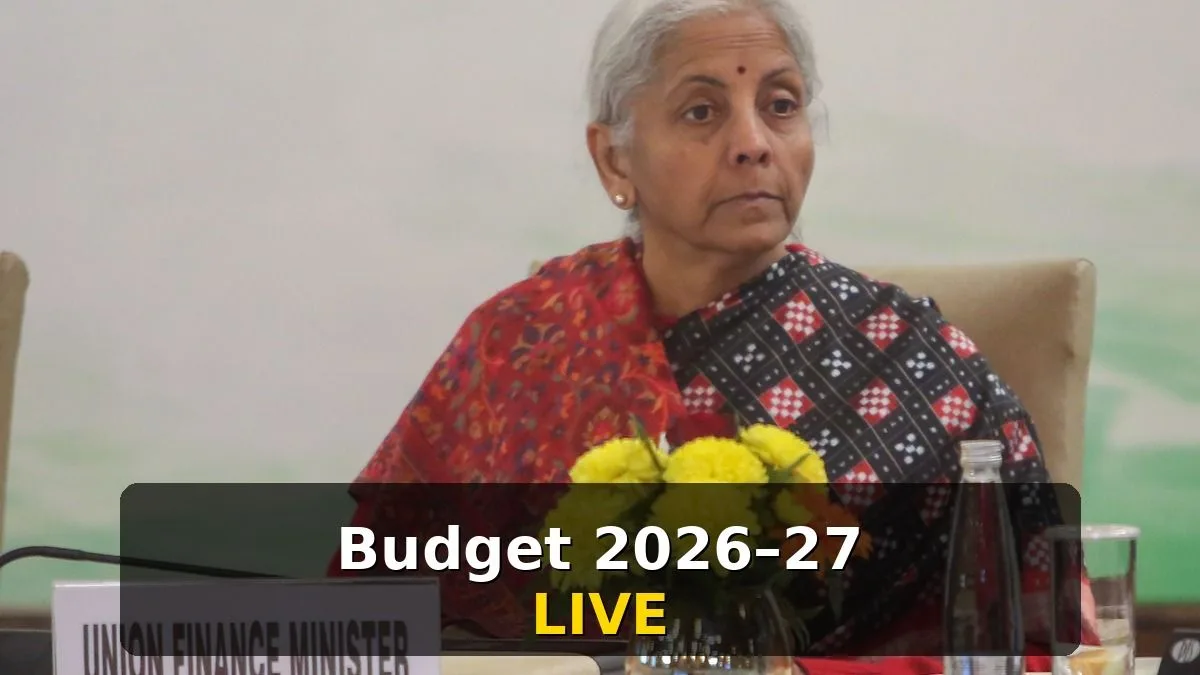
The Union Finance Minister Nirmala Sitharaman is presenting the Union Budget 2026-27 in the Lok Sabha during the ongoing Budget session of Parliament.

Statesman News Service | New Delhi |

The Union Finance Minister Nirmala Sitharaman is presenting the Union Budget 2026-27 in the Lok Sabha during the ongoing Budget session of Parliament. This is her record 9th consecutive budget today and the 15th Budget of the Narendra Modi-led government.

During the Union Budget presentation for 2026–27, she laid on the table a statement of the estimated receipts and expenditure of the Government of India for the year 2026-27. She also presented two statements under Section 3(1) of the Fiscal Responsibility and Budget Management (FRBM) Act, 2003, including the Medium-term Fiscal Policy-cum-Fiscal Policy Strategy Statement and the Macro-economic Framework Statement.

According to the List of Business, the Finance Minister will move for leave to introduce the Finance Bill, 2026, in the Lok Sabha. She will also formally introduce the Finance Bill, giving legal effect to the financial proposals of the government.

Where to watch Union Budget 2026 speech LIVE online?

To watch the Union Budget 2026 speech LIVE online, you may visit free official live-streaming platforms, such as Sansad TV and PIB’s YouTube channels.

Also, the budget speech will be live-streamed for free on The Statesman YouTube channel.

The public broadcaster DD News channels will also live-stream and telecast the Union Budget 2026 speech.

Viewers can tune in for the LIVE feed of the 2026 budget at the scheduled time, 11 am today.

Union Budget 2026 speech LIVE streaming:

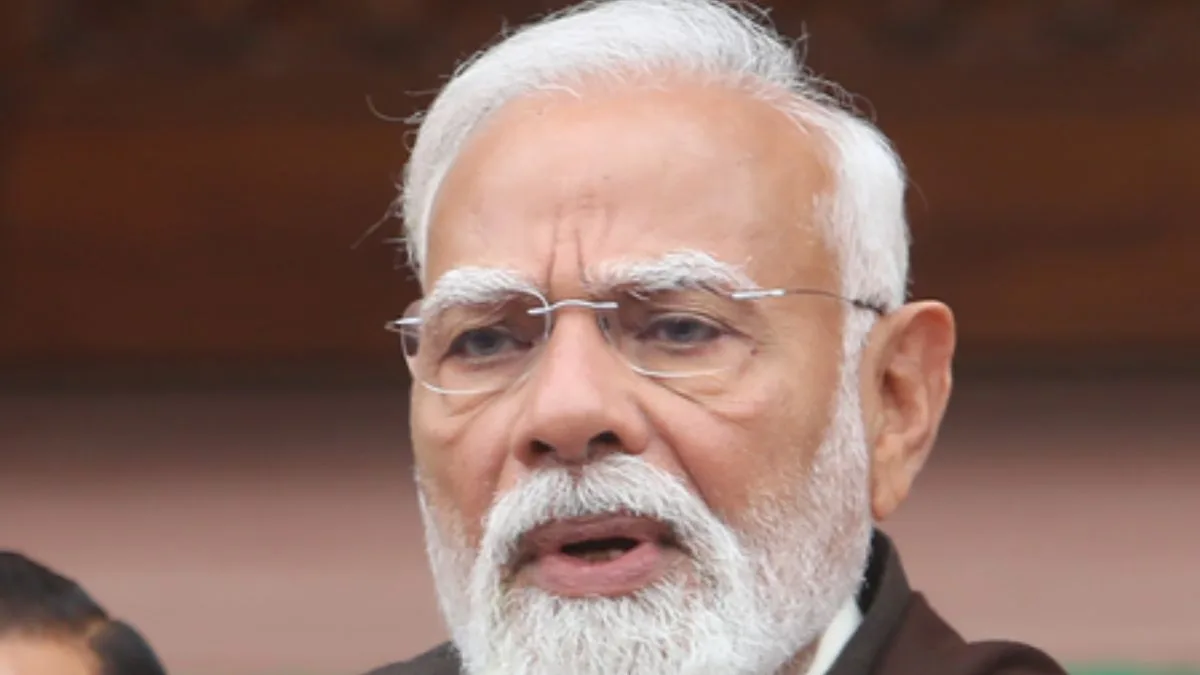
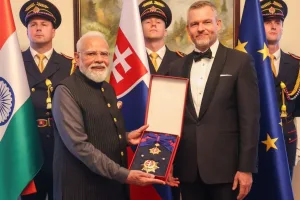
PM Modi to visit Dera Sachkhand Ballan on Ravidass Jayanti today; airport renaming planned

Prime Minister Narendra Modi is scheduled to visit Dera Sachkhand Ballan today on Ravidass Jayanti, with the renaming of Adampur airport and key infrastructure announcements expected.

Statesman News Service | Mumbai |

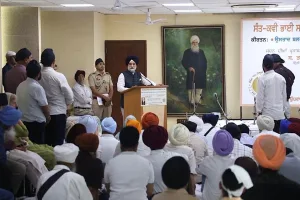
Prime Minister Narendra Modi will on Sunday visit Dera Sachkhand Ballan near Jalandhar to mark Ravidass Jayanti, a key religious occasion for the Ravidassia community with deep roots in Punjab’s Doaba region.

The visit has both cultural and political weight. The Doaba belt, which is spread across Nawanshahr, Hoshiarpur, Jalandhar, and Kapurthala, is home to a significant concentration of Ravidassia followers and plays a decisive role in state politics.

The Prime Minister is expected to spend around 45 minutes at the dera, where he will meet Sant Niranjan Das, the spiritual head of the Ravidassia community and chief of Dera Sachkhand Ballan. Sant Niranjan Das was conferred the Padma Shri on Republic Day.

According to the Prime Minister’s tour programme, he will arrive at Adampur airport around 3.30 pm and travel by helicopter to the dera on the outskirts of Jalandhar.

Airport renaming and infrastructure announcements

During the visit, the Prime Minister will formally rename Adampur’s civil airport after Guru Ravidass Maharaj. The move is aimed at recognising the sentiments of the Ravidassia community, whose presence is strongest in the Doaba region.

The Doaba belt accounts for 23 of Punjab’s 117 Assembly seats, with Dera Sachkhand Ballan believed to influence electoral outcomes in at least 19 constituencies.

The renaming follows a meeting in December 2025 between Sant Niranjan Das, former National Commission for Scheduled Castes chairman Vijay Sampla, and the Prime Minister in New Delhi. During that meeting, the demand to rename the airport after Guru Ravidass Maharaj was raised.

The occasion also coincides with the 649th birth anniversary of Sant Guru Ravidass, revered as a social reformer whose teachings emphasised equality, compassion and human dignity.

The Prime Minister will also virtually inaugurate the new terminal building at Halwara airport in Ludhiana. The project is expected to improve air connectivity for the region’s industrial and agricultural hinterland.

Located in the Ludhiana district, Halwara hosts a strategically important Indian Air Force station. The earlier airport had a short runway, limiting operations to smaller aircraft.

A new civil enclave has now been developed with a longer runway capable of handling A320-type aircraft, an official statement said.

Political context ahead of 2027

The visit comes amid visible outreach efforts toward the Ravidassia community ahead of the 2027 Punjab Assembly elections.

Earlier this week, the Aam Aadmi Party government in Punjab announced the establishment of the Sri Guru Ravidass Bani Adhayyan Centre near Dera Sachkhand Ballan. Three parcels of land, valued at Rs 10.50 crore, have been registered in the centre’s name.

Finance Minister Harpal Singh Cheema described the initiative as “one of its kind in the country.”

“The Punjab government stands totally committed to ensuring that the teachings and ideology of Sri Guru Ravidass reach every nook and corner of the globe,” Cheema was quoted as saying.

Dera Sachkhand Ballan, located around eight kilometres from Jalandhar city, was founded in the early twentieth century by Sant Pipal Das and continues to be a major spiritual and social centre for the Ravidassia community.

Gandhi’s Charka vs Calcutta’s Business World: The Grand Hotel Debate of 1925

Gandhiji spent nearly 4 months in Bengal from 1 May 1925 to 31 August 1925. Except for a couple of very short visits made to Patna and Jamshedpur during this long phase he visited several parts of Bengal travelling from Midnapore to Chittagong and again from Darjeeling to Chandpur for multiple purposes.

Statesman News Service | New Delhi |

Gandhiji spent nearly 4 months in Bengal from 1 May 1925 to 31 August 1925. Except for a couple of very short visits made to Patna and Jamshedpur during this long phase he visited several parts of Bengal travelling from Midnapore to Chittagong and again from Darjeeling to Chandpur for multiple purposes.

It was the time we see Gandhi participating in several types of activities that includes walking along in the massive funeral rally of Deshbandhu Chittaranjan Das from Sealdah station to Keouratala crematorium, visiting St Xavier’s college to interact with the students, meeting Anglo Indian community leaders, having prolonged discussions with people like Rabindranath Tagore, PC Roy, Surendranath Banerjee and even participating in Ganesh Puja festival in Calcutta. He primarily kept himself busy in spreading his political message across Bengal by attending innumerable numbers of public meetings, workers camps, social gatherings and many other kinds of activities.

During this time, he received an invitation from the Rotary Club of Calcutta to deliver a lecture before the business community of Bengal on the commercial and spiritual importance of Charka, the a symbolic tool that Gandhi was then using as his supplementary economic growth model. This invitation created curiosity across India as Calcutta and Bengal being the most industrialised province of Bengal at that time, never took Gandhi’s rural based cottage industry seriously.

The meeting venue was fixed at the luxurious Grand hotel of Chowringhee a place Gandhi stayed at as a visiting guest to Calcutta from South Africa in the early part of the century. The date was 18 August 1925.

Gandhi as always entered the packed meeting hall in his trademark short dhoti and chadar holding a miniature wooden charka in his hand. He was given a roaring welcome by the audience comprising mostly Europeans and Indian businessmen. While questioned about the small spinning wheel that he was carrying in his hand Gandhi joyfully said that with this little spindle he wished to compete with his mill owning friends. His humor was taken well by spectators.

FE James the President of Rotary Club offered him a cordial welcoming note which went on to describe Mr Gandhi as not only a political leader but also a social reformer. The packed hall of Grand hotel was all ears eager to Gandhi.

Gandhi started by throwing light on India as a country which has 700000 villages mostly not connected by railways nor by any other means available in modern civilization. He pointed out that India is a country where 85% of its population are dependent on agriculture and most of these people are jobless in their villages for more than 4 to 5 months a year.

Gandhi cracked a joke by mentioning that even the Viceroy of India or a rich businessman will find it absolutely difficult to support his subsistence if they remain jobless for such a long period. By quoting historian Sir William Wilson Hunter he said that a large part of India’s village population live on a single meal a day and that meal consists of only dry bread and salt.

Gandhi pointed out that the real reason for famines in India is not because of shortage of grain but the lack of enough disposable income in the hands of the rural population who in the absence of supplementary occupation cannot effort to buy food. Thus Gandhi focused on finding a supplementary occupation for rural people and that quest led him to the small device that he was holding in his hand.

Though Gandhi did not discount the importance of modern machinery and industrialization he wanted to put in place an income generating option which the mass population of India could master very easily. He mentioned that wheeled charkas can produce just 50 yards per hour while a modern spinning wheel can produce 400 yards per hour in average which is almost same of a mill spindle capacity.

Gandhi said India’s rural population is looking for a universal supplementary occupation and spinning charkas can do wonders. He even explained the potential market for the product and pointed out that in Indian villages weaving activities have existed for 200 years and garments are spun and woven from locally produced materials by local people. He said that spinning will be a supplementary occupation for both farmers and weavers. Women folks across India will also be able to contribute to their family incomes.

Then Gandhi attacked the practice of international commerce in India where Rs 6 crores worth of foreign clothes are imported annually to generate a business revenue of nearly Rs 12 crores. Gandhi furnished more statistics. He referred to data recorded by Lord Curzon stating that the average income of an Indian is Rs 30 to Rs 33 only. Gandhi emphasized that the additional rural income generated out of spinning might add Rs 3 per year for an Indian and this as per him is a huge boost for a poor country like India.

Speaking about the spiritual side of the charka, Gandhi put forth a very weak and fragile logic, however. The Statesman reporting the event on 19 August 1925 writes “……..From his own personal experience he could testify to that peace of mind which the occupation provided and which no other occupation can give “.

Gandhi ended his speech by saying that he had nothing against modern industries and appliances but alerted the audience about the perils of those modern appliances “….which would starve a large body of men and render them perfectly useless and destroy human life in the minimum of time “ ( from the pages of The Statesman dated 19 August 1925 ).

As soon as Gandhi finished his speech there was a massive murmur in the hall which indicated that the content of his lecture generated enough dismay and disappointment. The audience mostly the rich and famous Europeans from Calcutta’s business community were shocked to find such an innocent economic solution from a man who is not known as an economist by any standards. There were questions from the audience countering his thoughts and some of those were indeed tough for Gandhi to answer.

One Mr H Hobbs expressed his disappointment strongly and put it before Gnadhi that British has taken initiatives of improving conditions of Indian agriculture with giant projects like making of 14000 miles of irrigational canals across India. He questioned the quality of products produced in cottage industries such as spinning which he found to be of highly inferior quality. Another gentleman named A T Weston put the question of quality control and uniformity in cotton spun in charkas. As per him this cotton will be unfit for commercial use. He voiced his support for mill woven yarn which as per him is more reliable, more uniform and cheaper.

Gandhi defended himself saying that homemade and homespun yarn will solve the issue of supplementary occupation and will get good market value because most of the Indians wear khaddar.

Present in the meeting was Sir D P Sarbadhikari who reminded Gandhi that while charkas are commonly used in Bengal’s rural culture and was even widely used by poor widows as a means of survival, it did not support economic growth. He mentioned that in Bengali marriages charkas are gifted by the husband to his wife for alternate income but that did not help to boost the economy because of its high cost. So what is Gandhi’s idea about bringing down the cost?

Gandhi found the question interesting and avowed to control free trade to save the culture of charka. He gave the example of Queen Elizabeth of England who once banned Holland lace in her court . She trained her people to master the making of the same lace and slowly came out of economic dependence on Holland. Gandhi said that free trade is good but for India it is ruinous because there are many industries to revive. Gandhi averred that industry dies because it is made to die and he picked the example of British East India Company which once for the sake of creating market of their own products imported devices to ruin India’s national industry. Gandhi pointed out that the industrial plundering of East India Company was recorded by the company’s own servants themselves.

At the end Gandhi hoped that the cost of charka spun yarn will come down and soon khaddar will compete in the market.

Bengal and Gandhi had a very interesting relation – Though he got a tremendous fan following in Bengal both as a political leader and social thinker but Bengal also questioned him on various issues.
His charka economics was not even acceptable to his best friend Rabindranath Tagore. Thus it is easy to assume that the titans and captains of industry and commerce of the richest city of India at that time did not immediately take to Gandhi’s idea on the chakra economy.

(The writer is a freelance contributor. Views expressed are personal.)