Logo

Under Strain

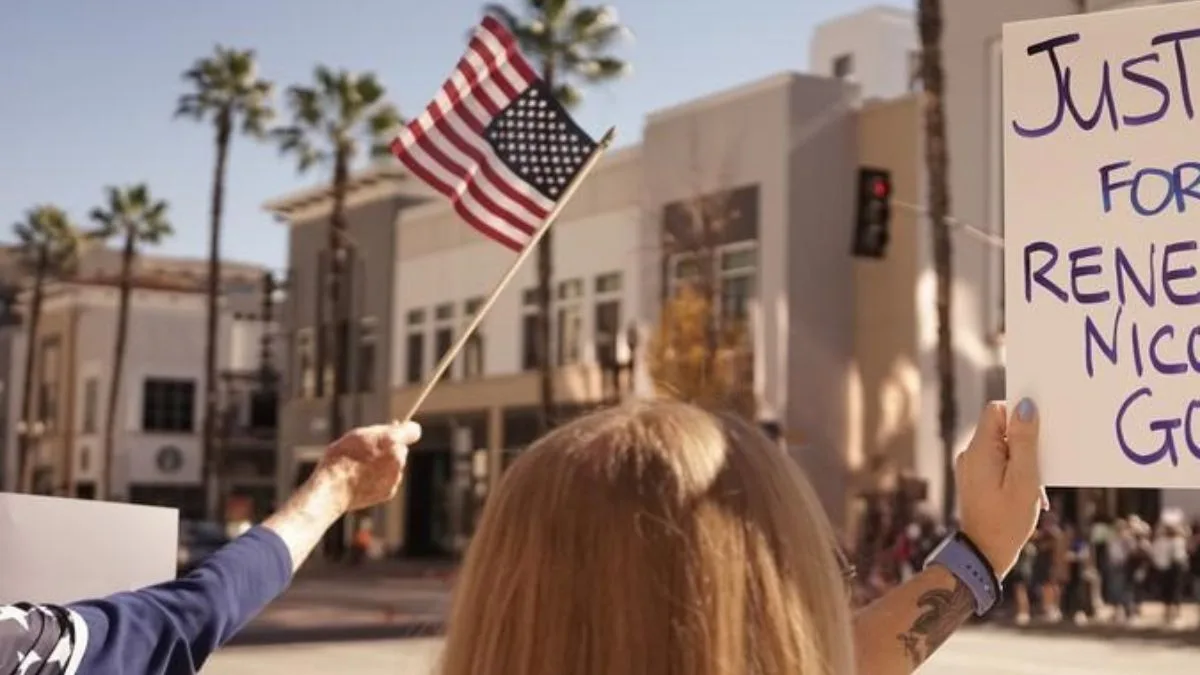
The confrontation unfolding in Minneapolis is no longer merely about immigration enforcement.

Statesman News Service | New Delhi |

The confrontation unfolding in Minneapolis is no longer merely about immigration enforcement. It has evolved into a test of how far federal authority can extend when it collides with local governance, public trust, and the visible costs of aggressive state power. At the centre of this moment stands US border tsar Tom Homan, dispatched by the White House to regain control of an operation that had begun to spiral politically. His arrival signals recognition within the administration that enforcement alone cannot substitute for legitimacy.

Yet the message delivered was carefully calibrated: there would be no retreat from the mission itself, only an adjustment in how it is carried out. This distinction matters. By framing potential troop reductions as conditional upon cooperation from state and city officials, the federal government has preserved its dominance while appearing responsive. The offer of de-escalation is therefore not a concession, but a negotiating tool ~ one that places responsibility for continued confrontation squarely on local leaders who oppose the operation in principle. The problem, however, lies in what triggered this reassessment. The deaths of two civilians during enforcement actions have shifted the debate from policy effectiveness to moral accountability.

When enforcement becomes lethal, the threshold for public acceptance rises sharply. What might once have been defended as tough governance is now scrutinised as excessive force, especially when those affected include American citizens. This scrutiny has exposed the risks of conducting large-scale federal operations in cities that neither requested nor support them. Minneapolis found itself hosting thousands of federal personnel, vastly outnumbering local law enforcement, yet operating without the consent of local authorities. The resulting disconnect has strained civic order rather than reinforced it. Mr Homan’s insistence on “smarter” enforcement suggests an awareness that spectacle has replaced strategy.

Raids perceived as indiscriminate, agents operating with limited visibility, and unclear chains of accountability have undermined confidence not only among residents but also within Congress. That concern is now bipartisan ~ an important signal that immigration politics, long polarised, may be reaching a point of institutional fatigue. What Minneapolis reveals is the limit of enforcement without alignment. Federal power can override local resistance, but it cannot easily govern through it. Policing ~ whether criminal or immigration-related ~ relies on cooperation, information flow, and community compliance. When those foundations collapse, presence alone becomes performative rather than effective. The current attempt to recalibrate the operation appears aimed as much at Washington as at Minnesota.

With funding negotiations entangled in the fallout, the administration faces the risk that a single city’s crisis could disrupt national governance. Mr Homan’s role, therefore, is not only operational but symbolic: to signal control, restraint, and political awareness. Yet the deeper question remains unresolved. If immigration enforcement requires military-scale deployments and conditional bargaining with elected local governments, the issue is no longer border security. It is the shape of federal power itself ~ and how visibly it must be asserted before it begins to weaken its own authority.

NDA MPs felicitate PM Modi over India-US trade deal at parliamentary party meeting

The NDA parliamentary meeting concluded with MPs praising the India–US trade agreement and outlining plans to take Budget 2026–27 messaging to the public.

Statesman News Service | New Delhi |

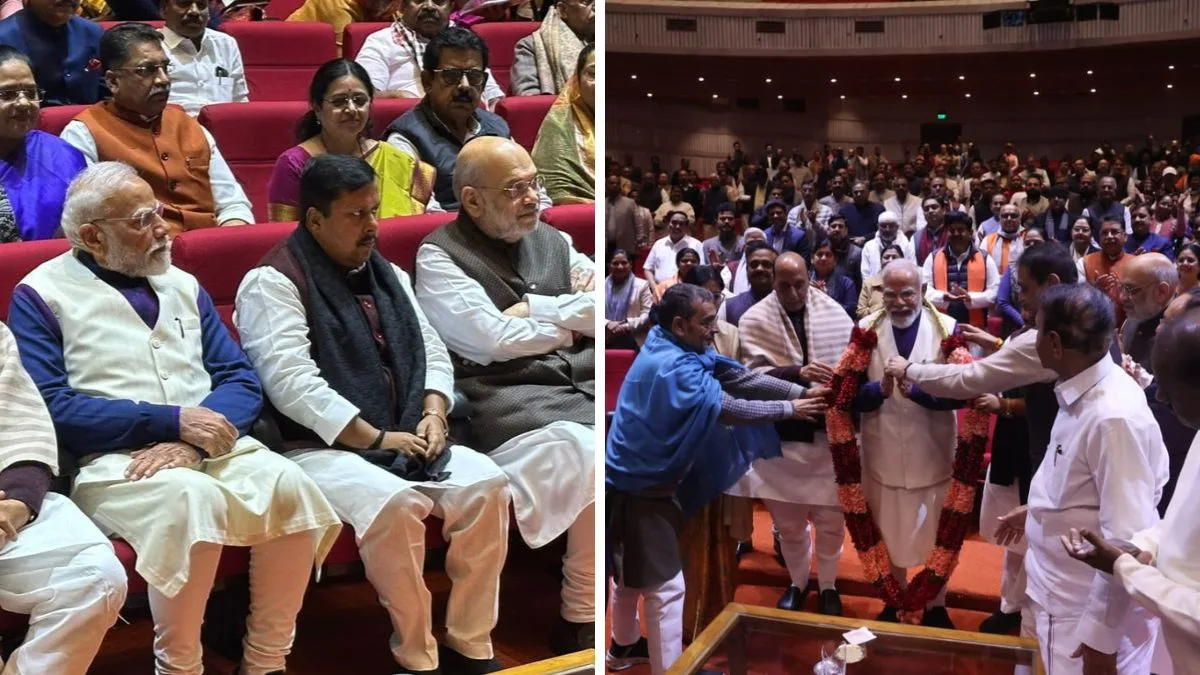
The NDA parliamentary party meeting concluded on Tuesday at the Parliament complex with alliance MPs congratulating Prime Minister Narendra Modi for the India-US trade agreement, which offers immediate tariff relief for Indian exports.

Speaking after the meeting, Parliamentary Affairs Minister Kiren Rijiju said newly elected BJP president Nitin Nabin was formally welcomed and that there was visible enthusiasm among MPs over recent trade developments.

“There is great enthusiasm in the country over historic trade deals under the leadership of PM Modi — nine trade deals, the FTAs, the India-EU FTA and the agreement with the US yesterday and the tariff reduction announcement. MPs were also excited. So, in the NDA Parliamentary Party meeting, the PM was felicitated. For the historic trade deals, he was congratulated. FTAs have been done with 39 countries; this is historic. These 39 are developed countries,” Rijiju said.

Chants of “Jai Modi”, “Vande Mataram” and “Bharat Mata ki Jai” echoed in the meeting hall as party members congratulated the Prime Minister for securing the deal with US President Donald Trump, according to ANI.

The meeting is focusing on post-Budget political messaging and public outreach, coming just days after the presentation of the Union Budget 2026–27. Senior NDA leaders, ministers and Members of Parliament are in attendance.

Union Home Minister Amit Shah and newly elected BJP national president Nitin Nabin are present at the meeting.

Budget messaging and outreach in focus

According to sources, Sitharaman walked NDA lawmakers through the key features of the Budget and its long-term vision. The presentation reportedly underlined how the proposals are aligned with the government’s goal of building a Viksit Bharat by 2047.

A major focus of the meeting was communication. Leaders were guided on how to take the Budget’s priorities and benefits to the public. A clear outreach plan was outlined to keep messaging aligned across states and constituencies.

The Union Budget 2026-27 was Sitharaman’s ninth Budget. It was anchored around three broad kartavyas, or duties, which are improving competitiveness, meeting aspirations, and ensuring that growth reaches every family, community and region.

Prime Minister Modi had welcomed the Budget in Parliament on Sunday, calling it a “highway of immense opportunities”.

He said the “Reform Express” on which India is riding “will gain new energy and momentum through this budget”.

The Prime Minister added that the Budget would “turn the dreams of the present into reality” and lay a “strong foundation for India’s bright future” as the country moves towards the Viksit Bharat 2047 goal.

Quoting the Finance Minister’s remarks in the House, PM Modi described the Budget as a “Youth Power Budget”.

“This is a Youth Power Budget. It reflects the thinking, dreams, determination, and energy of young India. The provisions in the budget will prepare leaders, innovators, and creators across sectors,” he said.

He further highlighted initiatives ranging from medical hubs and allied health professionals to the orange economy, AVGC sectors, tourism and the Khelo India mission.

“From building medical hubs and developing allied health professionals, promoting the orange economy and AVGC sectors, boosting tourism, to opening new opportunities through the Khelo India mission, the budget unlocks pathways for youth to excel and lead,” PM Modi added.

“This is a Youth Power Budget. It reflects the thinking, dreams, determination, and energy of young India. The provisions in the budget will prepare leaders, innovators, and creators across sectors,” he said.

PM Modi highlighted initiatives ranging from medical hubs and allied health professionals to the orange economy, AVGC sectors, tourism and the Khelo India mission, saying the Budget opens new pathways for young people to lead and excel.

Last Bastion Crumbling ~ II

It is meaningless to set out to identify the one culprit who has brought about the abject fall of the CPI-M in Kerala but there are two broad categories that may be identified.

DR. AJAYAKUMAR KODOTH | New Delhi |

It is meaningless to set out to identify the one culprit who has brought about the abject fall of the CPI-M in Kerala but there are two broad categories that may be identified. The first set of offenders are the intellectuals who constantly sing praises of the leadership which wears a cloak of Left ideology. Their ‘services’ are an eloquent testimony to their own careerism. They are the ones who have contributed majorly to such a precipitous fall of the left, progressive movement in Kerala.

The second set of culprits are the party cadres and followers who adhere to the party in the hope of securing all manner of favours. Cadres are selected from the branch level to the higher committee level on the basis of the Leninist organizational principles. In reality, they constitute “the new class” as described by Milovan Djilas, the Yugoslavian Communist who later became a votary of Democratic Socialism. Communist leaders the world over, with autocratic tendencies, have always made use of the Leninist organizational system of democratic centralization to crush democracy underfoot. Such a phenomenon did not take place on a large scale in Russia during Lenin’s time solely because his democratic instincts trumped his desire for complete control.

But when Stalin assumed power, the situation changed drastically. The subsequent events which unfolded in the Soviet Union were such that they provoked a highly relevant question: “How far is Stalinism from Fascism?” What we saw in many Communist nations that crumbled in the 1990s were ‘Ceaușescus’ who reveled in luxury behind the façade of authority. The ghost of Nikolae Ceaușescu seems to have finally reached Kerala. If in a democratic state we see a leader who remains unquestioned amid his band of sycophants, one can well imagine what the condition would have been in Communist countries ruled by a single party. Small wonder they collapsed under the weight of the ire of the masses. It is only a matter of time before a similar phenomenon takes place in Kerala.

In 2021, I too worked to bring the Pinarayi government back to power in the name of commitment to the Left Front. However, in 2026, while continuing to be a Left supporter, I do not want the government to remain in power. The first mistake the Pinarayi government committed in its second term was that the very party which always condemned the Congress for its penchant for dynastic rule, moved along similar lines in Cabinet formation. It is telling that since then, no CPI-M leader in Kerala has uttered a single word about family dominance and/or nepotism. It would be pertinent at this point to allude to an anecdote narrated by a prominent Communist journalist, the late TV Krishnan (TVK), about C. Achutha Menon during the latter’s tenure as the Chief Minister of Kerala.

Dr V. Ramankutty, Achutha Menon’s son and a medical practitioner, wished to book an apartment under the Housing Board Chairman’s quota, in a residential complex that was about to be built by the State Housing Board. As he had qualms about doing so without seeking permission from his father, Dr Ramankutty requested TVK to raise the issue with the Chief Minister. The reply was: “Tell my son that as long as I’m on this chair, it’s impossible.” Nobody expects such a level of integrity these days. But it is more than one allegation that has been made against the present Chief Minister and his family. The CPI-M, which should have taken corrective measures in such circumstances, has instead kept them safe under its protective umbrella.

Things have come to such a pass that the reputation of many CPI-M leaders has come under the cloud in the Sabarimala gold-looting case. But the party continues to build a defensive fortress around them. Is that the role of the party? What is the responsibility of the leaders? It is a classic case of the fence itself eating the crop, much like what happened to the CPI-M in Bengal. No one can escape being held accountable for the disintegration of the party. Recently, the news of a few CPI-M comrades destroying the statue of Gandhiji made waves in Kerala. This has happened earlier, and will happen in the future too. In his autobiography, Mohit Sen, a prominent CPI leader and Marxist thinker, ridicules the Communists’ denigration of Gandhi as the result of their anger towards a leader who had hijacked their revolution.

By 1964, the CPI had overcome this attitude to a considerable extent. But the CPI-M continues to fuel antipathy towards Gandhi and Nehru to this day. An instance from Kerala itself will serve to prove this point. It concerns an incident that CK Chandrappan and NC Mammootty Master, a CPI leader from Kannur, narrated to me several years back. Not long after the party split of 1964, a state meeting of the students’ federation took place at the Town Hall in Thalassery. The repercussions of the split had not reached the feeder organizations yet. Pandit Nehru had died a little earlier. Chandrappan and Antony Thomas were the main organizers of the AISF in the state. (It must be remembered that the AISF, as a revolutionary students’ organization was brought into being at Lucknow in 1936 at a meeting presided over by Nehru himself.)

When Antony Thomas introduced a resolution expressing condolences on the demise of Nehru, a section of student leaders hollered, “Offering condolences at his death will not be permitted at this meeting!” and rushed to throw Chandrappan and others out from the hall, before announcing that they had seized the organization. This was where the Students’ Federation of India (SFI) took root. Is it any wonder that CPI-M comrades of today destroy the statue of Gandhi? After all, Gandhi was the leader who conducted a revolution which the Communists were supposed to! The wars they wage today are the result of the brainwashing they have undergone in such camps decades ago. A group of historians led by Dr Bipan Chandra whose research work was done under the aegis of a JNU project in the 1980s, attempted to give a sense of direction to left historians of India in their study of the Indian nationalist movement.

As a part of his mission to record the history of the Indian freedom struggle from a fresh perspective, Dr Chandra and some of his colleagues came to my house in Kanhangad to interview my father and Communist leader, K. Madhavan. One of the questions he asked on that occasion is relevant even today. “Comrade Madhavan, how did Mahatma Gandhi become the common enemy of the extreme right and the Indian Communist movement?” It is a question that should even today send both the CPI and the CPI-M leaderships of Kerala into introspection mode. In the course of the interview, Dr Chandra shared an interesting experience. While interviewing Ravinarayan Reddy, a prominent Communist leader in Andhra Pradesh, he asked Reddy the reason why the Indian Communist movement had failed to reach its goal. The reply: “I’m not a religious believer.

If I were, I would say it’s because God cursed the Indian Communist movement for having crucified Gandhiji!” By the end-1960s, the CPI bade a temporary goodbye to its anti-Congress political stand. As a result, India’s first Congress-Communist ministry under the leadership of C. Achutha Menon came into existence in Kerala. The political ideology that propelled the alliance was the conviction that the extreme right and neo-imperialism constituted the common enemy of the nation. But what the CPI-M attempted to do was to drown the 1970-77 Achutha Menon state government ~ one of the best that independent India has seen ~ in blood. The violent strikes it led during that time loudly proclaimed its blind opposition to the CPI-Congress alliance as well as its Stalinist attitude.

The strikes that the CPI-M engineered during that time in Kerala were the most undemocratic means ever seen in the country of torpedoing a democratically-elected government. One single instance ~ when a KSRTC bus with four passengers was burnt to ashes in Mattannur ~ is sufficient to throw light on the demonic nature of this agitation. As part of the measures taken to register its protest, it also set fire to tractors in paddy fields and newly-installed electricity transformers, severed telephone cables and even dismantled the foundations of houses built for the poor under the Lakshamveedu project [One-lakh housing scheme] under the cover of darkness. CPI-M cadres excelled in the art of physically attacking their political opponents, especially members and sympathizers of the CPI.

CPI-M stormtroopers, under the leadership of MV Raghavan, did not hesitate to rough up even the self-sacrificing Communist leader, Kanthalot Kunhambu. When the CPI-M set out to settle scores with its opponents through physical rather than ideological means, many began to seek refuge in the RSS. This intolerant attitude cultivated by the CPI-M towards its political adversaries was one of the major reasons for the RSS taking deep root in Malabar. There are plenty of examples that underscore the negative stand driven by a pathological hatred for the Congress that the CPI-M has been taking since 1964. Kerala is never likely to forget EMS Namoodiripad’s notorious statement that the party will not hesitate to even sup with the devil in order to crush the Congress to death.

(The writer, a Left sympathizer, is former member, Kerala Public Service Commission)

India–US trade deal announced: Jaishankar, Piyush Goyal welcome move; Congress flags ‘Trump-nirbharta’

India and the US have announced a trade deal cutting tariffs to 18 per cent, drawing praise from senior ministers and sharp criticism from the Congress over how the decision was revealed.

Statesman News Service | Mumbai |

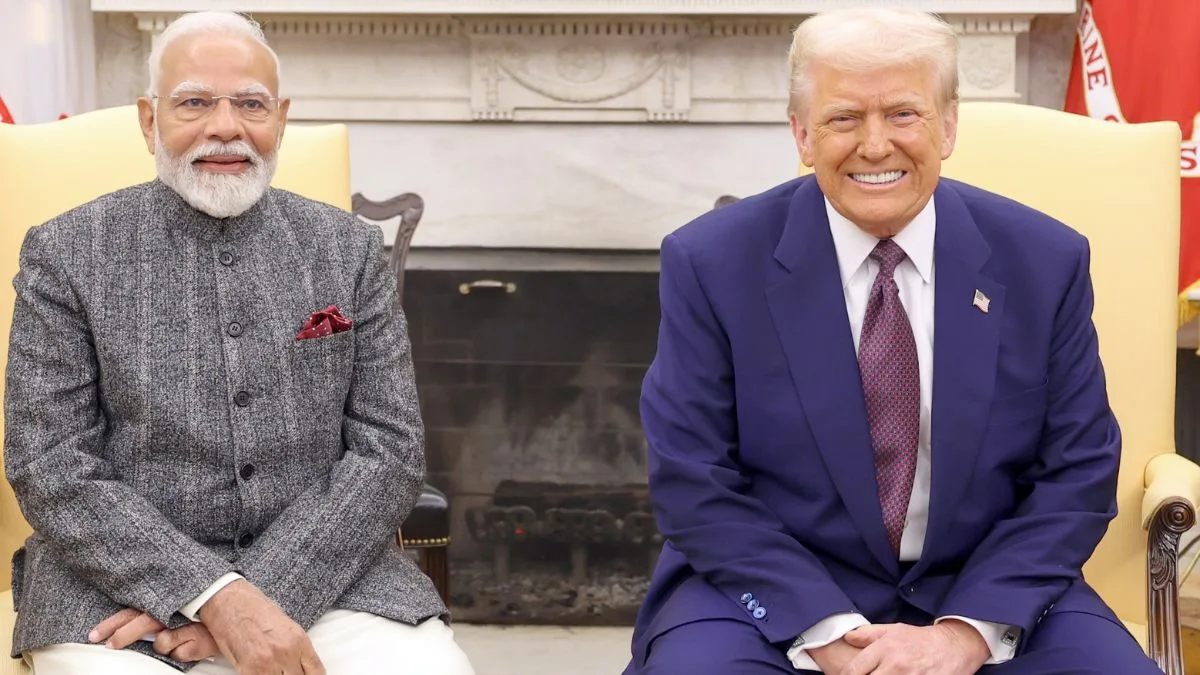
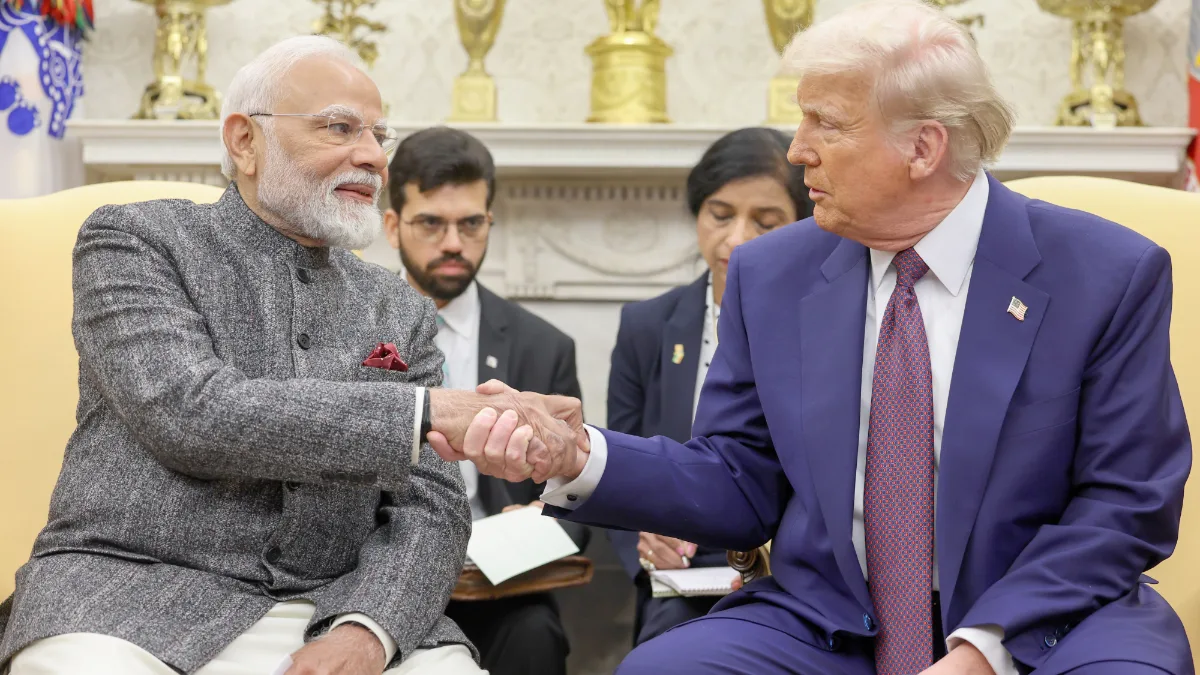
India and the United States have announced a bilateral trade deal that sharply reduces US tariffs on Indian goods to 18 per cent, following a phone conversation between Prime Minister Narendra Modi and US President Donald Trump.

The announcement was welcomed by senior ministers in the government, who described it as a turning point in India–US relations. It also triggered criticism from the Opposition, which questioned why key details first emerged from Washington rather than New Delhi.

The tariff reduction takes effect immediately. It follows a period of heightened trade tensions, during which the US had imposed punitive duties of up to 50 per cent on Indian goods.

Also Read: Trump-Modi call: US to reduce tariffs on India to 18%; PM confirms relief for Made-in-India products

What the tariff cut means for India–US ties

External Affairs Minister S Jaishankar, currently in the United States, welcomed the announcement and said it would deepen the economic and strategic partnership between the two countries.

“Welcome the announcements on bilateral trade following the conversation between PM @narendramodi and President @realDonaldTrump.

“This will create more jobs, spur growth and promote innovation in both economies. It will strengthen ‘Make in India’ endeavors and encourage trusted technology ties. The opportunities in our economic engagement are truly vast and we are confident of realizing them.

“A robust economic relationship is the strongest foundation for our strategic partnership,” he wrote on X.

Jaishankar is in the US to attend the Critical Minerals Ministerial convened by US Secretary of State Marco Rubio. The meeting is focused on clean energy transitions, supply chain resilience, and cooperation in critical minerals. He is also scheduled to meet senior members of the US administration during the visit.

Indian Ambassador to the US Vinay Mohan Kwatra described the deal as a major moment in bilateral ties.

“A big WIN for a consequential partnership under the leadership of Prime Minister Narendra Modi @narendramodi and President Donald Trump @POTUS. India and USA announce trade deal creating vast new opportunities for the two economies and the people of our two great nations. Today’s announcements herald an exciting new phase in our partnership,” he said in a post on X.

President Trump said the agreement would be “effective immediately”. Under the revised framework, the US will levy a reduced reciprocal tariff of 18 per cent, down from the earlier rate of 25 per cent.

The cut follows a sharper rollback earlier in the day. The US had reduced tariffs on India from 50 per cent to 18 per cent after the leaders spoke. The Trump administration had imposed the higher duties, including a 25 per cent penalty linked to India’s purchase of Russian oil.

US Embassy spokesperson Christopher Elms confirmed that “the final tariff on Indian goods is now 18 percent”.

Commerce Minister Piyush Goyal, who has been closely involved in the negotiations, called the agreement transformative.

“It is not just a trade deal – it is a historic turning point that will reshape India–U.S. relations and accelerate our journey towards Viksit Bharat 2047,” he said on X.

Goyal said the agreement would open new opportunities for entrepreneurs, MSMEs, farmers, and skilled workers, while strengthening technology access from the US. He added that India and the US were “natural allies” whose partnership would co-create technologies and solutions for global growth and stability.

The US–India Strategic Partnership Forum also welcomed the announcement, saying it reaffirmed both countries’ commitment to deepening economic ties and advancing a bilateral trade agreement.

Union Minister for Railways, Information & Broadcasting, Electronics & Information Technology Ashwini Vaishnaw echoed the sentiment, calling the deal a “win-win” that would benefit citizens and industries on both sides.

Opposition questions process, cites ‘Trump-nirbharta’

The announcement, however, drew sharp criticism from the Congress.

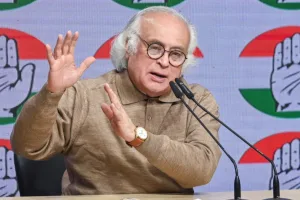
Senior leader Jairam Ramesh said India was increasingly learning about key national decisions from Washington rather than its own government. He described this as “Trump-nirbharta”, or dependence on President Trump.

“It seems that Prime Minister Modi and President Trump spoke to each other today. This information has been provided not by the Indian side but by the US Ambassador to India. This now seems to be the routine – India gets to know of its Govt’s actions only from President Trump or his appointees. Trump-nirbharta,” Ramesh wrote on X.

In a separate post, he linked the trade deal announcement to earlier remarks by Trump on Operation Sindoor. The US President had previously claimed a role in de-escalating India–Pakistan tensions during the operation, a claim the Indian government has denied.

“He announced the halt of Op Sindoor from Washington DC. He announced the updates on India’s oil purchases from Russia and Venezuela from Washington. He’s now announced an India-US Trade Deal from Washington, the full details of which are awaited,” Ramesh wrote.

“President Trump clearly seems to have some leverage over Prime Minister Modi… It appears Mr. Modi has capitulated finally. Surely this cannot be the father of all deals. In Washington clearly Mogambo Khush Hai,” he added.

Prime Minister Modi later confirmed the conversation and welcomed the tariff cut.

“Wonderful to speak with my dear friend President Trump today. Delighted that Made in India products will now have a reduced tariff of 18%. Big thanks to President Trump on behalf of the 1.4 billion people of India for this wonderful announcement,” he said on X.

He said closer cooperation between the two countries would benefit their people and strengthen global stability, and expressed support for Trump’s efforts towards peace.

The announcement comes days after India and the European Union concluded negotiations on a Free Trade Agreement, underlining New Delhi’s push to expand market access amid shifting global trade dynamics.

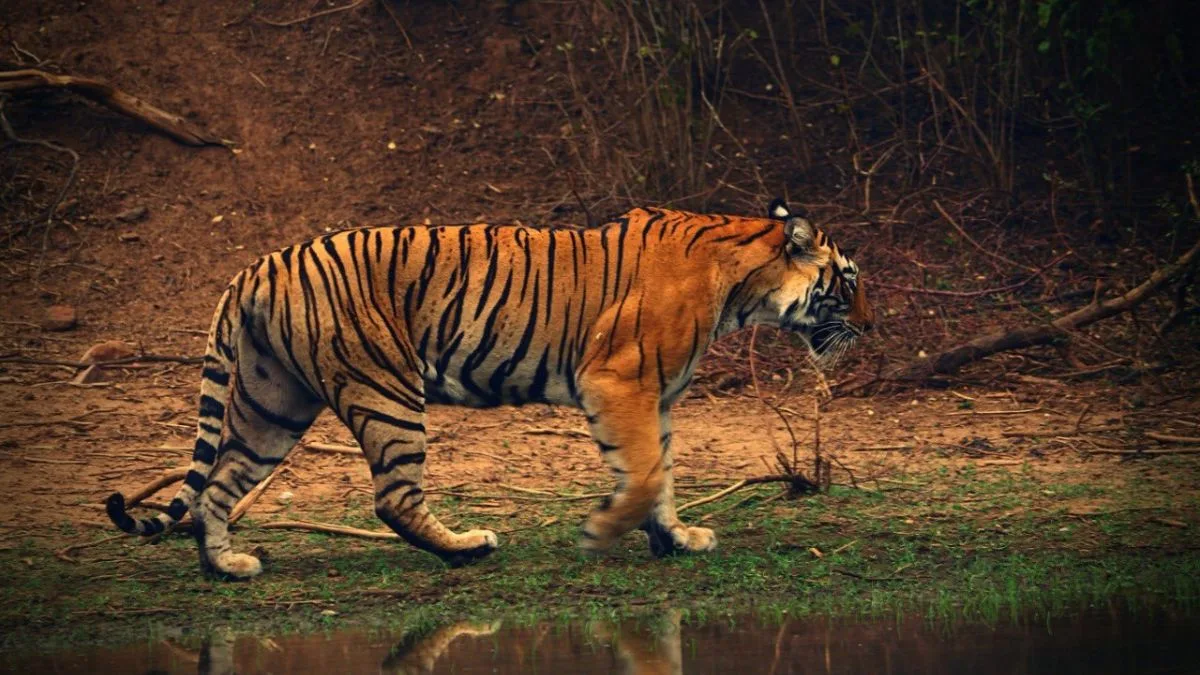
Tiger, tigress found dead in MP’s Shahdol

The incident was reported from the Jaisinghnagar area.

Statesman News Service | Bhopal |

A tiger and a tigress were found dead near an agricultural field in Madhya Pradesh’s Shahdol district on Monday, apparently due to electrocution.

The incident was reported from the Jaisinghnagar area.

Madhya Pradesh Additional Principal Chief Conservator of Forests (Wildlife) L. Krishnamoorthy said their carcasses were found in the North Shahdol forest area.

The official said that a forest department team was rushed to the spot after receiving the information.

He said preliminary investigations suggested that the tiger died in a territorial fight, while the tigress got electrocuted, adding that the exact cause of their deaths will be confirmed after the forest team completes its probe and postmortems are conducted.

Sources said that a farmer had laid an electric wire around his field to prevent the entry of herbivorous animals that usually eat and damage standing crop, and claimed that both the tiger and the tigress came in contact with the live wire and died from electrocution.

Detailed investigations are underway in the matter.

Trump-Modi call: US to reduce tariffs on India to 18%; PM confirms relief for Made-in-India products

The US Prsident claimed that Prime Minister Modi has agreed to stop buying Russian Oil and start purchasing more American and Venezuelan crude oil.

Statesman News Service | New Delhi | Updated :

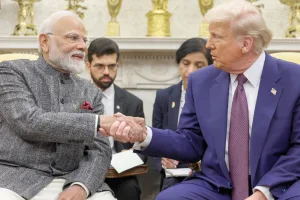
US President Donald Trump on Monday announced a “trade deal” between the United States and India, saying that Washington will reduce the reciprocal tariffs on Indian imports from 25 per cent to 18 per cent.

“It was an Honor to speak with Prime Minister Modi, of India, this morning. He is one of my greatest friends and, a Powerful and Respected Leader of his Country. We spoke about many things, including Trade, and ending the War with Russia and Ukraine,” Trump said.

The US Prsident claimed that Prime Minister Modi has agreed to stop buying Russian Oil and start purchasing more American and Venezuelan crude oil.

“He agreed to stop buying Russian Oil, and to buy much more from the United States and, potentially, Venezuela. This will help END THE WAR in Ukraine, which is taking place right now, with thousands of people dying each and every week!” he said.

Trump stated that they have agreed to a trade deal between the United States and India, following which the US will charge a reduced Reciprocal Tariff, lowering it from 25 per cent to 18 per cent.

The White House confirmed to news agency IANS that the additional 25 per cent penalty for purchasing Russian oil will also be dropped. This will reduce the total US tariffs on Indian goods entering the American territory to 18 per cent.

According to him, India will also “move forward to reduce their Tariffs and Non Tariff Barriers against the United States, to ZERO.”

Trump also stated that PM Modi also “committed to “BUY AMERICAN,” at a much higher level, in addition to over $500 BILLION DOLLARS of U.S. Energy, Technology, Agricultural, Coal, and many other products.”

“Our amazing relationship with India will be even stronger going forward. Prime Minister Modi and I are two people that GET THINGS DONE, something that cannot be said for most. Thank you for your attention to this matter!” he added.

Modi thanks Trump, hails his leadership

In a separate post on X, PM Modi confirmed the development and thanked President Trump for the announcement.

“Wonderful to speak with my dear friend President Trump today. Delighted that Made in India products will now have a reduced tariff of 18%. Big thanks to President Trump on behalf of the 1.4 billion people of India for this wonderful announcement,” Modi said.

The Prime Minister said that India and the US working together will benefit the people of the two countries and unlock the “immense opportunities for mutually beneficial cooperation.”

Modi also lauded Trump’s leadership, terming it “vital for global peace, stability, and prosperity.”

“India fully supports his efforts for peace,” Modi said, adding, “I look forward to working closely with him to take our partnership to unprecedented heights.”

WB gets its first bullet train in the railway budget

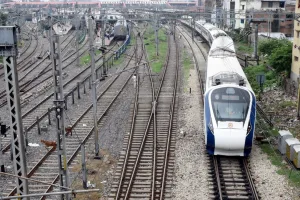
Poll-bound West Bengal is to get its first bullet train from Varanasi to Siliguri.

Statesman News Service | Kolkata |

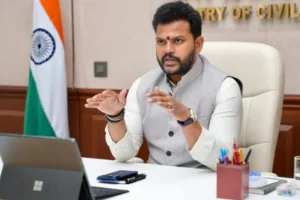
Poll-bound West Bengal is to get its first bullet train from Varanasi to Siliguri. The second route of the bullet train connecting Varanasi-Patna-Siliguri is one of the most significant parts of the Railway Budget announced by the railway minister Ashwini Vaishnaw today.

The high-speed corridor would be the second in the country after the Ahmedabad and Mumbai route where work has reached an advanced stage. As informed by Mr Vaishnaw, with the commencement of the commercial services of the train, passengers would be able to travel between Varanasi and Siliguri via Patna and Delhi within two hours and 55 minutes. The route would run on elevated tracks and would later be extended till Guwahati.

The railway budget also includes another crucial announcement of a freight corridor connecting West Bengal to Gujarat. The dedicated corridor would be brought till Dankuni in West Bengal connecting other states like Odisha, Madhya Pradesh, Chhattisgarh and Maharashtra.

Notably, West Bengal has received Rs 14,205 crore as total outlay in the railway budget for 2026-2027. Last year, the state had received Rs 13,955 crore for West Bengal under railway budget 2025.

According to the general manager of the Eastern Railway, Milind Deouskar, level crossing gates are posing as one of the major hurdles in train operations and replacement of such LC gates with ROBs or underpasses are faced with hurdles in the state. As informed by the GM, there are around 100 ROBs sanctioned in the Eastern Railway of which about 70 are in West Bengal. However, these projects are pending because of unavailability of land from the state government.

Talking about the installation of Kavach system, Mr Deouskar informed that Eastern Railway is anticipated to complete the installation of the advanced system in a month within its jurisdiction which is till Pradhankhunta.

The total outlay for railways’ modernisation and expansion in Jharkhand is Rs 7,536 crore against the average outlay of Rs 457 crore during 2009 to 2014. For Odisha there has been a total allocation of Rs 10,928 crore for 2026-27 against the average outlay of Rs 1,171 crore during 2009 to 2014.

City Metro eyes extension of Yellow Line

Struggling with land acquisition hurdles, the Kolkata Metro Railway is eying to complete two crucial projects in 2028. The city Metro railway is putting efforts to complete the Yellow Line till Michael Nagar and New Garia and Airport Metro corridor in 2028, informed General Manager of the city Metro, Subhransu Sekhar Mishra today.

According to Mr Mishra, the city Metro has received Rs 705.50 crore for Orange line, Rs 906.60 crore for Purple line and Rs 529 crore for the Green line. As the Yellow Line is hurdled with issues of land acquisition, the city Metro authorities have roped in RITES to carry out a study on exploring options to take the alignment forward via underground.

Addressing a virtual Press conference with the state media on the budgetary allocation today, Mr Vaishnaw claimed that Kolkata Metro Railway that had only a network of 27 km in 40 years expanded by 45 km within the last 11 years. Pointing out the hurdle at Chingrighata, the railway minister said: “Connectivity in West Bengal can progress further but permission from the state government is not being granted Chingrighata despite order from the high court. A by-pass road also has been constructed there and the high court also has given the order still for around one and a half years permission to proceed with the work is not being given by the government of West Bengal.”

US Ambassador Sergio Gor says Donald Trump spoke with PM Modi

In one line post on X, Sergio Gor said, “President Trump just spoke with Prime Minister Modi. STAY TUNED…”

Statesman News Service | New Delhi |

US Ambassador to India, Sergio Gor on Monday said that President Donald Trump has spoken to Prime Minister Narendra Modi. The US Ambassador, however, didnt provide any further details.

In one line post on X, Gor said, “President Trump just spoke with Prime Minister Modi. STAY TUNED…”

The development comes shortly after Trump posted a magzine cover featuring him alongside PM Modi. “The Mover and the Shaker,” read the headline of the cover.

In another post, Trump shared iconoc India Gate image and wrote: “India’s beautiful Triumphal Arch. Ours will be the greatest of them all!”

India and the US are said to be close to finalising a bilateral trade agreement. With External Affairs Minister Dr S Jaishankar already headed to the US on a three-day visit, there is growing optimism that the trade deal negotiations could move towards successful conclusion.

Jaishankar will be in the United States from February 2-4 to participate in the Critical Minerals Ministerial convened by U.S. Secretary of State Mr. Marco Rubio.

The Ministerial will focus on supply chain resilience, clean energy transitions, and strategic cooperation in critical minerals.

During the visit, the External Affairs Minister will also hold meetings with senior members of the US administration.

Nadia student gets Madhyamik admit card at eleventh hour

A student of Duttapulia Union Academy for Girls in Nadia district, who had been left without an admit card despite being registered, has finally been allowed to appear for the examination following direct intervention by Chief Minister Mamata Banerjee and Trinamul Congress national general secretary Abhishek Banerjee.

Statesman News Service | Kolkata |

A student of Duttapulia Union Academy for Girls in Nadia district, who had been left without an admit card despite being registered, has finally been allowed to appear for the examination following direct intervention by Chief Minister Mamata Banerjee and Trinamul Congress national general secretary Abhishek Banerjee.

The crisis unfolded when the student, scheduled to appear for the Madhyamik examination under the West Bengal Board of Secondary Education, failed to receive her admit card at the last moment. According to sources, a technical or clerical error led to the omission, even though her registration details were in order. As the examination date drew closer, anxiety mounted within the student’s family and the school.

Headmistress Rupa Pal, along with the president of the school management committee and former MLA, Samir Kumar Poddar, took up the matter with the district administration and higher authorities. Recognising the gravity of the situation, they ensured that the issue was escalated without delay.

Sources confirmed that the matter was brought to the attention of the Chief Minister and Mr Banerjee, both of whom took serious note of the lapse. Acting on their directions, the West Bengal Board of Secondary Education initiated special measures to verify the student’s credentials and promptly issued the admit card, clearing the way for her to sit for the examination.

Officials described the resolution as an example of effective coordination between the administration, elected representatives and educational authorities. “No student should suffer due to procedural errors,” a senior official said, adding that safeguards are being reviewed to prevent similar incidents in future.

Industry leaders hail Budget

Industry leaders in Bengal have praised the Budget. Mahesh Agarwal, Managing Director, Purti Realty said the Budget is encouraging for the real estate sector, especially for affordable housing.

Statesman News Service | Kolkata |

Industry leaders in Bengal have praised the Budget. Mahesh Agarwal, Managing Director, Purti Realty said the Budget is encouraging for the real estate sector, especially for affordable housing. “The government’s focus on building better infrastructure and more homes will help meet the growing demand for housing in cities. Steps like using Real Estate Investment Trusts (REITs) and Infrastructure Investment Trusts (InVITs) will help unlock funds from existing assets and support new housing projects.”

Vineet Mittal, Chairman, Avaada Group said the Budget strikes balance between ambition, growth and discipline. “With sustained public capex of Rs 12.2 lakh crore, a clear fiscal consolidation path, and reforms like the Infrastructure Risk Guarantee Fund, it focuses on building long-term productive capacity rather than short-term stimulus.”

CS (Dr.) Adv. Mamta Binani, President of MSME Development Forum, WB, said, “The announcement of a dedicated Rs 10,000 crore MSME Growth Fund in Budget 2026 is a monumental stride towards strengthening India’s micro, small and medium enterprises at a pivotal moment for the economy.”

VBU students share perspectives during dialogue with FM Sitharaman

Union finance minister Nirmala Sitharaman on Sunday engaged with youth during a post-Budget interaction, deliberating on how the Union Budget 2026 has been shaped by the aspirations, ideas, and energy of young Indians.

Statesman News Service | Kolkata |

Union finance minister Nirmala Sitharaman on Sunday engaged with youth during a post-Budget interaction, deliberating on how the Union Budget 2026 has been shaped by the aspirations, ideas, and energy of young Indians.

During the session, the finance minister interacted with the students of Visva-Bharati University, Santiniketan, Birbhum district and expressed her honour for the institution, describing it as a matter of pride to engage with students from a university of national and cultural importance.

Somya Patel, a student of Hindi at Visva-Bharati University, raised a question on whether Budget-linked sectors could be integrated into language studies. Responding to this, Sitharaman highlighted that in today’s India, knowledge is no longer constrained by language barriers, supported by technology-driven platforms such as Bhashini. She highlighted the need to integrate domain knowledge across disciplines to enhance accessibility and understanding. She said: “You may think in multifarious ways ~ education, policy, communication, governance ~ by combining your strength in language with awareness of budgetary and financial processes. That integration is extremely valuable.”

Another student, Isha Halder, posed rapid-fire questions on Smt. Sitharaman’s inspirations and aspirations during her youth. Reflecting on her personal journey, the FM spoke about her experiences as a young student travelling from distant regions to pursue higher education in Delhi, sharing insights intended to motivate and inspire the youth. She said: “When I was 19, my dream was to come to Delhi and study ~ either in Delhi University or JNU. My parents were fully supportive. I came all the way on my own, wrote multiple entrance examinations, and secured admission.”

The interaction strengthened the Union government’s commitment to placing youth at the core of policy-making, with the Union Budget 2026 drawing inspiration from youth-led ideas to advance education, skill development, and future-ready growth.

Rajeshwar Singh questions post-retirement security disclosures, seeks clarity from ex-Army chief Naravane

Referring to recent remarks by Leader of the Opposition Rahul Gandhi, who cited an unpublished book of former Army Chief General M.M. Naravane Singh said the nation deserves “clear and direct answers” on issues related to national security.
Statesman News Service | Lucknow |

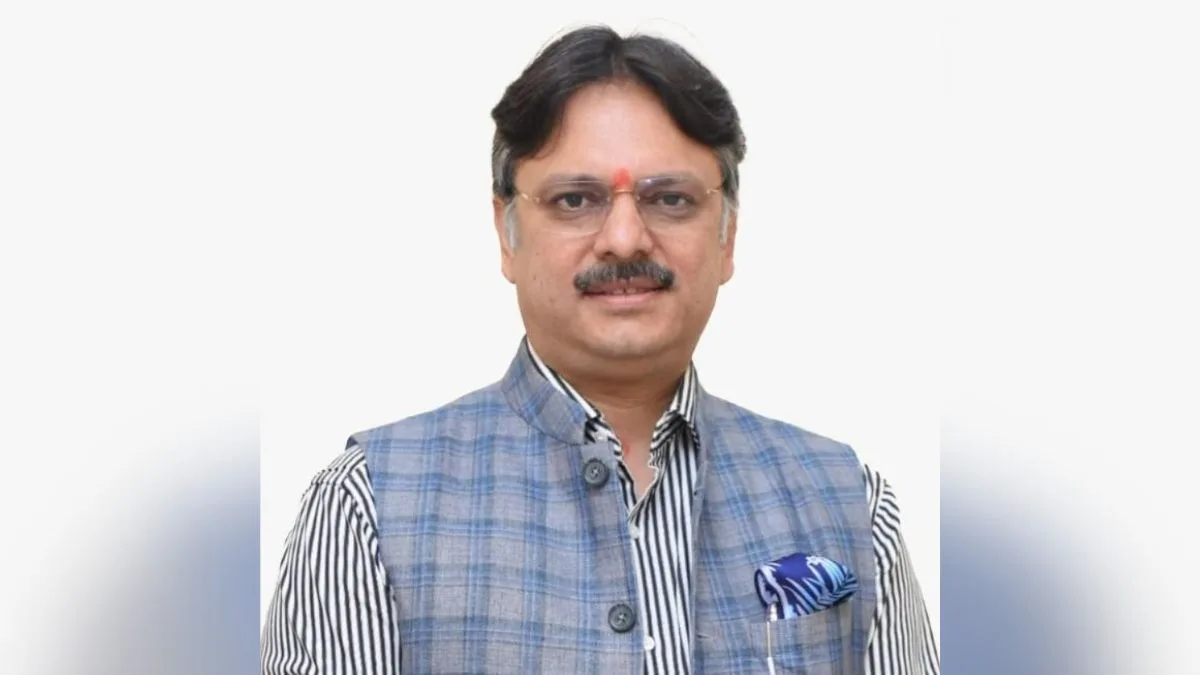
BJP MLA from Sarojini Nagar in Lucknow Rajeshwar Singh on Monday raised concerns over what he described as a growing trend of post-retirement disclosures and political commentary on sensitive national security matters, asserting that accountability must be exercised during tenure and not after demitting office.

Referring to recent remarks by Leader of the Opposition Rahul Gandhi, who cited an unpublished book of former Army Chief General M.M. Naravane Singh said the nation deserves “clear and direct answers” on issues related to national security.

The BJP MLA posed a series of pointed questions, asking why Gen. Naravane did not resign if he believed serious national security threats existed and his views were ignored. He also questioned why the former Army Chief continued in office if he felt there was institutional resistance, and what prevented decisive action at a time when, Singh said, “constitutional authority, command, and responsibility were fully vested in him.”

“Gen. Naravane should come out and clear the air, as speculation will only make it worse,” Singh stated in a statement here on Monday.

He stressed that national interest is protected through timely decisions taken while in service, not through memoirs, interviews, or commentary after retirement. “Every officer of the armed forces and every civil servant takes an oath to the Constitution and the nation. If a matter genuinely involved national security, there was neither a legal nor a moral barrier to acting then. Speaking only after retirement raises questions of credibility, not courage,” he said.

Singh warned that selective disclosures after leaving office could weaken institutions, erode public trust, and create doubts around decision-making processes that require discipline and accountability.
He also criticised Rahul Gandhi and the Congress party for making statements on sensitive security issues based, he alleged, on partial understanding and political convenience. Raising a counter-question, Singh asked what “decisive and deterrent action” the Congress-led government had taken after the 26/11 Mumbai terror attacks.

“National security is not a subject for political point-scoring or retrospective heroism. History respects those who act when responsibility rests on their shoulders—not those who speak when it is safest to do so,” Singh added.

State BJP slams Mamata’s Delhi visit, alleges misuse of poll machinery

“SIR has been conducted in at least 12 states. Has any chief minister from those states come to Delhi like this? Mamata Banerjee is scared,” Bhattacharya alleged, accusing the Trinamul Congress (TMC) of attempting to politicise a routine electoral exercise.

Statesman News Service | Kolkata |

Senior BJP leader and Rajya Sabha MP Shamik Bhattacharya on Monday questioned West Bengal Chief Minister Mamata Banerjee’s decision to travel to New Delhi to meet the Chief Election Commissioner over the Special Intensive Revision (SIR) of electoral rolls, claiming that similar exercises had been carried out in several other states without any such protest by chief ministers.

“SIR has been conducted in at least 12 states. Has any chief minister from those states come to Delhi like this? Mamata Banerjee is scared,” Bhattacharya alleged, accusing the Trinamul Congress (TMC) of attempting to politicise a routine electoral exercise.

Echoing similar criticism, Leader of Opposition in the West Bengal Assembly, Suvendu Adhikari, launched a sharp attack on the chief minister at a press conference in Kolkata, alleging that fear and confusion surrounding the SIR process had been deliberately created by the state government under Mamata Banerjee’s instructions.

While the chief minister was in Delhi to meet the Chief Election Commissioner, the BJP organised counter-programmes across the state on the SIR issue. Addressing the media amid these protests, Adhikari claimed that the SIR exercise was being manipulated through sections of the election machinery allegedly influenced by the ruling party and its political consultancy firm, I-PAC.

“The name of the fear is Mamata Banerjee. From day one, intimidation has been carried out and panic has been deliberately created,” Adhikari alleged. He claimed that large numbers of voters were harassed after being summoned for hearings due to spelling errors in names and surnames, which he alleged were intentionally introduced.

According to the BJP leader, a section of Booth Level Officers (BLOs), Electoral Registration Officers (EROs) and Assistant Electoral Registration Officers (AEROs) had acted under the direction of the Trinamul Congress and I-PAC. “Millions of people were called for hearings after deliberate errors were made in voter records. This was done on the chief minister’s instructions,” he alleged.

Demanding strict action, Adhikari called for the immediate suspension and registration of FIRs against officials involved in the alleged irregularities. He also demanded the suspension of the district magistrates of Murshidabad, South 24-Parganas and East Midnapur, claiming the BJP possessed “specific information” against them.

The Trinamul Congress, however, has consistently maintained that the SIR process has led to harassment of voters and has sought the Election Commission of India’s intervention to ensure transparency and fairness in the exercise.

Nivedita Dubey takes charge as first Woman Board Director (HR) of AAI

Nivedita Dubey has assumed charge as Member (Human Resources) of the Airports Authority of India (AAI) on 30 January, becoming the first woman to be on the AAI Board in this role.

Statesman News Service | Kolkata |

Nivedita Dubey has assumed charge as Member (Human Resources) of the Airports Authority of India (AAI) on 30 January, becoming the first woman to be on the AAI Board in this role.

This is a significant milestone in the history of the organisation and Indian civil aviation sector. Prior to this appointment, she was serving as Regional Executive Director (Eastern Region), Kolkata, AAI, managing 12 airports of the country.
As Member (Human Resources), Ms Dubey will be responsible for formulating, coordinating, and implementing AAI’s personnel and industrial relations policies, along with overseeing commercial management functions.
Mamata approaches SC, demands polls based on 2025 rolls not through SIR

Raising concerns of large-scale and irreversible disenfranchisement, Banerjee contended that the ongoing SIR poses a serious threat to the voting rights of lakhs of eligible electors and would severely undermine the level playing field among political parties ahead of the 2026 Assembly elections.

Statesman News Service | Kolkata |

The Chief Minister Mamata Banerjee has approached the Supreme Court through a Public Interest Litigation (PIL) seeking direction that the forthcoming Assembly elections in the state be conducted on the basis of the electoral rolls revised in 2025, instead of those emerging from the ongoing Special Intensive Revision (SIR) exercise being undertaken by the Election Commission of India (ECI).

Raising concerns of large-scale and irreversible disenfranchisement, Banerjee contended that the ongoing SIR poses a serious threat to the voting rights of lakhs of eligible electors and would severely undermine the level playing field among political parties ahead of the 2026 Assembly elections.

In her plea, the Trinamul Congress leader has also sought directions restraining electoral authorities from calling voters for hearings in cases involving name mismatches or spelling variations falling under the “logical discrepancy” (LD) category during the ongoing revision process. According to her, such discrepancies should instead be corrected suo motu on the basis of existing official records, without subjecting voters to further scrutiny.

She has further prayed that all identity documents issued by competent authorities be uniformly accepted for the purpose of verification.

“The petitioner reasonably apprehends that elections to the Legislative Assembly of West Bengal will be immediately declared thereafter as the term of Assembly comes to an end on or about 07.05.2026. This is the ultimate act of injustice as it will practically freeze the voters list for West Bengal with the large-scale disenfranchisement, errors and omissions caused due to the opaque, hasty, unconstitutional and illegal actions of the ECI … without any time for grievance redressal in view of shortage of time,” the plea by Mamata Banerjee states.

Banerjee has alleged that the SIR is designed to exclude existing voters by compelling them to establish citizenship through documentary proof pegged to an arbitrary cut-off year.

“The entire SIR exercise is an effort at disenfranchising the existing voters on the Electoral Roll by forcing them to prove their citizenship with ‘documentary’ evidence against an arbitrary cut-off date of 2002. This violates the Constitution, the Representation of the People Acts of 1950 and 1951,” says the PIL.

The Chief Minister has also questioned the urgency with which the exercise is being carried out, pointing out that the revision is being completed in under 90 days, close to the scheduled Assembly elections. She has highlighted several operational gaps and inconsistencies in the process, warning that continuation of the exercise would inevitably result in exclusion of vulnerable groups, particularly migrant workers who frequently travel outside the state for seasonal employment.

“ECI has turned the entire SIR exercise into a battlefield for voters, who are scrambling through arbitrary rejection of documents, illogical hearings, inconsistent instructions, opaque rules, shifting stands and complete chaos caused by untested algorithm and software deployed by ECI,” the plea adds.

The petition also accuses the ECI of issuing instructions through informal channels despite directions of the Supreme Court, and of failing to place the list of persons categorised under ‘logical discrepancy’ in the public domain.

“In addition, alarming news have been received from certain districts, including Malda that 20,000 new Logical Discrepancy category cases have been pushed from ‘others’ category to Logical Discrepancy category on the morning of 22.01.2026, which shows a nefarious plan of the Respondent to increase the number of LD cases after order was passed by this Hon’ble Court on 19.01.2026 and then publish a mammoth list of Logical Discrepancy cases. This is highly illegal and in brazen impunity of law and disregard of the order of this Hon’ble Court,” the plea states.

The petition is likely to be listed alongside other challenges pending before the Supreme Court relating to the legality and manner of conduct of the SIR across states.

Budget 2026–27: Railway development gains fresh momentum in Punjab, Haryana and Himachal Pradesh

The Railway Minister highlighted the unprecedented investment being made in railway infrastructure across these states and informed that a record capital expenditure of ₹2.93 lakh crore has been proposed for Indian Railways in the Union Budget 2026–27.

Statesman News Service | Chandigarh |

Union Minister for Railways, Information & Broadcasting, and Electronics & Information Technology Ashwini Vaishnaw on Monday shared state-wise allocations and details of major railway projects for Punjab, Haryana and Himachal Pradesh under the Railway Budget 2026–27. The information was presented during a virtual meeting from New Delhi, held in the presence of Minister of State for Railways Ravneet Singh Bittu.

The Railway Minister highlighted the unprecedented investment being made in railway infrastructure across these states and informed that a record capital expenditure of ₹2.93 lakh crore has been proposed for Indian Railways in the Union Budget 2026–27. He stated that this historic allocation focuses on high-speed connectivity, expansion of freight capacity, and enhanced passenger safety.

Vaishnaw said that Punjab has been allotted a record ₹5,673 crore in the Railway Budget, nearly 25 times higher than the average annual allocation during the UPA government’s tenure. He added that railway projects worth ₹26,382 crore are currently under progress in the state.
Under the Amrit Station Scheme, 30 railway stations in Punjab are being redeveloped. The state has also achieved 100 percent railway electrification, significantly improving operational efficiency, connectivity and environmental sustainability.

The Railway Minister informed that Haryana has been allocated ₹3,566 crore in the Railway Budget, with railway projects worth ₹12,000 crore at various stages of implementation. He noted that 100 percent railway electrification has been completed in the state and redevelopment work is underway at 34 railway stations.

He added that the introduction of Vande Bharat and Amrit Bharat trains has substantially enhanced passenger convenience and connectivity in Haryana. Responding to a query, Vaishnaw stated that testing and related works for the hydrogen-powered train are currently underway in Haryana, and expressed confidence that the train would be inaugurated in the state in the near future.

Regarding Chandigarh, the Railway Minister said that the redevelopment of Chandigarh Railway Station is progressing at a fast pace. Nearly two years of work has been completed, and the remaining construction will be completed over the next three years. He clarified that an entirely new, modern railway station is being developed.

Vaishnaw stated that Himachal Pradesh has been allocated ₹2,911 crore in the Railway Budget, with projects worth ₹17,700 crore under progress at different stages. While work is advancing rapidly, he noted that some delays have occurred due to the state government not fulfilling certain commitments within stipulated timelines. He appealed to the Himachal Pradesh government to extend full cooperation for the timely completion of railway projects.

The Railway Minister also informed that ₹1,086 crore has been allocated for Jammu and Kashmir in the Railway Budget, which will further strengthen connectivity and accelerate development in the region.

Concluding the meeting, Vaishnaw reiterated that the Union Government is committed to transforming Indian Railways into a fast, safe, modern and environmentally sustainable transport system. He said that record budgetary allocations and new projects will enable Railways to play a decisive role in national development and in realising the vision of a Viksit Bharat.

Shringla raises shortage of CGHS facilities in Darjeeling Hills

Rajya Sabha MP Harsh Vardhan Shringla on Monday raised a long-pending public health concern during Zero Hour in Parliament, drawing the attention of the House and the Union government to the acute inadequacy of Central Government Health Scheme (CGHS) facilities in the Darjeeling hills and North Bengal.

Statesman News Service | Siliguri |

Rajya Sabha MP Harsh Vardhan Shringla on Monday raised a long-pending public health concern during Zero Hour in Parliament, drawing the attention of the House and the Union government to the acute inadequacy of Central Government Health Scheme (CGHS) facilities in the Darjeeling hills and North Bengal.

Speaking in Parliament, Shringla pointed out that over two lakh central government employees, pensioners and their dependent family members reside across North Bengal and neighbouring Sikkim, a significant number of whom are senior citizens, widows, retired personnel and patients suffering from chronic and critical illnesses who depend entirely on CGHS for affordable and timely healthcare.

Despite this substantial beneficiary base, only one CGHS Wellness Centre is currently operational in Siliguri, making access to healthcare extremely difficult for residents of hill and remote areas, he said.

Shringla highlighted that there is no CGHS Wellness Centre in Darjeeling town, compelling beneficiaries from Darjeeling, Kalimpong, Kurseong, Mirik, Naxalbari and Bagdogra to travel 80 to 120 kilometres over difficult hilly terrain even for basic CGHS services. “This often results in denial or delay of essential medical care, particularly for elderly and seriously ill patients,” he stressed.

Placing specific and actionable demands before the House, Shringla called for the establishment of multiple CGHS Wellness Centres in Darjeeling, Kalimpong, Kurseong, Mirik, Bagdogra, Naxalbari and Sikkim to ensure last-mile access to primary healthcare. He also urged the immediate empanelment of additional private hospitals, nursing homes and diagnostic centres across both hill and plains regions.

Further, he demanded the creation of an Additional Director, CGHS office at Siliguri, to function as the administrative and medical hub for North Bengal and Sikkim, ensuring better coordination and faster grievance redressal.

Shringla also pressed for the early shifting of the existing CGHS Wellness Centre in Siliguri to the already approved BSNL building, stating that the current rented premises are congested and unsuitable, particularly for elderly and ailing patients.

He additionally sought expedited empanelment of major hospitals, including Hope and Hill Cancer Hospital and Maharaja Agrasen Hospital, and initiation of empanelment for other tertiary care institutions in the region to facilitate access to specialised treatment.

Emphasising the wider significance of the issue, Shringla said equitable access to healthcare is fundamental to dignity, well-being and social justice, and urged the Ministry of Health and Family Welfare to take time-bound and decisive action in line with the Government’s commitment to strengthening healthcare delivery and ensuring that no region or citizen is left behind.