Logo

SC frowns upon ‘acting DGP’ practice, empowers UPSC to flag delays by states

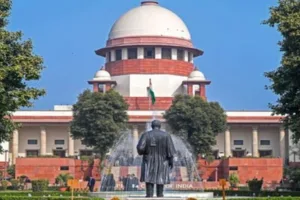
A Bench comprising Chief Justice Surya Kant and Justice Joymalya Bagchi observed that repeated delays in forwarding proposals to the Union Public Service Commission (UPSC) for appointment of full-time DGPs not only violate the directions issued in Prakash Singh v. Union of India but also deprive eligible senior officers of fair consideration.

Parmod Kumar | New Delhi |

The Supreme Court on Thursday came down heavily on the growing practice of state governments appointing “acting” Directors General of Police instead of initiating the process for selecting a regular police chief in accordance with its binding guidelines issued in 2006.

A Bench comprising Chief Justice Surya Kant and Justice Joymalya Bagchi observed that repeated delays in forwarding proposals to the Union Public Service Commission (UPSC) for appointment of full-time DGPs not only violate the directions issued in Prakash Singh v. Union of India but also deprive eligible senior officers of fair consideration.

The Court noted that several States avoid timely compliance with the prescribed procedure and instead continue with interim arrangements by appointing acting DGPs, undermining institutional integrity and merit-based selection.

To address this systemic lapse, the Bench authorised the UPSC to proactively seek timely proposals from State governments whenever vacancies for DGPs arise. It further permitted the Commission to approach the Supreme Court if any State fails to act.

“We authorise the UPSC to write to the States to send timely proposals for recommendations of respective DGPs whenever such occasions arise. When such proposals are not sent, we direct the UPSC to move an application in the Prakash Singh case. It goes without saying that necessary consequences including accountability of the concerned States will be taken up,” the Court ordered.

Under the Supreme Court’s guidelines issued in Prakash Singh case also known as police reform case on September 22, 2006, a State government is required to appoint its DGP from a panel of three senior-most eligible officers shortlisted by the UPSC.

The directions were issued today while hearing an appeal arising from a Telangana High Court order that had directed the UPSC to process a belated proposal sent by the State for appointment of its DGP.

The UPSC objected to the High Court’s direction, pointing out that the previous DGP, Anurag Sharma, retired in 2017, and the State had failed to forward any proposal for nearly eight years. Although Telangana eventually sent a proposal with names of eligible senior ranking IPS officers in April 2025, the Commission declined to act on it, citing the prolonged delay and seeking clarity from the Supreme Court.

The UPSC also submitted that Telangana was not an isolated case and that several States routinely resort to such delay tactics.

Agreeing with the concern, the Supreme Court observed that such inaction had adversely impacted the careers of many senior officers who have since retired without ever being considered for the top post. At the same time, the Bench noted that refusing to process delayed proposals would only end up benefiting defaulting States.

Accordingly, the Court directed the UPSC to proceed with the selection process for Telangana’s DGP, stating “We hold without hesitation that the State should make recommendations for the DGP at the earliest… The zones of consideration will be on the eligibility of officers who fall under such a zone and will be on the basis of inter se merit. Commission is granted four weeks’ time to do the needful,” the Court ordered.


Sabarimala gold theft case: Court grants bail to prime accused Unnikrishnan Potty

Potty was granted bail in the case pertaining to the alleged theft of gold from the door frames of the sanctum sanctorum of the temple after the SIT failed to file its charge sheet within 90 days of his arrest.

Statesman News Service | Thiruvananthapuram |

In a setback to the Special Investigation Team (SIT), probing the Sabarimala gold heist case, the Kollam Vigilance Court on Thursday granted statutory bail to prime accused Unnikrishnan Potty in the second case registered against him.

Potty was granted bail in the case pertaining to the alleged theft of gold from the door frames of the sanctum sanctorum of the temple after the SIT failed to file its charge sheet within 90 days of his arrest. Earlier, the court had granted him bail in the dwarapalaka idols case as well on similar grounds.

Considering the gravity of the offence, the court imposed strict conditions on bail. Potty has been barred from entering Pathanamthitta district, directed to surrender his passport, and restrained from influencing witnesses. He has also been prohibited from leaving the state without permission.

Potty, who has been in custody for months, is released from the Thiruvananthapuram special sub jail on Thursday evening. With this, Potty becomes the fourth accused to secure bail in the case

Ahead of Potty, three of his co-accused had obtained statutory bail. Former Sabarimala administrative officer Murari Babu, former Sabarimala executive officer Sudeesh Kumar, and former administrative officer S Sreekumar had secured bail earlier.

Potty is accused of conspiring to execute the pilferage of gold from Sabarimala artefacts under the pretext of carrying out maintenance works in Chennai.

MCD seals water-polluting jeans dyeing unit in Najafgarh

“As per the directions of Sumit Kumar, Deputy Commissioner, Najafgarh Zone, a team from Najafgarh Zone conducted an inspection in areas under its jurisdiction,” the civic body said in a statement.

Statesman News Service | New Delhi |

The Najafgarh zone of the Municipal Corporation of Delhi (MCD) sealed a water polluting jeans dyeing factory in Issapur ward on Thursday.

“As per the directions of Sumit Kumar, Deputy Commissioner, Najafgarh Zone, a team from Najafgarh Zone conducted an inspection in areas under its jurisdiction,” the civic body said in a statement.

During the inspection, a water-polluting unit — a jeans dyeing factory — was found operating in violation of norms. The unit, having an area of more than 2000 square metres, was located near Radha Krishna Vatika, between Mitraon Village and Surehra Village in Issapur Ward. The unit was found running at the time of inspection.

Accordingly, the said polluting unit was sealed on the spot by the MCD team.

The Deputy Commissioner, Najafgarh Zone, has directed that surveys and inspections are being conducted on a daily basis across the zone. Strict action will be taken against any other polluting units found operating in violation of environmental norms.

Cristiano Ronaldo set to end Saudi Pro League absence, likely to feature against Al-Ittihad

Despite the controversy, Cristiano Ronaldo trained with the squad this week and shared images on social media wearing Al-Nassr colours.

Statesman News Service | New Delhi |

Portugal great and Al-Nassr captain Cristiano Ronaldo is reportedly set to bring an end to his Saudi Pro League absence and return to action against Al-Ittihad in a high-profile clash on Friday, according to a report by Goal.com.

The update comes after the five-time Ballon d’Or winner was left out of the recent derby against Al-Riyadh, amid growing frustration over how transfer funds are being allocated among clubs in Saudi Arabia. Earlier, ESPN had reported that Ronaldo was prepared to sit out a second straight league game, unhappy with the Saudi Public Investment Fund’s (PIF) handling of investment and squad building at Al-Nassr.

Ronaldo did not feature in Al-Nassr’s narrow 1-0 victory over Al-Riyadh on Monday, with sources suggesting his absence was a form of protest against what he perceived as limited backing for his club, while rivals Al-Hilal continued to strengthen aggressively.

According to ESPN, the Portuguese star was particularly displeased by the attempted move involving Karim Benzema, believing that allowing high-profile transfers to benefit Al-Hilal would tilt the title race unfairly in their favour.

Despite the controversy, Ronaldo trained with the squad this week and shared images on social media wearing Al-Nassr colours. However, notably, the club’s official X handle only posted training photos of head coach Jorge Jesus and other players, with Ronaldo absent from those visuals.

Al-Nassr currently sit second in the league standings with 46 points, just one behind leaders Al-Hilal, and will face sixth-placed Al-Ittihad on Friday. Off the pitch, tensions have been simmering at the club, with sporting director Simão Coutinho and CEO José Semedo recently suspended by the PIF, a development that reportedly further angered Ronaldo and slowed down potential signings due to tightened spending.

In contrast, Al-Hilal are believed to have received a significant financial boost from Prince Alwaleed bin Talal Al Saud, one of the club’s key benefactors. Sources told ESPN that several of Al-Hilal’s recent signings, including Benzema, were funded by Alwaleed, who owns 25 per cent of the club, with the remaining stake held by the PIF.

While Ronaldo remains frustrated with the broader situation and is still chasing his first major trophy with Al-Nassr, sources indicate that he has offers from clubs in Europe and the United States. However, the 39-year-old is reluctant to make a move that could disrupt his preparation for the FIFA World Cup.

With the Saudi Pro League keen to retain one of its biggest global icons, Al-Nassr and the PIF have reportedly assured Ronaldo of major investment plans in the upcoming summer window, with Portugal teammate and Manchester United midfielder Bruno Fernandes among the high-profile names being discussed.

Parth Pawar eyes Sharad Pawar’s Rajya Sabha MP seat for a six-year term

According to sources, Parth Pawar is not keen to contest the Rajya Sabha MP seat from which his mother Sunetra Pawar resigned before she was sworn in because this would give him only a “partial” term in the Rajya Sabha.

Statesman News Service | Mumbai |

The late Deputy CM Ajit Pawar’s son Parth Pawar is keen on Sharad Pawar’s Rajya Sabha MP seat, which is likely to become vacant by April 2026, and he is not keen to contest his mother Sunetra Pawar’s Rajya Sabha seat, party sources said.

According to sources, Parth Pawar is not keen to contest the Rajya Sabha MP seat from which his mother Sunetra Pawar resigned before she was sworn in because this would give him only a “partial” term in the Rajya Sabha.

However, Parth Pawar is keen on a “full term” of six years in the Rajya Sabha, and this is possible only if he contests Sharad Pawar’s Rajya Sabha MP seat, whose term will end by April 2026, sources said.

According to sources, Sharad Pawar and the late Ajit Pawar’s sons, Parth Pawar and Jay Pawar, held a long, closed-door meeting at the Vidya Pratishthan premises in Baramati on Wednesday.

The meeting discussed the construction of a memorial for Ajit Pawar, but Parth’s desire to enter the Rajya Sabha ended up becoming the main focus of the discussion, sources said.

Seven Rajya Sabha seats from Maharashtra are due to fall vacant in April 2026. These Rajya Sabha seats include seats held by Sharad Pawar, NCP MP Fauzia Khan, RPI (A) chief Ramdas Athawale, BJP’s Dhairyasheel Patil and Bhagwat Karad, Congress MP Rajni Patil, as well as the Uddhav Thackeray-led Shiv Sena’s Priyanka Chaturvedi.

Of all these seats, Parth is interested in Sharad Pawar’s seat because it could give him a full six-year term as a Rajya Sabha MP, sources said.

However, Rajya Sabha elections in Maharashtra will depend on the strength of parties in the Maharashtra state assembly.

With 288 MLAs and 7 available seats, each candidate will need 37 votes to win the election. According to the current assembly, the BJP has 135 MLAs, the Shiv Sena has 57, and the NCP has 41. This makes it possible for the ruling coalition to win several seats. The Ajit Pawar-led NCP is believed to have a sufficient number of seats to elect an independent candidate, which could strengthen Parth Pawar’s chances, if he receives the support of the party leadership, sources said.

CID quizzes Ajit Pawar’s personal secretary in connection with air crash

The CID team reached Ajit Pawar’s office on the seventh floor of the Mantralaya on Wednesday and questioned Solvat till late evening, and the process is yet to be completed, sources said.

Statesman News Service | Mumbai |

A CID team questioned Ajit Pawar’s personal secretary, Avinash Solvat, for more than four hours at the Mantralaya (state secretariat building) about the January 28 air crash, which killed the late Deputy CM and four others at Baramati airport, sources said on Thursday.

The CID team reached Ajit Pawar’s office on the seventh floor of the Mantralaya on Wednesday and questioned Solvat till late evening, and the process is yet to be completed, sources said.

Solvat is considered one of the most trusted aides of the late Ajit Pawar, since he has been associated with Ajit Pawar for more than 15 years.

According to sources, Solvat was questioned about the late Ajit Pawar’s final travel plans, scheduled on January 28, as well as conversations held a day before the tragic air crash.

Sources said that the CID team also sought details regarding who planned the journey, what the aircraft’s technical condition was, and whether the late Ajit Pawar had noticed or mentioned anything unusual in the days leading up to the tragic air crash.

Leaders of the Uddhav Thackeray-led Shiv Sena and even sections of the Ajit Pawar-led NCP had demanded a high-level and transparent investigation into the tragic air crash.

As reported earlier, Ajit Pawar-led NCP MLA Amol Mitkari has been at the forefront of these demands and had called for the immediate release of CCTV footage of the late Ajit Pawar’s final journey, even before the Directorate General of Civil Aviation (DGCA) black box analysis report was released.

Mitkari had urged the DGCA to officially release all CCTV footage from Mumbai airport, from the main entry gate to the moment the late Ajit Pawar boarded the ill-fated aircraft, dated January 28, 2026, even before the black box analysis report was made public. Mitkari had stated that such transparency is essential to dispel doubts and restore public confidence.

Mitkari had raised several unanswered questions regarding the crash, including discrepancies in the number of casualties, inconsistencies in the passenger list, the absence of burnt documents at the site and frequent changes of pilots before the flight. He also questioned why only five bodies were recovered if six people were reportedly on board.

Uddhav Thackeray-led Shiv Sena Rajya Sabha MP and chief Sena spokesperson Sanjay Raut too had described the tragic air crash as “suspicious” and said that the people of Maharashtra have a right to know how and why Ajit Pawar died. “This was not an ordinary accident. The circumstances surrounding his death raise serious questions,” Raut had told media persons earlier.

India on reform express, ready to compete with the world, says PM

Slams Opposition, says Rahul Gandhi’s ‘mohabbat ki dukan’ spreads hatred; calls Congress anti-Sikh; “Even developed nations are acting against illegal residents, but here pressure is being put on courts,” he says, attacking TMC

VIBHA SHARMA | New Delhi |

Prime Minister Narendra Modi on Thursday said India is signing future-ready trade agreements with developed nations, emerging as a trusted global partner and playing a key role in global welfare. Speaking in the Rajya Sabha during the debate on the Motion of Thanks to the President’s Address, PM Modi said India has become a strong voice of the Global South and is moving towards a new world order.

Referring to global geopolitical changes, PM Modi said a new world order is emerging after the one created following the Second World War. “If one looks objectively and without bias, the tilt is towards India. Today, India is a trusted partner, standing shoulder to shoulder with other nations,” he said.

A day after Congress Members disrupted his reply to the debate in the Lok Sabha, he targeted the party and its government on various issues.
Taking a swipe at Rahul Gandhi’s “mohabbat ki dukan” slogan, the PM said it contained only “anger and hatred” for him. “The Congress cannot digest how Modi reached here. They believe the post of Prime Minister is their birthright,” he added.

He also slammed Gandhi for calling Union Minister Ravneet Bittu a traitor. Modi said, “Yesterday, the Congress called a Sikh MP a traitor. This is an insult to Sikhs and Sikh gurus. It reflects the Congress’s hatred towards the Sikh community.”
Referring to an incident in which women Congress MPs allegedly tried to block his seat, leading to the deferment of his reply, the PM said the episode was “extremely painful,” and “an insult to the President, the Constitution, tribal communities, and women.”

He also took on Congress’ prime ministers Jawahar Lal Nehru and Indira Gandhi, claiming that for them India’s population was a liability and accused the Nehru-Gandhi family of “stealing” the name of a Gujarati-Mahatma Gandhi.
“The BJP-NDA has a different approach of looking for solutions to problems…We believe that 140 crore citizens are our strength, they think it is a liability.”

“Indira ji once went to Iran where in her speech she mentioned her conversation with Nehru ji. She said, when asked how many problems he had, my father once replied ‘35 crore’, which was our population at that time. Now the population is 57 crore, so that is the dimension of my problems….35 crore people felt like a problem to Nehruji. Can there be a leader like that? Can someone be like this to consider their own citizens a problem? We believe 140 crore Indians are our greatest strength,” he said.

He accused the Congress, DMK, and the Left of prioritising personal gain while in power and the TMC of putting pressure on courts to “help infiltrators”. “Colleagues from TMC said a lot of things. They should look within themselves…But they are lecturing us here. Even prosperous nations are driving out illegal residents from their country, but in our country, pressure is being put on the courts.”

Amid sloganeering and a walkout by Opposition members, the Prime Minister highlighted India’s growing global economic stature. He said India is signing trade agreements with major economies, and the country is now seen as a reliable partner. “Developed nations were keen to deepen economic engagement with India. After our trade deals with the EU and the US, the world felt a sense of stability and speed. These are major opportunities for our youth,” he said.

The Prime Minister said it had taken years of effort to shed the negative image created by previous governments. “That is why we focused on future-ready policies. Today, governance is driven by policy and strategy. Guided by the mantra of ‘reform, perform, transform,’ the nation has boarded the Reform Express,” he said.

Highlighting economic reforms, he said the banking sector, once burdened by mounting non-performing assets (NPAs), has now reached historic lows. “Public sector undertakings that Congress pushed towards closure are now delivering record performance,” he said.

On agriculture, Modi said previous governments ignored small farmers. “There are nearly 10 crore farmers with less than two hectares of land. Through PM-Kisan Samman Nidhi, nearly Rs 4 lakh crore has been transferred directly to small farmers, giving them new strength and confidence,” he added.

Tata Motors PV reports net loss of Rs 3,486 crore in Q3FY26

The impact of the total exceptional cost due to the cyber incident at JLR was to the tune of Rs 800 crore, while Rs 400 crore was due to the new labour code implementation and another Rs 400 crore was due to stamp duty charges.

Statesman News Service | Mumbai |

Tata Motors Passenger Vehicles (Tata Motors PV) officially announced on Thursday that it has posted a consolidated net loss of Rs 3,486 crore in Q3FY26, due to the impact of a cyber incident at its luxury vehicle unit Jaguar Land Rover (JLR), which severely hampered the company’s global wholesale volumes. The company had posted a consolidated net profit of Rs 5,485 crore in the same quarter last year.

The impact of the total exceptional cost due to the cyber incident at JLR was to the tune of Rs 800 crore, while Rs 400 crore was due to the new labour code implementation and another Rs 400 crore was due to stamp duty charges. These one-time expenses added pressure on the company’s profitability.

The consolidated revenue from operations for the quarter stood at Rs 70,108 crore for the third quarter ended December 31, 2025 a decline of 25.8 per cent compared to Rs 94,472 crore in the corresponding period last year.

The company’s EBITDA plummeted to Rs 1,518 crore from Rs 12,663 crore in the year-ago period, due to which the EBITDA margin shrank to 2.2% as against 13.4% in Q3FY25.

Jaguar Land Rover (JLR) revenue touched £4.5 billion (in British pound terms), which is a decline of 39.4% year-on-year (YoY). JLR’s performance was impacted by the cyber incident, which disrupted production and distribution, alongside a planned wind-down of legacy Jaguar models and softer market conditions in China, the company said in its exchange filing.

The company said its domestic passenger vehicle business improved on a quarter-on-quarter basis due to higher vehicle sales volumes and better incentive support during the quarter.

While global operations faced pressure due to the cyber incident, the domestic market showed signs of recovery. The company will likely focus on stabilising global operations and strengthening domestic demand going forward.

“Overall, it was a challenging quarter as anticipated on account of the carryover impact of the cyber incident at JLR. We expect performance to significantly improve in Q4 with recovery at JLR and continuing growth in domestic market share,” Tata Motors PV Chief Financial Officer Dhiman Gupta said.

“In Q3FY26, we recorded our highest-ever quarterly wholesales at 171k units driven by strong demand tailwinds from GST 2.0 and a robust festive season,” Managing Director & CEO Tata Motors PV Shailesh Chandra said.

SC lifts ban on Anurag Thakur to associate with BCCI

A Bench comprising Chief Justice Surya Kant and Justice Joymalya Bagchi observed that the earlier order had to be understood in its proper context and was limited to the circumstances prevailing at that time.

Parmod Kumar | New Delhi |

The Supreme Court on Thursday lifted the bar on BJP leader Anurag Singh Thakur from associating with the Board of Control for Cricket in India (BCCI), clarifying that its 2017 direction asking the former BCCI president to “cease and desist” from the board’s functioning was never intended to operate as a permanent or lifelong disqualification.

A Bench comprising Chief Justice Surya Kant and Justice Joymalya Bagchi observed that the earlier order had to be understood in its proper context and was limited to the circumstances prevailing at that time. The clarification effectively removes the impediment to Thakur’s engagement with the BCCI, subject to the body’s rules and regulations.

In its order dated January 2, 2017, the Supreme Court had removed Thakur from the post of BCCI president and directed, “Shri Anurag Thakur, President of BCCI and Shri Ajay Shirke, Secretary, BCCI shall forthwith cease and desist from being associated with the working of BCCI.”

That direction was issued in the backdrop of proceedings relating to the implementation of the Lodha Committee reforms aimed at restructuring the governance and functioning of the BCCI. The Court had also initiated contempt and perjury proceedings against Thakur for allegedly making false statements on affidavit and obstructing the implementation of the Court’s orders.

Although the contempt proceedings were subsequently dropped, Thakur continued to remain under the cloud of the 2017 direction, which was interpreted as preventing him from any future association with the BCCI.

Clarifying the scope of that order, the Bench on Thursday held that the direction was never meant to impose a continuing or indefinite ban.

The 2017 action against Thakur stemmed from his communication with the International Cricket Council (ICC), wherein he had sought a statement suggesting that the reforms ordered by the Supreme Court amounted to “governmental interference” in the affairs of the BCCI.

At the time, the Court had taken a serious view of this conduct, observing: “Such a solicitation was but an effort to thwart the implementation of the orders of the court. An attempt was made to build up a record to indicate that implementing the orders of the Supreme Court of India would run the risk of endangering the status of BCCI as a member of ICC.”

On that basis, the Court had concluded that Thakur’s actions rendered him unfit to continue as BCCI president and had ordered his removal.

With Thursday’s clarification, the Supreme Court has now made it clear that the 2017 direction cannot be read as a permanent embargo, thereby paving the way for Thakur to associate with the BCCI in accordance with its governing framework.

ICANN85 in Mumbai: strengthening the single, interoperable internet for all

With its more than one billion Internet users and a thriving digital economy, India is an ideal location for participants from around the world to gather at the ICANN85 Community Forum to advance the technical work that ensures the secure and stable operation of the Internet.

Statesman News Service | New Delhi |

The Internet Corporation for Assigned Names and Numbers (ICANN) will convene its 85th Public Meeting in Mumbai from 7–12 March 2026, hosted by the National Internet Exchange of India (NIXI). With its more than one billion Internet users and a thriving digital economy, India is an ideal location for participants from around the world to gather at the ICANN85 Community Forum to advance the technical work that ensures the secure and stable operation of the Internet.

“Ten years after the ICANN Public Meeting in Hyderabad, the ICANN85 Community Forum in Mumbai offers the Indian Internet community an excellent opportunity to attend and participate in the global dialogue on important Internet governance issues,” said Samiran Gupta, ICANN Vice President for Stakeholder Engagement and Managing Director for the Asia Pacific region. “I want to thank our host NIXI for bringing ICANN85 to Mumbai and I look forward to a fruitful meeting.”

S Shri S. Krishnan, IAS Secretary, Ministry of Electronics and Information Technology (MeitY) “India’s digital transformation is anchored in an open, secure, inclusive and resilient Internet. Hosting ICANN85 reflects India’s commitment to the multistakeholder model of Internet governance and to advancing policy frameworks that support innovation, inclusion, and trust in the global Internet ecosystem.”

Key Topics at ICANN85: The New gTLD Program, ICANN Community’s Role in Advancing a Multilingual Internet, and the Multistakeholder Model

ICANN85 takes place at a pivotal moment – just before the launch of the New gTLD Program in April. The program, the next expansion of the Domain Name System, helps to evolve the global digital landscape.Generic top-level domains (gTLDs) are the extensions that appear after a website name—such as .travel, .company, .bank —and the New gTLD Program allows organizations to create customized domain endings like .brand, .city to better reflect their identity and audience. It provides businesses, communities, governments, and other organizations the rare opportunity to apply for new top-level domains tailored to fit their organization, community, culture, language, and customer interests. The meeting will include important updates about the New gTLD Program.

The New gTLD Program advances ICANN’s 2030 vision as the trusted steward of the Internet’s unique identifier systems to strengthen the single, globally interoperable Internet for all. This truly multilingual Internet enables people globally to use the Internet in their own languages and scripts, which matches the Indian government’s approach towards expanding Internet usage. The cultural and economic benefits of a multilingual Internet are clear. It will serve India’s local language communities as well as the needs of language communities around the world. It will also provide a unique business opportunity for India’s information technology sector.

With its cultural and linguistic diversity, India can be the torchbearer for the rest of the world, not just for enabling the next billion users to get online, but also for native speakers to use the Internet in their native script.

ICANN85 is the first ICANN Public Meeting since the United Nations General Assembly adopted the WSIS+20 Outcomes Document on 17 December 2025. The World Summit on the Information Society: 20-year review (WSIS+20) reaffirmed that the Internet is a shared global resource whose stability, openness, and interoperability depend on the multistakeholder model approach, a position strongly supported by ICANN and the government of India.

The WSIS+20 marked a reaffirmation rather than an end point, demonstrating the need to continue the work of the multistakeholder model, bringing new voices and expertise into the Internet governance ecosystem, strengthening knowledge transfer and capacity building, and sustaining engagement through forums like ICANN Public Meetings.

ICANN Community Excellence Award

Continuing its tradition of recognizing outstanding community member contributions, the ICANN Community Excellence Award will be presented at the Welcome Ceremony (9 March 2026). This award recognizes ICANN community members who have deeply invested in consensus-based solutions and contributed substantively to the ICANN multistakeholder model.

Registration

In-person registration remains open until 6 March 2026. On-site registration is not available. Attendance is free and open to all. For more information, and to register, please visit the meeting website.

About ICANN

ICANN’s mission is to help ensure a stable, secure, and unified global Internet. To reach another person on the Internet, you need to type an address – a name or a number – into your computer or other device. That address must be unique, so computers know where to find each other. ICANN helps coordinate and support these unique identifiers across the world. ICANN was formed in 1998 as a nonprofit public benefit corporation with a community of participants from all over the world.

About NIXI

The National Internet Exchange of India (NIXI) is a not-for-profit organization set up under the aegis of the Ministry of Electronics and Information Technology (MeitY), Government of India. NIXI plays a critical role in strengthening India’s Internet infrastructure by facilitating efficient exchange of domestic Internet traffic, managing the .INand .भारत(.Bharat) country-code top-level domains, and promoting adoption of Internet services across the country. Through its initiatives, NIXI supports a secure, resilient, and inclusive Internet ecosystem aligned with India’s digital growth ambitions.

Uddhav led Sena to field strong candidates for mayor of Mumbai, deputy mayor posts

As per the lottery system, the post of the Mayor of Mumbai has been reserved for women of the general category.

Statesman News Service | Mumbai |

The Uddhav Thackeray-led Shiv Sena will field candidates for the posts of Mayor of Mumbai and Deputy Mayor, party sources said here on Thursday.

As per the lottery system, the post of the Mayor of Mumbai has been reserved for women of the general category. Accordingly, preparations have begun to field candidates for the posts of Mumbai Mayor and Deputy Mayor despite the Uddhav Thackeray-led Shiv Sena not having the required number of corporators.

Party sources said that Shiv Sena chief Uddhav Thackeray is keen to ensure that the BJP faces a tough contest for both posts. He has summoned Kishori Pednekar, who is Uddhav-led Shiv Sena’s group leader in the Brihanmumbai Municipal Corporation (BMC), to his ‘Matoshree’ residence along with other Sena corporators. Detailed discussions are underway to decide the Sena strategy, sources said.

The Uddhav-led Shiv Sena will file applications for the posts of Mumbai Mayor and Deputy Mayor on February 7, sources said.

The Mumbai mayor will be named on February 11, and a special meeting has been organised on February 11 at 12 noon. The time to withdraw applications for the post of Mumbai mayor will be 15 minutes before corporators assemble at the BMC.

There is a strong possibility that the mayor of Mumbai will be from the BJP in the Mahayuti, since it has the largest number of corporators in the BMC, though it is still short of a majority of 114 wards. If the BMC gets a BJP mayor, it will most probably be Tejasvee Ghosalkar, whose name has been discussed.

After the reservation is announced, the names of some more women from the Mahayuti will also come to the fore for the post of mayor. In the Mumbai Municipal Corporation elections, Ward No. 2 was reserved for general women. Tejasvee Ghosalkar contested against Dhanashree Kolge of the Shiv Sena Thackeray group from Ward No. 2. Tejasvee Ghosalkar won this contest with a huge majority from the BJP. (Mumbai Municipal Corporation Reservation 2026)

However, sources said that Shiv Sena chief Uddhav Thackeray is keen to ensure that the BJP does not get another opportunity to elect any mayor “unopposed” to the BMC, as it happened in several municipal corporations.

The BJP-led Mahayuti has a majority in the BMC, but this time, Uddhav Thackeray is determined to put up strong candidates for the posts of Mumbai Mayor and Deputy Mayor of the BMC, sources said.

Incidentally, the ruling Mahayuti alliance comprising the BJP, the Eknath Shinde-led Shiv Sena and RPI (Athawale) won the BMC elections, but the willing Mahayuti alliance still lacks four seats to touch the majority 114 mark.

The BJP won the maximum number of 89 corporators, while 29 wards were won by corporators of the Eknath Shinde-led Shiv Sena. However, the Uddhav Thackeray-led Shiv Sena has secured the second position by winning 65 wards in the BMC.

Yet, the Uddhav Thackray-led MNS and Uddhav-led Sena alliance do not have the required majority for the mayor’s post. Even if all opposition parties come together, they still cannot reach the majority of 114.

Lawyer challenges legality of Sunetra Pawar’s Deputy CM post

In his letter to the Maharashtra Governor, the lawyer has also stated that the very post of a Deputy Chief Minister is “unconstitutional” since such a post has not been mentioned anywhere in the Constitution of India, due to which the swearing-in ceremony was “illegal”.

Statesman News Service | Mumbai |

A Wardha-based lawyer has written a letter to Maharashtra Governor Acharya Devvrat claiming that Deputy CM Sunetra Pawar’s oath-taking ceremony is “illegal”, according to official sources.

Lawyer Harshvardhan Shobha Babarao Godghate has argued that the swearing-in ceremony itself was “illegal” since Deputy CM Sunetra Pawar was neither an elected Member of the Maharashtra Legislative Assembly (MLA) nor a Member of the Legislative Council (MLC) nor a Maharashtra cabinet minister when the oath was administered to her.

In his letter to the Maharashtra Governor, the lawyer has also stated that the very post of a Deputy Chief Minister is “unconstitutional” since such a post has not been mentioned anywhere in the Constitution of India, due to which the swearing-in ceremony was “illegal”.

In a related development, anti-corruption activist and lawyer Anjali Damania has also raised objections to Sunetra Pawar being sworn in as Deputy CM, saying that she should take an oath as a minister first.

However, Sunil Tatkare, who is the president of the Ajit Pawar-led NCP, defended the swearing-in ceremony of Deputy CM Sunetra Pawar.

“We have the political sense to verify technical matters. We have that much knowledge because we have been in politics for many years. We know who can take the oath, and how long a person can remain in office even if he is not a member. We have the example of Ajit Pawar in 1991, and there is the example of Sharad Pawar himself,” Sunil Tatkare said.

Meanwhile, sources said that moves are on inside the Ajit Pawar-led NCP to elect Deputy CM Sunetra Pawar unopposed as the National President of the Ajit Pawar-led NCP before March 2026.

The party has issued a letter stating that Sunetra Pawar will be elected unopposed as the President of the Nationalist Congress Party with the consent of the party’s state office bearers and its national executive office bearers.

After the death of the late Deputy Chief Minister Ajit Pawar, his wife, Sunetra Pawar, took the oath of office as Deputy Chief Minister on January 31.

According to Ajit Pawar-led NCP sources, all future decisions will be taken by Deputy CM Sunetra Pawar and other NCP leaders. It is also learnt that Sunetra Pawar will go to Delhi to meet Prime Minister Narendra Modi and Union Home Minister Amit Shah in a few days.

More than 30 top office bearers of the Ajit Pawar-led NCP have demanded that Deputy Chief Minister Sunetra Pawar be made the president of the party, and they have sent a letter to party president Sunil Tatkare and senior NCP leader Praful Patel.

AP forms one-member committee on laddu prasadam

Chief Minister N Chandrababu Naidu said that none of the reports have given a clean chit to YSRCP in the matter and warned that intimidation and rowdyism would not succeed and strict punishment would be meted out to the guilty.

Statesman News Service | Hyderabad |

The Andhra Pradesh government has formed a one-man committee to conduct a comprehensive examination of the Central Bureau of Investigation’s (CBI) led SIT report into the adulterated laddu prasadam of Tirupati to identify lapses and fix responsibility.

At the end of a meeting between NDA allies, JSP and BJP at his camp office, Chief Minister N Chandrababu Naidu said that none of the reports have given a clean chit to YSRCP in the matter and warned that intimidation and rowdyism would not succeed and strict punishment would be meted out to the guilty.

Ever since the CBI filed a charge sheet in the court, the state has been on the boil. YSRCP leaders claimed that the CBI had given a clean chit to the previous regime since there was no animal fat in the laddus, as alleged by Naidu. This had triggered political clashes between the TDP and the YSRCP, with the supporters of the former attacking the houses of two former ministers, alleging that they had spoken ill of Naidu and IT minister Nara Lokesh. The arrest of YSRCP leader Ambati Rambabu also triggered an undercurrent of caste rivalry between Kapus and Kammas, particularly since the TDP is associated with the latter caste group. Deputy Chief Minister and JSP leader Pawan Kalyan, a Kapu, has been doing some tightrope walking. In the backdrop of these claims and counterclaims, the three NDA allies met at the camp office and put up a united front on the issue.

Chief Minister N Chandrababu Naidu referred to the SIT and laboratory reports and stated that the ghee used in the laddus was prepared using chemicals, palm oil and other adulterants. He alleged that lakhs of devotees were given the adulterated laddus in the five years of YSRCP rule. Rejecting the claims of a clean chit, the Chief Minister clarified that the CBI report does not certify anywhere that there was no adulteration and said the accused are spreading false narratives and launching counterattacks to divert attention. He said the committee was being formed after CBI submitted a report to the government and recommended action.

Deputy Chief Minister Pawan Kalyan said the government speaks with responsibility and caution on sensitive issues of faith. “No report has given a clean chit so far. Allegations involving animal fat are extremely sensitive and cannot be spoken lightly,“ he said.

He added that the government had made statements only after examining the evidence found in the NDDB CALF test report. BJP state president PVN Madhav criticised the YSRCP and said, “Preparing laddus with chemically processed and adulterated ghee is dangerous. It hurts the sentiments of devotees and plays with public health.” He said the NDA government in the state was committed to restoring transparency and sanctity in temple administration.

Meghalaya coal mine explosion: Death toll rises to 18, rescue ops underway, CM orders inquiry into illegal mining

At least sixteen people killed and one injured after an explosion occurred at a rat-hole coal mine in the Thangsku area in East Jaintia Hills district of Meghalaya.

Statesman News Service | New Delhi |

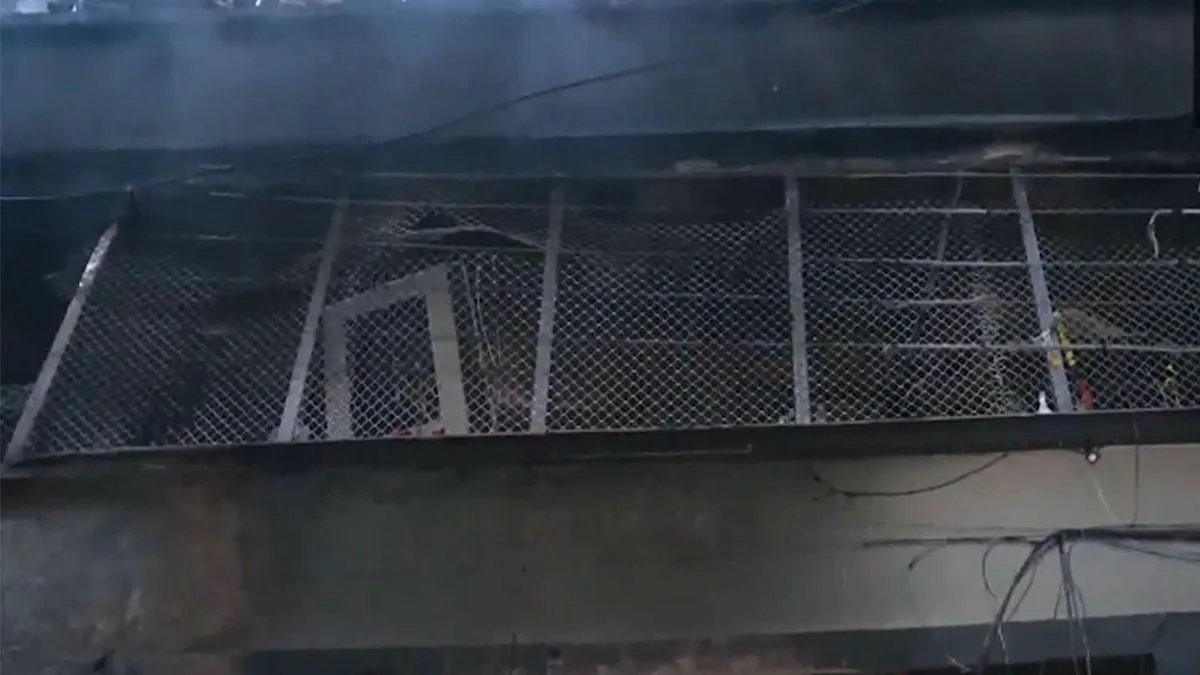
At least eighteen people lost their lives and one got injured after an explosion occurred today at around 11 am at a rat-hole coal mine in the Thangsku area in East Jaintia Hills district of Meghalaya. Also, several labourers are feared trapped inside the coal mine following the explosion.

The injured labourer has sustained critical injuries. He was initially admitted at the Sutnga Primary Health Centre, but later was shifted to Shillong for advanced medical treatment. However, his condition continues to remain critical, as per the hospital sources.

Rescue ops underway

Rescue teams, including that of State Disaster Response Force (SDRF), police and local administration have reached the spot and carrying out search and rescue operations.

Superintendent of Police of East Jaintia Hills, Vikash Kumar has confirmed the explosion occured today morning and said immediate steps were taken, and assistance from the SDRF was sought to carry out rescue operations.

Also, three teams of the National Disaster Response Force (NDRF) rsuhed to the explosion site to pace up the rescue operations.

Was the mine illegal?

According to the preliminary investigations, the coal mine was operating illegally. It was violating the existing safety norms and the long-standing ban on rat-hole coal mining in the region.

However, the exact cause of the exploasion has not been confirmed by the authrities as of now. Investigation is underway to identify the reason as well as those responsible for the illegal operation of the mine.

Meanwhile, media reports suggest that the use of high-intensity dynamite for mining operations led to the explosion. Notably, the explosion triggered collapse of adjoining mine shafts and quarry structures, which further intensified the damage.

Govt orders comprehensive inquiry

Meghalaya CM Conrad Sangma has expressed grief over the loss of lives in the explosion. He tweeted: “Profoundly saddened by the tragic coal mine incident in East Jaintia Hills. My deepest sympathies are with the families who have lost their loved ones in this unfortunate tragedy.”

The Government of Meghalaya has ordered a comprehensive inquiry into the incident.

CM Sangma affirmed that strict action will be taken against individuals who are involved in any kind of illegal activities. He said, “Whoever is responsible for this particular incident, very strict action will be taken. We will not let anybody who is involved in this, let go. But at the same time, with the start of scientific mining, it is expected that all miners will apply for the mining. Now, there is an option. These are things that cannot be tolerated anymore…We are waiting for further report that comes in, based on that I will be in regular touch with the press…”
<

PM Modi announces ex-gratia of Rs. 2 lakh

Prime Minister Narendra Modi also conveyed his condolences to the families of the deceased and announced ex-gratia of ₹2 lakh from the Prime Minister’s National Relief Fund (PMNRF). The injured would be given Rs. 50,000.

In a message posted on social media platform X, the Prime Minister said, “Pained by the mishap in East Jaintia Hills, Meghalaya. Condolences to those who lost their loved ones. May the injured recover at the earliest.”

‘Vote Jihad’: Minister Ravindra Jaiswal alleges 9,200 duplicate names in Varanasi

He claimed that when his party workers meticulously examined the voter list in his North Assembly constituency, they found the names of approximately 9,200 people registered more than once (two, three, four, or even more times).

Statesman News Service | Varanasi |

During the Special Intensive Revision (SIR) process of the voter list in Uttar Pradesh, Minister of State for Stamp and Court Registration Fees (Independent Charge) Ravindra Jaiswal leveled a serious allegation of ‘vote jihad’ on Thursday.

He claimed that when his party workers meticulously examined the voter list in his North Assembly constituency, they found the names of approximately 9,200 people registered more than once (two, three, four, or even more times). He alleged that most of these names belonged to a particular community.

He met with District Magistrate Satyendra Kumar to file a complaint and submitted the relevant list.

The minister said, “After the new voter list was released, our workers went door-to-door for verification. We have all the data as proof — both on pen drives and in hard copy. The names of several girls were found to be registered at both their parental and marital homes. This is all a game played by Rahul Gandhi’s party.”

He further added, “I have handed over the list of these 9,200 names to the District Magistrate. These should be verified. My constituency has one lakh ten thousand votes, and despite that, such a major irregularity has come to light. The Booth Level Officer (BLO) also found that the names of a father’s four daughters were registered at both their parental and marital homes. The workers have verified this by visiting both locations. We have been working on this issue for a month. A detailed report has been prepared showing how many names appeared two, three, four, or five times at various booths.”

Calling it ‘vote jihad’, Ravindra Jaiswal said, “The Opposition has deliberately orchestrated this. It is a conspiracy to prevent nationalism by casting votes two or three times. This is a jihad of voting.”

District Magistrate Satyendra Kumar stated that BJP MLA and Minister Ravindra Jaiswal has raised some objections regarding the new voter list. The issue of duplicate names at different booths has come to light. He said, “An investigation is being conducted. Only after the investigation will it be possible to comment clearly on the entire matter. Appropriate action will be taken.”


UP villages go High-Tech: 75 kms of roads built from plastic waste

In the Lucknow, Rampur, Amethi, Lalitpur, and Etah districts, 75 km of roads have been constructed using plastic waste, presenting a new model of development along with environmental protection.

Statesman News Service | Lucknow |

Villages in Uttar Pradesh are now forging a new identity of cleanliness and innovation. New experiments such as road construction from plastic waste, door-to-door waste collection, and compost production for income generation, have transformed the rural landscape of the state, making it high-tech.

In the Lucknow, Rampur, Amethi, Lalitpur, and Etah districts, 75 km of roads have been constructed using plastic waste, presenting a new model of development along with environmental protection.

Amit Kumar Singh, Director of the Panchayati Raj Department, said that a master plan for waste management has been prepared in Uttar Pradesh on the instructions of Chief Minister Yogi Adityanath. Under this plan, door-to-door waste collection has been started in Gram Panchayats, and vermicompost is being produced. This initiative has generated an income of over Rs 3 crore so far. An additional Rs 29 lakh has been earned from plastic waste management units. Under this scheme, the Panchayati Raj Department is working on the ‘Waste to Wealth’ model in the state.

Under the Swachh Gaon Maha Abhiyan (Clean Village Mega Campaign) run by the Panchayati Raj Department, waste is being transformed into resources. These experiments of utilising plastic waste for road construction, producing compost from organic waste, and increasing the income of Panchayats are proving to be a milestone in making every village in the state clean, self-reliant, and empowered. Through this scheme, innovative experiments will be conducted in every village of the state.

According to Amit Kumar Singh, the department is committed to strengthening Gram Panchayats (village councils) through innovation. The village-level sanitation campaign, coupled with the utilisation of plastic waste, is not only protecting the environment but also generating crores of rupees in revenue.

UP expands Lalitpur Pharma Park, Medical Device & Formulation Park near Noida Airport

The conclave highlighted Uttar Pradesh’s emergence as a business-friendly and investment-ready hub for pharmaceutical manufacturing and healthcare innovation—driven by strong governance, improved law and order, and progressive policy support.

Statesman News Service | Lucknow |

Acting on the suggestions received during the Pharma Conclave 1.0 early this week, the Uttar Pradesh government, in order to utilise land in Lalitpur in addition to Noida for bulk drug manufacturing units of the red and orange categories, is accelerating the development of a future-ready pharma ecosystem through UPSIDA’s Lalitpur Pharma Park.

The conclave highlighted Uttar Pradesh’s emergence as a business-friendly and investment-ready hub for pharmaceutical manufacturing and healthcare innovation—driven by strong governance, improved law and order, and progressive policy support.

According to officials here on Thursday, Phase I spans 352.91 acres, dedicated to formulation units, bulk drugs, and common infrastructure, while Phase II, covering 1,465 acres, is under development, for which an Expression of Interest (EOI) has been floated. Backed by an overall land bank of nearly 8,000 acres, Uttar Pradesh is strategically positioning itself as a leading destination for pharma investments.

Strengthening this ecosystem further, the Yamuna Expressway Industrial Development Authority is developing a 350-acre Medical Device Park in Sector-28, equipped with advanced testing laboratories and an ASCA certification facility to reduce dependence on overseas testing. Additionally, a 250-acre Pharma Formulation Park is planned in Sector 7 near the Noida International Airport, reinforcing Uttar Pradesh’s potential to emerge as North India’s key healthcare manufacturing hub with strong export connectivity.

Officials said a major highlight of Pharma Conclave 1.0 was the announcement of an investment intent of nearly Rs 10,000 crore, along with the exchange of 11 Memorandums of Understanding (MoUs) in pharmaceuticals and medical devices. These proposals are expected to significantly enhance manufacturing capacity, generate employment, and strengthen healthcare supply chains—accelerating the overall growth of the State’s pharma sector.

Pharma Conclave 1.0 strongly underscored the importance of building a resilient research and innovation backbone. Leading scientists and institutional representatives—including Dr Radha Rangarajan (CDRI), Prof Shubhini A. Saraf (NIPER Raebareli), Dr Neelima Mishra (National Institute of Biologicals), and Dr Seema Pai (ISCR)—shared valuable insights on strengthening scientific capabilities in the State.

The conclave saw strong participation from leading pharma companies, highlighting interest in expanding operations in Uttar Pradesh. Stakeholders discussed growth, investments, and partnerships, reaffirming the State as a preferred destination. Infrastructure emerged as key, with leaders stressing plug-and-play facilities, ready land, and compliance-ready spaces to fast-track projects and boost competitiveness.

The conclave also highlighted the critical role of policy support and regulatory facilitation in shaping the State’s pharma growth trajectory.