Logo

Bangladesh: Five injured, including child, in firing during election campaign

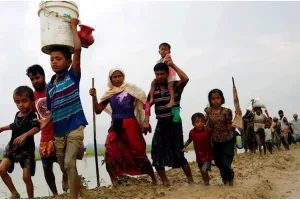
Five people, including a child, were injured after unidentified assailants opened fire during an election campaign in the Ali Khali Rohingya camp area of Teknaf upazila in Bangladesh’s Cox’s Bazar, local media reported on Friday.

IANS | New Delhi |

Five people, including a child, were injured after unidentified assailants opened fire during an election campaign in the Ali Khali Rohingya camp area of Teknaf upazila in Bangladesh’s Cox’s Bazar, local media reported on Friday.

The incident took place in Block A/04 of Camp-25 at the Ali Khali Rohingya camp on Thursday at around 8:30 pm (local time). Teknaf Model police station Officer-in-Charge (OC) Mohammad Saiful Islam confirmed the incident, Bangladesh’s leading daily Dhaka Tribune reported.

The injured included two Rohingyas and three Bangladeshi nationals. According to witnesses, an election campaign was being held on a truck for the sheaf of a paddy symbol in the Ali Khali area on Thursday night. A group of people opened fire on the truck when a number of people had gathered near the vehicle, leaving five people injured.

Ahead of the elections set to be held on February 12, political violence in Bangladesh continues to rise sharply as casualties in January increased significantly in comparison to December 2025, local media reported citing a Dhaka-based human rights organisation.

In its latest findings, the rights group ‘Ain o Salish Kendra’ (ASK) recorded a surge in political violence in January, with 75 incidents causing 616 injuries and 11 deaths. This marked a sharp rise compared to 18 incidents in December 2025, which left 268 people injured and four dead, Bangladesh’s another leading daily The Daily Star reported.

The findings indicated that clashes intensified following the announcement of the election schedule and the start of campaigning on January 22.

ASK reported that four people were killed while 414 others injured in 49 clashes between January 21-31, highlighting a clear upward trend as polling day draws near.

The rights group documented that journalists have also been targetted amid the rising political violence, with 11 journalists facing obstruction or assault while on duty in December last year — a number that increased to 16 in January.

Expressing concern over the rising violence, the rights body urged political parties to exercise restraint and maintain peace during the campaign. It also called on law enforcement agencies to safeguard citizens and uphold their constitutional rights.

Pariksha Pe Charcha 2026: PM Modi talks learning beyond marks, curiosity over cramming

At Pariksha Pe Charcha 2026, PM Modi encouraged curiosity-driven learning, balanced skill development and a stress-free approach to exams.

Hiya | New Delhi |

New Delhi, February 6, 2026: Prime Minister Narendra Modi today led the 9th edition of Pariksha Pe Charcha (PPC), India’s annual flagship student outreach, addressing students, parents and teachers nationwide with practical advice on exams, mental well-being, skills and future readiness.

The event, telecast live from multiple centres including Delhi, reached millions across schools, television and online platforms.


View this post on Instagram


A post shared by Narendra Modi (@narendramodi)

Event Kick-Off and Participation Trends

The programme began promptly at 10 am IST, marking an unprecedented participation of over 4.5 crore students, parents and teachers, surpassing last year’s Guinness World Record for civic engagement.


View this post on Instagram


A post shared by Narendra Modi (@narendramodi)

Unlike previous editions, PPC 2026 was conducted simultaneously across five locations — Delhi, Devmogra (Gujarat), Coimbatore (Tamil Nadu), Raipur (Chhattisgarh) and Guwahati (Assam) showcasing a truly pan-India outreach.

Chapter 1: Your Style, Your Pace

A student asked, “Different study patterns often confuse us. How should we manage this confusion?”
He said: trust your own pattern. He shared his own experience of how he started Pariksha Pe Charcha with his own approach. He said, “I had one pattern, and I am improving it over time. I did it in different states this time. I changed my pattern through improvement, but I did not leave my core pattern.”

PM’s Mantra: Listen to everyone’s advice, but change your pattern only when you want to.

Another question asked was, “If a teacher teaches very fast and we fall behind, how should we handle it?”
He said teachers should inform students a few days in advance about what they will be teaching and on which dates. This makes it easier for students to focus and understand topics. He said, “Teacher se ek kadam aage chale.”

Some tips for school teachers:

  1. Give the schedule of topics in advance.
  2.  Ask students to prepare beforehand.

PM’s Mantra: For teachers, informing students in advance creates curiosity and improves understanding.

Chapter 2: A Musical Moment with PM Modi

Shreya from Sikkim shared about a self-composed song written in three languages—Hindi, Nepali, and Bengali. It is about desh bhakti (patriotism) and titled Hamara Bharat Bhumi. She sang the song. Another student, Mansi, also sang a song written by her mother, dedicated to students.

PM Modi welcomed the students with an Assamese gamosa. He shared the meaning behind giving the gamosa, linking it to Assamese and North-East women and their empowerment.

He explained how it is made at home and how this tradition turns into livelihood and self-reliance, giving a sense of pride and respect. This is why he chose to give them to the children.

Chapter 3: Preparation with Purpose

One student asked, “With the growing focus on skills, what should students value more: skills or marks?”
He explained that some say eating is important, some say playing is important, and some say studying is important—but the answer lies in balance.

He spoke about two types of skills: life skills and professional skills. He emphasized that without studying, observing, and gaining knowledge, skills cannot develop. Everything begins with knowledge. He added that professional skills and life skills go hand in hand and are like twins.

PM’s Mantra: Balance studies, rest, skills, and hobbies—that’s the key to growth.

Some Life Skills:

  1. Maintain a disciplined lifestyle
  2. Stay healthy—exercise regularly
  3. Develop strong communication skills

PM’s Mantra: Books impart knowledge, but only practice makes you professionally skilled.

Another question asked was, “How can students balance subject improvement with the pressure to score well in pre-boards?”

He shared that students who score well often get their pictures in newspapers, but after some time, they are hardly remembered. That is why, instead of connecting our minds only with marks, we should reflect on where our life has reached.

Another question was asked: “We study a lot but forget quickly. How do we remember for the long run?” He said the more involved you are in the moment, the longer you remember it.

Chapter 4: Less Pressure, More Learning

A student from Punjab asked, “Competitive exams add pressure during board exams. How do we balance both when the exam patterns are so different?”

He replied that the concern is valid, and the priority should be Class 12. If students have studied their school curriculum well, competitive exams will not be very difficult, as school studies build a strong foundation.

PM’s Mantra: Strengthen your foundation in school; competitive exams will follow in time.

Chapter 5: Balancing Marks, Games & Laughter

Someone asked, “How do I balance studies with hobbies like gaming? If I want to pursue gaming seriously, how do I know I’m heading in the right direction?”

He spoke about using technology wisely, creating social media profiles, and using them as opportunities. He said gaming is a skill and advised students to identify quality games and develop expertise in them.

Overcoming fears & finding solutions

There was a segment where students, after reading books, wrote quotes on the blackboard using colourful chalks, expressing their feelings and pride in overcoming exam tension with the help of books.

Some quotes were:

  1. “I used to be scared of exams; now it is my friend.”
  2. “My techniques are mine, and they work for me.”
  3. “I was scared of time management, but it is my friend now.”

After listening, he suggested making a to-do list to manage time better.

PM’s Mantra: Turn your hobbies into practical products and share them for free. Feedback fuels new ideas and success.

He also said, “Samay ka sahi upyog pressure kam karta hai.” (Correct use of time reduces pressure.)

PM’s Mantra: Real confidence comes from inner truth. Be true to who you are.

Chapter 6: Holding on Through the Noise

A student asked, “With a lack of serious support from parents and constant disturbance at home, what should a student do?”

While giving an example, he said, “Yeh soch ki suvidha hogi toh shamta aayegi—aisa nahi hai.”
He spoke about his meeting with the blind cricket team. He said that despite being disabled, they learned to play and reached great heights. It did not matter where they were born or lived.

He added, “Comfort zone makes life—this illusion should not remain. Life is shaped by the way we live.”

PM’s Mantra: Comfort zones don’t shape life—your way of living does.

Chapter 7: Big Dreams, Bigger Actions

Another question asked was, “Is it right to dream big at our age? And how do we begin making those dreams come true?”

He said not having a dream is a crime. He added, “Jeevan mein karm ko pradhanta deni chahiye.”

PM’s Mantra: Not having a dream is a crime—always have a dream.

He advised students to read biographies if they want to become something, as it slowly builds interest. He also said, “Hamare man ke sapne public nahi karne chahiye; likh kar rakhne chahiye.”

PM’s Mantra: Dream big, fear less—read biographies.

Chapter 8: When PM Became a Teacher

He spoke about Viksit Bharat 2047 and said that just as he is working towards it, students should too. Everyone has a role to play.

He asked students to give suggestions for Viksit Bharat 2047. Some suggestions were:
Develop skills

  1. Build self-confidence and move forward
  2. Use more swadeshi products

In the end, every student presented something from their state and gifted it to the Prime Minister.

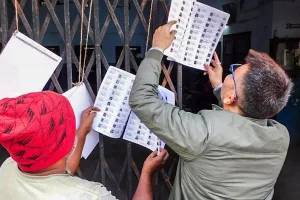
TMC alleges ‘faulty software’ behind voter deletions in Bengal, targets Election Commission

The Trinamool Congress on Friday accused the Election Commission of India of presiding over “massive deletions” from the voter list in West Bengal, alleging that the removals were caused by a “mysterious faulty software” used by the poll body.

UNI | New Delhi |

The Trinamool Congress on Friday accused the Election Commission of India of presiding over “massive deletions” from the voter list in West Bengal, alleging that the removals were caused by a “mysterious faulty software” used by the poll body.

‎In a statement, TMC Rajya Sabha MP Saket Gokhale said that even ECI officials had now accepted that errors in software led to the deletion of legitimate voters’ names from the electoral rolls. He claimed the issue had been flagged by Chief Minister Mamata Banerjee and TMC national general secretary Abhishek Banerjee for several months.

‎“Finally, even ECI officials accept that massive deletions in Bengal voter list happened due to a mysterious faulty software,” Gokhale said. “This has been pointed out by our leaders since months and yet Chief Election Commissioner Gyanesh Kumar has remained silent.”

‎Raising questions over the alleged software, Gokhale asked who had developed the system and why it continued to be used despite being “faulty.” “Who made this mysterious software for ECI that deletes legitimate voters? Why has ECI not stopped using this software despite knowing that it’s faulty?” he said.

‎The TMC MP went on to allege political interference, accusing the BJP of exerting control over the poll panel. “After failing in their attempts to manipulate the Special Intensive Revision (SIR) on the ground, BJP-controlled ECI is using a software to delete voters while sitting in Delhi by bypassing election officials,” he said, calling it “dirty tricks of the highest level.”

‎The allegations come amid ongoing scrutiny of the Special Intensive Revision of electoral rolls, a periodic exercise conducted by the Election Commission to update voter lists by removing duplicate, shifted or deceased voters and adding new eligible electors. Political parties closely monitor the process, particularly ahead of elections, amid concerns that errors could disenfranchise voters.

‎The Election Commission has not issued a detailed public response to Gokhale’s allegations at the time of reporting. In the past, the ECI has maintained that revisions to electoral rolls are carried out according to established procedures and with multiple layers of verification involving booth-level officers and political party representatives.

‎The TMC has demanded greater transparency from the poll body and has urged the ECI to immediately halt the use of the alleged software until a full explanation is provided.

Shanaya Kapoor on trolling over jawline: ‘Tu Yaa Main’ actress says she ignores looks-related comments but admits they sting

Shanaya Kapoor has spoken openly about facing online comments on her jawline and appearance, admitting such remarks can be emotionally difficult. The actress says she ignores looks-related trolling and focuses instead on feedback about her work.

Statesman News Service | New Delhi |

Bollywood can be a loud place, and the internet is even louder. Just ask Shanaya Kapoor.

The young actor, who stepped into films last year, is learning how to survive not just on screen but also online. Between comments on her looks, opinions on her work, and a new thriller where a crocodile refuses to stay calm, Shanaya is clearly having a moment and she’s talking about it honestly.

A debut that put her in the spotlight

Shanaya Kapoor made her Bollywood debut in 2025 with ‘Aankhon Ki Gustaakhiyan’ starring opposite Vikrant Massey. The film introduced her to wide audience and as expected, also brought instant attention on social media.


View this post on Instagram


A post shared by Shanaya (@shanayakapoor02)

Praise, criticism, trolling all came together. Since then, Shanaya has been a regular topic of discussion online especially around her appearance and performance.

Why she reads the comments anyway

In a recent chat with Zoom, Shanaya opened up about how she deals with online reactions. She admitted that she actively looks for audience approval and believes that understanding people’s opinions is part of the job.

She said she often engages with comments because she wants to know how people really feel about her.

According to her, ignoring everything is not the solution when you are trying to grow in a public-facing career.

Where she draws the line

That said, Shanaya is clear about one thing. Comments about her looks, like remarks on her face or jawline, are something she tries to ignore.

She admitted that such comments can be hurtful and make things emotionally difficult at times, especially when she tries to escape from the negativity but can’t fully do so.

Shanaya explained that when comments focus on her acting or dancing, she treats them differently. Even if the feedback is negative or badly worded, she sees it as constructive criticism. For her, the audience has the right to express opinions about her work.

She also acknowledged that such comments can sting, but she looks at them as reality checks that help her improve.

Her mother is her safe space

Like many people dealing with online pressure, Shanaya has a support system. When comments affect her deeply, she turns to her mother Maheep Kapoor, who she described as her closest friend.

Talking things out at home helps her process the emotional weight that sometimes comes with public scrutiny.

Shanaya Kapoor’s new movie with Adarsh Gourav

While Shanaya navigates real-life criticism, her next film throws her into a very different kind of danger. She will soon be seen in Bejoy Nambiar’s ‘Tu Yaa Main’, a survival drama adapted from the Thai action-horror film ‘The Pool’.

The trailer for the film was released on Thursday and runs for three minutes and twenty seconds.

The trailer begins on a clever note. A DVD of Rakesh Roshan’s cult film ‘Khoon Bhari Maang’ plays on screen showing the famous crocodile attack scene featuring Rekha.

The story introduces two content creators from very different backgrounds. Shanaya plays a social media influencer called Miss Vanity, while Adarsh Gourav plays Aalaa Flowpura from Nalasopara.

They connect through a social-media collaboration meant to increase reach and visibility. Over time, their professional partnership slowly turns into a tentative romance.

Things take a dark turn during what seems like a vacation. Shanaya’s character is relaxing in swimming pool when she notices crocodile nearby. Panic sets in quickly. Two characters end up trapped in the pool as crocodile keeps attacking.

In one tense moment, Shanaya asks why crocodile isn’t killing them instantly. Adarsh’s character replies by pointing out that in ‘Khoon Bhari Maang’, Rekha was attacked immediately.

Their escape attempts fail, and the trailer ends on a grim note with Shanaya’s character bleeding as the crocodile finally strikes.

Tuu Yaa Main: Release date and box office clash

Produced by Aanand L Rai and Himanshu Sharma under the Colour Yellow banner, ‘Tu Yaa Main’ looks like a survival thriller hidden inside a modern love story.

The film is set to release in theatres during Valentine’s Week on February 13, 2026. It will face box office competition from Shahid Kapoor and Vishal Bhardwaj’s ‘O’Romeo’, another film that explores a darker side of love.

Also Read: ‘Tu Yaa Main’ teaser: Adarsh Gourav, Shanaya Kapoor’s fun collaboration takes terrifying turn; release date out

The brain’s best friend? Acharya Balkrishna explains why akhrot or walnuts deserve daily attention

Acharya Balkrishna highlights walnuts as a powerful natural food for the brain, rich in omega-3, vitamin E, and antioxidants. Regular intake of akhrot may help improve memory, focus, learning ability, and overall mental health.

Statesman News Service | New Delhi |

Acharya Balkrishna has dropped a small Facebook post that feels like a gentle nudge from an elder who knows exactly what our stressed-out brains need. This time, the focus is on akhrot (walnuts).

The wrinkled little nut that often sits ignored in the dry-fruit jar is suddenly having its moment. And honestly, it deserves it.

Why Acharya Balkrishna is talking about walnuts

In his post, Acharya Balkrishna calls akhrot “amazing,” and for good reason. Walnuts are packed with nutrients that directly support the brain. At a time when people complain about poor memory, low focus, and constant mental fatigue, this simple nut quietly offers help.

No complicated routine. No expensive supplements. Just a handful of walnuts.

One of the biggest strengths of walnuts is their omega-3 fatty acids. These healthy fats are essential for brain function. According to Acharya Balkrishna, omega-3 helps improve memory, concentration, learning ability.

Omega-3 fats support communication between brain cells. When brain gets enough of them, thinking becomes clearer and focus improves. This is especially useful for students, working professionals, older adults who want to keep their minds sharp.

Vitamin E and folate: Mental health’s silent helpers

Walnuts also contain vitamin E and folate. These are two nutrients closely linked to mental well-being. Vitamin E is known for protecting brain cells from damage caused by stress and ageing. It works like a shield keeping brain cells healthier for longer.

Also Read: Winter nights get warmer: Acharya Balkrishna savours sweet and roasted potatoes in heartwarming video

Folate plays a role in brain development and emotional balance. Together these nutrients support not just memory but overall mental health. This is something many people struggle with today.

Antioxidants that protect brain cells

Another important point highlighted by Acharya Balkrishna is presence of antioxidants in walnuts. Antioxidants help fight harmful substances in body that can damage brain cells over time.

By protecting brain cells, antioxidants help slow mental decline and improve concentration. This makes walnuts a smart daily food for anyone worried about long-term brain health.

Many people turn to caffeine or energy drinks when their concentration drops. Walnuts offer a calmer, more natural solution. The combination of omega-3, vitamin E, folate, antioxidants supports steady mental energy without crashes.

Even small daily portion can help improve focus during study, work, creative tasks.

Walnuts are easy to include in the diet. Eat them soaked in the morning, add them to salads, sprinkle them over vegetables, or simply snack on few between meals.

Simple, cheap, powerful: Acharya Balkrishna explains why dal is still the king of nutrition

Acharya Balkrishna highlights the powerful health benefits hidden in the humble bowl of dal, calling it a rich source of protein and essential nutrients. From heart health to immunity, this everyday food quietly supports the body in multiple ways.

Statesman News Service | New Delhi |

Acharya Balkrishna is at it again quietly dropping everyday health wisdom on Facebook, the kind that makes you pause mid-scroll and think, “Wait, why don’t I eat this more often?” This time, the spotlight is on a humble kitchen hero: dal.

No fancy superfood, no foreign name, just the simple bowl that has been feeding Indian homes for generations. And yet Acharya Balkrishna reminds us dal is anything but ordinary.

Dal: The everyday food with extraordinary power

Dal may look simple, but nutritionally, it punches way above its weight. According to Acharya Balkrishna, dal is packed with essential nutrients and is one of the best plant-based sources of protein.

This makes it especially important for people who do not eat meat. Or if you are trying to eat lighter healthier meals, this is for you.

Protein helps build muscles, repair tissues, keep body strong. A daily bowl of dal can quietly support your body without demanding attention. No trends, no hype.

Why your heart loves dal

One of the key reasons dal deserves regular place on your plate is its heart-friendly nature. Acharya Balkrishna points out that dal contains folate and magnesium. These are two nutrients known to support heart health.

Folate helps maintain healthy blood circulation. Magnesium plays role in keeping blood pressure stable and the heart rhythm steady.

Together they make dal a comforting food not just for the stomach, but for the heart too.

Fighting weakness and tiredness

Feeling tired all the time? Dal might help more than you think. Dal contains iron, which is essential for making healthy red blood cells. Low iron levels can lead to anemia, causing weakness, dizziness, and fatigue.

Including dal regularly in meals can help improve iron levels naturally especially when paired with vitamin C-rich foods like lemon, tomatoes, vegetables.

Also Read: Winter nights get warmer: Acharya Balkrishna savours sweet and roasted potatoes in heartwarming video

A quiet shield against infections

Acharya Balkrishna also highlights role of zinc in dal. Zinc is important for strong immune system. It helps the body fight infections. When zinc intake is low, body becomes more vulnerable to illnesses.

Dal when eaten consistently supports the body’s natural defence system. This is a simple, food-based way to stay stronger through changing seasons.

Affordable, accessible, easy to cook

One of dal’s biggest strengths is how easy it is to include in daily life. It is affordable, widely available, and simple to cook. From thin dals to thick ones, from plain comfort food to spiced-up versions, it fits every kitchen and every mood.

Unlike expensive health foods, dal does not need marketing. It has survived centuries because it works.

Parikrama 1.0 ignites Sarsuna College’s collective cultural spirit

After several years, the students of Sarsuna College successfully organised the college social, giving it the name of Parikrama 1.0, on 29 January 2026.

STATESMAN NEWS SERVICE | Kolkata |

After several years, the students of Sarsuna College successfully organised the college social, giving it the name of Parikrama 1.0, on 29 January 2026. The programme was organised and attended with much enthusiasm and bonhomie. The students of Sarsuna College, under the able guidance of the College Governing Body President, Ashok Deb, supported by the competent governance of the College Principal, Dr Gopal Chandra Mandal, organised the programme within a very short preparatory period. They were actively supported in their endeavour by the eminent social worker, Sreedip Das. An organising committee of the students was formed to successfully organise the event, which was led from the front by student representative Abir Deb, a current student of the college.

The principal of Sarsuna College, in his welcome address, began the evening on an auspicious note by reminding everyone of Swami Vivekananda’s philosophy of the karma yogi. He said that this was a karma yoga by the students as they had put their utmost effort to organise such a gala event within a few days. He wished that every beat of the drum and every note of music would touch the inner core of the students. His words were supported by the IQAC Coordinator, Pintu Kumar Maji and Teachers’ Council Secretary, Sanjib Kumar Gupta in their brief addresses.

The event became a confluence of education and culture due to the presence of guests like the educationalist Bhaskar Mahanayak, Principal, Vivekananda College, Thakurpukur, and others. The programme was well attended by all the teaching and non- teaching staff of the college.

It was heartening to see a well-disciplined but enthusiastic crowd of more than 8000 youngsters rise to the beat of the music. More than 600 guests were also present. All the dignitaries praised the efforts of the students in putting together such a remarkable show in such a short time. The performers of the evening, Prithibi, Snigdhajjt and Liveline, were well appreciated by all. Parikrama 1.0 ended amid a lot of cheer and optimism.

Redrawing the healthcare divide

In a world where access to quality healthcare often mirrors socio-economic divides, AM Medical Centre’s newly launched initiative seeks to redraw that line.

Roushan Chatterjee | Kolkata |

In a world where access to quality healthcare often mirrors socio-economic divides, AM Medical Centre’s newly launched initiative seeks to redraw that line. Recently unveiled in Kolkata, the philanthropic community healthcare programme, ‘Health for All’, is rooted in a powerful belief: healthcare should be a right, not a luxury.

The launch brought together voices from governance, industry and the creative world. It was graced by dignitaries, including Debasish Kumar, Member of the West Bengal Legislative Assembly and Deputy Chief Whip, Government of West Bengal; R S Goenka, Co-Founder & Joint Chairman, Emami Group; Hari Prasad Budhia, Chairman of Patton Group and film director and actor Arindam Sil. The presence of eminent figures from diverse fields emphasised a shared responsibility towards inclusive healthcare.

‘Health for All’ is designed to bridge gaps in primary and preventive healthcare. It particularly focuses on economically vulnerable communities. The programme prioritises areas often neglected due to rising private healthcare costs, such as early diagnosis, regular medical consultations, and affordable access to essential diagnostic services. Under the initiative, BPL card holders can avail free medical services upon registration. The range of services includes general physicians, eye consultations, cataract evaluation, and surgical advice where clinically required.

To complement, the centre has also introduced a Health Privilege Card. It is a comprehensive annual healthcare plan designed to deliver sustained medical benefits through a structured and affordable model. Priced at ₹1,999 and valid for one year, the card covers the primary cardholder and one family member. Annual benefits include general physician visits, eye and dental consultations, refraction tests, and a comprehensive preventive health check-up for the primary cardholder, encompassing blood tests, ECG, chest X-ray, pulmonary function tests, and more.

In a conversation with The Statesman, Dr Moon Chattaraj, prosthodontist and Director of the centre, described the initiative as a response to the growing inaccessibility of healthcare. “We started thinking about two categories of people, the underprivileged and the larger mass who need healthcare but often don’t get it because of the exorbitant rise in private sector costs,” she said, adding, “We are offering services at a subsidised rate that otherwise cost much more. Round the year, patients can access GP consultations, dental, and ENT services, and even day-care surgeries at minimal rates.”

Chattaraj highlighted why the initiative is deeply personal for her. She recalled a moment when she took a homeless child with a severe ear injury to be treated at her centre. “That incident awakened my conscience. As a doctor, I felt I had a responsibility to do something for society,” she claimed. She further added that free services for BPL patients would be offered every Sunday to ensure quality care reaches those most in need.

RS Goenka noted that these kinds of initiatives are vital for social development. “By focusing on accessibility, affordability, and preventive care, this programme addresses real healthcare needs. It is encouraging to see a structured, community-centric approach that brings together medical expertise and social responsibility for meaningful and sustainable impact,” he said.

Arindam Sil echoed similar sentiments while speaking to The Statesman. “It’s an incredible initiative. Such initiatives should come out more. Very few think for the underprivileged. Everything is not just about doing business. The field of medicine must go beyond profit and embrace social responsibility,” he stressed.

Looking ahead, the centre plans to expand the initiative across West Bengal. “We have just launched the initiative. Our long-term development plan includes opening different centres across the state, and if it matures, we plan to expand it pan India. Eventually, we also want to develop into a full-fledged hospital,” Dr Chattaraj stated. For now, it stands as a step towards a compassionate healthcare ecosystem guided not by privilege, but by need.

Australia’s pace attack dented as Hazlewood ruled out of T20 World Cup

Hazlewood has run out of time to reach full fitness for the Super Eights and beyond, joining skipper Pat Cummins as a high-profile absentee for Australia.

Statesman News Service | New Delhi |

Fast bowler Josh Hazlewood has been ruled out of the ICC Men’s T20 World Cup 2026, to be held in Sri Lanka and India, after failing to recover in time for the latter stages of the tournament.

Hazlewood has run out of time to reach full fitness for the Super Eights and beyond, joining skipper Pat Cummins as a high-profile absentee for Australia. Both fast bowlers have been managing injuries over the past few months, leaving a significant dent in Australia’s pace resources. The selectors are yet to name a replacement for Hazlewood.

The right-arm quick sustained a hamstring injury during the final Sheffield Shield match of the season, Australia’s premier domestic red-ball competition, just ahead of the Ashes. His return was further delayed by Achilles issues that cropped up during his rehabilitation phase.

“We were hopeful Josh would be back to match fitness by the Super Eights stage, but the latest indications (are that) he is still some time away and accelerating his program will carry too much risk,” Australia selector Tony Dodemaide said.

“We will not be naming a replacement player immediately. We feel we are well covered for the initial games so will make any later decisions based on priority need at the time.”

Hazlewood’s withdrawal has inevitably sparked speculation over Australia’s squad composition going forward. While not a like-for-like replacement, veteran batter Steve Smith could come back into the frame following his strong performances at the back end of the Big Bash League.

Sean Abbott, who travelled with the squad from Pakistan after Australia’s recent 3-0 series defeat, remains one of the available replacement options. There is some reassurance on the injury front, with Nathan Ellis and Tim David, both recovering from hamstring concerns, expected to be fit for the group stage.

Adam Zampa, who had been troubled by groin tightness, is also set to be available for Australia’s opening match in Colombo next week.

Australia’s preparations suffered a minor setback when their warm-up match against the Netherlands was abandoned on Thursday. However, the team still has a six-day window to fine-tune plans before beginning their group-stage campaign against Ireland.

Australia’s updated T20 WC squad: Mitchell Marsh (c), Xavier Bartlett, Cooper Connolly, Tim David, Ben Dwarshuis, Cameron Green, Nathan Ellis, Travis Head, Josh Inglis, Matthew Kuhnemann, Glenn Maxwell, Matthew Renshaw, Marcus Stoinis, Adam Zampa

‘Ghooskhor Pandat’ row explained: FIR over alleged insult to Brahmin community; trailer taken down, Manoj Bajpayee reacts

An FIR has been filed against Neeraj Pandey’s upcoming web series ‘Ghooskhor Pandat’ over allegations that its title hurts caste sentiments, prompting the makers to withdraw the trailer and promotional material. Actor Manoj Bajpayee has responded.

Statesman News Service | New Delhi |

Bollywood has seen many controversies, but every now and then, one title alone is enough to set social media, courts, and communities on edge. That is exactly what has happened with filmmaker Neeraj Pandey’s upcoming web series ‘Ghooskhor Pandat’.

What started as a routine promotional push has now turned into a full-blown storm involving legal action, public anger, and a sudden pause on all promotions.

As criticism grew louder, Pandey broke his silence and took a step back, literally pulling down every piece of promotional content linked to the project.

Neeraj Pandey breaks his silence

On February 6, Neeraj Pandey issued an official statement through his Instagram account, trying to clear the air. The director said clearly that ‘Ghooskhor Pandat’ is a fictional cop drama, not a real-world commentary on any caste, religion, or community.


View this post on Instagram


A post shared by Neeraj Pandey (@neerajpofficial)

He explained that the word “Pandat” is used only as a colloquial name for a fictional character, nothing more. According to Pandey, the story is about one individual, his actions, and the choices he makes. He urged that it should not be seen as a label for any larger group.

Pandey also said he approaches filmmaking with a deep sense of responsibility, and that his intention has always been to tell stories in a thoughtful and respectful way.

Why the promotions were pulled down

Acknowledging that the title hurt some viewers, Pandey admitted that the reaction made the team stop and reflect. He said the emotions shared by people were genuine and deserved to be respected.

As a result, the makers decided to withdraw all promotional material for now. Pandey explained that the series should be judged only after watching it fully not through short clips, posters, trailers that show only fragments of the story.

He also repeated that the project was created with sincere intent and purely for entertainment, not to insult or target anyone.

FIR filed in Lucknow as anger grows

While the statement was meant to calm things down, the legal heat has only increased. As of February 6, an FIR has been registered at Hazratganj Police Station in Lucknow against Neeraj Pandey and his team.

Police officials said they received complaints claiming that the title and content of ‘Ghooskhor Pandat’ hurt religious and caste sentiments and could disturb public harmony.

Also Read: Anurag Kashyap reacts after being called ‘Bollywood guy’ in Epstein files linked to alleged Beijing event

The FIR was filed after Inspector Vikram Singh, Station House Officer of Kotwali Hazratganj, took cognisance of the complaints.

According to police sources, there is widespread anger among members of the Brahmin community and several social organisations. Some groups have reportedly warned of aggressive protests if the issue is not addressed.

Authorities said they are closely monitoring the situation and have serious concerns about law and order. Officials said that a zero-tolerance policy will be followed against any attempt to hurt community sentiments or disturb public peace.

Further investigation and legal proceedings in the Lucknow case are currently underway.

Delhi High Court also drawn in

The controversy is not limited to Uttar Pradesh. A writ petition has been filed in the Delhi High Court seeking a stay on the release and streaming on Netflix.

The petition was filed by Mahender Chaturvedi, through Advocate Vineet Jindal. It claims that the title and proposed content are defamatory and communally offensive.

The plea argues that linking the word “Pandat” with corruption damages the dignity of the Brahmin community. The petition recognises freedom of speech and also stresses that such freedom is subject to reasonable restrictions under the law.

Manoj Bajpayee responds to the backlash

Actor Manoj Bajpayee, who is part of the project, also reacted to the growing controversy.

He said he respects the emotions and concerns people have shared and takes them seriously. According to him, when something you are involved in causes hurt, it forces you to pause and listen.

Manoj Bajpayee on 'Ghooskhor Pandat' row
Manoj Bajpayee on ‘Ghooskhor Pandat’ row

Bajpayee explained that as an actor, he connects to a project through the character and the story. And for him, this role was about portraying a flawed individual on a journey of self-realisation. He says it was not about making a statement about any community.

He also spoke about his experience working with Neeraj Pandey saying the filmmaker has always shown seriousness and care in his approach to storytelling.

Finally, Bajpayee supported the decision to take down the promotional material. He said it reflects how seriously the filmmakers are treating public sentiment.

T20 WC: Very happy with India’s progress, hopes are really very high to retain the title, says Mhambrey

Having lifted the Men’s T20 World Cup trophy for the first time in 2007, before breaking a long drought to clinch the crown in 2024, defending champions India are aiming to become the first team to achieve three milestones: retain the crown, win it three times, and clinch a World Cup in the shortest format on home soil.

IANS | New Delhi |

Having lifted the Men’s T20 World Cup trophy for the first time in 2007, before breaking a long drought to clinch the crown in 2024, defending champions India are aiming to become the first team to achieve three milestones: retain the crown, win it three times, and clinch a World Cup in the shortest format on home soil.

The co-hosts enter the tournament as the top-ranked side and boast of the number one ranked batter and bowler in Abhishek Sharma and Varun Chakaravarthy, respectively. With their ultra-attacking batting template and pinpoint precision with the ball, India have the best win percentage among the top 10 T20I teams since winning the 2024 edition.

Paras Mhambrey, India’s former bowling coach, was a part of the setup during the 2024 triumph under Rohit Sharma and believes the side has the depth and leadership to retain the title. Before India launches its title defence against the USA at the Wankhede Stadium on Saturday, Mhambrey spoke exclusively to IANS on the side’s chances of retaining the title, Suryakumar Yadav’s captaincy, the influential factors in play when featuring in a mega event at home and more. Excerpts:-

Q. We are just a day away from the 2026 T20 World Cup commencing, this time on home soil. How do you analyse India’s chances of retaining the trophy won in 2024?

A. I’m very happy and sure of it. In the way I’ve seen in the last few years, the way the team has progressed, the kind of cricket they’re playing – that’s fabulous. Just to see the last series that we played and even the last game that we played, the warm-up game against South Africa – it’s fabulous to watch, just the way everyone’s going about it.

Happy to know and see that the core is still there from the last two years. It’s so important to actually have that core playing the World Cup. One is the experience bit – there’s so much experience out here and just the skill sets that are available to us. When you’re entering a big tournament like this, you want all your top players to be available.

It’s good to see that Tilak (Varma) is back in the team, getting an opportunity and playing a fabulous innings out there. Overall, we are very happy with the way things have progressed for us. Now, it’s one day at a time. But just the way the Indian team is playing, I think hopes really are very high.

Q. Take us back to June 2024 – what are the moments from that victorious 2024 World Cup campaign that give you goosebumps to date?

A. It’s the tag of world champions. I think any team that plays cricket and any individual that represents the country – I think the tag of being a world champion is always special. That’s something that will stay with that individual and the team. I’m no different from anyone else out here. As a player, I know the value and the importance of representing your country, and especially the World Cup is so special because it comes every four years.

We didn’t have the T20 tournament, and we always kind of looked at the 50-over tournament, and the World Cup was special. So, getting an opportunity out there, and then again, just shifting it from one side of the rope to the other and getting an opportunity to be part of that dressing room – it’s something that, as a player, I always wanted to be and experience the whole journey, if I can say that.

It’s so special because it takes a lot. The tenure of the tournament is a week or so, 15 days. But there are a couple of years of real, real hard work that went into it, and when you see that finally bear fruit, I can’t explain that. I think the tag of being world champions is special.

Q. That 2024 World Cup-winning squad had a special chemistry. How much of that has carried forward into this 2026 team, in your opinion?

A. It is the case – you can see it on the ground. Everyone is so professional in terms of being very clear about their roles. Good to see that each and every individual has delivered at some point or other. It was so important to go into the tournament and not only deliver – I thought they won the game for the team, and that’s so important. You are ticking the right boxes out here, and everyone is fit.

So good to see that they are coming and you have the best 15 available to choose from, and it’s so important. The core is always important because that’s where your experience lies. You have been through that situation, and they have experienced that. To a certain extent, they are a little better prepared to deal with the tournament because some of the individuals have not played and not experienced this.

They played the bilaterals and other series, but especially the World Cup is different. I am sure by the time the first game comes – and much before it, right now – I think everyone will get the hang and feel of what the World Cup is, especially when it’s a domestic one.

Wherever you go, they will be reminded. There will be hoardings out there and billboards around. People in the lift, the watchmen also saying, ‘Jeetna hai, jeetna hai’ (You have to win, you have to win). So they will feel how important it is not only for the players but for the whole country around.

Q. Suryakumar Yadav is leading this Indian side while also being one of the most destructive batters in world cricket and discovering form at the right time. How do you see him balancing those dual responsibilities in this mega event?

A. He is doing it wonderfully. I thought he had settled down well. He is very well settled in his role right now. Whatever you say, that shift is a little different even though you don’t want to think about it and feel it may not affect you. But it’s always going to be at the back of your mind that you are captain, and that adds a little bit of responsibility on your shoulders – not only for the others but also for yourself.

Your expectations also are high up there because you want to deliver, and then you are playing a dual role, right? You are also focusing on, importantly, your game. So it’s difficult now. He has to find the balance, and I am very happy with the way he is shaped up because it’s very difficult to find the balance between yourself and the team.

Now he has to look after all the 10 other players on the ground, not only himself. So it takes a little while, but I’m happy with the way he is shaped up as a captain – just the way others have warmed up to it and just that you can see on the ground, for sure.

Q. Playing a World Cup at home comes with its own pressures and advantages. What do you think will be the biggest factor – the crowd support, familiarity with conditions or just the form they are in?

A. All three – you touched the right points. You can’t beat the home crowd. You have that when you go in and know that everyone is going to be rooting for you. When chips are down, you still have people supporting you. It’s so important sometimes. As an opponent, you are not in a game, and you don’t really realise that you are on top of the game right now because of so much support that you have.

So that’s incomparable anyway, but conditions, definitely, because you play on these wickets, you know exactly how the wickets behave – like the red soil and black soil – because you played out there, and just generally from your past, you can draw from your past experiences and then work on your game.

The most important bit is the form. I thought it was important to have everyone contributing, and it’s good to see that not only did everyone contribute, but at some point, they all won games. Maybe on an individual basis – like a spell, a knock, or a few balls – it’s so important to do that. In all three aspects, I think you are really up there, and I am happy because all three bases are covered for us.

Q. Without asking for predictions, which team do you think poses the biggest tactical challenge for India in this tournament?

A. Oh, that’s a mystery question you asked me. You got me thinking about it. It’s just… I feel in a tournament like this, from past experiences, I can tell you that whenever you go with the favourites, I think people have got it wrong. If you look at the way, just look at the way the last game was; the last World Cup final was against South Africa.

It’s just one scenario – they were favourites to win at one time. We went in; that didn’t work, and it’s just the way the game went, and everyone thought, ‘This is going to be South Africa.’ ‘You have someone like… you don’t take away from Sri Lanka in these games.

If you look at the last few games that they’ve played, they’ve been playing decent cricket, and with their home conditions, you’re going to play some games there, similar to out here, because a lot of these guys play in the IPL – the bowling bit. So they would be competitive, and maybe a couple of teams like this. But as I said, you really can’t go in with the favourite side, as sometimes you’ve got it wrong.

Q. On a scale of cautiously optimistic to supremely confident, where does this Indian team stand heading into the World Cup?

A. I’ll put my neck out here and say supremely confident. It’s just the way they’re playing and what kind of cricket they’re playing – it gives you a lot of confidence. Availability of players is, again, a big factor for me. Variety is available as spinners and seamers – a big factor that’s been touched. We covered all our bases as well as we could, and I’m supremely confident in just the way they have played in the past – so, fingers crossed.

‘Hype pushed through paid promotion’: Delhi Police clarify missing children data, warn of action

Delhi Police said claims of a surge in missing girls were driven by paid promotions, clarifying that official data shows no abnormal rise in missing children cases.

Statesman News Service | New Delhi |

The Delhi Police on Friday said the recent panic around a supposed surge in missing girls in the national capital was being fuelled through paid promotions and warned that creating fear for monetary gain would invite strict legal action.

After tracking multiple leads, the police said there was no factual basis to claims of a sudden rise in missing children, adding that misleading narratives were being deliberately amplified. Officials stressed that misrepresentation of data to trigger public alarm would not be tolerated.

The clarification follows growing public anxiety and political reactions over social media claims suggesting a sharp increase in missing children, particularly girls, in Delhi.

Police refute spike claims, say data has remained stable for years

The Delhi Police had on Thursday taken to the social media platform X to directly counter the claims. “We appeal to citizens not to fall prey to rumours about a sudden increase in cases of missing children. While refuting such claims, we also warn rumour mongers of strict legal action for spreading unnecessary fear by misrepresenting data. The safety of every child is paramount for the Delhi Police. The Delhi Police is committed to providing 24×7 service and locating missing/abducted children and reuniting them with their families expeditiously,” the force said.

The police said official records show no abnormal rise in missing-person cases and that overall figures have remained broadly stable for nearly a decade, despite Delhi’s growing population.

What the January numbers actually show

The clarification came after reports citing Delhi Police data claimed that 807 people (509 women and girls, and 298 men) went missing between January 1 and January 15, averaging 54 cases a day. The figures also showed that 191 of those reported missing were minors, while 616 were adults.

However, police said the data was being read without context. According to official records, 1,777 missing persons were reported in January 2026, a number the force said was lower than both the monthly average and comparable periods in previous years.

In 2025, Delhi recorded 24,508 missing persons, averaging 2,042 cases per month. January 2025 alone had seen 1,786 cases, making the January 2026 figure proportionately lower.

Long-term trends and recovery rate

Police data further showed that annual missing-person figures have hovered between 23,000 and 24,000 since 2016, even as the city’s population expanded rapidly.

Delhi Police cautioned against year-on-year or short-period comparisons without accounting for how missing-person detection works. Officials said such cases are time-dependent and cumulative in nature.

A total of 1,80,805 missing persons were traced and reunited with their families between 2016 and 2025, translating into an overall recovery rate of about 77 per cent. Police said 85 per cent of missing-person cases registered in 2016 were traced over a nine-year period, while nearly two-thirds of cases reported in 2025 were resolved within the same year.

Officials said the recovery rate has been driven by sustained efforts such as Operation Milap and the wider use of technology, including AI-enabled facial recognition tools.

Michelangelo foot drawing hidden for 200 years finally identified and sold for $23 million at auction

A dusty old foot sketch, quietly passed down through a family, just turned out to be Michelangelo’s work. One casual photo upload later, it walked straight into a $23 million auction shocker.

Statesman News Service | New Delhi |

Someone, somewhere on the US West Coast, casually uploaded a photo of an old sketch to Christie’s online portal, just hoping to get an auction estimate. What came back was not a polite range or a modest valuation. It was a bombshell. The small, dusty-looking foot drawing sitting quietly in a family collection turned out to be a long-lost work by Michelangelo himself, and it has now sold for a staggering $23 million (£16.9 million), smashing expectations and setting the art world buzzing.

From grandma’s drawing to global headline

The anonymous owner told Christie’s that the sketch had been inherited from his grandmother. It had quietly stayed in the family for generations passing through Europe since the late 1700s before eventually landing in the United States.

No museum labels. No dramatic backstory. Just a drawing that lived its life unnoticed.

Also Read: Why the Joni Mitchell film with Meryl Streep could redefine the music biopic amid decades of recycled narratives

Until now.

What the owner thought was just an old family artwork turned out to be a rare study by one of history’s greatest artists. And not just any study, this one is linked to Michelangelo’s legendary Sistine Chapel ceiling.

A foot that changed everything

Experts at Christie’s identified the work as a red chalk sketch of a foot belonging to the Libyan Sibyl, one of the powerful figures painted on the Sistine Chapel ceiling. The drawing is believed to date back to 1511-1512, when Michelangelo was preparing the second half of the massive ceiling project.

The sketch focuses on the right foot of the Sibyl, capturing the strength and tension Michelangelo was famous for. Small in size but huge in importance, it offers a rare behind-the-scenes look at how the Renaissance master built his iconic figures.

Science steps in

Before the art world could celebrate, proof was needed.

Giada Damen, a specialist in Christie’s Old Master Drawings Department, led the investigation. Using infrared reflectography, she examined the sheet and found additional drawings on the back that also matched Michelangelo’s style.

To be sure, Damen compared the sketch directly with a confirmed Michelangelo drawing at the Metropolitan Museum of Art. The match was convincing. The verdict was clear: this was the real thing.

Career-defining moment

For Andrew Fletcher, Christie’s Global Head of Old Masters, the discovery was unforgettable.

He called it “one of the most memorable moments” of his 23-year career. Fletcher later placed the winning bid on behalf of his client, describing the drawing as a once-in-a-lifetime opportunity.

According to him, collectors knew this was likely the only chance they would ever get to own a study connected to what many consider the greatest artwork ever made.

When the drawing finally went under the hammer at Christie’s Rockefeller Center, things got intense. Bidding lasted for around 45 minutes, with competitors battling it out in the room, over the phone, and online.

The final price soared to more than 10 times the original estimate, setting a new auction record for a Michelangelo drawing. The previous record stood at $24.3 million, achieved in Paris in 2022.

This particular sketch is even more special because it is the only unrecorded study for the Sistine Chapel ceiling ever to appear at auction.

Why this drawing is so rare

Out of the roughly 600 Michelangelo drawings known to survive today, only about 50 relate to the Sistine Chapel. Even more astonishing, only around 10 Michelangelo drawings are believed to remain in private hands.

That rarity explains why collectors didn’t hold back.

The drawing was included in Christie’s Old Master and British Drawings sale, alongside works by Rembrandt, Titian, and William Blake. The event followed Christie’s strongest Old Master Paintings sale in New York in a decade, which totaled over $54 million.

That sale also saw records tumble, including $5.7 million for Artemisia Gentileschi’s ‘Self Portrait as Saint Catherine’. It brought $30.54 million for Canaletto’s famous Venice masterpiece.

‘Can’t set aside Bihar election results on plea of party that lost everything’: SC rejects Jan Suraaj’s petition

In its writ petition, Jan Suraaj had alleged large-scale irregularities in last year’s elections in Bihar in which the NDA won, and sought fresh polls.

Statesman News Service | New Delhi |

In a setback to Prashant Kishor’s Jan Suraaj Party (JSP), the Supreme Court on Friday refused to entertain its plea challenging the 2025 Bihar Assembly Elections.

In its writ petition, Jan Suraaj had alleged large-scale irregularities in last year’s elections in Bihar in which the NDA won, and sought fresh polls.

The Supreme Court, however, today rejected the submission and said it cannot issue an omnibus direction to set aside the entire Bihar Assembly election. It pointed out that such a direction cannot be issued at the instance of a political party which had lost the election.

The apex court bench led by CJI Surya Kant further asked the Kishor-led JSP to approach the Patna High Court with its grievances.

“We can’t issue a notice like this. There is a procedure. It is just a composite election petition. Because you lost the elections, you say set aside the entire election result. What is this view of a political party that has lost everything in the election, then you want to come here. Even that issue (on welfare policies), we won’t like to have a political party before us. It must be some public-spirited person. Because if we entertain this, if this part gets to power, they will do the same thing,” news agency ANI quoted the CJI as saying during the hearing.

In its petition filed under Article 32 of the Constitution, the JSP had argued that the Bihar election was won illegally by the BJP and JD(U)-led NDA by distributing Rs 15,600 crores in cash to voters.

The JSP was referring to the direct transfer of Rs 10,000 to women voters in the state even as the Model Code of Conduct was in force.

It contended that fresh beneficiaries were added to the Mukhyamantri Mahila Rojgar Yojana and payments were made while the Model Code was in force.

The plea stated that no new beneficiaries could be added and funds disbursed to them during the election period, in violation of Articles 14, 21, 112, 202, and 324 of the Constitution.

The petition has also raised questions over the deployment of around 1.8 lakh women beneficiaries associated with the self-help group JEEVIKA at polling booths during the two-phase polling, calling the move illegal and unfair.

Maniyanpilla Raju, senior Malayalam actor, held by police after hit-and-run leaves two 20-year-olds injured

Veteran Malayalam actor Maniyanpilla Raju has been arrested in connection with a late-night hit-and-run case in Thiruvananthapuram. The incident left two 20-year-old youths seriously injured, with police confirming his involvement based on CCTV footage.

Statesman News Service | New Delhi |

Veteran Malayalam actor Maniyanpilla Raju found himself at the centre of a serious police case after a hit-and-run incident near one of the busiest roads in Thiruvananthapuram.

According to police, the accident took place around 9.30 pm on Thursday night on the Vellayambalam-Vazhuthacaud road, right in front of the Trivandrum Club. A white car allegedly driven by Maniyanpilla Raju rammed into a motorcycle carrying two young men and then sped away without stopping.

Also Read: Thalapathy Vijay faces court blow: Madras HC dismisses plea against 1.5 crore income tax penalty on 2015-16 income

The riders, both just 20 years old, were thrown onto the road. They were later identified as Sooraj and Niveedith Krishna, residents of Thiruvananthapuram.

Young riders seriously injured

Both victims suffered serious injuries and were rushed to a private hospital. Police confirmed that one of the youths sustained a leg fracture, while the other is being treated for a spinal injury. Their condition is being closely monitored.

The incident triggered public anger especially after details emerged that the car did not stop to help the injured.

CCTV footage tells a chilling story

CCTV footage from the area played a key role in the investigation. The video reportedly shows the white car slowly moving forward when the bike approaches from the right side. The motorcycle crashes into the front of the car, the rider falls onto the road. And moments later, the car drives away without stopping.

Police said the footage helped establish the involvement of the vehicle.

Police action and arrest

Following a preliminary probe, police confirmed that the vehicle was driven by Maniyanpilla Raju. A case was registered under various sections of the Bharatiya Nyaya Sanhita and the Motor Vehicles Act for rash and negligent driving and failing to attend to injured persons.

Raju remained reportedly unreachable for nearly ten hours after the incident. He appeared at the police station on Friday morning, after which he was arrested by the Museum Police and taken for a medical examination. The car involved has been seized, and further investigation is under way.

Raju’s version of events

Speaking to reporters, Raju admitted that he was driving the car but claimed the motorcycle hit his vehicle. He said he panicked after hearing the noise and seeing someone fall.

“I contacted a person and asked him to arrange an ambulance,” he said.

He also cited health issues for leaving the scene. Raju stated that he is a cancer patient and has recently been diagnosed with chikungunya. He added that his wife was alone at home at the time.

He further claimed that he informed the police at night about his inability to appear immediately and promised to present himself the next morning and surrender the vehicle.

Thalapathy Vijay faces court blow: Madras HC dismisses plea against 1.5 crore income tax penalty on 2015-16 income

The Madras High Court has dismissed actor-politician Vijay’s plea challenging a Rs 1.50 crore income tax penalty linked to alleged non-disclosure of income. The ruling clears the way for tax authorities to proceed, though Vijay can still approach the ITAT on other grounds.

Statesman News Service | New Delhi |

It’s not a great Friday for Thalapathy Vijay. The superstar-turned-politician has hit a legal speed bump, with the Madras High Court shutting the door on his attempt to escape a hefty income tax penalty.

Here’s what went down.

Actor Vijay, now also the chief of Tamilaga Vettri Kazhagam (TVK), faced a setback when the Madras High Court dismissed his writ petition on Friday. He had challenged an Income Tax Department order that slapped him with a Rs 1.50 crore penalty.

The penalty links back to 2015-16, when the tax department says Vijay did not properly disclose additional income of Rs 15 crore. According to officials, this income came to light during income tax searches at his residence in September 2015.

Also Read: Jana Nayagan starring Thalapathy Vijay causes Rs 100 crore loss for Tamil Nadu box office during Pongal

Vijay took the matter to court in 2022, hoping to overturn the penalty. But this week, the High Court delivered its verdict, and it didn’t go in his favour.

Why the High Court said no

Justice Senthilkumar Ramamoorthy, who had reserved his order last month, ruled that the show cause notice issued by tax authorities was legally valid and issued on time.

The court focused only on one key question: was the penalty process started within the time limit set by law?

The answer, according to the court, was yes.

Since the notice fell within the permitted period under Section 263 of the Income Tax Act, the court said there was no procedural flaw. Because of this, the judge did not examine other arguments raised by Vijay.

In short: the case failed on timing, not on detailed merits.
Not the end of the road (yet)

While dismissing Vijay’s plea, the court did leave one door open. The actor-politician has been given liberty to approach the Income Tax Appellate Tribunal (ITAT).
This means he can still challenge the penalty but only on grounds other than delay or limitation.

So yes, the fight isn’t completely over, but it just got tougher.

How this case snowballed over the years

This legal saga has been unfolding for nearly a decade.

– September 2015: Income tax searches take place at Vijay’s residence.

– December 2017: An assessment order is passed.

– December 2018: Penalty proceedings under Section 271AAB(1) are initiated.

Vijay challenges the assessment before the Commissioner of Income Tax (Appeals) and gets partial relief.
The department appeals to the ITAT, which partly supports the tax authorities including on expenses linked to Vijay’s fan association.

Meanwhile penalty proceedings related to the Rs 15 crore surrendered during the search continued.

In July 2019, the department issued a notice under Section 263 claiming penalty proceedings were not properly started. However the ITAT scrapped this move in May 2022 saying no further action was needed once penalties were already in motion.

Henderson Brooks-Bhagat Commission report indicted Nehru govt, stayed classified since 1962: Kiren Rijiju

Parliamentary Affairs Minister Kiren Rijiju says the Henderson Brooks-Bhagat Commission report indicting the Nehru government has remained classified since the 1962 India-China war.

Statesman News Service | New Delhi |

Parliamentary Affairs Minister Kiren Rijiju on Friday said that the Henderson Brooks-Bhagat Commission report, which reviewed India’s defeat in the 1962 war with China, has remained classified for over six decades, describing it as a defence matter that should not be used for political purposes.

Posting on X, Rijiju said the report had indicted the then Nehru government for what he called a “humiliating defeat” at the hands of the Chinese People’s Liberation Army, but added that successive governments had not declassified it. “Our govt is led by a matured leader. Since 1962, Henderson Brooks-Bhagat Commission report has remained secret… Our Govt has never declassified it as defence matter can’t be used as political tools,” he wrote.

What is the Henderson Brooks-Bhagat report?

The Henderson Brooks-Bhagat report was prepared by Lieutenant General Henderson Brooks and Brigadier General Premindra Singh Bhagat and was commissioned by then Acting Army Chief General JN Chaudhuri after the 1962 India-China war. The report reviewed the Indian Army’s operational failures during the conflict and has remained classified since it was submitted.

Alongside his remarks, Rijiju also reshared a post from November 1, 2024, highlighting infrastructure development along India’s borders. Referring to his visit to Arunachal Pradesh, he wrote, “After talking to Chinese soldiers and seeing the infrastructures, everyone will feel proud of India’s border development now. Celebrated Diwali at Bumla with our Army Jawans in Arunachal Pradesh.”

How the issue connects to the current Parliament standoff

Rijiju’s comments come amid heightened political tensions in Parliament following repeated disruptions during the motion of thanks on the President’s Address. The row erupted after Leader of the Opposition Rahul Gandhi was stopped from quoting what was described as an “unpublished memoir” of General MM Naravane, who served as India’s Army Chief from 2019 to 2022, in the Lok Sabha.

Gandhi was repeatedly interrupted while attempting to read excerpts from the book during Monday’s debate. He later said the memoir mentioned that as Chinese tanks advanced towards Indian positions, Naravane had been told “to do what he deemed appropriate”.

Members of the BJP, including Defence Minister Rajnath Singh and Home Minister Amit Shah, objected to the references, accusing Gandhi of violating parliamentary rules by quoting from an unpublished book and misleading the House.

The Defence Minister said, “Rahul Gandhi should present before the House the book he is quoting from, because the book he is referring to has not been published”.

Disruptions, suspensions and an unusual vote

The impasse led to repeated adjournments and protests. On Tuesday, Gandhi again attempted to raise the issue but was stopped, triggering further disruption. Eight Congress MPs were later suspended for disorderly conduct.

For the first time in 22 years, the Lok Sabha on Thursday passed the motion of thanks on the President’s address without the customary reply by the Prime Minister. The developments followed remarks by Lok Sabha Speaker Om Birla, who said he had advised the Prime Minister not to attend the House after receiving information about possible protests by Congress MPs.

On Wednesday, Gandhi displayed a copy of the unpublished book to reporters outside Parliament, contesting claims that the memoir did not exist.

Naravane’s memoir, expected to be published in 2024, has reportedly been delayed amid concerns that it contains sensitive operational details related to the military standoff with China.

India and China last clashed along their disputed Himalayan border in the Galwan River valley in Ladakh in the summer of 2020, marking the first fatal confrontation between the two sides since 1975.