Logo

Smriti Mandhana’s mom sparks social media buzz with Palash Muchhal post, later deletes it

A meme shared by Smriti Mandhana’s mom involving Palash Muchhal stirred conversation online before it was removed, here’s what we know.

Statesman News Service | New Delhi |

Smriti Mandhana’s mother briefly grabbed attention on social media after sharing a meme featuring singer-composer Palash Muchhal.

The post appeared on Instagram and drew reactions from netizens before it was deleted, raising questions about what she meant and why she took it down.

The meme that started it

The meme shared by Mandhana’s mom was reposted from another social media account and showed a humorous comparison involving Palash Muchhal.

It quickly caught people’s eye because it appeared just after Mandhana’s team won the Women’s Premier League (WPL), leading some to speculate whether it was a dig at Mandhana’s former fiancé, Palash Muchhal.

However, the post didn’t stay up for long. Within a short period, Mandhana’s mother removed the meme from her Instagram Story, leaving many wondering about the intention behind the share.

image
Source: Instagram

Reactions and rumours online

Several fans on social media began discussing the deleted post, with some interpreting it as playful teasing and others reading more into it. A few users even reposted screenshots of the original meme before it was taken down, adding to the online buzz.

However, neither Smriti Mandhana nor her mother has publicly explained why the post was deleted or what it meant.

Since the post was removed quickly, many believe it might have been reshared in a moment of fun without any deeper meaning.

With no official statement from Mandhana’s family or Palash Muchhal on the matter, it remains a case of social media noise rather than a confirmed message or criticism.

What Smriti Mandhana is focused now

Meanwhile, Smriti Mandhana continues to enjoy success on the cricket field, celebrated for her performances in the WPL. Fans are also largely focused on her achievements, and the brief social media stir seems to have passed as quickly as it began.


View this post on Instagram


A post shared by Smriti Mandhana (@smriti_mandhana)


Also Read: Smriti Mandhana and Palash Muchhal are not getting married: The inside story behind the called-off wedding

Photo

  • img
  • img
  • img
  • img
  • img
  • img
  • img
  • img
  • img
  • img
  • img

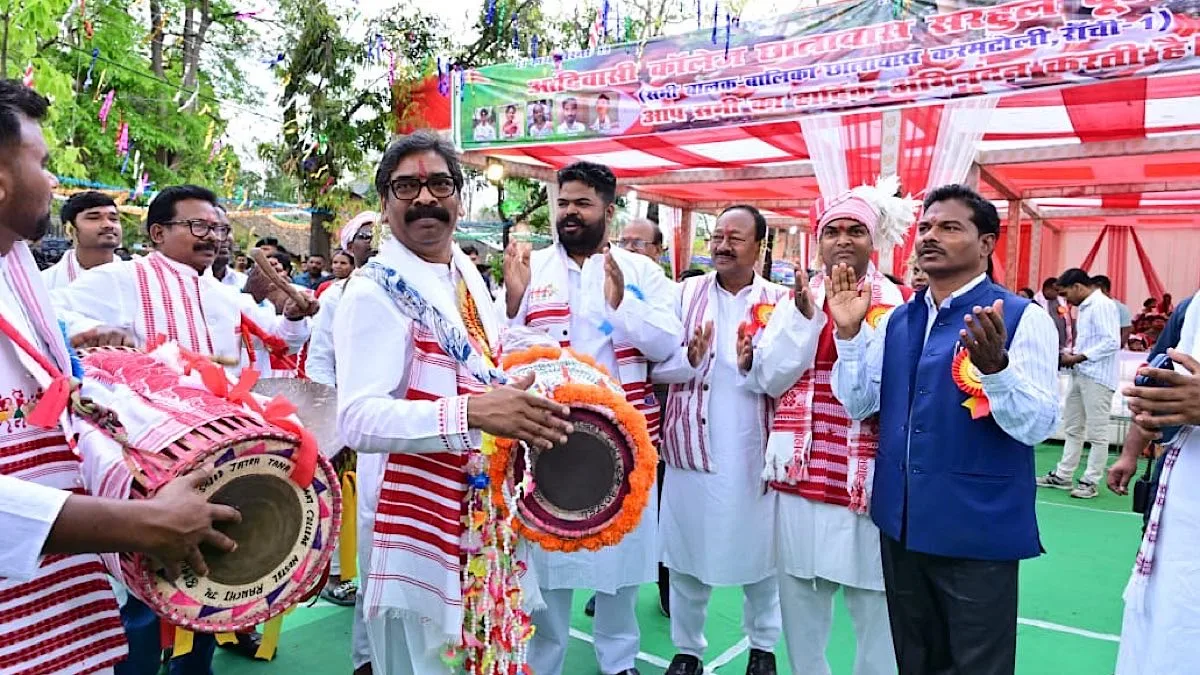
Visuals from Bastar Pandum 2026 Opening with President of India in Jagdalpur

Visuals from Bastar Pandum 2026 Opening with President of India in Jagdalpur

MORE Photo STORIES

Adnan Sami reveals ‘Kabhi Toh Nazar Milao’ was composed in just five minutes

Adnan Sami recalls how his iconic song ‘Kabhi Toh Nazar Milao’ came to life in just five minutes. It was ‘the moment’ for the singer-composer.

Statesman News Service | New Delhi |

Singer-composer Adnan Sami recently took fans down memory lane, sharing an interesting story about one of his most loved songs, Kabhi Toh Nazar Milao.

The musician revealed that the iconic melody was born not after hours of effort, but in a random moment of inspiration that came within five minutes.

The piano that started it all

Posting a throwback picture of the piano on which the song was composed, Sami recalled how the tune came to him unexpectedly one evening.


View this post on Instagram


A post shared by ADNAN SAMI (@adnansamiworld)


According to him, it was a quiet moment right after dinner when he casually walked past the instrument and decided to play a few notes. That spontaneous pause turned into history.

‘The mukda came to me instantly’

As Sami began playing with the keys, the song’s mukda suddenly came in his mind. “I composed the mukda within five minutes,” he shared, adding that the melody arrived effortlessly, without planning or pressure.

Reflecting on the experience, the musician noted that genuine inspiration doesn’t come itself, it simply appears when least expected.

When instinct beats effort

For Sami, the experience reinforced a belief he has carried throughout his career: that true creativity often strikes in random moments. “Those who understand inspiration know it can come instantly,” he wrote, describing the episode as a defining “moment” in his musical journey.

The result, he added, was unexpected and extraordinary. The album went on to become a record-breaking chart-topper, holding the No.1 position for nearly a year and a half.

A timeless song and a lasting legacy

Kabhi Toh Nazar Milao, featuring Aditi Govitrikar, remains one of Adnan Sami’s most iconic compositions. Over the years, it has continued to resonate with listeners, becoming a legendary with his signature melodic style.

A career shaped by versatility

Adnan Sami is known for effortlessly blending Indian and Western musical traditions and performing in multiple languages, including Hindi, Urdu, English, Telugu, Tamil, Kannada and Malayalam. The piano remains his most distinctive instrument, earning him recognition as one of the first musicians to adapt Indian classical music to the piano.

Raised and educated in the United Kingdom, Sami later became a naturalised Indian citizen in 2016. In recognition of his contribution to music, he was honoured with the Padma Shri.

Songs that defined an era

Some of his most memorable tracks include Lift Karadey, Kabhi Nahi, Tera Chehra, Bheegi Bheegi Raaton Mein and Bhar Do Jholi Meri, each reflecting his ability to blend emotion with melody.

Also Read: The curious resurrection of Bollywood brainrot

India to get AI chips; agri and dairy interests safeguarded: Piyush Goyal on India-US trade deal

The India-US trade deal is aimed at achieving USD 500 billion bilateral trade annually, Piyush Goyal said, adding the interests of farmers and dairy industry have been completely safeguarded.

Deepak Nagpal | New Delhi |

Union Commerce and Industry Minister Piyush Goyal on Saturday described the trade agreement between India and the United States as a very important step in the journey towards becoming a Viksit Bharat.

“The bilateral trade agreement has been signed looking at the future by the two leaders (PM Narendra Modi and President Donald Trump),” Goyal said at a press conference organised to share the details of the India-US Joint Statement on the Interim Trade Agreement released on Friday.

The deal is aimed at achieving USD 500 billion bilateral trade annually, Goyal said, adding the interests of farmers and dairy industry have been completely safeguarded.

The joint statement finalised late last night has brought about a wave of happiness and optimism across the country among common citizens and various sectors, he said further.

The minister said the US has agreed to the first part of the trade deal to strengthen bilateral ties with India. He stated that overall tariffs have been brought down from 50 per cent to 18 per cent.

The tariffs on India are now lower than all competitive countries in the region, he said further, pointing out that the US tariffs on China are about 35 per cent, about 20 per cent on Vietnam and Bangladesh, etc.

Zero duty on many products

According to Goyal, many Made-in-India products will attract zero duty.

“Gems and diamonds, pharmaceutical products will attract zero duty. Smartphones and many other items will continue to attract zero duty in the future as well. Many agricultural exports will also attract zero reciprocal tariff in future like spices, tea, coffee, coconut and coconut oil, vegetable wax, cashew nut, etc. Many types of fruits and vegetables like avocado, mango, banana, guava, pineapple, mushrooms, some types of cereals, some bakery products, and many processed food items will also attract zero tariffs,” Goyal told the press.

“Many other Indian exports on which reciprocal tariff will be reduced to zero include aircraft and machinery parts, pharma products including generic drugs, gems and diamonds, clocks and watches, essential oils, some home decor items, inorganic chemicals, instruments and apparatus, paper, plastic and wood items etc. Silk products will also attract zero duty,” he added.

Agri and dairy interests protected

The minister specifically pointed out agricultural and dairy products on which no concessions or relaxations have been provided under the deal.

“No GM (genetically modified) crops will be imported. No concessions have been made on meat, poultry, maize, dairy items, soyabean, rice, wheat, sugar, millets like jowar, bazra and ragi. There will be no concessions on fruits grown in ample quantity in India like banana, strawberry, cherries, citrus fruits, green peas, kabuli chana, moong etc.

“Animal feed products like groundnut, honey, non-alcoholic beverages, essential oils, ethanol, tobacco – no concessions have been made on these items under the deal,” the minister announced.

“I say with full confidence that this deal between India and the US protects the interests of farmers, MSMEs, handlooms and handicrafts. It, in fact, provides opportunities in American markets to the youth, women, those involved in toys, leather and textiles, sports goods industries etc,” Goyal stated further.

Rejecting the opposition’s charge on alleged compromises made in agreeing to the trade deal with the US, the Commerce and Industry Minister said there are some people in the country who are against the interests of the farmers. “They don’t worry about the farmers’ interests, but they mislead the public of the nation. They are surprised to see that no steps have been taken in the India-US trade agreement that go against the interests of the farmers of the nation,” the minister said.

He further asserted that all those products on which India is self-reliant have been kept out of the purview of the agreement.

On US imports into India, Goyal said, “We have opened our markets for the US on some products like Distiller’s Dried Grains with Solubles (DDGS), wines and spirits in which we have kept a minimum import price also.”

India to get AI chips, data centres

On the question of the US supplying ICT products, Goyal stated that America has agreed to supply these items, adding India and the US are not competitors, but they complement each other.

“That is more directed towards safeguarding our interest from countries which are known to do predatory pricing or supply goods at irrational prices, which are even sometimes lower than the cost of manufacture in India. A country like the United States of America, where the cost of labour is probably 50 times the cost of labour in India, which has a per capita income of USD 90,000 compared to India where it is at USD 3,000 per capita. There is certainly no competition. We actually complement each other,” Goyal said.

The minister pointed out that for national security, India needs many ICT products.

“For example, NVIDIA chips. We will certainly need AI equipment. We will certainly need data centres if we have to remain abreast with what is happening in the world, if our IT companies have to reorient themselves to become more in tune with the needs of the world. We will need these important ICT products. It is a big win for India that America has agreed to provide us all these ICT products which are the need of the hour in our country,” the minister said.

When asked whether India will stop buying oil from Russia, the minister said the Ministry of External Affairs will provide details on the same.

Kuno National Park sees birth of five Cheetah cubs, population hits 35

“A moment of immense pride and joy for Project Cheetah as Aasha, the Namibian cheetah and a proud second-time mother, gave birth to five cubs on Saturday at Kuno National Park,” the minister said.

UNI | New Delhi |

Kuno National Park has welcomed the birth of five cheetah cubs, marking a significant moment for Project Cheetah, Cabinet Minister for Environment, Forest and Climate Change Bhupender Yadav said in a post on Saturday.

“A moment of immense pride and joy for Project Cheetah as Aasha, the Namibian cheetah and a proud second-time mother, gave birth to five cubs on Saturday at Kuno National Park,” the minister said.

With the new births, “the tally of Indian-born surviving cubs rises to 24, marking the eighth successful cheetah litter on Indian soil, a significant milestone in India’s cheetah conservation journey, undertaken and nurtured under the environmentally-conscious leadership of PM Narendra Modi ji,” he added.

Calling the development a collective effort, Yadav said, “This joyous achievement stands as a shining testimony to the unwavering dedication, skill, and commitment of the field staff and veterinarians working tirelessly on the ground.”

He further noted, “With their arrival, the total cheetah population in India now stands at 35.”

Expressing optimism for the future, the minister said, “May Aasha and her cubs thrive, flourish, and sprint India’s cheetah story to even greater success,” describing the moment as “a truly historic and heart-warming moment for wildlife conservation in India.”

NCP workers immerse late Ajit Pawar’s ashes in sea of Agni Theertha in Rameswaram

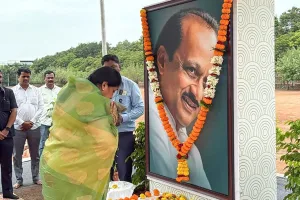
Pawar’s last rites were carried out with full state honours at the Vidya Pratishthan ground in Baramati on January 29, where his sons lit the funeral pyre and carried out the final rituals.

ANI | New Delhi |

The NCP workers on Saturday bid farewell to former Maharashtra Deputy CM Ajit Pawar by immersing his ashes in the sea of Agni Theertha in Rameswaram.

Pawar’s last rites were carried out with full state honours at the Vidya Pratishthan ground in Baramati on January 29, where his sons lit the funeral pyre and carried out the final rituals.

Several prominent leaders and dignitaries, including Union Home Minister Amit Shah, Maharashtra Chief Minister Devendra Fadnavis, Union Minister Nitin Gadkari, Nationalist Congress Party (Sharadchandra Pawar) chief Sharad Pawar, and actor Riteish Deshmukh, attended the funeral and paid their last respects.

Earlier in the day, full state honours were accorded as Ajit Pawar’s mortal remains were taken to the Vidya Pratishthan ground for the last rites.

Ajit Pawar’s wife, Sunetra Pawar, and sons, Parth and Jay and other family members were present. Senior Congress leader Sushil Kumar Shinde, along with his daughter Praniti Shinde, also arrived to attend the funeral.

Supporters of Ajit Pawar chanted “Ajit Dada Amar Rahe” as his mortal remains were brought to the ground.

Ajit Pawar was killed in a plane crash on January 28 in Maharashtra’s Baramati.

According to DGCA, five people, including the crew, on board the chartered plane flying from Mumbai, Maharashtra, to Baramati, died after a crash-landing occurred at the runway threshold in Baramati.

Notably, his wife Sunetra Pawar stepped into fill the vacant post of Deputy Chief Minister. With this, Sunetra Pawar becomes the first woman Deputy Chief Minister of Maharashtra.

Sunetra Pawar has been allocated the portfolios of State Excise Duty, Sports and Youth Affairs and Minorities Development and Aukaf.

Ajit Pawar was the longest-serving Deputy Chief Minister of Maharashtra. He served in the position for six terms within various governments. He had worked as Deputy Chief Minister in the cabinets of Prithviraj Chavan, Devendra Fadnavis, Uddhav Thackeray and Eknath Shinde.

Meghalaya coal mine blast death toll rises to 27: NDRF official

NDRF Commandant HPS Kandari told ANI that two bodies have been recovered.

ANI | New Delhi |

The death toll in Meghalaya’s East Jaintia Hills coal mine blast incident has risen to 27 as two bodies were recovered during rescue operations, a National Disaster Response Force (NDRF) official said.

NDRF Commandant HPS Kandari told ANI that two bodies have been recovered.

“As per the information of the district administration, 18 bodies were recovered on February 5, four bodies were recovered on February 6 and two bodies were recovered on Saturday. Three NDRF teams are engaged in the ongoing search and rescue operations,” HPS Kandari said.
Operations are underway at the blast site to rescue the trapped mine workers.

Earlier on Friday, Meghalaya Minister Lahkmen Rymbui confirmed that two persons had been arrested during the ongoing investigation into the mishap. Details regarding the circumstances of the incident and the identities of the deceased are still being ascertained.

President Droupadi Murmu condoled the loss of lives in a coal mine accident in Meghalaya’s East Jaintia Hills district, calling the incident painful.

“It is painful to hear about the loss of lives of workers in an unfortunate accident in the East Jaintia Hills district of Meghalaya. I convey my heartfelt condolences to the bereaved families and pray for the early recovery of the injured,” the President said in a post on X.

Prime Minister Narendra Modi announced ex-gratia compensation from the Prime Minister’s National Relief Fund (PMNRF). The families of the deceased will receive Rs 2 lakh each, while those injured in the incident will be given Rs 50,000. “Pained by the mishap in East Jaintia Hills, Meghalaya. Condolences to those who lost their loved ones. May the injured recover at the earliest,” the Prime Minister said in a post on X.

Meghalaya Chief Minister Conrad K Sangma said the state government has ordered a comprehensive inquiry into the incident, which occurred at a suspected illegal coal mine in the Thangskai area of the East Jaintia Hills district. He asserted that accountability would be fixed and strict legal action would be taken against those responsible.

‘Deals are not one-sided,’ people of the country are questioning the BJP: Akhilesh Yadav

“The people of the country want to know what is the deep secret behind the compulsion to surrender India’s interests,” he questioned.

Statesman News Service | Lucknow |

Samajwadi Party (SP) National President Akhilesh Yadav Saturday launched a scathing attack on the BJP, saying that the people of the country are clearly asking the saffron party about the Indo-US trade deal as “Deals are never one-sided”.

“The people of the country want to know what is the deep secret behind the compulsion to surrender India’s interests,” he questioned.

Making these remarks in a post shared on his social media account, he questioned whether the BJP has any concrete safety net or protection plan to save the country’s farmers, shopkeepers, and industries, or if it only has hollow words and empty promises.
He said that today, the people of the country want to know what is the deep secret behind the compulsion to surrender India’s interests.

The SP president asked whether this entire matter is a one-sided deal, like “made there, delivered here,” in which the country’s interests are being ignored. He questioned whether the BJP government was simply forced to sign on the “dotted line” in the name of a deal.

Akhilesh Yadav said that the BJP government should clarify to the people of the country who is benefiting from these alleged agreements and what the common citizens, farmers, traders, and the industrial sector have gained.

He alleged that the BJP’s policies have been limited to propaganda and showmanship instead of serving the national interest.

President Murmu opens Bastar Pandum 2026

The President was received at Maa Danteshwari Airport by Governor Ramen Deka and Chief Minister Vishnu Deo Sai.

Statesman News Service | Raipur/Jagdalpur |

President Droupadi Murmu arrived in Jagdalpur on Saturday to inaugurate Bastar Pandum 2026, a three-day tribal cultural festival that showcases the indigenous heritage of Bastar. The event is being held at the historic Lalbagh Ground and will continue until February 9.

The President was received at Maa Danteshwari Airport by Governor Ramen Deka and Chief Minister Vishnu Deo Sai. Deputy Chief Minister Vijay Sharma, Union Minister of State Tokhan Sahu, Forest Minister Kedar Kashyap, along with local MLA and state BJP president Kiran Deo and senior administrative and police officials, were present at the reception.

Organised by the Department of Culture, Government of Chhattisgarh, Bastar Pandum formally commenced, with the Governor presiding over the inaugural ceremony. The Chief Minister, Union Ministers, Deputy Chief Ministers and senior cabinet colleagues attended the opening.

Widely regarded as the cultural confluence of Bastar’s tribal society, Bastar Pandum brings together traditional practices rooted in folk art, ritual life and ancestral knowledge. This year’s festival features presentations across 12 cultural disciplines, including tribal dances, folk songs, theatre, traditional musical instruments, costumes, ornaments, crafts and indigenous paintings.

The event also showcases local cuisines, traditional beverages, regional literature and forest based medicinal practices, offering a comprehensive view of Bastar’s living traditions. Officials said the festival is designed to strengthen cultural pride within tribal communities while creating wider national awareness of Bastar’s heritage.

The administration has made elaborate arrangements to ensure the smooth conduct of the festival. Security, crowd management and logistical support have been strengthened in view of the high-profile inauguration.

With Bastar Pandum 2026 underway, the festival is being seen as a reaffirmation of the region’s cultural identity and a platform that places tribal heritage firmly within India’s broader cultural narrative.

Security forces tear down Maoist monument in Bastar’s Kutul, tightening grip on Naxal stronghold

Security forces dismantled a Maoist monument in Chhattisgarh’s Narayanpur district during an anti-Naxal operation, signalling intensified efforts to weaken insurgent influence in Bastar.

Statesman News Service | Mumbai |

Security forces on Saturday demolished a large Maoist monument in Chhattisgarh’s Narayanpur district, dealing a symbolic blow to Naxalite presence in the insurgency-affected Bastar region. The action was carried out by Narayanpur Police along with personnel of the Indo-Tibetan Border Police (ITBP) in Farsgaon village of the Kutul area, a zone long identified as a core centre of illegal Maoist activity.

The operation was conducted as part of the ongoing Maad Bachao (Save Maad) campaign, which is a joint initiative of the Centre and the Chhattisgarh government. It is aimed at eliminating Left-Wing Extremism and pushing towards a Naxal-free Bastar through sustained security action and development outreach.

Maoist monument razed during area domination exercise

Police officials said a joint security team had moved into Kutul, Farsgaon and nearby interior pockets for area domination and anti-Naxal operations when the monument was spotted. The structure stood in Farsgaon village, which falls under the jurisdiction of the Kohkameta police station and the Kutul Police Assistance Centre.

Using heavy earthmoving machinery, including a jumbo excavator, the forces dismantled the monument on the spot. Such structures, officials said, are typically raised by Maoists to glorify slain cadres, reinforce ideological influence, and intimidate residents in remote tribal villages.

The demolition is part of a broader push to weaken Maoist symbolism and presence in Abujhmad, which is the dense forested belt that has for decades served as a stronghold for Naxalite groups.
Alongside security operations, authorities are expanding permanent security camps, fast-tracking road and bridge construction, and extending welfare schemes to villages that remained cut off for years due to insurgent violence. Officials said the combined push on security and development is slowly changing ground realities, with more villagers coming forward to share information and refusing to cooperate with Maoist extortion or recruitment efforts.
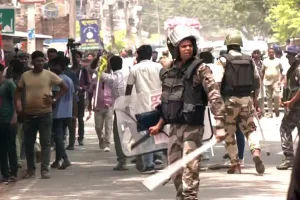
In recent months, the Maad Bachao campaign has gathered momentum, reflected in a series of arms recoveries, surrenders by cadres, and the expansion of security camps deeper into interior pockets.

Police officials said removing such monuments is not just about dismantling physical structures but about breaking fear and clearing the path for healthcare, education, governance, and economic opportunities in regions that were once inaccessible.

The latest operation, they added, reflects the government’s resolve to loosen the Maoists’ grip on Narayanpur and neighbouring districts and bring tribal communities firmly into the mainstream.

Islamabad mosque blast: Bomber identified as Peshawar resident who ‘travelled to Afghanistan for training’

Authorities probing the Islamabad mosque blast have identified the suicide bomber as a Peshawar resident who travelled to Afghanistan for training, as investigators trace wider militant links.

Statesman News Service | New Delhi |

Pakistani authorities have identified the suicide bomber behind the deadly attack at Islamabad’s Imambargah Khadijah al-Kubra as a resident of Peshawar who allegedly received militant training in Afghanistan, officials said on Saturday, as investigators continued to piece together the planning and execution of the assault that killed at least 31 people during Friday prayers.

The suspect, identified as Yasir Khan Yasir, was not an Afghan national but had travelled to Afghanistan multiple times and spent nearly five months there before returning to Pakistan, according to preliminary findings cited by The Express Tribune. Officials said the identification was made through forensic analysis of the bomber’s remains.

Minister of State for Interior Talal Chaudhry confirmed that the attacker’s identity had been established through forensic evidence recovered after the blast. “He is not an Afghan citizen, but forensic examination of the remaining parts of his body has provided information about how many times he had travelled to Afghanistan,” he said.

Also Read: Islamabad mosque blast exposes Pakistan’s internal security fault lines as India is blamed

What investigators know so far about the attacker

Sources associated with the investigation said Yasir Khan was influenced by the Salafi school of thought and is believed to have undergone militant training during his stay across the border. According to officials, he received training at the Mansoor Istashhadi training centre in Afghanistan’s northeastern Kunar province.

“He received training at the Mansoor Istashhadi training centre in Afghanistan’s northeastern Kunar province and travelled to and from the country multiple times,” sources told The Express Tribune.

Investigators are also examining possible links between the suspect and the Islamic State Khorasan Province (ISKP). However, officials stressed that the inquiry remains at a preliminary stage and that no final conclusions have been drawn so far.

Authorities said efforts are underway to trace the wider network that may have enabled the attack, including identifying handlers, logistical facilitators, and any domestic or cross-border support that could have played a role.

Deadly blast during Friday prayers

The explosion occurred at the Khadija Tul Kubra mosque in Islamabad’s Tarlai Kalan area during Friday prayers, killing at least 31 people and injuring 169 others, according to Pakistani officials.

Eyewitnesses told local media that gunfire was heard moments before the explosion, after which the suicide bomber detonated explosives amid a large gathering of worshippers inside the mosque.

Hospitals across the capital were placed on emergency footing as rescue teams rushed the injured to medical facilities. Several victims were reported to be in critical condition.

Political reactions and regional implications

Pakistan was quick to attribute the attack to external forces. However, innocent people of the rogue nation have time and again borne the burden of homegrown terrorism.

The international community condemned the bombing and called for a thorough and transparent investigation. Diplomatic sources said that while the incident has not led to immediate escalation, it underscores the fragile security environment in South Asia.

India strongly denounced the suicide bombing at the Shia mosque in Islamabad, offering condolences to the victims’ families. New Delhi also rejected Pakistan’s allegations as “baseless,” describing them as an attempt to divert attention from Pakistan’s internal challenges.

Photo

  • img
  • img
  • img
  • img
  • img
  • img
  • img
  • img
  • img
  • img
  • img
  • img
  • img
  • img
  • img

India U-19 lift ICC World Cup 2026 Trophy for the 6th time: A celebration in pictures

India U-19 lift ICC World Cup 2026 Trophy for the 6th time: A celebration in pictures

MORE Photo STORIES

Sonia Gandhi calls revision plea ‘frivolous and politically motivated’, seeks its dismissal

In a reply filed through counsel before the Court of Special Judge (CBI) Vishal Gogne, she has contested the allegations relating to her alleged inclusion in the electoral rolls prior to acquiring Indian citizenship and sought dismissal of the revision petition.

ANI | New Delhi |

Congress Leader Sonia Gandhi has opposed the criminal revision petition filed against her in the Rouse Avenue Court, stating in her reply that the plea is based on incorrect, misleading and speculative facts and is “wholly misconceived, frivolous, politically motivated and an abuse of the process of law.”

In a reply filed through counsel before the Court of Special Judge (CBI) Vishal Gogne, she has contested the allegations relating to her alleged inclusion in the electoral rolls prior to acquiring Indian citizenship and sought dismissal of the revision petition.

The response adds that the complainant has made serious accusations in a reckless manner based on assumptions, media reports and personal presumptions rather than authentic records. It states that no specific document has been identified as having been forged or falsified and that the allegations lack material particulars.

Sonia Gandhi’s reply further maintains that matters relating to citizenship fall exclusively within the domain of the Central Government, while preparation and maintenance of electoral rolls is the statutory responsibility of the Election Commission of India. It contends that criminal courts cannot assume jurisdiction over such issues by entertaining private complaints, as this would amount to interference in the electoral process.

The response also disputes claims that her name was re-entered in the electoral roll on the basis of any application or forged documentation. It states that the complainant has failed to place on record any authentic application or supporting record allegedly used for inclusion in the voter list, nor has any attempt been shown to obtain such documents through lawful means.

Denying further allegations, the reply rejects presumptions that fabricated government identity documents were used to obtain registration or that she cast a vote in the 1980 general election. It describes such claims as baseless assertions made without evidence.

The response also questions the reliance placed on old media reports, stating that such material does not carry legal recognition and cannot form the basis of criminal proceedings. It contends that the complainant is attempting to revive a controversy from 1980-83 after more than four decades without any foundational documentary proof, making the allegations stale and legally untenable.

Legal objections have also been raised regarding the maintainability of the complaint. The reply states that mandatory statutory requirements under the BNSS were not complied with, including proper filing of a valid affidavit, and therefore, the court lacks jurisdiction to entertain the complaint.

The revision petition has been filed by advocate Vikas Tripathi, challenging the Magistrate Court’s September 2025 order, which had dismissed his earlier complaint at the threshold. The Magistrate had observed that issues relating to citizenship and electoral rolls fall within the jurisdiction of the Central Government and the Election Commission of India and cannot be adjudicated through a criminal complaint.

Sonia Gandhi’s reply, filed through advocates Tarannum Cheema, Kanishka Singh, Akash Singh and Akshay Nagarajan, seeks dismissal of the revision petition on the ground that it is based on conjectures, stale references and lacks any essential factual foundation.

BJP nominates Ritu Tawde as Mahayuti candidate for post of Mumbai Mayor

Meanwhile, former mayor Kishori Pednekar of the Uddhav Thackeray-led Shiv Sena and likely candidate for Mumbai mayor’s post said, “We accept the calculations of numbers and have accepted them.

Statesman News Service | Mumbai |

The BJP officially named its corporator Ritu Tawde as the Mahayuti alliance candidate for the post of Mumbai Mayor on Saturday, while the Eknath Shinde-led Shiv Sena nominated corporator Sanjay Ghadi for the post of Deputy Mayor.

Meanwhile, former mayor Kishori Pednekar of the Uddhav Thackeray-led Shiv Sena and likely candidate for Mumbai mayor’s post said, “We accept the calculations of numbers and have accepted them. Finally, the BJP had to accept a Marathi person who is a Hindu. We will raise questions as the opposition without succumbing to any pressure.”

“The battle that was going on in 2022. Even in that struggle, the tree of the Marathi people planted by Balasaheb Thackeray is standing tall. Who is using the mandate received in Balasaheb’s name for what? The people have seen it. Our fight has always been for the identity of the Marathi people, and it will continue,” Kishori Pednekar said.

Meanwhile, BJP mayoral candidate Ritu Tawde said, “We are sure that my victory in the elections on the 11th will be certain. After 44 years, the BJP has come to power in the municipal corporation. More than 50 corporators of the opposition have not been elected. We are going to break their 25-year rule of corruption. In the hall, all the corporators come together to serve Mumbai’s development; we will discuss those issues. Mumbaikars will see a different change in Mumbai”.

The election for the Mumbai mayor’s post will take place on Wednesday, February 11. The selection of the mayoral category is based on a lottery system introduced after the 74th Constitutional Amendment, which mandates rotational reservation of leadership posts in local bodies. Under the Mumbai Municipal Corporation Act, the mayor’s post rotates among Scheduled Castes, Scheduled Tribes, Other Backward Classes, women (both reserved and open), and the general category.

The election is scheduled to take place at Mantralaya (the State Secretariat) in Mumbai, and it will be overseen by the Minister or Secretary of the Urban Development Department.

The election process will begin with the preparation of chits based on “eligible categories” based on historical rotation. For instance, if the previous term was ‘open,’ that category may be excluded or de-prioritised in order to ensure that another community group gets an opportunity.

This will be followed by a public draw, when all “categories” written on pieces of paper are folded and placed in a glass jar or box. Traditionally, a child is then called to pick a chit from the jar to ensure that the chit is picked in a totally random manner.

The “category” written on the selected chit becomes the official “reservation” for the mayoral term. For example, if such a lottery system dictates which corporators can contest the election for the Mayor of Mumbai post. If the post is reserved for a scheduled caste (ST) woman, only an elected corporator who meets both these criteria (has to be a woman and a scheduled caste) can run for election.

After the draw of chits is completed, an official gazette notification is issued by the Urban Development Department. Thereafter, the Municipal Commissioner will call a special meeting of the 227 elected corporators, and finally, these corporators will elect the Mayor of Mumbai from among eligible candidates through a show of hands, requiring a simple majority of 114 votes or hands raised.

Repair efforts underway at Bholari base hit during Operation Sindoor

Geo-intelligence and OSINT analyst Damien Symon shared comparative before-and-after images of the site on X, stating that visible structural changes point to ongoing restoration activity at the airbase facility that was damaged during the May conflict between the two nuclear nations.

Parwinder Sandhu | New Delhi |

Pakistan has seemingly commenced restoration efforts at Bholari Airbase almost nine months after an aircraft hangar was hit in May 2025 during Operation Sindoor, as new imagery reveals partial removal of the structure’s damaged roof.

Geo-intelligence and OSINT analyst Damien Symon shared comparative before-and-after images of the site on X, stating that visible structural changes point to ongoing restoration activity at the airbase facility that was damaged during the May conflict between the two nuclear nations.

“Nearly nine months after an aircraft hangar was struck, during the May 2025 India-Pak conflict at Bholari Airbase, Pakistan, repair activity now appears to be underway with recent imagery showing the hangar roof partially removed.”

Bholari Airbase in Sindh province, located under 100 miles from the port city of Karachi, was among several key military installations targeted by India during Operation Sindoor in May 2025.

The base, commissioned in December 2017, is considered one of Pakistan’s more modern operational air facilities. It is known to host the Pakistan Air Force’s 19 Squadron along with an Operational Conversion Unit (OCU), both of which operate F-16A/B Block 15 ADF fighter aircraft.

The reported strike took place on the night of May 9–10, 2025, as part of India’s retaliatory action following attempted missile attacks by Pakistan on Indian military sites.

Imagery captured by commercial satellite providers and reviewed by geo-intelligence analysts indicated extensive structural damage to a large aircraft hangar at Bholari.

Visual analysis pointed to a wide breach in the roof of the structure, consistent with a high-impact strike. IAF sources had stated that air-launched BrahMos supersonic cruise missiles were used in the strikes.

At the time of the strike, multiple Western-origin fighter aircraft, along with a Saab 2000 airborne early warning and control (AEW&C) platform, were present at the base. Other airbases that were hit during the operation include Nur Khan, Sargodha, Rafiqui, Murid, Chaklala, Rahim Yar Khan and Chunian.

Casualties linked to the strike were acknowledged by Sindh Chief Minister Murad Ali Shah, who told the media that several air force personnel had been killed in the attack.

“Look at what is happening in Sindh. There are seven martyrs in Sindh. In the attack that took place in Bolari, six officers and technicians from the Air Force were martyred. The first martyr who happened in Sindh was Bakhtar Lagari, who was martyred in Ghatki,” Shah had said while interacting with the media.

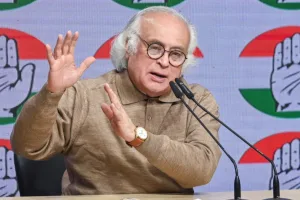
‘Namaste Trump’ won, ‘Howdy Modi’ lost: Congress’s Ramesh says India-US trade deal only in America’s interest

Congress leader Jairam Ramesh said the details of the trade deal were still sketchy, but one thing was clear that India can no longer purchase oil from Russia if it had to evade US penalties.

Statesman News Service | New Delhi |

As India and the United States issued a joint statement on the recently finalised bilateral trade deal, opposition parties have expressed concerns over the changing dynamics in India-Russia trade relations.

Senior Congress MP and former union minister Jairam Ramesh took a jibe and said ‘Namaste Trump’ had won and ‘Howdy Modi’ had lost, referring to two events that were held in India and the US during the leaders’ bilateral visits.

Ramesh said the details on the trade deal were still sketchy but one thing was very clear that India can no longer purchase oil from Russia if it had to evade US penalties.

“Namaste Trump jeete, Howdy Modi haare. The joint statement, which has been issued, is not very detailed, but whatever information we could collect makes five things very clear. First, we will not purchase Russian oil, and if we do, a fine will be imposed on us in the form of 25 per cent tariffs,” the Congress leader told news agency ANI.

“Second, we will either reduce or remove import duty on agricultural imports from the US. Our imports from the US will increase by three times every year. This means our trade with the US, which is in surplus, will become a deficit. Fourth, there is no mention on IT and services sector. Fifth, export duty on Indian products is increasing,” he added.

Ramesh asserted that the trade deal announced by Trump and Modi is only in America’s interests. He added that everything will become clear once the complete details of the deal emerge.

Aam Aadmi Party MP Sanjay Singh also suggested that India cannot trust the US and give up on a friend like Russia.

“The US has always betrayed you, and Russia has supported you at that time. The American and Indian finance ministers have issued a joint statement. It says that they have auctioned off farmers’ interests. India is the world’s largest coal producer, but you will buy it from the US? We will have to find out who are the businessmen benefiting from this,” Singh said.

Details of India-US Interim Agreement on Trade

The remarks came as India and the US released a joint statement on the Interim Agreement on Trade. Union Minister for Commerce and Industry, Piyush Goyal, will be addressing a press conference as well later today on the India-US Joint Statement on the interim free trade deal.

As per the joint statement, India will eliminate or reduce tariffs on all US industrial goods and a wide range of American food and agricultural products, including dried distillers’ grains (DDGs), red sorghum for animal feed, tree nuts, fresh and processed fruit, soybean oil, wine and spirits, and additional products.

The United States, on its part, will apply a reciprocal tariff rate of 18 percent on originating goods of India, including textile and apparel, leather and footwear, plastic and rubber, organic chemicals, home décor, artisanal products, and certain machinery. Post the successful conclusion of the Interim Agreement, the US will also remove the reciprocal tariff on a wide range of goods including generic pharmaceuticals, gems and diamonds, and aircraft parts.

The US will also remove tariffs on certain aircraft and aircraft parts of India imposed to eliminate threats to national security.

He was 15 minutes from home: Inside the Janakpuri pit death that has Delhi asking questions

A 25-year-old biker’s death after falling into an uncovered pit in Janakpuri has led to suspensions, an FIR and renewed questions over road safety norms in Delhi.

Statesman News Service | New Delhi |

The Delhi Police on Saturday arrested subcontractor Rajesh Prajapati in connection with the death of 25-year-old Kamal Dhyani, who died after falling into an uncovered pit while riding his motorcycle in west Delhi’s Janakpuri on February 5, as mounting evidence pointed to serious safety lapses at the road work site.

The arrest comes a day after multiple officers were suspended and an FIR flagged the absence of barricades, warning signs, reflectors and lighting at the Delhi Jal Board (DJB) project site where the accident took place. The case has triggered public anger and political sparring over accountability for hazardous construction practices in residential areas.

The victim, Kamal Dhyani, was returning home late Thursday night when he allegedly rode into an open pit at an ongoing Delhi Jal Board (DJB) project site near the B3B Block in Janakpuri. He was found dead inside the pit on Friday morning.

Residents living near the site said the area was poorly secured and dangerously dark. “Our house is just in front, in Janta Flats. We have to come here three to four times a day. There were no barricades on this side, only two on the other side. The green sheet you can see wasn’t there earlier. Nothing was properly installed. There was no warning for anyone. The area remains dark, which is the biggest issue,” a local resident told news agency IANS.

Kamal, a resident of Kailashpuri, had left his office in Rohini to celebrate his parents’ wedding anniversary but never reached home. According to his friend, he had spoken to Kamal shortly before the incident and was told he was just 15 minutes away.

How the incident unfolded

When Kamal failed to return, his family alerted the police and launched a night-long search. Police teams attempted to trace his movements using mobile tower data and CCTV footage, but no breakthrough was achieved for several hours.

The search ended around 8 am on Friday when a woman alerted the police about a body lying inside a pit in the area. Police personnel rushed to the spot and found Kamal’s body inside a nearly 15-foot-deep pit, with his motorcycle lying nearby.

According to the FIR, the pit, which was dug in the middle of a public road as part of road work, had no warning signs, reflectors, barricades or proper lighting. No security guard had been deployed at the site. The FIR also notes that the pit measured about 20 feet in length, 13 feet in width and around 14 feet in depth.

Kamal was pulled out of the pit with the help of the fire brigade and taken to Deen Dayal Upadhyay Hospital in a PCR vehicle, where doctors declared him brought dead.

Government response and suspensions

Delhi Home Minister Ashish Sood, who visited the site on Saturday, said all officers responsible for the incident had been suspended and that no one would be spared.

“All the departments conducted a joint inspection. We have directed the departments, and I am here to ensure that the road runs smoothly with minimum inconvenience to the public. All the officers responsible for the incident have been suspended. The police have also registered an FIR, and an investigation is underway. We will not spare anyone responsible. We want to tell the public that if an incident occurred despite all our efforts, we are also hurt, and the Chief Minister is monitoring the situation,” Sood told ANI.

Earlier, Delhi PWD Minister Parvesh Verma had termed the death “tragic” and announced strict action, including suspensions and a detailed probe to fix responsibility.

Political blame game intensifies

The incident has also triggered a political row, with the Aam Aadmi Party accusing the police and the BJP-led Delhi government of attempting to shift blame onto the victim.

AAP Delhi president Saurabh Bharadwaj demanded the suspension of Police Commissioner Satish Golchha, alleging a cover-up. “The police and the Delhi BJP government made every effort yesterday to place the blame for Kamal Dhyani’s death on Kamal Dhyani himself. They wanted to show that there was barricading everywhere,” Bharadwaj said.

He also questioned why Kamal’s phone location, which he claimed was known to the police, was not shared earlier. “If they had shared it at night, he could have been saved. The police have not made the CCTV footage of the incident public,” he added.

Family, friends question safety claims

Kamal’s friend Altaf Alam, speaking to ANI, rejected official claims about barricading at the site. “The way was open; they covered it yesterday to hide their misdeeds. Delhi PWD Minister Parvesh Verma said that barricades have been installed every 100 metres. They are showing us sympathy. All arrangements were made to celebrate the anniversary of his parents,” he said.

Local residents echoed these concerns, alleging gross negligence at the DJB worksite and warning that poorly marked construction zones pose a serious risk to commuters, especially at night.

Questions over construction safety norms

The death has renewed scrutiny of safety practices at road and utility works across Delhi, particularly in residential areas with poor lighting. Residents and family members have demanded accountability, saying preventable lapses continue to claim lives unless stricter enforcement is ensured.

Delhi Police have rejected allegations of inaction, stating that officers remained with the family through the night and made continuous efforts to trace Kamal’s movements. An investigation is ongoing.