Logo

T20 World Cup: Mosca brothers shine as Italy thrash Nepal by 10 wickets to seal maiden victory

Led by a disciplined bowling effort from Crishan Kalugamage (3/18) and Ben Manenti (2/9), Italy restricted Nepal to 123 all out in 19.3 overs.

Neha Buswal | New Delhi |

Completing the match within three hours, Italy showcased their dominant side and secured a historic maiden victory in an ICC Men’s T20 World Cup, thrashing Nepal by 10 wickets in their Group C encounter at the Wankhede Stadium in Mumbai on Thursday, February 12, 2026.

It was a massive result for the tournament debutants. Despite suffering a 73-run defeat against Scotland in their opening match, Italy ensured they made a statement in their second outing. Nepal, who had pushed England to the brink in their previous game and lost by just four runs, were comprehensively outplayed by the Azzurri in Mumbai.

Led by a disciplined bowling effort from Crishan Kalugamage (3/18) and Ben Manenti (2/9), Italy restricted Nepal to 123 all out in 19.3 overs. Openers Anthony Mosca (62)* and Justin Mosca (60)* then chased down the target without losing a wicket in just 12.4 overs.

Nepal won the toss and opted to bat first but suffered an early setback as Kushal Bhurtel struggled for runs and was dismissed for five in the second over. Captain Rohit Paudel and Aasif Sheikh steadied the innings with a 41-run partnership, taking Nepal to 46 at the end of the powerplay.

Italy struck back immediately after the powerplay, removing both set batters in quick succession. Paudel scored 23 off 14 balls, while Aasif made 26 off 21. Dipendra Singh Airee and Aarif Sheikh later added 41 runs for the fifth wicket, but Italy tightened the screws again with rapid strikes that derailed Nepal’s innings.

Aarif top-scored with 27 off 24 balls, while Karan KC added an unbeaten 18 off 11, but Nepal were bowled out for 123 with three balls remaining. Alongside Kalugamage and Manenti, JJ Smuts, Ali Hasan, and Jaspreet Singh also picked up a wicket each.

In reply, the Mosca brothers made light work of the chase, producing an unbeaten opening stand to seal the victory. Anthony Mosca smashed 62 off 32 balls, while Justin Mosca struck 60 off 44 as Italy reached the target with more than seven overs to spare.

The win keeps Italy’s Super 8s hopes alive after their heavy opening loss to Scotland. Nepal, meanwhile, suffered their second consecutive defeat after their narrow loss to England, leaving their qualification hopes hanging by a thread.

UP govt to implement marginal liquor price hike from April 1, 2026

The announcement was made in the new excise policy here on Thursday. According to the policy, the rate of country-made liquor has been hiked by just Rs 5 per bottle.

Statesman News Service | Lucknow |

In a blow to the boozers in Uttar Pradesh, the state government has announced a minimal hike in retail liquor prices from April 1, 2026.

The announcement was made in the new excise policy here on Thursday. According to the policy, the rate of country-made liquor has been hiked by just Rs 5 per bottle. But the rate of Indian Made Foreign Liquor (IMFL) has been raised between Rs 10 and Rs 40 per bottle.

The government is expected to generate an additional Rs 1500 in revenue through this hike.

The MRP formulas for Indian-made wines and low-strength alcoholic beverages (RTDs) have been rationalized and the excise duty on wines has been reduced. An additional excise duty has been levied on fortified wines.

The policy says that a 100 ml capacity has also been introduced in 42.8 percent V/V Uttar Pradesh Made Liquor(UPML) in the year 2026-27.

A provision has been made to round off the maximum retail price of country liquor/UPML of all strengths except 25 percent V/V to the next multiple of Rs 10, which is expected to generate additional revenue of Rs 1,500 crore.

The MGR (Minimum Guaranteed Revenue)/license fee for retail liquor stores in the state has been increased by 7.5 percent for 2026-27. The license fee for ‘ Bhang outlets’ will increase by 10 percent.

Officials said it will be mandatory for the Model Shops and Premium Model Shops located in all the Municipal Corporation areas of the state and the entire district of Gautam Budh Nagar to receive overseas imported liquor equivalent to a minimum of 5 percent of their prescribed monthly minimum guaranteed revenue and Indian Made Foreign Liquor equivalent to a minimum of 2 percent at their premium and high-end clearance shops.

It will also be mandatory for all the premium retail vends of the state to receive overseas imported liquor equivalent to a minimum of 5 percent of their prescribed minimum MGR and Indian Made Foreign Liquor equivalent to a minimum of 2 percent at their super premium and high-end clearance shops.

Low alcoholic premium retail vend licenses for the sale of wine and LAB/RTD can also be approved in the Gautam Buddha Nagar district and all municipal corporations.

Bar licences can also be granted in Form FL-7(1) for low alcoholic strength beverages, beer, wine and RTD only in the districts of Gautam Buddha Nagar, Ghaziabad, Agra, Prayagraj, Varanasi and Lucknow of Uttar Pradesh.

Meanwhile, the government has decreased the revenue collection target of the excise department from Rs 63,000 crore to Rs 60,000 crore during this fiscal. The UP government has collected around Rs 44,000 crores as excise revenue till January 31, in this fiscal.

However, the target for the 2026-27 financial year excise revenue collection has been hiked to Rs 71,278 crores.

UP govt nod to Chitrakoot Link Expressway & bioplastic industry

The decisions were taken here yesterday in a cabinet meeting, which was chaired by Chief Minister Yogi Adityanath.

Statesman News Service | Lucknow |

The Uttar Pradesh government has approved a 4-lane Chitrakoot Link Expressway and also gave its nod for a bioplastic industry in the Lakhimpur Kheri district of the state.

The decisions were taken here yesterday in a cabinet meeting, which was chaired by Chief Minister Yogi Adityanath.

According to sources here on Thursday, the cabinet has approved the final RFP document prepared for the selection of a developer for the implementation of the 4-lane (6-lane expandable) access-controlled greenfield Chitrakoot Link Expressway project on the EPC mode.

The Uttar Pradesh Expressways Industrial Development Authority (UPEIDA) has been authorised and designated as the nodal agency for the development of the Chitrakoot Link Expressway project. The Chitrakoot Link Expressway will begin at Bhartiku in Chitrakoot district and extend to Ahmedganj village in Chitrakoot district on National Highway 135BG.

The total length of the project will be 15.172 kms, with a budget of Rs 513.97 crore. Following the cabinet approval, global bids will be invited for the selection of the developer.

Sources said the construction of the Chitrakoot Link Expressway will accelerate development in the tourism sector, providing easy and fast transportation for travellers coming from remote areas. The construction of the expressway from the starting point of Bundelkhand to Chitrakoot Dham will accelerate development in the tourism sector.

Meanwhile, Balrampur Chini Mills Limited will set up an industrial unit in Lakhimpur with an investment of Rs 2,850 crore.

Balrampur Chini Mills Ltd (BCML) is setting up India’s first large-scale 250 TPD (80,000 tonnes/year) Polylactic Acid (PLA) bioplastics plant at its Kumbhi Sugar Mill complex in Lakhimpur Kheri. The Rs 2,850 crore investment, signed with the UP government, will use sugarcane to produce biodegradable plastic. The Cabinet approved a Letter of Comfort (LOC) in this regard under the Uttar Pradesh Bioplastics Industry Policy to promote the bioplastics industry in the state.

The Cabinet approved proposals for the UPCDA, the Lucknow Metro Rail Project, the development and allocation of assets by the Ghaziabad Development Authority, and the tabling of the CAG report of the Department of Public Enterprises in the Assembly.

Shashi Tharoor comes out against forced strike

Tharoor said he supports the right to protest, but not the right to disrupt. In a Facebook post on Thursday, Tharoor said it is ironic that today’s “Bharat Bandh” is actually just another “Kerala Bandh.”

Statesman News Service | Thiruvananthapuram |

Congress MP from Thiruvananthapuram, Shashi Tharoor, has opposed the 24-hour national strike called by the Joint Trade Union Committee against the central policies.

Tharoor said he supports the right to protest, but not the right to disrupt. In a Facebook post on Thursday, Tharoor said it is ironic that today’s “Bharat Bandh” is actually just another “Kerala Bandh.”

While other parts of India have grown beyond such forced disruptions, Kerala alone is still held hostage by this atrocity of an organised minority on an unorganised majority, he wrote on Facebook.

He further said, “By clinging to such old-fashioned ‘sportsmanlike’ methods, we are not at all suitable for the youth and entrepreneurs of our state.”

“A state to a standstill by disrupting daily life, trade and transport is an encroachment on the freedom of the common man. Kerala’s reputation has already been tarnished by the intense unionism that has spread from inside the factories to our streets and homes. We cannot become a modern, investor-friendly destination by pursuing outdated forms of struggle that the world and the rest of India have rejected,” Tharoor wrote on Facebook.
Full text of Tharoor’s Facebook post

“It is a sad paradox that today’s ‘Bharat Bandh’ has actually become just another ‘Kerala Bandh’. While other parts of India have grown beyond such forced disruptions, Kerala alone remains captive to this violence by an organised minority on an unorganised majority.

My position has been clear since I entered politics: I support the right to protest, but not the right to disrupt. No Indian has a constitutional right to obstruct another’s free movement.

We have driven industries out of our country through our intense union activities; now, by clinging to such old-fashioned ‘force majeure’ methods of imprisoning citizens in their homes and forcing shopkeepers to close their shutters, we are ensuring that our state is not at all conducive for youth and entrepreneurs. It is time to break this self-destructive habit. We can only replace it with constructive dissent.

I have long argued that the right to strike does not include the right to force others to strike, even when my own party is involved. Bringing a state to a standstill by disrupting daily life, trade, and transport is an invasion of the common man’s freedom.

Kerala’s reputation has already been tarnished by the intense unionism that has spread from inside the factories to our streets and homes. We cannot become a modern, investor-friendly destination by pursuing outdated forms of struggle that the rest of the world and India have rejected.

We can respect the right to disagree, but we can also strongly defend the right of others to disagree with us, and the freedom to work and travel. Protest should be a moral declaration, not a physical blockade,” Tharoor wrote on Facebook.

The 24-hour nationwide general strike called by trade unions on Thursday against the central government’s policies brought life to a standstill in Kerala, with public transport largely crippled and educational institutions and banks remaining closed. Government offices saw limited employee footfall, while shops and markets remained closed.

No privilege but BJP moves substantive motion against Rahul, seeks disqualification

Instead, the government opted to expunge “objectionable” portions of Gandhi’s speech delivered in the Lok Sabha on Wednesday from the parliamentary record.

VIBHA SHARMA | New Delhi |

BJP MP Nishikant Dubey on Thursday submitted a notice in the Lok Sabha to move a substantive motion against Leader of Opposition Rahul Gandhi, accusing him of misleading the House and seeking termination of his parliamentary membership. Sources, meanwhile, indicated that the BJP-led NDA has, for now, decided not to proceed with a privilege motion against Gandhi.

Instead, the government opted to expunge “objectionable” portions of Gandhi’s speech delivered in the Lok Sabha on Wednesday from the parliamentary record.

Dubey, in his notice, alleged that Gandhi made unsubstantiated claims in Parliament and engaged with foreign organisations to tarnish India’s image and described Gandhi’s actions, both inside and outside Parliament, as “inimical to the country.”

“I have moved a motion in the Lok Sabha against Rahul Gandhi for misleading the nation with the help of forces like George Soros, who want to harm the country. I have requested that his membership be terminated and that he be barred for life from contesting elections,” Dubey told the media.

In his notice, the BJP MP claimed that Gandhi had engaged with organisations such as the Soros Foundation, the Ford Foundation and USAID, and had travelled to countries including Thailand, Cambodia, Vietnam, and the United States to carry out “anti-India activities.” He further alleged that Gandhi used the “pious dais of Parliament” to foment public sentiment and level unsubstantiated allegations against institutions, including the Election Commission of India and the Supreme Court, thereby lowering the dignity of the House without substantive evidence.

The controversy follows Gandhi’s remarks in the Lok Sabha on Wednesday, in which he alleged that Prime Minister Narendra Modi compromised India’s interests under US pressure, following which Parliamentary Affairs Minister Kiren Rijiju said that the BJP will move a privilege notice against Gandhi for “misleading the House and making baseless statements.”

Sources suggested that the Centre has strategically chosen not to pursue a privilege motion in order to prioritise debate over formal disciplinary proceedings during the ongoing Budget session. Pursuing a privilege motion could escalate tensions and may not receive unanimous support from allies. By expunging remarks and responding through debate — including a possible reply by Petroleum Minister Hardeep Singh Puri — the government will be able to counter Gandhi’s claims without triggering a full-fledged privilege discussion that could further spotlight the Opposition leader.

A substantive motion is an independent proposal intended to express the sense of the House on an issue, while a privilege motion pertains specifically to an alleged breach of parliamentary privilege. According to experts, substantive motions are mostly independent, self-contained proposals addressing issues that require prior notice and debate. Privilege motions are urgent, high-priority motions raised when a member believes rights or the House’s privileges have been breached, often requiring immediate attention.

Two killed in suspected case of human sacrifice in MP village

The police have arrested the accused man while two persons who suffered serious injuries in the incident have been admitted to a hospital for treatment.

Statesman News Service | Bhopal |

An elderly man and woman were allegedly hacked to death by a man, in a suspected case of human sacrifice due to superstition, in a village in the Singrauli district of Madhya Pradesh early Thursday morning.

The police have arrested the accused man while two persons who suffered serious injuries in the incident have been admitted to a hospital for treatment.

According to Singrauli SP Manish Khatri, the incident took place at Berihwa Tola in village Lohra under the jurisdiction of the Jiyawan police, around 60 km from the district headquarters.

The SP said that the deceased have been identified as Phool Kumari Singh Gond (50) and Kamal Narayan Singh Gond (65). The two injured are Sumitra Singh (38) and Ram Bhajan Singh (35).

The SP said police have arrested the accused Chhatrapati Singh (21).

According to the police, the accused Chhatrapati Singh called the men and women to his house sometime between 4 and 5 am and killed two of them with a sharp-edged weapon without any provocation in a pre-planned manner.

The killings were carried out near a platform in the courtyard outside the accused’s house.

The police found religious materials connected to rituals near the spot, raising suspicion that the crime may have been driven by superstition and belief in witchcraft.

Villagers claimed that the wife of the accused had suffered a miscarriage a few months ago and he blamed the two deceased for it, which may have led to the crime.

The SP said that the police are investigating from all angles, and the exact motive behind the crime would be ascertained in further course of the probe.

Brazil Prez to visit India next week for AI Impact Summit

The two leaders would also be exchanging views on regional and global issues of mutual interest, including cooperation in multilateral fora, reformed multilateralism, global governance, and issues concerning the Global South.

Statesman News Service | New Delhi |

At the invitation of Prime Minister Narendra Modi, Brazil President Luiz Inácio Lula da Silva will visit India from 18-22 February 2026 to participate in the 2nd AI Impact Summit, it was officially announced on Thursday.

The two leaders will also hold a bilateral meeting on 21 February. They would be reviewing the entire gamut of bilateral relations. The PM is scheduled to host a lunch in honour of the visiting dignitary. The two leaders would also be exchanging views on regional and global issues of mutual interest, including cooperation in multilateral fora, reformed multilateralism, global governance, and issues concerning the Global South.

During President Lula’s visit, President Droupadi Murmu is expected to meet him and host a banquet in his honour. Vice President C P Radhakrishnan and External Affairs Minister S Jaishankar will also call on President Lula.

The President of Brazil is expected to be accompanied by about 14 ministers and a large delegation of top CEOs of Brazilian companies. The accompanying ministers would be having meetings with their Indian counterparts. The CEOs are expected to participate in a business forum being organised during the visit, reflecting the growing trade and commercial engagements between the two countries, the Ministry of External Affairs said.

UP becomes first state to introduce Excise Export Policy

Uttar Pradesh has become the first state in the country to introduce an Excise Export Policy for three financial years to enhance ethanol exports and boost investment in potable liquor manufacturing to make its presence felt in the international market.

Statesman News Service | Lucknow |

Uttar Pradesh has become the first state in the country to introduce an Excise Export Policy for three financial years to enhance ethanol exports and boost investment in potable liquor manufacturing to make its presence felt in the international market.

The state cabinet approved the policy to fulfil the following objectives:-

– Increase production of ethanol and other related products for export based on local agriculture-related grains and fruits to industries.

– To encourage industrial investment for potable liquor exports and to expand ancillary sectors such as distilleries, packaging, logistics and export services, thereby generating significant direct and indirect employment and thereby enriching the state’s economy.

– To strengthen the position of Uttar Pradesh in international markets by increasing the volume of export of potable liquor.

-To try to establish Uttar Pradesh as a catalyst for increasing the foreign exchange reserves of India.

Officials said here on Thursday that to promote exports, the rates of bottling charges, export pass fees, franchise fees and special fees have been reduced to the minimum level for exports equivalent to 25 per cent of the beverage capacity prescribed under the Excise Export Policy.

Besides, the provisions for brand registration and label approval for liquor brands intended for export have been relaxed, and the fee rates have been reduced to a minimum.

In accordance with the provisions of the policy, the export duty on molasses-based ENA within the country has been reduced to Rs 0.50 per bulk litre.

Lastly, provisions have also been made for distilleries to manufacture heritage wines for export, as well as to allow tasting taverns and retail sale.

BCB Chief Aminul Islam to attend high-voltage India vs Pakistan match following boycott row resolution

Aminul Islam informed that representatives from all five major Asian cricket boards – India, Pakistan, Bangladesh, Afghanistan, and Sri Lanka – will be present at the match.

Statesman News Service | New Delhi |

After the final decision confirmed that the biggest rivalry match of the T20 World Cup 2026 will take place on February 15, excitement has surged across the cricketing world. Among those who will be in attendance is Bangladesh Cricket Board (BCB) president Aminul Islam, who has confirmed he will travel to Colombo to watch the high-voltage India vs Pakistan clash at the R. Premadasa Stadium.

Speaking to Bangladesh newspaper Pratham Alo, Islam informed that representatives from all five major Asian cricket boards – India, Pakistan, Bangladesh, Afghanistan, and Sri Lanka – will be present at the match. He added that the meeting is part of a broader ICC initiative to bring all key stakeholders together for dialogue.

“The ICC has made a decision. The major stakeholders of the ICC are these five Asian countries. For the India-Pakistan World Cup match on the 15th, they want representatives of all five Asian countries to be present at the ground together, watch the match together, and talk to one another,” Islam said.

Recent tensions between BCCI and BCB

The decision comes amid strained relations between the BCCI and BCB, which deteriorated after the Indian board requested Bangladesh pacer Mustafizur Rahman to be released from the Kolkata Knight Riders (KKR) squad during the IPL.

In response, the BCB asked the ICC to move World Cup matches out of India, but the governing body rejected the request. The fallout eventually led to Scotland replacing Bangladesh in the multinational tournament, escalating tensions further.

Pakistan, in solidarity with Bangladesh, initially announced a boycott of their World Cup match against India while continuing to participate in the tournament. However, following positive talks between the ICC and BCB, Pakistan agreed to play the fixture, and the ICC decided not to take action against Bangladesh for schedule non-compliance.

Bangladesh set to host future ICC event

As part of the resolution, Bangladesh is set to host an ICC event between 2028 and 2031, with Islam expecting it to be the ICC Men’s Under-19 World Cup in 2028.

The BCB chief also confirmed that the board will prepare a Memorandum of Understanding (MoU) to ensure that all assurances are formally documented.

“We will also enter into an agreement. The agreement will be line by line, an MoU-type document, so that there is no uncertainty,” Islam said.
“Earlier, when we held the Asian Cricket Council (ACC) Annual General Meeting in Dhaka, a similar issue arose. We prepared an MoU-type document so that no one could deviate from the contract,” he added.

OBC students will not be denied scholarships: UP minister Narendra Kashyap

He stated that the current income limit for scholarships is ₹2 lakh, which was increased from ₹1 lakh during the previous government, and the government is continuing to maintain this.

Statesman News Service | Lucknow |

Narendra Narendra Kashyap statement in UP Assembly, Yogi government scholarship scheme for backward classes, income limit for UP scholarship ₹2 lakh, UP scholarship budget increased to ₹3,500 crore, backward classes welfare department budget comparison,, Uttar Pradesh Minister of State (Independent Charge) for Backward Classes Welfare and Empowerment of Persons with Disabilities, stated that the Yogi government is seriously concerned about the educational interests of students from backward classes.

He stated that the current income limit for scholarships is ₹2 lakh, which was increased from ₹1 lakh during the previous government, and the government is continuing to maintain this.

Minister Kashyap informed the state assembly during question hour on Thursday that since 2023-24, not a single eligible student from the backward classes in the state has been denied scholarships.

He said that the double-engine government under the leadership of Chief Minister Yogi Adityanath believes in delivering on the ground, not just making announcements. There will be no shortage of funds for scholarships and fee reimbursements.

He explained that the department’s budget was ₹1,286 crore under the previous government, while under the Yogi government, it has increased to approximately ₹3,500 crore, representing a nearly three-fold increase. The minister said that this year, a target has been set to provide scholarships to 3.8 million students, and according to departmental rules, not a single eligible student will be left out.

Haryana government focused on strengthening industry–labour synergy to accelerate economic growth: CM

Saini, who is the Chairperson of the Council, stated that no state can achieve economic progress unless industries function smoothly and workers remain prosperous and satisfied.

Statesman News Service | Chandigarh |

Haryana Chief Minister Nayab Singh Saini stated that the state government’s primary focus is on developing a robust industrial sector and a skilled workforce to accelerate the overall progress of the state. The Chief Minister was chairing the first meeting of the ‘Industry Labour Friendly Council’ in Chandigarh.

Saini, who is the Chairperson of the Council, stated that no state can achieve economic progress unless industries function smoothly and workers remain prosperous and satisfied. Harmony between these two sectors is essential. Keeping this spirit of cooperation and mutual understanding in mind, the “Industry–Labour Friendly Council” has been constituted. Haryana is the first state in the country to establish such a Council.

He said that the government is working on the policy of ensuring “Ease of Doing Business” for industries and “Ease of Living” for workers. The Council will also review government announcements related to industry and labour, provide suggestions regarding worker safety, facilitate the resolution of industrial disputes, and promote the upgradation of skill development in technical institutions such as ITIs.

The Chief Minister further said that special emphasis will be laid on enhancing the productivity of workers employed in the state’s industries through this Council. Higher productivity will contribute to an increase in GDP, which forms the foundation of national and state development.

Saini stated that nearly two lakh micro and medium enterprises in Haryana were operating outside designated industrial areas and were unable to avail themselves of several facilities. To address this, the government launched a portal on December 25, 2025, enabling these enterprises to register and become regularized, thereby allowing them to benefit from various government schemes.

He informed that issues related to the transfer of plots from the Haryana Urban Development Authority (HUDA) to HSIIDC in certain industrial areas have also been resolved. Similarly, the government has approved the provision of land at concessional rates for ESIC hospitals for industrial workers.

The construction of affordable dormitory housing for workers in industrial areas is progressing swiftly. In districts facing space constraints within industrial areas, multi-level parking facilities will also be developed.
The Chief Minister added that the state government is making continuous efforts to further improve the industrial environment in Haryana to attract greater investment. This, he said, will help realize Prime Minister Narendra Modi’s vision of “Viksit Bharat–2047.”

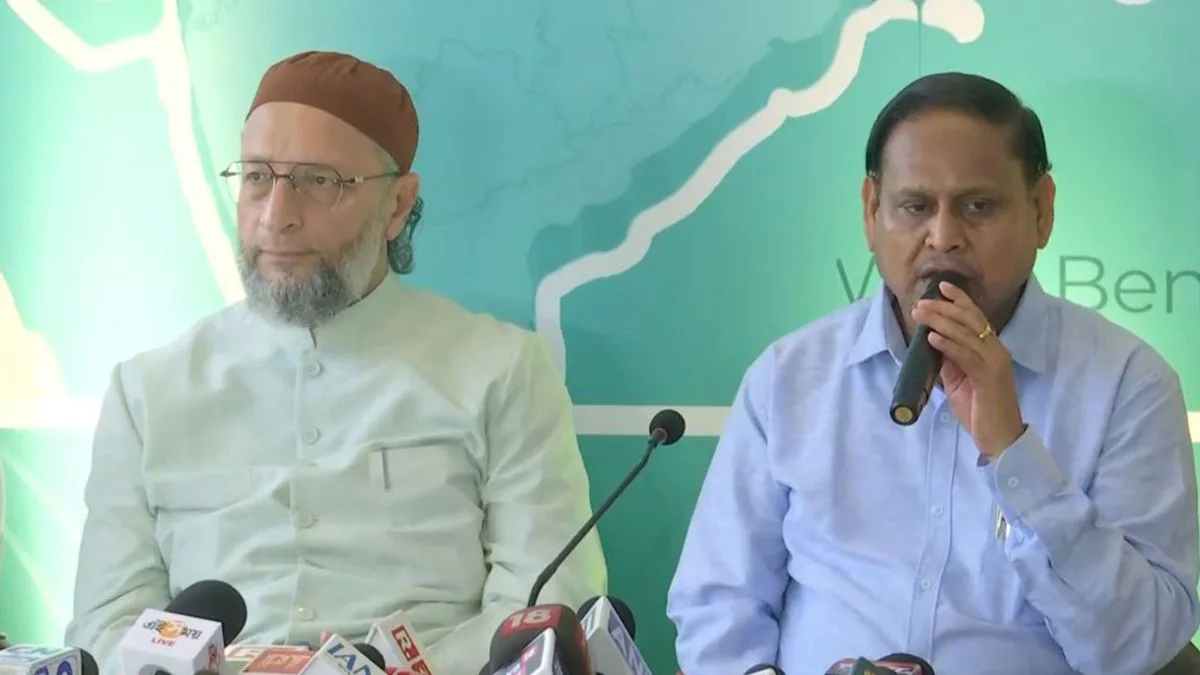
Mandating recitation of Vande Mataram is unconstitutional and unacceptable: AIMPLB

The Board has termed the decision unconstitutional and contrary to religious freedom.

Statesman News Service | Lucknow |

The All India Muslim Personal Law Board (AIMPLB) has strongly objected to the Central government’s recent notification mandating the recitation of all verses of Vande Mataram at official functions and in schools before the National Anthem, Jana Gana Mana.

The Board has termed the decision unconstitutional and contrary to religious freedom.

In a press statement here on Thursday, Board’s General Secretary Maulana Mohammed Fazlur Rahim Mujaddidi expressed strong opposition to the government’s decision, calling it unconstitutional, against religious freedom and secular values, contrary to Supreme Court judgment, and directly conflicting with the religious beliefs of Muslims. He stated that the decision is therefore completely unacceptable to Muslims.

The Maulana noted that, following Rabindranath Tagore’s advice and deliberations in the Constituent Assembly, it had been agreed that only the first two stanzas of Vande Mataram would be used. He said that a secular government cannot forcibly impose the beliefs or teachings of one religion upon followers of other religions.

He added that the song was written in the context of Bengal and contains references to the worship veneration of Durga and other deities. Whatever the political considerations behind implementing this decision ahead of the West Bengal elections, Muslims cannot accept it, as it directly conflicts with their faith. A Muslim worships only One God, Allah, without partners, and Islam does not permit any form of associating partners with God.

The General Secretary further stated that Indian courts have also held that the other verses are inconsistent with secular values and have restricted their recitation. Therefore, the Board demands that the Central government immediately withdraw the notification; otherwise, the Board will challenge it in the court.

Sacred Gift for Lord Vishweshwara from Siddhivinayak Temple on Mahashivratri

Dr Sandeep Rathore, Deputy CEO, Shri Siddhivinayak Temple, commended the excellent arrangements, well-organised operations, and service to devotees by the Shri Kashi Vishwanath Temple Trust and administration.

Statesman News Service | Varanasi |

On the auspicious occasion of Mahashivratri, as part of a special initiative launched by the Shri Kashi Vishwanath Temple Trust, the tradition of offering sacred offerings and gifts to Lord Shri Vishweshwara Mahadev from various major pilgrimage sites is being continued.
On Wednesday evening, fruits, flowers, and other worship materials for Lord Shri Vishweshwara were reverently sent from Mumbai’s famous Shri Siddhivinayak Temple to the Shri Kashi Vishwanath Dham.

On the occasion, a delegation from the Shri Siddhivinayak Temple, Mumbai—Dr Sandeep Rathore (Deputy CEO), Dr Madhusudan Shukla (Chairman, Trustee Protocol), Dr Prashant Manerikar (Priest), and Dr Shivam Mishra—ceremonially handed over the sacred offerings to the Shri Kashi Vishwanath Temple Trust. The Trust ceremonially accepted the offerings.

Dr Sandeep Rathore, Deputy CEO, Shri Siddhivinayak Temple, commended the excellent arrangements, well-organised operations, and service to devotees by the Shri Kashi Vishwanath Temple Trust and administration. He particularly praised this innovative initiative launched by the Temple Trust on the auspicious occasion of Mahashivratri, saying that it strongly establishes the spiritual essence of the sacred father-son relationship between Lord Shri Ganesha and the Supreme Lord Mahadev.

He said this innovative initiative is a powerful symbol of the spiritual nature of the eternal father-son relationship between Lord Shri Ganesha and Lord Shri Vishweshwara, rooted in the Sanatan tradition. The occasion was deeply emotional and revered for all present.

This initiative further strengthened the religious, cultural, and spiritual unity between Kashi and Shri Siddhivinayak Dham. This event proved to be a sacred medium for devotees to experience devotion, harmony, and the divine essence of Sanatan culture, he added.

Dharmendra Pradhan inaugurates conclave to enhance India’s AI capacity

During the event, Pradhan launched the Bodhan AI Centre of Excellence. The Bharat Bodhan AI Conclave 2026 is envisioned as a national platform for landscape discovery, strategic alignment, and partnership building in AI-enabled education.

Statesman News Service | New Delhi |

Union Education Minister Dharmendra Pradhan on Thursday inaugurated the Bharat Bodhan AI Conclave 2026, marking a significant step in advancing the integration of Artificial Intelligence (AI) across India’s education ecosystem.

During the event, Pradhan launched the Bodhan AI Centre of Excellence. The Bharat Bodhan AI Conclave 2026 is envisioned as a national platform for landscape discovery, strategic alignment, and partnership building in AI-enabled education.

Its primary purpose is to: enable landscape discovery and ecosystem mapping to identify gaps and opportunities; support strategic partnerships across government, academia, startups, and industry; and mark the beginning of the development of the Bharat EduAI Stack, an open and interoperable architecture to build, integrate, and scale AI-powered learning solutions across India

The conclave will engage solutions across four priority verticals – AI for School Education, AI for Higher Education, AI for Skilling and Workforce Readiness, and AI Research and Deep Technology.

Speaking on the occasion, Pradhan said the two-day conclave brings together academia, industry, policymakers, start-ups, innovators, scientific leadership and the skilling ecosystem to integrate AI in education at scale and develop the ‘Bharat EduAI Stack’.

He underlined that India’s AI will be inclusive by design, interoperable by architecture and sovereign by capability. Stressing the importance of embedding AI in education to empower students and support teachers, he called upon all stakeholders to build scalable, responsible, ethical and India-centric sovereign AI models for transforming education and realising the goal of Viksit Bharat.

He expressed confidence that the collective wisdom of the conclave would pave the way for enhancing India’s AI capacity, strengthening India’s leadership in AI, building a DPI in education and ensuring AI for All.

An exhibition showcasing AI-driven innovations in school education, higher education, and skilling was also inaugurated, providing a platform for interaction between policymakers and innovators.

SAD to launch campaign for assembly polls with ‘Punjab Bachao, Sukhbir Singh Badal Liyao’ programme from Feb 17

The party has decided to take up all the burning issues of Punjab and present its vision for the state during the mass contact programme.

Statesman News Service | Chandigarh |

The Shiromani Akali Dal (SAD) on Thursday announced that it would launch a mass contact programme titled “Punjab Bachao – Sukhbir Singh Badal Liyao” from Qadian on February 17, marking the beginning of the party’s campaign for the 2027 Vidhan Sabha elections.

The decision was taken by party president Sukhbir Singh Badal after consultations with the senior party leadership.

Speaking on the occasion, Mr Badal said, “We will take up all the burning issues of Punjab and present our vision for the state. I am confident that Punjabis will rally around the SAD, which alone is capable of fulfilling their aspirations.”

Disclosing details of the programme, senior leader Dr Daljit Singh Cheema said it would include 40 rallies across the state and culminate on Baisakhi, April 13. He said 28 rallies would be held by March 31, and their schedule has already been finalised. “The remaining 12 rallies will be held in April,” he added.

Providing further details, Dr Cheema said the SAD has always practised ethical politics. “We have consistently stood by our promises. This time as well, we will present our comprehensive vision for the state, covering every section of society, with a special focus on maintaining peace and communal harmony.”

The SAD leader said the party would clearly spell out its stand on key issues and demonstrate its commitment to resolving them.

“These include the transfer of Punjab’s capital, Chandigarh, to the state and ending the discrimination against Punjab in the allocation of river waters.” He added that the party is also concerned about the erosion of the federal structure in the country and remains committed to defending it.

“The weakening of federalism has financially harmed Punjab, particularly in terms of the devolution of central funds and the states’ freedom to allocate them according to their priorities.”

Dr Cheema said the ongoing crisis in agriculture and the serious issues faced by farmers including indebtedness, suicides, and the lack of compensation for losses suffered during the 2025 floods would be highlighted during the rallies. He added that the demand to make the Minimum Support Price (MSP) a legal guarantee, concerns over the reduction in fertiliser subsidies, and the need to safeguard farmers’ interests in trade negotiations with the United States would also be key issues during the mass contact programme.

“The need for targeted programmes to ensure the welfare of the Scheduled Caste community, expanding employment opportunities for the youth, and exposing corruption, the failure to maintain law and order, and the alleged patronage extended to the drug mafia by the Aam Aadmi Party government will also be forcefully raised,” he said.

Dr Cheema further stated that the party would engage in detailed discussions on Panthic issues, particularly alleged attempts to weaken Sikh religious institutions. “We will expose those who are party to this conspiracy and appeal to the entire Panth to support the SAD, which has always stood as a bulwark for Sikh pride and prestige,” he added.

Why Is India Suddenly Betting Big on Taekwondo and Karate Ahead of Asian Games 2026?

As India looks to expand its medal prospects beyond traditional sports, the Mission Olympic Cell has cleared targeted international exposure and coaching support for taekwondo and karate athletes ahead of the Asian Games 2026, marking a strategic shift in its high-performance roadmap.

Statesman News Service | New Delhi |

The Mission Olympic Cell (MOC) on Wednesday, February 11, 2026 gave a green signal to targeted international exposure and specialised coaching support for select athletes in these combat disciplines. At a time when India is looking to broaden its medal base beyond mainline sports such as athletics, shooting and wrestling, this move signals a shift with taekwondo and karate emerging as unexpected focus sports in the country’s high-performance plans.

These approvals were part of the 168th Mission Olympic Cell meeting that saw nearly Rs 1.70 crore worth proposals cleared.

Rodali Barua (Taekwondo)

The first name among key beneficiaries is taekwondo athlete Rodali Barua from Assam, who has been approved to compete in five overseas tournaments with a financial assistance sanctioned of over Rs 21 lakhs. The tournaments will take place across Europe and Oceania in early 2026 and include high-ranking G2-level competitions such as the Bulgaria Open, Slovenia Open and Dutch Open, along with the Oceania Championships. She will also participate in the Mount Everest International Open in Nepal, a recognised G1 event.

Rupa Bayor (Taekwondo)

Another taekwondo beneficiary is Rupa Bayor, currently ranked sixth in the world and first in Asia, who will receive nine months of continuous support covering physiotherapy, massage therapy and strength and conditioning training.

Bhuvneshwari Jadhav (Karate)

Karate too, has entered the spotlight with Bhuvneshwari Jadhav set to participate in three international tournaments across Rome, China and Spain between March and April 2026. She will be training under foreign coach Sulaymon Sharifovich along with a sparring partner in Tashkent, Uzbekistan, all covered under a sanctioned financial assistance.

Alisha Choudhary (Karate)

Another karate athlete Alisha Choudhary, the two-time Commonwealth Games gold medalist, will also compete in events in Rome and China under her coach Vikas’ guidance, backed by sanctioned financial assistance.

Previously, both karate athletes have secured bronze medals at the 2025 Asian Championships in Uzbekistan, strengthening their case for focused investment.

Other Beneficiaries

Other key sportspersons include squash player Anahat Singh, javelin thrower Neeraj Chopra and para-athletes Varun Bhati and Sandeep Chaudhary.

All eyes will now be on whether this calculated gamble on combat sports translates into podium finishes at the Asian Games 2026.

Our nuke programme in decisive expansion phase: Jitendra Singh

He said India’s installed nuclear capacity, which stood at 4,780 MW in 2014, has risen to 8,780 MW and is projected to reach 22,380 MW by 2031–32, 47 GW by 2037, 67 GW by 2042, and 100 GW by 2047.

Statesman News Service | New Delhi |

India’s nuclear energy programme is in a decisive expansion phase, backed by policy reforms, private sector participation, and clearly defined capacity targets extending up to 2047, Union Minister Jitendra Singh asserted in the Rajya Sabha on Thursday.

He said India’s installed nuclear capacity, which stood at 4,780 MW in 2014, has risen to 8,780 MW and is projected to reach 22,380 MW by 2031–32, 47 GW by 2037, 67 GW by 2042, and 100 GW by 2047. He affirmed that India is moving forward with self-reliance and confidence and that geopolitical developments will not derail ongoing nuclear projects.

He addressed concerns relating to timelines, international negotiations, fuel security, CSR initiatives, and power-sharing arrangements.

Responding to questions on the Kudankulam Nuclear Power Plant, Jitendra Singh said Units 3 and 4 are targeted for completion by 2026–27, while Units 5 and 6 are scheduled by 2030. He stated that there is no reason to apprehend any disruption due to recent geopolitical developments, including shifts in India–US relations.

Tracing the project’s history, he said the Kudankulam project was conceived in 1988, construction began in 2002, and the first unit became operational in December 2014 after the present government assumed office. The subsequent operationalisation of the first two units within the last decade reflects a clear implementation framework and disciplined adherence to timelines.

On a query regarding Corporate Social Responsibility initiatives within the 16-kilometre emergency planning zone, he said the Nuclear Power Corporation of India Limited undertakes CSR and Rehabilitation & Resettlement (R&R) activities for communities around all nuclear facilities.

He informed the House that significant allocations have been made under CSR, with Rs 168 crore spent in the current financial year across projects. Specific figures for Kudankulam over the last four years would be furnished separately. He added that such initiatives focus on infrastructure, healthcare, education and skill development for local communities.

Addressing a question on negotiations concerning the proposed six 1600 MW reactors at the Jaitapur Nuclear Power Project, Jitendra Singh said that discussions have been ongoing and that while the technical agreement framework is in place, certain commercial aspects remain under consideration. He indicated that the matter is being pursued in coordination with relevant ministries, keeping national interest paramount.

On concerns regarding uranium imports and possible supply disruptions in a volatile global environment, he stated that India has strengthened its energy security significantly over the last decade. He said nuclear capacity has more than doubled since 2014 and that policy measures, including recent enabling provisions and duty exemptions for nuclear plant equipment imports up to 2035, are aimed at accelerating domestic capability.