Logo

Reliance Consumer Products inks deal to make Fazer’s premium chocolates

Fazer is a leading FMCG company in Northern Europe, renowned for its high-quality chocolates, confectionery, bakery and plant-based products. In 2025, the Fazer Group had net sales of 1,200 million Euros.

Statesman News Service | Mumbai |

The Mukesh Ambani-led Reliance Consumer Products Limited (RCPL) officially announced here on Friday that it has signed a Memorandum of Understanding (MoU) with Finland’s leading foods company Fazer to establish a long-term strategic partnership in India to produce, market and distribute branded premium chocolates using Fazer’s recipes.

Fazer is a leading FMCG company in Northern Europe, renowned for its high-quality chocolates, confectionery, bakery and plant-based products. In 2025, the Fazer Group had net sales of 1,200 million Euros.

The partnership with RCPL is expected to combine Fazer’s iconic heritage brands, innovative product portfolio, and world’s finest chocolates, with RCPL’s substantial scale and access to nearly 3 million retail outlets across India, as well as deep expertise in the Indian market.

Commenting on the development, Reliance Consumer Products (RCPL) Director T Krishnakumar said, “Partnering with Fazer is a strategic step towards introducing one of the world’s finest chocolates to Indian consumers. This will also accelerate RCPL’s growth in chocolates and confectionery markets. By combining Fazer’s globally trusted brands and manufacturing excellence with RCPL’s local production capabilities, robust distribution network and deep consumer insights, we are well-positioned to bring world-class products to Indian consumers and elevate the overall category experience.”

Elaborating on the deal, Fazer President & CEO Christoph Vitzthum said, “This partnership would be a great opportunity for Fazer to offer our unique products to the fast-growing Indian market. With RCPL handling commercialisation and distribution in India, we could establish a premium position in the chocolate market and lay the foundation for a broader scale nationwide roll-out with a leading and highly capable local partner. Entering the sizeable Indian chocolate market through this strategic partnership could significantly accelerate our international growth.”

Fazer has a focused growth strategy, with continuous expansion and significant international growth targets at its core. With operations in the Nordics and Baltics, Poland, and China, as well as with exports to more than 40 countries worldwide, Fazer already has an established global presence.

Fazer has been actively pursuing opportunities to expand not only organically but also through mergers and acquisitions (M&A), and remains committed to exploring all avenues that enable the company to strengthen its position in both existing and new markets.

PUCL urges Raj govt to withdraw Disturbed Area Bill; asks MLAs to defeat it if govt persists

Terming the Bill as Anti-Constitutional, the NGO said in a statement here late Thursday evening that the Disturbed Area Law will fracture Rajasthani society and lead to ghettoisation of minorities in urban areas.

Statesman News Service | Jaipur |

The People’s Union for Civil Liberties (PUCL) has reiterated its demand for immediate withdrawal of the Rajasthan Prohibition of Transfer of Immovable Property and Provision for Protection of Tenants from Eviction from Premises in Disturbed Areas Bill, 2026, even as the state assembly is scheduled to take it up for debate and passage on Friday afternoon.

Terming the Bill as Anti-Constitutional, the NGO said in a statement here late Thursday evening that the Disturbed Area Law will fracture Rajasthani society and lead to ghettoisation of minorities in urban areas.

“The Bill is unconstitutional as literally every section challenges the fundamental rights and the constitutional principles and has no place within our legal framework, which is based on the core principle of non-discrimination.

“One of the most glaring features of the Bill is Section 2 (f), which defines a term used frequently in the draft Bill and one of the key grounds for declaring an area disturbed, which is improper clustering of persons of one community”, PUCL national president Kavita Srivastava and General Secretary V Suresh stated in the joint statement.

As stated in the draft Bill, it means concentration or congregation of persons of a community in any locality or area arising from coercive, distress-driven, or otherwise unhealthy circumstances, or which causes or is likely to cause demographic imbalance, segregation, communal tension, or disturbance of public order, social harmony, or the mixed- community character of the locality or area,” they wrote in the statement.

The foundation of the two terms, “improper clustering of persons” and “demographic imbalance”, is based on the principle that people of only one community, one culture, one ethnicity, one religion and one kind of lifestyle need to live together. This is a clear challenge to Section 19 (e), “to reside and settle in any part of the territory of India”. A state law cannot curtail this right to impose the unconstitutional value of segregating persons based on the community they belong to, they pointed out.

Quoting from the Constitution, Srivastava and Suresh said it also undermines the principle of fraternity clearly stated in the Preamble as one which will “…promote among them all FRATERNITY assuring the dignity of the individual and the unity and integrity of the Nation”, through the intermixing of the people of different religions, ethnicities, languages, cultures, which would build Unity and Integrity as envisaged by our Constitution founders.

The ill effects of residential segregation will persist across generations; children will no longer play together, schools will become segregated over time, fostering suspicion, enmity, and indifference.

The minority community of the state will be hit by this law, making it impossible for them to buy or sell land.

The PUCL leaders stressed that this bill needs to be unilaterally withdrawn by the Government of Rajasthan, as it is rife with unconstitutional implications. The Bill, if passed, will result in such deleterious consequences that it should not even be sent to a legislative committee.

Appealing to the legislators, they said, “If the government persists with the bill, the bill must be defeated on the floor of the assembly.

The MLAs should understand the deeper unconstitutional agenda, and they should rise above the party lines to vote according to their constitutional conscience”.

The PUCL is committed to taking legal action to challenge this unconstitutional Bill should it become law, Srivastava and Suresh said.

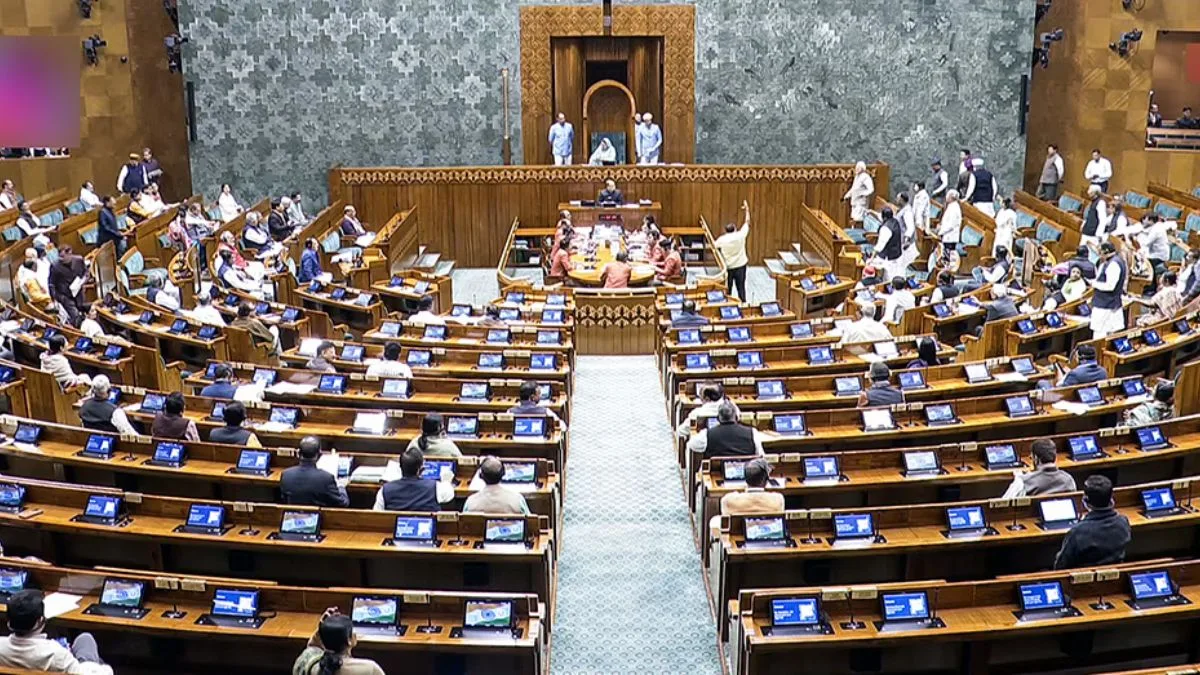
BJP and Congress issue ‘three-line whip’ to Lok Sabha MPs to attend House proceedings from March 9 to 11

The second phase of the Budget session starts on March 9, and it is scheduled to go up to April 2, during which essential legislative and other business is expected to be addressed primarily.

ANI | New Delhi |

Both the ruling Bharatiya Janata Party (BJP) and the opposition Congress on Friday issued a ‘three-line whip’ to their Lok Sabha MPs to mark their presence in the House from March 9 to 11, during the second phase of the Budget Session.

The second phase of the Budget session starts on March 9, and it is scheduled to go up to April 2, during which essential legislative and other business is expected to be addressed primarily.

The first part of the Budget session concluded on February 13, marked by political debates over the India-US interim trade deal and the memoir of former Army Chief MM Naravane, whose publishing status remained a matter of controversy even outside the Parliament.

The Parliament budget session, which began on January 28 with the President’s address to a joint sitting of the two Houses, comprises 30 sittings over 65 days and is scheduled to conclude on April 2. The recess will allow Standing Committees to examine the Demands for Grants of various ministries and departments.

The first part of the session was devoted primarily to the Budget for 2026-27 and to a discussion of the Motion of Thanks on the President’s Address.

The INDIA bloc discussed replacing MGNREGA with the Viksit Bharat-Guarantee for Rozgar and Ajeevika Mission (Gramin) (VB-G RAM G) Act, and the Special Intensive Revision (SIR) of the electoral roll by the start of the session.

During President Droupadi Murmu’s address to both Houses of the Parliament, opposition parties continued to stage a protest in a “dignified” manner against the scrapping of the MGNREGA.

On February 1, Finance Minister Nirmala Sitharaman presented the Union Budget 2026-27 in Lok Sabha. She rose to her ninth consecutive Budget.

The Finance Minister also laid two statements before the House under Section 3(1) of the Fiscal Responsibility and Budget Management (FRBM) Act, 2003. These include the Medium-term Fiscal Policy-cum-Fiscal Policy Strategy Statement and the Macro-Economic Framework Statement.

On February 2, during the motion of thanks on the President’s Address, Lok Sabha witnessed sharp verbal exchanges after the Leader of the Opposition in the Lower House sought to quote a magazine article containing excerpts from Naravane’s unpublished memoir.

The ruling benches objected to Gandhi’s attempt to cite excerpts from the unpublished memoir of former Army Chief General Naravane.

National Democratic Alliance (NDA) MPs objected, arguing that the memoir had not been published and could not be quoted in the House.

Further, eight opposition members were suspended from the Lok Sabha for the remainder of the session for violating rules and “throwing papers on the chair” following an uproar in the House over Congress leader Rahul Gandhi’s insistence on making a specific reference to the 2020 standoff with China in eastern Ladakh.

Even after proceedings were repeatedly disrupted by sloganeering from Opposition members, the Lok Sabha on February 5 passed the Motion of Thanks to the President’s address without the customary reply by Prime Minister Narendra Modi.

Amid the drama and an unprecedented incident, replying to the motion of thanks on the President’s Address in the Rajya Sabha, Prime Minister Narendra Modi said the world is rapidly moving toward a new global order.

After all the drama, the Congress party later submitted a no-confidence motion notice against the Lok Sabha Speaker.

In response, Speaker Om Birla decided on moral grounds that he will not attend the proceedings of the House till the disposal of the no-confidence motion notice against him.

Additionally, the Rajya Sabha was also adjourned on February 13th and is scheduled to meet again on March 9 after a three-week recess.

Meanwhile, the polling for the upcoming biennial elections to the Council of States (Rajya Sabha) to fill the 37 seats across 10 states is scheduled to take place on March 16, with the counting of votes on the same day at 5 pm. The last date for nominations was on Thursday, followed by scrutiny today. The candidates can withdraw their nominations till March 9.

Digital Census enumeration to commence in TN from July 17 after 15-year gap

In a gazette notification, the state government officially announced that the population census, to be conducted over 45 days, will collect information on caste, housing, basic amenities, and modern household accessories.

Statesman News Service | Chennai |

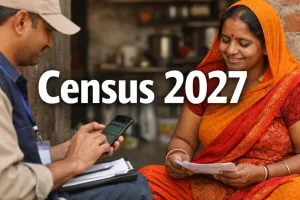
After a gap of 15 years, Census enumeration will commence in Tamil Nadu on July 17 and last until August 30. This is the first digital census to be carried out in the country.

In a gazette notification, the state government officially announced that the population census, to be conducted over 45 days, will collect information on caste, housing, basic amenities, and modern household accessories.

After the Assembly election and the new government assuming office, self-enumeration will be carried out from July 17 to July 31, 2026. House Listing Operations (HLO) will then be conducted for a month from August 1 2026. After this, the actual Census enumeration will be taken up in February next year.

Gearing up for the massive exercise, Chief Secretary N. Muruganandam chaired the first State-level Coordination Committee meeting on February 2. Among other things, the meeting discussed coordination among various stakeholders, including state government Departments. Over 1.5 lakh officials, including enumerators and supervisors, will be involved in the exercise.

As per the gazette notification, enumerators will ask each household 33 questions, and the questionnaire can be obtained after registering on the portal. The Union government had launched four digital platforms and icons for the Census — the House Listing Block Creator, the HLOA mobile phone app, the Self-Enumeration Portal, and the Census Management and Monitoring system. These platforms are available in 16 languages for the convenience of the citizens.

Shastri credits mental toughness for Samson’s World Cup surge

However, Samson has since delivered back-to-back Player-of-the-Match performances to help India reach the final against New Zealand.

Statesman News Service | New Delhi |

Former India head coach Ravi Shastri has explained what he believes is the key reason behind the recent success of Sanju Samson at the ICC Men’s T20 World Cup. Samson had spent much of the recent period on the fringes of India’s preferred T20I setup and missed selection in the early stages of the tournament when Ishan Kishan was preferred as opener and Rinku Singh was in the mix.

However, Samson has since delivered back-to-back Player-of-the-Match performances to help India reach the final against New Zealand. His latest contribution came in the knockout semifinal against England in Mumbai, where he struck seven sixes during a superb knock of 89.

While Samson’s surge in form has surprised many, Shastri said he had anticipated such performances, pointing to a noticeable shift in the batter’s approach. Shastri believes Samson has become mentally stronger at the crease and that this change has played a major role in his success at the tournament.

“I think finally realising and coming to terms with the fact that he needs to be more consistent,” Shastri said on The ICC Review.

“He’s got to be wiser with his shot selection and he’s got to back his strengths. The thing with Sanju is he’s got every shot in the book, but lapses in concentration. I think he’s toughened up mentally and there’s never anyone who’s doubted his skill or talent ever since he made the side.

“What people have been disappointed is that the run of consistency that should have been there by now isn’t there, but he’s come of age now.”

Although Samson has shown flashes of brilliance in the past, Shastri feels his best cricket could still lie ahead, especially now that his role in the Indian team is more clearly defined.

“He’s still just 31 years of age and a genuine match-winner,” Shastri noted.

“And when you see shots like (today) that is being played, there’s class, there’s touch there, there’s power there, there’s brute force. It’s just unbelievable.”

While Samson’s form has been a major boost for India, the recent struggles of fellow opener Abhishek Sharma have raised some concerns ahead of Sunday’s final against New Zealand.

Abhishek has managed just 89 runs from seven innings in the tournament so far. However, Shastri believes it would be unwise for India to alter their playing XI at this stage and insists the top-ranked T20I batter should be backed in the final. “I think they’ve just got to stick with him now,” Shastri noted.

“Don’t make any changes as the side’s having a good run. Stick with that and just tell him believe in your ability, believe in your strengths and back your strengths, don’t go into a shell where you’re tentative or you’re timid.

“We back you, you back your strengths and go out there and play. The last game might be the best game for you,” he added.

Benchmark indices slip over 1%, Nifty down at 24,450

At close, the Sensex was down 1,097 points or 1.37% at 78,918.90, and the Nifty was down 315.45 points or 1.27% at 24,450.45.

Statesman News Service | New Delhi |

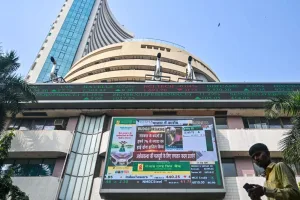
The Indian stock market on Friday failed to sustain the gaining momentum and slipped over 1%. Nifty was down at 24,450 amid selling pressure across the sectors.

At close, the Sensex was down 1,097 points or 1.37% at 78,918.90, and the Nifty was down 315.45 points or 1.27% at 24,450.45.

Broader indices outperformed with Nifty Midcap index falling 0.7%, and Smallcap index down 0.2%.

The overall market capitalisation of BSE-listed firms slipped to Rs 450 lakh crore from Rs 453 lakh crore in the previous session.

Among the sectors, most of the indices ended on a mixed note. On the declining side were Auto, realty, PSU Bank, and private bank indices falling 1-2%. Defence index surged nearly 3%, while Capital Goods index rose 1.3% and Power index gained 0.4%.

On Nifty, the key gainers were Bharat Electronics, Reliance Industries, NTPC, ONGC, and Sun Pharma among others. ICICI Bank, Eternal, Shriram Finance, Axis Bank, and UltraTech Cement were the top losers.

Over 250 stocks touched their 52-week low including Cohance Lifesciences , Sonata Software, Procter and Gamble Hygiene and Health Care, Berger Paints, Alkyl Amines, Cyient, among others.

Most of the real estate stocks were on the losing end. Among the key names, Godrej Properties dropped 3.8%, Raymond Realty declined nearly 3%, Prestige Estates fell 2.7%, Lodha Developers slipped around 2%.

Among the rail stocks, IRCON traded over 11% higher in the early trade, while those of RVNL climbed 3.17%. RailTel, RITES, IRFC traded 4.2%, 3.5% and 1.5% higher, respectively.

Heartburn in allies as DMK gives new partner DMDK RS berth bypassing old guards

The VCK and the Left parties, fellow travellers with the DMK for long like the Congress, are also apprehensive that their share of seats, instead of being hiked this time, might be reduced from that of the last time to accommodate the DMDK and a few minor parties expected to join the alliance.

Statesman News Service | Chennai |

Even as the DMK has sealed a seat-sharing deal with the Congress after much-wrangling, there is heartburn among allies like the Viduthalai Chiruthaigal Katchi (VCK) and the MDMK of Vaiko after a new entrant of the combine with much less vote share, the DMDK, being given a Rajya Sabha berth.

The VCK and the Left parties, fellow travellers with the DMK for long like the Congress, are also apprehensive that their share of seats, instead of being hiked this time, might be reduced from that of the last time to accommodate the DMDK and a few minor parties expected to join the alliance. Including the minor ones, the DMK-led Secular Progressive Alliance (SPA), has 26 constituents in its ranks. This makes the seat-sharing agreement a big challenge ahead of the DMK’s conference on March 9. This will be all the more daunting with the former allies seeking a bigger share of the pie.

While the VCK, which does not relish the DMDK being given an RS berth, and the Left parties are reportedly demanding double digit seats, some others are pressing for more seats than they had contested last time. In the 2021 election the VCK and the two Left parties and the MDMK were allotted 6 seats each. They want that their share should not be below that of the DMDK, which secured 0.17 vote share in the 2024 Lok Sabha poll, contesting in the AIADMK alliance. Similar is the case with the MDMK which wants to reclaim its position as a State party.

The VCK had secured recognition as a State Party by the Election Commission and hence expects that it should be given double digit seats. VCK leaders claim that the party has an organisational network across the state and their vote share is more than that of the Congress. Besides the party being a multiplier in a coalition by bringing more votes than it could independently, the articulate VCK leader Thol Thirumavalavan is a campaign asset for the alliance, it is pointed out.

With the allies demanding their pound of flesh, the DMK will be left with contesting only around 160 seats, leaving many ticket aspirants from its ranks disappointed. However, it could manage it by making smaller allies contesting on this Rising Sun symbol.

AFC Asian Cup: Iran women footballers sing, salute national anthem in dramatic U-turn after earlier silence

Ahead of their second group-stage match against Australia, the Iranian players sang the national anthem and performed a military-style salute – a noticeable change from their earlier stance.

Statesman News Service | New Delhi |

The Iran women’s national football team remains at the centre of controversy during the ongoing AFC Women’s Asian Cup in Australia after their silent protest during the national anthem sparked backlash from state-aligned figures back home and raised concerns over the players’ safety.

Ahead of their second group-stage match against Australia, the Iranian players sang the national anthem and performed a military-style salute – a noticeable change from their earlier stance. According to reports, the shift likely came under pressure from Iranian authorities.


Earlier, before their opening match against South Korea on March 2 at Cbus Super Stadium, all eleven Iranian players and head coach Marziyeh Jafari stood silently during the playing of the national anthem.

The act was widely interpreted as a protest amid escalating tensions in Iran following reports of the death of Supreme Leader Ayatollah Ali Khamenei during a major military escalation and a government-enforced 40-day mourning period.

The gesture quickly drew criticism from state-linked voices in Iran. Iranian television presenter Mohammad Reza Shahbazi labelled the players “wartime traitors” and called for severe punishment, accusing them of showing a lack of patriotism during a period of national conflict.

Iran suffered a 4–0 defeat to hosts Australia in their second match and must now beat the Philippines in their final group-stage fixture to keep their hopes of reaching the knockout stages alive.

The situation has also sparked international concern over the players’ safety if they return home. Refugee Council chief executive Paul Power warned that the team could face risks following the backlash in Iran.

As the tournament continues, the Iranian women’s team finds itself balancing the pressures of international competition with the emotional weight of events unfolding in their homeland and concerns for the safety of their families.

Haryana Women’s Commission questions how ‘Tateeree’ lyrics passed censor clearance, summons Badshah

‘Tateeree’ is Badshah’s recently released Haryanvi track that has attracted attention for its lyrics. The song is now at the center of a controversy over alleged indecency and objectification of women and minors.

Statesman News Service | New Delhi |

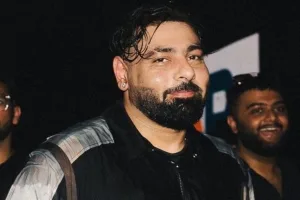
The rapper-singer Badshah is in the middle of a new controversy. The Haryana State Commission for Women (HSCW) has formally summoned him over alleged objectionable content in his latest Haryanvi track, ‘Tateeree’. The controversy has been simmering since the song dropped on March 1, 2026.

Complaints of indecency and objectification

The commission, led by chairperson Renu Bhatia, took suo motu cognisance of complaints that the song’s lyrics are indecent and cross cultural and moral boundaries. Savita Arya, president of Nari Tu Narayani Utthan Samiti, and Shiv Kumar, director of Shiv Aarti India Foundation, formally alleged that the lyrics objectify women and minors and contain inappropriate vocabulary.

The official summons, dated March 6, names Badshah (real name Aditya Pratik Singh Sisodia) and has been sent to the Superintendent of Police in Panipat. Authorities are instructed to ensure all concerned parties are present for the hearing.

Also Read: Throwback: When Shah Rukh Khan broke silence on being called ‘arrogant’ and why he ‘troubled’ filmmakers

The HSCW has scheduled the proceedings for March 13, 2026, at 11:30 am, to be held at the Conference Hall, DC Office, Panipat, with Bhatia presiding.

Bhatia did not hold back in questioning how the song passed regulatory scrutiny. As a former three-year member of the Film Censor Board, she expressed surprise that a track containing such lyrics was cleared for public release.

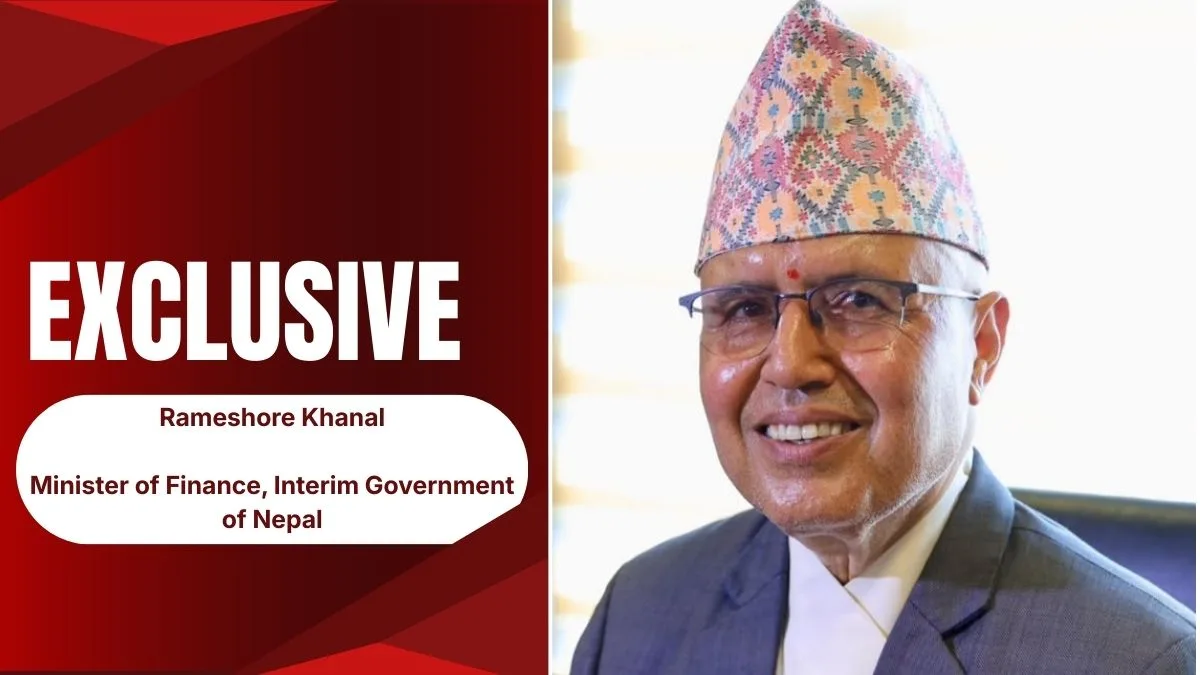
EXCLUSIVE: Nepal’s outgoing Finance Minister Rameshore Khanal on interim rule: Aid from India-China accepted, not relied upon

Khanal opens up about his six-month tenure as Nepal’s finance minister, navigating protests, elections, and economic challenges. Read on to see how he steered the interim government and what he thinks about Nepal’s next steps.

Bibhu Luitel | New Delhi |

When Nepal’s streets filled with angry young protesters and uncertainty hung over the country’s political future, the government that took charge had one mission: restore stability and hold elections.

In the middle of that tense moment, economist and former finance secretary Rameshore Khanal stepped in as Nepal’s finance minister under the interim leadership of Sushila Karki. The government had only six months to act before elections would bring in a new administration.

Now, with the election completed and a new government set to take office soon, Khanal looks back on those six months with a sense of quiet completion. Speaking exclusively to The Statesman, he said the task was never about headlines or dramatic reforms.

Also Read: Explained: Who are Nepal’s RSP? Rabi Lamichhane’s scandal-shadowed Rashtriya Swatantra Party with Balen Shah hovering nearby

“Our goal was simple,” he said. “We wanted to conduct the election smoothly and responsibly. We were committed to that from the beginning.”

For Rameshore Khanal, the brief tenure was less about political drama and more about steady administrative work.

A government focused on finishing the job

Khanal said the interim government was careful not to create unnecessary political excitement or sensational decisions during a fragile period.

“The main thing was that we did not want to provoke anyone or create a sensational government,” he explained. “We had one responsibility; conduct the election properly. And we did it.”

Despite the limited time, he believes the administration managed to complete important tasks.

“Aafno kaam sampanna garein chhoto awadhi maa,” he said, meaning that he believes the government fulfilled its responsibilities in the short time available.

He pointed to several measures taken by the finance ministry during the period. These included simplifying customs procedures, improving the income tax system to make it more taxpayer-friendly, and introducing relief schemes for people affected during the Gen Z protest movement.

The protest had caused significant damage to property and led to loss of lives in some areas. Khanal said his ministry worked with other agencies to provide compensation and relief to those affected.

“The compensation and relief scheme for those who suffered losses has already been implemented,” he said.

Preparing the country for elections

The election itself was the central responsibility of the interim government, and Khanal says the administration treated that task as a promise.

“I had vowed to conduct this election,” he said. “That was my part.”

According to him, the government ensured there was no shortage of resources for the election process.

Nepal did not rely on international aid to organise the polls. However, Khanal said some countries offered assistance voluntarily.

“India, China and Japan extended support on their own initiative,” he said. “But we did not depend on foreign aid. We made sure nothing was lacking during the election.”

The government also worked under difficult financial circumstances, as the fiscal year had already begun before the interim administration took charge.

Cutting waste and scrapping weak projects

One of Khanal’s earliest announcements as finance minister was that poorly prepared government projects would be scrapped.

He believed Nepal could not afford to spend money on projects that lacked proper planning.

“We could not move ahead with unready and fragmented projects,” he said, reflecting on that decision now. “Every rupee had to be spent responsibly.”

During the six months, the finance ministry also focused on reducing unnecessary expenses within government departments.

Economic challenges and criticism

The interim government faced criticism from some quarters over slow economic growth and weak revenue collection.

Khanal acknowledged the criticism but said the government had inherited difficult circumstances.

“When this government was formed, two months of the fiscal year had already passed,” he explained. “Business activities were already slow.”

The country also faced natural disaster during the period.

“In October, floods hit Kathmandu and surrounding areas. There was a lot of damage,” he said.

Those events further slowed economic activity. Still, Khanal believes the government managed to rebuild confidence in the private sector.

Rebuilding trust with the private sector

One of the government’s priorities was restoring confidence among businesses.

According to Khanal, many entrepreneurs had become cautious because of strict financial audits and regulatory pressure in earlier years.

“Because of full audits, the private sector had become scared,” he said.

To address that concern, the finance ministry introduced measures aimed at making financial processes easier.

These included simplifying tax procedures, improving online payment systems, and streamlining customs clearance.

Khanal said the government tried to build a more cooperative relationship with businesses.

“You can call it a private-sector-friendly government,” he said.

Despite the disruptions caused by protests and natural disasters, he said the economy showed some positive signs.

According to Khanal, Nepal recorded 3.2 percent economic growth in the first quarter during the government’s tenure.

“In Nepal’s context, that is a good number,” he said.

Fiscal position and credit standing

Khanal also pointed to improvements in Nepal’s broader financial indicators.

He said aggregate government revenue has been increasing, and the country currently has reasonable fiscal space.

The government also worked to reduce unnecessary spending, which he believes helped maintain financial stability.

On the international front, Khanal said Nepal’s sovereign credit rating performance remained stable during the period.

Remittance concerns amid global conflict

Remittances remain one of the most important pillars of Nepal’s economy, but Khanal expressed concern about emerging global developments.

He emphasised that remittance income does not directly belong to the government.

“Remittance is not the government’s income. It is the income of individuals,” he said.

However, global conflicts could affect Nepali workers abroad.

He noted that tensions in the Gulf region and international conflicts, including the one going on in Iran right now, could affect employment opportunities for migrant workers.

“I have been hearing that Nepali people are losing jobs,” he said. “Will they return? We don’t know.”

Despite these concerns, he said Nepali workers have a strong reputation abroad.

“In foreign employment, Nepali workers are known to be hardworking and trustworthy,” he added.

Working through the FATF Grey List

Another challenge for Nepal’s financial system has been its placement on the Financial Action Task Force (FATF) grey list, which includes countries working to improve their systems against money laundering and terror financing.

Khanal said Nepal has made progress on several compliance factors during the past year.

“The country has improved in multiple areas,” he said, expressing hope that continued reforms will strengthen Nepal’s financial credibility.

A career built on reform

Khanal’s appointment as finance minister carried a strong message in Nepal’s policy circles.

Just five months before joining the interim government, he had chaired a high-level economic reform commission tasked with recommending ways to rescue the struggling economy.

When he became finance minister, he was effectively responsible for implementing some of the same proposals he had previously recommended.

His career in public service spans 31 years, including roles at Nepal Rastra Bank and later as finance secretary.

During his time in government, Khanal gained a reputation for integrity and reform.

He exposed the fake VAT billing scandal, strengthened tax collection systems, and took action to prevent misuse of public resources.

In 2010, he resigned after disagreements with then finance minister Bharat Mohan Adhikari. Outside formal government roles, he later served briefly as an unpaid adviser to former prime minister Baburam Bhattarai.

What’s next?

As Nepal prepares for its next political chapter, Khanal is watching the election results closely. He noted that current trends indicate a clear majority for the Rashtriya Swatantra Party.

If that result holds, he believes it could bring greater political stability.

“I hope this will provide some stability to the current situation,” he said.

When asked what’s next for him, he says he is not thinking about his personal future. “Politics is not my agenda,” he said, “It never was.”

“When the crisis happened, I could not say no,” he said. “I did my part. I hope I did it well.”

Noida International Airport receives security vetting approval, decks cleared for flights

Officials said here on Friday that with this approval, the path has now been cleared for obtaining the aerodrome license from the Directorate General of Civil Aviation, after which flight operations can begin from the airport.

Statesman News Service | Lucknow |

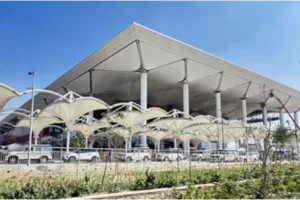
The ambitious Noida International Airport project of the Uttar Pradesh government has achieved a major milestone. The airport has received Security Vetting Approval from the Bureau of Civil Aviation Security. This process is completed after a detailed inspection of the airport’s security arrangements.

Officials said here on Friday that with this approval, the path has now been cleared for obtaining the aerodrome license from the Directorate General of Civil Aviation, after which flight operations can begin from the airport.

The project, which is among the top priorities of the state government, has been fast-tracked under the leadership of CM Yogi Adityanath. The government aims to develop the Jewar Airport as one of the most modern and largest airports in the country, which will play a significant role in the economic growth of Uttar Pradesh.

According to Rakesh Kumar Singh, CEO of the Yamuna Expressway Industrial Development Authority, testing of security standards is mandatory before flight operations begin at an airport.

For this purpose, a team from the Bureau of Civil Aviation Security inspects several aspects including airport security arrangements, surveillance systems, access control, and the screening systems for passengers and cargo. Security Vetting Approval is granted only after all standards are found to be in compliance.

Security Vetting Approval means that the airport’s security system has been deemed safe for flight operations. Only after this approval does the final process for starting flights move forward. Following the security clearance, the next step is the issuance of an aerodrome license by the Directorate General of Civil Aviation. Commercial flight operations can begin only after this license is granted.

Under the leadership of Chief Minister Yogi Adityanath, the state government has developed the Jewar Airport as one of its most significant infrastructure projects.

The airport is emerging as a major aviation hub not only for western Uttar Pradesh but for the entire National Capital Region. The government believes that once operational, it will significantly boost investment, tourism, logistics, and trade in the state, while also creating thousands of employment opportunities for youth.

The CM Yogi government aims to inaugurate and operationalize the Noida International Airport at the earliest.

All necessary preparations are currently being finalized. The airport is being developed in multiple phases.

Once fully completed, it will be among the largest airports not only in India but also in Asia. It will have the capacity to handle millions of passengers annually and will play a crucial role in connecting Uttar Pradesh to the global aviation network.

Shia cleric threatens of massive protest against US-Israel attack on Iran

After the Friday prayers at the Asifi Mosque, Maulana Kalbe Jawad strongly condemned the actions of the US and Israel. He offered prayers for the safety and peace of Iran

Statesman News Service | Lucknow |

Shia cleric Maulana Kalbe Jawad, while strongly condemning the US-Israel attack on Iran, has announced that if the aggression does not stop, a massive protest will be held in Lucknow next Friday.

After the Friday prayers at the Asifi Mosque, Maulana Kalbe Jawad strongly condemned the actions of the US and Israel. He offered prayers for the safety and peace of Iran.

The cleric also announced that, given the current circumstances, Eid celebrations are being held with simplicity this year. He urged people to avoid extravagant spending and help those in need.

He warned that if these attacks continue, they will raise their voices from here. A large number of worshippers were present during the prayers today in a heavy police presence for security within the mosque premises.

In his statement, Maulana Kalbe Jawad said that the attack on Iran is against international law and humanity. He blamed the US and Israel for the entire incident, saying that this action will increase instability in the region.

He said that it is extremely unfortunate if countries that advocate for peace and justice in the world themselves take such steps. He added that such actions could further escalate global tensions.

Maulana Kalbe Jawad also questioned India’s silence on the Iran issue. He said that India has always advocated for peace and justice, and therefore, it should take a clear stand on this matter.

He said that the voice of a big democratic country like India is important on the events happening at the international level, hence the government should clarify its position on this issue.

During Friday prayers at the Asifi Mosque, a special prayer was offered for the well-being of Iran and its people. The cleric said that prayers were offered for peace in the world and that innocent people should not face any kind of violence.

After the prayers, some people also raised slogans against the US and Israel and condemned the attack.

Maulana Kalbe Jawad said that if the situation does not improve, a large demonstration will be held next Friday against the US and Israeli actions. He said that this demonstration will be peaceful and a large number of people can participate.

Anil Ambani-linked company denies ED raids at its premises

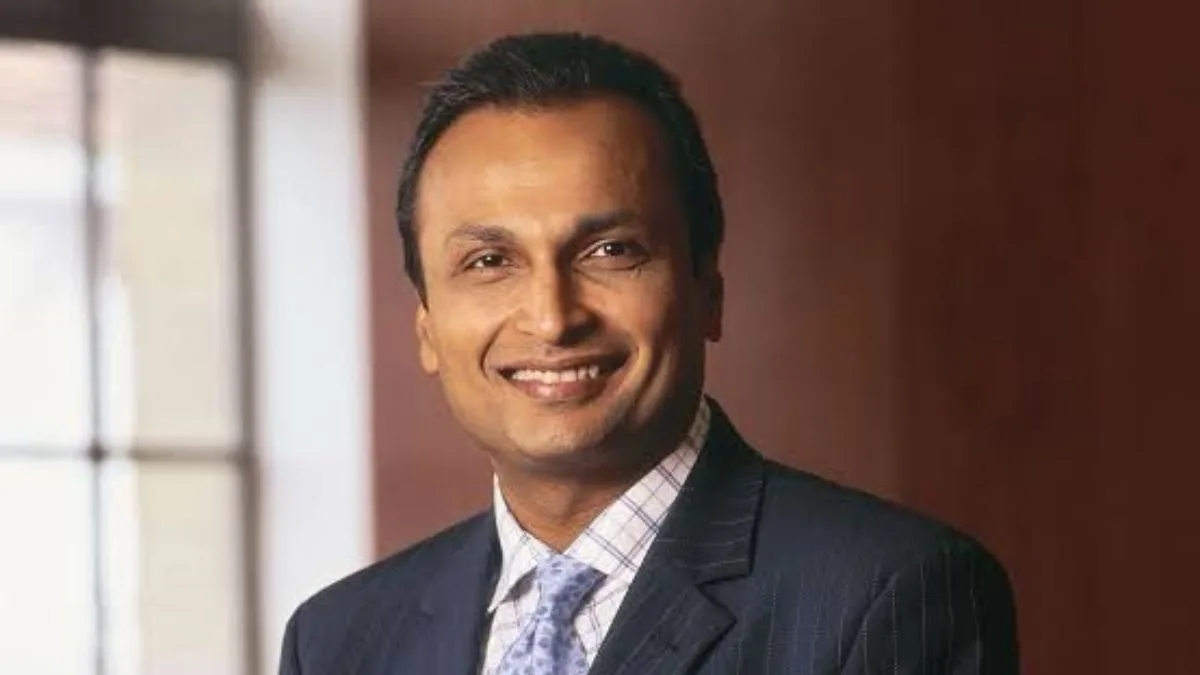
The Anil Ambani-linked Reliance Power made a regulatory filing to the stock exchanges here on Friday denying media reports of the Enforcement Directorate (ED) conducting searches at premises linked to the company in Mumbai and Hyderabad.

Statesman News Service | Mumbai |

The Anil Ambani-linked Reliance Power made a regulatory filing to the stock exchanges here on Friday denying media reports of the Enforcement Directorate (ED) conducting searches at premises linked to the company in Mumbai and Hyderabad.

Within hours of the media reporting about the ED raids, the company issued an official statement to the stock exchanges stating, “This is in reference to various media reports alleging that the Enforcement Directorate has conducted raids at locations linked to Reliance Power Limited. In this regard, the company would like to clarify that, to the best of its knowledge, no such action has been carried out at any of the offices or premises of the company”.

The official statement, dated March 6, 2036, sent to the stock exchanges on a letter head featuring the address of its Ballard Estate-based Mumbai office also featured the signature of its Company Secretary Ramandeep Kaur.

Earlier on Friday, it was widely reported in the media that the ED had begun search operations at around 12 locations across the city as part of an ongoing investigation.

It was reported that 15 specialised teams of the ED had searched offices as well as residential premises connected with individuals linked to the company though the ED has not issued any official statement so far.

It may be recalled that recently, the ED had provisionally attached a luxury residential property named ‘Abode’ in Mumbai’s Pali Hill area in Bandra West, valued at Rs 3,716.83 crore, in connection with a bank fraud case involving Reliance Communications Ltd.

According to an earlier official statement issued by the ED, the property was attached under provisions of the Prevention of Money Laundering Act (PMLA), 2002 and a part of the same property, worth Rs 473.17 crore, had already been attached in the case earlier.

Additionally, the Central Bureau of Investigation (CBI) had also conducted searches in February at the residence of Anil Ambani and at the offices of Reliance Communications (RCom) after registering another case against the company.

A case was filed after a complaint filed by Bank of Baroda, which had alleged that it suffered losses exceeding Rs 2,220 crore in connection with loans extended to Reliance Communications.

According to the FIR, the loans were allegedly diverted and misused through fictitious transactions involving related entities. Investigators also alleged that the company’s accounts were manipulated to conceal irregularities.

After the case was registered, the CBI had searched the residence of Anil Ambani and the registered offices of Reliance Communications as well as recovered documents related to the loan transactions, the agency had stated.

Springdales School Dhaula Kuan commemorates 103rd anniversary of its founder Dr Rajni Kumar

In an endeavour to pay heartfelt tributes to its beloved founder Dr. Rajni Kumar, Springdales School, Dhaula Kuan, on Thursday organised a special assembly, on her 103rd birth anniversary.

Statesman News Service | New Delhi |

In an endeavour to pay heartfelt tributes to its beloved founder Dr. Rajni Kumar, Springdales School, Dhaula Kuan, on Thursday organised a special assembly, on her 103rd birth anniversary.

The assembly was the culmination of ‘The Joy of Sharing’ – a week-long observance dedicated to honour her legacy of compassion, service, and commitment to humanity through a series of meaningful activities. Capturing the cherished memories of Dr. Kumar, a video presentation – ‘Cards and Cakes’ showcased glimpses of her joyful birthday celebrations over the years.

The Junior and Senior School Choir added melody to the occasion with the soulful rendition of ‘Badal Pe Paaon Hai’ which echoed Nani Kumar’s infectious energy, followed by the iconic song, ‘Top of the World’.

The students presented articles and poems, sharing affectionate memories and reflections on our dear Founder’s life and personality, followed by a graceful dance performance, ‘Our Gurus of Peace’, by the Junior School students, symbolising Nani Kumar’s belief that peace begins with everyone.

The Finale ‘You Are the One’, reflected the admiration of the Springdalian family for the visionary educationist.

Encapsulating the larger-than- life persona of Dr. Kumar, Dr. Jyoti Bose, Director, Springdales Schools, quoted lines by the Canadian poet, Arthur Stringer ‘ I have sought beauty through the dust of strive………that Love alone can make Earth beautiful, and life without regret!’ which brought out the true essence of what Nani Kumar was.

The Vote of Thanks was proposed by Sujata Maleyvar, Headmistress, Junior School.

The assembly was indeed a true expression of admiration to the incredible woman whose vision shaped Springdales Schools.

US, Israel trying to reshape West Asia through aggression: Mirwaiz

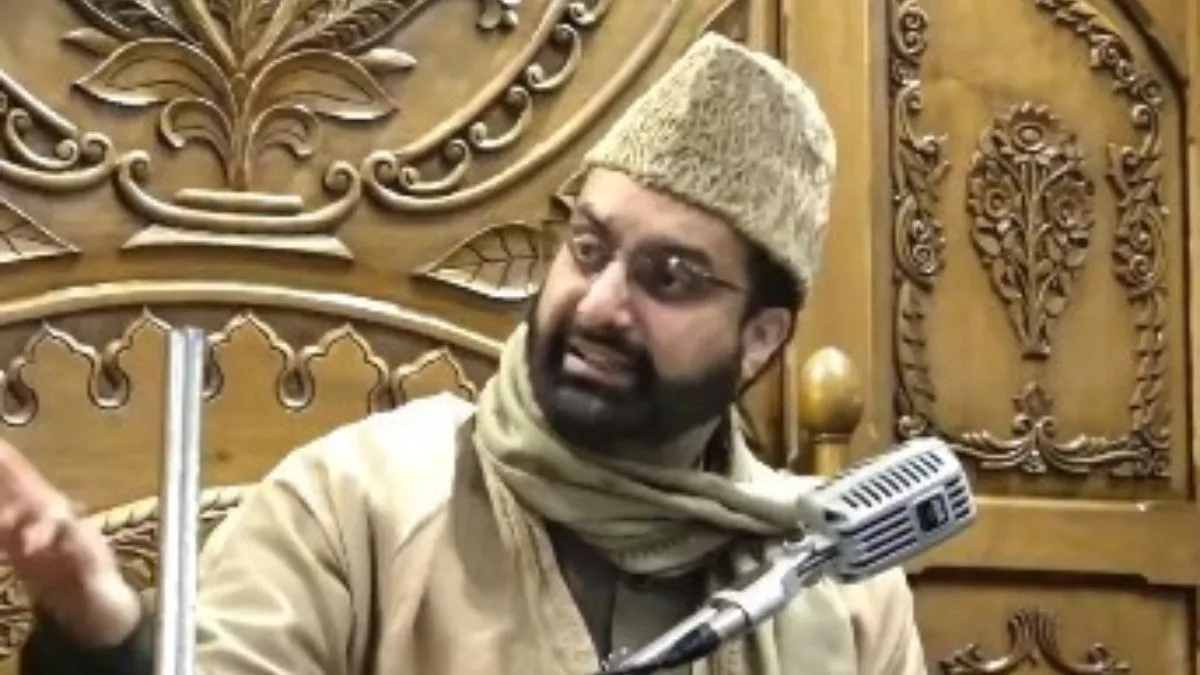
Kashmir’s chief cleric Mirwaiz Umar Farooq on Friday accused the United States and Israel of attempting to reshape West Asia to suit their geopolitical interests and said that the recent developments, including the killing of Ayatollah Ali Khamenei, had plunged the region into crisis and grief.

Statesman News Service | Jammu |

Kashmir’s chief cleric Mirwaiz Umar Farooq on Friday accused the United States and Israel of attempting to reshape West Asia to suit their geopolitical interests and said that the recent developments, including the killing of Ayatollah Ali Khamenei, had plunged the region into crisis and grief.

In a statement on X, Mirwaiz said he has been placed under house arrest and the Jamia Masjid in Srinagar was shut for congregational prayers amid heightened restrictions in the Valley in view of protests over the killing of Iran’s Supreme Leader Khamenei. “Restrictions in the valley continue and have been heightened on a Friday in the holy month of Ramzan. I have also been placed under house arrest, and in these greatly blessed days, when thousands come to the mosques seeking blessings and guidance the pulpit of Jama Masjid is silent and all lanes and by lanes leading to the mosque barricaded. It is very sad and unfortunate,” he wrote.
“But the sadness felt in Kashmir today is not only because of these restrictions. Muslims across the world are aggrieved and deeply anxious by Israeli and American aggression in the region. Israel and America want to reshape the region to suit their interests, and for that they are willing to go to any extent, as the brutal killing of the head of a country and a great spiritual leader, Ayatullah Khamenei and the attack on a sovereign nation Iran, plunging the entire region into a crisis and grief, shows,” he added.

He further said, “Across Jammu and Kashmir, from the Valley to Jammu, Ladakh and Kargil, people have expressed their condemnation of this aggression and expressed solidarity in one voice, beyond divisions as one ummah”.

“The Ummah cannot be divided in moments like this. When injustice is inflicted upon one part, pain is felt by the entire body,” he contended. “As Mirwaiz, I stand in heartfelt solidarity with the people of Iran, with Palestinians and with those who are bearing the brunt of this aggression in the region and beyond. All human lives are precious, and wars and violence are man made catastrophes that cause loss of precious lives”.

“May Allah protect all, grant patience to those who mourn, and bring swift justice to the oppressors and liberate the oppressed,” he prayed.


New CPI series offers deeper policy signals, reflects changing consumption patterns: SBI Research

The report noted that the revised CPI framework aligns closely with the international Classification of Individual Consumption According to Purpose (COICOP) 2018, enhancing the credibility of India’s inflation data and ensuring global comparability.

Statesman News Service | New Delhi |

India’s newly-introduced Consumer Price Index (CPI) series with 2024 as base year provides a richer and more policy-relevant dataset, capturing evolving consumption patterns, urbanisation trends and structural changes in the economy, according to a report by SBI Research.

The report noted that the revised CPI framework aligns closely with the international Classification of Individual Consumption According to Purpose (COICOP) 2018, enhancing the credibility of India’s inflation data and ensuring global comparability. Under the new structure, the CPI basket includes 12 divisions, 43 groups, 92 classes and 162 sub-classes, reflecting a more modern classification of household consumption.

A key change in the CPI-2024 series is the reduced weight of food and beverages, which now stands at 36.75 per cent, compared with 45.86 per cent in the 2012 series. The revision reflects a gradual shift in household spending patterns toward services and discretionary consumption.

At the same time, the weightage of transport, information and communication, and health has increased, indicating rising spending on mobility, digital services and healthcare. In rural areas particularly, the weight of transport and communication has risen sharply, nearly matching urban levels.

The updated weighting also alters the relative importance of states in the CPI basket. States such as Bihar and Tamil Nadu have seen an increase in weight, while Maharashtra and West Bengal have experienced declines.

Inflation trends vary significantly across states. For January 2026, most major states recorded CPI inflation below 3 per cent, though Telangana registered the highest inflation at about 4.9 per cent. Despite covering 358 items, the CPI basket remains concentrated, the report said.

About 50 per cent of the CPI weight is accounted for by just 26 items, while 90 per cent is covered by 148 items.This concentration can help policymakers and businesses focus on high-impact categories for inflation forecasting, corporate pricing strategies and scenario analysis, especially in the event of shocks such as rising rents, fuel prices or milk costs.

The new CPI series expands geographical coverage and consumption tracking. Compared with the previous series, 565 additional markets have been included, taking the coverage to 1,465 rural and 1,395 urban markets, along with 12 online markets to capture digital retail trends.

Brother-sister duo killed over land dispute

According to the police, the incident took place in Dharmapuri village under the Siddiqueganj police station limits, about 70 km from the district headquarters, at around 8 am.

Statesman News Service | Bhopal |

A brother-sister duo was murdered allegedly by their paternal uncle and his son over a land dispute in the Sehore district of Madhya Pradesh Friday morning. Both the accused have been arrested.

According to the police, the incident took place in Dharmapuri village under the Siddiqueganj police station limits, about 70 km from the district headquarters, at around 8 am.

Sehore SP Deepak Shukla said the victims were identified as Sheetal Malviya (20) and her brother, Kuldeep Malviya (19), children of Jagdish Malviya.

The siblings were on their way to their examination centre when the accused, Harisingh Malviya and his son, allegedly intercepted and attacked them with sticks. Both the victims succumbed to the severe injuries they sustained in the assault.

On getting information about the incident, a police team reached the spot and sent the bodies of the deceased for post-mortem examination. They said Harisingh and Jagdish are brothers and have been involved in a long-standing land dispute. Harisingh and his son have been rounded up and investigation is underway, officials added.