Logo

Iran strikes widen: 5 US refuelling planes destroyed in Saudi Arabia, US embassy radar hit in Iraq

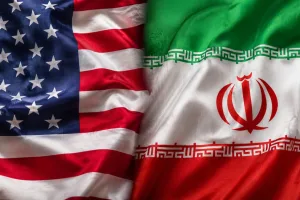
Iran says it launched the latest phase of its retaliatory campaign targeting US and Israeli sites across West Asia, while reports confirm American refuelling aircraft were damaged in Saudi Arabia.

Statesman News Service | New Delhi |

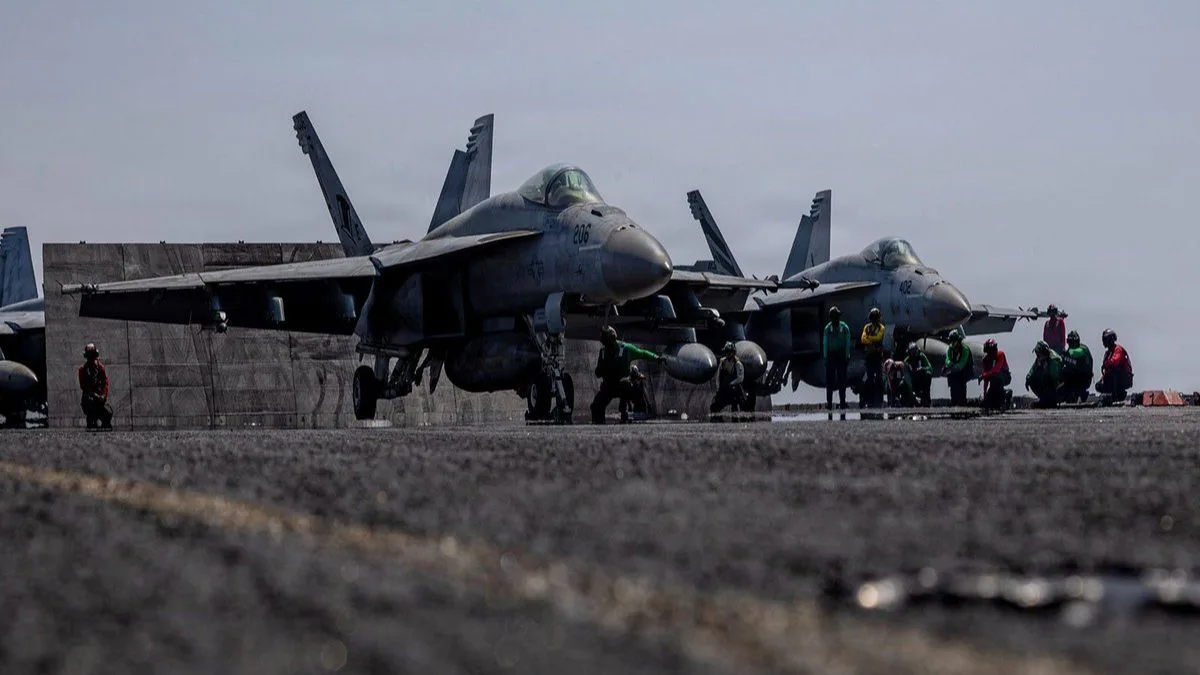
Five US Air Force aerial refuelling aircraft were damaged during an Iranian missile attack on a Saudi Arabian airbase in recent days, according to a report by the Wall Street Journal citing two US officials. The aircraft were struck while parked at Prince Sultan Air Base, though none were destroyed and no casualties were reported.

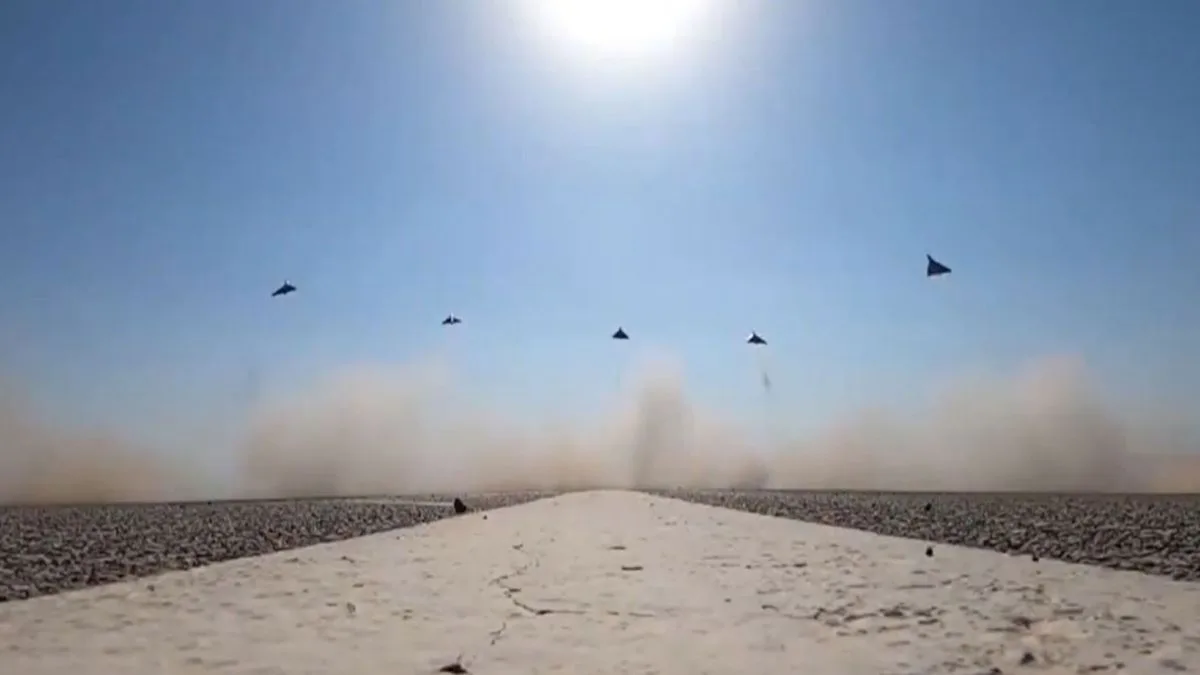
The incident comes as tensions across West Asia continue to intensify, with Iran claiming a new phase of retaliatory strikes against American and Israeli targets across the region. Iranian state-linked outlets have also released footage showing what they describe as coordinated drone launches aimed at multiple military positions.

According to the Wall Street Journal, the US aircraft sustained damage while on the ground during the missile strike but are now undergoing repairs. The report said the attack did not cause any deaths.

Meanwhile, Iranian media outlets circulated video footage that they say shows drones launched by the Islamic Revolutionary Guard Corps (IRGC). The visuals, posted on social media platforms and Telegram channels linked to state broadcasters, appear to show several delta-wing drones lined up on a runway before launching almost simultaneously.

In the footage, the drones lift off after ignition, producing bright bursts of flame and clouds of dust. As they climb, long trails of white smoke follow the aircraft as they move away from the launch site in what was described as a “swarm” deployment.

Iranian broadcasters earlier also showed images of what they described as a large underground facility housing parts of the IRGC’s drone arsenal.

Also Read: ‘Big hits, big wins’: Trump says US strikes shattered Iran’s military; Kharg Island bombed

Iran says new phase of retaliatory strikes underway

Iran’s Revolutionary Guard said on Saturday that it had carried out the 48th wave of “Operation True Promise 4”, describing it as part of an ongoing campaign targeting American and Israeli installations.

In a statement cited by Iranian media, the IRGC said the latest strikes were conducted in coordination with the Lebanese group Hezbollah. Military officials said the attacks focused on locations in northern Israel, including Galilee, the Golan region and the city of Haifa.

Reports from Iranian broadcaster Press TV said the operation involved a combination of missiles and drones, including Kheibar Shekan solid-fuel missiles, Qadr liquid-fuel missiles and attack drones.

Iranian outlets said earlier phases of the campaign had targeted areas such as the Negev Desert, including the Nevatim airbase, as well as cities like Be’er Sheva and Lod.

The IRGC also claimed that attacks had reached several US facilities in the region, including al-Udeid airbase in Qatar, which it described as a major American military installation in West Asia.

Iranian state media further reported that since the beginning of the conflict late last month, the country has launched hundreds of missiles and drones against what it calls hostile positions.

Drone and missile strikes reported across region

Separate reports from Iraqi sources cited by Iranian broadcaster Press TV said a suicide drone targeted the radar system at the US embassy compound in Baghdad. The report claimed the attack was aimed at the facility’s electronic detection equipment.

Another strike was also reported to have hit the helipad area inside the embassy compound, according to Iraqi officials quoted by Al Jazeera.

Amid the escalating military exchanges, Iranian Parliament Speaker Mohammad Bagher Ghalibaf accused the United States and Israel of acting together against Iran.

In remarks posted on social media, Ghalibaf alleged that US President Donald Trump had been influenced by Israeli Prime Minister Benjamin Netanyahu in starting the conflict.

He added that Iran now sees “no distinction” between the United States and Israel after what he described as major crimes against the Iranian people.

According to Iranian media, the IRGC has also claimed that its air defence systems have intercepted multiple drones during the conflict, including Orbiter 4, Hermes and MQ-9 Reaper drones.

State broadcasters said a total of 114 reconnaissance and combat drones have been shot down since hostilities began.

Iranian outlets also reported that warning messages have been sent in Hebrew to residents in Israeli-controlled territories as part of what they described as psychological pressure during the conflict.

“By the permission of God, we will bring upon you days of darkness in which you will wish for death, but you will not find it,” stated the warning message.
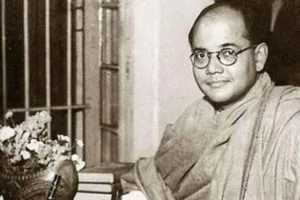
Netaji cap at Red Fort museum ‘not original’, family seeks probe into artefact

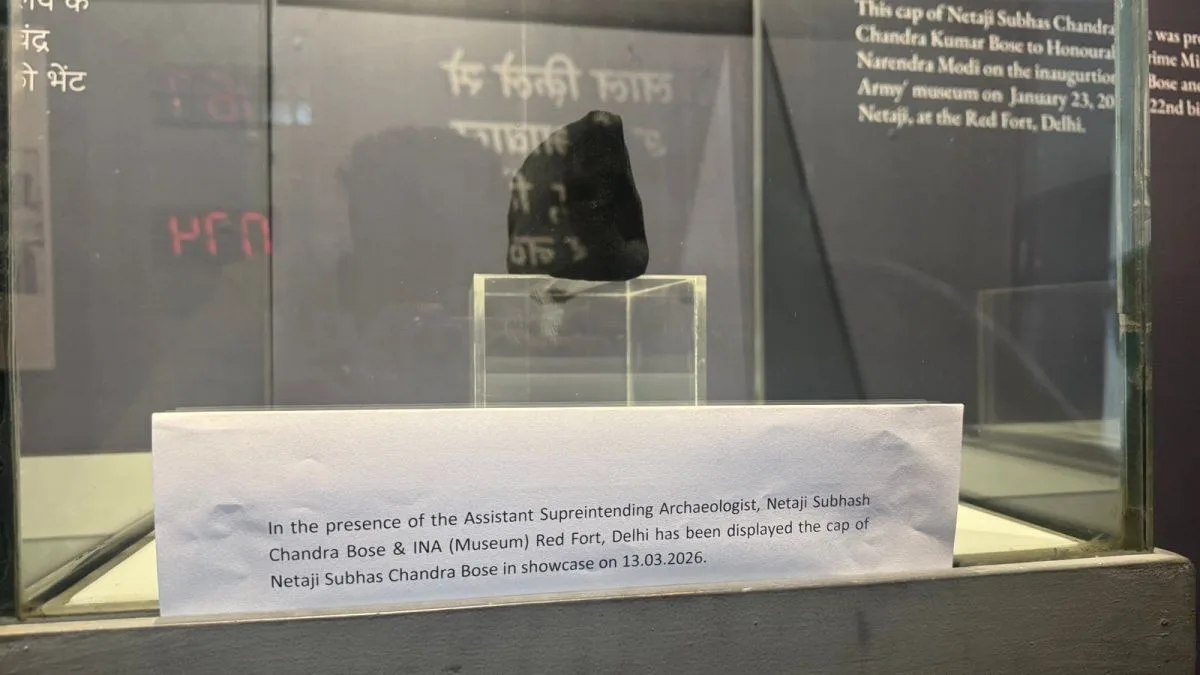
Chandra Kumar Bose has urged authorities to authenticate the cap displayed at the Netaji and INA museum, saying the artefact currently on display appears different from the one earlier handed over.

Statesman News Service | Mumbai |

Chandra Kumar Bose, grandnephew of Netaji Subhas Chandra Bose, has raised fresh doubts over the cap displayed at the Netaji Museum inside Delhi’s Red Fort, alleging that the artefact currently on display may not be the original and calling for an investigation to verify its authenticity.

The development comes days after Bose had claimed that Netaji’s cap, earlier handed over by the family and placed at the museum, had gone missing from its display case. The issue has since drawn attention after he appealed to Prime Minister Narendra Modi to look into the matter.

In a post on X on Saturday, Bose said the cap has now been placed back at the museum following the Prime Minister’s intervention, but researchers and people familiar with the original artefact believe the one currently displayed looks different.

“Netaji researchers and those who had previously seen this said cap feel that this isn’t the original cap,” Bose wrote.

Also Read: Historical scare: Netaji’s cap goes ‘missing’ from Red Fort Museum… only to turn up on ‘display duty’ at Port Blair

Cap was handed over to PM in 2019

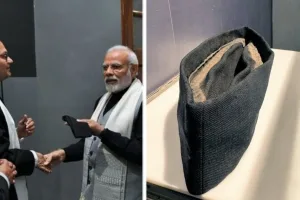
According to Bose, members of Netaji’s family had handed over the cap worn by the freedom fighter to Prime Minister Modi in 2019, requesting that it be preserved at the Red Fort museum dedicated to him.

He had earlier said the Prime Minister personally placed the cap inside a glass display case during the museum’s inauguration on Netaji’s birth anniversary that year.

Concerns emerged recently after a member of the Open Platform for Netaji reportedly visited the museum and found the cap missing from its display location, prompting the family to raise the matter publicly and write to the Prime Minister.

Bose said he is grateful for the prompt action taken after the issue was highlighted, but insisted that the cap currently kept at the museum should be properly authenticated.

“Shall be obliged if an investigation & proper authentication could be done to establish that this is the original,” he said.

Netaji Subhas Chandra Bose remains one of India’s most respected freedom fighters, and artefacts linked to him are considered historically significant.

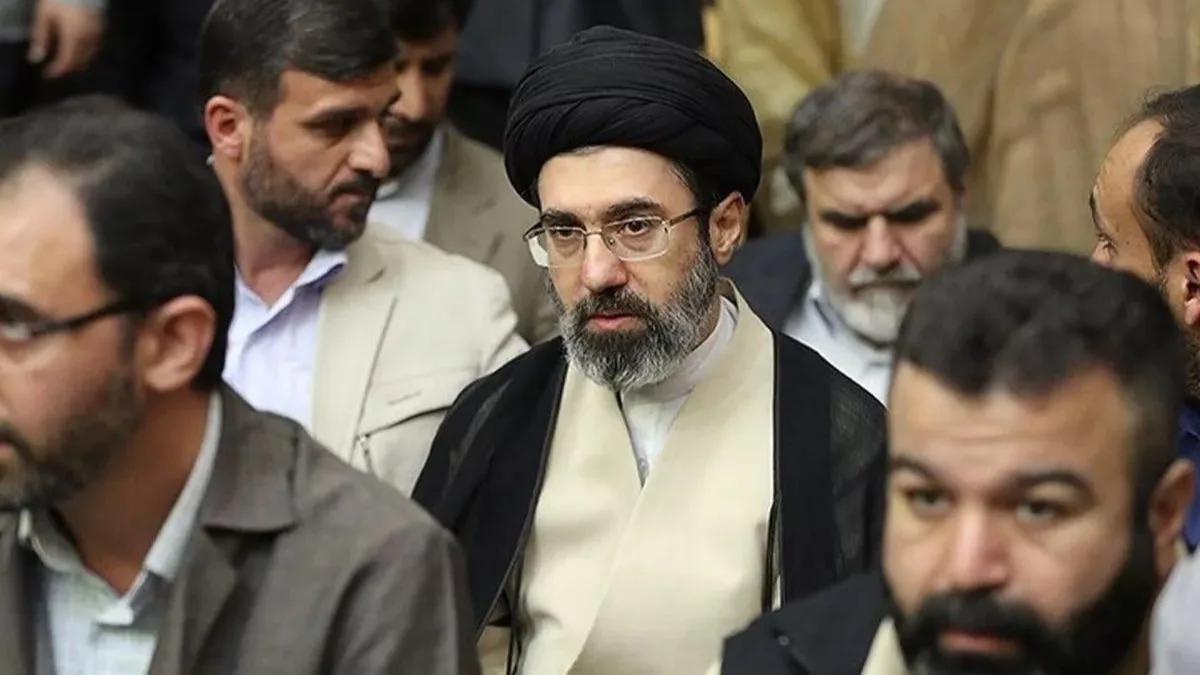
$10 million on the table: US seeks information on Iran’s new supreme leader Mojtaba Khamenei

Washington has announced a $10 million reward for intelligence on Iran’s new supreme leader Mojtaba Khamenei as regional tensions intensify following US-Israeli strikes and Iran’s retaliatory attacks.

Statesman News Service | New Delhi |

The United States has announced a reward of up to $10 million for information leading to Iran’s new supreme leader, Mojtaba Khamenei, placing him among several senior Iranian officials now listed under a US intelligence reward programme.

The announcement comes as tensions in the Middle East continue to rise following coordinated strikes by the United States and Israel on Iranian military sites, and Iran’s retaliatory missile and drone attacks across the region that began on February 28.

According to the US State Department, the reward is being offered through its “Rewards for Justice” programme, which provides financial incentives for information that helps identify or bring to justice individuals accused of involvement in terrorism targeting the United States.

Apart from Mojtaba Khamenei, the updated list also includes Iran’s interior minister as well as the minister of intelligence and security, the department said.

In a message posted on social media, the Rewards for Justice programme appealed for public tips, stating: “Got information on these Iranian terrorist leaders? Send us a tip. It could make you eligible for a reward and relocation.”

Trump claims Iran “about to surrender”

The announcement also comes amid increasingly sharp rhetoric from US President Donald Trump, who suggested that Iran’s leadership is under mounting pressure.

According to Axios, which cited officials from the Group of Seven (G7), Trump made the remarks during a virtual meeting with world leaders earlier this week while discussing the results of the military operation named “Epic Fury.”

During the discussions, the US President reportedly told allies that he had “got rid of a cancer that was threatening us all.”

Conflict enters second week with continued strikes

As the conflict moves into its second week, missile and drone exchanges between Iran and its adversaries have continued across parts of the Middle East.

Trump also delivered a harsh attack on Tehran’s leadership, describing them as “deranged scumbags.”

He further said it was his “great honour” to eliminate them, and insisted that Washington’s military operations were aimed at “destroying the terrorist regime of Iran.”

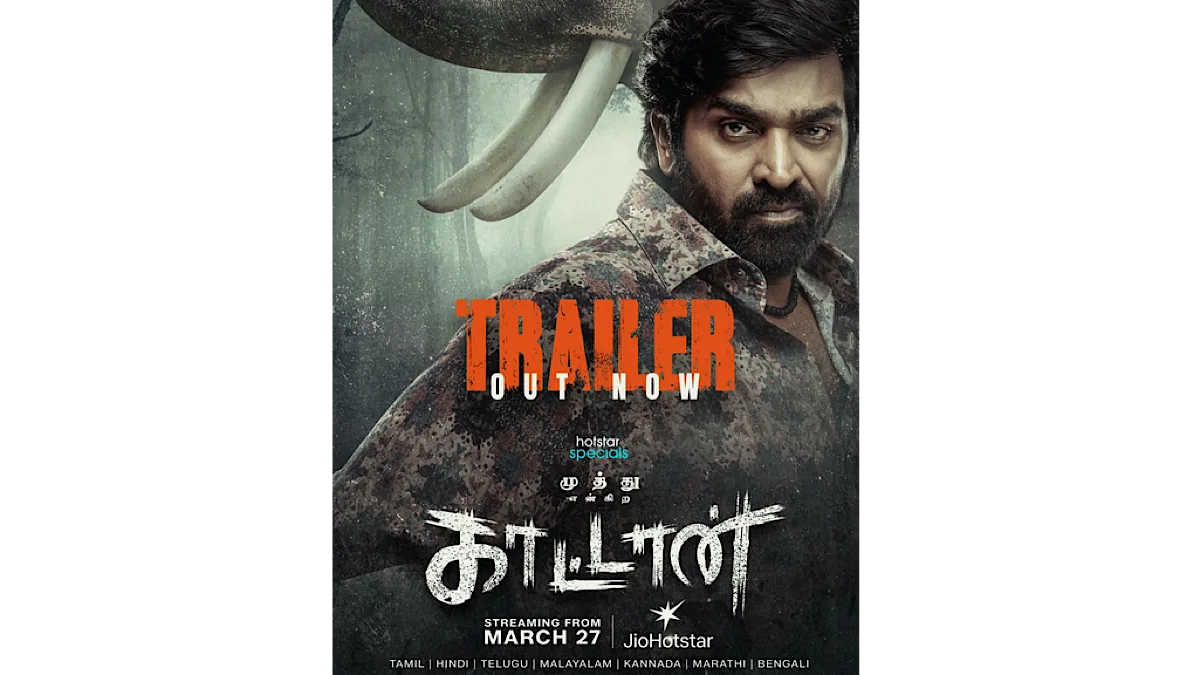
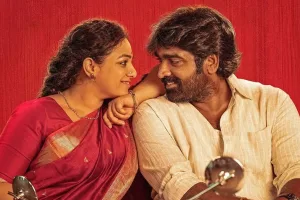
Vijay Sethupathi-starrer Kaattaan’s trailer expands mystery around man’s severed head!

While a teaser that the makers had released earlier had triggered curiosity about Muthu’s shocking severed head, the trailer expands the narrative, revealing layered accounts from characters who paint vastly different portraits of the man.

IANS | New Delhi |

The makers of National Award winning director M. Manikandan and director B Ajith Kumar’s eagerly awaited web series, ‘Muthu Alias Kaattaan’, featuring Vijay Sethupathi in the lead, on Friday released a gripping trailer of the series, much to the delight of fans and film buffs.

While a teaser that the makers had released earlier had triggered curiosity about Muthu’s shocking severed head, the trailer expands the narrative, revealing layered accounts from characters who paint vastly different portraits of the man.

Feared outlaw or misunderstood hero? As perspectives clash, the mystery deepens, slowly unraveling the truth behind Muthu and the events that led to his gruesome discovery.

Headlined by Vijay Sethupathi, the series also features Milind Soman, Sudev Nair, and Muthukumar, among other prominent faces.

Talking about the trailer, Vijay Sethupathi, said, “When Manikandan first narrated ‘Kaattaan’ to me, he shared a six-page synopsis. I was instantly hooked by the character and the world he had imagined. Working on this series gave me a real sense of peace as an actor. I truly hope that when audiences watch it, they walk away with something meaningful to reflect on.”

Sharing his thoughts on the trailer, Milind Soman, said, “As someone who is selective about projects I choose, ‘Kaattaan’ stood out for its gripping narrative and bold characters and Sivettan was a role I couldn’t resist. Working on the series was an absolute thrill from the immersive sets, sharp direction, and collaborating with Vijay Sethupathi and the team brought this enigmatic figure to life in ways that pushed me creatively.”

The series has been created by National Award-winning filmmaker M. Manikandan, known for his distinctive storytelling voice.

Direction is helmed by M. Manikandan and B. Ajith Kumar, while acclaimed cinematographers Madhu Neelakandan and N. Shanmuga Sundaram craft the striking visual language of the series.

Music for the series has been composed by Rajesh Murugesan, adding a powerful sonic dimension to the world of Kaattaan. ‘Muthu Alias Kaattaan’ is slated to stream from March 27 on JioHotstar in seven languages — Tamil, Hindi, Telugu, Malayalam, Kannada, Marathi, and Bengali.

Soukouna’s injury-time strike gives Rajasthan United their first win of IFL 2025-26

A late strike by Amadou Soukouna in injury time ensured Rajasthan United edge past Namdhari Sports Academy 3-2 in a thrilling encounter of Indian Football League 2025-26 at the Vidhyadhar Nagar Stadium in Jaipur on Friday.

IANS | New Delhi |

A late strike by Amadou Soukouna in injury time ensured Rajasthan United edge past Namdhari Sports Academy 3-2 in a thrilling encounter of Indian Football League 2025-26 at the Vidhyadhar Nagar Stadium in Jaipur on Friday.

Amadou Soukouna gave the home side the lead in the 13th minute before Pedro Astray doubled the advantage in the 57th. Namdhari mounted a late comeback in the final ten minutes, levelling the scores through Manvir Singh (83’) and Najib Ibrahim (90’) goals. However, Soukouna struck again in the sixth minute of stoppage time to ensure the first win of the season for Rajasthan United.

The home side climbed to fourth in the table with as many points from three matches, while Namdhari remain ninth with two points from three games.

Rajasthan United FC head coach Vikrant Sharma made five changes for his first home match of the season, bringing in Gautam Virwani, Thomyo L. Shimray, Joseph Lalvenhina, Jonathan Reis, and Abdul Samed Ango in place of William Pauliankhum, Lalfelkina, Pangambam Naoba Meitei, Gerard Artigas and Cedric Gogoua.

Meanwhile, Namdhari head coach Harpreet Singh made just one change to his starting XI, with forward Abdoulaye Diallo replacing midfielder Adersh Mattummal.

Namdhari struggled early on, and the home side capitalised to take the lead. Amadou Soukouna chased a long ball and applied pressure on centre-back Gurshan Singh. The defender’s attempted clearance lacked conviction, and Soukouna reacted quickly to poke the ball past goalkeeper Niraj Kumar from close range.

The French striker came close to doubling his tally in the very next attack. After a neat exchange of passes in the final third, Soukouna unleashed a right-footed effort that beat the goalkeeper, but centre-back Lamine Moro made a crucial clearance off the line to deny him.

The home side continued to pile the pressure, with Pedro Astray striking the post with a thumping left-footed shot and right-back Shafeel PP forcing a fingertip save from the goalkeeper off another long-range effort. Namdhari gradually found their footing, and began to enjoy more possession, creating better openings, particularly from set-pieces. Najib Ibrahim failed to get on the end of a knockdown from Moro following a free-kick delivered by Kamalpreet Singh. Moments later, Moro once again rose highest to guide a header from a corner towards the far side, but it was cleared off the line to preserve Rajasthan’s lead.

Rajasthan captain and goalkeeper Bhabindra Malla Thakuri was called into action a couple of times in the first half. He first palmed away a direct free-kick from Seilenthang Lotjem and moments later produced a fine diving save to deny his opposite number Jaskaranpreet Singh’s right-footed effort from the edge of the box.

Niraj produced a brilliant save at the beginning of the second half to deny Pedro Astray’s powerful freekick. The home side who were lively from the start of the second half, put Namdhari’s defence under pressure and doubled their advantage 12 minutes after the resumption.

Jonathan Reis forced a save from the goalkeeper with a curling effort from the edge of the box. The rebound fell kindly to Pedro Astray, who was free inside the area, and the Spaniard showed great composure to slot the ball home for his second goal of the season.

Namdhari were reduced to 10 men when Moro was sent off after receiving two yellow cards in as many minutes. The Ghanaian defender was first booked for a foul on Naoba Meitei, and still unhappy with the decision, showed his dissent towards the referee, who had little choice but to produce a yellow card for the second time, leaving Namdhari to play the remainder of the match with 10 men.

The visitors halved the deficit seven minutes from time through Manvir Singh. The forward beat the offside trap to latch on to a deflected cross from midfield and calmly slotted the ball past the onrushing goalkeeper.

Seven minutes later, Namdhari levelled the scores in dramatic fashion. Jaskaranpreet Singh made a fine run down the right wing and delivered a low cross across the six-yard box that evaded the goalkeeper’s outstretched hands. Najib Ibrahim arrived ahead of two defenders to finish expertly.

As the match appeared to be heading towards a draw, Rajasthan United carved out one final chance that proved decisive in injury time. A long ball lofted into the box was met by defender Gursimrat Singh, who headed it into the path of Amadou Soukouna. The French striker rose above his marker and planted a powerful header into the net, sparking celebrations among the home crowd.

Hockey WC Qualifiers: India beat Italy 1-0 to enter final

The Indian Women’s Hockey team earned their spot in the Final of FIH Hockey World Cup Qualifiers 2026 Hyderabad, Telangana as they beat Italy 1-0 in their Semi-Final contest at the G. M. C. Balayogi Hockey Ground (Gachibowli Hockey Complex) on Friday.

IANS | New Delhi |

The Indian Women’s Hockey team earned their spot in the Final of FIH Hockey World Cup Qualifiers 2026 Hyderabad, Telangana as they beat Italy 1-0 in their Semi-Final contest at the G. M. C. Balayogi Hockey Ground (Gachibowli Hockey Complex) on Friday.

Manisha Chauhan (40′) scored the winning goal for India and they will now face England in the Final.

It was an extremely tight contest in the first quarter as both sides constantly battled for possession in the midfield. India started the match strong with a couple of strong circle entries, however, Italy eventually started attacking aggressively and created a few good chances on goal.

India won the momentum back in the second quarter. The hosts used their flanks to push the ball ahead and started attacking in numbers and made crucial circle entries. In the 18th minute, India won the first penalty corner of the evening but Navneet Kaur’s shot on goal was stopped well by Italian goalkeeper Lucia Ines Caruso.

In the 27th minute, they were awarded another penalty corner as India played out an interesting variation. The ball was played back to the injector, Captain Salima Tete, but her shot was stopped on the line by Italy’s last defender, denying them a goal. In the 29th minute, India had another opportunity to score through a penalty corner but Navneet Kaur’s shot went off target.

In the early minutes of the second half, Italy launched a strong attack on goal as Emilia Munitis was through on goal but India’s goalkeeper Bichu Devi Kharibam came out and made a crucial save. In the 40th minute, India were awarded yet another penalty corner and this time they successfully converted it to break the deadlock. Manisha Chauhan (40′) delivered a powerful dragflick down the middle that pierced through the Italian defence and found the net.

India won two early penalty corners in the final quarter as they pushed to increase their advantage in the late stage but Italy remained resilient with their defending. Italy gave it their all in the final minutes of the match and won a crucial penalty corner in the 59th minute but India managed to deny their opposition the equaliser and emerged victorious.

India will next face England in the Final on March 14 at 7:30 PM IST.

India dominates with 208 medals as New Delhi World Para Athletics GP 2026 concludes

The New Delhi World Para Athletics Grand Prix 2026 concluded on Friday after three days of thrilling competition, with India delivering a dominant performance across multiple events.

IANS | New Delhi |

The New Delhi World Para Athletics Grand Prix 2026 concluded on Friday after three days of thrilling competition, with India delivering a dominant performance across multiple events.

Competing against strong international fields, Indian athletes finished first in the medal tally with a remarkable 208 medals, including 75 gold, 69 silver, and 64 bronze.

Russia finished second with 35 medals (15 gold, 14 silver, and 6 bronze), while Bosnia and Herzegovina secured third place with 3 medals, including one gold and two silver.

The final day saw several standout performances from Indian athletes across track and field disciplines.

In the Women’s 200m T35–T37, Preeti Pal clinched the gold medal with a time of 30.26 seconds, ahead of Russia’s Karina Machulskaia, who took silver in 32.22 seconds, while Bina Shambhubha of India secured bronze with 32.35 seconds. This marked Preeti Pal’s second gold medal of the Grand Prix.

Reflecting on her performance, Preeti said, “I narrowly missed the target I was aiming for at the Grand Prix by a microsecond. Overall, things are going well. In four days, I will be heading to the Nationals, and since this is the off-season, I am satisfied with my performance.”

She added, “My personal best is 30.03 seconds, and in practice I have already clocked 29.6 seconds, which is encouraging. However, I noticed that I get tired as I approach the finish line, something that didn’t happen before. I am currently working on improving that.”

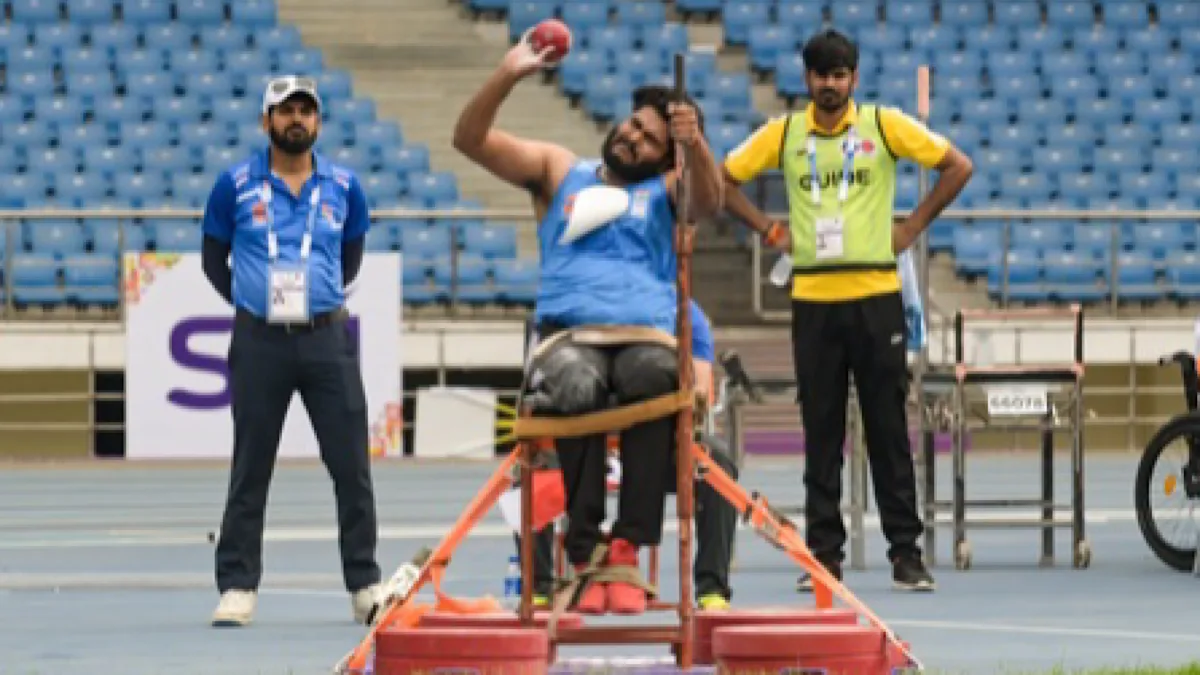
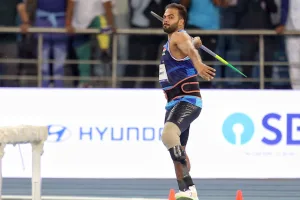
India also dominated the Men’s Shot Put F57, claiming all three medals. Shubham Juyal won gold with a throw of 14.45 metres, while Bhagat Singh secured silver with 13.29 metres and Priyans Kumar took bronze with 13.07 metres.

From a mark of 13.72 metres at the World Championships 2025 to improving by 0.73 metres in just five months, Shubham Juyal’s rapid progress highlights his dedication and also reflects the growing strength of Indian Army para athletes on the international stage.
Indian athletes continued their medal sweep across several events. In the Men’s 200m T35, Vinay won gold with a time of 28.18 seconds, followed by Anubhav Choudhary with silver in 29.49 seconds, while Chui Yiu Bao of Hong Kong claimed bronze.

In the Men’s 200m T37–T44, India again secured all three medals, with Rakeshbhai Bhatt winning gold in 25.20 seconds, Siddharth Manju Bellary taking silver in 28.23 seconds, and Ravikiran Asarelli finishing with bronze in 31.50 seconds.

Another clean sweep came in the Men’s 800m T53–T54, where Manojkumar Sabapathi won gold with a time of 1:57.41, followed by Manikandan Jothi with silver in 2:11.14, and Kamalakanta Nayak with bronze in 2:20.83.

India also dominated the Men’s Shot Put F11–F12–F20, with Praveen Sharma winning gold with a throw of 13.31 metres, Monu Ghangas taking silver with 11.40 metres, and Janak Singh Harsana securing bronze with 11.22 metres.

In the Men’s Shot Put F37, India once again swept the podium, as Ankit won gold with 12.37 metres, Mayank took silver with 11.68 metres, and Akshay secured bronze with 11.05 metres.

India also achieved podium sweeps in the Men’s Shot Put F53–F54, Women’s Discus Throw F57, Men’s Long Jump T11–T12, Men’s 5000m T54, and Men’s 200m T64, underlining the depth and strength of India’s para athletics programme.

Speaking on the success of the event, Paralympic Committee of India President Devendra Jhajharia said:

“The New Delhi World Para Athletics Grand Prix 2026 has once again showcased the incredible talent and determination of para athletes from across the world. I am extremely proud of the Indian athletes for their outstanding performances and for finishing on top of the medal tally. Hosting an event of this scale in India is an important step towards strengthening the para sports ecosystem in the country and providing our athletes with world-class competitive exposure.”

Mamata Banerjee announces formation of 5 cultural & development boards for ST, OBC, SC communities

West Bengal Chief Minister, Mamata Banerjee, on Friday announced the constitution of five new cultural & development boards for Scheduled Tribe (ST), Other Backward Classes (OBC), and Scheduled Caste (SC) communities in the state.

Statesman News Service | Kolkata |

West Bengal Chief Minister, Mamata Banerjee, on Friday announced the constitution of five new cultural & development boards for Scheduled Tribe (ST), Other Backward Classes (OBC), and Scheduled Caste (SC) communities in the state.

The CM Banerjee-led Trinamool government has set up cultural & development boards for one SC, two ST, and two OBC communities in Bengal.

While the two ST communities for which the proposed cultural & development boards will be formed are Munda and Kora, the two OBC communities selected in the matter are Kumbhakar and Sadgope. The lone SC community selected on this count is Dom.

Political observers find this announcement quite significant amid the recent tiff between the Centre and West Bengal government, over the alleged breach of protocol during the visit of President Droupadi Murmu, who herself hails from a tribal background, to West Bengal.

Announcing the decision to constitute these five new cultural & development communities, CM Banerjee stated that these five communities were integral to the vibrant fabric of Bengal.

“My heartiest congratulations to all of them,” said CM Banerjee in a statement, which she had posted on the wall of her official social media handle on Friday.

“These boards will protect their unique languages and traditions while ensuring better education, healthcare, and jobs. They will safeguard customary rights and bring further socio-economic growth,” CM Banerjee added.

​In her statement, CM Banerjee pointed out that in 2013,​ the West Bengal government, led by her, established many such cultural and development boards for the weaker communities in the state to ensure their all-round development.

“Our commitment to ‘Ma, Mati, and Manush’ means we remain dedicated to ensuring no community is left behind. Our goal is simple: To bring a smile to every face through inclusive progress and unwavering support,” CM Banerjee added.

The state BJP leaders have alleged that this announcement is a gimmick before the forthcoming West Bengal Assembly elections scheduled later this year and is an eyewash amid the criticism over the breach of protocol during the President’s visit.

CPI-M leaders slam Bengal govt over delay in implementing SC order on DA arrears

CPI-M leaders on Friday criticised the West Bengal government over its inability to implement the Supreme Court order mandating the payment of 25 per cent of the DA arrears from 2008 to 2019 by March 31.

IANS | Kolkata |

CPI-M leaders on Friday criticised the West Bengal government over its inability to implement the Supreme Court order mandating the payment of 25 per cent of the DA arrears from 2008 to 2019 by March 31.

CPI-M leader and advocate Bikash Ranjan Bhattacharya termed it unfortunate that state government employees in West Bengal have to go on strike to secure the implementation of a Supreme Court judgement.

Speaking to IANS, he said, “A constitutional government should have immediately implemented the order of the highest constitutional body. But this West Bengal government is not going to do this; therefore, the employees have to go on strike.”

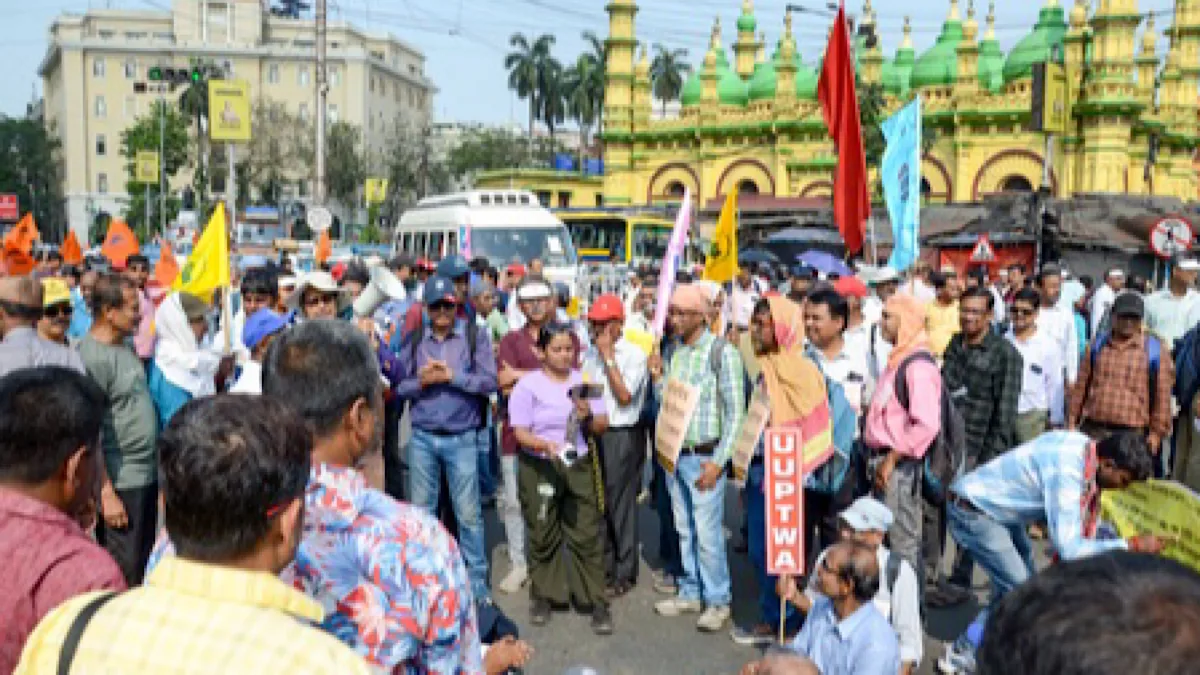
Various associations representing West Bengal government employees, consolidated under the collective organisation Sangrami Joutho Mancha (Joint Movement Forum), initiated a complete work stoppage on Friday to express their discontent over the alleged hesitation and inaction of the government regarding the disbursement of Dearness Allowance (DA).

However, the Trinamool Congress-led West Bengal government has already issued a notification making attendance mandatory for the employees concerned on Friday in order to avoid salary deductions, excluding those on leave with valid reasons.

Reacting to the notification, Bhattacharya said, “State government employees do not care about this threat. They have seen such threats many times before. They are more interested in ensuring the implementation of their legal right.”

Referring to the suspension of court proceedings, he said, “I am very sorry to say that court proceedings had to be suspended today because the employees were forced to go on strike to combat the apathy of the West Bengal government and its inability to implement the Supreme Court judgement.”

Bhattacharya further added: “If the government doesn’t implement the apex court’s judgement, will it at all care about the High Court’s order?”

CPI-M leader and advocate Sayan Banerjee told IANS, “This state government is very adamant and does not care about Supreme Court judgements, the tribunal’s decisions, or the High Court’s orders. It has a ‘don’t care’ attitude towards the judiciary.”

Banerjee asserted that the Supreme Court had held long back that DA is a right and that it should be cleared along with the arrears, including the pending 25 per cent portion.

“That amount has to be paid. For that reason they have called for a strike. To show support I have joined their protest march,” he added.

According to the Joint Movement Forum, the state government has given sufficient indications that it may disregard the Supreme Court ruling delivered last month, which mandated the payment of 25 per cent of the DA arrears from 2008 to 2019 by March 31.

Suvendu Adhikari meets new Bengal Guv, seeks action against Chief Secy and acting DGP

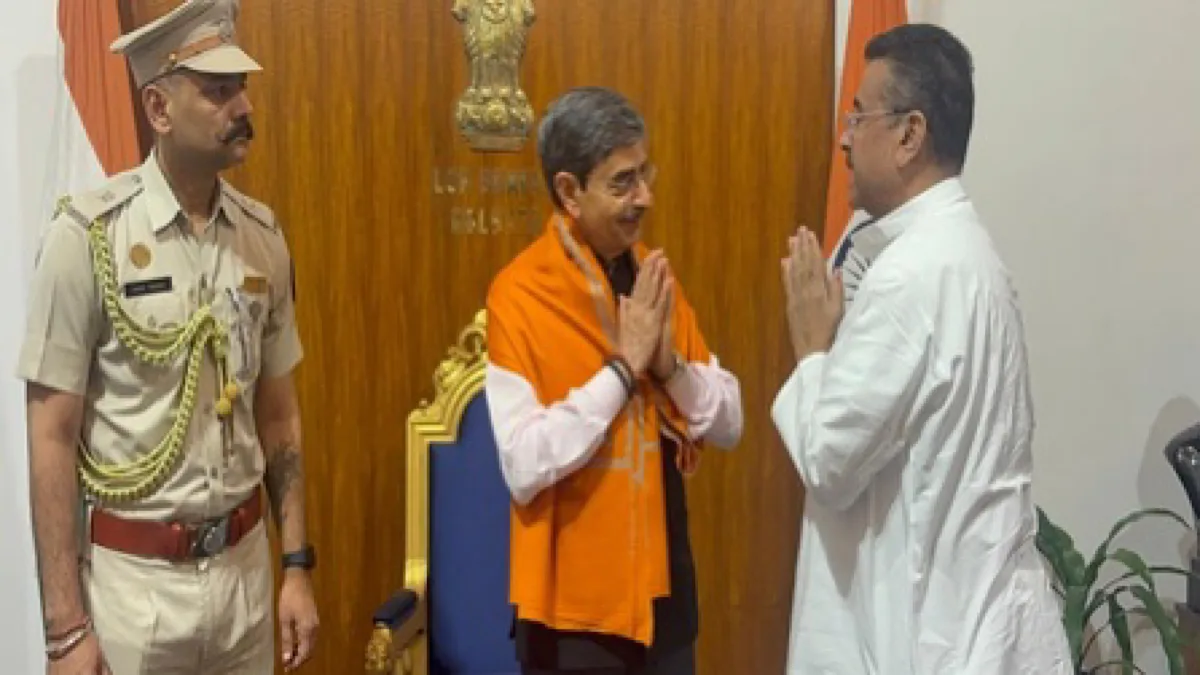
Leader of the Opposition in the West Bengal Assembly, Suvendu Adhikari, on Friday met the newly appointed and 22nd Governor, R.N. Ravi, and urged him to take action against Chief Secretary Nandini Chakraborty and acting Director General of Police Peeyush Pandey over the alleged breach of protocol during the recent visit of President Droupadi Murmu to the state.

Statesman News Service | Kolkata |

Leader of the Opposition in the West Bengal Assembly, Suvendu Adhikari, on Friday met the newly appointed and 22nd Governor, R.N. Ravi, and urged him to take action against Chief Secretary Nandini Chakraborty and acting Director General of Police Peeyush Pandey over the alleged breach of protocol during the recent visit of President Droupadi Murmu to the state.

“I have requested the Governor to take steps to protect the constitutional and democratic procedures in the state. At the same time, I requested him to take action against the Chief Secretary and the acting Director General of Police over the breach of protocol during the recent visit of the President of India to the state, which was basically an insult to her,” Adhikari told mediapersons after meeting the Governor at Lok Bhavan.

According to the Leader of the Opposition, the entire state had been shamed following the developments during the President’s visit. “The state government did not bother to respect and follow the protocol during the President’s visit to West Bengal. The pillars of democracy are collapsing in West Bengal. I updated the Governor about the situation in the state,” he added.

Incidentally, Adhikari could not attend Ravi’s oath ceremony at Lok Bhavan on Thursday morning as he was in New Delhi at the time.

“So after I arrived in Kolkata this morning, my first task was to meet the new Governor.

“I also assured the Governor of my full cooperation and coordination with him as the Leader of the Opposition for the overall development of the state, maintenance of law and order, and all public welfare initiatives. I also presented the Shrimad Bhagavad Gita and wished him a successful and productive tenure,” Adhikari said.

Ravi succeeds C.V. Ananda Bose, who suddenly resigned from the post on the evening of March 5, following which Ravi’s name was announced as his successor the same evening. Ravi arrived in Kolkata on Wednesday, while Bose left the city for his hometown in Kerala.

Ravi is the second former Intelligence Bureau (IB) officer to be sworn in as the Governor of West Bengal in the last one-and-a-half decades.

Before the crucial West Bengal Assembly elections in 2011, which marked the end of the 34-year-long Left Front regime and the beginning of the Mamata Banerjee-led Trinamool Congress government, former IB chief and National Security Adviser M.K. Narayanan was sworn in as the Governor of the state.

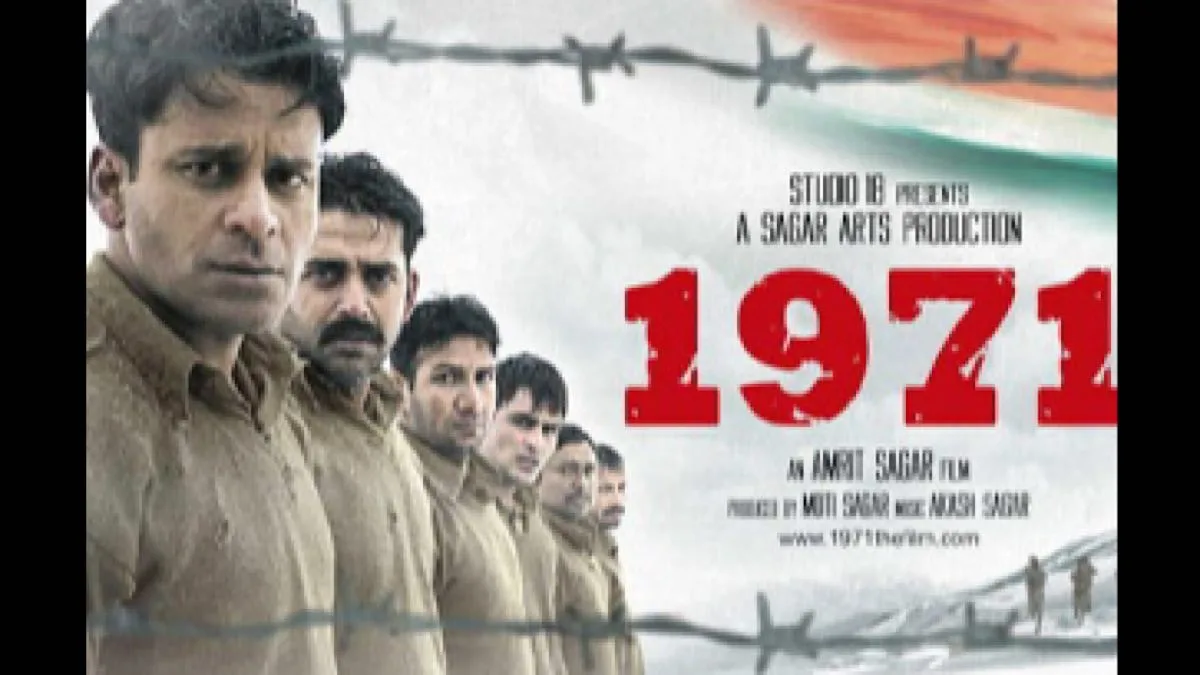
19 Years Of Manoj Bajapayee’s War Film 1971

War films are hard to make. More so in India where budgets are often as constrained as the director’s vision.

UBHASH K JHA | New Delhi |

War films are hard to make. More so in India where budgets are often as constrained as the director’s vision. Director Amrit Sagar manages to make 1971 look filled -out and believable, not just at the centre but also at the edges. The snowy Manali backdrop where the six protagonists negotiate a lethal game of cross-border politics, helps to keep the proceedings above the mound of mundane that’s often the fate of politically-driven movies.

Though the immediate impulse is to look at this fidgety-fingered flick as a didactic bhai-bhai cross-border drama, Sagar and his crew, specially Chirantan Das behind the compelling camera and Piyush Mishra in front with the energy-driven often flippant-at-top-but-profound-beneath dialogues, bring a quality of rhythmic ruggedness to the narrative. Unlike that other star-studded POW drama Deewar: Let’s Bring Our Heroes Home where the characters seemed larger than strife, here the characters constantly seem to be in sync with the drama. The bonding among the six protagonists is admirably high-octane. None of the actors in this all-boys’ drama plays that self-defeating game of one-upmanship. Each character jumps out of the screen with virile fidelity, creating breathing spaces within the crowded yet compact canvas in a way that makes the narrative gripping and thought-provoking. Ravi Kishan with his large accusin

eyes offsets Manoj Bajpai’s studied intensity. It’s good to see Bajpai back in form after a while. He imparts a sense of imminent tension to the proceedings. The rest of the cast is also effective, and not just because they are not over-exposed faces, but because they signify in their performances, a smooth synthesis of history and entertainment. In recreating a rather poignant slice of Indo-Pak history as an adventure saga the Sagars seem to have got their act right. A commendable tension is created out of a situation that could have lapsed into unnecessary didacticism. 1971 is a war film where the battle is often fought in places that aren’t immediately visible to the eye.

(THE WRITER IS A VETERAN FILM CRITIC)

‘Big hits, big wins’: Trump says US strikes shattered Iran’s military; Kharg Island bombed

Trump said US forces struck Iranian military sites including Kharg Island while sparing oil infrastructure, warning Tehran against disrupting shipping through the Strait of Hormuz.

Statesman News Service | Mumbai |

US President Donald Trump has said American military operations against Iran are progressing “very well”, claiming US forces delivered “very big hits” as tensions across the Middle East continue to escalate.

The remarks come amid intensifying hostilities in the region, with Washington stepping up military action against Tehran and targeting sites linked to Iran’s defence infrastructure. The conflict has also raised global concerns about oil supply routes and the stability of the Gulf.

Speaking to reporters at Joint Base Andrews on Friday, Trump portrayed the campaign as highly successful and suggested Iran’s military capacity had suffered severe damage.

“The situation in Iran is going very well. A lot of big hits today. A lot of big wins today,” he said, adding that US forces had the situation “under very good control”.

Trump said the objective of the operation was to remove what he described as a nuclear threat posed by Iran.

“But we had to end the nuclear threat in the Middle East and throughout the world, and we will have done that,” he said.

The US President also argued that Iran’s military power had been significantly weakened during the fighting.

“To me, it means very simply that we are in a position of dominance that nobody’s ever seen before,” he said when asked about the possibility of unconditional surrender.

According to Trump, much of Iran’s naval and air capabilities had already been destroyed.

“Their Navy is gone, their Air Force is gone, most of their military is gone. Their big threat is gone in every way,” he said.

He further claimed that Iranian air defence systems had been largely neutralised.

“They have no radar, they have no anti-aircraft weapons for the most part,” Trump said, adding that “just about everything is gone”.

When questioned about how long the conflict could last, Trump avoided giving a timeline.

“I can’t tell you that… It’ll be as long as it’s necessary,” he said. “But we’re way ahead of schedule.”

Trump also suggested that global energy markets could stabilise once the fighting ends.

“Well, I think your gas prices, as soon as that’s over, are gonna come tumbling down,” he said, predicting a significant drop in fuel prices after the conflict.

He confirmed he had spoken with Chinese President Xi Jinping about the crisis and said discussions were continuing on several issues.

“I have. And we are discussing a couple of different things with him,” Trump said.

The US President also acknowledged communication with Israel but hinted that Washington and Tel Aviv may not always share identical military priorities.

“I think they might be a little different… they’re a different country than we are,” he said when asked about coordination with Israeli Prime Minister Benjamin Netanyahu.

Still, Trump stressed the scale of American military strength, saying the US possessed unmatched capabilities.

“He will tell you there’s never been a power like the power of the United States,” he added.

Also Read: US-Israel-Iran war LIVE Updates

US strike targets military facilities on Iran’s Kharg Island

In a separate statement, Trump said US forces had carried out a major bombing raid on Kharg Island, a strategically important Iranian outpost in the Persian Gulf.

According to the President, the operation was ordered by him and executed by US Central Command (CENTCOM).

“Moments ago, at my direction, the United States Central Command executed one of the most powerful bombing raids in the history of the Middle East,” Trump wrote on social media, claiming that military targets on the island had been “totally obliterated”.

Kharg Island is Iran’s primary crude oil export hub and plays a crucial role in the country’s energy sector.

Trump said the US military deliberately avoided damaging oil facilities located there.

“Our weapons are the most powerful and sophisticated that the world has ever known, but… I have chosen NOT to wipe out the oil infrastructure on the island,” he said.

However, he warned that the decision could change if Iran interferes with maritime traffic in the region.

“Should Iran, or anyone else, do anything to interfere with the free and safe passage of ships through the Strait of Hormuz, I will immediately reconsider this decision,” Trump said.

The Strait of Hormuz, which links the Persian Gulf with global shipping routes, carries roughly one-fifth of the world’s oil supply, making it one of the most strategically sensitive waterways.

Trump also issued a warning to Iran’s leadership and military.

“Iran has NO ability to defend anything that we want to attack — There is nothing they can do about it!” he said.

Reiterating Washington’s long-held position, the US President said Iran would not be allowed to develop nuclear weapons.

“Iran will NEVER have a nuclear weapon, nor will it have the ability to threaten the United States of America, the Middle East or, for that matter, the World!” Trump said.

According to reports cited by The New York Times and The Wall Street Journal, the US strike targeted missile and naval mine storage facilities on Kharg Island while leaving economic oil infrastructure intact.

Located about 20 miles off Iran’s southern coast, the island hosts major storage terminals and export facilities that handle a large share of the country’s crude shipments.

The latest developments have added to fears of disruption in the Gulf region, particularly around the Strait of Hormuz, a key artery for global energy trade.

After Hamnet :how grief shaped Shakespeare’s greatest tragedy

An adaptation of Maggie O’Farrell’s novel imagines how the death of Shakespeare’s young son may have shaped the creation of Hamlet — revealing how grief, faith and art intertwine in humanity’s search for meaning.

ANIK DUTTA | New Delhi |

An adaptation of Maggie O’Farrell’s novel imagines how the death of Shakespeare’s young son may have shaped the creation of Hamlet — revealing how grief, faith and art intertwine in humanity’s search for meaning. “He was a man, take him for all in all, I shall not look upon his like again.” — Hamlet, Act 1,Scene 2 Grief rarely moves in straight lines. It lingers, fractures, withdraws, and sometimes seeks refuge in unexpected places. At its core, Hamnet offers a genuine and visceral portrait of grief, one that unsettles the familiar narratives surrounding the death of a child.

And yet, in the end, as Shakespeare himself reminds us, “the rest is silence.” Based on Maggie O’Farrell’s celebrated novel Hamnet, the film follows William Shakespeare (played by Paul Mescal) and his wife Agnes (Golden Globe winner Jessie Buckley) as they navigate a heartbreak that seems to defy the natural order of existence. Their relationship is pushed almost to its breaking point, stirring deep currents of rage, depression, guilt, and isolation. When their eleven-year-old son Hamnet falls victim to the bubonic plague, Agnes remains at home caring for his twin sister while William is away in London. At first, both parents cry out in anguish over the loss of their son. But grief does not unfold in the same way for everyone.

Their emotional and physical responses soon begin to diverge. William withdraws from the scene of his sorrow, leaving his family behind and returning to London, where he throws himself into the only refuge he knows: writing. A GRIEF EXPLORED In Maggie O’Farrell’s fictional telling, Shakespeare confronts his grief by immortalising his son through the epic tragedy Hamlet. By casting himself symbolically as the ghost, William is able to rewrite the moment history denied him. Through the play, he becomes present at Hamlet’s death and offers the farewell he was unable to give his son in life.

Agnes, however, is left to wrestle with a different torment. She is consumed with remorse, constantly wondering whether she did enough to save her son with the medicines and treatments she had been raised to trust. The relationship between Hamnet and Hamlet therefore lies at the very heart of the story. Both the novel and the film suggest that Shakespeare’s greatest tragedy may itself have emerged from the deepest well of personal grief. At times the connection appears in striking and almost painful ways, such as when Will delivers the immortal soliloquy “To be, or not to be” while walking along the riverbank. “Ultimately, torrents of tears and lamentation are a rightful response to the brokenness of this world.”

What distinguishes Chloé Zhao’s films is the quiet way they reveal the transcendent presence within nature. From The Rider to her Oscar-winning Nomadland, and even her underappreciated Marvel film Eternals, Zhao repeatedly discovers the mysterious within the ordinary, allowing familiar landscapes to acquire unexpected meaning. That sensibility becomes the defining strength of Hamnet, Zhao’s highly anticipated fifth feature. The fictional account of how William Shakespeare and his wife cope with the loss of their son has already moved festival audiences and critics alike, often leaving them in tears.

Jessie Buckley’s performance, in particular, has drawn widespread acclaim for its raw emotional intensity. Agnes’ affinity with nature and her instinctive belief in magic also feels strikingly resonant in the present cultural moment. Perhaps driven by a desire to establish some sense of stability in an increasingly uncertain world, nearly 77 per cent of Gen Z now identify themselves as spiritual.

Still living in the aftermath of a global pandemic, and amid growing international instability and rising child mortality rates in certain parts of the world, many young people appear drawn to practices that promise some measure of control over life’s uncertainties like gemstones, herbal medicines, sage burning, and tarot readings among them. THE QUESTION OF SUFFERING For Agnes, her son’s death reopens older wounds. Having witnessed her own mother die after childbirth, she had long refused to participate in church prayers.

Like many others confronted with unbearable loss, she finds herself struggling to reconcile how God can be both omnibenevolent and omnipotent in a world that permits such suffering. Even today, the problem of evil and human suffering remains one of the most enduring challenges in the study of faith. In the closing sequences of this exquisitely filmed meditation on the fragile boundary between life and death, Agnes and William confront their grief in a deeply theatrical moment of recognition.

During a live performance of Hamlet, William looks directly toward his wife as he delivers a poignant farewell to his son. At the same moment, Agnes reaches out and clasps Hamlet’s hand as the prince draws his final breath. Their eyes meet. It is a moment of profound, wordless understanding. Agnes and William mourn the same child — yet they carry their grief in entirely different ways. And yet, as Shakespeare himself reminds us, the play is the thing. The staging of Hamlet at the film’s climax becomes a powerful argument for art as a form of healing.

A similar idea appears, in a more subdued and quietly moving form, in another significant awards contender this season, Joachim Trier’s Sentimental Value. But in Hamnet, the performance of Hamlet unfolds with moments of extraordinary tension, as a bewildered and grieving Agnes slowly begins to understand what she is witnessing. HOPE NEVER FADES There is no denying that Chloé Zhao’s moving adaptation of O’Farrell’s 2020 novel contains passages of immense pain. Yet there is something strangely liberating in its unflinching portrayal of grief. Because, in the end, torrents of tears and lamentation are the rightful response to the brokenness of this world.

Like the God who wept at the tomb of Lazarus (John 11:33–36), we need not be ashamed to weep in the presence of death — to acknowledge the delicate anguish of losing a child, or to draw near to those who mourn even when words fail us. “The challenge of understanding how God can be both omnibenevolent and omnipotent causes Agnes to lose faith in Him altogether.” And yet hope remains. “Weeping may endure for a night, but joy comes in the morning” (Psalm 30:5).

Dance Like A Man

The sixth edition of Shivaarghya, a rare festival spotlighting classical male dancers, was held at Ganesa Natyalaya, Delhi on Sunday, 1st March, 2026.

AMIT DIXIT | Kolkata |

The sixth edition of Shivaarghya, a rare festival spotlighting classical male dancers, was held at Ganesa Natyalaya, Delhi on Sunday, 1st March, 2026. Rama Vaidyanathan, President, Ganesa Natyalaya, who curated the festival, talks about how male dancers have always been integral to our classical traditions.

Shivaarghya was envisioned by your Guru, late Saroja Vaidyanathan. What inspired her to create a festival exclusively for male dancers, and how has that vision evolved over six editions?

Shivaarghya was the brainchild of my late Guru and mother-in-law, Padma Bhushan Saroja Vaidyanathan. She strongly felt that male dancers deserved special recognition, as even today there remain certain reservations about men pursuing classical dance. Fortunately, this perception is gradually changing. Her vision was to provide young male dancers—especially those who rarely get such opportunities in Delhi—with a dedicated platform to showcase their talent. Over the past editions, the festival has grown into a space that not only highlights male artistry but also celebrates inclusivity and innovation, staying true to her original inspiration while evolving with the times.

Indian classical dance traditions historically included powerful male performers, yet today the stage appears largely female-dominated.How do you interpret this shift?

In Indian traditional dance forms—particularly Bharatanatyam—it was often women from traditional communities who performed, while men from those same communities typically provided the music. At the same time, there were traditions like Gotipua in Odisha, performed by young boys, and Kuchipudi, which was historically presented by male Brahmins. So, it would be inaccurate to say that classical dance was ever exclusively male – or female-dominated; each tradition had its own balance of gender participation. The shift was largely due to social perceptions of dance as not being a “proper” or financially secure profession. In many families, men are still expected to be the primary breadwinners, which discourages them from pursuing dance as a career. I personally know several male dancers who wanted to dedicate themselves to the art but faced family pressures to take up conventional jobs, marry, and provide financial stability. Dance requires immense time, patience, and investment before it begins to repay you, and many men simply don’t have that luxury. However, this mindset is changing. Professions are becoming more gender-fluid, and dance itself has evolved into a viable career path. With opportunities in teaching, collaborations, and cross-cultural projects, classical dance is increasingly recognized as a sustainable profession. As a result, more men are returning to the stage, and the balance is slowly being restored.

This year’s edition of the festival brought together six classical forms along with Neo-Classical. As curator, what guided your selection process and programming balance?

My challenge as a curator is always to identify genuine talent and provide those dancers with an opportunity to perform in Delhi. Often, remarkable artists may not be invited by established organizations or may remain relatively unknown in the city despite being exceptional performers. I make it a point to discover these rare gems across different art forms and bring them together to create a vibrant and diverse dance programme. Throughout the year, I actively scout for young dancers and maintain a list of potential invitees.

How do you define masculine expression within classical aesthetics? Is it about strength, restraint, grace—or something more nuanced?

I believe dance itself is gender-fluid; it is not simply a male body dancing or a female body dancing. While audiences may visually perceive a male or female performer, for us the soul that dances is beyond gender. Increasingly, people are beginning to see dance as a genderless activity. For instance, when a woman performs the Shiva Tandava or a man portrays Radha, the essence lies not in the dancer’s body but in how the character is depicted. What truly defines the expression is the energy conveyed through the face, the nuances reflected in the body, the way one walks, and the emotions one evokes. These elements shape the character far more than the physical appearance of the dancer. In that sense, masculine or feminine expression in classical aesthetics is not confined to strength or grace alone—it is a nuanced interplay of energy, emotion, and embodiment that transcends gender.

How does hosting Shivaarghya align with the larger mission of Ganesa Natyalaya?

Natyalaya is primarily a Bharatanatyam institution, but our mission extends to the propagation of all classical dance forms of India. That is why, in every edition of Shivaarghya, I strive to make the festival inclusive rather than limiting it to Bharatanatyam alone. We consciously include other dance traditions such as Kathak, Kuchipudi, Sattriya, Odissi, and more, so that audiences can experience a diverse range of performances under one roof. Typically, when one attends an Odissi recital, the focus remains solely on Odissi; however, Shivaarghya offers the unique opportunity to witness multiple disciplines in a single space. Moreover, we actively encourage collaboration among dancers from different traditions. For instance, last year a Bharatanatyam dancer and a Kathak dancer jointly developed a choreography that was both innovative and widely appreciated by the audience. Such initiatives embody our vision of celebrating diversity while fostering dialogue between India’s rich classical dance forms.

In an era of digital consumption and changing audience attention spans, how do you preserve the spiritual depth of classical dance and keep the attention of the audience?

The digital world has created its own dance space, often dominated by 30-second reels that garner millions of views. But the real question is: can someone who excels in a 30-second reel also deliver a solid 45-minute live concert? At Ganesa Natyalaya, through Shivaarghya, other festivals, and our regular training, we focus on nurturing well-grounded performers. Our dancers receive rigorous training that equips them to present powerful solo performances while also adapting seamlessly to group presentations. In today’s fast-paced environment, I believe the key is to remain true to your art. When you pursue your chosen path with sustained confidence and commitment, the depth and spiritual essence of classical dance naturally shine through—and audiences respond to that authenticity.

(THE WRITER IS A SENIOR JOURNALIST AND EDITOR)

Forward bases may become America’s Achilles’ heel

The United States currently maintains approximately 750 military bases worldwide which shows the largest overseas deployment in the world.

NEHA KUMAR | New Delhi |

Recent Iranian retaliatory actions targeting U. S. military installations in the Middle East have raised a critical question – whether US military bases still enhance the military power of the country or are becoming a strategic liability? The United States currently maintains approximately 750 military bases worldwide which shows the largest overseas deployment in the world.

This is in sharp contrast to the traditional isolationist policy of the US, considering that the country’s first president, George Washington, famously warned against permanent entanglements in foreign conflicts. In his farewell address, he advised that the United States should “steer clear of permanent alliances with any portion of the foreign world.” For much of its early history, the United States broadly followed this cautious approach. However, the geopolitical landscape changed dramatically after World War II and the world witnessed the onset of the Cold War.

Confronted with the expansion of the Soviet Union, Washington constructed a vast network of alliances and overseas bases designed to deter adversaries and project military power across strategic regions. These bases became the backbone of American global strategy, strengthening conventional and nuclear deterrence while reassuring allies of Washington’s commitment to their security. Today, maintaining this global network comes at a significant cost. The United States spends approximately $55 billion annually to sustain overseas military bases, which is about one-twelfth of its defense budget.

Yet Washington continues to invest in these installations because they serve several key strategic functions. Forward bases allow the United States to rapidly deploy forces, support allies during crises, and maintain a visible security presence in volatile regions such as the Middle East and the Indo-Pacific. For decades, this strategy appeared highly effective. The presence of U.S. forces on foreign soil reassured allies and strengthened the credibility of American extended deterrence.

It also allowed the United States to respond swiftly to emerging conflicts without the need for lengthy mobilization. However, recent developments suggest that the strategic environment is changing in ways that challenge the traditional logic of forward deployments. Advances in precision missile technology as well as emergence of drone warfare have dramatically increased the vulnerability of fixed military installations. Bases that once symbolized American power are now increasingly exposed as targets. The Middle East illustrates this emerging dilemma.

Iran possesses one of the largest ballistic missile arsenals in the region, including multiple types of short-range ballistic missiles (SRBMs) capable of striking U.S. facilities across the region. Many of these missiles rely on solid-fuel technology, allowing them to be stored for long periods and launched with minimal preparation time. Such capabilities significantly reduce warning time and complicate defensive responses. Moreover, U.S. bases are no longer threatened solely by state adversaries. Non-state actors, including militia groups armed with drones and rockets, have repeatedly targeted American facilities in the region.

This evolving threat environment raises an uncomfortable question: Are forward bases still a source of deterrence, or have they become convenient targets that invite escalation? The challenge is not merely operational but strategic. Fixed bases built for the Cold War era were designed to deter large conventional conflicts between major powers. Yet modern warfare increasingly relies on precision strikes, drones, and missile systems that can neutralize large installations without direct confrontation. In this context, the very infrastructure intended to project stability may inadvertently increase regional tensions and vulnerability.

None of this suggests that overseas bases have lost their strategic value entirely. They remain vital for alliance management, intelligence coordination, and rapid military response. However, the changing character of warfare demands a fundamental reassessment of how these bases are structured, protected, and deployed. Instead of relying on large, concentrated installations, the United States may need to adopt more flexible and dispersed force structures, invest in advanced missile defense systems, and develop mobile deployment capabilities that reduce vulnerability to precision strikes.

It is important to combine all these with the hardened military systems to protect all kind of military assets. In short, the era of static military dominance may be giving way to a new era of distributed and resilient military presence. The debate over overseas bases is therefore not simply about costs or alliances. It is about whether the United States is prepared to adapt its global military posture to a rapidly evolving technological and strategic environment. If Washington continues to rely on Cold War–era deployment models in an age of precision warfare, its most visible symbols of power could increasingly become its most exposed vulnerabilities.

(The writer is Associate Professor & Head, Department of Liberal Arts & Humanities Chandigarh University.)

‘Trash it’: Piyush Goyal pushes back against speculation on India delaying US trade deal

Commerce Minister Piyush Goyal says India has protected sensitive sectors in trade negotiations with the US, even as Washington opens fresh investigations into alleged unfair trade practices.

Statesman News Service | New Delhi |

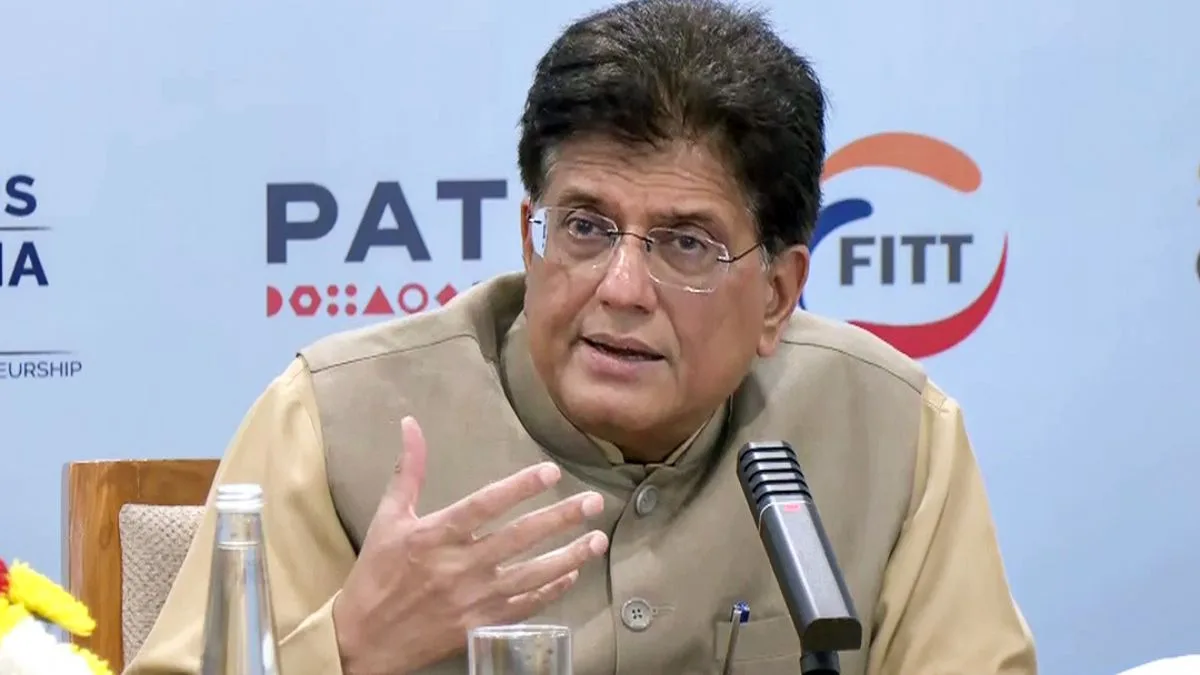
Union Commerce and Industry Minister Piyush Goyal on Friday dismissed reports suggesting that India might postpone a trade agreement with the United States for several months, calling such claims completely unfounded.

The minister said the reports circulating since morning had no basis and should not be taken seriously. His remarks came during the NXT Summit 2026 in New Delhi, where he sought to clarify the government’s position on the ongoing trade engagement between the two countries.

“There is some absolutely baseless report circulating from today morning… which you should trash. There is absolutely no basis in it at all. We have a very good trade agreement with the United States of America,” Goyal said.

He added that the proposed arrangement is designed to benefit both nations while protecting India’s key sectors.

Sensitive sectors protected in proposed deal

Goyal said India has ensured that its vulnerable sectors remain safeguarded in the negotiations.

“We have been able to protect all our sensitive sectors like Agriculture. India’s interests have been safeguarded like no GM products, no rice, no corn, no maize, no soya bean and no dairy or poultry either. It is a very powerful agreement, it is great for both India and America as every trade deal should be,” he said.

According to the minister, the agreement could also help India access advanced technologies from the US and attract investment in emerging sectors.

“The deal also helps us get the best of technologies from America so that we can become the data centre of the world and can have large investments post the successful AI Summit,” he added.

Talks continuing despite fresh US trade probe

Officials in the Commerce Ministry have also indicated that discussions with Washington are progressing normally and there has been no pause in bilateral engagement.

Last month, India and the United States announced that they had agreed on a framework for an interim arrangement on reciprocal trade. The move reaffirmed both countries’ commitment to a broader US-India Bilateral Trade Agreement (BTA), negotiations for which were launched by US President Donald J Trump and Prime Minister Narendra Modi on February 13, 2025.

The joint statement described the interim arrangement as an important step in strengthening economic ties.

In a separate development, the Donald Trump administration has opened new investigations into alleged unfair trade practices by 16 trading partners, including India, China and Bangladesh. The probe follows a recent US Supreme Court ruling that struck down earlier tariff measures, prompting Washington to explore fresh ways to apply tariff pressure.

‘Tech sovereignty is an imperative’

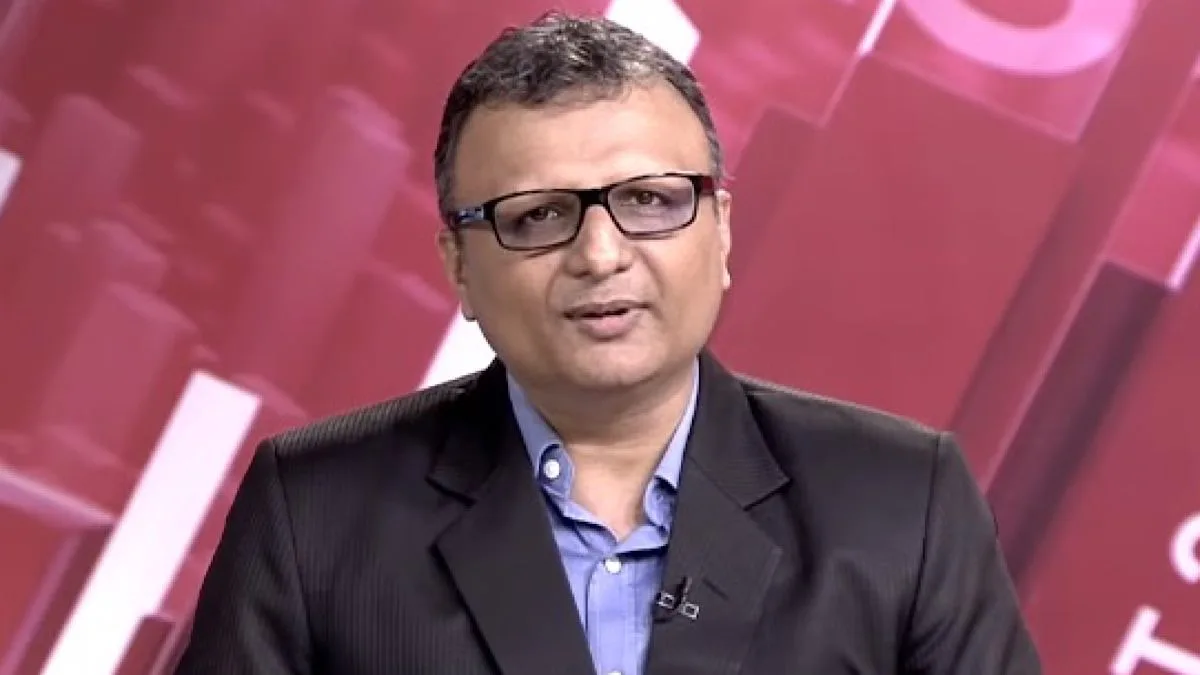
Shashi Shekhar Vempati, Padma Shri, and former CEO of Prasar Bharti, is a prominent Indian media and technology leader known for his work at the intersection of public broadcasting, digital media, and policy.

Statesman News Service | New Delhi |

Shashi Shekhar Vempati, Padma Shri, and former CEO of Prasar Bharti, is a prominent Indian media and technology leader known for his work at the intersection of public broadcasting, digital media, and policy. He served as the CEO of Prasar Bharati, India’s public service broadcaster, where he led major reforms to modernise Doordarshan and All India Radio through digital transformation, platform expansion, and greater transparency in governance. Before joining Prasar Bharati, Vempati, Co-founder, AI4India, held senior leadership roles in the technology sector.

Beyond his corporate and entrepreneurial work, Vempati has emerged as a prominent voice in India’s digital policy and Artificial Intelligence (AI) ecosystem. He has been closely associated with Government bodies and public initiatives such as AI4India, where he has contributed to shaping conversations around responsible, inclusive and sovereign AI. In an exclusive interview with Nikhil Vyas, Vempati spoke about Artificial Intelligence and the AI4India report. Excerpts:

Q: Your AI4India report on the Future of Employability in the Age of AI argues that AI is not just a technology shift but a workforce reset. From the research and expert conversations behind the report, what do you see as the single biggest risk if India delays action today?

A: The single biggest risk is a deep structural divide between elite institutions where students have better access to latest models and to ols, powerful computational infrastructure and have been mentored and guided on effective use of AI to build their skills and portfolio for the job market as opposed to colleges and universities within tier-2/tier-3 towns/cities where students have a shallow exposure to AI, limited access to computing infrastructure and have very poor understanding of the kind of skills and experience that the industry needs. It is urgent and important to bridge this gap through policy and institutional interventions in a mission mode.

Q: One of the report’s key insights is that while access to AI tools is expanding rapidly, real capability building is lagging. What fundamental changes are needed in India’s education and skilling systems to move from surface-level AI usage to deep competence?

A: In order to develop deep competence several changes are needed. The first and foremost is better access to compute and the latest models/tools. The second is availability of publicly accessible datasets that can be used for model development, training, prototyping, etc. The third would be exposure to real world problems from the industry that can better acquaint the students with the domain and mentorship that can ground them with a deeper understanding of the context within which AI adoption is occurring within these industries. There needs to be a concerted effort across industries and regions to build linkages between students and the industry through Internships and Mentoring programs. Lastly, it is essential to redesign curriculum at both school level and college level to encourage making and building, experiential learning while breaking away from the linear modes of teaching/testing constrained by textbooks.

Q: There is growing anxiety around AI replacing entry-level jobs. Based on AI4India’s findings, how should young professionals in India rethink career paths in a world where AI compresses workflows rather than eliminating roles outright?

A: The mode and manner in which AI will likely impact different industries will vary. While there is no single mantra to a career path, the following traits should hold young professionals in good stead to weather the rapid change and the turbulence associated with it. Firstly learnability – it is important to keep learning and hone the ability to learn new tools, methods, skills etc. Learning cannot stop and has to be a lifelong pursuit. Secondly, deep domain knowledge. While AI impacts different domains differently, most of the current AI systems lack deep domain knowledge. To stay ahead of the algorithms and models it is important to blend a deep understanding of the chosen domain with experiential knowledge. This will ensure a human edge over AI. The third trait is rather counterintuitive to the second – lateral thinking and the ability to connect dots across diverse domains. The fourth is developing one or more fallback skills that can help ride out turbulence in the job market by taking up gigs to ensure one or more streams of income during economically uncertain times. The last is developing leadership skills around entrepreneurial thinking, risk management and communication. As the Prime Minister says – be a job creator, don’t just remain a job seeker – it is important for young professionals to think of agile and flexible career pathways beyond linear and predictable corporate progression ladders.

Q: You have been a strong advocate for sovereign AI. Why is it critical for India to build s over eighty not just at the application layer, but across data, models, compute, and platforms?

A: The multiple crises of the first half of this decade hold several geo-political lessons. A once in a hundred-year pandemic exposed the fragility of global supply chains. Recent conflicts, both military and trade, have shown how globalisation is under threat and how big-tech platforms can impinge on sovereignty. As the world’s largest democracy, India cannot wait for the next major crisis to wake up to the need for sovereignty across layers. Unlike previous waves of technology, the AI wave is exponential in its advancements, thus likely to result in a wide and unbridgeable gulf between nations. As the world’s largest democracy and one of the top economies by the end of the decade, Technology Sovereignty to India is not a choice but it is a strategic imperative.

Q: Many countries are investing heavily in AI but remain dependent on a few global technology providers. What does true AI sovereignty look like for India, and how can we avoid becoming a downstream consumer economy in the AI era?

A: It is a fact that the global technology landscape is dominated by a few large technology providers from chips to platforms. Even the processes for fabricating chips require specialised equipment that are proprietary to a couple of technology firms, while globally the semiconductor supply chain is concentrated within a couple of countries carrying significant geopolitical risks. True sovereignty to India would be flexibility across layers to make strategic choices that minimise geopolitical risk while allowing India to build national capabilities and ensuring Indian industries and start-ups remain competitive.

Q : India has produced world-class AI talent that often builds foundational technology in the West. What concrete policy, institutional, and ecosystem changes are required to bring this talent back and give them reasons to build in India?

A: A focused effort to re-engage technology talent across the Indian Diaspora can help accelerate India’s journey to technology sovereignty. While engagement of tech talent from the diaspora by corporates is being done at market competitive levels of compensation, there are several hurdles faced by the non-corporate sector. This would require a targeted set of interventions that facilitate talent engagement by academia and focused research organisations from scale of funding specifically for such hiring, flexible policies in offering market competitive compensation and single window facilities to facilitate smooth relocation and settlement. With the RDI Fund being rolled out, a sustained focus on ease of business for startups and first-time entrepreneurs would also help encourage the ‘ghar wapsi’ of India’s technology talent to nurse their entrepreneurial ambitions in India.

Q: The AI4India report stresses that AI literacy must become a baseline skill, not a specialized one. How should AI literacy be integrated across schools, colleges, and vocational training without turning it into a narrow coding exercise?

A: Integrating AI into the classroom will require a cultural shift within the teaching community both for teaching AI and for teaching with AI. It is important to coach and mentor teachers to raise the quality and consistency of teaching to specific benchmarks where the power of AI can be harnessed to the fullest. This has been evident across domains as diverse as sports to competitive exams such as JEE and UPSC. The quality of coaching and coaching sophistication matters if our youth are to be globally competitive.

Q: There is a sharp divide between elite institutions and the rest of India’s education ecosystem in AI readiness. What scalable interventions can help Tier 2 and Tier 3 institutions participate meaningfully in India’s AI growth story?

A: A parallel effort should be focused on Institutional capacity building and Institutional excellence. The lessons and best practices from the elite institutions must trickle down into the broader academic world through focused interventions.

Q: Employers increasingly value adaptability, judgment, and problem framing over traditional degrees. How should industry and academia realign assessment, hiring, and curriculum design to reflect the realities highlighted in the report?

A: As highlighted previously, going beyond sequential learning in classrooms and breaking free textbooks and emphasis on experiential learning, real world case studies and projects, industry internships and mentorship will go a long way in realising this.

Q: India has successfully built digital public infrastructure like Aadhaar and UPI. How can a similar public-interest approach to AI help ensure that productivity gains translate into broad-based employment, inclusion, and national resilience?

A: India awaits a UPI-like moment with AI where technology barriers have been broken and the fruits of technology extend to all layers of the socio-economic strata. This would require an innovative approach unique to India architecture that takes AI to edge devices, creatively harnesses the power of resilient and secure technologies such as D2M to push datasets and models to the edge, and innovative use cases that break language barriers and are able to converse and transact with citizens across every region of India through interfaces that are most natural and comfortable to them.