Logo

Global markets discovering, yet again, that geopolitics has a way of derailing the strongest bull runs

Markets are losing momentum as rising oil prices and US-Iran tensions fuel fresh inflation worries. Investors are turning cautious, prioritising risk over growth in an increasingly uncertain global landscape.

Siddhartha Rai | New Delhi |

The early signals are unmistakable. Risk appetite is fading as tensions between the United States and Iran intensify, with the Strait of Hormuz returning to the centre of global economic anxieties. Oil, predictably, is the first responder. Brent crude holding above $105 a barrel is not merely a commodity story—it is a warning shot for inflation trajectories worldwide.

For Europe, this could not come at a worse time. With growth already uneven and monetary policy finely balanced, a renewed surge in energy prices threatens to complicate the path ahead. Futures suggest a weak start, but the deeper concern lies in what follows: the growing likelihood that central banks may have to stay restrictive longer than markets had priced in.

Asia, meanwhile, reflects a divided reality. Japan continues to ride a wave of technology-driven optimism, with the Nikkei scaling remarkable heights. But elsewhere, caution prevails. Chinese markets remain subdued, and broader regional sentiment suggests investors are unwilling to take aggressive positions in the face of geopolitical ambiguity.

Wall Street, too, is beginning to show cracks. After weeks of record-setting momentum, U.S. indices have pulled back, indicating that valuations are now being tested against a more uncertain macro backdrop. Even strong earnings are no longer enough. Tesla’s decline, despite outperforming expectations, underscores a shift in investor focus—from present performance to future costs and risks.

Also Read: IRGC seizes two cargo vessels crossing Hormuz Strait without ‘necessary permits’; one was headed to Gujarat

The currency market offers perhaps the clearest verdict. The U.S. dollar is strengthening, as capital gravitates toward safety, while equities struggle to maintain direction.

In essence, markets are caught in a familiar but uncomfortable bind. The long-term narrative of AI-driven growth remains intact, but it is being overshadowed—at least for now—by immediate geopolitical risks and their inflationary consequences.

And in the hierarchy of market drivers, the immediate almost always wins.

No relief for Pawan Khera; Gauhati HC rejects anticipatory bail in FIR over allegations against CM’s wife

Court proceedings tighten around Pawan Khera as the Gauhati High Court denies bail and pushes the case into a crucial phase, following earlier refusal of relief by the Supreme Court.

Statesman News Service | New Delhi |

Congress leader Pawan Khera on Friday failed to secure relief from the Gauhati High Court, which rejected his anticipatory bail plea in a case linked to alleged remarks against Riniki Bhuyan Sarma, wife of Assam Chief Minister Himanta Biswa Sarma.

The order comes after the Supreme Court of India had earlier declined to extend protection from arrest, pushing Khera to seek relief from courts in Assam. With Friday’s ruling, the Congress leader now faces a tightening legal situation as the case moves forward.

Court rejects plea after hearing both sides

The matter was heard by a single-judge Bench of Justice Parthivjyoti Saikia, which had reserved its verdict on Tuesday after detailed arguments from both sides.

Appearing for Khera, senior advocate Abhishek Manu Singhvi, along with advocate Kamal Narayan Choudhury, argued that the case was politically motivated and amounted to vendetta. It was also submitted that the allegations lacked merit and were intended to silence a political opponent.

Opposing the plea, Assam Advocate General Devajit Lon Saikia told the court that the case involved serious offences, including forgery and cheating. He said the investigation had revealed prima facie material suggesting deliberate wrongdoing, and argued that custodial interrogation was necessary.

Supreme Court had earlier refused relief

Khera moved the Gauhati High Court after the Supreme Court declined to extend his transit anticipatory bail.

A Bench of Justices JK Maheshwari and Atul S Chandurkar, in its April 17 order, said Khera was “at liberty to apply immediately before the Court concerned” in Assam and clarified that any such plea “shall not be adversely influenced” by its earlier order.

The apex court had also said the competent court should decide the anticipatory bail application on its own merits and based on the material placed before it.

Earlier, on April 15, the Supreme Court had stayed the Telangana High Court’s order granting Khera interim protection, observing that the plea appeared to rely on “fabricated documents” to invoke jurisdiction. The interim protection from arrest was subsequently vacated.

FIR and allegations against Khera

The case stems from an FIR registered by Assam Police under provisions of the Bharatiya Nyaya Sanhita, including charges of defamation, forgery and criminal conspiracy.

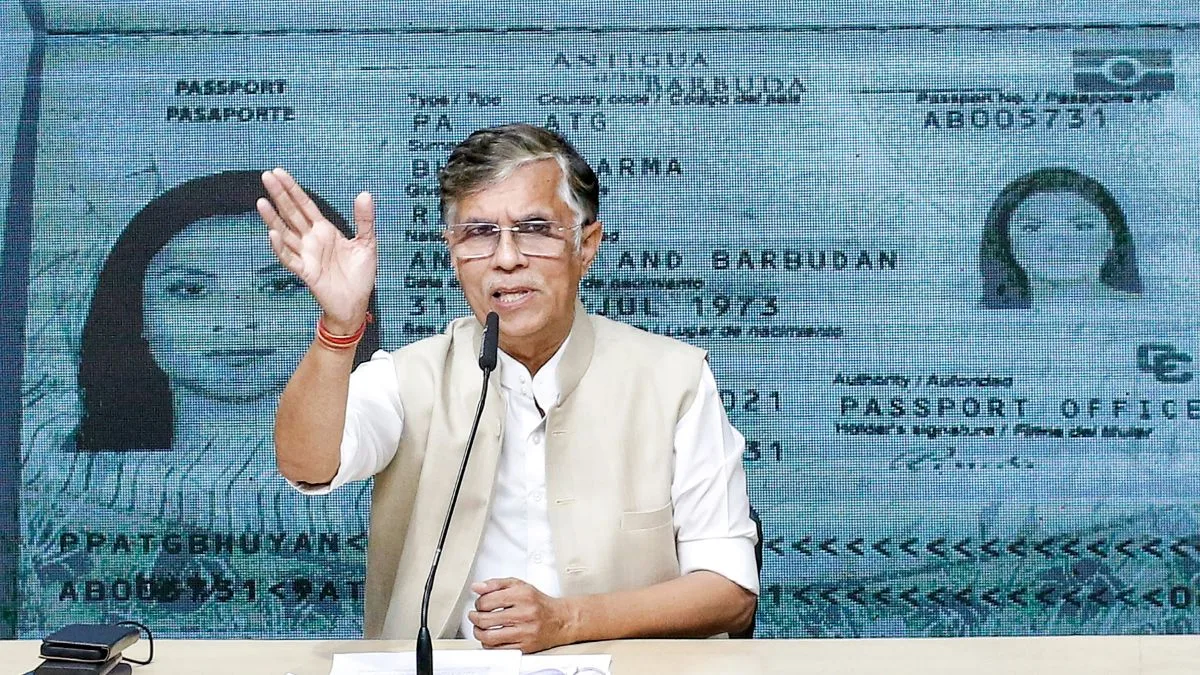
Khera had alleged that Riniki Sarma possessed multiple foreign passports, undisclosed luxury properties in Dubai, and shell companies in the United States.

The Sarma family has denied these claims, calling the documents “AI-generated fabrications” circulated by Pakistani social media groups.

BJP sharpens attack after court order

Reacting to the development, Assam Minister and BJP leader Pijush Hazarika welcomed the court’s decision and launched a sharp attack on the Congress leader.

“Grateful that Hon’ble Gauhati HC has denied bail to criminal Pawan Khera. Remember, he forged land deeds and faked passports just to manipulate an election outcome and also compromise India’s relations with other sovereign nations,” Hazarika said.

He also raised a series of questions, asking who else may have been involved in the alleged conspiracy.

“Who were his co-conspirators? Was fugitive Khera the mastermind or a mere front for someone’s dirty game? Who financed this nefarious operation and what other documents did they forge? Were there international actors from across the border in this illegal enterprise?” he said.

The minister further claimed that the accused had been engaging through intermediaries and asserted that “he and each of his co conspirators will face the wrath of law,” adding that Assam Police operates under the rule of law.

Earlier, Himanta Biswa Sarma had said Khera should submit himself to the legal process.

“I think Pawan Khera should surrender before the law. He should come to Guwahati and surrender there,” he told ANI.

Annu Kapoor doubles down on ‘dudhiya badan’ remark for Tamannaah Bhatia, says ‘I’ll touch her feet’; internet not buying the drama

He says there was no bad intention, only praise. But many aren’t convinced, calling his explanation outdated and dismissive. What he presents as respect is being read by critics as deflection, with the focus shifting away from the real issue.

Statesman News Service | New Delhi |

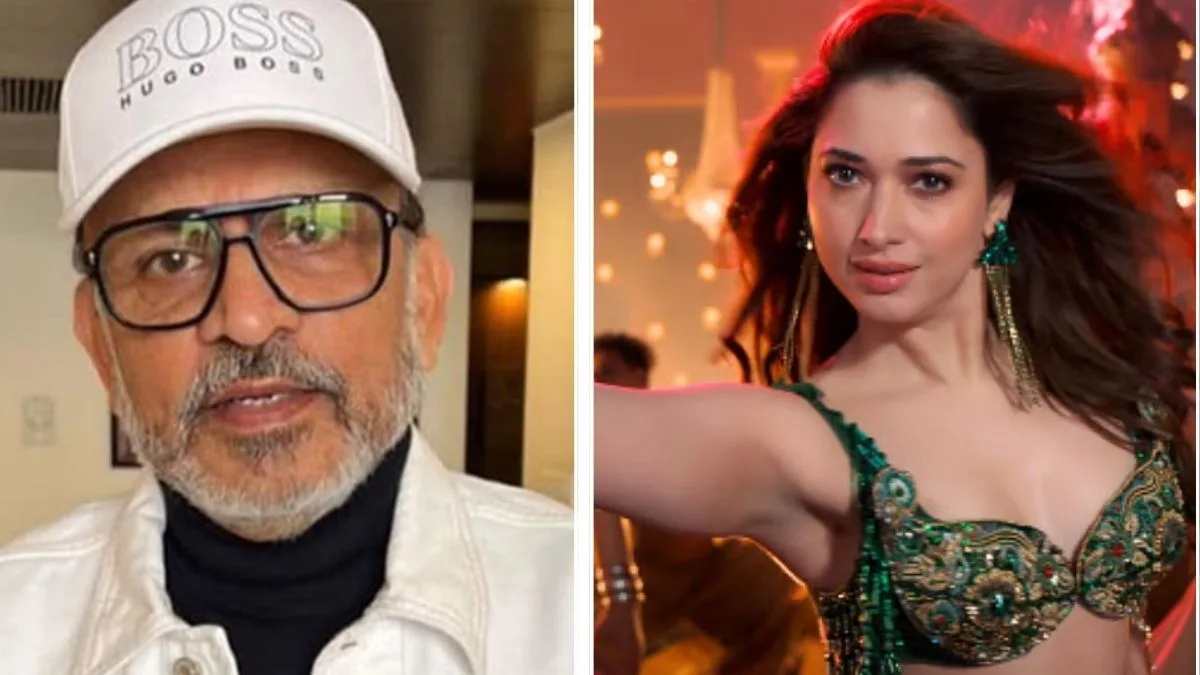
Veteran actor Annu Kapoor, clearly did not expect his words to explode the way they did. The phrase “dudhiya badan”, said while talking about Tamannaah Bhatia, has now turned into one of those moments where people are asking: was it praise, or just plain tone-deaf?

Let’s break down the mess.

That ‘compliment’ that didn’t land well

The controversy kicked off after a clip from Kapoor’s old chat with Shubhankar Mishra started circulating again. He was talking about Tamannaah’s performance in the song ‘Aaj Ki Raat’ from Stree 2, also starring Rajkummar Rao and Pankaj Tripathi.

While discussing the song, Kapoor made remarks about Tamannaah’s appearance including the now-infamous “dudhiya badan” comment.

Some people brushed it off as old-school language. Others called it unnecessary and objectifying.

Kapoor’s defence: ‘I was just appreciating her’

Facing the backlash, Kapoor tried to explain himself in an interview with Siddharth Kannan.

He said the comment came up when he was reviewing songs for a show. During a US tour last year, his team suggested ‘Aaj Ki Raat’ as a tough performance track. Curious, he watched the video, and liked what he saw.

Also Read: DDLJ in 2026: Kajol says Simran’s world wouldn’t last a minute in Gen Z reality

According to him, the reaction was simple: “She is dancing very well.”

But here’s the catch. If that was the only takeaway, why did the comment focus on her body instead of her dance? That’s exactly what people are questioning.

‘Hindi vs English’ argument. Really?

Kapoor also blamed the backlash on language. He argued that if he had said “milky body” in English, no one would have cared.

That argument feels… shaky at best.

Because the issue isn’t the language. It’s the gaze. Whether you say it in Hindi or English, reducing a performer to their physical traits, especially in a professional discussion, is what’s rubbing people the wrong way.

Trying to make it about translation misses the bigger point. The criticism isn’t linguistic. It’s about respect.

Apology… but shady

Kapoor did say he’s willing to apologise, but even that came with a dramatic spin.

He said if Tamannaah ever tells him she felt hurt, he would admit it and even “touch her feet” to say sorry. He added that as a 71-year-old man, his gesture would clearly show he had no bad intentions.

Here’s where things get uncomfortable again.

An apology isn’t about grand gestures or age-based authority. It’s about understanding why something felt wrong in the first place. Saying “I didn’t mean it” over and over doesn’t automatically fix the impact.

And invoking age as a shield? That doesn’t really hold up in 2026 where conversations around respect and consent have evolved way beyond that.

Cold, remorseless, brutal: Delhi Police turns to psychological profiling in IRS officer’s daughter murder

Police are combining digital evidence, CCTV footage and behavioural analysis to decode motive and intent in the Kailash Hills murder, with custody interrogation underway to reconstruct the sequence.

Statesman News Service | New Delhi |

The Delhi Police is now planning a detailed psychological assessment of Rahul Meena, the man accused in the rape and murder of a 22-year-old woman, the daughter of an Indian Revenue Service officer, in southeast Delhi. Investigators say they are trying to piece together his mental state and understand what may have driven the crime.

The decision follows troubling observations during interrogation. Officers say Meena appeared unusually composed and did not show any visible remorse while being questioned, raising further questions about his state of mind. The psychological assessment is expected to help investigators determine whether the crime was planned or triggered by sudden rage.

Police to assess mental state and behavioural patterns

According to sources, the evaluation will involve clinical experts examining the accused’s aggression levels, emotional responses and behavioural tendencies. Investigators are also looking at possible traits linked to Antisocial Personality Disorder as part of the profiling process.

Officials believe this exercise could play a key role in establishing intent and strengthening the prosecution’s case.

Crime unfolded inside Kailash Hills residence

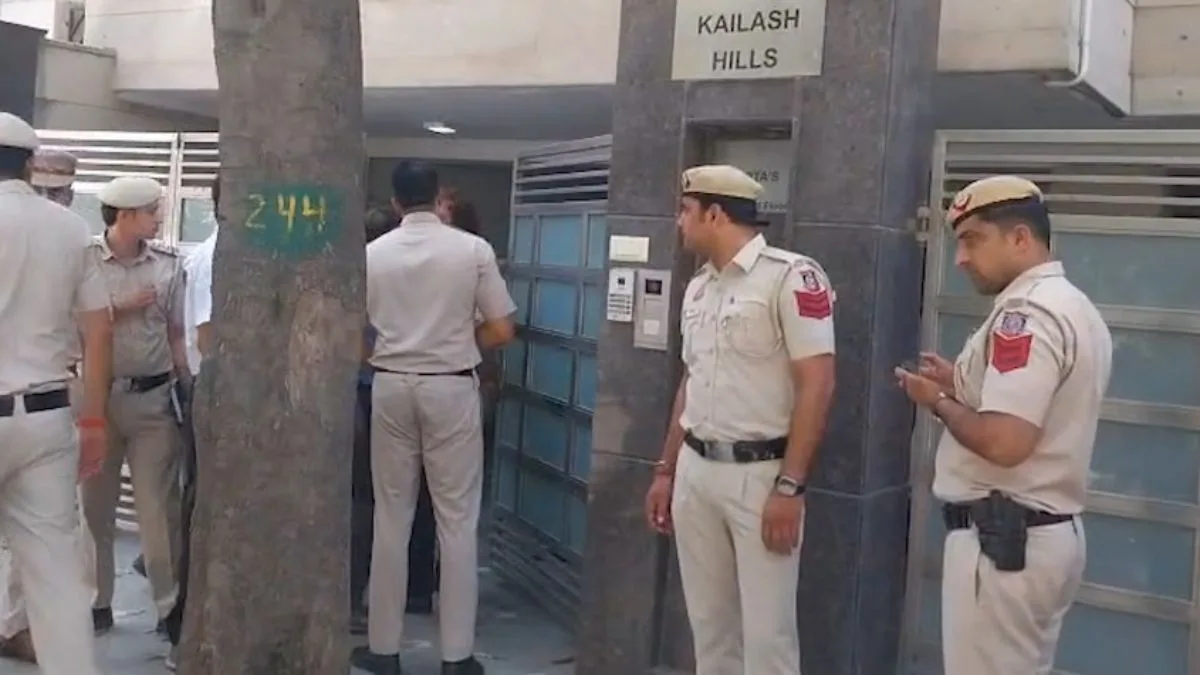
The incident took place on Wednesday morning at the family’s residence in the Kailash Hills area. The victim, an IIT Delhi graduate and civil services aspirant, was in her room when Meena allegedly entered the house.

When questioned about his presence, Meena reportedly claimed that the victim’s mother had called him inside. The situation escalated when he demanded cash. On being refused, an argument broke out.

As the victim raised an alarm, Meena allegedly attacked her with a lamp, striking her repeatedly and leaving her with severe injuries. Police said that after she lost consciousness, he allegedly raped her.

Investigators further revealed that he later strangled the victim using a phone charger.

Loot, escape and CCTV trail

After the assault, Meena allegedly dragged the victim to another room where the family’s lockers were kept. He is said to have used her finger to unlock a biometric safe and forced open another locker using a screwdriver.

Police said he looted around Rs 2.5 lakh in cash and jewellery before changing his blood-stained trousers with a pair belonging to the victim’s brother and fleeing towards a railway station.

CCTV footage has helped establish the timeline. Meena was seen entering the colony at 6:30 am, entering the house shortly after, and leaving at around 7:20 am.

Digital clues lead to arrest in Dwarka

Despite attempts to avoid detection, Meena was traced through a digital trail. Investigators said he used a stolen mobile phone and accessed the internet via a hotel Wi-Fi network in Dwarka.

He was also in touch with a relative in Gurugram through Instagram. By analysing Internet Protocol Detail Records and following these leads, police pinpointed his location and arrested him from a hotel.

Custody and ongoing investigation

On Thursday, a court granted police four days of custody of the accused to reconstruct the sequence of events and verify digital and forensic evidence.

Officials said the psychological profiling will complement existing forensic material, including CCTV footage and recovered items, as the investigation continues.

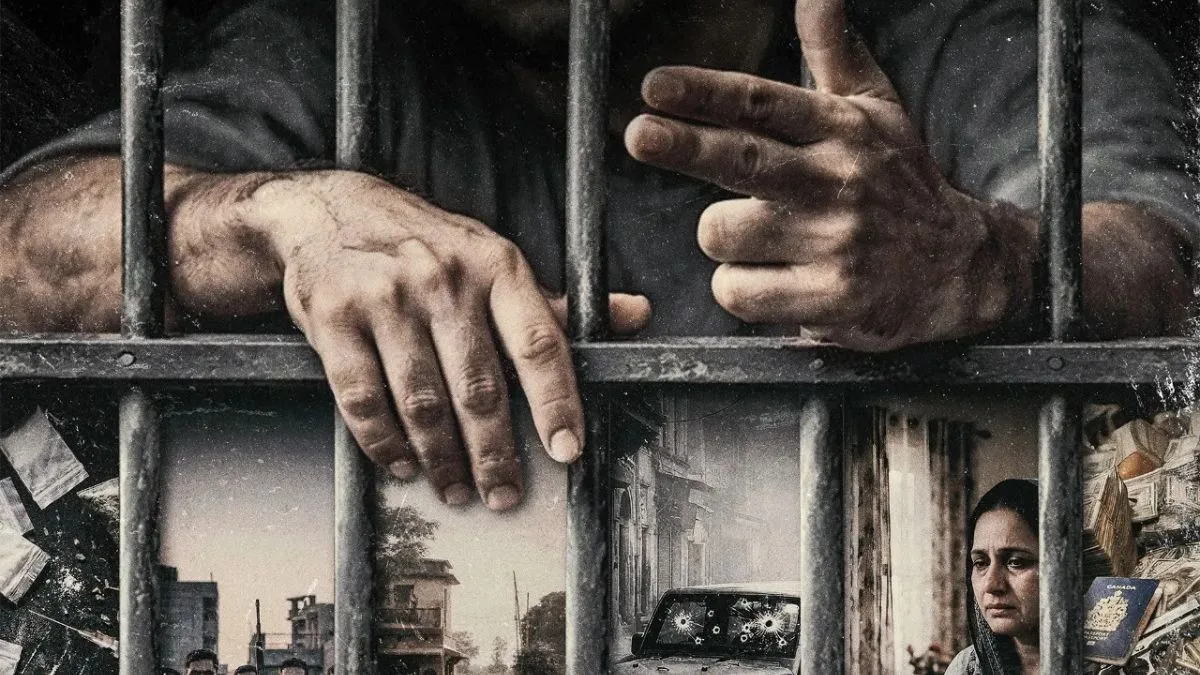
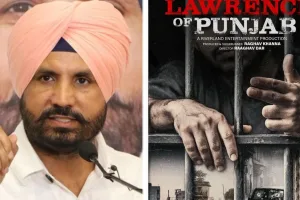
Centre halts release of ‘Lawrence of Punjab’, slams series for glorifying Lawrence Bishnoi and ignoring victims

A political storm and emotional backlash forced the Centre to step in just days before the show’s release. Authorities said the series risked glorifying Lawrence Bishnoi while ignoring the real victims of gang violence in Punjab.

Statesman News Service | New Delhi |

‘Lawrence of Punjab’, a crime docuseries that was already sparking outrage has now been stopped before it could even hit your screens. And the drama is full-on political, emotional, and very personal.

Here’s what really went down behind the scenes of ‘Lawrence of Punjab’, the show that never made it to streaming.

A show that never got its premiere night

The controversial docuseries ‘Lawrence of Punjab’ was all set to drop on ZEE5 on April 27. But just days before release, the plug was pulled.

During a hearing at the Punjab and Haryana High Court, the Centre made it clear: the show will not be streamed. The Ministry of Information and Broadcasting had already stepped in and instructed ZEE5 to stop the telecast.

Once the court was told that the government had already acted, it closed the case filed by Amarinder Singh Raja Warring, who had moved legally to block the series.

Why everyone suddenly had a problem with this series

The show is reportedly based on jailed gangster Lawrence Bishnoi and his network. And that’s exactly where things got explosive.

Political parties across Punjab, yes, all sides, came together in rare agreement. The Bharatiya Janata Party, Indian National Congress, and Shiromani Akali Dal all demanded a ban.

Their concern? That the series might glamorise gangster culture in a state already dealing with sensitive law-and-order issues.

Even the Punjab Police stepped in, writing to the Centre and asking for intervention. The fear was simple: showing the rise of a real-life gangster could influence public sentiment in the wrong way.

A personal loss turns into a public fight

For Warring, this was personal.

He openly said he would approach the court, accusing the series of glorifying crime and ignoring the pain of victims. And he made it clear why this hit home.

He referenced the murder of Punjabi singer Sidhu Moosewala, who was killed in 2022 in a case linked to the Bishnoi gang.

Also Read: Congress MP explodes over ‘Lawrence of Punjab’, slams ZEE5 for glorifying gangster

“I lost my friend Sidhu Moosewala… his death was a loss for every Punjabi,” Warring said, calling the series insensitive.

He argued that the show risked turning a criminal figure into a larger-than-life character while completely ignoring the human cost of gang violence.

In his words, this was “a slap on every Punjabi.”

He also pointed out that many families in Punjab are still dealing with the fallout of crimes linked to such networks. For them, this is trauma.

The bigger picture

The title ‘Lawrence of Punjab’ itself raised eyebrows. Many saw it as a play on Lawrence of Arabia, which only added to concerns about romanticising the story.

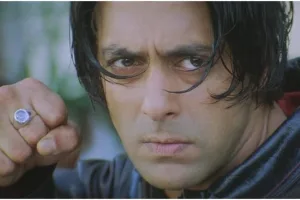
The series reportedly traces Bishnoi’s rise and his growing influence. He had already grabbed national attention after having link to threats against Bollywood actor Salman Khan, tied to the 1990s blackbuck poaching case.

But critics argued that telling this story without sensitivity could send the wrong message especially to younger audiences.

Warring summed it up bluntly: Punjab’s identity should be about its heroes; freedom fighters like Bhagat Singh, soldiers, and farmers, not gangsters.

“Never a gangster,” he stressed.

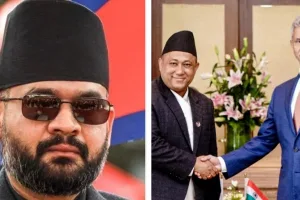
Explained: How Nepal’s Home Minister Sudan Gurung, Balen’s ‘bestie’, resigned amid murky deals, loans, unexplained cash entries

A sudden resignation has pulled back the curtain on a complex web of bank transactions, business links, and political pressure in Nepal. As questions grow louder, Sudan Gurung’s exit is only the beginning of a much deeper investigation.

Statesman News Service | Kathmandu |

In a move that was peak Gen-Z, Nepal’s Home Minister Sudan Gurung decided that the best way to quit one of the most powerful jobs in the country was via a social media post. But this wasn’t a “peace out” post. Gurung claimed he was stepping down because he wanted a “fair investigation” into his life. He said he didn’t want any “conflict of interest” to mess with the official probe.

But why now? Well, the heat was getting too high. The tea was spilling everywhere. Gurung had been linked to a businessman named Deepak Bhatt, who is currently being grilled for money laundering. When you’re the guy in charge of the police and domestic security, being “business besties” with a guy under investigation for financial crimes is a massive red flag.

As soon as the “Post” button was hit, the government went into overdrive. Prime Minister Balendra Shah didn’t even wait for a replacement. He stepped right into the Home Ministry office himself. Now, PM Shah is wearing three hats: Prime Minister, Defense Minister, and Home Minister.

The mystery of the missing millions and the ‘Hami Nepal’ piggy bank

To understand how we got here, we have to look at Hami Nepal. This was the non-profit that made Sudan Gurung a star. It was supposed to be about the youth, about change, and about helping people. But the bank statements tell a story that feels less like “charity” and more like creative accounting.

Investigators found that Hami Nepal had accounts at both Himalayan Bank and Nabil Bank. Here’s where it gets weird: the Himalayan Bank account was suddenly closed in February 2025. Before the lights went out on that account, it had about 5.34 million rupees sitting in it. Curiously, about 3.09 million of that was shuffled over to the Nabil Bank account right before the closure.

Then there’s the case of Manita Devkota. Back in 2015, she sent 440,000 rupees to the non-profit. She’s not a known donor. Why was she sending nearly half a million rupees to a then-small organisation? This is one of the many “empty boxes” in Gurung’s financial history that investigators are trying to fill.

Also Read: Age reset in government: Balen Shah leads cabinet where 10 of 15 ministers are under 40 and the oldest is 51

COVID-19: Crisis or a personal fundraising opportunity?

During the peak of the COVID-19 pandemic, people were desperate to help. Donations were pouring in from everywhere to help buy oxygen, food, and medicine. Records show that Gurung’s personal Nabil Bank account received about 6 million rupees between May and June 2021.

The sources for this money were varied, but the purpose was COVID-19 relief. On August 5, 2021, Gurung moved about 2.59 million from this personal account into the Hami Nepal organisational account. While he did move some of the money, the big question remains: why was public aid money sitting in his private bank account for months?

In the world of high finance and politics, mixing personal cash with public charity is the ultimate “no-no.” It gives the impression that the money was just resting in his account, and it confirms that he was taking aid money directly into his own pocket before deciding how much to give back to the organisation.

The “loan” that happened just in time for a stock buy

If you look at Gurung’s bank activity in May 2023, it looks like a high-stakes poker game. On May 9, 2023, two men dropped a massive amount of cash into his account. One deposited 2.25 million rupees, and other deposited 3.75 million. That is a total of 6 million rupees in a single day.

What happened next? The very next day, May 10, Gurung spent 5 million rupees. He sent 2.5 million to Liberty Micro Life Insurance and another 2.5 million to Star Micro Insurance. Just like that, he became a major shareholder with 25,000 shares in these companies.

When people started asking where he got 6 million rupees in 24 hours, Gurung had an answer ready. He claimed it was a loan. He even produced a document and asked the Kathmandu Metropolitan City Ward No. 5 to certify it. He says he borrowed the money from Vijay Kumar Shrestha to buy the shares.

But investigators are scratching their heads. Is the Vijay Kumar Shrestha who sent the money the same guy in the loan document? And why would a busy businessman like Chang Agarwal, who owns companies like Get Ahead Trading and Winner Liquor, just happen to drop millions into a politician’s account the day before a big stock purchase? It looks less like a loan and more like a “gift” with extra steps.

The secret students and the fashion school money trail

One of the strangest chapters in this saga involves a student named Penchu Dolma Tamang. She isn’t a tycoon or a political heavy hitter. She’s a student at IEC College of Art and Fashion in Bishalnagar. Yet, between April 2023 and October 2024, she was a regular “remittance machine” for Sudan Gurung.

She sent him:

– 385,000 rupees in April 2023

– 390,000 rupees later that same month

– 250,000 rupees in May 2023

– 200,000 rupees and 400,000 rupees in May and October 2024

In total, this fashion student sent the Home Minister over 2.42 million rupees. Why? Was it for a business deal? Was it a “loan” too? The records don’t say. There is no listed reason for these transfers.

High-risk friends and the cash deposit shadow

It’s an old saying: “Tell me who your friends are, and I’ll tell you who you are.” For Sudan Gurung, his financial “friends” are people who are already on the government’s naughty list. Specifically, Sushil Kumar Shrestha and Suresh Kumar Yadav.

These two individuals have been under the “microscopic surveillance” of investigation agencies for a long time because they tend to make massive cash transactions that go way over the legal limits. Records show that these two were busy depositing cash into an account held by Chhiring Chombel Gurung, which then made its way into Sudan’s account.

Then there’s the 4 million rupees in cash deposited by Anjal Manandhar into Gurung’s Laxmi Sunrise Bank account. Between 2021 and 2025, that specific account saw a total of 10.7 million rupees flow through it. A huge chunk of that was just “cash.”

Gurung hasn’t been able to explain why these high-risk individuals were so interested in fueling his bank accounts.

Luxury cars, apartments, and the club scene

So, what does a young, trendy minister do with all this “unexplained” cash? He lives the life. Investigators tracked his spending and found a very consistent pattern. Gurung’s favourite places to swipe his card were cafes, high-end restaurants, exclusive clubs, and cinemas. He was living the “Gen-Z” dream on a minister’s salary, or perhaps, on something more.

His investments weren’t just in insurance. He has stakes in Adventure Villa Pvt. Ltd., Lagum Premium Apartment Pvt. Ltd., and Hope Holdings.

The most suspicious part? The Hope Holdings account. Between late 2024 and mid-2025, nearly 1.2 million rupees moved through it. Investigators found weird circle of money where cash would go from Hope Holdings to Lagum Apartments, then to Sudan Gurung, and then back again. Even non-profit Hami Nepal got in on action depositing 450,000 rupees into the Hope Holdings account for absolutely no stated reason.

The unanswered questions

Despite all the social media posts and “clarifications,” Sudan Gurung is in deep trouble. He claims he is innocent, but the documents tell a story of “Interconnected Business Chaos.”

Here is what we still don’t know. Where did the millions of “cash deposits” actually come from? Why was a charity for the youth sending money to a private holding company? If the 6 million was a loan, why was it paid back in a way that looks like a stock purchase? Who are the mystery people and why are they sending money?

Gurung’s “Gen-Z” movement promised to clean up politics, but right now, his own financial records are looking pretty messy.

The public is watching, the banks are talking, and for the first time, the “social media minister” might find that a “delete” button won’t fix this problem.


‘110 seats out of 152’: Amit Shah reads Bengal mood after record turnout in Phase 1, predicts sweeping BJP win

After heavy turnout in phase 1, Amit Shah says BJP’s internal review shows strong gains, signalling a possible shift in Bengal’s political landscape ahead of the next polling round.

Statesman News Service | New Delhi |

Union Home Minister Amit Shah on Friday projected a decisive win for the Bharatiya Janata Party in West Bengal, asserting that internal assessments point to the party securing over 110 seats out of the 152 constituencies that went to polls in the first phase.

The remarks come a day after the opening round of voting saw a heavy turnout across districts, setting the tone for a closely watched Assembly election where the BJP is attempting to dislodge Chief Minister Mamata Banerjee. Shah framed the turnout as a signal of shifting political sentiment, suggesting that the contest has moved into a decisive phase.

Addressing a press conference in Kolkata, Shah said, “In the feedback we have received, the people of Bengal have decided their future at the first phase… 92.98% voting done on the 52 seats in the 16 districts meant that Didi is about to go and BJP is set to come; fear is about to go, and trust is going to come. We did an assessment with all the members of the committee last night… The BJP is going to win more than 110 seats out of 152 seats… This means that after the second election phase, we are going to make the government of the BJP purely in Bengal.”

He linked the high voter turnout to what he described as growing support for development under Prime Minister Narendra Modi, adding that the scale of participation reflected a wider endorsement of change.

What Shah’s internal assessment suggests for Phase 1

Shah said the party’s internal review, carried out after polling concluded, indicates a strong lead for BJP candidates across constituencies that voted in the first phase.

“The BJP’s Bengal team has conducted its assessment. Based on this, I can say that out of 152 seats, the BJP is likely to win more than 110. Taking the second phase into account as well, the BJP is set to form the government in Bengal,” he said.

He also struck a confident note about the next round of polling, saying the momentum would carry forward. “There was a great apprehension expressed here that while there is public support, will it reach the polling stations? Those apprehensions have now ended, and I am confident that there will be even more enthusiasm in voting in the second phase,” Shah said.

High turnout and peaceful polling take centre stage

The Election Commission reported a turnout of over 91 per cent in the first phase, underlining strong voter participation amid tight security arrangements. Shah described the polling process as notably peaceful.

“I would like to thank the Election Commission, CAPF, and the Bengal Police, because after a long time, this was the first election where not even a single person lost their life. The elections were conducted peacefully,” he said.

Polling for the second phase is scheduled for April 29, while counting of votes will take place on May 4.

‘Jhumka gira re Rome ke bazaar mein…’: Italian PM Giorgia Meloni delivers global jibe in desi style

A smiling selfie from Giorgia Meloni turned into an unexpected India-wide moment, thanks to her eye-catching jhumka earrings. While her caption carried a sharp political message, social media couldn’t stop talking about the desi bling.

Statesman News Service | New Delhi |

Italian politics just got a very unexpected Bollywood-style twist, and yes, the spotlight is firmly on a pair of earrings.

When Giorgia Meloni dropped a smiling selfie on X, she probably knew it would grab attention. But what she may not have expected? India collectively losing its mind over her very desi jhumkas.

The selfie that sparked desi frenzy

In the now-viral photo, Meloni is seen dressed in formal attire, flashing a wide smile. But honestly, nobody is talking about the outfit. The real stars? Her large, ornate Indian-style jhumka earrings.

These weren’t subtle. The earrings featured detailed ‘latkan’ work and tiny ‘ghungroo’-like elements, giving them a classic festive Indian vibe. Think wedding season energy, but make it global diplomacy.

Within minutes, Indian social media picked up on the look. Comments flooded in, and the mood was clear. Forget geopolitics, people were here for the jewellery.

A selfie with a hidden political punch

But this wasn’t just a fashion moment. The post came with a sharp, carefully worded message, clearly aimed at Vladimir Solovyev, even though she didn’t name him directly.

Solovyev had earlier gone all out in his criticism of Meloni. He called her everything from a “disgrace to the human race” to a “wild beast,” a “certified idiot,” a “nasty little woman,” and even a “fascist creature.” He also accused her of betraying her voters and “even betraying Trump.”

Meloni wrote, “A diligent regime propagandist cannot give lessons in either consistency or freedom. But these caricatures certainly won’t make us change course.”

Bigger global drama behind the post

The tension didn’t come out of nowhere. Italy had recently refused to join a US-led naval coalition in the Strait of Hormuz amid the ongoing Iran conflict. That decision didn’t go down well with Donald Trump either.
Trump publicly said he was “shocked” by Meloni’s stance and accused her of lacking “courage.” The criticism added fuel to an already heated situation, turning Meloni into a target from multiple sides.

Meloni doubled down in her post, making her position crystal clear.

“We, unlike others, have no strings, no masters, and take no orders. Our compass remains one and only: the interest of Italy,” she wrote. She added that her government would continue on this path “with pride,” no matter how much it annoys critics.

But India can’t stop talking about “that jhumka”

Back in India, though, the political messaging took a backseat. Social media users were busy obsessing over her accessories.

Comments like “What jhumka!” quickly went viral. One woman simply wrote, “You slay!” Another user chimed in, “Bohot sundar!”

And just like that, a geopolitical standoff turned into a full-blown fashion moment.

Because sometimes, in the middle of global drama, all it takes is the right pair of jhumkas to steal the show.

Also Read: Bikini, beer, big opinions: Viral ‘MAGA nurse’ turns out to be an Indian med student running an AI money machine

Noida shocker: ₹3 lakh terror deal, ISI handlers and a Dubai escape plan exposed

Probe reveals cross-border handlers, funding promises and a plan to build local terror modules using online recruitment networks in Uttar Pradesh.

Statesman News Service | New Delhi |

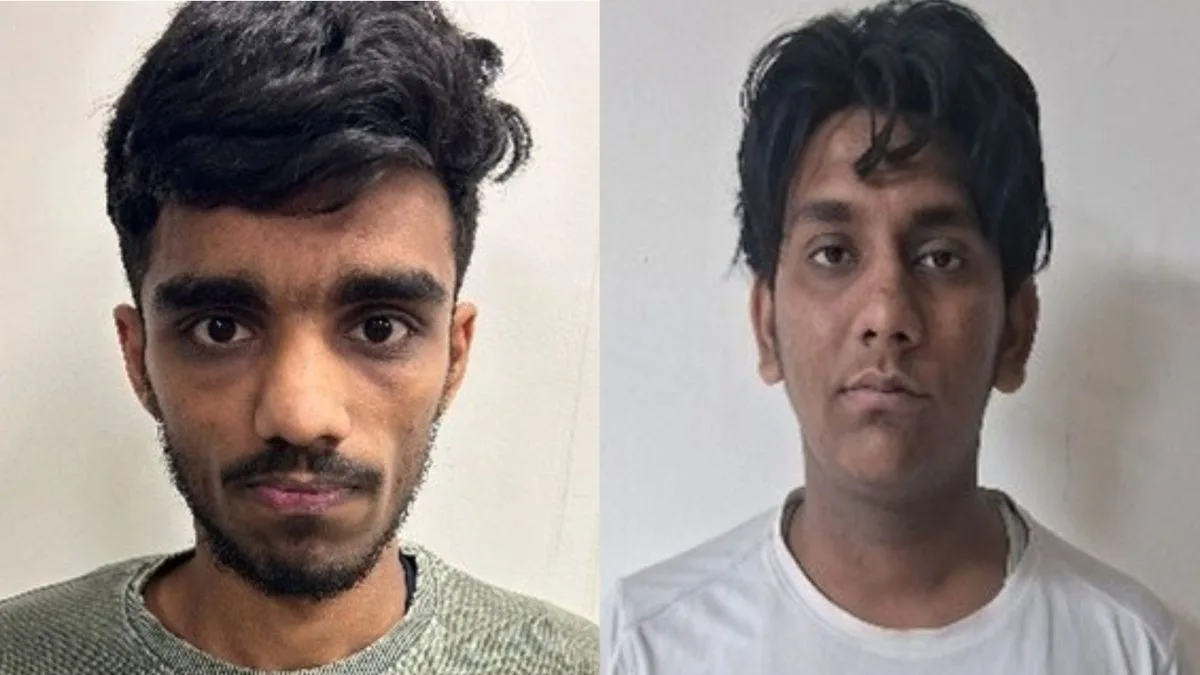
The Uttar Pradesh Anti-Terror Squad (ATS) on Thursday arrested two 20-year-old men in Noida for allegedly operating under the direction of Pakistan-based handlers linked to the ISI and working to destabilise internal security.

The arrests come amid inputs that hostile networks were attempting to recruit and radicalise Indian youth through social media, with investigators pointing to a broader effort to create sleeper cells and carry out targeted attacks.

The accused have been identified as Tushar Chauhan, also known as Hizbullah Ali Khan, and Samir Khan. Officials said they were apprehended with a pistol, live cartridges and a knife.

Social media used to lure and radicalise youth

According to the ATS, the duo was acting on instructions from ISI handlers and had established links with both terror groups and criminal networks. They allegedly used Instagram and other platforms to influence and recruit young people, with the aim of building local modules.

Investigators said the two were in contact with gangsters Shahzad Bhatti and Abid Jatt. The network was working towards setting up sleeper cells that could be activated for reconnaissance of sensitive sites and targeted killings.

Money, foreign escape route promised for attacks

The ATS said Bhatti had offered Tushar ₹3 lakh to carry out the assignments. A part of the amount was paid in advance, with assurances of a passport and safe passage to Pakistan through Dubai after the attacks were executed.

Officials further claimed that the operation was not limited to criminal elements but had direct links to ISI operatives identified as Major Hamid, Major Iqbal and Major Anwar. These handlers are believed to have facilitated the supply of funds and weapons recovered from the accused.

Role of second accused and terror outreach

Samir Khan was allegedly given the job of helping a radical group called Tehrik-e-Taliban Hindustan, or TTH, grow its presence and reach more people. His role included recruitment and spreading propaganda through graffiti to instil fear and attract sympathisers.

Case registered under UAPA and other laws

A case has been registered at the ATS police station in Lucknow under provisions of the Bharatiya Nyaya Sanhita 2023, the Arms Act and the Unlawful Activities (Prevention) Act.

The charges relate to criminal conspiracy, actions threatening national sovereignty and illegal possession of arms. The ATS is now seeking police custody of the accused to probe the local support system and identify other sleeper cells linked to the TTH module.

Iran calls out Pakistan’s misleading manoeuvres as Islamabad talks tumble

Iran’s sharp criticism and stalled negotiations have put Pakistan’s mediation under scrutiny, exposing gaps between Islamabad’s diplomatic claims and ground realities in the US-Iran crisis.

Statesman News Service | New Delhi |

Pakistan’s attempt to present itself as a serious peace broker between the United States and Iran has run into a deeper credibility crisis, with an Iranian lawmaker calling the decision to discuss Tehran’s nuclear issue in Pakistan a “strategic mistake” and fresh criticism pointing to a widening trust deficit.

The remarks come at a time when Islamabad has been actively projecting itself as a central mediator in the US-Iran crisis to reclaim global relevance. But with Iran yet to confirm participation in the next round of proposed talks, and Pakistani officials publicly waiting for Tehran’s response, the situation is increasingly raising a pointed question: is Pakistan mediating the crisis, or merely overstating its role in a bid to stay geopolitically relevant?

Mahmoud Nabavian, a member of the Iranian Parliament’s National Security and Foreign Policy Committee, posted a clip of his interview to SNN TV and said on X, “Putting the nuclear issue on the negotiation table in Pakistan was a strategic mistake.”

“In the Pakistan negotiations, we made a strategic mistake. We should not have put the nuclear issue up for negotiation,” Nabavian said, as quoted by Iran International.

“By doing so, the enemy became bolder,” he added.

According to Iran International, Nabavian said the United States had demanded that Iran’s 60 per cent enriched material be removed and blocked for 20 years, a demand Tehran did not accept.

Pakistan’s mediator pitch faces credibility test

Pakistan has sought to position itself as a neutral bridge between Washington and Tehran at a time when the ceasefire remains fragile. But the absence of confirmation from Iran has left Islamabad exposed, with its claims of diplomatic traction not translating into outcomes.

Tehran’s silence has undercut Islamabad’s claim of being a trusted channel.

The collapse of 21 hours of earlier talks in Islamabad has further added to the skepticism, with key disagreements over Iran’s nuclear programme remaining unresolved.

‘Double game’ concerns and mediation under question

Criticism is no longer limited to political statements. Investigative journalist Jeremy Scahill has questioned whether Pakistan is acting as a neutral intermediary at all.

“What we are seeing is a masterclass in stalling,” Scahill said during a recent broadcast. “Pakistan presents itself as the bridge between Washington and Tehran, yet every ‘promised outcome’—from sanctions relief to maritime security—seems to evaporate the moment the US delegation departs Islamabad.”

He added, “It raises the question: is Pakistan brokering peace, or is it managing Iran’s decline on behalf of the Trump administration?”

Iranian officials have also begun voicing similar concerns. State media has flagged what it described as Pakistan’s “inconsistent behaviour”, even calling its role a “double game”, alleging that while Islamabad offers mediation publicly, it remains closely aligned with US strategic interests.

Iran’s Foreign Ministry spokesperson Esmaeil Baghaei told IRIB, “We entered negotiations in good faith, but the success of this process depends on the seriousness of the mediator to convey positions accurately, not to facilitate ‘excessive demands’ from the American side.”

Why Pakistan’s neutrality is under scrutiny

Pakistan’s mediator role comes with structural limitations that are difficult to ignore. It has its own tensions with neighbours, including Iran and Afghanistan, while its foreign policy continues to be heavily influenced by the military establishment.

Its economic vulnerability adds another layer. Pakistan remains heavily dependent on external financial support and energy imports, with inputs indicating that more than 85 per cent of its oil needs and nearly all LNG supplies come from Gulf countries. The impact is already being felt at home. With energy supplies under strain, the government has had to cut back working days and even shut schools at times just to manage consumption.

Geography adds another layer to the urgency. Pakistan shares a long, sensitive border with Iran, which means any escalation is not a distant crisis but something that can spill over quickly. But being close to the problem does not automatically make Islamabad a credible problem-solver.

Put together, these pressures suggest Pakistan’s mediation push is not just about strategy, but also about compulsion. Hosting big-ticket talks may grab attention. But right now, the results just aren’t there. The gap between looking influential and actually delivering is hard to miss.

While Pakistan saw the Islamabad talks as a way back into global politics, it also hoped to regain some semblance of relevance. At the same time, it appeared keen to return to the US administration’s good graces and score points against India.

Now, Islamabad finds itself caught between a rock and a hard place. Its manoeuvres – taking both the US and Iran along different tracks – are being called out by sections of the Iranian leadership.

A bid for relevance, or exposed limitations?

For now, Pakistan’s peace pitch appears caught between American pressure, Iranian distrust and its own need to project global relevance.

The Islamabad talks were meant to establish Pakistan as a credible diplomatic bridge. Instead, what’s emerging is a pattern of stalled outcomes, mixed signals and rising criticism, all of which are beginning to lay bare the limits of that ambition.

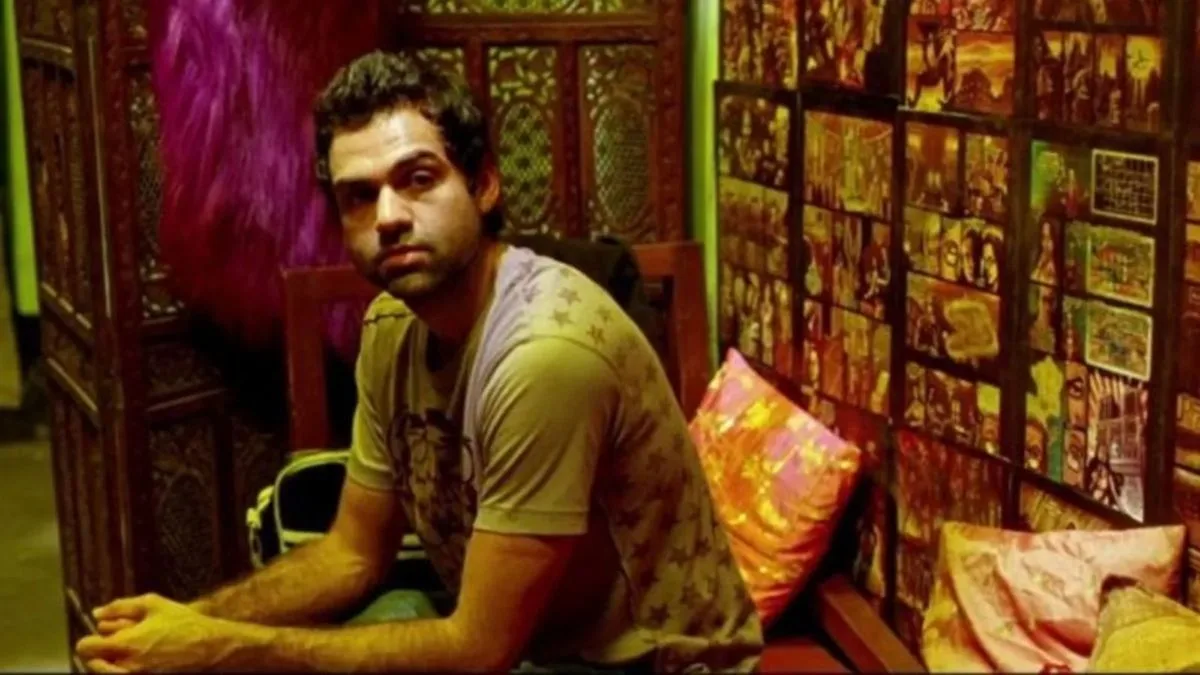
‘I let it flow’: Abhay Deol breaks silence in Dev.D scene, improvised dialogues win instant praise from Anurag Kashyap

A silent moment in Dev.D turned unexpectedly expressive when Abhay Deol decided to go off-script and trust instinct over the written page. The spontaneous choice not only shaped the scene but also earned immediate praise from director.

Statesman News Service | New Delhi |

Some film stories age like fine wine and then there are the spicy behind-the-scenes secrets that suddenly pop up and make fans look at a movie in a whole new way. This time, it’s actor Abhay Deol spilling a little on-set magic from his cult classic ‘Dev.D’.

On a quiet Friday morning, Abhay took a nostalgic trip down memory lane and shared a surprising moment from the shoot, one that wasn’t even supposed to exist in the first place.

When silence turned into spontaneous magic

In a scene featuring Dev and Rasika (played by Parakh Madan), things were originally meant to stay… silent. Yes, completely wordless. That’s how director Anurag Kashyap had designed it.

But Abhay wasn’t feeling the silence that day.


View this post on Instagram


A post shared by Abhay Deol (@abhaydeol)

He revealed that the script had no dialogues for his character in that moment. While Rasika spoke, Dev was simply supposed to react. But instead of sticking to the plan, Abhay decided to let instinct take over. When Rasika’s character mentioned she was “from Delhi,” he casually responded with, “I’m from here.”

Abhay explained that ‘Dev.D’ was never meant to be a dialogue-heavy film anyway, so it didn’t feel out of place. In fact, it felt natural. He let the character guide him, allowing the words to flow without overthinking.

That one take that won everyone over

What happened next is straight out of an actor’s dream.

As soon as the director called “cut,” Anurag Kashyap walked up to Abhay, and hugged him.

According to Abhay, Kashyap was impressed by how effortlessly he used everything in the room and made the moment look casual and real. It wasn’t just about adding a line. It was about making the scene feel alive.

Also Read: DDLJ in 2026: Kajol says Simran’s world wouldn’t last a minute in Gen Z reality

Even better? They didn’t need a retake.

The scene was wrapped in just one shot. That’s it. One take, one spontaneous decision, and it stayed in the film forever.

Abhay admitted that the praise felt great. That instant validation gave him a boost, and from there, he felt himself slipping deeper into Dev’s character. In his words, “Dev had found his voice”, and so had he.

The cult film that still feels fresh

For those who need a refresher, ‘Dev.D’ is not your typical love story. It’s a bold, modern take on Sarat Chandra Chattopadhyay’s 1917 novel ‘Devdas’ but with a messy, gritty twist.

Set in contemporary Punjab and Delhi, the film follows Devendra Singh “Dev” Dhillon, a privileged young man who spirals into alcohol and drug addiction after his relationship with childhood love Parminder “Paro” Kaur falls apart.

Along the way, he crosses paths with Chanda, an escort dealing with her own emotional scars. Their connection becomes one of the film’s most talked-about elements.

The film also features performances by Mahie Gill and Kalki Koechlin.

India prepares for intensifying heatwave; Delhi likely to hit 44 degrees

Large parts of India are already experiencing intense summer conditions, with the India Meteorological Department (IMD) forecasting a mix of severe heat and scattered rainfall activity in the coming days.

IANS | New Delhi |

Large parts of India are already experiencing intense summer conditions, with the India Meteorological Department (IMD) forecasting a mix of severe heat and scattered rainfall activity in the coming days.

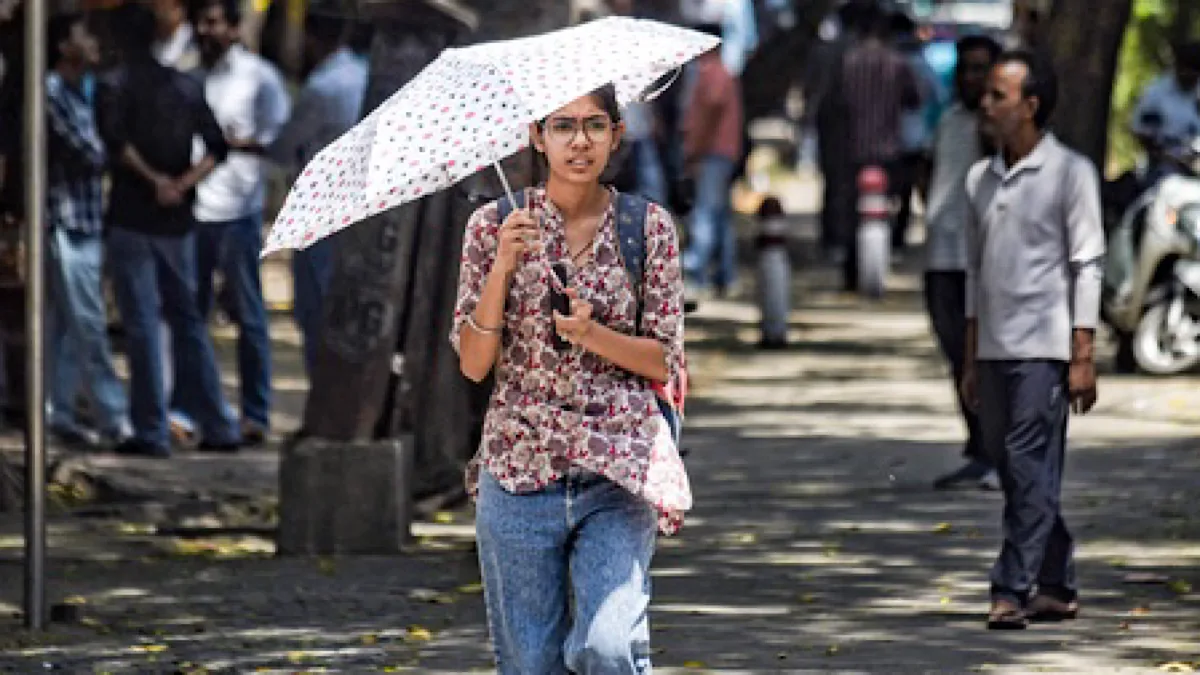
According to the latest weather update, heatwave conditions are expected to persist across several northern, central, and eastern states, including Punjab, Haryana, Chandigarh, Uttar Pradesh, Rajasthan, Madhya Pradesh, Bihar, Jharkhand, Odisha, West Bengal, Chhattisgarh, and even parts of Kerala. The IMD has cautioned that these conditions are likely to intensify over the next few days.

Meanwhile, coastal and southern regions such as Konkan, Tamil Nadu, Andhra Pradesh, Karnataka, and Gujarat are expected to face hot and humid weather. Warm night conditions are also likely in isolated areas of Haryana, Chandigarh, Delhi, and Odisha till April 25, offering little relief from the daytime heat.

In the national capital, New Delhi, temperatures are projected to rise by 2-3 degrees Celsius over the next couple of days, with no major change afterwards. Daytime temperatures are expected to remain above normal, with Friday’s maximum likely to reach around 44 degrees Celsius and the minimum hovering near 26 degrees Celsius. A yellow alert has been issued for heatwave conditions, with clear skies forecast.

The IMD has also indicated a gradual increase in maximum temperatures across northwest and central India, pointing to sustained and widespread summer intensity.

Despite the prevailing heat, several regions are expected to receive rainfall accompanied by thunderstorms. Parts of northwest India, including Jammu and Kashmir, Ladakh, Himachal Pradesh, Uttarakhand, Punjab, Haryana, Uttar Pradesh, Chandigarh, and Delhi, may witness light to moderate rain or snowfall along with lightning and gusty winds reaching 30-50 kmph.

In the northeastern region, fairly widespread rainfall with thunderstorms is anticipated. Eastern states such as West Bengal, Jharkhand, and Odisha may also see scattered showers with gusty winds. Similarly, southern states, including Telangana, Karnataka, Andhra Pradesh, Tamil Nadu, and Kerala, are likely to experience moderate rainfall and thunderstorm activity.

The weather office has also advised fishermen to avoid venturing into the Bay of Bengal, particularly along the coasts of Odisha and West Bengal, on April 26 and 27 due to the likelihood of rough weather and storms.

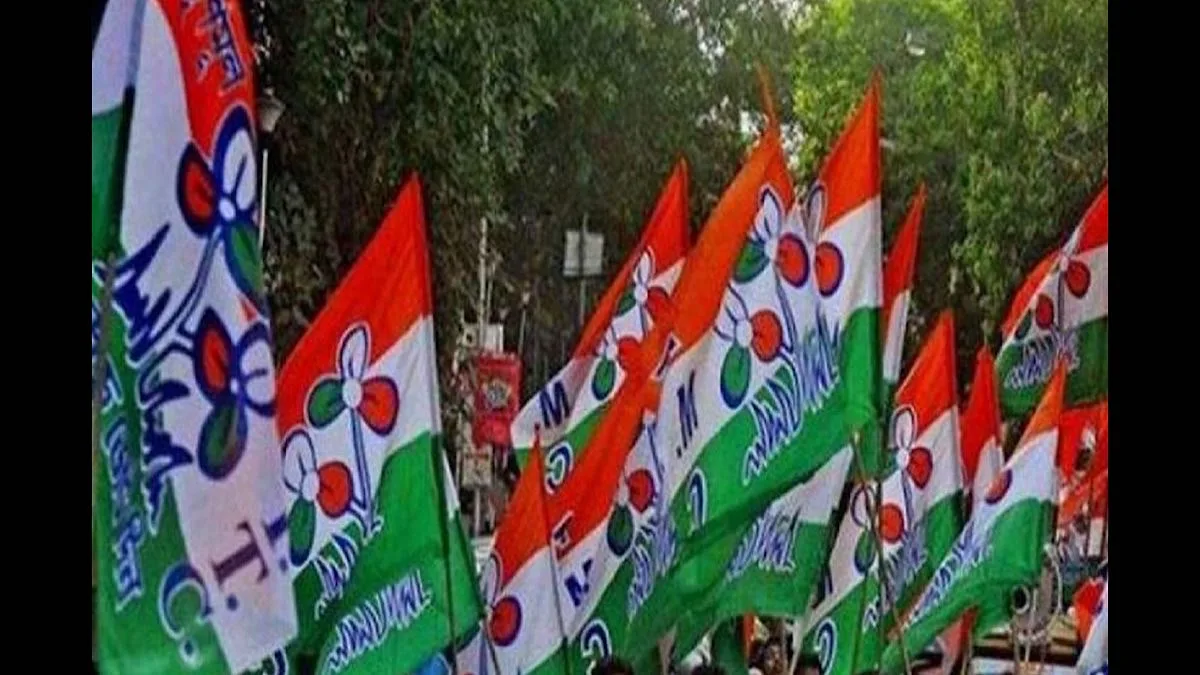
TMC predicts 125 seats in Phase 1

With such high voter turnout, the Trinamul Congress stands a greater chance of forming the government for the fourth consecutive time, party spokesperson and candidate Kunal Ghosh said on Thursday.

Statesman News Service | Kolkata |

With such high voter turnout, the Trinamul Congress stands a greater chance of forming the government for the fourth consecutive time, party spokesperson and candidate Kunal Ghosh said on Thursday.

Mr Ghosh along with Bratya Basu addressed the press at Trinamul Bhavan this afternoon.

The leaders congratulated people for giving overwhelming support to the party. “Hatred for BJP for forcing them to stand in long queues in the name of SIR and the subsequent deletion of names from the electoral roll and the all round development work by Mamata Banerjee government, are responsible for over 90 per cent votes till 6 p.m. in the first phase of election today.”

Mr Basu said: “I am confident that Trinamul Congress will bag at least 125 out of 152 seats in the first phase of polling.” He thanked the women for taking part in voting in huge numbers.

Chief Minister Mamata Banerjee said on Thursday that such a high voter turnout indicates that the Trinamul Congress is already in a position to win the election. At an election rally in Kolkata, Chief Minister Banerjee said: “If my eyes are right, given the voting that took place today, I would say that we have already moved to a place where we can win.”

Midnapore, Jhargram record near-record participation amid tight security

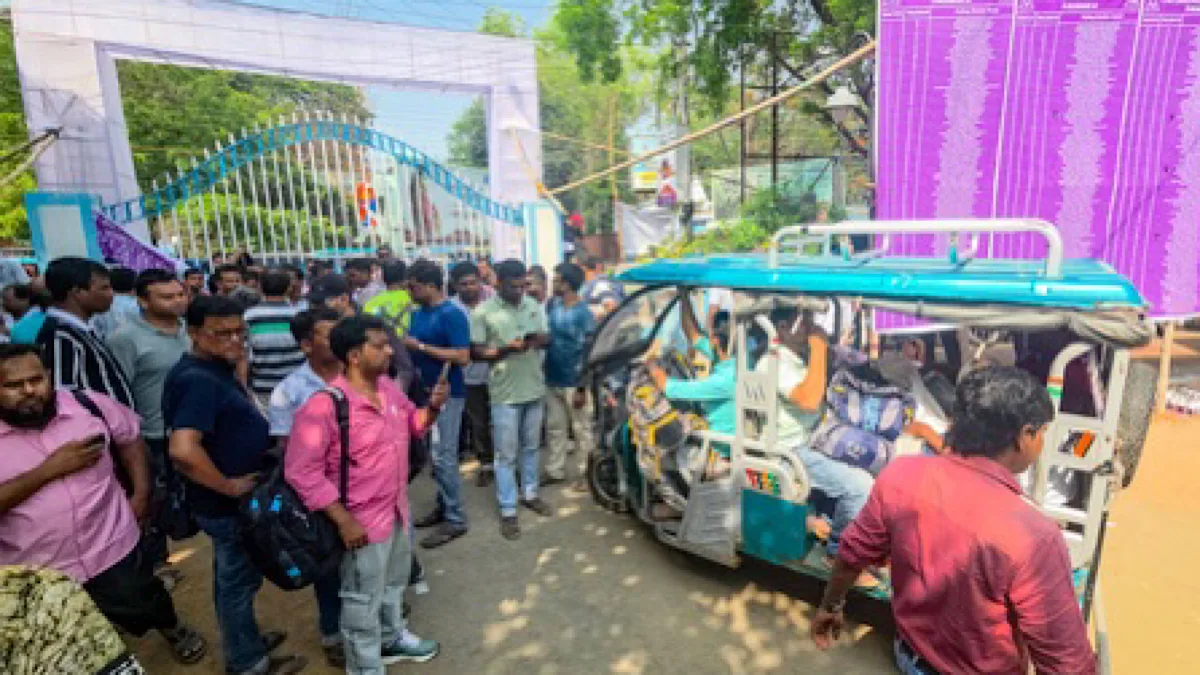
Voting across the three politically sensitive districts of West Bengal ~ West Midnapore, East Midnapore, and Jhargram ~ concluded on Thursday with a largely peaceful tenor, punctuated by sporadic allegations of violence and administrative friction even as voter enthusiasm pushed turnout figures close to record levels under tight security arrangements.

Biswabrata Goswami | Kolkata |

Voting across the three politically sensitive districts of West Bengal ~ West Midnapore, East Midnapore, and Jhargram ~ concluded on Thursday with a largely peaceful tenor, punctuated by sporadic allegations of violence and administrative friction even as voter enthusiasm pushed turnout figures close to record levels under tight security arrangements.

According to data released by the Election Commission of India, West Midnapore recorded a turnout of 90.70 per cent, East Midnapore 88.55 per cent, and Jhargram 90.53 per cent till 5 p.m, reflecting a high degree of electoral participation in the first phase of polling across 152 Assembly constituencies in the state.

Across the Junglemahal belt, where security deployment was extensive due to past histories of insurgency and electoral tensions, polling was conducted under the watch of Central forces and state police personnel. Officials described the overall situation as “under control,” though isolated incidents triggered political controversy.

The poll battle in West Bengal remained sharply polarised as Prime Minister Narendra Modi, addressing a rally at Krishnagar in Nadia, intensified the BJP’s campaign narrative against the ruling Trinamul Congress (TMC). Without naming Chief Minister Mamata Banerjee directly in every instance, he alleged that public sentiment in the state had turned against the TMC and suggested that the party could struggle to open its account in several urban pockets this time.

The political temperature further rose as BJP leader and Nandigram MLA Suvendu Adhikari, who also voted in his constituency, asserted that the ruling party would face electoral setbacks if what he termed “bogus and dead voters” were removed from the rolls. Speaking to reporters after casting his vote, Adhikari said, “We are Hindus, we are Sanatanis. I offered prayers and paid respect. I also spoke to polling agents. The election must remain peaceful.”

He further expressed confidence in a smooth electoral process while indirectly questioning the integrity of voter lists, a charge that has been consistently rejected by the TMC.

On the other hand, the Trinamul Congress raised a series of allegations regarding security forces and political intimidation in certain pockets. In Ghatal, TMC candidate Shyamali Sardar alleged that she was attacked by BJP-linked “hooligans” while visiting Booth No. 14 in Sultanpur. The allegations, however, are yet to be independently verified.

Similarly, Prativa Maity, TMC candidate from Narayangarh, alleged that her party office located approximately 250 metres from Booth No. 118 was vandalised by Central Armed Police Forces (CAPF) personnel. She further claimed that the incident disrupted local party activities and created panic among workers.

Additional allegations emerged from Garhbeta in Karanga area under Anchal 10, where TMC workers claimed that a party office situated nearly 300 metres from Booth No. 186 at Kankrasole was damaged during a CAPF deployment operation. Local party functionaries also alleged that some residents were “manhandled” during the course of security checks.

Election authorities, however, have not issued any formal confirmation regarding these allegations, maintaining that polling was conducted under strict adherence to the Election Commission’s guidelines and that any complaints would be examined through due process.

The second phase of polling is scheduled for 29 April, while counting of votes will take place on 4 May.

False voting, violence, irregularities mar North Bengal polls

The Assembly election across North Bengal concluded under an apparently calm and peaceful atmosphere, but multiple incidents reported from different districts have raised serious questions about the credibility of a “free and fair” electoral process.

MANAS R BANNERJEE | Kolkata |

The Assembly election across North Bengal concluded under an apparently calm and peaceful atmosphere, but multiple incidents reported from different districts have raised serious questions about the credibility of a “free and fair” electoral process.

Despite elaborate arrangements by the Election Commission of India, including deployment of Central forces, CCTV surveillance, and strict monitoring, allegations of false voting, violence, voter exclusion, and technical failures painted a far more complex picture on the ground.

False Voting and Postal Ballot Irregularities

Serious concerns emerged over alleged instances of false voting across several constituencies.

In Siliguri, at a polling station under Booth No. 235, a first-time woman voter discovered after standing in a long queue that her vote had already been cast. A similar complaint was reported by another young voter in the same area. In total, three such incidents surfaced from Siliguri, where original voters found that someone else had voted in their names. The Trinamul Congress candidate Gautam Deb raised objections and arranged for tendered votes in these cases.

A similar complaint came from Phansidewa, where a voter alleged that his vote had already been recorded before he reached the booth.

In Malda district, multiple cases of alleged postal ballot misuse surfaced. At Booth No. 231 in Bulbulchandi under Habibpur Assembly constituency, an elderly voter, Prakash Prasad, was informed that a postal ballot had already been issued and used in his name, preventing him from voting. He raised serious questions about how the ballot was issued and who cast the vote.

In another case from Nayapara under Gazole (Booth No. 229), Rikta Mondal, who is neither a government employee nor a polling official, was shocked to learn that her vote had been cast through a postal ballot, denying her the right to vote at the polling station.

Violence and Law-and-Order Concerns

Incidents of violence and intimidation were reported from several areas, raising concerns about voter safety.

In Kumarganj (South Dinajpur), BJP candidate Shubhendu Sarkar was allegedly assaulted in the presence of police personnel by supporters of the ruling Trinamul Congress.

In Sitai, allegations of a BJP polling agent being stabbed triggered tension in the area.

Another attack was reported in Malda’s Chanchal Assembly constituency, where a BJP election agent was allegedly assaulted at Booth No. 221 in the Dhum Sadagi Panpara area. His vehicle was vandalised and he was physically assaulted. He is currently undergoing treatment at Chanchal Super Speciality Hospital. BJP leaders blamed Trinamul Congress supporters, though the ruling party denied the allegations.

In Mathabhanga, tension escalated near polling booths involving BJP candidate Nisith Pramanik. Allegations surfaced that money was being distributed among voters, which the BJP denied. Heated exchanges between supporters of both camps turned Ghoksadanga into a tense zone, with rival slogans like “Jai Bangla” and “Jai Shri Ram” echoing through the area.

Allegations of Electoral Manipulation

At Booth No. 261 in Mathabhanga, controversy erupted after voters alleged that the portion next to the name of BJP candidate Nisith Pramanik was deliberately covered with black tape. Voters noticed the issue during polling, leading to protests outside the booth.

BJP election agent Kaushik Bhadra alleged that despite informing polling officials early in the day, no action was taken. The party termed the incident a “planned conspiracy” and demanded repolling at the booth.

In Cooch Behar’s Tufanganj, allegations were raised that voters were prevented from reaching polling stations. Adding to the intrigue, a state minister initially lodged a complaint regarding electoral irregularities but later withdrew it, an unusual move that drew attention.

Voter Exclusion and Protests

Large-scale voter exclusion due to deletion of names during the Special Intensive Revision process triggered protests in several areas in Sujapur in Malda.

In Khanpur (Booth No. 117) under Malatipur Assembly constituency, voters who found their names missing staged demonstrations on village roads.

A similar situation unfolded in Sujapur, where several booths witnessed low turnout as many voters were unable to find their names on the electoral rolls. Disappointed voters stayed home or watched others vote with visible frustration. Trinamul Congress candidate Sabina Yasmin criticised the BJP and the Election Commission, alleging large-scale disenfranchisement.

EVM Malfunctions and Polling Disruptions

Technical glitches further disrupted the voting process. In Baharampur, Congress candidate Adhir Ranjan Chowdhury alleged that EVMs at a single booth malfunctioned multiple times, causing delays and voter frustration.

In Malda’s Mothabari, EVM failures led to unrest and protests among voters. Similar complaints were reported from multiple locations.

In Ratua, polling was delayed by nearly an hour at Booth No. 116 due to EVM malfunction. Long queues and slow voting added to voter dissatisfaction. At Booth No. 115, a woman fell ill after prolonged waiting, and delays in ambulance services worsened the situation.

In another incident, the BJP candidate from Gazole was unable to cast his vote at Booth No. 227 due to an EVM malfunction.

Health Emergencies and Tragic Incidents

Polling day also saw several health-related emergencies.

A polling officer, Jayashree Karmakar, fell ill due to extreme heat at Booth No. 137 in Akanda (Gazole) and was hospitalised.

In a tragic incident, a 50-year-old woman voter, Promila Bagdi, died after suffering a heart attack while attempting to vote at Booth No. 152 in Kshempur Panchayat under Malatipur Assembly constituency. The incident cast a shadow of grief over the area.

Other Incidents

In Sujapur, tension arose at Booth No. 102 after Congress candidate Abdul Hannan alleged that Central forces prevented him from entering his own booth, leading to a verbal altercation.

Meanwhile, a fire broke out in the treasury room of the Malda district administrative building due to a short circuit. Although no major damage was reported, the incident caused panic before being brought under control by fire services.

Shah promises revival of Balagarh’s glory, silent on riverbank erosion

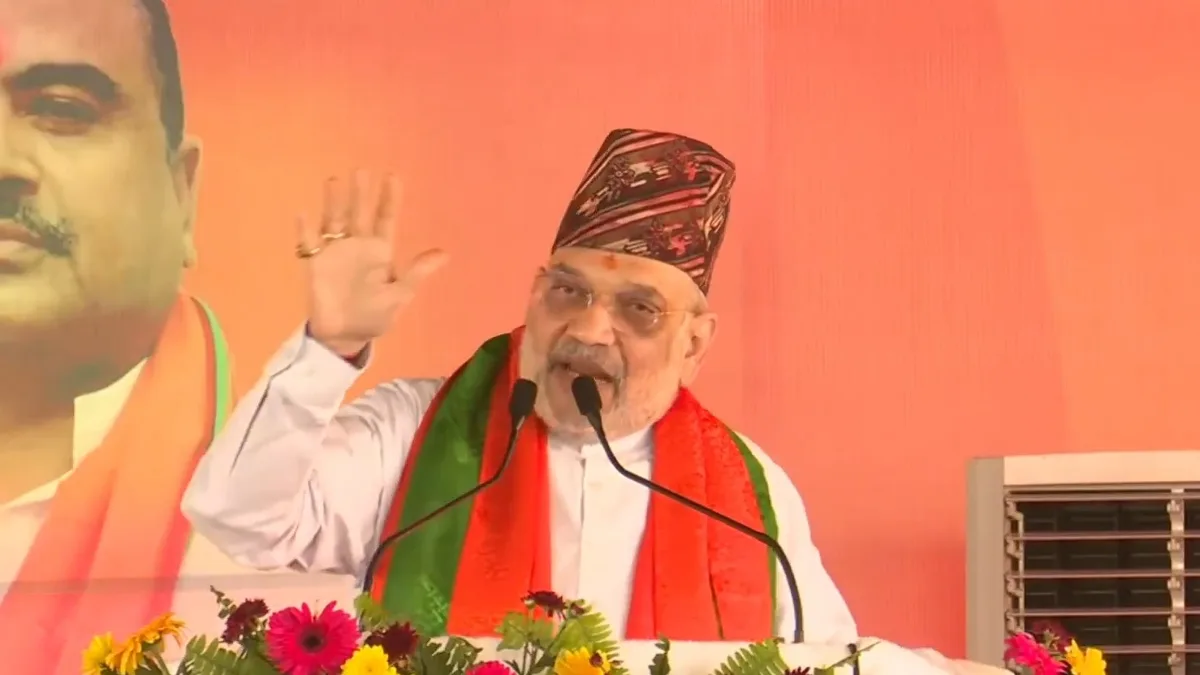
Union home minister Amit Shah on Wednesday addressed an election rally at Balagarh in support of BJP candidate Sumana Sarkar, promising to restore the region’s lost glory and tackle key issues affecting the area.

Statesman News Service | Kolkata |

Union home minister Amit Shah on Wednesday addressed an election rally at Balagarh in support of BJP candidate Sumana Sarkar, promising to restore the region’s lost glory and tackle key issues affecting the area.

Recalling Balagarh’s historical significance, Mr Shah described it as the land of Sir Ashutosh Mukherjee, known as the “Bengal Tiger”, and his son, Syama Prasad Mukherjee. He highlighted Syama Prasad Mukherjee’s role as a nationalist leader, educationist and founder of the Bharatiya Jana Sangh, the precursor to the BJP. Mr Shah also referred to Mukherjee’s involvement in shaping public opinion during the Partition of Bengal in 1947.

The home minister announced that if the BJP comes to power in Bengal, it would allocate Rs 15 crore to establish a grand memorial centre in honour of the two leaders.

While the rally focused on multiple policy promises and criticisms of the ruling party, some local residents expressed disappointment that concerns over rising riverbank erosion in Balagarh were not addressed in detail during the speech.

Targeting the Trinamul Congress (TMC), Mr Shah alleged that infiltration had increased under its rule, affecting employment opportunities and resources for local residents. He claimed that illegal entrants were posing a threat to national security and had been involved in unlawful activities. He asserted that the BJP’s priority would be to make Bengal free of such threats.

Mr Shah also criticised what he described as the “syndicate system” in the state, alleging that extortion and “cut money” practices had harmed small-scale and cottage industries in Balagarh, including its traditional boat-making sector. He said that ordinary people were unable to construct houses without paying additional money for essential materials such as sand, bricks and cement.

Warning against any attempts to disrupt the polling process, he said strict action would be taken against those trying to create unrest. He urged voters to cast their ballots freely and without fear, noting that Central forces had been deployed to ensure peaceful and fair elections.

Mr Shah further attacked the TMC leadership, accusing it of appeasement politics, and asserted that the BJP would form the next government in the state.

Outlining a series of promises, he said the BJP would support farmers by ensuring better markets for surplus produce in neighbouring states such as Bihar, Jharkhand and Odisha. He also announced financial assistance schemes, including Rs 3,000 for women and unemployed youth, an increase in benefits under the PM-Kisan scheme from Rs 6,000 to Rs 9,000, and Rs 21,000 support for pregnant women. He added that women would be allowed free travel on state-run transport.

He also claimed that a BJP government would curb extremist and Naxal activities and address issues related to infiltration.

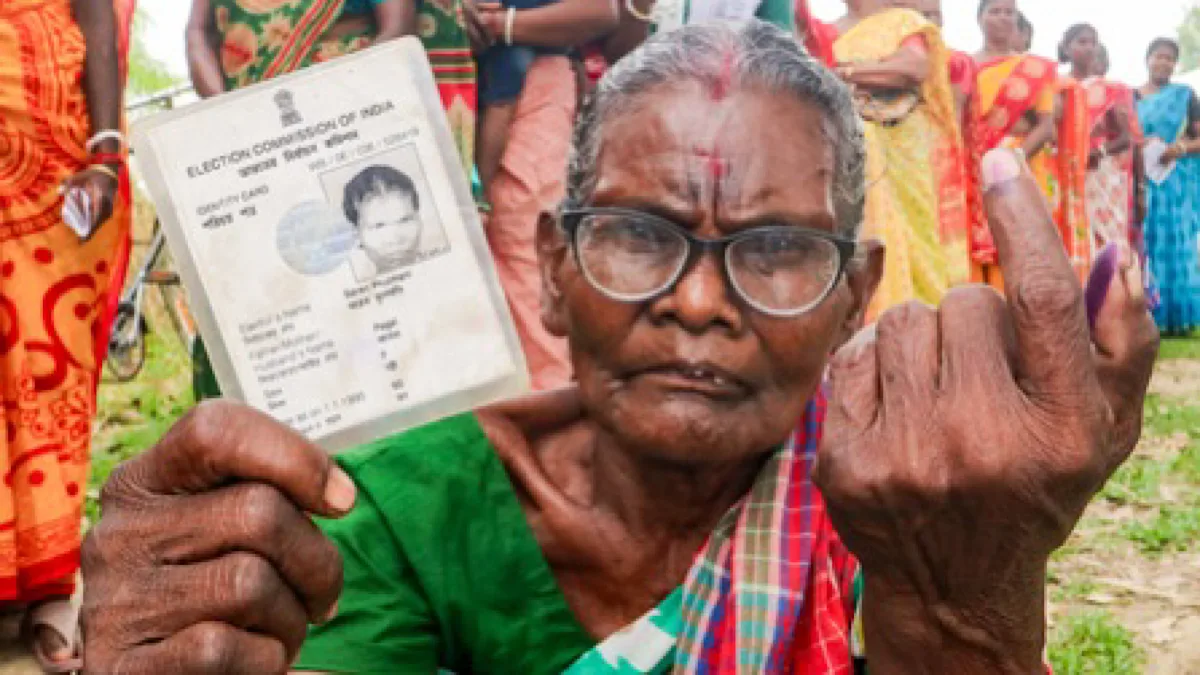
Birbhum sees record turnout at 91.55pc, 1 voter dies of heart attack

Polling across Birbhum district on Wednesday was largely peaceful, with a few isolated incidents reported, even as voter turnout reached an unprecedented level of 91.55 per cent in the district.

Statesman News Service | Kolkata |

Polling across Birbhum district on Wednesday was largely peaceful, with a few isolated incidents reported, even as voter turnout reached an unprecedented level of 91.55 per cent in the district. However, an elderly voter died of a heart attack in Siuri while on his way to cast his vote.

Birbhum, which has witnessed disturbances during previous elections, saw comparatively fewer incidents this time across its 11 Assembly constituencies.

The deceased, Ashim Roy (64) of Dangalpara, collapsed while proceeding to cast his vote at Ward 10 in Siuri Municipality. He was declared dead after suffering a heart attack.

In another incident, an election agent of BJP candidate Debashish Ojha, Biswajit Mondal, sustained a serious head injury at booth number 288 in Bhramarkol Gram Panchayat under the Labhpur Assembly seat. He alleged that TMC supporters attacked him with rods and lathis and also vandalised his car. Police later rescued him and he was taken to a nearby hospital for treatment. A report on the incident was sought by the Election Commission of India.

Tension flared in Khoyrasole block under the Dubrajpur Assembly constituency at booth number 65 in Budhpur village, where locals alleged that the EVM malfunctioned for a prolonged period. Agitated TMC supporters reportedly clashed with police and central forces, hurling stones and bricks. Several state police personnel and CAPF jawans were injured. In response, police reportedly warned the mob that they would open fire if the situation escalated further. Polling at the booth was briefly suspended before additional central forces were deployed and voting resumed.

Police maintained a close watch on several TMC leaders across the district during the day. Anubrata Mondal cast his vote along with his daughter Sukanya Mondal in Bolpur and remained at the local party office thereafter.

In Veramari village under Illambazar, a man allegedly attempted to enter a polling booth and snatch the EVM machine but was overpowered by central forces and handed over to the police.

TMC leader Hafizul Sheikh alleged that Central forces had intimidated voters and imposed excessive restrictions at polling booths. Meanwhile, reports of minor clashes between TMC and BJP supporters also emerged from parts of Labhpur.