Logo

PIL filed against demonetisation in Calcutta High Court

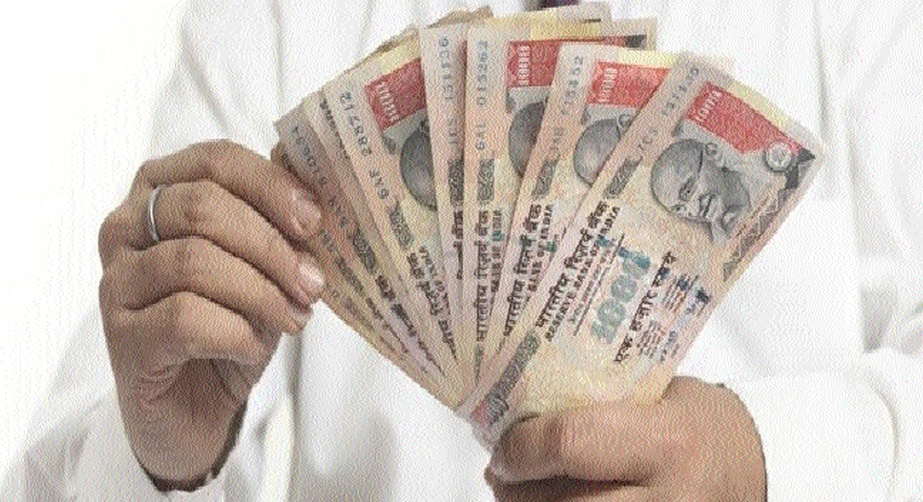
A Public Interest Litigation (PIL) was filed in Calcutta High Court on Wednesday against the demonetisation of high value currency notes by the Centre.

Statesman News Service | Kolkata |

A Public Interest Litigation (PIL) was filed in Calcutta High Court on Wednesday against the demonetisation of high value currency notes by the Centre.

The PIL was filed by Imran Khan,the younger son of Javed Khan, state minister of disaster managerment. Imran Khan told The Statesman,“It is an anti-people step that is targeting the weaker section of the society by snatching away their livelihood. What about those who are mentally challenged, handicapped and who are admitted in the ICU?” Advocate Akbar Ali, counsel for another petitioner Aludin Mondol told The Statesman, “My client is 100 per cent blind. He is unable to fill the form or exchange money. We are challenging a particular clause in the notification which stated that only the individual can himself or herself can go and change the currency, no other authorised representative can change the money.

This is disadvantageous as there are many senior citizens, ailing persons who are unable to go to the banks, thus are unable to buy the essential food commodities. It should be seen that the requisition slip which issued by the Reserve Bank of India (RBI) has been published only in English and not in any regional languages (Hindi, Bengali, Urdu, Marathi and others), he maintained. “Why such discrimination?” he asked.

In the right direction?

This ‘emergency measure’ is in line with numerous others taken with the thought of greater good for the society and should definitely bring revolutionary change in India.

Statesman News Service |

Prime Minister Narendra Modi went on national television at
8 p.m. on 8 November to announce that from midnight of that very date, in a
mere four hours’ time, all 500 and 1000 rupee notes would cease to be
legal-tender. The justification advanced for this strange move was that it
would strike at “black money”. An additional argument was thrown in,
to the effect that fake currency notes used by “terrorists” would now
cease its effectiveness or production in the market. This redundant debate was
in turn, superfluously named the “surgical strike against terrorism.”

A long discussion and debate proceeded in the same night.
While the entire internet, especially the social networking sites had turned
into hubs of budding economists who were either approving or disapproving the
decision made by the Government, a spontaneous and fervent doubt arose in my
mind which of course, was mainly of curiosity.

Let’s take a look at the “black money” argument
which the entire nation is out to promote. This argument, namely that the
demonetization of 500 and 1000 rupee notes constitutes an attack on “black
money”, is based on an utter lack of understanding of the nature of
“black money,” a conception built out of improper discern and
staggering analysis.

Firstly, the dormant explanation of black money is the
bundles of cash hideously kept in the reach of none, stored in household items,
under the mattresses or pillows or buried in the earth. This cash when, exposed
and submitted in the bank would let budding suspicions to emerge and the bank,
in turn would convey their suspicion to the tax authorities, claiming that such
a huge hoard of cash indicates the storage of black money.

Here’s the second part of the argument. What if the person
who might have stored 20 lakh beneath his mattress and that too in 500 and 1000
rupee notes, doesn’t come with the entire Rs.20 crores to a bank to change it
into the new legal-tender (he will not be allowed to do so anyway) And, rather
send several hoards of cash in installment to the bank, each carrying a small
amount, and would do so over a number of days prior to the 30 December
deadline. Hence, the rules of getting caught red-handed don’t apply to that
person.

If analyzed at the deeper level, this very concept of
“black money” is inaccurate since it conjures up the image of a stock
of money which is supposed to be held not openly, in the form of bank deposits,
but concealed in the form of currency notes, and that too in pillowcases or
trunks or containers buried inside the earth. “Black activities”,
like “white activities”, are meant to earn profits for those engaged
in them; and simply keeping a hoard of money earns no profits. A major portion
of “black activities”, however, is operated through banks located
abroad. Narendra Modi himself, in his pre-election speech election had talked
of “bringing back” the “black money” stashed abroad, even
though his remark displayed the same naïve understanding that “black
money” referred to a hoard rather than to a range of activities. But if
foreign banks constitute the predominant source of funding “black
activities”, then the demonetization of 500 and 1000 rupee notes, while
causing much hardship to ordinary people, will do little to eliminate such
activities.

 Long before the days
of computers, the British Internal Revenue Service had earned the reputation
that it would eventually catch up with any tax defaulter simply through a
process of grinding and meticulous investigation. True, Britain is a small
country compared to India, but that only means that the size of the tax
administering personnel has to be larger, tailored to the needs of the country;
and if this is done, then unearthing “black money”, at least in the
domestic economy, is merely a matter of patient and efficient tax
administration.  It is true that this
move will become a means through which the common people will get squeezed,
since the poor and commoners face trouble while opening bank accounts or
handling a credit or debit card. It doesn’t matter whether the change would
actually make any appreciable change but it would surely curb the economical
lives of the poor and commoners. The elites “were” and
“are” pretty far from troubles except a rush and long, tiring queue
in the bank for exchanging the notes.

This “emergency measure”, however, is in line with
the numerous others taken with the thought of greater good for the society
should definitely bring revolutionary change in India

By Sahasika Zaman

Coordinator, Cl. IX, St. Mary’s High School, Coochbehar

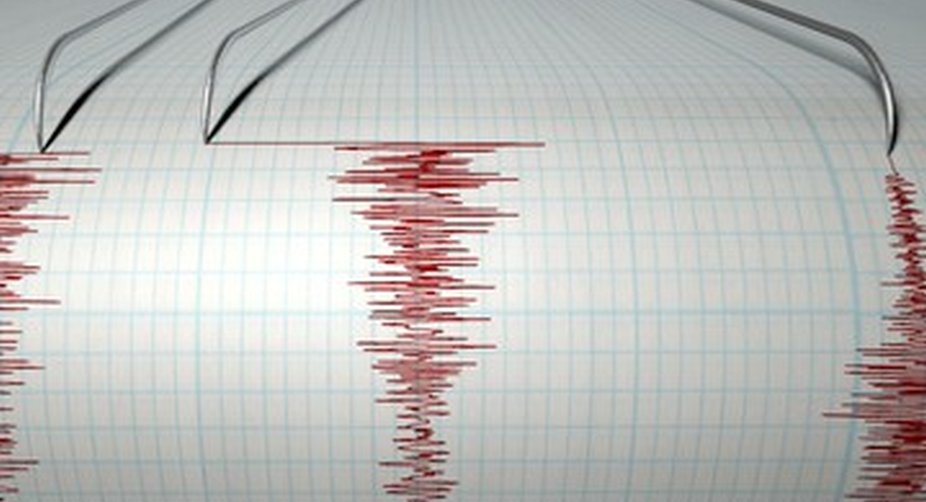
4.2 magnitude quake hits Delhi

An earthquake measuring 4.2 on the Richter scale stuck Delhi and NCR areas on Thursday.

IANS | New Delhi |

An earthquake measuring 4.2
on the Richter scale stuck Delhi and NCR areas on Thursday, the US Geological
Survey (USGS) said.

According to USGS, the quake,
that stuck around 4.30 a.m., had its epicentre 13 km southeast of Bawal in
Haryana at a depth of 10 km.

Cultural Heritage of Kolkata

Visit some of the fascinating places in Kolkata and learn about science, culture and heritage 

Statesman News Service |

Kolkata, the city of joy is known for its heritage and
culture. The best way to learn about it is by visiting some of the well known
museums and cultural sites in Kolkata that preserve some of the finest
artefacts and age-old cultural manuscripts, heritage and values.

Some of these well known places  children could visit include:  Indian Museum, situated on the Jawaharlal
Nehru Road, Kolkata. This one of the oldest museums in Kolkata that has different
galleries and relevant displays based on Archaeological and Geological
sites. Nehru Children Museum is yet
another destination where children can learn about India’s cultural heritage
and diversity where there are exhibits ranging from dolls, cars and other
relevant displays of  various states,
countries and religion. Learn about the stories of Mahabharata and Ramayana
which are beautifully displayed in the museum.

The State Archaeological Museum in Behala is yet another
museum that children can visit which displays works of art from medieval times.

 Birla Industrial and
Technological Museum popularly known as BITM is well known among students
interested in science and technology. It is situated on  Gurusaday Road, Kolkata.  The museum is known for exhibiting seminars
related to science research, mathematical inventions and scientific
innovations.

Science City in Salt Lake is yet another destination where
children surely have options to explore the wonders of science. From space
theatre to science exploration hall, 
from dynamotion Hall to earth exploration hall , this place is surely
worth a visit. 

Victoria Memorial is 
known for its architectural beauty and lavish lawns.  The museum inside this architectural wonder
has displays from  British era. It even
exhibits the ancient house model of the traditional Bengali culture.

Netaji Bhavan museum in Lala Lajpat Rai Road, near to Elgin
Road is yet another museum which has relevant articles related to our great
national leader Netaji Shubhas Chandra Bose. Asiatic Society in Park Street,
Kolkata preserves ancient manuscripts, books and artefacts of ancient times.

The Mother’s Wax Museum opposite to Ecopark New Town
displays wax models of various well-known personalities from various fields.
Last but not the least,  if you are
interested in astronomy then surely don’t forget to visit Birla Planetarium.
Delve into the world of cultural heritage of Kolkata.

The lasting memory

She had been lonely as she could hardly remember what happened in the last six months. 

Statesman News Service |

He got to the helipad. They had to report there by eight.
Not much of a problem as their work was done. The enemy was demolished, the
team unscathed. He thought that within two months, he might be able to meet her.
A blurred thought came to his mind as the blast reverberated throughout the
building.

She woke up hearing the bell. “He’s finally home!”
she muttered. Running down the flight of stairs, she wondered what she should
do as he finally meets him after seven months. She often used to gaze at the
stars, and wish that he would return fast. She had been lonely as she could
hardly remember what happened in the last six months. That didn’t matter right
now as she was too happy.

As she opened the door, the jolly young face of a man
greeted her. She could not control herself but hugged him hard. It would
probably go down in her list of ‘Best Things’ that she made during the lonely
days. To her, the hug seemed a huge thing. Nothing else mattered.

He cursed himself for falling asleep. Today was an important
appointment. Missing this would ruin his career and her life. So, making this
appointment on time was an impromptu decision and that was ruined because of
his sleep. He got the keys of the Ford Aspire, he dashed for his wallet.

Not because he needed his money safe with him, not because
he needed his Driver’s licence but without his hospital ID, he would have to
fake an accident and hurt himself to get in.

He had convinced Dr. Amos to check his sister. So as he
drove on, he thought about the incoming obstacle ahead of him: forcing his
sister to meet up with Dr. Amos.  With a
sigh he parked his car in the driveway where his brother’s car usually used to
stand. With a moment of disbelief and grief, he rang the bell; the wavering
tunes of the sweet melody of Mozart ringing in his mind. Quietly, he let the
guilty tears flow down his face, as he stood on the porch, when the door opened
and out came his sister.

After about an hour or so, he told her that they had to go
somewhere. “Where to now? You just came home.” She exclaimed.
“Somewhere nice. A fresh air should cheer you up”, he said. “Ok
if that is what you wish”, she answered.

She hoped so too and enjoyed the few moments of the car
ride, daydreaming about the fine things he had planned for her. Shawn Smith
cried while signing the documents. ‘Ann G. Smith diagnosed with mental problems
and Stage 3 hallucinations.’ His sister had gone mad when she saw the news of
her husband, Logan Smith’s death in the papers.

She couldn’t accept his passing away and started believing
that he was still alive. It was nothing major in the beginning, but slowly she
lost her mind. For six months she was in coma. Seeing that the effects did not
work, Shawn used his last bait: Dr. Amos. After the check-up, she was operated
on and the memory of her husband was wiped clean. Shawn had no other choice but
to agree to this.

Jitomanyu Datta, Class IX, Don Bosco, Park Circus

Sharp wit & spiritual popcorn

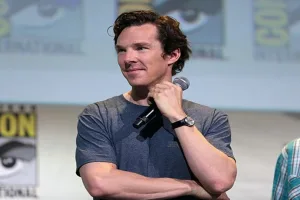
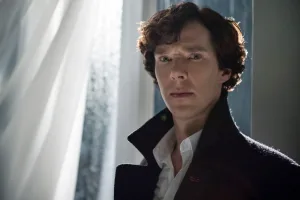
Cumberbatch makes the least immediately likable of the Marvel heroes into the most unpredictable and intriguing. 

Statesman News Service |

Cast: Benedict Cumberbatch, Tilda Swinton, Rachel McAdams,
Chiwetel Eijofor, Mads Mikkelsen, Benedict Wong.

Direction: Scott Derrickson

Production: Marvel Studios

Doctor Strange

Visually distinctive and classily cast, this latest
cinematic foray from the Marvel Studios, is a comic-book movie that fully justifies
its reliance on CGI effects. The superior hero-origin story somehow nods to the
spatial origami of Christopher Nolan’s ‘Inception’.  But crucially, Doctor Strange, has an
exclusive entity of its own: a handsome, endlessly fascinating conundrum of
complexity. It crackles with energy, moving from one plot point to the next,
not wasting any moment. There’s a sharp wit to the screenplay, which credits
the audience to catch the punchline to a joke that was set up an hour prior.

But Derrickson’s biggest achievement is incorporating so
much cosmic guff into the story – astral planes, third eyes and mandalas abound
– without ever seeming inapt or doltish.

In the first seven minutes of the movie, the buildings gnarl
and twist like segments of a Rubik’s Cube. Gravity flips and shifts with each
camera angle, smashing down various characters like a maniacal rolling pin. The
basic physics concept we’re used to no longer seem to work. It’s like watching
reality tear apart.

The incredible casting is responsible for much of the
success of this sci-fi movie.

As Dr. Stephen Strange, the genius neurosurgeon whose career
is wrecked by a devastating car accident, Benedict Cumberbatch is as steely and
sharp as the surgical implements at his operation theatre. In his first
appearance, we are reminded of the privileged swagger of Tony Stark (Iron Man),
but none of his warmth. Cumberbatch makes the least immediately likable of the
Marvel heroes into the most unpredictable and intriguing. Strange’s despair
over his ruined hands takes him to Nepal and to the secretive enclave,
‘Kamar-Taj’ headed by a guru known only as the Ancient One (Tilda Swinton).

On the contrary, Rachel McAdams plays Christine Palmer, the
doctor’s love interest. She has a warm, flirtatious aura. But she isn’t a
person so much as a convenient prop forgotten about for long stretches until
Strange needs her.

One of odd aspects of Doctor Strange is how quickly Strange
masters magic. While he struggles briefly at first to keep up with other
students, he’s soon stealing sacred books out from under Wong (Benedict Wong)
the sharp-eyed librarian who protects the texts at The Ancient One’s behest.

As per the villain, Kaecilius (Mads Mikkelsen) is a former
pupil of The Ancient One. Strange’s battle with him ultimately comes down to
being in the wrong place at the wrong time. The juxtaposition between them is
rather ill-thought and haphazard. Even with these considerable faults Doctor
Strange can also be charming. It’s a spry film brimming with great details,
striking imagery and twists.

It pushes the audience into a fascinating world full of
magic and villains that exists beyond our understanding of time and reality. We
are left trapped into the infinite loop of time!

Camellia Paul, ex-Gokhale Memorial Girls’ School

India denies Pakistan’s claim of killing its soldiers

IANS | New Delhi |

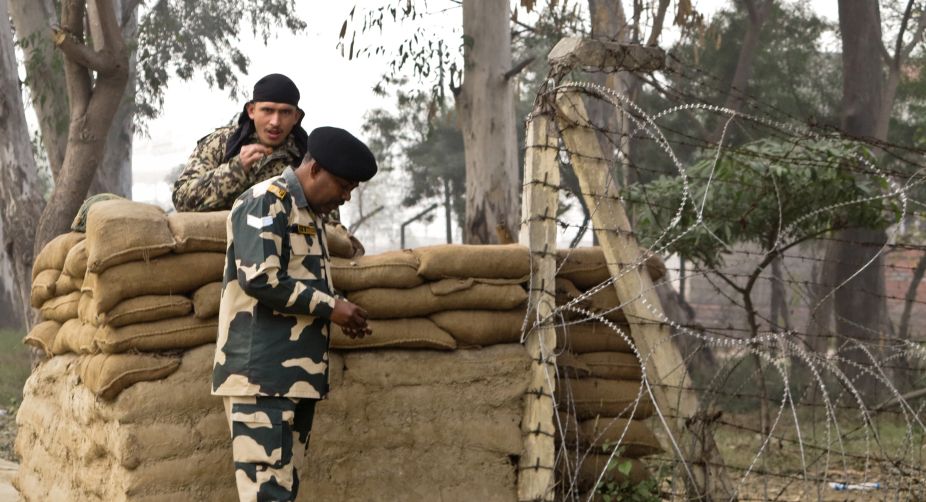
Indian Army on Thursday denied Pakistan's claim of killing its soldiers after Pakistani Army Chief Raheel Sharif said 11 Indian soldiers were killed in cross border firing on November 14.

“No fatal casualties due to Pak firing on 14, 15 or 16 Nov. Pak Army Chief claim of killing Indian soldiers on 14 Nov false,” Northern Command of Indian Army said in a tweet.

According to a report in Dawn newspaper, General Sharif on Wednesday said 11 Indian soldiers were killed on November 14 after Pakistan Army “responded to unprovoked firing”.

On November 14, Pakistan had said seven of its soldiers were killed in firing by Indian troops along the Line of Control (LoC) in Jammu and Kashmir.

Also on the same day, one terrorist was killed by Indian soldiers while attempting infiltration amid Pakistan Army's shelling and firing at one of three Indian positions on the LoC in Rajouri and Jammu districts.

The Thankur and legal eagle’s odyssey

Proceedings
in “Ghantewala Munsif’s” court began and ended with the ringing of a
bell. 

Statesman News Service |

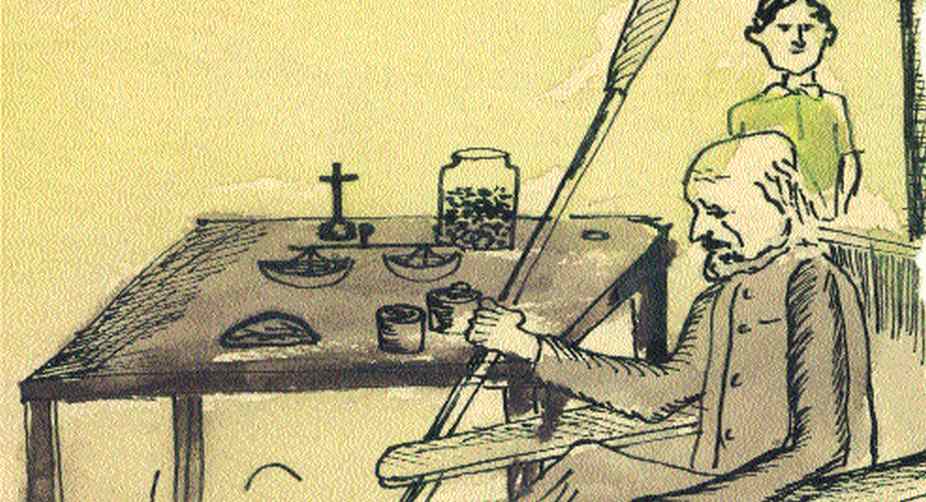
Prof Dennis Pereira, MA, LL B, lived in the Civil Lines with
his young wife, Sylvia. He was a rich man with properties in Goa and Bombay,
which meant that he took life easy, though he sometimes dabbled in legal cases
and off and on took English Literature classes as a part-time lecturer in Delhi
College, to which he went in his Ford car. While at home in No 8 bungalow, he
liked to entertain friends in the evening, many of whom came partly because of
his entertaining company and partly because of the beautiful Mrs Pereira, who
didn’t mind a bit of flirting. Among the regulars was the Thakur of
Jat-ka-Nagla, near the Tundla-Agra Road, but the Thakur preferred to stay in
Delhi in a house rented to him by a Nawab friend, from where he came in a
phaeton, along with his wife Nalini sometimes, otherwise alone. They were a
young couple with plenty of leisure, except for a nagging property dispute with
the Thakur’s sister Rajni.

Prof Pereira took a deep interest in the case, which was
being heard in the Dewani Kacheri at Agra by an Anglo-Indian Munsif magistrate,
William Paterson. Before the final hearing he spent practically the whole night
with the Thakur (himself a legal eagle) in helping to prepare the defence
statement as the regular vakil had fallen ill. The next day they were at the
court, where the case was listed in the afternoon. Paterson was known as the
“Ghantewala Munsif” because proceedings in his court began and ended
with the ringing of a bell. So after the bell had been rung the magistrate
said, “Has the defence anything more to say before the court delivers its
judgement?” “Yes, Your Honour,” replied Prof Pereira (acting for
the absent vakil), “Thakur Rajendra Singh desires to make a
statement.”

“Statements are as a rule not welcomed but considering
the special circumstances of the case, in which two reputed families are
involved, the ends of justice would be met if the statement is made,” said
the magistrate. The Thakur bowed and began to read the note he and Pereira had
drafted: “Your Honour, the House of Jat is an ancient one. The first
Thakur, Kunwarpal Singh traced his ancestry to the great Chhanghaji, who had
killed a tiger with his bare hands. His son Jitendrapal fought at the Battle of
Sikri. His sons and grandsons achieved fame and some were made Mansabdars by
the Mughals. We fought the Punjab rebels during the reign of Bahadur Shah I. In
Farrukhsiyar’s reign we thwarted the Sayyids of Bara and harassed Nadir Shah on
his way back from Delhi. We fought against Hafiz Rehmat Khan at the Battle of
Mirankatra (April 23, 1774) and helped in the capture of his grandson, Ghulam
Qadir Rohilla after he had blinded Shah Alam. During the ‘Mutiny’ we fought
shoulder-to-shoulder with the troops of Bahadur Shah Zafar. My father left the
British forces in World War II and joined the INA and as a result we lost most
of our jagir and what was left to us was consolidated by my foster father,
Thakur Surendrapal Singh. I am his heir but now my sister Rajni Singh and her
husband want to gain possession of all the property on the plea that I am an
adopted son and she the sole heiress.”

“Anything more?” asked the court. “The
Defence rests,” said Pereira. The magistrate thought for some time and
then said: “Though a lot of what you said is irrelevant to the case yet
the court salutes your eloquence. As far as the properties are concerned, Rajni
Singh has a point (Rajni smiled) but taking into consideration the circumstances
of the case we cannot deprive you either. Therefore, the court rules that
whatever is in possession of Rajni Singh is hers. You can retain the ancestral
house and land attached to it if you give her the plot on which the farm is
situated.”  Pereira and the Thakur
held a whispered conversation before giving acceptance. The bell rang and the
court rose. Prof Pereira and the Thakur returned to Delhi late in the evening
but by that time Mrs Pereira’s admirers had dispersed. The Professor’s driver, Ram
Singh had brought the car to the station and they drove to the Civil Lines,
where they had a quick drink after which the Thakur went home in his phaeton to
find that the Thakurani had delivered a bonny boy in his absence, heir to the
estate he had managed to save after a legal odyssey. But not long after Prof
Pereira died suddenly. Some said he had been poisoned. His wife returned to
Goa, where she remarried, much to the annoyance of the Thakur, who thought his
old friend had been stabbed in the back. Pereira’s pocket-watch (according to
father’s notes) is in Australia with one of his descendants while a
great-grandson of “Ghantewala Munsif”, Fergius Paterson, is a surgeon
in a London hospital. As for the Thakur, his only grandson died of TB in
Wazirpura, adjacent to Dewani Kacheri (Civil Courts), while Jat-ka-Nagla came
into international limelight in the 1960s when a wolf-boy, Parasuram, was
rescued from a nearby jungle, like Atlanta of the Golden Apples and Romulus and
Remus, legendary founders of the city of Rome.

It was father, who broke the story of this wolf boy in The
Statesman and among those who followed it up was the Times London correspondent
in Delhi, Neville Maxwell. In later years another wolf boy was found in Banna
Devi, about whom old Naine Joseph used to wax eloquent while waiting for his
friend Jailer Sahib. But Jat-ka-Nagla’s Thakur and the wolf-boy found in it
continue to be topics of discussion wherever old foggies meet.                                   

By RV Smith

A successful visit

Statesman News Service |

Developing close relations with Japan was from the start a priority task for independent India. Ties were badly damaged by the War but after hostilities ended India began to shape a vision of Asian solidarity that required early restoration of ties with Japan; the discredited imperial and colonial powers were on the way out and a new dispensation for Asia was in the making. Nehru’s India took some imaginative steps in this direction, one of the most striking being refusal to demand war reparations from Japan, unlike other combatant nations which extracted what they could from the prostrate Japanese empire. This important gesture elicited a warm response, and to symbolize the new era Japan made a handsome gift to India of a fine house in a choice quarter of Tokyo to serve as the official residence of the newly appointed Ambassador. This remains the Indian Embassy even today, and as Japan restored its fortunes and property values in Tokyo went through the ceiling, that early gift has become immensely valuable.

The India-Japan relationship remained warm through the vagaries of the Cold War even though they did not share much common ground at the time of the successive Asian wars in Korea and, later, Vietnam. The Japanese economic resurgence continued apace and  transformed that country, with Japan emerging as a principal donor of development assistance to Asia, which role became particularly significant when the Japan-driven Asian Development Bank became operational in 1966. Japan was deliberatively low-key in regional affairs but its influence as an economic power kept growing, which made it an important donor and development partner for India.

Thus a pattern of cooperation between the two countries became reasonably well established, with seemingly little to hinder further advance. However, India and Japan were never on all fours in the matter of nuclear disarmament, which on several occasions was to become a problem area in their relationship. Japan, having been the victim of nuclear attack, is extremely sensitive in this matter and is one of the strongest proponents for complete nuclear disarmament. India, while strongly supportive of disarmament and steadfastly opposed to proliferation, has had very different security issues to contend with and could not ignore the development of nuclear weapons by countries in its region or the nuclearization of the surrounding ocean.

An important turning point was India’s PNE (Peaceful Nuclear Experiment) of 1974 which had a fallout on India-Japan relations and reduced bilateral economic cooperation. The economic impact on India of the consequent slowdown was limited but there was considerable distancing between the two countries as a result of this event. Even before PNE the nuclear issue had been a source of divergence, most conspicuously on the matter of the Non Proliferation Treaty (NPT) which Japan actively promoted but from which India and some other countries kept away when it was adopted in 1968. The treaty had features that India could not accept, and New Delhi had to resist a great deal of international pressure, especially by the nuclear powers, while holding out for a more balanced agreement.

The Comprehensive Test Ban Treaty (CTBT) of 1996 is another major international instrument that shed further light on India-Japan differences on nuclear matters. India entered into negotiations on the draft treaty when it was first proposed in the expectation that it would be able to maintain its well-known position on the NPT while playing its part in the international effort to bring an end to nuclear testing. However, other countries, the P-5 prominent among them, sought an agreement with features that magnified the inequities that had kept India out of the NPT in the first instance. India therefore felt unable to join the CTBT, for which it had to face obloquy and endure sanctions. The gap between India and Japan on this issue thereafter widened even though the overall relationship remained friendly.

Bridging the gap became feasible only after the India-US nuclear deal of 2005 which substantially affirmed India’s credentials as a responsible nuclear power and acted as a signpost to others. It opened the way for India to acquire nuclear plant and equipment for its electric power needs from the most capable manufacturers worldwide, enabling it to diversify beyond its earlier suppliers that were mainly indigenous or of Russian provenance. Meanwhile, the global nuclear industry had itself undergone a considerable shakeout, with mergers and amalgamations that reduced the number of potential suppliers at a time when global concerns about pollution were on the rise and sentiment in favour of nuclear energy as a pollution-free source were strengthening.

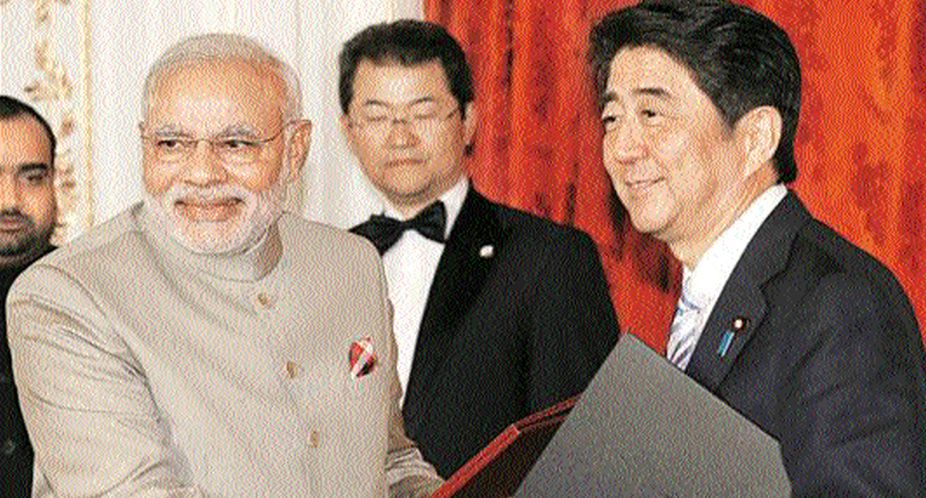
It was thus a complex set of issues that came into play when PM Modi paid on official visit to Japan a few days ago. In addition to nuclear matters, he had to address questions relating to the overall security architecture for Asia, a subject on which there has been considerable discussion recently. The big global and regional powers have developed sometimes contradictory views about Asia’s future, so this is a good time for India and Japan to exchange ideas, for they share many common values and can benefit from strengthened mutual understanding. It was thus useful for Modi to have met his Japanese counterpart Abe at this juncture, the more so as they have already met on several recent occasions and have developed good personal ties. These are two masterful figures with long term ambitions that go well beyond retaining their positions until the next elections, and both are leaders who are looking for reform and far-reaching change.

As the joint statement after Modi’s visit showed, the two leaders were able to project a strong shared view on international terrorism, which is a prime current concern for India. They also expressed their views on the CTBT where the joint statement suggests that while there was shared ground between them, the meeting of minds was not all-inclusive: senior officials from the two sides had somewhat different interpretations of what could be the consequences should India decide to test a nuclear device. This is no more than a remote contingency today, and if there were any difference in interpretation of the relevant portion of the joint statement, this has little practical significance, for India has eschewed further testing while Japan has never taken that course.

The Japanese spokesman reiterated his government’s position that a nuclear explosion by India would invalidate the bilateral agreement though his Indian counterpart

gave a more nuanced account. Such exchanges by spokespersons amount to statements of principle and do not indicate any sort of imminent developments, and therefore should not be permitted to detract from a successful visit by Modi.

 — Salman Haidar

The writer is India’s former Foreign Secretary.

A successful visit

Statesman News Service |

Developing
close relations with Japan was from the start a priority task for independent
India. Ties were badly damaged by the War but after hostilities ended India
began to shape a vision of Asian solidarity that required early restoration of
ties with Japan; the discredited imperial and colonial powers were on the way
out and a new dispensation for Asia was in the making. Nehru’s India took some
imaginative steps in this direction, one of the most striking being refusal to
demand war reparations from Japan, unlike other combatant nations which
extracted what they could from the prostrate Japanese empire. This important
gesture elicited a warm response, and to symbolize the new era Japan made a
handsome gift to India of a fine house in a choice quarter of Tokyo to serve as
the official residence of the newly appointed Ambassador. This remains the
Indian Embassy even today, and as Japan restored its fortunes and property
values in Tokyo went through the ceiling, that early gift has become immensely
valuable.

The
India-Japan relationship remained warm through the vagaries of the Cold War
even though they did not share much common ground at the time of the successive
Asian wars in Korea and, later, Vietnam. The Japanese economic resurgence
continued apace and  transformed that
country, with Japan emerging as a principal donor of development assistance to
Asia, which role became particularly significant when the Japan-driven Asian
Development Bank became operational in 1966. Japan was deliberatively low-key
in regional affairs but its influence as an economic power kept growing, which
made it an important donor and development partner for India.

Thus
a pattern of cooperation between the two countries became reasonably well
established, with seemingly little to hinder further advance. However, India
and Japan were never on all fours in the matter of nuclear disarmament, which
on several occasions was to become a problem area in their relationship. Japan,
having been the victim of nuclear attack, is extremely sensitive in this matter
and is one of the strongest proponents for complete nuclear disarmament. India,
while strongly supportive of disarmament and steadfastly opposed to
proliferation, has had very different security issues to contend with and could
not ignore the development of nuclear weapons by countries in its region or the
nuclearization of the surrounding ocean.

An
important turning point was India’s PNE (Peaceful Nuclear Experiment) of 1974
which had a fallout on India-Japan relations and reduced bilateral economic
cooperation. The economic impact on India of the consequent slowdown was
limited but there was considerable distancing between the two countries as a
result of this event. Even before PNE the nuclear issue had been a source of
divergence, most conspicuously on the matter of the Non Proliferation Treaty
(NPT) which Japan actively promoted but from which India and some other
countries kept away when it was adopted in 1968. The treaty had features that
India could not accept, and New Delhi had to resist a great deal of
international pressure, especially by the nuclear powers, while holding out for
a more balanced agreement.

The
Comprehensive Test Ban Treaty (CTBT) of 1996 is another major international
instrument that shed further light on India-Japan differences on nuclear
matters. India entered into negotiations on the draft treaty when it was first
proposed in the expectation that it would be able to maintain its well-known
position on the NPT while playing its part in the international effort to bring
an end to nuclear testing. However, other countries, the P-5 prominent among
them, sought an agreement with features that magnified the inequities that had
kept India out of the NPT in the first instance. India therefore felt unable to
join the CTBT, for which it had to face obloquy and endure sanctions. The gap
between India and Japan on this issue thereafter widened even though the
overall relationship remained friendly.

Bridging
the gap became feasible only after the India-US nuclear deal of 2005 which
substantially affirmed India’s credentials as a responsible nuclear power and
acted as a signpost to others. It opened the way for India to acquire nuclear
plant and equipment for its electric power needs from the most capable
manufacturers worldwide, enabling it to diversify beyond its earlier suppliers
that were mainly indigenous or of Russian provenance. Meanwhile, the global
nuclear industry had itself undergone a considerable shakeout, with mergers and
amalgamations that reduced the number of potential suppliers at a time when
global concerns about pollution were on the rise and sentiment in favour of
nuclear energy as a pollution-free source were strengthening.

It
was thus a complex set of issues that came into play when PM Modi paid on
official visit to Japan a few days ago. In addition to nuclear matters, he had
to address questions relating to the overall security architecture for Asia, a
subject on which there has been considerable discussion recently. The big
global and regional powers have developed sometimes contradictory views about
Asia’s future, so this is a good time for India and Japan to exchange ideas,
for they share many common values and can benefit from strengthened mutual
understanding. It was thus useful for Modi to have met his Japanese counterpart
Abe at this juncture, the more so as they have already met on several recent
occasions and have developed good personal ties. These are two masterful
figures with long term ambitions that go well beyond retaining their positions
until the next elections, and both are leaders who are looking for reform and
far-reaching change.

As
the joint statement after Modi’s visit showed, the two leaders were able to
project a strong shared view on international terrorism, which is a prime current
concern for India. They also expressed their views on the CTBT where the joint
statement suggests that while there was shared ground between them, the meeting
of minds was not all-inclusive: senior officials from the two sides had
somewhat different interpretations of what could be the consequences should
India decide to test a nuclear device. This is no more than a remote
contingency today, and if there were any difference in interpretation of the
relevant portion of the joint statement, this has little practical
significance, for India has eschewed further testing while Japan has never
taken that course.

The
Japanese spokesman reiterated his government’s position that a nuclear
explosion by India would invalidate the bilateral agreement though his Indian
counterpart

gave
a more nuanced account. Such exchanges by spokespersons amount to statements of
principle and do not indicate any sort of imminent developments, and therefore
should not be permitted to detract from a successful visit by Modi.

 
Salman Haidar

The
writer is India’s former Foreign Secretary.

Brazilian Marcelo delighted to complete decade at Real Madrid

Marcelo has made a total of 372 appearances in all competitions, while winning three Spanish leagues and two Champions Leagues among other titles.

IANS | Madrid |

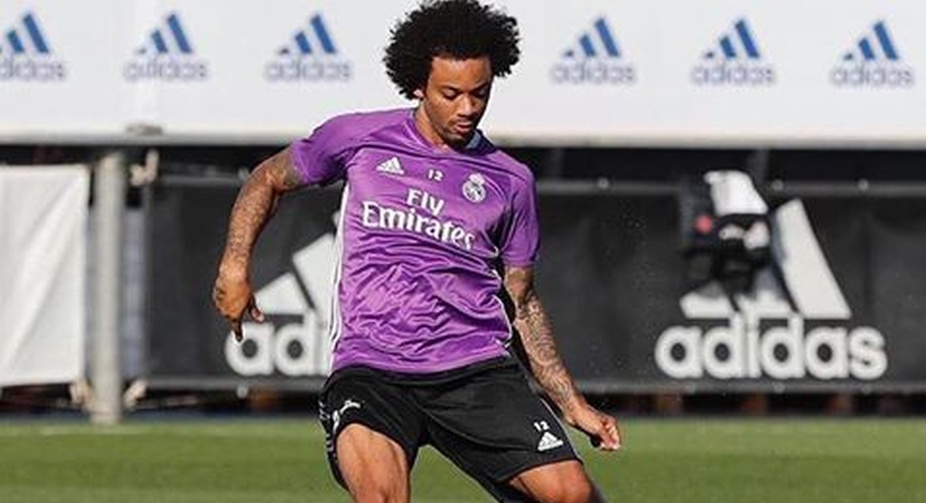
Real Madrid defender Marcelo celebrated the 10th anniversary
of his arrival at the Spanish football club with an interview on its official
website on Wednesday.

Since arriving as an 18-year-old, Marcelo has made a total
of 372 appearances in all competitions, while winning three Spanish leagues and
two Champions Leagues among other titles, reports Xinhua.

“I was very young when I came here and I was a bit
apprehensive at the start, but it has been incredible… These 10 years have
flown by,” said Marcelo.

The Brazilian is now one of the foreign players who has made
the most appearances for the club and although he still has a long way to go
before he passes fellow Brazilian left back Roberto Carlos’ total of over 500
appearances, he is close to the legendary Alfredo Di Stefano’s 396 games for
Madrid.

“It’s a source of immense pride to be up there with the
appearances of Roberto Carlos and Alfredo Di Stefano,” said Marcelo, who admitted
Carlos was his “idol”.

“Nearing Di Stefano’s appearances total is also
special, but I’m taking things game by game and hope to win as many titles as I
can,” continued the defender.

Marcelo said his best moment was winning the 2014 Champions
League, which was the tenth in the club’s history and in which he scored a
goal.

His experience means that recently he has also worn the
captain’s armband in several matches.

“It’s a responsibility as it involves teaching the
younger lads and setting an example,” he said.

Kerry talks about India thrice at UN climate meet

IANS | Marrakech |

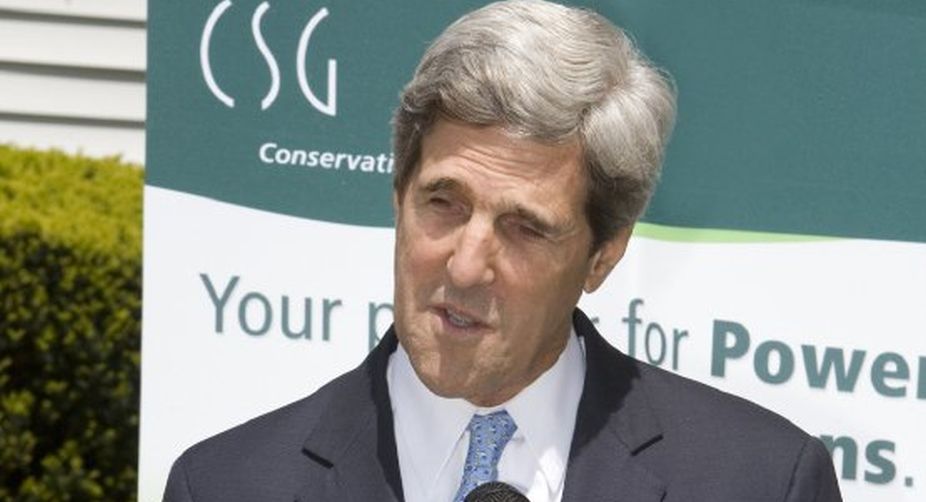
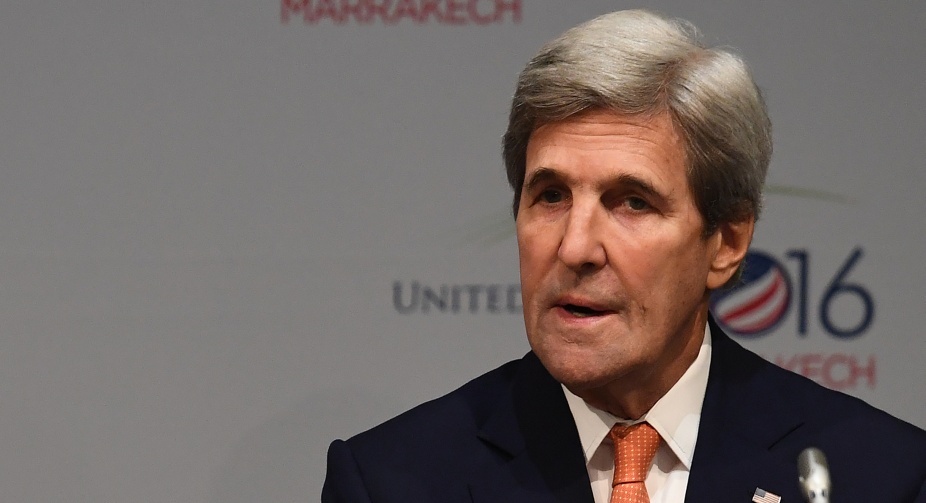
US Secretary of State John
Kerry on Wednesday mentioned India thrice in his speech at a global climate meet
— highlighting its growing investments in renewable technologies, draughts and
growing pollution.

Speaking at the UN Climate
Conference here, Kerry said: “Now, significantly the renewable energy boom
isn’t limited to industrialized countries, and that’s important to note.”

“In fact, emerging
economies like China, India, and Brazil invested even more in renewable
technologies last year than the developed world,” he said in his 45-minute
address to the media, where scientists and international delegates were also
present.

“China alone invested
more than $100 billion. Ultimately, clean energy is expected to be a
multitrillion dollar market – the largest market the world has ever known.”

Expressing concern over
global climatic conditions, Kerry, who has attended every major United Nations
climate change summit since 1992, said: “We have seen record-breaking
droughts everywhere — from India to Brazil to the west coast of the US.”

“Storms that used to
happen once every 500 years are becoming relatively normal. In recent years, an
average of 22.5 million people have been displaced by extreme weather events
annually. We never saw that in the 20th century,” said the Secretary of
State.

Sounding an alarming note, he
said there are nearly 20 million new asthma cases a year in India linked to
coal-related air pollution.

“In the US, asthma costs
taxpayers more than $55 billion annually. The greatest cause of children being
hospitalised in the summer in the US is environmentally induced asthma,”
said Kerry, who also talked abo ut his last week’s trip to Antarctica where
scientists alarmed at the fast-changing climatic trends.

He also blamed coal-fired
power plants in China for pollution.

In 2014, a study found that
up to six million people in China have black lung because they lived and worked
so close to coal-fired power plants, Kerry added.

Lift ban on DCCBs over accepting old notes: Gujarat govt

The regulator e-mailed a circular to all the 18 Gujarat-based DCCBs, asking them not to accept and exchange the demonetised notes.

PTI | Gandhinagar |

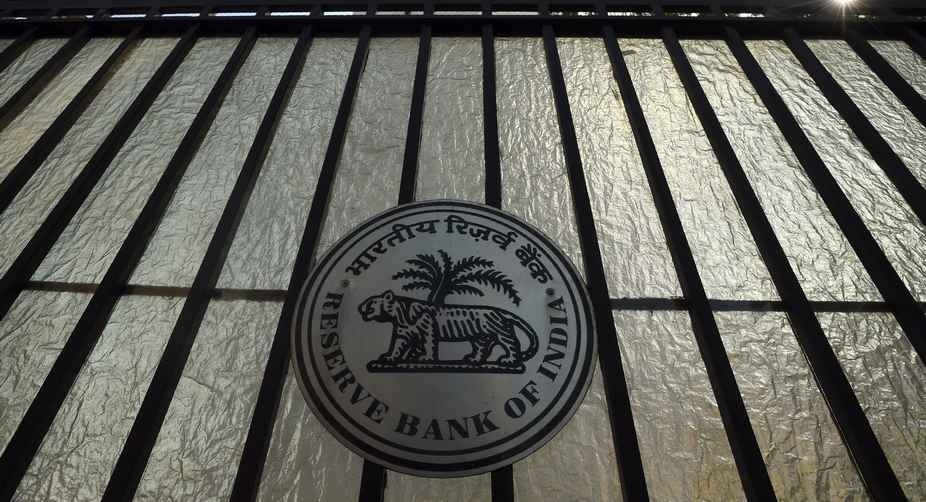
The Gujarat government on Wednesday urged the Centre as well as RBI
to lift the ban on District Central Cooperative Banks (DCCBs) from accepting or
exchanging scrapped notes of Rs 500 and Rs 1,000.

The appeal by the state government followed representations
it received from different quarters about cash crunch being faced by people,
especially farmers, in view of the abolition.

Deputy Chief Minister Nitin Patel said RBI has barred DCCBs
from accepting or exchanging defunct currency notes after receiving some complaints
against them.

“RBI has told us a decision on lifting the ban would be
taken once the ongoing inquiry into these complaints got over,” Patel told
reporters here.

Last Sunday, the regulator e-mailed a circular to all the 18
Gujarat-based DCCBs, asking them not to accept and exchange the demonetised
notes.

“DCCBs mostly operate in rural areas. Many farmers are
having accounts in these banks. Thus, we have urged RBI as well as the central
government to conclude their inquiry as soon as possible and lift this
restriction,” said Patel.

To help farmers facing difficulties in purchasing
fertilisers because of the cash crunch post-demonetisation, Patel said the
state government has instructed PSUs to accept cheques from agriculturists.

These PSUs, which have plants in Gujarat, include Gujarat
State Fertilisers and Chemicals (GSFC), Gujarat Narmada Valley Fertilisers and
Chemicals (GNFC) and IFFCO.

“We have asked these PSUs to put in place a system
whereby farmers can buy fertilisers from their outlets by producing cheques if
they do not have enough cash. We have also urged these PSUs to allow
cooperative societies to procure fertilisers from them by paying in
cheques,” said Patel.

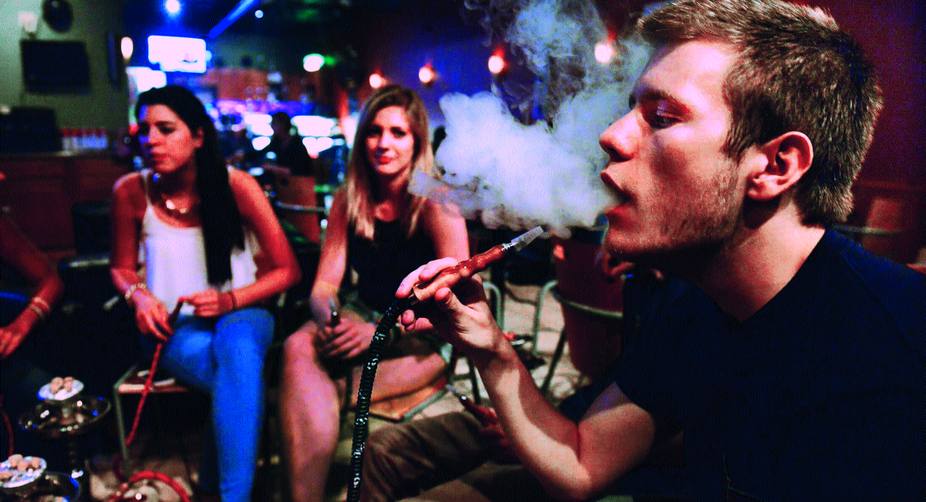
Entertainment in the Dark

As
nightlife culture grows in urban life, there are several pros and cons to the
issue. Faced with an increasing demand.

Statesman News Service | New Delhi |

Over a year ago, a major newspaper in India conducted an
opinion poll among the youth on the nightlife in India. The poll revealed many
things, but what emerged prominently was that around 90 per cent youth in urban
India think that nightlife is a crucial part of their life and they would
prefer to live or make that city their home, where there is a
“happening” nightlife. The opinion survey highlighted the growing
craze and love for nightlife among Indian youth. It is as much a part and
parcel of life as their job, office, friends, and relatives.

Now, the big question is: What is nightlife? If one searches
the word on Google, it reads, “the social activities and entertainment
available in town at night”. But for our youth, nightlife means something
else. For them, it is synonymous with partying, drinking, dancing and having
fun with their friends through the night. For the older generation this at times
is a cultural shock as traditionally, one is advised to go to bed as soon as it
gets dark. In fact, going out at night is still considered not too good and is
always looked at with a skeptical eye. Even government has issued strict
guidelines that ensure restaurants, pubs, clubs and bars shut down, latest by
midnight. However, they cite a different reason – security. Officials and
police personnel opine that keeping late night increases the chances of crime
in the city.

In reality, pub and club owners say, government regulations
and moral policing by right wing activists hardly made any difference; the
sector is growing in leaps and bounds. Opening up of new lounges and club every
other day is the testament to this.


Fat data

If one takes a look at the facts and figures, one would
notice that this sector is generating a lot of revenue to the government as
well as employment. In a conversation with several players, it emerged that the
industry’s potential is still untapped. On the other hand, the food and nightlife
industry is being ignored by the government. In 2015-16, organised food service
market size was Rs.22,000-22,500 crore. It has almost doubled from Rs.11,500-11,900 crore in 2013. If a mere 30 per cent of the  fragmented and unorganised industry came
together, it could generate an additional 13,000-14,000 crore.

As for employment, the sector has a potential to generate
5.8 million jobs – an estimated 3 million in the organised and another 2.3
million in standalone outlets. If the market continues to grow at the current
pace of 20 per cent per annum, the sector would have employed 8.7 million
people by 2021.


Evolving fast

As already discussed, the concept of nightlife travelled
into India from the West. But the down the years, the nightlife fever is
gripping the Indian society very rapidly. Just a decade ago there were just a
handful of night clubs and bars and that too in Five-star hotels.

 Then the city had
discothèques and private loft parties, employing DJs (disc jockeys). These
venues were mostly accessible to members only but now there is open access to
night clubs, resto bars and lounges and can be enjoyed by everyone. “Just
a few years back, a customer had limited choice. But over the years, things
have improved. Now people can choose from a list of restaurants, movie
theatres, play bars and others,” said A D Singh, owner of Olive Bar and
Kitchen.

 In recent years, the
country is home to bars, night clubs and music festivals. “It’s a growing
trend for the younger generation to work late in the day. For them a city’s
nightlife would be considered a crucial factor in deciding where they would
like to work and live,” said Sanjay Vazirani CMD and MD of Foodlink
Services India Pvt. Ltd.

 It is not that
nightlife is growing only in metro cities. Even small cities are in the race.
They also sport bars, earning a good revenue. The only problem with this market
is that it is untapped and needs to be regulated. However, in terms of
infrastructure, bars in small cities cannot compete with the metropolitan
cities, but they are still doing well. “I can tell you that people are
spending more money in Kanpur, Nagpur and Chandigarh for a good nightlife. They
are ready to pay, they only need good services. Moreover, Delhi’s numerous
malls and bars are full of people from Chandigarh and other neighboring
city,” said Dilip Joshi, an industry expert and consultant for
restaurants, bars, lounges.


Early or late?

Apart from Goa, nightclubs in India normally start early and
finish no later than 1:30 am. While cities like Mumbai and Delhi have specific
venues for after parties, which go until 3-4 am, often people choose to host
house parties, which go on as per their wishes.

 A conversation with
corporate workers, students and other professionals revealed that nightlife in
India is like a curfew, as it starts early and ends early too. In fact, many
countries, which are less-developed than India, including many Muslim
countries, which are more conservative than India, have a better nightlife.
Their bars, pubs and clubs are open for longer in the night than in India.
“I am in favour of opening the bars and pubs till 6 am. This change would
do well for our business, which in return would boost the country’s
image,” said Sanjay Vazirani.

 Riyaaz Amlani,
president of National Restaurant Association, also advocated opening bars and
pubs round the clock but for different reason. He thinks if these bars and
restaurants are opened the whole day or late at night, it can boost tourism
also. “If you see, the most popular 
tourist destinations in the world have vibrant nightlife. For instance,
take Hong Kong, Singapore or Dubai,” Amlani added. “I have noticed
that tourists visit monuments during the day but at night want a good
nightlife, where they can spend some quality time.”

 However, officials
have a different perspective. They reason that opening of bars late at night
could lead to drunken brawls at the pubs. Incidents of drunken brawls in many
night joints substantiate these claims. In fact, a top cop in Delhi said in a
report in news website, Firstpost, “Incidents of crime against women,
drunken driving and brawls won’t stop and there will be a spurt in such crimes
if clubs, bars, restaurants and pubs are allowed to operate 24 hours. Many of
these establishments indulge in illegal activities like flesh trade, serving
liquor to those below 25 years and so on. Shutting the clubs down by 1 am helps
the police in ensuring women’s safety and maintaining law and order.”

 Police also fears a
rise in pub brawls and drunken driving if the premises are open all night.
There are many small bars and restaurants, which don’t have enough security and
are unable to control brawls and molestation. At the same time, there are many
places, which promote sex racketing or escort system. Many party goers agree
that they go looking for a random “hook-up”. If they fail, it turns
into a brawl or are accused of molestation.


Longer and safer

There is a huge debate over the timings of these bars and
pubs. Many regulars agree that these places should be open till late night, but
many disagree too. Their argument is that in a city like Delhi opening till
late night was an invitation for crimes. Given the incidents of crime, which
mostly happen at night, they are justified.

However, party lovers and industry players in cities like
Delhi, Bangalore, Kolkata and Mumbai, have a different take on it. They think
that a city with an active nightlife actually becomes more safe for women
because of the presence of large numbers of people in public places even late
at night. If there are more people on road, the chances of crime is very less,
they assert. “It is proven that if a city has a vibrant nightlife, it is
more safe. Darkness puts less traffic on the road. When there is enough traffic
and people on the road, the crime will drastically reduce,” said Amlani.

 “Do you think,
if we close the bars and disco at sharp 11 o’clock, the children will go back
to their homes. No…I don’t think so. They will go some other place like
inside cars or other open areas to party and needless to say, these places are
more unsafe. If one stays in bars or pubs, they will be under the watch of the
bar’s CCTV camera, bouncers and surrounded by people. Isn’t it better to open
the bar till late night?” expressed Dilip Joshi.

 To check brawls, the
clubs and government should increase the deployment of bouncers not only within
the premises but also in their vicinity. “If there are more bouncers and
better street lighting around an outlet or in the market where it is situated as
well as parking lots, it will help a great deal,” said Joshi.


Untapped market

Many places have the most vibrant nightlife. For example
Hong Kong sees 45 million people and London 25 million people. But all of India
sees only 8 million people. Even though the industry is flourishing these days,
it is said to be facing multiple problems from all sides. The major problem
with this industry is not having a central coordination. “Tell me, whom
should I connect for this industry. Who is listening our problem?” asked
Dilip Joshi. “In a place like London or Berlin, they have nightlife
commissioner and czars. Similarly, we can also have Bombay nightlife
commissioner or Delhi nightlife commissioner, who will work like a mediator
between government and pubs. He will be responsible for everything.”

 Apart from this the
industry is also facing problem of multiple taxation and over-regulation.
Different departments have different taxes. If we go as per the demand of the
industry, they should club all the taxes, so that we don’t have to walk from
one office to other just to fulfill the criteria,” said A D Singh. 


Creating problems

News of bar brawl is quite frequent. Sometimes wards of big
names, including politicians, are also involved. Remember the story of Jessica
Lal murder case,  the fight of Lalu
Yadav’s sons or brawl of Delhi Police Commissioner’s son and a Haryana
politician’s son? These news are quite frequent. Apart from this, there is news
about low and medium budget bars also promoting drugs and prostitution.
Usually, for the sake of safety, and to deal with any untoward incidents or to
ward off any brawl, almost every club has employed bouncers, but not many. On
many occasions, these bouncers are quite helpful in stopping fights. However,
the situation gets tense when the women start a brawl. This is a very common
sight. At that time, the situation turns very sensitive because none of them
hire any women security guard or bouncers.

By Rakesh Kumar

Trump’s views on climate change may change, says Kerry

IANS | Marrakech |

US Secretary of State John Kerry on Wednesday said he hopes
President-elect Donald Trump’s views on climate change might change when he
“assumes office”.

Speaking at the UN Climate Conference here, Kerry tried to
dispel doubts about the new US government’s policies, saying it is a little bit
“different when you’re actually in office compared to when you’re on the
campaign trail”.

In his 45-minute address to the media, where scientists and
international delegates were also present, he said: “I can’t stand here
and speculate about what policies our President-elect will pursue.”

“I will tell you this. In the time that I have spent in
public life, one of the things I’ve learned is that some issues look a little
bit different when you’re actually in office compared to when you’re on the
campaign trail.”

Without mincing words, the US Secretary, who has attended
all COPs in his career, said an “overwhelming majority of Americans know
that climate change is happening and want the US to honour its commitments
under the Paris Climate Agreement”.

He got a big applause from the audience on this remark that
the Paris Agreement deal has as a framework that is “built to last”.

US President-elect Donald Trump has called climate change a
“hoax” and vowed to cut off funding to the United Nations Climate
Change programmes.

He also said he would reduce the US’s involvement in the
Paris climate accord, which entered into force on November 4 and aims to
drastically reduce greenhouse gas emissions.

Nitish favours demonetisation, seeks action against ‘benami property’

PTI | Patna |

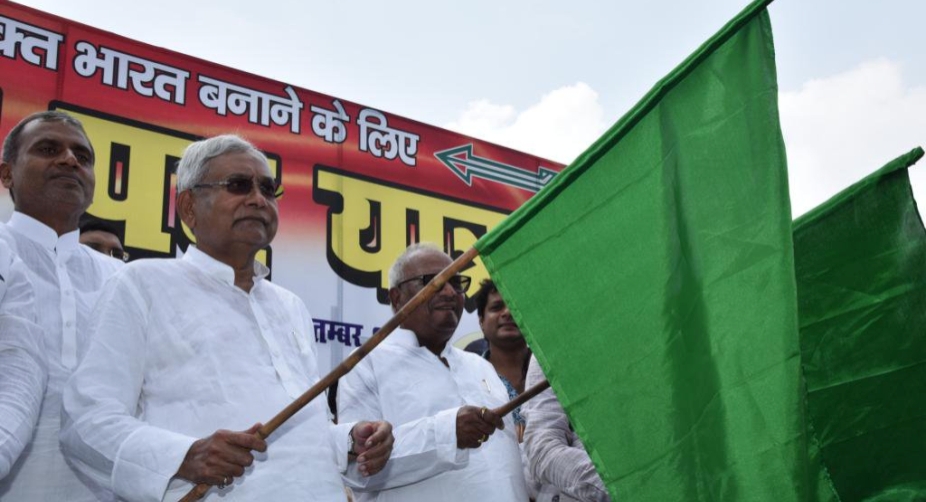
Bihar Chief Minister Nitish Kumar on Wednesday favoured
demonetisation of Rs 1,000 and Rs 500 notes and sought “action against
benami property”, even as he slammed the Centre for “not doing its
homework” before taking the step causing hardships to the poor.

“I am in favour of the decision to demonetise Rs 1000 and Rs 500
notes which will help end ‘2 number ka dhanda’ (illegal business),” he
said addressing a ‘Chetna sabha’ here at the start of his second leg of
‘Nishchay yatra’.

“I want an attack on benami properties earned through illegal means
for more effective results against black money,” Kumar, who is also the
JD(U) national president, said.

Contradicting Prime Minister Narendra Modi’s assertions that the poor are
“enjoying a sound sleep” after his decision, the Chief Minister
claimed, “Farmers and common people toil hard in fields, but those
involved in number illegal business buy benami property and enjoy deep
sleep.” 

With reports of inconvenience to the masses standing in serpentine queues
outside banks and ATMs pouring in from across the country, Kumar demanded

suitable arrangements so that the poor and women can change the demonetised
high-value notes easily.

Criticising the BJP-led government for “improper” arrangement
for undertaking the demonetisation exercise resulting in inconvenience to
people, Kumar said he always executed programmes for people after meticulously
going through minor details.

By way of example he said youths going to district registration centres to
enrol themselves for interest-free loans for higher studies and other
facilities as part of his ‘seven resolves’, need not stand in long queues.

Accusing BJP of turning its election promise on black money to ‘jumla’
(false promise), Kumar claimed, “We are not jumla baaz (practitioner of
jumla). I make only those promises to people which can be executed.” 

During the second leg of his ‘Nishchay yatra’, Kumar informed the people

about the programmes launched to realise his ‘seven resolves’ and also the
“good results” prohibition is yielding.


Padmavati: Deepika Padukone set to shoot first song

SNS | New Delhi |

After all the fuss and furore, Sanjay Leela Bhansali’s next venture Padmavati has gone on the floors. Actress Deepika Padukone is looking forward to start the shoot for the film, where she will be seen essaying the role of the beautiful and courageous Rani Padmavati. 
The actress is leaving no stone unturned to put her best foot forward. 
Deepika will start the shoot with a song sequence. She will be seen performing the traditional ghoomar dance for her first shot and has been rehearsing to get her steps right.

The dynamic duo of Bansali and Deepika has earlier created magic on screen by delivering jaw-dropping chart-busters like Deewani Mastani and Nagade Sang. Hopefully, the next song will also be a delight to watch. 
Deepika will be next seen in the much awaited movie xXx : The Return of Xander Cage.