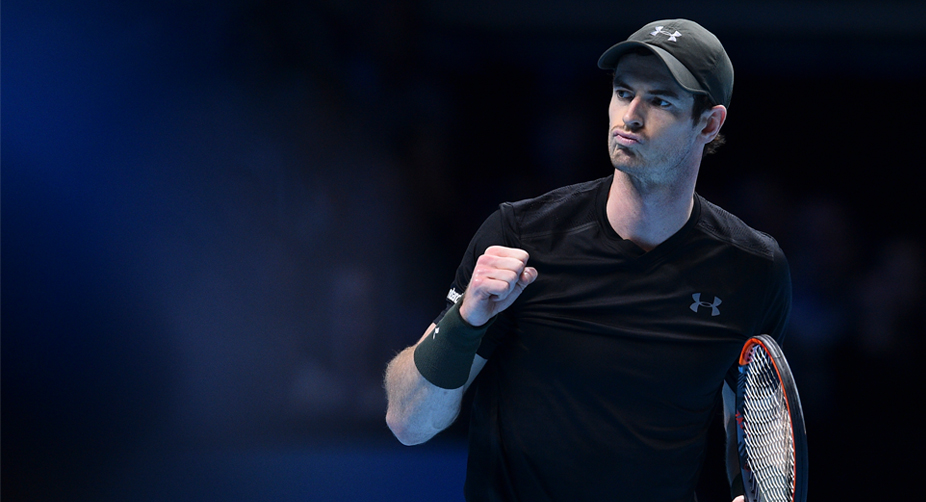
ATP World Tour Finals: Murray beats Wawrinka to reach semifinals
Murray took just 86 minutes to defeat the Swiss number one 6-4, 6-2.
Andy Murray (Photo: AFP)
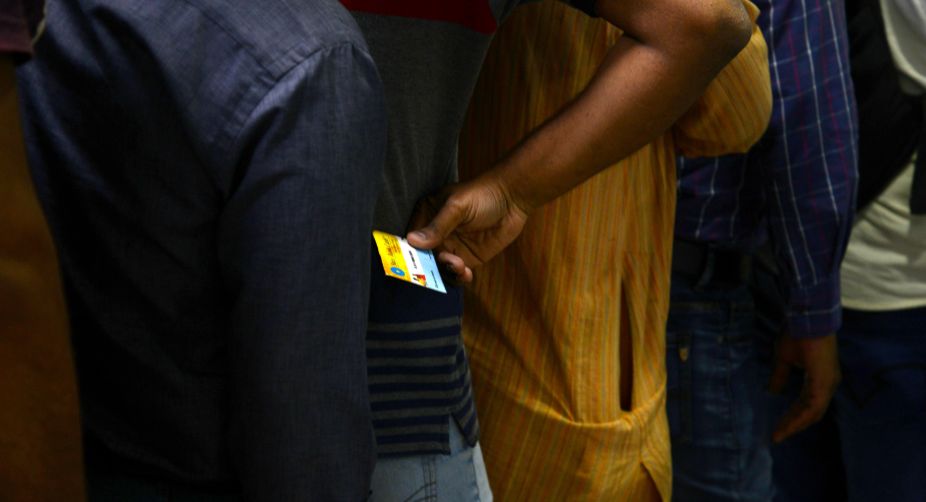
Queues getting shorter at banks; long wait at ATMs continues
Representational image (Photo: AFP)
Palestinians count on Trump for achieving two-state solution
Palestinians are looking forward to positively working with the US administration of President-elect Donald Trump to realise the two-state solution.
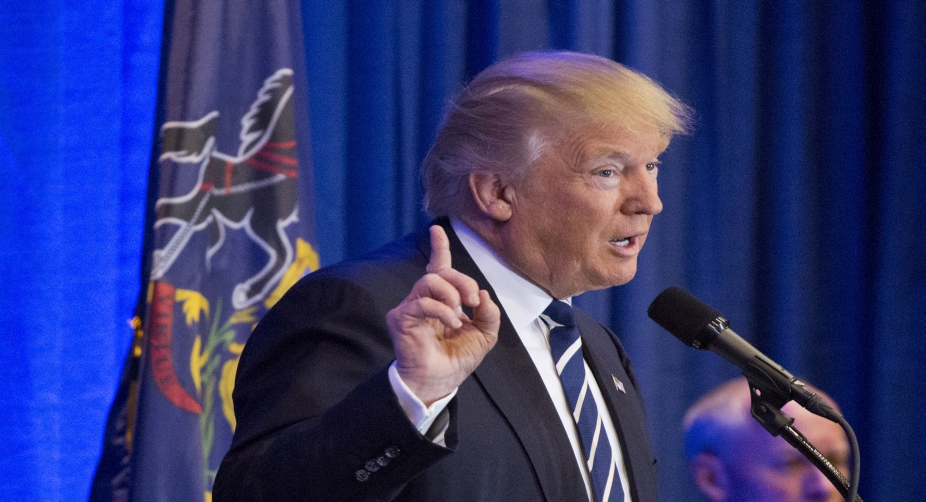
Donald Trump (Photo: AFP)
Hundreds protest against Obama ahead of APEC meet
Protesters said the Obama administration and its proposed TPP goes against the interests of Peru and Latin America.
Representational image (Photo: Getty Images)
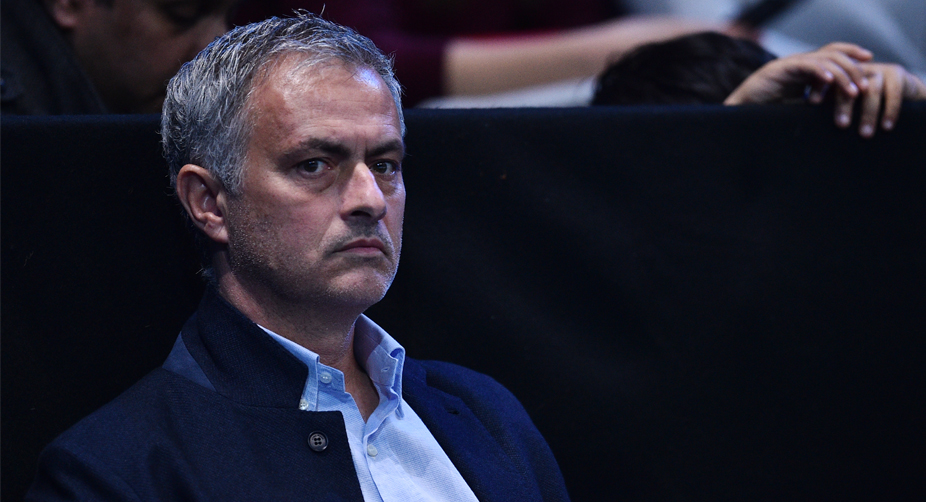
Mourinho sharpens pencil for FA Rooney rebuke
Mourinho said Rooney would be “ready” for Saturday’s game against Arsenal.
Jose Mourinho (Photo: AFP)
3 soldiers martyred in Assam militant ambush
Representational Image (Photo: Getty Images)
Fantasy Premier League Pundit Picks: Gameweek 12
FPL is back after a break, is your team ready for the upcoming Gameweek?
Eden Hazard (Photo: Facebook)
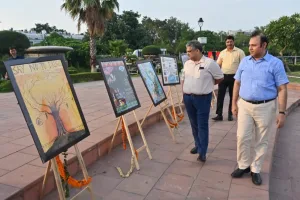
The Korean connection
An art exhibition in New Delhi is aiming to bring India closer to an unfamiliar culture
The Korean Cultural Centre, India in Association with Onyang
Folk Museum, Indira Gandhi National Centre for Arts, Korea Art management
services and Travelling Arts Korea, is exhibiting Sarangbang — The room of
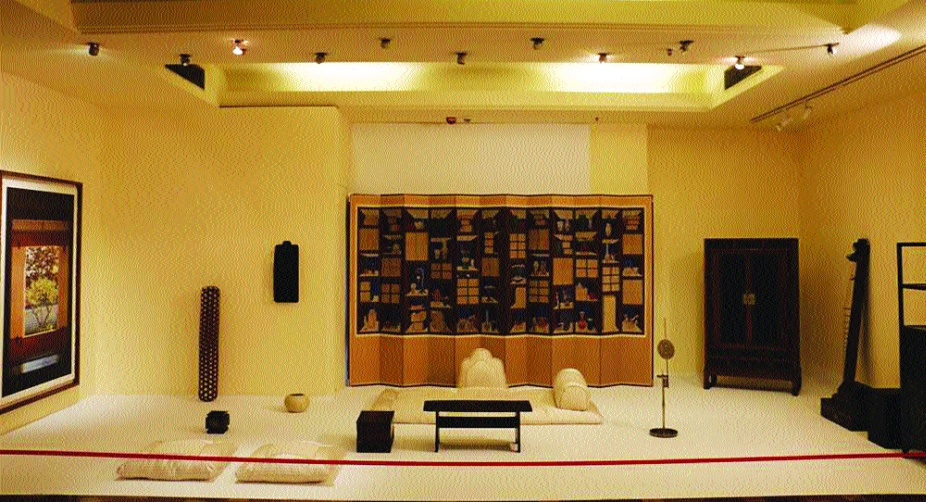
Leisurely life at IGNCA Exhibition Hall, New Delhi. The exhibit was inaugurated
by the ambassador, His Excellency, Cho Hyun, embassy of The Republic of Korea
to India. Sachchidanand Joshi, Member Secretary of Indira Gandhi National Centre
for Arts, graced the occasion.
The exhibition presented a deeper understanding on the
living spaces of the Joseon Dynasty. The writing desk, oil lamp, calligraphy
brush, ink stone, India ink, wooden pillow, scroll shelf, brazier, and chamber
pot featured in this exhibit were selected from the collection at the Onyang
Folk Museum. This was followed by a workshop of making Korean lanterns by 18
children from Apeejay Svran School, Faridabad and 20 from Modern Public School
Shalimar Bagh, Delhi.
Ambassador of Embassy of The Republic of Korea to India, Cho
Hyun said that such an exhibition makes one realise how close we are and that
we are culturally bound to each other. As you see the exhibit you find many
similarities and differences in Korea and India culture and helpful in taking
the Indo-Korean bond further. Hopefully, it will be great fun for you to
explore Korean heritage and contemporary art.
Joshi said that it is a proud privilege that IGNCA has
experienced such an exhibition, which establishes a correlation between two
cultural countries. With this beautiful experience the Indian audience will get
a chance to explore Korean culture.
The Sarangbang was both a place of study for the Seonbi
(Confucian scholars) of old Korea, a setting for mastering the old and learning
the new as well as a place of education and the fostering of future scholars.
Each room was equipped with a wide range of items related to learning from the
“Four treasures of study”.
The Onyang Folk Museum is a private museum that specialises
in folk culture. It is a multi-purpose cultural space where visitors can see,
hear, and experience traditional Korean life and culture.
The exhibition will conclude on 27 November
The Korean connection
An art exhibition in New Delhi is aiming to bring India closer to an unfamiliar culture
The Korean Cultural Centre, India in Association with Onyang
Folk Museum, Indira Gandhi National Centre for Arts, Korea Art management
services and Travelling Arts Korea, is exhibiting Sarangbang — The room of
Leisurely life at IGNCA Exhibition Hall, New Delhi. The exhibit was inaugurated
by the ambassador, His Excellency, Cho Hyun, embassy of The Republic of Korea
to India. Sachchidanand Joshi, Member Secretary of Indira Gandhi National Centre
for Arts, graced the occasion.
The exhibition presented a deeper understanding on the
living spaces of the Joseon Dynasty. The writing desk, oil lamp, calligraphy
brush, ink stone, India ink, wooden pillow, scroll shelf, brazier, and chamber
pot featured in this exhibit were selected from the collection at the Onyang
Folk Museum. This was followed by a workshop of making Korean lanterns by 18
children from Apeejay Svran School, Faridabad and 20 from Modern Public School
Shalimar Bagh, Delhi.
Ambassador of Embassy of The Republic of Korea to India, Cho
Hyun said that such an exhibition makes one realise how close we are and that
we are culturally bound to each other. As you see the exhibit you find many
similarities and differences in Korea and India culture and helpful in taking
the Indo-Korean bond further. Hopefully, it will be great fun for you to
explore Korean heritage and contemporary art.
Joshi said that it is a proud privilege that IGNCA has
experienced such an exhibition, which establishes a correlation between two
cultural countries. With this beautiful experience the Indian audience will get
a chance to explore Korean culture.
The Sarangbang was both a place of study for the Seonbi
(Confucian scholars) of old Korea, a setting for mastering the old and learning
the new as well as a place of education and the fostering of future scholars.
Each room was equipped with a wide range of items related to learning from the
“Four treasures of study”.
The Onyang Folk Museum is a private museum that specialises
in folk culture. It is a multi-purpose cultural space where visitors can see,
hear, and experience traditional Korean life and culture.
The exhibition will conclude on 27 November
Worthy successor to Bengal School masters
Ratan Acharya’s recent solo exhibition of mystical paintings left many impressed.
Bordering on excellence, a solo exhibition, showcasing a
series of 52 mystical paintings in tempera and wash executed through the
artistic brushstrokes of painter Ratan Acharya, recently concluded at the North
Gallery of the Academy of Fine Arts, Kolkata. The exhibition was inaugurated by
Swami Supurnananda who said that the paintings, “invoke the spirit of
aesthetics and divine joy in viewers minds”. Divine joy indeed, as most of
Acharya’s works conjure up an expansive realm of silence and peace tracing the
subtlety and inimitable sensitivity invested in the paintings that express a
visual language beyond words.
Of course, the influence of the Bengal school and
Abanindranath Tagore was quite evident. Acharya, even though not hailing from
an artistic family, has in real earnest applied his artistic skills and
imagination as the hallmark of his paintings. For imbibing this quality, he is
really indebted to his guru and mentor, namely his art teacher at his
Narendrapur school, the late Mrinal Das who adopted Acharya as his son.
Among his solo exhibitions, this may be deemed his sixth
coupled with his participation in several group exhibitions. Acharya’s career
as a painter is distinguished by accolades by way of prizes, certificates and
awards particularly the Abanindranath Tagore Memorial Medal by the Indian
Society of Oriental Art, Gaganendranath Tagore Memorial Medal by the same
organisation and the first prize of Art & Craft (Indian Style of Paintings)
from the Calcutta Information and Cultural Department, Government of West
Bengal in 1990. Acharya is now presently engaged as assistant professor, head
of the department, painting, Indian Style, Governement College of Art and
Craft.
The 52 paintings in big and small formats showcased at the
gallery were invested with a sense of the spiritual mysticism in the eternal
beauty beyond the realm of the physical world. The painter’s works reflect a
kind of profound perception — a revelation of aesthetic consciousness in search
of the sphere beyond. What attracts the viewers attention is the grace, elegance,
subtlety and a penchant for the esoteric. With meticulous detailing, the artist
manages to evoke a soft focus and subtle texture. The colour palette is
pre-dominantly mute yet at places dramatic, effected by the outcome of the
medium applied through tempera and wash blending a dash of white to the deeper
shades of red, yellow, blue, green, cobalt brown and black.
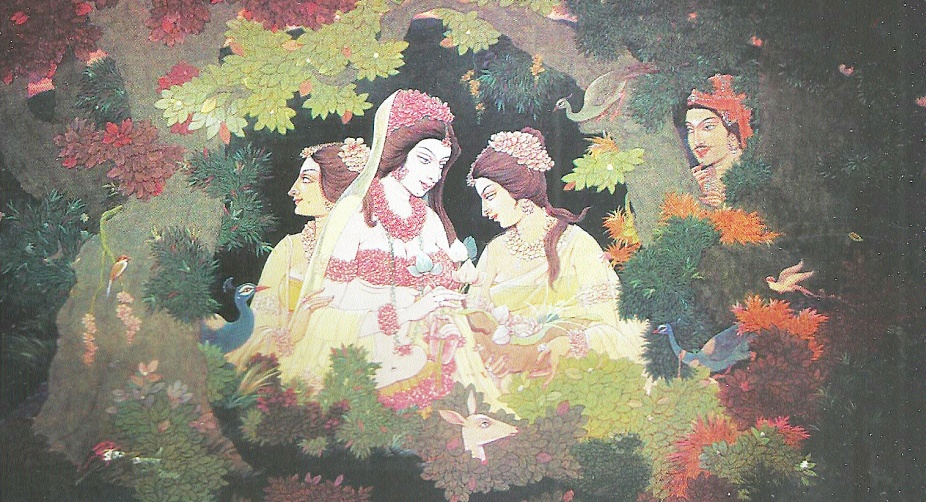
That is probably because the thematic ideas demand a
harmonious mix of colours incorporating Hindu deities and mythology, which
ropes in Radha Krishna, Shakuntala, Shiv and Parvati, Meera Pujarini, Antarale
et al. The transcendental quality of poetry and lyrical beauty embellished in
the paintings reminds one of the masterpieces of his earlier predecessors and
legendary stalwarts like Abanindranath Tagore, Nandalal Bose, Jamini Roy and
Dhirendranath Brahma.
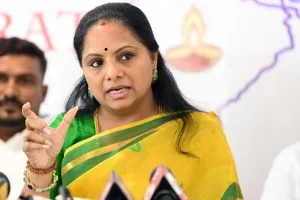
‘Married yes, but it was a bad marriage’
When she
first got a ticket for contesting Parliamentary elections two years back many
chose to dismiss her as another beneficiary
of dynasty politics. After two years Kalvakuntla Kavitha has finally
emerged from the shadow of her father and chief minister of Telangana K Chandrasekhara
Rao, gradually carving out her own place as well as that of the new state she
represents in the political spheres of the capital. She talked about the hard
time faced by the MPs from Telangana to get the state’s dues from the Central
government and their current rapport with the ruling party at the Centre.
Excerpts:
Q. You
are pretty active in Delhi for a first time MP. You are always present whenever
there is any delegation from Telangana. Was that role chalked out by the party?
A.
Actually, we figured out early that in Delhi, it is all about strength and
numbers. It is far more effective when 12 MPs go to visit a minister than going
alone with a problem of your constituency. So whichever MP has to meet a
minister, we all go together and of course this is true when somebody visits
from the state as well. We also stick together whenever there are complex
issues involved, such as bifurcation, issues involving employees or separate
High Court. The party decides what we do and in our family we keep politics separate.
Like if my father is in a meeting I simply cannot barge in. That’s the way we
were raised.
Q. Since
TDP-BJP had pre-poll alliance is it a harder struggle to get for the state
whatever Andhra Pradesh is getting from the Centre?
A. We do
not want what Andhra Pradesh is getting. In fact I always tell them at the
Centre that please do not compare us with AP. We are not the same. Telangana is
a hub of pharma industries, IT and defence research. We are not financially
stressed like AP. Would you equate us with Odisha or Maharashtra? We do not
grudge what AP is getting. I don’t think if AP gets special status all these
industries here would pack up and promptly go to Vijayawada. It was the fault
of AP politicians that they only concentrated growth at Hyderabad. Why isn’t
there a good hospital in Vijayawada or Vizag? Vizag is such a beautiful city,
why did not they develop it?
Q. So
you don’t think the two states are like Siamese twins?
A. No we
are certainly not like Siamese twins, we were married definitely and it was a
very bad marriage. Today we have surplus budget that once again proves that
whatever excess revenue was collected from Hyderabad it was transferred to the
rest of AP. But the Centre is now treating us like the residual state while AP
is actually the residual state and Telangana is the new state. Except Hyderabad
all our districts got Backward Region Grant Fund (BRGF) for 60 years. How can
they shed their backwardness as soon as the state was bifurcated? What happened
to the job loss, resource loss that took place for all these 60 years? The
Centre suddenly stopped the funds for backward districts as if the region has
been developed overnight. We had to fight to get Rs 700 crore for the districts
while AP gets funds easily and there lies the advantage of a pre-poll alliance.
We too, want to be treated fairly. Instead, because of local politics Amit Shah
comes and declares we are the most corrupt state when corruption has hit rock
bottom during the past two years. In United AP, the mining revenue was only Rs
5 crore which now has gone up to Rs 1000 crore. And the demands they make! They
want us to celebrate liberation day on 18 September when Hyderabad joined the
Indian state!
Q. So
what are the terms like when it comes to BJP at the Centre?
A. Very
friendly. We have supported all their Bills except for one or two clauses in
the Land Acquisition Bill. All the Bills like Insurance Bill, Bankruptcy Bill,
important for tax reforms were supported by us. We were among the first ones to
ratify the GST Bill. But there is no reciprocation. We had to wait for seven
months for allocation of IAS officers, all it required was a signature. Both
Telangana and AP suffered at that time. The first three months were definitely
the worst.
Q. Do
you think there is need for political reorganization in Telangana to develop
the state since the BJP is opposed to your alliance with MIM?
A. No,
Telangana is a start-up state. We would be cordial to whoever is in power at
the Centre. Politically, we are very secure. We have won every election in the
state since 2014 including the Hyderabad local polls where BJP was reduced to
just four seats while we got nearly 100 seats. The Centre-state relationship need
not be dragged into politics, though there would be some. Now things stand
better with Centre understanding we are serious about the state’s development.
Earlier they were quite hostile but it is better. Obviously, we are not getting
as much as AP does but central government now understands how serious we are
about development of our new state. There isn’t exactly bonhomie between us but
relations are now cordial.
Q. What
are the signs which indicate things are cordial between the state and Centre?
A. The
Prime Minister visited Telangana after two years and appreciated our
programmes. The Niti Ayog members have visited the state twice and even said
that some of our programmes should be implemented in the rest of the country.
Central ministers are visiting Telangana and remarking about the government in
a good way. In fact the local BJP is objecting to their own ministers coming
and expressing appreciation for our work.
Q.
Finally, what happens when issues like triple talaq come up? Would TRS support
the BJP for the development even though it has a large minority vote bank?
A. We
are very careful and we do not want to drag politics in religious issues. It is
my personal view that BJP is raising the issue to get more votes in UP. It will
die down once elections get over. Every time UP goes to elections, issues like
Ram Janmabhoomi crop up. What does a regional party like TRS has to do with
such issues? Telangana is known for its Ganga-Jamuni tehzeeb. We will never
hurt the sentiment of minorities. We will try to balance.
Delineating all its myriad nuances
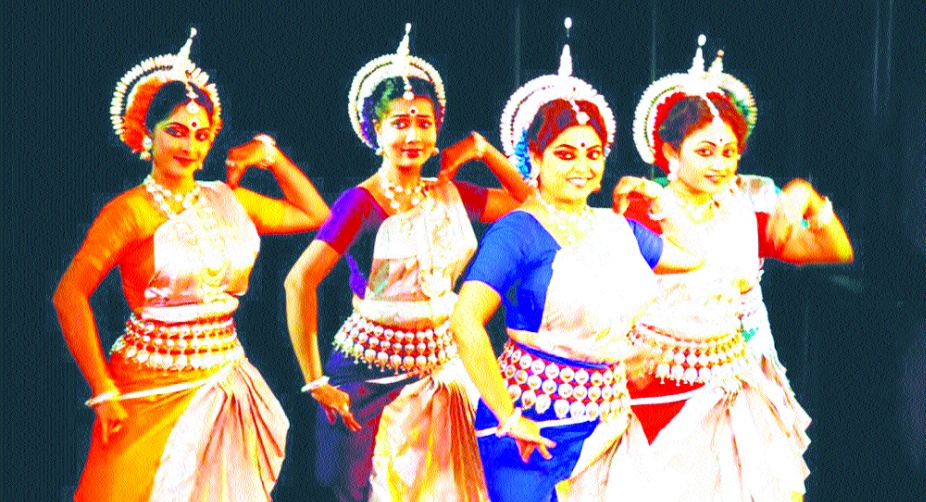
A unique evening of Odissi dance performances in Kolkata
The group called Odissi Forum is a collection of Odissi
practitioners who meet regularly to exchange and share the year long creative
work each one has produced. The forum provides opportunity to present a few
selected pieces of work either choreographed by them or by their illustrious
gurus. Or sometimes they perform long forgotten pieces and render gems from the
past, sweetly recalled from memory, producing great joy in the process.
Whosoever had conceived this unique concept needs to be congratulated. Other
Indian classical dance forms in Kolkata are catching on to the idea of a common
meeting ground to exchange views and present their art in myriads of ways in a
spirit of positivity.
Recently Odissi Forum celebrated their annual event at Gyan
Manch. Manipuri exponent Guru Kalavati Devi and Goutam De (regional director,
ICCR Kolkata) was the chief guest. The programme started on an auspicious note
with the first performer Labonyo Ghosh paying obeisance to the lord of dance,
who is possessed of many qualities and one who gives salvation to his devotees,
through the Panchakshara Stotram Nagendra Haraya penned by Adi Shankaracharya.
The piece in raag sohini and taal jyoti is a choreographic marvel by the iconic
Odissi dancer, late Srimati Sanjukta Panigrahi, the music for which was
composed by Pandit Bhubaneswar Mishra.
Soon after, Susmita Bhattacharaya’s students from her school
Kalakhetram performed Guru Vandana in raag malika consisting of raagas
bhairavi, bhairav, bairagi and darbari. This marvellous piece was by Ratikant
Mohapatra who has mastered the art of choreography. Bighnaraja composed the
music.
Singhendra Pallavi performed by Kakoli Bose was
choreographed to the music of Pandit Bhubaneswar Mishra in raag singhendra and
triputa taal. Debashish Sarkar sang raag kirwani in atatali taal, which won
half the battle for Maya Bhattacharya’s group Nrittya Sangam. Dwipannita Roy chose the abhinaya piece
Pasyati Dishi from Jaydeva’s Geet Govinda and emoted as best as she could.
A pallavi in raag saveri by the students of Diksha Manjari
was presented under the direction of Dona Ganguly. She delved deep into her collection
to choose this choreographic piece by Guru Kelucharan Mohapatra whose music
composition was by Pandit Bhubaneswar Mishra. There was good synchronisation of
movements and the ten girls who performed were quite a colourful lot.
Poushali Mukherjee’s presentation was again by the
choreographer-music composer duo of Kelucharan Mohapatra and Pandit Bhubaneswar
Mishra. Mukherjee’s disciples were all well-trained and danced with beautiful
aharya abhinaya. But the guru joining the students in the piece perhaps was not
a good choice to make.
Nilanjana Mukherjee chose Arabhi Pallavi choreographed by
Kelucharan mohapatra and her students of Behala Shinjini performed it with gay
abandon. Next up was Matangi Dhyanam by Shayomita Dasgupta with choreography by
Guru Ratikant Mohapatra in raag malika and taals, jyoti and aditaal — the
music was by Pradip Kumar Das. Possessed with a pleasant appearance, Dasgupta
delineated her story with the lovely movements that Odissi is known for. She
bowed to the lotus feet of bejewelled and bedecked Trinayani Matangi.
Priye Charushiley in raag desh and taal jhampa was performed
by Subikash Mukherjee. The particular piece from Geet Govinda needs a level of
internalisation, which takes one to the highest imaginable level where Krishna
declares Radha to be even more superior to him. On the surface it is the story
of a lover who has been disloyal and seeks to be forgiven and in the end
manages to melt his lady love but the allegory tells a different story. It was
choreographed by Kelucharan Mohapatra while music was by Pandit Bhubaneswar
Mishra. Mukherjee did justice to the piece but to master it takes a lifetime’s
work, where the bhakta has to grow spiritually.
Durga, by the students of Chhanda Manjari displayed the
multifaceted personality of the Goddess. It was directed by Rajneeta Mehra, who
was herself in the role of Durga. She has acquired a fair degree of the form’s
perfection. The choreography was by Kelucharan Mohapatra while the music was by
Debasish Sarkar. Megh Pallavi by Reshmi Basu was again choreographed by Guru
Keluchran Mohapatra while the music was by Pradip Kumar Das. Shabda Nrittya
performed by Krishnendu Roy and his group was choreographed by Sharmila Biswas.
The music of the piece was by Ram Hari Das — it was in raag shankara and taal
ektaali. Krishnendu Roy was in the lead role and the description of
Shankara-Shiva was done powerfully. The word sabda signifies sound and that was
displayed with a good sense of rhythm through yogic postures.
Joy Mahesh was a duet dance performance by Piyali Ghosh and
Riddhi Bhattacharya in raag malika and taal malika, choreographed by Ratikant
Mohapatra accompanied by the beautiful vocal rendition of Debisis Sarkar.
Dashavatar, which had earned instant acceptance and appreciation by all
rasikas, a one-of-its-kind choreographic work by Guru Kelucharan Mohapatra, was
performed by Amrita Das and group. The out-of-the-world music for the piece was
by Pandit Raghunath Panigrahi.
Rajib Bhattacharya who has dedicated his life to Odissi presented
his students from Srijan Chhanda in the grand finale of the evening. Moksha or
salvation as the word means is what dance yoga is supposed to bring to a
practitioner. Guru Kelucharan Mohapatra is the choreographer and the composer
was again Pandit Bhubaneswar Mishra.
One noticeable fact of Shraddhanjali was that none of the
aspiring dancers or mentors presented their own choreographic work. Of the 15
performed, almost all were choreographed by the legendary Guru Kelucharan
Mohapatra.
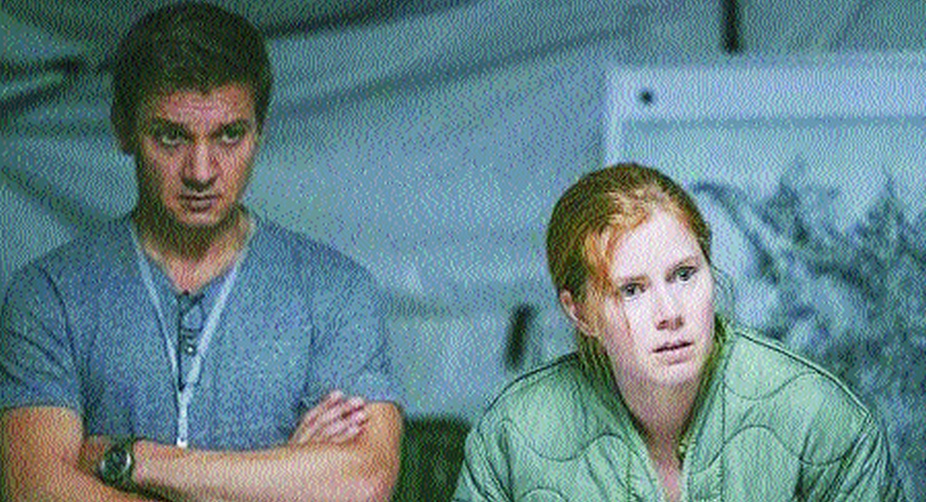
‘Watching Arrival emotionally wrecked me’
The Oscar-nominated actor stars alongside Amy Adams in Denis Villeneuve’s movie about extraterrestrials landing across the globe, in the most intelligent sci-fi movie you will see this year.
‘I never anticipated any of that stuff,” shrugs Jeremy
Renner, talking about his mid-life career boom. These past five years, the
45-year-old has become a Hollywood blockbuster staple. Playing the
straight-shooting Hawkeye in Marvel’s Avengers films, he’s also a regular in
the Tom Cruise Mission: Impossible franchise and played the lead in The Bourne
Legacy — a spin-off from the Jason Bourne/Matt Damon films. “Physically, I was
a late bloomer as a child,” he winks.
Renner had been acting long before these huge-scale movies
came his way. After making his first appearance in a best-forgotten high-school
comedy Senior Trip in 1995, he came to attention as serial killer Jeffrey
Dahmer in 2002’s Dahmer, then for roles in North Country and The Assassination
of Jesse James by the Coward Robert Ford, alongside Brad Pitt. Two Oscar
nominations for Kathryn Bigelow’s war drama The Hurt Locker and Ben Affleck’s
crime caper The Town swiftly followed.
Now he’s back in Denis Villeneuve’s sci-fi Arrival, a canny
mix of blockbuster and arthouse that begins as 12 alien spacecraft land across
the globe. He plays Ian Donnelly, a theoretical physicist and mathematician,
who teams up with Amy Adams’s linguistics professor to make first contact with
extraterrestrials inside the shell-like craft that arrives in Montana. More
Close Encounters than Independence Day, it’s the smartest sci-fi you’ll see
this year.
Dealing with issues of time, loss and memory, with rather
more intelligence than most of its kind, Renner admits that when he first saw
it, it left him in bits. “It emotionally wrecked me. I don’t know if I’ll watch
it again.” Dressed in a black
short-sleeved shirt and a pinstriped trousers, with his sinewy arms and
buzz-cut hairstyle, he doesn’t look the sort to get teary-eyed over a sci-fi
movie.
Aside from Avengers — he’ll be returning as Hawkeye for
Infinity War, due in 2018 and hasn’t really tackled sci-fi before. Is this a
genre that’s always intrigued him? “I like to call it science non-fiction,” he
replies. “There’s a certain reality and plausibility to stuff like this that
makes sense to me. I love that. Yeah, I like this genre, sure. If it’s based in
human emotion, and the themes are great, it’s something I can connect to
because I still play a human being. That’s all that matters to me.”
While Arrival certainly doesn’t have the budget of a Marvel
movie, what Villeneuve and his team did visually impressed Renner. “I didn’t
think it would look as big and expansive as it does,” he says — understandable,
given much of the film sees him and Adams venture inside the aliens’ craft.
“We’re in a black box with a white screen and wearing a Hazmat suit. That felt
like it for the bulk of the movie.” He chuckles. “Not to take the sexiness out
of filmmaking, but filmmaking usually isn’t very sexy.”
Even if sci-fi hasn’t dominated his career, Renner was born
in Modesto, the same California town that Star Wars creator George Lucas came
from. Lucas shot his 1950s-set teen classic American Graffiti there, which
became something of a thing for Renner and his friends. “When I was 16, we’d
get in the car and cruise up and down that whole thing.” In keeping with the
Americana theme, Renner’s father ran a local bowling alley in the town. Beyond
playing drums in a high-school band, he was at a loss for career plans. “I
didn’t want to go to college and spend a lot of money and not know what the
heck I wanted to do.” Instead, he went to Modesto Junior College “to fumble
around and figure it out”, taking courses in computer science and criminology.
“I was all over the map,” he says. “Then I took an acting class. I thought
‘I’ll give it a go’. I fell in love with it.”
With music still a passion, he also runs a house-renovating
business and indeed there’s something blue-collar about him on screen, a
no-nonsense, vanity-free, get-the-job-done actor. “For me, I like to give
directors problems,” he says. “Like good problems in an editing room! I want to
give them choices like ‘Oh, that’s a good idea and so is that!’ That’s my
challenge. I want to give the director many problems.”
Where did this come from? It sounds like an interesting
tactic. “I’m the oldest of seven kids and I just give a lot of people
problems!” he says. “I think that’s my job. It’s my birthright to give people
problems and not always bad problems. Problems can be good, right? It’s just
born in me. It’s in my bones!” Acting is all about offering up choices, he
says. “The idea is that we’re giving. I feel like that’s my job to give.”
His next set of problems, so to speak, is Wind River, the
story of a murder on a Native American reservation. “It’s a beautiful, small,
insular film like I thought Arrival would be. It’s very well-written. It’s hard
to pitch. I’ll talk about it when it’s time for it to come out. But I’m glad
Denis pushed me to go do it.” (The film is the directorial debut of Taylor
Sheridan, who wrote Villeneuve’s Sicario.)
Beyond that, his focus is looking after his three-year-old
daughter, Ava (Renner was briefly married to Ava’s mother, Canadian model Sonni
Pacheco, before it ended in divorce in 2014). “Being a father is number one,”
he says. “That’s what keeps me focused, and not worrying about whether movies
may or may not come my way.” Is he planning to show her any of his films? He
shakes his head. “I’m going to keep her away from anything I do.”
Renner softens immediately when he starts talking about his
daughter– not least that she has a pair of Avengers pyjamas given to her that
feature his likeness. “The only thing she knows is the guy on her pyjamas kinda
looks like Daddy!” It must be a little confusing for a child to see her father
next to the Hulk and Thor. “She’s never seen the movie,” he smiles, “but she
says, ‘The guy with the bow and arrow looks like Daddy!’ I say, ‘No, that’s
Hawkeye!’”
The Independent
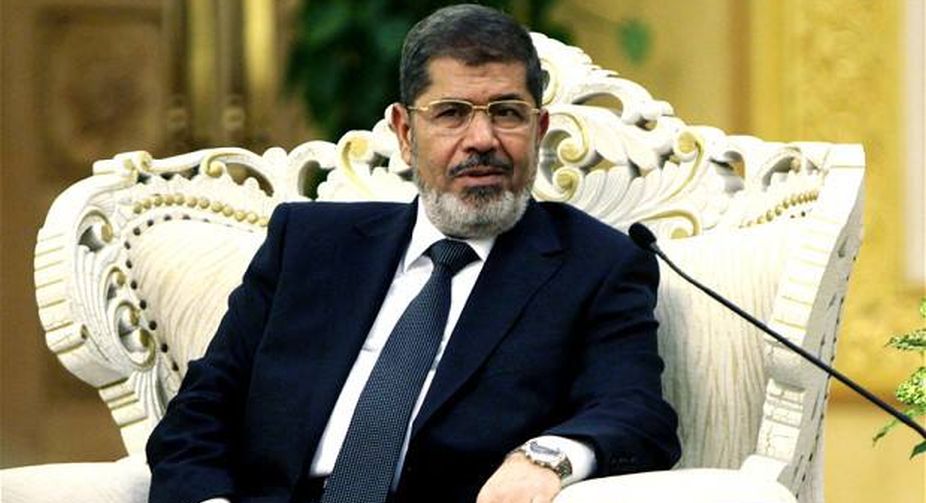
Breather for Morsi
Photo: Facebook
Egypt’s Muslim Brotherhood has scored
a moral victory with Tuesday’s verdict of the Court of Cassation — one of the
country’s highest courts — to overturn the death sentence awarded to Mohamed
Morsi, the first democratically elected President. Ironically enough, he was in
2013 ousted by the military — a relic of the Mubarak era. Much as he has been
spared the gallows, reports from Cairo suggest that he is likely to remain in
prison indefinitely.
The annulment of his death sentence —
as well as the sentences against five other leaders of Muslim Brotherhood — underscores
the government’s circumspection on executing leaders of the entity, which still
maintains a measure of public support for its role in the ouster of President
Hosni Mubarak in 2011. It is quite obvious that the government of Field-Marshal
Abdel Fattah el-Sisi didn’t want to risk a renewed upsurge of violence in the
event of Morsi and his key associates being executed.
The Court of Cassation, an appellate
panel that interprets and applies Egyptian law, has ordered a retrial of a case
in which Mr. Morsi was charged with masterminding a prison break during the
2011 upheaval against Mubarak. Was the trial flawed?
Human Rights Watch and Amnesty
International have argued that the trials carried out by the government of
Sisi, who led the coup against Morsi, have been political in nature and had
violated the rights of thousands of Egyptians.
In whichever manner the retrial pans
out, Egypt’s military dispensation, which seeks to sustain the legacy of the
‘ancien regime’, is acutely aware that Morsi’s execution will shatter the
fragile calm that has been manifest since 2013. It bears recall that Sisi, who
was then commander of Egypt’s armed forces, had led an uprising that deposed
Morsi and the brief interregnum of the Muslim Brotherhood.
Maybe the possible drift towards an
Islamist state has been checked, but the fact must remain that Morsi and his
government did represent a democratically-elected team, verily the raison
d’etre of the Arab Spring.
Sisi led a crackdown against the
group, killing at least 800 people. Executing Morsi is very likely to make him
a martyr to millions of Islamists and ignite yet another bout of violence close
to six years after the Jasmine Revolution. An equally critical issue that will
continue to fester is the mass trial of opponents and prison abuse — both
legacies of the Mubarak regime.
Clearly, it is the anxiety over the
repercussion rather than any desire for reconciliation with the Muslim
Brotherhood, that appears to have afforded a breather to Morsi. Prisoners
awaiting the death penalty in Egypt wear red jumpsuits; for now, the elected —
and deposed — President can shed that attire signalling the end.
–Editorial
Fiat Chrysler recalls vehicles for fuel leak, wiper problems
The most serious recall covers nearly 35,000 Dodge Durango and Jeep Grand Cherokee SUVs worldwide from the 2016 model year.
(Photo: Facebook)
Fiat Chrysler is recalling nearly 89,000 cars and SUVs to
fix possible fuel leaks or problems with windshield wipers.
The most serious recall covers nearly 35,000 Dodge Durango
and Jeep Grand Cherokee SUVs worldwide from the 2016 model year. All have
3.6-liter V6 engines. A fuel tube may have been damaged in manufacturing, and
that could cause a gas leak and fire.
Fiat Chrysler says an employee found a leak in one vehicle
and no fires have been reported. Dealers will replace fuel injector rails and
lower intake manifolds if needed. The company estimates that only 30 vehicles
may have leaks, but the recall is needed to find them.
Owners will be notified by mail starting Dec. 19. In
the meantime, Fiat Chrysler says owners should be alert for fuel leaks and
contact dealers if they spot one.
The other recall covers more than 54,000 Dodge Dart compacts
from the 2016 model year in North America. Electrical voltage spikes caused by
a windshield washer pump can cause short circuits. That can cause the wipers to
fail.
That recall also is expected to begin on December 19.
Tell-tale ‘tweet’
Leaders of the present ruling entity, both in and beyond the government, have made a fine art of taking extreme, provocative, positions on issues concerning accepted norms of freedom and civilised governance, only to either retract their words or have someone more senior “clarify” the position.
This is increasingly being perceived as “testing the waters”, and hence, for example, the supposedly-personal views of the defence minister on the no first-use policy on nuclear weapons created not a few misgivings. Falling into the same dubious category was a “tweet” from the minister of information and broadcasting regarding an “external regulator” for the media.
No doubt that the message issued on National Press Day was quickly deleted and an amended version issued more in line with what the Prime Minister had said on the occasion, but with the one-day ban on a prominent television channel still “pending”, the original tweet is being seen as an insight into the thinking of the I&B minister; and it is little comfort that M Venkaiah Naidu has acquired the image of a “bull in a china shop”.
Memories of VC Shukla and the Emergency were recalled by the initial message that “if the media fails to do self-regulation, there should be another mechanism to do so”.
The subsequent, diluted, version was “if media fails to regulate its own conduct, that would provide a justifiable reason for outside intervention”. The underlying message was clear: the press is free to present its own opinion — provided it projects Modi sarkar in shining light.
A reflection of the same attitude of intolerance that caused the minister to be divested of the parliamentary affairs portfolio — or was he “promoted” to try and pressure the media into toeing the official line?
The insensitive and authoritarian attitude of the present government is manifest in several dimensions — the most recent being a rejection of the hardships unleashed upon the common man by the withdrawal of high-value currency notes. Those woes are being written off as “inconvenience” and people who held the Rs 500 and Rs 1000 notes being painted as tax-evaders, without asking from where did they get those notes?
Most ATMs and banks had issued only those notes for several months but that does not “register” with ministers and spokesmen of the BJP — would any of them dare to carry a portable microphone and spin the same tale to those in the queues that they do in TV studios?
The larger point being a refusal of the government/party to do what it demands of the media — look within, exercise restraint and responsibility. Is the nation hurtling back to the “Indira is India” era? As is suggested by that tell-tale tweet.
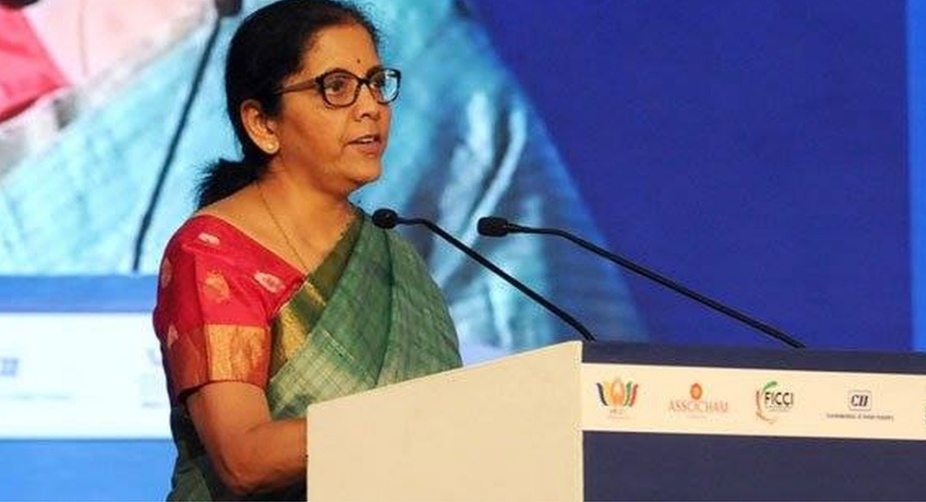
Govt focusing on mfg, services to create jobs: Nirmala
Commerce and Industry Minister Nirmala Sitharaman said that the government is also focusing on imparting skill sets required for both sectors.
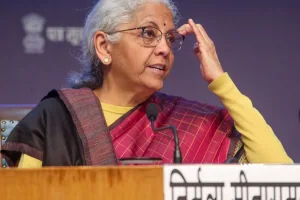
Commerce Minister Nirmala Sitharaman (Photo: Faceb
Government is focusing both on manufacturing and services
sectors to generate jobs and boost economic growth, Commerce and Industry
Minister Nirmala Sitharaman on Friday said.
“It is a two-pronged strategy. We are looking at both
services and manufacturing. There is a strategy for both manufacturing and
services,” the minister said at ET Now’s India Economic Conclave (IEC)
here.
She said the government is also focusing on imparting skill
sets required for both sectors.
The government is investing big time in skill development
and also looking at ways to widen the base of manufacturing to increase its
contribution in GDP to 25 per cent in coming years from the current 13-14 per
cent, Sitharaman added.
“I do not think that we are over-emphasising on
manufacturing, but we need that base to get going with the absorption (of
workforce) at a level which we need,” she made it clear, adding “we
are focusing on manufacturing so that large absorption of labour force can be
brought in”.
She added that the commerce ministry is also putting right
emphasis on the services sector, which contributes over 50 per cent to GDP.
India is progressively moving towards services-dominant
economy and the government is widening the base of that, Sitharaman said.
To a query about growing protectionism and putting across
India’s cause to open up the economies, she acknowledged that it will be a
challenge, but there is also a receptiveness to the fact that the service
sector can only be serviced by countries like India.
“There is a clear understanding that without India and
its services sector, many of the developed economies cannot move,” the
minister added.
India is discussing with all countries to ease the process
of movement of professionals.
“I hope to have some success on that,” she said.
Speaking at the event, Power Minister Piyush Goyal lauded
the demonetisation move of the government.
“You found people waiting patiently for their turn in
queues, even going back home without their turn coming but repeatedly saying
despite media provocation that ‘yes, there is inconvenience, but we are happy
with what this government has done’,” he said.
“That is the change of mindset in India. Indian psyche
is today ready to support bold reforms and take a little inconvenience if it is
for wider national good,” he added.
He said the war against counterfeit notes which used to
support and on which drug money or terrorism used to survive has also been won
by India.