Logo

Controversial ex-CIA chief could be US State Secretary

IANS | Washington |

President-elect Donald Trump will meet former CIA Director David Petraeus furthering speculation about a possible job as Secretary of State, media reports said.
The meeting was announced on Monday by transition team officials, the Washington Times reported.
Petraeus, a four-star general, also served as CIA director from 2011 to 2012 when he resigned after he admitted sharing classified information with his biographer, whom he had an extramarital affair with.
The other top candidates for the job are former Massachusetts Governor Mitt Romney and former New York Mayor Rudy Giuliani, who have been met with criticism.
Asked if the president-elect was nearing the end of his search for a secretary of state, a spokesman said,”He’ll complete that when he’s ready. He’s going to pick the person that he thinks will do the absolutely best job.”

Controversial ex-CIA chief could be US State Secretary

IANS | Washington |

President-elect Donald Trump will meet former CIA Director David Petraeus furthering speculation about a possible job as Secretary of State, media reports said.
The meeting was announced on Monday by transition team officials, the Washington Times reported.
Petraeus, a four-star general, also served as CIA director from 2011 to 2012 when he resigned after he admitted sharing classified information with his biographer, whom he had an extramarital affair with.
The other top candidates for the job are former Massachusetts Governor Mitt Romney and former New York Mayor Rudy Giuliani, who have been met with criticism.
Asked if the president-elect was nearing the end of his search for a secretary of state, a spokesman said,”He’ll complete that when he’s ready. He’s going to pick the person that he thinks will do the absolutely best job.”

Controversial ex-CIA chief could be US State Secretary

IANS | Washington |

President-elect Donald Trump will meet former CIA Director David Petraeus furthering speculation about a possible job as Secretary of State, media reports said.
The meeting was announced on Monday by transition team officials, the Washington Times reported.
Petraeus, a four-star general, also served as CIA director from 2011 to 2012 when he resigned after he admitted sharing classified information with his biographer, whom he had an extramarital affair with.
The other top candidates for the job are former Massachusetts Governor Mitt Romney and former New York Mayor Rudy Giuliani, who have been met with criticism.
Asked if the president-elect was nearing the end of his search for a secretary of state, a spokesman said,”He’ll complete that when he’s ready. He’s going to pick the person that he thinks will do the absolutely best job.”

‘Big bang’ reform?

Environmentalists have scored over economists. While the latter demand ‘big bang’ reforms to kick-start the economy (demonetisation is not one of them).

Statesman News Service | New Delhi |

Environmentalists have scored over economists. While the
latter demand “big bang” reforms to kick-start the economy (demonetisation is
not one of them), those batting the pathetic air quality in the National
Capital Region have secured supporting fire, courtesy the Supreme Court’s order
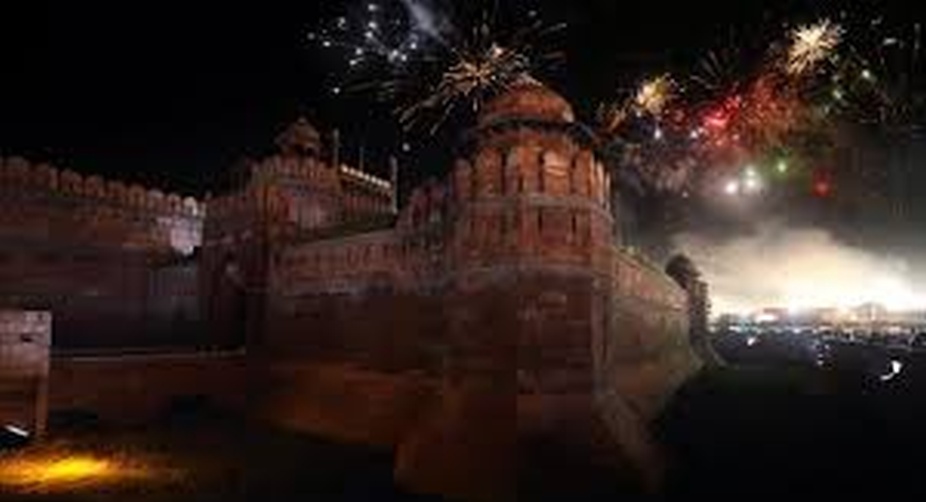
suspending licences to sell “big bangers” – all fireworks to be accurate – to
contain a major contributor to the “Smog Emergency” choking Delhi and its
neighbourhood.

While the fine print of the order requires judicial
interpretation and test, popular perception is that a ban has been imposed,
albeit temporary, on the use of crackers at religious festivals, marriage
celebrations, etc. Which would be appreciated by the thousands suffering
breathing difficulties in crisis conditions that have been “pushed” from front
pages by hardships following the cash-crunch. Maybe the people have themselves
to blame for restrictions imposed on a traditional form of festivity – “education” projects in schools and appeals to the public made little impact,
as the post-Diwali conditions would confirm.

Now much will depend on how the police and other agencies,
including the subordinate judiciary, give effect to the very detailed and
articulate order of the apex court. The wedding season still has the potential
to trigger much ignoring of judicial orders in order to keep popular sentiments
alive. And it must be remembered that using fireworks has not been explicitly
prohibited – can someone purchase them from beyond the NCR and bring them
“home” for a little “fun”? Another moot question remains why the judiciary did
not crack down earlier: the petition was before it, experts were expressing
apprehensions of troubled times ahead. Did the courts follow the authorities in
backing-off from open confrontation with religious customs? Under the
prevailing atmospheric conditions, little ice will be cut by the fireworks
traders’ grouse that they have been singled out as a “soft target”.

Yet there is some validity to the complaint that while they
risk being deprived of their livelihood, only token action has been taken
against farmers burning crop stubble, those plying obsolete motor vehicles, the
disinclination of the petroleum companies to switch to cleaner fuel, the
construction industry for not taking dust-control measures and so on. All that
points to the failure of the central and state governments to formulate and
implement an air-pollution control regime well before the onset of winter, and
dovetailing experiments like shutting down the Badarpur power plant and the
odd-even scheme for motor vehicles into a comprehensive programme: rather than
knee-jerk reactions too little, too late, and only after hospitals report a
huge increase in patients suffering from respiratory problems. Maybe that is
because clean air has yet to become a major election issue in Punjab and UP – though both have stakes in the NCR.

Avalanche triggered by quake kills one in Nepal

IANS | Kathmandu |

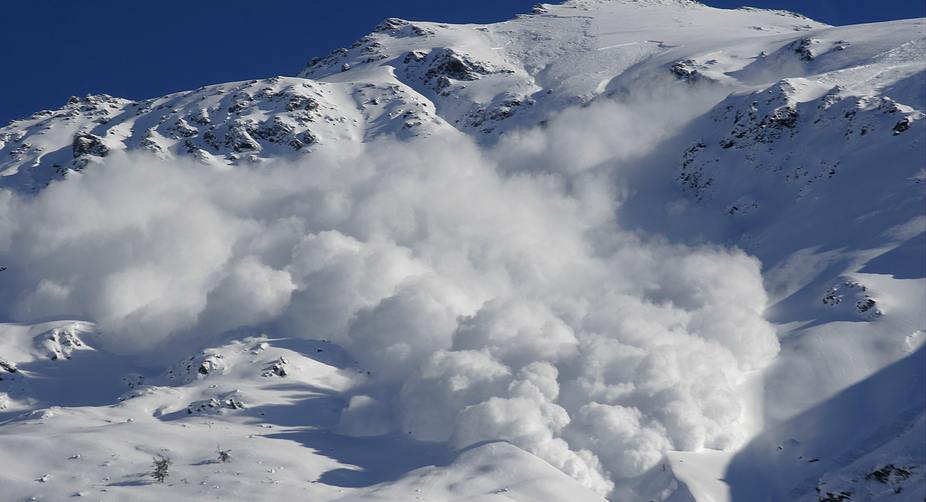
 A high altitude worker was killed and a British mountaineer was injured in an avalanche triggered due to an earthquake early on Monday on Nepal’s Mt. Amadablam, an official said.
Lakpa Thindhu Sherpa, 45, was killed when he was hit by a rock in the head, Umesh Pandey, Chief District Officer of Solukhambu district, told media.
Sherpa is a Nepali citizen while the British national was identified as Ciaran Hill.
“The injured British mountaineer has been airlifted to Kathmandu and is undergoing treatment at a local hospital,” Pandey said.
The avalanche hit when the expedition team was heading from camp III to camp II.
Nepal was hit by an earthquake measuring 5.6 on the Richter scale on Monday, forcing people to come out on roads in panic.
Some houses reportedly collapsed in Kaski district following the quake.
The country has been witnessing a series of aftershocks followed by last year’s deadly earthquake on April 25 that killed nearly 9,000 people in the Himalayan nation.
The epicentre of the quake was on latitude 27.79 north and longitude 86.5 east, according to the National Seismological Centre (NSC).
The tremors were felt in Kathmandu, mid- and east Nepal as well as the northeast region in India.

Avalanche triggered by quake kills one in Nepal

IANS | Kathmandu |

 A high altitude worker was killed and a British mountaineer was injured in an avalanche triggered due to an earthquake early on Monday on Nepal’s Mt. Amadablam, an official said.
Lakpa Thindhu Sherpa, 45, was killed when he was hit by a rock in the head, Umesh Pandey, Chief District Officer of Solukhambu district, told media.
Sherpa is a Nepali citizen while the British national was identified as Ciaran Hill.
“The injured British mountaineer has been airlifted to Kathmandu and is undergoing treatment at a local hospital,” Pandey said.
The avalanche hit when the expedition team was heading from camp III to camp II.
Nepal was hit by an earthquake measuring 5.6 on the Richter scale on Monday, forcing people to come out on roads in panic.
Some houses reportedly collapsed in Kaski district following the quake.
The country has been witnessing a series of aftershocks followed by last year’s deadly earthquake on April 25 that killed nearly 9,000 people in the Himalayan nation.
The epicentre of the quake was on latitude 27.79 north and longitude 86.5 east, according to the National Seismological Centre (NSC).
The tremors were felt in Kathmandu, mid- and east Nepal as well as the northeast region in India.

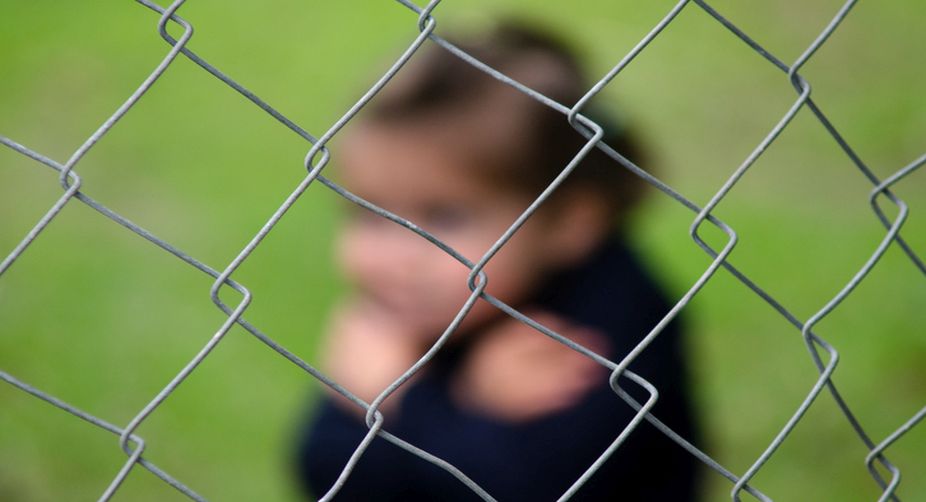
Congress demands CBI probe in Bengal child smuggling racket

IANS | Kolkata |

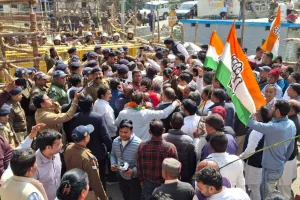
Congress’ West Bengal unit on Monday demanded a CBI probe into the inter-state child smuggling racket in which a total of 16 people have been arrested in a week.
“We appeal to the state government to launch a CBI (Central Bureau of Investigation) probe in this matter. Private nursing homes have mushroomed across the state. Such incidents are injustice to our children,” said state unit President Adhir Ranjan Chowdhury.
“We want to know from the state government where there is any monitoring system regarding private nursing homes in the state,” he said.
The CID busted the smuggling racket when they conducted a raid in Baduria-based Sohan Nursing Home in North 24 Parganas district on November 21 and recovered three babies.
A total of 10 newborn baby girls were recovered from a private mental asylum in south Kolkata, as the probe into the sensational child smuggling racket in Bengal unearthed two skeletons and murkier details.
A total of 16 people have so far been arrested from different places of Kolkata and districts.

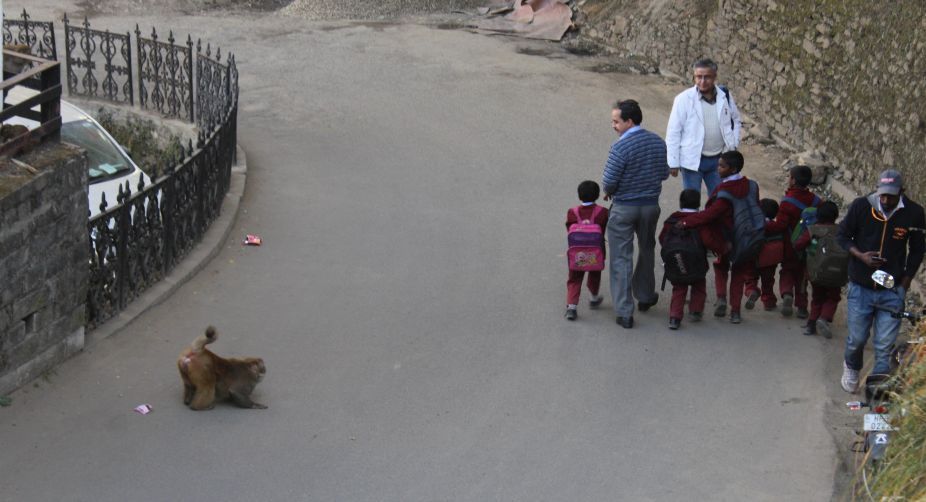
Centre may not allow Himachal to send monkeys to Northeast

Sanjeev Kumar | Shimla |

The Environment and Forest Ministry may not allow Himachal government to trans-locate monkeys to three Northeastern states–Nagaland, Arunachal Pradesh and Mizoram.
“Trans-location of monkeys from Himachal to other states is not the solution to curb the monkey menace,” the ministry said in its communique to Mumbai-based animal rights NGO, Humane Society International (HSI), which had protested and brought the HP government’s move to the notice of the ministry.
The state government, with a view to curbing resentment among farmers in the wake of failures to check monkey menace in the state, had contemplated to transport monkeys to other states.
The state Wildlife Department was even holding bilateral talks with the government of these three states on the issue.
Talking to The Statesman, Chief Wildlife Warden, HP, S S Negi said that the government is still in bilateral talks with Northeastern states on trans-location of monkeys. “We have no knowledge of the ministry’s stance.”
It may be mentioned that the Humane Society International (HSI) had objected to the move on translocation of monkeys, contending that it would only aggravate human-monkey conflict.
It had also written to the HP government in this regard.
The NGO had argued that there are lethal effects of capture, caging and a long journey from Himachal Pradesh to Northeastern Indian states on the monkeys and the move needs to be reconsidered.
The HIS had said, “It is now widely recognized by wildlife veterinarians that every wild creature that is the subject of translocation or rehabilitation release must not be regarded as a single animal. But rather as a package containing an assortment of potentially dangerous viruses, bacteria, protozoa, helminths and arthropods, any of which may become pathogenic in new situation involving stressed individuals in a changed environment”.
The NGO had even suggested to the Wildlife Department to opt for sterilization of monkeys using immuno-contraception, a method that was being pursued by the Wildlife Institute of India.
The immuno-contraception method employs the immune system of an animal to create contraception.
The proposal of the state government was already in soup as the Nagaland government had requested the government to provide habitat to elephants in the state in lieu of relocation of monkeys in the Northeastern state.

Rajnath to lead Indian team at Fidel Castro’s funeral

PTI | New Delhi |

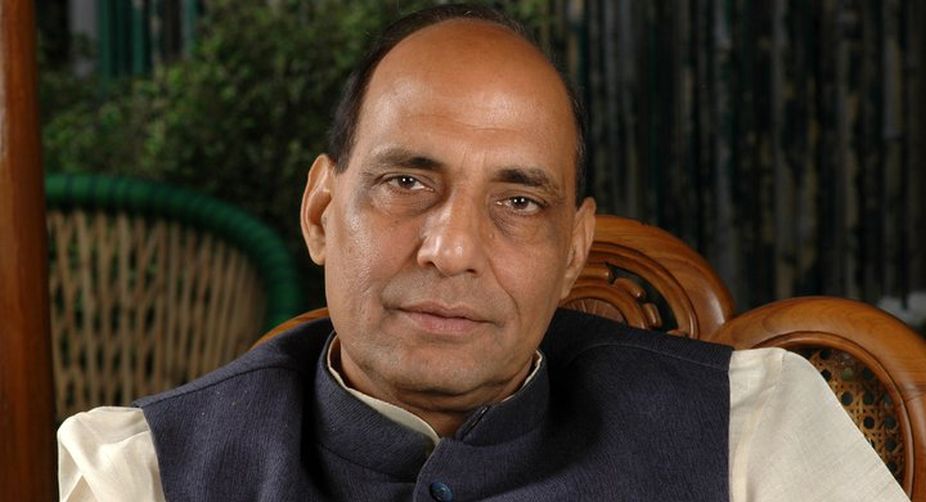
Home Minister Rajnath Singh will lead the Indian delegation at the funeral of Cuba’s revolutionary leader Fidel Castro.
The delegation is likely to include leaders from various political parties like Congress, CPI(M), CPI and Samajwadi Party.
The team will leave for Havana on Tuesday and is expected to return on Thursday evening, official sources said.
The composition of the delegation is still being worked out by the Prime Minister’s Office in consultation with the Ministries of the External Affairs and Home.
After two days of commemorations in Cuba’s capital Havana, Castro’s ashes will go on a four-day island-wide procession starting Wednesday before being buried in the southeastern city of Santiago de Cuba on December 4.
Castro passed away on November 25 at the age 90, after defying the United States during a half-century of iron-fisted rule and surviving the eclipse of global communism.
Castro, whose 1959 revolution toppled a dictatorship with the promise of bringing justice and equality to his Caribbean island, was a major 20th century figure.

Syria troops retake Aleppo rebel areas, civilians flee

AFP | Aleppo |

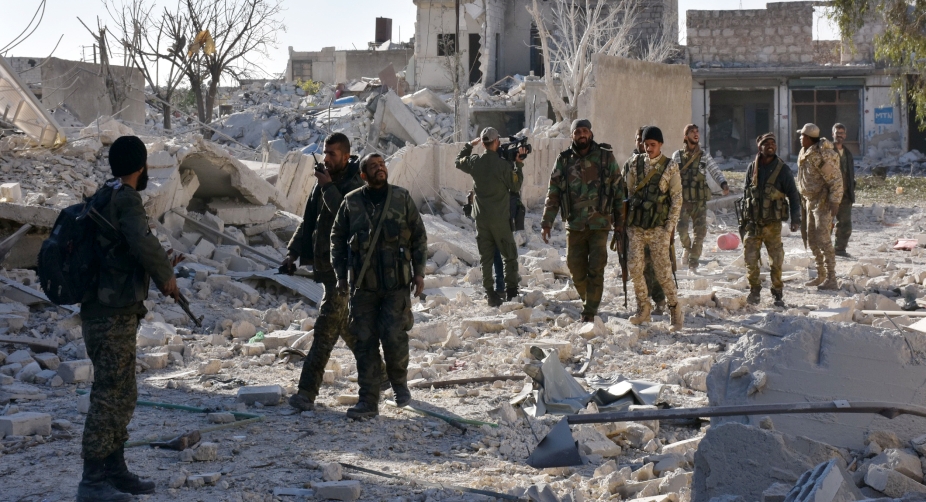
Government forces have retaken a third of rebel-held territory in Aleppo, forcing nearly 10,000 civilians to flee as they pressed their offensive to retake Syria's second city.
In a major breakthrough in the push to retake the whole city, regime forces captured six rebel-held districts of eastern Aleppo over the weekend, including Masaken Hanano, the biggest of those in eastern Aleppo.
On Sunday, the 13th day of the operation, they also took control of the adjacent neighbourhoods of Jabal Badra and Baadeeen and captured three others, the Syrian Observatory for Human Rights said.
Inzarat, Al-Sakan al-Shaabi and Ain al-Tall have all returned to regime hands and government forces have made large forays into Sakhur and nearby Haidariya, the monitor said.
It said government forces are “in control of most of the northern part” of Aleppo.
“The rebels have lost at least 30 percent of the territory they once controlled in Aleppo,” Observatory chief Rami Abdel Rahman said.
The regime gains came as its aircraft pounded rebel positions and amid heavy clashes between the opposition and forces loyal to President Bashar al-Assad in the strategic Sakhur district.
Masaken Hanano was the first district the rebels took in the summer of 2012 in a move that divided the city into a rebel-held east and a regime-controlled west.
Around 250,000 civilians besieged for months in the east have faced serious food and fuel shortages.
The Observatory said that nearly 10,000 civilians had fled east Aleppo overnight Saturday — at least 6,000 to the Kurdish-controlled northern district of Sheikh Maksoud, with the rest fleeing to government-held areas.
“It is the first exodus of this kind from east Aleppo since 2012,” Abdel Rahman said.
Syrian state television broadcast images of a crowd of civilians including women and children gathered around green buses that it said had come to pick them up in Masaken Hanano.
One woman was shown pushing a stroller and many others carried plastic bags on their heads as bombardment was heard in the distance.
Official media said they were taken “by the army to safe areas”.
Yasser al-Youssef, from the rebel group Nureddin al-Zinki, said opposition fighters were consolidating their positions in Sakhur.
Sakhur lies on a stretch of just 1.5 kilometres between west Aleppo and Masaken Hanano, now both regime-controlled.
If the regime takes control of Sakhur, east Aleppo would be split in two from north to south, dealing a further blow to the armed opposition.
The latest regime push comes after days of intense bombardment on the east, which has been pounded with air strikes, shelling and barrel bombs.
On Saturday, dozens of families fled Sakhur and Haidariya as regime raids and artillery killed at least 18 civilians in several districts, the Britain-based Observatory said.
At least 225 civilians, including 27 children, have been killed since the government's latest assault on east Aleppo began on November 15.
Rebel forces also intensified rocket attacks on western districts overnight, killing at least four civilians and wounding dozens, the Observatory said.

Demonetisation may exacerbate public health crisis

IANS | New Delhi |

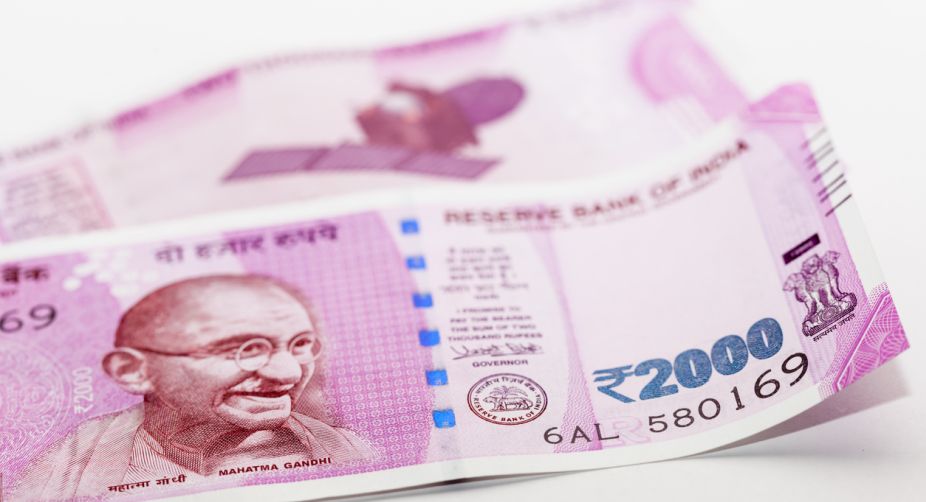
A spate of deaths due to hospitals refusing to accept invalid currency notes has come to attention after Prime Minister Narendra Modi’s announcement invalidating 86 per cent of India’s currency on November 8.
Unlike government-run hospitals, private hospitals have not been allowed to use defunct Rs.500 and Rs.1,000 notes, potentially affecting 58 per cent of Indians in rural areas who opt for private healthcare (68 per cent in urban areas), according to National Sample Survey Office (NSSO) data.
In Noida, an infant died after a hospital reportedly asked for an advance of Rs.10,000 and then refused to take old currency notes.
An 18-month old baby died in Visakhapatnam as the parents didn’t have money to buy medicines, and a year-old infant in Mainpuri, Uttar Pradesh, died after reportedly being denied treatment by a local private doctor as his parents didn’t have money to pay for his treatment.
Despite multiple requests, Finance Minister Arun Jaitley said on November 17 that private hospitals would not accept old notes because that would encourage misuse of old currency.
Patients who had travelled away from their home states were particularly caught unaware by the move and faced a serious shortage of cash.
IndiaSpend met 52-year-old Mahavir Malhar and his wife from Jharia, Jharkhand, staying on the footpath outside Mumbai’s Tata Memorial Hospital, a leading referral hospital for cancer patients nationwide.
A labourer who earned Rs.200 every day before coming to Mumbai to address his wife’s ear cancer, Malhar had no usable cash.
“We do not have cash to buy meals or even tea,” said Malhar.
Although treatment at Tata Memorial Hospital is free, and the hospital accepts old notes, staying in Mumbai is expensive for the couple.
Since the note ban, their sons, also labourers, have not been able to send them money because of long lines at local banks.
“They are also daily wage earners and standing in a line for the whole day means loss of income,” said Malhar.
The couple now depends on the free meals provided by the hospital and charitable trusts.
As noted, more than half of India’s population depends on private healthcare, despite the fact that private healthcare cost the poorest 20 per cent of Indians more than 15 times their average monthly expenditure, according to a 2014 NSSO survey.
Other markers of India’s dependence on private healthcare:
– Up to 86 per cent of the rural population (717 million people) and 82 per cent of the urban population (309 million people) are without health expenditure support.
– Indians spend eight times more in a private hospital than a government hospital, according to an analysis of National Health Accounts (NHA) 2013-14 data by The Hindu.
The report estimated that households spent Rs.8,193 crore in government hospitals, an eighth of the Rs.62,628 crore spent in private hospitals.
– As much as 69 per cent of health expenditure in India is private (out-of-pocket)- the highest proportion in the world- according to NHA data. Out-of-pocket expenditure is the share of expenses that patients pay to the healthcare provider without third-party insurance or government-subsidised treatment.
– Of 930,000 doctors in the country, only 106,000 work for the government. This means there is one government doctor for every 11,528 people, according to the National Health Profile 2015 report.
– About 81 per cent sanctioned posts of specialist medical professionals in community health centres were lying vacant, according to a 2015 rural health statistics report.
Therefore, the government’s decision to not allow private hospitals to accept old notes will restrict access to healthcare for a significant section of Indians.
Post-demonetisation, the Maharashtra government’s toll-free 108 helpline- the 24×7 emergency ambulance services number- is also reporting complaints against private hospitals refusing to accept cheques.
Lack of cash is making patients prioritise their cash needs, and health issues tend to be pushed back on family priority lists, reported private practitioners from urban centres.
“There has a been a drop of 25-30 per cent in patients coming to our private out-patient (OPD) department,” said Manish Motwani, bariatric surgeon at Aastha Healthcare, Mumbai.
He attributed the drop to a fall in non-emergency cases.
“There was a 40 per cent drop in my patients in the OPD the next day of demonetisation; now the drop is of 10-15 per cent, but some of my other colleagues are seeing a drop of 50 per cent in the number of hospitalisations,” said Pradeep Gadge, a Mumbai diabetologist.
Many doctors said they were allowing patients known to them to pay later.
There has also been an increase in the number of patients in government hospitals, where treatment is largely free or at nominal charges.
“We have seen an increase in the number of patients in our primary healthcare centre since the currency ban,” said Amol Bhusare, medical officer at Pallam, a small town east of Mumbai.
Bhusare said two of his patients who had gone to a private diagnostic centre for a CT Scan at nearby Nanded city were turned back for bringing old notes.
Akhilesh Yadav, Chief Minister of Uttar Pradesh, requested Modi and Jaitley to allow Rs.500 and Rs.1,000 notes at private hospitals and medicine shops till November 30.
“As Rs.500 and Rs.1,000 were banned in haste, those undergoing treatment at hospitals and nursing homes are facing a lot of problems,” said Yadav.
“I, therefore, request you to intervene and allow private hospitals, nursing homes and medicine shops to accept these notes till at least November 30.”
A few hospitals have pleaded that they be allowed to accept older currency. Mumbai’s Bhatia Hospital wrote to the Prime Minister the day after his initial note-ban announcement.
“We are one of the oldest charitable hospitals in Mumbai and requested (that) at least charitable hospitals be allowed to accept older notes,” said Rajeev Boudhankar, CEO of Bhatia Hospital.
He said no patient has been turned away.
They are accepting payments through other means, including cheques, although three cheques have bounced.


Big B thanks Modi for acknowledging contribution

IANS | Mumbai |

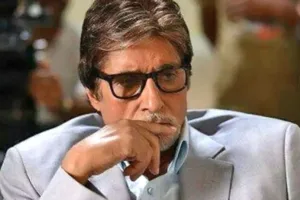
Megastar Amitabh Bachchan has thanked Prime Minister Narendra Modi for acknowledging his contribution to ‘Swachh Bharat Abhiyan’ (Clean India Mission). 
Modi on Sunday shared an audio file on Twitter, where he is heard reciting a poem by Amitabh. 
“A special message from Amitabh Bachchan on Swachh Bharat,” Modi tweeted. 

The 74-year-old actor re-tweeted to thank Modi. 
“My most gracious and respectful thanks to the honourable Prime Minister Mananiya Shri Narendra Modi-ji, for acknowledging my small contribution,” Big B tweeted.

I’ve learnt to be wiser, stronger, says Prateik

IANS | Mumbai |

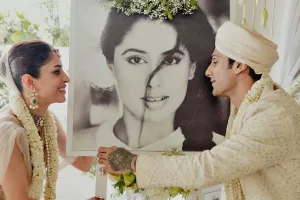
Actor Prateik Babbar, who turned 30 on Monday, says he has learnt to be stronger and wiser with age. 

Prateik said: “I have matured a lot as a person. I have started accepting a lot of things. I have learnt to accept and adjust with things and be happy with what I have. I had my ups and downs, and I have done many mistakes, so I am just learning from them. I have learnt to be wiser and stronger.” 
The son of late actress Smita Patil and actor-politician Raj Babbar started his acting career with Jaane Tu… Ya Jaane Na in 2008 and went on to do films like Dhobi Ghat and Ekk Deewana Tha
He said: “I know it’s a very symbolic day when you turn 30. Life just begins at this age for most of the people. Yes, it’s symbolic. So, I would like my family to be around more than anything else.” 
“I don’t celebrate as such. The maximum I do is spend time with my family…my mother’s sister and my grand-parents. Most of my birthdays are very quiet,” he said.

Left Front-sponsored bandh begins in West Bengal

PTI | Kolkata |

The state-wide 12-hour strike called by the Left Parties to protest the demonetisation of Rs.1000 and Rs.500 notes began in West Bengal on Monday, with normal life visibly unaffected in the first few hours.
Government buses and other private vehicles were seen plying on the road.
“So far there has been no major incident, except a few small ones in the districts,” a senior police official said.
The strike call by the Left Front has been opposed by the ruling TMC in West Bengal.
“We oppose bandhs. We will take out a protest march (against demonetisation) on Monday,” state Chief Minister Mamata Banerjee had said.
The TMC said it was against putting people to more hardship when they are “already facing a lot of problems owing to the scarcity of cash”.
Instead, the TMC will take out a rally from College Square to Esplanade on Monday to protest against demonetisation, TMC general secretary Subrata Bakshi had said.
The state government has ordered all its employees to attend offices on Monday and Tuesday.
Exceptions would be made only in case of bereavement, maternity leave, hospitalisation and other 'genuine reasons', a circular issued by the state finance department said.
Over 3,000 police personnel have been deployed in the metropolis to tackle any untoward incident, Kolkata Police Additional Commissioner of Police (III) Supratim Sarkar had said.

Rupee sheds 11 paise against Dollar in early trade

PTI | Mumbai |

The Rupee weakened by 11 paise to 68.57 against the Dollar in early trade on Monday at the Interbank Foreign Exchange market on month-end demand for the American currency from importers.
Forex dealers said a lower opening of the domestic equity market also weighed on the Rupee but the Dollar’s weakness against some currencies overseas capped the fall.
The Rupee had rebound from a 39-month low by rising 27 paise at 68.46 on Friday, supported by aggressive selling of the American unit by exporters and banks.
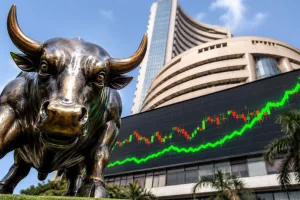
Meanwhile, the benchmark BSE Sensex fell 133.12 points or 0.50 per cent to 26,183.22 in early trade on Monday.

Atletico Madrid bounce back at Osasuna

“It was a very important game for us ,” said Atletico coach Diego Simeone after the game.

AFP | Madrid |

Atletico Madrid got back to winning ways and moved back into the top four as goals from Diego Godin, Kevin Gameiro and Yannick Carrasco ensured a comfortable 3-0 win at Osasuna.
Atletico had suffered back-to-back La Liga defeats for the first time in four years at the hands of Sociedad and Real Madrid in recent weeks.
However, they never looked in danger after Jan Oblak had saved Roberto Torres's penalty with the scores still level at 0-0.
Godin nodded home Koke's corner nine minutes before half-time and almost straight from kick-off Angel Correa released Gameiro to double Atletico's lead.
Substitute Carrasco rounded off the scoring with his eighth goal of the season in stoppage time.
“It was a very important game for us for the way in which we ended up playing,” said Atletico coach Diego Simeone.
Atletico leapfrog Villarreal, who earlier lost 2-0 at home to Alaves, into fourth and move back to within nine points of Real Madrid.
“Oblak was decisive with the penalty save and after Godin's goal we felt more comfortable,” added Simeone.
“In the second half we were a lot more organised and had more of a collective effort which allowed us to kill off the game.”
Granada remain winless and rooted to the bottom after a 3-1 defeat at Celta Vigo.

La Liga: Messi rescues point for Barcelona against Real Sociedad

The Argentine scored eighth La Liga goal of the season to save the Catalans from an embarrassing defeat.

SNS | New Delhi |