Logo

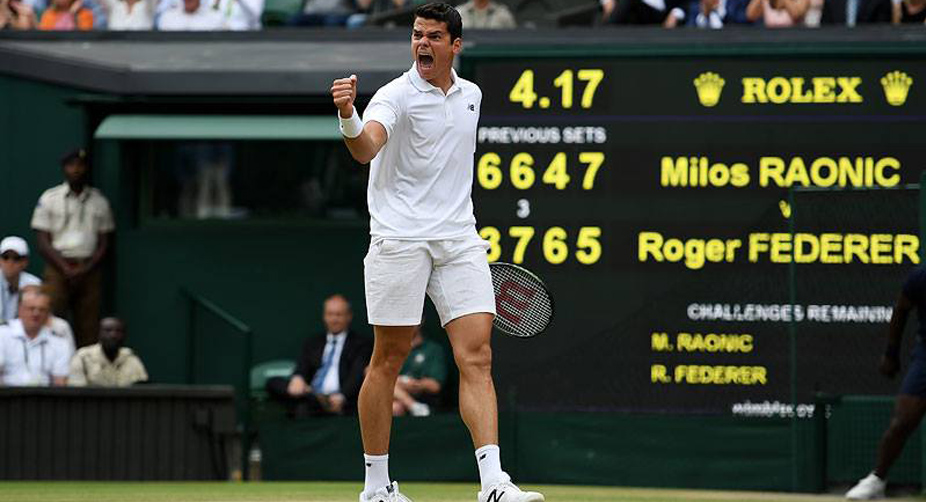
Milos Raonic splits with coach Moya despite record year

The big-serving Canadian was runner-up to Andy Murray at Wimbledon in July.

AFP | Paris |

Canada's Milos Raonic parted ways with coach Carloa Moya despite a season which saw him reach his first Grand Slam final and finish at three in the world.
The 25-year-old only teamed up with former French Open champion Moya in January before adding John McEnroe briefly to his coaching set-up in the summer.
The big-serving Canadian was runner-up to Andy Murray at Wimbledon in July.
He also made the semi-finals of the World Tour finals in London before ending 2016 at a career-high three in the world behind top-ranked Murray and Novak Djokovic.
“Thank you to Carlos Moya for helping me tremendously this year, alongside my team, to get the best out of me,” tweeted Raonic.
“Under Carlos' direction and tutelage I have played my best yet to date. We will no longer be continuing our coaching relationship but remain close friends. I wish him all the best.”

Photo

  • img
  • img
  • img
  • img
  • img
  • img
  • img

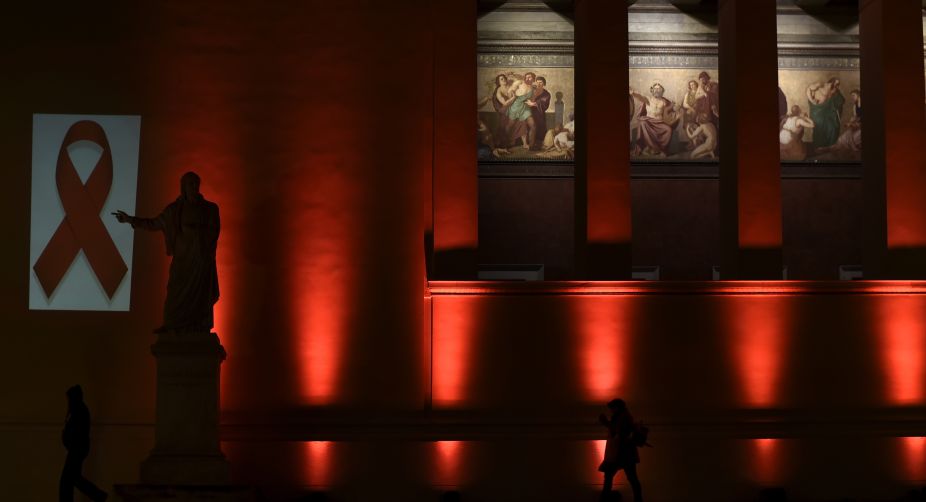
World AIDS Day

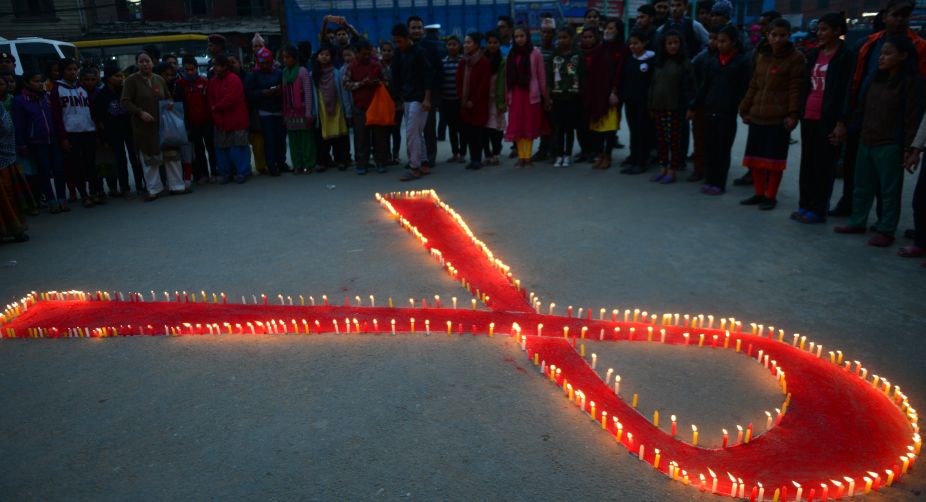
World AIDS Day

MORE Photo STORIES

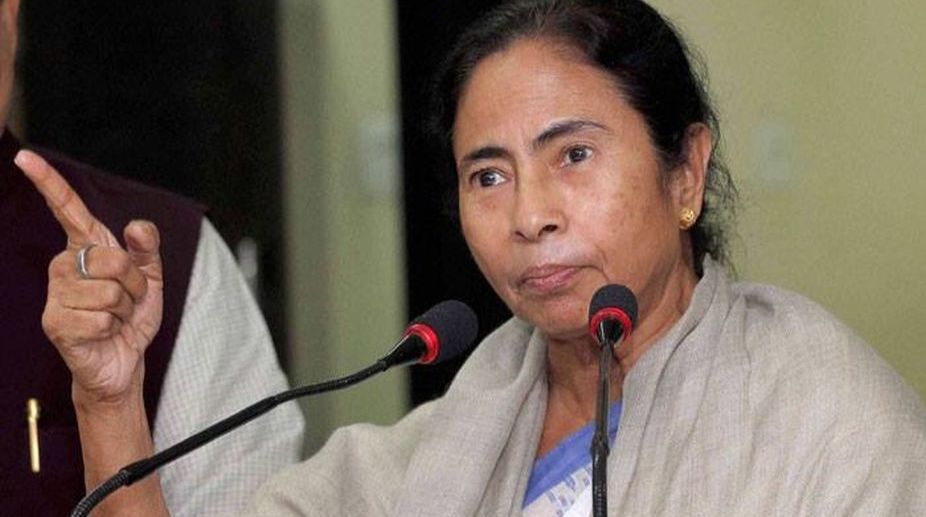
Mamata’s plane denied landing despite less fuel

IANS | Kolkata |

An aircraft with West Bengal Chief Minister Mamata Banerjee on board hovered in the night sky for about 40 minutes on Wednesday due to a technical issue, sources said.
The Trinamool Congress smelt in the incident a conspiracy to “kill” Banerjee for protesting strongly against the Central government's demonetisation initiative.
The plane operated by a private airline took off from Patna an hour late at 7.35 p.m.
Due to technical reasons, before landing at the Netaji Subhas Chandra Bose International Airport here, it hovered over the Kolkata sky and then finally landed around 9 p.m. 
Airport officials said such developments were normal and an every day affair in aviation.
But State Urban Development Minister Firhad Hakim alleged that the Air Traffic Control delayed in giving the green signal to the plane to land despite the “pilot pointing out that it was running out of fuel”.
“This seriously inconvenienced our Chief Minister and other passengers. It is nothing but a conspiracy to kill her as she is going round the entire country to build up a mass movement against demonetisation and is one of the foremost protesters against the central move,” said Hakim, who accompanied Banerjee in the flight.

EFL Cup: Ibra, Martial see Man Utd through, Arsenal crash

United will play Hull City in semis, while Southampton will face-off with Jurgen Klopp’s Liverpool.

AFP | Manchester |

Zlatan Ibrahimovic and Anthony Martial scored twice as Manchester United crushed West Ham United 4-1 in the League Cup quarter-finals, while Arsenal were humbled by Southampton.
United manager Jose Mourinho served a one-game touchline ban after his dismissal for kicking a water bottle during Sunday's 1-1 Premier League draw against West Ham, but his absence had no ill-effects.
Ibrahimovic put United ahead in the second minute and although Ashley Fletcher equalised, Martial's second-half brace restored the hosts' control before the Swede added a fourth goal in added time.
“After the West Ham goal we had 10 minutes where we felt it deeply. West Ham's first shot, they equalise,” said Mourinho, who has overseen United's worst start to a top-flight season since 1989.
“But in the second half we got the confidence to play and play beautiful, attacking football.
“Goals plus performance means the real happiness.”
United will play Hull City in the two-legged semi-finals, while Southampton's reward for winning 2-0 at the Emirates Stadium was a last-four encounter with Jurgen Klopp's Liverpool.
The game at Old Trafford notably saw Bastian Schweinsteiger make his first appearance of the season for United as a late substitute.
The former Germany captain has only recently returned to the first-team squad after being frozen out by Mourinho and received a huge ovation as he came on.
West Ham had needed less than two minutes to take the lead in Sunday's game, but on this occasion United were the early birds.
Wayne Rooney's clever reverse pass picked out the advancing Henrikh Mkhitaryan and the Armenian's alert back-heel freed Ibrahimovic to lift the ball past West Ham goalkeeper Adrian.
West Ham levelled in the 35th minute with a bolt from the blue as David de Gea spilled Dimitri Payet's shot and former United youngster Fletcher tucked in his first senior goal in front of the Stretford End.
Fortunately for United, they started the second half as sharply as they had attacked the first, a move down the right culminating in Mkhitaryan squaring for Martial to sweep home.
West Ham's cause was not helped by the fact they lost both wing-backs, Aaron Cresswell and Michail Antonio to injury, and in the 62nd minute they found themselves 3-1 down.
Ibrahimovic was the architect with a fine pass down the inside-right channel for Antonio Valencia, whose cross was tapped in by Martial.
Ibrahimovic doubled his tally in the 93rd minute, slotting in Ander Herrera's low cross from the left.
The only source of regret for United was a booking for Rooney that rules him out of Sunday's trip to Everton, nixing his hopes of scoring a club record-equalling 249th goal against his old side.
Arsenal manager Arsene Wenger had been hoping to win the competition for the first time, but instead his decision to make 10 changes backfired as Southampton ended his side's 19-game unbeaten run.
Dutch midfielder Jordy Clasie's blistering drive put Southampton ahead in the 13th minute.
England left-back Ryan Bertrand added a second seven minutes before half-time, gathering Sofiane Boufal's pass and rifling a shot into the bottom corner.
“I enjoy this win for all of the squad and for the fans, because it's a good answer to keep all of our possibilities in every competition,” said Southampton manager Claude Puel.
“We played a very good game and to qualify for the next round is very important. We now get to play in a semi-final and that's great for the players.”
Mohamed Elneny was the only player to have kept his place from Arsenal's 3-1 win over Bournemouth on Sunday, but he succumbed to illness before half-time and was replaced by Granit Xhaka.
It was Arsenal's first defeat since a 4-3 loss at home to Liverpool on the opening weekend of the Premier League season.
“We didn't have enough urgency in the first half,” said Wenger.
“We were weak in some departments and we paid for that.”

Demonetisation important, necessary against corruption: US spokesperson

IANS | Washington |

Prime Minister Narendra Modi government's action to demonetise high value currency was “an important and necessary step” to crack down on “corruption and tax dodging,” State Department Deputy Spokesperson Mark Toner has said.
The action was “designed to target illicit cash proceeds from corruption and tax dodging,” Toner said at the Department's daily briefing on Wednesday in answer to a reporter's question.
The discontinuation of Rs.500 and Rs 1,000 notes was, “we believe, an important and necessary step to crack down on this – illegal actions or illicit actions,” he said.
Toner did acknowledge that “it was an inconvenience” for Indians and Americans in India requiring “a little bit of adjustment”.
He viewed the demonetisation as part of a series of actions taken by the Modi government over the last two years to “reduce black market money”.
“I think it also included a four-month amnesty for tax evaders in India, which resulted in, I think, the disclosure or declaration of billions of dollars in hidden assets,” he said.
He was referring to the Modi government's Income Declaration Scheme earlier this year. It brought out Rs.65,250 crore (or about $9.6 billion) held by 64,275 people, according to Union Finance Minister Arun Jaitley.

Sensex, Nifty trade down in early trade

SNS | New Delhi |

Snapping four-day winning streak, Indian equity markets started Thursday’s trading session on a weak note. 
At 9.50 am, the Sensex at the BSE was trading four points down at 26,649 while the Nifty at the NSE was trading 11 points lower at 8,214.
In the broader markets, BSE Midcap and Smallcap indices slipped 0.5 per cent and 0.1 per cent respectively. 
Among the BSE sectoral indices, Healthcare index jumped the most, up 0.2 per cent, while Auto index became the top loser, down 0.6 per cent. 
On Wednesday, the Sensex had closed 259 points up at 26,653 and the Nifty had ended 82 points higher at 8,225.
Top gainers in the Sensex-30 pack: Gail (up 3 per cent), ONGC (up 2.7 per cent), Reliance Industries (up 1.4 per cent), HDFC (up 0.9 per cent) and Lupin (up 0.7 per cent).
Top losers in the Sensex-30 pack: Asian Paints (down 2.6 per cent), Power Grid (down 1.4 per cent), Tata Motors (down 1.3 per cent), Bharti Airtel (down 1.1 per cent) and Adani Ports (down 0.7 per cent).
Meanwhile, the Rupee was trading four paise down at 68.42 against the US Dollar.

Photo

  • img
  • img
  • img
  • img
  • img

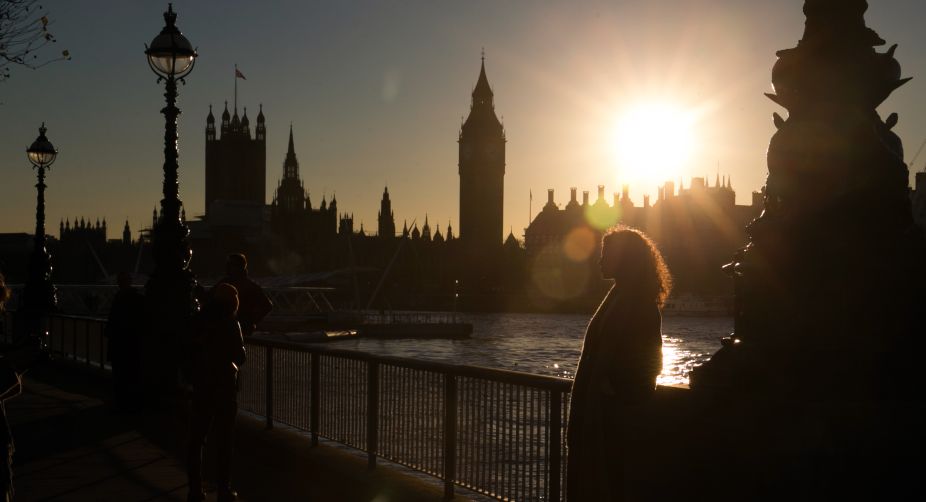
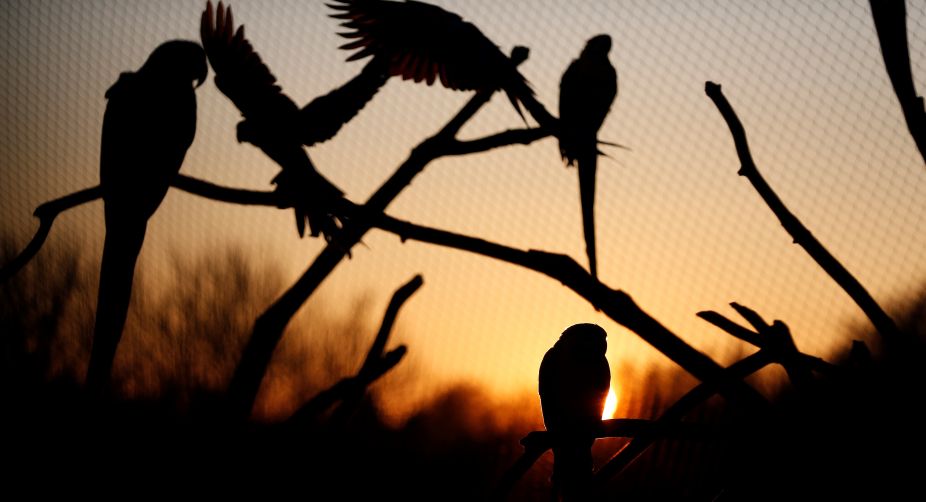
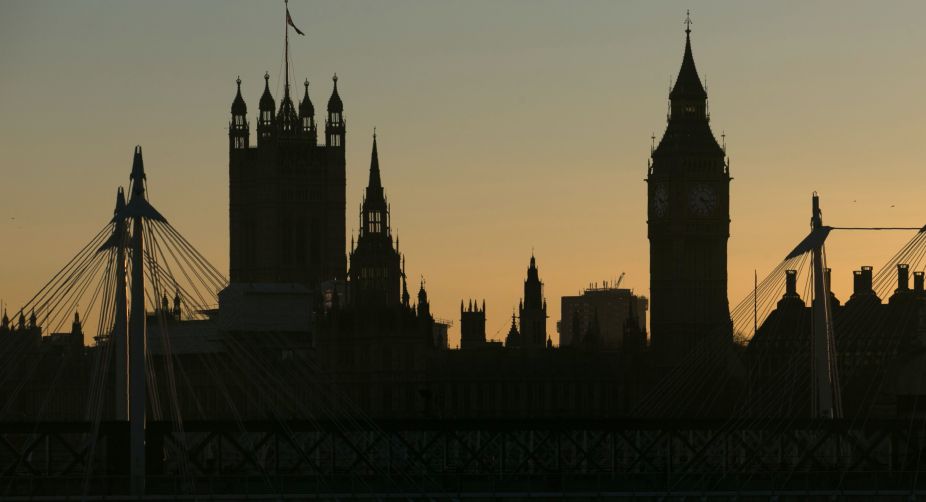
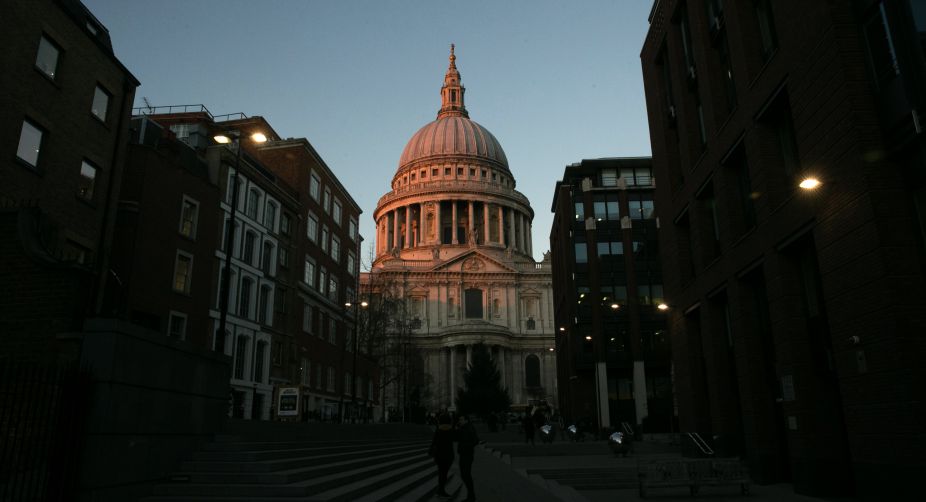
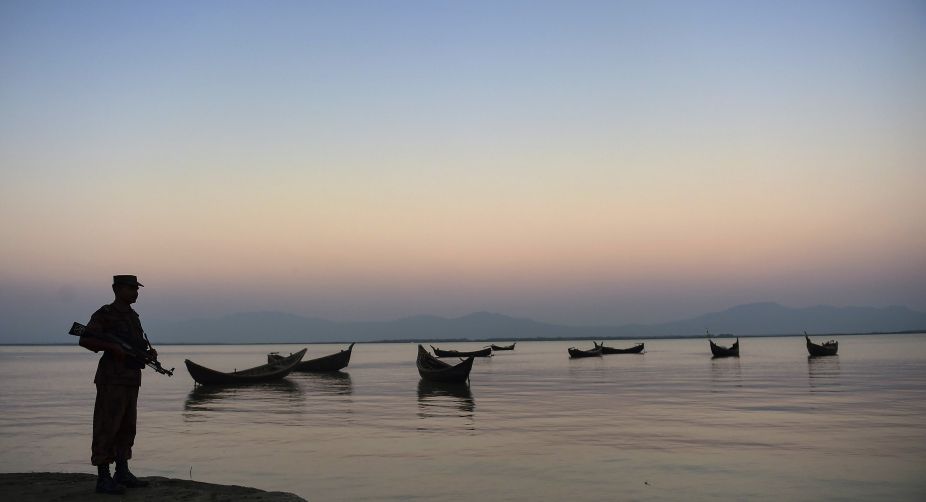
Sunset Snapshots

Sunset Snapshots

MORE Photo STORIES

Australia to have extreme summer

IANS | Sydney |

Australia welcomed the first day of its summer on Thursday with a surge in the maximum temperatures that are expected to soar past 40 degrees Celsius, reports said.
As sun tilted towards the southern hemisphere heatwave was projected for Queensland and New South Wales states, Xinhua news reported.
Temperatures are expected to soar past 40 degrees Celsius over the next three to five days, nine degrees above the December average.
This has forced authorities to activate a safety plan usually reserved for floods and cyclones due to the high risk of heatstroke.
Australia's weather bureau said heatwaves have taken more lives in the 200 years than any other natural hazard downunder.
“For every 100,000 people exposed to a category five heatwave, you would get at least three fatalities,” Risk Frontiers' lead catastrophe loss modeller Thomas Loridan said.
Australia's Bureau of Meteorology have rated the heatwave hitting southeast Queensland and northern New South Wales as “severe to extreme”.

500,000 people displaced in Afghanistan in 2016: UN

IANS | United NAtions |

The UN Office for the Coordination of Humanitarian Affairs (OCHA) said that more than 500,000 people have been internally displaced in Afghanistan by conflict so far in 2016, the highest number on record, a UN spokesman said.
“OCHA says the number represents a worrying trend of year-on-year increases of people internally displaced by conflict as well as a growing number of people living in prolonged displacement,” Deputy UN spokesman Farhan Haq said on Wednesday.
“This year, internal displacement is four times more than in 2013,” Xinhua news agency quoted him as saying.
UN humanitarian coordinator in Afghanistan Mark Bowden has expressed concern that these record figures show not just an alarming number of new internally displaced persons (IDPs), but a longer term crisis where increasing numbers of families in Afghanistan are facing prolonged displacement.
Worsening security situation and the ongoing militancy have forced the Afghan people to leave their houses for safer places. More than 1.1 million Afghans have been displaced due to conflicts since 2001 and more than 323,000 were registered as displaced persons in the first 10 months of 2016, reports said.
Thousands of Afghans have been displaced in the wake of intensifying attacks by Taliban militants against government interests in Kunduz, Helmand and Farah provinces over the past month, the reports said. 

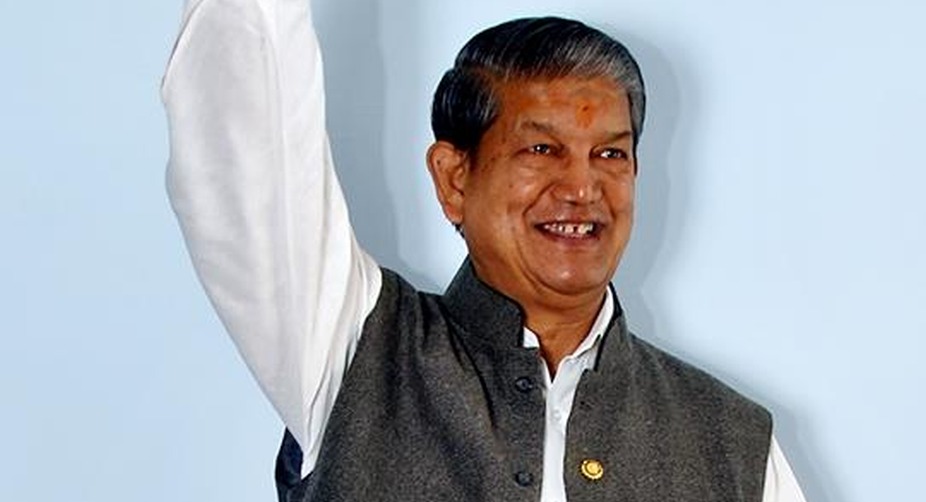
Rawat launches verbal volley against BJP

Rawat has asked the state government officers to compile data about individuals who have purchased land in big numbers in the hill state before demonetisation.

Statesman News Service | Dehradun |

Uttarakhand Chief Minister Harish Rawat has asked the state
government officers to compile data about individuals who have purchased land
in big numbers in the hill state before demonetisation. Rawat alleged that the
BJP leaders had information about the plan of the central government to ban Rs.500 and Rs.1,000 currency notes. Mocking the BJP leaders,Rawat asked, “Before
demonetisation who inspired the BJP leaders to buy land?”

 The CM has directed
compilation of land sale data of the past 2-3 months. With Uttarakhand state
assembly election due early next year,Rawat is looking for some scams of the
BJP to counter the opposition party.But,if Rawat was confident that the BJP
leaders have purchased land before currency ban he should have ordered an
inquiry- rather than conducting a data collection exercise. It is generally
observed that the Uttarakhand chief minister repeatedly claims before
media,“The BJP should remain silent otherwise I will expose their misdeeds.”

 Even after repeating
similar claims many times, Harish Rawat has not made the any BJP scam public so
far. Which indicates the scenario is bleak and he is unlikely to take any
strong action even if he gets favourable data. Rawat is devoting his energy in
election campaign in Uttarakhand these days, as many top BJP leaders have
visited Uttarakhand so far and all have narrated the TV sting operation of the chief
minister in their public address.

Delhi’s six traffic intersections to get air purifiers

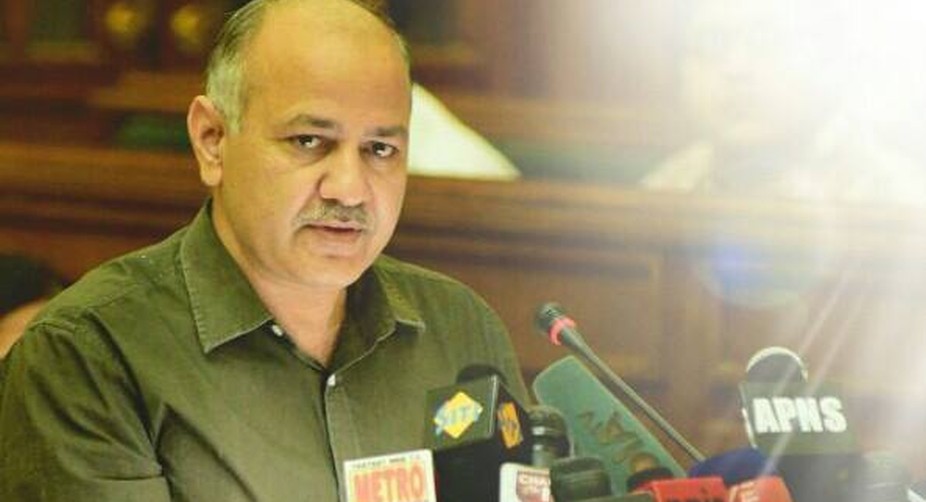
Sisodia directed immediate implementation of air purifiers at six traffic intersections to fight pollution especially with the onset of winters. 

Statesman News Service | New Delhi |

The Deputy Chief Minister Manish Sisodia on Wednesday directed
immediate implementation of air purifiers at six traffic intersections to fight
pollution especially with the onset of winters. According to Delhi government
official,in collaboration with the PWD,National Environmental Engineering
Research Institute (NEERI) will design and execute induceddraft creation units
at five major traffic intersections in Delhi.

 “The IDC at IIT
Bombay will help NEERI design for these traffic intersections. Such a unit has
the potential to reduce carbon monoxide and particulate emission by 40%-60%
emission in 20-30 metre radius during peak hours of traffic,” said an official.
The office further added that NEERI, a research institute created and funded by
Government of India,has been given the mandate to design and implement these
solutions. As per the official, in a pilot study executed in IIT Bombay on JVLR
Road shows reduction of 55-76% for PM2.5 and 73- 88% for PM10.

“Air quality sensors, anemometers, camera and counters
will be mounted on these units for better mapping which will enable robust data
assimilation and analysis,” stated the official. This step will also
execute directions of the Central Pollution Control Board (CPCB) to DPCC dated
29 December,which requires action on creating green buffers along traffic
corridors, and reduce kerbside pollution and intervene at road traffic
intersections using different technologies, as per the directions. Besides,the
Deputy CM also ordered DPCC to conduct the five studies regarding air pollution
along with NEERI,which will result in concrete deliverables, which will help
the Delhi government to curb the menace of air pollution. In addition, Sisodia
directed immediate implementation of six new measures to curb the menace of air
pollution in Delhi.

The ideas and their proposals stem from scientific reports
of Government of India by CPCB, CSIR and NEERI and orders of the National Green
Tribunal (NGT). “These include feasibility of use of cow dung, sewage
sludge, alum sludge for its possible fuel pellets, tiles, bricks or other
useful material, design of air pollution control system for green
crematorium,design of passive venting system for dumpsite, design and policy
document for brick kilns air pollution control and design of a clean tandoor
community kitchen system,” added the official. On increasing pollution
levels,especially with smog engulfed today, Sumit Sharma, Fellow , TERI (The
Energy and Resources Institute) said,”In absence of stringent emission
control measures, air quality is hugely dependent on meteorology.

Obama hails ‘migrant’ Nobel winners, Dylan a no-show

AFP | Washington |

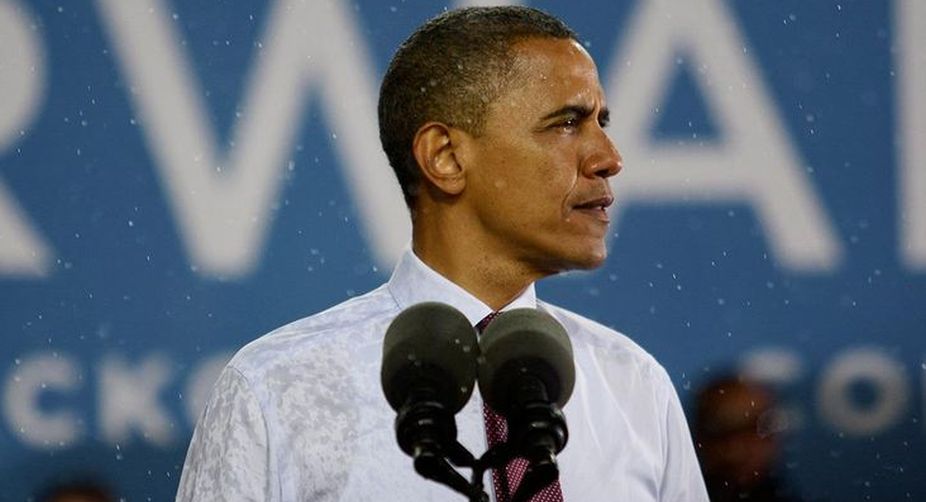
Bob Dylan was conspicuously absent from the Oval Office, but President Barack Obama hosted four of America’s other 2016 Nobel Laureates, all of whom were migrants.
Characteristically, Dylan left Obama — like the Nobel Committee — “Blowin’ in the wind.” 
“Unfortunately, Bob Dylan will not be at the White House today,” said White House spokesman Josh Earnest yesterday.
Dylan has also indicated he will skip the Nobel award ceremony in December.
But the self-confessed science nerd president was not deterred.
With just a couple of months left in office and his successor Donald Trump promising hard-line immigration policies, Obama noted America’s magnetic ability to draw top talent from around the world.
Obama was hosting Physics laureates Duncan Haldane and Michael Kosterlitz as well as fellow prize winners Oliver Hart, (Economic Sciences) and Fraser Stoddart (Chemistry).
All four were born in Britain, but live and work in the United States.
“We are incredibly proud of them and it’s just a reminder that one of the things that makes America unique is our ability to attract talent from all around the world to study at some of our greatest universities,” Obama said.
“I spent a lot of time promoting science and trying to encourage young people to get involved in those disciplines that have driven American innovation and American progress as well as driven human progress and one of the best ways for us to be able to do that is to recognize the achievements of Americans who have received extraordinary honors.” 
This will be the last occasion for Obama to welcome the US laureates, because “The Times They Are A-Changin'” in the White House. 

Can penalty be retrospective?

Statesman News Service |

Some questions are required to be answered in the light of prevalent legal position. These are if penalty provisions can be amended retrospectively to include cash deposits and whether the government can increase tax rate on deposits retrospectively.
In my opinion, provisions regarding levy of penalty and increased tax rate are in the nature of substantive law and not adjectival law. Charging sections are to be strictly construed. Even machinery provisions are to be construed as would effectuate the object and purpose of the statute and not defeat the same. Therefore, fresh inclusion of a circumstance in penalty provisions and increase in rate of tax, even if construed as forming part of the machinery provisions are to be considered as substantive law which cannot be construed retrospectively.
Such view is in accordance with the decision of the Hon’ble Apex court rendered by the five-judge bench in the case of J.K Synthetics Ltd. vs Commercial Taxes Officer (1994) 119 CTR 0222.
Hon’ble Apex court in the case of W Ramnad Electric Distribution Co. Ltd. v State of Madras AIR 1961 SC 1753 has held that penal statutes are generally considered prospective. Those penal statutes which create offences or which have the effect of increasing penalties for existing offences will only be prospective by reason of constitutional restriction imposed by Article 20 of the Constitution.
In Maruram vs. UOI AIR 1980 SC 2147 it has been held that when an Act creates new offence it will bring into its fold only those offenders who commit all ingredients of the offence after the act comes into operation.
In the case of Pyare Lal vs M.D J&K Industries AIR 1989 SC 184 it is held that “it is the basic principle of natural justice that no one can be penalized on the ground of a conduct which was not penal on the day it was committed”.
Income tax is a liability in respect of previous year relevant to assessment year, the liability is fixed by the Finance Act which is applicable for complete financial year and in my opinion for a particular action, it cannot be changed for part of the year.
However, it is one of the settled principles that because of plenary powers, the legislature, if it is otherwise competent to legislate on a topic, can pass legislations prospectively as well as retrospectively subject to several recognized limitations.
The first is the requirement that the words used must expressly provide or clearly imply retrospective operation. The second is that the retrospectivity must be reasonable and not excessive or harsh, otherwise it runs the risk of being struck down as unconstitutional. (National Agricultural Co-operative Marketing Federation of India Ltd. vs. UOI (2003)260 ITR 548 (SC).
Reference can also be made to the decision of the Hon’ble apex court in the case of Hitendra Vishnu Thakur vs. State of Maharashtra. AIR 1994 SC 2623,2641 (SC). In this case their lordships after examining the several decisions on retrospective operation of a statute have observed as under:-
“From the law settled by this Court in various cases, the illustrative though not exhaustive, principles which emerge with regard to the ambit and scope of an Amending Act and its retrospective operation may be culled out as follows:
“(i) A statute which affects substantive rights is presumed to be prospective in operation, unless made retrospective, either expressly or by necessary intendment, whereas a Statute which merely affects procedure, unless such a construction is texturally impossible, is presumed to be retrospective in its application, should not be given an extended meaning, and should be strictly confined to its clearly defined limits.
“(ii) Law relating to forum and limitation is procedural in nature, whereas law relating to right of action and right of appeal, even though remedial, is substantive in nature.
“(iii) Every litigant has a vested right in substantive law, but no such right exists in procedural law.
“(iv) A procedural Statute should not generally speaking be applied retrospectively, where the result would be to create new disabilities or obligations, or to impose new duties in respect of transactions already accomplished.
“(v) A Statute which not only changes the procedure but also creates new rights and liabilities, shall be construed to be prospective in operation, unless otherwise provided, either expressly or by necessary implication.”
Thus, the validity of retrospective amendment, if brought into the statute has to be examined in the light of above principles.
What can the court do if they find that most taxpayers in India are showing accumulated cash income as current year income?
The answer to this query can be found in the decision of Apex Court in the case of Padmasundra Rao V. State of Tamil Nadu 255 ITR 0147 (SC) (five judges). It is observed that the courts only interpret law and cannot legislate. If a provision of law is misused and subjected to abuse of the process of law, it is for the legislature to amend, modify or repeal it, if deemed necessary. It is well settled principle in law that the court cannot read anything into a statutory provision, which is plain and unambiguous. A statute is an addict of the legislature. The language employed in the statute is determinative factor of legislative intent. The legislative casus omissus cannot be supplied by judicial interpretative process. Principle of casus omissus cannot be supplied by the court except in the case of clear necessity and when reason for it found in the four corners of the statute itself but at the same time casus omissus should not be readily inferred and for that purpose all the parts of the statute or section must be construed together and every clause of a section should be construed with reference to the context and other causes thereof so that the construction to be put on a particular provision makes a consistent enactment of the whole statute. This would be more so if literal construction of a particular clause leads to manifestly absurd or anomalous results which could not have been intended by the legislature. 
IPB.

Into the virtual world

Journal writing has lost its essence into a phase where people cherish social networking sites as personal diaries.

Sahasika Zaman |

How often do we check our phones, every half an hour or 20 minutes?  Phones are used mainly for calling, sending and receiving messages but smart phones provide ways to get closer to the social networking sites such as Facebook, Twitter, WhatsApp, Instagram, Skype, to name a few. Our lives revolve around these social networking platforms. 
We share our Instagram snaps on Facebook, post screenshots of awkward Snapchat selfies, and sometimes actually write a status about ‘what’s really on our minds’. 
We allow almost everyone to take a closer look at what has been happening in our lives which is similar to approving full access to the inside scoop of our daily lives.  Thus, it is true that journal writing has lost its essence into a phase where people cherish social networking sites as personal diaries and write whatever comes to their mind, no matter how meaningless or hilarious it may be. 
It takes only a fraction of seconds before we become decisive about being friends with someone, whether we are known to him or her; whereas in verity it takes a lot of time to actually develop friendship or a proper understanding between the two. 
On the contrary, we don’t hesitate to ‘unfriend’ or block someone if he or she doesn’t cater to our choices. This has  ruined the true meaning of friendship.
What would happen if they all were shut down at once? Can we imagine a world of “un-likes” and “pokes”? No photo uploads or status updates? 
While our mind begins to debate on such glaring questions, we have probable answers to it. People would more likely be less inclined to charge up their phones or activate internet balances, instead they would communicate more with others, spend more time with one another and befriend only those who they really know, rather want to know better.
For a multitude of people, the web would grow amok and a lot of heated arguments would take off. Some would badly miss the long passive aggressive posts on Facebook and a heated number of arguments in the comment box leading to a fiery concoction of approvals and disapprovals among ‘friends’.
Similarly, the others would miss how mindfully they would have set up trends #socialnetworkingshutdown in twitter. 
Taking a look at Instagram, people would no longer be able to share their photos on Facebook, claiming they were in Venice, Italy. That would be nice!
Most people wouldn’t set the location to something like pre-prom, Mount Kilimanjaro. Goodbye to those extra ‘likes’ and ‘loves’ on Facebook and the double tapping because, in case you forgot, Facebook owns Instagram. 
It is true that nowadays people wish to visit places only to upload their photos while living in their dream cities and dining in some extravagant restaurant. 
Quite a few people have their Snapchat accounts. Regardless of who uses it and why, chances are people have taken numerous selfies with strange face distorting filters, the famous big, creepy-eyed ones, and the ever-so-disturbing face swap filters. When friends send these kinds of feather-brained pictures via Snapchat, it is only natural that the receiver takes screenshots of those. 
But then, what do people do with these Snapchat screenshots? They probably don’t miss a chance to post these pictures on their friend’s timeline on their birthday. 
One might also store all these screenshots on one’s computer or laptop either because they forgot about them or to compile a slideshow for their birthday or maybe on their wedding reception. 
Coming to WhatsApp, it is an app that involves communication via our phone number. One can make calls and chat through the app, without going through the service provider. 
With almost one billion users worldwide, the app makes it easier to connect with friends and family across the globe. WhatsApp and Messenger are essentially one and the same. 
Besides possessing the ability to text and call, they have one more thing in common, they’re both owned by Facebook. This indeed would hamper the communication of people. However this would prove beneficial on the other hand as it will allow face-to-face conversations, rather than virtual ones. 
If all the social networking sites shut down, we would probably spend more time away from our phones and would begin to live in the real world. We would no longer be able to post articles on Facebook, as they are usually shared through it. 
We would spend more time reading books, conversing with near ones, make time for ourselves and will benefit our eyes by not wearing thicker glasses. 
So, let’s make more time for ourselves and build up real and social relations by being closer to our near ones. Let’s converse in real time with our parents and friends. Last but not the least, let’s not lose our essence in the real world.
Coordinator, Class IX, St Mary’s High School, Coochbehar


Winning accolades

The programme aimed at developing the imagination, creativity and independent thinking.

Statesman News Service |

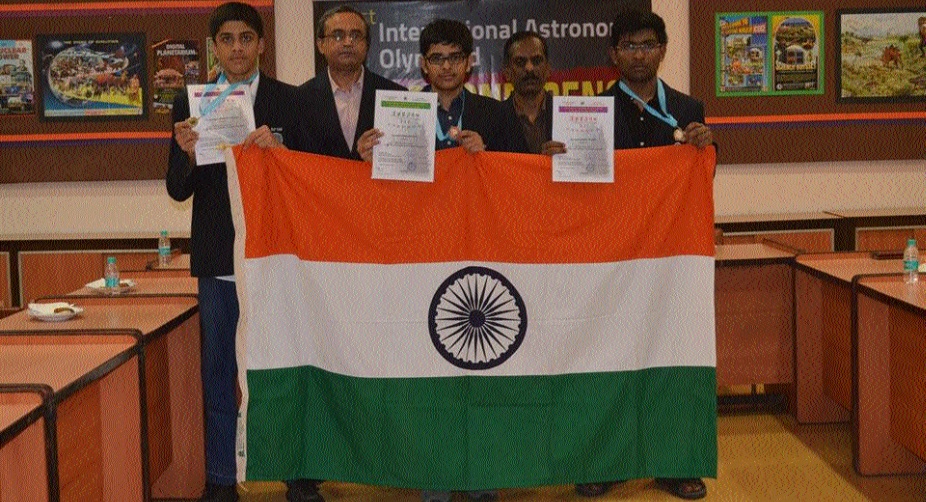
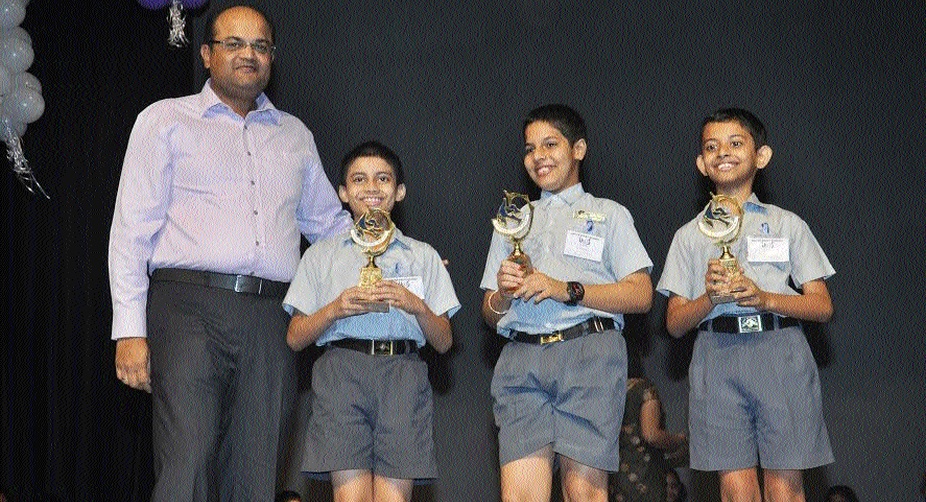
Indian students won two Silver medals and one Bronze medal in the XXI International Astronomy Olympiad (IAO) held at Pamporovo, Bulgaria in October 2016. Three students along with two officials from National Council of Science Museums (NCSM) also participated in the Olympiad. India was among the top four out of all 16 countries, where all participants won medals. M S Wajid from Hyderabad and Prashant Gokhale from Mumbai won silver medals while Harshit Khandelwal from Indore secured the bronze medal. The IAO is an annual astronomy scientific-educational event, which includes an intellectual competition between high school students of 14-18 years.
The programme aimed at developing the imagination, creativity and independent thinking.  The selection of three best students to represent India for International Astronomy Olympiad was done in three stages. About 29,000 students participated in the first stage out of which about 574 were selected for the second stage called Indian National Astronomy Olympiad (INAO). Orientation cum Selection Camp (OCSC) was the third stage for the final selection of National team for International Astronomy Olympiad.
For security measures
Ixia (Nasdaq: XXIA), a provider of network testing, visibility, and security solutions  announced the availability of CloudStorm™, the first multi-terabit network security test platform to test and validate the increased capacity, efficiency, and resiliency of hyperscale cloud data centres on 15 November. Ixia has strengthened its leadership role in the application and security testing market with the introduction of this network security test platform.  CloudStorm enables users to validate a data centre’s capacity to handle cloud-scale applications, measure the impact of Secure Sockets Layer (SSL) traffic on performance, and assess Distributed Denial of Service (DDoS) mitigation techniques to handle terabit attacks.   This solution creates 2.4 terabits of mixed applications, as well as malicious traffic, to test the critical elements of complex data centres, including server applications, storage workloads, and network security devices. Cloud-based data centres enable enterprises to achieve scale and agility.In the limelight
Cognizant (NASDAQ: CTSH) recently announced that it has been named to the ‘Winner’s Circle’ in the new HfS Blueprint Report: Internet of Things (IoT) 2016.  This is the second consecutive year Cognizant has been recognised as one of IoT service providers by HfS Research, an independent global analyst firm for the business and IT services industry. 

The newly released report analyses the capabilities of 17 major service providers and cites Cognizant’s strategic and future vision for the IoT, as well as its partner ecosystem, collaboration techniques, account management and delivery methods. 
Winner’s Circle providers are also characterised as having ‘collaborative relationships with clients, services executed with a combination of talent and technology as appropriate and flexible arrangements.’
According to the Blueprint Report, Cognizant has IoT services that fit into a broader digital vision and ‘next-gen IT enterprise follow-through with strong entrepreneurial drive’. The report also cites other specific strengths and capabilities regarding its approach to IoT and client services, including strong execution driven by strong strategic vision, digital structure that fosters rapid contextual IoT development, flexible financial and partnering approachand account management reputation.
A great honour
Department of Posts (Ministry of Communications, Government of India) Punjab Circle released Lovely Professional University (LPU) Postal Stamp and Special Cover recently at Jalandhar. Postmaster General, Punjab West Region, Mr P M Lal released LPU Stamp of Rs Five and a special cover of LPU.
The stamp carries the logo of the university and multi- coloured rainbow and butterfly images with a message of ‘greetings’ printed on it. 
This launch was indeed a great honour for LPU as presumably only few other organisations in India have achieved such a milestone.  Since customised printing of stamps opened up in 2016 for institutes, LPU becomes the first university to have such a pride.  The department has also issued customised stamp for e-commerce platform Amazon India and Hindustan Aeronautics Limited.
Noble thought
Amway Opportunity Foundation (AOF), the corporate social responsibility arm of Amway India, recently celebrated Children’s Day, in association with Mukti Rehabilitation Centre in Kolkata. To mark the occasion, they organised a drawing competition for the children. 
A magic show was also prepared within the premises of Mukti Rehabilitation Centre at Chengail, Howrah. The children overjoyed with the magic show participated in the sit and draw competition with a lot of enthusiasm. The event came to an end with selection of winners and prize distribution to the winners. All children were presented with gift hampers. 
Amway India has been working with Mukti Rehabilitation Centre with an aim to make meaningful difference to the less privileged children. It has also set up a Vocational Centre for them. AOF also takes care of the educational sponsorship of the children.

Fest and fun

Around 800 children from 21 schools across Kolkata participated in the two-day on-stage and off-stage events.

Statesman News Service |

Ullas, the two-day annual inter-school festival of South Point School came to an end on 21 November 2016, in Kolkata. Abir Chatterjee graced the occasion as the Chief Guest on the final day of the event, at GD Birla Sabhagar. Around 800 children from 21 schools across Kolkata participated in the two-day on-stage and off-stage events. The schools included Delhi Public School (New Town and Megacity), Adamas International School, Mahadevi Birla World Academy, Sushila Birla High School, Birla High School, Modern High School for Girls and M P Birla Foundation Higher Secondary School.  The events on the first day of the festival included Sabz-e-Print, a wrapping-paper-making contest for smaller children, and Akriti, a creative sculpting competition for the older ones, were held simultaneously. Children from Sandipan, the free evening school run by South Point Foundation, took part in Sabz-e-Print.
Written prelims of Mixed Bag, a quiz comprising Spelling and Vocabulary, Mathematical Skill and General Knowledge for children of classes II and III, and Kwizwiz, a quiz for seniors, were also conducted. Karateka, a competition in karate display, Ad-It, an advertisement making contest and Ta-Dhin-Ta, dance competition, were also organised.
Events on the second day included the finals of Kwizwiz, including audio-visual round followed by Kavyanjali, a competition in Hindi/Bengali group recitation, Do-Re-Mi, a Western vocal music contest, and Ghunghroo, an event of dances to the tunes of Indian classical/semi-classical songs. The programme came to an end with the prize distribution ceremony.

An enduring legacy

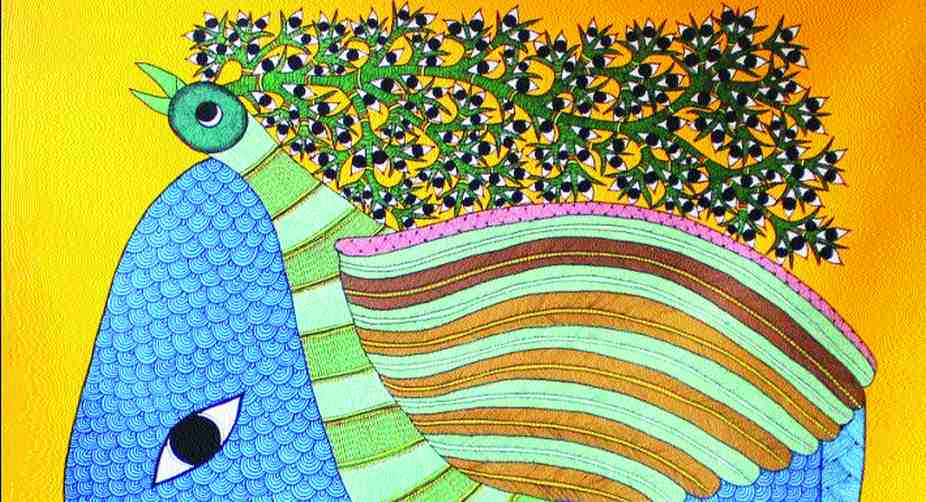
Art for Concern presents a two day exhibition of Traditional and Folk Art at the Hungarian Information and Cultural Centre this week (25-26 November).

Aruna Bhowmick | New Delhi |

In an attempt to showcase
indigenous art forms and artists and ensure their legacy endures, Art for
Concern presents a two day exhibition of Traditional and Folk Art at the
Hungarian Information and Cultural Centre this week (25-26 November). The show
features four traditional and folk artists- Manisha Jha, Rajendra Shyam,
Kailash Chand Kumawat and Jijulal.  With
a pan Indian reach, the exhibition showcases Mata ni Pachedis from Gujarat and
Kalighat paintings from the east next to Kalamkari from Andhra Pradesh. Madhya
Pradeshi Gond works hang besides striking Chola bronzes from Tamil Nadu, Phads
and Pichwais. “In their myriad forms, these traditional arts are so varied that
to even call them a group forces unwarranted homogeneity upon them, yet all are
linked by the threat of disappearance. In a country with such a vast collection
of traditional and folk art forms, these artists barely receive the exposure
and patronage they require to find subsistence and stay relevant,” rightly
avers Radhika Gulati, director, Secure Giving.

Kailash Chand Kumawat hails
from a small village in Rajasthan, where his grandfather was a miniature artist
and the family has continued the tradition. He says a high degree of skill is
required and this art is carried out delicately with a with a fine squirrel
hair brush. His entire family is involved in this work and he takes pride that
through his work people are aware of this art form.

Manisha is a Mithila artist
by tradition and a trained architect by profession. Born in village Satlakha of
Madhubani district in Bihar, Manisha learnt this art from her mother and
grandmother. She has been practising this art for last 30 years, and has been
fortunate enough to have held more than 50 exhibitions since 1998, thus not
really ranking as an obscure or underprivileged artist.  Manisha Jha lives and works from New Delhi.

Jijulal V M is a very highly
reputed Kerala Mural artist with over 10 years of experience. He was born in
Kozikhode District of Kerala and continues to live and work from there.

Born in Patangarh on 20 July,
1982, Rajendra Kumar Shyam is an established Gond artist. The Gonds are a folk
indigenous to the Gondwana region. They express themselves through song, dance
and festivals. Their art form draws from the wildlife and forests surrounding them,
and replicates the vibrant hues and rich textures seen in their community.
Shyam took to the Gondi style at an early age. He has participated in “Gond
Painters Camp” organised by Lalit Kala Academy, Kerala.

 Though each of the works are intricate and detailed
as characteristic of the Indian traditional arts, it is Kailash Kumawat, who
takes the cake this time, with his portrayal of India’s erstwhile royalty. With
a good eye for colour, he combines the traditional red and gold to absolute
advantage. His treatment of fabric, the gold embroidery, likewise is flawless,
retaining sheen and luster almost better than the real. The sheer labour
required to make a work seems quite phenomenal. Manisha Jha, too, does very
intricate Madhubani works containing a strong narrative  element. Then again, Jijulal V M and Rajendra
Kumar Shyam have their own stylistic legacies to carry, evolving and developing
method and material as they go.