Logo

Is he back?

Statesman News Service |

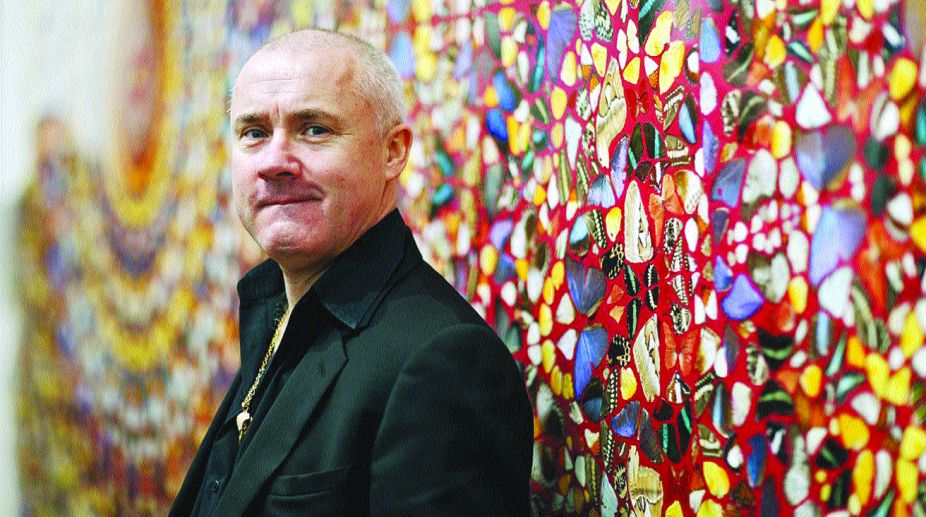
Imagine the Rolling Stones coming out with a new acoustic album or Christo preparing to wrap some remote island in parachute fabric. That is the kind of anticipation that surrounds artist Damien Hirst’s first new body of work in several years, to be unveiled in Venice on 9 April, a month before the Biennale there. The show, billed as “10 years in the making”, is also the first time the Pinault Collection’s two locations — the Palazzo Grassi and the Punta della Dogana — will be dedicated to a single artist.

Like previous Hirst extravaganzas, this project is being rolled out with the same hyper-vigilant level of control and fanfare. And hovering over the project is whether — given the precipitous drop in his prices after his all-Hirst Sotheby’s auction in 2008 — the celebrity artist can have another chapter.

Has the art-world darling of the 90s — who led the so-called Young British Artists, or YBAs, and was known for his $12 million shark in a tank — jumped the shark? And given that many buyers were left bitterly holding the bag after Hirst flooded the market with his work at the Sotheby’s sale, doing an end run around his dealers, will collectors give him another chance?

“He’s certainly confounded the market before. It depends on how successful the work is,” said Marc Porter, a chairman of Sotheby’s fine art division. “He’s taking on Venice and that’s audacious.”

The project, Treasures From The Wreck Of The Unbelievable, according to those who have glimpsed it, resembles jewelled buried treasure covered with coral as if just pulled out of the ocean, like relics from the lost city of Atlantis or Captain Nemo. It includes some 250 pieces in various sizes ranging in price from about $400,000 (S$567,500) for small jade objects to $4 million for a malachite head of Medusa.

Potential buyers cannot view the work in person, nor can they receive images by email, a courtesy typically afforded top collectors. Instead, a representative from one of Hirst’s two galleries — Gagosian in New York and White Cube in London — visits with an iPad to flip through photographs of the work. Hirst declined to comment, as did his dealers, Larry Gagosian and Jay Jopling of White Cube, who said all news media requests had to go through Hirst’s studio, Science UK Limited. (The Pinault Collection’s owner, François Pinault, also refused to be interviewed; his museum has posted just a couple of tantalising photographs of Hirst’s coming show on its website). The Venice show is the third prong of Hirst’s apparent stab at a second act. The first was his opening of the Newport Street Gallery in south London in October 2015, which presents exhibitions of work from his collection. Then in April, Hirst, 51, announced that he was returning to the high-powered Gagosian gallery, having left it in 2012. Already his market is showing signs of strengthening. One of his large butterfly canvases sold at Christie’s in November for a respectable $1 million, given the estimate of $900,000 to $1.2 million. Just about everyone in the art world agrees that Hirst has some healing to do. While he pulled off the unthinkable by selling $200 million of his work at the Sotheby’s sale on 15 September 2008 — bypassing the usual gallery channels and on the same infamous day that Lehman Bros. declared bankruptcy — the result was a surfeit of Hirst pieces on the market, which hurt his prices.

“In many ways that auction marked the beginning of the end,” dealer Helly Nahmad said. Where his pill cabinet Lullaby Spring sold at Sotheby’s in 2007 for US$19.2

million, for example, his pill cabinet Lullaby Winter sold at Christie’s in 2015 for US$4.6 million. More recently, one of his spot paintings sold in Sotheby’s contemporary art day sale in November for just US$396,500, considerably lower than the US$1.7 million they sometimes fetched in 2013.

“People inexplicably bought into that sale, precipitating a downward market death spiral that took us all down with them,” said Adam Lindemann, the collector and dealer, referring to Hirst’s all-Hirst Sotheby’s auction. “His market collapsed and hasn’t really revived since.

“And now he’s back like Arnold,” Lindemann continued, referring to a line from Arnold Schwarzenegger’s Terminator films. “Remember the old saying, ‘Fool me once shame on you, fool me twice shame on me.’”

Because Hirst is so prolific, there is the growing sense that his works are ubiquitous, an impression that would be countered, collectors say, by a catalogue raisonné that offered a full accounting of his work.

“As an investor, which I am, before undertaking such an investment you have to really make sure that the production is somewhat under control,” Nahmad said. “The market doesn’t like chaos and the market doesn’t like confusion. If Damien Hirst came out with an extensive catalogue raisonné, people could see an order to his body of work. How many units exist? How many butterflies? How many spot paintings?”

At the same time, art experts say, Hirst is the real deal — not just a flash in the pan or a relic of the past, but an artist with exceptional talent and staying power.True, he had the temerity to charge US$100 million for a diamond encrusted skull in 2007 and to take over all of Gagosian’s galleries in 2012 (11 of them at the time) with a retrospective of his spot paintings. But Hirst, collectors, dealers and auction executives say, is worthy of attention, as evidenced by the Tate Modern’s decision to devote a retrospective to his work in 2012.

“He is still one of the greatest artists of this century,” said real estate developer Aby Rosen, who described himself as “long on Hirst” in his art collection, calling the new Treasures work “stunning”. “He will produce till he dies because he has so much brain — he’s so deep,” Rosen added. “And this guy is not going away.”

As to whether collectors unable to sell their Hirsts had a right to be frustrated, Rosen said: “If you want to be a collector, you have to collect wide and deep, and within your portfolio things will go up and down. If you buy two stocks and one goes down, don’t be angry at IBM or GM.” There are those who say that Hirst’s coming shows in Venice are inextricably linked with Pinault, who owns Christie’s auction house and has avidly collected Hirst’s work. Does he want to jump-start the Hirst market out of self-interest, art experts ask, to raise the value of his own holdings?

Whatever the case, most agree that Hirst — with an estimated net worth of US$350 million — doesn’t need the money. “I do believe that Damien Hirst — especially early Damien Hirst — will have an important footprint in art history,” Nahmad said. “The true die—hard Hirst collectors, if they love what he’s doing now, they’ll buy into it and disregard that this guy so many times in the past has way overproduced.” Perhaps more than any other artist, Damien Hirst has embodied the meteoric rise of the artist as celebrity, the auction market at its height and collectors competing to pay millions for a stuffed shark or flattened butterfly. But as art has increasingly become an asset class, Hirst has also come to symbolize how a high—flying stock can tank.

Here’s a look back at some of the critical junctures in the volatile yet rivetting trajectory of Hirst.

1991: Formaldehyde Hirst takes the art world by storm with his tiger shark suspended in formaldehyde, which billionaire hedge-fund manager Steven A Cohen buys for a reported US$12 million.

1990s: Butterflies Hirst explores themes like death and science with butterflies pinned under glass.

2000s: Pill Cabinets Hirst’s coloured, handmade pills recall Victorian curiosity cabinets and explore modern notions of medicine.

2007: Luxe Skulls Hirst announces sale of his diamond-encrusted skull for US$100 million.

2008: Hirst Sotheby’s Sale Brings US$200 Million. Hirst bypasses dealers to sell all 223 works, breaking the record for a single-artist auction, set in 1993 when an 88-work Picasso sale brought US$20 million.

2009-17: After his Sotheby’s sale, Hirst’s prices at auction top out at US$1.5 million (for his Mickey canvas at Christie’s London in 2014) and eventually fail to sell (his Beautiful Mickey Mouse Painting, estimated at US$400,000 to US$600,000 at Christie’s in May 2015).

January 2012: Spot Paintings Everywhere — Larry Gagosian agrees to show Hirst’s spot paintings in all of his 11 galleries.

December 2012: Hirst stuns the art world by announcing that he is leaving the Gagosian gallery, where he has been represented for 17 years.

2016: Hirst And Gagosian reunite — four years after leaving Larry Gagoisan, Hirst returns to the gallery. “I share a long history with Larry,” the artist says in a statement, “and am pleased we are working together once again.” Gagosian says, “Take Damien Hirst out of contemporary art history, and there’s an incredible void. Great artists, like great people, have second acts.”

2017: Hirst to unveil a new work At Pinault Collection in Venice. Ten years in the making, Hirst’s exhibition is to open just before the Venice Biennale, the first time that the two Venetian locations of the Pinault Collection will be dedicated to a single artist.

The Straits Times/ANN
Let’s salute the real pioneers

Keith Flory |

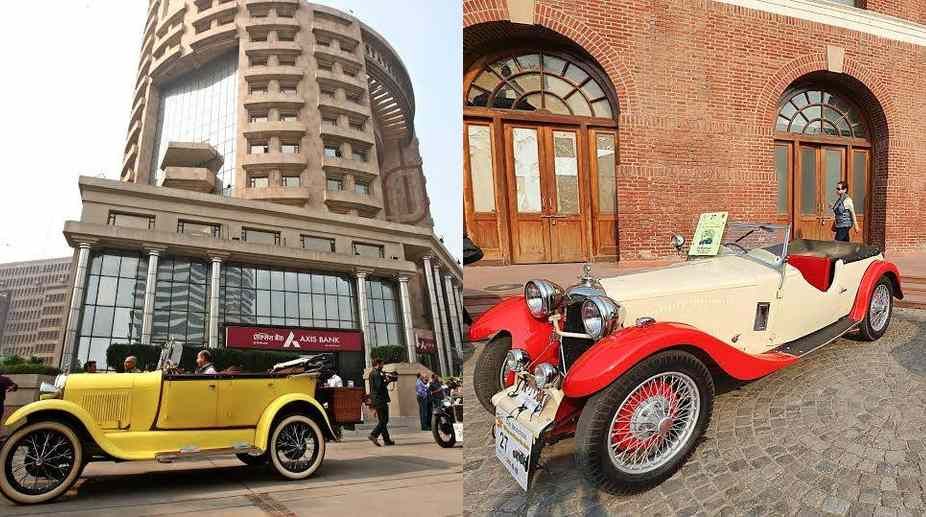
It would be both inaccurate and insulting to use the term “Old Crocks” to describe the superb specimens of motoring history that will weave unlimited spells of nostalgia and joy in the Capital this Sundaymorning.

For a special feature of the 51st Statesman Vintage & Classic Rally is the really high quality of preservation and maintenance that will be on display; and as the National Green Tribunal has recently observed, vintage cars and their owners tell captivating stories, stories that must be preserved to inspire future generations.

Yet, while joining in the admiration of those four-wheeled marvels, old timers will recall that in the mid-1960s it was a somewhat different story that was being scripted. Then the accent was on restoring old cars.Salvaging them from scrap-heaps and getting them back on road was what mattered most ~ not displaying them in glory as is done these days.

In fact today’s “glory” cannot be seen in isolation divorced from the path-finding enterprise which made the efforts of the pioneers truly heroic.

There was no internet and search-engines to help owners revive the cars and get them back into working condition, no professional restorers who could undertake such “missions of mercy” ~ for a price.

Procuring “original” manuals from the manufacturers was difficult, and importing spare parts, tyres etc was next to impossible.

People depended on friends going overseas to try and meet their needs, hours were spent sifting through what was on sale at “chor bazaars” in the bid to find a replacement component. At times the services of local workshops were utilised to have items custom-fabricated.

It was a question of patience and stamina, quite different from today when a “heavy” hip-pocket suffices. Those were the days of real “labours of love”. And such was the extent of the “elbow grease” expended in the restoration endeavour that few people could “afford” more than a couple of cars. The days of the “collector” were yet to dawn ~ in India anyway.

There was a special flavor to the interaction at vintage rallies.

The “showing off” was limited to the effort put in since the last time that car made a “public” run. Owners spent their time exchanging information about which ‘kabari-wallah’ had a good stock of spare parts, where to find a mechanic, carpenter or upholstery specialist capable of doing a good job.

Some owners offered their restoration-expertise to near-strangers, not for money but purely for the love and satisfaction of resurrecting a car from near-decay. The “wise” old gentlemen who organized the rallies and evaluated the cars spent a lot of time “educating” the new owners on the characteristics of the vehicle. And thus were forged many friendships that stood the test of time.

Yes, those times were “different”, owners made common cause of preserving old cars. There was no jealousy, and all competition was healthy”. Many a car that made a rally “debut” was in poor condition, that it returned in much better shape the next year testified to underlying spirit of the vintage car crusade. A spirit that ensured a unique bond was built between owners of an elegant Rolls-Royce or Mercedes, and a “workhorse” like a Model T Ford or a product from the Austin or Morris stables.

True that some of the cars at a Statesman Rally invited the “Old Crock” description, equally true that they provided the building blocks for today’s majestic magnificence. And so it would be sinful today not to salute the real pioneers of the Statesman Rally.

Saffron wins in Maharashtra

Kalyani Shankar |

The results of the Maharashtra civic polls send a clear message that the saffron space in the state and as a consequence in the country is increasing while the secular space is shrinking. It is good news for both the NDA allies – the BJP and the Shiv Sena – as their Hindutva model is gaining ground although the two parties had contested separately. Together, the BJP and the Sena have ensured a saffron sweep across the state.

Why should these civic body polls in one state create so much interest across the country? The Brihanmumbai Municipal Corporation (BMC), established in 1882 is the richest civic body in Asia. Its annual budget of Rs 37,052 crore (2016-17) is larger than of the three big metro cities of Delhi, Chennai and Kolkata. It is also more than that of some smaller states in the Northeast such as Tripura, Manipur, Mizoram, Nagaland and Sikkim. No wonder there is a fierce fight to capture it.

Along with the 10 cities, 25 zilla parishads and more than 280 panchayat samitis voted for their local representatives in two phases, on February 16 and February 21.

Broadly, the BMC results show that while the incumbent Sena has held its own, BJP has grown, and the opposition parties including the Congress and the NCP have continued to decline. The Maratha strongman and NCP chief Sharad Pawar lost his bastion in Pune. The Maharashtra Navnirman Sena of Raj Thackeray is almost wiped out.

While the BJP sought votes on the slogan of transparency, the Sena wooed them showing off its two decades of performance. The poll results show that the BJP has established itself as number one party across Maharashtra with a universal appeal. It has won with a simple majority in cities like Pune, Nashik and Nagpur and bagged eight out of the 10 municipalities proving that it is no longer dependent on Shiv Sena. It had overtaken the Sena in the 2014 Lok Sabha polls and the subsequent Assembly polls but its continuing rise in the state must be a red rag for the Sena, which considered itself as the big brother in Maharashtra. As a corollary, BJP chief minister Devendra Phadnavis has also emerged a clear winner and proved his leadership qualities.

Significantly the BJP’s rise is remarkable since 2014 when Prime Minister Modi took over. It has been consistently making forays into hitherto unchartered territories like the Northeast and Jammu and Kashmir or increasing its tally in places where it already has a presence. For instance recently it improved its performance in Odisha reducing the ruling BJD’s numbers considerably in the Panchayat polls. In Chandigarh, the party swept the city municipal election by winning 20 out of 26 seats.

In the Gujarat local body polls the BJP’s tally of 107 seats out of 123 reducing the Congress to 16 seats was impressive. The BJP has increased its seat share in the BMC by a whopping 250 per cent from 31 seats in 2012 to 82 seats now. The BJP is elated. The second thing which emerges is that the Sena has held its own, particulary in the BMC which is its bastion. Sena chief Uddhav Thackeray, who was dismissed as a light weight, has established that he is the true inheritor of his father Balasaheb Thackeray’s legacy. Not long ago, Uddhav was being written off as a political novice, fighting for space with his cousin Raj Thackeray but the latter has withered away. This was indeed his defining moment as Uddhaav took a big risk. After ruling the civic body for over two decades, he parted company with the BJP but the big gamble has yielded rewards. The Sena’s performance, especially in Mumbai and Thane, was critical to the party’s future. Uddhav had realised it was a “now or never” moment for him and his party. This win has confirmed the Sena’s continued relevance in the state. Uddhav has succeeded in transforming his party from a volatile right wing outfit to a more sober version, a process which has just started. However, whether Uddhav will decide to severe connection with the BJP altogether is doubtful, as they are partners at the Centre. After all, there are two more years to go before the 2019 polls.

The big losers are the Congress and its ally Nationalist Congress party. Both continue to be on the slide in a state which they had ruled for 15 years before they yielded power to the BJP-Sena combine in 2014. In the BMC, the Congress is down to 31 from 51, and the NCP to 9 from the 13 it had in 2012. Congress-NCP held power in three city corporations, Pune, Solapur and Amravati and the NCP held Pimpri-Chinchwad while Raj Thackeray’s Maharashtra Navnirman Sena had ruled Nasik for the last five years.

For the Congress since 2014, it has been a continuous slide except in Bihar in 2015 where its performance improved. The big blow in Maharashtra might have some adverse effect in the ongoing UP polls and bring down the morale of the party. The Congress has to do some serious thinking about its defeat.

Maharashtra, like many other states is facing factionalism and indiscipliine. The five leaders – Sanjay Nirupam, Gurudas Kamat, Priya Dutt, Milind Deora and Narayan Rane – have been fighting with each other and have already started the blame game. The results prove that the Congress party has failed to learn its lessons.

Alternative routes to a healthy India

Samit Kar |

Over the years, there has been a rapid spurt in the incidence of attacks on doctors and para-medical staff, and vandalising of hospitals destroying costly medical equipment.

The basic causes of public wrath have been essentially: first, negligence on the part of doctors and support staff to render proper treatment and secondly, anomalies in hospital bills involving over billing and false billing.

There have been widespread allegations that patients have to incur huge expenses even on items not necessary for treatment. This author while recuperating from kidney transplant surgery in a hospital on the E M Bypass in East Kolkata had to settle pay for feeding bottles for babies, bibs etc. Therefore, apparently people's wrath is rather legitimate.

Next comes the allegation about negligence in treatment. There are many genuine instances to support this allegation. But there also remains a pertinent question whether there is too much load on a physician.

In order to consider both these worrying issues – the escalating cost of treating a patient in a private hospital and the attitude of a section of physicians, the Government of West Bengal had decided to discuss threadbare how the menace could be handled. However, many leading doctors keep close touch with many influential people, and they somehow manage to pull strings compelling common people to remain deprived of the best.

In India, charity as a rule doesn't begin from home. Even the venerated Professor Bidhan Chandra Roy had many friends who were legendary physicians known to be in the habit of toying with established rules and regulations. During the 34 years of Left Front rule in West Bengal, no doctor of repute could be removed from plum postings in Kolkata and the surrounding. Some of them also owned private hospitals and nursing homes that were beyond the reach of most patients.

In a new township like Salt Lake, there had been several examples of private hospitals being established on land purchased at subsided rates with a promise to render low cost medical care to common people. But in practice the promise had seldom been kept.

In a study done several years ago, it was revealed that a sizable section of the population could become paupers largely as a result of steep hike in the price of health care. This has emerged as a critical problem in the modern healthcare system, especially the allopathic system.

India was the biggest British colony and the advent of the Raj saw the growth of allopathy at the expense of Traditional and Alternative Medicine (TAM) much to the detriment of the common man.

Even in the post colonial phase, the health policy of India introduced by Jawaharlal Nehru and leading physicians like Dr. Roy – all trained in Britain – did repose firm faith on allopathy while setting aside the claims of Traditional and Alternative Medicine. But TAM had been sincerely pursued in many countries of Asia, Africa and South America.

Even in some states within India such as Kerala, Tamil Nadu and Andhra Pradesh, the practice of TAM is exemplary and many patients even today visit these states to cure chronic ailments like cancer, blood pressure, asthma, diabetes, skin diseases etc.

But physicians associated with the Indian Medical Association (IMA), the biggest organisation of allopaths has fought tooth and nail against the introduction of TAM.

How can the health care system be made affordable to common people? Physicians need to be more socially committed to prescribe medicine and tests keeping in mind the pecuniary ability of a patient. But this is seldom done by a modern medical practitioner who seems to be more concerned about his personal wealth instead of patients' health. Ayurveda, yoga, unani, siddha, naturopathy and homeopathy – AYUSH – has since 2014 been placed under a separate Union Ministry. With its proper introduction and application, AYUSH may be able to allay problems of many sick patients. But fearing monetary loss, the allopaths have not allowed AYUSH to spread. This is, no doubt, an effective example of how modernity has harmed commoners.

India has 15 agro-climatic zones, 47,000 plant species and 15,000 medicinal plants that include 7,000 plants used in Ayurveda, 700 in Unani medicine, 600 in Siddha medicine and 30 in modern medicine. This makes India one among 12 mega bio diverse countries of the world.

The Indian systems of medicine have identified 1,500 medicinal plants of which 500 species are mostly used in preparation of drugs. Many consumers use traditional medicine for self care because of a wide perception that natural means safe. Because of limited quality control and or improper use by consumers, misuse of herbal preparations has been widely reported.

While traditional medicine has long been used, there is negligible documented evidence regarding its safety and effectiveness.

To tackle urgent and emergency cases, there is no substitute to allopathy. AYUSH can seldom render this service. But not all those who get admitted to hospitals and nursing homes are those needing critical care. Many of them are also not rich. Still, there is no referral system to goad patients suffering from chronic ailments to seek alternate cures. The problem lies in our profit-driven approach and this will impede our reaching the avowed goal of Health for All by 2020.

Our mindset needs to be cured in order to cure our body. AYUSH can be an effective substitute for many patients. The health care system must see a more effective distribution of resources.

The writer was on the sociology faculty of Presidency University.

Swachchta redefined

Tuktuk Ghosh |

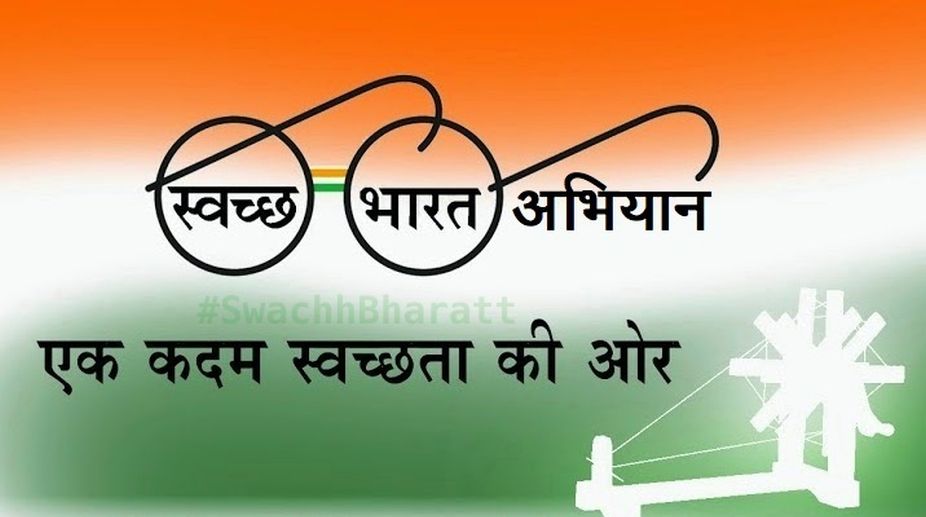
By most accounts, the Swachch Bharat Abhiyaan is among the best performing of the NDA government’s flagship programmes. Those responsible deserve resounding rounds of applause. The stench of a traditionally taboo subject no longer repels. It has been transmuted and elevated to near humdinger status in civic discourse and action.

Going by the Prime Minister’s repeated references to the remarkable achievement and, more importantly, the centrality of this singular, broad-canvas concept of swachchta, underlying his governance model — as a versatile metaphor for integrity, transparency and accountability — expectations soared to record highs. The dramatic policy-disruption of demonetisation was accepted with resigned, rugged stoicism largely in the belief that it was, at its core, a phenomenally avant-garde assault on the overwhelming toxicity of our smug power structures. Whether — and to what extent — it made the grade in terms of the stated stratospheric objectives will perforce be interminably queued as the impact and multiple after-impacts are not amenable to early assessments.

Here comes the crucial crunch point. Even if one forgets the Report Card, disturbing questions related to swachchta in public affairs — in its augmented metaphorical avatar as referenced above — cannot be peremptorily flicked off. Those of immediate concern have to do with the election mega-carnival presently underway in the States. It is righteously claimed that the efficient conduct of elections marks us out as global front-runners. The focus on the form and processes have worked wonders over the years and picked up a distinctive momentum. The much agonised-over and inconclusively deliberated upon electoral reforms, proposed by successive Law Commissions and the Election Commission, also appear to finally have got the Government’s ear and may well hobble off to a shaky start. Be they simultaneous holding of elections, transparency in funding of political parties and keeping convicted criminals out of the power edifice, greater sanitising will happen but only over an unforeseeable hazy time-frame.

In the midst of the superb administrative and regulatory arrangements, disappointingly though, one is hard put to attempt to explain — leave alone justify — the unconscionable and unabashed splurge of apparently unlimited resources in what are often desperate bids to snap up votes. Votes are cynically taken as sublime carte blanches to unalloyed power. Given the stage of quagmired development we find ourselves in, will it be outrageous to ask if the infamous shadow economy is still ominously around? The same shameful integrity-deficit dogs the crass, hollow promises of many of the hopefuls, including those with serious criminal charges. They come in gushing streams of undisguised insensitivity, callously exploiting the problems, pain and miseries of huge swathes. They beg, with folded hands and heads bowed, to be given the opportunity to serve. And how well they serve. Only themselves! As a minor, yet telling illustration, the average assets of 60 sitting MLAs contesting in Uttarakhand have risen 96 per cent in the last five years. Not much seems to have changed over the years in this regard. If anything, the razzmatazz and faux glam-quotient have increased exponentially. But there is tremendous hope in the record voter turnout in each phase. The wrath of the consistently denied, deprived and let-down cannot be trifled with indefinitely.

is the appropriate context in which to appreciate Justice Amitava Roy’s Supplementary Note in what Justice Pinaki Chandra Ghose described as a “fatty” verdict , handed down after two ponderous decades of due-process- of-law in J Jayalalitha’s eponymous DA case. Whatever be the commentators’ uncharitable quips on its linguistic attributes, it hits the bull’s eye, highlighting the plight of the honest and upright who find themselves in a minority, forced to suffer in distressed silence in a world where the corrupt are held in “fear and awe”. Not stopping at articulating mere angst, he called for judicial action, legislative vision and citizen- partnership to battle the malignant vice of “insatiable avarice”.

While this landmark verdict has neatly reverse- catapulted Sasikala from the dreamland of Poes Garden to a straw bed on the rough-hewn floor of Bengaluru Jail, the raw power of the corrupt continues to be on shocking display in Tamil Nadu. The Game of Thrones plays on, with the real stakeholders — the people of the State — unceremoniously turfed out. It is tantalising to contemplate if the tables can be turned.

The critical role of the Judiciary in upholding probity in public service was underscored yet again, this time in Bihar, where the Chief Minister, Nitish Kumar, is on an energised overdrive to enforce his personalised brand of swachchta through the Bihar Prohibition and Excise Act, 2016. The Government acted in a stunningly inexplicable manner against a young IAS officer whose integrity was known to be unimpeachable. It filed a Special Leave Petition in the Supreme Court contesting the Patna High Court Order of 28 October 2016, quashing the FIR against the 2013 batch officer, Dr Jitendra Gupta, on charges of corruption. As Sub-Divisional Magistrate of Mohaniya (Bhabua district) , he had taken on the local “Entry Mafia” which controlled the transport networks , reportedly in cahoots with the police. It was alleged in a complaint by the mafia (!) to the Vigilance Department that the officer seized four trucks on 3 July 2016 in Mohaniya and later demanded and took a bribe of Rs 80, 000, through his driver to release them. His house was raided from where nothing was admittedly recovered. He was arrested at midnight and spent a month behind bars. The Patna High Court saw through the deficiencies in the investigation, the most conspicuous being that the trucks in question were actually more than 200 km away from the place of alleged occurrence of the crime. It was observed that nobody even made a feeble attempt to confirm whether the money was demanded at Dr Gupta’s behest. The case that he was guilty merely on the basis of a statement of a co-accused who was in police custody, was not upheld. The Bihar Government, in spite of these damning findings, strenuously argued in the Supreme Court that the FIR could not be quashed as the investigation was still pending. The Bench of Justices Adarsh K Goel and U U Lalit dismissed the plea and made a scathing statement that the officer was “framed” for targeting the overloading of trucks plying on National Highways.

It has been undoubtedly a major setback to the Government’s credibility and will have strong ripple effects on governance. Whether they will veer towards the positive remains to be seen. It is puzzling that while the IAS officers within the system moved against their junior colleague, the IAS Association of Bihar vouched for his integrity and submitted memoranda to the Governor and Chief Minister, seeking justice. Being dragged to Guillotine Square, though innocent, is unfortunately a common enough experience within the Service. Having the Service Association back you to the hilt, regardless, is indeed rare and praiseworthy. Nonetheless, mixed voices are very welcome to Governments of the day which love to fix and frame inconvenient officers.

The moral of these unsavoury narratives is that we urgently need a “Swachch Ganatantra Abhiyaan”, from which must flow a “Swachch Jan Seva Abhiyaan”. The present circumscribed, ambiguous remit of swachchta will not do. The need of the hour is an unambiguous understanding and enforcement of swachchta, going beyond its present circumscribed remit.

The writer is a retired IAS officer and comments on governance issues.

Tax those ‘thieves’

Editorial |

Finding similarities in the thinking of hard-boiled businessman Donald Trump and entrepreneur-philanthropist Bill Gates would not be easy, but in their own different ways they do make common cause in protecting American jobs.

The “fixer” in the White House seeks to use American muscle in all possible ways against those who “steal” jobs and have paralysed traditional industries such as steel and automobiles by imposing heavy taxes on products they seek to sell in US markets. Gates also wishes to use taxes as a corrective, his target is the new range of robots that are increasingly ejecting human beings from the shop-floor.

Clearly both are worried about growing unemployment and its range of negative side-effects. A scary situation: one that illuminated the path from Trump Tower to the West Wing. And which simultaneously left “politician” Hillary hapless by the wayside, since her winning the “popular vote” proved no passport to the Oval Office. The Microsoft-man has his own brand of logic.

The human worker would contribute to the exchequer income-tax, social-security tax, etc., so why should robots be exempt from such levies? It would require no artificial intelligence to fathom such reasoning. Something which would resonate across the world with those tasked with keeping governments out of the red.

Yet where Gates appears benign in comparison with ruthless Donald is that he desires that those displaced from the work-force are re-trained and redeployed in professions aimed at extending succour to the needy: helping the elderly in their daily chores, making life easier for working mums by taking care of children and so on. His scheme has twin objectives, filling a vacuum in support services, and simultaneously causing industry to take a re-look at automation.

Maybe Trump would accept that Gates had played an ace if informed that quite a few of the popular robots were produced outside the United States. It would be killing two birds with one stone.

Kenneth Arrow

Editorial |

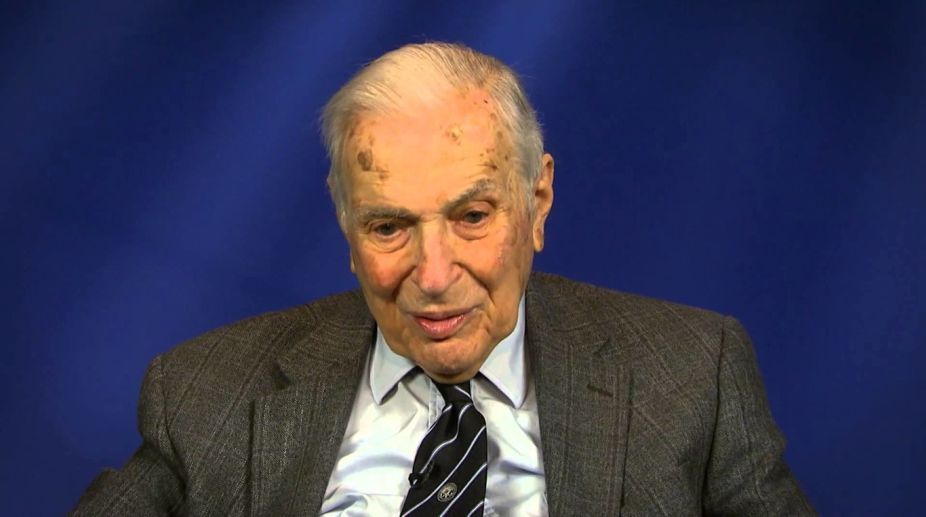
Not many, even among economists, may have been able to grasp the “impossibility theorem” of Kenneth Arrow, who passed away on Tuesday at the ripe age of 95.

At 51, he was the youngest Nobel Laureate, having been conferred the award in 1972 in league with the British economist, Sir John Hicks. And the encomiums over the past three days are more than the customary obituary reference; they testify to his seminal contribution to economic theory, general equilibrium and welfare — verily an “Albert Einstein of Economics”, as another Nobel Laureate, Alvin Roth, has described him.

And then the gem of a reference — “Ken was a giant in an astonishing way”. The award of the National Medal of Science was the icing on the cake in 2007. It is no reflection on the several Nobel Prize winners in Economics to aver that Kenneth Arrow was one of the greatest economists of the 20th century. The value of his contribution may not be readily comprehensible to the uninitiated not merely because of the profundity of thought, but also on account of the overdose of mathematics.

Pioneering was his contribution to the theory of general equilibrium and welfare, the Nobel Memorial Prize in Economic Sciences being the mark of recognition. He had crafted the book, Social Choice and Individual Values in 1951, long before the concept of social choice theory became the subject of academic discourse.

“Arrow’s Impossibility Theorem” addresses issues of collective decision-making as opposed to one-person governance as manifest nearer home, nearly 50 years after it was formulated. The theorem states that a group of people cannot make decisions that are reflective of individual desires, other than in a dictatorship. Crucially, the theory argues that there is no ideal voting system, once again long before the periodic tryst with democracy was vitiated by the political class.

Beyond economics, Arrow was remarkably vocal on such issues as the Middle East and climate change. In 1988, he wrote an open letter to then Israeli prime minister Yitzhak Shamir, challenging the latter’s stance on an “undivided land of Israel”, couched in an appeal to end violence between Israelis and Palestinians. Thirty years later, the issue festers still.

He was a co-author of the “Economists’ Statement on Climate Change,” issued in 1997 and signed by more than 2,400 US economists, highlighting the hazards of global warming. All three issues — the Middle East, identity politics, and climate change — dominate the agenda of the new US administration. The thoughts of Kenneth Arrow are of abiding import.

The Kansas shooting

Editorial |

Whether or not the Kansas shooting of two Indians, Srinivas Kuchibhotla (dead) and his friend, Alok Madasani (battling for life), was a mortal expression of hate crime or had been influenced by Donald Trump’s inaugural paradigm of “America for Americans” must await the revelations of the FBI probe that has been swiftly commissioned after the tragedy at the Austins Bar & Grill at Olathe in Kansas on Wednesday evening.

But if the rhetorical chant of “America for Americans” was suggestive of a dramatic change in mindset as the 45th President assumed office, there was no mistaking the calculated malevolence of the assassin’s bluster — “Get out of my country”.

Is there a logical connection between Mr Trump’s rhetoric and what has turned out to be the killer’s “last warning” to his victims? In the weekend of profound grief among foreigners, deeply disturbing must be the uppermost thought — “Do we belong here?”

And the fear must be overwhelming, cutting across the category of the visa. The fact of the matter must be that many have been ‘here’ for generations in a country that historically showcases a mosiac of nationalities. Seldom in the history of the United States of America has the question acquired so poignant a connotation.

Yet it is early days to imagine that the libertarian heritage is being gradually jettisoned post the Election 2016. It is hard not to wonder whether the colour of the skin is at the root of the renewed manifestation of racism when one reflects that the gunman, Adam Purinton, had wondered whether the victims were from the Middle East — and hence identified with a community — when he pulled the trigger.

The portent is frightfully ominous if colour and relgion symbolise the trigger for killing people of other nationalities. On closer reflection, the targeting of blacks — and by the white police — was fairly frequent in Barack Obama’s America; with Trump at the helm, religion tends to determine (additionally) the prejudice of the new regime. Assuming that it is “too early to determine the motive”, as the White House press secretary, Sean Spicer, avers, the mayhem does raise the question as to whether the position of the immigrants has been denuded, if not endangered, considerably since the change of guard.

The administration has been straining every nerve to deny a link between Trump’s “America first” position and the outrage in Kansas. It is mildly reassuring to hear the US Chargé d’Affaires in Delhi, MaryKay Carlson, saying “the United States is a nation of immigrants and welcomes people from across the world to visit, work, study and live”.

Beyond the finesse, the White House must walk the talk. The libertarian philosophy is in tatters; the Statue of Liberty is aghast; and the waters of the Hudson murkier still.

Congress will ditch Samajwadi Party: Prasad

PTI | Varanasi |

Congress would ditch the SP as the party has the history of belittling its own senior leaders like former Prime minister Narasimha Rao among others, said the Union minister Ravi Shankar Prasad here on Saturday.

Advising the UP chief minister Akhilesh Yadav to go through the past track record of Congress, Prasad said, "If the party could not be of its own senior leaders, then will it be of you (Yadav). Congress belittled its own senior leaders like former Prime Minister Lal Bahadur Shastri, V P Singh and Narasimha Rao among others," he said.

The Samajwadi Party's politics in Uttar Pradesh had always centered around opposing the Congress, but now they had joined hands to contest elections together," Prasad said asking "will their pact make the state free from SP's misrule".

Mocking Yadav's claims of having brought good governance to UP, Prasad said, "He brags about efforts to make the state's police as efficient as that of New York while his minister Gayatri Prajapati is accused of rape and the poor victim is forced to knock the doors of the Supreme Court just to get an FIR lodged."

The Union Minister, who holds Electronics, Information Technology and Law and Justice portfolios, asked the Congress, the SP and BSP to clear their stand on the tipple talaq.

He said what's harm in having a discussion on the issue, which is a complete immoral social practice.

Now, scanned copy of Rs.2,000 note dispensed from UP ATM

IANS | Lucknow |

Days after fake notes of Rs.2,000 were dispensed from a State Bank of India ATM in the national capital, an ATM in Uttar Pradesh's Shahjahanpur gave out a scanned copy of the high-denomination note, police said on Saturday.

The incident came to light when Puneet Gupta sought to withdraw Rs 10,000 from the ATM. Of the five Rs 2,000 notes that were dispensed, one was a scanned copy of the new currency, he told police.

As soon as the counterfeit currency was discovered, angry people in the queue outside the bank brought it to the notice of the bank officials.

Gupta has since filed a police complaint and an official said a probe was underway on how a scanned copy of the high denomination note found way into the ATM.

Now, scanned copy of Rs.2,000 note dispensed from UP ATM

IANS | Lucknow |

Days after fake notes of Rs.2,000 were dispensed from a State Bank of India ATM in the national capital, an ATM in Uttar Pradesh's Shahjahanpur gave out a scanned copy of the high-denomination note, police said on Saturday.

The incident came to light when Puneet Gupta sought to withdraw Rs 10,000 from the ATM. Of the five Rs 2,000 notes that were dispensed, one was a scanned copy of the new currency, he told police.

As soon as the counterfeit currency was discovered, angry people in the queue outside the bank brought it to the notice of the bank officials.

Gupta has since filed a police complaint and an official said a probe was underway on how a scanned copy of the high denomination note found way into the ATM.

DCW starts probe into ‘manhandling’ of women protesters

IANS | New Delhi |

The Delhi Commission for Women (DCW) on Saturday instituted an inquiry into the alleged manhandling of women protesters by the Delhi Police personnel during Wednesday's demonstration at the Ramjas College.

DCW chief Swati Maliwal asked the Delhi Police's Joint Commissioner, Central Range, to inform the Commission by March 4, how many male and female police personnel were deployed that day and the details of the officials seen manhandling women protesters.

Maliwal has also asked what action was taken against those officers seen on camera "beating and punching" the women protesters at Ramjas College.

The DCW has sought details (name and designations) of each and every officer responsible for every action taken by police to control the protest, including lathi charge.

"The Commission is of the view that these attacks on women protesters by policemen may also amount to molestation and need to be severely punished," DCW's notice to Delhi Police read.

The Commission had also asked about the steps to be taken by the police force to ensure that such incidents never occur in the future.

"A similar incident occurred in Delhi last year when peaceful women protesters during the protest over missing JNU student Najeeb Ahmed were manhandled by Delhi Police. It is a matter of great shame that to date an FIR has not been registered against the police officer…

"The erstwhile Delhi Police Commissioner, despite requests of the Commission, chose to turn a blind eye to the incident," it said.

On Wednesday, members of the right-wing ABVP student organisation and Left-oriented AISA clashed over invitation to controversial JNU student Umar Khalid to speak at a seminar at Ramjas College in the Delhi University's North Campus. Several women protesters were allegedly manhandled by the Delhi Police officers. 

DCW starts probe into ‘manhandling’ of women protesters

IANS | New Delhi |

The Delhi Commission for Women (DCW) on Saturday instituted an inquiry into the alleged manhandling of women protesters by the Delhi Police personnel during Wednesday's demonstration at the Ramjas College.

DCW chief Swati Maliwal asked the Delhi Police's Joint Commissioner, Central Range, to inform the Commission by March 4, how many male and female police personnel were deployed that day and the details of the officials seen manhandling women protesters.

Maliwal has also asked what action was taken against those officers seen on camera "beating and punching" the women protesters at Ramjas College.

The DCW has sought details (name and designations) of each and every officer responsible for every action taken by police to control the protest, including lathi charge.

"The Commission is of the view that these attacks on women protesters by policemen may also amount to molestation and need to be severely punished," DCW's notice to Delhi Police read.

The Commission had also asked about the steps to be taken by the police force to ensure that such incidents never occur in the future.

"A similar incident occurred in Delhi last year when peaceful women protesters during the protest over missing JNU student Najeeb Ahmed were manhandled by Delhi Police. It is a matter of great shame that to date an FIR has not been registered against the police officer…

"The erstwhile Delhi Police Commissioner, despite requests of the Commission, chose to turn a blind eye to the incident," it said.

On Wednesday, members of the right-wing ABVP student organisation and Left-oriented AISA clashed over invitation to controversial JNU student Umar Khalid to speak at a seminar at Ramjas College in the Delhi University's North Campus. Several women protesters were allegedly manhandled by the Delhi Police officers. 

Congress will discuss grant of unemployment allowance: Sharma

PTI | Shimla |

Congress leader Anand Sharma who hails from Himachal Pradesh on Saturday preferred to stay away from the ongoing controversy over grant of unemployment allowance to unemployed youth and said "the matter would be discussed within the party".

Sharma, the Deputy Leader of Congress in Rajya Sabha, who was also the chairman of the manifesto committee for Assembly polls in Himachal in 2012, said the party had promised unemployment allowance in the manifesto and the matter would be discussed within the party.

The Transport minister G S Bali had been repeatedly demanding that the poll promise to give unemployment allowance be implemented and the HPCC chief Sukhvinder Singh Sukkhu has also supported him but the chief minister has clearly stated that granting unemployment allowance was not feasible.

Congress will discuss grant of unemployment allowance: Sharma

PTI | Shimla |

Congress leader Anand Sharma who hails from Himachal Pradesh on Saturday preferred to stay away from the ongoing controversy over grant of unemployment allowance to unemployed youth and said "the matter would be discussed within the party".

Sharma, the Deputy Leader of Congress in Rajya Sabha, who was also the chairman of the manifesto committee for Assembly polls in Himachal in 2012, said the party had promised unemployment allowance in the manifesto and the matter would be discussed within the party.

The Transport minister G S Bali had been repeatedly demanding that the poll promise to give unemployment allowance be implemented and the HPCC chief Sukhvinder Singh Sukkhu has also supported him but the chief minister has clearly stated that granting unemployment allowance was not feasible.

Rights report highlights problems faced by ‘queer’ persons

Rights report highlights problems faced by 'queer' persons |

Geneva-based International Commission of Jurists, an international humans right body, released a 60-page report here titled, “Unnatural offences: Obstacles to Justice in India Based on sexual orientation and Gender identity." 

 The report documents the challenges queer persons in India face while trying to access justice, starting from the impact of laws that criminalise people for their real or imputed sexual orientation and gender identity; to police harassment, violence and abuse; and to discrimination and other hurdles within the justice system. 

The report release was followed by a panel discussion which included prominent lawyer, Anand Grover, associate professor of Centre for Health and Law at Jindal Global Law School Dipika Jain and an activist associated with Nazariya Rituparna Borah. 

Among the 150 interviewed across nine cities in India, including people who identified as lesbian, gay, bisexual and transgender, the report uses the term “queer” to refer to any individual who identifies with a non-normative sexuality and gender identity.  

 “Criminalisation, police violence, and the prejudiced attitudes of officials in the courts’system have a profoundly detrimental impact on the ability and willingness of queer persons to resort to legal avenues to obtain justice,” said Sam Zarifi, ICJ’s Asia Director at the launch of the report. 

“The systemic discrimination and violence faced by queer persons in India, and the challenges they face accessing justice, are clearly contrary to India’s international human rights law obligations and the Indian Constitution,” he added. 

 The report details using anecdotes how laws like Section 377 of the IPC are used by the police to blackmail people based on their real or imputed sexual orientation.  Also when there is a law that provides legal entitlements and protections, queer persons continue to face a range of difficulties in accessing them. 

 Anand Grover, while talking about his experience with courts and laws in dealing with similar cases, said, “The challenges that lawyers who argue cases involving the human rights of queer persons combine with the biases of officials in the formal justice system compounding the difficulties queer persons face in obtaining justice." 

 Commenting on the nature of legal system, Mr Grover asserted, “our legal system is broken and we are operating at a number of levels, it delivers to people who are rich and there is often miscarriage of justice for people who come from underprivileged sections of the society.” 

 Rituparna Borah spoke mainly on the class question among queer people during the panel discussion.  She also highlighted the ignorance on part of police and government officials in dealing with such cases. 

“Whenever a case comes to us, we try to locate the class of the client, when we see that the client is rich, we get scared because generally they generally don’t tend to pursue the case. Most of the policemen do not even understand what transgender men are? They often end up asking, what is this?” 

The report makes a number of recommendations to Indian authorities which include, ensuring that police officers promptly register any complaint regarding violence on queer people, provide legal and sensitisation training related to sexual orientation to lawyers and judges and repeal Section 377 of the Indian Penal Code. 

Rights report highlights problems faced by ‘queer’ persons

Rights report highlights problems faced by 'queer' persons |

Geneva-based International Commission of Jurists, an international humans right body, released a 60-page report here titled, “Unnatural offences: Obstacles to Justice in India Based on sexual orientation and Gender identity." 

 The report documents the challenges queer persons in India face while trying to access justice, starting from the impact of laws that criminalise people for their real or imputed sexual orientation and gender identity; to police harassment, violence and abuse; and to discrimination and other hurdles within the justice system. 

The report release was followed by a panel discussion which included prominent lawyer, Anand Grover, associate professor of Centre for Health and Law at Jindal Global Law School Dipika Jain and an activist associated with Nazariya Rituparna Borah. 

Among the 150 interviewed across nine cities in India, including people who identified as lesbian, gay, bisexual and transgender, the report uses the term “queer” to refer to any individual who identifies with a non-normative sexuality and gender identity.  

 “Criminalisation, police violence, and the prejudiced attitudes of officials in the courts’system have a profoundly detrimental impact on the ability and willingness of queer persons to resort to legal avenues to obtain justice,” said Sam Zarifi, ICJ’s Asia Director at the launch of the report. 

“The systemic discrimination and violence faced by queer persons in India, and the challenges they face accessing justice, are clearly contrary to India’s international human rights law obligations and the Indian Constitution,” he added. 

 The report details using anecdotes how laws like Section 377 of the IPC are used by the police to blackmail people based on their real or imputed sexual orientation.  Also when there is a law that provides legal entitlements and protections, queer persons continue to face a range of difficulties in accessing them. 

 Anand Grover, while talking about his experience with courts and laws in dealing with similar cases, said, “The challenges that lawyers who argue cases involving the human rights of queer persons combine with the biases of officials in the formal justice system compounding the difficulties queer persons face in obtaining justice." 

 Commenting on the nature of legal system, Mr Grover asserted, “our legal system is broken and we are operating at a number of levels, it delivers to people who are rich and there is often miscarriage of justice for people who come from underprivileged sections of the society.” 

 Rituparna Borah spoke mainly on the class question among queer people during the panel discussion.  She also highlighted the ignorance on part of police and government officials in dealing with such cases. 

“Whenever a case comes to us, we try to locate the class of the client, when we see that the client is rich, we get scared because generally they generally don’t tend to pursue the case. Most of the policemen do not even understand what transgender men are? They often end up asking, what is this?” 

The report makes a number of recommendations to Indian authorities which include, ensuring that police officers promptly register any complaint regarding violence on queer people, provide legal and sensitisation training related to sexual orientation to lawyers and judges and repeal Section 377 of the Indian Penal Code.