Logo

Your brain may be ready for action, even at rest

IANS | New York |

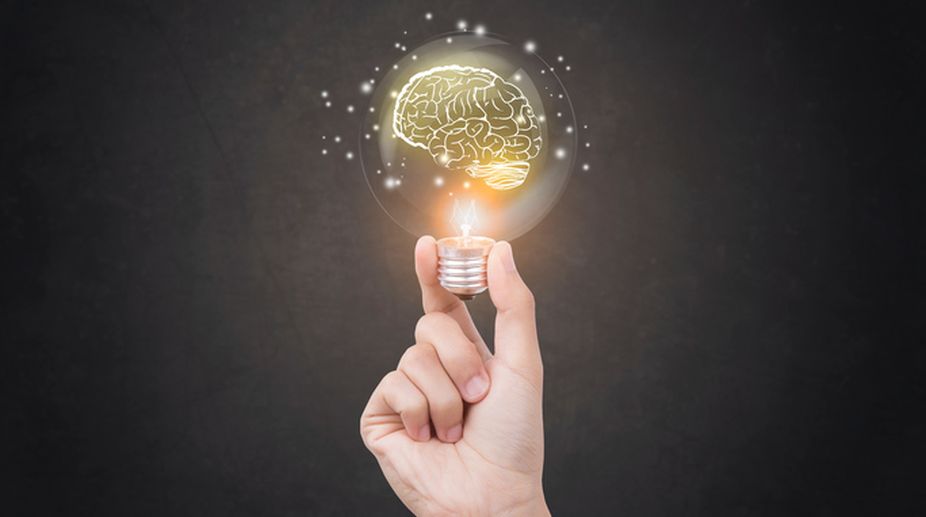
Even while you are taking rest, your brain networks may be waiting in a state of potentiation to execute even the simplest of behaviours, a finding that may help in improving treatments for neuropsychiatric syndromes, an Indian-origin researcher has showed.

In the study, the researchers studied brain network interactions between two important brain regions: the dorsal anterior cingulate cortex (dACC) — used for control — and the supplementary motor area (SMA) — used for motor movements — during a simple motor control behaviour, for example tapping forefinger to a visual cue.

The results, published in the journal PLoS One, showed that the network interactions from the SMA to the dACC increased, during the rest periods that alternated between the motor behaviour task.

"These results suggest that directional interactions from the SMA to the dACC during the rest period may in fact potentiate task-related interactions in the opposite direction," said Vaibhav Diwadkar, Professor at Wayne State University in Michigan, US.

For the study, the team used a simple experimental task, having each participant perform a simple motor control behaviour — tapping their forefinger to a visual cue — that alternated between behaviour and rest. Brain activity was acquired using functional MRI (fMRI). 

The results reveal aspects not only of normative brain function but may also provide new directions for characterising disordered network interactions in neuropsychiatric syndromes, Diwadkar added.

Poll results stamp of approval on demonetisation, say experts

IANS | New Delhi |

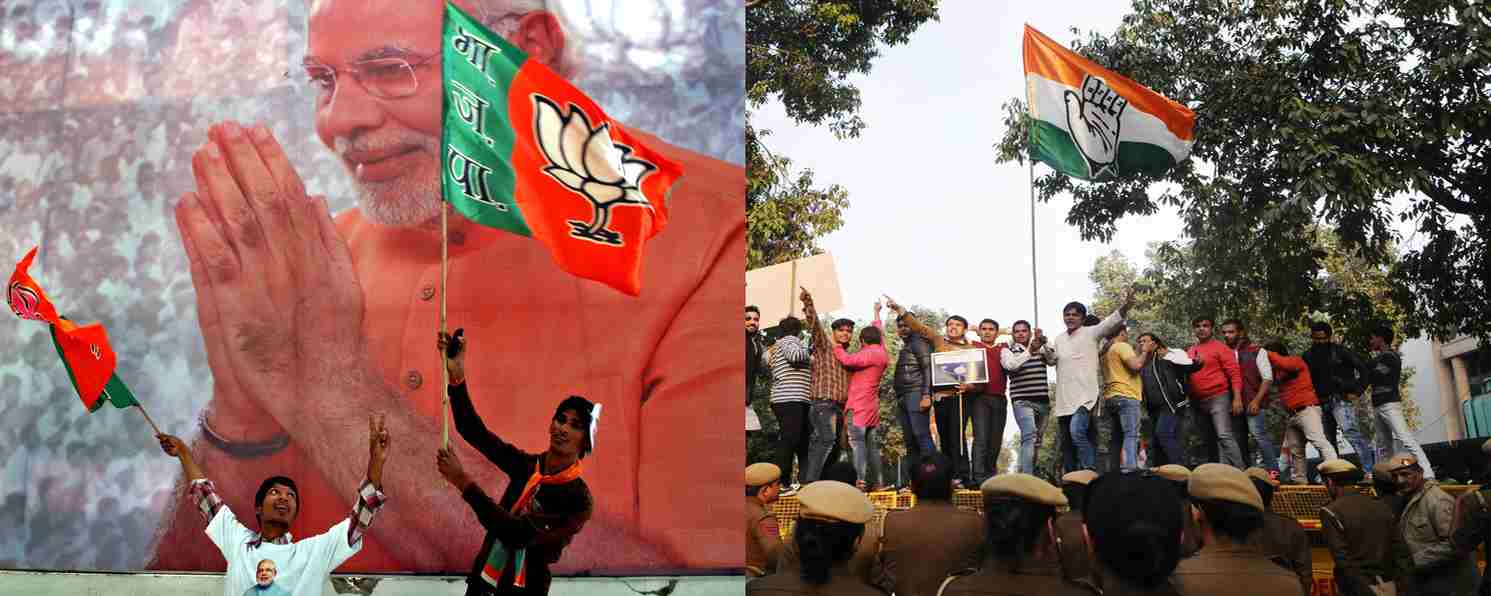
The risky decision of demonetisation — which many thought would go wrong — actually seems to have paid off for the BJP. The note ban did cause chaos in the initial weeks, but later things smoothened and generally the electorate didn't mind it as is evident from the results, say experts.

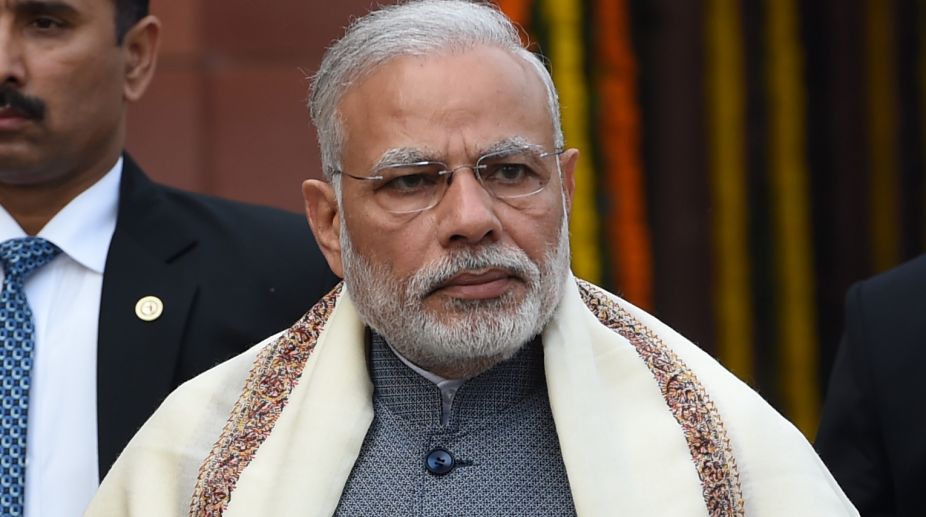
After the demonetisation move, Prime Minister Narendra Modi was attacked vehemently by the major political parties like the Congress, Samajwadi Party (SP), Bahujan Samaj Party (BSP) and West Bengal's ruling Trinamool Congress (TMC) over the issue but the decision clicked big time with the voters of Uttar Pradesh and Uttarakhand, they said.

The Bharatiya Janata Party (BJP)'s phenomenal success in the two states came close on the heels of its victory in the civic polls in Odisha, Maharashtra and Chandigarh, where the elections were held soon after the note ban.

"There were sections unhappy with demonetisation, but there were a large number of poorer people who felt that Modi was dealing with corruption, hitting at the rich," said Neerja Chowdhury, political commentator and columnist.

Chowdhury said that the people bought the argument that the move, in the long run, would do good for them, and that Modi would prove to be a messiah for the poor. 

"The verdict shows that people are willing to give him time," she said,

During the campaign in these five states, the Congress, SP, BSP and other opposition parties had alleged that the government's ban on high-denomination bank notes led to hardships for the poor, and hoped that the people would give their verdict in the polls.

"This election has been fought with demonetisation issue. There was a lot of debate going on how it will impact the elections. But demonetisation has clicked big time with the voters of UP and Uttarakhand," said Praveen Rai, political analyst at the Centre for the Study of Developing Societies.

Rai added: "The kind of victory we see for the BJP is unparalleled. Modi magic, which people thought had declined after Delhi and Bihar, has resurfaced and is almost like a resurrection for the party."

On November 8 last year, the Prime Minister had announced demonetisation of Rs 500 and Rs 1,000 notes, saying that the move would curtail the shadow economy and crackdown on the illicit and counterfeit cash used to fund illegal activities and terrorism.

The decision led to long queues outside banks and ATMs to withdraw cash.

Alok Rai, Professor at Institute of Management Studies at Banaras Hindu University, felt that demonetisation had a huge political impact.

"Lower classes of the society perceived the decision to be in their favour and against the rich. The BJP, especially the Prime Minister, succeeded to convince the voters about the decision," Rai said.

"Negative campaigning by the opposition parties paid rich dividends to Modi and the BJP," he added.

During the election campaign, the BJP leaders also raked up the issue, saying the opposition parties should take the results as a referendum on demonetisation.

Modi and BJP President Amit Shah targeted the opposition parties many a time during their election campaign, saying demonetisation had given sleepless nights to opposition leaders, including Rahul Gandhi, Babua (Akhilesh Yadav) and Bua (Mayawati).

Man arrested for intruding White House grounds

IANS | Washington |

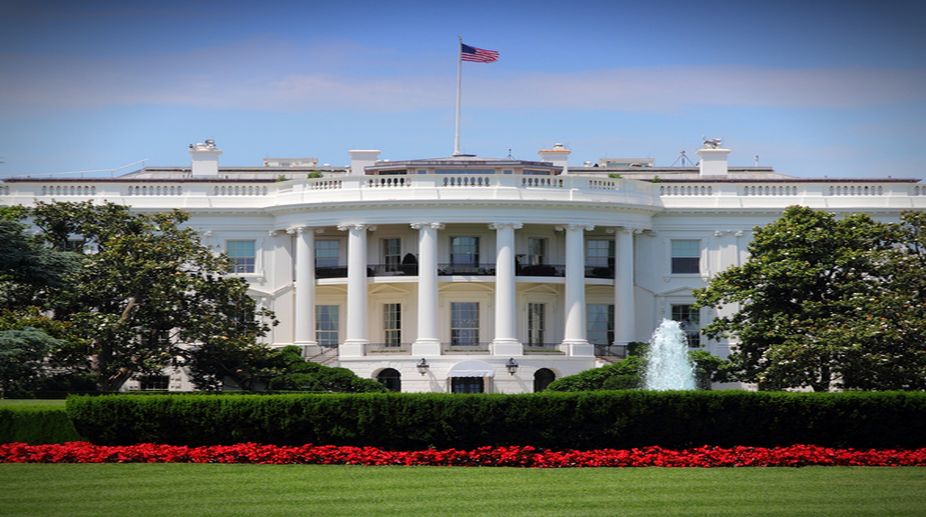
A man was arrested late on Friday after entering the White House grounds, the Secret Service said on Saturday.

The unidentified man was caught near the south entrance of the Presidential residence, it is understood that US President Donald Trump was inside the White House at the time, Xinhua news agency reported.

"I am a friend of the president, I have an appointment and I jumped the fence," the suspect was quoted by a Secret Service report as saying.

The person, who has no criminal history and no previous history involving the Secret Service, was reportedly carrying a backpack but no hazardous items.

Hung verdict in Manipur

Statesman News Service | New Delhi |

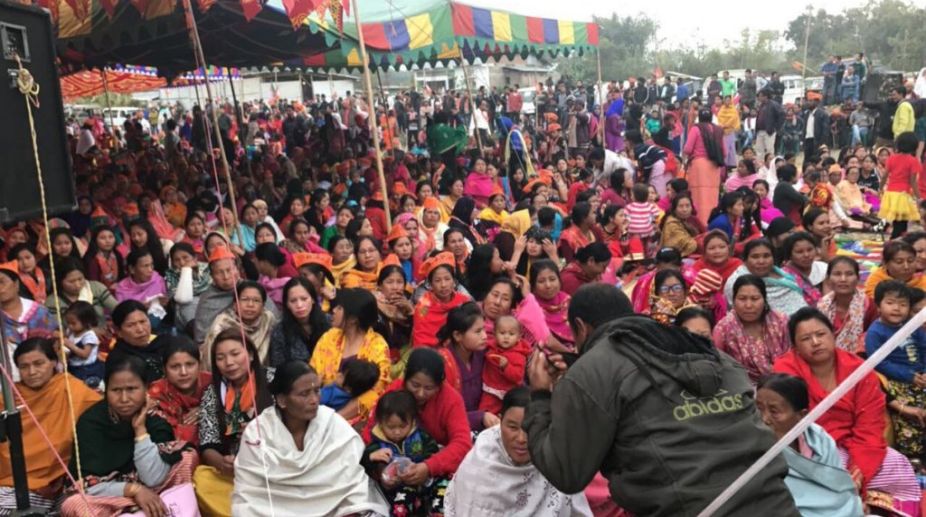
Manipur on Saturday threw up a hung Assembly with the ruling Congress bagging 28 of the 60 seats and the BJP making giant strides to muster 21.

The Congress had won 42 seats in the 2012 Assembly. The BJP, on the other hand, had no members in the outgoing House.

Human rights activist Irom Sharmila, who contested against chief minister Ibobi Singh, could secure only 90 votes and was relegated to the fourth position.

After her dismal showing, Sharmila announced that she would quit politics but continue her fight against the controversial AFSPA in the state. I am fed up with this political system. I have decided to quit active politics. I will move to south India as I need to calm my mind. But I will will continue my fight against AFSPA until and unless it is repealed, Sharmila said.

The Naga Peoples Front (NPF) and the National People's Party (NPP) bagged four seats each. The Lok Janshakti Party and an Independent candidate won one seat each. The Trinamul Congress bagged one seat. The party had won seven seats in the previous assembly polls.

Altogether 29 sitting MLAs including four Cabinet ministers of the Congress Party lost in the husting.

Ibobi Singh romped home comfortably from Thoubal constituency. So also his son and nephew, making three from the same family finding a berth in the Assembly.

The Congress and the BJP each claimed that they would form the government with the support of like-minded parties. State Congress chief T N Haokip told a news agency, We are confident that we will form the next government in Manipur. We are already in talks with like-minded secular and regional parties. State BJP president K Bhabananda Singh also exuded confidence of forming the government in the state. The NPP with four seats is expected to hold the key, as neither the Congress nor the BJP are expected to seek help from the Naga People's Front as it is seen as a party that is seeking to break up Manipur.

Prominent Congress candidates who won included Md Abdul Naser and K Jaikishen Singh. BJP leader N Biren Singh won from Heingang seat. Other prominent winners of the party included Sapam R Singh and Heikham Dingo Singh. But former state BJP chief Th Chaoba lost.

Saffron tsunami sweeps all before it in UP

Statesman News Service | New Delhi |

Uttar Pradesh was swept by a saffron tsunami on Saturday as the Bhartiya Janata Party won 323 seats in Assembly elections 2017. It was leading on one seat which would take its tally to 324. In the process the party decimated its political rivals, by halting the Samajwadi Party-Congress alliance at 55 seats and the Bahujan Samaj Party at a mere 19 seats.

It is for the first time in the history of the UP Vidhan Sabha that any party has notched a tally of 324. The last highest score of 304 seats was in 1980, in which the Congress had won. Even the BJP at the height of the Ram Janambhoomi movement could not touch the 324 mark. It could win 211 seats. The RJB movement however had laid a strong foundation for and established the presence of the saffron party in the Hindi heartland.

Saturday's victory was a culmination of this and a host of other factors, the chief being a silent Modi wave, the excellent social engineering by the BJP and RSS stalwarts which saw the Dalit votes being weaned away from the BSP and the Yadav votes from the SP in addition to the coalescing of the Other Backward Castes and the non-Jatav Dalits, to the BJP. The BJP's developmental agenda apparently struck a chord with the electorate, backed as it was with the slogan 'Sab ka saath, sab ka vikas', though the party refrained from giving a ticket to any member from the Muslim community, despite the Muslims accounting for 19 per cent of the population and being integral to the development of the state.

If the BJP's slogan struck a chord with the people, SP's national president Akhilesh Yadav's kaam bolta hai slogan came a cropper. His touting of the Lucknow-Agra Expressway and the Lucknow Metro (yet to take off ) as the 'development work' done by him had few takers, even in the Yadav heartland of Etawah, Mainpuri, Kannauj, Etah and Firozabad. The party has suffered a defeaning defeat, in constituencies which were once considered the Yadav strongholds, leading credence to the theory that there was a strong anti-incumbency against him.

The Yadav family feud apart, Akhilesh's calculated risk of striking an alliance with the Congress also came unstuck. The Congress which began its initial campaign against the SP and the BSP with the slogan '27 saal UP behaal' had to move in reverse gear once the alliance came through. The 'UP ke do ladke' could do little for the fortunes of their respective parties. The Congress faced a tough situation in its pocket borough of Amethi and Rae Bareli. Significantly, Congress president Sonia Gandhi refrained from campaigning in the just concluded polls while her daughter Priyanka Gandhi Vadra made a brief appearance once in Rae Bareli.

Some amongst the prominent losers and winners are as follows: Aparna Yadav, daughter- inlaw of Mulayam Singh Yadav who contested on an SP ticket from Lucknow Cantonment. She lost to BJP's Rita Bahuguna Joshi by a margin of over 33,000 votes. Ashutosh Tandon, son of BJP senior leader Lalji Tandon won from Lucknow East.

Swati Singh of the BJP won from the Sarojninagar constituency. Singh had shot into prominence when she took on Mayawati. Shivpal Singh Yadav of the Samajwadi Party has won from Jaswantnagar. Azam Khan, the SPs Muslim mascot has won from Rampur.

Mukhtar Ansari who contested on a BSP ticket has won from Mau while his son Abbas Ansari, also from the BSP lost from Ghosi. Sibghatullah Ansari, brother of Mukhtar Ansari has lost from Mohammadabad.

The BJP won three of the four seats of Amethi, the Gandhi family's political borough. Amita Singh of the Congress suffered a defeat at the hands of Garima Singh of the BJP in Amethi.

Interestingly, in Deoband (Saharanpur), the BJP established its presence with a victory scored by its candidate Kunwar Brijesh Singh. Raghuraj Pratap singh alias Raja Bhaiya has won as an Independent from Kunda.

It was a clean sweep for the BJP in Varanasi, Prime Minister Narendra Modi's home turf.

Like in the 2012 parliamentary elections, the Modi wave swept 52 out of 71 seats of western UP with the only major setback coming in the Kairana and Meerut, where the party's heavy-weight candidates Mriganka Singh and Laxmi Kant Vajpayee lost to their rivals. Out of 71 seats of western UP BJP had won 52, SP 15, Congress 2 and the BSP managed a single seat. In the last Assembly election, the BJP managed to win just 12 seats in the region. 

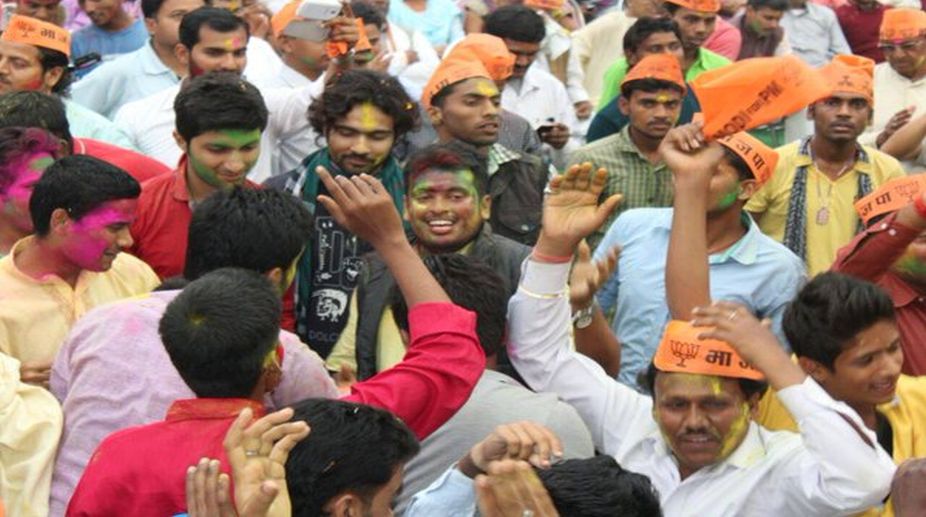
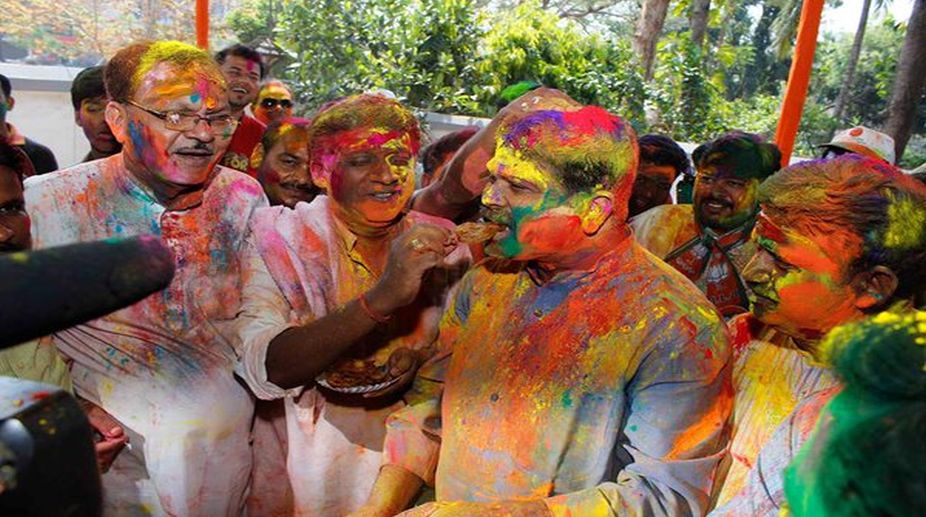
Holi comes a day early for BJP

Statesman News Service | New Delhi |

Spearheaded by Prime Minister Narendra Modi, the BJP stormed to power in Uttar Pradesh in an unprecedented fashion, sweeping the assembly elections by winning 312 of the total 403 seats in the crucial Hindi heartland state, which is likely to have a significant bearing on Mr Modi's second prime ministerial bid in 2019 general elections.

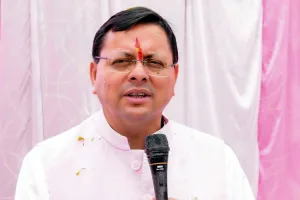
The Modi juggernaut also rolled on through the adjoining state of Uttarakhand, powering the BJP to a staggering win there as well. Fuelled by Mr Modi's electioneering, the BJP defeated the incumbent Congress comprehensively and won 57 of the total 70 seats in the Himalayan state.

For the struggling principal Opposition Congress, the silver lining in its overarching cloud of gloom and doom was the result of assembly polls in Punjab where the party, led by a spirited Capt Amarinder Singh, pulled off a landslide victory, ousting the Shiromani Akali Dal (SAD)-BJP combine from power while snuffing the emerging challenge from the debutant Aam Aadmi Party. The Congress bagged 77 of the total 117 seats in Punjab.

Hung assemblies were thrown up in BJP-ruled Goa and Congress-ruled Manipur, with the Congress emerging as the single largest party, within striking distance from a simple majority mark in both the states where it would still need the support of a couple of smaller parties or Independents for the required three seats each in this regard. The BJP is, however, expected to make fierce attempts to muster the numbers to form its own alliance governments in these two states.

In the elections to the 40-member Goa assembly, the Congress got 17 seats compared to the BJP's 13. In the 60-member Manipur House, the incumbent Congress's individual tally stood at 28 as against the BJP's 21.

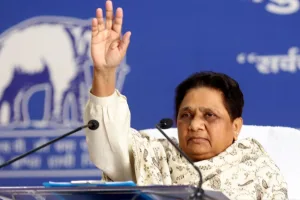
However, the most politicallysignificant results decisively came from the sprawling state of UP where riding on a Modi wave ~ for the second time since 2014 Lok Sabha elections ~ the BJP clinched a stunning triumph, even as the SP-Congress alliance forged by the SP's chief minister Akhilesh Yadav and Congress vice president Rahul Gandhi was routed and the Mayawati-led BSP was virtually wiped out.

Backed by the BJP president Amit Shah's protracted ground work, thorough planning and astute poll management, PM Modi's aggressive campaign through the length and breadth of UP in the course of its seven-phase February-March elections ensured the BJP’s spectacular return to power in the state after a gap of 15 years.

The elections in these five states, especially UP, were considered to be the first major electoral test on a mass scale for the PM Modi's demonetisation move. Given the intensity and sustained pitch with which all the rival leaders ~ including PM Modi, Mr Shah, Rahul, Akhilesh and Mayawati among others ~ raked up this issue to project their conflicting rhetoric among the people, today's poll results were perceived as "public endorsement" for the controversial note ban measure.

The BJP's rich electoral dividends in UP will also have significant ramifications for the party on several fronts ~ ranging from boosting its numbers in the Rajya Sabha where it still does not enjoy majority status, to further strengthening its role vis-a-vis the upcoming election of the new President of India, to boosting its prospects in coming elections in states like Gujarat and Karnataka.

Its most striking implication might however be felt in the 2019 general elections when thanks to the BJP's performance in Uttar Pradesh, Mr Modi could be in pole position while taking his second shot at his office.

The Uttar Pradesh election result further reinforced Mr Modi's place in the BJP's pantheon, with a legion of its leaders, Union ministers and chief ministers giving credit to his "popularity" and his "pro-poor and pro-development policies" for the party's triumph in UP and Uttarakhand.

The Opposition camp, on the other hand, blamed their polarising campaign among other factors for its debacle.

Rahul Gandhi's leadership within the Congress might have been further undermined in the wake of these results. He had invested a lot into his UP campaign, even as the party leaders and workers have been getting restive in the face of one crushing electoral defeat after another. With his mother, the Congress president Sonia Gandhi, increasingly withdrawing herself from active political work apparently due to health reasons, Rahul would also have to assume the party presidentship soon against such a grim backdrop, even as the 131-year-old party has still not been able to figure out any alternative other than its instinctive dependence on the Nehru-Gandhi family for its leadership.

Today's results have clearly dealt a severe blow to the regional players like Akhilesh and Mayawati ~ and even the AAP leader and Delhi chief minister Arvind Kejriwal ~ who will be forced to now recalibrate their politics and strategies. Despite the hype, the AAP could not achieve much in the Punjab and Goa polls.

As regards Akhilesh, who quit as Uttar Pradesh chief minister in the evening, the poll catastrophe could spark another round of bitter intra-family power struggle within the Samajwadi Party, pitting him against his father, SP founder and UP satrap Mulayam Singh, and uncle Shivpal Yadav, who might go all out to dislodge him from the party presidentship.

Victory of development, good governance: Modi

Prime Minister Narendra Modi today thanked the people of Uttar Pradesh for the BJP's historic victory in the just concluded Assembly polls to the state and termed it a win for development and good governance ~ Vikas aur sushasan ki jeet.

I thank the people of Uttar Pradesh from the bottom my heart. This is a historic victory of the BJP and a victory of development and good governance, Modi said in a series of tweets on the outcome of elections in the five states. He termed the party's victory in Uttarakhand as a special one and assured the people of the party's commitment to work for their well-being.

What next for the Opposition?

kalyani shankar | New Delhi |

In the wake of the Bhartiya Janata Party emerging stronger, efforts for a realignment of forces are very much on the cards after the Assembly poll results. The non-BJP parties may have to think of unity if they plan to contain the saffron party, which is becoming a pan-national outfit overtaking the once dominant Congress. After all there are elections to eight more states in 2018 before the 2019 Lok Sabha polls and logic suggests that the opposition parties might put up a stiff fight. 

In 2018 elections to Gujarat, Karnataka, Mizoram, Meghalaya, Nagaland, Himachal Pradesh and Tripura are scheduled. Prime Minister Narendra Modi has a personal stake in his home state, Gujarat. The BJP is keen to win Karnataka and Himachal Pradesh where the Congress and the BJP have alternated in power.  

Bihar Chief Minister Nitish Kumar has already set the ball rolling at a recent book release function in Delhi by asking the opposition to not be merely reactive, but set and follow its own agenda. Significantly, he asked why shouldn’t Congress Vice President Rahul Gandhi take the lead in setting the agenda pointing out,  "Why should they [BJP] set the agenda?
Kumar's remarks on opposition unity were shared by CPI-M General Secretary Sitaram Yechury, who said such unity should be on the basis of a common programme and not personalities. Nitish probably took this forward when he met Biju Janata Dal chief and Odisha chief minister Naveen Patnaik this week when he went to Odisha for the funeral of former Speaker Rabi Ray.

Nitish is keen to revive the Janata Dal which has split into many smaller parties including the BJD. Former Prime Minister Deve Gowda has also lent his support hinting that the regional satraps should come together to fight the BJP. The question is will Naveen Patnaik go along?  He did not do so before the 2014 polls when such a move was made. He may be having second thoughts as the BJP has performed well defeating the BJD in Panchayat polls and becoming the major opponent in the state.

But before they make the much attempted efforts for a grand alliance at the national level to challenge the BJP, the first acid test comes during the presidential and vice-presidential elections scheduled for June-July.  President  Pranab Mukherjee and Vice President Hamid Ansari will be ending their terms then. The BJP wants to put up its own candidates for both the posts despite a gap between its strength and the required number of votes.  

In the present atmosphere, a belligerent opposition is bound to put up a fight and perhaps nominate a joint candidate for both posts. This is not the first time the opposition  has adopted such a strategy. On earlier occasions it had done so but it was the Congress-led UPA that was in power and the BJP that was in opposition. For instance in 2012, the BJP-led opposition had put up former Speaker P.A. Sangma against UPA candidate Pranab Mukherjee but the latter won with a handsome majority. The UPA had repeated Hamid Ansari for the vice presidential post while the NDA supported former Finance Minister Jaswant Singh. As expected Ansari won.

This time also Prime Minister Modi has not revealed his cards about who the NDA candidate will be but the consultations would begin soon. There are already several names like those of Speaker Sumitra Mahajan and Union miister M.Venkaiah Naidu doing the rounds. One thing is certain – the  Prime Minsiter will zero in on a name acceptable or proposed by the RSS.

With a good performance in the recent Assembly polls, the BJP would have reduced the gap of 80,000 votes considerably. The BJP can get the votes from smaller parties like the TRS, AIADMK, BJD, YSR Congress and  some north-eastern regional parties and others and get its candidates elected.

The million dollar question is if the opposition can come together to take on the BJP? There are inherent contradictions. If they are looking to the 2019 Lok Sabha polls, the first thiing is to have a common minimum programme acceptable to all the partners. The second thing is to have leadership. Who will lead the opposition? Can it be Rahul Gandhi? Can it be Mamata Banerjee? Can it be Naveen Patnaik? Can it be somebody else like Arvind Kejriwal? While all these leaders are providing lip service for opposition unity, none of them will accept  the others as they are themselves aspiring for the top post. This could be a big drawback for opposition unity. 

However, all these does not mean that the opposition will not go through the motions. In what form it will come, whether it will be fractured or full-fledged  unity will be known by July. In fact Mamata had mobilised the opposition on the demonetisation issue but it was Nitish who backed out from a joint attack by supporting the move.

Prime Minister Modi and the BJP will be safe as long as the opposition remains fractured and there is no challenger. This is known to the opposition also but something makes them  remain fractured. The jury is out on whether they can come together. 

An extraordinary ordinary man

Rup Narayan Das | New Delhi |

Kuna was born as the last and sixth son of his parents. Besides the eldest, his brother, he had four older sisters. Those were the days when the large family was more of a norm rather than an exception in India. Parents also did not find it difficult to support a large family where wants were limited to the bare necessities of life.

Having two square meals was perhaps enough and if one had a bare minimum of clothes that was considered enough. Consumerism had not arrived even in the urban areas, not to speak of rural hinterland, the pristine purity of which was unpolluted.

A sense of primordial bonding, filial ties and sibling bonhomie permeated the family. Mother earth produced enough to feed a hungry stomach and nourish a growing body. Being youngest in the family, Kuna (meaning the little one) was showered with bounties of infectious affection and love by his parents and siblings.

He started going to the village school and learnt vernacular alphabets on the earthen slate. There was no mid-day meal during those days in the village school. So Kuna had to rush home during recess to have food with his mother.

All the brothers and sisters were gifted with a high degree of native intelligence, the sisters in particular were smarter than the brothers, and the brightest was Kuni, immediately elder to Kuna. Their father was a humble employee of the state transport department.

Although his salary was not enough, the produce from the land which he had outsourced supplemented his monthly salary. Life had been sailing smoothly for the family until a pall of gloom descended when their father passed away prematurely. The family was rudderless, which affected Kuna’s education adversely.

With his father’s monthly salary gone and with irregular monthly pension, Kuna at a tender age started farming the land instead of giving it for share cropping. As his sisters stayed back in the nearby district town for their college education, Kuna stayed in his ancestral home and looked after his widowed mother.

The mother and son ensured that the sisters’ education faced no impediment. As a teenager, when boys of his age indulged in boisterous pastimes, Kuna started shouldering heavy responsibilities like arranging finances for higher education of his sisters and getting them married. It was a gargantuan task.

The strong-willed Kuna did it with rock-like determination and firm resolve. While he himself didn’t have the benefit of an education, he left no stone unturned for the education of his sisters. His efforts and his mother’s deeds bore fruit when Kuni, his elder sister, passed her M.Sc degree with flying colours from the top university in the state and was selected for a Ph.D with a notable fellowship in a premier university in Delhi, where subsequently she was appointed as a lecturer in a prestigious college.

Coming from a humble background fighting all odds, it was like a dream come true for Kuni when she started taking classes. It was as much the triumph of her dogged determination as it was India’s democratic ethos of providing a level playing field and equal opportunities.

Kuna’s other sisters in the meanwhile  raised families, built fancy houses in town, bought cars, sent their children to good schools and colleges.

Kuna, however, remained the same, living in the thatched house without electric light and looking after his mother. He has no regret about anything, remains happy and contented. He would spurn any overture for help from others, while religiously discharging his social and familial obligations.

All the family members along with their children would congregate on occasions such as death anniversaries of his father and of his mother who had by then passed away or during Durga Puja. Kuna would enjoy the family reunion with a sense of fulfillment.

Are the railways getting derailed?

Aarti khosla | New Delhi |

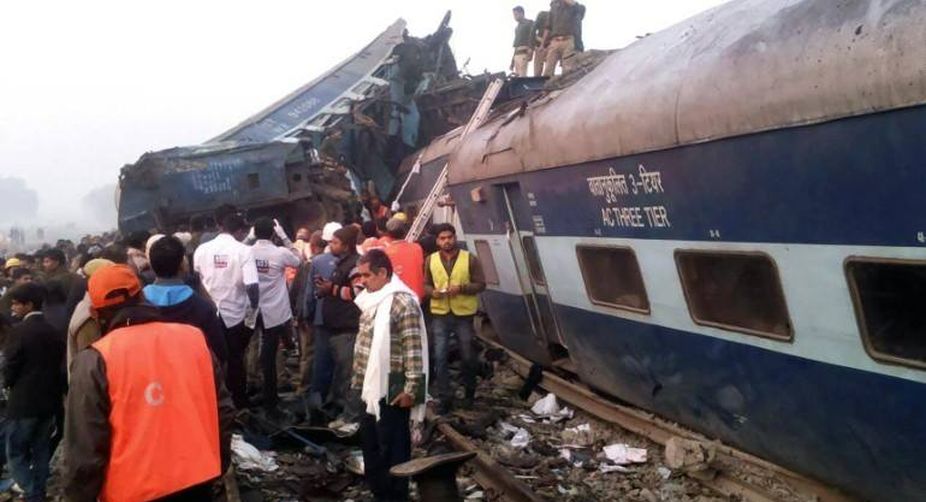
Of the 803 serious accidents (the minor ones run into thousands) between 2009-10 and 2014-15, 373 were due to derailments. In the recent past too, most major accidents were due to derailment. The accident of the Indore-Patna Express near Kanpur Dehat on 20 November 2016 which killed 150 people and injured many was again, it appears, due to derailment notwithstanding the suspicion of sabotage by elements from across the border.

There is no denying the fact that railway tracks are in bad shape and all such accidents are taking place, as a senior U.P Railway Police Officer said the other day in the context of the Indore Patna Express mishap, “due to fatigue of railway tracks”. A month after this accident, 15 bogies of the Sealdah-Ajmer Express derailed near Kanpur. In January this year, a passenger train derailed in Kuneru (Andhra Pradesh) killing at least 41 people and injuring 68.

The government which took charge in the country in 2014 had big plans for the Railways. Unfortunately, priorities got misplaced. The accidents on August 5 2015 of the Kamayani Express and of the Janta Express between Khirkiya and Bhirangi in Harda, Madhya Pradesh killing 25 people and injuring many and on March 20 that year of the Dehradun-Varanasi Janta Express due to derailment near Rae Baraeli killing 39 and injuring 150 should have made the railway administration realise what their immediate task was.

Not the bullet train, not demolishing historical harmless practices like a separate Railway Budget  but to attend to overdue replacement of track and rolling stock  by infusing massive funds and doing the work on war footing.

Replacement of worn out track and induction of new locos, coaches and wagons suffered because finances were not in robust shape. With earnings down and expenditure up, the first rescue operation for the sick organization was to restore its financial health by consulting experts if needed.

Instead we got down to restructuring this behemoth which had been delivering in spite of the neglect in its maintenance. A committee was appointed in September 2014 to advise on restructuring. It gave its report in June 2015. Of the nine members of the committee only one   knew the system well, having retired from the railways as Financial Commissioner. The rest had to first understand the organization and its vast operations before pinpointing what was wrong and suggesting what kind of restructuring would get better results.

The Committee was not given enough time to do so. Its recommendations are so radical that if implemented these are going to demolish a well-tried system and bring about chaos. Instead of reform we seem to have got on the path of derailing a system on the basis of these experts’ advice. The railway ministry is implementing the recommendations of this committee without properly examining implications and discussing them with the real experts in railway working.
Merger of Railway Budget with the General Budget was one such recommendation. Doing away with a practice in existence for more than 90 years has done no good to the railways. It has diluted functional autonomy and financial independence in spite of assurances to the contrary.

Listing of three railway PSUs on the stock exchange was announced by the Finance Minister while presenting the General Budget without consulting the Railway Ministry. Withdrawal of service charge on e-tickets booked through Indian Railway Catering and Tourist Corporation (IRCTC) has put the corporation in a fix as its profit hinges upon that. This again was without the knowledge of Railway Board.

Contradictions abound in approaches being taken on several fronts. On one side General Managers have been delegated immense powers in matters of procurement. On the other hand Railways’ autonomy and independent handling of finances, which was the objective behind separation of railway finances and hence a separate Budget, has been given a death blow.

The Finance ministry has also asked the railways to pass on dividend from their PSUs to them. This dividend of nearly Rs 850 crore was a part of railway revenue. Other implications of this merger adopted in a hurry will be seen in a due course. The missing Budget papers – like the Pink Book listing Works Programmes, the Statement of Account along with the Minister’s speech – leave the railway managers without goalposts for the year.

The only benefit envisaged by this merger was to free the railways from being treated by successive railway ministers as their fief for announcing schemes in their home states at the cost of other needs. This could have been achieved by vetting the budget proposals at the highest level. In any case under the strong leadership of the present Prime Minister no Railway minister would have done so.

Everything from the past is not bad. The Chairman of the Committee on Restructuring has himself admitted after studying the history of Indian Railways and which inspired him to come up with a book that “we cannot delink present from the past and that 19th century issues still hold relevance today”. Unfortunately this discovery was made by him after he had presented the report. I wish he had read the history of the Railways in order to write a book before outlining the recommendations in the report.

Another recommendation of the committee which if implemented would have disastrous consequences without any benefit is to merge all Group A services into one single entity. The objective is to end the silo mentality of each department. Each of the existing eight Group A services (four of which form part of Civil Services Exam held by UPSC) has a distinct role. The Indian Railway Traffic service is responsible for operating the network as well for marketing. The Personnel Service handles personnel management of the 1.3 million plus work force. The Indian Railway Accounts service is the watchdog of Railway finances, stock verification, vetting all proposals from the return on expenditure angle.

Civil Engineers are responsible for construction and maintenance of railway buildings and track, the mechanical engineers are required for production and repairs of locos, wagons and coaches and the electrical engineers for traction. Combining all services into one Railway service will not only mess up the careers of thousands of officers but also result in messing up the whole system. 

The silo mentality which this recommendation proposes to eliminate can be taken care of by a simple solution – of having the Chairman of the Railway Board from outside. He could be a man from a non-Railway service or someone from the corporate sector who can address the overall interests of the system and prevent a departmental approach. The Railway minister himself can prevent promotion of one department at the cost of others.Combining all services into one Railway service is neither feasible nor desirable. It is like making one service out of the IAS, IPS, IFS and other Central services to curb complaints against the domination of one service and rivalry among them. It is also not in the interest of the railways to take away the Railway Protection Force from them and keep it under Home ministry. Railways need a dedicated apparatus for safety of goods they transport as also the security of 3 crore passengers they move every day.

Similarly, the railways need a separate medical department for their workers and to take care of emergencies in accidents. Abolishing the medical department and moving it to the Health ministry will be a body blow not only to the health needs of railway employees but will also make services under the Central Government Health Scheme unmanageable. Revamping in this manner is a destructive approach.

One major harm done to the railways under the present dispensation is diluting the role of Financial Commissioner and that of the Finance department of which he is the head. When the post came into existence in 1924 with separation of railway finances from general finances his role as envisaged was superior to that of the Chief  Commissioner (as the Chairman, Railway Board was known then) as well to other Members called Commissioners then. The Board could not ignore his advice; not even the Railway Minister could.

In case of difference of opinion with the Railway Minister he could go to the Finance Minister to make his opinion binding since he also represented the Finance ministry. This was an ex-cadre post and could be filled by an officer from any other service. With the post becoming a cadre post of the Indian Railway Accounts service after the Fifth Pay Commission an officer of this service fills that post. Considering the importance, however, of the post besides seniority, the merit plus at least one-year service left criteria were taken into account in selection.

Now these principles have been given up and the post is filled by the senior-most person of the service. As a result, for the past two years there has been a new Financial Commissioner after every few months. There appears to be a deliberate attempt to weaken the institution and the service itself. Maybe because they are not accepting some wild plans costing money without tangible benefits.

All this does not augur well for the Railways. Under pressure from the PM, the Railways want to show that they are moving on many fronts. There are plans for high-speed trains, for doing a China in connecting Dhaka with Istanbul for carrying freight, for running a train between Kathmandu and Kolkata and Delhi. All that is fine and Indian Railways do have the capability to execute such projects.

But the immediate concern should be to strengthen the system and not tinker with it, to equip the manpower to face challenges before them in transporting millions of people and millions of tons of goods from one corner of the country to another safely rather than destroy a well-established system and replace it with untried management ideas of theorists.

The writer is former Additional Secretary Govt. of India and former Executive Director, Finance Railway Board.


Bru issue deserves Delhi’s attention

Editorial | New Delhi |

ABOUT 30,000 Bru (formerly known as Reang) refugees from Mizoram, languishing in Tripura’s evacuee camps, continue to face an uncertain future They are part of nearly 45,000 who fled the state following the killing (by suspected Bru rebels) in October 1997 of a Mizo forest warden after which local youths swooped on their villages and triggered a mass exodus. Over the years, some of them have been repatriated, many voluntarily deserted the camps, and a few died of disease. Even efforts by the Supreme Court and human rights organisations have failed to spur the Mizoram government into undertaking expedious dispersal. The present chief minister, Lal Thanhawla, was in the saddle when the exodus took place. But before he could handle the situation he lost the assembly election and his successor, Mizo National Front leader Zoramthanga, also followed Lal Thanhawla’s policy ~ that only those who could prove their bona fides as Mizo residents and those whose names appeared in the 1995 voters’ lists would be taken back.

After the recent identification of some 22,000, the repariation procees was to resume, but latest reports suggest it will be a non-starter. It is clear that unless there is a marked change in the Mizoram government’s attitude ~ and it accepts the issue in its total perspective ~ the issue will remain a festering sore for the administration. Perhaps the Brus might have to depend on the BJP to come to their rescue. Already there are reports of the RSS asking BLP leaders to look into the matter, obviously for their own political gain. Since the BJP boasts that it solves people’s problems, it might act, depending on the outcome of the Manipur assembly election.

A President’s ignominious end

Editorial | New Delhi |

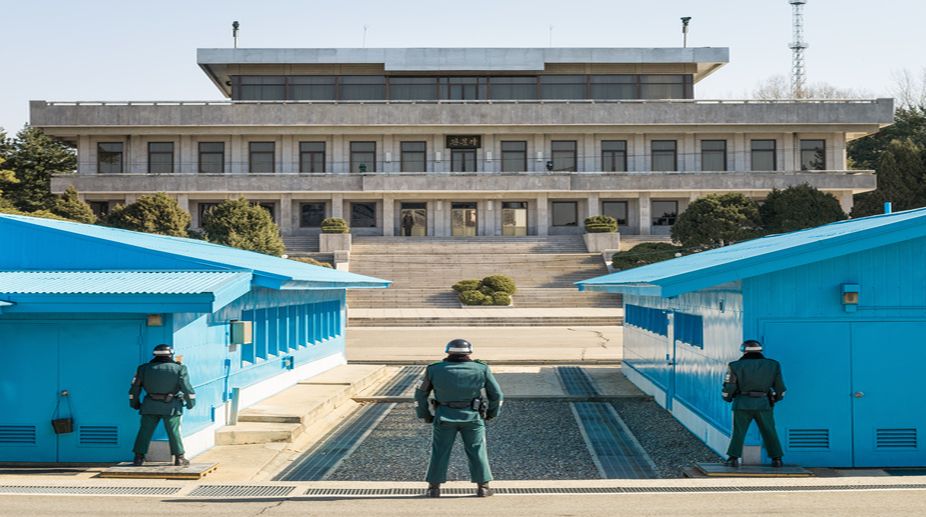
BOTH sides of the Korean Demilitarized Zone (DMZ) are in crisis. North Korea, however impoverished and insular, has grabbed international attention owing to its nuclear ambition and now the killing of its President’s half-brother. At another remove, governance in South Korea has been shaken to its foundations with Friday’s dramatic development that renders Park Geun-hye, the first democratically-elected President of South Korea, to be forced out of office. The constitutional court has upheld a parliamentary vote to impeach her over a corruption and cronyism scandal that could see her face criminal charges. The eight judges of the court have upheld December’s impeachment motion of the National Assembly.

The highest judiciary has reaffirmed the legislature’s principal charges against Park ~ extortion, bribery, abuse of power and leaking of government secrets. In most countries, the concept of the law taking its course regretfully remains a consummation devoutly wished; the fact that it attained fruition in Seoul on Friday testifies to its inherent democratic certitudes. Park will now have to forfeit the executive immunity to criminal indictment that she enjoyed as the country’s President. Having held the rarefied office for four years, she has now met an ignominious end. The verdict is a searing indictment of Park’s rule ~ “The President’s actions have seriously impaired the spirit of democracy and the rule of law. Her actions betrayed the people’s confidence. They are a grave violation of law, which cannot be tolerated. President Park Geun-Hye has been dismissed.”

The waters of the South are now no less murky than in the North. It bears recall that Park’s impeachment in December came after months of deeply damaging revelations about her relationship with Choi Soon-sil, a longtime friend with whom she is suspected of conspiring to secure donations worth tens of millions of dollars from major companies for foundations set up by Choi. Samsung, for instance, donated, $36 million ~ more than any other firm ~ to the foundations and allegedly gave millions of euros to Choi to fund her daughter’s equestrian training in Germany. The firm has strongly denied allegations that it expected political favours from Park in return. She has also been accused of allowing Choi to secretly meddle in state affairs, including economic policy and Seoul’s relations with the North Korean regime in Pyongyang. A new leader will have to be elected within 60 days. As Park Geun-hye steps out of Blue House ~ the presidential palace ~ she bequeaths a direly depleted legacy to the next occupant.

Modi’s appeal, Shah’s strategy make up BJP’s magic wand

IANS | New Delhi |

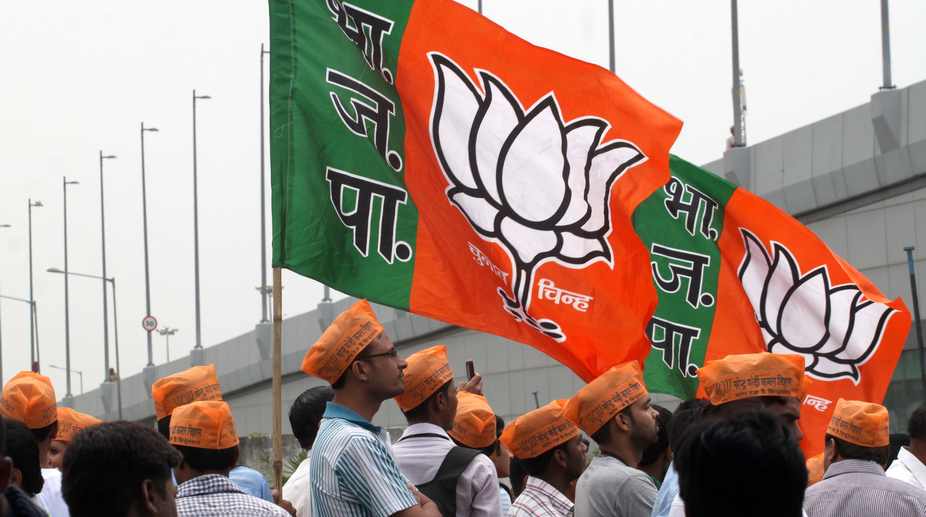
Prime Minister Narendra Modi's electoral appeal, central government's pro-poor schemes and Amit Shah's social engineering helped the BJP pull off a stunning victory in Uttar Pradesh, the country's most crucial electoral state, say party leaders.

BJP got three-fourth majorities on its own both in Uttar Pradesh and Uttarakhand, leaving its opponents perplexed. 

The BJP worked to a plan in Uttar Pradesh considering the significance of the outcome for the party's prospects in the 2019 Lok Sabha elections, given the state's 80 seats, said BJP sources, adding the party carefully planned its electoral moves, executed them meticulously and made changes and adjustments as the situation warranted. 

The party's manifesto had specific promises for various sections, including farmers who comprise a large section of voters. It focused on non-Yadav Other Backward Classes and non-Jatav Dalits to expand its support base that also included the forward castes and the aspirational class.

Learning its lessons from Bihar election in 2015 , the party made kept modifying its electoral rhetoric while seeking to keep the ruling Samajwadi Party on the defensive over the law and order situation in the state and its governance record. 
It also raised issues that had wide resonance with people including perceived favouritism and closeness of SP leadership to a particular community.

BJP leaders said that central government's pro-poor schemes, including Pradhan Mantri Ujjwala Yojana which entails poor women getting a gas cylinder, created a lot of goodwill for the party in villages and particularly among women.

"Around 55 lakh people in the state benefited from Ujjwala Yojana in Uttar Pradesh," a BJP leader said.
Party leaders said that care was taken on honest and efficient implementation of the central schemes so that there were no complaints. 
They also said that party chief Amit Shah focused on micro-level booth management for the party's success as he had done in the 2014 Lok Sabha elections when BJP had won 71 of 80 seats. 

They said that the party was keen to make the campaign "Modi centric" and both Chief Minister Akhilesh Yadav and Congress Vice President Rahul Gandhi helped matters by focusing on the Prime Minister in their speeches. 

BJP sources said that Akhilesh Yadav's decision to give 105 seats to the Congress and agreeing to contest 298 seats was a "strategic blunder".

"The SP had won 224 seats in 2012 election and agreed to fight only about 70 more seats. The decision naturally made many SP candidates unhappy," he said. 

Modi invested heavily in the campaign, addressing several rallies and giving the campaign a final push by campaigning for three days in his Lok Sabha constituency of Varanasi. Modi's rallies drew enthusiastic response form the people.

With demonetisation having caused some problems to people, Modi addressed the issue in several of his rallies and highlighted it as an essential step to fight corruption and the corrupt. 

Analysts said that no Prime Minister before Modi had campaigned so intensively in a state election and the victory had further consolidated his position as also that of Shah. 

"Prime Ministers normally do not campaign extensively in state election. They leave it to others in the party," political commentator S. Nihal Singh told IANS.

He said Modi was also keen on improving BJP's tally in Rajya Sabha, where the government lacks majority and had invested heavily in the campaign. 

Subrata Mukherjee, a political anaylst who has taught in Delhi University, said that UP election had proved that "magic of Modi continues as there is no comparable leader in the opposition." 

The BJP also sewed strategic alliances to galvanise non-Yadav OBC vote and gave the community sizeable number of tickets. 

As part of the party's strategy to woo the numerically significant community, the party had appointed Keshav Prasad Maurya as state party chief and inducted Swami Prasad Maurya into the party from Bahujan Samaj Party.

Course set for 2019

Editorial | New Delhi |

THE Saffron surge that swept down from the Himalayas through the plains along the Ganga has proved that for the Modi-Shah electoral machine the reverses in Delhi and Bihar were mere aberrations. For the runaway successes in UP and Uttarakhand have more than compensated for the ousting of the Akali-BJP government in Punjab. Clarity on Manipur and Goa was yet to emerge at the time of writing this commentary, and more detailed analysis must await the publication of official results. There, however, can be no denying the effectiveness of the BJP campaign, which could well chart the course for coming assembly elections and the “big one” a little over two years away. While there can be no denying the often divisive nature of the line that Narendra Modi and Amit Shah sold the voter, they obviously did much more than that ~ which paid rich dividends. For in reality the BJP rode piggy-back on their “appeal”, and the strategy of not nominating a chief ministerial candidate “worked”: the voter had no one who attracted their disfavour. Certainly, demonetisation did not hurt the party. Whether UP, Uttarakhand etc can be managed by remote-control remains an open question: faith in Modi might not suffice for good governance.

The Congress’ success in Punjab was again a personal rather than a party win. And the collapse of the Badals was expected, even before the pollsters spelt that out. The Aam Aadmi Party did much bragging but voters in Punjab and Goa were not “swept away”. The Samajwadi took a body blow when the father-son combine of the Yadavs came unstuck. A section of the Samajwadi feels Akhlilesh shot himself in the foot when joining forces with Rahul Gandhi, who they insist was a debilitating dead-weight. The Indian electoral game is “not playing cricket”: if it was the Congress would have replaced its skipper long ago. If another trouncing does not enable it to muster the guts to bite the bullet, the “senior-most” political party will commit hara-kiri. Sheila Dikshit must be extremely happy that she was “by-passed” when Rahul switched horses mid-stream, further proof of him not being in the “big league”. Is the Congress so emaciated that it cannot redeem its fortunes?

The “close calls” in Goa and Manipur could translate into money-power tilting the scales but it is better to wait and watch. For now the BJP is entitled to its high spirits. For while its prospects for 2019 have been floodlit, in the short term it will have an easier time in the Rajya Sabha and the coming Presidential election.

Enigma that is

Abhijit Bhattacharyya | New Delhi |

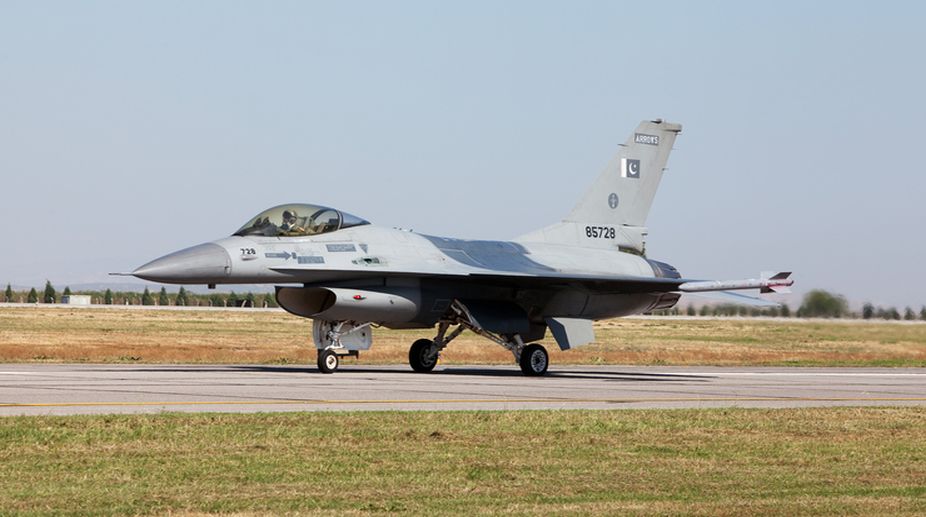
EVEN to the best informed in India, Burma (now known as Myanmar) still appears to be an enigma. Though an immediate eastern neighbour with 1624 km (1015 miles) of shared international border with four of India’s north-eastern states (Mizoram, Manipur, Nagaland, Arunachal) and despite cordial bilateral relations between Naypyidaw and New Delhi, it is the ticklish issues that get highlighted. In the context of reports that “Myanmar is in advanced negotiations to license-build JF-17 fighters”, there is understandable concern in New Delhi. This is not because Myanmar is negotiating on fighter aircraft, but owing to the origin of the proposed aircraft acquisition programme. Why should India be concerned about Myanmar’s plan for “license-building JF-17 fighters”, and how does it affect Myanmar? Why should India rack its brain as to whether Myanmar’s action denotes a proposal to import technology and build the flying machine on its soil or whether it means direct import of the aircraft from the manufacturer’s (China or Pakistan) plant?
Indeed, these are all pertinent points. Nevertheless, the possibility of the latter scenario (i.e. import), appears unlikely at this point in time because though Myanmar does not figure in the global list of aircraft manufacturing countries of Jane’s all the world’s aircraft 2016-2017, it is now “in advanced negotiations with Pakistan to license-build the third generation fighter”. This in itself is a matter of concern for India. The position is clear. Myanmar is to start from scratch, despite the possibility of a long gestation period.

The full story, therefore, is that Myanmar is going to “license-build Pakistani JF-17 fighters” after having decided earlier to purchase 16 craft of the same type in 2015. The Myanmar initiative has two aspects ~ first, direct import of 16 (readymade) aircraft from Pakistan. Second, indigenised manufacture of Sino-Pak (origin) imported aircraft through collaboration/joint venture. No doubt Myanmar, as a sovereign country, has every right to exercise its discretion and choose its defence hardware; nevertheless there does seem something more than what prima facie meets the eye.
Could India have been of some use to its friendly eastern neighbour, following New Delhi’s professed “Look East policy” of the Atal Bihari Vajpayee era? Has India been a tad slow to assess the possible emerging (future) fighter scenario in the East? Can something be done even now? There is little doubt that India can still revisit its Myanmar policy to recalibrate the eastern bilateral. The reason is simple, yet complicated. Both Naypyidaw and New Delhi face severe turbulence in multiple points of their respective territorial jurisdiction. The 5 crore 70 lakh populace of Myanmar (with 68 per cent Burmese; nine per cent Shan; seven per cent Karen; four per cent Rakhine; three per cent Chinese; and another nine per cent Chin, Kachin, Kavan, Lahu, Mon, Palaung, Pao and Wa) continues to be in the grip of the world’s longest running insurgencies which are essentially conducted by Karen, Kachin, Mon, Shan and a few other ethnic-minority groups. The Myanmar army held absolute political sway from 1988 to 2015, and things have changed only to an extent after the advent of the democratically elected government in November 2015.

The main feature of Myanmar’s long standing security scenario is that it continues to face more problems from within than from across its border. Owing to its counter-insurgency focus, the army of Myanmar (which is the largest among its three defence wings, with a strength of 375000 personnel) is essentially a light infantry force. Myanmar’s 15000-strong Air Force with 167 combat capable aircraft and 16000-man Navy are no match to the numerical strength and fire power of its Army. However, it is the fleet of obsolete air force fighters (Chinese made F-7M Airguard and A-5C Fantan) of 1990s vintage which compelled Myanmar to first import, and now initiate indigenous production.   

The picture is stark. Myanmar needs air-fleet modernisation. Things are in the public domain. Myanmar is a steady, stable and friendly neighbour which does not sermonise on “asymmetry” as is being done by China; or send Lashkar, mujahideen and ghazis, to Indian soil, like the Pakistanis. Hence Myanmar’s needs should have been favourably appreciated and assessed at least a decade ago. There is a lot in common between Naypyidaw and New Delhi pertaining to mutual safety, security, terror and sovereignty.

Indeed, even a cursory glance at the map would convince a layman of the geostrategic and geopolitical importance of Myanmar in South Asia in general, and for India’s eastern flank in particular. Moreover, like Myanmar, India too has its own “overlapping-situations” in the area surrounding its north-east frontier region. India’s north-east has been a favourite fishing ground of China and Pakistan’s ISI since the 1970s, and there is no reason to believe that the situation would be any better owing to the deeply entrenched Sino-Pak agenda of terror-promotion to checkmate India in its own terrain, notwithstanding the glib talk of OBOR (one belt one road) and “mutual development and prosperity”.

Coming back to Myanmar’s eye on the Sino-Pakistan fighter aircraft, one is convinced that it is bound to make the country more vulnerable as setting up an aircraft manufacturing plant would give Islamabad a perfect, justifiable alibi to expand its wings for direct connectivity with its Chinese mentor through third party terrain. Myanmar, instead of becoming safer, is likely to be more unsafe. The country’s geography comes as a bonus for any power with a long view on India’s north-east. And it must be admitted that when it comes to spreading terror and fanning religious hatred, no nation can either match or substitute the “strategic depth” psyche of Pakistan’s ISI-army duo.

A few words on the JF-17 aircraft may be in order. Launched in 1991 at Chengdu, collaboration with Pakistan was initiated in 1992 and the formal Pakistani production line was launched in January 2008 at Kamra. Pakistani pilots were reportedly very critical of Chinese avionics and sought western alternatives for an updated batch of the craft. As on date, however, the production agreement assigns 58 per cent work-share to Pakistan and the balance to China thereby making Myanmar a “deep penetration strike target” by a joint Sino-Pak venture. The short point of the long story is clear. India is bound to see graver threat to its security in its friendly neighbourhood, followed by a deeper one on its own north-east frontier.

(The writer is an alumnus of National Defence College of India. The views expressed are personal)

Holi drinks and delicacies you must savour

Deepa Gupta | New Delhi |

The festival of colours, Holi is all about unlimited joy and merry making. It is the most vibrant time for Indians to have fun with family and friends. Celebrated across the country with the splashing of colours, music, dance and feasts, the festival provides a glimpse of a lively India.

Holi signifies the triumph of good over evil. The effigy of Holika demoness is burnt a day before. The very next day is celebrated with extreme pomp and show. Drenched in colourful water, people greet each-other splashing gulal. Over time, the festival became the heart-winner of food lovers. It gives an opportunity to cook and serve traditional dishes that have the essence of the vibrant festival. The festival marks the end of winter and beginning of summer.

If you are planning to enjoy Holi by way of food, these items should be on your menu-

Holi Drinks

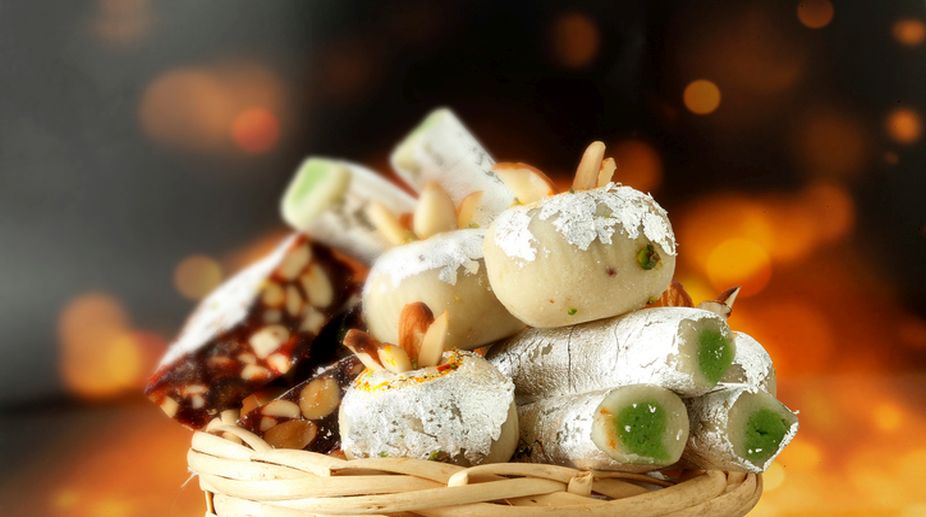
Bhang thandai – It is the highlight of the Holi festival. The desi cocktail made with cannabis, aromatic Indian spices and herbs is a must-to-have drink for all those playing Holi to enjoy the festival in a traditional way.

Black carrot kanji – This kaanji is truly the perfect bright drink for Holi that matches well with the festival of colours. The probiotic fermented drink comes close second to the bhang thandai comprising of mustard seeds powder along with salt and red chilli powder dissolved in water.

Kanji vada – It is a delicious and refreshing drink made and served during Holi. It is a good beverage for digestive system, especially when you eat a lot of fried food and sweets that can disturb your system.

Holi snacks

Bhang pakodasBhang pakoda is the most popular snack during Holi festivities. No other snack can substitute it as a festive spirit booster. You may surprise your guests with this crispy delight served with tangy mint chutney.

Gol-Gappas – The festival demands for a fiery snack and nothing can beat Gol-Gappas to serve the purpose. To fill them more with the essence of the festival, you can make bhang induced mint water. It will give a kick to the festive merriment.

Dahi-Bhalla – This snack is always welcome on Holi. It is multi-purpose and can be served as a starter or with the main course. They can be made a day before and served on the day of Holi.

Aaloo chaat – Different flavours include hot and spicy aaloo chaat seasoned with Indian spices. While playing with colours, one needs to satisfy the taste buds with scrumptious food. It is delicious and easy to make.

Holi sweets

Gujiya – The sweet pastries made with refined flour and stuffed with sweetened khoya, coconut and dry fruits is the most popular Holi festive favourite. In Northern India, it is said to be a mandatory offering to the God on this day. It is more like a ritual to serve or exchange gujiyas to greet people on the festival.

Maal pua – It is a traditional Holi sweet of Bihar and Jharkhand that has become popular in other states of India with the passage of time. The scrumptious dessert goes awesome with chatpata holi snacks and bhang thandai.

Badaam kesar kulfi – Sweet aroma of kulfi fills the air with grand masti. Its unique ingredients taste well with spicy hot snacks and colours all around.

Add theses tastes to your celebration. However, becareful. Don’t drive after consuming them.

Be sensible, be safe. HAVE A HAPPY HOLI!

BSNL to tie-up with cable operators for broadband services

PTI | Karimnagar |

The Bharat Sanchar Nigam Limited (BSNL) will soon be tying up with local cable network operators in Telangana to provide broadband services to its customers.

"We have already tied up our broadband services with some of the local cable operators in Warangal district successfully. By May 2017 we will tie up with private cable operators in Karimnagar too," BSNL AP Circle Chief General Manager L Anantharam told reporters here today.

"BSNL will provide cable and maintenance besides infrastructure to the cable operators. They will run their cable television and we will give landline, broadband and voice calls to our customers," he said.

The NGN (Next Generation Network) exchange of 4,000 lines is commissioned by replacing existing new technology exchange in three exchanges in Karimnagar town, the official said.

With this, the landline subscribers can avail IP Centrex, video calling, group video conferencing facilities, he said.

By March 15 as many as 20 hotspots for Wi-Fi will be launched in Karimnagar, the Chief General Manager said.

Giving details of new prepaid connections, he said 96,650 new customers have been added into BSNL prepaid services and the number will cross one lakh by the end of this month.

PM condoles deaths of CRPF personnel in Sukma

Statesman News Service | New Delhi |

Prime Minister Narendra Modi today expressed sadness over the killing of CRPF personnel in a naxal attack in Chhattisgarh and took stock of the situation from Union Home Minister Rajnath Singh. 

“Saddened by the killing of CRPF personnel in Sukma. Tributes to the martyrs and condolences to their families. May the injured recover quickly,” the Prime Minister tweeted condoling the death of 11 CRPF personnel who were killed by naxals this morning when a patrol party of CRPF's 219 battalion was out for a road opening task near Kotacheru village in Sukma district of Chhattisgarh. 

The Home Minister also condoled the deaths and said the perpetrators of the attack will be brought to justice. " Deeply pained to learn of the killing of CRPF personnel in Sukma. My heartfelt condolences to the families of the deceased…..The Centre is in direct communication with the state government. Those who perpetrated this incident in Sukma will be brought to justice,” he tweeted. 

The Home Minister said he would be going to Raipur to pay respects to the martyred CRPF personnel  and take stock of the situation. Mr Singh has also spoken to the Chhattisgarh CM regarding the Sukma incident and enquired about the medical assistance to the injured.