Logo

India seeks Indonesia’s help in cementing ties with ASEAN

IANS | New Delhi |

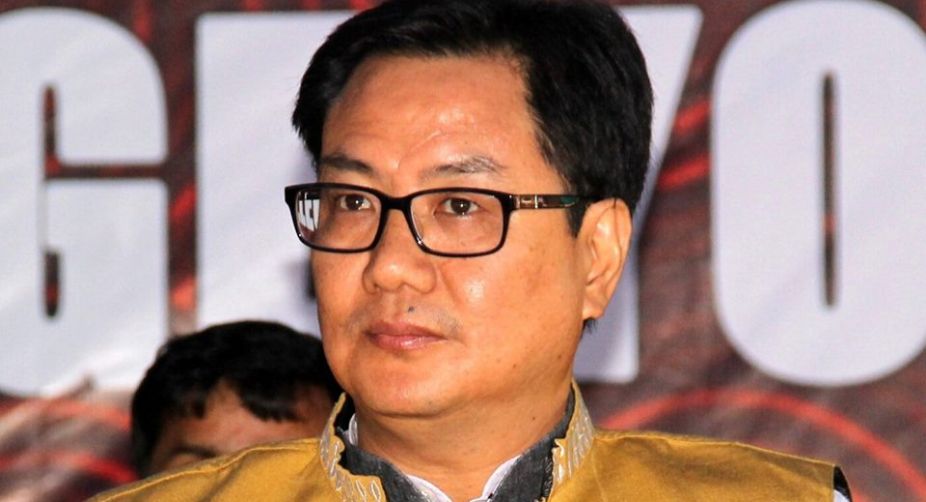
Union Minister of State for Home Kiren Rijiju on Tuesday sought Indonesia's partnership in cementing India's ties with the ASEAN bloc.

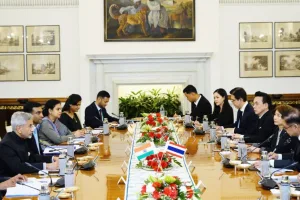
In a meeting here with Indonasia's Coordinating Political, Legal and Security Affairs Minister Wiranto, Rijiju said India recognised the former's country's key role in the Association of Southeast Asian Nations (ASEAN) and appreciated its strong commitment to regional peace and security. 

Pointing out that the two countries share a lot of similarities, democratic set-up and common cultural and social ties, Rijiju said: "India is eager to consolidate its partnership with the largest nation in southeast Asia to cement its ties with the ASEAN bloc."

Wiranto is in the national capital and leading an Indonasian delegation. 

Both the leaders shared concerns on tackling fundamentalism, extremism and the threat posed by radicalisation and the Islamic State, an official statement said. 

Recalling his visit to Bali for the International meeting on counter-terrorism in August 2016, Rijiju said he was very impressed with how Indonesia has effectively tackled the threat of the Islamic State on its soil. 

Both expressed hope that the two countries can deepen cooperation on counter-terrorism matters. "The two sides also evinced interest in enhancing ties in intelligence-sharing and cyber security."

The ministers discussed various issues on security cooperation and assured mutual commitment to strengthen bilateral engagement in this regard, the statement added. 

Haryana babus barred for privately sponsored foreign trips

Statesman News Service | New Delhi |

Babus in Haryana will no longer be able to enjoy foreign trips or hospitality sponsored by a private agency or
organisation. An official spokesperson said the state government has issued guidelines regarding foreign travel by government officials and decided that privately sponsored foreign visits of officers by private
organisations should be avoided.

"It has come to the notice of the government that many departments refer matters to the government for cadre clearance where the expenses of entire foreign visit are borne by a private agency or organization
with whom the department has official dealings," he said.

The spokesman said that the provisions of the All India (Conduct) Rules, 1968 be complied with by the officers working in connection with the state.

"Every member of the service shall not place himself under any financial or other obligations to any individual or
organization which may influence him in the performance of his official duty. The rules further state that the member of the service shall avoid accepting lavish hospitality or frequent hospitality from persons having official dealings with them or from industrial or commercial firms or other organisations," he added.

A written communication to this effect has been sent to all administrative secretaries, head of departments, managing directors of Boards and Corporations, divisional commissioners and deputy commissioners urging them that the provisions of these rules must be adhered to while sending any proposal for cadre clearance to the personnel department of the State government, the spokesman said.

LS passes Enemy Property Bill amid Cong walkout

Statesman News Service | New Delhi |

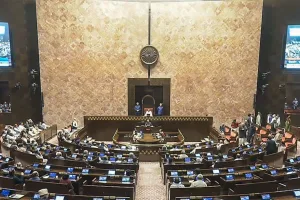
The Lok Sabha on Tuesday passed the Enemy Property (Amendment and Validation) Bill, 2016, after an ordinance had to be promulgated five times. Home Minister Rajnath Singh said though the government was against the ordinance route, the Bill could not be discussed in the House due to certain reasons and as public interest was involved, it had to promulgate the ordinance.

Though there was support for the legislation, the Opposition criticism was that the government promulgated the ordinance five times which Saugata Roy of Trinamul Congress said “had created an all India record”.

The legislation got Rajya Sabha clearance after amendments made on the recommendations of a Select Committee of Rajya Sabha which examined the Bill.

According to the Bill, successors of those who migrated to Pakistan and China during Partition will have no claim over the properties left behind in India.

This Bill amends the Enemy Property Act, 1968, and was passed by voice vote in the Lok Sabha, incorporating the amendments made by the Rajya Sabha last week in the absence of Congress members who had walked out over the issue of government formation in Goa and Manipur.

The Lok Sabha had passed the Bill earlier but certain amendments were introduced to it in the Rajya Sabha, on the recommendations of a Select Committee. Those amendments had to be approved by the Lower House. RSP member N K Premachandran had moved a statutory amendment seeking to introduce clarity with regard to those properties which had already been acquired by the heirs of the ‘enemy’ property owners, a reference to nationals of Pakistan and China.

According to the Bill, “Enemy property” refers to any property belonging to, held or managed on behalf of an enemy, an enemy subject or an enemy firm. The government has vested these properties in the Custodian of Enemy Property for India, an office instituted under the central government. After the Indo-Pakistan War of 1965, the Enemy Property Act was enacted in 1968, which regulates such properties and lists the Custodian’s powers.

“The purpose of the Bill is to clarify the 1968 Act. Inheritance law will not be applicable on Enemy Property… This will put an end to the long pending issue which should have ideally happened in 2010 when the Bill was introduced,” Rajnath Singh said while replying to a brief debate on the Bill. The government brought the amendment Bill in the wake of a claim laid by the heirs of Raja Mohammad Amir Mohammad Khan, known as Raja of Mahmudabad, on his properties spread across Uttar Pradesh and Uttarakhand. The matter is before the Supreme Court.

Five ordinances were promulgated on the Bill. The last one is due to expire today. Justifying the move to amend the Act, Singh rejected the contention of some MPs that it was against the principle of natural justice and amounted to human rights violations. “I wonder how it is against the principle of natural justice. Pakistan has seized the properties of Indian citizens… It will be natural justice if their property (of those who migrated to Pakistan) is not returned,” he said.

The minister assured the House that there will be no human rights violations following the amendments as the rights if Indian citizens are not being taken away. “The law only applies on heirs of enemy property… The tenants of those property will be governed by the Tenancy Act,” he said.

Fraud in the name of girl child scheme referred to CBI

IANS | New Delhi |

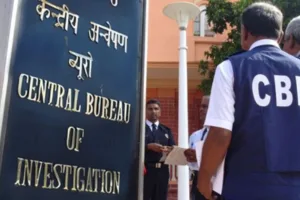
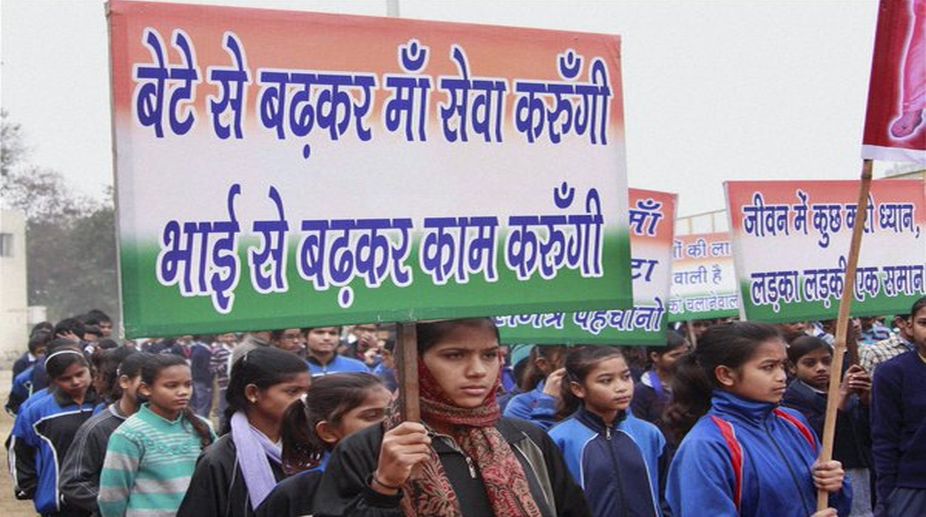
The Ministry of Women and Child Development on Tuesday referred a fraud being perpetrated in the name of 'Beti Bachao Beti Padhao' scheme to the Central Bureau of Investigation (CBI) for probe.

The ministry took up the matter with authorities concerned in Uttar Pradesh, Haryana, Uttarakhand, Punjab and Bihar. 

The ministry said certain unauthorised individuals were found "distributing illegal forms in the name of cash incentive" under the scheme. 

The scheme has no provision for cash incentives for individuals, said an official release.

"Keeping in view the public interest and gravity of the matter, the case has now been referred to the CBI for investigation," the release said.

"Repeated warnings have been publicised several times by the ministry in print and electronic media. The ministry has advised that no personal details should be shared in this regard and no one should subscribe to such fraudulent schemes. However, still some people are falling prey to such frauds and buying forms or disclosing personal details in the name of such non-existent benefits falsely offered in the name of the scheme," the release added.

Cash rules the roost as all limits withdrawn post-note ban

Statesman News Service | New Delhi |

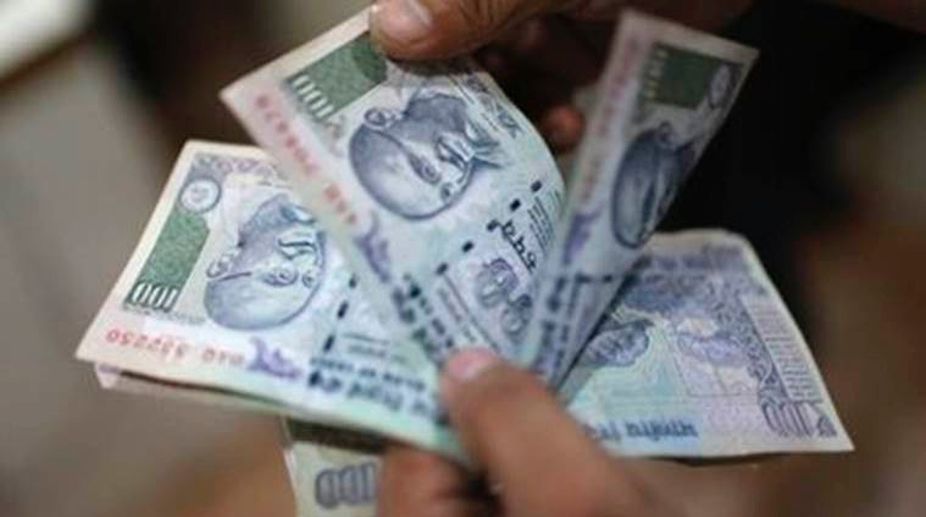
As all limits on cash withdrawals from savings bank accounts post-demonetisation came to an end on Tuesday, cash transactions continue to gain traction with return of normalcy in the economy.

According to provisional data released by the Reserve Bank of India (RBI), after an initial surge in digital transactions for December and January to around Rs 2,100 crore each month from Rs 1,320 crore in November, the value of these transactions has fallen to Rs 1,870 crore in February. It is believed that the numbers will be much lower in March.

Experts believe that the higher digital transactions are unlikely to be sustained since the cost and risk associated with them at present are very high. Hence, once cash is available, people will revert to using it and it will become the preferred mode of transaction unless the government comes up with some other stringent measures. 

The central bank estimates that currency in circulation as on 3 March was near Rs 12 lakh crore. In order to discourage people from using cash, selected banks have started charging customers for walking in and depositing cash or withdrawing it from their own accounts. Banks like ICICI, HDFC, Axis and SBI have imposed charges for cash transactions beyond a limit of four times. 

Although the RBI Governor Urjit Patel admitted that the country is not ready for a shift in digital transactions as it lacks basic infrastructure and greater cyber security laws, experts believe that the government and banks forcing people to go digital is an exercise of monopoly or oligopolistic power. As all banks end up doing the same thing, the customer would have to bear the cost or go digital.

According to government data, India reported more than 39,000 incidents of cyber attacks in the first nine months of 2016, including phishing, scanning and probing, website intrusions among others. In one of the biggest data breaches in October last year around 3.2 million debit cards were hacked.

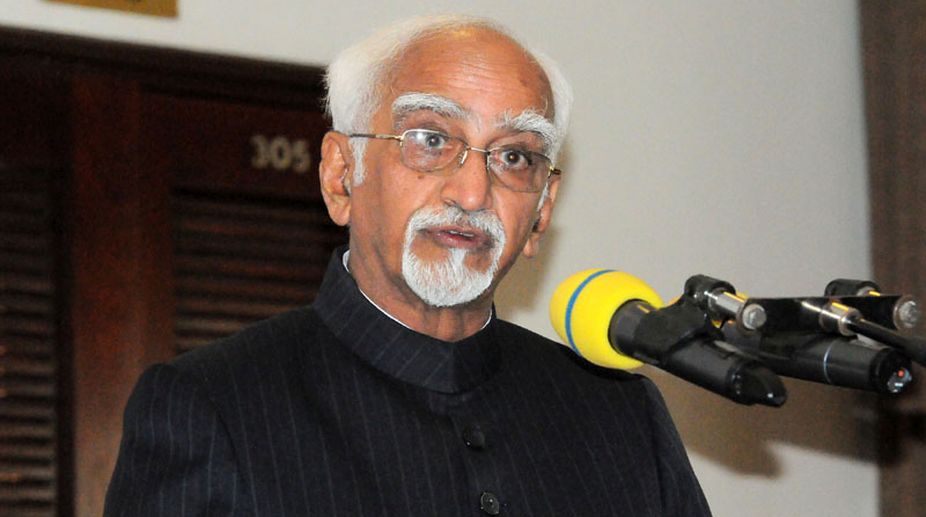
Terrorism cannot be addressed from narrow national perspective: Ansari

Statesman News Service | New Delhi |

Vice President Hamid Ansari on Tuesday said that States sponsoring terrorism must be isolated by the international community and forced to abandon the use of terrorism as a tool of State policy.

Speaking after inaugurating the 3rd Counter Terrorism Conference organised by the India Foundation, he said countries in the region must unite and fight terrorism in all its forms and manifestations.

To provide a comprehensive answer to the threats posed by transnational crime and terrorism in the Indian Ocean Region, he said that regional security and development agendas need to be connected and coordinated.

Forums like BIMSTEC, SAARC, ASEAN, the IORA and the UN have a direct interest, and the responsibility, to ensure that the efforts are comprehensive, and the resources necessary to respond quickly to the threat of terrorism are available, he said.

The Deputy Prime Minister of Nepal Bimlendra Nidhi, Railway Minister Suresh Parbhu, the Haryana Chief Minister Manohar Lal Khattar, and Minister of State for External Affairs M J Akbar were present.

The Vice President said in recent years nothing had caused greater pain, disruption and inconvenience to societies, governments and individuals than the phenomenon of terrorism. Security in the Indian Ocean region is capricious on account of a complex set of problems inherited from its recent past, he added.

Ansari saidthe most virulent factor fuelling terrorism is state sponsorship of and collusion with terrorists and a case in point is Pakistan's use of extremist groups as an instrument of foreign policy is well documented.
He said it is not sustainable for countries to continue to address terrorism or transnational crime from a narrow national interest perspective, nor can development be viewed as a standalone endeavour independent from security.

To provide a comprehensive answer to the threats posed by transnational crime and terrorism in
the Indian Ocean Region, regional security and development agendas need to be connected and coordinated, he added.

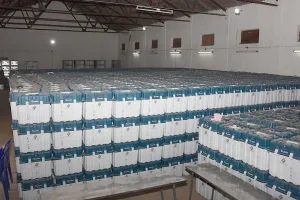
Amid EVM tampering charges, BJP won most seats covered under VVPATS

Asad Ashraf | New Delhi |

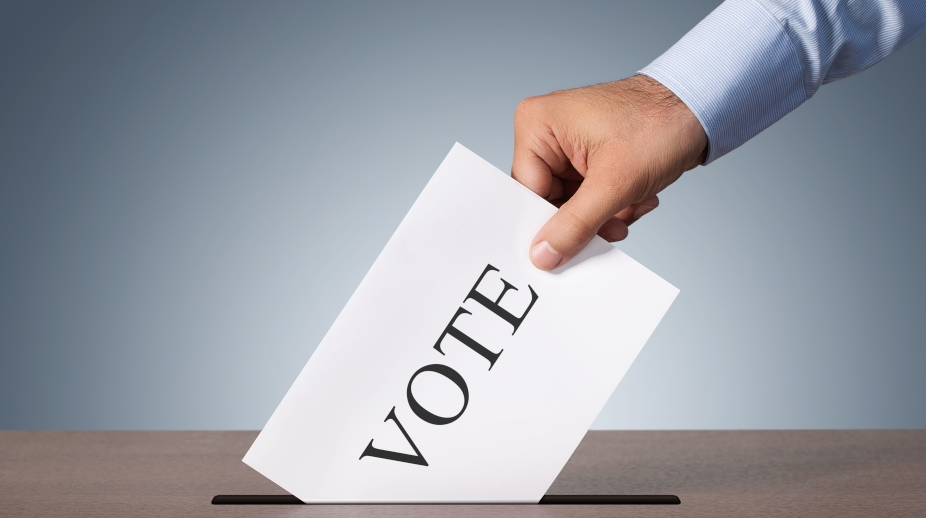
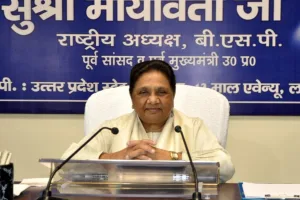
An Election Commission official has rubbished the claims of BSP president Mayawati that the electronic voting machines (EVMs) had been rigged in favour of the BJP in the recently concluded Uttar Pradesh Assembly election, saying EVMs are hundred per cent protected and safe to conduct polls.

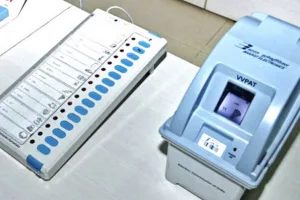
Citing the Voter Verified Paper Audit Trail, the official, unwilling to be named, said , “VVPATs is a system about which the masses are not very much aware. It’s part of the electoral reform process in India. VVPAT is a printer like machine attached to every EVM that allows the voter to verify the vote has been cast correctly.”

Explaining the VVPATs system, the official said, “As soon as the voter casts his vote on the EVM, VVPATs throw out a slip telling the voter which part he has voted for, this slip is then dropped into a box next to the EVM.”

In case of any controversy, “the number of slips in the box will be matched with the number of votes for a particular party registered in the EVM,” he said.

In the Uttar Pradesh Assembly elections, VVPATs were used in 20 constituencies, which included Agra Cantt, Agra South, Aligarh, Bareily, Govind Nagar , Arya Nagar, Ghaziabad, Meerut, Moradabad, Saharanpur, Allahabad North, Allahabad South, Ayodhya , Gorakhpur Urban, Jhansi Nagar, Lucknow West, Lucknow East, Lucknow North, Varanasi North and Varanasi Cantt. BJP won 17 of these 20 seats excluding Arya Nagar, Meerut, and Saharanpur.

In all these constituencies, votes polled in favour of BJP in the EVM machine would have been cross-checked with the number of slips in the box representing BJP votes.

Meanwhile, in Delhi, Ajay Maken of the Congress and Chief Minister Arvind Kejriwal have written to the Election Commission to conduct municipal corporation elections using ballot papers and not EVMs.

Dell EMC, Prysm to strengthen India’s smart city ecosystem

IANS | New Delhi |

Dell EMC and cloud-based solutions-provider Prysm Inc. on Tuesday announced a partnership to address the smart city opportunities in India.

Under this partnership, Prysm will contribute command and control centre implementations and dashboards for smart cities.

"While Dell has the competencies to develop a strong digital blueprint and foundation for smart cities, our partners bring expertise of applications for enablement of smart services," said Ravinder P. Singh, Director (Strategic and Mega Business) Dell EMC.

Prysm's large format content collaboration and mobile solution will allow smart cities to have individual dashboards for each of the utilities and provide an opportunity to consolidate all utility parameters into a single, unified dashboard, in real-time. 

"Strategic ecosystem partnerships are crucial to ensure success of India's smart city vision," said Kumar GB, Vice President, Asia Pacific, Prysm Inc.

Rahul Gandhi echoes growing Congress clamour for party overhaul

Statesman News Service | New Delhi |

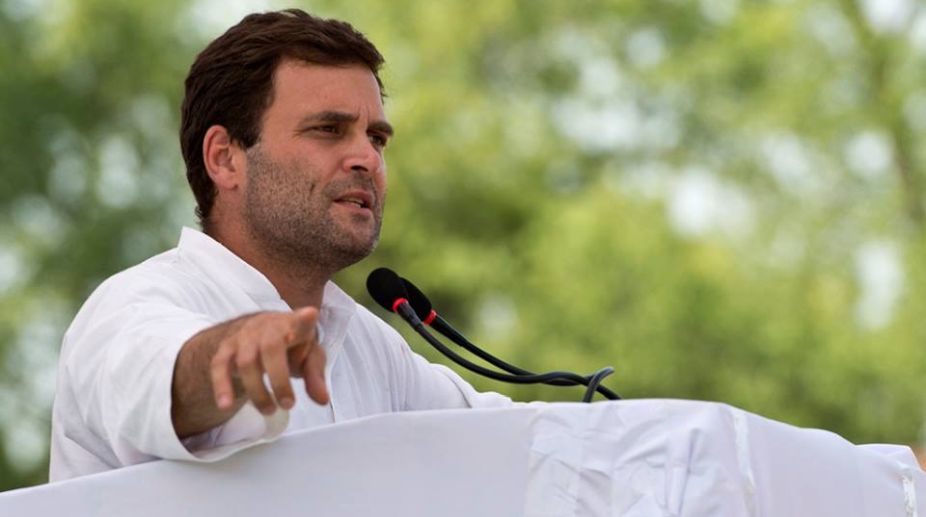
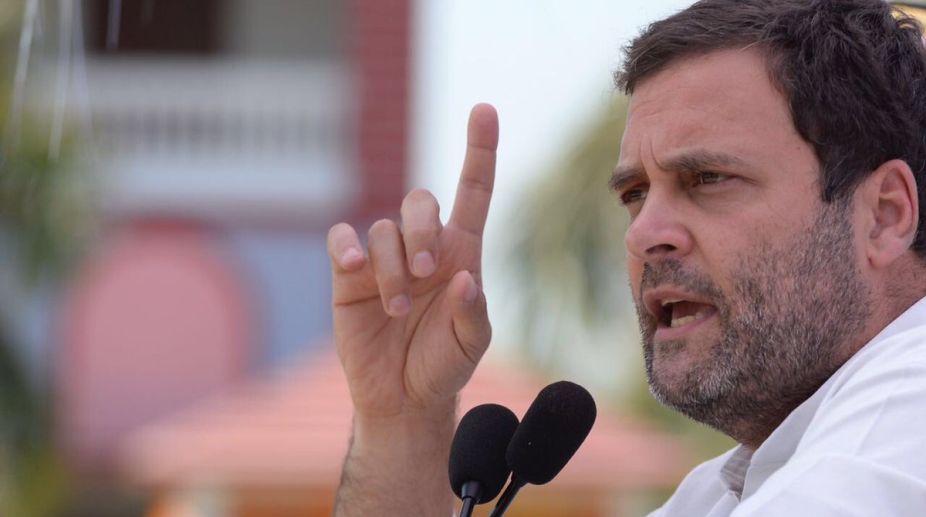
Amid the deepening disquiet and gloom within the Congress following its comprehensive rout in Uttar Pradesh and Uttarakhand assembly elections, Rahul Gandhi on Tuesday echoed the growing intra-party clamour for massive overhauling of the Congress organisation, even as he claimed that the recent assembly poll results in five states were "not bad" although the party was a "little down" in UP.       

Speaking to reporters outside Parliament for the first time after the assembly elections results, the Congress vice president broke his silence on his party's worst-ever performance in UP, where it managed to bag only 7 of the total 403 assembly seats despite an alliance with the Akhilesh Yadav-led Samajwadi Party.

Rahul acknowledged that the BJP won UP and Uttarakhand. While congratulating the BJP for its spectacular sweep of UP, he claimed that the BJP won there "largely due to polarisation" among other factors. Amid questions being again raised over his leadership following the Congress's UP debacle, Rahul said, "As far as the Congress party is concerned, we do need to make structural and organisational changes and that is a fact".

Pointing to the Congress's landslide victory in Punjab and its emergence as the single largest party in Manipur and Goa, he claimed "That is not a bad result".

He said there are "ups and down" for every party, adding, "We had a little down in UP which is fine, we accept it. But we have a ideological fight with the BJP and we will continue to do that."

On the question of empowering the Congress's regional leaders, Rahul gave the examples of recent assembly polls, saying they had been running the elections in these states including Punjab, Goa and Manipur.

Rahul's renewed pitch for organisational and structural changes in the Congress made it clear that such an exercise might be carried out by the party leadership soon.

It is another matter that Rahul has failed to effect such changes in the Congress organisation since the party's worst-ever poll defeat in the 2014 Lok Sabha elections.

Not surprisingly, in the wake of its UP and Uttarakhand disaster now, several senior Congress leaders have again reportedly started demanding "major surgery" in its structures and affairs to revive and rejuvenate the ailing 131-year-old party. They also called for fixing of accountability and rolling of heads over poll defeat.

The former Union minister M Veerappa Moily called for a "major surgery" besides the need to decentralise the Congress.

Another senior Congress leader Satyavrat Chaturvedi said he has been calling for the party's restructuring since its 2014 general elections catastrophe. "What is the need to take steps now when it has not been done when rquired," he lamented.

EVMs: How transparent is the Indian election process?

Smriti Sharma Vasudeva | New Delhi |

Electronic Voting Machines (EVMs) have become a bone of contention after the results of the Assembly elections in five states were declared last Saturday and the BSP president Mayawati alleged tampering. The Congress party and the Aam Aadmi Party (AAP) have called for a probe into her allegation. Social media too is abuzz with messages and videos showing how the machines can be allegedly manipulated to sway the votes in favour of a particular candidate.

Overnight, several videos on Whatsapp have surfaced wherein people can be seen explaining the "mechanism" on how to alter the votes polled for a candidate in another candidate's favour. Several similar posts and articles are doing the rounds on Facebook.

BBC added fuel to the fire when it shared a 2010 article on how 'US "Scientists" hack India Electronic Machines' . The article details how scientists at a US university say they have developed a technique to hack into Indian electronic voting machines. While the article was posted on the BBC website a day after the election results were declared, it drew considerable flak from users on Facebook who criticised the website for its 'irresponsible' act of sharing an article with a "click bait" headline just to grab eyeballs.

Amid all this frenzy, the Election Commission of India has issued statements clarifying how the entire process is transparent and fool proof and tampering with the EVMs is a far-fetched thing given the checks and balances in place. For instance, the EVMs undergo the process of randomisation wherein which machine will go to which constituency and to which booth is not known to anyone till the last moment. Similarly, before the polling starts, mock polling takes place in the presence of representatives of all the political parties and then each of these machines are tested and a satisfactory report is generated and only after that polling begins.

However, all these checks and balances still do not ensure a fool proof system if experts are to be believed.

Pranesh Prakash, Policy Director for The Centre for Internet and Society, a non-profit organisation that undertakes interdisciplinary research on internet and digital technologies from policy and academic perspectives, said: "The Electronic Voting Machines used in India are the simplest, with no large operating system requirements and are not networked. Thus, from a software design perspective, these are really good and the chances of these being tampered with are bleaker. However it doesn't mean these are fool proof. Most of the developed countries do not trust these machines and these are definitely not secure enough for democratic elections.

"While there are many advantages of using EVMs in the electoral process over the traditional ballot papers, still there are many ways in which one can tamper with these machines without any technical ingenuity. The best way is to make use of the EVMs and ensure that the Voter Verified Paper Audit Trail (VVPAT) are effectively utilised to make it an overall effective system".

Recently, the Supreme Court had mandated that VVPAT machines should be used in all the polls and thus the Election Commission had installed VVPAT machines in several constituencies. However, not sure of the efficacy of this system, the Election Commission had itself raised apprehensions regarding performance of the paper-trail machine, which gives a receipt to the voter, verifying the vote went in favour of the candidate against whose name the button was pressed on the electronic voting machine.

Congress exchanges fireworks with BJP over govt formation in Goa, Manipur

Statesman News Service | New Delhi |

The political battle raging between the ruling BJP and the principal Opposition Congress over the government formation exercise in Goa and Manipur on Tuesday intensified, with the Congress vice-president Rahul Gandhi accusing the BJP of allegedly "stealing" the mandate of people in the two states and "undermining democracy" by money power and "misuse" of the governor's office.      

The BJP on Tuesday formed its coalition government in Goa with the support of smaller parties and Independents and is all set to form its government in a similar fashion in Manipur on Wednesday, even as the Congress has emerged as the single largest party in both these states.

The BJP camp rejected Rahul's allegations as unfounded and baseless, with the Union Finance and Defence Minister Arun Jaitley as well as the Union Home Minister Rajnath Singh coming out to debunk them.  

Speaking to reporters outside Parliament for the first time after the results of the recent assembly polls in five states, Rahul alleged : "They are saying that it is okay for them to misuse the office of the governor…In the two states (Goa and Manipur) where we won, democracy has been undermined by them (BJP) using financial power, money. That is what is happening. The mandate of the people of Goa and Manipur has been stolen by the BJP."

Rahul said the Congress's fight with the BJP was an "ideological fight" which, he added, will continue.

"What the BJP has done in Manipur and Goa is their ideology ~ and that is what we are fighting," he charged.

Responding to questions that the Congress moved late into staking its claim to form a government in Goa, Rahul claimed, "It is not about how soon you went, but with how much money the BJP went" to allegedly "steal the mandate" of Goa and Manipur.    

He said he saw the letter of Goa Governor Mridula Sinha having appointed Manohar Parrikar as the Goa CM on 12 March, a day after the poll results, before "any floor test or anything happened", charging "So it is difficult for us to stake claim if the governor is already acting in a partisan manner". Parrikar was sworn in as the new Goa CM on Tuesday. 

Rajnath dismissed Rahul's allegations as "baseless", reportedly telling media persons that "These all are baseless allegations".

In his post on social media, Jaitley debunked the Congress camp's charges, strongly defending the Goa governor's move to invite Parrikar to form the BJP-led coalition government there. He cited several past precedents to back the governor's position.

In the fractured outcome of the 40-member Goa assembly elections, the Congress won 17 seats as against the BJP's 13. 

"Obviously in a hung assembly post-poll alliances will be formed," Mr Jaitley said. "The BJP managed to form an alliance and presented to the governor 21 out of 40 MLAs. They appeared before the governor in person and submitted a letter of support. The Congress did not even submit a claim to the governor….In the face of claim of these 21 MLAs led by Manohar Parrikar, the governor could not have invited the minority of 17 MLAs to form the government."

He cited the instances of 2005 assembly polls in Jharkhand, 2002 J&K polls,  2013 Delhi assembly elections

among several precedents in support of the Goa governor's decision.

"The debate between the largest single party lacking majority versus a combination of parties constituting a majority was answered by former President KR Narayanan in his communiqué in March, 1998 when he invited Atal Behari Vajpayee to form the government," Jaitley stated.

He quoted the then President as having said "when no party or pre-election alliance of parties is in a clear majority, the Head of State has in India or elsewhere, given the first opportunity to the leader of the party or combination of parties that has won largest number of seats subject to the Prime Ministers so appointed obtaining majority support on the floor of the House within a stipulated time. This procedure is not, however, all time formula because situations can arise where MPs not belonging to the single largest party or combination can, as a collective entity, out-number the single largest claimant. The President’s choice of Prime Minister is pivoted on the would be Prime Minister's claim of commanding majority support."

The row made waves in the Lok Sabha too, with the Congress staging a walk-out from the House twice in protest against the BJP's alleged bid to install its governments in Goa and Manipur by "murdering democracy".

The members of the Congress and other Opposition parties like the NCP and RJD sought to raise the issue during Question Hour and later, with the Congress leader Mallikarjun Kharge attacking the BJP, but Speaker Sumitra Mahajan did not allow them to raise the matter on the ground that the House could not discuss the actions of a constitutional authority like the governor.


BSE launches futures on S&P BSE SENSEX 50 index

IANS | Mumbai |

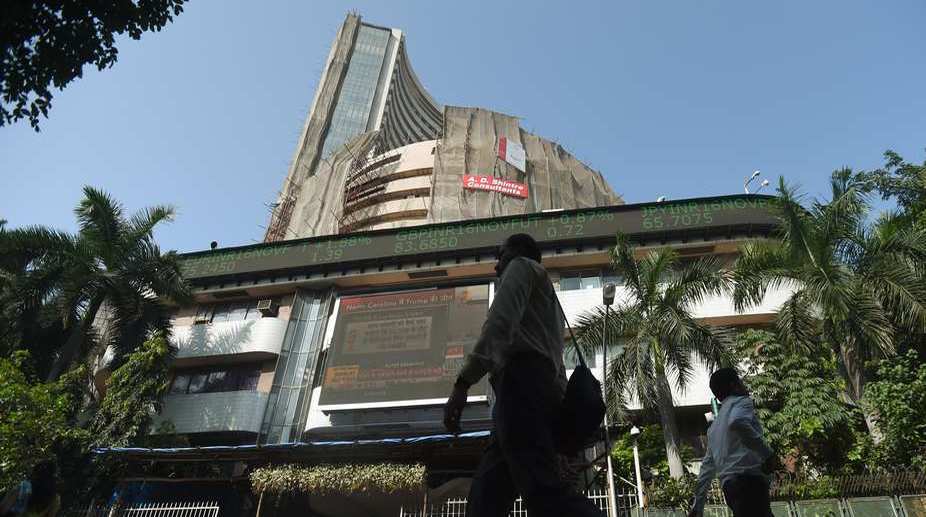
Asia's oldest bourse BSE on Tuesday launched futures on S&P BSE Sensex 50 index which will help investors to achieve portfolio diversification.

"The market participants would be able to take a long-term view on the underlying. Introduction of additional indices will also lead to increased participation in the index futures market," it said in a statement.

The index is designed to measure the performance of the top 50 largest and liquid stocks in the exchange's Large Mid Cap by float-adjusted market capitalisation.

Further, index futures contracts will lead to better price discovery and will be useful in hedging and risk management tools.

According to the exchange, it will also take market towards a multi-product environment.

"The index is diversified index as it represents each key economic sector identified by bourse's sector model covering approximately 53.9 per cent of total market capitalisation of the exchange listed companies as of October 30, 2016," it added.

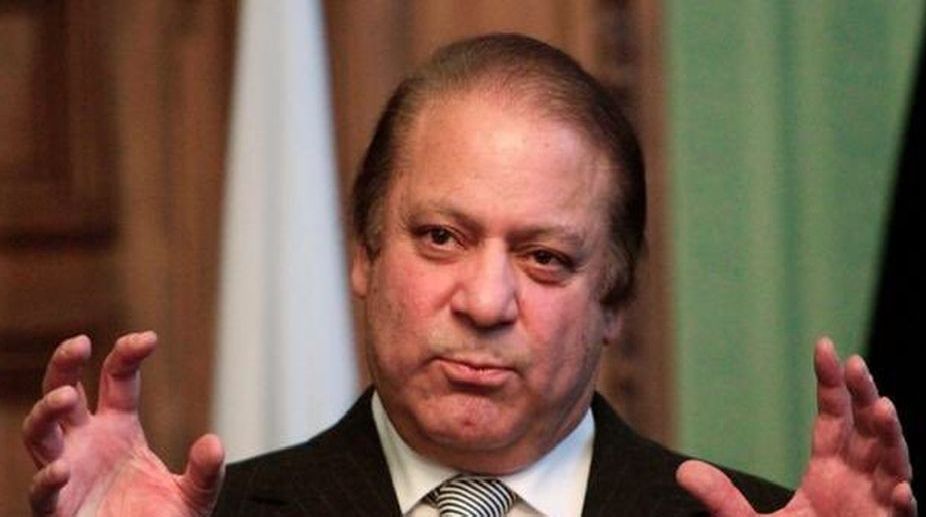
Forced conversion a crime in Islam: Nawaz Sharif

IANS | Islamabad |

Pakistan Prime Minister Nawaz Sharif on Tuesday said forced conversions are considered a criminal practice in Islam and no one can force others to adopt a certain religion.

Greeting the Hindu community on the occasion of Holi, Sharif said his foremost duty as a ruler is to serve followers of all religions and not one in particular. 
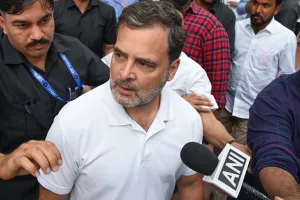
"God will not ask a ruler what he did for followers of a certain religion," said Nawaz. "He will ask people such as me: what did we do for God's creation?"
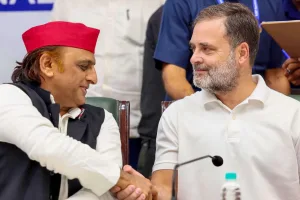
"Some people wear a turban. Some wear a chogha. Others wear a suit and tie, and some wear shalwar kameez."

"These are all creations of God," the Premier added. "And that's fine. This is a freedom given to us by God. Who are we to take it away?"

Sharif said that Pakistan was not made so that one religion can dominate over others, Dawn newspaper reported.

"Religion does not force anyone to do anything, let alone forcing anyone to adopt a certain religion," he said.

"Forced conversions are considered a criminal practice according to our religious teachings," he added.

He also called blasphemy "an unpardonable offence" and directed the state machinery to find those responsible for putting blasphemous content on the social media and bring them to justice without any delay.

According to a statement released on Twitter by Pakistan Muslim League-Nawaz official account, the Prime Minister directed the authorities to remove the blasphemous content from the social media and to take measures to ensure that any such content is not posted in future.

He ordered all concerned authorities to take necessary actions in accordance with the judicial guidelines in this regard.

"Love and affection to the Holy Prophet (PBUH) is the most precious asset for every Muslim," said Nawaz Sharif.

He directed that international organisations relating to the social media should be approached for blockade of blasphemous contents and Foreign Office should play its role in this regard.

Sharif said the issue was before the court and all steps should be taken in line with the guidance of the court, Radio Pakistan reported.

The Islamabad High Court has already ordered blocking of blasphemous pages on social media.

Hasina to arrive in Delhi on April 7; several accords to be inked

Statesman News Service | New Delhi |

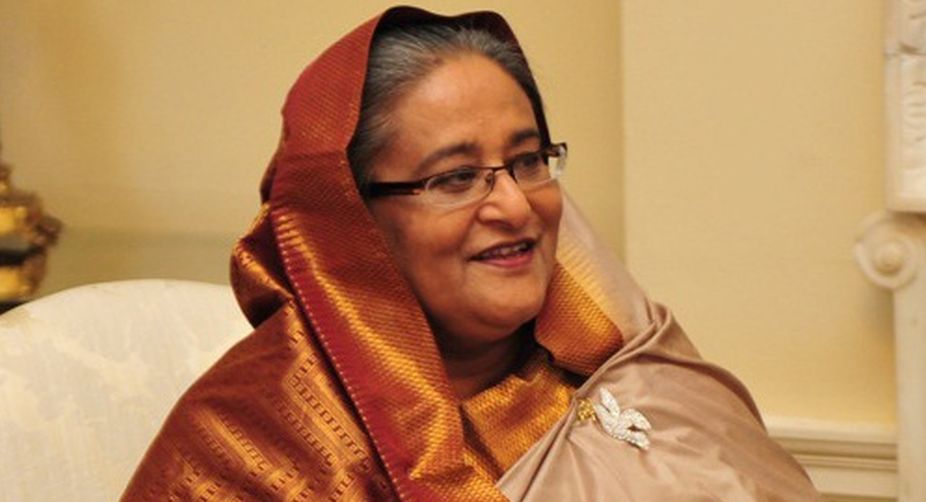
Bangladesh Prime Minister Sheikh Hasina will arrive here on 7 April on her much-anticipated four-day State visit to India, it was announced here on Tuesday.

The visit comes seven years after Hasina’s last visit to India in January 2010 and almost two years after Prime Minister Narendra Modi’s visit to Bangladesh in June 2015.

‘’The upcoming visit is expected to further expand the cordial and cooperative relationship between India and Bangladesh and build on the strong ties of friendship and trust between the leaders,’’ the MEA said in a statement.

Hasina will hold talks with Modi on 8 April on a range of issues, followed by the signing of several key agreements between the countries, including a defence accord.

Hasina was expected to travel to India in December last year but the visit was postponed due to scheduling issues and also because it was felt that any progress on the sharing of Teesta waters was highly unlikely in view of the stand-off between the Modi government and the Mamata Banerjee government in West Bengal over the demonetisation issue.

It was decided then that the visit could take place in February. However, the visit was deferred again in view of the assembly elections in India.

Foreign Secretary S Jaishankar travelled to Dhaka last month and firmed up the dates for Hasina’s visit in consultation with the Bangladesh leadership.

Indian-American panel launches campaign against hate crimes

IANS | Washington |

Chicago-based Indian-American Public Affairs Committee (IAPAC) has launched a campaign across the US to spread awareness about hate crimes against the community.

The committee plans to organise a series of grassroot events and town halls across the country, American Bazaar Online reported on Tuesday.

"There is a need to bring understanding about the people of Indian-American and represent their interests," Ashwani Dhall, one of the founding members of IAPAC, said in a statement.

The committee plans to highlight how Indian-Americans have been an intrinsic part of the American fabric and will also ask different state governments and cities to announce Indian-American awareness month.

"By bringing together elected officials, local and business leaders and the media, the aim is to assure Indian-American community that incidents like the hate-crime in Kansas City are not tolerated or repeated," the statement read.

IAPAC will also organise events in San Francisco Bay Area, New York, New Jersey, Chicago, Dallas and Seattle as part of the campaign. It wants to ensure that correct information, not rumours, on existing policies is disseminated to people, according to the statement.

"It was heartening to hear [President] Trump denounce the Kansas City incident right at the start of his address to the Congress," IAPAC president Vinesh Virani said. 

"We have hope that the current administration will work to bring everyone together," he said.

CPCB orders Tata Chemicals to shut down Haldia plant

IANS | Kolkata |

The Central Pollution Control Board (CPCB) has ordered Tata Chemicals to shut down its Haldia plant in West Bengal's East Midnapore district for alleged non-compliance with prescribed norms of liquid affluent discharge, the company said on Tuesday.

"This is to inform you that on March 11, the company received a notice from the CPCB under Section 5 of the Environment Protection Act, 1986, to shut down plant operations at Haldia for alleged non-compliance with the prescribed norms for liquid affluent discharge," the company said in a regulatory filing to BSE.

This order was based on an analysis of a sample drawn on January 9 by the CPCB, which found that it failed to meet prescribed norms for discharge of effluents, it added.

The firm has made a written representation to the CPCB to rescind the order.

"The company, in its representation, has submitted the reports on parallel samples drawn on the same day to confirm compliance with the prescribed norms by a State Pollution Control Board-approved lab," it said.

According to the filing, the fertilisers producer has also submitted reports by independent labs approved by the Ministry of Environment and Forest (MoEF) and West Bengal Pollution Control Board which has confirmed that the levels are "within the norms".

Incidentally, the company had earlier said the Haldia plant will remain shut from February 21 to April 15 on account of "ammonia pipeline relocating project hook-up and commissioning", along with "annual shutdown of the plant for planned repair and maintenance work".

Indian growth, reforms could boost US exports: USTR

IANS | Washington |

India's economic growth coupled with reforms like the Goods and Services Tax (GST) could help boost American exports to India in future, said the US Trade Representative (USTR).

"India's economic growth and development could support significantly more US exports in the future. India's reform of its Goods and Services Tax regime could help create a common internal market that significantly lowers transaction costs," the USTR said in its latest annual report.

"India's new National Intellectual Property Rights policy could protect US innovations," it added.

This is the first USTR report on trade after President Donald Trump took charge at the White House in January.

The report, however, also noted that existing Indian trade and regulatory policies have inhibited the development of a more robust trade and investment relationship.

"While these reforms are encouraging, there has also been a general trend of tariff increases in India, which reflects an active pursuit of import substitution policies," USTR said.

The USTR will set in motion the work plans agreed on during the US India Trade Policy Forum (TPF) in October 2016, which will include convening digital video conferences and in-person meetings on intellectual property rights, promoting investment in manufacturing, agriculture, and trade in goods and services, the report said.

"This regularised engagement will provide an opportunity to achieve meaningful results on a wide range of trade and investment issues, and allow the US and India to partner on issues of mutual interest in advance of the 2017 TPF," it said.

India and US have set a target of increasing bilateral trade to $500 billion.