Logo

Sufi clerics return to India; to meet Swaraj on Monday

SNS | New Delhi |

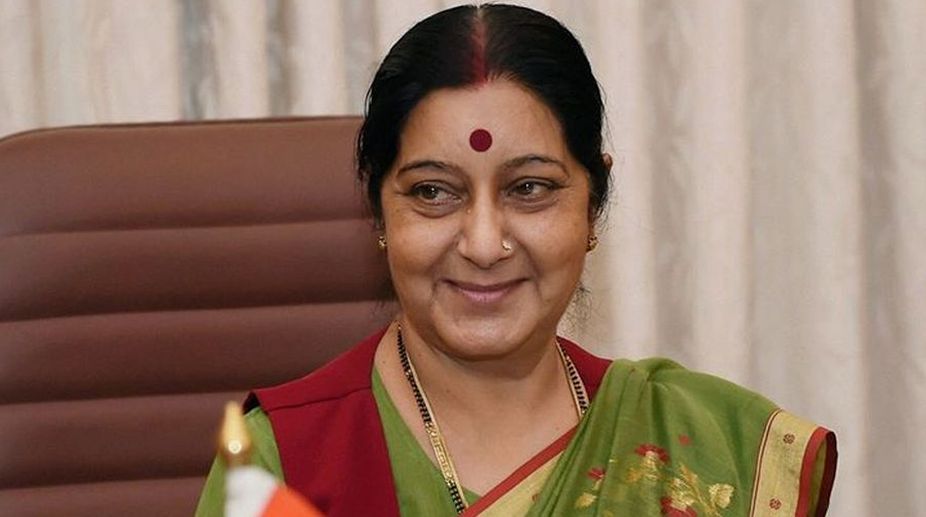
The two Sufi clerics have returned from Pakistan on Monday and will meet External Affairs Minister Sushma Swaraj along with their family members.

Swaraj had on Sunday said in a series of tweets that she spoke to one of the two clerics, who were later found after going missing in Pakistan.

"I just spoke to Syed Nazim Ali Nizami in Karachi. He told me that they are safe and will be back in Delhi on Monday," she had said in a tweet.

Pakistan had on Saturday also conveyed to India that the two missing clerics had been traced and that they had reached Karachi.

Syed Asif Nizami, the head priest (Sajjadanashin) of Hazrat Nizamuddin Aulia Dargah and his nephew Nazim Nizami had gone to Pakistan on March 8 as part of annual exchanges between Hazrat Nizamuddin and Garib Nawaz, who is venerated at the Data Darbar Sufi shrine in Lahore.

La Liga results: Messi leads Barcelona past Valencia, Atletico edge Sevilla

At the Calderon,  Antoine Griezmann shone for Atletico once more with a stunning free-kick!

AFP | Madrid |

 Barcelona closed to within two points of Real Madrid at the top of La Liga as Lionel Messi scored twice in a thrilling 4-2 win over 10-man Valencia at Camp Nou.

Earlier, Antoine Griezmann scored a stunning free-kick as Atletico Madrid compounded a week to forget for Sevilla with a 3-1 win at the Vicente Calderon on Sunday.

Barca needed to come from behind to keep the pressure on Madrid as Eliaquim Mangala headed Valencia in front.

But the on-loan Manchester City defender was sent-off for pulling down Luis Suarez after the Uruguayan had levelled and Messi smashed home the resulting penalty.

Munir El Haddadi briefly levelled for the 10 men before half-time, but Messi and finally Andre Gomes with his first Barca goal sealed the three points.

Madrid still also have a game in hand over their title rivals.

Outgoing Barca coach Luis Enrique named the same side that beat Paris Saint-Germain 6-1 10 days ago to progress to the Champions League quarter-finals in stunning fashion.

And whilst not matching that drama, there was no shortage of action as Valencia showed up the defensive flaws in Enrique's new 3-4-3 system.

Messi had already had an effort cleared off the line, whilst Marc-Andre ter Stegen made a stunning save from Carlos Soler at the other end before an action packed final 15 minutes of the first-half saw four goals and a red card.

Barca's weakness from set-pieces was exposed again a week on from conceding twice from corners in a 2-1 defeat at Deportivo la Coruna when Mangala powered home Dani Parejo's corner to open the scoring.

The lead lasted just six minutes as Suarez raced onto Neymar's throw-in to slot into the far corner.

Mangala went from hero to villain as he then pulled down Suarez inside the area to concede a penalty and get sent-off.

Messi beat penalty specialist Diego Alves from the spot.

However, straight from kick-off Barca were caught cold as Jose Gaya teed up Munir El Haddadi to score against his parent club for the second time this season.

The champions still had 45 minutes to make their man advantage count, though, and they did so despite missing a host of chances after the break.

Messi drilled home at Alves's near post seven minutes into the second period for his 41st goal of the season.

Suarez somehow slotted wide with the goal gaping after Alves had denied Messi his hat-trick, whilst Neymar hit the bar.

But Barca finally put the game to bed a minute from time when Neymar crossed for Gomes to tap home against his old side.

At the Calderon, Griezmann shone for Atletico once more as he teed up Diego Godin's opener and then struck a stunning free-kick for his 22nd goal of the season.

Koke added Atletico's third before Joaquin Correa registered a consolation for Sevilla.

Sevilla were dumped out of the Champions League by Atletico's quarter-final opponents Leicester City on Wednesday and have seen their lead over Atletico in third place in La Liga now whittled down to two points.

A third straight league win moves Diego Simeone's men seven points clear of Real Sociedad and Villarreal in the battle for fourth.

"Sevilla have had a magnificent season and have been lauded by the press. That highlights even more how well Atletico played," said Atletico coach Diego Simeone.

And the Atletico fans also celebrated the return of Fernando Torres for the first time since he was knocked unconscious in a sickening head clash at Deportivo la Coruna on March 2.

Defeat realistically ends Sevilla's already fading shot at the title as they fall eight points behind Real Madrid.

And coach Jorge Sampaoli claimed he has to rediscover the "real Sevilla" during the international break after four games without a win.

"Logically the league is now a long way off. Now we have to look at the possibility of automatically qualifying for the Champions League," said the Argentine.

"It is normal when you don't achieve what you want, which is to win, there is frustration and bitterness.

"We have come from a very hard blow to take and now we have to find solutions and the real Sevilla."

Trump says N.Korea acting ‘very, very badly’

IANS | Washington |

US President Donald Trump slammed North Korean leader Kim Jong-un for "acting very, very badly", following Pyongyangs missile activities, a media report said.

North Korea claimed it tested a new high-thrust rocket engine on Saturday, the latest in a string of missile tests over the past few months, The Hill magazine said in the report.

"He's acting very very badly," the President on Sunday said of Kim Jong-un, according to the White House.

Trump, who travelled to his Mar-a-Lago resort, Florida, said he discussed North Korea's missile launches during meetings over the weekend.

Secretary of State Rex Tillerson also denounced North Korea's missile launches last week, indicating that the Trump administration is open to taking pre-emptive action if Pyongyang continues to "elevate the threat of their weapons programme".
 

English Premier League result: Manchester United go 5th after Middlesbrough win

With the result, the Red Devils leapfrog arch-rivals Arsenal in the league table.

IANS | London |

Manchester United snatched an important 3-1 away win against Middlesbrough to jump to the fifth spot in the English Premier League (EPL) at Riverside Stadium here on Sunday.

Belgian midfielder Marouane Fellaini opened the scoring for Manchester United 30 minutes into the first half, before Jesse Lingard scored again for the visitors at the 62-minute mark, reports Efe.

Middlesbrough's Rudy Gestede hit back 15 minutes later, before Antonio Valencia scored the decisive third goal in the third minute of added time.

Currently, Manchester United hold the fifth position in the league table with 52 points from 27 games, after spending a few weeks stuck in sixth position, despite a good winning streak.

"I think we started the game really well; (Middlesbrough goalkeeper Victor) Valdes made three fantastic saves before our first goal. We controlled everything before our second goal and they then changed to play with (Rudy) Gestede and (Alvaro) Negredo," Mourinho said, according to United's website.

"They started putting long balls in to the box. We decided to defend with an extra defender, but I think with the mistakes of letting them push us too much into our box. 

"Then it was a fighting 15 minutes where they didn't have chances but they were close to the dangerous areas, so the game was alive until the last seconds."

Jose Mourinho-coached United have therefore revived their chances to end the season within the big four, and secure a direct ticket to the Champions League.

On the other hand, Middlesbrough seem to have settled for relegation as the season approaches its final stretch, as they currently hold the 19th position with 22 points.

Idea Cellular, Vodafone India announce merger

IANS | New Delhi |

In one of the biggest merger in the telecom space, Vodafone India and Aditya Birla Group-promoted Idea Cellular on Monday announced the much-awaited amalgamation.

Idea Cellular in a regulatory filing on Monday said, its Board of Directors "have approved the scheme of amalgamation of Vodafone India Limited and its wholly owned subsidiary Vodafone Mobile Service Limited with the company (Idea)."

Vodafone will own 45.1 per cent of the combined company, Idea said in a statement.

"The Aditya Birla Group will then own 26 per cent and has the right to acquire more shares from Vodafone under an agreed mechanism with a view to equalising the shareholdings over time," it added.

"For Idea shareholders and lenders who have supported us thus far, this transaction is highly accretive, and Idea and Vodafone will together create a very valuable company given our complementary strength," said Kumar Mangalam Birla, Chairman, Aditya Birla Group.

"The combination of Vodafone India and Idea will create a new champion of Digital India founded with a long-term commitment and vision to bring world-class 4G networks to villages, towns and cities across India," said Vittorio Colao, Chief Executive, Vodafone Group Plc.

"The combined company will have the scale required to ensue sustainable consumer choice in a competitive market and to expand new technologies – such as mobile money services – that have the potential to transform daily life of every Indian," he added.

English Premier League: Manchester United accused after tunnel brawl

United remain in contention for Champions League qualification after a hard-fought victory on Sunday.

AFP | Middlesbrough |

Jose Mourinho's Manchester United players were accused of sparking an ugly clash in the tunnel in a stormy aftermath to their 3-1 win at Middlesbrough.

United remain in contention for Champions League qualification after a hard-fought victory on Sunday, which ended with rival players separated by security staff in the tunnel when punches were reportedly thrown.

Middlesbrough captain Ben Gibson and United's former England midfielder Ashley Young were restrained by team-mates as tempers flared.

Mourinho refused to comment, but Middlesbrough caretaker manager Steve Agnew insisted his players were reacting to provocation after a stoppage-time bust-up between United defender Eric Bailly and Rudy Gestede, which initially appeared to include the duo biting each other before replays showed it was only a heated clinch.

"I'm picking up there's something gone on in the tunnel," Agnew said.

"That many bodies were there, it was hard to tell with all the pushing and shoving.

"What triggered it off I don't know? I've got a group of very well behaved players so I can assure you it wouldn't be one of ours.

"What I would say it would have been a reaction because of the spirit they have."

Mourinho had enflamed matters before the game by suggesting he 'knew the names' of the players he claimed had been responsible for the departure of Aitor Karanka, his former Real Madrid assistant who was sacked as Middlesbrough boss last week.

The Portuguese headed down the tunnel at the final whistle without acknowledging his opposite number, though Agnew confirmed the pair had shaken hands in the tunnel afterwards.

"Was this justice for Karanka?" Mourinho said after seeing his side extend their 18-game unbeaten league run to end a 19-week stay in sixth by climbing to fifth, two points ahead of Arsenal and Everton.

"I think justice for Karanka is the work he did here, people can never delete that. He took the club form the brink of League One to the Premier League.

"I know what I'm saying, he could have left for a bigger club and yet he stayed then in the end he loses his job.

"Despite all that's happened, I still think he'll be unhappy we have won, because he wants this club to stay in the Premier League.”
Middlesbrough's hopes of achieving that aim look increasingly slim after an 11-game three-month run without a league win.

They at least ended their lengthy goal drought as Gestede pounced on a mistake by Chris Smalling to halve the arrears.

Hopes of salvaging an unlikely draw to chip away at the five-point gap to safety faced by a side currently second from bottom were extinguished by Victor Valdes' stoppage-time slip which allowed Antonio Valencia to walk the ball into an unguarded net.

Goals either side of half-time from Marouane Fellaini and Jesse Lingard had put the visitors in control.

"It's a big win that keeps us alive in the competition for fourth place," Mourinho added.

Given their presence in the Europa League, United retain two potential avenues to next season's Champions League, and Mourinho added: "Do I prefer to qualify for the Champions League by finishing fourth or winning Europa League? I prefer Europa League. There's a prestige to winning a trophy."

"To push Manchester United all the way is something I was really pleased with," added Agnew, who has had no assurances as to the length of his temporary tenure beyond Middlesbrough's next game at Swansea at the start of next month.

"It's a display that gives us hope for the future and I've seen enough of these players to know we're more than capable of winning games."

Republicans pitch healthcare plan ahead of key vote

IANS | Washington |

Republicans have made a pitch for their plan to repeal and replace the Affordable Care Act, or ObamaCare ahead of a critical vote this week, a media report said.

House Speaker Paul Ryan on Sunday expressed confidence about the prospects of passing the Republican healthcare plan, called the American Health Care Act, The Hill magazine said in the report. 

Other Republicans, however, voiced concerns about the plan, with Senator Rand Paul predicting it would not pass through Congress.

Later on Sunday, Ryan told Fox News that he was optimistic about the chances of passing the plan.

"We feel very good where we are," Ryan said, adding "We're still having conversations with our members. We're making fine-tuning improvements to the bill to reflect people's concerns, to reflect people's improvements."

But Ryan admitted that there were improvements to be made to the bill until it is brought to the floor. 

The Republicans are not "doing this behind the scenes and just bringing some bill to the floor and making people vote for it."

"We're listening to the people," he added.

Meanwhile, White House Budget Director Mick Mulvaney slammed the ObamaCare saying one of the key points of the Republicans' plan is that it is going to "encourage more competition". That, he said, would lower the costs for everyone.

"The Affordable Care Act wasn't really ObamaCare. It wasn't really the Affordable Care Act. It was the Affordable Coverage Act," Mulvaney told CBS News on Sunday night. 

"And those people that you just described could afford to buy insurance, but they couldn't afford to go to the doctor because the deductibles were so high."

The Trump administration and House Republican leaders are making two significant changes to the ObamaCare replacement bill ahead of an expected vote on Thursday.

The bill, unveiled earlier this month, is now being considered by two congressional committees ahead of its passage through the House and Senate.

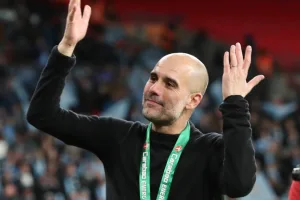
English Premier League result: Manchester City remain 3rd after Liverpool draw

A fascinating game which really sparked to life in the final 15 minutes!

SNS | New Delhi |

Sergio Aguero bailed out Manchester City at home against Liverpool, equalising in the 69th minute to ensure their English Premier League tie at the Etihad Stadium ended in a 1-1 draw on Sunday night.

Both sides came into the game desperately seeking a win after underwhelming in the season so far, but arguably the home side were feeling the pressure the most after their exit from the UEFA Champions League in midweek.

As a result, City manager Pep Guardiola sent out his strongest possible line-up, with Sergio Aguero leading the line in a 4-5-1 formation.

Jurgen Klopp sent out Liverpool in their standard 4-3-3, with Roberto Firmino again playing as the central striker. Emre Can continued his run of starts in the absence of skipper Jordan Henderson and while Dejan Lovren was available, Klopp chose to go with the central defensive pairing of Ragnar Klavan and Joel Matip.

City began the match the stronger of the sides and should have taken the lead early on after Leroy Sane had tormented Nathaniel Clyne on the wing before seeing his shot saved from an acute angle by Simon Mignolet. The resulting ball fell kindly to David Silva, but the Spaniard just couldnt keep his volley down.

Minutes later, City were given a reprieve of their own, with Yaya Toure sliding in on Emre Can with his boot raised and actually striking the Reds midfielder on his shoulder. Referee Michael Oliver could have sent him off, but chose to caution the Ivorian instead, much to the relief of the home crowd.

City continued to search for the opener and very nearly had it when Silva sent in a low cross from the left which somehow managed to elude Sergio Aguero and  Raheem Sterling. While Fernandinho managed to get a touch the far post, the Brazilian was could only graze the side netting.

At half-time, Liverpool were firmly on the back foot, unable to test City goalkeeper Willy Caballero with anything of note and Klopp must have given his players a talking to, for they were more dominant side as the second half started.

And when Can found Firmino inside the box with a raking ball from deep, City full-back Gael Clichy panicked and tried to barge the Brazilian off the ball, leaving referee Michael Oliver with no choice but to point to the spot.

Ex-City midfielder James Milner, Liverpool’s designated penalty taker, stepped up and sent Caballero the wrong way to give the away side a vital lead in the 51st minute.

The home side took their own sweet time to respond, playing the patient possession game and never looking hurried with the ball even as the clock ticked on. And they got rewarded for their patience in the 69th minute, when Kevin De Bruyne sent in a low cross for Aguero to guide home from the first post. The Argentine hitman, quiet for majority of the game, struck at a crucial juncture to continue his fine scoring record against Liverpool.

What followed post the equaliser was a frantic final 15 minutes as both sides upped the tempo, opening up the game in the process but somehow were unable to add to the score.

Aguero was guilty of two misses, the first when he had made a brilliant run into the box, aided by a deft back heel from Sane but somehow lost his balance just when he was about to finish. De Bruyne hit the post in the ensuing chaos but it was a squandered chance at the other end that sparked disbelief.
Firmino had deftly laid it on a plate for Lallana following Giorginio Wijnaldum’s clipped pass, but the Englishman somehow miscued his volley from six yards out.

The game wasn't finished and City had one final chance but Aguero somehow skied a volley over the bar after some good work from De Bruyne on the right to ensure both teams got a point each.

With the result, City remain in third place, two points behind second-placed Tottenham Hotspur with Liverpool a point behind the Sky Blues in fourth place. While it wasn’t the result the teams would have wanted ahead of the International break, a draw was probably the fair result.

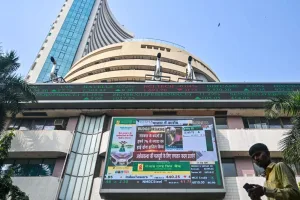
Key Indian equity indices open lower

IANS | Mumbai |

The key Indian equity indices on Monday opened lower.

The 30-scrip Sensitive Index (Sensex), was trading 77.77 points or 0.26 per cent lower soon after opening.

The wider 51-scrip Nifty of the National Stock Exchange (NSE) was also trading 19.80 points or 0.22 per cent lower at 9,140.25 points.

The Sensex of the BSE, which opened at 29,653.54 points, was trading at 29,571.22 points (at 9.21 a.m.), lower 77.77 points or 0.26 per cent from the previous day's close at 29,648.99 points.

The Sensex touched a high of 29,699.48 points and a low of 29,544.21 points in the trade so far.

World Bank announces $57 bn in financing for Africa

AFP | Washington |

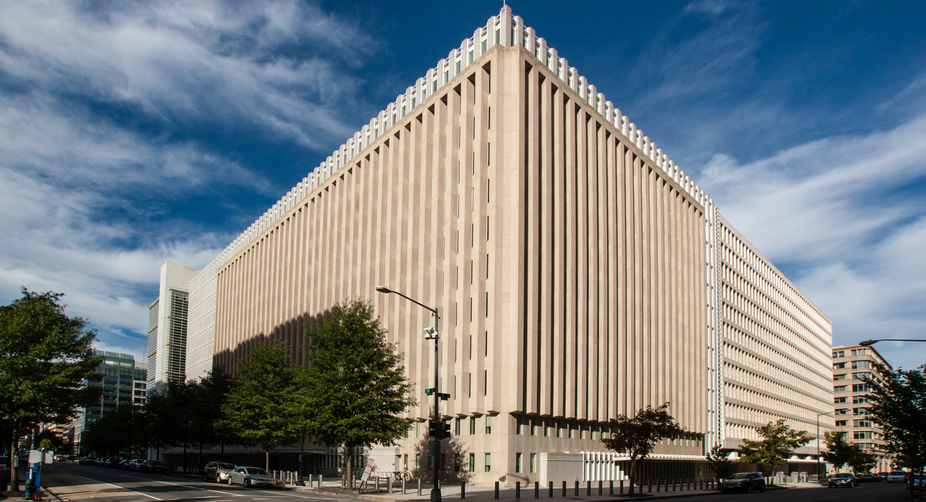
The World Bank has announced $57 billion in financing for sub-Saharan Africa over the next three fiscal years.

Of that total, $45 billion will come from the International Development Association, the World Bank fund that provides grants and interest-free loans for the world's poorest countries.

The package will also feature an estimated $8 billion in private sector investments from the International Finance Corporation, a private-sector branch of World Bank, and $4 billion will come from the International Bank for Reconstruction and Development, the bank's unit for middle-income nations, World Bank president Jim Yong Kim yesterday said in a statement.

Germany, which hosted a meeting of the G20 countries Friday and Saturday, said that a partnership called "Compact with Africa" would be a priority of its presidency this year of that club of powerful nations. Of all the countries in Africa, only South Africa is a G20 member.

"This represents an unprecedented opportunity to change the development trajectory of the countries in the region," Kim said.

"With this commitment, we will work with our clients to substantially expand programs in education, basic health services, clean water and sanitation, agriculture, business climate, infrastructure and institutional reform," he added.

Kim left for Rwanda and Tanzania on Sunday in a show of World Bank support for the entire region.

The new financing from the International Development Association will target 448 projects that are already underway in sub-Saharan Africa. The region accounts for more than half of the countries eligible for this kind of financing from the IDA, the bank said. 

Indian Wells: Roger Federer beats Stanislas Wawrinka to lift 5th title

At 35, Federer is the oldest ATP player to win one of the elite Masters titles.

AFP | Indian Wells |

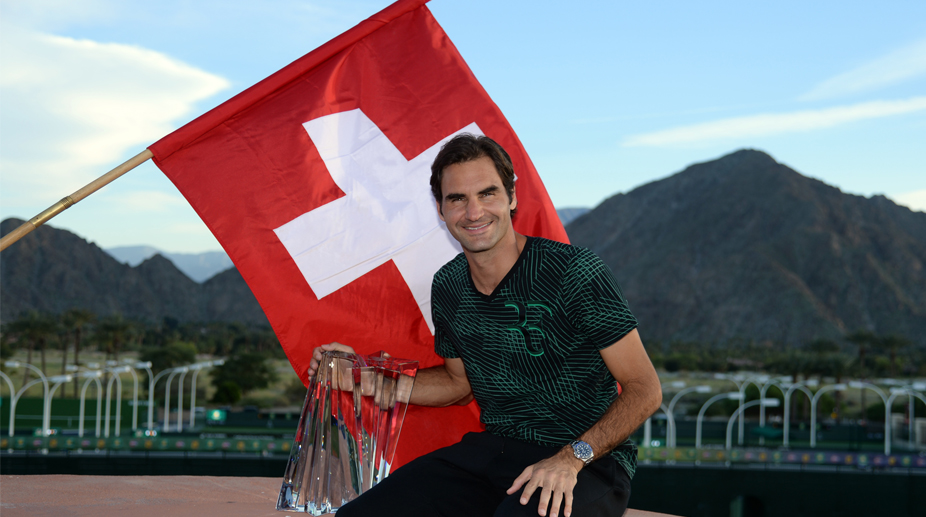
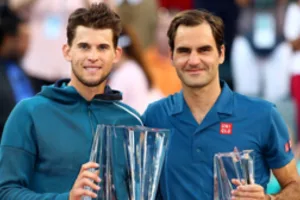
Roger Federer claimed a record-equalling fifth ATP Indian Wells Masters title, continuing his career resurgence with a 6-4, 7-5 victory over Stan Wawrinka.

Federer, sidelined some six months after knee surgery in 2016, returned to win his 18th Grand Slam title at the Australian Open in January.

With Sunday's triumph in the all-Swiss final, Federer joined Novak Djokovic as the only men to win five Indian Wells titles, adding to those he won in 2004, 2005, 2006 and 2012.

At 35, Federer is the oldest ATP player to win one of the elite Masters titles, supplanting Andre Agassi who was 34 when he won in Cincinnati in 2004.

"It's been just a fairytale week once again," said Federer, who missed Indian Wells last year because of injury.

"I'm not as surprised as I was in Australia, but still this comes as a big, big surprise to me, nevertheless, to win here again and beating the players that I did and the way I did.

"I couldn't be more happy. It's an absolute, huge start to the year for me. Last year I didn't win any titles. I don't think I was in any finals except maybe Brisbane last year. The change is dramatic, and it feels great."

The speedy progress means 10th-ranked Federer will have to reassess his 2017 goals. Prior to the Australian Open his aim was to get his ranking to as high as eighth by the time Wimbledon was over.

"The goals are clearly changing after this dream start," Federer said.

While Federer had won 19 of 22 prior meetings with Wawrinka — including a semi-final win in Melbourne — he noted that his compatriot would be no easy mark as he played his first tournament in America since winning the US Open in September.

But Federer claimed a tightly contested first set with a break in the 10th game, pushing Wawrinka into a forehand error to end a tense rally for a set point, on which Wawrinka sent another forehand long.

Wawrinka responded immediately with a break to open the first set — after Federer had held all 42 of his service games in the tournament to that point.

He had saved the lone break point he faced — in his straight-sets thumping of Rafael Nadal in the fourth round — but sent a backhand long on break point to give Wawrinka the advantage in the set.

Wawrinka then withstood two break points to hold for a 2-0 lead, which proved short-lived as Federer won the next three games to take a 3-2 lead.

Finally Wawrinka found himself serving to save the match.

A backhand into the net gave Federer a chance, and he seized it with a volley winner.

"I've lost some tough ones against you, but when you played the final in Australia, I was your biggest fan," a choked up Wawrinka told Federer at the trophy ceremony. "So congratulations on your comeback and congratulations on today."

Although he owns three Grand Slam titles, Wawrinka was playing in just his fourth Masters final and has won just one of the prestige events — beating Federer in the final at Monte Carlo in 2014.

"It's a tough loss," he said. "In a way, I'm really happy to make the final. It's a great result on that, but you always want more."

After fearing that knee trouble in the wake of the Australian Open would slow his season, Wawrinka was pleased to play at a high level.

"After Australia, I wasn't in a good position," he said.

"I was really, really struggling with my knee. I wasn't sure to be back here in that level that quick.

"But I still lost the final," he said. "So it wasn't easy.”

3 US soldiers wounded in Afghan insider attack

IANS | Washington |

Three US soldiers were wounded after an Afghan soldier opened fire at them inside an Afghanistan base, the NATO-led Resolute Support said on Sunday.

According to local media report, the Afghan soldier was shot dead after attacking the US soldiers.

Known also as "green-on-blue" attack, the insider attack, where an Afghan soldier or police fires on NATO coalition forces, is one of the major problems facing coalition forces there.

Last May, two Romanian soldiers were shot dead while training Afghan police.

Currently, around 13,000 foreign troops still remain in Afghanistan to train and assist local security forces in their fight against Taliban.

Indian delegation in Pakistan for Indus commission meet

PTI | Islamabad |

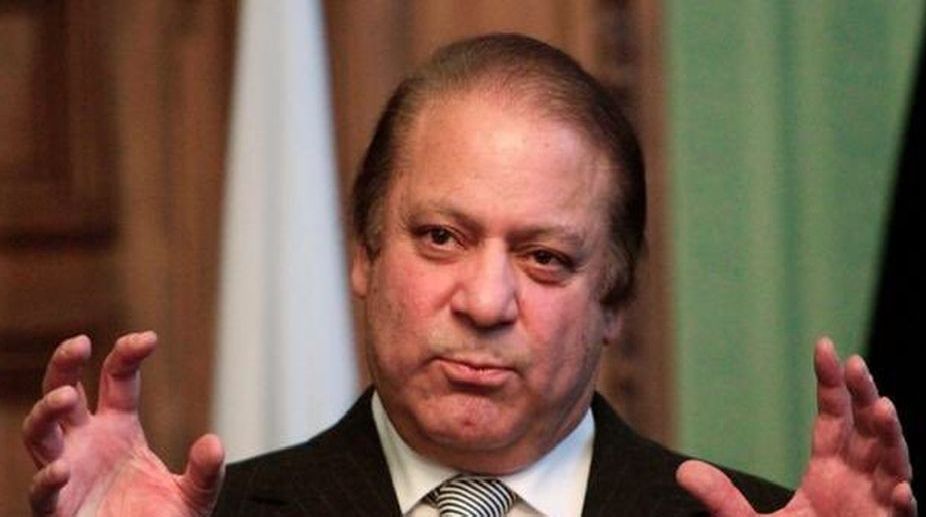
Pakistan's Prime Minister Nawaz Sharif said on Sunday that his country wants to address all outstanding issues with neighbours peacefully.

He made the remarks while meeting President of the Republic of Tatarstan, Rustam Minnikhanov, who called on the Prime Minister at his house here.

"The Prime Minister emphasised that Pakistan is pursuing a policy of peaceful neighbourhood and wishes to resolve all outstanding issues with its neighbours, peacefully through dialogue," a statement from the Prime Minister's Office said.

While warmly welcoming the President of Tatarstan and his delegation, Sharif said that longstanding bilateral relations were a manifestation of a common desire to explore possibilities for enhancing cooperation between Pakistan and Russia.

The Prime Minister reiterated his resolve to establish a strong partnership between Pakistan and Russia in all fields, stating that this cooperation would positively contribute towards promoting peace and stability in the region.

"Pakistan remains confident that its longstanding partnership with the Russian Federation as well as with its Muslim regions, including the Republic of Tatarstan, would witness significant progress in all areas of mutual interest," Sharif said.

Minnikhanov told Sharif that the Tatar business delegation held fruitful meetings in Lahore.

The Prime Minister expressed the hope that the Joint Business Forum with businessmen from both sides would develop mutually beneficial contacts and help boost bilateral trade.

"Cooperation in sectors including Banking, Halal food, production of cement, automotive industry, pharmaceuticals, technology, culture and education, should be explored," Sharif said.

The visiting delegation comprised Deputy Prime Minister of Tatarstan Albert Karimov, Ambassador of Russian Federation to Pakistan Alexey Dedov, Chief Executive of Tatarstan Investment Development Agency Taliya Minullina and Deputy Director of the Foreign Affairs Marat Gatin.


Garden of Eden

Moghoni Das, Sweta Biswas, Raunaq Borah, Sucheta Chatterjee, Madhurima Sengupta | New Delhi |

Visiting a society where a unique genetic heterogeneity of plants reside, each with its own features, that include flowers, crops, trees, saplings and bonsais, is a delight to the eyes. Covering 21 acres of land in a bustling part of the city, the Agri Horticulture Garden of Kolkata is known for its fabulous collection of trees, flowering plants and other varieties of vegetation. It has an impressive infrastructure, which makes it one of the well-maintained gardens across the country. The place is filled with lush greenery till the point the eyes reach.

The place encompasses so much greenery that, even the sign boards in the parking area reads ‘Vehicles should be parked facing the flowers’! It looks greener as a change from the grayscale city that we live in. The narrow winding roads leading through the greenery, flanked by different species of trees like the Ashoka, the panthapadap, the Brazilian Ironwood to name a few, attracts myriad visitors. It seems like some exotic location by Upendrakishore Raychaudhury’s iconic characters’ with Goopy-Bagha’s magical clap.

No beauty can challenge the beauty of flower such is the creation of nature. To brighten the mood with soothing fragrances and beautiful ambiance, the city of Kolkata spectacled mixed bag of flora exhibit in the Agri-Horticultural Society of India recently in February. Founded by Rev. Dr. William Carey in the year 1820, the Agri-Horticultural Society of India accomplished 187 years of its proud existence. Close to its bicentenary year, the diversity of horticulture was seen locked up through the hundreds of seasonal flowers not without perennial flowerets but fruits and vegetables, wide range of foliage plants, cacti and bonsais grown in pots. The visitors took pleasure amidst such vivid hues of flora.

This extraordinary competition has been taking place since 1828 every year and remains a prominent fixture of Kolkata’s happening. This is a gala event where around 2000 entries and 16,500 exhibits including edible vegetable are on display.

The Annual Flower Show organised by the society is the world’s oldest flower show in existence. The exhibit is equipped with plants, shrubs, succulents, cactus, orchids, bonsai, vegetables, uprooted vegetables, seasonal flowering and non-flowering plants, cut flowers, fruits, medicinal plants and many more. Besides, north-eastern states like Meghalaya, Mizoram, Sikkim, Arunachal Pradesh also take part in this show with their exotic orchids and other plants, and numerous species.

The society is categorically divided into blocks, with each having their own homes like; the Rose garden, Xero garden, Orchidarium, Darbhanga house and Bhesaj Udyan. Various techniques such as Japanese flower arrangements, bonsai trees, as well as exhibition of various vegetable arrangements were the highlights of the annual flower show this year.

It was a rare privilege to the people of Kolkata and its suburbs to see roses from the different parts of the country as well as more than 200 rose pots by prominent rose growers. Also a huge quantum of cut roses was competing during this show. Visitors were treated to a variety of flowers from different parts of the states, which included flowers of bright colours, reddish pink, purple, dark blue. The single stalks large Daliahs in attractive hues were the charm of the show and caught every eye of the visitors. Daliah cactus – a delightful variant of daliah was noteworthy for its spiky thin petals, whereas the bunch of chrysanthemums was a riot of colours at the garden.

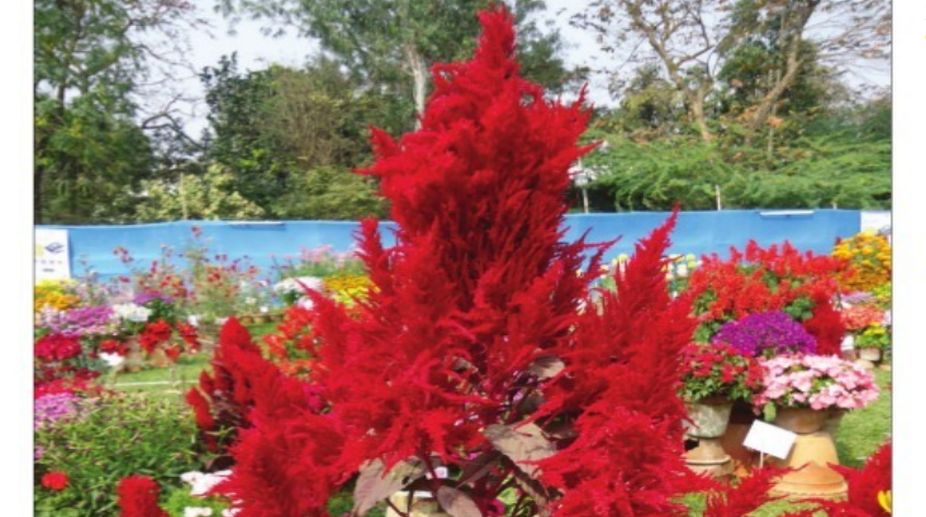
The Silver cock’s comb, is known for its bright colours and also lasts longer than normal flowers. Some red flowers blooming in an inverted position looked as gorgeous as a chandelier with their petals hanging down. In the midst of lilies and roses, and pleasing scents, one might think that one has entered the Garden of Eden. There were tiny pollinated starflowers in blue and pink which seemed as ethereal as fallen stars. Some of the notable plants on display were Elephant Foot Tree whose base-stem looks like elephant’s foot, Mad tree whose all leaves are dissimilar in shape, size and its structure. Monodora a beautiful rare plant of West African origin bears highly ornamental orchid like flower and it is very rare in India. Like these plants there are many more uncommon plants which attract all nature lovers. Besides plethora of flowers, winter annuals like Acrolinum, Arctotis, Gazania, Rudbeckia. Cyclamen, Molucella and Mimulus were also seen. Apart from the flower lovers there were also some specially-abled children who had come to witness the aura of the place. Some other school students were also present there. The bonsai section caught the attention of all. There were wide varieties of bonsai, beautifully grown in small pots among. Wood apple’, ‘Fleus Microcarpa’, and ‘Carmona’ were the notable ones. The presence of the butterflies and the bees collecting nectar from the flowers created an imagery of Paradise.

Besides fashioning flower shows, the Agri-Horticultural Society of India (ASHI) is also acknowledged for organising year round programmes. The ASHI arranges for summer and winter garden competitions, House Plants’ Show, Mango Mahotsav and many more. It also renders advisory services to plant lovers across the city to build the bridge between nature lovers and nature. Such flower shows and competitions are organised to encourage the people to nurture plants in their homes. Covered with lush greenery and colourful flowers, the garden offers the people of Kolkata a short respite from their hectic and mundane life to cheer up amidst florets and blossoms during this period. Wandering inside the premises, one could even hear the soothing sound of music resounding from speakers arranged by the management and for a moment all the senses will be engulfed, making one almost forget the busy city that’s just outside the walls of this ‘Garden of Eden’.

(Moghoni Das, Sweta Biswas, Raunaq Borah, Sucheta Chatterjee, Madhurima Sengupta, students, Statesman Print Journalism School)


Opportunity for mutual

Rangan Dutta | New Delhi |

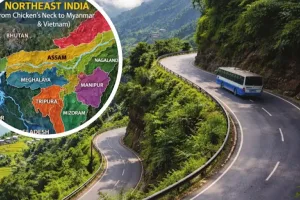
The strategic significance of the extended definition of the North-east, which made Sikkim a part of the North Eastern Council, is that the region is now the only one in India that shares land borders with five countries. And yet, interest in developments in Nepal has always been limited with little media coverage.
Even in the 1990s when the Maoists launched the Peoples’ War in that country and installed a parallel power centre vis- a- vis the state in several parts, media and people in the North-east did not feel concerned about the possible impact of Maoism in the region.
This was in sharp contrast with the perception that prevailed in the wake of the Naxalite movement in the 1970s. It might be due to the anti-foreigners movement in the 1980s when migration from Nepal was seen as a part of the problem. However, indifference to Nepal now makes little geo-political sense because in the post- April 2015 earthquake scenario, new opportunities are emerging for India in which the North-east may have a mutually beneficial role to play. Such possibilities have been obscured in the fog of political uncertainty associated with Nepal’s unfinished task of forming a constitution capable of meeting the legitimate aspirations of its diverse population, which is divided into four broad ethno-cultural groups. These are upper caste-based in the hills and the valley, Janjatis meaning tribes in the hills and plains divided into 54 groups, Dalits and Madhesis comprising roughly 31 per cent, 30 per cent, nine per cent and 31 percent, respectively of Nepal’s population of 29 million people according to the 2016 estimates. However, there are some gaps in these estimates due to overlapping of identities. 
The mind-boggling ethnic diversity of Nepal is seen from the fact that in only 15 out of 75 districts is there a single group that makes up more than 50 per cent of the population. This makes the task of delineation of legislative constituencies, reservation of seats and any system of decentralised governance extremely complex. Consequently the declaration the Maoists made when they joined the interim government in 2006 of wanting Nepal, even in the interim period, to become a democratic federal republic remained unfulfilled largely due to a lack of consensus in balancing the interests of ethnic groups in the distribution of political power in a democracy with federal features as worked out in the 2015 constitution. 
Since Nepal was not under direct British rule, its institutions of governance were not influenced, as in India, by the British “common law”, systems and procedures. From the formation of the state in 1768 under the legendary King Prithvi Narayan Shah till the 1990 constitution, Nepal was an absolute monarchy without any basic feature of democracy such as the rule of law, bill of rights, duly elected legislature, independent judiciary and an apolitical civil service. And, power and privileges were cornered by the “hill upper caste elite” who held roughly two thirds of all positions in government while the land and other rights of subjects were unclear and discriminatory. 
The Maoist insurgency was a violent protest against this “extractive” state. However, its promise of building an “inclusive” state has hit several road blocks of such magnitude that they prompted keen observers of Nepal like KV Rajan, who was the Indian envoy there, to feel that notwithstanding the 2015 Constitution and the decision of the government to go through the motions of elections to local bodies — scheduled in May this year — and provincial and national legislatures thereafter to be completed by January 2018, the election process is unlikely to succeed in the near future. The withdrawal of support of an alliance of Madhes-based political parties to Prime Minister Prachanda-led government on 15 March and the present Madhes agitation against holding of elections to local bodies — the first ever to be held in Nepal after 20 years — prove that Rajan’s assessment has been right.
Let us look at the Madhesi issue. There has been inaccurate reporting in the Indian media that the Madhesis are of Indian origin, far from it because the Terai area where they live was a part of the kingdom of Nepal since its inception in 1765. 
The British allowed Nepal to retain this territory to ensure economic viability of Nepal and two districts in the far west, Kanchanpur and Kailali were returned to the monarchy for their loyalty after 1857.The Ranas like the zamindars of Assam’s Goalpara district actually encouraged farmers from neighbouring areas to move up to raise crops and thereby increase revenues of the state. Thus Madhes emerged as the base of Nepal’s agrarian economy and the main source of revenue. Also, all surface transport links to India passes through Madhes. Thus 50 per cent plus of Nepal’s GDP of $20.88 billion ($71.52billion in terms of purchasing power parity as per 2016 estimates) is derived from the Madhes region and the main segments of the industry and service sector of the economy operate in Madhes except tourism. 

The economic future of Nepal critically depends on Madhes. In the present situation when democracy in South Asia is really a “numbers game”, the formation of seven provinces under the 2015 Constitution mixing hills and plains areas in a manner that would ensure permanent dominance of the “hill upper caste elite” in six provinces means cynical rejection of the core Madhesi demand of ethnicity-based constitution of provinces for ensuring due Madhesi representation in the national assembly and their majority status in two provinces in the Terai. 
The demands are unlikely to be met soon as this will require a restructuring of the dispensation of political power in Nepal and a change in the outlook of the ruling elite, which calls itself Communist and democratic, and is yet unwilling to agree to a political arrangement based on regional autonomy and balanced development for peace and progress of Nepal.
The brighter side of Nepal is the small population and huge untapped hydro-power potential, estimated at 42,000 MW, and natural resources for rapid all-round growth of the economy. In 2014, the economy grew at six per cent and though disrupted in 2015 due to the earthquakes, it is picking up again mainly fuelled by post-earthquake reconstruction and increased remittances from expatriate Nepali citizens, which account for 31.7 per cent of the GDP — the highest proportion for any South Asian nation as over half a million Nepalis are presently working in countries outside South Asia. 
Nepal has a strong co-operative sector and has embarked on a skill development programme and to promote medium, small and micro enterprises. There has been a rising demand for improved health care and higher education in engineering, medical and management, which cannot be locally made given the spatial distribution of Nepal’s population and easy access to such facilities in the Indian neighbourhood. That creates opportunities for West Bengal, Sikkim and other North-eastern states. 
The latter has an advantage as it has a well spread out ethnic Nepali population, which must now be about two million, which is five per cent of the region’s population especially in Assam, Meghalaya, Manipur, Arunachal Pradesh and Nagaland. 
In Assam, Nepalis introduced commercial dairy farming for which they were accorded recognition as “graziers” under the Assam Land Revenue Regulation 1886 and “professional grazing reserve” lands were set apart for their cattle in all Assam valley districts. Their role in the Assam Rifles, state police, forest resource-based activity and as skilled workforce in urban areas, have immensely contributed to transform the North-east in the modern period. Thus the time has come to recognise the ethnic Nepali not as the “other” but as a vital link to the emerging economy of Nepal with increased foreign investment and larger interaction with the neighbouring states of India and South-east Asia. 
If the North-east could open its healthcare and education facilities to Nepal, the region could gain immensely from a research and development partnership with the Nepal-based International Center for Mountain Development. The region could also avail Nepal’s expertise in developing world class tourism industry for ushering in a new era of Nepal-North East economic and technological cooperation. And this will require a critical change of mindset in the North-east — looking to Nepal as a source of opportunity for mutual progress.

(THE WRITER IS A RETIRED IAS OFFICER OF THE ASSAM-MEGHALAYA CADRE AND HAS SERVED AS A SCIENTIFIC CONSULTANT IN THE OFFICE OF THE PRINCIPAL SCIENTIFIC ADVISOR TO THE GOVERNMENT OF INDIA)

Opportunity for mutual

Rangan Dutta | New Delhi |

The strategic significance of the extended definition of the North-east, which made Sikkim a part of the North Eastern Council, is that the region is now the only one in India that shares land borders with five countries. And yet, interest in developments in Nepal has always been limited with little media coverage.
Even in the 1990s when the Maoists launched the Peoples’ War in that country and installed a parallel power centre vis- a- vis the state in several parts, media and people in the North-east did not feel concerned about the possible impact of Maoism in the region.
This was in sharp contrast with the perception that prevailed in the wake of the Naxalite movement in the 1970s. It might be due to the anti-foreigners movement in the 1980s when migration from Nepal was seen as a part of the problem. However, indifference to Nepal now makes little geo-political sense because in the post- April 2015 earthquake scenario, new opportunities are emerging for India in which the North-east may have a mutually beneficial role to play. Such possibilities have been obscured in the fog of political uncertainty associated with Nepal’s unfinished task of forming a constitution capable of meeting the legitimate aspirations of its diverse population, which is divided into four broad ethno-cultural groups. These are upper caste-based in the hills and the valley, Janjatis meaning tribes in the hills and plains divided into 54 groups, Dalits and Madhesis comprising roughly 31 per cent, 30 per cent, nine per cent and 31 percent, respectively of Nepal’s population of 29 million people according to the 2016 estimates. However, there are some gaps in these estimates due to overlapping of identities. 
The mind-boggling ethnic diversity of Nepal is seen from the fact that in only 15 out of 75 districts is there a single group that makes up more than 50 per cent of the population. This makes the task of delineation of legislative constituencies, reservation of seats and any system of decentralised governance extremely complex. Consequently the declaration the Maoists made when they joined the interim government in 2006 of wanting Nepal, even in the interim period, to become a democratic federal republic remained unfulfilled largely due to a lack of consensus in balancing the interests of ethnic groups in the distribution of political power in a democracy with federal features as worked out in the 2015 constitution. 
Since Nepal was not under direct British rule, its institutions of governance were not influenced, as in India, by the British “common law”, systems and procedures. From the formation of the state in 1768 under the legendary King Prithvi Narayan Shah till the 1990 constitution, Nepal was an absolute monarchy without any basic feature of democracy such as the rule of law, bill of rights, duly elected legislature, independent judiciary and an apolitical civil service. And, power and privileges were cornered by the “hill upper caste elite” who held roughly two thirds of all positions in government while the land and other rights of subjects were unclear and discriminatory. 
The Maoist insurgency was a violent protest against this “extractive” state. However, its promise of building an “inclusive” state has hit several road blocks of such magnitude that they prompted keen observers of Nepal like KV Rajan, who was the Indian envoy there, to feel that notwithstanding the 2015 Constitution and the decision of the government to go through the motions of elections to local bodies — scheduled in May this year — and provincial and national legislatures thereafter to be completed by January 2018, the election process is unlikely to succeed in the near future. The withdrawal of support of an alliance of Madhes-based political parties to Prime Minister Prachanda-led government on 15 March and the present Madhes agitation against holding of elections to local bodies — the first ever to be held in Nepal after 20 years — prove that Rajan’s assessment has been right.
Let us look at the Madhesi issue. There has been inaccurate reporting in the Indian media that the Madhesis are of Indian origin, far from it because the Terai area where they live was a part of the kingdom of Nepal since its inception in 1765. 
The British allowed Nepal to retain this territory to ensure economic viability of Nepal and two districts in the far west, Kanchanpur and Kailali were returned to the monarchy for their loyalty after 1857.The Ranas like the zamindars of Assam’s Goalpara district actually encouraged farmers from neighbouring areas to move up to raise crops and thereby increase revenues of the state. Thus Madhes emerged as the base of Nepal’s agrarian economy and the main source of revenue. Also, all surface transport links to India passes through Madhes. Thus 50 per cent plus of Nepal’s GDP of $20.88 billion ($71.52billion in terms of purchasing power parity as per 2016 estimates) is derived from the Madhes region and the main segments of the industry and service sector of the economy operate in Madhes except tourism. 
The economic future of Nepal critically depends on Madhes. In the present situation when democracy in South Asia is really a “numbers game”, the formation of seven provinces under the 2015 Constitution mixing hills and plains areas in a manner that would ensure permanent dominance of the “hill upper caste elite” in six provinces means cynical rejection of the core Madhesi demand of ethnicity-based constitution of provinces for ensuring due Madhesi representation in the national assembly and their majority status in two provinces in the Terai. 
The demands are unlikely to be met soon as this will require a restructuring of the dispensation of political power in Nepal and a change in the outlook of the ruling elite, which calls itself Communist and democratic, and is yet unwilling to agree to a political arrangement based on regional autonomy and balanced development for peace and progress of Nepal.
The brighter side of Nepal is the small population and huge untapped hydro-power potential, estimated at 42,000 MW, and natural resources for rapid all-round growth of the economy. In 2014, the economy grew at six per cent and though disrupted in 2015 due to the earthquakes, it is picking up again mainly fuelled by post-earthquake reconstruction and increased remittances from expatriate Nepali citizens, which account for 31.7 per cent of the GDP — the highest proportion for any South Asian nation as over half a million Nepalis are presently working in countries outside South Asia. 
Nepal has a strong co-operative sector and has embarked on a skill development programme and to promote medium, small and micro enterprises. There has been a rising demand for improved health care and higher education in engineering, medical and management, which cannot be locally made given the spatial distribution of Nepal’s population and easy access to such facilities in the Indian neighbourhood. That creates opportunities for West Bengal, Sikkim and other North-eastern states. 
The latter has an advantage as it has a well spread out ethnic Nepali population, which must now be about two million, which is five per cent of the region’s population especially in Assam, Meghalaya, Manipur, Arunachal Pradesh and Nagaland. 
In Assam, Nepalis introduced commercial dairy farming for which they were accorded recognition as “graziers” under the Assam Land Revenue Regulation 1886 and “professional grazing reserve” lands were set apart for their cattle in all Assam valley districts. Their role in the Assam Rifles, state police, forest resource-based activity and as skilled workforce in urban areas, have immensely contributed to transform the North-east in the modern period. Thus the time has come to recognise the ethnic Nepali not as the “other” but as a vital link to the emerging economy of Nepal with increased foreign investment and larger interaction with the neighbouring states of India and South-east Asia. 
If the North-east could open its healthcare and education facilities to Nepal, the region could gain immensely from a research and development partnership with the Nepal-based International Center for Mountain Development. The region could also avail Nepal’s expertise in developing world class tourism industry for ushering in a new era of Nepal-North East economic and technological cooperation. And this will require a critical change of mindset in the North-east — looking to Nepal as a source of opportunity for mutual progress.

(THE WRITER IS A RETIRED IAS OFFICER OF THE ASSAM-MEGHALAYA CADRE AND HAS SERVED AS A SCIENTIFIC CONSULTANT IN THE OFFICE OF THE PRINCIPAL SCIENTIFIC ADVISOR TO THE GOVERNMENT OF INDIA)

No solace in Manipur

Yambem Laba | New Delhi |

In the election to the 11th Manipur Assembly no party won the magic figure to form a government. But Governor Najma Heptullah acted as the perfect henchwoman of the saffron brigade and threw constitutional niceties to the wind by ignoring the claim of Congress leader Okram Ibobi Singh and his flock of 28 MLAs in the 60-member house being the single largest party and instead chose BJP, with 21 MLAs, to form a new government.
The BJP is being propped up by four MLAs belonging to the National People’s Party, four from the Naga People’s Front, one from the Lok Jana Sakhti Party, and one from the Congress. The BJP had also earlier inducted into its fold the lone Trinamool Congress MLA, taking its tally to 32 by virtue of which the governor was satisfied and opened the gates of the Raj Bhawan  for  them.
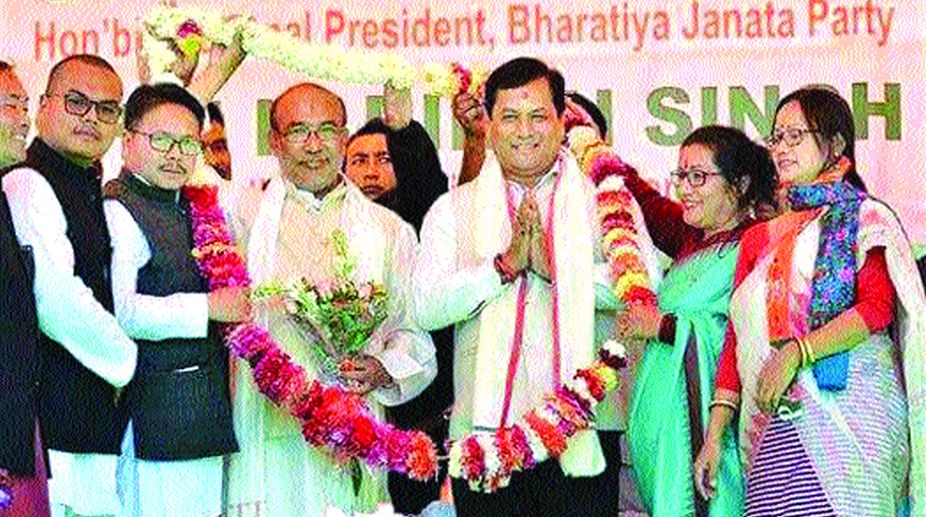
Former Border Security Force footballer and editor of a vernacular Naharol gi Thoudang and minister in Ibobi’s second tenure, Nongthonbam Biren was sworn in as the Chief Minister on 15 March.  Former director-general of police Yumnam Joykumar, who was denied a BJP ticket but was elected on an NPP ticket, was named the deputy chief minister. The only other BJP legislators to be   accommodated is Thongnam Bishwajit. All the four from the NPP got the ministerial posts, plus one from the LJP and one from the NPF. And the lone Congress MLA Th Shyamkumar, who joined the BJP, was rewarded with a ministerial post, bringing the tally to nine, including the chief minister, leaving only three more vacancies in the cabinet.
The run- up to the elections had been hectic with all the big guns of the saffron party lining up at Imphal.  It was headed by Prime Minister Narendra Modi with party president Amit Shah in tow and Prakash Javadekar, Union HRD minister, making Imphal his base camp with a host of other Central ministers who had been visiting Imphal over the last three months. They were later joined by Assam and Arunachal Pradesh chief ministers, Sarbanada Sonowal and Pema Khandu respectively.
Politicians make strange bedfellows and the BJP is no exception. For instance it was only in November 2016 that new chief minister Biren had announced that the BJP will have nothing to do with the NPF, a party which has, in its constitution, a clause that calls for the unification of all Naga-inhabited areas under one administrative unit, implying Greater Nagaland or a threat to Manipur’s territorial integrity.
But as soon as the NPF wrote to the governor extending support to a non –Congress government, the BJP seized the opportunity and even made an NPF legislator a cabinet minister.
The prime minister in his rhetoric best had told an election rally in Imphal that if a BJP government is elected in Manipur than the ongoing economic blockade the pro-NSCN (IM) Manipur-based United Naga Council had imposed since 1 November last year, will be liftedwithin 48 hours. And, with the NPF as a coalition partner, it was thought that the UNC will listen to the request of the new government, (the first cabinet meeting of the new government had a single agenda and that was to appeal to the UNC to lift the blockade).  But it appears to have fallen on deaf ears.
The UNC has now come out publicly stating that the blockade will continue till the new government invites them formally for talks. It seems that the Nagas want to have their pound of flesh and crucial to their demand is the rollback on the recent creation of the Kangpokpi District, carved out of Senapati and Jiribam districts bifurcated from Imphal East. And the NPF members are also going to be hell bent on the same.
And if just-sworn-in chief minister Biren does that, Kukis and Meiteis are certain to revolt. So, by all accounts, the honeymoon between the BJP and the NPF may not last long.
This election also saw some no-holds- bar advertisement war between the BJP and the Congress. The Election Commission of India is not happy over the BJP’s   desperate move in inserting an advertisement in the local newspapers with its doctored-certificates, putting in trouble the editors of the local papers that had carried the advertisements.
What is more, in its desperation to swell its rank, the BJP even tried to snatch the lone Independent MLA from Jiribam. A former Congress minister had gone to Jiribam to fetch him and was returning to Imphal from Guwahati by air. Apparently, acting on directives from the high command, the Central Industrial Security Force personnel, guarding the Imphal international airport, detained the duo till the Assam chief minister sent a special plane to Imphal and whisked the Independent MLA away to safer Guwahati, leaving the Congress dumfounded.
The other side show of the elections this time is the eclipsing of the “Iron Lady of Manipur” Irom Sharmila, who in August last year broke her 16-year-old fast demanding the repeal of the draconian Armed Forces (Special Powers) Act in force in Manipur since the end of 1979.  She, along with her Harvard-returned Erendro Leichombam had floated the People’s Resurgence and Justice Alliance and contested against outgoing chief minister Okram Ibobi Singh.
Around the same time her boyfriend/fiancé, an NRI of Goan origin by the name of Desmond Coutinho started abusing all her supporters and the general Manipuri people using filthy languages on social media. So much so that Sharmila was told in no uncertain terms that unless she apologised on behalf of Desmond, the people will announce that they have ceased to support her citing the reasons thereof. Sharmila seemed to have understood the predicament and issued a statement apologising on Desmond’s behalf and seeking forgiveness from the public on that account.
It was with great difficulty that her supporters could muster up 10 voters from Thoubal to vouch for her when she filed the nomination papers. And when the results finally came out she had polled just 90 votes compared to 16,000 plus for Ibobi.  
And the second shock she must have got was that initially she was planning to get married to the NRI after election, the results notwithstanding. But her lover boy again declared that he will marry her only after the Lok Sabha polls in 2019 where she is expected to bring about a sweeping change in Manipuri politics. Left with no choice a shattered Sharmila has left the state for a retreat centre somewhere in Kerala. She may soon become only a memory among the Manipuris.
But all said and done, the 19 sitting Congress members of the assembly, including four cabinet ministers, lost in the hustings thereby bringing in a semblance of change in the state and Ibobi’s  hope for a record fourth time got dashed although he managed to get his son and nephew elected.
The Congress MLA who switched over to the BJP has to elect himself in another six months. The BJP Government now only has three ministerial berths to offer to any new comers and the grapevine says that grumbling has already begun among the BJP legislators, so such so that Assam’s minister Himanta Biswa Sarma is said to be have taken four of them to Assam to assuage hurt feelings. And with the NPF demanding their pound of flesh and the UNC unrelenting in its stand, the NPF might be coerced into withdrawing support and therefore, the possibility of President’s Rule being imposed in the next six months cannot be ruled out.

(THE WRITER IS THE IMPHAL-BASED SPECIAL REPRESENTATIVE OF THE STATESMAN)