Logo

Adityanath to head UP’s first cabinet meeting, distribution of portfolios likely

SNS | New Delhi |

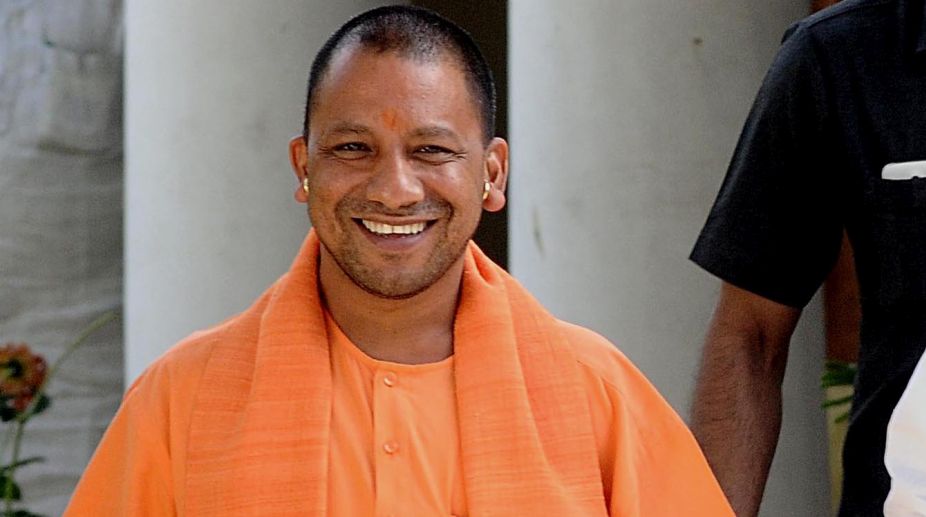
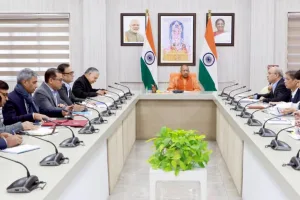
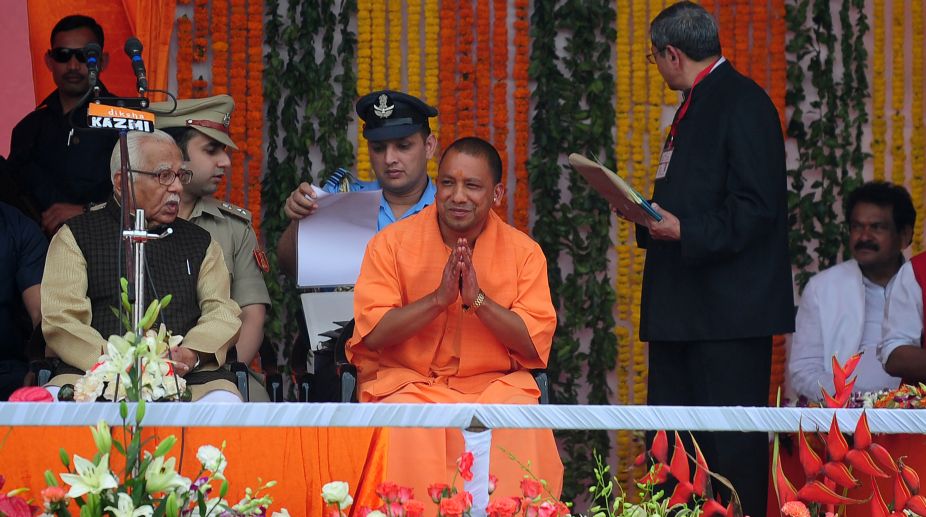
The Uttar Pradesh government will hold the first cabinet meeting on Wednesday headed by Chief Minister Yogi Adityanath at 5 pm in Lucknow.

The main issues to be discussed in the meeting are law and order of the state, corruption, farmers’ loan and fixation of the new power tariff, sources said.

The distribution of portfolios among the ministers will be discussed during Adityanath’s first cabinet meeting.

Adityanath on Tuesday met the senior leaders of the party Prime Minister Narendra Modi, party president Amit Shah and Home Minister Rajnath Singh.

According to reports, there is a tussle between Chief Minister Adityanath and his deputy Keshav Prasad Maurya over the important home portfolio. Both Adityanath and Maurya wanted the home department and have turned to Delhi for a solution.

Adityanath was sworn in as the UP CM on March 19 and made commitment to work for the development of the state and live up to Modi’s dream of turning Uttar Pradesh into Uttam Pradesh.

“UP will be the state which our honourable Prime Minister has dreamt of, a corruption-free state, a state free of anarchy. It would be an incident free-state…Uttar Pradesh would work to make the dream of Prime Minister a reality," Adityanath said.

Samsung Pay in India: Know all about it

SNS | New Delhi |

Electronics giant Samsung will be launching its new secure payment system, ‘Samsung Pay’ across the country on Wednesday.

Samsung Pay, which allows smartphone users to carry out financial transactions without cash or credit/debit cards will initially be available in top end Galaxy range of phones like S7, S7 edge, Note 5, S6 edge+, A5 (2016), and the A7 (2016). The phones will soon receive Samsung Pay support via a software update.

However, as per reports, the company will introduce the feature in budget smartphones as well to reach out to the masses especially in the wake of demonetisation which has given a major impetus to cashless transactions.

The South Korean tech giant is likely to give stiff challenge to e-wallet mobile apps such as Paytm, FreeCharge etc.

Samsung has partnered with banks like Axis, HDFC, ICICI, SBI, and Standard Chartered for the programme in its initial phase while support for Citibank and American Express will be added soon.

How Samsung Pay works?

Samsung Pay works with both NFC-based mobile payment systems and magnetic stripes and transmits card data to a payment terminal's swipe slot using an electromagnetic field.

According to Samsung with just three steps, a transaction is completed within seconds. These include: swiping up to launch the service, authenticating via PIN or fingerprint and making payments using a compatible phone.
 

Samsung Pay in India: Know all about it

SNS | New Delhi |

Electronics giant Samsung will be launching its new secure payment system, ‘Samsung Pay’ across the country on Wednesday.

Samsung Pay, which allows smartphone users to carry out financial transactions without cash or credit/debit cards will initially be available in top end Galaxy range of phones like S7, S7 edge, Note 5, S6 edge+, A5 (2016), and the A7 (2016). The phones will soon receive Samsung Pay support via a software update.

However, as per reports, the company will introduce the feature in budget smartphones as well to reach out to the masses especially in the wake of demonetisation which has given a major impetus to cashless transactions.

The South Korean tech giant is likely to give stiff challenge to e-wallet mobile apps such as Paytm, FreeCharge etc.

Samsung has partnered with banks like Axis, HDFC, ICICI, SBI, and Standard Chartered for the programme in its initial phase while support for Citibank and American Express will be added soon.

How Samsung Pay works?

Samsung Pay works with both NFC-based mobile payment systems and magnetic stripes and transmits card data to a payment terminal's swipe slot using an electromagnetic field.

According to Samsung with just three steps, a transaction is completed within seconds. These include: swiping up to launch the service, authenticating via PIN or fingerprint and making payments using a compatible phone.
 

Samsung Pay in India: Know all about it

SNS | New Delhi |

Electronics giant Samsung will be launching its new secure payment system, ‘Samsung Pay’ across the country on Wednesday.

Samsung Pay, which allows smartphone users to carry out financial transactions without cash or credit/debit cards will initially be available in top end Galaxy range of phones like S7, S7 edge, Note 5, S6 edge+, A5 (2016), and the A7 (2016). The phones will soon receive Samsung Pay support via a software update.

However, as per reports, the company will introduce the feature in budget smartphones as well to reach out to the masses especially in the wake of demonetisation which has given a major impetus to cashless transactions.

The South Korean tech giant is likely to give stiff challenge to e-wallet mobile apps such as Paytm, FreeCharge etc.

Samsung has partnered with banks like Axis, HDFC, ICICI, SBI, and Standard Chartered for the programme in its initial phase while support for Citibank and American Express will be added soon.

How Samsung Pay works?

Samsung Pay works with both NFC-based mobile payment systems and magnetic stripes and transmits card data to a payment terminal's swipe slot using an electromagnetic field.

According to Samsung with just three steps, a transaction is completed within seconds. These include: swiping up to launch the service, authenticating via PIN or fingerprint and making payments using a compatible phone.
 

Ajmer Dargah blast convicts get life term

IANS | Jaipur |

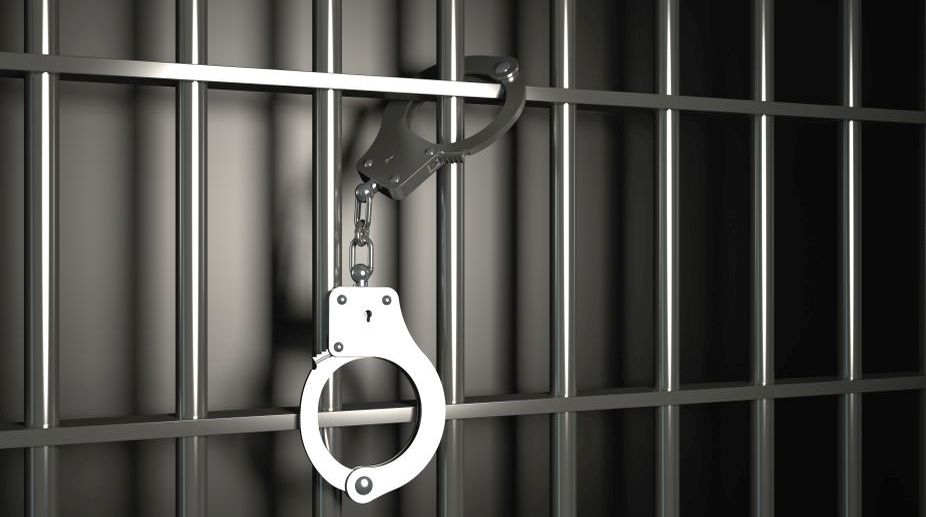
A local court here has awarded life imprisonment to two men convicted for the 2007 Ajmer Dargah bomb blast in which three persons were killed.

Earlier on March 8, the special National Investigation Agency (NIA) court had convicted Bhavesh Patel, Devendra Gupta and Sunil Joshi (now dead).

Arguments over the quantum of punishment were completed on March 18 and the court on Wednesday gave life imprisonment to both the surviving convicts — Gupta and Patel.
 

Ajmer Dargah blast convicts get life term

IANS | Jaipur |

A local court here has awarded life imprisonment to two men convicted for the 2007 Ajmer Dargah bomb blast in which three persons were killed.

Earlier on March 8, the special National Investigation Agency (NIA) court had convicted Bhavesh Patel, Devendra Gupta and Sunil Joshi (now dead).

Arguments over the quantum of punishment were completed on March 18 and the court on Wednesday gave life imprisonment to both the surviving convicts — Gupta and Patel.
 

Ajmer Dargah blast convicts get life term

IANS | Jaipur |

A local court here has awarded life imprisonment to two men convicted for the 2007 Ajmer Dargah bomb blast in which three persons were killed.

Earlier on March 8, the special National Investigation Agency (NIA) court had convicted Bhavesh Patel, Devendra Gupta and Sunil Joshi (now dead).

Arguments over the quantum of punishment were completed on March 18 and the court on Wednesday gave life imprisonment to both the surviving convicts — Gupta and Patel.
 

No music is bad: Tabla maestro Tanmoy Bose

IANS | New Delhi |

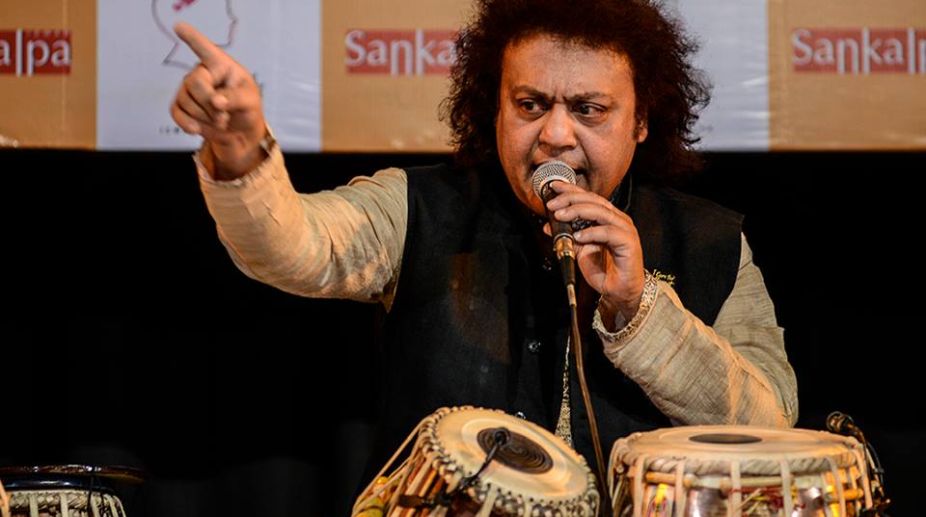
Music is all about rhythmic collaboration, and no music — even fusion — is bad if justice is done to the symphonic pieces by the performers, Tabla maestro Tanmoy Bose believes.

"Good music in any form will serve its purpose of preserving our heritage. Fusion music is a melange of sounds from different genres as it exposes the audience to different forms of music which they are not aware of," Bose told in an interview.

Bose, who lives in Kolkata, was recently in the national capital to perform at the HCL Concerts.

Stressing on the fact that every kind of music has its own uniqueness, Bose said that one needs to develop a sense of using alphabets before loving and digging into fusion music.

"A musician should master the fundamental form of music he or she is working with," he stressed.

A practitioner of Farrukhabad Gharana, Bose began his journey in the world of classical music under the shadow of his Guru Pandit Maharaj Banerjee from whom he learned vocal music. Tidbits of harmonium were taught to him by Pandit Mantu Banerjee.

Later, under the guidance of Pandit Kanai Dutta, Bose began his serious training of classical music in the traditional "Guru Shishya Parampara".

"Guru-Shishya tradition holds a lot of significance and contributes to teaching the ultimate ethics of the bond. You will learn to surrender self to your guru. Tehzeeb-e-Mausiki is a beautiful term," the 53-year-old musician said.

Following the untimely death of his guru, Bose became a Gandabandh Shagrid of Pt Shankar Ghosh to whom he paid a tribute recently at the musical event.

"Gandabandh is a traditional ceremony in which guru gives his blessings to his students by tying a thread and accepting him to be his representative," he explained.

Sharing some of his memorable moments, Bose recollected an incident which, for him, will always be cherished.

"It was when guruji tied the sacred thread on my hand legitimising me to be the representative of his style," he remembered. Though he belongs to Farukkabad Gharana, he prefers to call it "Kolkata Gharana" because of his guruji's own style and compositions, which has amalgamated and evolved in the Gharana for so many years.

"A musician's is a lifelong journey to grow and learn. Whatever little I have learnt under guruji, I feel there is a lot more to be done and to achieve the command which is required to contribute to take his style forward. I sincerely wish I could achieve what is expected out of me, which eventually time will tell," he noted.

Bose has been a globetrotter, taking classical music and its fusion to the world. He has shared the stage along with Ustad Munawar Ali Khan, Pandit V.G. Jog, Ustad Imrat Khan, Ustad Amjad Ali Khan and Pandit Ravi Shankar with whom he has got a special bond.

"Playing with Pandit Ravi Shankar was actually a dream come true. In my growing years, I attended several of his performances and concerts accompanied by legendary tabla masters. I have been extremely lucky to have received his love and blessings throughout the 10 years with him," Bose said.

He, however, expressed disappointment at the younger generation being detached from any form of classical learning mostly because of the availability of "too many options" in terms of entertainment.

No music is bad: Tabla maestro Tanmoy Bose

IANS | New Delhi |

Music is all about rhythmic collaboration, and no music — even fusion — is bad if justice is done to the symphonic pieces by the performers, Tabla maestro Tanmoy Bose believes.

"Good music in any form will serve its purpose of preserving our heritage. Fusion music is a melange of sounds from different genres as it exposes the audience to different forms of music which they are not aware of," Bose told in an interview.

Bose, who lives in Kolkata, was recently in the national capital to perform at the HCL Concerts.

Stressing on the fact that every kind of music has its own uniqueness, Bose said that one needs to develop a sense of using alphabets before loving and digging into fusion music.

"A musician should master the fundamental form of music he or she is working with," he stressed.

A practitioner of Farrukhabad Gharana, Bose began his journey in the world of classical music under the shadow of his Guru Pandit Maharaj Banerjee from whom he learned vocal music. Tidbits of harmonium were taught to him by Pandit Mantu Banerjee.

Later, under the guidance of Pandit Kanai Dutta, Bose began his serious training of classical music in the traditional "Guru Shishya Parampara".

"Guru-Shishya tradition holds a lot of significance and contributes to teaching the ultimate ethics of the bond. You will learn to surrender self to your guru. Tehzeeb-e-Mausiki is a beautiful term," the 53-year-old musician said.

Following the untimely death of his guru, Bose became a Gandabandh Shagrid of Pt Shankar Ghosh to whom he paid a tribute recently at the musical event.

"Gandabandh is a traditional ceremony in which guru gives his blessings to his students by tying a thread and accepting him to be his representative," he explained.

Sharing some of his memorable moments, Bose recollected an incident which, for him, will always be cherished.

"It was when guruji tied the sacred thread on my hand legitimising me to be the representative of his style," he remembered. Though he belongs to Farukkabad Gharana, he prefers to call it "Kolkata Gharana" because of his guruji's own style and compositions, which has amalgamated and evolved in the Gharana for so many years.

"A musician's is a lifelong journey to grow and learn. Whatever little I have learnt under guruji, I feel there is a lot more to be done and to achieve the command which is required to contribute to take his style forward. I sincerely wish I could achieve what is expected out of me, which eventually time will tell," he noted.

Bose has been a globetrotter, taking classical music and its fusion to the world. He has shared the stage along with Ustad Munawar Ali Khan, Pandit V.G. Jog, Ustad Imrat Khan, Ustad Amjad Ali Khan and Pandit Ravi Shankar with whom he has got a special bond.

"Playing with Pandit Ravi Shankar was actually a dream come true. In my growing years, I attended several of his performances and concerts accompanied by legendary tabla masters. I have been extremely lucky to have received his love and blessings throughout the 10 years with him," Bose said.

He, however, expressed disappointment at the younger generation being detached from any form of classical learning mostly because of the availability of "too many options" in terms of entertainment.

UP CM Adityanath orders blanket ban on smuggling of cows

SNS | New Delhi |

Just few hours ahead of the first cabinet meeting in the state, Uttar Pradesh Chief Minister Yogi Adityanath on Wednesday ordered a complete blanket ban on smuggling of cows and directed police officials to prepare an action plan to shut slaughterhouses.

After Adityanath was sworn in as the chief minister, two slaughterhouses were sealed by the Nagar Nigam authorities in Allahabad on Monday.

The ban on legal as well as illegal slaughterhouses was one of the main agendas of the BJP manifesto in the recently concluded elections.

Reports suggest that there are about 130 legal slaughterhouses in the state employing over two lakh people. The net worth of the entire beef industry in UP is approximately Rs.17,000 crore.

The beef row started after a man was lynched to death in Dadri after rumours that he had stored beef in his refrigerator.

(With inputs from agencies)

UP CM Adityanath orders blanket ban on smuggling of cows

SNS | New Delhi |

Just few hours ahead of the first cabinet meeting in the state, Uttar Pradesh Chief Minister Yogi Adityanath on Wednesday ordered a complete blanket ban on smuggling of cows and directed police officials to prepare an action plan to shut slaughterhouses.

After Adityanath was sworn in as the chief minister, two slaughterhouses were sealed by the Nagar Nigam authorities in Allahabad on Monday.

The ban on legal as well as illegal slaughterhouses was one of the main agendas of the BJP manifesto in the recently concluded elections.

Reports suggest that there are about 130 legal slaughterhouses in the state employing over two lakh people. The net worth of the entire beef industry in UP is approximately Rs.17,000 crore.

The beef row started after a man was lynched to death in Dadri after rumours that he had stored beef in his refrigerator.

(With inputs from agencies)

Raveena won’t promote ‘Maatr…’ on Arunabh Kumar’s TVF

IANS |

 Actress Raveena Tandon has cancelled plans to promote her upcoming movie Maatr – The Mother on The Viral Fever (TVF), following the sexual harassment allegations against its founder and CEO Arunabh Kumar.

"I was not aware of the controversy as I was in New York and in the middle of a snow storm," Raveena said in a statement.

"Our film deals with a very strong message about zero tolerance to any form of violence or abuse against women. The film's producers and actors feel that until allegations against the producer and the channel are proven wrong, we will refrain from promoting the film or any of the actors appearing on the said show," she added. 

TVF is an online entertainment platform that satirises Indian politics, movies, life-style, and the social system.

Maatr co-producer Anjum Rizvi pointed out: "Raveena's character is a working woman. Our film has been inspired by incidents which are happening in India today. Right now, we felt we should not get into it, so we have opted out of the TVF show."

"It's a sensitive issue and we have to handle everything with care and not use whatever tools and means possible. We need to be careful of how we promote the film."

Rizvi said that "Raveena is a vocal personality and doesn't mince her words".

"She is also involved in every aspect of the film as the subject is very close to her heart. As filmmakers, we can raise issues, though we can't come up with solutions. We are just highlighting the issue, but talks about whether women should or should not take law into their hands and how long they should wait for justice to be meted out," said the co-producer.

Raveena won’t promote ‘Maatr…’ on Arunabh Kumar’s TVF

IANS |

 Actress Raveena Tandon has cancelled plans to promote her upcoming movie Maatr – The Mother on The Viral Fever (TVF), following the sexual harassment allegations against its founder and CEO Arunabh Kumar.

"I was not aware of the controversy as I was in New York and in the middle of a snow storm," Raveena said in a statement.

"Our film deals with a very strong message about zero tolerance to any form of violence or abuse against women. The film's producers and actors feel that until allegations against the producer and the channel are proven wrong, we will refrain from promoting the film or any of the actors appearing on the said show," she added. 

TVF is an online entertainment platform that satirises Indian politics, movies, life-style, and the social system.

Maatr co-producer Anjum Rizvi pointed out: "Raveena's character is a working woman. Our film has been inspired by incidents which are happening in India today. Right now, we felt we should not get into it, so we have opted out of the TVF show."

"It's a sensitive issue and we have to handle everything with care and not use whatever tools and means possible. We need to be careful of how we promote the film."

Rizvi said that "Raveena is a vocal personality and doesn't mince her words".

"She is also involved in every aspect of the film as the subject is very close to her heart. As filmmakers, we can raise issues, though we can't come up with solutions. We are just highlighting the issue, but talks about whether women should or should not take law into their hands and how long they should wait for justice to be meted out," said the co-producer.

Coal India to miss production target in current fiscal

IANS | Kolkata |

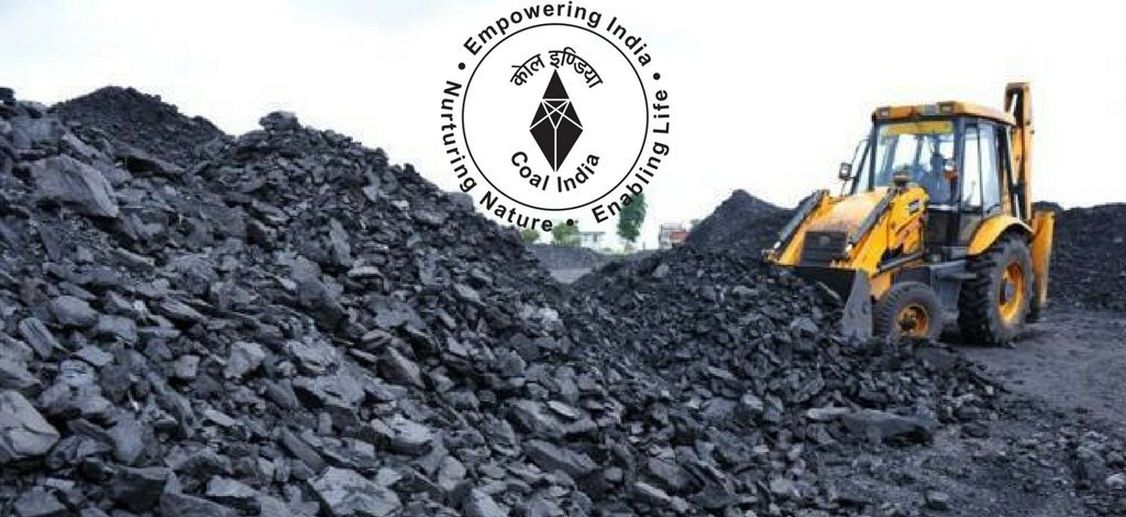
Coal India Ltd (CIL), which contributes 84 per cent of the country's production, is likely to end the current fiscal with a shortfall against its annual production target for 2016-17, analysts and industry stakeholders say.

They, however, predicted that the production and sales are expected to achieve "marginal growth" over the last fiscal.

During 2016-17, the miner set a target of producing 598.61 million tonnes (mt) of coal with an 11.11 per cent growth over the 538.75 mt produced in 2015-16. Its sales were at 534.50 mt in the last fiscal.

"Coal India is expected to end the year with an around 550 million tonnes of production, thereby missing the annual target by 40-50 million tonnes. The miner needs to produce about 90 million tonnes in March to touch even 570-578 million tonnes as envisaged by the Coal Ministry. This is quiet unlikely," Emkay Global's Research Analyst Gautam Chakraborty told IANS.

So far, the average monthly production in the current fiscal is around 45 million tonnes, he said.

"Production has been impacted due to lower dispatch. Higher production without growing dispatch will add more to inventories."

"Off-take growth till February was around 1.6 per cent and I don't think it would change significantly in March," he said.

According to provisional data, the miner's off-take, from April 2016 to February 2017, was at 490.86 mt as against a target of 540.31 mt.

"CIL's off-take for the entire year is expected to be around 540-545 million tonnes, which will be marginally higher than last year. Previously, we found the miner's internal issues, along with scarcity of railway rakes, were the main constraints for flattish off-take. But, this year, subdued coal demand has largely impacted its dispatch," a Mumbai-based analyst told IANS.

The miner's provisional data also showed its production during the first 11 months (April to February) of the current fiscal grew by 2.3 percent to 488.06 mt against a target of 535.38 mt set for the period.

"Going by the trend this year, I expect whatever has been achieved so far in terms of production growth will continue in the same line for the last few days of the current fiscal. No dramatic change is expected," former Coal India Chairman Sashi Kumar told IANS.

"Never ever has Coal India had any reason to be concerned about its off-take. But now it is unsure of its off-take," he said, adding the miner should explore alternative market apart from India to boost its sales and thereby production.

Moreover, stocks at CIL's pit head were at 56.33 mt as on March 5, while 26.48 mt was at thermal power plants.

However, Coal India Chairman Sutirtha Bhattacharya, in the last Annual General Meeting, said going forward, the miner needs to move to a double digit growth rate in order to meet the production target.

When told the production and off-take are not moving on expected lines, he said: "We look at the target for meeting the need of the people (consumers)."

"CIL's trend of growth was affected by introduction of blanket ban by the Environment Ministry in 2010. But after the ban was lifted, the growth restored to seven per cent in 2014-15. In the last year, we had the highest ever growth of 8.9 per cent," a company official told IANS.

"As many as 121 ongoing projects are under implementation and are expected to contribute 400 mt in 2016-17," he said.

The miner's projected production volume is 660.7 mt in 2017-18 and it envisaged production of 908.10 mt in 2019-20 with a CAGR (Compound Annual Growth Rate) of 12.98 per cent, with respect to 2014-15.

"If the miner has the target to produce such amount, everything should fall in line. Otherwise, it will always be below the target," Kumar added.

According to a company official, the improved dispatch and production, as compared to the past, has resulted in a downward trend of coal imports.

As of last December, coal imports reduced to 144.87 mt as compared to 146.12 MT for the same period in 2015-16. Further, the total coal imports in the last fiscal were 199.9 mt as compared to 217.8 mt in 2014-15.

In 2016-17, up to January 31, the power utilities imported 16.6 mt coal as against import of 31.6 mt during the same period in 2015-16.


Coal India to miss production target in current fiscal

IANS | Kolkata |

Coal India Ltd (CIL), which contributes 84 per cent of the country's production, is likely to end the current fiscal with a shortfall against its annual production target for 2016-17, analysts and industry stakeholders say.

They, however, predicted that the production and sales are expected to achieve "marginal growth" over the last fiscal.

During 2016-17, the miner set a target of producing 598.61 million tonnes (mt) of coal with an 11.11 per cent growth over the 538.75 mt produced in 2015-16. Its sales were at 534.50 mt in the last fiscal.

"Coal India is expected to end the year with an around 550 million tonnes of production, thereby missing the annual target by 40-50 million tonnes. The miner needs to produce about 90 million tonnes in March to touch even 570-578 million tonnes as envisaged by the Coal Ministry. This is quiet unlikely," Emkay Global's Research Analyst Gautam Chakraborty told IANS.

So far, the average monthly production in the current fiscal is around 45 million tonnes, he said.

"Production has been impacted due to lower dispatch. Higher production without growing dispatch will add more to inventories."

"Off-take growth till February was around 1.6 per cent and I don't think it would change significantly in March," he said.

According to provisional data, the miner's off-take, from April 2016 to February 2017, was at 490.86 mt as against a target of 540.31 mt.

"CIL's off-take for the entire year is expected to be around 540-545 million tonnes, which will be marginally higher than last year. Previously, we found the miner's internal issues, along with scarcity of railway rakes, were the main constraints for flattish off-take. But, this year, subdued coal demand has largely impacted its dispatch," a Mumbai-based analyst told IANS.

The miner's provisional data also showed its production during the first 11 months (April to February) of the current fiscal grew by 2.3 percent to 488.06 mt against a target of 535.38 mt set for the period.

"Going by the trend this year, I expect whatever has been achieved so far in terms of production growth will continue in the same line for the last few days of the current fiscal. No dramatic change is expected," former Coal India Chairman Sashi Kumar told IANS.

"Never ever has Coal India had any reason to be concerned about its off-take. But now it is unsure of its off-take," he said, adding the miner should explore alternative market apart from India to boost its sales and thereby production.

Moreover, stocks at CIL's pit head were at 56.33 mt as on March 5, while 26.48 mt was at thermal power plants.

However, Coal India Chairman Sutirtha Bhattacharya, in the last Annual General Meeting, said going forward, the miner needs to move to a double digit growth rate in order to meet the production target.

When told the production and off-take are not moving on expected lines, he said: "We look at the target for meeting the need of the people (consumers)."

"CIL's trend of growth was affected by introduction of blanket ban by the Environment Ministry in 2010. But after the ban was lifted, the growth restored to seven per cent in 2014-15. In the last year, we had the highest ever growth of 8.9 per cent," a company official told IANS.

"As many as 121 ongoing projects are under implementation and are expected to contribute 400 mt in 2016-17," he said.

The miner's projected production volume is 660.7 mt in 2017-18 and it envisaged production of 908.10 mt in 2019-20 with a CAGR (Compound Annual Growth Rate) of 12.98 per cent, with respect to 2014-15.

"If the miner has the target to produce such amount, everything should fall in line. Otherwise, it will always be below the target," Kumar added.

According to a company official, the improved dispatch and production, as compared to the past, has resulted in a downward trend of coal imports.

As of last December, coal imports reduced to 144.87 mt as compared to 146.12 MT for the same period in 2015-16. Further, the total coal imports in the last fiscal were 199.9 mt as compared to 217.8 mt in 2014-15.

In 2016-17, up to January 31, the power utilities imported 16.6 mt coal as against import of 31.6 mt during the same period in 2015-16.

PM Modi exhorts people to save water on World Water Day

IANS | New Delhi |

On the occasion of World Water Day on Wednesday, Prime Minister Narendra Modi urged the fellow countrymen to save every drop of the crucial resource and praised the UN for choosing 'wastewater' as its theme.

"On 'World Water Day', lets pledge to save every drop of water. When 'Jan Shakti' (people's power) has made up its mind, we can successfully preserve Jal Shakti (water power)," Modi said in a tweet.

"This year, the UN has chosen a valid theme — wastewater. It will help further awareness on water recycling and why it is essential for our planet," Modi added.

According to a Unicef report released on the occasion, by 2040 nearly 600 million children, one in every four worldwide, will live in areas with extremely limited water resources.

The report warned of the threat to children's lives due to the lack of safe water and of how climate change is exacerbating the problem.

PM Modi exhorts people to save water on World Water Day

IANS | New Delhi |

On the occasion of World Water Day on Wednesday, Prime Minister Narendra Modi urged the fellow countrymen to save every drop of the crucial resource and praised the UN for choosing 'wastewater' as its theme.

"On 'World Water Day', lets pledge to save every drop of water. When 'Jan Shakti' (people's power) has made up its mind, we can successfully preserve Jal Shakti (water power)," Modi said in a tweet.

"This year, the UN has chosen a valid theme — wastewater. It will help further awareness on water recycling and why it is essential for our planet," Modi added.

According to a Unicef report released on the occasion, by 2040 nearly 600 million children, one in every four worldwide, will live in areas with extremely limited water resources.

The report warned of the threat to children's lives due to the lack of safe water and of how climate change is exacerbating the problem.