Logo

England, Germany on course for World Cup, Holland axe Danny Blind

"It's a pity that it ends like this," said the 55-year-old Blind after his sacking.

AFP | Paris |

England and defending champions Germany remained on course for the 2018 World Cup while Danny Blind was sacked as Dutch coach after his misfiring team faced missing a second straight major finals.

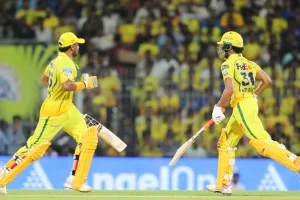
At Wembley, Jermain Defoe marked his international comeback with a goal as England toiled to a 2-0 victory over Lithuania.

Defoe, 34, who was making his first England appearance since November 2013, hit the target midway through the second half for his 20th international goal.

Substitute Jamie Vardy added a second as England tightened their grip on first place in Group F. Gareth Southgate's side are now the last team in European qualifying yet to have conceded a goal. England have 13 points, four ahead of Slovakia with just the nine group winners in Europe guaranteed a place at the finals in Russia in 2018.

"We'd have liked a bit more, but I think really only one team came to win the game and it's always difficult to break down a packed defence," said Southgate.

Slovakia went second in the group with a 3-1 win at Malta while Scotland are six points off the pace after substitute Chris Martin scored an 88th-minute winner against Slovenia in Glasgow.

Germany maintained their 100 percent record with a 4-1 win over Azerbaijan in Baku as they moved to 15 points in Group C. The world champions and Switzerland are the only two teams in Europe to still have perfect records.

A brace from Andre Schuerrle and goals from Thomas Mueller and Mario Gomez saw Germany take their unbeaten away run in World Cup qualifying to 44 games.

Azerbaijan midfielder Dimitrij Nazarov, who plays in Germany, had netted an early equaliser to the delight of the home crowd before Joachim Loew's team stepped on the accelerator.

"It does me good to score goals, but it's up to me to take my performances back to Germany and repeat them for Dortmund," said Schuerrle.

Meanwhile, Blind was sacked as Netherlands coach after a 2-0 defeat to Bulgaria 24 hours earlier left the team's chances of reaching the finals hanging by the slenderest of threads.

Blind, 55, had been in charge since July 2015, but Saturday's loss in Sofia left the Dutch in fourth place in Group A, six points behind leaders France.

"It's a pity that it ends like this," said Blind.

The Dutch are three-time runners-up at World Cup but the likelihood of missing out on the finals would be a bitter pill to swallow after they also failed to qualify for Euro 2016.

Northern Ireland stayed second in Group C, five points behind Germany, after a Jamie Ward goal in just the second minute and a Conor Washington strike on the half hour gave their team a 2-0 win over Norway in Belfast.

The Czech Republic are two points further back after trouncing San Marino 6-0. The Czechs had already beaten San Marino 7-0 on two previous occasions and they were on their way to another rout on Sunday by leading 5-0 at the break with four goals coming in a devastating eight-minute spell.

Antonin Barak scored in the 17th and 24th minutes, sandwiching a Vladimir Darida strike. Full-back Theodor Gebre Selassie added the fourth after 25 minutes before Michal Krmencik made it 5-0 just before the interval.

Darida hit the post twice in the closing moments of the first period but the Hertha Berlin midfielder was back on the scoresheet with a penalty after 77 minutes to make it 6-0.

Poland extended their lead in Group E to six points after Robert Lewandowski and Lukasz Piszczek scored in a 2-1 win at Montenegro. 

England, Germany on course for World Cup, Holland axe Danny Blind

"It's a pity that it ends like this," said the 55-year-old Blind after his sacking.

AFP | Paris |

England and defending champions Germany remained on course for the 2018 World Cup while Danny Blind was sacked as Dutch coach after his misfiring team faced missing a second straight major finals.

At Wembley, Jermain Defoe marked his international comeback with a goal as England toiled to a 2-0 victory over Lithuania.

Defoe, 34, who was making his first England appearance since November 2013, hit the target midway through the second half for his 20th international goal.

Substitute Jamie Vardy added a second as England tightened their grip on first place in Group F. Gareth Southgate's side are now the last team in European qualifying yet to have conceded a goal. England have 13 points, four ahead of Slovakia with just the nine group winners in Europe guaranteed a place at the finals in Russia in 2018.

"We'd have liked a bit more, but I think really only one team came to win the game and it's always difficult to break down a packed defence," said Southgate.

Slovakia went second in the group with a 3-1 win at Malta while Scotland are six points off the pace after substitute Chris Martin scored an 88th-minute winner against Slovenia in Glasgow.

Germany maintained their 100 percent record with a 4-1 win over Azerbaijan in Baku as they moved to 15 points in Group C. The world champions and Switzerland are the only two teams in Europe to still have perfect records.

A brace from Andre Schuerrle and goals from Thomas Mueller and Mario Gomez saw Germany take their unbeaten away run in World Cup qualifying to 44 games.

Azerbaijan midfielder Dimitrij Nazarov, who plays in Germany, had netted an early equaliser to the delight of the home crowd before Joachim Loew's team stepped on the accelerator.

"It does me good to score goals, but it's up to me to take my performances back to Germany and repeat them for Dortmund," said Schuerrle.

Meanwhile, Blind was sacked as Netherlands coach after a 2-0 defeat to Bulgaria 24 hours earlier left the team's chances of reaching the finals hanging by the slenderest of threads.

Blind, 55, had been in charge since July 2015, but Saturday's loss in Sofia left the Dutch in fourth place in Group A, six points behind leaders France.

"It's a pity that it ends like this," said Blind.

The Dutch are three-time runners-up at World Cup but the likelihood of missing out on the finals would be a bitter pill to swallow after they also failed to qualify for Euro 2016.

Northern Ireland stayed second in Group C, five points behind Germany, after a Jamie Ward goal in just the second minute and a Conor Washington strike on the half hour gave their team a 2-0 win over Norway in Belfast.

The Czech Republic are two points further back after trouncing San Marino 6-0. The Czechs had already beaten San Marino 7-0 on two previous occasions and they were on their way to another rout on Sunday by leading 5-0 at the break with four goals coming in a devastating eight-minute spell.

Antonin Barak scored in the 17th and 24th minutes, sandwiching a Vladimir Darida strike. Full-back Theodor Gebre Selassie added the fourth after 25 minutes before Michal Krmencik made it 5-0 just before the interval.

Darida hit the post twice in the closing moments of the first period but the Hertha Berlin midfielder was back on the scoresheet with a penalty after 77 minutes to make it 6-0.

Poland extended their lead in Group E to six points after Robert Lewandowski and Lukasz Piszczek scored in a 2-1 win at Montenegro. 

United Airlines under fire for ‘barring girls wearing leggings’

IANS | Washington |

United Airlines has been criticised on social media after it barred two girls from flying for wearing leggings.

The incident happened on a flight from Denver to Minneapolis on Sunday morning, BBC quoted activist Shannon Watts as saying.

A United gate agent was "forcing" the girls, one of them aged 10, to change their clothes or wear dresses over the leggings, Watts tweeted.

United said the girls were travelling on a ticket that had a dress code.

They were "United pass travellers", which are tickets for company employees or eligible dependents, it explained in a Twitter exchange on the issue.

Shannon Watts, founder of the group Moms Demand Action for gun reforms, tweeted about what happened to five girls when they tried to board a flight at Denver airport.

She said three of the girls were allowed to fly after putting dresses over the top of their clothing, but two were prevented from boarding.

She slammed the airliner for its actions, asking: "Since when does United police women's clothing?".

Although United has not officially commented on the incident, it did respond on Twitter by explaining the dress code requirement of its United pass travellers.

Watts' tweets have been shared and responded to by thousands of users, including actress and activist Patricia Arquette.

United Airlines under fire for ‘barring girls wearing leggings’

IANS | Washington |

United Airlines has been criticised on social media after it barred two girls from flying for wearing leggings.

The incident happened on a flight from Denver to Minneapolis on Sunday morning, BBC quoted activist Shannon Watts as saying.

A United gate agent was "forcing" the girls, one of them aged 10, to change their clothes or wear dresses over the leggings, Watts tweeted.

United said the girls were travelling on a ticket that had a dress code.

They were "United pass travellers", which are tickets for company employees or eligible dependents, it explained in a Twitter exchange on the issue.

Shannon Watts, founder of the group Moms Demand Action for gun reforms, tweeted about what happened to five girls when they tried to board a flight at Denver airport.

She said three of the girls were allowed to fly after putting dresses over the top of their clothing, but two were prevented from boarding.

She slammed the airliner for its actions, asking: "Since when does United police women's clothing?".

Although United has not officially commented on the incident, it did respond on Twitter by explaining the dress code requirement of its United pass travellers.

Watts' tweets have been shared and responded to by thousands of users, including actress and activist Patricia Arquette.

Miami Open: Rafael Nadal recovers from horror start to reach 4th round

A typically never-say-die performance from the legendary Spaniard on his 1000th career match!

SNS | New Delhi |

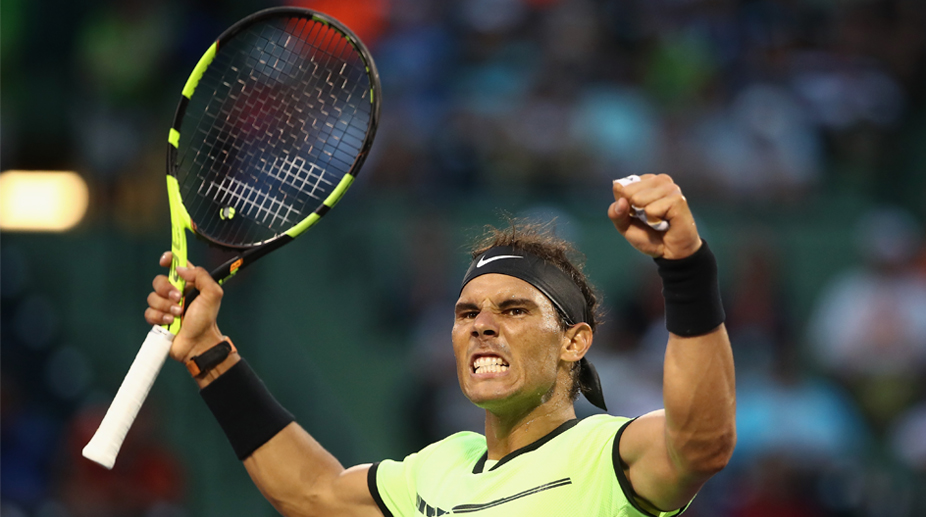
Rafael Nadal had to dig deep to beat Philip Kohlschreiber 0-6, 6-2,6-3 on Sunday in their third round match at the Miami Open, recovering from arguably the worst start of his glittering career to ensure his 1000th career match would be remembered for the right reasons.

Nadal, who has never won the Miami Open despite reaching the final on four occasions, will now play Nicolas Mahut of France, who beat Guido Pella 6-4, 6-3. 

While Nadal was the heavy favourite against his German opponent on Sunday, it was Kohlschreiber who started on the front foot, attacking the Spaniard on his serve from the off. And that tactic paid off handsomely, with the German looking to going some way towards righting his dreadful head-to-head against Nadal (Before the Miami meeting, Nadal led 13-1). 

Once he broke Nadal in the very first game of the match, there was no looking back for Kolhschrieber as the Spaniard looked decidedly off-colour, missing easy shots to allow the German to win the opening set to love.

The next two sets, however, were a vastly different story altogether as a vintage Nadal stormed back to turn the tie on its head with a relentless barrage and the German crumbled spectacularly.

While the fact that he became the first man in over two years to beat Nadal 6-0 in a set is a feat in itself, the German had the 14-time Slam champion on the ropes and he knew it.

Miami Open: Rafael Nadal recovers from horror start to reach 4th round

A typically never-say-die performance from the legendary Spaniard on his 1000th career match!

SNS | New Delhi |

Rafael Nadal had to dig deep to beat Philip Kohlschreiber 0-6, 6-2,6-3 on Sunday in their third round match at the Miami Open, recovering from arguably the worst start of his glittering career to ensure his 1000th career match would be remembered for the right reasons.

Nadal, who has never won the Miami Open despite reaching the final on four occasions, will now play Nicolas Mahut of France, who beat Guido Pella 6-4, 6-3. 

While Nadal was the heavy favourite against his German opponent on Sunday, it was Kohlschreiber who started on the front foot, attacking the Spaniard on his serve from the off. And that tactic paid off handsomely, with the German looking to going some way towards righting his dreadful head-to-head against Nadal (Before the Miami meeting, Nadal led 13-1). 

Once he broke Nadal in the very first game of the match, there was no looking back for Kolhschrieber as the Spaniard looked decidedly off-colour, missing easy shots to allow the German to win the opening set to love.

The next two sets, however, were a vastly different story altogether as a vintage Nadal stormed back to turn the tie on its head with a relentless barrage and the German crumbled spectacularly.

While the fact that he became the first man in over two years to beat Nadal 6-0 in a set is a feat in itself, the German had the 14-time Slam champion on the ropes and he knew it.

‘Our ties have an impetus’

Ashok Tuteja | New Delhi |

João Da Camara, Ambassador of Portugal to India, joined his country’s Foreign Ministry in 1984 and served in different capacities in various parts of the world.A graduate in law from the Faculty of Human Science at the Catholic University of Portugal,he was Ambassador to Zimbabwe and Angola before arriving in Delhi in 2015. In this interview with Ashok Tutejaat the Embassy in New Delhi,he spoke about the outcomes of the visit of Prime Minister Antonio Costa to India in January and the increasing cooperation between the two countries. Excerpts:

Portuguese Prime Minister Antonio Costa was in India in January. What do you see as the highlights of his visit?

First of all,the visit marked the resumption of relationship that was not moving too much and was not very expressive.It [the visit] gave a new impetus.Now we have a plan, objective and commitment to the relationship from both sides at the highest level.

What is the nature of defence relationship between India and Portugal?

It was one of the items included in the Prime Minister's agenda during the visit.This relationship has two main areas: business in military goods and materials and close relationship between our armed forces. An MoU was signed to allow continued relationship between the ministries of defence and the armed forces. The MoU includes everything,including joint military exercises and collaboration between the Army,Navy and Air Force. The visit of the Prime Minister enabled the signing of the MoU. It forms the broader policy for this relationship.

India is keen to join the Nuclear Suppliers' Group (NSG) as a full-fledged member.Does your country support our candidature?

We look at India's case with a lot of sympathy. We would very much like consensus to be formed over India's membership. We would certainly support it.

What is Portugal's view on the expansion of the UN Security Council with the possible inclusion of countries like India?

We are one of the first supporters of India's candidature together with the candidatures of Brazil and one African country.We feel very strongly about it.

Portugal is a key member of the European Union (EU).Why has a Free Trade Agreement (FTA) between India and EU still not fructified despite almost a decade of negotiations?

At the moment,there are no negotiations going on between the two sides over the FTA. I hope both sides resume negotiations at the earliest. There is will on both sides to resume these negotiations…The manifestation of that desire is there. There are other priorities also on both sides. The time of India-EU FTA has not arrived yet but I hope it will arrive soon.

How do you think India and Portugal can promote people-to-people contacts?

Tourism would be an ideal way to promote people-to-people contacts. We should also promote all types of exchanges both officially and unofficially. We have been having growing number of Indian tourists to Portugal and growing number of Portuguese tourists to India.That encourages us but the numbers are still not expressive and meaningful.

Are you taking any meaningful steps to promote tourism from India?

Our Deputy Minister for Tourism was in India two weeks back and made lots of contacts in this direction. India is a fantastic market. More and more Indians are travelling abroad. We want to capture some of that growing market. Portugal is a very 'fashionable' tourist destination.

Taste of Islamic advance

Nava Thakuria | New Delhi |

Since time immemorial Assam has been known for its unique social harmony, religious tolerance and pluralism. The land of great Vaishnavite saint Srimanta Sankardev, who spread the message of love, cohesion and brotherhood among all communities, castes and creeds centuries ago, is today witnessing an Islamic directive with regard to a public function where a teenaged Muslim girl was scheduled to participate.
The news broke on 14 March 2017 from the Muslim- dominated Hojai and Nagaon localities of central Assam, where some people distributed a two-page leaflet (termed gohari or appeal) arguing that the proposed cultural show at the Udali Sonai Bibi College ground at Lanka town of Hojai district should be discouraged.
Endorsed by 46 Muslim representatives of a number of state-based Islamic organisations, it asserted that no cultural function should be held at the venue as it was surrounded by mosques, madrassas, eidgahs and graveyards, otherwise the future generation would lose its sanity and sanctity, which would result in inviting the wrath of Allah.
The venue was booked for the Nahid Afrin cultural nite on 25 March, where the young Assamese singer was to enthrall the audience. The first runner-up of the Indian Idol Junior 2015, a popular Indian television reality show, Nahid thus faced the indirect diktat from the Muslim clerics for flouting Sharia, the Islamic rules and ways of living.
The news was initially beamed by the Guwahati-based satellite channels and then went viral on   social media. Nahid, at her home in the Biswanath Chariali locality of eastern Assam, got a shock. The Class X student, who made her Bollywood singing debut for the Sonakshi Sinha- starrer Akira recently, wept, murmuring that she couldn’t live without singing. “It (my singing) is the gift of Allah. I should properly utilise it, otherwise God will mind it,” said the 16-year-old Nahid, asserting that she would not bow to any diktat and continue practising the music with overwhelming support from the people of Assam in particular and India in general. Her parents (Anower Ansari and Fatima Begum) stand strongly behind their gutsy daughter. Even though the leaflet, written in unprocessed Assamese language, had no mention about Nahid, the clerics actually meant her.  And eventually intellectuals, writers, journalists, politicians, cultural personalities and even separatist armed militants of Assam unanimously raised their voices against the clerics’ diktat. They also objected to the statement of those clerics that music, theatre, magic, etc, were anti-Islamic.
 Assam police sources suspect that Nahid might have been targeted because she performed in some anti-terror (more precisely, Islamist outfits) musical appearances. Moreover, she participated in a few songs dedicated to Hindu mythology. However, Assam police chief Mukesh Sahay said the matter was under investigation and he assured that the democratic rights of every citizen would be protected.
Meanwhile, Assam chief minister Sarbananda Sonowal, who also holds the home portfolio, came down heavily against the threat. He spoke to Nahid over the phone assuring her of all possible help.  He said Nahid was the pride of Assam, and she was free to perform anywhere in the state, without any fear. He also said, “Such a ruling against practicing art and culture is unacceptable and is tantamount to infringement of one’s freedom of cultural rights.” The government, he added, would not tolerate any move to undermine any artiste of the state.
He even observed that a section of vicious forces was hell-bent on disturbing the age-old bonhomie of Assam and reiterated that the amity and integrity of the state would be upheld at   any cost so that people belonging to the Barak and Brahmaputra valleys, hills and plains could live peacefully, depicting the ethos of unity in diversity.
 As the news spreads, various Union ministers along with many politicians, Mumbai film personalities and social activists supported Nahid for her devotion to music. The National Commission for Protection of Child Rights also took the matter up and directed the administration to ensure her security and help her to perform accordingly.
Even exiled Bangladeshi author Taslima Nasreen, herself a victim of religious fanatics in her own country, tweeted her appreciation for Nahid’s brave statement to go against the Mullahs and demanded stringent punishment for those clerics, arguing that “they don’t believe in human rights, women’s rights”.
The Mumbai-based Indian Muslims for Secular Democracy came out with a statement applauding Nahid’s achievements (including Suhana Sayed from Karnataka), which have thrilled music lovers across religions with her outstanding talent.
Twenty-two-year-old Suhana was recently targeted by members of the self-styled Mangalore Muslims for singing Hindu devotional songs in a television show. However, the convener of the IMSD, Javed Anand, reiterated their stand against “any attempt of certain Muslims who, with their blinkered brand of Islam, seek to silence the nightingales of Indian Islam”.
 The state police quickly took action and deployed two armed personal security guards for Nahid. Earlier, Union minister Maneka Gandhi wrote to Sonowal urging him to ensure adequate protection for Nahid so she could pursue her talent.
Meanwhile, various media outlets came out with stronger articles condemning the attitude of the clerics. They criticised the religious leaders for taking up the boycott call against Nahid, citing Sharia laws. Moreover, they emphasised that the secular ethos and composite culture of Assam had nothing to do with egregious diktats on any artiste.
Taking advantage of the situation, Assam’s separatist militant leader Paresh Barua also joined the chorus. Self-styled head of the banned Ulfa (Independent),  Barua strongly condemned the unwanted fatwa against Nahid. Speaking to a city-based mediapersons from an undisclosed location, he stated that there was no place for religious fanaticism in Assam.
Facing the heat, the Assam State Jamiat Ulema tried to clarify that it was not a fatwaagainst Nahid. The leaders of Jamiat Ulema rather blamed the media for spreading misinformation. National-level Islamic leader Umer Ilyasi commented that any fatwa could only create controversy, but insisted that the Assam clerics should have talked to Nahid, advising her not to go against Sharia laws.
Taking a dig at the clerics’ action, the Patriotic People’s Front of Assam pointed out that they may not have targeted Nahid but they definitely opposed the cultural show at the venue. The forum claimed that by this notice, the clerics indirectly wanted to stymie any cultural (read anti-Islamic) programmme in that field. The PPFA denounced this as a kind of mentality to create an absolute Islamic zone in any locality of Assam.
Ghulam Rasool Dehlvi, a prominent scholar of classical Islamic studies, also pointed out that the 46 ulemas of Assam did not issue any Islamic jurisprudential decree (fatwa) on Nahid, but only appealed to her to eschew singing, which, they believe, is against the socio-religious guidelines of Islam. The clerics also alleged that their appeal was branded in the media as a fatwa.
However, Dehlvi raised a pertinent question on the logic of the clerics that the proposed function in the particular college venue (where Afrin was scheduled to perform) would mar the serenity and sanctity of the locality, as if Hojai was Holy Mecca, where the question of holiness may arise.
“Therefore, we will need to directly challenge the ideological infringement on our free religious rights that our Constitution confers upon all Indians. The right to profess and practice one’s religion with his/her Indian social and cultural ethos, which is the essence of Article 25 of the Indian Constitution, is basically the point to be discussed and safeguarded in the Muslim community in India,” he asserted.

(The writer is the Guwahati- based Special Representative of The Statesman)

Financial slugfest

Prasenjit Biswas | New Delhi |

Assam’s huge revenue and fiscal deficits to the tune of Rs.8,000 crore, has several economic consequences. The 2017-18 budget shows two figures of fiscal deficit, at Rs.7,702 crore, while the primary deficit is pegged at Rs.3,956 crore. The revenue collection recorded a surplus of Rs.2,400 crore. 
Indeed there is a rise on the count of fiscal and budget deficits, given these critical deficits in the overall availability of financial, market and other sources of income of the state, despite a friendly government at the Centre. A little above four per cent of the State Gross Domestic Product of Rs. 2,58,337 crore is all deficit, which is going to have its crunching effect on promised expenditure of  Rs.85,923 crore and the plan for internal borrowings to the tune of  Rs.11,265 crore is both going to respond by cuts and rises, respectively. 
If there is a cut in revenue expenditure and rise in internal borrowings, it will be very difficult to reduce budget deficit and manage repayment of loans as part of capital expenditure.  Indeed the strategy of increase in gross revenue expenditure up to 98 per cent over and above Rs 41,931 during the 2015-16 of the last Congress government regimes sounds impressive, but an increase of mere 1.5 per cent at capital expenditure and four per cent rise in revenue expenditure, while the change from revised estimate to budgeted estimate. pegged at mere 3.5 per cent with negative growth in debt repayment, tell us a grim story of readjustments and financial re-appropriation of the invisible loss of resources.
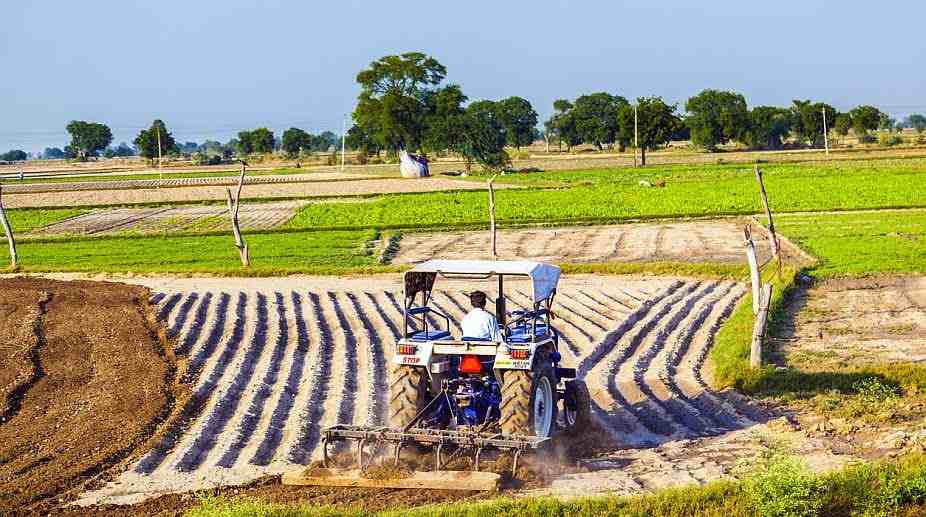
The overall macro-economic growth pegged at eight per cent sounds quite high, as large part of this arises from growth in the service sector. As opposed to growth in the agricultural sector, which is negative, as large tracts of agricultural land were converted to non-farm uses during the 15-year rule of Tarun Gogoi, needed some quick-effect policies from the new BJP government led by Chief Minister Sarbanada Sonowal.  It has lagged behind in this crucial agri-sector, as there was very little impetus to this area from budgetary resources. 
Much of the funds allocated in 2017-18 under rural development do not cover agri-inputs and other related services and hence farmers have been almost ignored by the Sonowal government. What this dissymmetry between agriculture and service sectors points out is that a large part of the state’s workforce and a large number of rural households in the tea garden areas of the state do not have enough employment generation, while a thriving segment of the middle class has access to private sector and subsidiary contractual work in the secondary and tertiary sectors of governmental jobs. 
The growth in State Gross Domestic Product arises from the ensemble of revenue expenditure in service and infrastructure sectors and financial flow from the Central government and from abroad. Although the state is yet to see much Foreign Direct Investment and Foreign Institutional Investor, except to the tune of an estimated Rs.10, 000 crore or so, it does not work as a major source of the state’s GDP. In effect the GDP arises from the state’s largely underdeveloped agri and forest resources, combined with mining and minor industries. As there is no state-level plan, the entire growth prospect in these key contributory sectors is left to the winds of the market, which does not bring much good tidings.
Herein comes the role of the Central government funding. Grants under the 14th Finance Commission was reduced from 3.6 per cent to 3.2 per cent, as Assam lost its forest cover from 38 per cent to 31 per cent. The first installment of the Finance Commission grant, totaling Rs.34 crore under local bodies and Panchayat Raj and funds meant for the Mahatma Gandhi National Rural Employment Guarantee Act are mixed up. There are many such mish-mash. 
Another example is funds for the health and education and other such social sectors are examples of mix-up between Niti Ayog, finance ministry, state government schemes and Finance Commission grants. And such mix-up only creates a practice of diversion and overlapping without resulting into sector-specific growth and progress in terms of turnovers.  The arbitrariness of funding under 10:90 or 50:50 between Centre and state, leave the latter befuddled as it is already reeling under huge fiscal deficit of four per cent under budget estimates of 2017-18. It shows that much of the Central schemes actually do not work on the ground. What is more critical is about the impact of institutional regression into paper bills and casualty of non-implementation of the announced level of expenditure results into an obvious curtailment of schemes. What is to be noted here is a rapid decrease in revenue expenditure in key social sectors in terms of palliative care and other such capability-enhancing activities by the state and it reappears in the form of “outstanding liabilities’ of the state that is on the rise from 17.3 per cent during previous regime to today’s 19.3 per cent of the SGDP.
More importantly, non-implementation results in reformulation, much of which appear as cosmetic without addressing issues of poverty, malnutrition, underemployment etc. Neither Niti Ayog nor state planning board (renamed as state innovation and transformation ayog) hardly address issues of structural demands, as grants for Sarva Siksha is reduced, mid-day meal becomes a state subject as Centre fails to fund it and grants for national health mission gets curtailed.  Similarly for roads and infrastructure, not only there is a cut in the budget, but there is a mix-up between say PM AwashYojana and road-building projects by the state. To make matters worse, works done by central and foreign agencies get counted as expenditure by the state, as many of these agencies route their funds through state government channels.
If competitive federalism is to be taken seriously, then Assam’s loss in the share of 14th Finance Commission compounded with the state’s loss of special category status brings down capital expenditure in gross terms as it is based more on debt and borrowing than on revenue. Although the figure on capital expenditure goes up, one has to see this increase in terms of gnawing revenue deficit and outstanding liabilities. One option for the state is to cut down its social sector expenditure and thereby lose the chance of increasing aggregate demand and then get further shrunk in terms of proposing cuts in social sectors. Failure of the state government in supplying essential drugs free of cost in state-run dispensaries and hospitals, non-payment of MREGA funds on time, rushed expenditure towards the end of financial year shows that budgeted expenses towards general services, grant-in-aid and other critical public services remain undelivered. 
As the state has very special needs in terms of its tea garden and other plain tribal territorial and autonomous institutions, the government has to keep special provisions for fund transfer and implementation of schemes supported by budgetary and financial mechanism, seemingly they have become announcement-based and based on knee-jerk responses. Only Rs.1,000 crore to autonomous councils from the Centre in 2015-16 still remain as the fig leaf for continuance of such funding by the state government. 
The transfer of funds from the state government to such councils have remained a low key affair, although budgeted amount of Rs.3,885 crore sounds astounding, telling that large part of the budgeted sum will ultimately come from the Centre, as the Assam government disaggregated this sum under sustainable development goals.  So, while tribal councils look for funds, their availability depends on formulating schemes and plans of current interest. The financial tethers are such that part of the state finances now comes from the Centre without much autonomy of state bureaucrats, while their disbursement depends on central guidelines. 
To add to the woe, political patronage and direct political linkages determine the extent to which funding will be smooth. 
The overall impact of such an institutional arrangement is that there is no funding framework that is locally developed, but it has been made so much top-down that funding agency decides for the very nature of schemes. As a result what has gone missing from Assam’s cash-strapped and capital-lagging economy is the much- sought after independence in funding and implementation decisions. Needless to say, that this is a major squeeze on the will of the state to fund itself without being dependent on outside funding agencies. 

(THE WRITER IS AN ASSOCIATE PROFESSOR OF PHILOSOPHY AT NEHU, SHILLONG)

Financial slugfest

Prasenjit Biswas | New Delhi |

Assam’s huge revenue and fiscal deficits to the tune of Rs.8,000 crore, has several economic consequences. The 2017-18 budget shows two figures of fiscal deficit, at Rs.7,702 crore, while the primary deficit is pegged at Rs.3,956 crore. The revenue collection recorded a surplus of Rs.2,400 crore. 
Indeed there is a rise on the count of fiscal and budget deficits, given these critical deficits in the overall availability of financial, market and other sources of income of the state, despite a friendly government at the Centre. A little above four per cent of the State Gross Domestic Product of Rs. 2,58,337 crore is all deficit, which is going to have its crunching effect on promised expenditure of  Rs.85,923 crore and the plan for internal borrowings to the tune of  Rs.11,265 crore is both going to respond by cuts and rises, respectively. 
If there is a cut in revenue expenditure and rise in internal borrowings, it will be very difficult to reduce budget deficit and manage repayment of loans as part of capital expenditure.  Indeed the strategy of increase in gross revenue expenditure up to 98 per cent over and above Rs 41,931 during the 2015-16 of the last Congress government regimes sounds impressive, but an increase of mere 1.5 per cent at capital expenditure and four per cent rise in revenue expenditure, while the change from revised estimate to budgeted estimate. pegged at mere 3.5 per cent with negative growth in debt repayment, tell us a grim story of readjustments and financial re-appropriation of the invisible loss of resources.
The overall macro-economic growth pegged at eight per cent sounds quite high, as large part of this arises from growth in the service sector. As opposed to growth in the agricultural sector, which is negative, as large tracts of agricultural land were converted to non-farm uses during the 15-year rule of Tarun Gogoi, needed some quick-effect policies from the new BJP government led by Chief Minister Sarbanada Sonowal.  It has lagged behind in this crucial agri-sector, as there was very little impetus to this area from budgetary resources. 
Much of the funds allocated in 2017-18 under rural development do not cover agri-inputs and other related services and hence farmers have been almost ignored by the Sonowal government. What this dissymmetry between agriculture and service sectors points out is that a large part of the state’s workforce and a large number of rural households in the tea garden areas of the state do not have enough employment generation, while a thriving segment of the middle class has access to private sector and subsidiary contractual work in the secondary and tertiary sectors of governmental jobs. 
The growth in State Gross Domestic Product arises from the ensemble of revenue expenditure in service and infrastructure sectors and financial flow from the Central government and from abroad. Although the state is yet to see much Foreign Direct Investment and Foreign Institutional Investor, except to the tune of an estimated Rs.10, 000 crore or so, it does not work as a major source of the state’s GDP. In effect the GDP arises from the state’s largely underdeveloped agri and forest resources, combined with mining and minor industries. As there is no state-level plan, the entire growth prospect in these key contributory sectors is left to the winds of the market, which does not bring much good tidings.
Herein comes the role of the Central government funding. Grants under the 14th Finance Commission was reduced from 3.6 per cent to 3.2 per cent, as Assam lost its forest cover from 38 per cent to 31 per cent. The first installment of the Finance Commission grant, totaling Rs.34 crore under local bodies and Panchayat Raj and funds meant for the Mahatma Gandhi National Rural Employment Guarantee Act are mixed up. There are many such mish-mash. 
Another example is funds for the health and education and other such social sectors are examples of mix-up between Niti Ayog, finance ministry, state government schemes and Finance Commission grants. And such mix-up only creates a practice of diversion and overlapping without resulting into sector-specific growth and progress in terms of turnovers.  The arbitrariness of funding under 10:90 or 50:50 between Centre and state, leave the latter befuddled as it is already reeling under huge fiscal deficit of four per cent under budget estimates of 2017-18. It shows that much of the Central schemes actually do not work on the ground. What is more critical is about the impact of institutional regression into paper bills and casualty of non-implementation of the announced level of expenditure results into an obvious curtailment of schemes. What is to be noted here is a rapid decrease in revenue expenditure in key social sectors in terms of palliative care and other such capability-enhancing activities by the state and it reappears in the form of “outstanding liabilities’ of the state that is on the rise from 17.3 per cent during previous regime to today’s 19.3 per cent of the SGDP.
More importantly, non-implementation results in reformulation, much of which appear as cosmetic without addressing issues of poverty, malnutrition, underemployment etc. Neither Niti Ayog nor state planning board (renamed as state innovation and transformation ayog) hardly address issues of structural demands, as grants for Sarva Siksha is reduced, mid-day meal becomes a state subject as Centre fails to fund it and grants for national health mission gets curtailed.  Similarly for roads and infrastructure, not only there is a cut in the budget, but there is a mix-up between say PM AwashYojana and road-building projects by the state. To make matters worse, works done by central and foreign agencies get counted as expenditure by the state, as many of these agencies route their funds through state government channels.
If competitive federalism is to be taken seriously, then Assam’s loss in the share of 14th Finance Commission compounded with the state’s loss of special category status brings down capital expenditure in gross terms as it is based more on debt and borrowing than on revenue. Although the figure on capital expenditure goes up, one has to see this increase in terms of gnawing revenue deficit and outstanding liabilities. One option for the state is to cut down its social sector expenditure and thereby lose the chance of increasing aggregate demand and then get further shrunk in terms of proposing cuts in social sectors. Failure of the state government in supplying essential drugs free of cost in state-run dispensaries and hospitals, non-payment of MREGA funds on time, rushed expenditure towards the end of financial year shows that budgeted expenses towards general services, grant-in-aid and other critical public services remain undelivered. 
As the state has very special needs in terms of its tea garden and other plain tribal territorial and autonomous institutions, the government has to keep special provisions for fund transfer and implementation of schemes supported by budgetary and financial mechanism, seemingly they have become announcement-based and based on knee-jerk responses. Only Rs.1,000 crore to autonomous councils from the Centre in 2015-16 still remain as the fig leaf for continuance of such funding by the state government. 
The transfer of funds from the state government to such councils have remained a low key affair, although budgeted amount of Rs.3,885 crore sounds astounding, telling that large part of the budgeted sum will ultimately come from the Centre, as the Assam government disaggregated this sum under sustainable development goals.  So, while tribal councils look for funds, their availability depends on formulating schemes and plans of current interest. The financial tethers are such that part of the state finances now comes from the Centre without much autonomy of state bureaucrats, while their disbursement depends on central guidelines. 
To add to the woe, political patronage and direct political linkages determine the extent to which funding will be smooth. 
The overall impact of such an institutional arrangement is that there is no funding framework that is locally developed, but it has been made so much top-down that funding agency decides for the very nature of schemes. As a result what has gone missing from Assam’s cash-strapped and capital-lagging economy is the much- sought after independence in funding and implementation decisions. Needless to say, that this is a major squeeze on the will of the state to fund itself without being dependent on outside funding agencies. 

(THE WRITER IS AN ASSOCIATE PROFESSOR OF PHILOSOPHY AT NEHU, SHILLONG)

Confession of a City Man

Manish Nandy | New Delhi |

I have always lived in large and noisy cities. When I moved to Washington, it was more of the same – much more. I loved it. The smell of the downtown thrilled me as much that of the Brooklyn sidewalk had pleased Woody Allen.
Then I took an interesting job in the exurbs and, in short order, bought a house in Reston to avoid the painful commute. The change was, literally, breathtaking. The first breath told me I was in a different place. There were trees and bushes all over; there was a lake next door with a spouting fountain; I could walk down a myriad trails without ever seeing a car. I did not know such a place existed except in some quaint European town.
Before I could settle down, however, I changed work and returned again to the big city orbit. Now in different countries. In Kathmandu I drove through cows and cattle to reach my office. In Abu Dhabi I drove through deserts to reach others’ offices. In Manila, I lived in a plush, gated community that fashionably called itself a ‘village’ but was located at the junction of two roaring highways. In Delhi, vendors hollered at passers-by to sell mangoes and curried peanuts. In Cairo, even the Coptic churches seemed all large, all noisy, and all seemed fun to me. Then again back to Reston, after fifteen years. In all these years, Reston had grown and changed. But it had somehow managed to retain its essential nature: an urban patch that tenaciously holds on to a pastoral charm, with swatches of green that surprise and please, a community of clusters that look after themselves and yet manage to have common interests and activities.
As important perhaps, the world had changed. The city meant a lot to me. Particularly what it offered. The theatre has been a major force in my life from my childhood. I understand much less of music, but the variety of music, from classical to pop and jazz, thrills me.
Libraries are an abiding source of joy; just to hold books, let alone browse or read them, gives me a delight I can’t explain. Above all, the clash of ideas excites me. I love to attend book launches where authors not only talk but also cross swords with bellicose listeners, think tank seminars where multiple speakers contradict one another or even simple lectures where speakers allow – or, thank Heavens, even encourage – contrary views in the garb of questions. I loved big cities for these.
But now you don’t need a city for these. Books, music, lectures, debates, all turn up in your study at the flick of a switch on a glowing screen. Books you download, music you can see and hear performed better than in an auditorium, and seminars and debates you can play and replay on your television. Yes, you miss the sense of immediacy, the excitement of being at arm’s length of a Nobel winning author, but in reality you see more, hear better and can retain what you like.
Something else I hadn’t noticed. I had changed. I had begun to notice that there are things beyond books and ideas. Quiet, that improbable thing, meant nothing to me earlier. I had lived happily in rowdy, raucous cities like Kolkata and Karachi. Now, suddenly, it seemed strangely refreshing to be in a silent space: to hear the rustle of leaves, a bird’s homing twitter, and late in the evening, absolutely nothing. Most absurdly, the two giant trees I see from my living room began to seem like old buddies, steady and majestic, with a message of perennial placidity. Now, in a mellow autumn, as the foliage around my deck changes to amber and gold, my heart turns unaccountably to a quiet tune I hadn’t known earlier.
Perhaps I am not a city man any longer.

(The writer is a Washington-based international development advisor and had worked with the World Bank. He can be reached at mnandy@gmail.com)

Confession of a City Man

Manish Nandy | New Delhi |

I have always lived in large and noisy cities. When I moved to Washington, it was more of the same – much more. I loved it. The smell of the downtown thrilled me as much that of the Brooklyn sidewalk had pleased Woody Allen.
Then I took an interesting job in the exurbs and, in short order, bought a house in Reston to avoid the painful commute. The change was, literally, breathtaking. The first breath told me I was in a different place. There were trees and bushes all over; there was a lake next door with a spouting fountain; I could walk down a myriad trails without ever seeing a car. I did not know such a place existed except in some quaint European town.
Before I could settle down, however, I changed work and returned again to the big city orbit. Now in different countries. In Kathmandu I drove through cows and cattle to reach my office. In Abu Dhabi I drove through deserts to reach others’ offices. In Manila, I lived in a plush, gated community that fashionably called itself a ‘village’ but was located at the junction of two roaring highways. In Delhi, vendors hollered at passers-by to sell mangoes and curried peanuts. In Cairo, even the Coptic churches seemed all large, all noisy, and all seemed fun to me. Then again back to Reston, after fifteen years. In all these years, Reston had grown and changed. But it had somehow managed to retain its essential nature: an urban patch that tenaciously holds on to a pastoral charm, with swatches of green that surprise and please, a community of clusters that look after themselves and yet manage to have common interests and activities.
As important perhaps, the world had changed. The city meant a lot to me. Particularly what it offered. The theatre has been a major force in my life from my childhood. I understand much less of music, but the variety of music, from classical to pop and jazz, thrills me.
Libraries are an abiding source of joy; just to hold books, let alone browse or read them, gives me a delight I can’t explain. Above all, the clash of ideas excites me. I love to attend book launches where authors not only talk but also cross swords with bellicose listeners, think tank seminars where multiple speakers contradict one another or even simple lectures where speakers allow – or, thank Heavens, even encourage – contrary views in the garb of questions. I loved big cities for these.
But now you don’t need a city for these. Books, music, lectures, debates, all turn up in your study at the flick of a switch on a glowing screen. Books you download, music you can see and hear performed better than in an auditorium, and seminars and debates you can play and replay on your television. Yes, you miss the sense of immediacy, the excitement of being at arm’s length of a Nobel winning author, but in reality you see more, hear better and can retain what you like.
Something else I hadn’t noticed. I had changed. I had begun to notice that there are things beyond books and ideas. Quiet, that improbable thing, meant nothing to me earlier. I had lived happily in rowdy, raucous cities like Kolkata and Karachi. Now, suddenly, it seemed strangely refreshing to be in a silent space: to hear the rustle of leaves, a bird’s homing twitter, and late in the evening, absolutely nothing. Most absurdly, the two giant trees I see from my living room began to seem like old buddies, steady and majestic, with a message of perennial placidity. Now, in a mellow autumn, as the foliage around my deck changes to amber and gold, my heart turns unaccountably to a quiet tune I hadn’t known earlier.
Perhaps I am not a city man any longer.

(The writer is a Washington-based international development advisor and had worked with the World Bank. He can be reached at mnandy@gmail.com)

An opposition united by paucity of ideas

Uday Basu | New Delhi |

The new theme song of development and its benefits percolating to all people in UP irrespective of their caste, creed and community identities being sung by the BJP leadership after the party’s historic success in the just concluded Assembly polls is baffling. For the communal overtone of the poll campaign, spearheaded by party mascot Prime Minister Narendra Modi, that actually clinched the results, was too loud to be mistaken or denied as the BJP leadership is now doing.
But after decimating all the regional parties in the Hindi heartland, forming government in three more states ~ Uttarakhand, Goa and Manipur ~  and virtually sending the Congress into coma,  the BJP can now afford to speak loudly about development to bring the entire country under its hegemony. It’s not a sudden shift of agenda, but part of a well thought out tactic that no other party in the country could even dare to formulate. It’s too risky a formula ~ a heady cocktail of communal sentiments and delivery mechanisms to get entrenched in power.
At long last the defining moment for the saffron brigade has come. For the first time during its decades of struggle to capture power by playing on the communal sentiments of a large number of the country’s majority population, the BJP has succeeded in virtually wiping out its opponents in the Hindi heartland and spreading its influence in a maximum number of states from north to south and east to west.
This has become possible for two reasons ~ ideological and leadership quality. Never before since Independence has the country seen such a bankruptcy of ideology and dearth of leaders of  stature in the parties opposed to the BJP. The BJP is using to the hilt this ideological and leadership vacuum.
The Congress came to power after independence on the strength of its image as being instrumental in freeing India from British rule. That brought the whole country under its sway for the first three decades after freedom. But, its claim of being the party to overthrow the yoke of foreign rule became blunted over the years as it became a fountainhead of corruption. The series of scams during the Congress-led UPA government surpassed all previous records of loot and thuggery. The party’s ideology has now degenerated into slavish worship of the Nehru-Gandhi family.
What is galling to the people of the country is that the Congress has become so spineless that takes orders from a relative political infant named Rahul Gandhi. The party has forgotten that even the “gungi gudia”, the name given to Indira Gandhi during her early years in power when she couldn’t speak well, served as a junior minister after her father died. She learnt the ropes the hard way and became an astute politician over the years.
 When the Congress was using its contribution to the country’s independence as its main ideological tool, the Left ~ which at one stage became the second largest bloc in Parliament ~ was sharpening its Marxist-Leninist ideology to first capture the hearts of people and then power. Using ideology imported first from the USSR and then from China, they could strike a chord in the hearts of people effectively only in three states ~ Bengal, Kerala and Tripura ~, while they had pockets of influence in a few other states.  But once in power, the Leftists indulged in corruption and control of the state machinery to further the interests of party leaders and functionaries. As a result, it is almost a spent force in Bengal with virtually no credibility, while it manages to cling to power every alternate term in Kerala and continues to stay in power in tiny Tripura. Among the other strong regional parties opposed to the BJP, the SP and BSP are in tatters because of their ideological bankruptcy, corruption and sickening personality cult. The AIADMK and the Trinamul are too individual-centric with hardly any ideology worth their name and revolving round the personality of one leader ~ Amma and Didi respectively. Both parties have now their backs against the wall battling corruption charges.
 By contrast the BJP has both an ideological weapon and an organisation ~ the RSS ~ that has over the years been throwing up one leader after another, the latest being Mr Modi. The ideology is what is called Hindutva or an unabashed manipulation of the majority Hindu psyche warped  by antipathy to the Muslims for historical, political and geographical reasons. This has become far too deeply ingrained in the outlook of the dominant group. The policy of appeasement to Muslims for garnering votes needed for capturing power followed by almost all  non-BJP parties over the years has only accentuated  the communal divide. 
 The BJP  used it so well that its confidence level is now at its peak. This explains the decision to make Yogi Adityanath the UP chief minister because he with his saffron attire is the most eloquent statement of the BJP’s or the Sangh Parivar’s political credo.  His talk of development and measures to pamper majority Hindu sentiments constitute the magic formula that the BJP can flaunt as the only national party that makes “appeasement to none” a euphemism for minority-bashing ~ the  cornerstone of its political creed. 

(The writer is Coordinating Editor, The Statesman, Kolkata.)

An opposition united by paucity of ideas

Uday Basu | New Delhi |

The new theme song of development and its benefits percolating to all people in UP irrespective of their caste, creed and community identities being sung by the BJP leadership after the party’s historic success in the just concluded Assembly polls is baffling. For the communal overtone of the poll campaign, spearheaded by party mascot Prime Minister Narendra Modi, that actually clinched the results, was too loud to be mistaken or denied as the BJP leadership is now doing.
But after decimating all the regional parties in the Hindi heartland, forming government in three more states ~ Uttarakhand, Goa and Manipur ~  and virtually sending the Congress into coma,  the BJP can now afford to speak loudly about development to bring the entire country under its hegemony. It’s not a sudden shift of agenda, but part of a well thought out tactic that no other party in the country could even dare to formulate. It’s too risky a formula ~ a heady cocktail of communal sentiments and delivery mechanisms to get entrenched in power.
At long last the defining moment for the saffron brigade has come. For the first time during its decades of struggle to capture power by playing on the communal sentiments of a large number of the country’s majority population, the BJP has succeeded in virtually wiping out its opponents in the Hindi heartland and spreading its influence in a maximum number of states from north to south and east to west.
This has become possible for two reasons ~ ideological and leadership quality. Never before since Independence has the country seen such a bankruptcy of ideology and dearth of leaders of  stature in the parties opposed to the BJP. The BJP is using to the hilt this ideological and leadership vacuum.
The Congress came to power after independence on the strength of its image as being instrumental in freeing India from British rule. That brought the whole country under its sway for the first three decades after freedom. But, its claim of being the party to overthrow the yoke of foreign rule became blunted over the years as it became a fountainhead of corruption. The series of scams during the Congress-led UPA government surpassed all previous records of loot and thuggery. The party’s ideology has now degenerated into slavish worship of the Nehru-Gandhi family.
What is galling to the people of the country is that the Congress has become so spineless that takes orders from a relative political infant named Rahul Gandhi. The party has forgotten that even the “gungi gudia”, the name given to Indira Gandhi during her early years in power when she couldn’t speak well, served as a junior minister after her father died. She learnt the ropes the hard way and became an astute politician over the years.
 When the Congress was using its contribution to the country’s independence as its main ideological tool, the Left ~ which at one stage became the second largest bloc in Parliament ~ was sharpening its Marxist-Leninist ideology to first capture the hearts of people and then power. Using ideology imported first from the USSR and then from China, they could strike a chord in the hearts of people effectively only in three states ~ Bengal, Kerala and Tripura ~, while they had pockets of influence in a few other states.  But once in power, the Leftists indulged in corruption and control of the state machinery to further the interests of party leaders and functionaries. As a result, it is almost a spent force in Bengal with virtually no credibility, while it manages to cling to power every alternate term in Kerala and continues to stay in power in tiny Tripura. Among the other strong regional parties opposed to the BJP, the SP and BSP are in tatters because of their ideological bankruptcy, corruption and sickening personality cult. The AIADMK and the Trinamul are too individual-centric with hardly any ideology worth their name and revolving round the personality of one leader ~ Amma and Didi respectively. Both parties have now their backs against the wall battling corruption charges.
 By contrast the BJP has both an ideological weapon and an organisation ~ the RSS ~ that has over the years been throwing up one leader after another, the latest being Mr Modi. The ideology is what is called Hindutva or an unabashed manipulation of the majority Hindu psyche warped  by antipathy to the Muslims for historical, political and geographical reasons. This has become far too deeply ingrained in the outlook of the dominant group. The policy of appeasement to Muslims for garnering votes needed for capturing power followed by almost all  non-BJP parties over the years has only accentuated  the communal divide. 
 The BJP  used it so well that its confidence level is now at its peak. This explains the decision to make Yogi Adityanath the UP chief minister because he with his saffron attire is the most eloquent statement of the BJP’s or the Sangh Parivar’s political credo.  His talk of development and measures to pamper majority Hindu sentiments constitute the magic formula that the BJP can flaunt as the only national party that makes “appeasement to none” a euphemism for minority-bashing ~ the  cornerstone of its political creed. 

(The writer is Coordinating Editor, The Statesman, Kolkata.)

Development politics

Bhopinder Singh | New Delhi |

America First’ embodied the framework of Donald Trump’s ‘development’ roadmap for the US economy, polity and narrative. The contours of walking the talk are now emerging from the strategic pointers in the recently released 2018 budget outline, the blueprint to make ‘America Great Again’. Measures for the supposed course-correction in US policy include sharp cuts in sovereign aid (from the Department of State and the US Agency for International Development), bilateral aid allocations, UN contributions, climate change financing, multilateral development banks, funds for health, funds for humanitarian assistance and international food aid ~ all in all, reflective of Trump’s electoral promise of ensuring that the global funding burden would be ‘shared more fairly among members’.
The essence of ‘development’ for the new US regime is rooted in the re-prioritisation of security issues over the more internationalist commitments and welfare funding ~ hence the savings from the proposed cuts are envisaged to boost military spending and finance the border wall with Mexico. The form and dimensions of the ‘America First’ plan are slowly but surely taking shape, even though sane voices are suggesting increasing unrest and instability, should the US persist with the ‘development strategy’ of Trump.
In India, a parallel sentiment was expressed in the successful pitching of the promise of Acche Din by the incumbent government. The initial roadmap included some administrative reforms like doing away with the culture of GoMs (Group of Ministers) and EGoMs (Empowered Group of Ministers) to address policy paralysis, federalising the Centre-State equation by doing away with the cosmos of the Planning Commission, to empowering the entrepreneurial spirit of India by invoking themes like ‘Make in India’, ‘Skill India’, etc. Now, three years into the government’s tenure, irrespective of the verdict and perceptions of the efficacy of the Central government’s initiatives, the centrality of ‘development’ as the most definitive attribute of political one-upmanship and electoral posturing has been firmly established in the country. Competitive ‘development’ politics by various political parties have replaced the traditional sloganeering appeal that was typically rooted in the rote permutations of social-economic-regional-religious domains, as the fundamental raison d’etre of most of the political parties. However, the dimensions of ‘development’ vary and are unique to the country, state and political parties in question, and are usually reflective of the pressing socio-economic challenge facing the geographical expanse.
In Punjab, the first cabinet meeting of the new government and the key decisions taken were reflective of the ‘development’ imperatives besetting Punjab, including a major crackdown on the drug industry, espousing the Punjab perspective on the contentious Sutlej-Yamuna Link canal, agricultural sops like loan waivers and some civic-administrative decisions aimed at expediting and improving civic governance abilities. Similarly, the principal constraint on ‘development’ of Manipur was sought to be addressed by the new government in Imphal with the lifting of the nearly four-month-long, crippling economic blockade, after the successful agreement between the United Naga Council, Manipur Government and the Centre. For once, economic ‘development’ issues are taking precedence over the traditionally emotive and regressive issues that appeal to the basic instincts of diverse denominations in local society, but have virtually no role in the real and sustainable ‘development’ of the area.
Yet, the national challenge is in the seamless integration of individual state ‘development’ agendas into the composite, force-multiplying and nationally-centripetal impact that could ensure the overall development of India. Multiplicity of political agendas of the various ruling parties, contradictory state interests (e.g. SYL canal issue between Punjab and Haryana) and the conflicting ideological considerations of the prevailing political thoughts, often confabulate against the free flow of development initiatives.
Thus, the spirit of the Central Government’s sabka saath, sabka vikas (literally, ‘collective efforts, inclusive growth’) gets mired in the accompanying optics of the choice of the supporting leadership e.g. in Uttar Pradesh. Questions on the ability to deliver ‘inclusive’ and all-pervasive development abound due to certain historical statements made, to the contrary. In an emotionally surcharged environment, polarised society and with the historical backdrop of unhealed civilisational wounds, even the otherwise linear and reasonable logic inherent in lines like, ‘Government has only one religion ~ India first!’, ‘Government has only one book ~ the Constitution’ and ‘The Government must be immersed in only one Bhakti ~ Bharat Bhakti!’, loses its innocence and acquires loaded dimensions, angularities and embedded perceptions.
Democracy is forever churning and auto-correcting as it facilitates topical platforms for the various sections of deprived groups. The societal inequities have given birth to many regional, religious, castiest and even occupation-centric pressure groups which subsequently morph into political entities, vying for their rightful share of the development pie. Often, the yeoman’s service offered by these ‘regional’ parties is under-appreciated for their ability to mainstream, highlight and address the much-needed corrections in the national outlook and governance systems. The phenomenon of AAP has its core appeal in its ability to espouse the invisible, latent and often-ignored socio-economic frustrations in the underbelly of the urbanised clusters ~ the silent and systemically-disabled majority that has been denied its share of opportunities. However, the ability to sustain its political future for a movement-based party like AAP depends on its ability to widen, mature and nuance its administrative outlook, leadership and organisational structure to be able to deliver beyond its initial appeal of ‘disruptive’ positivity.
Politics of ‘development’ in a democratic framework is naturally a slow-burn that necessitates a fine balance between pandering to the electoral appeal of populistic measures, and the equally important, though often-unpalatable, dosage of good economics. The correlation of literacy and the appeal of ‘development’ politics are inter-linked. Hence, states with lower levels of literacy and socio-economic parameters suffer at the altar of abject populism-politics that invariably bleed the coffers dry, besides worsening the future of the state. Therefore, along with increased literacy, a vibrant media, pro-active and effective opposition and an enabled culture of intellectual debate is needed to counter-check any regressive moves by the powers that be. Efforts to stifle a contrarian view must be avoided to ensure that only the most progressive, inclusive and sustainable policies are afforded on the people and the state. Most political parties disagree on the various elements and delivery mechanisms of ‘development’, and often weave in unnecessarily emotional, polarising and non-economic dimensions to dilute the efficacy and purity of ‘development’ politics. However, there has been an undeniable trend towards the competitive appropriation of the ‘development’ agenda and credentials of the various political parties. Increasingly, the conversations are laden with ‘development’ at the heart of political pitches and that can only augur well for India.

(THE WRITER IS LT GEN PVSM, AVSM (RETD), FORMER LT GOVERNOR OF ANDAMAN & NICOBAR ISLANDS & PUDUCHERRY)

Rotors fouled?

Editorial | New Delhi |

Like all finance ministers, Arun Jaitley is adept at selective use of statistics, opinions etc to support his economic management. It is to be hoped that when wearing the “brass hat” of defence minister (even if temporarily) he is more factual than “political”. In that context it is incumbent on the government to present an authentic picture on the status of the arrangement under which some 200 units of the Russian Kamov-226 light helicopter will be produced in India (the initial order) for use by all three wings of the forces. It was with much fanfare that the “make in India” project had been announced five months ago (along with other military acquisitions from Russia); and that was followed up by action to establish a second production-line for choppers in a town near Banglalore, the base of the state-owned Hindustan Aeronautics which the Russians had chosen as their joint-venture partner. Little further progress was reported, now reports suggest that the “deal” has run into turbulence over pricing, and India’s desire to involve a private sector “major” in the joint venture. As with its Tejas LCA development, HAL is of late indicating a preference for functioning as an “integrator”, leaving a fair share of the routine “construction” to a private player willing to make the huge investments involved: which is a key element of the “make in India” drive in the defence-production arena.
What makes the need for clarity so very urgent is that the demand for a light-utility helicopter has been felt for several years, and HAL does not have the capacity to produce enough “numbers” of the various versions of its Advanced Light Helicopter (not that it meets all technical requirements) to satisfy the existing demand ~ estimated at 800 units. Clearly the government needs to look far beyond the Kamov-HAL tie-up. With the Tatas, Reliance and Mahindra industrial houses having entered the aviation sector it might be advisable for them to seek out their foreign partners, work out the nitty-gritty and for the MoD restrict itself to laying down broad technical parameters and fixing the price of the end-product and support services. Private firms enjoy greater flexibility in price-negotiation, they are also better tuned to meeting deadlines. Recent arrangements with the Russians, the long-standing supplier of hardware to the Indian military, seem to have turned problematic: the joint development of a Fifth Generation Fighter Aircraft has been a virtual non-starter, the SU-30 MkI combat jet is suffering from a low serviceability rate. And now the Kamov 226 is running into trouble. It is to be hoped that during the recent Aero-India show the IAF had the chance to take a close look at alternative helicopters: or was the festival at Yelahanka a mere carnival?

A chastened Trump?

Editorial | New Delhi |

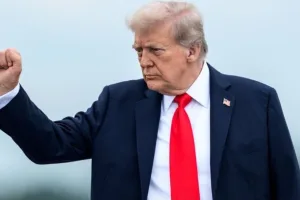
Donald Trump is arguably a chastened President in the wake of last week’s congressional hearing on the Russian connection in the US Election 2016. There may be hope yet for empirical assessments ~ concordant with a libertarian democracy ~ with the FBI Director’s resounding presentation, specifically asserting that there is no basis for Trump’s orchestrated claim to have been wiretapped by Barack Obama. In effect, James Comey has challenged the President’s spurious defence of an ugly truth. Indeed, there were two “firsts” at the threshold of the hearing. One, the person at the helm of the national investigation agency has, for the first time, confirmed that the FBI is investigating possible collusion between the Trump campaign and Moscow to influence the outcome of the presidential election. It is pretty much obvious that Comey has reversed gears, having initially refused to comment on the existence of any such investigation. The other striking feature was Comey’s appearance in itself, and in the company of the NSA director, Admiral Michael Rogers ~ described as a remarkable and unprecedented point in US political history. There is little doubt that Trump’s team is under investigation for possibly conniving with a foreign power to make sure that he ~ and not Hillary Clinton ~ would be the next occupant of the White House. Comey repeatedly stressed the “unusual nature” of the electoral involvement of the Kremlin, so unusual indeed that he felt compelled to deviate from the FBI’s tradition of never commenting on ongoing investigations. The credibility of Trump’s tweets on the issue are now open to question; neither the White House nor the Kremlin will readily be able to challenge the revelations of the FBI head. Chiefly that the counter-intelligence investigation into the Trump-Moscow links began in July 2016 and “is still ongoing”; more than one person associated with the Trump campaign is under investigation for links to the Russian government; and that there is no information to support Trump’s claims that he had been wiretapped by the Obama administration. The beans have been spilled no less forcefully by the NSA chief, who has trashed claims that the Obama administration had spied on Trump Tower. Furthermore, the Russian intervention in the election was “unusually loud, as if Moscow did not care about being caught”.

The presence of the directors of both the FBI and NSA and their revelations have made this Congressional hearing an extraordinary event… viewed through the executive/legislative prism or judged by the parameters of foreign policy. With tongue firmly in cheek, the FBI director has been bold enough to rebut President Trump’s claim that he was a victim of McCarthyism ~ “I try very hard not to engage in any-isms of any kind, including McCarthyism.” As the investigation gets under way, suffice it to register that the FBI director sounds more credible and, therefore, convincing than the 45th President of the US.